10 Inspiring Home Landscape Designs to Transform Your Yard
Discover 10 stunning home landscape designs, from Modern Minimalist to Japanese Zen. Get actionable tips and visualize your perfect yard with our guide.
Your outdoor space is an extension of your home, a blank canvas with incredible potential. Whether you dream of a tranquil retreat, a vibrant garden bursting with color, or a sleek oasis for entertaining, the right design can redefine your property and enhance your lifestyle. But with so many compelling home landscape designs, knowing where to start can feel overwhelming. This guide is your starting point for a stunning outdoor makeover, simplifying the process by breaking down popular and impactful styles.
This roundup explores 10 distinct landscaping approaches, providing the insights you need to turn your vision into reality. We move beyond generic advice to give you a clear, practical roadmap for each design concept. You will discover the essential elements, plant palettes, and maintenance commitments for every style, helping you find the perfect match for your home’s architecture, climate, and personal taste. From a Low-Maintenance Hardscape-Focused Design to a Sustainable Edible Garden, each entry is structured to give you the confidence to plan your project. Let’s dig in and find the ideal landscape that will make you fall in love with your outdoor space.
1. Mediterranean Garden Design
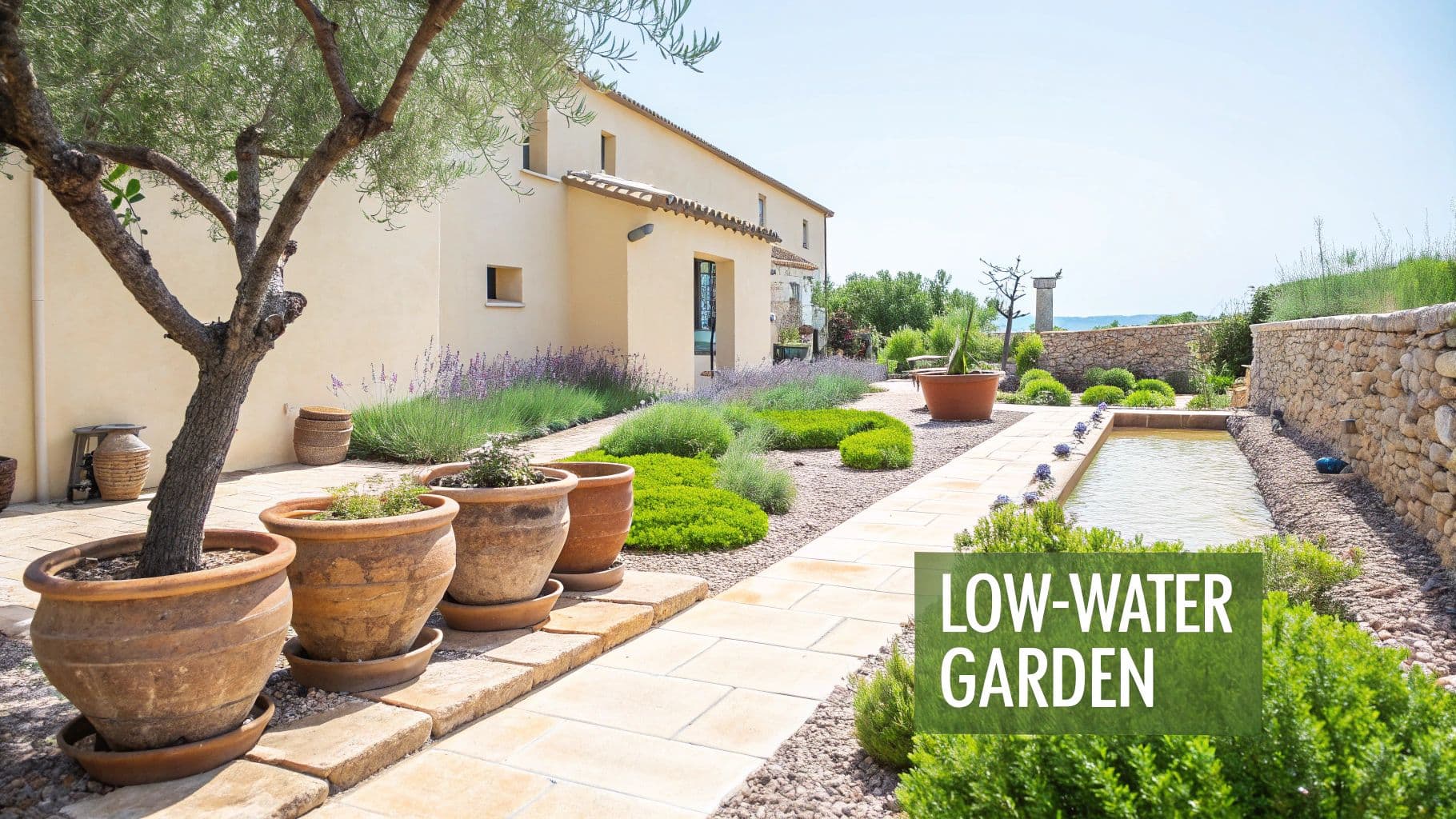
Inspired by the sun-drenched coastlines of Spain, Italy, and Greece, the Mediterranean garden is a popular choice for homeowners seeking a beautiful, low-maintenance, and water-wise landscape. This style is one of the most sustainable home landscape designs because it embraces drought-tolerant plants, warm earth tones, and natural materials. It creates a relaxed, rustic, and inviting atmosphere perfect for outdoor living. This design is particularly well-suited for regions with hot, dry summers and mild winters.
Key Elements & Implementation
To achieve the quintessential Mediterranean look, focus on a harmonious blend of softscape and hardscape elements.
- Plant Selection: Opt for iconic, drought-resistant plants. Think olive trees, lavender, rosemary, and bougainvillea. Agave and ornamental grasses add texture and architectural interest.
- Hardscaping Materials: Use natural, rustic materials like terracotta pots, gravel pathways, and stone retaining walls. A stucco wall or a small water feature can serve as a stunning focal point.
- Color Palette: Stick to warm, earthy tones. The silvery-green foliage of many Mediterranean plants contrasts beautifully with the warm hues of terracotta, sand-colored gravel, and sun-bleached stone.
Quick Tips for Your Garden
- Group Plants by Water Needs: Place plants with similar irrigation requirements together for more efficient watering.
- Incorporate Gravel and Mulch: Use a thick layer of gravel or organic mulch to retain soil moisture and suppress weeds.
- Define Your Spaces: Use low stone walls or gravel paths to create distinct "rooms" within your garden, such as a seating area or dining patio.
- Visualize First: Before digging, use a tool like OutdoorBrite to upload a photo of your yard. Instantly visualize how different Mediterranean plant combinations will look.
2. Japanese Zen Garden Design
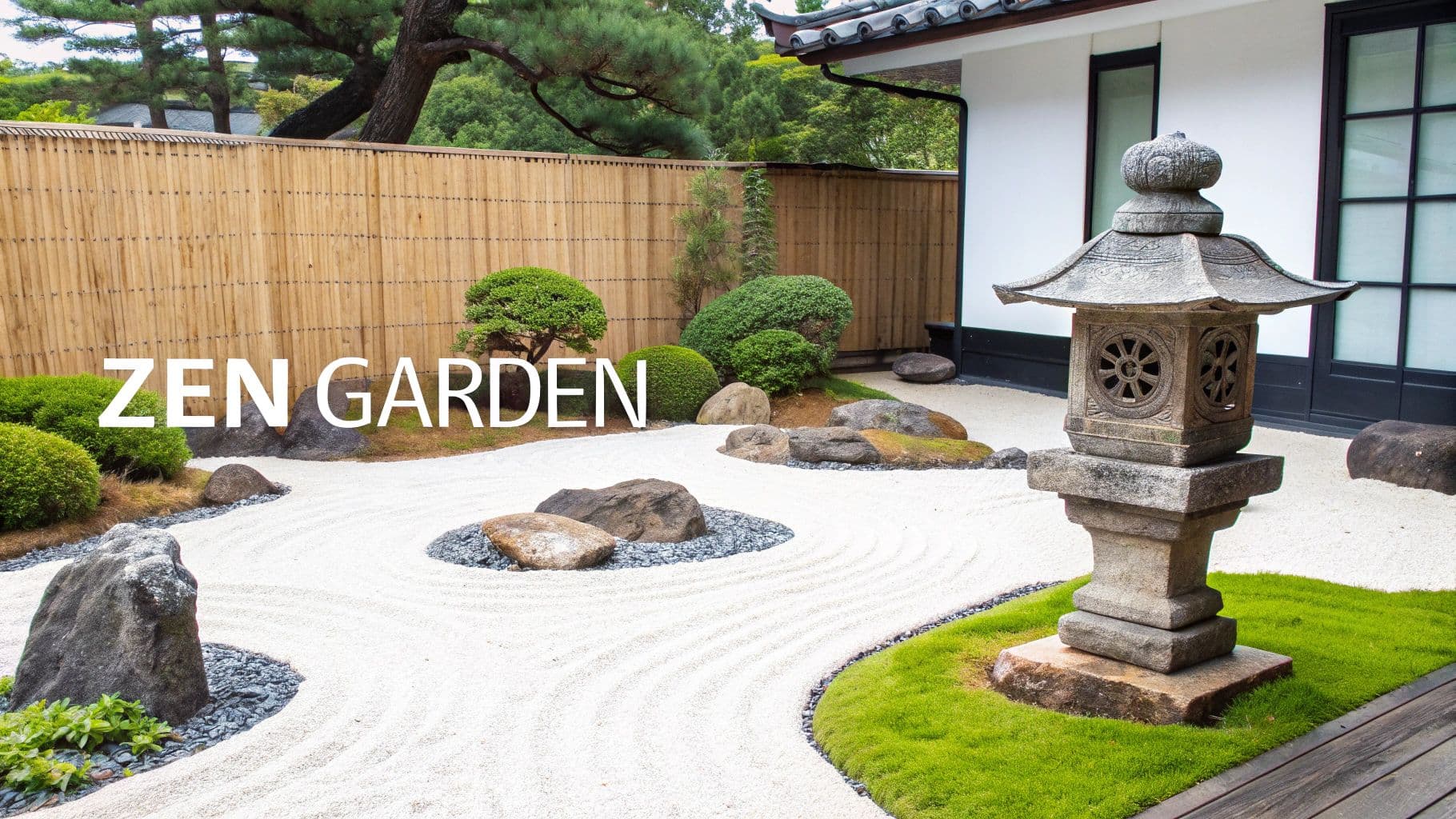
A Japanese Zen garden, or karensansui, is a minimalist landscape approach rooted in philosophy, emphasizing balance, simplicity, and harmony. These tranquil spaces use carefully placed rocks, raked gravel, and manicured plants to create serene environments perfect for meditation. The design philosophy focuses on suggesting larger natural landscapes within a confined space. This style is one of the most thoughtful home landscape designs, ideal for creating a peaceful retreat.
Key Elements & Implementation
Creating a genuine Zen garden involves a deliberate and symbolic arrangement of natural elements.
- Plant Selection: Choose plants for their form and texture. Think Japanese maples, moss, bamboo, and sculpted bonsai or pines.
- Hardscaping Materials: Rocks (ishi) are the backbone of the design, representing mountains. Raked white or grey gravel symbolizes water, while a stone lantern or a water basin adds authenticity.
- Color Palette: Embrace a natural, muted color scheme. Shades of green, grey, brown, and white dominate, creating a calming atmosphere.
Quick Tips for Your Garden
- Create a Focal Point: Start with one main element, such as a large rock or a stone lantern, and build the design around it.
- Use Odd Numbers: Arrange rocks and plants in groups of three, five, or seven for a more natural and visually balanced composition.
- Guide the Path: Use subtle stepping stones to direct movement and encourage a slow, contemplative journey through the space.
- Visualize First: Before moving heavy rocks, use a tool like OutdoorBrite to test different layouts and plant placements to achieve the perfect balance.
3. Modern Minimalist Landscape Design
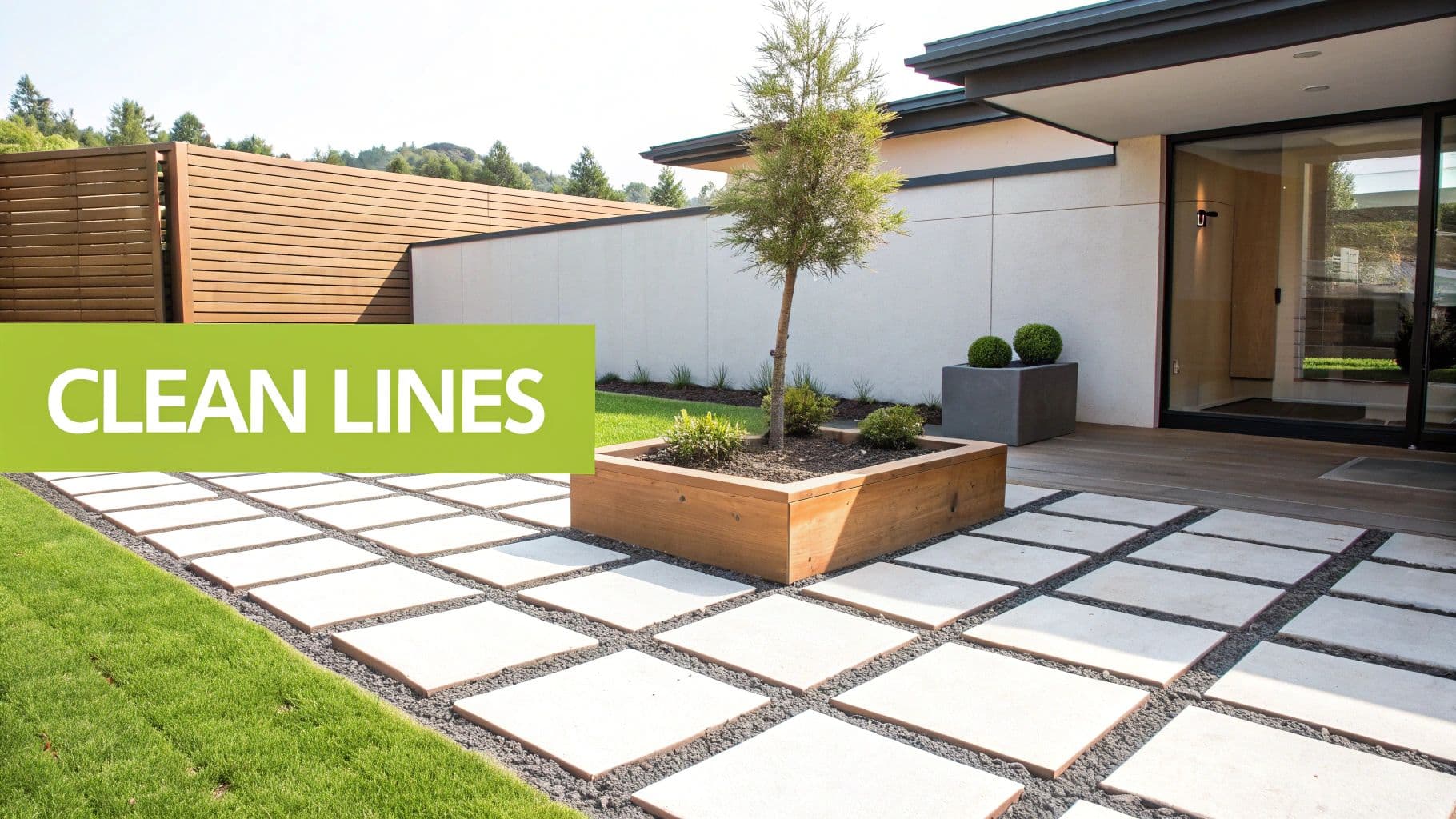
Modern minimalist landscape design champions clean lines, geometric shapes, and a "less is more" philosophy. This style reduces visual clutter by prioritizing strategic plant selection, bold hardscaping, and the intentional use of negative space. These sophisticated home landscape designs integrate seamlessly with modern architecture, appealing to homeowners who value functional simplicity and low-maintenance elegance. This design works well in both urban courtyards and expansive suburban yards, transforming the outdoors into a structured, uncluttered extension of the home.
Key Elements & Implementation
Achieving a modern minimalist aesthetic requires a disciplined approach to materials and layout.
- Plant Selection: Choose plants for their form and texture. Architectural plants like agave, boxwood (trimmed into shapes), and ornamental grasses are ideal. A single, dramatic specimen tree can act as a living sculpture.
- Hardscaping Materials: Use sleek, man-made materials with clean finishes. Polished concrete pavers, steel planters, and dark-colored wood or composite decking are foundational.
- Color Palette: A monochromatic or limited color scheme is crucial. Work with shades of gray, black, and white, using foliage as the primary color.
Quick Tips for Your Garden
- Embrace Negative Space: Don't fill every corner. Empty space is a key design element that contributes to a serene atmosphere.
- Incorporate Strategic Lighting: Use outdoor lighting to highlight geometric shapes and textures after dark.
- Keep it Cohesive: Repeat materials, shapes, and plants throughout the design to create a unified and harmonious look.
- Visualize First: Before committing, use OutdoorBrite to upload a photo of your yard. You can instantly test different geometric arrangements and minimalist plant choices.
4. Native Plant Landscape Design
A native plant landscape is a sustainable approach that uses plants indigenous to your geographical region. This design champions environmental stewardship by creating a garden that works in harmony with the local ecosystem. These home landscape designs support native pollinators, reduce water consumption, and eliminate the need for chemical fertilizers and pesticides, resulting in a landscape that is both beautiful and self-sufficient. By choosing plants that have evolved to thrive in your area's climate and soil, you create a resilient garden that requires minimal intervention once established.
Key Elements & Implementation
To create a native plant landscape, the focus is on replicating the natural plant communities in your local environment.
- Plant Selection: Choose plants native to your eco-region. For a Midwestern garden, this could mean Purple Coneflower and Black-Eyed Susans. In California, you might use California Poppies and Manzanita.
- Hardscaping Materials: Use locally sourced, natural materials to complement the flora. Local stone for pathways or a small pond can enhance the naturalistic feel.
- Color Palette: The color scheme is dictated by the native plants themselves and will change with the seasons.
Quick Tips for Your Garden
- Consult Local Experts: Contact your local native plant society or university extension office for plant lists suited for your location.
- Observe Nature: Visit nearby parks to see which plants grow together in the wild for inspiration on successful plant groupings.
- Embrace Natural Cycles: Allow plants to go dormant and leave seed heads for winter birds.
- Visualize First: Use OutdoorBrite to experiment with different native plant combinations to see how they will look throughout the year.
5. Contemporary Cottage Garden Design
The contemporary cottage garden blends traditional, bountiful charm with modern design principles. This style features abundant flowering plants and informal arrangements contained within a clean, contemporary framework. It offers a fresh take on classic home landscape designs by combining the cozy appeal of traditional gardens with more intentional spacing and cleaner lines. This design is perfect for those who love the lush look of an English garden but desire more order and less maintenance.
Key Elements & Implementation
The key is to balance the abundance of classic cottage planting with the clean structure of modern design.
- Plant Selection: Combine classic cottage flowers like roses, peonies, and foxgloves with structured ornamental grasses or evergreen shrubs.
- Hardscaping Materials: Integrate modern materials like corten steel edging, simple concrete pavers, or a sleek wooden pergola to provide a clean framework.
- Color Palette: Stick to a more controlled color scheme. Choose two or three primary colors and repeat them throughout the garden for a cohesive look.
Quick Tips for Your Garden
- Plan for All Seasons: Plan your blooming cycles carefully to ensure year-round interest and color.
- Layer in Odd Numbers: When planting, group plants in odd numbers like 3, 5, or 7 for a more natural arrangement.
- Incorporate Pathways: Use well-defined pathways made from modern materials like gravel or geometric pavers to add structure.
- Visualize Your Seasons: Use OutdoorBrite to design your garden’s seasonal color progressions and test plant combinations.
6. Low-Maintenance Hardscape-Focused Design
For homeowners who prioritize functionality and minimal upkeep, a hardscape-focused design is a practical solution. This approach reduces lawn space in favor of durable materials like stone, wood, and concrete. It creates clean, structured outdoor living areas perfect for entertaining or relaxing without constant gardening chores. This style is one of the most versatile home landscape designs, fitting seamlessly into urban and suburban settings. It’s an ideal choice for busy individuals who prefer a neat, modern aesthetic.
Key Elements & Implementation
A successful hardscape-focused design balances durable materials with strategic, low-effort plantings.
- Plant Selection: Use plants as accents. Opt for container plants, ornamental grasses, or hardy succulents. A single specimen tree can serve as a living sculpture.
- Hardscaping Materials: Invest in high-quality materials like stone pavers, composite decking, and decorative gravel. Built-in seating or a fire pit can create a focal point.
- Color Palette: The color scheme is driven by your materials. Neutral tones from stone and wood create a sophisticated backdrop for pops of color from cushions or potted flowers.
Quick Tips for Your Garden
- Define Functional Zones: Use different materials or levels to create distinct areas for dining, lounging, and cooking.
- Choose Permeable Materials: Consider permeable pavers or gravel to help manage water drainage.
- Soften Edges with Planters: Use large pots and container gardens to add greenery and color, which are easy to manage and move.
- Visualize First: Before investing in costly materials, use OutdoorBrite to lay out your hardscape design and experiment with different styles.
7. Pollinator Garden Design
A pollinator garden is an ecologically focused landscape created to attract and support essential pollinators like bees, butterflies, and hummingbirds. This approach creates a vibrant, living ecosystem in your yard. These are among the most impactful home landscape designs for environmental stewardship, providing critical food and habitat for local wildlife. A well-planned pollinator garden offers a succession of blooms, ensuring a food source throughout the seasons. This style is perfect for those who want to connect with nature and support local ecosystems.
Key Elements & Implementation
To create a thriving pollinator haven, focus on providing food, water, and shelter.
- Plant Selection: Prioritize native plants as they have co-evolved with local pollinators. Include a variety of flower shapes and colors like coneflowers (Echinacea), milkweed (Asclepias), and bee balm (Monarda).
- Layered Planting: Create layers with trees, shrubs, and perennials to offer both food sources and shelter.
- Provide Water: A shallow birdbath with pebbles or a "bee bath" provides a safe place for pollinators to drink.
Quick Tips for Your Garden
- Plant in Clusters: Plant flowers in dense groups to create a larger visual target for pollinators.
- Plan for Continuous Blooms: Select plants with staggered bloom times to ensure a nectar source is available from spring through fall.
- Avoid Pesticides: Harsh chemicals are extremely harmful to pollinators. Embrace organic gardening practices.
- Visualize Your Habitat: Use OutdoorBrite to plan your garden and experiment with plant combinations to ensure season-long support for local wildlife.
8. Contemporary Formal Garden Design
A contemporary formal garden blends the structured elegance of classical design with modern aesthetics. This approach to home landscape designs relies on symmetry, geometric patterns, and clean lines to achieve a sense of order. It is an updated take on traditional estate gardens, using contemporary materials and a streamlined plant palette. This style is perfect for homeowners who appreciate precision and a polished look. It works well with modern or classical architecture, acting as a structured extension of the home.
Key Elements & Implementation
To create a contemporary formal garden, the focus is on structure, repetition, and a harmonious relationship between hardscape and softscape.
- Plant Selection: Choose plants that can be sculpted, like Boxwood hedges, yew, and hornbeam. Use specimen trees like Italian Cypress as vertical accents.
- Hardscaping Materials: Opt for high-quality, modern materials like sleek pavers or polished concrete. A simple, rectangular water feature can serve as a focal point.
- Color Palette: Keep the color scheme simple. Green is the dominant color, provided by foliage. White or single-color flower borders can be used for contrast.
Quick Tips for Your Garden
- Establish Clear Sight Lines: Design your garden around a central axis or a primary focal point to draw the eye through the space.
- Use Repetition: Repeat plants, materials, and shapes throughout the design to create a cohesive and rhythmic feel.
- Plan for Maintenance: Formal gardens require regular pruning to maintain their sharp, geometric forms.
- Visualize First: Use OutdoorBrite to test different geometric layouts and plant arrangements before you commit.
9. Sustainable Edible Garden Design
A sustainable edible garden merges beauty with function, transforming your yard into a productive oasis. This approach integrates vegetables, fruits, and herbs into aesthetically pleasing home landscape designs that minimize environmental impact. It is about creating a self-sufficient ecosystem that provides fresh, organic produce while enhancing biodiversity. This design moves beyond traditional vegetable plots, weaving edible plants into the overall landscape. It's perfect for anyone wanting to connect more with their food source.
Key Elements & Implementation
To create a thriving edible garden, focus on synergy between plants, soil health, and smart layout.
- Plant Selection: Combine annual vegetables like tomatoes and lettuce with perennial options like asparagus and berry bushes. Integrate edible flowers to deter pests.
- Hardscaping Materials: Use natural materials for structure. Raised beds made from untreated cedar improve drainage. Vertical structures like trellises maximize growing space.
- Soil Health: The foundation of a successful edible garden is rich, living soil. Create a compost system to recycle kitchen scraps into nutrient-dense fertilizer.
Quick Tips for Your Garden
- Start Small and Simple: If you're new to edible gardening, begin with a few raised beds or containers.
- Maximize Sun Exposure: Most vegetables and fruits require at least 6-8 hours of direct sunlight per day.
- Practice Companion Planting: Group mutually beneficial plants together. Planting basil near tomatoes can improve their flavor and repel pests.
- Visualize Your Harvest: Use OutdoorBrite to lay out your beds and visualize how different plant combinations will look and function.
10. Outdoor Living Space Design
Outdoor living space design extends the comfort of your home into the yard, creating functional "rooms" for relaxation and entertainment. These thoughtful home landscape designs blend architectural elements with strategic plantings to craft areas for dining, lounging, and socializing. The goal is to maximize usable space, enhancing both property value and quality of life. This design is perfect for homeowners who love to host gatherings or families seeking more functional space.
Key Elements & Implementation
To create a successful outdoor living space, focus on defining zones and selecting durable materials.
- Functional Zones: Divide your yard into distinct areas for different activities, such as a dining patio or a lounge area with a fire feature.
- Hardscaping Materials: Choose weather-resistant materials that complement your home. Pavers, natural stone, and composite decking are excellent choices for flooring.
- Comfort & Ambiance: Incorporate elements for year-round comfort. Add a pergola for shade, an outdoor fireplace for warmth, and layered lighting to create a welcoming atmosphere.
Quick Tips for Your Garden
- Connect to the Indoors: Ensure a smooth flow from your house to the outdoor space with a wide patio door or consistent flooring.
- Plan for Utilities: If adding an outdoor kitchen or complex lighting, plan for plumbing and electrical lines early in the process.
- Choose All-Weather Furnishings: Invest in high-quality, weather-resistant furniture to ensure longevity.
- Visualize the Complete Concept: Use OutdoorBrite to instantly visualize how different furniture arrangements, materials, and lighting will look.
10 Home Landscape Designs Comparison
| Design | 🔄 Implementation Complexity | ⚡ Resource Requirements & Efficiency | 📊 Expected Outcomes | 💡 Ideal Use Cases | ⭐ Key Advantages |
|---|---|---|---|---|---|
| Mediterranean Garden Design | Moderate — upfront planting & hardscaping effort | Moderate-to-high initial materials/labor; very low water once established | Drought-tolerant, timeless curb appeal; ~2–3 years to mature | Arid/semi‑arid homes; water‑conscious homeowners | Water‑saving, low‑maintenance, increases property value ⭐ |
| Japanese Zen Garden Design | Moderate–high — requires design knowledge for authenticity | Low plant diversity; modest material cost (gravel, stone); regular raking | Serene, meditative spaces; works well in compact areas | Small patios/courtyards; meditation spaces | Minimalist tranquility, low plant upkeep, highly customizable ⭐ |
| Modern Minimalist Landscape Design | High — precise planning and detailing | High-quality hardscape and materials; limited plant palette for low upkeep | Bold, architectural aesthetic; clean sightlines; low plant maintenance | Contemporary homes and urban lots | Sophisticated, low-clutter appearance; flexible for updates ⭐ |
| Native Plant Landscape Design | Moderate — research and correct species selection needed | Low long‑term inputs; initial planting effort; supports wildlife | Sustainable, low-water landscapes; strong ecosystem benefits | Environmentally conscious homeowners; wildlife support | Biodiversity support, cost‑effective long term, regionally authentic ⭐ |
| Contemporary Cottage Garden Design | Moderate — layered planting and bloom scheduling | Moderate ongoing care (deadheading, pruning) and plant purchases | High seasonal color and texture; cozy, informal charm | Homeowners wanting personality and seasonal interest | Warm, pollinator‑friendly, adaptable over time ⭐ |
| Low-Maintenance Hardscape-Focused Design | Low–moderate — design and contractor coordination | High upfront material/installation cost; minimal ongoing care | Durable, functional outdoor rooms with minimal upkeep | Busy professionals; mobility‑conscious or urban patios | Very low daily maintenance, highly functional, clean aesthetic ⭐ |
| Pollinator Garden Design | Moderate — planned sequencing and species choice | Low–moderate inputs; chemical‑free practices required | Vibrant, dynamic habitat that attracts bees/butterflies; 1–2 years to establish | Conservation‑minded homeowners; educational gardens | Strong environmental impact, supports pollinator populations ⭐ |
| Contemporary Formal Garden Design | High — precise layouts, repeated plantings & pruning | High maintenance labor and quality materials | Polished, symmetrical landscapes with strong curb appeal | Architectural homes, estate properties | Timeless elegance, predictable maintenance routines ⭐ |
| Sustainable Edible Garden Design | Moderate–high — seasonal planning and crop management | Ongoing labor (planting, harvesting, composting); moderate setup cost | Fresh produce, educational value, and therapeutic benefits | Families, health‑focused homeowners, small‑scale food producers | Food production, reduced grocery costs, educational ⭐ |
| Outdoor Living Space Design | High — integrates structures, lighting, and furniture | High initial investment in structures/furnishings; medium upkeep | Extended usable living area, strong entertainment value, higher property value | Families who entertain; larger properties seeking lifestyle upgrade | Multifunctional outdoor rooms, lifestyle enhancement, high ROI ⭐ |
Bring Your Dream Landscape to Life
Embarking on a landscaping project is an investment in your lifestyle and well-being. Throughout this guide, we've journeyed through a diverse gallery of home landscape designs, from the tranquil simplicity of a Japanese Zen garden to the vibrant ecosystem of a native plant landscape. Each style offers a unique personality and a distinct set of benefits, proving that a well-designed outdoor space is a powerful extension of your home. The key is to find the style that resonates with your aesthetic, suits your climate, and supports your daily life.
The biggest hurdle for many homeowners is translating an idea into reality. Choosing between a Mediterranean terrace and a Modernist patio can feel overwhelming when you're just looking at a patch of grass. This is where modern technology becomes your most powerful landscaping tool, eliminating guesswork and preventing costly design regrets. Visualizing the end result with clarity is the most crucial step before you lift a shovel. It confirms your choices, inspires confidence, and transforms a daunting project into an exciting and achievable goal.
Ready to stop guessing and start seeing? Upload a photo of your yard to OutdoorBrite and use our AI to instantly apply any of these home landscape designs to your actual space. Visit OutdoorBrite to visualize your perfect outdoor oasis in seconds and begin your transformation with confidence.