Multiply the patio width by length for the total area. Find one paver's area (width x length). Divide patio area by paver area and round up. A 10 ft x 12 ft patio (120 sq ft) with 6x6 in pavers (0.25 sq ft each) needs 120 / 0.25 = 480 pavers.
Free tool
Paver calculator
Enter your area and paver size to get a full materials list: pavers with waste, gravel base, bedding sand, and a cost estimate. No sign-up.
Your materials list
Total pavers to order
528
480 for coverage + 48 spare (10% waste)
Crushed gravel base
1.78 cu yd (2.49 t)
4 in compacted, includes 20% for compaction
Bedding sand
0.37 cu yd (0.48 t)
1 in layer under the pavers
Polymeric joint sand
2 bags
50 lb bags for the joints
Cost estimate
- Pavers
- $264.00
- Gravel base
- $112.00
- Bedding sand
- $24.07
- Polymeric sand
- $50.00
Estimated total
$450.07
Total area
120.0 sq ft
Pavers per sq ft
4.00
Installation labor is typically $8–$20 per sq ft on top of materials. Prices are national averages; edit them to match local quotes.
How to use the paver calculator
Four steps to estimate how many pavers you need and what they cost for a patio, walkway, driveway, or pool deck.
- 1
Measure your project area
Pick a single rectangle, a square, or a shape you can split into identical rectangles. Enter the width and length and the calculator returns the total square footage.
For an irregular shape that won't split into identical rectangles, measure each section with the single-rectangle option and add the totals.
- 2
Set the paver size
Enter the width and length of one paver. The common size is 4 in x 8 in (10 cm x 20 cm); options run from 4 in x 4 in up to 14 in x 14 in. Switch between inches and centimeters to match your supplier. The sizes table below lists standard dimensions.
Haven't bought pavers yet? The 4 in x 8 in brick is the most flexible, from running bond to herringbone.
- 3
Check the paver count
With area and paver size set, you get two numbers: pavers per square foot and the total pavers for the project. Use the waste slider to add 5–15% for cuts, breakage, and pattern adjustments.
Diagonal layouts like 45° herringbone need more edge cuts, so use 15% waste for angled patterns.
- 4
Estimate material cost
Enter the price per paver for a material cost estimate. Pavers usually run $0.30 to $2.00 each depending on material. Professional installation typically adds $8 to $20 per square foot.
Buy from one batch for consistent color, and order 10–15% extra so you have replacements for repairs.
How many pavers for a 10x10, 12x12, or 20x20 patio?
Exact coverage counts for square patios in the four most common paver sizes. Multiply length by width to get your area, then read your row.
| Patio size | Area | 4×8 in | 12×12 in | 16×16 in | 24×24 in |
|---|---|---|---|---|---|
| 10×10 ft | 100 sq ft | 450 | 100 | 57 | 25 |
| 12×12 ft | 144 sq ft | 648 | 144 | 81 | 36 |
| 15×15 ft | 225 sq ft | 1,013 | 225 | 127 | 57 |
| 16×16 ft | 256 sq ft | 1,152 | 256 | 144 | 64 |
| 20×20 ft | 400 sq ft | 1,800 | 400 | 225 | 100 |
Counts are exact coverage with tight joints. Add your waste buffer on top: 5–10% for straight patterns, 15% for a 45° herringbone. A pallet usually covers 100–120 sq ft, so divide your area by pallet coverage to estimate pallets.
Common paver sizes
Standard dimensions and how many of each fit in a square foot.
| Size | Dimensions | Area | Per sq ft | Thickness | Best for |
|---|---|---|---|---|---|
| Standard brick | 4×8 in (10×20 cm) | 0.22 sq ft | 4.5 | 2 in | Herringbone, running bond |
| Standard square | 6×6 in (15×15 cm) | 0.25 sq ft | 4 | 2 in | Patios, walkways |
| Medium rectangle | 6×9 in (15×23 cm) | 0.38 sq ft | 2.67 | 2 in | Driveways, large patios |
| Medium square | 8×8 in (20×20 cm) | 0.44 sq ft | 2.25 | 2 in | Patios, pool decks |
| Large square | 12×12 in (30×30 cm) | 1 sq ft | 1 | 2 in | Modern patios, stepping stones |
| Extra-large square | 14×14 in (36×36 cm) | 1.36 sq ft | 0.74 | 3 in | Statement patios, courtyards |
| 16-inch square | 16×16 in (41×41 cm) | 1.78 sq ft | 0.56 | 2 in | Patios with fewer joints |
| Large rectangle | 12×18 in (30×46 cm) | 1.5 sq ft | 0.67 | 1.5 in | Contemporary designs, driveways |
| 24-inch slab | 24×24 in (61×61 cm) | 4 sq ft | 0.25 | 2 in | Modern patios, stepping paths |
Worked example
A real walk-through. Sarah is paving a plus-shaped backyard patio. She splits it into five identical 15 ft x 15 ft squares.
- 1
Total patio area
The patio splits into 5 identical 15 ft x 15 ft sections. Multiply the section size by the number of sections.
- Formula
- Area = width × length × sections
- Calculation
- 15 ft × 15 ft × 5 = 1,125 sq ft
- Result
- Total area: 1,125 sq ft
- 2
Pavers per square foot
Sarah picked 6 in x 6 in squares. Each covers 36 sq in. There are 144 sq in in a square foot, so divide 144 by the single-paver area.
- Formula
- Pavers per sq ft = 144 ÷ (paver width × length)
- Calculation
- 144 ÷ (6 × 6) = 4
- Result
- 4 pavers per square foot
- 3
Total pavers
Multiply pavers per square foot by the total area. Round up when it isn't whole; trim the extra to fit edges.
- Formula
- Total pavers = pavers per sq ft × area
- Calculation
- 4 × 1,125 = 4,500
- Result
- 4,500 pavers (before waste)
- 4
Add waste and material cost
Sarah adds a 10% waste factor for cuts and breakage. At $0.50 per paver, she multiplies the adjusted count by the unit price.
- Formula
- Cost = (pavers × 1.10) × price
- Calculation
- 4,500 × 1.10 = 4,950 → 4,950 × $0.50 = $2,475
- Result
- Material cost: $2,475 (with 10% waste)
- 5
Estimate installation
For professional installation at about $10 per square foot, multiply the area by the rate and add it to the material cost.
- Formula
- Install = area × cost per sq ft
- Calculation
- 1,125 × $10 = $11,250 → $2,475 + $11,250 = $13,725
- Result
- Total project: $13,725 (materials + install)
A note on using the calculator
Paving runs into surprises. To avoid extra trips to the store, buy at least 10% more pavers than the calculator suggests. For complex patterns or curved edges, raise that buffer to 15–20%.
Pavers aren't the only material. The list above includes bedding sand, gravel for the compacted base, and polymeric sand for the joints; still budget for edge restraints and tool rental.
Popular paver patterns
Each pattern changes the cut waste and the look. Plan the waste buffer accordingly.
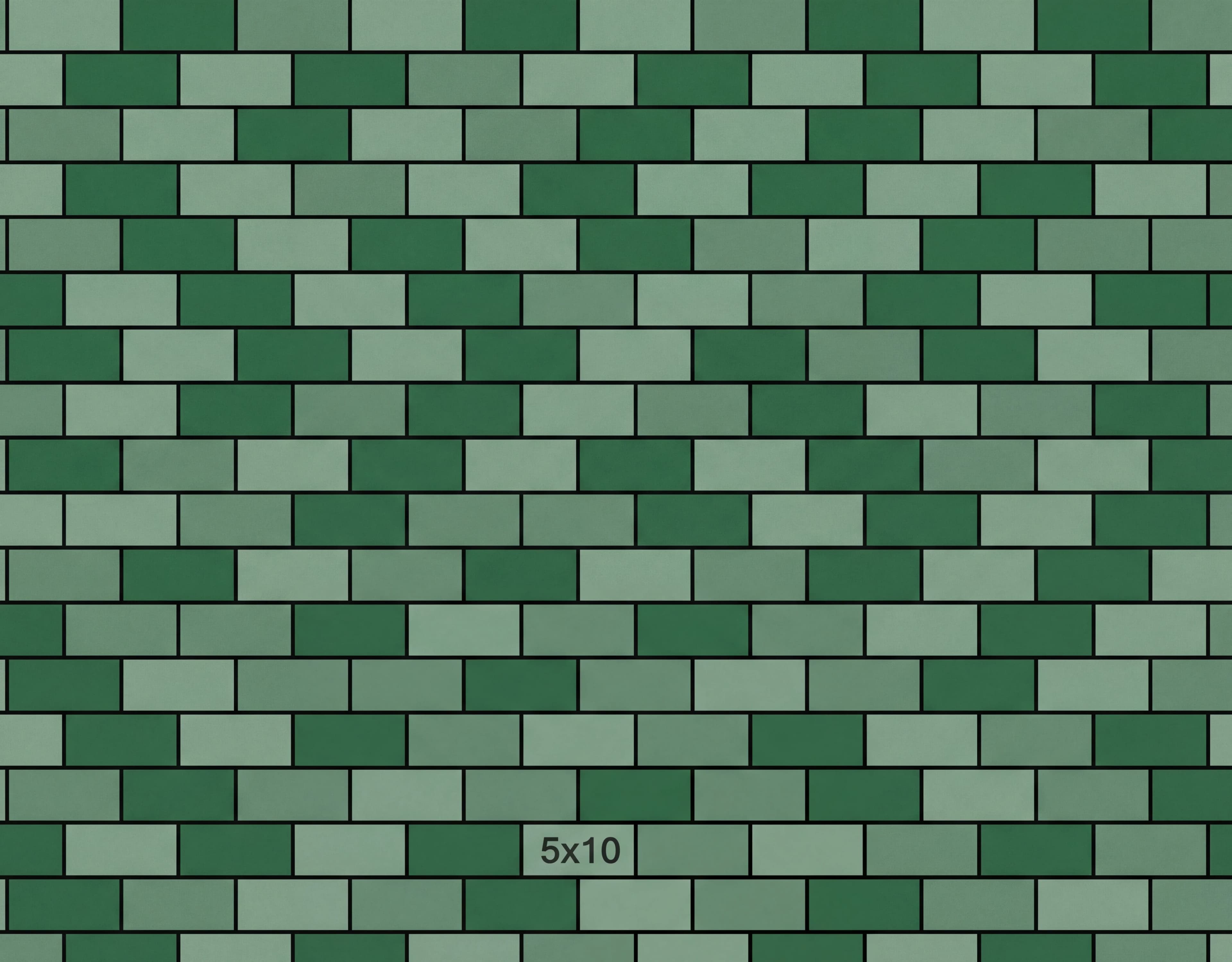
Staggered running bond
EasyEach row offsets by half a paver for a classic brick-wall look. The staggered joints spread weight and resist shifting.
Typical waste: 5% · Best for: Walkways, paths, borders
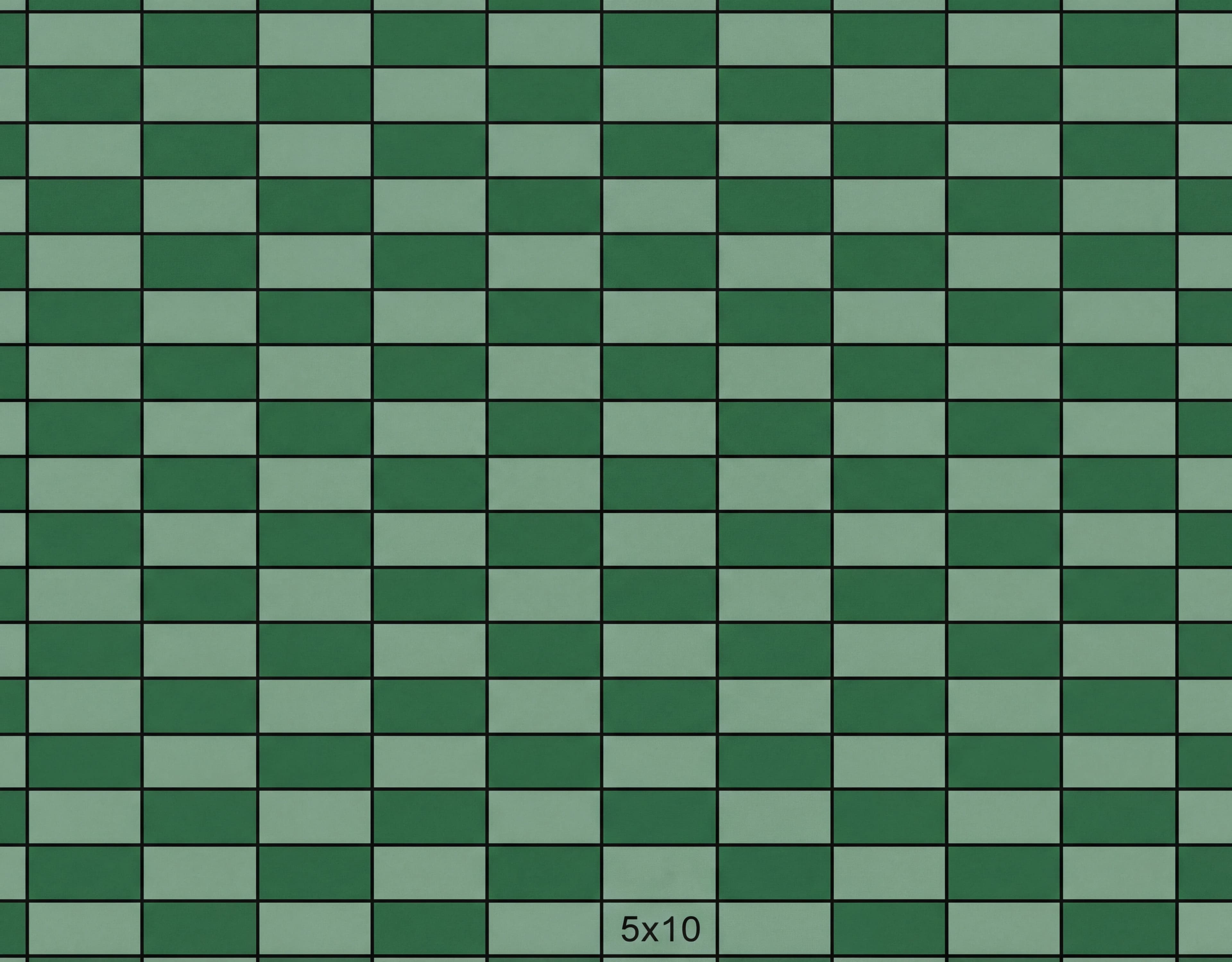
Stacked running bond
EasyPavers in straight, uniform rows with no offset. A clean modern layout that installs fast with few cuts.
Typical waste: 3% · Best for: Contemporary patios, modern designs
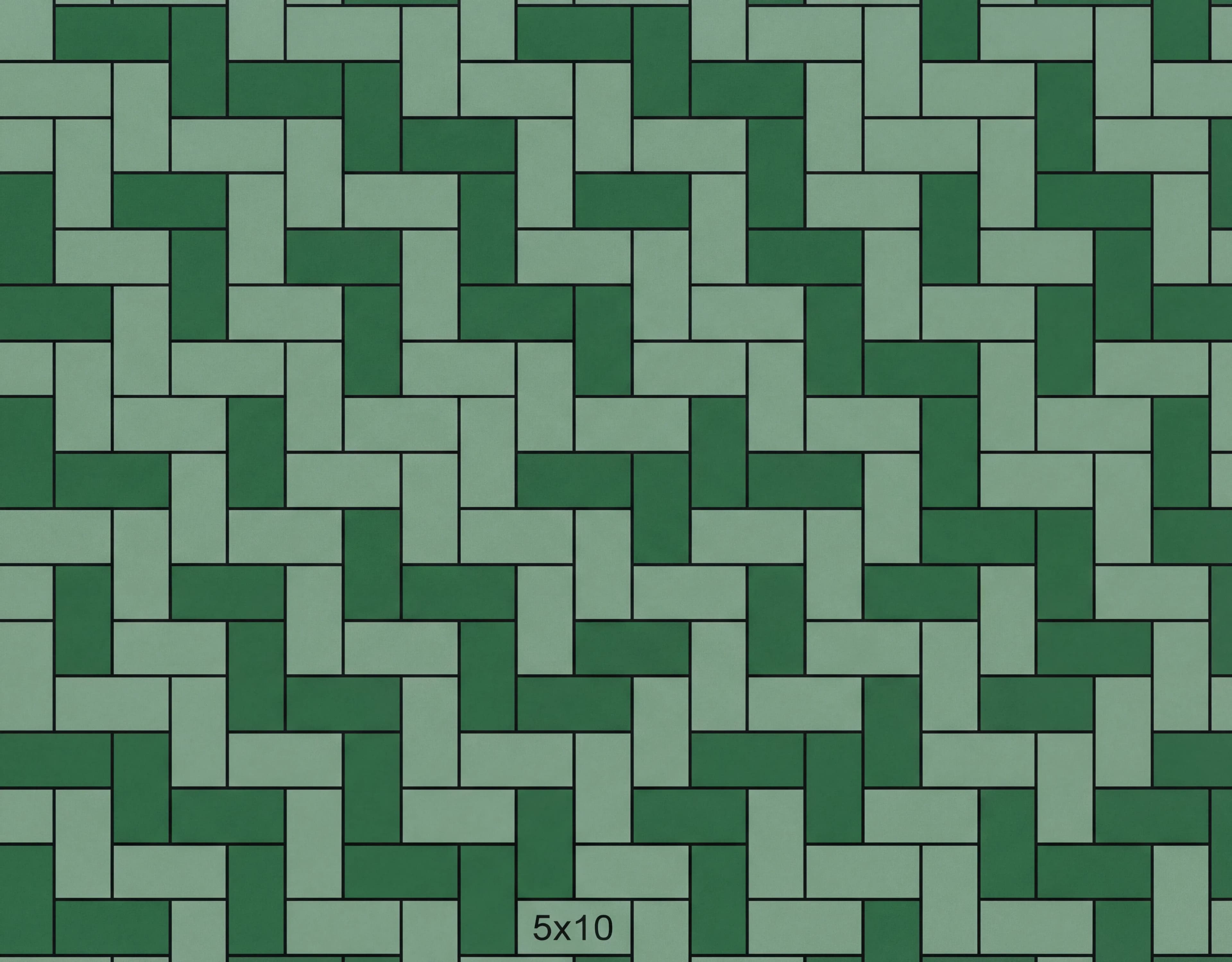
90° herringbone
MediumRectangular pavers interlocked in a 90-degree zigzag. Strong structural interlock for heavy foot or vehicle traffic.
Typical waste: 10% · Best for: Driveways, high-traffic areas
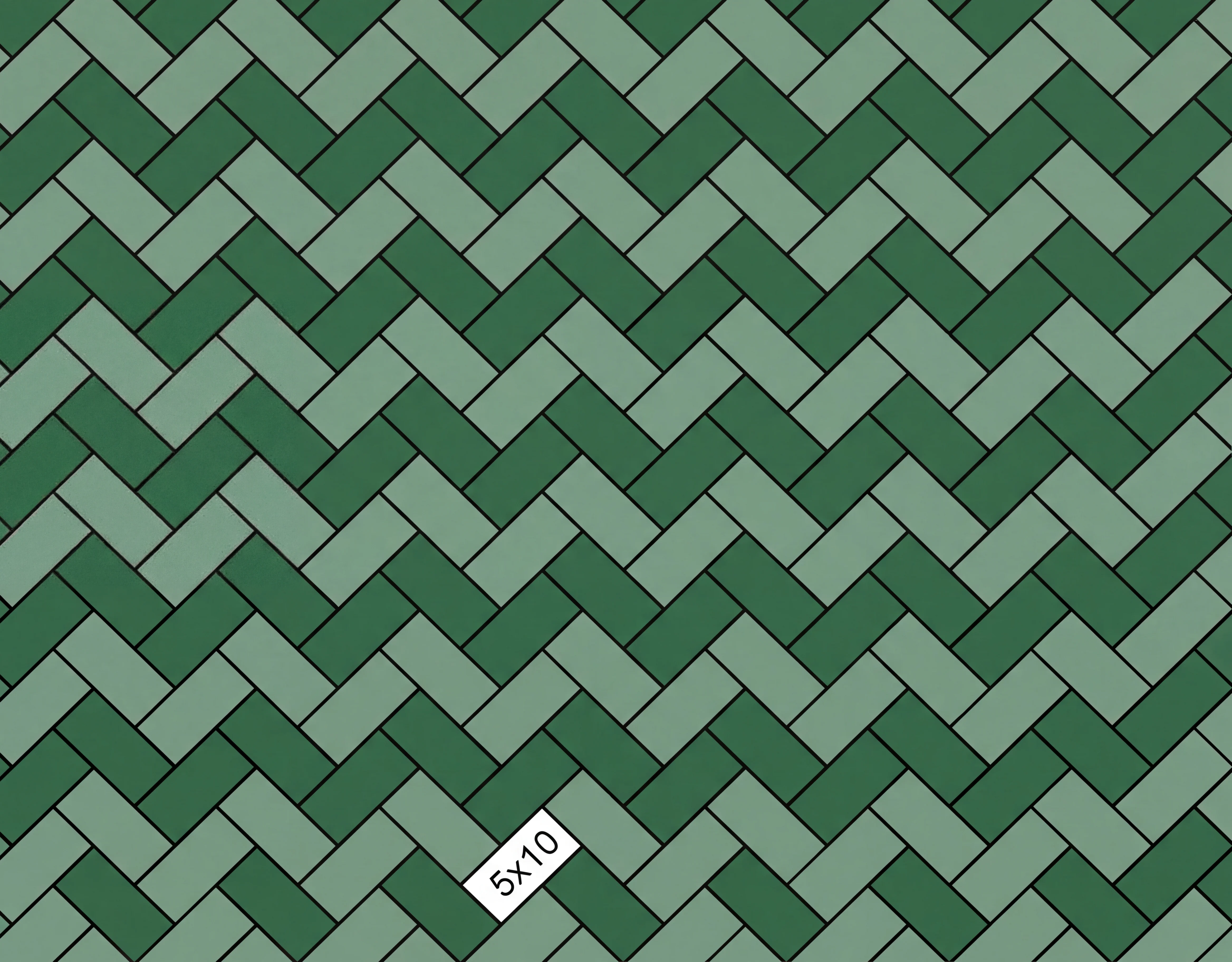
45° herringbone
HardThe same zigzag rotated 45 degrees for a diamond effect. Maximum interlock strength, more edge cuts.
Typical waste: 15% · Best for: Driveways, commercial areas
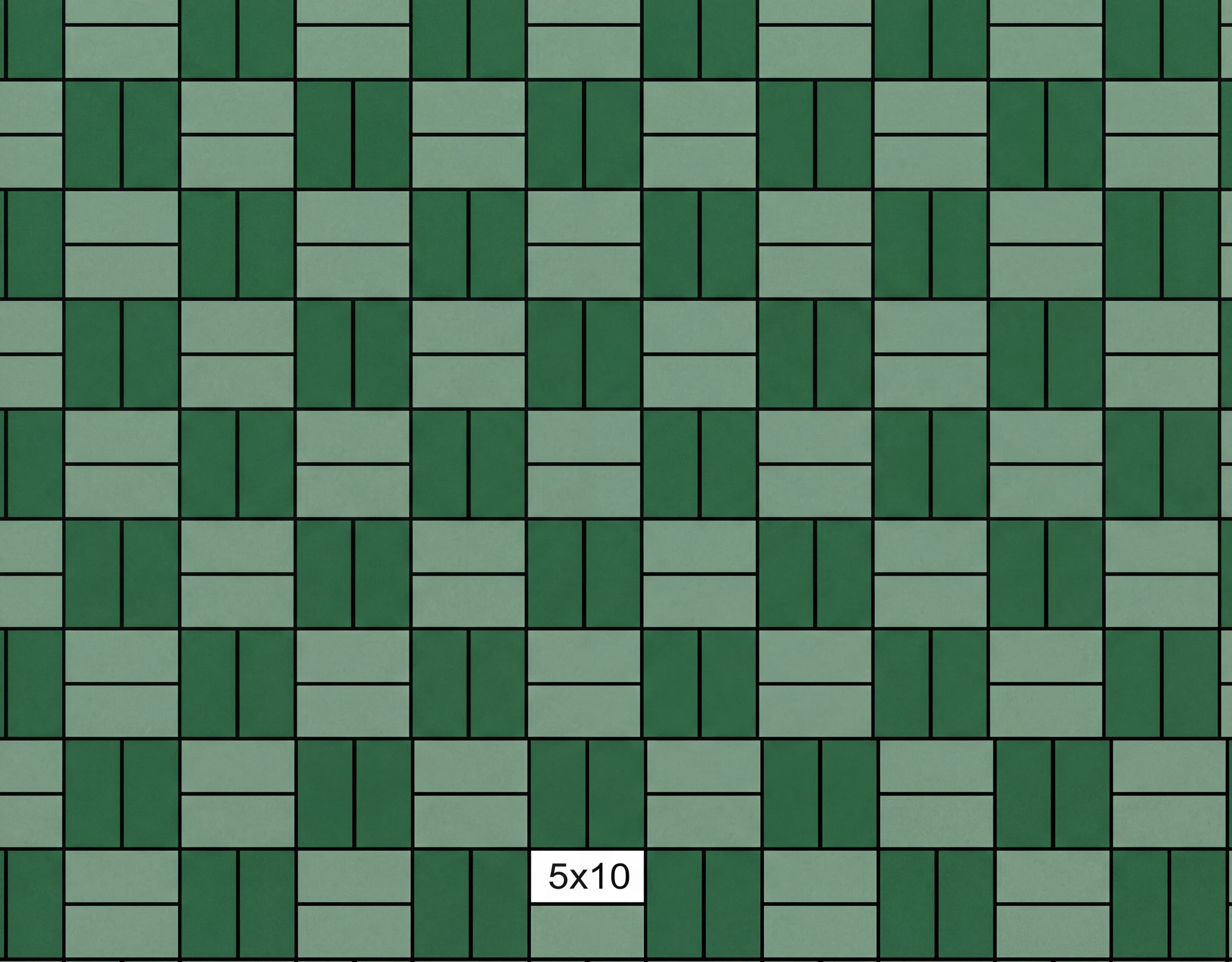
Basketweave
MediumAlternating pairs of horizontal and vertical pavers form a woven look. A timeless, symmetrical pattern.
Typical waste: 5% · Best for: Patios, garden paths, courtyards
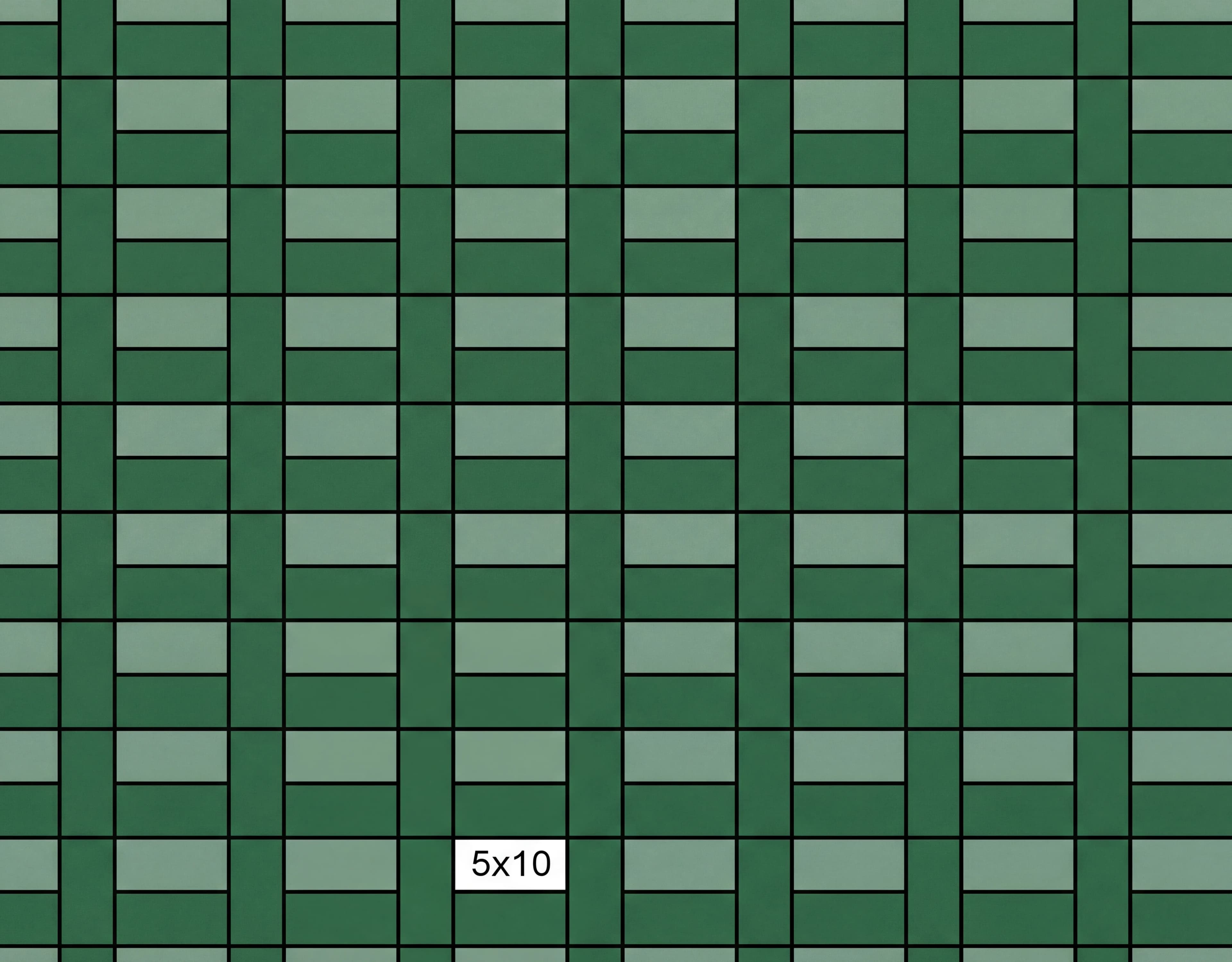
Parquet
MediumGroups of pavers in alternating square blocks, like parquet flooring. Adds variety on a structured grid.
Typical waste: 5% · Best for: Patios, entryways, pool decks
How much base and sand go under pavers
A patio or walkway needs about 4 inches of compacted gravel under the pavers. Driveways carry cars, so they need 8 to 12 inches. On top of the gravel goes a 1-inch bed of concrete sand, screeded flat, that the pavers set into.
The calculator adds 20% to the gravel volume because crushed stone compacts when you run a plate compactor over it. Order by the ton where you can; a cubic yard of gravel weighs about 1.4 tons.
| Layer | Depth | Notes |
|---|---|---|
| Gravel base (walkway) | 4 in | Foot traffic only |
| Gravel base (patio) | 4–6 in | Go deeper on clay or wet soil |
| Gravel base (driveway) | 8–12 in | Vehicle loads need the full depth |
| Bedding sand | 1 in | Concrete sand, screeded level. Never thicker than 1 in. |
Quick math: area in sq ft × depth in inches ÷ 324 = cubic yards. A 12×12 ft patio with a 4-inch base needs 144 × 4 ÷ 324 = about 1.8 cubic yards of gravel before compaction.
What a paver patio costs
Expect $4 to $10 per square foot for materials if you lay it yourself, and $8 to $25 per square foot installed. The spread comes down to the paver you pick: concrete pavers sit at the low end, natural stone at the top.
For a 20x20 patio (400 sq ft), that works out to $1,600–$4,000 in materials for a DIY build, or $3,200–$10,000 hired out. Get the exact material numbers from the calculator above, then collect two or three local quotes for the labor.
| Project | Typical range | Notes |
|---|---|---|
| Materials only (DIY) | $4–$10 per sq ft | Pavers, gravel, sand, edging |
| Installed by a contractor | $8–$25 per sq ft | Materials plus labor and grading |
| 20x20 patio (400 sq ft) | $3,200–$10,000 installed | About $1,600–$4,000 in materials DIY |
Why choose pavers for your patio?
Extremely durable
Concrete and brick pavers handle 8,000+ PSI and outlast poured concrete by decades.
Weather resistant
Pavers take freeze-thaw cycles without cracking, unlike solid concrete that heaves and splits.
Low maintenance
Damaged pavers can be swapped one at a time, and the joints drain naturally to prevent pooling.
Design versatility
Dozens of colors, shapes, and patterns to match any home style or landscape.
Adds property value
A professional paver install can add 5–10% to property value through curb appeal.
Eco-friendly options
Permeable pavers cut stormwater runoff and recharge groundwater.
Pro tips for paver installation
Always add extra for waste
Order 10–15% more pavers than calculated. Cuts, breakage during install, and future repairs all use extra.
Compact the base properly
Plate-compact 4–6 inches of crushed gravel. A solid base prevents settling and uneven surfaces.
Use edge restraints
Install restraints before laying pavers. Without them the field spreads and joints widen over time.
Mind the joint spacing
Keep 1/8 inch gaps for polymeric sand. Consistent spacing keeps the look clean and the interlock tight.
Check the drainage slope
Keep a 1% slope (1/8 inch per foot) away from structures so water doesn't reach the foundation.
Start from a straight edge
Begin at the most visible straight edge, like a house wall, and work outward so cuts land where they show least.
Written by
OutdoorBrite Team
Landscape design · AI landscape planning tools
Reviewed by
Sarah Mitchell
Certified landscape designer · 15+ years in residential hardscaping
Calculator formulas and prices last reviewed June 12, 2026.
Frequently asked questions
Common paver questions, answered.
81 pavers. Patio area: 12 ft x 12 ft = 144 sq ft. One paver: 16 in x 16 in = 256 sq in = 1.78 sq ft. 144 / 1.78 = 81 pavers.
100 pavers. Each 12x12 in paver covers 1 sq ft (144 sq in). 100 / 1 = 100. Add 10% for waste: 110 pavers.
It depends on size. 4x8 in brick: about 4.5 per sq ft. 6x6 in: 4 per sq ft. 12x12 in: 1 per sq ft. The calculator above gives the exact count for your dimensions.
No. With the same area and paver size, 45-degree layouts need more pavers than 90-degree ones because diagonal edges require extra cuts, usually 10–15% more waste.
10% is standard for running bond and stacked bond. Use 15% for 90-degree herringbone or curved edges. For 45-degree herringbone or complex cuts, plan up to 20%.
Materials run about $3–$6 per sq ft for basic concrete pavers and $8–$15 for premium natural stone. Professional install adds $8–$20 per sq ft. A 200 sq ft patio averages $2,000–$5,000 installed.
Herringbone (90 or 45 degrees) is strongest for driveways because the interlocking zigzag spreads vehicle weight and resists shifting. Running bond works for lighter residential driveways.
Yes. Use 4–6 inches of compacted crushed gravel topped with 1 inch of leveling sand. Without a solid base, pavers settle, crack, and drain poorly. The base is the most important part of the job.
Standard patio pavers are 2 inches (5 cm), fine for foot traffic. For vehicles, use at least 3 inches (7.6 cm). The 14x14 in format is usually 3 inches; 12x18 in pavers are often 1.5 inches.
Yes, over sound, level concrete that drains well. Add a thin bedding-sand layer, then lay the pavers. Check the final height against doorways and steps so you don't create trip hazards.
A well-installed paver patio lasts 25–50 years or more. Keys: a compacted gravel base, a good drainage slope, and re-sanding joints every 2–3 years. Damaged pavers can be replaced individually.
For 200 sq ft, about 133 bags (0.5 cu ft each). Multiply area by base depth in feet, then divide by bag size. Base is 4 in for patios, 6 in for driveways. 200 sq ft x 0.33 ft = 66 cu ft / 0.5 = 132, round to 133 and buy extra for compaction loss (10–15%).
For 200 sq ft, about 34 bags of bedding sand (0.5 cu ft each). Area x depth in feet / bag size. Bedding sand is 1 inch deep: 200 sq ft x 0.083 ft = 16.6 cu ft / 0.5 = 34. You also need polymeric sand for joints, roughly 1 bag per 25–30 sq ft.
A 20x20 patio is 400 square feet. That takes about 1,800 4x8-inch pavers, 400 12x12 pavers, 225 16x16 pavers, or 100 24x24 pavers at exact coverage. Add 5–10% for cuts and breakage before you order.
25 at exact coverage. Each 24x24 paver covers 4 square feet, and a 10x10 area is 100 square feet, so 100 / 4 = 25. Order 27 or 28 to cover cuts and the odd cracked slab.
Materials run $1,200 to $3,000 at $4–$10 per square foot, depending on the paver you choose. Installed by a contractor, expect $2,400 to $7,500 at $8–$25 per square foot including base, sand, and labor.
It depends on the paver size and manufacturer, but a pallet typically covers 100 to 120 square feet. That's roughly 450–540 4x8 bricks or 100–120 12x12 pavers. Check the coverage printed on the pallet tag before ordering.
What you can do with OutdoorBrite
Practical tools for planning and picturing an outdoor space — built around your own photo.
AI landscape design
The whole-yard tool. Redesign any space from a single photo.
AI backyard design
Pool, deck, and fire-pit layouts on your real backyard.
AI garden design
Garden beds and planting plans by style, cottage to xeriscape.

AI garden designer
Your AI garden designer: redesign beds and borders from one photo.
AI garden planner
Your AI garden planner: lay out beds and planting from one photo.
Patio designer
Your patio designer: redesign your patio and compare materials from one photo.
See your yard reimagined
Upload one photo and see your yard finished, in seconds. Compare real styles on your own space, then build the one you love. No designer, no software.