10 Transformative Island Landscaping Ideas for 2026
Discover 10 stunning island landscaping ideas, from tropical retreats to zen gardens. Get pro tips to transform your yard and boost curb appeal.
A landscape island, whether it's a standalone garden bed in your lawn, a circular driveway feature, or a designated zone in your yard, offers a unique canvas for creativity. Too often, these spaces become neglected afterthoughts or are filled with predictable, uninspired plantings. With the right vision, however, they can transform into stunning focal points that elevate your entire property's aesthetic and curb appeal. This guide moves beyond generic advice to provide a comprehensive roundup of distinct island landscaping ideas, each complete with actionable strategies, detailed plant suggestions, and specific design principles.
We will explore ten unique concepts, from creating a lush tropical paradise filled with bold foliage to designing a serene zen meditation garden that promotes tranquility. You’ll discover how to build a drought-tolerant Mediterranean oasis, a sleek modern minimalist hardscape, and a vibrant native plant sanctuary that supports local wildlife. Each idea is broken down into a practical blueprint, covering layout, material choices, and plant selection suited for various climates and maintenance preferences.
This article is designed to be your go-to resource for transforming any underutilized patch of land. We provide the specific details you need to plan effectively, from budget considerations to visualizing your final design. Get ready to turn that blank slate into the most captivating feature of your home's exterior, equipped with the knowledge to execute a project that perfectly matches your budget, style, and lifestyle.
1. Tropical Island Paradise Design
The Tropical Island Paradise design is one of the most transportive island landscaping ideas, aiming to recreate the lush, vibrant, and exotic atmosphere of destinations like Hawaii or the Caribbean right in your own backyard. It's an immersive style defined by bold foliage, vivid colors, and the soothing sounds of water, transforming any outdoor space into a personal retreat. This approach is ideal for homeowners who want to feel like they are on vacation every time they step outside, creating a stunning visual impact that can significantly boost curb appeal and property value.
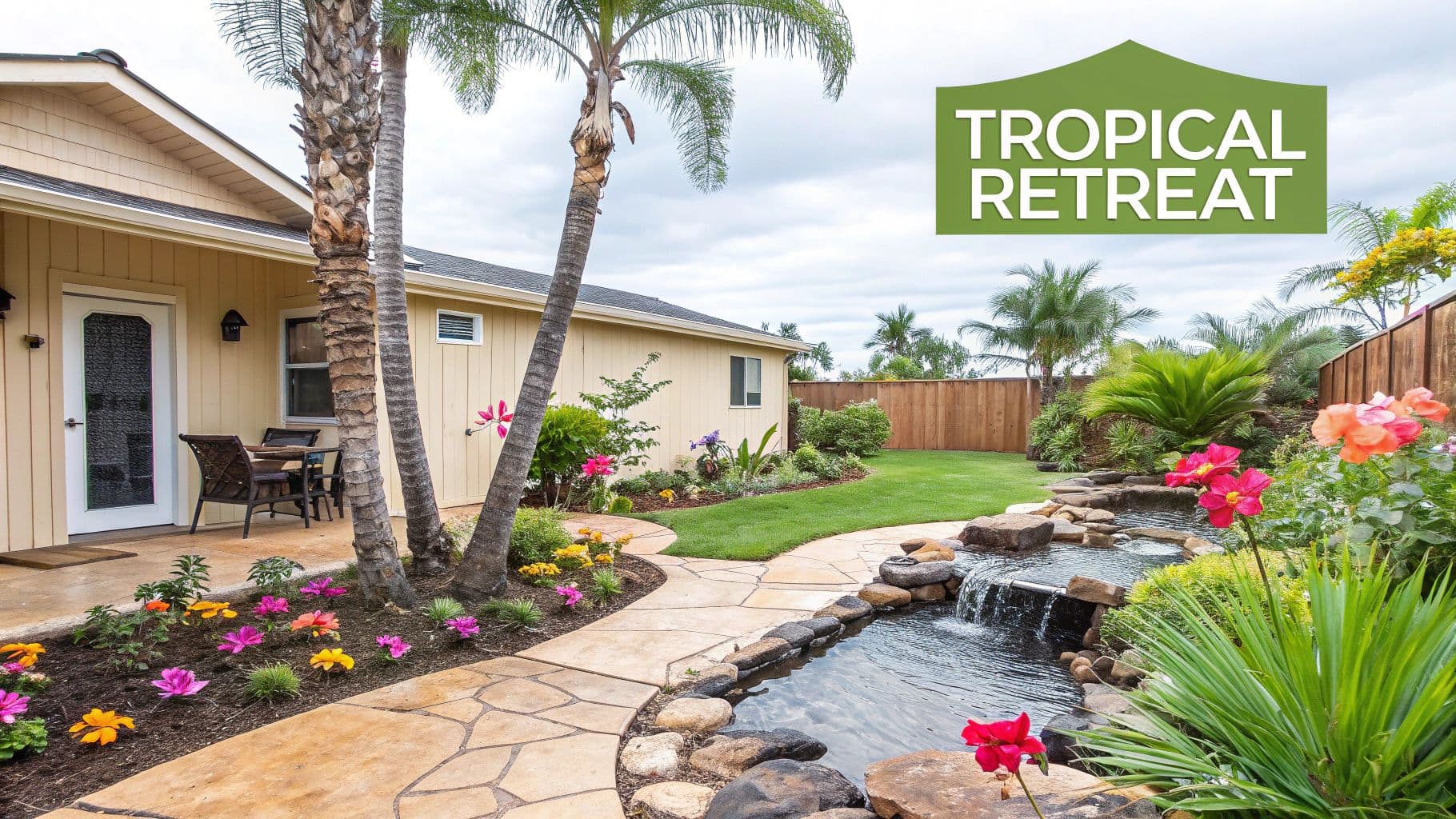
This design philosophy moves beyond simply planting flowers; it's about building a multi-sensory experience. The goal is to create dense, layered plantings that mimic a natural jungle or a curated resort garden, complete with dramatic textures and a rich, warm color palette.
How to Implement a Tropical Design
Success with this style hinges on plant selection and strategic layering. Even if you don't live in a tropical climate, you can achieve this look by choosing hardy, tropical-looking plants suited for your specific hardiness zone.
- Create a Lush Canopy: Start with tall anchor plants like Windmill Palms or Banana Trees to establish height and a distinct tropical silhouette.
- Layer Mid-Height Plants: Fill the middle ground with large-leafed shrubs and flowers such as Elephant Ears, Canna Lilies, and Hibiscus for vibrant color and texture.
- Add Dense Ground Cover: Use low-growing plants like Hostas or Sweet Potato Vine to cover the ground, which helps retain moisture and suppress weeds while completing the layered effect.
Key Insight: The secret to an authentic tropical landscape is density and variety. Avoid neat rows and instead group plants in overlapping clusters of varying heights, colors, and leaf shapes to create a natural, untamed feel.
Incorporating a water feature, like a small pond with a waterfall or a bubbling rock fountain, introduces the tranquil sound of moving water, which is central to the paradise theme. Finish the space with ambient outdoor lighting to highlight key plants and pathways, making your tropical island oasis enjoyable day and night.
2. Zen Meditation Island Landscape
The Zen Meditation Island Landscape is a serene, minimalist approach inspired by traditional Japanese gardens, making it one of the most contemplative island landscaping ideas. This design prioritizes balance, tranquility, and natural harmony, using carefully selected elements like stone, raked gravel, water, and sparse greenery. It transforms an outdoor area into a peaceful retreat for reflection and stress relief, ideal for homeowners who want their garden to be a sanctuary for mental wellness.
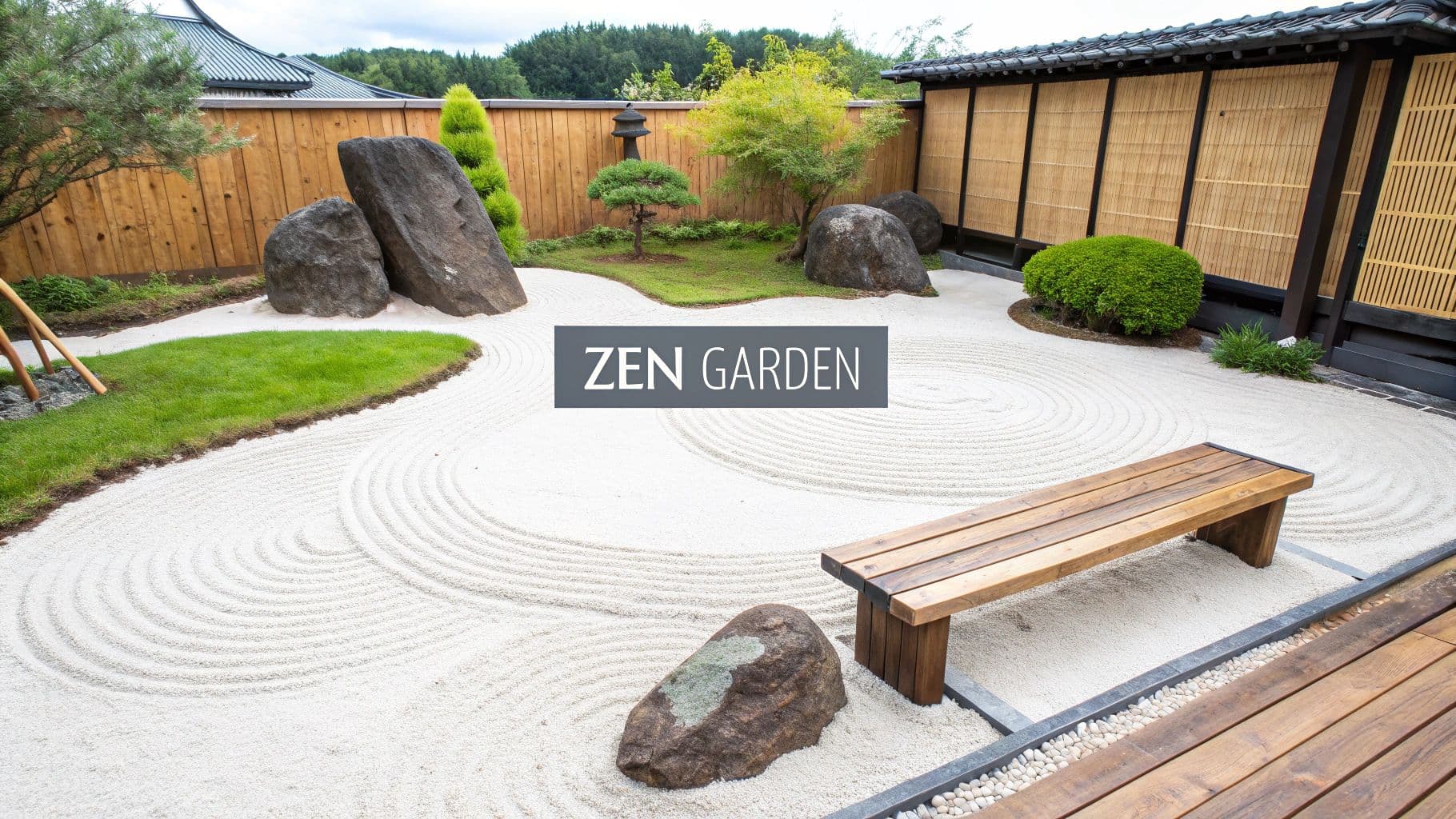
This design philosophy is less about showcasing floral abundance and more about creating a composition that encourages quiet observation. The goal is to craft a simplified, abstract representation of nature where every element has a purpose and a place, fostering a deep sense of calm and order.
How to Implement a Zen Design
Achieving an authentic Zen feel depends on thoughtful curation and the principle of "less is more." The arrangement of elements is as important as the elements themselves, creating a scene that feels both natural and intentional.
- Establish a Foundation: Use raked sand or fine gravel to represent water, with larger stones or boulders symbolizing islands or mountains.
- Select Sculptural Plants: Choose plants with interesting forms and silhouettes. A Japanese Maple provides elegant structure and seasonal color, while bamboo can create a natural screen.
- Limit the Plant Palette: Stick to a small selection of 3-5 complementary species, such as moss, mondo grass, and Japanese forest grass, to maintain a cohesive and uncluttered look.
Key Insight: In a Zen garden, empty space is a critical design element. Avoid filling every corner; the open areas are meant to give the other elements room to breathe and draw the eye, enhancing the overall sense of tranquility.
Consider adding a simple stone lantern, a small bamboo water feature (shishi-odoshi), or a "dry stream bed" made of smooth river rocks to introduce symbolic elements of water and light. A strategically placed bench encourages you to sit and appreciate the carefully composed view, completing your meditation island.
3. Mediterranean Island Oasis
The Mediterranean Island Oasis is an elegant and timeless choice among island landscaping ideas, drawing inspiration from the sun-drenched coastal regions of Greece, Italy, and Spain. This style is characterized by drought-tolerant plants, gravel pathways, terracotta accents, and warm-toned stone, creating a sophisticated, low-maintenance landscape. It is perfect for homeowners in dry climates or anyone seeking an Old-World European charm that is both beautiful and water-wise.
This design philosophy emphasizes functionality and resilience, balancing soft, aromatic foliage with rustic hardscaping. The goal is to evoke a sense of peaceful, sun-baked tranquility, where silvery-green leaves and pops of purple and blue contrast beautifully against earthy materials. It's a style that feels established, romantic, and effortlessly chic.
How to Implement a Mediterranean Design
Achieving an authentic Mediterranean look relies on selecting the right plants and materials that thrive in sunny, dry conditions. Excellent drainage is non-negotiable for this style to succeed, as most plants are adapted to arid, rocky soils.
- Select Core Structural Plants: Use foundational plants like Olive Trees, Italian Cypress, or Bougainvillea to create vertical interest and an unmistakable Mediterranean silhouette.
- Incorporate Aromatic Herbs and Flowers: Fill in with fragrant, low-water plants such as Lavender, Rosemary, and Santolina. These add texture, color, and a classic sensory experience.
- Use Gravel and Stone Mulch: Replace traditional wood mulch with pea gravel or crushed stone to enhance drainage, reflect heat, and create a clean, cohesive look.
Key Insight: The essence of a Mediterranean garden is the interplay between hardy plants and rustic hardscaping. Use terracotta pots and urns as focal points or to grow plants that need specific soil conditions, adding authentic, movable accents to the design.
For a cohesive feel, incorporate elements like a simple stone bench or a small bubbling fountain. Before you start digging, test your layout with a tool like OutdoorBrite. Its Mediterranean preset can help you visualize plant placement and hardscape combinations, ensuring your design captures the region's timeless beauty.
4. Modern Minimalist Island Landscape
The Modern Minimalist Island Landscape is one of the most sophisticated island landscaping ideas, focusing on clean lines, geometric shapes, and a "less is more" philosophy. It creates a sleek, uncluttered, and highly functional outdoor space that acts as an extension of contemporary architecture. This style is defined by a strong emphasis on hardscaping, a limited and intentional plant palette, and the strategic use of open space. It is perfect for homeowners who appreciate architectural elegance and desire a low-clutter, high-impact garden that feels both calming and curated.
This design approach is less about dense planting and more about the interplay between materials, form, and space. The goal is to create a serene and orderly environment where every element has a purpose, from a single specimen tree to a perfectly placed paver, resulting in a powerful yet understated aesthetic.
How to Implement a Modern Minimalist Design
Achieving a successful minimalist look depends on high-quality materials and a disciplined approach to planting and layout. The structure provided by hardscaping is just as important as the plants themselves.
- Prioritize Hardscaping: Use materials like large-format concrete pavers, sleek composite decking, or gravel beds to create strong geometric lines and defined zones.
- Select Architectural Plants: Choose a few high-impact plants with interesting forms and textures, such as Horsetail Reed, Agave, or ornamental grasses. Repeat these selections throughout the space for cohesion.
- Embrace Negative Space: Intentionally leave areas open. This "empty" space is a crucial design element that prevents the landscape from feeling crowded and draws attention to the features you’ve included.
Key Insight: In a minimalist design, restraint is your most powerful tool. Instead of adding more, focus on the quality and placement of a few key elements. Simplicity creates a sense of calm and sophistication that a busier design cannot.
Integrate functional features like built-in seating or a simple, linear fire pit to enhance usability without adding clutter. Layered outdoor lighting is essential to highlight architectural forms and pathways at night, adding drama and ambiance. You can use modern tools to help plan these intricate details; for example, you can learn more about how AI landscape design can assist homeowners in visualizing hardscape and plant placements before committing.
5. Native Plant Island Sanctuary
The Native Plant Island Sanctuary is one of the most sustainable and impactful island landscaping ideas, focusing on creating a thriving habitat using plants indigenous to your specific region. This ecological approach supports local wildlife, including pollinators and birds, while significantly reducing the need for water, fertilizers, and pesticides. It's an ideal choice for environmentally-conscious homeowners who want a beautiful, low-maintenance garden that works in harmony with the local ecosystem rather than against it.
This design philosophy is about more than just gardening; it's an act of ecological restoration. The goal is to build a self-sustaining miniature ecosystem that provides food and shelter for local fauna, celebrating the natural beauty of your area, whether it's a Midwest prairie, a California chaparral, or a Southeast woodland.
How to Implement a Native Plant Design
Success with this style relies on choosing the right plants for your specific microclimate and soil conditions. Authenticity comes from understanding what grows naturally in your area and arranging it to mimic a wild, yet curated, landscape.
- Establish a Framework: Start with native trees or large shrubs that are foundational to your local ecosystem, such as Oaks in the Northeast or Manzanitas in California.
- Layer with Perennials and Grasses: Fill the middle ground with native perennials like Coneflower, Black-Eyed Susan, or native grasses that provide seasonal color, texture, and food for wildlife.
- Incorporate Native Ground Covers: Use low-growing native plants like Wild Ginger or Creeping Phlox to cover bare soil, which helps retain moisture and outcompete invasive weeds.
Key Insight: A successful native landscape looks intentional, not just weedy. Achieve this by planting in dense, odd-numbered clusters (groups of 3, 5, or 7) and creating clear borders or pathways with natural materials like stone or mulch to frame the wildness.
Allowing plants to self-seed and naturalize over time is central to creating a truly authentic sanctuary. This hands-off approach lets your garden evolve naturally, creating a dynamic and resilient landscape that changes beautifully with the seasons and requires minimal intervention once established.
6. Cottage Garden Island Retreat
The Cottage Garden Island Retreat is a charming and romantic approach to island landscaping ideas, drawing inspiration from the informal, plant-packed gardens of English cottages. This style embraces a dense, layered look, overflowing with a mix of flowers, herbs, and even vegetables, all arranged in a seemingly spontaneous yet artfully curated manner. It's a design that prioritizes abundance, fragrance, and a sense of nostalgic wonder over strict, formal lines. This approach is perfect for homeowners who desire a garden with immense character, texture, and a storybook feel.
This design philosophy celebrates the beauty of imperfection. Instead of manicured hedges and rigid layouts, it features self-sowing annuals, climbing roses, and a tapestry of colors and forms that evolve throughout the seasons, creating a living, breathing landscape.
How to Implement a Cottage Garden Design
Achieving the signature "controlled chaos" of a cottage garden requires thoughtful plant selection and a focus on succession planting. The goal is to ensure the space is always brimming with life and color from early spring to late fall.
- Establish Structure with "Bones": Start with a few structural elements like a climbing rose on a small trellis, a hydrangea shrub, or a dwarf fruit tree to provide height and a year-round presence.
- Fill with Perennial Favorites: Layer in classic cottage perennials such as peonies, delphiniums, foxgloves, and lavender. Group them in drifts of three or five for a more naturalistic look.
- Weave in Annuals and Herbs: Use self-sowing annuals like cosmos and poppies, along with fragrant herbs like rosemary and thyme, to fill in gaps and add seasonal interest. This creates the full, abundant aesthetic that defines the style.
Key Insight: To prevent visual chaos, stick to a loose color theme. Choosing a palette of complementary colors, such as purples, blues, and pinks, helps unify the diverse plantings and creates a cohesive, harmonious feel despite the informal arrangement.
Define the garden island with a quaint border, like a low stone wall or a simple picket fence, to contain the exuberance and frame the scene. Incorporating a narrow, winding path of brick or stepping stones allows for easy access to tend to plants and adds to the garden's enchanting, explorable quality.
7. Contemporary Water Feature Island
The Contemporary Water Feature Island is one of the most dynamic island landscaping ideas, where a striking water element serves as the central anchor of the entire design. This approach uses fountains, reflecting pools, serene ponds, or even small streams to create a powerful focal point that engages multiple senses. It is perfect for homeowners who want to introduce movement, soothing ambient sounds, and a touch of modern luxury into their outdoor living space, turning a simple garden into a captivating retreat.
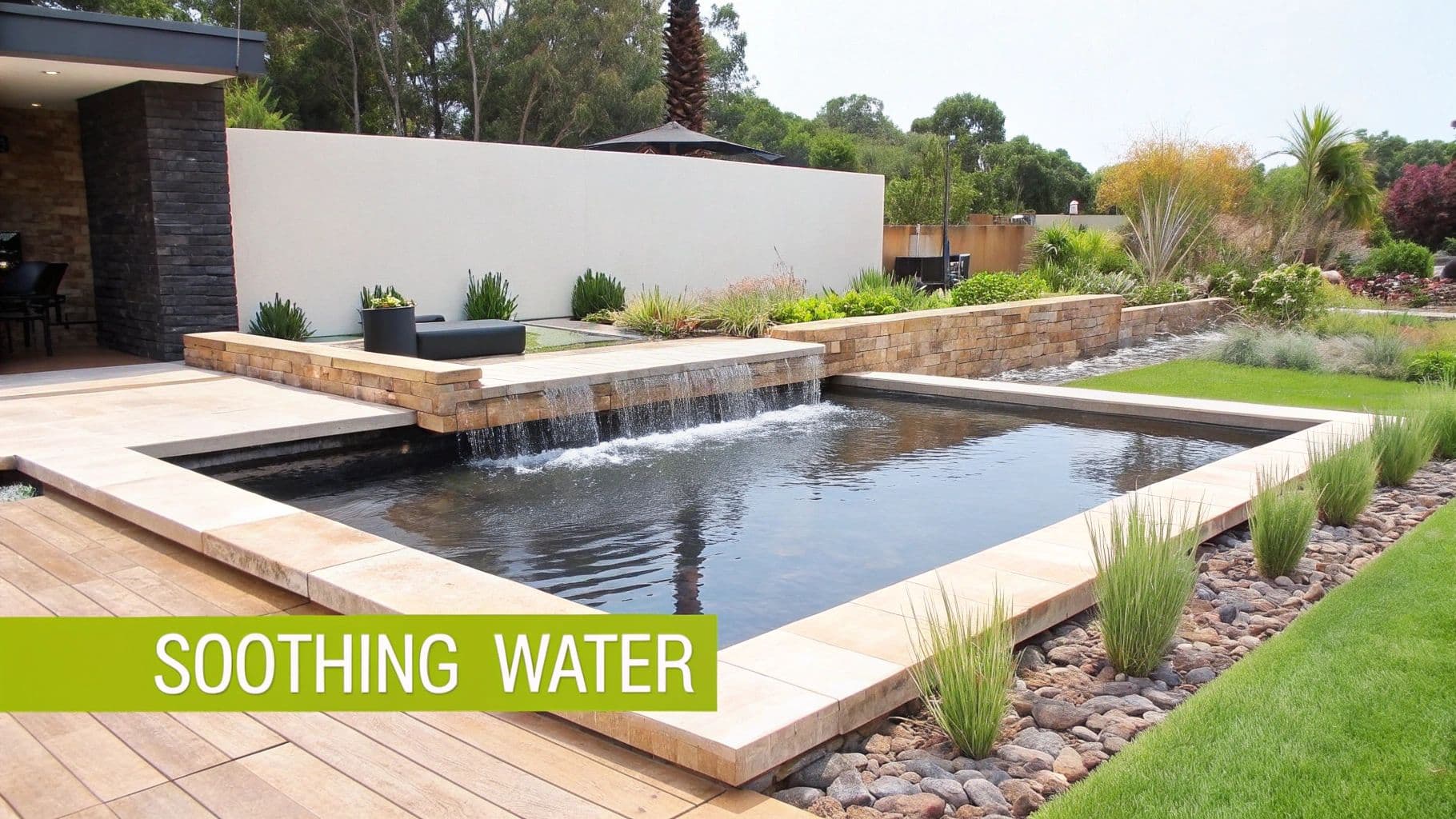
This design philosophy is about more than just adding water; it's about crafting an environment. The visual drama of a modern waterfall or the tranquil surface of a reflecting pool can define the mood of the entire yard, creating a natural gathering spot for relaxation and entertainment.
How to Implement a Water Feature Island
Successful execution relies on thoughtful placement and integration with the surrounding landscape. The water feature should feel like a deliberate and harmonious part of the design, not an afterthought.
- Choose the Right Feature: Select a feature that complements your home's architecture. A sleek, minimalist rill or reflecting pool suits a modern house, while a naturalistic stone waterfall works well in a more rustic setting.
- Integrate with Hardscaping: Surround your water feature with complementary materials like stone pavers, a wooden deck, or a gravel patio to create a cohesive and functional area. Add built-in seating to encourage lingering.
- Soften with Plantings: Use plants like Japanese Maples, ornamental grasses, and water-loving perennials around the feature's edge to soften hard lines and blend it into the garden.
Key Insight: Position your water feature where you can see and hear it from primary living areas, such as the living room or kitchen window. This maximizes its impact, allowing you to enjoy the calming sights and sounds both indoors and out.
Enhance the drama with underwater LED lighting, which transforms the feature into a stunning display after dark. Proper planning for pumps, filtration, and drainage is crucial for a low-maintenance, beautiful installation that provides enjoyment for years to come.
8. Sustainable Edible Island Garden
The Sustainable Edible Island Garden transforms a landscape feature into a productive, beautiful, and functional space. This is one of the most practical island landscaping ideas, integrating fruits, vegetables, herbs, and edible flowers into an aesthetically pleasing design, often referred to as "foodscaping." It’s an ideal approach for sustainability-minded homeowners who value food security, fresh flavors, and a direct connection to what they eat, turning a simple garden bed into a source of nourishment.
This design philosophy merges the principles of a traditional vegetable patch with ornamental gardening. Instead of hiding food production in the backyard, it celebrates it, using the textures, colors, and forms of edible plants to create a visually appealing landscape feature that is both beautiful and bountiful.
How to Implement an Edible Design
Success with an edible garden hinges on thoughtful planning, soil health, and smart plant choices that offer both beauty and sustenance. The goal is to create a multi-layered, productive ecosystem.
- Build a Strong Foundation: Start with excellent soil. Amend the island bed with rich compost and organic matter to provide the nutrients your crops will need to thrive.
- Structure with Vertical Elements: Maximize your growing space by incorporating trellises or cages for vining plants like tomatoes, cucumbers, and beans. This adds height and visual interest.
- Incorporate Companion Plants: Mix in edible flowers like marigolds and nasturtiums. They add pops of color, attract beneficial insects, and can help deter common garden pests.
- Layer with Herbs and Greens: Use low-growing herbs like thyme and oregano as an attractive ground cover or border, while leafy greens like colorful lettuces and Swiss chard fill in the middle ground.
Key Insight: Treat your edible garden like an ornamental one. Think about color, texture, and form by mixing plants like purple-leaf basil next to green lettuce or planting feathery carrot tops near broad-leafed zucchini. This creates a design that is as pleasing to the eye as it is to the palate.
Plan for succession planting to ensure a continuous harvest throughout the seasons. As one crop finishes, have another ready to take its place. This keeps the garden looking full and productive from early spring through late fall.
9. Seasonal Color Rotation Island Design
The Seasonal Color Rotation Island design is one of the most dynamic island landscaping ideas, focused on creating a landscape that offers peak visual interest throughout the entire year. This approach moves beyond a single-season "wow" factor, ensuring your garden bed is a vibrant focal point from the first spring bulbs to the stark beauty of winter. It is perfect for homeowners who want consistent, year-round curb appeal and a garden that continuously evolves.
This design philosophy requires strategic planning and a deep understanding of plant life cycles. The goal is to choreograph a sequence of blooms, foliage colors, and structural forms so that as one plant's display fades, another begins to shine, creating a seamless and ever-changing botanical showcase.
How to Implement a Seasonal Color Rotation Design
Success with this style depends on a well-planned plant schedule and strong structural elements that provide a consistent backdrop for the rotating cast of colorful performers.
- Establish a Winter Backbone: Start with evergreen shrubs like Boxwood or Dwarf Alberta Spruce and plants with interesting bark or structure, such as Red Twig Dogwood, to provide shape and interest during the winter months.
- Layer for Staggered Blooms: Incorporate plants with different bloom times. Plant spring-flowering bulbs like tulips and daffodils in the fall, followed by summer stars like Coneflower and Black-Eyed Susans, and finish with fall bloomers like asters and sedum.
- Select for Multi-Season Interest: Choose plants that offer more than just flowers. For example, an Oakleaf Hydrangea provides spring blooms, lush summer foliage, stunning fall color, and interesting winter bark.
Key Insight: Create a plant schedule chart that maps out bloom times, foliage color, and periods of interest for each plant by month. This visual tool is essential for identifying gaps and ensuring your island landscape always has something spectacular to offer.
To maximize visual impact, layer your seasonal color in three distinct zones: foreground, mid-ground, and background. This technique adds depth and ensures that new points of interest are always emerging. Using a garden journal to track plant performance each season will help you make adjustments and perfect your rotation year after year.
10. Low-Maintenance Contemporary Hardscape Island
The Low-Maintenance Contemporary Hardscape Island is one of the most practical and sophisticated island landscaping ideas, prioritizing clean lines, durable materials, and architectural form over traditional plantings. This design focuses on using pavers, decorative gravel, and minimalist wood elements to create a chic, modern outdoor space that requires virtually no watering, weeding, or seasonal upkeep. It is an ideal solution for busy homeowners, those in water-restricted areas, or anyone seeking a sleek, stress-free garden that remains beautiful year-round.
This approach is about creating functional and visually striking zones using texture, color, and geometry. Instead of dense foliage, the interest comes from the interplay of different materials like smooth concrete, textured river stones, and warm wood decking, complemented by just a few carefully selected architectural plants.
How to Implement a Contemporary Hardscape Design
Success with this style is rooted in thoughtful material selection and a "less is more" philosophy. The goal is to build a structured, uncluttered environment that feels intentional and elegant.
- Establish a Solid Foundation: Use high-quality pavers, concrete slabs, or composite decking to define functional areas for seating, dining, or pathways.
- Incorporate Textural Contrast: Fill surrounding or in-between spaces with decorative aggregates like black lava rock, crushed granite, or smooth river stones to add visual interest without maintenance.
- Add Strategic Greenery: Select one to three high-impact, low-care architectural plants, such as a Japanese Maple, Agave, or ornamental grasses. Place them in focal points to serve as living sculptures.
Key Insight: The power of a contemporary hardscape design lies in its composition. Treat the space like an outdoor room, using different materials to define the "floor" and a few key plants or a water feature as the "art" on the walls.
Enhance the modern aesthetic with clean, minimalist outdoor furniture and subtle landscape lighting to highlight the textures of the hardscape materials at night. Using a tool like OutdoorBrite can help you visualize the ratio of pavers to gravel and preview how different materials will look together before making a significant investment.
Comparison of 10 Island Landscaping Designs
| Design | 🔄 Complexity (Implementation) | ⚡ Resource Requirements (Cost / Maintenance / Water) | ⭐ Expected Outcomes (Effectiveness / Quality) | 📊 Ideal Use Cases | 💡 Key Advantages (Tips/Strengths) |
|---|---|---|---|---|---|
| Tropical Island Paradise Design | High — complex plant palette, water features, climate control | High cost & maintenance; high water in warm climates or greenhouse needs | ⭐⭐⭐ Immersive, vacation-like retreat; strong curb appeal | Luxury/resort-style yards; entertaining landscapes; warm-climate homes | High visual impact; layered planting for depth; water features as focal points |
| Zen Meditation Island Landscape | Medium — precise layout and composition required | Moderate initial cost; low plant variety; occasional gravel/stone upkeep | ⭐⭐ Calm, meditative retreat; low-to-medium upkeep; timeless aesthetic | Small backyards, meditation zones, wellness-focused homes | Simple palette; symbolic water/dry beds; seating oriented to view |
| Mediterranean Island Oasis | Low–Medium — straightforward palette, soil/drainage prep | Moderate initial cost; very low water once established | ⭐⭐ Durable, fragrant, drought-tolerant aesthetic; cost-effective long-term | Dry climates, low-water yards, Mediterranean-style homes | Water-efficient plantings; group by irrigation needs; use terracotta accents |
| Modern Minimalist Island Landscape | Medium–High — precise hardscape and material execution | Moderate–High hardscape cost; low plant maintenance; skilled installation | ⭐⭐ Sleek, functional outdoor rooms; upscale curb appeal | Contemporary homes, urban courtyards, rooftop terraces | Repeat 2–3 architectural plants; invest in quality materials; use negative space |
| Native Plant Island Sanctuary | Low — research-driven; straightforward implementation | Low long-term cost; very low water and inputs once established | ⭐⭐–⭐⭐⭐ Highly sustainable; supports biodiversity; very low upkeep | Eco-conscious homeowners, habitat restoration, larger lots | Region-appropriate plants; group in clusters; allow naturalization |
| Cottage Garden Island Retreat | Medium — diverse plantings require scheduling and layout | Moderate cost; high ongoing maintenance and water | ⭐⭐ Colorful, fragrant, abundant; great for cut flowers and pollinators | Romantic/residential gardens, edible/ornamental mixes | Plan bloom succession; choose a color theme; use paths for structure |
| Contemporary Water Feature Island | High — engineering, pumps, filtration, permits often needed | Very high initial cost; medium–high ongoing maintenance and energy use | ⭐⭐⭐ Dramatic focal point; soothing soundscape; strong value increase | Luxury yards, entertaining zones, visual/sonic focal areas | Scale to sightlines; plan seating nearby; include lighting and overflow drains |
| Sustainable Edible Island Garden | Medium — crop planning, rotations, companion planting | Low–Moderate cost; regular labor; irrigation and composting needed | ⭐⭐–⭐⭐⭐ Productive yields; edible beauty; food security benefits | Food-producing households, permaculture plots, educational gardens | Start with easy crops; group by water needs; keep planting notes |
| Seasonal Color Rotation Island Design | High — extensive planning for continuous seasonal interest | High establishment cost; variable seasonal maintenance | ⭐⭐⭐ Year-round visual interest; dynamic curb appeal across seasons | Showpiece gardens, public/resort landscapes, homeowners wanting variety | Use backbone evergreens; create a bloom schedule; layer for depth |
| Low-Maintenance Contemporary Hardscape Island | Medium — installation-focused hardscaping precision | High initial material/install cost; very low ongoing maintenance; minimal watering | ⭐⭐ Practical, durable, very low-maintenance outdoor space | Busy homeowners, rentals, water-restricted regions | Preview hardscape ratios; add containers for seasonal color; choose durable materials |
Visualize Your Perfect Island Before You Dig
We've journeyed through a diverse collection of island landscaping ideas, from the lush, vibrant canopies of a Tropical Island Paradise to the serene, ordered simplicity of a Zen Meditation Island. You've seen how a Mediterranean Oasis can bring sun-baked elegance to your yard, and how a Modern Minimalist design uses clean lines and strategic planting to make a powerful statement. Each concept offers a unique blueprint for transforming an ordinary patch of lawn into a stunning focal point.
The true value of these ideas lies in their adaptability. A Native Plant Sanctuary isn't just an aesthetic choice; it's a commitment to supporting your local ecosystem. Similarly, a Sustainable Edible Garden turns your landscape into a productive, rewarding space that provides fresh herbs and vegetables. Whether you crave the whimsical charm of a Cottage Garden Retreat or the dynamic, ever-changing beauty of a Seasonal Color Rotation design, the right approach is waiting for you.
From Inspiration to Implementation: Bridging the Gap
The most common hurdle in landscaping isn't a lack of inspiration; it's the uncertainty of execution. It’s one thing to admire a photo of a sleek Contemporary Water Feature and another to feel confident it will complement your home's architecture. This is where planning becomes your most critical tool. The success of your project hinges on your ability to translate a concept into a tangible, well-executed design that fits your space, climate, and lifestyle.
Remember these core principles as you move forward:
- Scale and Proportion: Ensure your island bed is sized appropriately for your yard. A tiny island can get lost in a large lawn, while an oversized one can overwhelm the space.
- Cohesion is Key: Your chosen theme should feel like a natural extension of your home and surrounding landscape. The materials, colors, and plant types should create a harmonious, unified look.
- Function Over Form (First): Before you fall in love with a specific plant, confirm it will thrive in your climate and soil. A low-maintenance design, like a Contemporary Hardscape Island, is a brilliant choice for busy homeowners, prioritizing longevity and ease of care.
Key Takeaway: The perfect landscape island is a thoughtful blend of personal style, environmental reality, and practical maintenance. Your vision must be grounded in what your space can support and what your schedule will allow.
The Power of Prototyping Your Vision
The ultimate secret to a successful project is seeing the final result before you ever lift a shovel. Guesswork can lead to expensive and time-consuming mistakes, like choosing plants that grow too large for the space or installing hardscaping that clashes with your home's exterior. This is why virtual visualization has become an indispensable step for modern DIY landscapers.
Instead of trying to imagine how these different island landscaping ideas will look, you can see them in photorealistic detail. An AI-powered tool allows you to upload a picture of your current yard and instantly apply various designs. You can experiment with a low-maintenance xeriscape, see how a pollinator-friendly garden will look in full bloom, or test different stone materials for a walkway. This process removes the risk and empowers you to make informed decisions with confidence, ensuring the island you build is the island you've been dreaming of.
Your yard holds immense potential to become a source of pride, relaxation, and beauty. Armed with these diverse ideas and a clear path to visualizing them, you are now equipped to create a landscape feature that not only enhances your curb appeal but also enriches your daily life.
Ready to stop guessing and start seeing? Use OutdoorBrite to upload a photo of your yard and instantly visualize any of these island landscaping ideas in your own space. Get photorealistic AI renderings in seconds and design your perfect outdoor oasis with confidence by visiting OutdoorBrite.