Elevate Your Outdoor Space with a Backyard Landscape Plan
Plan a thriving outdoor space with a backyard landscape plan: assess layout, choose resilient plants, and visualize your dream yard today.
A great backyard landscape plan doesn't start with a shovel; it starts with a clear vision. This first step is about turning vague daydreams into a workable strategy, ensuring the final result is a space you'll love and use.
Starting Your Backyard Plan With a Clear Vision
Before drawing up a design, you must get to know the canvas you’re working with. This initial assessment isn't about technical drawings; it's about practical observation. Getting this right is your best defense against costly mistakes.
You’re not alone in this. Homeowners are realizing their backyards are more than just grass. The global landscaping services market is expected to hit USD 201.9 billion by 2034, largely because people want functional "outdoor living spaces." A smart plan is a smart investment, and with 55.9% of gardeners looking to expand their green spaces, your project is right on trend. This process is about making your yard work for you. It all comes down to asking the right questions and taking a detailed inventory of what you have.
Assess Your Existing Environment
Every yard has a unique combination of sunlight, soil, and existing structures. The best thing you can do is spend a few days watching it. Pay attention to where the sun is at different times of the day—that perfect spot for a vegetable garden might be in total shade by 3 PM.
This observation phase helps you answer critical questions:
- Sunlight Patterns: Where do you get full sun (6+ hours), partial shade, or full shade? This factor will dictate your plant choices. A sun-loving rose will languish in a dark corner, while a delicate hosta will get scorched by the afternoon sun.
- Soil Type: Is your soil sandy, loamy, or heavy clay? A simple "jar test" can give you a good idea. Knowing this helps you pick plants that will thrive or tells you what amendments your soil needs.
- Existing Features and Challenges: Sketch everything that's already there—mature trees, sheds, slopes, or low spots where water puddles. These aren't just obstacles; they're design opportunities. A gentle slope is perfect for a terraced garden, and a large tree can anchor a cozy shade garden.
One of the most common mistakes is fighting your yard's natural tendencies. People try to force a sun-drenched Mediterranean garden into a shady, damp space. Don't do it. Lean into what you have. Working with your environment saves time, money, and future headaches.
To help you get started, here's a checklist to guide your initial site assessment.
Backyard Landscape Plan Initial Checklist
| Assessment Area | Key Questions to Ask | Why It Matters for Your Plan |
|---|---|---|
| Sun & Shade | Where does the sun hit in the morning vs. afternoon? Which areas are always shady? | Determines plant selection (sun-loving vs. shade-tolerant) and placement of features like patios or vegetable gardens. |
| Soil Conditions | Is the soil sandy (drains fast), clay (heavy/wet), or loamy (ideal)? Is it acidic or alkaline? | Affects which plants will thrive, irrigation needs, and whether you need to amend the soil with compost or other materials. |
| Water & Drainage | Where does water pool after it rains? Are there any overly dry or soggy spots? | Highlights potential drainage issues that need fixing and informs where to place plants that prefer wet or dry conditions. |
| Existing Plants | What trees, shrubs, or perennials do you want to keep? What needs to go? | Mature plants can be valuable assets to design around, providing shade, structure, and a focal point for new plantings. |
| Structures & Hardscape | Where are existing patios, walkways, sheds, fences, or utility lines? | These fixed elements define the "bones" of your yard and must be incorporated into any new layout. |
| Views & Privacy | What do you see from your windows? Where do you need to screen a neighbor's view or a busy street? | Helps you strategically place trees, shrubs, or structures to enhance good views and block undesirable ones. |
| Wind & Weather | Are there any windy corridors or protected microclimates? | Important for placing delicate plants, fire pits, or outdoor dining areas where they'll be sheltered. |
This table is a solid foundation. Walking your property with these questions in mind will give you the practical knowledge needed to build a plan that fits your space.
Define Your Goals and Set a Realistic Budget
Once you understand your yard, figure out what you want to do with it. A vague goal like "a nicer backyard" isn't enough. Get specific. Are you dreaming of a hub for summer barbecues? Or craving a quiet retreat? Perhaps a productive vegetable garden is the top priority.
Make two columns: must-haves and nice-to-haves. This is a game-changer for prioritizing and budgeting. For example, a paver patio might be a must-have, while an elaborate water feature could be a nice-to-have for a future phase. Your budget will steer almost every decision. To get a feel for what's possible and gather ideas, explore platforms like our AI landscape design tool. A realistic financial plan from the start keeps your project on track. This foundational work—assessment and goal-setting—is the most important part of any successful backyard plan.
Putting Pen to Paper: Your Base Map and Functional Zones
Now, it's time to bring your vision down to earth by creating an accurate base map. Don't skip this. A solid base map is the foundation of your entire project, keeping your design grounded in reality. It prevents expensive mistakes, like buying a patio set that's too big for your deck or planting a sapling that will one day block a window. It doesn’t have to be a masterpiece, just an honest, to-scale drawing of your space.
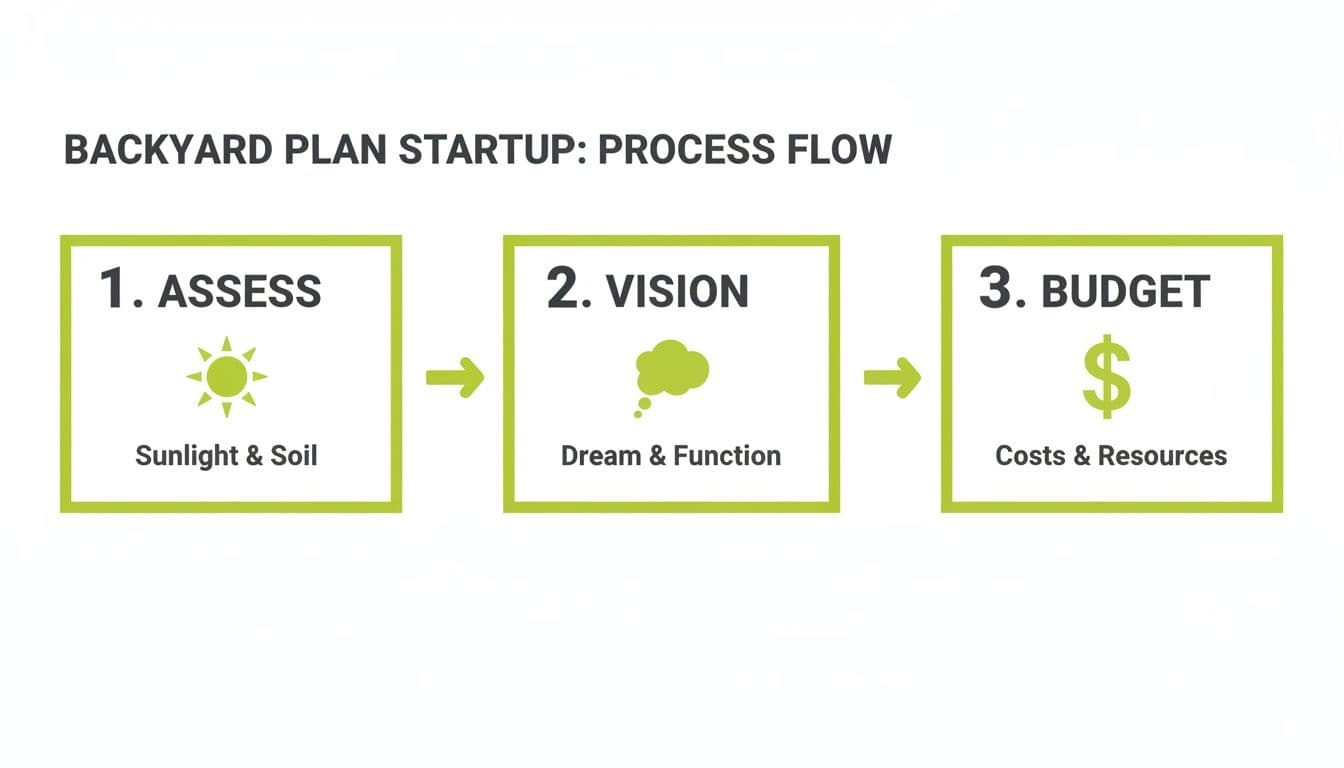
As you can see, this process is logical. Each step builds on the one before, ensuring your final layout is informed by your goals and your yard's real-world dimensions.
Measure Twice, Draw Once
Grab a long measuring tape (a 100-foot one is perfect), graph paper, and a pencil. Start by measuring your property lines and the outline of your house. Pick a scale you can easily work with, like 1 inch = 4 feet.
With your perimeter drawn, add all the fixed elements you have to work around. Get as precise as you can.
- Structures: Plot your house, garage, shed, decks, patios, and fences.
- Utilities: Pinpoint every outdoor faucet, electrical outlet, and your HVAC unit. Note any visible utility boxes.
- Natural Features: Sketch in large trees you're keeping, noting the full spread of their canopy to define shade zones. Add significant slopes or large boulders.
Once this is on paper, the true canvas of your yard emerges, with all its opportunities and constraints laid bare.
Carving Out Your Outdoor Rooms
With your base map complete, the fun begins. Start zoning, just like creating a floor plan for your home. Instead of scattering features, assign specific purposes to different areas. This makes a yard feel organized, intuitive, and larger.
A well-zoned backyard feels bigger and more usable. By dedicating specific areas to distinct functions—dining, relaxing, playing—you eliminate clutter and create a more intentional experience. It’s the difference between a random collection of furniture and a true outdoor room.
Think back to your goals. If you have young kids, a dedicated play zone is likely a priority. If you love to host, a spacious dining and grilling area is a must. Block these areas out on your map.
Making It All Flow
The final piece is connecting your zones. Think about how people will move through the space. How do you get from the grill to the dining table? What’s the path from the back door to a quiet bench? This is about walkways, sightlines, and smart transitions.
Here are a few ways to achieve good flow:
- A Curved Gravel Path: A winding path can connect a sunny lounge area to a shady reading nook, making the short walk feel like a journey.
- Consistent Materials: Using the same pavers for the main patio and a smaller seating spot creates a powerful visual link.
- Strategic Planting: A low hedge or a line of tall ornamental grasses can create a soft screen between a kids' play space and an adult conversation pit, defining each zone without a wall.
By mapping, zoning, and planning the flow, you're designing a functional, beautiful landscape that truly works for the way you live.
Bringing Your Vision to Life with AI Design Previews
You’ve mapped your backyard and sketched out zones. But it’s still just lines on paper. It can be hard to picture how a rustic flagstone patio will feel or if a minimalist garden will complement your home. This is where technology can help. AI landscape design tools can transform your simple plan into a vivid, photorealistic glimpse of the future.
Platforms like OutdoorBrite are your personal design sandbox. It's a risk-free way to play with countless ideas before buying a single plant or paver. The process is simple and helps eliminate guesswork.
From a Simple Photo to a Realistic Plan
The concept is brilliant in its simplicity. You upload a clear photo of your current backyard. From there, you can start applying different design styles to see an instant makeover. This is your chance to explore possibilities you might never have considered. Ever wondered if your yard could pull off an 'English Cottage' vibe? Or maybe a sleek 'Modern Minimalist' design is a better fit. With a few clicks, you can generate multiple, distinct visions for your yard.
This is a huge help for anyone who has a fuzzy idea of what they want. In fact, one study found that 73% of design tool users felt more confident in their decisions after seeing a visual preview. It closes the gap between the concept in your head and the finished project.
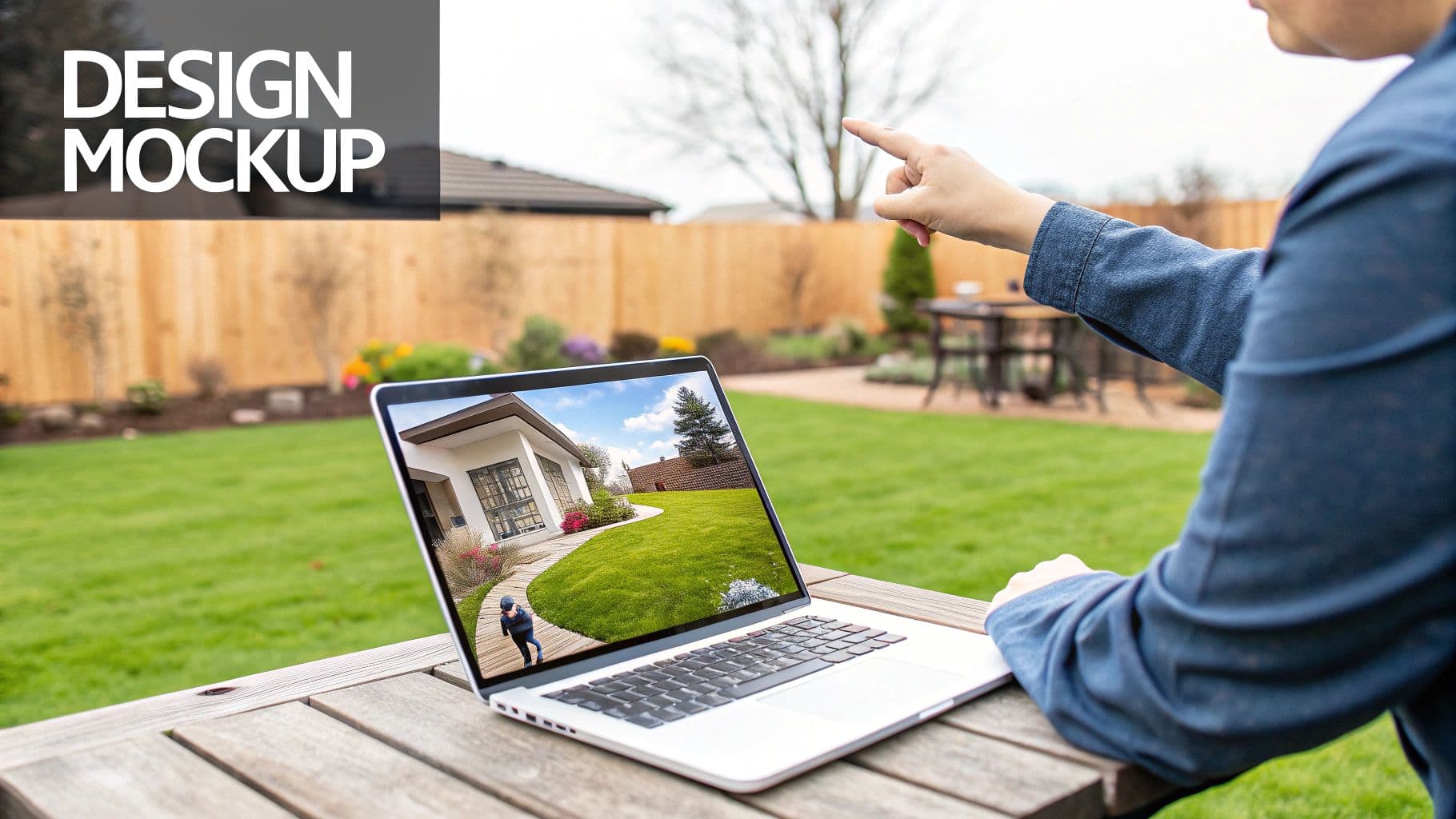
A basic photo gets transformed into a complete design concept, instantly filling the space with plants, hardscaping, and furniture. It brings professional-grade visualization to your fingertips.
Test Driving Your Materials and Layout
Beyond broad styles, AI tools are fantastic for making specific decisions that can stall a project. This is where you test all the "what-ifs."
- Hardscaping Face-Off: See how a dark wood deck looks next to a light paver patio. Compare a casual gravel path to a formal flagstone walkway.
- Planting Palettes: Not sure about a traditional lawn? Generate a version with a drought-tolerant garden of succulents and native grasses. See how trees or shrubs can impact privacy.
- Placing Key Features: Wondering where a fire pit or pergola should go? Drag and drop it into different spots to see how it affects the flow.
I like to think of AI visualizers as an infinite "undo" button for your backyard. It gives you the freedom to try bold ideas without real-world consequences, helping you zero in on the perfect combination of elements.
Being able to quickly cycle through ideas is a game-changer. You can compare dozens of options in a single afternoon. This speeds up the planning phase and gives you the confidence that the final design is one you’ll love for years to come.
Choosing Plants and Materials That Last
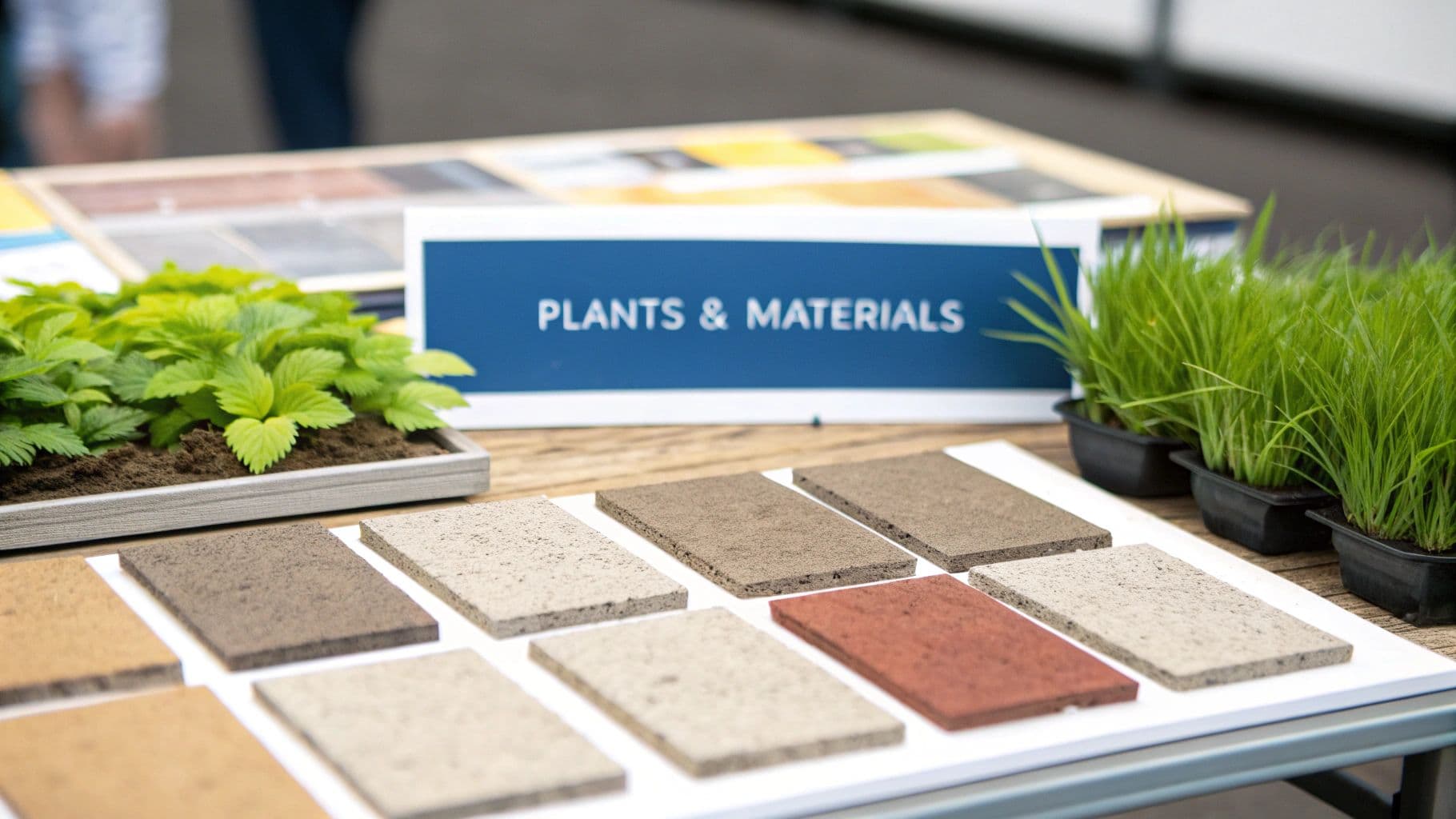
This is where your backyard vision takes shape. The plants and hardscaping materials you choose set the tone and determine future maintenance. It's time to think beyond what looks pretty and make smart, sustainable choices. A great landscape is a cohesive ecosystem where every element supports the others. Get this right, and you’ll have a beautiful space that saves you time, water, and money.
The "Right Plant, Right Place" Golden Rule
If you take one piece of advice, let it be this: "right plant, right place." This mantra is key to a successful, low-maintenance garden. It means selecting plants adapted to your yard's specific sun, soil, and climate. Trying to force a shade-loving fern to survive in baking sun is a classic mistake. When you work with nature, your plants will thrive with less water, fertilizer, and effort.
This is a major trend. We're seeing a 13% decline in demand for traditional turf lawns, while requests for drought-tolerant landscapes have shot up by 30%. This approach can slash water bills by 40-50% annually—good for the planet and your wallet.
Curating Your Plant Palette
A stunning garden is a carefully curated palette designed for year-round visual interest. The trick is to think in layers of different heights, textures, and bloom times.
Here’s how to get started:
- Go Native, Always. Native plants are champs of easy-care gardening. They've evolved to thrive in your local climate, support local pollinators, and resist regional pests.
- Think in Four Seasons. Plan for year-round beauty by mixing evergreen shrubs for winter structure, bulbs for spring color, vibrant summer perennials, and trees with spectacular fall color.
- Play with Texture and Form. Contrast is your best friend. Pair bold Hosta leaves with delicate fern fronds or the spiky silhouette of ornamental grass to create a rich visual tapestry.
By focusing on native and pollinator-friendly species, you're not just creating a garden; you're building a habitat. It’s a powerful way to make your backyard an active part of the local ecosystem.
For creative ways to group plants, our guide on island landscaping ideas has fantastic inspiration for creating lush, defined garden beds.
Selecting Hardscaping Materials That Go the Distance
Hardscaping—patios, pathways, and walls—is the foundation of your design. The materials you select impact your budget, aesthetic, and maintenance. It's tempting to cut costs, but a cheap material that cracks in five years is no bargain. Investing more upfront in quality material often pays for itself through decades of durability.
Always match the material to the job. A high-traffic patio needs a tough surface like pavers or natural stone. A quiet garden path could be perfect for rustic gravel or mulch.
Hardscaping Material Comparison Guide
A side-by-side look at common hardscaping materials to help you decide on the best option for your patio, paths, and features based on budget, durability, and maintenance.
| Material | Average Cost (per sq ft) | Durability | Maintenance Level |
|---|---|---|---|
| Concrete Pavers | $8 - $20 | Very High | Low |
| Natural Stone | $15 - $35 | Very High | Low |
| Poured Concrete | $6 - $15 | High | Low (can crack) |
| Gravel/Crushed Stone | $2 - $5 | Moderate | Moderate (needs weeding) |
| Composite Decking | $15 - $30 | Very High | Very Low |
| Wood Decking | $10 - $25 | Moderate | High (needs staining) |
There's a tradeoff between initial cost and long-term effort. By thoughtfully choosing plants that will thrive and materials built to last, you’re turning your backyard plan into a beautiful, sustainable reality.
Don't Forget the Wiring and Plumbing: Integrating Lighting and Irrigation
A truly great backyard plan goes beyond plants and patios. The magic comes from the systems that keep it alive and extend its use into the evening: irrigation and lighting. Too often, these are an afterthought. Planning for them from the beginning will save you time, money, and frustration. There's nothing worse than tearing up a new lawn because you forgot to run a water line or a cable. Irrigation is the lifeblood of your garden, and lighting lets you enjoy it after dark.
Smart Watering for a Healthier Garden
Water is precious and expensive. A well-designed irrigation system is one of the smartest investments for your landscape's health and your wallet. The right setup can cut water use by up to 50% compared to a hose and sprinkler.
Here are a few modern solutions:
- Drip Irrigation: My go-to for garden beds. It delivers water slowly at the base of each plant, meaning less evaporation and fewer fungal diseases.
- Soaker Hoses: A simpler, budget-friendly option. They "weep" water along their length, ideal for hedges or vegetable gardens.
- Smart Controllers: These Wi-Fi-enabled timers tap into local weather data and automatically adjust watering cycles. Set it and forget it.
The key is to "zone" your system, grouping plants with similar water needs together. This simple step makes everything more efficient.
Bringing Your Landscape to Life After Dark
Landscape lighting is about more than safety; it's about atmosphere and drama. A well-designed lighting plan can transform your backyard, effectively doubling the time you can spend out there.
A great lighting plan doesn't just illuminate; it sculpts the landscape with light and shadow. It guides the eye, creates a mood, and reveals a different kind of beauty.
Like plantings, your lighting should be layered. Combine different techniques for a rich, dynamic feel.
| Lighting Technique | Purpose | Best Used For |
|---|---|---|
| Uplighting | Creates a dramatic, theatrical effect. | Highlighting a specimen tree or the texture of a stone wall. |
| Path Lighting | Guides the way and ensures safe footing. | Illuminating walkways, steps, and patio edges. |
| Downlighting | Mimics natural moonlight for a soft, ambient glow. | Placing high in a tree to cast dappled light over a dining area. |
| Accent Lighting | Draws the eye to a special feature. | Showcasing a sculpture, fountain, or a favorite ornamental grass. |
For more ideas, check out our full gallery of landscape design ideas on our blog. My advice? Start with a low-voltage LED system. They’re energy-efficient and safer for DIY installation. Map out your wiring runs on your base plan before you start digging. By putting irrigation and lighting at the forefront of your plan, you're building a sustainable, safe, and truly enjoyable backyard.
Your Top Backyard Planning Questions Answered
Starting a backyard project always raises a few questions. Let's walk through some common ones so you can move forward with confidence.
How Much Should I Budget for My Backyard Plan?
A common rule of thumb is to budget 10-20% of your home's value for a full renovation. Realistically, most people don't do that all at once, and a smart DIY plan can bring costs down significantly. The secret is to phase your project. Maybe year one is the paver patio. Next spring, tackle the garden beds. Breaking it up makes the investment feel less intimidating.
Can I Really Create a Good Plan Myself?
Absolutely. While you should call pros for heavy-duty work like major grading or retaining walls, the average homeowner is more than capable of designing a beautiful backyard. The key is being methodical. Don't skip the foundational steps: analyze your site, define your goals, and draw a scaled base map. Modern tools can be a huge help, letting you play with ideas and see how a feature like a retaining wall will look.
The biggest—and most expensive—mistake is rushing to the nursery with no plan. This leads to a yard that feels disconnected, plants dying in the wrong spot, and features that don't work. Time spent planning is the best money you'll ever spend.
What's the Single Biggest Mistake to Avoid?
Easy: underestimating how big plants will get. That cute little shrub in a one-gallon pot seems perfect, but the tag says it'll grow to be 8 feet tall and wide. In five years, it's swallowing your walkway and blocking a window. This mistake creates a cycle of endless pruning. Always read the plant tag for its mature size and use that dimension on your plan. Give plants the space they need to thrive from day one.
Ready to stop guessing and start visualizing? OutdoorBrite uses powerful AI to turn a simple photo of your yard into a stunning, realistic design in seconds. Experiment with different styles, test materials, and create the perfect backyard landscape plan before you ever break ground. Try OutdoorBrite today and bring your vision to life!