10 Smart DIY Backyard Landscaping Ideas to Try This Year
Transform your space with these 10 actionable diy backyard landscaping ideas. Find inspiration for patios, gardens, lighting, and more for any budget.
Transforming your backyard into a personal oasis can feel like a daunting task, but it's more achievable than you might think. With some planning and a willingness to get your hands dirty, you can execute stunning projects that elevate your home's appeal. This guide offers a collection of actionable DIY backyard landscaping ideas tailored for various skill levels and budgets.
We'll explore practical solutions, from building rustic gravel pathways and vibrant vertical gardens to installing ambient outdoor lighting. Each idea is presented as a mini-project guide, helping you craft the backyard of your dreams one weekend at a time.
1. Raised Garden Beds
Raised garden beds are elevated planting boxes built above ground, typically from wood or metal. This is one of the most rewarding DIY backyard landscaping ideas, offering control over soil, improved drainage, and a warmer root environment for a longer growing season. They create a tidy look and reduce the need to bend or kneel.
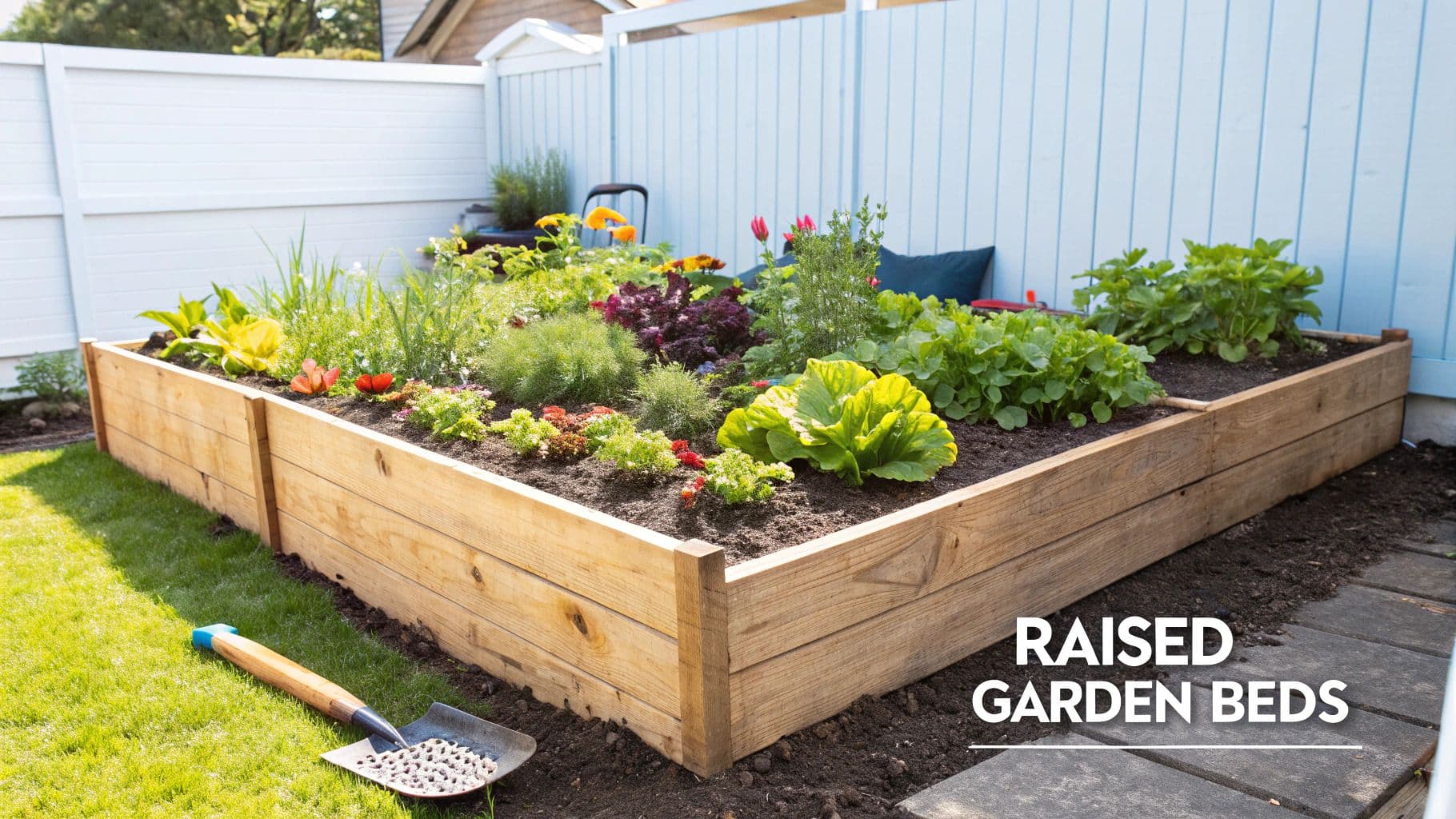
This method is perfect for yards with poor or rocky soil, as you can fill the beds with a custom blend of topsoil and compost. The elevated design helps deter pests like slugs and prevents soil compaction from foot traffic.
Quick-Start Tips for Implementation
- Material Choice: Use untreated cedar or redwood, which are naturally rot-resistant and safe for growing edible plants.
- Weed Prevention: Line the bottom of the bed with cardboard before adding soil to suppress weeds.
- Optimal Soil Mix: Create a nutrient-rich foundation by layering twigs, compost, and topsoil for a perfect growing medium.
- Strategic Placement: Group beds together to create a focal point, similar to garden islands. For more ideas on creating focused planting areas, explore these island landscaping ideas.
2. Mulch and Gravel Pathways
Mulch and gravel pathways provide structure, guide foot traffic, and add a polished look to your outdoor space. Whether you prefer the soft feel of wood mulch or the clean crunch of gravel, these paths are an affordable way to connect different zones in your yard while protecting lawns and garden beds.
Pathways add texture and color contrast, breaking up large expanses of lawn. They are also functional, improving drainage and reducing muddy spots. A curving path can make a small yard feel larger and more intriguing.
Quick-Start Tips for Implementation
- Install Edging First: Before adding material, install landscape edging made of plastic, metal, or stone to prevent material from spilling into garden beds.
- Lay a Weed Barrier: Clear the path of grass, then lay down durable landscape fabric to reduce future maintenance.
- Choose the Right Material: For high-traffic areas, pea gravel or crushed granite provides a stable surface. Wood mulch offers a softer look but needs refreshing annually.
- Apply the Right Depth: A depth of 2-3 inches is ideal. Spread the material evenly with a rake for a smooth finish.
3. Vertical Garden Walls and Trellises
Vertical gardens use walls and fences to grow plants, transforming unused areas into lush, living focal points. This ingenious DIY backyard landscaping idea maximizes growing space, adds architectural interest, and can serve as a natural privacy screen. If the boundary itself needs replacing first, a horizontal board fence is the build most DIYers take on before the planting goes in.
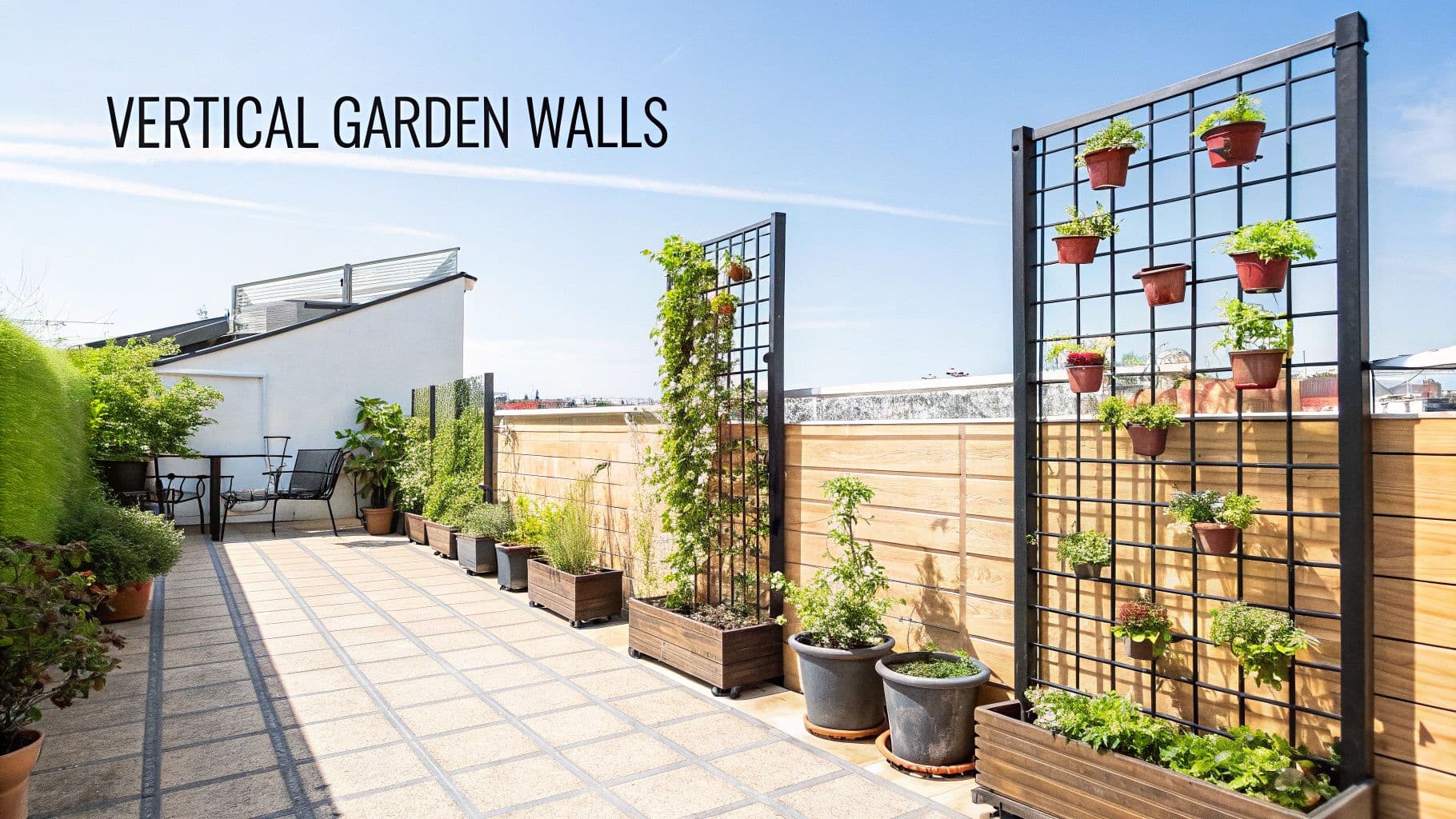
This method is a game-changer for small yards or balconies, allowing you to grow herbs, flowers, and vegetables without sacrificing floor space. Vertical gardens draw the eye upward, creating an illusion of a larger area.
Quick-Start Tips for Implementation
- Choose the Right Plants: Select plants suited to your wall's sun exposure. Vines like clematis or jasmine are excellent for trellises. For modular walls, consider succulents or herbs.
- Ensure Sturdy Support: Securely anchor trellises and living wall systems to support the weight of mature, watered plants.
- Plan for Proper Drainage: Choose vertical planters with drainage holes to prevent root rot.
- Simplify Watering: Consider installing a drip irrigation system to deliver water directly to the plant roots, ensuring consistent moisture.
4. Hardscape Features (Patios and Decking)
Hardscape features like patios are the non-living structures that form the foundation of your outdoor space. Built from pavers or stone, these elements create durable surfaces for entertaining and relaxing. Hardscaping is a cornerstone of landscape design, providing structure and reducing lawn maintenance.
Patios establish a solid, level area perfect for furniture and grills, transforming an uneven patch of lawn into a destination. They also offer aesthetic value, introducing texture and clean lines that complement your home's architecture.
Quick-Start Tips for Implementation
- Plan for Drainage: Ensure any solid surface has a slight slope away from your house (about 1/4 inch per foot) to prevent water from pooling.
- Choose Complementary Materials: Select materials that harmonize with your home’s exterior. A rustic stone patio pairs well with a traditional home, while sleek pavers complement modern architecture.
- Create Visual Interest: Combine different materials to create distinct zones, like framing a paver patio with a decorative brick border.
- Consider Climate: In regions with freeze-thaw cycles, opt for materials like high-density concrete pavers rated to withstand cracking.
5. Water Features (Fountains, Ponds, and Streams)
A water feature introduces the sight and sound of moving water into your landscape. This can range from a simple, self-contained fountain to a koi pond. Incorporating water is a powerful DIY backyard landscaping idea that adds tranquility and movement.
The sound of trickling water can mask unwanted noise, promoting relaxation. Water features also attract wildlife like birds and dragonflies, adding another layer of life to your garden.
Quick-Start Tips for Implementation
- Seal it Right: Use a high-quality, flexible pond liner to prevent leaks. Ensure the liner edges extend above the water line and are hidden by rocks.
- Pick the Right Pump: Choose a submersible pump rated for the volume of your feature, sufficient to circulate the water at least once every two hours.
- Incorporate Plant Life: Add aquatic plants like water lilies for beauty and water quality.
- Strategic Placement: Position your water feature near a patio or window where you can enjoy its sights and sounds. Avoid placing it directly under trees to minimize debris.
6. Outdoor Lighting Design
Outdoor lighting uses fixtures to enhance safety, extend living hours, and highlight landscape features after dark. This approach transforms a dark space into a magical nighttime destination and is one of the most impactful DIY backyard landscaping ideas.
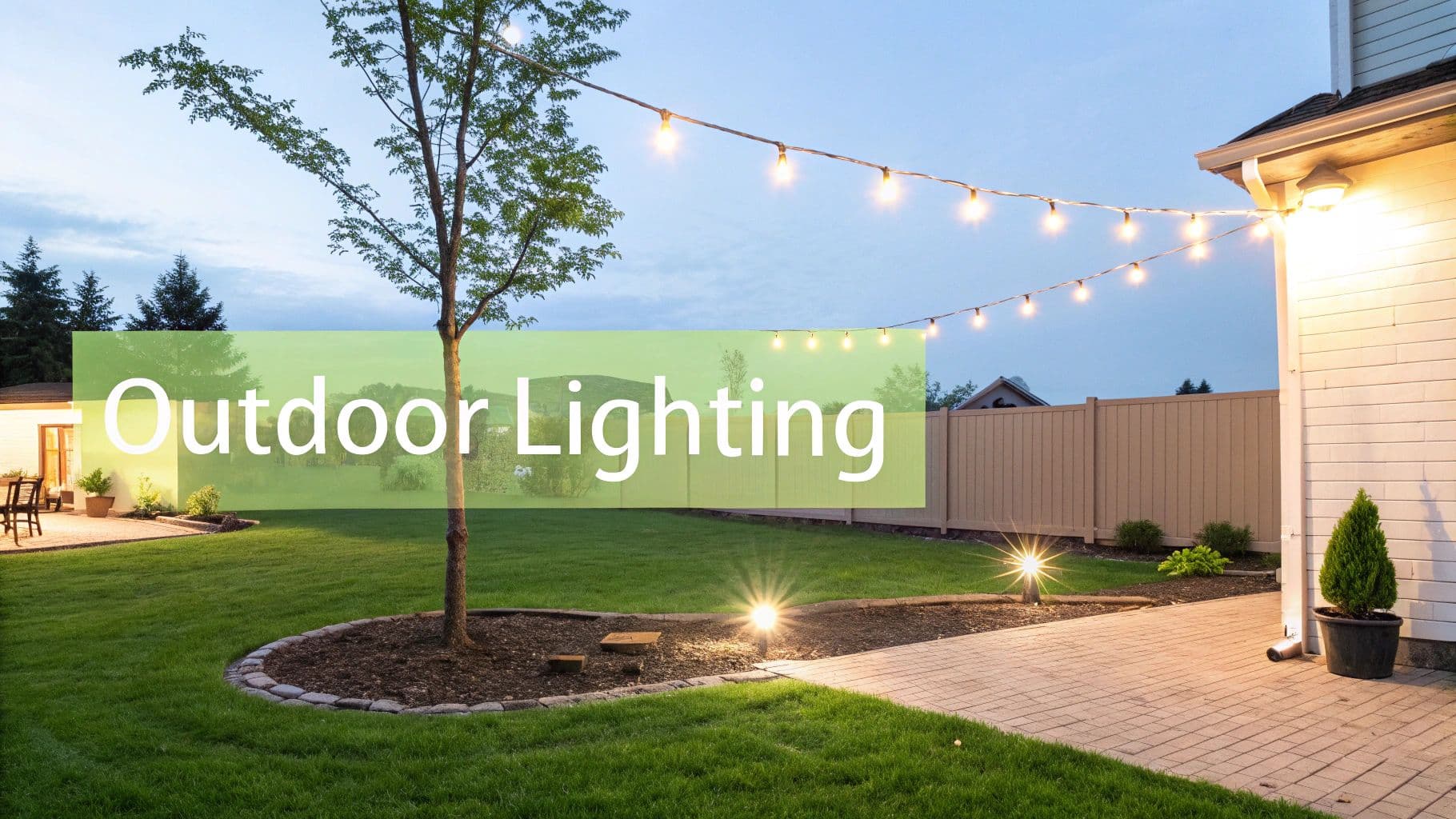
Lighting adds security by illuminating dark corners and entryways. It also creates drama and depth, drawing attention to trees or water features that would otherwise disappear at night.
Quick-Start Tips for Implementation
- Layer Your Lighting: Combine ambient lighting (string lights), task lighting (path lights), and accent lighting (spotlights) for a professional effect.
- Choose the Right Color Temperature: Stick with warm white LEDs (around 2700K) for a cozy ambiance.
- Conceal the Source: The goal is to see the light, not the fixture. Hide spotlights behind shrubs to avoid glare and create a more natural look.
- Master Shadow and Grazing: Position lights to "graze" textured surfaces like stone walls or tree bark to cast dramatic shadows that highlight texture.
7. Native Plant and Pollinator Gardens
A native plant garden is designed around plants indigenous to your region. This approach creates a self-sustaining ecosystem that supports local wildlife and requires less water and maintenance. It turns your yard into a vibrant habitat that thrives naturally.
Native plants are adapted to local soil and rainfall, meaning they require fewer fertilizers and supplemental watering. By creating a pollinator-friendly space, you support local biodiversity and enjoy a beautiful garden that changes with the seasons.
Quick-Start Tips for Implementation
- Regional Research: Identify plants native to your hardiness zone. Local native plant societies offer excellent recommendations.
- Source Locally: Purchase plants from a nursery specializing in native species to ensure they are adapted to your area.
- Strategic Grouping: Arrange plants with similar light and water requirements together. You can design these groupings as beautiful garden islands; explore these island landscaping ideas for inspiration.
- Embrace the Off-Season: Avoid cutting back seed heads in the fall. They provide food for birds and nesting sites for beneficial insects.
8. Container and Pot Gardens
Container gardens use various sized pots to grow everything from flowers and vegetables to herbs. This is one of the most flexible DIY backyard landscaping ideas, working in any space from patios to balconies. It offers design freedom and allows for effortless seasonal updates.
Containers can create stunning focal points, define outdoor "rooms," or add a splash of color. They give you total control over each plant's specific soil, water, and nutrient needs.
Quick-Start Tips for Implementation
- Proper Sizing: Choose a pot that is at least 1.5 times the size of the plant's root ball to give roots room to grow.
- Ensure Drainage: Make sure every container has at least one drainage hole at the bottom to prevent root rot.
- Use Potting Mix: Never use garden soil, which compacts easily. A high-quality potting mix drains well and is formulated for containers.
- Design with Texture: Combine plants with different growth habits in a single large container using the "thriller, filler, and spiller" formula for a professional look.
9. Lawn Alternatives and Ground Covers
Lawn alternatives involve replacing traditional turf with low-maintenance ground covers like clover or creeping thyme. This forward-thinking DIY backyard landscaping idea reduces water consumption, mowing, and the need for chemical fertilizers.
This approach is perfect for difficult-to-grow areas, like deep shade where moss thrives. By moving away from a grass lawn, you support pollinators, improve soil health, and reclaim time spent on upkeep.
Quick-Start Tips for Implementation
- Test Small First: Start with a small test patch to see how the chosen alternative performs in your specific soil and light conditions.
- Pick the Right Plant: Choose a ground cover suited to your climate. Clover adds nitrogen to the soil, while creeping thyme is a fragrant, drought-tolerant option for sunny spots.
- Prepare the Area: Properly remove the existing grass to give your new ground cover a clean start.
- Create Functional Zones: Combine different ground covers to create distinct areas. For more inspiration on creating focal points, explore these island landscaping ideas.
10. Raised Deck or Platform Construction
A raised deck is an elevated structure that creates a dedicated outdoor living space. This classic DIY backyard landscaping idea adds architectural dimension and increases usable square footage, especially on uneven terrain.
Decks are perfect for backyards with slopes, as they create a stable, flat surface. They also provide a mud-free zone for furniture, protecting the surrounding lawn from wear and tear.
Quick-Start Tips for Implementation
- Check Local Codes: Before you start, check local building codes and obtain any necessary permits to ensure your structure is safe and compliant.
- Material Selection: For a low-maintenance deck, consider composite materials. For a natural look, use pressure-treated lumber for the framework and cedar for the deck boards.
- Plan for Drainage: Ensure there is proper airflow and drainage beneath the deck to prevent moisture buildup and rot.
- Integrate Features: Make the deck more functional by planning for built-in features like planters, bench seating, or a designated space for a grill.
Start Building Your Perfect Outdoor Space Today
You've just explored a collection of DIY backyard landscaping ideas, each offering a pathway to transforming your outdoor area. The key is to start by understanding your space and lifestyle. What do you want your backyard to do for you? Is it a quiet retreat, a hub for entertaining, or a space for growing food? Your answer will guide every decision.
Planning is paramount. Before you buy a single plant, sketch your layout. Consider sun patterns and traffic flow. A well-considered plan is the most effective tool for preventing costly mistakes.
Embrace the process. DIY landscaping is a marathon, not a sprint. Start with a single, manageable project that offers a high impact, like creating a mulch pathway or setting up a container garden. Completing one project builds momentum for the next.
Finally, work with your environment. Choosing native plants reduces water needs and supports pollinators. A thoughtful approach results in a landscape that is beautiful, resilient, and sustainable. Investing your time in these ideas enhances your quality of life and adds value to your home. Don't just dream about a better backyard; start building it.
Ready to stop guessing and start designing? Visualize any of these DIY backyard landscaping ideas in your own yard with OutdoorBrite's powerful AI tools. See how different layouts, materials, and plants will look before you lift a shovel by visiting OutdoorBrite and bring your perfect backyard to life with confidence.