10 Drought Tolerant Landscaping Ideas to Transform Your Yard
Discover 10 stunning drought tolerant landscaping ideas to save water and create a beautiful, low-maintenance garden. Explore xeriscaping, natives, and more.
As water becomes an increasingly precious resource, homeowners are turning towards sustainable, beautiful alternatives to thirsty lawns. The concept of drought tolerant landscaping has evolved far beyond sparse, barren yards. Today, it represents a sophisticated approach to creating vibrant, resilient outdoor spaces that flourish with minimal water, blending ecological responsibility with stunning design. A water-wise garden can be just as lush and inviting as a traditional one, proving that sustainability and aesthetic appeal can go hand in hand.
This guide moves beyond generic advice to offer a comprehensive roundup of actionable strategies. We will explore 10 distinct and powerful drought tolerant landscaping ideas, providing the practical details you need to transform your outdoor space. You'll find specific plant recommendations, layout concepts, and maintenance tips for everything from native plant gardens and modern xeriscaping to the strategic use of hardscapes and smart irrigation.
Each section is designed to be a mini-guide, empowering you to implement these water-saving techniques effectively. Whether you're planning a complete overhaul or a small-scale project, these insights will help you create a landscape that is not only beautiful but also conserves water, reduces maintenance, and thrives in your local climate. Prepare to discover how to design a practical and elegant garden that works with nature, not against it.
1. Native Plant Gardens
One of the most effective and ecologically beneficial drought tolerant landscaping ideas is to create a garden using plants native to your specific region. Native plants have spent thousands of years adapting to the local climate, soil conditions, and rainfall patterns. This inherent resilience means that once established, they require significantly less supplemental water, fertilizer, and pest control than non-native species. A native plant garden not only conserves precious water resources but also creates a vital habitat for local pollinators, birds, and wildlife, restoring a small piece of the area's natural heritage.
Practical Implementation and Examples
Getting started involves identifying plants that are truly native to your local area.
- California Gardens: Combine vibrant California poppies (Eschscholzia californica), aromatic sages (Salvia), and hardy buckwheat (Eriogonum).
- Southwest Xeriscapes: Feature the sculptural Palo Verde tree (Parkinsonia microphylla) complemented by cheerful desert marigolds (Baileya multiradiata).
- Midwest Prairies: Replicate a small patch of prairie with robust purple coneflowers (Echinacea purpurea) and sunny black-eyed Susans (Rudbeckia hirta).
Actionable Tips for Success
- Identify Your Zone: Research your specific USDA Plant Hardiness Zone and ecoregion to find suitable plants.
- Consult Local Experts: Visit a local native plant nursery for region-specific advice. Organizations like the Audubon Society also offer excellent resources.
- Group by Need: Arrange plants with similar water and sun requirements together (hydrozoning) for efficient irrigation.
- Plan for Patience: Native perennials often take two to three years to fully establish their deep root systems and become truly drought tolerant.
2. Xeriscaping Design
Xeriscaping is a comprehensive design philosophy centered on creating beautiful, sustainable landscapes that conserve significant amounts of water. Far from being a barren rock garden, this approach relies on seven core principles, including thoughtful planning, soil improvement, and efficient irrigation. Popularized by entities like the Denver Water Conservation Department, xeriscaping can reduce outdoor water use by 50-75%, making it one of the most impactful drought tolerant landscaping ideas. It’s about crafting a lush, vibrant yard that is in sync with the local climate.
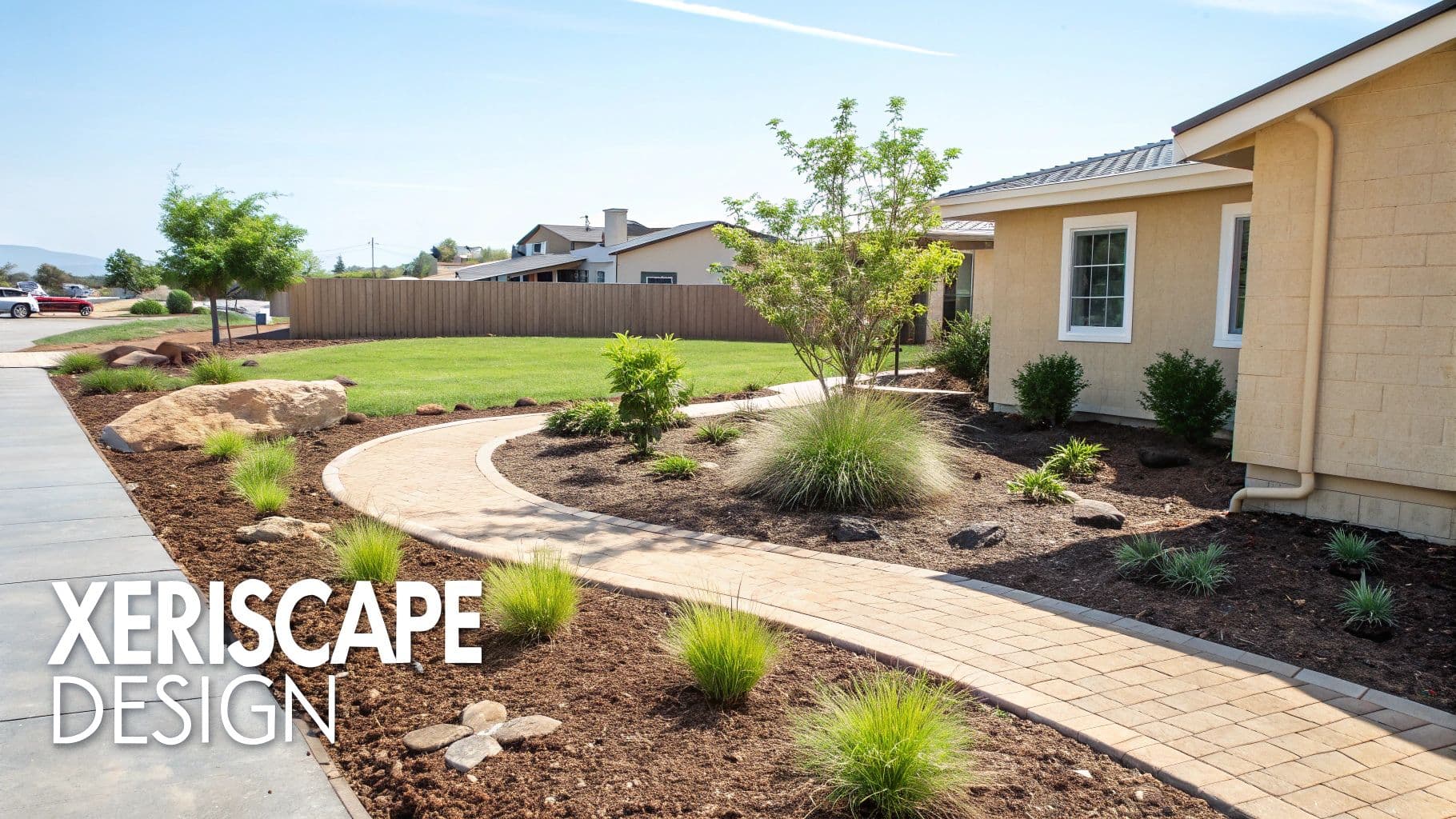
Practical Implementation and Examples
- Rocky Mountain Regions: Use plants like blue grama grass (Bouteloua gracilis) and ice plant (Delosperma) for colorful, low-water landscapes.
- Arid Southwest: Combine sculptural agaves (Agave spp.), hardy bougainvillea, and permeable hardscapes to create oasis-like retreats.
- Texas Hill Country: Feature tough, heat-loving plants such as Texas sage (Leucophyllum frutescens) and red yucca (Hesperaloe parviflora).
Actionable Tips for Success
- Create a Hydrozone Map: Group areas based on sun exposure and water needs for efficient irrigation.
- Limit Lawn Areas: Replace non-essential turf with permeable hardscaping, groundcovers, or garden beds.
- Optimize Your Irrigation: Install a drip irrigation system or soaker hoses to deliver water directly to the plant roots.
- Mulch Generously: Apply a 2-4 inch layer of mulch to retain soil moisture, suppress weeds, and regulate soil temperature.
3. Rock and Gravel Landscaping
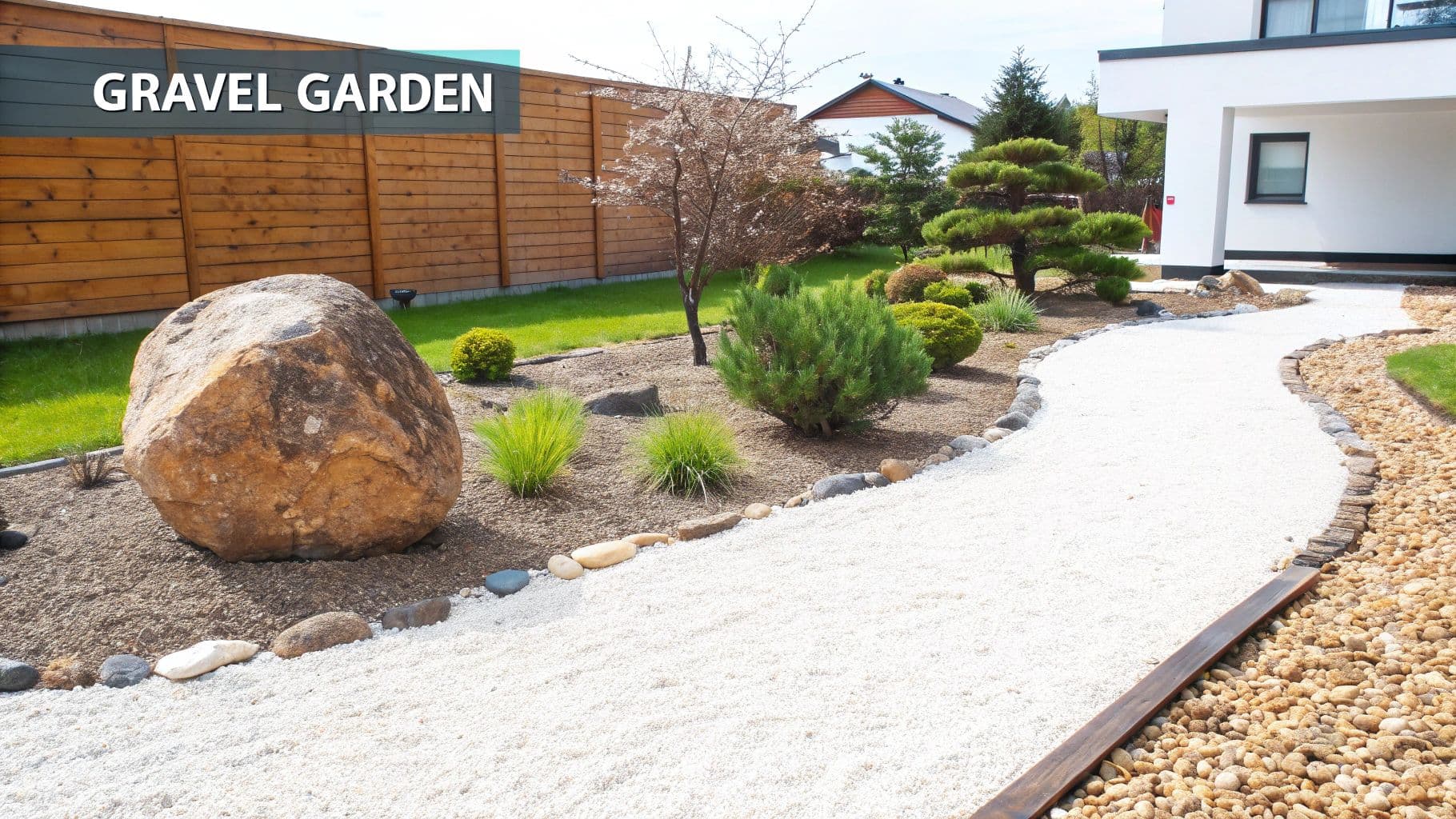
One of the most dramatic and effective drought tolerant landscaping ideas involves shifting focus from plants to inorganic materials. Rock and gravel landscaping uses decorative boulders, crushed granite, and pea gravel as the primary ground cover, dramatically reducing water consumption by replacing thirsty lawns. A well-designed rockscape offers a clean, modern aesthetic that suppresses weeds, improves drainage, and requires minimal upkeep. By combining different sizes, colors, and textures of rock, you can create stunning visual interest while eliminating the need for regular irrigation.
Practical Implementation and Examples
- Japanese Zen Gardens: Use carefully raked sand or fine gravel to represent water, with larger rocks symbolizing mountains.
- Southwestern Desertscapes: Mix reddish decomposed granite, large boulders, and sculptural succulents like agave and yucca.
- Modern Minimalist Designs: Use monochromatic gravel, such as dark grey basalt chips, to create a sleek, uniform ground cover. For more ideas on creating focal points, see our article on island landscaping ideas on outdoorbrite.com.
Actionable Tips for Success
- Install Landscape Fabric: Lay down a high-quality, permeable landscape fabric before adding rocks to prevent weeds.
- Choose Complementary Colors: Select rock colors that harmonize with your home’s exterior for a cohesive look.
- Vary Textures and Sizes: Combine large boulders, medium river rocks, and fine gravel to create depth and visual contrast.
- Plan for Heat: Be mindful that rocks radiate heat. Position more delicate plants where they will get afternoon shade.
4. Succulent and Cactus Gardens
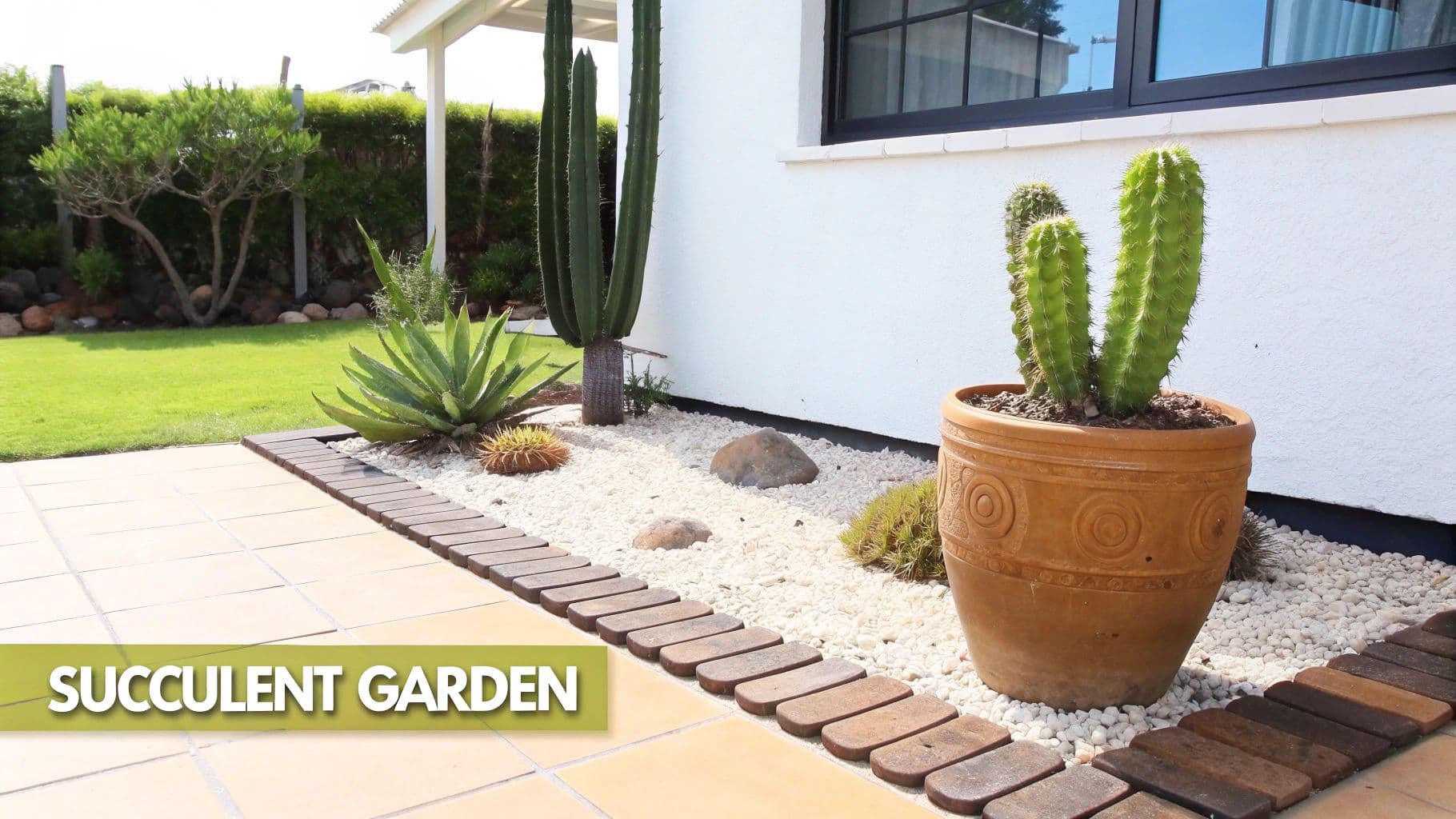
For a landscape that is both visually striking and incredibly water-wise, a succulent and cactus garden is an exceptional choice. These plants are masters of water conservation, featuring fleshy leaves or stems that store moisture, allowing them to thrive in arid conditions. Their diverse array of forms, from the architectural columns of a cactus to the vibrant rosettes of an echeveria, offers endless design possibilities. A well-designed succulent garden uses these unique textures and shapes to create a living sculpture that requires very little maintenance once established.
Practical Implementation and Examples
- Arizona Desertscapes: Feature a prominent barrel cactus (Ferocactus wislizeni) surrounded by prickly pear and low-growing sedums.
- California Coastal Gardens: Combine soft-leaved succulents like aeoniums and echeverias with the dramatic, spiky forms of agave plants.
- Vertical Installations: For small spaces, a living wall filled with colorful succulents like Sempervivum can create a stunning focal point.
Actionable Tips for Success
- Prioritize Drainage: Plant succulents in a fast-draining, sandy soil mix. Amend heavy clay soil or use raised beds.
- Water Deeply, Not Often: Drench the soil completely, then allow it to dry out entirely before watering again.
- Provide Ample Sun: Most succulents and cacti need at least six hours of direct sunlight per day.
- Group by Water Needs: Not all succulents are the same. Group those with similar irrigation needs together to avoid over or under-watering.
5. Smart Irrigation Systems
Upgrading to a smart irrigation system is one of the most impactful drought tolerant landscaping ideas, leveraging technology to eliminate water waste. Unlike traditional timers, smart systems use real-time data from weather forecasts and soil moisture sensors to water only when and where it is necessary. This precision approach prevents overwatering and runoff, potentially reducing landscape water use by 20-50%. Modern controllers, often managed via smartphone apps, provide homeowners with complete control and detailed reports, supporting healthier plants while conserving water.
Practical Implementation and Examples
- Suburban Lawn Management: Use a system like the Rachio Smart Sprinkler Controller to create different zones for lawns and garden beds, with watering schedules adjusted automatically based on daily weather.
- Commercial Properties: A Hunter Hydrawise system with flow meters can detect leaks and provide detailed water usage reports for large landscapes.
- DIY Smart Retrofits: A product like the Orbit B-hyve WiFi Sprinkler Timer can replace a standard controller, instantly adding smart, weather-based watering capabilities.
Actionable Tips for Success
- Install Soil Moisture Sensors: Place sensors in different zones to provide the controller with hyper-accurate soil data.
- Enable Weather-Based Updates: Ensure your system is connected to Wi-Fi to receive updates from a local weather station.
- Zone Your Landscape: Group plants with similar water needs on the same valve or zone (hydrozoning).
- Check for Rebates: Many local water utilities offer substantial rebates for installing EPA WaterSense-certified smart controllers.
6. Ornamental Grasses and Ground Covers
Introducing ornamental grasses and ground covers is a brilliant drought tolerant landscaping idea for adding texture, movement, and year-round interest while significantly cutting down on water use. These plants are champions of low-maintenance design, suppressing weeds, controlling erosion, and providing a dynamic visual element. Once established, their deep root systems make them incredibly resilient to dry spells. Ornamental grasses bring height and motion, while low-growing ground covers create a living mulch that cools the soil and retains moisture.
Practical Implementation and Examples
- Contemporary Gardens: The graceful plumes of fountain grass (Pennisetum setaceum) can serve as an elegant focal point against hardscaping.
- Perennial Borders: Clumps of silvery-blue blue fescue (Festuca glauca) make an excellent, well-behaved edging plant.
- Lawn Alternatives: A carpet of fragrant creeping thyme (Thymus serpyllum) can replace a small section of lawn in sunny areas.
- Naturalistic Plantings: For a meadow-like feel, drifts of taller grasses like switchgrass (Panicum virgatum) can create a sense of wild beauty.
Actionable Tips for Success
- Choose Wisely: Select varieties that are well-suited to your climate zone and specific sun exposure.
- Proper Timing: Plant in the spring or early fall to allow strong root system establishment before summer heat or winter cold.
- Group by Height: Arrange grasses with a clear visual hierarchy, placing taller varieties at the back of a border.
- Winter Care: Leave deciduous grasses standing through winter for visual structure and habitat. Cut them back in late winter before new growth appears.
7. Mulch and Soil Amendment Strategy
A foundational element of any drought tolerant landscaping idea is a strategic approach to mulch and soil. A proper layer of mulch acts like a protective blanket, reducing water evaporation from the soil surface by up to 70%, suppressing weed growth, and regulating soil temperature. By amending your soil with organic matter like compost, you improve its structure, allowing it to hold more water. This two-part strategy significantly reduces irrigation needs and boosts the health of every plant in your landscape.
Practical Implementation and Examples
- Perennial Gardens: A 2-3 inch layer of bark mulch or compost helps retain moisture and adds a polished look.
- Shrub and Tree Beds: Coarser materials like arborist wood chips are ideal under larger plants, as they break down slowly and improve soil health.
- Xeriscape Designs: Gravel or decorative rock mulch is used in arid designs to prevent evaporation and create a clean aesthetic.
- Vegetable Gardens: Amending beds with 2-3 inches of compost before planting gives crops the water-retentive, nutrient-rich soil they need.
Actionable Tips for Success
- Maintain Proper Depth: Apply a layer of organic mulch 2-4 inches deep.
- Keep a Safe Distance: Pull mulch back 2-3 inches from plant stems and tree trunks to prevent rot.
- Amend Before Planting: The best time to improve soil is before you plant. Mix compost into the top 6-8 inches of your garden bed.
- Refresh Annually: Top off organic mulches each spring to maintain depth. The USDA Forest Service offers guidelines on different mulch types.
8. Hardscape Elements and Water Features
Integrating well-designed hardscape is a cornerstone of creating a functional drought tolerant landscape. Hardscape elements are non-living components like patios and pathways that reduce the amount of thirsty turfgrass and provide usable outdoor living space. This approach transforms high-maintenance lawn areas into low-water, high-impact zones. Incorporating smart water features like dry creek beds or rain gardens also allows you to manage stormwater effectively, turning potential runoff into a beneficial resource.
Practical Implementation and Examples
- Mediterranean Courtyards: Use permeable pavers or terracotta tiles for patios, allowing rainwater to soak into the ground.
- Xeric Gardens: A dry creek bed made of river rocks can meander through the landscape, creating visual flow and channeling rainwater during storms.
- Modern Landscapes: A pergola over a patio creates a comfortable outdoor room and reduces sun exposure for nearby plants.
- Suburban Front Yards: A rain garden can capture and filter runoff from the roof, supporting moisture-loving native plants without extra irrigation.
Actionable Tips for Success
- Choose Permeable Materials: Opt for permeable pavers, gravel, or decomposed granite for walkways and patios.
- Design for Shade: Strategically place pergolas or arbors to cool outdoor living areas and adjacent plant beds.
- Integrate with Plantings: Soften the edges of hardscape elements with hardy, low-water plants.
- Plan for Drainage: Ensure solid surfaces like patios have a gentle slope to direct water toward a rain garden or planted area.
9. Container and Vertical Gardening
For those with limited space, container and vertical gardening offers a brilliant drought tolerant landscaping solution. This approach is perfect for patios and balconies, as it allows you to manage water with pinpoint accuracy by confining plants to pots or wall-mounted systems. Container gardening provides flexibility to move plants for optimal sun exposure, while vertical gardens create lush, green walls with a minimal footprint. It's an efficient way to add vibrant life to any area, proving that a water-wise landscape doesn't require a large plot of land.
Practical Implementation and Examples
- Patios and Balconies: Create low-water arrangements with succulents like Echeveria and Sedum in terracotta pots, or feature a dramatic Agave as a centerpiece.
- Small Yards: Utilize raised garden beds to grow drought-tolerant edibles like rosemary and thyme.
- Urban Spaces: Install a living wall system on a sunny exterior wall, planting it with trailing succulents and hardy ornamental grasses.
Actionable Tips for Success
- Choose the Right Container: Always select pots with ample drainage holes to prevent root rot.
- Use a Lightweight Mix: Fill containers with a high-quality potting mix containing perlite and compost for good moisture retention and aeration.
- Mulch the Surface: Apply a top layer of small pebbles or gravel to the soil surface in your containers to reduce evaporation.
- Hydrozone Your Pots: Group containers with similar water needs together for more efficient watering.
10. Climate-Appropriate Plant Selection
Choosing plants specifically adapted to your local climate is a foundational principle of successful drought tolerant landscaping. This involves understanding your area's unique conditions, including its USDA Hardiness Zone, average rainfall, and soil type. Plants well-suited to these factors will naturally flourish with minimal intervention, drastically reducing the need for supplemental watering once established. Furthermore, these plants are often more resistant to local pests and diseases, leading to a healthier, more resilient garden.
Practical Implementation and Examples
- Mediterranean Gardens: In climates with hot, dry summers like California, plants such as lavender (Lavandula), rosemary (Salvia rosmarinus), and rockrose (Cistus) are excellent choices.
- Arid Southwest Landscapes: For the intense heat of Arizona, desert-adapted species like red yucca (Hesperaloe parviflora) and brittlebush (Encelia farinosa) are ideal.
- Cold-Hardy Northern Yards: In regions with cold winters, selecting hardy shrubs like serviceberry (Amelanchier) ensures survival and reduces summer water stress.
Actionable Tips for Success
- Know Your Zone: Begin by identifying your precise USDA Plant Hardiness Zone.
- Observe Local Success: Visit local botanical gardens and public parks to see which plants are thriving with minimal care.
- Think in Microclimates: Recognize that your yard has hotter, drier spots (like a south-facing wall) and cooler, shadier areas.
- Consult Regional Experts: Staff at a local nursery can offer invaluable, hands-on knowledge about which plants perform best in your specific area.
Bringing Your Water-Wise Vision to Life
Transitioning your outdoor space into a sustainable, water-conscious haven is a journey of creativity and smart planning. A successful drought-tolerant landscape is not built on a single idea, but on a layered, holistic approach where every element works together. By weaving together the principles we've covered—from amending your soil and choosing climate-appropriate plants to incorporating hardscapes and smart irrigation—you can craft a resilient ecosystem that is both beautiful and efficient.
Feeling inspired? The journey from idea to reality begins with a few simple steps. Start small by choosing one manageable project, like a succulent container garden or replacing a patch of lawn with ground cover. Assess your space, visualize the possibilities, and embrace a forward-thinking investment that saves time, money, and our planet's most precious resource. Your water-wise vision is within reach, and the tools to bring it to life are at your fingertips.
Ready to turn these ideas into a stunning visual plan for your own yard? Let OutdoorBrite remove the guesswork. Upload a photo of your space and use our AI landscape design platform to instantly see how any of these drought-tolerant concepts will look, from a complete xeriscape conversion to a simple native plant garden. Start designing your perfect, water-wise outdoor oasis today at OutdoorBrite.