10 Transformative Front Yard Curb Appeal Ideas for 2024
Discover dozens of front yard curb appeal ideas to transform your home. Get actionable tips on lighting, landscaping, paint, hardscaping, and more.
Your front yard is more than just a lawn; it's the first chapter of your home's story. Great curb appeal isn't just about impressing the neighbors; it's about creating a welcoming, polished exterior that boosts property value and makes you proud to come home. Many homeowners hesitate, picturing complex and expensive overhauls that seem out of reach.
The reality is that impactful transformations come from smart, strategic choices. Whether you're planning a weekend refresh or a more significant renovation, the right front yard curb appeal ideas can make all the difference. This guide breaks down ten effective strategies, packed with actionable tips to get you started.
We'll show you how to combine foundational elements like clean mulch beds with high-impact upgrades such as landscape lighting and strategic hardscaping. And for those who struggle to visualize the final result, AI-powered tools like OutdoorBrite can instantly bring these concepts to life. This technology lets you test your vision on a photo of your own home before you ever break ground, ensuring your effort and investment pay off. Let’s dive in and reinvent your home's first impression.
1. Fresh Paint and Updated Front Door
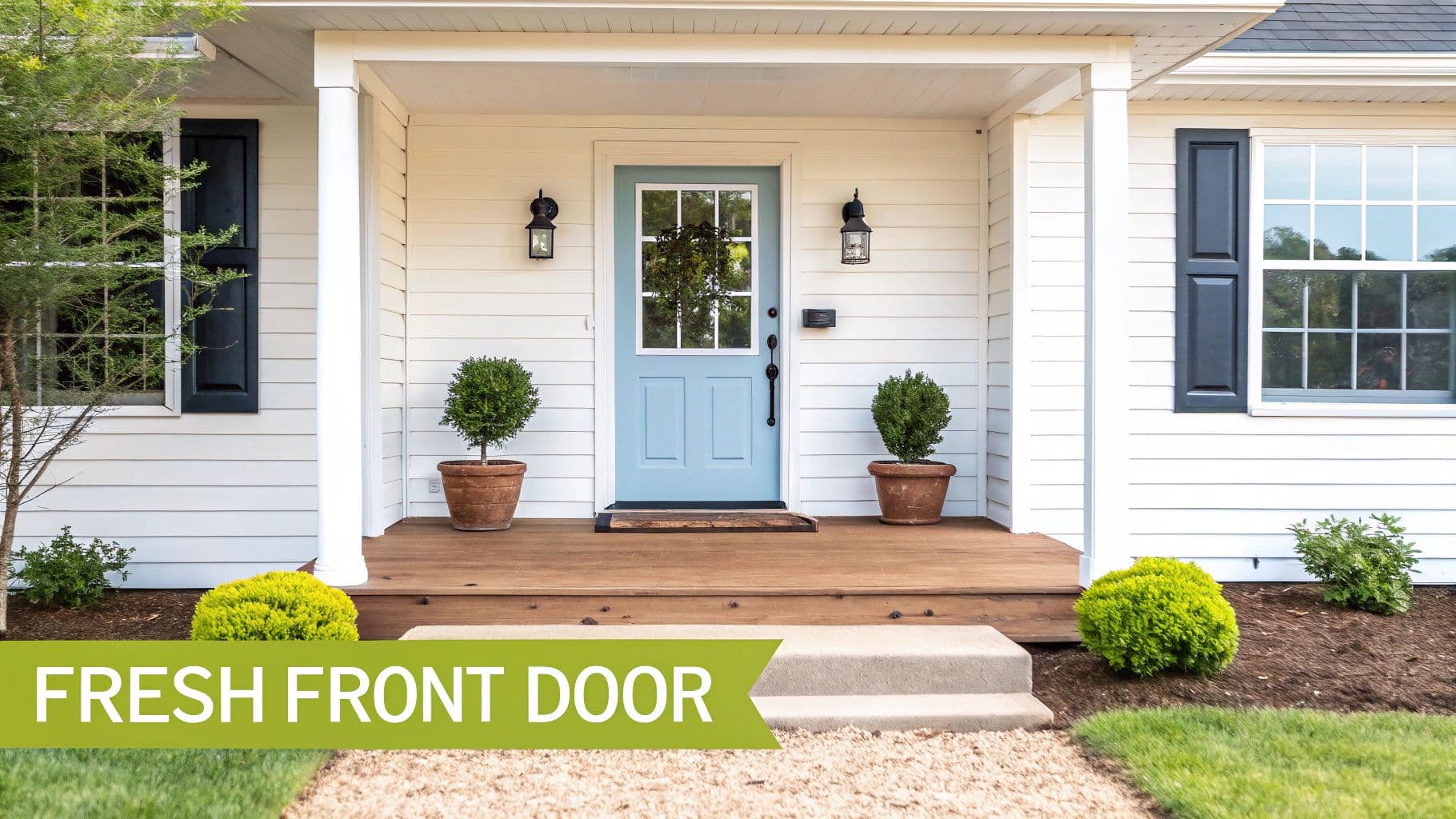
Perhaps the most impactful and cost-effective upgrade for your home's exterior is a fresh coat of paint, especially on the front door and trim. This simple project acts as an immediate facelift, creating a powerful focal point that draws positive attention. A well-chosen door color reflects your personal style and signals that the home is well-cared-for.
Why It Works
Your front door is the handshake of your home. A faded or dated door can make an entire property feel neglected. Conversely, a bold, fresh color paired with crisp, clean trim instantly revitalizes the facade. This project is a classic because it delivers professional-level results on a DIY-friendly budget, often achievable in a single weekend.
Implementation and Tips
Choose a color that complements your home’s existing materials like siding, brick, or stone. Consider the overall aesthetic you want to achieve:
- Modern Homes: A matte black or charcoal gray door provides a sleek, sophisticated contrast.
- Cottage-Style Homes: Deep green, rich burgundy, or a welcoming navy blue adds classic charm.
- Contemporary Properties: A bold pop of color like sunshine yellow or aqua can make a memorable statement.
Before you commit, it’s wise to visualize the final look.
Visualize with AI: Use a tool like OutdoorBrite to upload a photo of your home and test different door and trim color combinations. This eliminates guesswork and helps you choose a palette you'll love.
When painting, select a high-quality exterior paint and primer. Pay attention to the details by updating or cleaning your door hardware to complete the refreshed look.
2. Landscape Lighting and Architectural Accent Lighting
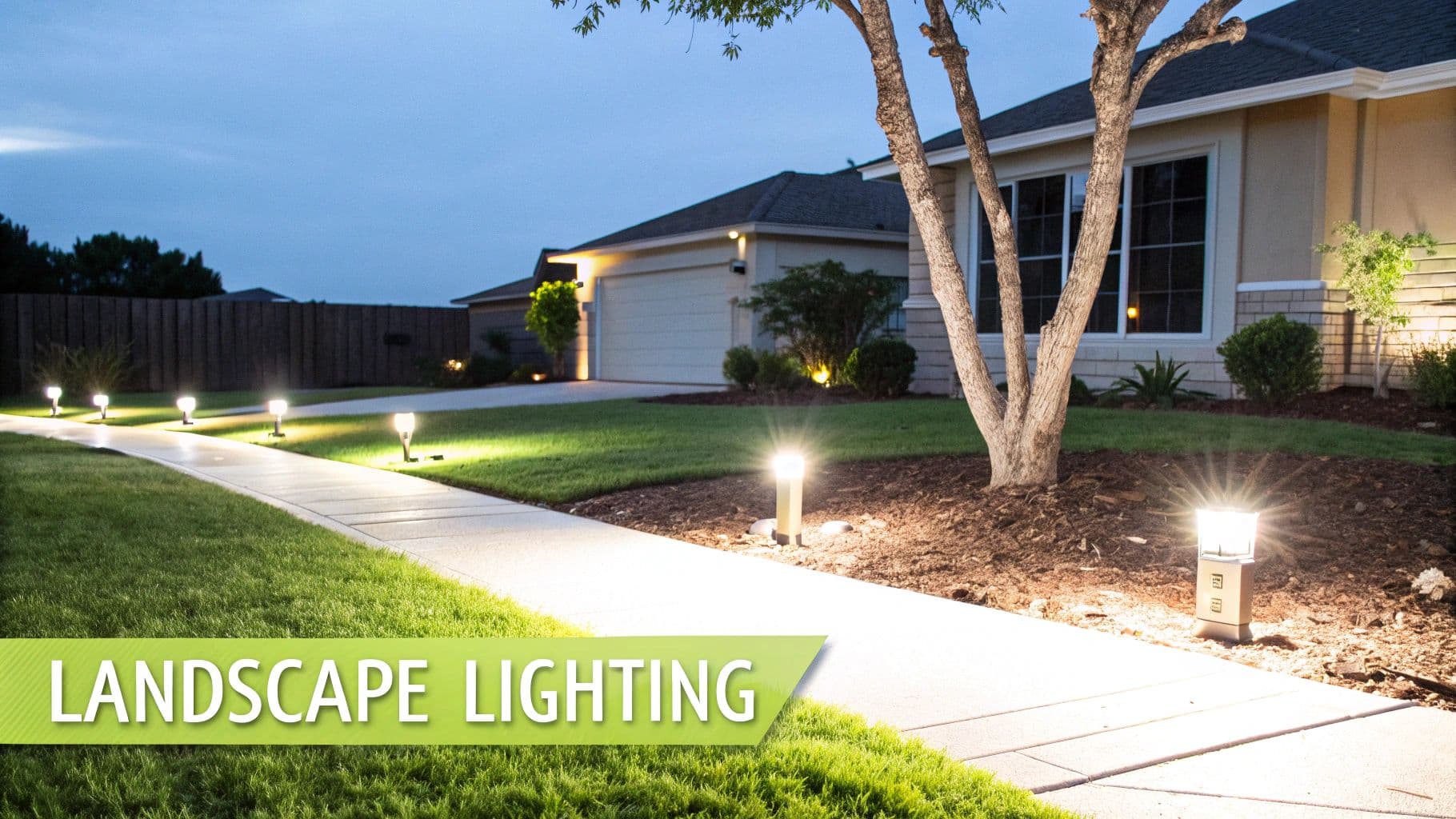
Strategic outdoor lighting transforms your home's appearance after dark, adding drama, sophistication, and a welcoming glow. Well-placed lights enhance curb appeal by highlighting architectural features, illuminating walkways, and creating captivating depth in your garden beds.
Why It Works
An unlit home disappears into the darkness, but a thoughtfully illuminated one stands out. Landscape lighting serves both aesthetic and practical purposes. It improves safety by lighting pathways while drawing the eye to your home's best features, like mature trees or stone veneers. This technique creates a 24-hour impression of a well-maintained, high-value property.
Implementation and Tips
Start by identifying key focal points. Layering different types of lights, such as path lights, spotlights, and uplights, adds dimension and prevents the design from looking flat.
- Uplighting: Place fixtures at the base of mature trees or columns to create dramatic shadows.
- Path Lighting: Install low-profile lights along walkways to guide visitors safely.
- Accent Lighting: Use focused spotlights to showcase a water feature, a specimen plant, or stonework.
For a cohesive ambiance, use warm white light (around 2700K) and consider smart controls for scheduling.
Visualize with AI: Unsure where to place lights for the best effect? A tool like OutdoorBrite can help you simulate different lighting schemes on a photo of your own yard, showing how uplighting on trees or path lighting will look before you install anything.
This visual planning step helps you invest in the right fixtures and achieve a professional, polished look.
3. Welcoming Entryway Plantings and Container Gardens
Nothing says "welcome" quite like a lush display of plants framing your front entrance. Using planters is a flexible way to introduce color and texture to your doorstep. This approach softens hardscapes like concrete porches, creating an inviting transition from the yard to your home.
Why It Works
Container gardens are incredibly versatile. They allow you to add greenery even if you have no in-ground planting space. They also provide an opportunity for seasonal expression, letting you easily swap out plants to celebrate holidays or changing weather. Symmetrical arrangements create a sense of formal balance, while asymmetrical groupings can achieve a more relaxed feel.
Implementation and Tips
The key is choosing the right containers and plants for your space and style. Think about scale, color, and light conditions.
- Classic & Formal: Flank your door with a pair of identical urns planted with sculpted boxwood topiaries.
- Cottage & Romantic: Use a variety of pot sizes and combine plants with different habits, like upright flowers and trailing ivy.
- Modern & Minimalist: Select sleek, simple containers in neutral colors and fill them with architectural plants like ornamental grasses.
To create an appealing arrangement, follow the "thriller, filler, spiller" design principle.
Visualize with AI: Unsure how different planter styles or plant combinations will look beside your door? Upload a photo to a tool like OutdoorBrite to experiment with various container shapes, colors, and plant arrangements to find the perfect composition.
When planting, use a high-quality potting mix and ensure containers have drainage holes. Remember to choose plants suited for the amount of sun your entryway receives.
4. Clean, Defined Landscaping Beds and Mulch Refresh
Well-maintained landscape beds with clean edging and fresh mulch create an instantly polished appearance. This foundational curb appeal element defines the structure of your front yard, prevents weeds, retains moisture for your plants, and provides a rich contrast that makes your flowers and shrubs pop.
Why It Works
Faded mulch and undefined garden beds make a yard look messy. A crisp edge acts like a picture frame for your plants, while a fresh layer of mulch adds vibrant color and texture. This simple weekend project immediately signals meticulous care, dramatically elevating the entire landscape.
Implementation and Tips
First, create a clean edge between your lawn and garden beds using an edger or a spade. Then, choose the right mulch and edging material to complement your home's style:
- Modern Aesthetic: Use sleek metal or stone edging with dark black or gray mulch for a contemporary look.
- Cottage-Style Gardens: Opt for a more natural spade-cut edge paired with natural brown wood mulch.
- Low-Maintenance Designs: Consider decorative stone or river rock as a permanent mulch solution.
Proper application is key.
Visualize with AI: Unsure how a dark mulch will look against your brick? Use OutdoorBrite to upload a photo and experiment with different mulch colors and edging styles to see the impact before you start digging.
Remember to refresh your mulch annually, typically in the spring. Aim for a 2-3 inch layer, but keep it away from the base of tree trunks and plant stems to prevent rot. This strategy is also perfect when creating standalone garden features; discover more by reading about island landscaping ideas.
5. Strategic Hardscaping: Walkways, Pathways, and Entry Steps
Beyond plants and paint, the structural elements of your front yard play a crucial role in its appeal. Well-designed hardscaping, such as walkways and entry steps, creates a clear, inviting path to your home, adding architectural character and a sense of permanence.
Why It Works
A cracked or narrow walkway makes a home feel uninviting. By creating a beautiful, functional path, you establish a strong sense of entry and connect the street to your front door. High-quality materials like natural stone, brick, or modern pavers elevate the entire front yard and boost property value.
Implementation and Tips
The material and design of your walkway should echo your home's architectural style. Ensure the path is functional, with a recommended width of 3-4 feet.
- Traditional Homes: A classic brick walkway adds timeless elegance.
- Cottage-Style Gardens: Irregularly shaped natural flagstone creates a charming, organic feel.
- Modern Properties: Large-format concrete pavers or sleek slate tiles offer a contemporary look.
Proper installation is key to longevity. A solid base is essential to prevent heaving and cracking.
Visualize with AI: Unsure if brick, pavers, or natural stone will look best? Use a tool like OutdoorBrite to upload a photo of your yard. You can then visualize different pathway materials and designs to see how they complement your home's exterior before committing.
Remember to enhance your new hardscaping with low-voltage path lighting. This adds a beautiful ambient glow and improves safety for you and your visitors.
6. Specimen Trees and Focal Point Plantings
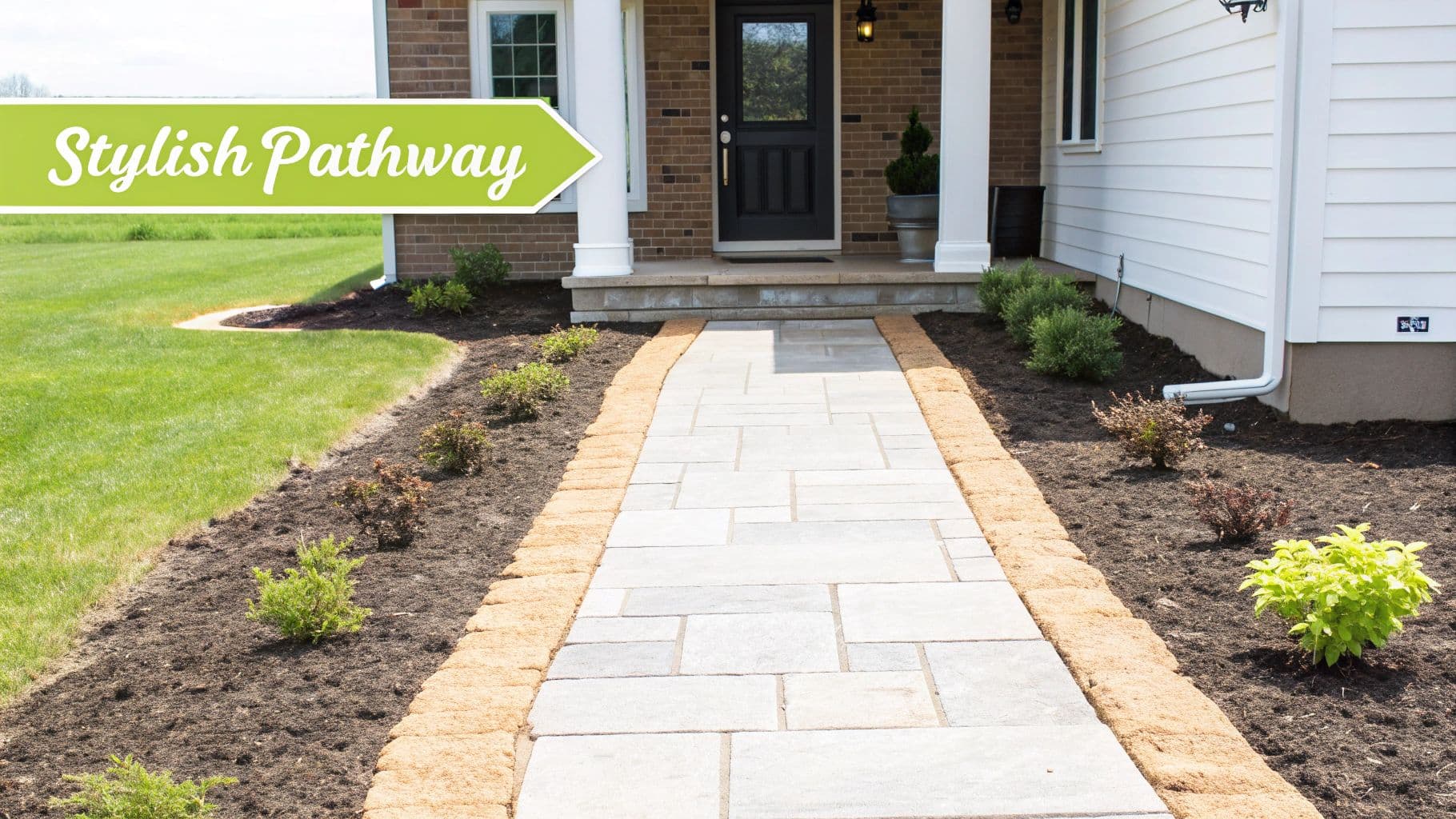
A strategically placed specimen tree can serve as a powerful visual anchor in your landscape design, creating a natural focal point that adds structure and sophistication. These standout plants draw the eye with their unique form, seasonal color, or dramatic silhouette.
Why It Works
While flower beds provide seasonal color, a specimen tree offers a permanent, architectural element. It adds a sense of maturity and permanence to a yard, creating vertical interest that balances the horizontal lines of your home. A single, well-chosen tree can make a more significant statement than dozens of smaller plants.
Implementation and Tips
Select the right plant for the right place. Consider its mature size, growth habit, and seasonal features to ensure it complements your home.
- For Dramatic Color: A Japanese Maple offers delicate foliage and stunning fall color.
- For Structure and Form: Columnar evergreens like Green Giant Arborvitae can elegantly frame an entryway.
- For Multi-Season Interest: A Crape Myrtle provides vibrant summer blooms, attractive fall color, and beautiful bark for winter interest.
When choosing your tree, think about its long-term health.
Visualize with AI: Unsure how a Japanese Maple will look next to your porch? Use a tool like OutdoorBrite to virtually place different trees in your yard, helping you visualize their mature size and impact before you start digging.
Always plant your tree in the fall or early spring. Be mindful of its mature size, planting it far enough from your house, sidewalks, and utility lines.
7. Manicured Lawn and Edge Maintenance
A lush, well-maintained lawn with crisp, defined edges acts as the green canvas for all other curb appeal ideas. This foundational element conveys a sense of order and care, making the entire property appear polished. Consistent mowing, sharp edging, and proper weed control are essential.
Why It Works
Your lawn is often the largest single feature of your front yard. A patchy or overgrown lawn can detract from even the most beautiful home, while a vibrant, neatly trimmed one elevates the entire landscape. This demonstrates a high level of maintenance and pride of ownership. If sections are too far gone to revive, a sod calculator tells you how many pallets of new turf the area needs before you order.
Implementation and Tips
Achieving a pristine lawn is about consistent practices. Tailor your approach to your specific grass type and climate.
- Cool-Season Lawns (Fine Fescue, Kentucky Bluegrass): Mow higher (around 3-4 inches) to shade the soil.
- Warm-Season Lawns (Zoysia, Bermuda): Common in southern regions, these can be mowed shorter.
- Drought-Tolerant Alternatives: In water-conscious areas, consider native grasses or a clover lawn.
For a healthy lawn, follow a routine.
Visualize with AI: Unsure how a different grass type or a low-maintenance groundcover would look? Use a tool like OutdoorBrite to upload a photo of your yard and digitally test different lawn alternatives before committing to a full re-sodding project.
Always mow at the proper height, never removing more than one-third of the blade at a time. Edge along all walkways and garden beds weekly. Water deeply but infrequently (about 1-1.5 inches per week) to encourage deep root growth.
8. Color Theory and Seasonal Plantings
One of the most powerful front yard curb appeal ideas is the strategic use of color through flowering plants. Applying basic color theory to your garden beds creates a cohesive, intentional design. Planning for seasonal plantings ensures your landscape offers visual interest throughout the year.
Why It Works
A well-planned color scheme transforms a simple collection of plants into a stunning landscape. By planning your garden with seasonal blooms in mind, from spring bulbs to fall mums, you guarantee continuous beauty and prevent your yard from looking bare during off-seasons.
Implementation and Tips
Start by choosing a color palette that complements your home’s exterior. A simple color wheel can be your best guide.
- Complementary: Pair opposite colors on the wheel, like purple and yellow, for a dynamic look.
- Analogous: Use colors next to each other, such as red, orange, and yellow, to create a harmonious bed.
- Monochromatic: A modern approach using different shades of a single color, like a white and green garden.
Remember to incorporate foliage color for consistent interest.
Visualize with AI: Unsure how a complementary or monochromatic color scheme will look next to your house? Use a tool like OutdoorBrite to generate garden designs with specific color palettes, allowing you to see the full effect before you buy the first plant.
To ensure year-round appeal, map out a planting schedule. For more in-depth garden planning strategies, explore the resources on the OutdoorBrite blog.
9. Low-Maintenance Xeriscaping and Native Plant Design
For homeowners seeking a beautiful, eco-friendly landscape, xeriscaping with native plants is an intelligent choice. This approach focuses on creating a garden that thrives in your local climate with minimal water and maintenance. It’s a sustainable choice that supports local ecosystems.
Why It Works
A lush green lawn isn't feasible in many climates. Xeriscaping works with nature by using plants adapted to your region. This results in a hardy, resilient landscape that looks great year-round without constant watering. A well-designed native plant garden also attracts beneficial pollinators like bees and butterflies.
Implementation and Tips
Smart plant selection is key. Research plants native to your specific region and hardiness zone.
- Desert & Arid Climates: Design with sculptural agave, yucca, and ornamental grasses.
- Prairie Regions: Create a meadow-like feel with coneflowers and black-eyed Susans.
- Mediterranean Climates: Use drought-tolerant shrubs like manzanita paired with lavender and rosemary.
Once you have your plants, group them by their water needs, a practice known as hydrozoning.
Visualize with AI: Unsure how to arrange native plants for a cohesive look? Use a tool like OutdoorBrite to create a layout. Upload a photo of your yard and see how different combinations of textures and colors will look before you start digging.
While they need regular watering to get established, native plants will require significantly less water in subsequent years, saving you time and money.
10. Architectural Details and Decorative Elements
The big picture is important, but finishing touches define a home's character. Thoughtfully selected details like house numbers, mailboxes, shutters, and door hardware complete your exterior design. These pieces add personality and polish, tying the entire look together.
Why It Works
Details matter because they communicate a high level of care. A mismatched mailbox or peeling shutters can detract from an otherwise beautiful facade. By coordinating these smaller elements, you create a harmonious and sophisticated exterior that looks professionally designed.
Implementation and Tips
Create a unified theme. Select elements that match each other and complement your home's architectural style:
- Modern Homes: Opt for sleek, stainless steel house numbers and a minimalist mailbox.
- Craftsman or Traditional Homes: Look for oil-rubbed bronze or antiqued brass hardware.
- Cottage-Style Homes: Decorative shutters and a charming wall-mounted mailbox add character.
Before purchasing, consider their scale and placement. They should be proportional to your entryway and visible from the street.
Visualize with AI: Unsure which style of shutters or light fixture best suits your home? Upload a photo to OutdoorBrite to experiment with different architectural accents. You can see how different elements look on your home before making a final decision.
Finally, ensure consistency in materials and finish. If you choose a brass door handle, your house numbers and light fixtures should have a similar warm-toned metal finish.
From Inspiration to Implementation: Your Next Steps
Transforming your front yard is an achievable and rewarding journey. We've explored a collection of front yard curb appeal ideas, providing actionable strategies. We've seen how a fresh coat of paint can create a powerful first impression and how strategic landscape lighting can enhance your home's beauty after dusk.
The true magic of curb appeal lies in layering. A manicured lawn becomes stunning when framed by clean, mulched landscaping beds. A container garden gains character beside an elegant paver walkway. The elements combine to create a cohesive and inviting aesthetic.
Turning Your Vision into Reality
Now, the exciting part begins. Don't feel overwhelmed by the options. The goal is not to implement every idea at once but to choose high-impact projects that align with your budget and timeline.
- Prioritize Your Project: Start by identifying your biggest "pain point." Is it an overgrown garden bed? A dark entryway? Choose one or two projects that will deliver the most significant visual return.
- Visualize Before You Dig: This is the most critical step. Instead of guessing how a xeriscape design will look, use technology to see the future. Planning tools allow you to experiment without risk.
- Create an Action Plan: Break your chosen project into small, manageable steps. For a container garden, this might involve measuring the space, selecting pots, buying soil, and choosing plants.
Ultimately, enhancing your home's curb appeal is an investment in its market value and in your daily sense of pride. By starting small, planning wisely, and leveraging the right tools, you can create a stunning first impression that lasts.
Ready to stop guessing and start visualizing? Bring your front yard curb appeal ideas to life with OutdoorBrite. Our AI-powered platform lets you upload a photo of your home and instantly see how different plants, materials, and designs will look, ensuring you love the final result before you even start. Try OutdoorBrite today and design with confidence.