10 Front Yard Landscaping Ideas on a Budget for Stunning Curb Appeal
Discover 10 front yard landscaping ideas on a budget to boost your home's curb appeal. Get practical tips on plants, mulch, DIY paths, and more.
Dreaming of a beautiful front yard but worried about the cost? A stunning landscape doesn't require a five-figure budget or a team of professional landscapers. By embracing clever strategies, affordable materials, and a bit of DIY spirit, you can transform your home's exterior into a welcoming oasis that boosts curb appeal and personal enjoyment. This guide explores 10 practical and impactful front yard landscaping ideas on a budget designed to deliver professional-looking results without the hefty price tag.
We'll move beyond generic advice and dive into actionable steps for every skill level. You'll learn how to leverage native plants, create striking hardscapes with recycled materials, and design beautiful garden beds that thrive with minimal maintenance. Each idea is broken down into a simple, easy-to-follow format, helping you prioritize projects and make smart financial choices. With a tool like OutdoorBrite, you can upload a photo of your yard and instantly see how these different concepts will look, ensuring every dollar you spend contributes to a design you'll love for years to come.
1. Native Plant Landscaping
One of the most effective front yard landscaping ideas on a budget involves working with nature, not against it. Native plant landscaping uses plants that are indigenous to your specific region, meaning they are perfectly adapted to the local climate, soil, and rainfall patterns. This approach dramatically reduces long-term costs by eliminating the need for expensive fertilizers, pesticides, and excessive watering. Once established, native gardens are resilient, low-maintenance, and beautiful.
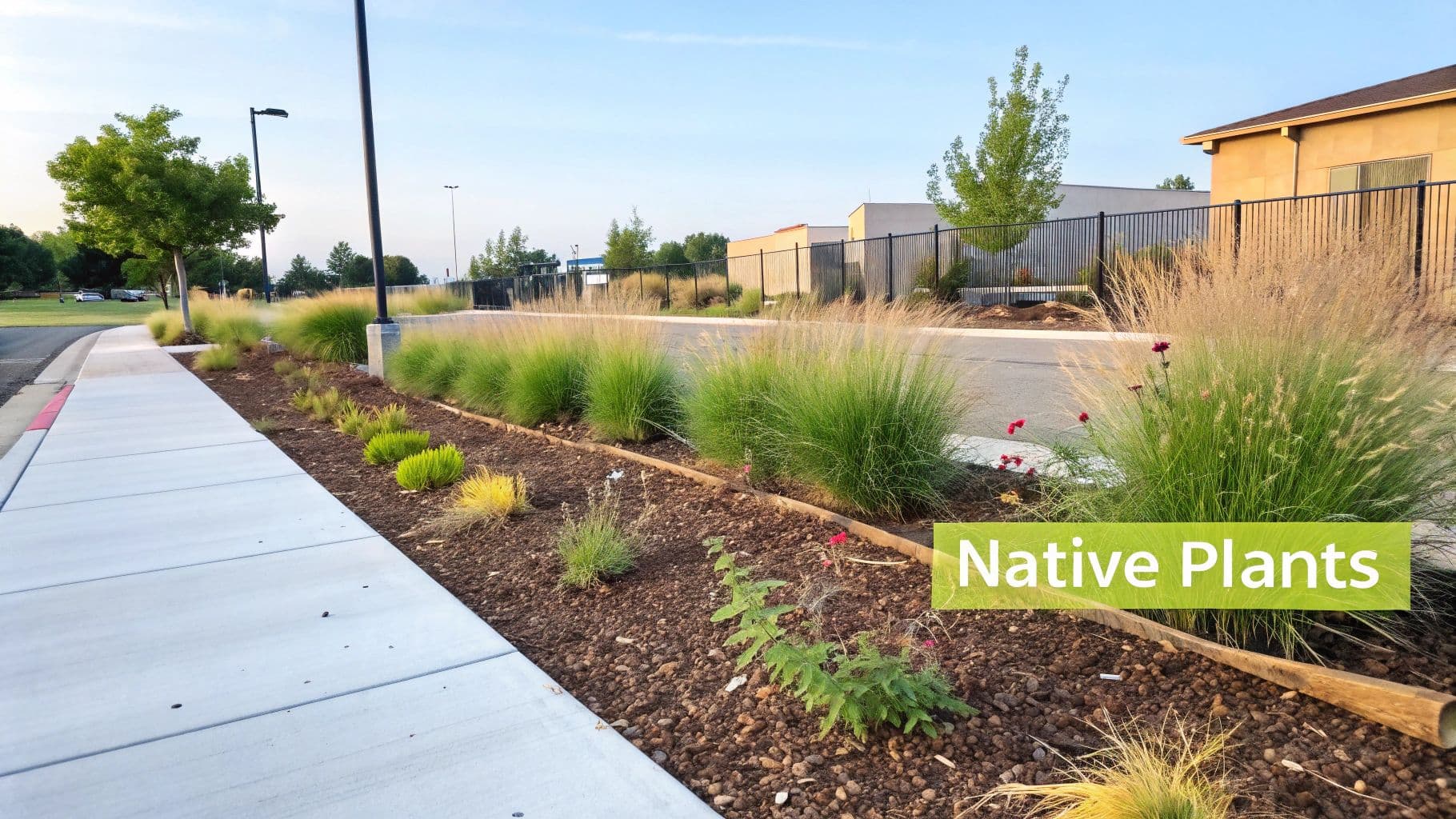
This strategy also creates a vital habitat for local pollinators like bees and butterflies, contributing to a healthier ecosystem right outside your door. It’s an investment that pays you back with lower water bills, less weekend work, and a vibrant, life-filled yard.
How to Get Started
- Research Your Zone: Identify your USDA Hardiness Zone to find plants that will thrive. Your local cooperative extension office or native plant society are excellent free resources.
- Start Small: Begin with a small, dedicated native plant bed. A patch of Black-Eyed Susans or Purple Coneflowers can create a stunning visual impact without a huge initial investment.
- Group by Needs: Arrange plants with similar water and sun requirements together. This "hydrozoning" technique makes watering more efficient and conserves resources.
- Visualize First: Use a tool like OutdoorBrite's photo-based redesign feature to see how different native combinations will look in your actual front yard. This helps prevent costly mistakes.
For more inspiration on sustainable garden design, check out the various resources available by exploring our landscaping and gardening blog.
2. Mulch and Ground Cover Solutions
One of the most impactful and affordable front yard landscaping ideas on a budget is the strategic use of mulch and ground covers. Applying a 2-4 inch layer of organic mulch like bark or wood chips suppresses weeds, retains vital soil moisture, and regulates soil temperature. This simple act drastically reduces watering needs and maintenance time, making it a cornerstone of low-cost garden care. Beyond its functional benefits, it provides a clean, professional finish to garden beds.
Similarly, low-growing ground covers such as creeping thyme or sedum can create a living mulch, filling in spaces with texture and color while choking out weeds. Both options are an excellent way to improve your soil's health over time as organic materials decompose, adding valuable nutrients back into the earth.
How to Get Started
- Choose Your Material: Decide between organic mulches like wood chips for garden beds or inorganic options like river rock for modern, low-maintenance areas.
- Prepare the Area: Thoroughly weed the space before applying any material. For maximum weed suppression, lay down a layer of cardboard or newspaper before adding your mulch on top.
- Apply Correctly: Spread mulch to a depth of 2-4 inches, but be sure to keep it a few inches away from the base of tree trunks and plant stems to prevent rot and pest issues.
- Visualize the Impact: The color and texture of mulch can dramatically change your home's curb appeal. Use a tool like OutdoorBrite to preview how different types will look before you commit.
3. DIY Edging and Borders
One of the quickest ways to create a polished, high-end look in your front yard is by establishing clean, defined edges. DIY edging and borders provide structure, separating your lawn from garden beds and walkways. This simple addition makes your landscaping look intentional and well-maintained, dramatically boosting curb appeal for a minimal cost. It also serves a practical purpose, preventing grass from creeping into your flowerbeds and reducing long-term maintenance.
This project is a perfect example of a high-impact, low-cost front yard landscaping idea on a budget. By using salvaged or inexpensive materials like reclaimed bricks, collected stones, or affordable plastic edging, you can achieve a professional finish without hiring a landscaper.
How to Get Started
- Source Smart Materials: Look for free or cheap materials. Check online marketplaces for leftover bricks or pavers. Natural materials like rocks or wood logs can often be sourced for free.
- Create a Guideline: Use a string line tied between stakes or a garden hose laid on the ground as your guide. This ensures a clean, professional-looking result.
- Dig a Trench: Carve out a small trench, about 3-4 inches deep, along your guideline. This creates a stable base for your edging material to sit in, preventing it from shifting.
- Visualize the Border: Different materials create different aesthetics. Use a tool like OutdoorBrite’s photo-based redesign to preview how various borders will look against your home.
4. Hardscape Features with Recycled Materials
Adding structure to your yard with paths or patios doesn't have to break the bank. Creating hardscape features using recycled or reclaimed materials is a brilliant way to add functionality and define spaces for a fraction of the cost of new supplies. Sourcing salvaged bricks, pavers, or even broken concrete pieces allows you to build charming, durable walkways and accents that provide visual interest without the ongoing maintenance that plants require.
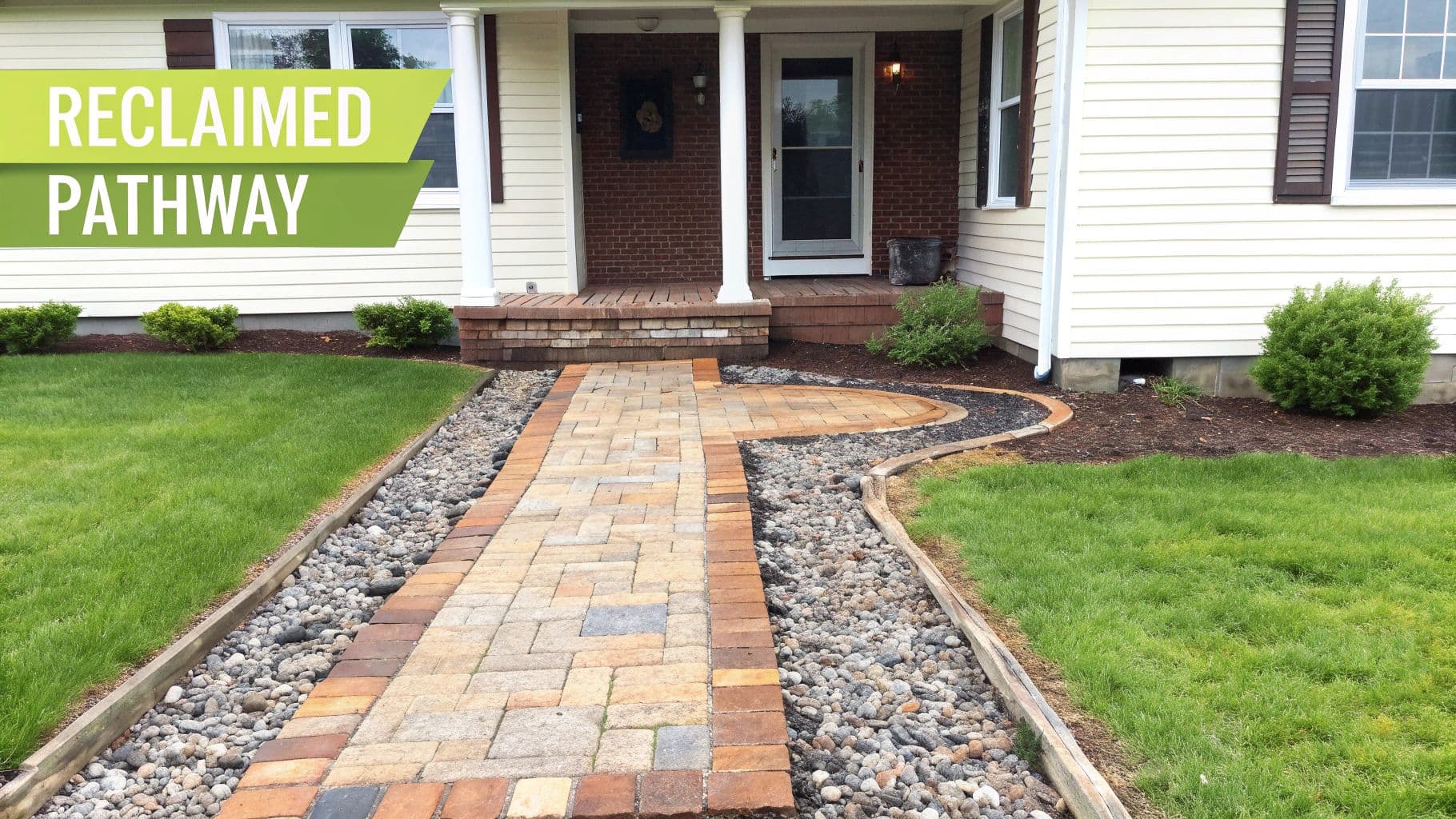
This sustainable approach not only saves money but also gives your front yard a unique, character-filled look. A well-placed reclaimed brick path or a gravel seating area adds instant curb appeal and practicality, guiding visitors and creating organized, usable outdoor rooms.
How to Get Started
- Source Smartly: Check online marketplaces like Craigslist and Facebook Marketplace for free or cheap materials. Construction sites and salvage yards are also excellent sources.
- Plan Your Path: Before you start, lay out the intended path or patio with a garden hose or spray paint to get a clear visual of the shape and flow.
- Prepare the Base: For a stable feature, always excavate the area, compact the soil, and add a layer of gravel and sand. Landscape fabric underneath will reduce weed growth.
- Test Your Layout: Use the OutdoorBrite photo-based redesign tool to experiment with different hardscape materials and layouts to make confident design decisions.
5. Container Gardens and Vertical Planting
Container gardens are a perfect solution for adding vibrant color and life to your front yard without the commitment of digging up your lawn. This approach uses pots and planters to introduce flowers, herbs, and greenery, offering incredible flexibility for renters or those with limited space. It’s one of the most accessible front yard landscaping ideas on a budget, allowing you to create a lush look on porches or patios with minimal investment.
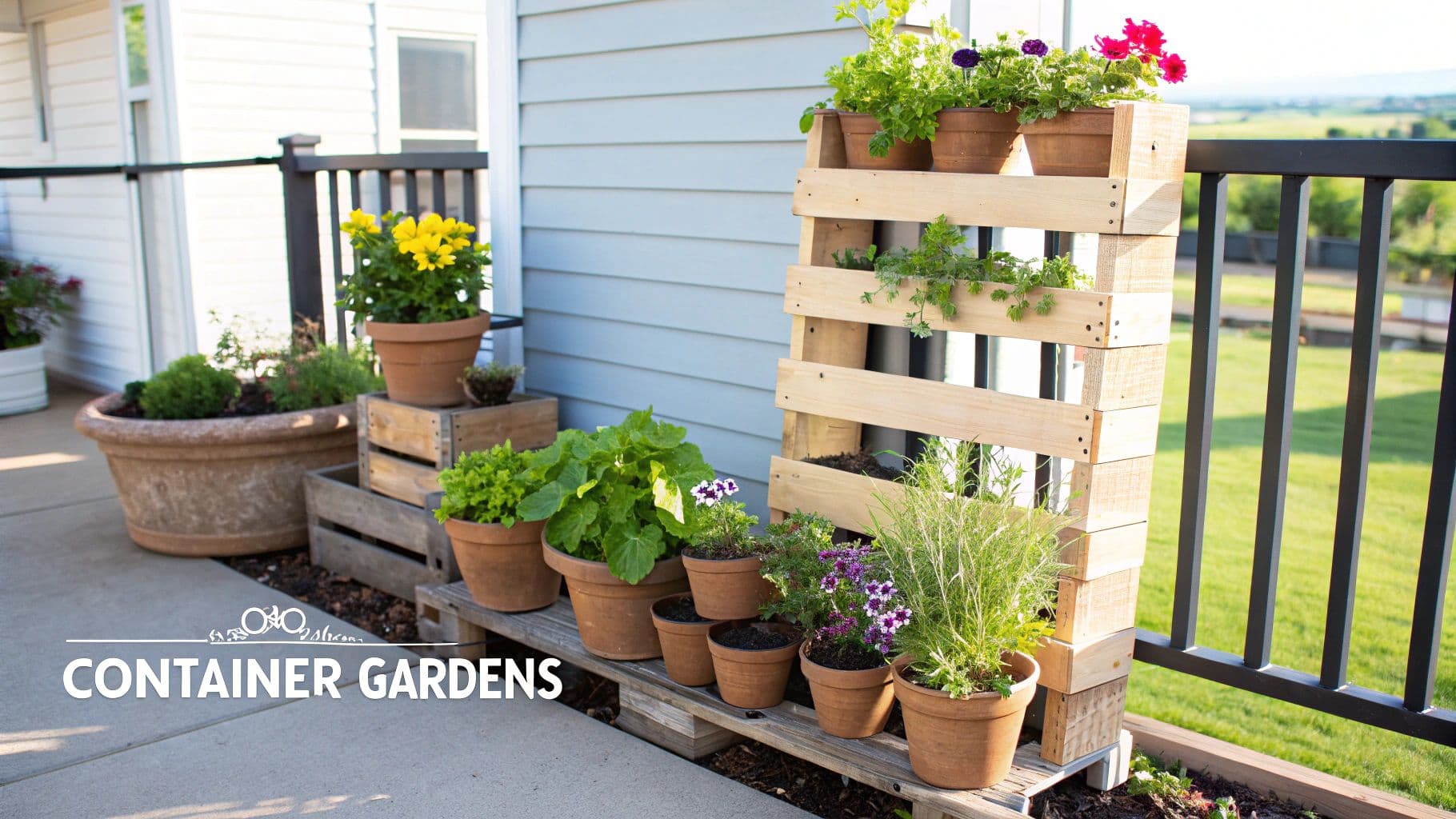
Vertical planting maximizes your growing area by going upwards, creating a stunning focal point on a blank wall or fence. This method gives you total control over soil conditions and makes it easy to change your look with the seasons.
How to Get Started
- Group for Impact: Arrange containers in odd-numbered groups (e.g., three or five) of varying heights and sizes. This creates a more natural and visually appealing composition.
- Choose the Right Soil: Use a high-quality potting mix instead of garden soil, which becomes too compacted in containers and can hinder drainage.
- Embrace DIY Planters: Get creative with recycled materials. Old wooden crates, pallets, or even painted tin cans (with drainage holes added) can be transformed into unique planters.
- Visualize Arrangements: Use OutdoorBrite’s photo-based redesign tool to experiment with different container placements and color schemes.
Explore a world of design possibilities and see how AI can help you create the perfect outdoor space by visiting the OutdoorBrite website.
6. Seed Sowing and Wildflower Mixes
Transforming a large, empty area into a vibrant garden can seem daunting and expensive, but sowing seeds directly into the ground is one of the most cost-effective front yard landscaping ideas on a budget. Using wildflower seed mixes allows you to create a lush, colorful, and natural-looking meadow for a fraction of the cost of buying individual plants. This method is perfect for covering large spaces or filling in bare spots with minimal effort.
Beyond the savings, a wildflower garden provides critical habitat for bees, butterflies, and other beneficial insects. It’s a low-maintenance solution that reduces mowing time and supports your local ecosystem.
How to Get Started
- Prepare the Soil: Clear the area of existing grass and weeds. Loosen the top 2-3 inches of soil with a rake to create a good seedbed.
- Sow Evenly: Mix your seeds with sand (a 1:4 seed-to-sand ratio works well) before broadcasting them to ensure an even distribution.
- Time it Right: For best results, sow seeds in early spring or fall. These periods typically provide the ideal temperature and moisture for seedlings to establish themselves.
- Visualize the Bloom: Use OutdoorBrite’s photo-based redesign feature to simulate how a mature mix of wildflowers will look in your front yard.
For a deeper dive into creating pollinator-friendly spaces, explore the various guides on our landscaping and gardening blog.
7. Perennial Garden Design
For a front yard landscaping idea on a budget that keeps on giving, consider designing with perennials. Unlike annuals that you must replant every year, perennial plants return season after season, offering exceptional long-term value. This initial investment saves you money and labor in the future, as established perennials often require less water and care.
This approach creates a dynamic and resilient landscape. Your garden grows fuller and more beautiful with each passing year, reducing empty spaces that invite weeds. Combinations like drought-resistant Sedums and striking Coneflowers can create a stunning, low-maintenance display.
How to Get Started
- Plan for Seasons: Choose perennials with staggered bloom times to ensure your garden has color from spring through fall.
- Divide and Conquer: One of the best budget hacks is that after a few years, you can divide mature perennials like Hostas or ornamental grasses. This gives you free plants to expand your garden.
- Start with Staples: Begin with hardy, proven perennials suited for your climate. Daylilies, Hostas (for shade), and Coneflowers are excellent, resilient choices for beginners.
- Visualize the Growth: Use OutdoorBrite’s photo-based redesign tool to see how different perennial combinations will mature and look in your yard over time.
To learn more about creating beautiful, sustainable outdoor spaces, explore our landscaping and gardening blog.
8. Low-Maintenance Grass Alternatives and Lawn Reduction
A sprawling green lawn is an iconic part of many homes, but maintaining it is often expensive and time-consuming. A smart front yard landscaping idea on a budget is to reduce your lawn's footprint or replace it entirely with low-maintenance alternatives. Groundcovers like creeping thyme, clover, or native sedums require far less water, fertilizer, and mowing, translating directly into lower utility bills and less weekend labor.
This approach not only saves money but also benefits the environment by conserving water and creating a more diverse habitat for pollinators. By swapping out turfgrass for a hardy groundcover, you create a unique landscape that stands out while demanding less from your wallet and your schedule.
How to Get Started
- Start Small: Begin by converting a small, manageable section, such as a strip along the driveway or a corner of the yard.
- Choose Wisely: Select a grass alternative suited to your climate and sun exposure. Microclover is a popular choice for sunny areas, while moss gardens thrive in the shade.
- Prepare the Soil: Properly prepare the area by removing the existing grass and weeds. Amending the soil with compost will help your new groundcover establish itself quickly.
- Visualize the Change: Use OutdoorBrite’s photo-based redesign feature to see how different groundcovers or smaller lawn areas will look before you commit.
For more ideas on how to incorporate smaller, self-contained plant areas, explore these island landscaping ideas that can help you strategically reduce your lawn.
9. Focal Points and Decorative Accents from Reclaimed Items
Creating a stunning front yard on a budget is often about personality, not price tags. Using reclaimed items to create unique focal points or decorative accents adds character and draws the eye, turning a simple garden into a personal statement. This approach involves upcycling everyday objects like old furniture, salvaged wood, or vintage signs into one-of-a-kind garden art.
This strategy is perfect for homeowners who want to inject creativity into their front yard landscaping ideas on a budget. An old wheelbarrow becomes a vibrant planter, a salvaged door transforms into a whimsical gate, and painted stones add pops of color.
How to Get Started
- Source Creatively: Hunt for treasures at flea markets, salvage yards, antique shops, or even online marketplaces. You might find the perfect item for free or just a few dollars.
- Choose a Centerpiece: Select one or two main focal points to avoid a cluttered look. A repurposed bench or a small metal sculpture can serve as a compelling centerpiece.
- Weatherproof Your Finds: Before placing items outdoors, make sure they can withstand the elements. Apply a coat of weather-resistant sealant or outdoor paint to protect them.
- Test Placement Virtually: Use OutdoorBrite’s photo-based redesign feature to experiment with placing your reclaimed finds in different spots to see what looks best.
To discover more ways to personalize your outdoor space, explore the creative projects on our landscaping and gardening blog.
10. Strategic Plant Propagation and Plant Swaps
One of the most rewarding and genuinely free front yard landscaping ideas on a budget is to create new plants from the ones you already have. Strategic plant propagation involves multiplying your plant collection through simple techniques like division and cuttings. Instead of buying new plants to fill a space, you can grow them yourself, turning one plant into many over time and drastically reducing landscaping costs.
Participating in local plant swaps adds another layer of savings, allowing you to trade your propagated plants for new varieties. It’s a sustainable method that not only fills your garden but also connects you with a community of fellow plant enthusiasts.
How to Get Started
- Learn Basic Techniques: Start with easy methods. Divide mature perennials like hostas and daylilies in the spring or fall. Take cuttings from herbs and shrubs like hydrangeas in early summer.
- Find a Community: Search for local gardening groups or plant swap events on social media. These are fantastic places to trade your extra plants and get new ones for free.
- Use Sterile Tools: Always use clean, sharp pruners or knives when taking cuttings or dividing plants. This prevents the spread of disease and ensures a higher success rate.
- Plan Your Layout: As you propagate new plants, use a tool like OutdoorBrite to visualize where they will go. This helps you create a cohesive and intentional front yard design.
Your Beautiful, Budget-Friendly Yard Awaits
Transforming your front yard into a stunning landscape doesn't require a massive budget. The most impactful designs often come from creativity, strategic planning, and a willingness to embrace DIY solutions. The journey to impressive curb appeal is paved with smart, cost-effective choices that deliver incredible value over time.
The key takeaway from these front yard landscaping ideas on a budget is the power of working with nature and available resources. By prioritizing native plants, you reduce water usage and maintenance costs. Embracing recycled materials for hardscapes or creating DIY edging not only saves money but also adds a unique, personal touch to your home's exterior.
Your Path to a Stunning Landscape
Let's distill the core principles for success:
- Start with a Plan: The most expensive mistake is starting without a vision. Prioritize projects based on impact and cost. Focus on one area at a time.
- Embrace the Long Game: Many of the best budget ideas, such as planting perennials or sowing wildflower seeds, reward patience. Your landscape is an investment of time that will grow more beautiful each year.
- Resourcefulness is Key: From swapping plants with neighbors to finding reclaimed items for focal points, your ability to think outside the box is your greatest asset.
Ultimately, mastering these budget-friendly approaches means you are in complete control of your home’s first impression. You are building not just a garden, but an extension of your home that is sustainable, affordable, and uniquely yours.
Ready to stop guessing and start designing? Don't let uncertainty hold you back from creating the yard of your dreams. Use OutdoorBrite's powerful AI tool to upload a photo of your front yard and instantly visualize these budget-friendly ideas in your own space before you even buy a single plant. Start your free design with OutdoorBrite today!