10 Smart Ground Cover Alternatives to Grass for a Low-Maintenance Yard
Tired of mowing? Discover top ground cover alternatives to grass, from clover to creeping thyme, for a beautiful, sustainable, and low-maintenance lawn.
The traditional turf lawn has long been a staple of American yards, but its reputation for high maintenance is well-earned. The endless cycle of mowing, watering, fertilizing, and weeding consumes significant time, money, and resources. For many homeowners, this demanding routine is prompting a search for smarter, more sustainable solutions. The good news is that a beautiful, functional yard doesn't have to mean constant upkeep. Exploring ground cover alternatives to grass can transform your landscape from a chore into a thriving, low-maintenance oasis.
This guide explores a diverse roundup of practical options, from living carpets of clover and creeping thyme to modern hardscapes and native plantings. Each entry provides the actionable details needed to make an informed decision, covering critical factors like:
- Climate Suitability: USDA Hardiness Zones and regional appropriateness.
- Site Conditions: Sunlight, water, and soil requirements.
- Maintenance & Durability: How much effort each option really takes.
- Pros & Cons: A balanced look at benefits and potential drawbacks.
Whether you're battling a shady patch where grass won't grow, looking to stabilize a steep slope, or simply want to create a more eco-friendly front yard, the perfect solution is within reach. This list will equip you with the knowledge to confidently choose and implement the best grass alternative for your specific needs, budget, and aesthetic vision.
1. Clover (Trifolium repens)
Once considered a weed, clover is making a major comeback as a popular ground cover alternative to grass. This nitrogen-fixing legume, particularly White Dutch Clover (Trifolium repens), creates a lush, green carpet dotted with small white or pink flowers that support pollinators. Its rise in popularity is tied to the "No Mow" and rewilding movements, which champion sustainable, low-effort lawns.
Key Characteristics & Benefits
Clover naturally enriches the soil by converting atmospheric nitrogen into a usable form, reducing the need for chemical fertilizers. It stays green during short droughts, outcompetes many common lawn weeds, and feels soft underfoot. This makes it an excellent, eco-friendly choice for a functional and beautiful yard.
- Climate/USDA Zone: Thrives in zones 3-10.
- Sunlight/Water Needs: Prefers full sun to partial shade. Moderately drought-tolerant once established but benefits from regular watering in hot, dry climates.
- Maintenance: Requires very little mowing. Mowing once or twice a season after flowers bloom encourages denser growth and supports bee populations.
- Pros & Cons:
- Pros: Self-fertilizing, drought-resistant, attracts beneficial insects, chokes out weeds, low maintenance.
- Cons: Not as durable as turfgrass for high-traffic areas, can stain clothing, attracts bees (a potential concern for those with allergies).
- Estimated Cost: Approximately $20-$30 per pound of seed, covering about 4,000 square feet.
Installation & Design Tips
To install a clover lawn, prepare the soil by removing existing grass and weeds, then lightly rake the surface. Broadcast the seed evenly in spring or early fall. For a gradual transition, you can overseed an existing lawn with microclover.
Pro Tip: To visualize how a full or mixed clover lawn will look, use a design tool like OutdoorBrite to upload a photo and preview the texture and color changes. This helps you commit to this fantastic ground cover alternative to grass with confidence.
2. Moss (various species including Bryophyta)
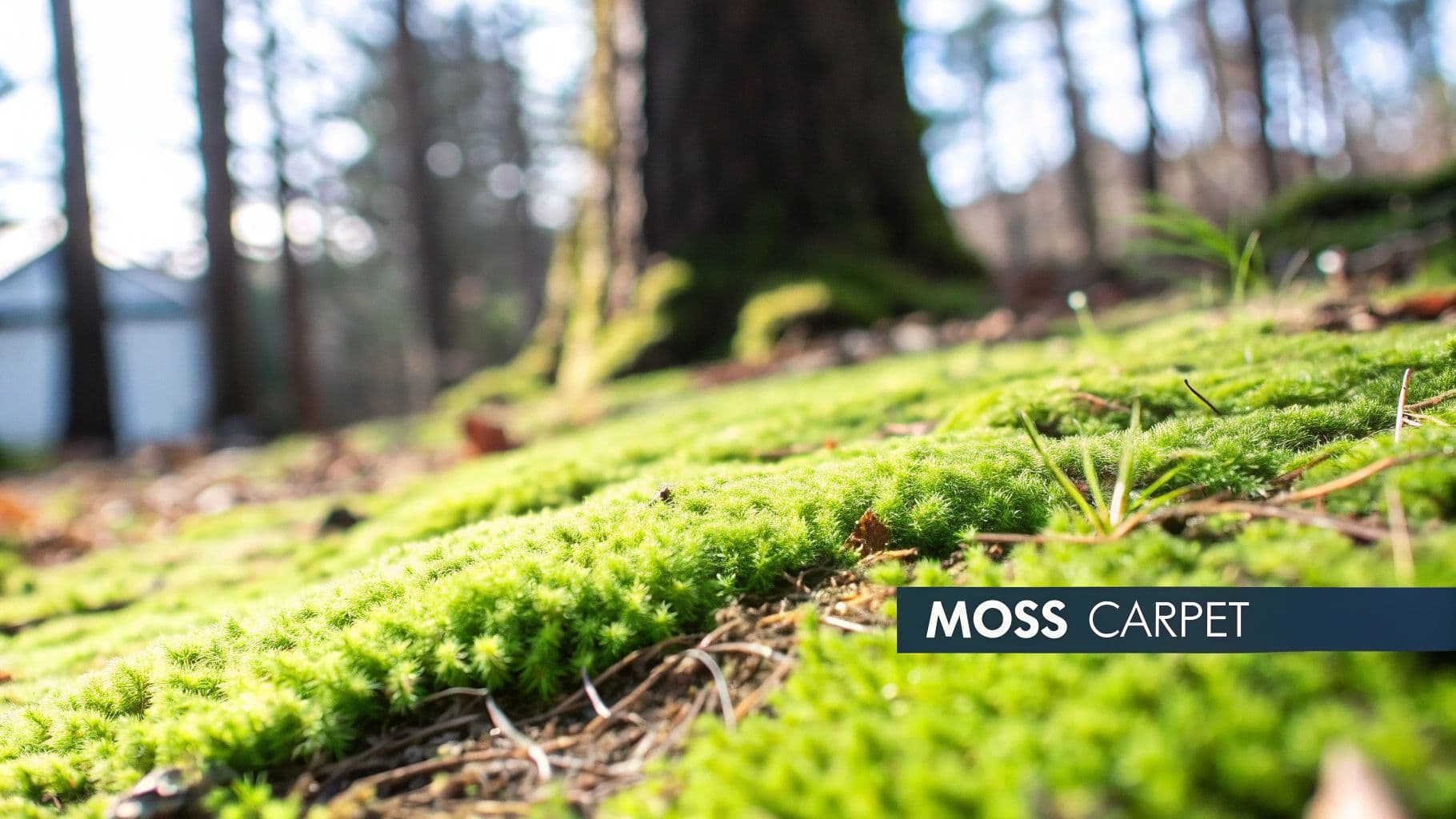
For shady, damp areas where traditional grass refuses to grow, moss offers an enchanting, velvety green solution. This ancient plant creates a tranquil, naturalistic aesthetic reminiscent of a serene forest floor or a traditional Japanese garden. Moss is a premier ground cover alternative to grass, particularly for those seeking a no-mow, low-maintenance landscape.
Key Characteristics & Benefits
Moss requires no mowing, fertilizing, or pesticides. It’s a resilient plant that absorbs nutrients and water through its leaves directly from the air. Its dense growth habit naturally suppresses weeds, and it remains evergreen in most climates, providing year-round color where other plants fail.
- Climate/USDA Zone: Species-dependent, but many common varieties thrive in zones 3-9.
- Sunlight/Water Needs: Prefers partial to full shade. Requires consistent moisture, especially during establishment.
- Maintenance: No mowing is required. The main task is keeping the area free of falling leaves and debris. It also prefers acidic soil (pH 5.0-6.0).
- Pros & Cons:
- Pros: No mowing or fertilizer, thrives in shade, evergreen, excellent for erosion control, deer-resistant, suppresses weeds.
- Cons: Not for sunny, dry locations, does not tolerate heavy foot traffic, can take time to establish.
- Estimated Cost: Can be free if transplanted. Purchased plugs or sheets can range from $10-$20 per square foot.
Installation & Design Tips
To start a moss lawn, clear the area of grass and weeds. Test the soil and amend it to achieve an acidic pH. You can encourage moss to spread by mixing fragments of existing moss with buttermilk or yogurt and painting it onto the prepared soil. Keep the area consistently moist until established.
Pro Tip: Moss pairs beautifully with ferns, hostas, and Japanese maples. To plan a cohesive design, you can use a tool like OutdoorBrite to preview how a moss garden with stone pathways and companion plants will create a serene, Zen-like atmosphere.
3. Creeping Thyme (Thymus serpyllum)
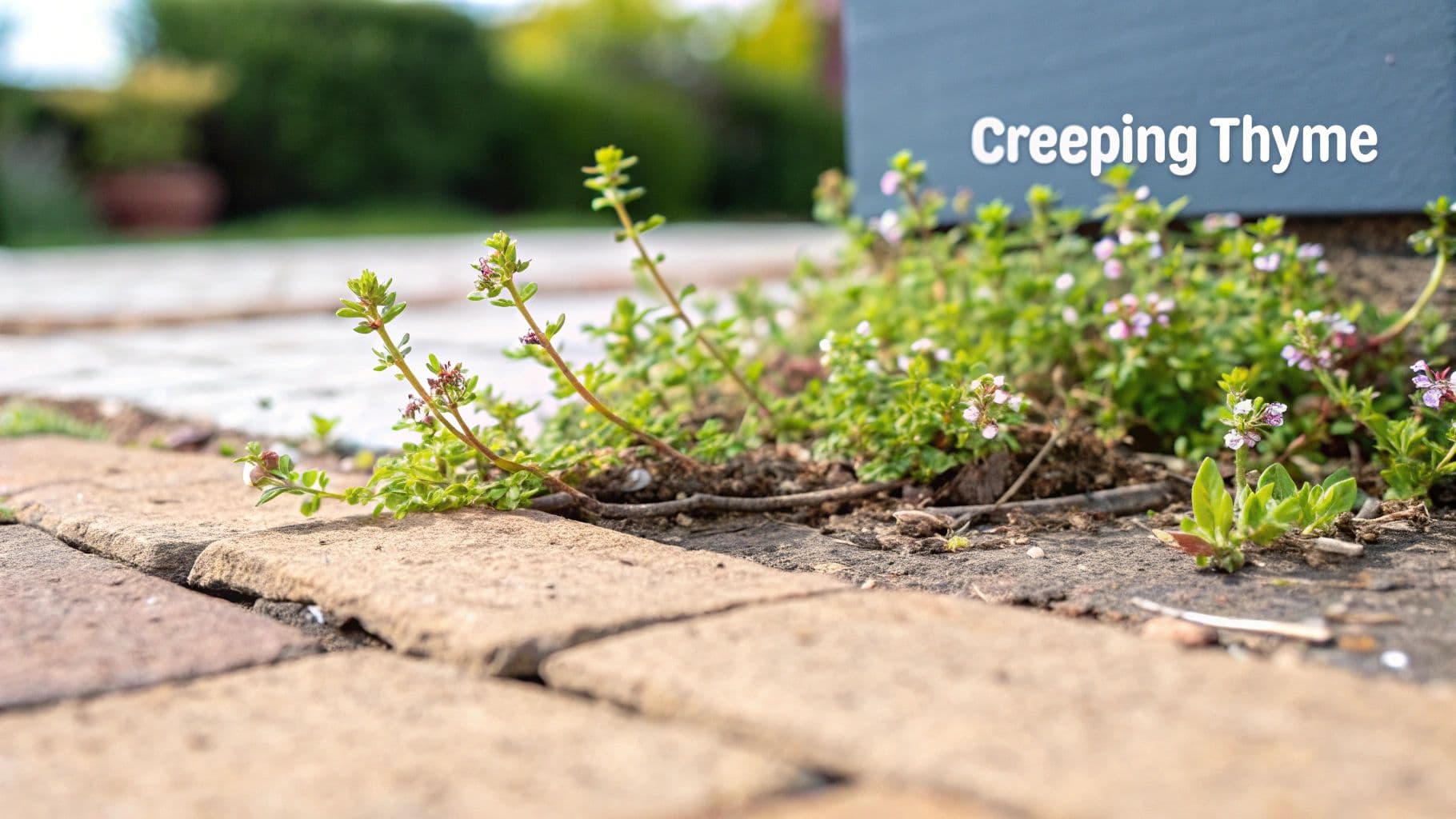
A fantastic ground cover alternative to grass for sunny, dry spots, creeping thyme is a fragrant, walkable perennial that forms a dense, evergreen mat. This low-growing herb releases a pleasant aroma when stepped on and produces a stunning display of pink, purple, or white flowers in early summer.
Key Characteristics & Benefits
Creeping thyme thrives in poor, rocky, or sandy soil. Its dense growth habit is excellent for suppressing weeds, and its low water needs make it ideal for water-wise gardens. The flowers are a magnet for bees and other pollinators, adding ecological value to its charm.
- Climate/USDA Zone: Hardy in zones 4-9.
- Sunlight/Water Needs: Requires full sun (6+ hours). Extremely drought-tolerant once established and prefers infrequent, deep watering.
- Maintenance: No mowing needed. Shear it back after flowering to promote a tidy, dense appearance.
- Pros & Cons:
- Pros: Drought-tolerant, fragrant, attracts pollinators, great for poor soil, low maintenance, deer-resistant.
- Cons: Does not tolerate heavy foot traffic, can be slow to establish from seed, needs well-drained soil.
- Estimated Cost: Approximately $5-$8 per plant for small pots or flats.
Installation & Design Tips
Creeping thyme is best installed from small plugs spaced 6 to 12 inches apart. Prepare the site by ensuring excellent drainage; amend heavy clay soil with sand or gravel. It's perfect for filling gaps between pavers or covering sunny slopes.
Pro Tip: Visualize a Mediterranean-style landscape by using a tool like OutdoorBrite to see how a carpet of creeping thyme complements stone pathways and other herbs like lavender and rosemary.
4. Mulch, Bark, Stone and Gravel
For those seeking an immediate, no-growth solution, materials like mulch, bark, stone, and gravel offer a versatile and functional ground cover alternative to grass. These options suppress weeds, regulate soil temperature, and can either retain moisture (wood mulches) or promote drainage (gravel and stone).
Key Characteristics & Benefits
These materials provide an instant "finished" look. Organic mulches like shredded bark slowly decompose, enriching the soil. Inorganic options such as river rock or pea gravel offer a permanent, ultra-low-maintenance surface, perfect for modern aesthetics or creating pathways.
- Climate/USDA Zone: Applicable in all zones.
- Sunlight/Water Needs: Not applicable (non-living).
- Maintenance: Organic mulch needs to be refreshed every 1-3 years. Inorganic stone and gravel are largely permanent but may need occasional weeding.
- Pros & Cons:
- Pros: Immediate results, excellent weed suppression, reduces water evaporation, wide variety of colors and textures.
- Cons: Can be expensive for large areas, organic mulch requires replenishment, gravel can be difficult to walk on.
- Estimated Cost: Shredded bark mulch is around $3-$5 per bag. Decorative stone or gravel can range from $50 to over $300 per ton.
Installation & Design Tips
For mulch, clear the area and apply a 2-4 inch layer, keeping it away from tree trunks. For stone or gravel, it's highly recommended to lay down landscape fabric first to prevent weeds and stop the stone from sinking.
Pro Tip: The color and texture of your ground cover impact curb appeal. Use a tool like OutdoorBrite to upload a photo and virtually test different materials, from red lava rock to black shredded mulch.
5. Ornamental Grasses (Miscanthus, Stipa, Festuca species)
For dramatic texture, movement, and year-round visual interest, ornamental grasses offer a sophisticated alternative to a traditional lawn. Species like Blue Fescue (Festuca glauca) and Maiden Grass (Miscanthus sinensis) create dynamic, multi-dimensional landscapes.
Key Characteristics & Benefits
Ornamental grasses are celebrated for their resilience, low water needs, and minimal upkeep. They add structure, sound, and motion to a garden as they rustle in the wind, and their seed heads often provide beauty through the fall and winter. These grasses are excellent for creating a modern, prairie-style, or naturalistic look.
- Climate/USDA Zone: Varies widely by species, with options for virtually every zone.
- Sunlight/Water Needs: Most prefer full sun. Generally drought-tolerant once established.
- Maintenance: Low. The primary task is cutting them back in late winter or early spring before new growth appears.
- Pros & Cons:
- Pros: Low maintenance, drought-tolerant, four-season interest, creates texture and movement.
- Cons: Does not create a walkable "lawn" surface, some species can be aggressive spreaders, takes time to fill in.
- Estimated Cost: Varies from $10-$40 per plant for gallon-sized containers.
Installation & Design Tips
Plant ornamental grasses in the spring. Prepare the site by clearing it of existing turf and weeds. Arrange the plants in groupings or drifts for a naturalistic effect, leaving adequate space between them to accommodate their mature size.
Pro Tip: Combining grasses of different heights, colors, and textures creates a compelling design. Use a tool to preview different ornamental grasses with OutdoorBrite to see how various combinations will complement your home's architecture before you plant.
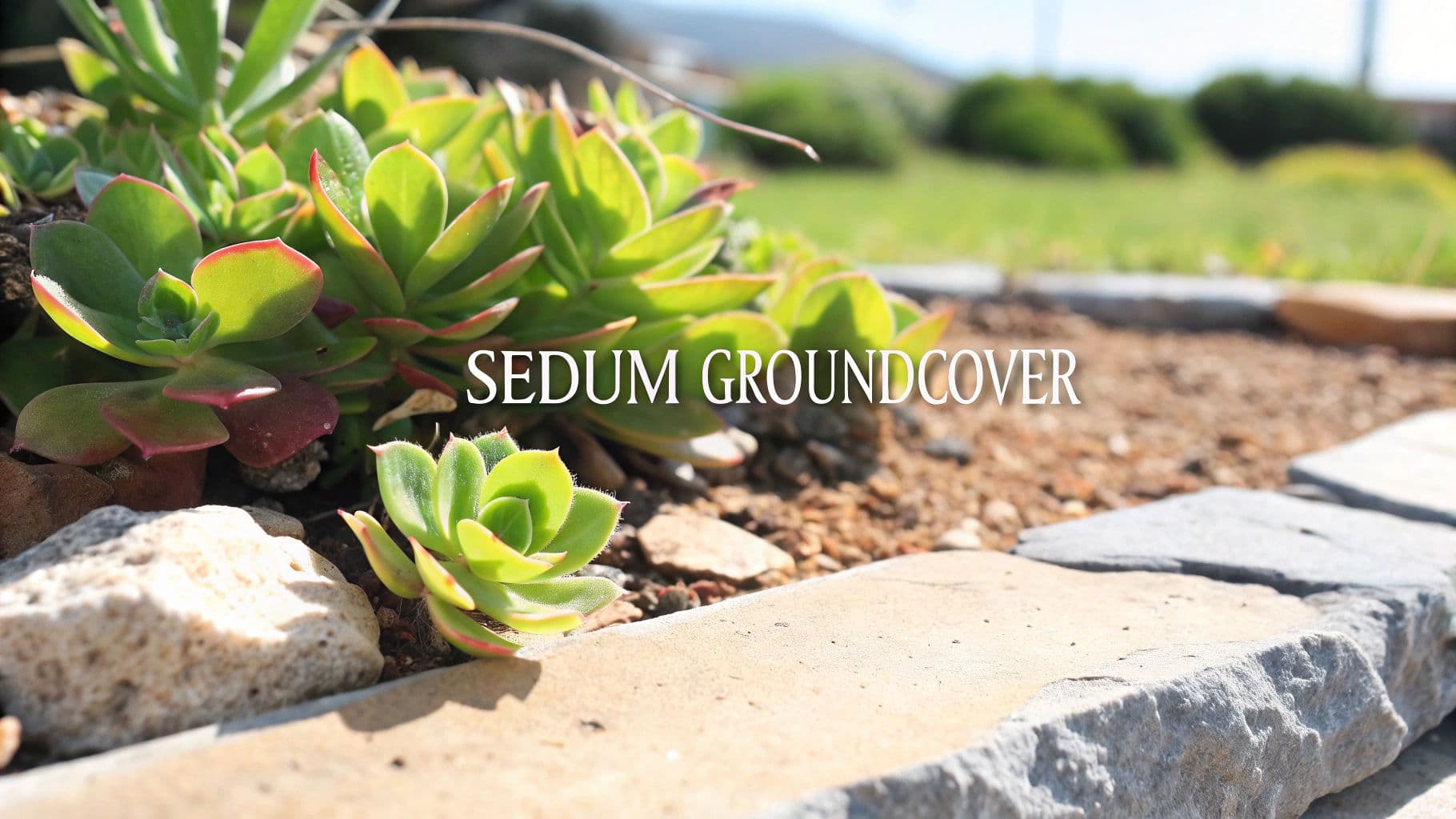
6. Sedum and Succulents (Stonecrop varieties)
For homeowners in dry climates, sedums and other succulents offer a vibrant, textured, and resilient ground cover alternative to grass. These drought-tolerant perennials feature thick, fleshy leaves that store water, allowing them to thrive with minimal irrigation and maintenance. Also known as stonecrop, sedums create stunning, colorful tapestries.
Key Characteristics & Benefits
Sedums excel in conditions where traditional grass struggles, such as in sandy or rocky soil, on slopes, and in full sun. Their ability to store water makes them a cornerstone of xeriscaped gardens. The diverse range of colors allows for endless design creativity.
- Climate/USDA Zone: Most varieties are hardy in zones 3-9.
- Sunlight/Water Needs: Requires full sun. Extremely drought-tolerant once established; overwatering can cause root rot.
- Maintenance: Virtually maintenance-free. No mowing is required.
- Pros & Cons:
- Pros: Extremely low water needs, thrives in poor soil, provides year-round color, ideal for hot and sunny spots.
- Cons: Not suitable for foot traffic, can be susceptible to root rot in poorly-drained soil.
- Estimated Cost: Approximately $4-$8 per small plant plug.
Installation & Design Tips
To install a sedum ground cover, ensure the area has excellent drainage. Plant individual plugs in the spring, spacing them according to their mature spread. Water them during the first few weeks to help them establish, then reduce watering significantly.
Pro Tip: Use a tool like OutdoorBrite to experiment with different sedum color combinations. You can visualize how a mix of 'Dragon's Blood' red, 'Angelina' yellow, and 'Blue Spruce' sedum will create a dynamic carpet against your home.
7. Creeping Phlox (Phlox subulata)
For a breathtaking explosion of early spring color, Creeping Phlox is a spectacular ground cover alternative to grass. This low-growing perennial forms a dense, mat-like carpet that becomes completely covered in vibrant flowers of pink, purple, white, and red. It is often featured in rock gardens and on slopes where its cascading blooms can be fully appreciated.
Key Characteristics & Benefits
Creeping Phlox offers one of the most visually stunning floral displays of any ground cover. The dense, needle-like foliage remains evergreen or semi-evergreen in many climates, providing year-round texture. It's a hardy plant that thrives in various soil conditions, as long as it has excellent drainage.
- Climate/USDA Zone: Best suited for zones 3-9.
- Sunlight/Water Needs: Requires full sun for the most prolific flowering. Drought-tolerant once established.
- Maintenance: Very low. No mowing required. Deadheading spent flowers can encourage denser foliage.
- Pros & Cons:
- Pros: Incredible spring flower display, drought-tolerant, deer resistant, excellent for erosion control on slopes.
- Cons: Only flowers for a few weeks in spring, not durable enough for foot traffic.
- Estimated Cost: Approximately $5-$10 per plant start.
Installation & Design Tips
Install Creeping Phlox in the spring. Prepare the site by clearing weeds and ensuring the soil drains well. Space individual plants about a foot apart; they will grow together to form a solid mat within a couple of seasons.
Pro Tip: Combine Creeping Phlox with spring-blooming bulbs like daffodils. Use a tool like OutdoorBrite to preview how different phlox colors will coordinate with your bulbs and your home's exterior, helping you create a layered, professional-looking design.
8. Ground Cover Shrubs (Juniper, Cotoneaster, Bearberry)
For year-round structure and texture, ground cover shrubs offer a robust and permanent alternative to a traditional lawn. Low-growing woody plants like creeping juniper (Juniperus horizontalis) and bearberry (Arctaphylos uva-ursi) form dense, living mats that provide visual interest across all seasons.
Key Characteristics & Benefits
Ground cover shrubs excel in difficult areas like steep banks, rocky soil, or hot, dry zones. They create a textured carpet that supports wildlife, reduces erosion, and eliminates the need for mowing. Their woody nature adds a sense of permanence and depth to the landscape.
- Climate/USDA Zone: Varies by species. Juniper (3-9) and Bearberry (2-6) cover a wide range of climates.
- Sunlight/Water Needs: Most prefer full sun to partial shade. Exceptionally drought-tolerant once established.
- Maintenance: Virtually maintenance-free after establishment. Prune occasionally to remove dead branches.
- Pros & Cons:
- Pros: Low maintenance, excellent for slope stabilization, year-round color and texture, drought-resistant.
- Cons: Higher upfront cost, slow to establish full coverage, not suitable for foot traffic.
- Estimated Cost: Approximately $15-$40 per plant, depending on size and variety.
Installation & Design Tips
Successful installation depends on proper spacing and soil preparation. Plant individual shrubs in the spring or fall, ensuring the hole is twice as wide as the root ball. Space them according to their mature spread to allow for future growth.
Pro Tip: Combine different ground cover shrubs with varying textures. Use a tool like OutdoorBrite to visualize how varieties like the blue-green of 'Blue Rug' juniper will contrast with other plants, helping you perfect your planting plan.
9. Hardscape Pavers and Permeable Paving (concrete, stone, recycled composite)
For areas where functionality is paramount, hardscape pavers offer a sophisticated and permanent ground cover alternative to grass. These systems, made from materials like concrete or stone, create solid, usable surfaces for patios and walkways. Permeable pavers, which allow rainwater to seep into the ground, are a popular green option.
Key Characteristics & Benefits
Hardscape pavers provide a maintenance-free surface that eliminates the need for watering or mowing. They offer endless design possibilities. Permeable options add a significant environmental benefit by managing stormwater runoff, a practice championed by eco-conscious communities.
- Climate/USDA Zone: Suitable for all zones.
- Sunlight/Water Needs: No sunlight or water required.
- Maintenance: Very low. Requires occasional sweeping. Weeds may grow in joints and can be removed by hand.
- Pros & Cons:
- Pros: Extremely durable, no maintenance, endless design flexibility, great for high-traffic areas, permeable options are eco-friendly.
- Cons: High upfront installation cost, can absorb and radiate heat.
- Estimated Cost: Approximately $15-$50 per square foot installed.
Installation & Design Tips
Proper installation is critical. The process involves excavating, laying a compacted gravel base, adding a sand setting bed, placing the pavers, and installing edge restraints. Joint sand is swept between the pavers to lock them in place.
Pro Tip: Combine hardscaping with softscaping by creating planting pockets within your paver patio. Check out these island landscaping ideas to see how you can integrate greenery with your paver design.
10. Native Groundcover Plants (regionally specific low-growing species)
Choosing native groundcover plants is arguably the most ecologically responsible approach to replacing a lawn. These are indigenous plants perfectly adapted to your local climate, soil, and water conditions, allowing them to thrive with minimal intervention. They create resilient landscapes that support regional wildlife without chemical fertilizers or pesticides.
Key Characteristics & Benefits
Native groundcovers are the ultimate low-effort, high-impact alternative. Because they evolved in your region, they are naturally resistant to local pests and tolerant of typical rainfall patterns. Examples range from drought-resistant species in the Southwest to lush woodland plants like Wild Ginger (Asarum canadense) in the East.
- Climate/USDA Zone: Specific to your region. Consult a local native plant society for species in your zone.
- Sunlight/Water Needs: Varies widely. Choose plants that match the sun exposure and moisture levels of your site.
- Maintenance: Minimal once established (2-3 years). Typically involves seasonal trimming and occasional weeding.
- Pros & Cons:
- Pros: Adapted to local conditions, requires little irrigation or fertilizer once established, provides habitat for local wildlife.
- Cons: Sourcing true native plants can be challenging, establishment can be slow, may not tolerate heavy foot traffic.
- Estimated Cost: Varies. Seeds are cheaper, around $30-$50 for a mix covering 1,000 sq ft. Plugs cost more upfront, typically $5-$15 per plant.
Installation & Design Tips
Successful installation starts with research. Identify your ecoregion and source plants from reputable native plant nurseries. Prepare the site by removing all existing lawn and weeds. Planting a diverse mix of several native species creates a more resilient ground cover.
Pro Tip: Designing with native plants can be complex. Use a tool like OutdoorBrite to upload a photo of your yard and experiment with different native plant palettes to see how textures and colors will work together before you buy.
Making Your Choice: How to Design and Implement Your New Landscape
You've explored a world of possibilities, from the soft carpet of Clover to the rugged appeal of permeable pavers. The journey away from a traditional lawn is about redesigning your outdoor space to reflect your lifestyle, aesthetic preferences, and local ecology. The perfect solution lies in identifying the right combination of ground cover alternatives to grass that meets your unique needs.
From Idea to Action
Before you break ground, run through a final, practical checklist. This step ensures the alternative you select will not just survive, but thrive.
1. Re-evaluate Your Site's Core Conditions:
- Sunlight: Map your yard again. Which areas get full sun (perfect for Sedum or Creeping Thyme)? Which are in deep shade (ideal for Moss)?
- Soil: Conduct a simple soil test. Is it sandy and well-draining or heavy clay? This information can eliminate half of your options.
- Foot Traffic: Be honest about how you use your space. Does a high-traffic path for kids and pets cut through the middle, suggesting durable hardscaping? Or is the area purely ornamental?
2. Align with Your Lifestyle and Budget:
- Maintenance Tolerance: How much time are you really willing to spend on upkeep? Mulch and stone are virtually "set-it-and-forget-it" options.
- Installation Effort & Cost: Your budget and DIY spirit are major factors. Spreading gravel is a straightforward weekend project. Installing stone pavers represents a more significant investment.
3. Visualize and Plan Your Design:
- Combine and Conquer: You don't have to choose just one. The most dynamic landscapes often blend multiple ground cover alternatives to grass.
- See It Before You Build It: Hesitation often comes from uncertainty. Visualizing your project with a tool like an AI landscape designer can remove the guesswork entirely, allowing you to "try on" different textures and layouts.
By moving beyond the traditional turf-grass monoculture, you are embracing a more sustainable, biodiverse, and personally tailored approach to your outdoor living space. You're creating a habitat for pollinators, conserving water, and reducing your reliance on chemicals. This is more than a landscaping project; it's a step toward a more resilient and beautiful environment, starting right outside your door.
Ready to stop guessing and start visualizing? The OutdoorBrite AI landscape designer can help you see exactly how these ground cover alternatives to grass will look in your yard. Simply upload a photo of your space to get instant, photorealistic mockups and design with confidence. Try OutdoorBrite today!