How to Design a Backyard Your Family Will Actually Use
Learn how to design a backyard with our guide. We cover everything from planning and layout to plants and AI tools, helping you create your dream outdoor space.
The secret to a great backyard design isn't having the biggest budget or the trendiest features. It's about understanding the land you have and being honest about how you want to use it. When you get those two things right, everything else falls into place, creating a space that feels just right because it was designed for you.
Your Backyard Blueprint Starts With a Vision
Before you pick out pavers or browse plant nurseries, the most important work happens in your own yard with a notepad. This is where you stop daydreaming and start creating a real, workable plan. Many people skip this step and end up with a backyard that looks pretty but doesn't quite work for their family.
Think of yourself as an investigator. Your job is to gather all the clues your property is giving you. This initial legwork makes every later decision—from where to put the patio to what tree to plant—feel intentional and right. It’s the foundation your entire project will be built on.
Conduct a Simple Site Audit
First, get to know your canvas. Every yard has quirks that will either be a huge help or a headache. Figuring them out now will save you trouble later.
Grab paper and sketch your property. It doesn’t have to be perfect. Mark the house, property lines, and major features like a big tree or an old shed. Now, watch your yard at different times of the day.
- Sun and Shade Patterns: Where is the sun blazing in the afternoon? Spots with 6+ hours of direct light are prime for a vegetable garden. Where are the cool, shady corners? That could be a perfect reading nook.
- Soil Conditions: You don't need a degree in horticulture. Just grab a handful of dirt. Is it gritty and sandy, or heavy and sticky like clay? This simple test tells you which plants will thrive.
- Drainage and Slope: After the next rain, where do puddles form? Note any low spots or sloped areas. This is crucial for placing hardscaping like patios.
- Existing Features: List everything you're working with. A mature tree is an asset. A cracked patio is a challenge to remove. An ugly view is something you’ll want to screen.
Define Your Backyard's Purpose
Now that you know your site, it’s time for the personal part: What are you actually going to do out there? A stunning backyard that doesn’t fit your lifestyle is just a pretty picture you’ll never step into.
Be specific. Think about your real life. Create a wish list and divide it into "must-haves" and "nice-to-haves."
Pro Tip: Instead of just writing "patio," frame it as an activity. Try "a patio big enough for our six-person table for weekend barbecues." This shift from features to experiences is key to a functional space.
Think through how you want to live outdoors:
- Entertaining: Do you host big cookouts or prefer quiet dinners with friends? This dictates the size of your patio and its proximity to the kitchen.
- Relaxation: Is your dream to unwind in a hammock or gather around a fire pit? Picture where those moments will happen.
- Play: If you have kids or a dog, a patch of durable lawn is likely a must-have. Think about where to put a play structure so you can keep an eye on it.
- Gardening: Do you want raised beds for vegetables, a cutting garden for flowers, or just some low-maintenance plants to soften the edges?
From Zones to Flow: Creating a Functional Layout
You’ve done the site audit and made your wish list. Now comes the fun part: figuring out how the pieces fit together. A great backyard isn't a random collection of features; it's an experience where moving from one spot to another feels natural.
Stop thinking of your yard as one big space. Imagine it as a series of interconnected "outdoor rooms," each designed for a specific activity. You might plan a "dining room" for the patio, a "lounge" with comfy chairs, and a "rec room" for the kids. This shift in thinking is what makes a backyard feel cohesive and inviting.
Mapping Your Outdoor Rooms
Grab your site sketch. Start loosely drawing bubbles or circles to represent the different zones from your wish list. Don't stress about perfection; this is about exploring possibilities.
Where does the dining area feel right? Proximity to your indoor kitchen is a huge deal. If it's a hassle to carry food out, you won't do it often. Placing your grill and dining spot just a few steps from the kitchen door can dramatically increase how much you enjoy it.
Think through the practical placement for each zone:
- The Social Hub (Dining/Lounging): This is the heart of the yard and needs a seamless connection to the house.
- The Play Zone (Kids/Pets): Position this where you have a clear line of sight from a kitchen window, away from potential dangers.
- The Utility Corner (Shed/Compost): These workhorse areas need to be easy to access but tucked away from the main view.
- The Quiet Retreat (Relaxation/Gardening): Look for a secluded corner that feels like an escape.
This concept map shows how your site audit and wish list combine to build a functional backyard vision.
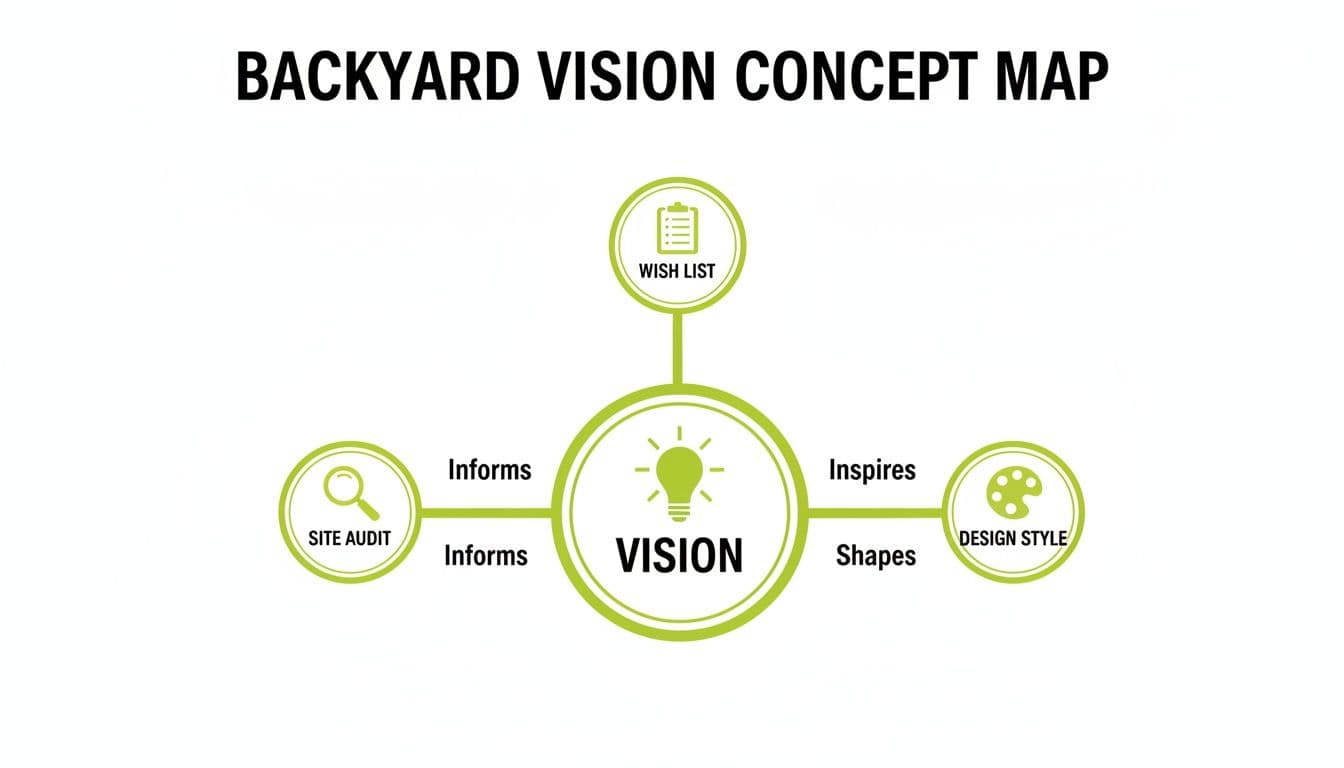
A successful layout is the result of combining the reality of your space with the way you want to live in it.
Comparing Backyard Layout Strategies
A look at common backyard layouts to help you choose the best structure for your space.
| Layout Strategy | Best For | Key Characteristics | Potential Drawbacks |
|---|---|---|---|
| Open-Concept | Families, entertaining, small yards. | A large, central lawn or patio with smaller zones around the perimeter. | Can lack intimacy; may feel less organized without clear boundaries. |
| Room-Based | Larger yards, creating distinct moods. | Clearly defined "rooms" separated by pathways, plantings, or low walls. | Can make smaller yards feel choppy; requires more planning for flow. |
| Axial Design | Formal or traditional styles, drawing the eye to a focal point. | A strong central line with the layout mirrored symmetrically on either side. | Can feel rigid and formal; less suitable for casual or oddly shaped lots. |
| Meandering | Naturalistic or cottage-style gardens. | Winding, curved paths that reveal different areas as you walk. | Inefficient for direct routes; may not maximize usable space. |
Many of the best designs are a hybrid, perhaps using an open-concept social area that leads to a more meandering retreat.
Establishing Pathways and Flow
Once you have a rough idea of your zones, consider how you'll move between them. Pathways are the "hallways" of your outdoor home. A common mistake is not planning for paths, which leads to worn-out patches of grass.
Sketch out clear pathways. Curved paths can make a small yard feel bigger, while straight paths lend a more formal look.
A well-designed backyard layout anticipates your movements. The path from the back door to the grill should be direct, while the journey to a hidden bench can be more scenic.
Think about the journey itself. Does the path to the fire pit need to be wide enough for two people? Should the walkway to the vegetable garden be solid enough for a wheelbarrow? Answering these questions now ensures your final design is as functional as it is beautiful.
Weaving Together Hardscape and Plantings
With your layout mapped, it's time to think about materials, textures, and colors. This is where you choose your hardscaping (non-living elements like patios) and softscaping (the living plants).
Finding the right harmony between these two is what separates a good backyard from a great one. The hardscape acts as the skeleton, giving your yard structure. The plants breathe life into it, softening hard edges and adding seasonal color.
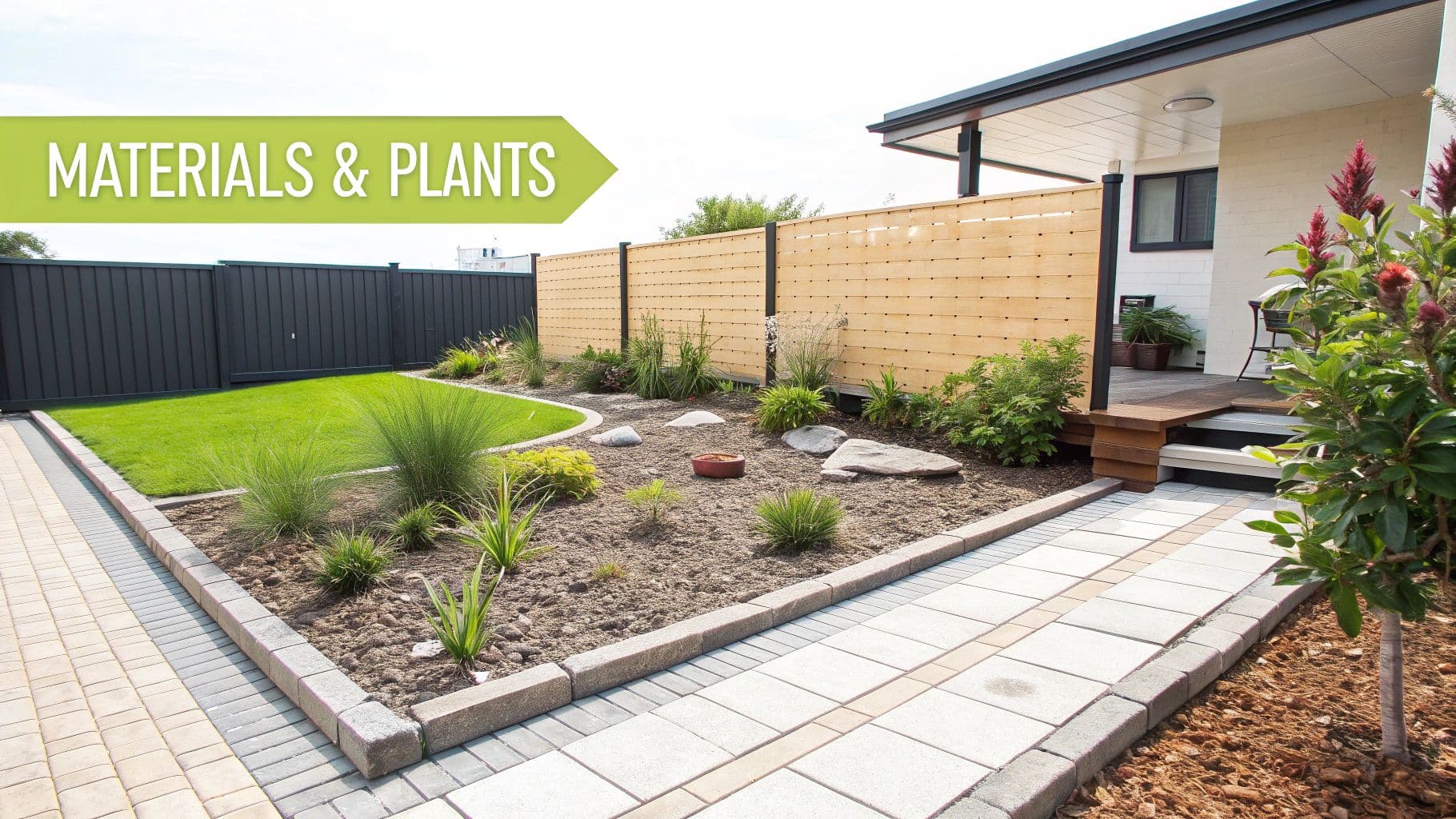
Laying the Foundation: Your Hardscape Choices
Hardscaping includes patios, decks, walkways, and fire pits. These elements define your outdoor "rooms." Your materials should reflect your home's style. For a modern vibe, you might choose sleek concrete pavers. For a rustic feel, natural flagstone or wood decking might be a better fit.
Common options include:
- Pavers (Concrete or Stone): Incredibly versatile, pavers come in endless shapes and colors. The key is a properly prepared base to prevent shifting.
- Gravel or Decomposed Granite: A budget-friendly route for secondary paths. It provides great drainage but can get tracked inside.
- Wood or Composite Decking: A great solution for sloped properties. Natural wood requires regular sealing, while composite materials are a low-maintenance alternative.
The material you choose for your main patio or walkway sets the tone for the entire backyard. If there's one place to invest in quality, this is it.
Recent trends show a shift in style preferences. According to a report from Yardzen.com, homeowners are craving softer, romantic garden looks. Requests for 'cottage gardens' shot up by 100%, with 25% more gravel paths and a 50% increase in cobblestone pavers.
Breathing Life into the Design: The Plant Palette
Softscaping is where your garden comes alive. It's the collection of trees, shrubs, and flowers that provide color and texture. A thoughtful plant palette creates a garden with interest all year.
The golden rule is "right plant, right place." Work with your climate, soil, and sun exposure. To create a garden with depth, think in layers:
- Canopy (Trees): Your biggest players, providing shade and privacy.
- Understory (Shrubs): The backbone of garden beds, providing year-round structure.
- Herbaceous Layer (Perennials & Annuals): This is where you play with color and texture.
- Ground Layer (Groundcovers): Low-growing plants are amazing for suppressing weeds and softening hard edges. For more ideas, check out our guide on island landscaping ideas.
As you choose plants, think about how they'll look together. Mix fine foliage with bold leaves and pair spiky flowers with mounding plants. These contrasts make a garden feel rich and dynamic.
Bring Your Backyard Vision to Life with AI
You've sketched a layout and picked materials. But how do you really know what it will look like? The gap between the plan on paper and the reality on the ground is where most projects go wrong.
Thankfully, you don't have to just hope for the best. Modern AI tools can bridge that gap, turning your ideas into realistic visuals. You can see how things will look before you spend a dime.
With a tool like OutdoorBrite, you just upload a photo of your yard and start exploring different concepts and styles applied to your own space.
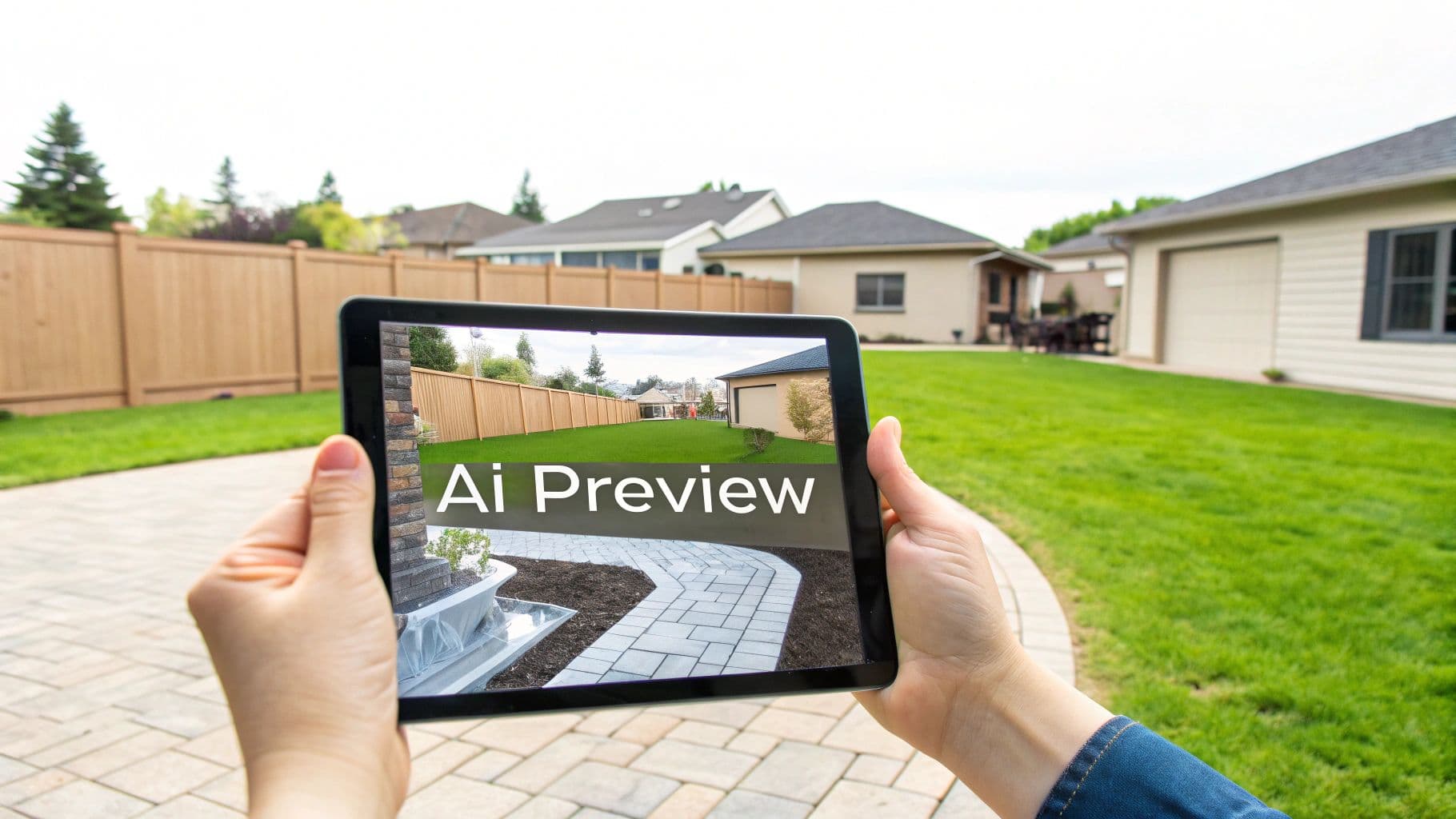
This lets you experiment with confidence, comparing different aesthetics in seconds.
How AI Helps You See the Future
The process is surprisingly straightforward. You snap a clear photo of your backyard, and that picture becomes your digital sandbox. From there, you can apply design styles with a single click. Curious what your yard could be?
- Modern: See how clean lines and minimalist plants would transform the space.
- Tropical: Fill your yard with huge, leafy plants and warm wood tones.
- Cottage: Preview a charming vibe with overflowing flower beds and stone paths.
- Japanese Zen: Test out a serene garden with raked gravel and elegant maples.
The tool generates photorealistic concepts almost instantly. It’s like having a design pro on speed dial.
Go Beyond a Pretty Picture
The real magic happens when you start tweaking the designs. A great backyard is the result of refinement. AI visualization makes that process quick, easy, and risk-free.
Maybe you love a 'Mediterranean' concept but aren't sold on the terracotta tile. No problem. Digitally swap it for travertine pavers to see which one fits your vision.
This technology fundamentally changes how you design. You stop being a planner imagining an outcome and become an editor, making choices based on clear visual proof.
Answering Practical Questions Before You Build
Using AI isn't just about aesthetics; it solves real-world planning problems.
Will It All Fit?
Will that huge outdoor sectional swallow your patio? Virtually place furniture into your AI design to check the scale and ensure you have room to walk around.
How Will It Look Year-Round?
Some tools let you simulate the seasons, showing how your plants will change throughout the year. This is a game-changer for creating a landscape that has something to offer in every season.
What About Lighting?
Toggle between different times of day to see how light hits certain areas or where evening shadows will fall. This is incredibly useful for planning your outdoor lighting.
By using an AI visualizer, you’re building a digital prototype of your backyard. You get to test and perfect every detail until it’s just right. The result? The beautiful backyard you finally build is the one you’ve already seen and fallen in love with.
How to Budget and Phase Your Project
Let’s talk money. Creating a beautiful backyard can be a big investment. A smart financial plan is your most powerful tool, ensuring your dream doesn't become a headache. The key is to be realistic about costs and strategic about where you spend.
First, get a feel for the numbers. The cost of a backyard renovation can swing wildly depending on where you live, your materials, and how much work you do yourself. Understanding what things typically cost is the first step toward building a budget that works.
Prioritizing Your Wish List
Pull out that wish list you made earlier. This is where you get honest. Divide your list into "must-haves" and "nice-to-haves."
Your "must-haves" are the core elements that will make the space work right now, like a safe patio or a fence. The "nice-to-haves" are things you’d love down the road, like an outdoor kitchen. This exercise isn't about crushing your dreams; it's about channeling your budget where it will have the biggest impact.
A well-prioritized wish list is your roadmap. It ensures you invest in the foundational elements first, creating a usable space you can build upon over time.
Sample Budget Estimates for Backyard Features
To give you a starting point, here are some ballpark figures. Remember, these are just estimates and can vary by region and materials.
| Project Element | DIY Cost Range (Materials Only) | Professional Installation Cost Range |
|---|---|---|
| Paver Patio (12' x 12') | $700 - $1,500 | $2,500 - $7,000 |
| Wood Deck (10' x 12') | $1,200 - $4,000 | $4,500 - $11,000+ |
| Fire Pit (Kit or DIY) | $200 - $1,000 | $1,500 - $5,000 |
| Raised Garden Beds (Each) | $75 - $300 | $400 - $800 |
| Privacy Fence (Per Linear Ft) | $15 - $30 | $30 - $60+ |
This shows how different choices—DIY versus hiring a pro—can dramatically affect the bottom line.
Fence cost also moves with how the boards run. Laying them flat means posts every 6 feet instead of 8, which is part of why these horizontal fence designs price higher per linear foot than a standard vertical panel.
The Power of Phasing Your Project
One of the best strategies for designing on a budget is phasing. This means breaking your vision into smaller, manageable stages you can tackle over several months or years. This approach makes a massive project feel less overwhelming for your wallet and your schedule.
A typical phased plan looks something like this:
- Year 1: The Foundation. Install the hardscaping—the patio or deck—and plant any major trees that need time to grow.
- Year 2: The Living Layer. Focus on the garden beds, adding shrubs, perennials, and an irrigation system.
- Year 3: The Amenities. Add the "nice-to-have" features like a fire pit, outdoor lighting, or an outdoor kitchen.
Phasing allows your design and budget to evolve. As you live in the space, your needs might change, and this approach gives you the flexibility to adapt. If you have questions about planning a larger project, feel free to contact our team for guidance.
Common Backyard Design Questions
Even with a perfect plan, questions will come up. Here are some quick answers to common challenges.
How Can I Make a Small Backyard Feel Bigger?
When working with a small space, it's all about illusion. A few strategies can work wonders.
- Go Vertical. Draw the eye upward with tall, slender plants or climbing vines on a trellis.
- Stick to a Simple Color Palette. Keeping the colors of your pavers, fences, and plants in the same family creates a clean, unified look that feels more expansive.
- Try a Diagonal Layout. Laying pavers or deck boards on a 45-degree angle creates longer visual lines, which helps stretch the space.
The key is thinking about scale. Look for furniture that does double duty, like a bench with built-in storage.
What Are the Best Low-Maintenance Plants for Beginners?
A gorgeous garden can become a chore if you pick the wrong plants. For beginners, you want plants that are tough and forgiving.
Start with plants native to your area—they're already used to your climate and soil. Some reliable picks include:
- Hostas: Champions of the shade, they are incredibly hard to kill.
- Coneflowers (Echinacea): A classic sun-lover that blooms for months and handles dry spells.
- Sedum (Stonecrop): This succulent is practically bulletproof and loves hot, dry spots.
A "green thumb" is less about magic and more about making smart choices. A low-maintenance garden starts at the nursery.
Should I DIY or Hire a Professional?
The right answer comes down to your budget, timeline, and skill level.
The DIY route can save you 40-60% of the total project cost on labor. But you have to be honest about what you can handle. A botched DIY job can cost more to fix than hiring a pro in the first place. For complex tasks like major earthmoving or electrical work, always call a licensed professional. You can find more on topics like this on our blog.
A great compromise is to split the difference. Handle the parts you're confident about, like planting, and hire out the heavy-lifting structural stuff. This hybrid approach often gives you the best mix of cost savings and a high-quality finish.
Ready to stop guessing and start seeing? With OutdoorBrite, you can take a simple photo of your yard and see a realistic new design in seconds. Know exactly how that new patio, those plants, or that pergola will look before you spend a dime. Start designing your dream backyard today.