How to Plan a Garden Layout From Scratch
Learn how to plan a garden layout with our expert guide. From assessing your site to choosing plants, discover the steps to create your dream garden.
Every great garden starts long before you pick up a shovel. It begins with understanding the land you’re working with. Before you fall in love with a plant at the nursery, you need a solid plan. Think of it as creating a blueprint for success.
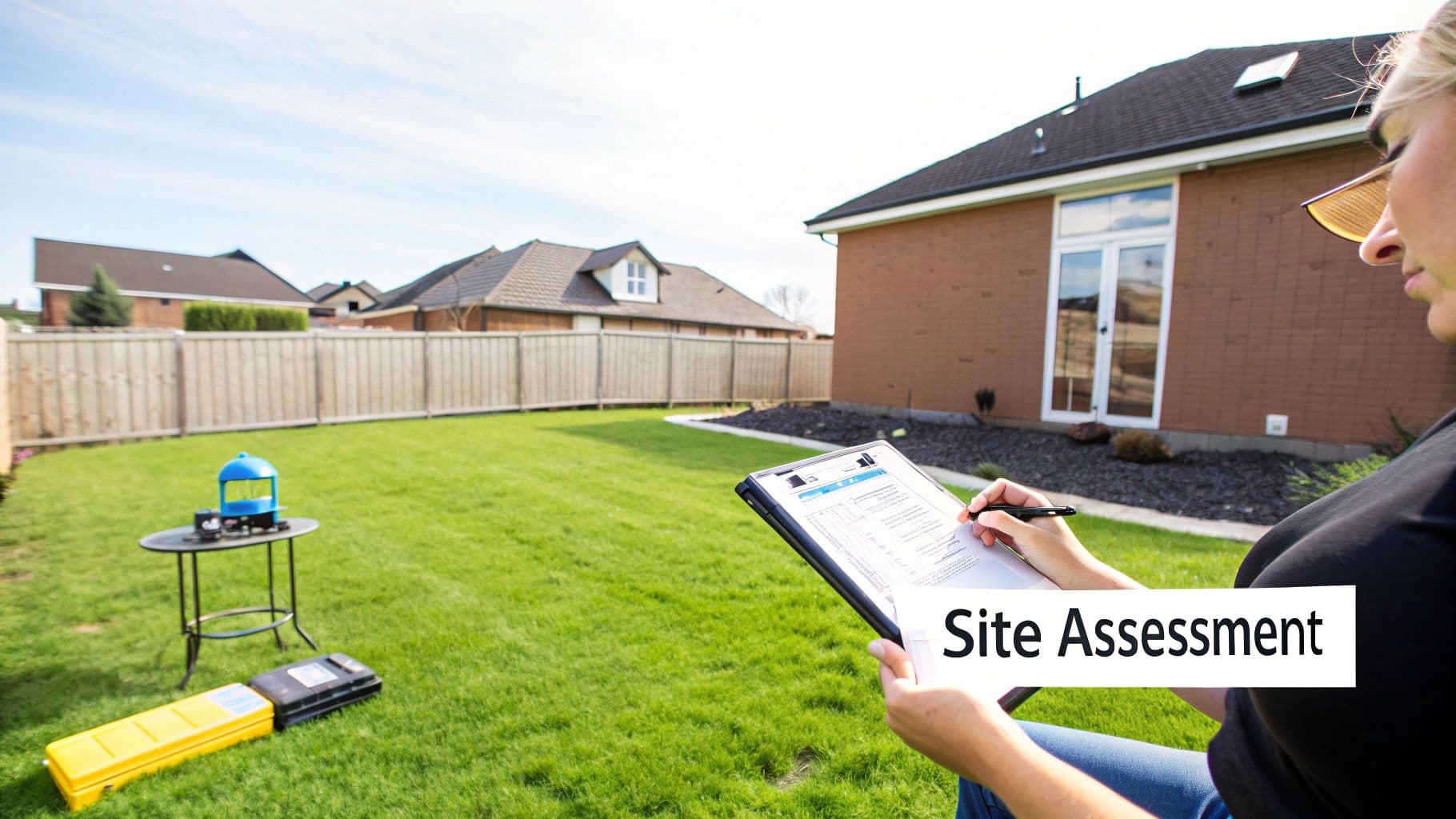
A common mistake is fighting your yard's natural tendencies. A stunning, low-maintenance garden works with the environment, not against it. This process starts with a thorough site assessment.
Laying the Groundwork Before You Dig
Let’s be honest, the planning phase is the least glamorous part of gardening, but it's the most important. Getting this right means you'll spend less time troubleshooting and more time enjoying your beautiful space. The core idea is simple: understand your yard's unique personality—its sun, soil, and water flow.
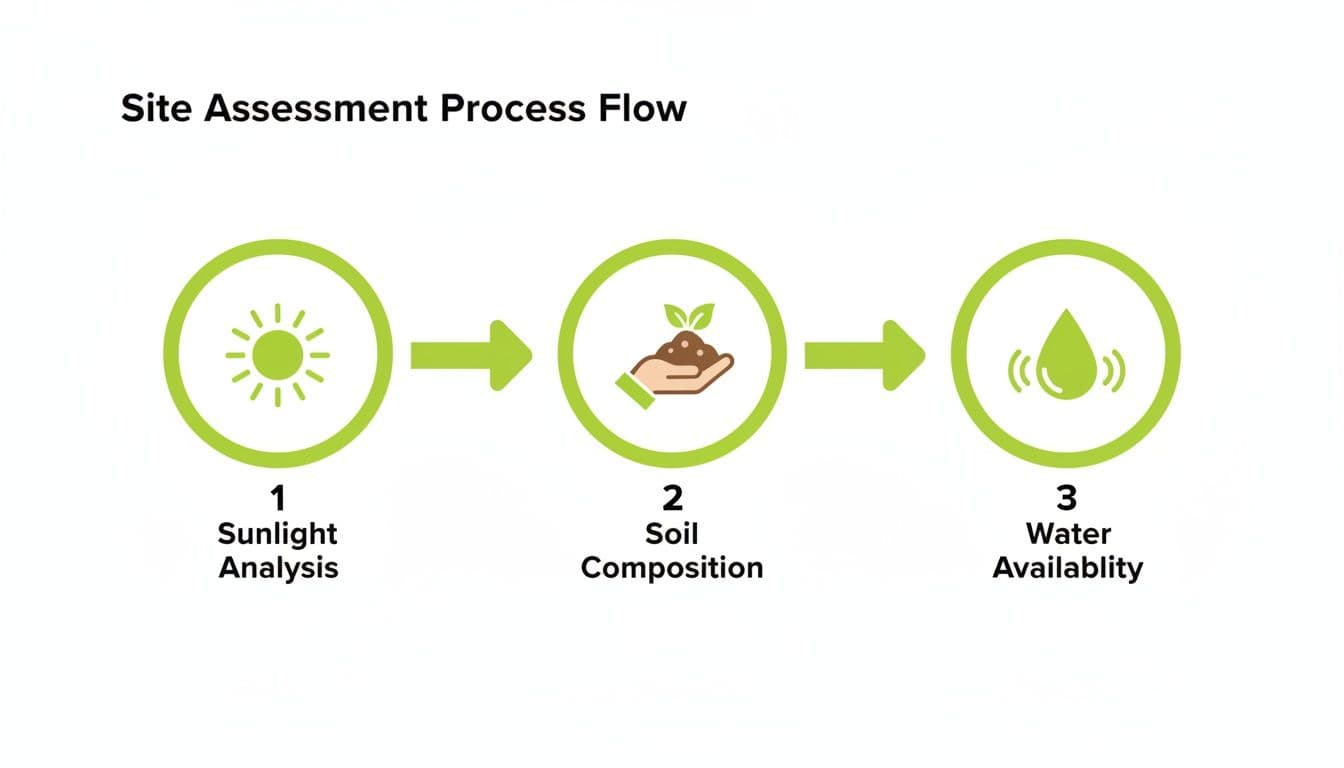
This workflow is a great visual reminder of what to focus on. By getting a handle on these three elements, you're building a garden that's set up to thrive from day one.
Mapping Your Garden's Conditions
Sunlight is the single most critical factor in your garden’s success. While research shows 75% of common garden plants need at least six hours of direct sun, a surprising number of gardeners—up to 40%, in fact—get this wrong.
To avoid this, become a sun-mapper. Spend a day watching how light moves across your yard. Grab a notepad, sketch a rough outline, and mark areas as:
- Full Sun: Gets 6+ hours of direct, unfiltered sunlight. This is prime real estate for veggies, herbs, and most flowering perennials.
- Partial Shade: Receives 4 to 6 hours of sun, such as morning sun and afternoon shade, or dappled light all day.
- Full Shade: Gets less than 4 hours of direct sun and is often in shadow for most of the day.
A garden layout is a conversation between your vision and your yard's reality. Listening to what your site tells you about its sun, soil, and water is the best way to start.
Once you’ve mapped the sun, consider other crucial details.
- Soil Composition: Is your soil heavy clay or gritty sand? A simple DIY soil test can tell you its texture and pH, which will guide your plant choices immensely.
- Microclimates: Every yard has them. You might have a hot spot against a south-facing wall or a damp corner behind the garage. These zones are opportunities for special plants.
- Water and Wind: Where do puddles form after a heavy rain? Is there a corner that acts like a wind tunnel? These observations are gold, telling you where to improve drainage or plant a windbreak.
This might feel like a lot to juggle. Thankfully, AI landscaping tools from platforms like OutdoorBrite can be a game-changer, letting you mock up designs based on your yard’s specific data.
To keep it all straight, this checklist is a great starting point.
Your Essential Garden Planning Checklist
| Planning Step | Key Action | Why It Matters |
|---|---|---|
| Sunlight Mapping | Track the sun's path across your yard for a full day. | Ensures you place plants where they'll thrive based on their light needs. |
| Soil Test | Perform a simple jar test or use a kit to check soil type and pH. | Different plants need different soil conditions; this avoids the frustration of a plant that won't grow. |
| Identify Microclimates | Note unusually hot, cold, wet, or dry spots. | These unique zones are perfect for specific plants that might not survive elsewhere. |
| Water & Drainage | Observe where water flows and pools after it rains. | Helps you avoid planting in waterlogged soil or identify areas that need extra irrigation. |
| Wind Patterns | Feel for windy corridors or sheltered nooks. | Protects delicate plants from wind damage and helps you position features like seating areas. |
Tackling these steps systematically turns a vague idea into a practical, actionable plan.
Think Function First: What's Your Garden For?
Before choosing plants, decide what you want your outdoor space to do. A garden that is both beautiful and functional is a game-changer. Are you dreaming of hosting summer barbecues, creating a safe play space for kids, or starting an organic vegetable patch? Each of these goals requires a different approach to your layout.
Create "Outdoor Rooms" with Garden Zones
The secret to a functional garden is zoning. Divide your yard into distinct areas, or "zones," based on their purpose. Think of it as creating different rooms in your house, but outside.
A thoughtfully zoned garden isn't just easier to use—it's also healthier. Studies on structured urban landscaping show that this kind of planning can lead to 35% higher plant survival rates and 20% less water usage because you’re putting the right things in the right places. It can even boost your property value by up to 15%.
Here's a common breakdown:
- The Social Zone: Your hub for entertaining. Place a patio or deck close to the house—especially the kitchen—for convenience.
- The Play Zone: An open area with a soft surface, like a lawn, perfect for kids or pets. Keep it in a visible spot.
- The Productive Zone: Your veggie garden. This zone demands the sunniest spot to thrive.
- The Utility Zone: A "backstage" area. Tuck compost bins, a tool shed, and a potting bench into a discreet corner.
Giving every part of your yard a specific job creates a garden that feels intuitive and supports the way you want to live.
Structuring Your Space with Hardscaping
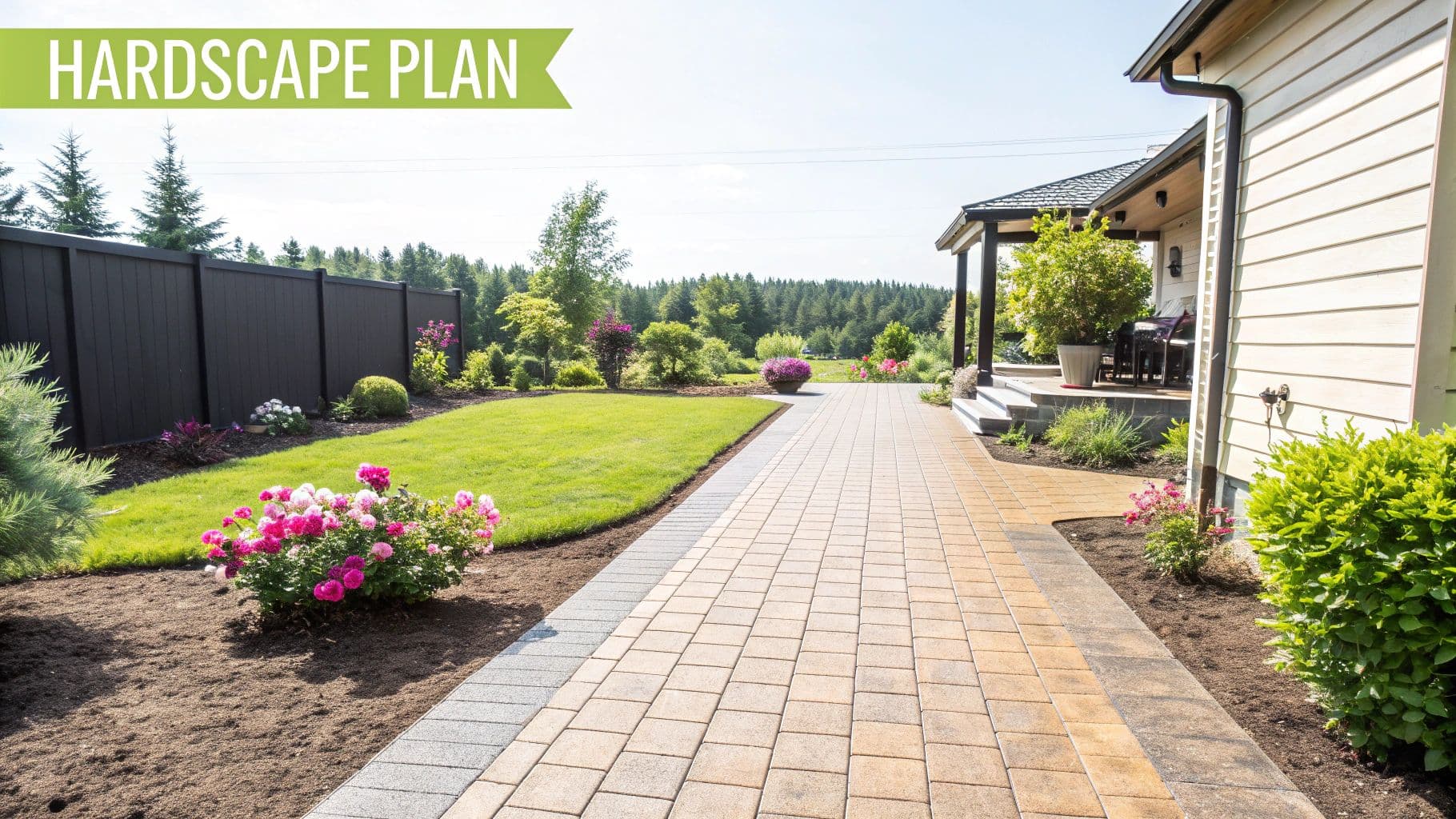
Think of your garden’s hardscaping—paths, patios, walls, and beds—as its bones. These permanent structures give your outdoor space shape and guide movement. Getting them right from the start is essential.
Hardscaping turns a yard into a functional outdoor living area. A path should invite exploration, and a patio should be an extension of your home.
Designing Features That Work and Wow
The materials you choose set the entire tone. A meandering gravel path gives a relaxed, cottage-garden vibe, while precisely laid bluestone pavers feel more formal. Pick materials that fit your budget and complement your home's architecture.
Don't forget to think vertically! Adding height creates more interest and dimension.
- Pergolas are fantastic for framing a seating area and offer a perfect scaffold for climbing plants.
- Retaining walls turn difficult slopes into stunning, terraced planting areas.
- Raised beds are a practical choice for growing vegetables, giving you great soil control and saving your back.
A quick pro tip: Think about flow. A path should be at least three feet wide for someone to walk comfortably. If you want two people to walk side-by-side, aim for five feet.
These structural elements are the most permanent decisions in your garden plan. Take your time and build a foundation that will serve you well for years.
Selecting Plants to Bring Your Garden to Life
Now for the fun part. With the hardscaping figured out, it's time to bring in the plants. This step infuses your layout with color, texture, and life, transforming a blueprint into a living space. Choosing the right plants is a thoughtful process of combining heights, forms, and bloom times to create a garden that looks fantastic all season.
Create Depth with Layering and Grouping
Avoid the "toy soldier" look where everything is planted in a single, flat row. The secret to a lush garden bed is layering. A classic way to approach this is the "thriller, filler, spiller" method.
- Thrillers: Tall, dramatic showstoppers in the back, like delphiniums or ornamental grasses.
- Fillers: Mounding, mid-sized plants that fill out the middle, such as hostas or coral bells.
- Spillers: Low-growing plants that cascade over the edges, like creeping thyme or sweet alyssum.
Beyond aesthetics, smart grouping is key to a low-effort garden. Placing plants with similar needs for sun, water, and soil together creates harmonious communities where everything thrives.
A reported 60% of gardeners don't test their soil. Yet, a simple soil test can make a massive difference, potentially boosting vegetable yields by 28% and reducing fertilizer use by up to 40%. You can dig into more gardening market trends on marknteladvisors.com.
Bringing Your Garden Vision to Life
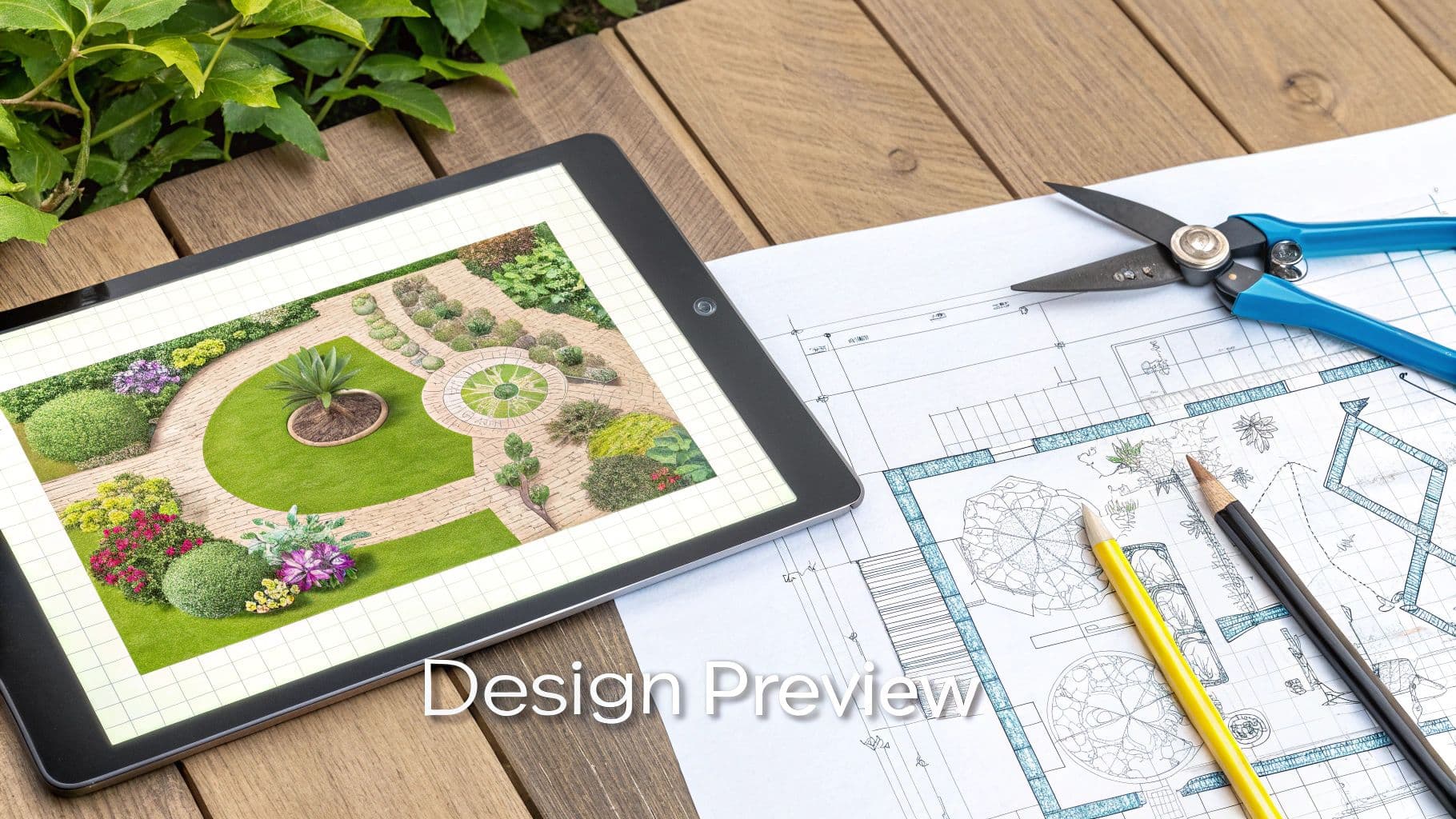
Getting the picture in your head onto paper—or a screen—is often the biggest hurdle. Visualization tools help you see the finished product before a single shovel hits the dirt, saving you from costly do-overs.
The old-school way still works wonders. Graph paper, a pencil, and a ruler let you sketch your garden to scale. This hands-on process forces you to slow down and consider details, like ensuring a path is wide enough for a wheelbarrow.
See Your Plan in Seconds with AI
For a more immediate and realistic preview, technology offers fantastic options. AI-powered landscape design tools, like OutdoorBrite, let you upload a current photo of your yard and instantly generate photorealistic mockups. This is a game-changer for experimenting with plants, paving stones, and styles without commitment.
Visually testing concepts—like comparing a modern patio with a rustic walkway—removes guesswork. You can make confident decisions knowing exactly how your choices will look in your actual space.
This instant feedback is priceless, whether you’re playing with bold island landscaping ideas or just picking perennials.
Budgeting and Phasing Your Project
It’s easy to get sticker shock when tallying garden costs. The good news is you don't have to build it all at once. Creating a smart budget and breaking your plan into phases turns a huge project into manageable steps, spreading out the cost and work.
Develop a Phased Approach
Think of your garden vision as the final destination. Break the project into smaller, sequential pieces to avoid feeling overwhelmed. Here’s a practical, multi-year plan:
-
Year One: Lay the Foundation. Start with the "bones"—the hardscaping. Install patios, build retaining walls, and define walkways. Getting this messy work done first means you won't disturb established plants later.
-
Year Two: Add Structure. Bring in the main architectural plants. Focus on planting trees and larger shrubs that will anchor your design and define the garden's shape. They need time to mature.
-
Year Three and Beyond: Fill in the Blanks. With the core structure in place, have fun with the details. This is the time for planting perennial beds, arranging container gardens, and adding decorative touches.
A phased approach is smart resource management. It lets you invest in high-quality materials for permanent structures first, then add plantings as your time and budget allow.
This method turns a monumental task into an enjoyable, evolving journey.
Frequently Asked Questions About Garden Layouts
Even the best-laid plans can hit a snag. Let's tackle some of the most common hurdles gardeners face.
How Do I Plan a Garden Layout for a Small Space?
When short on square footage, think up, not out. Vertical gardening is your best friend. Use trellises, wall-mounted planters, and hanging baskets to draw the eye upward and maximize every surface. Furniture should also work double-duty, like a bench with storage. Sticking to a simple, cohesive color scheme makes a tight area feel larger and more serene.
What Is the Most Common Mistake in Garden Layout Planning?
Hands down, the biggest mistake is underestimating how big plants will get. We've all seen a cute sapling planted too close to another, only to find them fighting for space years later. Always check the plant tag for its mature height and spread and use those dimensions in your plan. It might look sparse at first, but you'll be glad you did.
Planning for a plant's future size is essential. Giving everything enough room to breathe is the secret to a healthy, thriving garden that won't require a major overhaul in three years.
For more hands-on advice and layout ideas, feel free to browse our other articles on the OutdoorBrite blog.
Ready to stop guessing and start seeing? With OutdoorBrite, you can upload a photo of your yard and get stunning, photorealistic redesigns in seconds. Play around with different layouts, see how plant combinations will look, and finalize your vision before you even pick up a shovel. Try OutdoorBrite today and design your dream outdoor space.