8 Inspiring Japanese Zen Garden Ideas for Tranquil Outdoor Spaces
Discover 8 inspiring Japanese zen garden ideas to transform your yard into a tranquil retreat. Explore karesansui, moss gardens, and more for ultimate serenity.
In an increasingly busy world, creating a personal sanctuary for peace and contemplation is more valuable than ever. Japanese Zen gardens, with their principles of simplicity, nature, and balance, offer a powerful way to turn any outdoor area into a tranquil retreat. These are not just gardens; they are living art forms designed to calm the mind and soothe the soul.
This guide explores eight distinct and actionable Japanese Zen garden ideas, providing the practical details you need to bring these concepts to life. We move beyond generic advice to give you specific implementation tips on layout, materials, and plant selection for each style.
You will find a curated collection of designs, from the minimalist elegance of a Karesansui dry rock garden to the immersive journey of a traditional stroll garden. Each entry is structured to give you a clear blueprint, including DIY suggestions and maintenance notes, so you can confidently start your project and cultivate your own pocket of stillness.
1. Karesansui (Dry Rock Garden)
The Karesansui, or dry landscape garden, is perhaps the most iconic of all Japanese Zen garden ideas. It creates a profound sense of tranquility by using abstraction. Instead of water, meticulously raked gravel or sand represents oceans or flowing rivers, while carefully placed rocks symbolize islands or mountains. This style, famously exemplified by the Ryoanji Temple in Kyoto, is not about recreating nature literally but capturing its essence. The minimalism invites deep contemplation and transforms even the smallest courtyard into a serene, meditative landscape.
Implementation Tips
- Layout: Begin by placing large "anchor" rocks first. Arrange them in asymmetrical, odd-numbered groupings (3, 5, or 7) to create a natural composition. Ensure there is ample negative space around each formation; this "emptiness" is as crucial as the rocks themselves.
- Materials: Use crushed granite or small, angular pea gravel (3-5mm), which holds raked patterns better than rounded pebbles. Choose rocks with interesting textures that evoke natural landforms.
- Hardscape: Define the garden's edge with a simple border of bamboo fencing, low-profile stone edging, or a wooden frame. This containment is key to creating a sense of a captured, miniature world.
- DIY Suggestion: Before committing to heavy stones, use cardboard cutouts to map out your rock placements. Live with the layout for a few days, viewing it from different angles to ensure the composition feels right.
Key Insight: The act of raking the gravel is a meditative practice. Plan your patterns to flow logically, guiding the eye. Common patterns include straight lines for calmness or concentric circles around rocks to suggest ripples.
- Best Suited For: Small, enclosed spaces like courtyards or side yards where a contemplative focal point is desired.
- Budget: $-$$ (Can be budget-friendly if using local rocks and gravel).
- Maintenance: Low. Requires periodic raking to maintain patterns and occasional weeding.
You can explore different rock and gravel combinations using a tool like OutdoorBrite's Zen garden visualizer to perfect your design before you start digging.
2. Tsukiyama (Hill-and-Pond Garden)
The Tsukiyama, or "hill and pond garden," is a grand and immersive style of Japanese Zen garden ideas that recreates natural scenery in miniature. Unlike the abstract Karesansui, this style uses real water, man-made hills (tsukiyama), stones, bridges, and plants to depict a larger landscape. The design encourages movement, with paths that meander to reveal new, carefully composed views at every turn. It blends earth, water, and life to craft a harmonious environment that changes with the seasons. A Tsukiyama garden is a journey, designed to be experienced as a series of unfolding scenes.
Implementation Tips
- Layout: Design the garden around a central pond and one or more hills. Use winding paths to guide visitors, intentionally revealing and concealing views. The hills and ponds create a sense of scale and depth. For more inspiration, explore these island landscaping ideas.
- Materials: Use a pond liner or pre-formed shell. Select a variety of rock sizes to build the hills and shoreline. Incorporate elements like stone lanterns (tōrō), a water basin (tsukubai), and wooden or stone bridges to add authentic detail.
- Hardscape: Construct paths using stepping stones or flagstones. A well-placed bench provides a spot for quiet contemplation of a specific scene, like a waterfall or koi.
- DIY Suggestion: Start small by creating a single hill next to a modest water feature. You can use excavated soil from the pond area to build your hill, creating a balanced design.
Key Insight: The concept of mie-gakure, or "hide and reveal," is central to Tsukiyama design. Paths should curve behind hills or large shrubs, creating anticipation for the view around the corner.
- Best Suited For: Medium to large yards with enough space for varied elevations and a water feature.
- Budget: $$-$$$ (An expensive style due to pond construction, earth moving, and planting).
- Maintenance: High. Requires regular pond maintenance, pruning of trees and shrubs, and general upkeep.
3. Shoji-Style Minimalist Garden
Inspired by traditional shoji screens, this style translates their clean lines and geometry into a modern landscape. A Shoji-Style Minimalist Garden emphasizes structured plantings and visual composition. It’s a sophisticated take on Japanese Zen garden ideas that bridges ancient design principles with contemporary minimalism. This approach creates a serene, orderly atmosphere by using rectangular elements and linear pathways. Think of it as creating "rooms" or "windows" within the garden, where each view is intentionally framed to evoke a sense of calm and clarity.
Implementation Tips
- Layout: Embrace a grid-based or linear design. Use hardscaping to create clear rectangular or square zones for different elements like a gravel bed, a patch of moss, or a planting area.
- Materials: Use modern hardscaping like honed limestone, dark slate, or polished concrete pavers. Limit your plant palette to two or three varieties, such as Japanese Forest Grass or slender bamboo, to maintain a clean look.
- Hardscape: Use low, linear retaining walls or crisp metal edging to create sharp, defined borders between materials. A simple wooden deck or stone patio can serve as the primary viewing platform.
- DIY Suggestion: Use string and stakes to map out a precise grid on the ground before you begin. This helps ensure all your lines are perfectly straight, which is crucial for this minimalist aesthetic.
Key Insight: In a Shoji-style garden, negative space is a deliberate design element. An empty square of raked gravel has as much impact as a cluster of plants.
- Best Suited For: Modern or contemporary homes, urban courtyards, and spaces where you want to create a strong indoor-outdoor connection.
- Budget: $$-$$$ (The cost of high-quality pavers, stone, and architectural plants can be higher).
- Maintenance: Low to moderate. Requires precise pruning, regular weeding of gravel beds, and keeping hardscape lines clean.
You can experiment with different geometric layouts using a tool like OutdoorBrite's modern minimalist presets to visualize the clean lines of your design.
4. Moss Garden (Koke Niwa)
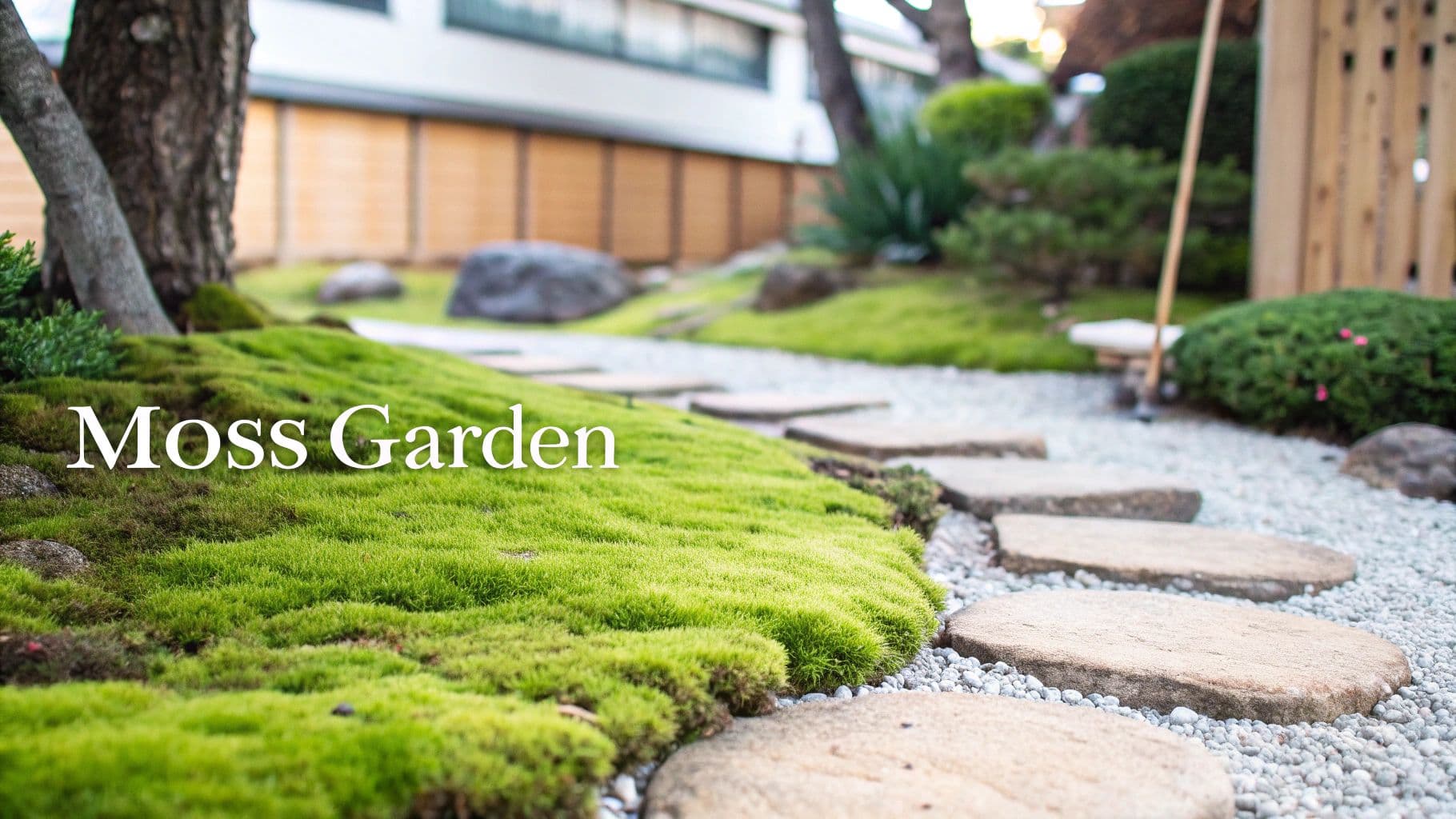
The Moss Garden, or Koke Niwa, is one of the most serene Japanese Zen garden ideas, celebrating the velvety beauty of bryophytes. This style uses vast carpets of living moss as its primary element, creating a soft, ancient, and tranquil atmosphere. The lush greenery evokes a sense of age and quiet contemplation. Famous examples like the Saiho-ji Temple in Kyoto showcase how this style thrives in shaded, humid environments. A moss garden transforms a space into a living tapestry, representing a delicate and eco-conscious expression of Zen philosophy.
Implementation Tips
- Layout: Design the space around natural contours and existing shade. Place simple stone lanterns, water basins, or natural stepping stones to create pathways that allow for viewing without compacting the moss.
- Materials: Source local, native moss species for best results. Use acidic, well-draining soil as a base. Incorporate weathered stones and aged wood to complement the soft texture of the moss.
- Hardscape: Use natural, uncut stone for pathways. Bamboo water features (shishi-odoshi) can add gentle sound and movement. Keep hardscape minimal to let the moss be the star.
- DIY Suggestion: Create a "moss slurry" to encourage growth on rocks or bare patches. Blend pieces of moss with buttermilk or yogurt and a small amount of water, then paint it onto the desired surfaces. Keep the area moist until the moss establishes.
Key Insight: The success of a moss garden depends on embracing its ideal conditions: shade, consistent moisture, and acidic soil. Work with your environment, not against it.
- Best Suited For: Shady, damp areas like north-facing yards or under large tree canopies where grass struggles.
- Budget: $-$$ (Can be very affordable if you cultivate existing local moss).
- Maintenance: Medium. Requires keeping the area free of leaves, maintaining moisture through misting, and avoiding heavy foot traffic.
Determine the best locations for moss using a tool like OutdoorBrite's sun-mapping feature to analyze your garden's light patterns.
5. Tea Garden (Roji)
The Roji, or tea garden, is one of the most purposeful Japanese Zen garden ideas. It serves as a physical and mental pathway, designed to transition visitors from the ordinary world to the serene space of the tea house. This garden is an immersive experience meant to be walked through, purifying the mind with each step. The path, often made of uneven stepping stones, forces a slow, deliberate pace, while features like a stone water basin (tsukubai) for ritual purification foster a sense of humble tranquility.
Implementation Tips
- Layout: Design the garden as a sequential journey. The path should meander, revealing new views while concealing others. Plan key focal points like a stone lantern or the water basin to draw the visitor forward.
- Materials: Use natural, rustic materials like moss-covered stones, bamboo for fences, and weathered wood. Tobi-ishi (stepping stones) should be laid with slightly irregular spacing to encourage mindful walking.
- Hardscape: A key feature is the tsukubai, a low water basin where guests purify their hands. A simple bamboo gate (sode-gaki) can mark the entrance, symbolizing passage into another realm.
- DIY Suggestion: To ensure the stepping stone path feels natural, lay out a garden hose to define the flow first. Then, place your stones along this line, walking the path to test the spacing before setting them permanently.
Key Insight: The Roji is about wabi-sabi—the beauty of imperfection. Avoid overly manicured plants. Embrace moss, weathered textures, and a design that feels integrated with nature.
- Best Suited For: Side yards or garden pathways leading to a specific destination like a patio or shed.
- Budget: $$-$$$ (Sourcing authentic stone elements like basins and lanterns can increase the cost).
- Maintenance: Moderate. Requires regular pruning to maintain a naturalistic look and care for the water feature.
Use a tool like OutdoorBrite's pathway planner to visualize the flow and sight lines of your Roji path before laying a single stone.
6. Stroll Garden with Viewing Pavilions
The Stroll Garden, or kaiyū-shiki teien, elevates Japanese Zen garden ideas to a dynamic journey. This design invites exploration, featuring winding paths that conceal and reveal new landscapes with every turn. The garden is experienced as a series of carefully composed scenes, often culminating in views from pavilions or over arching bridges. Unlike a Karesansui garden meant for quiet observation, the stroll garden is designed to be a physical and sensory experience. It is perfect for larger properties where the goal is to create an immersive, ever-changing environment.
Implementation Tips
- Layout: Plan meandering pathways, not direct routes. Use curves to create mystery and surprise, revealing key elements like a lantern or pond gradually.
- Materials: Natural flagstone or compacted earth for paths create an authentic feel. Use dark-stained wood or bamboo for pavilions, bridges, and fences to blend with the natural surroundings.
- Hardscape: Viewing pavilions, teahouses, and benches are functional destinations. Position them at key viewpoints, such as overlooking a pond or at a high point, to encourage visitors to pause and appreciate the scene.
- DIY Suggestion: Use rope or a garden hose on the ground to map out your desired pathways. Walk the routes multiple times to ensure the flow feels natural before laying permanent materials.
Key Insight: The journey is as important as the destination. Strategically plant trees or shrubs to act as "screens," blocking a view from one angle only to reveal it dramatically a few steps later.
- Best Suited For: Larger properties or sprawling backyards where there is enough space to create a meaningful journey with multiple focal points.
- Budget: $$$-$$$$ (A high-investment style due to hardscaping, extensive planting, and potential water features).
- Maintenance: High. Requires regular pruning to maintain sightlines and care for water features and diverse plantings.
Use a tool like OutdoorBrite's landscape planner to model pathway curves and pavilion placements, ensuring each viewpoint is perfectly framed.
7. Bamboo Grove Garden
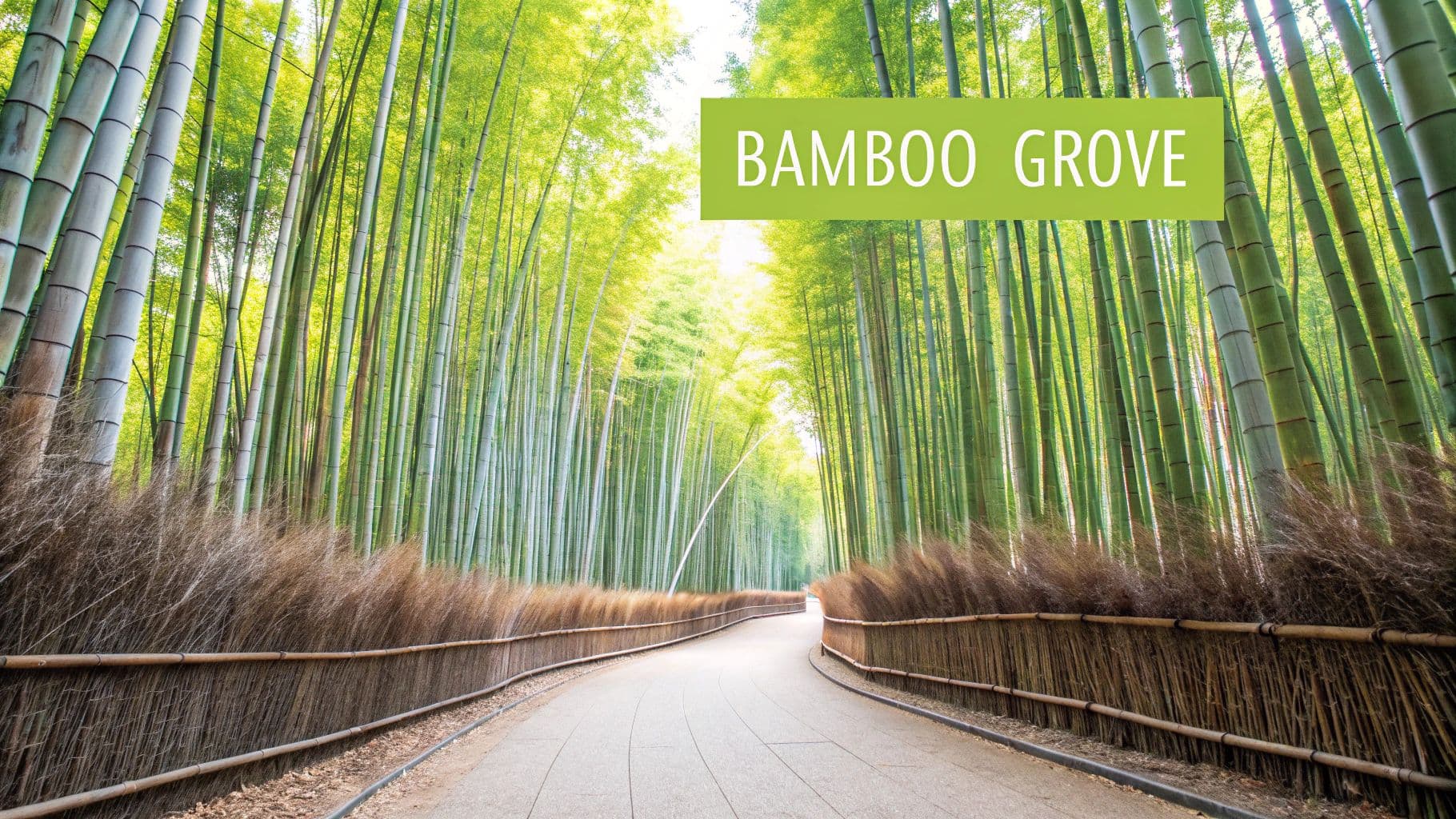
A Bamboo Grove Garden offers an immersive sensory experience, creating a living sanctuary defined by vertical lines, the rustling of leaves, and dappled light. Inspired by sacred groves like Arashiyama in Kyoto, this style transforms a space into a dynamic, natural enclosure that feels both peaceful and alive. A bamboo grove also serves practical functions, acting as an effective privacy screen or windbreak. The design balances the wildness of a forest with the intentionality of a cultivated garden.
Implementation Tips
- Layout: Design a meandering path through the grove to create a sense of discovery. Thin out the lower culms (stalks) to open up sightlines and emphasize the verticality of the bamboo.
- Plants: Crucially, choose a clumping bamboo variety (like Fargesia) to prevent aggressive spreading. If you use a running type (like Phyllostachys), you must install a heavy-duty rhizome barrier at least 24-30 inches deep.
- Hardscape: Use natural materials for pathways, such as stepping stones or fine gravel. A simple bamboo fence or a low stone wall can define the grove's edge and enhance the sense of enclosure.
- DIY Suggestion: Before planting, place tall garden stakes where you intend to plant the bamboo. This will help you visualize the density, height, and impact on views and light.
Key Insight: The management of bamboo is central to its beauty. Regular thinning of old or weak culms keeps the grove healthy and allows light to penetrate.
- Best Suited For: Side yards or property borders for privacy screening.
- Budget: $$-$$$ (Clumping bamboo and rhizome barriers can be a significant upfront investment).
- Maintenance: Moderate. Requires annual thinning and regular watering until established.
You can use a tool like OutdoorBrite's Zen garden visualizer to simulate how different bamboo heights will create privacy.
8. Stone and Gravel Meditation Court
The Stone and Gravel Meditation Court is a contemporary interpretation of karesansui, adapted for modern environments. This style distills the essence of the classic dry rock garden into a compact, highly focused format. It combines carefully selected feature stones with fine, raked gravel to create a dedicated space for contemplation, fitting perfectly into courtyards, rooftops, or office settings. This approach provides the authentic philosophy of Zen in a form accessible to those with limited space, offering a tranquil escape from the bustling world.
Implementation Tips
- Layout: Position the garden where it can be viewed from a primary window or seating area. Place a single, high-quality focal stone as the central element. The composition should be simple and asymmetrical.
- Materials: Use fine, angular gravel (around 3/8-inch) for crisp raking patterns. Select a single, impressive "sculptural" rock as your centerpiece rather than several smaller ones.
- Hardscape: Install subtle, low-profile edging from metal, stone, or wood to create a clean border. Proper drainage beneath the gravel is essential.
- DIY Suggestion: Before purchasing an expensive focal stone, use a large box or other stand-in object to test its placement and scale. Observe it for several days from your main viewing point.
Key Insight: This garden style is designed for a direct viewing experience. The placement of your viewing window or bench is as important as the placement of the rocks.
- Best Suited For: Small courtyards, urban backyards, rooftops, and interior atriums.
- Budget: $-$$ (The main cost is the focal stone, but the smaller footprint keeps other costs down).
- Maintenance: Low. Involves regular raking, occasional weeding, and pruning of any accent plants.
You can experiment with different stone shapes and gravel colors using a tool like OutdoorBrite's Zen garden visualizer to find the perfect minimalist combination.
Bring Your Vision to Life
We’ve explored a diverse landscape of Japanese zen garden ideas, from the meditative beauty of a Karesansui dry garden to the immersive world of a Koke Niwa moss garden. The core lesson is that a successful Zen garden is a thoughtful expression of nature’s essence, curated to fit your space. The principles of asymmetry (fukinsei), simplicity (kanso), and naturalness (shizen) connect all these designs. You don't need a vast estate to capture this feeling. A small Stone and Gravel Meditation Court can bring peace to a tiny urban patio. The key is to select the elements that resonate with you and apply them with intention.
Your journey from inspiration to reality begins with a plan.
- For symbolism and low maintenance: Consider the Karesansui (Dry Rock Garden).
- For dynamic, naturalistic scenes: The Tsukiyama (Hill-and-Pond Garden) offers a miniature landscape to explore.
- For modern, enclosed areas: A Shoji-Style Garden or Bamboo Grove provides clean lines.
- For intimate, purposeful spaces: The Tea Garden (Roji) turns a simple walkway into a meaningful transition.
The true value in creating your Zen oasis lies in the process. Selecting each stone and raking the gravel becomes a meditative practice. It’s an opportunity to slow down and connect with the natural world. By mastering these foundational concepts, you are not just designing a garden; you are cultivating a personal sanctuary that will provide calm and beauty for years to come.
Ready to stop dreaming and start designing? OutdoorBrite’s AI-powered landscape generator can help you visualize any of these Japanese zen garden ideas in your own backyard. Simply upload a photo of your space to instantly render beautiful, realistic designs and bring your vision to life before you even break ground.