Landscape ideas around house: 10 Inspiring Curb Appeal Concepts
Discover landscape ideas around house to boost curb appeal with low-maintenance, modern, and edible garden designs.
Ready to revitalize the space around your home but don't know where to start? A well-planned landscape boosts curb appeal, creates functional outdoor living areas, supports local ecosystems, and reflects your personal style. Whether you have a sprawling backyard or a compact front entrance, the right design can completely transform your property. The challenge is finding a concept that aligns with your maintenance level, budget, and aesthetic goals.
This guide moves beyond generic advice to provide actionable strategies for creating a beautiful, sustainable, and enjoyable outdoor space. We've curated a list of impactful landscape ideas around house, each tailored for different needs. From a low-maintenance native plant garden that thrives with minimal effort to a sophisticated outdoor living area, you will find practical steps to bring your vision to life.
Explore these concepts to discover how to integrate pollinator-friendly flowers, design a tranquil Zen garden, or create a productive edible landscape. Each idea is broken down with specific plant suggestions and implementation tips, empowering you to start your project with confidence.
1. Low-Maintenance Native Plant Gardens
One of the most sustainable and practical landscape ideas around house is creating a garden with native plants. This approach involves selecting species that are naturally adapted to the local climate, soil conditions, and rainfall. The result is a beautiful, resilient garden that requires significantly less water, fertilizer, and general upkeep compared to traditional ornamental landscapes.
By choosing plants that thrive naturally, you create a self-sustaining ecosystem that supports local wildlife, including essential pollinators like bees and butterflies. A California home might feature a meadow of poppies and sage, while a property in the Eastern U.S. could showcase a woodland garden with native ferns and shade-loving perennials like foamflower.
Implementation and Tips
- Research Your Zone: Identify your USDA Hardiness Zone and consult your local native plant society for a list of suitable plants.
- Group by Need: Arrange plants with similar water and sun requirements together to make irrigation more efficient.
- Plant in the Fall: For many regions, autumn planting allows roots to establish over the winter, giving them a strong start for spring.
- Mulch Generously: Apply a 2-3 inch layer of organic mulch after planting to retain moisture, suppress weeds, and regulate soil temperature.
This method is ideal for homeowners seeking an eco-friendly design that reduces yard work. For further inspiration on sustainable gardening, visit the OutdoorBrite blog.
2. Hardscape-Focused Outdoor Living Spaces
A powerful approach to transforming your property involves emphasizing hardscape elements to create functional, year-round outdoor living spaces. This design uses non-plant materials like stone, pavers, wood, and concrete to form the structural backbone of the landscape. The goal is to build defined "rooms" for dining, entertaining, and relaxing, providing lasting structure and reducing lawn maintenance.
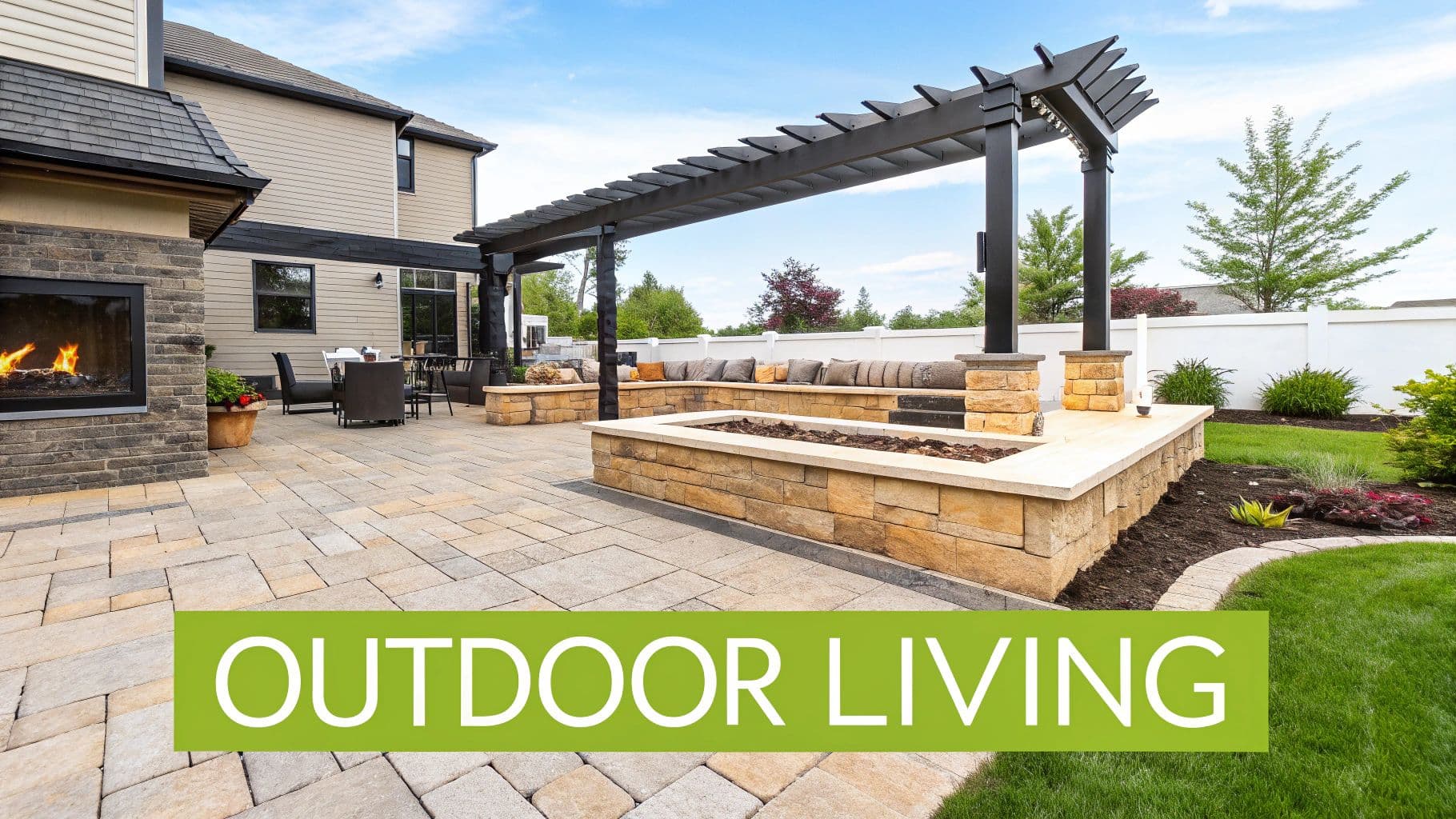
By prioritizing hardscaping, you establish permanent features that define the property's flow and usability. For instance, a contemporary home might feature a sleek paver patio with a linear pergola, while a more rustic property could use flagstone pathways and dry-stacked stone walls to create charming, distinct zones. These structures ensure your yard remains visually appealing and functional even outside of the growing season.
Implementation and Tips
- Balance Hard and Soft: Aim for a ratio where hardscape elements do not completely overwhelm the plantings. A 60/40 or 50/50 split between hardscape and softscape (plants) often creates a pleasing balance.
- Complement Your Home: Select materials and colors that echo your home's architectural style.
- Plan for Traffic Flow: Design pathways to be at least 36-48 inches wide for comfortable movement.
- Incorporate Permeable Surfaces: Use permeable pavers or gravel to allow rainwater to soak into the ground, reducing stormwater runoff.
This method is perfect for homeowners who want to maximize their usable outdoor area for recreation and entertaining. You can find more comprehensive guides on planning outdoor spaces at OutdoorBrite.
3. Japanese Zen Garden Design
A Japanese Zen garden offers a minimalist landscaping philosophy that emphasizes balance, simplicity, and creating a space for contemplation. This approach uses curated elements like raked gravel (representing water), rocks (mountains), moss, and a limited selection of plants to create a serene retreat. This design is one of the most impactful landscape ideas around house, translating well to small yards or courtyards.
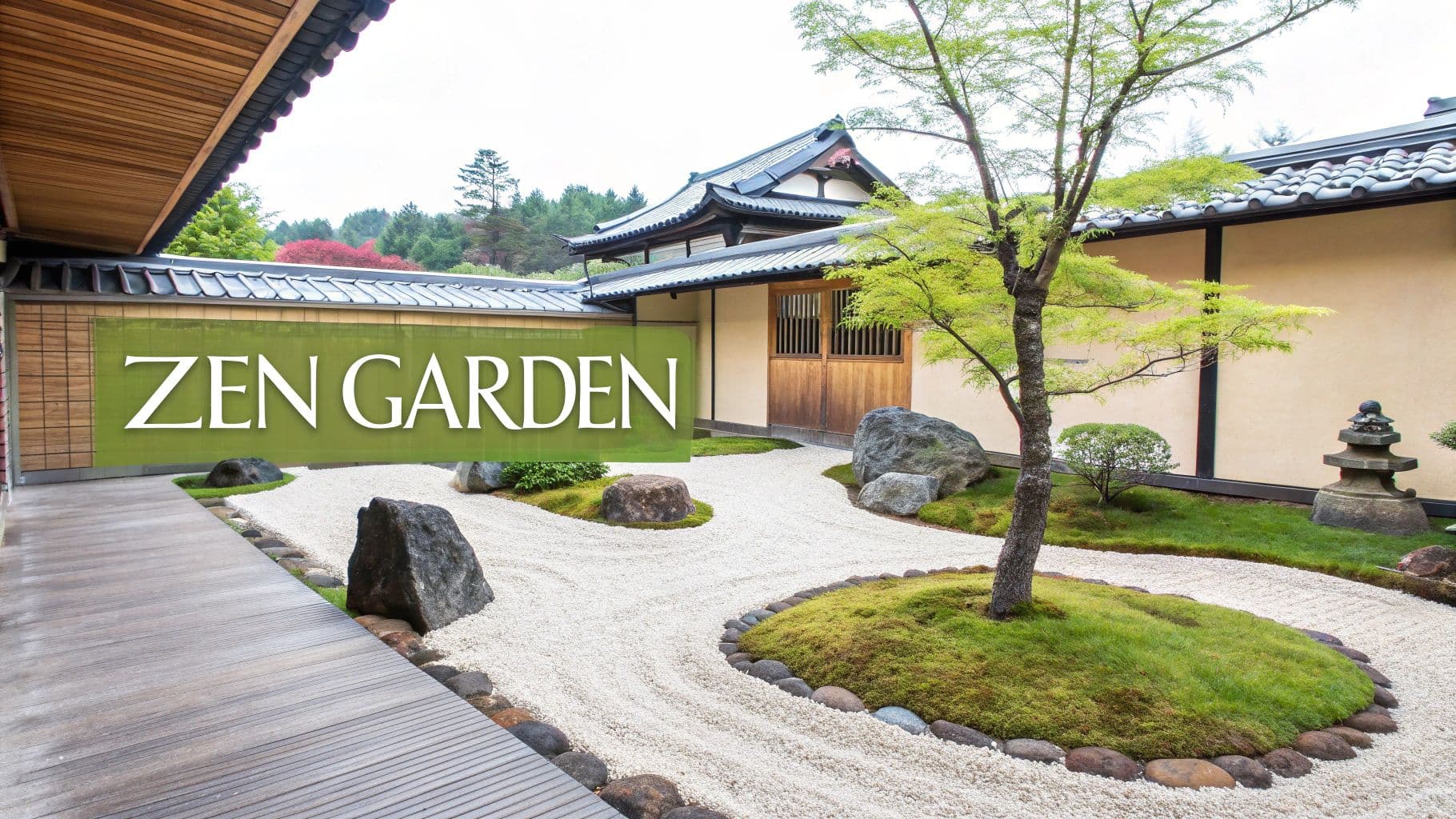
The goal is to evoke a sense of natural tranquility and peace. Modern adaptations bring Zen principles to residential settings, resulting in a space that offers high visual impact while often requiring less maintenance than a traditional ornamental garden, much like the focused designs found in island landscaping.
Implementation and Tips
- Limit Your Palette: Stick to just 3-5 plant species, such as Japanese maple, moss, and mondo grass, to maintain a simple aesthetic.
- Embrace Asymmetry: When placing rocks or plants, use odd-numbered groupings to create a more natural and balanced composition.
- Rake with Purpose: Regularly raking the gravel in wave or ripple patterns is a meditative practice that keeps the design looking intentional.
- Incorporate a Viewing Point: Design the garden to be appreciated from a specific vantage point, like a bench or a window.
This style is perfect for homeowners wanting to create a low-traffic, artistic outdoor sanctuary. For more inspiration on creating a contained, thematic garden, explore these island landscaping ideas.
4. Mediterranean-Inspired Drought-Resistant Landscapes
For homeowners in warm, dry climates, a Mediterranean-inspired landscape offers a stunning blend of beauty and water-wise practicality. This style mimics the sun-drenched gardens of Spain, Italy, and Greece, emphasizing aromatic herbs, sculptural trees, and earthy hardscaping. It's a perfect landscape idea around house for designs that prioritize outdoor living, fragrance, and resilience against drought.
This approach combines fragrant plants like lavender and rosemary with structural elements such as olive trees and Italian cypresses. The design is complemented by hardscaping materials like gravel and warm-toned flagstone. A California home might feature a gravel patio bordered by lavender, while a Florida property could create a courtyard with citrus trees in terracotta pots.
Implementation and Tips
- Select Core Plants: Build your garden around Mediterranean staples like rosemary, lavender, salvia, olive trees, and bougainvillea.
- Embrace Gravel and Stone: Use gravel, decomposed granite, or stone pavers for walkways and patios to reduce water usage.
- Group by Water Needs: Arrange plants with similar irrigation requirements together to maximize water efficiency.
- Incorporate Fragrance: Position aromatic herbs like rosemary and thyme near seating areas or walkways where their scent can be enjoyed.
This style is ideal for those seeking a sophisticated, low-water garden that engages the senses with color, texture, and aroma.
5. Pollinator-Friendly Garden Design
Creating a pollinator-friendly garden is one of the most impactful landscape ideas around house, transforming your yard into a vital habitat for bees, butterflies, and hummingbirds. This design centers on planting a variety of nectar and pollen-rich flowers, as well as host plants that support insect life cycles. The result is a vibrant, dynamic landscape teeming with life, color, and movement.
By selecting plants that feed and shelter pollinators, you support local ecosystems. A suburban yard can feature a Monarch waystation with milkweed and asters, while a city balcony might host potted lavender and zinnias. These gardens are not just beautiful; they are functioning ecosystems that provide critical resources for wildlife.
Implementation and Tips
- Plant in Clusters: Group at least three to five of the same plant species together. This creates a larger target that makes it easier for pollinators to find.
- Ensure Continuous Blooms: Select a mix of plants that bloom in succession from early spring to late fall to provide a consistent food source.
- Provide a Water Source: A shallow birdbath with pebbles or a simple dish of water with stones gives insects a safe place to land and drink.
- Offer Winter Shelter: Leave perennial stems and seed heads standing through winter. Many native bees and insects overwinter in hollow stems or leaf litter.
This approach is perfect for homeowners who want a lively, eco-conscious garden. You can learn more about creating certified wildlife habitats from organizations like the National Wildlife Federation.
6. Modern Minimalist Landscape Design
A modern minimalist approach to landscaping is one of the most sophisticated landscape ideas around house, emphasizing clean lines, geometric shapes, and the intentional use of open space. This style prioritizes simplicity, using a limited palette of materials and plants to create a calm, uncluttered, and highly impactful outdoor environment.
Instead of dense plantings, a minimalist landscape might feature a grid of ornamental grasses, a single striking specimen tree, or a neat row of horsetail reeds against a concrete wall. The focus is on form, texture, and structure, creating a living work of art that complements contemporary architecture and requires little ongoing fuss.
Implementation and Tips
- Limit Your Plant Palette: Choose just two or three plant varieties and repeat them in organized groups to create visual rhythm.
- Focus on High-Quality Hardscaping: In a minimalist design, materials like concrete pavers, steel edging, and smooth gravel take center stage.
- Embrace Negative Space: Open areas of lawn, gravel, or patio are crucial design elements that allow chosen features to stand out.
- Incorporate Strategic Lighting: Use uplighting to highlight the form of a sculptural plant or linear LEDs to define pathway edges at night.
This design is perfect for homeowners who appreciate modern aesthetics, have small urban yards, and desire a visually clean, low-maintenance outdoor space.
7. Edible Landscape and Kitchen Garden Design
Integrating food production into your ornamental landscape is a practical and rewarding approach that combines beauty with utility. An edible landscape strategically incorporates fruit trees, vegetables, herbs, and edible flowers directly into your yard's design. This moves beyond the traditional vegetable patch, creating a cohesive and attractive space that also provides fresh, homegrown produce.
This concept transforms your property into a productive ecosystem. Imagine a front yard border lined with colorful Swiss chard instead of typical boxwoods, or a trellis covered in passion fruit vines providing both privacy and a delicious harvest.
Implementation and Tips
- Prioritize Sun Exposure: Most vegetables and fruits require 6-8 hours of direct sunlight per day. Map out sunny spots before planting.
- Integrate, Don't Isolate: Weave edibles into existing flower beds. The foliage of artichoke plants or the bright flowers of nasturtiums can complement ornamental perennials.
- Go Vertical: Maximize small spaces by using trellises for beans and cucumbers, or by espaliering fruit trees against a wall.
- Plan for Continuous Harvests: Use succession planting by sowing new seeds every few weeks to ensure a steady supply of produce.
This is one of the most functional landscape ideas around house, perfect for homeowners who value sustainability and fresh food.
8. Shade Garden Design with Woodland Plantings
For properties with mature trees or north-facing walls, a shade garden offers a solution that embraces low-light conditions. This approach involves selecting plants adapted to thrive beneath tree canopies, creating a lush, cool, and restful retreat. Instead of struggling to grow sun-loving turf, this design transforms shady areas into beautiful woodland settings.
By working with existing shade, you can cultivate a tranquil environment. Imagine a cool grotto in a shaded corner filled with delicate ferns and soft moss, or a vibrant tapestry of hostas and hellebores under a large maple tree. This is an effective way to turn a perceived limitation into a stunning garden feature.
Implementation and Tips
- Amend the Soil: Tree roots compete for nutrients and water. Amend the soil generously with compost to give new plants a strong start.
- Layer for Depth: Create visual interest by layering plants. Use taller species in the back, mid-sized ones in the middle, and low-growing groundcovers in the front.
- Embrace Foliage: In shady spots, foliage is king. Select plants with varied leaf shapes, textures, and colors.
- Add Seasonal Surprises: Incorporate early spring bulbs that bloom before trees fully leaf out, like bleeding hearts or trillium.
This approach is perfect for homeowners looking to create a peaceful sanctuary in areas where other plants fail to thrive.
9. Sustainable Water Features and Rainwater Harvesting Landscapes
A great way to merge beauty and environmental stewardship in your landscape is through sustainable water features. This approach uses features like rain gardens, bioswales, and decorative rain barrels not just for aesthetics but to intelligently manage stormwater runoff. Instead of letting rainwater flow into storm drains, these designs capture, filter, and use it on-site.
These eco-conscious landscapes create functional and visually appealing elements. For instance, a beautifully designed rain garden in a front yard can solve drainage issues while attracting birds and butterflies. Similarly, interconnected rain barrels can feed a vegetable patch, reducing your water bill.
Implementation and Tips
- Direct the Flow: Grade your landscape with gentle slopes or swales to guide rainwater from downspouts into your rain garden.
- Choose Hardy Plants: Select species for your rain garden that tolerate both periodic flooding and dry spells, like sedges or irises.
- Size for Your Roof: Calculate your rain barrel needs based on your roof area. One inch of rain on a 1,000-square-foot roof yields about 600 gallons of water.
- Plan for Overflow: Ensure your design includes a designated overflow path for heavy rainfall to prevent water from backing up against your foundation.
- Prevent Pests: A properly designed rain garden should drain within 24-48 hours, preventing it from becoming a mosquito breeding ground.
This method is perfect for homeowners in regions with heavy rainfall or drought, offering a solution that conserves water and prevents erosion.
10. Seasonal Color and Multi-Season Interest Landscapes
A truly dynamic landscape idea around the house is one that offers visual appeal throughout the entire year. Creating a garden with multi-season interest involves a strategic selection of plants that provide a continuous sequence of color, texture, and structure. This approach moves beyond a single spring bloom, layering elements so there is always something captivating to see.
This thoughtful planning results in a landscape that feels alive no matter the weather. For instance, a garden bed might feature early-blooming witch hazel, followed by summer hydrangeas, then brilliant fall color from ornamental grasses, and finally, the red berries of a winterberry holly against the snow.
Implementation and Tips
- Create a Bloom Calendar: Map out what flowers and when in your zone to identify gaps in your garden's seasonal display.
- Layer Evergreens and Deciduous Plants: Use evergreens for a structural "backbone" that remains green all year, then layer in deciduous plants for seasonal change.
- Focus on More Than Flowers: Select plants with interesting bark, unique branching structures, or colorful berries for winter interest.
- Embrace Ornamental Grasses: Many grasses hold their form and provide texture and movement throughout the fall and winter.
This design is perfect for homeowners in climates with four distinct seasons. For more ideas on plant selection, the Royal Horticultural Society (RHS) offers extensive advice.
Bringing Your Vision to Life
We've explored a diverse collection of landscape ideas around the house, from the sustainable appeal of native plant gardens to the serenity of a Zen design. The key takeaway is that an exceptional landscape is a cohesive extension of your home's style and your personal lifestyle.
Whether you were drawn to a vibrant pollinator garden or the elegance of a hardscape-focused outdoor living space, the journey starts with a solid plan. A successful design considers your climate, soil type, and the time you can dedicate to maintenance. The best landscape ideas are not just beautiful, but also functional and sustainable.
Before you break ground, refine your chosen concept into an actionable plan. This strategic pause prevents costly mistakes and ensures the final result aligns with your vision. Your next steps should involve a clear process:
- Assess Your Site: Note sun exposure, identify problem areas like poor drainage, and understand your soil's composition.
- Define Your Goals: Decide the primary function of the space. Is it for private retreat, entertainment, or curb appeal?
- Visualize the Layout: Create a rough sketch of your yard, mapping out key zones like pathways, patios, and garden beds.
- Develop a Phased Approach: A full landscape overhaul can be overwhelming. Break your project into manageable phases.
By thoughtfully planning, you transform abstract landscape ideas around house into an achievable project. This approach guarantees your investment culminates in an outdoor space that enhances your property's value and enriches your daily life.
Ready to see these ideas come to life in your own yard? OutdoorBrite uses powerful AI to transform a simple photo of your space into a stunning, photorealistic landscape design in seconds. Stop guessing and start visualizing your perfect outdoor oasis today at OutdoorBrite.