10 Landscaping Design Ideas for Front Yard Curb Appeal in 2026
Discover 10 stunning landscaping design ideas for front yard makeovers. Get pro tips on modern, cottage, and low-maintenance styles to boost your home's value.
Your front yard is the first impression your home makes, a public-facing canvas that sets the tone for visitors and reflects your personal style. It's more than just a patch of grass; it's an opportunity to create a welcoming entrance that enhances curb appeal and boosts property value. Yet, staring at a blank slate can feel overwhelming. Deciding between a sleek, modern aesthetic and a lush, traditional garden requires not just vision but a clear, actionable plan. A well-executed landscape design harmonizes with your home's architecture, meets your maintenance goals, and transforms an ordinary space into something truly special.
This guide is built to cut through the confusion and provide clear, practical inspiration. We will explore a curated collection of distinct landscaping design ideas for front yard transformations, each broken down into manageable components. From Mediterranean-inspired gravel gardens to sustainable native plantings, you will find specific plant recommendations, material lists, and implementation tips tailored to various styles and budgets. We’ll show you how to move beyond Pinterest boards and begin creating a stunning, functional landscape. Plus, we'll introduce you to visualization tools like OutdoorBrite, which allow you to instantly see how these ideas would look on your own property, removing the guesswork and empowering you to start your project with confidence.
1. Modern Minimalist Front Yard
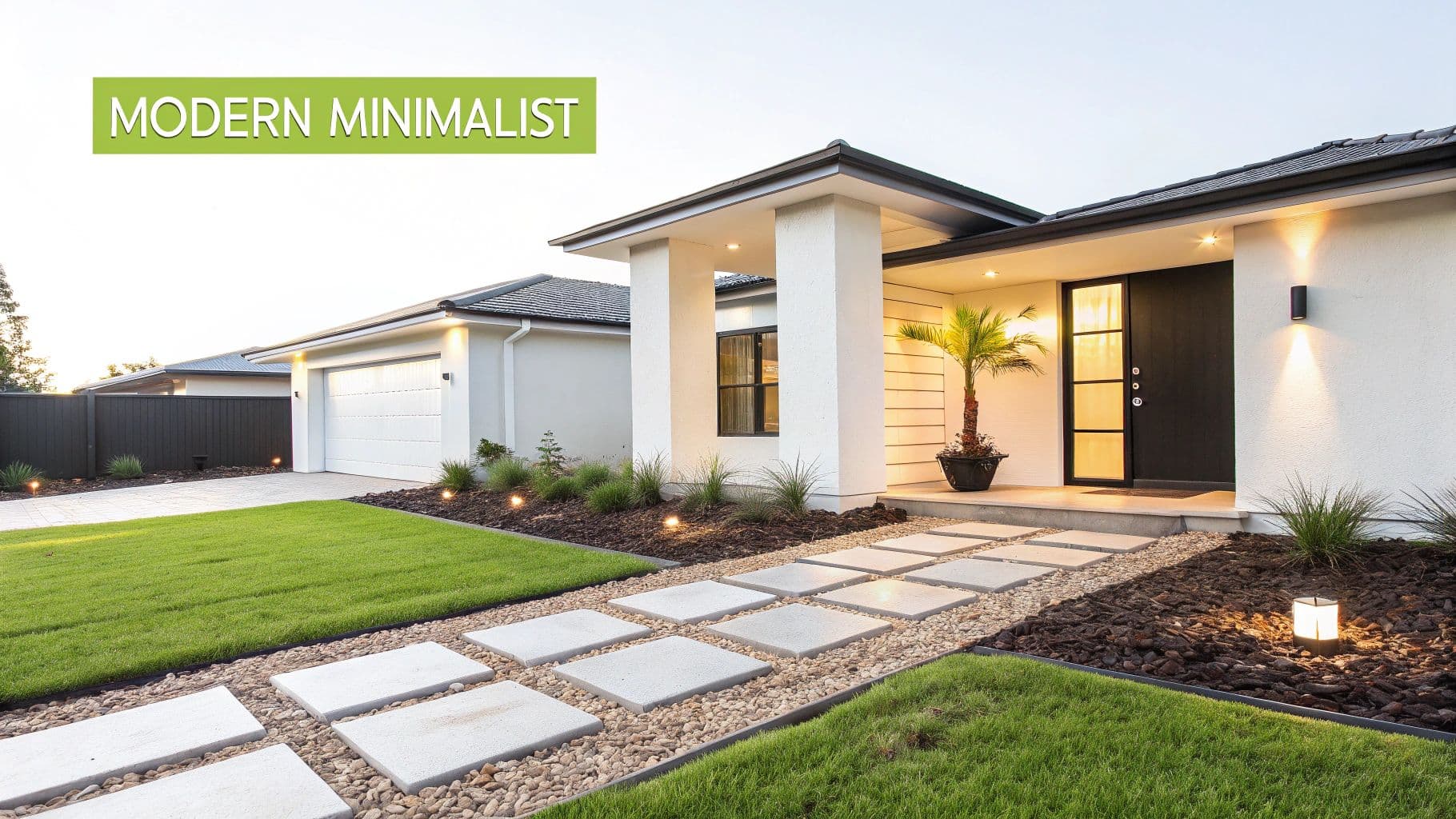
A modern minimalist approach is one of the most sophisticated landscaping design ideas for a front yard, emphasizing clean lines, geometric forms, and a "less is more" philosophy. This style uses a restrained palette of colors and materials to create a deliberate and uncluttered look. It swaps fussy flowerbeds for strategic plantings and hardscaping, resulting in a high-impact, low-maintenance space that complements contemporary and mid-century modern architecture perfectly. The goal is to create harmony between the home’s structure and the landscape, turning the entire property into a cohesive piece of art.
Key Elements & Implementation
To achieve this aesthetic, focus on structure and texture. Use materials like poured concrete for walkways, dark mulch or river rock for ground cover, and Corten steel for planters and edging. These elements define spaces with crisp, clean edges.
- Key Plants: Choose plants with strong architectural shapes. Think Snake Plants, Agave, ornamental grasses like Blue Fescue, or a single Japanese Maple as a focal point.
- Hardscaping: Opt for large-format pavers, smooth concrete pathways, or geometric gravel beds.
- Lighting: Use minimalist fixtures like uplights to highlight a statement tree or sleek path lights to guide visitors.
Quick Tips for a Modern Look
- Visualize First: Use OutdoorBrite’s "Modern" style to create a digital mock-up. Upload a photo of your front yard to test different paver layouts and plant placements before committing.
- Balance is Key: Pair a soft, textured grass like Zoysia with a hard, smooth concrete walkway to create compelling visual contrast.
- Limit Your Palette: Stick to two or three materials and a few plant species to maintain a clean, intentional design.
- Curb Appeal Boost: The uncluttered, high-end feel of a minimalist landscape significantly enhances property value by conveying sophisticated, low-maintenance living.
2. Mediterranean Landscape Design
Inspired by the sun-drenched coastal regions of Spain, Italy, and Greece, a Mediterranean landscape design brings rustic charm and effortless elegance to your front yard. This style uses a palette of warm earth tones, gravel pathways, and terracotta accents to create a relaxed, vacation-like atmosphere. It is particularly well-suited for warm, dry climates, as it emphasizes drought-tolerant plants that thrive in the heat. The design blends natural textures with informal plantings, resulting in a space that feels both timeless and inviting.
Key Elements & Implementation
To capture the essence of this style, focus on creating texture and warmth. Combine natural stone, gravel, and stucco with billowy, fragrant plantings. The layout should feel organic and relaxed rather than rigidly formal, inviting leisurely strolls and moments of rest.
- Key Plants: Embrace drought-tolerant species like Olive trees, Lavender, Rosemary, and Bougainvillea. Agave and succulents also fit perfectly.
- Hardscaping: Use materials like travertine pavers, decomposed granite for pathways, and stucco or stone walls. Large terracotta pots are a signature element.
- Lighting: Opt for warm, low-voltage lighting. Lantern-style fixtures or subtle uplighting on an olive tree can enhance the romantic, old-world feel.
Quick Tips for a Mediterranean Look
- Visualize First: Use OutdoorBrite’s "Mediterranean" style preset to experiment with plant groupings and pathway materials. Upload a photo of your yard to see how terracotta pots and gravel beds will look against your home.
- Layer Textures: Combine smooth stucco walls with rough-hewn stone edging and fine gravel pathways to create an authentic, layered appearance.
- Group by Water Needs: Arrange plants with similar water requirements together (a practice called hydrozoning) to ensure efficient irrigation and healthy growth.
- Curb Appeal Boost: This style’s blend of rustic elegance and practical, water-wise plantings appeals to buyers, suggesting a low-maintenance yet beautiful lifestyle.
3. Japanese Zen Garden
A Japanese Zen Garden is a contemplative landscape philosophy emphasizing balance, simplicity, and natural harmony. This approach uses carefully curated elements like raked gravel, smooth stones, and select plants to create a peaceful, meditative sanctuary. Far from a simple rock garden, this landscaping design idea for a front yard transforms the space into a tranquil retreat that offers a calming counterpoint to the stresses of daily life, inviting mindfulness and serenity.
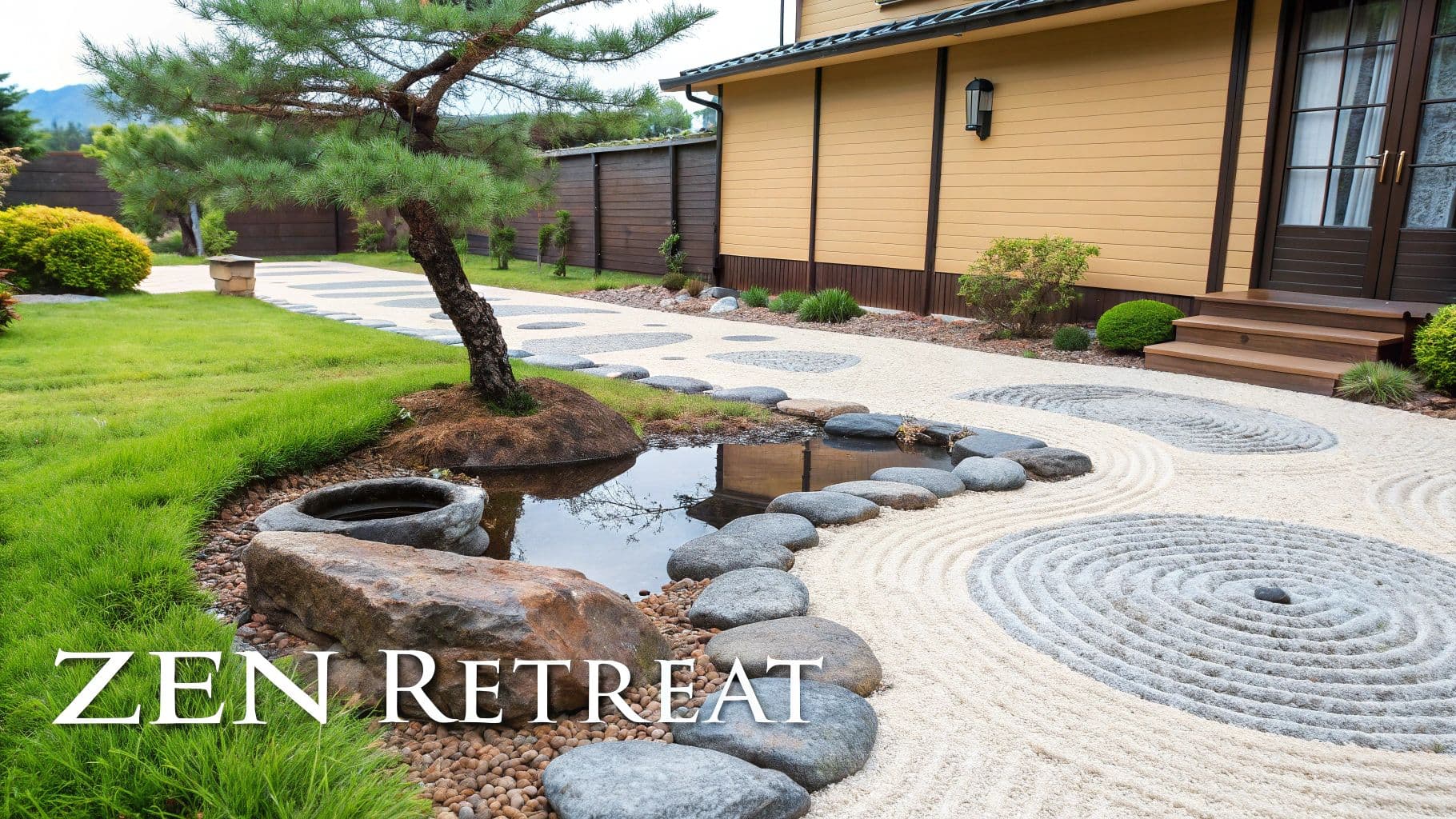
Key Elements & Implementation
The core of a Zen garden is minimalism and symbolism, where each element has a purpose. Raked gravel or sand often represents water, while larger stones can symbolize islands or mountains. The design encourages quiet reflection through its structured yet naturalistic layout.
- Key Plants: Focus on specimens with graceful forms like Japanese Maple, Bamboo (use root barriers for containment), Moss, and Dwarf Pines.
- Hardscaping: Utilize natural stone pathways (tobi-ishi), a stone water basin (tsukubai), and fine gravel or sand for the main ground cover.
- Lighting: Employ subtle, low-voltage lighting to softly illuminate key features like a distinctive rock or a maple tree, creating a serene evening ambiance.
Quick Tips for a Zen Look
- Visualize First: Use OutdoorBrite’s "Japanese Zen" style to test the placement of stones and water features. Upload a photo of your yard to ensure the layout feels balanced and authentic before starting.
- Embrace Asymmetry: Strive for an asymmetrical but balanced composition. Avoid perfect symmetry to create a more natural, organic feel.
- Limit Your Palette: Keep the plant count minimal (5-7 specimens maximum) and stick to a calming color scheme of greens, grays, and browns.
- Curb Appeal Boost: A well-designed Zen garden communicates sophistication and tranquility, significantly boosting curb appeal with its unique and artful aesthetic. The principles of harmony can be adapted, similar to creating balance in tropical-inspired island landscaping ideas.
4. Native Plant Cottage Garden
A Native Plant Cottage Garden is a sustainable and vibrant landscaping design idea for a front yard that prioritizes local ecology. This style blends the charming, informal density of a traditional cottage garden with the resilience and wildlife benefits of regional native plants. It creates an abundant, seemingly effortless landscape filled with layers of flowers, foliage, and textures that supports pollinators and birds, reduces water usage, and thrives in your specific climate with minimal intervention.
Key Elements & Implementation
To create this look, focus on dense, layered plantings in informal drifts and clusters rather than rigid rows. Mix perennials, grasses, and shrubs of varying heights to create a natural, interwoven tapestry. Use simple, rustic materials like a fieldstone path or a split-rail fence to complement the wild aesthetic without overpowering the plants.
- Key Plants: Choose species native to your region. For the Midwest, consider Coneflower, Black-Eyed Susan, and Prairie Dropseed. In the Northeast, try Foamflower, Wild Geranium, and ferns. California gardens shine with Salvia, California Poppy, and Ceanothus.
- Hardscaping: Opt for natural materials like flagstone walkways, gravel paths, or a simple wooden bench.
- Wildlife Support: Incorporate a small bird bath or a designated patch of larval host plants like milkweed for monarchs.
Quick Tips for a Native Look
- Visualize First: Use OutdoorBrite’s filters to select a regional native plant palette. Upload a photo of your front yard to see how different native combinations will look through the seasons.
- Start Small: Begin with a small garden bed or a "pollinator pocket" and expand each year. This makes the project more manageable and allows you to learn about your plants.
- Embrace Imperfection: The beauty of a cottage garden is in its relaxed, slightly untamed appearance. Let plants self-seed and spill over pathways.
- Curb Appeal Boost: A thriving native garden signals a healthy, eco-conscious home. It provides four-season interest and vibrant life that stands out in a neighborhood of traditional lawns.
5. Contemporary Mixed Border Planting
A contemporary mixed border is a dynamic and visually rich landscaping idea for a front yard, blending ornamental grasses, flowering perennials, shrubs, and structural plants into layered, naturalistic compositions. Inspired by designers like Piet Oudolf, this approach mimics nature by creating a garden that offers year-round interest, texture, and movement. It moves away from rigid, formal plantings and embraces a more fluid, evolving design that provides a stunning display from spring through fall, enhancing the home’s connection to its environment.
Key Elements & Implementation
Success with a mixed border lies in thoughtful plant selection and placement, creating layers of color, form, and texture. The goal is a garden that looks beautiful even as plants fade, with seed heads and dormant grasses providing winter structure.
- Key Plants: Combine sturdy perennials like Purple Coneflower (Echinacea) and Sedum 'Autumn Joy' with airy ornamental grasses such as Switchgrass (Panicum virgatum). Add structural shrubs for backbone.
- Layout: Plant in drifts or repeating clusters rather than single specimens. Use a layered approach with taller plants in the back and shorter ones in the front.
- Soil & Mulch: Prepare the bed with rich, well-draining soil and apply a thick layer of natural mulch to retain moisture and suppress weeds.
Quick Tips for a Mixed Border
- Visualize First: Use OutdoorBrite’s "Cottage" or "Natural" styles to preview bloom sequences. This helps you plan for continuous color and interest throughout the seasons.
- Group in Threes and Fives: Plant in odd-numbered groups to create a more natural, less contrived appearance.
- Mix Textures: Contrast the fine, wispy texture of grasses with the bold, broad leaves of plants like Hostas or the flat flower heads of Yarrow.
- Curb Appeal Boost: A well-designed mixed border signals a thoughtfully maintained property, creating an inviting and high-end look that significantly elevates curb appeal.
6. Low-Maintenance Hardscape Focused Design
A hardscape-focused design is a practical and increasingly popular landscaping idea for a front yard that prioritizes durable, non-living elements over plants. This approach minimizes yard work by using materials like stone pavers, gravel, decking, and retaining walls as the primary features. It is an ideal solution for busy homeowners, those in drought-prone areas, or individuals seeking an accessible, tidy, and modern aesthetic. By replacing high-maintenance lawns and flowerbeds with structured hardscaping, you create a visually striking and enduring front yard that requires minimal upkeep throughout the year.
Key Elements & Implementation
Success with this design lies in creating visual interest through texture, color, and pattern. Combining different hardscape materials, such as smooth concrete next to rough gravel or dark slate against light-colored pebbles, prevents the space from looking flat or monotonous.
- Key Plants: Though minimal, plants are crucial for softening hard lines. Use tough, low-water options like succulents, ornamental grasses, or evergreen shrubs like Boxwood placed in strategic containers or small, defined garden beds.
- Hardscaping: Create zones using large-format concrete pavers for walkways, decorative gravel for ground cover, and low retaining walls to add dimension and seating.
- Lighting: Integrate low-voltage LED lights into walls, under steps, or as uplights on specimen plants to highlight the textures and shapes of your hardscape at night.
Quick Tips for a Hardscape Look
- Visualize First: Use OutdoorBrite’s tools to experiment with different hardscape materials. Upload a photo to see how various paver patterns, gravel colors, and deck layouts will look before you start digging.
- Go Permeable: Opt for permeable pavers or gravel to allow rainwater to soak into the ground. This reduces runoff and is more environmentally friendly.
- Add Seasonal Color: Use large, stylish containers to introduce flowers. This gives you the flexibility to add vibrant, seasonal color without the commitment of permanent garden beds.
- Curb Appeal Boost: A well-designed hardscape front yard signals a modern, low-maintenance lifestyle, which is a major selling point for potential buyers and significantly increases property value.
7. Colorful Perennial and Annual Garden
A colorful perennial and annual garden is a classic and vibrant landscaping design idea for a front yard, creating an ever-changing display of texture and color. This approach layers plants with staggered bloom times to ensure there's something beautiful to see from early spring through the first frost. By combining the reliable return of perennials with the season-long punch of annuals, this style delivers maximum visual impact, creating a welcoming and lively entrance that celebrates horticultural diversity.
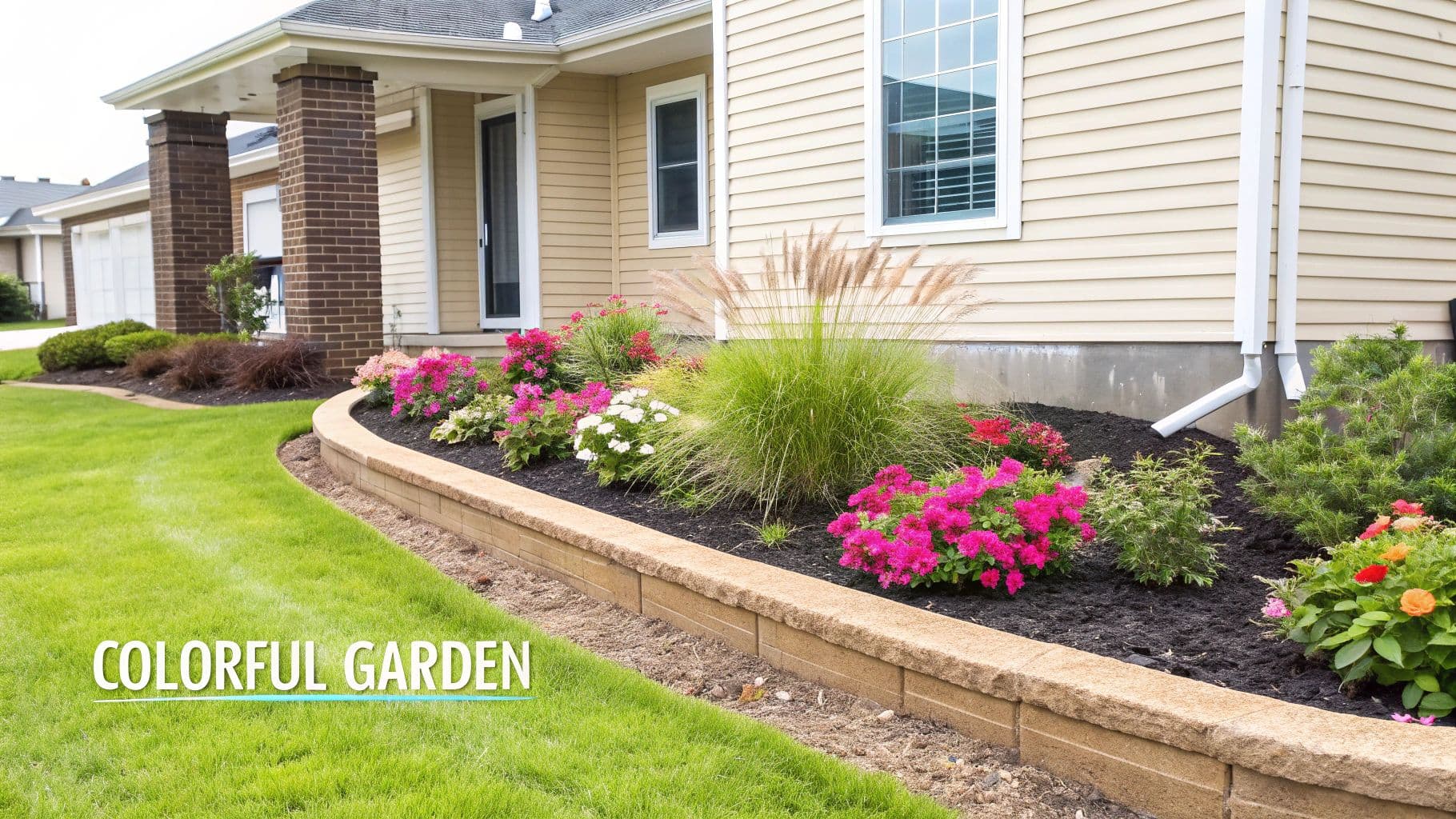
Key Elements & Implementation
Success with this style relies on thoughtful plant selection and placement. The goal is to create a harmonious composition where colors, heights, and textures complement each other throughout the seasons. Plan your garden beds in layers, with taller plants in the back and shorter ones in the front to create depth.
- Key Plants: Combine foundational perennials like Coneflowers, Salvia, and Daylilies with high-impact annuals such as Petunias, Marigolds, or Coleus for continuous color.
- Hardscaping: Use natural-looking flagstone paths, simple brick edging, or a charming garden bench to provide structure without overshadowing the flowers.
- Lighting: Employ subtle solar path lights to softly illuminate walkways and low-voltage spotlights to highlight prize specimens like a climbing rose or ornamental grass.
Quick Tips for a Colorful Garden
- Visualize First: Use OutdoorBrite’s color preview feature to test different flower combinations. Upload a photo of your yard to see how your chosen palette will look in spring, summer, and fall.
- Plan for Succession: Select plants with different bloom times. Plant spring bulbs like tulips, summer bloomers like Black-eyed Susans, and fall stunners like Asters.
- Group by Needs: Place plants with similar water, sun, and soil requirements together to make maintenance much simpler.
- Curb Appeal Boost: A well-maintained and vibrant flower garden sends a powerful message of a loved and cared-for home, significantly boosting its charm and perceived value.
8. Sustainable Edible Landscape
An edible landscape is one of the most practical landscaping design ideas for a front yard, merging beauty with bounty. This approach, often called "foodscaping," intentionally integrates fruit-bearing trees, herbs, and vegetables into traditional ornamental designs. Instead of a purely decorative space, your front yard becomes a productive garden that provides fresh, organic food. This sustainable style is perfect for homeowners who value self-sufficiency, want to reduce their carbon footprint, and enjoy a direct connection to their food source, all while maintaining a beautiful and engaging curb appeal.
Key Elements & Implementation
Success with an edible landscape lies in thoughtfully selecting plants that are both attractive and productive. Use raised garden beds made from cedar or galvanized steel to keep the layout organized and tidy. Integrate flowering herbs and companion plants to attract pollinators and deter pests naturally.
- Key Plants: Mix ornamental edibles like Rainbow Chard and artichokes with traditional favorites like tomatoes and lettuces. Use herbs like rosemary and lavender for beautiful, fragrant borders. Dwarf fruit trees (apple, fig, lemon) can serve as excellent focal points.
- Hardscaping: Define pathways with gravel or wood chips to create easy access for harvesting. Raised beds add structure and prevent soil compaction.
- Aesthetics: Arrange plants by height and color. Place taller plants like sunflowers or trellised beans at the back and shorter herbs and leafy greens at the front.
Quick Tips for an Edible Yard
- Visualize First: Use OutdoorBrite’s planning tools to map out your edible garden. Upload a photo of your front yard to test raised bed placements and visualize how different vegetable and herb combinations will look throughout the seasons.
- Check Local Rules: Before you start digging, review your local HOA and city zoning regulations regarding front-yard food gardens to ensure compliance.
- Start Small: Begin with one or two raised beds and a few easy-to-grow plants like lettuce, basil, and cherry tomatoes to build your confidence.
- Curb Appeal Boost: A well-maintained edible landscape showcases a home's commitment to sustainability and healthy living, creating a unique and appealing story that can significantly increase its attractiveness to potential buyers.
9. Tropical Paradise Front Yard
A tropical paradise front yard creates an exotic, resort-like feel by using lush foliage, vibrant flowers, and densely layered plantings. This landscaping design idea for a front yard transforms your home's entrance into a vibrant escape, evoking the feel of a vacation destination. Ideal for warmer climates, this style uses bold textures and colors to create an immersive, sensory-rich environment. The goal is to cultivate a dense, green oasis that feels both dramatic and inviting, offering a stunning contrast to more traditional lawn-centric designs.
Key Elements & Implementation
Success with a tropical theme depends on layering and creating a sense of natural abundance. Use natural materials like bamboo edging, lava rocks, or dark wood mulch to complement the vibrant plant life. A small water feature, like a bubbling rock or small pond, can elevate the tropical ambiance.
- Key Plants: Focus on plants with large, dramatic leaves and bold flowers. Think Elephant Ears, Bird of Paradise, Hibiscus, and various types of palms and ferns.
- Hardscaping: Opt for natural stone pathways, dark-stained wood decks, or bamboo fencing to enhance the organic, jungle-like feel.
- Lighting: Use subtle uplighting to highlight the dramatic shapes of palm fronds or large leaves at night, creating an enchanting effect.
Quick Tips for a Tropical Look
- Visualize First: Use OutdoorBrite’s "Tropical" style to experiment with different plant combinations. See how Majesty Palms and Crotons look next to your entryway before planting.
- Layer for Lushness: Plant in layers with tall palms or bananas in the back, medium-sized shrubs like Hibiscus in the middle, and low-growing groundcovers like Mondo Grass in the front.
- Cold-Hardy Choices: If you live in a cooler climate, choose cold-hardy "tropicals" like the Windmill Palm and Canna Lilies to get the look without winter loss.
- Curb Appeal Boost: A well-executed tropical landscape creates an unforgettable first impression, suggesting a unique and luxurious property that stands out in any neighborhood.
10. Modern Sustainable Rain Garden
A modern sustainable rain garden is one of the most eco-conscious landscaping design ideas for a front yard, combining aesthetics with powerful environmental benefits. This design strategically captures, filters, and absorbs stormwater runoff from roofs and driveways, reducing water pollution and preventing local flooding. By creating a beautiful, functional microhabitat, a rain garden supports local wildlife and showcases a commitment to ecological responsibility, turning a potential drainage problem into an attractive landscape feature.
Key Elements & Implementation
A successful rain garden is built in a shallow depression and layered with a special soil mix to promote drainage. It’s placed to intercept runoff, often near a downspout or driveway. The key is choosing plants that can tolerate both periods of inundation and dry spells.
- Key Plants: Use deep-rooted native species that thrive in your climate. Think Black-eyed Susans, Coneflowers, and native sedges for Midwest gardens, or ferns and rushes for the Pacific Northwest.
- Hardscaping: Incorporate river rocks, a dry creek bed, or a decorative bridge to guide water flow and add visual interest.
- Lighting: Use subtle, solar-powered spotlights to highlight key plants like ornamental grasses, creating a soft glow in the evening.
Quick Tips for a Modern Look
- Visualize First: Use OutdoorBrite’s “Sustainable” style to model your yard’s drainage patterns. This helps you find the perfect spot and size for your rain garden before you start digging.
- Balance is Key: Pair the wild, natural look of native perennials with a clean, modern border made of steel or stone to keep the design looking intentional and tidy.
- Limit Your Palette: Choose three to five plant species with varying heights and textures to create a lush but uncluttered look that complements a modern home.
- Curb Appeal Boost: A well-designed rain garden is a unique feature that signals an environmentally friendly, low-maintenance property, which is increasingly attractive to potential buyers.
Comparison of 10 Front Yard Landscaping Designs
| Style | 🔄 Implementation Complexity | ⚡ Resource Requirements & Maintenance | 📊 Expected Outcomes | 💡 Ideal Use Cases | ⭐ Key Advantages |
|---|---|---|---|---|---|
| Modern Minimalist Front Yard | Medium — precise layout & hardscaping | Moderate upfront ($3k–$8k); low upkeep (1–2 hr/mo) | Clean, timeless curb appeal; reduced watering | Small urban lots, contemporary homes | Low maintenance; strong curb appeal; easy seasonal accents |
| Mediterranean Landscape Design | Medium — regional plant selection & rustic hardscapes | Moderate–high cost ($4k–$10k); low–moderate upkeep (2–3 hr/mo) | Drought-tolerant, fragrant year-round interest | Warm, dry climates (California, Sun Belt) | Water-efficient; sensory appeal; pollinator friendly |
| Japanese Zen Garden | High — requires cultural design knowledge & precise composition | Moderate cost ($3.5k–$9k); low–moderate upkeep (raking: weekly) | Calm, meditative space with year-round structure | Small to medium yards, meditation retreats, contemplative owners | Promotes relaxation; low plant variety; strong formal structure |
| Native Plant Cottage Garden | Medium — needs regional research and layered planting plans | Low–moderate cost ($2.5k–$6k); low after establishment (1–2 hr/mo) | High ecological value; supports pollinators & seasonal blooms | Conservation-minded homeowners; ecological restorations | Biodiversity support; low water/fertilizer; cost-effective |
| Contemporary Mixed Border Planting | High — complex plant selection and seasonal planning | Moderate cost ($3.5k–$8.5k); moderate upkeep (3–4 hr/mo) | Extended seasonal color and dynamic texture | Suburban gardens, designers, pollinator-friendly yards | Long bloom season; adaptable; visually rich compositions |
| Low-Maintenance Hardscape Focused Design | Medium — technical hardscape installation required | Higher upfront ($4.5k–$12k); very low upkeep (~30 min/mo) | Durable, accessible landscape with minimal seasonal work | Renters, accessibility needs, busy homeowners | Accessibility; durability; minimal ongoing care |
| Colorful Perennial and Annual Garden | Medium–High — requires bloom sequencing and color planning | Low–moderate cost ($2.5k–$7k); high upkeep (4–6 hr/wk in season) | High visual impact; attracts pollinators; seasonal variety | Show gardens, avid gardeners, high-curb-appeal projects | Stunning color displays; highly customizable; wildlife-friendly |
| Sustainable Edible Landscape | Medium–High — needs planting schedules & pest planning | Low–moderate cost ($2k–$6k); high upkeep (5–7 hr/wk in season) | Produces food, improves soil health, educational value | Urban growers, permaculture enthusiasts, food-security gardens | Fresh produce; reduced grocery costs; sustainable practices |
| Tropical Paradise Front Yard | High — climate-specific plants and sourcing challenges | Moderate–high cost ($3.5k–$10k+); moderate–high upkeep (3–5 hr/wk) | Lush, dramatic tropical aesthetic in suitable climates | Frost-free regions, homeowners seeking exotic impact | Immediate visual drama; rich foliage and color |
| Modern Sustainable Rain Garden | High — requires hydrology siting & proper engineering | Low–moderate cost ($2.5k–$7.5k); low upkeep after establishment (1–2 hr/mo) | Reduces runoff, improves water quality; wildlife habitat | Properties with drainage issues; eco-conscious owners | Stormwater mitigation; ecological benefits; possible rebates |
Bringing Your Vision to Life: From Idea to Reality
We've explored a diverse collection of landscaping design ideas for your front yard, from the structured simplicity of a Modern Minimalist layout to the lush, productive appeal of a Sustainable Edible Landscape. Each concept offers a distinct path to transforming your outdoor space into a reflection of your personal style and a valuable extension of your home. The journey from a bare lawn to a breathtaking landscape is one of creative discovery, and the possibilities are as varied as the plants in a native cottage garden.
The most critical takeaway is that successful landscaping is a blend of vision and practicality. It's about understanding your climate, acknowledging your lifestyle, and setting realistic expectations for budget and maintenance. Whether you're drawn to the serene rock arrangements of a Japanese Zen Garden or the vibrant, water-wise plantings of a Mediterranean design, the fundamental principles remain the same: thoughtful planning, strategic plant selection, and a clear understanding of your long-term goals. Your front yard isn't just a plot of land; it's the first impression your home makes and a source of daily joy.
Your Actionable Next Steps
Armed with these landscaping design ideas for your front yard, your next phase is all about action. Don't let the sheer number of options overwhelm you. Instead, follow a structured approach to bring your dream landscape to life:
- Define Your Priorities: Revisit the styles that resonated most with you. Are you prioritizing low maintenance, ecological benefit, or a specific aesthetic? Rank your top three choices.
- Assess Your Site: Take a detailed look at your yard. Note the amount of daily sunlight, identify soil type, and measure the available space. This practical data will help narrow down which designs are genuinely feasible for your property.
- Set a Realistic Budget: Decide what you are comfortable spending on materials, plants, and potential labor. Having a clear budget from the start prevents overspending and helps guide your material choices, whether you opt for high-end stone or budget-friendly gravel.
- Create a Phased Plan: A full landscape overhaul can feel daunting. Break the project down into manageable phases. Perhaps you start with foundational hardscaping this season and focus on planting next spring. This makes the project more achievable and less stressful.
Mastering these concepts transforms you from a passive homeowner into an active creator of your environment. A well-designed front yard does more than just boost curb appeal; it creates a welcoming atmosphere, provides a habitat for local wildlife, and can even increase your property value. The effort you invest now will pay dividends for years, creating a beautiful and functional space that you can be proud of. Your ideal front yard is not an unattainable dream, but a tangible project waiting to begin.
Ready to stop guessing and start visualizing? Take the uncertainty out of your planning with OutdoorBrite. Upload a photo of your current yard and instantly apply any of these ideas to your front yard to see a stunning, realistic preview in seconds. Visit OutdoorBrite to bring your vision to life before you ever break ground.