10 Low Maintenance Garden Ideas for a Beautiful Yard in 2026
Discover 10 actionable low maintenance garden ideas to create a beautiful, effortless outdoor space. From xeriscaping to smart tech, save time and water.
Imagine a vibrant, beautiful garden that thrives with minimal effort, freeing up your weekends for relaxation instead of tedious chores. The dream of a stunning yet simple outdoor space is more achievable than you might think. While traditional gardens often demand constant watering, weeding, and replanting, a smarter approach can deliver all the beauty with a fraction of the work. This guide is your blueprint for creating just that, presenting ten proven low maintenance garden ideas designed to drastically reduce your workload.
We will move beyond generic advice and provide actionable strategies that combine intelligent design, strategic plant selection, and efficient techniques. You'll discover how to work with your natural environment, not against it, using concepts like xeriscaping and native planting. We'll explore how to replace demanding lawns with attractive groundcovers and leverage hardscaping to create structure and visual interest that requires almost no upkeep. From container gardening for small spaces to automated irrigation that handles the watering for you, each idea is a practical solution.
This curated list is for anyone who wants a gorgeous garden without the constant commitment. Whether you're a beginner, have a busy schedule, or simply want a more sustainable landscape, these methods will help you build an outdoor oasis that practically takes care of itself.
1. Xeriscaping: Water-Wise Garden Design
Xeriscaping is a landscaping philosophy centered on water conservation. This approach can reduce outdoor water use by 50-75% by utilizing drought-tolerant plants, smart irrigation, and soil improvements. It's one of the most effective low-maintenance garden ideas, especially for those in dry climates or anyone looking to create a beautiful, resilient, and eco-friendly outdoor space. After an initial establishment period, a xeriscaped garden thrives with minimal watering, saving you time and money. Our drought tolerant landscaping ideas show what this looks like across a whole yard.
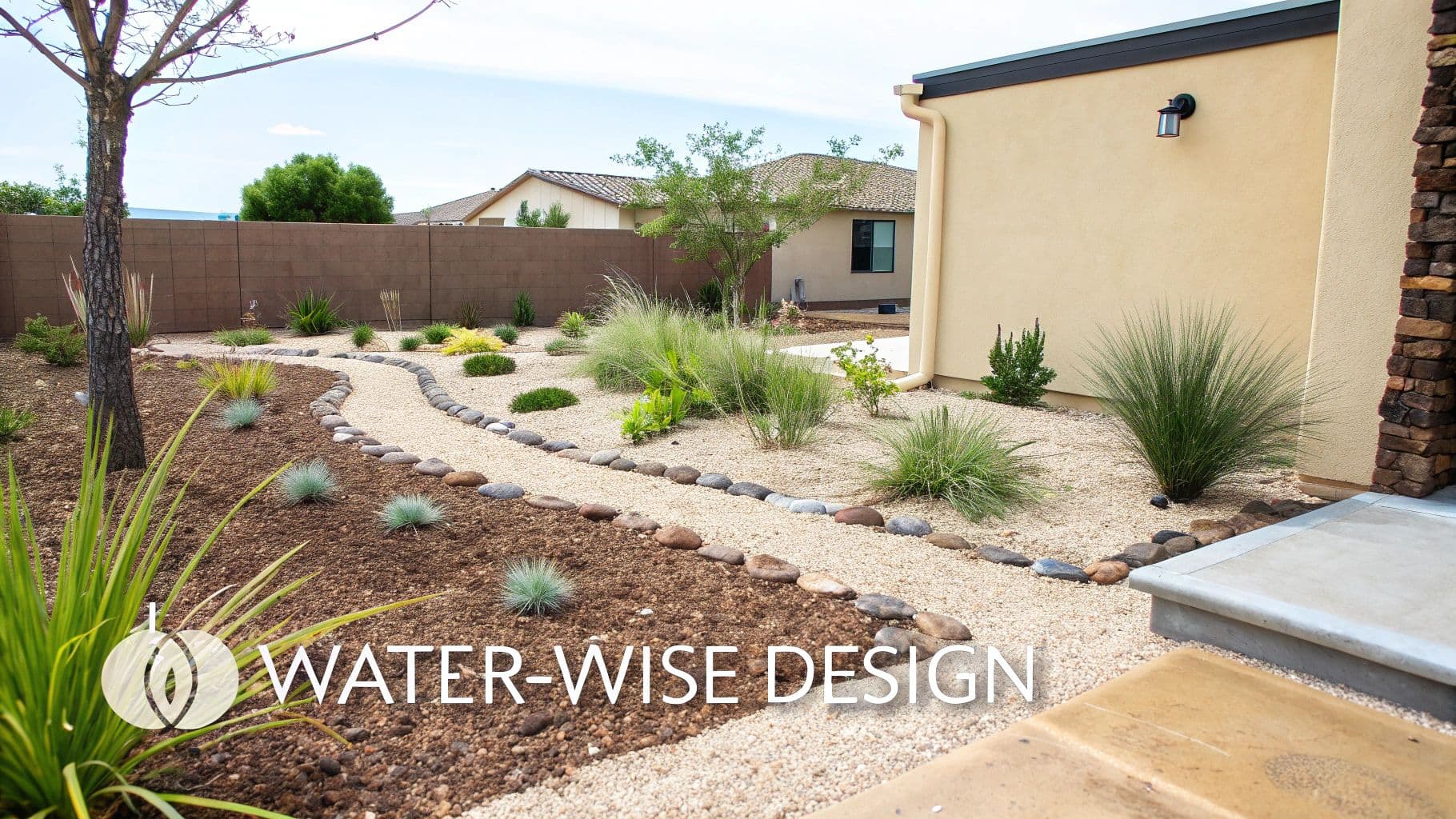
This method goes beyond just cacti and rocks. Modern xeriscaping incorporates lush textures and vibrant colors. Think of gardens filled with hardy lavender, ornamental grasses, and striking succulents. The key is choosing plants that are naturally adapted to your region's rainfall and climate.
How to Implement Xeriscaping
To get started, focus on smart planning and a few core principles:
- Group Plants by Water Needs: Practice "hydrozoning" by placing plants with similar water requirements together. This prevents overwatering some plants while underwatering others.
- Improve Your Soil: Amend your soil with compost. Healthy soil absorbs and retains moisture more effectively, delivering it to plant roots where it's needed most.
- Mulch Generously: Apply a 2-4 inch layer of organic mulch like wood chips or shredded bark. Mulch suppresses weeds, retains soil moisture, and regulates soil temperature.
- Use Efficient Irrigation: Install a drip irrigation system on a timer. This delivers water directly to the plant's roots, minimizing evaporation and waste.
2. Native Plant Gardens: An Eco-Friendly Approach
Choosing native plants is one of the most impactful low maintenance garden ideas for creating a self-sustaining and beautiful landscape. These plants are indigenous to your specific region, meaning they have evolved over millennia to thrive in your local soil, climate, and rainfall patterns. This natural adaptation drastically reduces the need for fertilizers, pesticides, and supplemental watering once they are established. By planting natives, you create a garden that works in harmony with its environment, not against it.
This approach creates a vibrant habitat that supports local wildlife, including essential pollinators like bees and butterflies. A well-designed native garden can be as stunning as any traditional garden. Imagine a Texas wildflower meadow bursting with color or a serene Eastern woodland garden filled with delicate ferns and dogwoods. These gardens require minimal intervention because they are already perfectly suited to be there.
How to Implement a Native Plant Garden
Getting started with native plants is straightforward and highly rewarding:
- Source Locally: Purchase plants from specialized native plant nurseries rather than big-box stores. Local growers can offer advice and provide species best suited for your specific area.
- Start Small: Dedicate a small, manageable section of your yard to native plants first. You can expand the garden over time as you gain confidence and see what thrives.
- Group by Needs: Even native plants have preferences. Arrange them according to their sunlight and moisture requirements to create a resilient plant community.
- Avoid Fertilizers: Native plants are adapted to local soil conditions. Adding synthetic fertilizers can alter the soil's chemistry and harm the very plants you're trying to grow.
3. Hardscape-Heavy Gardens with Minimal Planting
A hardscape-heavy design is one of the most effective low maintenance garden ideas for homeowners who value structure and functionality. This approach minimizes chores like mowing and weeding by maximizing non-living elements like patios, walkways, gravel beds, and raised planters. It creates a clean, modern aesthetic while drastically reducing the time spent on plant care, making it perfect for busy lifestyles or smaller urban spaces. The focus shifts from tending to large garden beds to enjoying a well-defined outdoor living area.
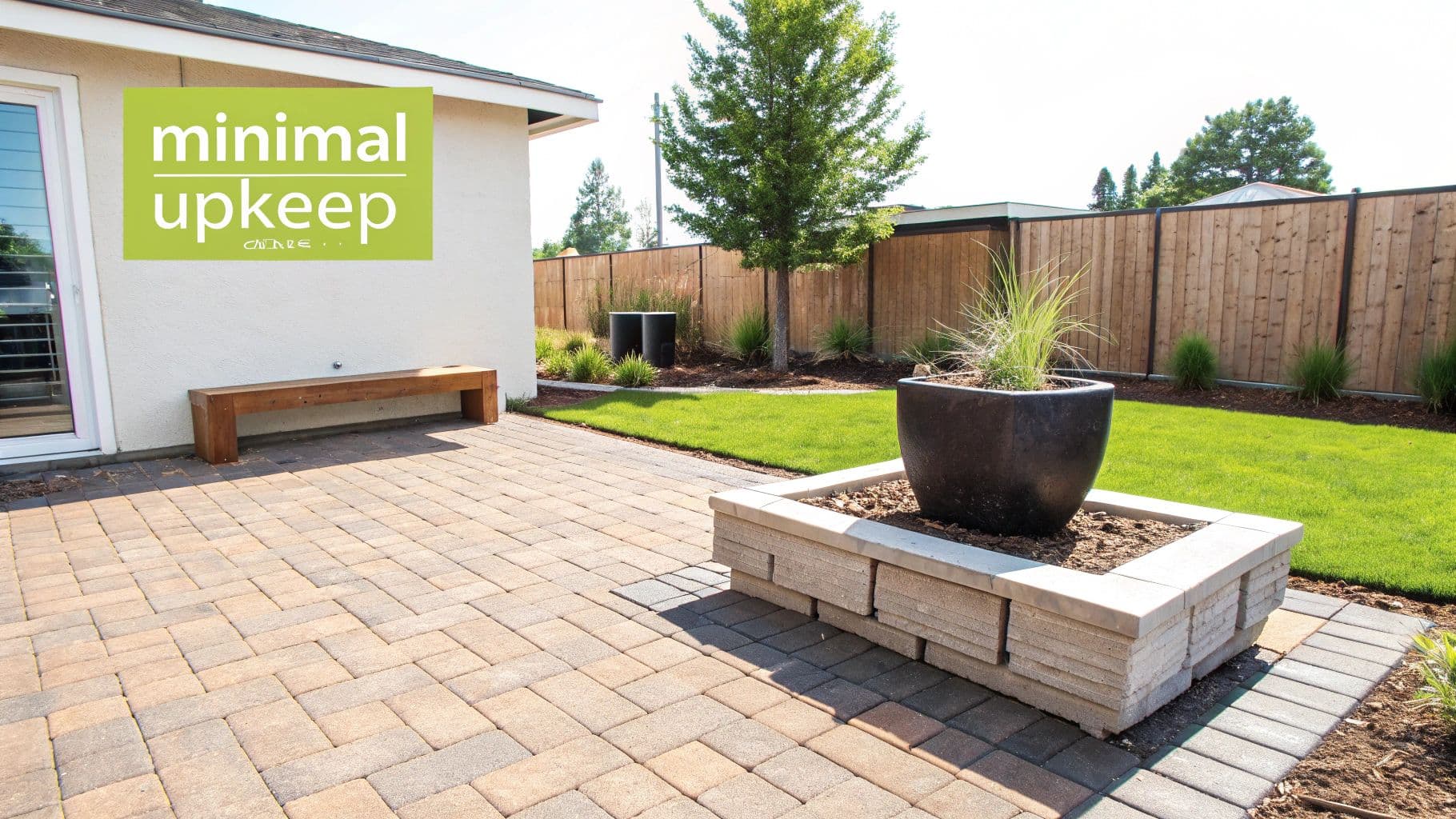
This style doesn't mean a plant-free zone; instead, it uses plants as strategic accents. Think of a sleek stone patio with a few large containers holding ornamental grasses, or a Japanese-inspired Zen garden where a single maple tree becomes a living sculpture against a backdrop of raked gravel. These carefully placed plantings provide color and softness without demanding constant attention, similar to the focused planting seen in many island landscaping ideas.
How to Implement a Hardscape-Heavy Garden
To create a functional and beautiful hardscape garden, prioritize planning and material choice:
- Plan Your Zones: Install hardscape elements like patios and paths first to define your outdoor living areas. This creates a solid foundation before adding any greenery.
- Choose Permeable Materials: Use permeable pavers or decorative gravel for walkways and patios. These materials allow rainwater to soak into the ground, reducing runoff and preventing puddles.
- Soften with Container Plants: Use pots and raised beds to introduce plants. Grouping containers with similar light and water needs simplifies care and creates impactful visual clusters.
- Select Specimen Plants: Instead of dense flowerbeds, choose one or two striking "specimen" plants, like a Japanese maple or a sculptural yucca, to serve as focal points.
4. Container and Raised Bed Gardening
Container and raised bed gardening brings the garden to you, using pots, planters, and elevated beds to create controlled growing environments. This approach is one of the best low maintenance garden ideas for those with limited space, poor native soil, or mobility concerns. By containing your garden, you nearly eliminate weeding, reduce soil-borne pests, and make watering more efficient. It offers complete control over soil quality and plant placement, ideal for renters, balcony gardeners, and anyone seeking a more manageable setup.
This method is incredibly versatile, fitting any aesthetic from a modern urban balcony filled with herb containers to a rustic suburban backyard with cedar raised beds for vegetables. It allows you to create a thriving garden almost anywhere. Think of vibrant annuals on a front porch, a vertical pallet garden bursting with strawberries, or a series of accessible, waist-high beds that make tending to plants a joy rather than a chore.
How to Implement Container and Raised Bed Gardening
Getting started is simple and can be scaled to fit your space and ambition:
- Choose the Right Size: Select containers at least 12 inches deep and wide to give roots ample room. For raised beds, a depth of 10-12 inches is sufficient for most vegetables and flowers.
- Prioritize Drainage: Ensure all containers have drainage holes. If a pot you love doesn't have them, drill a few yourself to prevent waterlogged roots.
- Use Quality Potting Mix: Never fill containers or raised beds with dense garden soil. Use a high-quality, lightweight potting mix that retains moisture while allowing for good aeration.
- Fertilize and Water Smartly: Nutrients leach out of containers more quickly. Incorporate a slow-release fertilizer into your potting mix at the beginning of the season and water consistently, as containers dry out faster than in-ground gardens.
5. Groundcovers and Alternatives to Lawn
Replacing a traditional turfgrass lawn is one of the most impactful low maintenance garden ideas for modern homeowners. Swapping grass for low-growing groundcovers or other lawn alternatives can drastically reduce mowing, watering, and fertilizing. Once established, these alternatives create a lush, textured carpet that supports pollinators, suppresses weeds, and thrives with minimal intervention. This approach is perfect for anyone tired of the constant upkeep a conventional lawn demands.
This sustainable landscaping trend embraces diversity beyond a simple monoculture of grass. Imagine a fragrant walkway of creeping thyme that releases a pleasant scent when stepped on, a sun-drenched slope covered in colorful sedum, or a shady area transformed by a velvety moss lawn. These alternatives not only save time and resources but also add unique character and ecological value to your garden space.
How to Implement Lawn Alternatives
Getting started involves removing the old lawn and selecting the right plants for your conditions:
- Choose the Right Plant for the Place: Select groundcovers suited to your climate, soil, and sunlight. Consider foot-traffic tolerance; creeping thyme handles light traffic, while moss is best for visual areas.
- Prepare the Soil: Remove existing grass and weeds thoroughly. Amend the soil with compost to improve drainage and provide nutrients for the new plants to establish quickly.
- Plant Densely: Follow the spacing recommendations for your chosen species but err on the side of planting closer together. A dense initial planting helps the groundcover fill in faster, outcompeting weeds.
- Establish with Care: Water the new plants regularly during their first growing season. Mulching between them can suppress weeds and retain moisture while they spread and mature.
6. Perennial Gardens and Flowering Beds
Perennial gardens offer a fantastic return on investment for any gardener seeking a low-maintenance landscape. Unlike annuals that must be replanted every year, perennials come back season after season, growing larger and more robust over time. This long-term approach eliminates the annual cost and labor of replanting, making it one of the most popular low-maintenance garden ideas. Once established, these gardens develop deep root systems, making them more drought-tolerant and resilient.
This style focuses on creating dynamic, naturalistic plantings with year-round interest. Think of sweeping prairie-style beds filled with coneflowers and black-eyed Susans, or a tranquil shade garden with hostas and ferns. By selecting plants suited to your climate, you can create a beautiful garden that largely takes care of itself after the first year.
How to Implement a Perennial Garden
Getting started with perennials involves thoughtful selection and placement for long-term success:
- Choose Plants for Your Zone: Select perennials rated for your specific USDA hardiness zone and that match your garden's sunlight conditions (full sun, part shade, or full shade).
- Plan for Mature Size: When planting, space perennials according to their mature width. This prevents overcrowding down the road and ensures good air circulation, which reduces disease risk.
- Mulch Annually: Apply a 2-3 inch layer of organic mulch each spring. This is crucial for suppressing weeds, retaining soil moisture, and regulating temperature.
- Water Wisely: During the first growing season, water deeply once or twice a week to encourage strong root development. In subsequent years, watering needs will be significantly lower.
7. Mulching and Soil Amendment Strategies
Strategic mulching and soil amendment are foundational low-maintenance garden ideas that significantly reduce chores. This approach improves soil health, conserves moisture by up to 50%, and can suppress weed growth by 70-80%. By creating a healthy soil ecosystem and protecting its surface, you build a resilient garden that requires less watering, weeding, and fertilizing over time. It's a proactive strategy that enhances the effectiveness of nearly every other gardening effort.
Organic mulches like wood chips or shredded bark slowly decompose, feeding the soil and improving its structure. Think of a lush forest-style garden with a deep layer of mulch, or a neat ornamental bed where gravel mulch complements Mediterranean plants. The right strategy creates a clean look while building a self-sustaining environment.
How to Implement Mulching and Soil Strategies
Start by treating your soil and mulch as a single, powerful system:
- Amend First, Mulch Second: Before applying mulch, work a 1-inch layer of compost into the top few inches of your soil. This enriches the soil with vital nutrients and improves its ability to hold water.
- Apply Mulch Correctly: Spread a 2-4 inch layer of your chosen mulch evenly over the soil surface. This depth is ideal for blocking weed-germinating sunlight and retaining moisture.
- Keep Stems Clear: Pull mulch back about 2 inches from the base of plant stems and tree trunks. This prevents moisture buildup, which can lead to rot and disease. Avoid "mulch volcanoes" piled high against tree trunks.
- Replenish Annually: Organic mulches break down over time. Plan to top up the layer each spring to maintain its effective depth and continue feeding the soil.
8. Hardscape Water Features (Fountains, Ponds, Streams)
A hardscape water feature can be a transformative, low-maintenance garden idea that adds the soothing sound of moving water without significant upkeep. These elements, such as self-contained fountains, pondless streams, or small pre-formed ponds, use recirculating pumps to cycle water continuously. This design minimizes water loss and, when combined with modern filtration, drastically reduces algae growth and the need for constant cleaning. After installation, these features become stunning focal points that attract birds and beneficial insects while requiring minimal attention.
The key to a low-maintenance water feature is its design. Unlike large, naturalistic ponds that require complex ecosystems, modern systems are engineered for simplicity. Think of a minimalist Japanese tsukubai (water basin), a sleek fountain bowl on a patio, or a "pondless" waterfall where the reservoir is hidden underground. These self-contained units provide all the ambiance with a fraction of the work, making them perfect for busy homeowners.
How to Implement Water Features
To add the element of water to your garden without adding chores, focus on a smart, self-sufficient setup:
- Choose a Recirculating System: Opt for a feature with a built-in pump and reservoir. This is the most critical step for minimizing water use and maintenance.
- Go Solar-Powered: Install a solar-powered pump to eliminate electricity costs and wiring complexities. This makes placement more flexible and your garden more eco-friendly.
- Add Aquatic Plants: If you have a small pond, adding plants like water hyacinths or water lettuce can help naturally filter the water and outcompete algae for nutrients.
- Prevent Debris Clogs: Ensure your pump has a good intake screen or is housed in a skimmer box to prevent leaves and other debris from causing clogs.
9. Sedums, Succulents, and Desert Plants
Embracing sedums, succulents, and desert plants is a fantastic low-maintenance garden idea because these species are masters of self-sufficiency. Plants like sedum, echeveria, and agave store water in their fleshy leaves, allowing them to thrive with minimal watering and even a bit of neglect. This makes them ideal for busy homeowners, gardeners in dry climates, or anyone looking to add unique textures and year-round visual interest without the constant chores of traditional gardening.
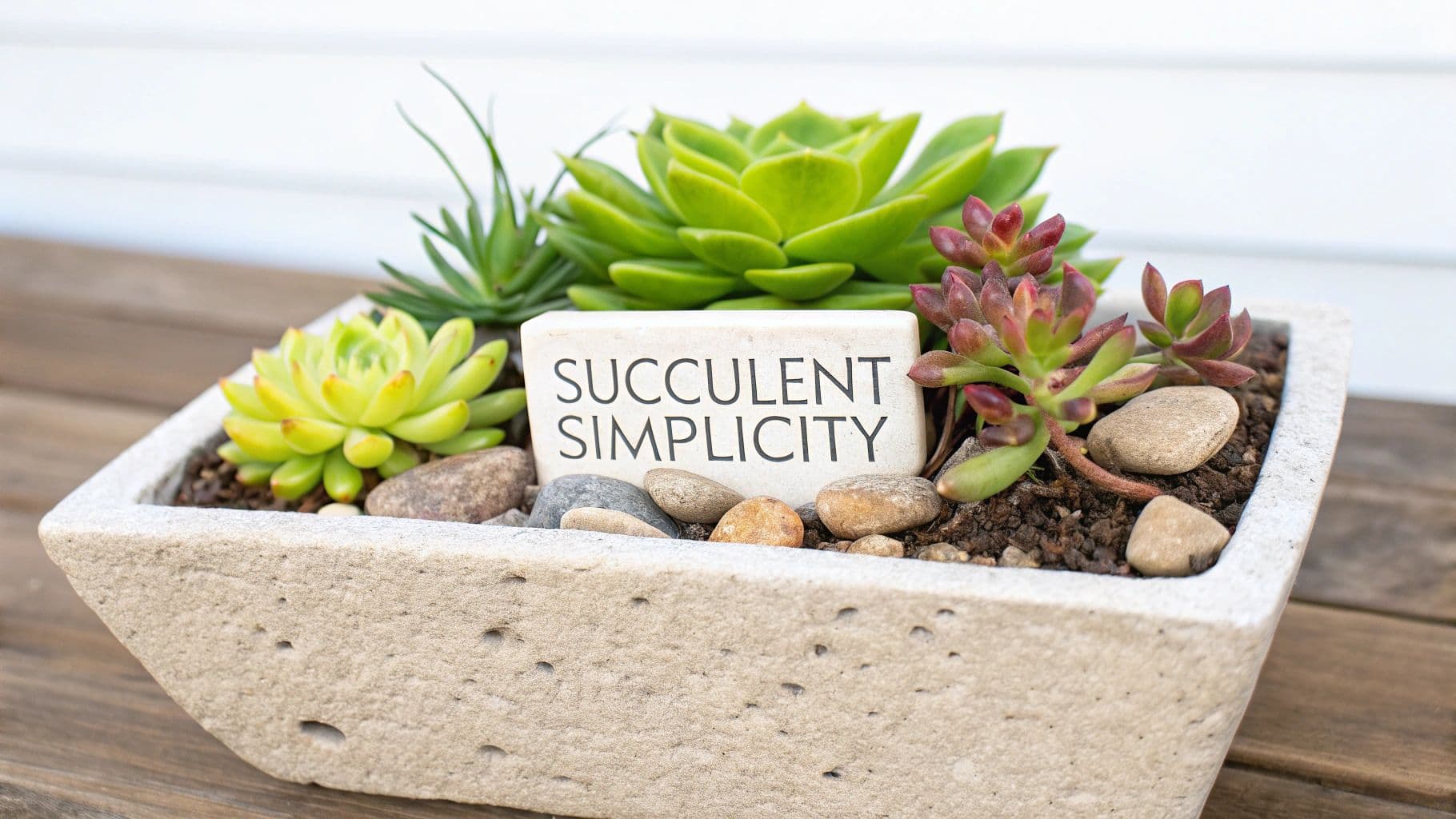
This approach offers incredible versatility. You can create a stunning living carpet with sedum groundcover on a dry, rocky slope, design vibrant succulent container arrangements for a patio, or use dramatic agave and yucca plants as architectural focal points. Their diverse colors, shapes, and sizes provide endless design possibilities that require very little input once established, proving that a tough, resilient garden can also be exceptionally beautiful.
How to Implement a Succulent Garden
Success with these hardy plants comes down to providing the right environment, which mimics their native arid habitats:
- Prioritize Drainage: Use a well-draining cactus or succulent soil mix, or amend your garden soil with sand or perlite. Excellent drainage is non-negotiable to prevent root rot.
- Water Sparingly: The most common mistake is overwatering. Allow the soil to dry out completely between waterings. In most climates, this means watering deeply but infrequently.
- Provide Ample Sunlight: Most succulents and desert plants require at least six hours of direct sunlight per day to maintain their vibrant colors and compact shapes.
- Propagate for More Plants: One of the best perks is how easily they propagate. You can grow entirely new plants from a single leaf or cutting, allowing you to expand your garden for free.
10. Automated and Smart Irrigation Systems
Automated and smart irrigation systems are a game-changer for creating truly low-maintenance gardens. These technologies take the guesswork and daily chore out of watering, delivering the precise amount of moisture your plants need, exactly when they need it. By using weather-based controllers, soil moisture sensors, and app-based management, smart systems can reduce water usage by 20-50%. This not only saves you time and effort but also promotes healthier, more resilient plants by preventing over- or under-watering.
Modern systems connect to local weather forecasts and automatically adjust watering schedules based on rainfall, temperature, and humidity. They often pair with highly efficient drip lines that deliver water directly to the plant's roots, minimizing waste from evaporation. This set-it-and-forget-it approach ensures your garden thrives even when you're busy or on vacation, making it a cornerstone of modern low-maintenance garden ideas.
How to Implement Smart Irrigation
Getting started with an automated system is more accessible than ever. Focus on these key steps for maximum efficiency:
- Choose the Right Controller: Select a smart controller that offers weather-based adjustments and remote control via a smartphone app.
- Install Drip Irrigation: For garden beds, vegetable patches, and container plants, use drip lines or soaker hoses instead of sprinklers. They are far more efficient at delivering water directly to the root zone.
- Zone Your Garden: Group plants with similar water needs onto separate irrigation zones. This allows you to customize the watering schedule for different areas, such as a thirsty vegetable garden versus a drought-tolerant perennial bed.
- Add Soil Sensors: For ultimate precision, place a few soil moisture sensors in key areas. These devices provide real-time feedback to your controller, preventing it from watering soil that is already wet.
Design Your Low-Effort Oasis with Confidence
The journey toward a beautiful, relaxing garden doesn't have to be paved with endless chores. Creating a stunning outdoor space that complements your lifestyle is about making strategic, intelligent choices from the ground up. The core principle tying all these low maintenance garden ideas together is simple: work with your environment, not against it.
By embracing this philosophy, you shift from a reactive cycle of constant weeding and watering to a proactive approach that builds a resilient, self-sustaining ecosystem. Your time becomes focused on enjoyment rather than relentless upkeep.
Key Takeaways for a Smarter Garden
The most successful low-maintenance landscapes are built on a few key principles:
- The Right Plant, Right Place Philosophy: Selecting plants adapted to your climate—like natives, perennials, or succulents—is the most impactful decision you can make. It dramatically reduces the need for water, fertilizer, and pest control.
- Embrace Hardscape and Mulch: Patios, gravel paths, and a thick layer of mulch are active weed suppressants and moisture conservers. They are your garden's best friends.
- Rethink the Traditional Lawn: Swapping a demanding grass lawn for robust groundcovers, expanded garden beds, or a hardscape feature can reclaim dozens of hours each season.
- Automate to Appreciate: Investing in smart irrigation, like drip lines on a timer, ensures your plants get precisely what they need without waste or worry.
Your Actionable Next Steps
Feeling inspired is the first step; taking action is the next. Start small. Choose one concept from this article that resonates most with your space. Perhaps it's dedicating a corner to a native plant garden, replacing a patch of grass with a simple gravel feature, or transforming your patio with low-care container gardens. By implementing one of these low maintenance garden ideas, you will build momentum and see firsthand how small, smart changes lead to significant, lasting results. This approach allows you to create a personalized, low-effort oasis that brings you peace and joy for years to come.
Ready to see how these ideas would look in your own yard? Stop guessing and start visualizing with OutdoorBrite. Upload a photo of your space and use AI to instantly redesign it with lush native plants, modern hardscapes, or a water-wise xeriscape, turning your vision into a clear, actionable plan. Try OutdoorBrite Today and design the low-maintenance garden of your dreams.