8 Small Garden Landscaping Ideas to Transform Your Space
Discover top small garden landscaping ideas for 2026. From vertical gardens to Zen designs, get actionable tips to maximize your limited outdoor space.
A small garden doesn't mean small ambitions. With the right approach, even the most compact outdoor area can become a stunning and functional oasis. The challenge is maximizing every square inch without making the space feel cramped. This guide offers actionable small garden landscaping ideas to inspire your next project.
We will explore a variety of concepts tailored for limited footprints, from space-saving vertical gardens to strategic container arrangements. We'll also delve into distinct styles like tranquil Zen gardens, charming cottage gardens, and water-wise Mediterranean landscapes. Each idea includes plant suggestions, layout tips, and maintenance considerations to help you turn inspiration into reality.
To simplify your planning, we will show how a garden landscaping app like OutdoorBrite can help. It allows you to generate photorealistic images of these concepts in your own space, helping you see the final result before you start. Our goal is to equip you with the knowledge and tools to create an inviting retreat that reflects your personal style.
1. Vertical Gardens and Living Walls
When ground space is at a premium, the only way to go is up. Vertical gardens, or living walls, are a transformative small garden landscaping idea that turns bare surfaces into vibrant masterpieces. This technique involves growing plants on a vertically suspended panel or trellis, allowing you to cultivate a lush garden without sacrificing floor space. It's perfect for urban balconies, small patios, and courtyard walls.
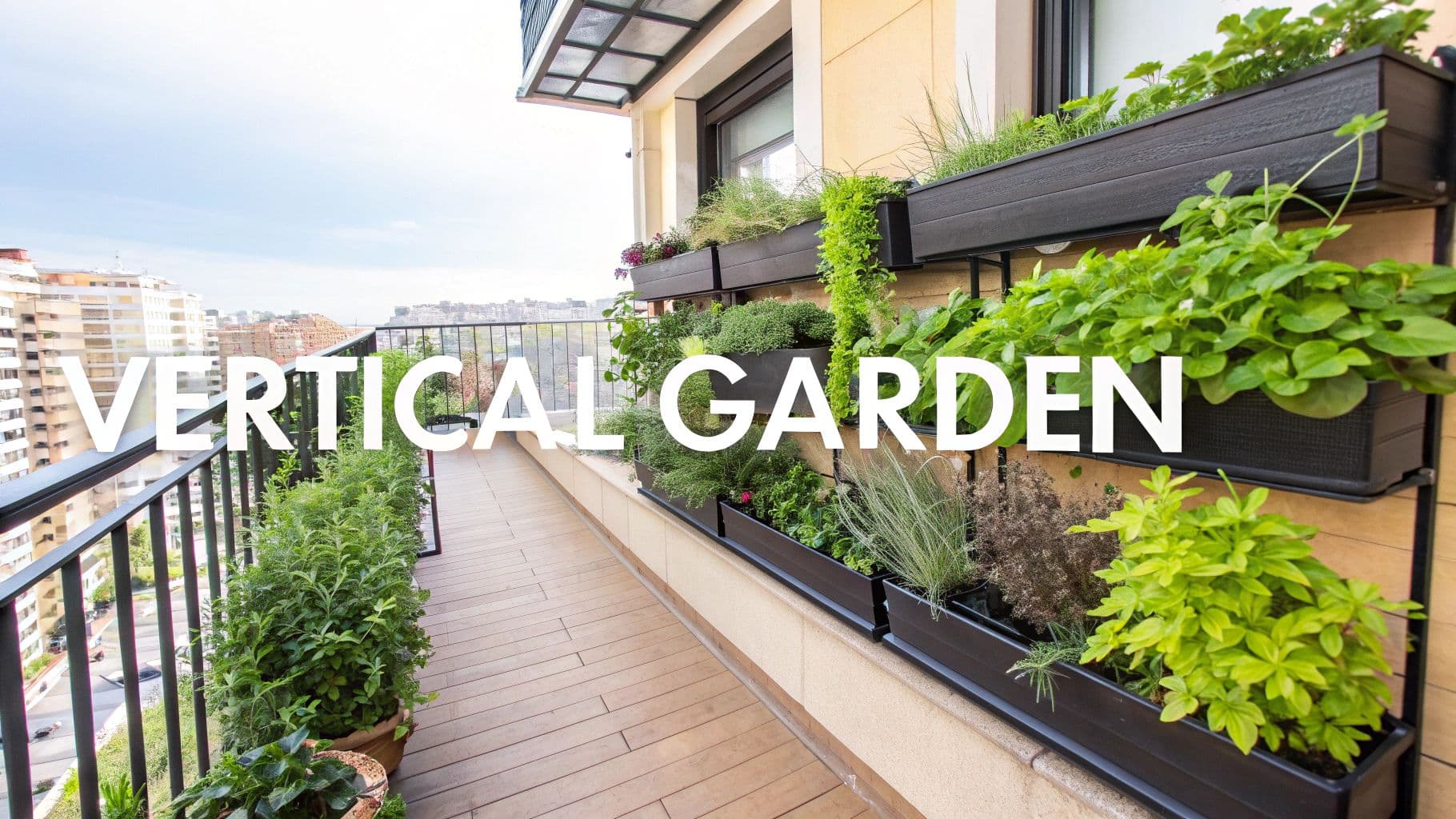
The primary benefit is maximizing your planting area. A small patch of wall can host dozens of plants, far more than a container of the same footprint. This method also improves air quality, reduces ambient noise, and creates an impressive focal point that draws the eye upward, making the space feel larger.
How to Implement a Vertical Garden
Getting started with a living wall is more accessible than ever, with various systems available.
- Choose a System: You can select from modular panels with planting pockets, felt pocket planters, or build a simple DIY trellis for climbing vines. For edible gardens, specialized vertical hydroponic towers are excellent choices.
- Select the Right Plants: Start with low-maintenance options. Succulents like sedum and echeveria are drought-tolerant. For a cascading look, use trailing plants like golden pothos or English ivy. Herbs such as mint, basil, and rosemary also perform well.
- Installation and Care: Mount the system securely to a wall that can support the weight. Use a lightweight, well-draining potting mix. For consistent moisture, consider installing a drip irrigation system with a timer to automate watering.
Pro Tip: Visualize your design before drilling. Use OutdoorBrite to upload a photo of your wall and experiment with different vertical garden layouts and plant combinations.
2. Container Gardening and Potted Plant Arrangements
Container gardening offers ultimate flexibility and control. This classic small garden landscaping idea uses an array of pots and planters to cultivate everything from flowers and shrubs to vegetables and herbs. It's a versatile approach perfect for patios, balconies, and rooftops where in-ground planting isn't an option. You can easily rearrange your garden to suit the season, making it a dynamic space.
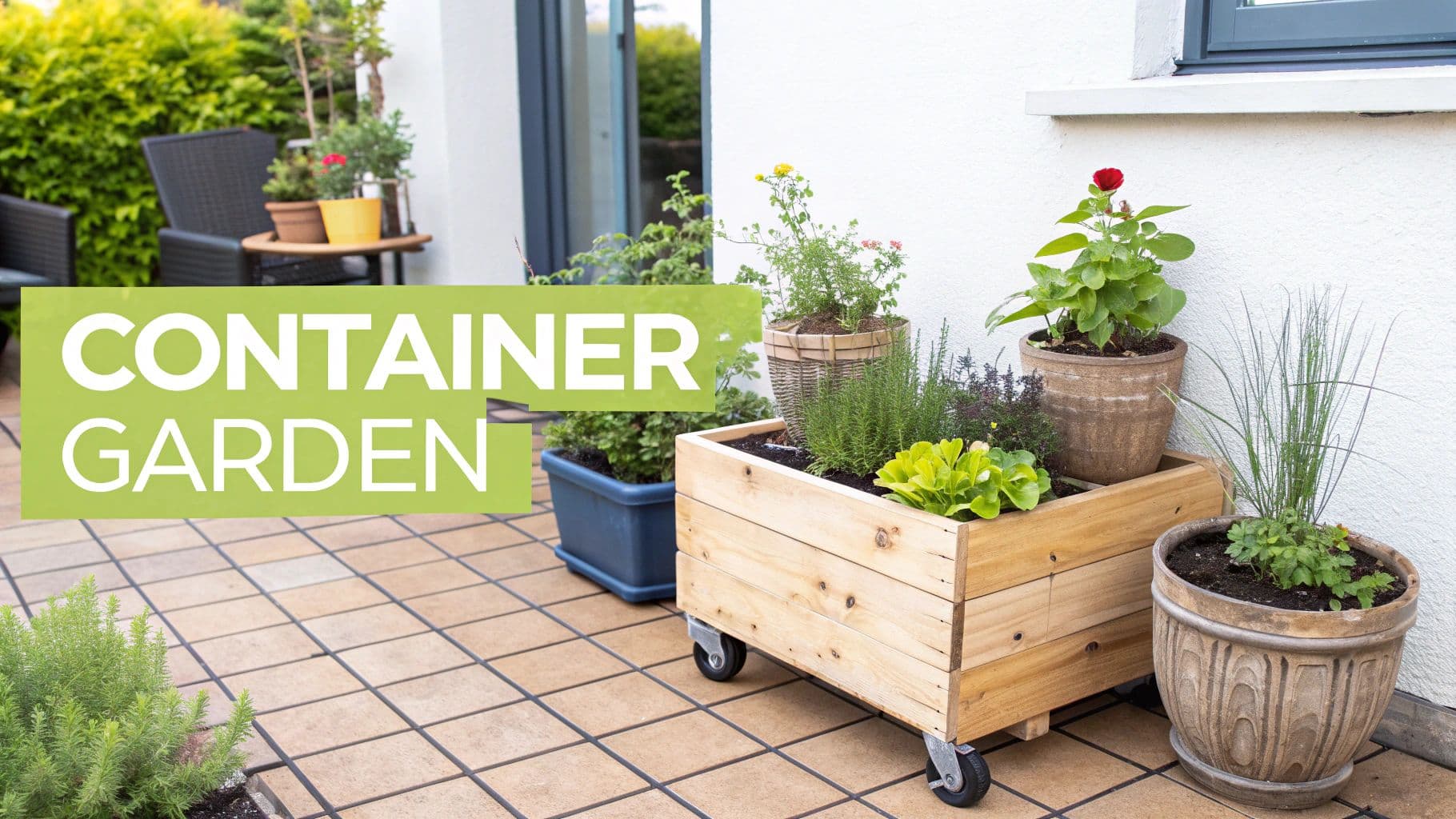
The key benefit is adaptability. It allows you to create defined garden zones, introduce color exactly where you want it, and control soil conditions. This method is ideal for renters or anyone looking to experiment without committing to a permanent landscape. By grouping pots of various sizes and textures, you can create a lush, layered look that adds depth.
How to Implement a Container Garden
Creating a stunning container garden is straightforward with a bit of planning.
- Choose the Right Containers: Select pots with adequate drainage holes to prevent root rot. Materials like terracotta, glazed ceramic, and fiberglass offer different aesthetics. Remember that porous materials dry out faster.
- Select Plants and Soil: Use a high-quality, lightweight potting mix. Group plants with similar light and water needs. For visual appeal, follow the "thriller, filler, spiller" design principle: a tall plant (thriller), mounding plants (filler), and trailing plants (spiller).
- Arrange and Maintain: Group containers of varying heights to create visual interest. Place sun-loving plants in your sunniest spots. Elevate pots on feet to improve drainage and protect surfaces.
Pro Tip: Before buying pots, use OutdoorBrite to create a virtual layout. Upload a photo of your patio and experiment with different container arrangements to see what works best.
3. Japanese Zen Garden Design
For a tranquil, meditative retreat, Japanese Zen garden design offers a minimalist approach to small garden landscaping ideas. This style emphasizes simplicity, using carefully placed elements like rocks, gravel, and select plants to evoke a sense of calm. A Zen garden is less about showcasing plants and more about creating a harmonious, symbolic landscape.
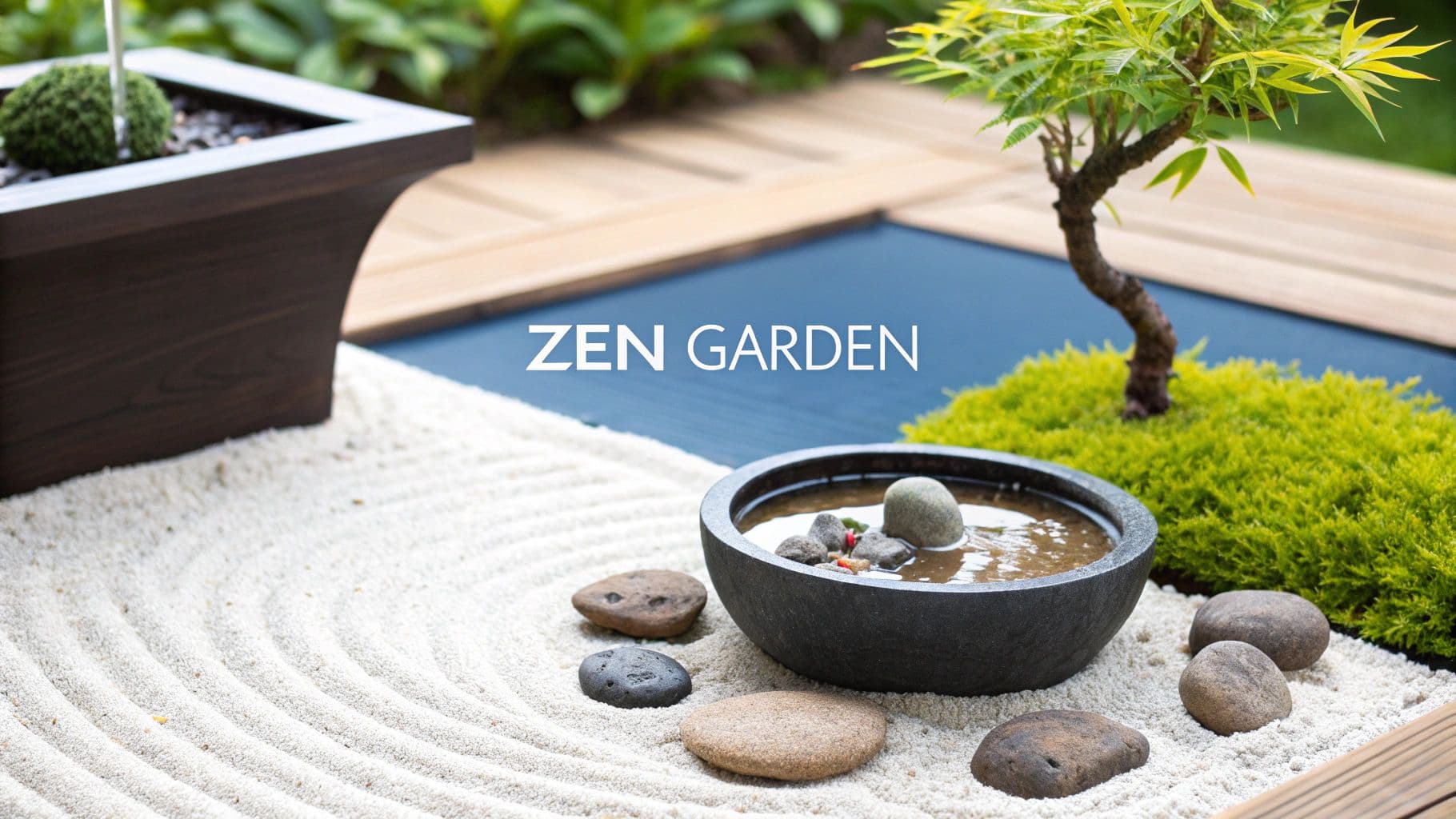
The benefit of a Zen garden in a small space is its ability to create a feeling of expansiveness through simplicity. Raked sand represents water, while rocks symbolize islands. This low-maintenance style transforms a tiny patio or corner into a sophisticated sanctuary, proving a powerful landscape doesn't require abundant space.
How to Implement a Japanese Zen Garden
Creating a Zen-inspired space involves thoughtful arrangement and a "less is more" philosophy.
- Establish a Focal Point: Begin with a primary element, such as a striking rock formation, a stone lantern, or a sculptural plant like a Japanese maple. This anchor will guide the rest of your design.
- Embrace Asymmetry: Arrange rocks and plants in groups of three, five, or seven to create a natural, asymmetrical balance. Avoid perfect symmetry, which feels artificial.
- Select Plants for Form and Texture: Choose plants for their structure and foliage. Japanese maples, moss, mondo grass, and dwarf conifers are excellent choices. For more ideas, find inspiration from island landscaping ideas on OutdoorBrite.com.
- Incorporate Water (or its Illusion): A small stone basin or a simple bamboo fountain can add the gentle sound of water. Alternatively, use raked gravel to symbolize flowing water.
Pro Tip: The placement of stones is critical. Use OutdoorBrite to digitally experiment with different rock arrangements and sizes to visualize the balance before you start the heavy lifting.
4. Cottage Garden Style with Mixed Borders
The cottage garden style is an enchanting approach that transforms small plots into abundant, flower-filled sanctuaries. This small garden landscaping idea ditches rigid formality in favor of dense, informal plantings where perennials, annuals, herbs, and vegetables grow side-by-side. It uses layered heights and a rich tapestry of colors to create a sense of lush profusion.
The advantage for small spaces is that this style maximizes every square inch with beautiful plants. By layering plantings, you create visual depth that makes the garden feel larger than it is. It's a forgiving style, perfect for gardeners who love a slightly wild, beautifully chaotic look.
How to Implement a Cottage Garden
Creating a cottage garden is about curated abundance and requires planning to achieve its effortless charm.
- Plan a Color Scheme: While cottage gardens look informal, a planned color palette prevents visual clutter. Choose a harmonious scheme, such as soft pastels, or a vibrant mix of complementary colors.
- Layer Your Plants: Arrange plants by height. Place taller species like delphiniums at the back, mid-sized plants like salvias in the middle, and low-growing varieties along the border.
- Plant in Drifts: For a natural look, group plants in odd numbers (3, 5, or 7) rather than single specimens. This creates impactful "drifts" of color and texture.
- Incorporate Hardscaping: Add charming pathways using reclaimed brick or stepping stones to provide structure. A small rustic bench can serve as a beautiful focal point.
Pro Tip: Don't be afraid to mix things up. Use OutdoorBrite to visualize how edible herbs like lavender can look planted next to ornamental flowers like roses, perfecting your combinations before you dig.
5. Mediterranean Garden with Drought-Tolerant Plants
Embrace the rustic charm of Southern Europe with a Mediterranean-style garden. This approach prioritizes drought-tolerant plants like lavender, rosemary, and succulents. It is a stunning small garden landscaping idea that merges beauty with sustainability, creating a visually rich garden that conserves water. This style is perfect for homeowners in hot, dry climates or anyone seeking a low-maintenance landscape.
The core benefit of a Mediterranean garden is its resilience and reduced water consumption. These gardens thrive where other plants struggle, cutting down on watering chores. The combination of silvery-green foliage, vibrant floral accents, and fragrant herbs creates a multi-sensory experience, transforming a small space into a picturesque escape.
How to Implement a Mediterranean Garden
Creating this water-wise oasis is achievable with the right materials and plants.
- Prepare the Soil: Mediterranean plants demand excellent drainage. Amend heavy soil with sand or gravel to prevent root rot. This step is critical for plant health.
- Select Key Plants: Start with iconic Mediterranean flora. An olive or citrus tree in a pot can serve as a focal point. Surround it with fragrant herbs like rosemary and thyme, and add color with lavender and bougainvillea.
- Choose Authentic Hardscaping: Use materials like terra cotta, gravel, and light-colored stone. A gravel mulch enhances the aesthetic and helps retain soil moisture.
- Water Wisely: Group plants with similar water needs together. Install a drip irrigation system to deliver water directly to the roots, minimizing waste.
Pro Tip: Capture the true essence of this style before planting. Use OutdoorBrite's "Mediterranean" filter on a photo of your garden to experiment with placing planters and laying out paths.
6. Raised Bed Gardens for Vegetables and Herbs
For gardeners with poor soil or those seeking an organized planting area, raised beds are one of the most effective small garden landscaping ideas. This method involves creating elevated boxes filled with high-quality soil, offering a perfect environment for growing vegetables and herbs. It’s an ideal solution for small yards and patios where in-ground planting isn't an option.
The advantage is complete control over the growing medium. You can bypass compacted clay or rocky ground by filling the beds with a perfect blend of compost and topsoil. This technique also provides superior drainage, warms up faster in the spring, and reduces bending and kneeling, making gardening more comfortable.
How to Implement a Raised Bed Garden
Setting up a productive raised bed garden is a straightforward project that can be scaled to fit any space.
- Choose a Frame: Build or purchase frames from rot-resistant wood like cedar or use durable composite materials. Galvanized metal stock tanks also make excellent, stylish raised beds.
- Select the Right Plants: Raised beds are perfect for edibles. High-yield vegetables like tomatoes, peppers, and leafy greens thrive. Herbs such as basil and rosemary are also great choices. Consider companion planting to naturally deter pests.
- Installation and Care: Position the beds in a location that receives at least 6-8 hours of direct sunlight. Fill them with a high-quality garden soil mix. Install a simple drip irrigation or soaker hose system for efficient watering.
Pro Tip: Before you build, use OutdoorBrite to map out your yard. You can place virtual raised beds of different sizes to see how they fit and use the sun path tool to ensure you've chosen the sunniest spot.
7. Shade Gardens with Hostas, Ferns, and Foliage Plants
Shady spots are an opportunity to create a serene green retreat. A shade garden is a fantastic small garden landscaping idea that transforms low-light areas into lush landscapes. Instead of relying on flowers, this approach emphasizes the rich variety of foliage colors, textures, and forms found in plants like hostas, ferns, and heucheras. This style is perfect for gardens under large trees or along north-facing walls.
The advantage of a shade garden is its ability to thrive where other plants fail, turning a challenging space into a tranquil corner. By focusing on foliage, you create a garden with year-round interest that feels cool and elegant. The layered textures and subtle color variations create a dynamic visual experience, making a small space feel more complex.
How to Implement a Shade Garden
Creating a vibrant shade garden is about selecting the right plants and layering them for maximum impact.
- Assess Your Shade: Determine if you have full shade (no direct sun), part shade (2-4 hours), or dappled shade (filtered light). This will dictate your plant choices.
- Select Diverse Foliage: The key to a stunning shade garden is variety. Combine the bold leaves of hostas with the delicate fronds of Japanese painted ferns. Add color with the vibrant leaves of heuchera (coral bells).
- Layer and Mulch: Arrange plants by height, with taller shrubs in the back and low-growing groundcovers in the front. Apply a layer of organic mulch to retain moisture and suppress weeds.
Pro Tip: Brighten dark corners with variegated foliage. Plants with white-edged or silver-dusted leaves can illuminate a shady spot. Use OutdoorBrite to visualize how different plant textures will look in your space.
8. Wildlife and Pollinator-Friendly Gardens with Native Plants
Even a compact garden can become a thriving ecological sanctuary. Creating a pollinator-friendly garden is a small garden landscaping idea that prioritizes native plants to support local ecosystems. This approach transforms your space into a haven for butterflies, bees, and birds, blending ecological responsibility with natural beauty. It's a powerful way to contribute to biodiversity.
The benefit is creating a low-maintenance garden that works in harmony with its surroundings. Native plants are adapted to your local climate, meaning they require less water, fertilizer, and pest control. This approach saves time and resources while providing essential food and shelter for wildlife.
How to Implement a Wildlife-Friendly Garden
Starting a pollinator garden begins with selecting the right plants for your region.
- Choose a System: Designate a specific area for your native plantings. Incorporate a small, shallow water source like a birdbath or a dish with pebbles for insects to drink from safely.
- Select the Right Plants: Research plants native to your area. Include species that bloom in succession from spring through fall. For bees, plant coneflower and bee balm. For monarch butterflies, milkweed is essential.
- Installation and Care: Plant in clusters of the same species to make it easier for pollinators to forage. Avoid pesticides. Allow for some "messiness" by leaving seed heads on plants over winter for birds to eat.
Pro Tip: Use OutdoorBrite to design your wildlife garden by searching for plants native to your specific region. You can visualize how different combinations will look and ensure you have blooms throughout the seasons.
Bringing Your Vision to Life
You've explored a collection of small garden landscaping ideas designed to transform modest outdoor areas into extraordinary sanctuaries. We've seen how vertical gardens draw the eye upward, container arrangements offer flexibility, and raised beds create productive plots. The key takeaway is that limited square footage doesn't limit potential; it inspires more creative design.
A small garden is a canvas for focused intention. It’s an opportunity to create a high-impact space where every element is chosen with purpose. From the minimalist tranquility of a Zen garden to the vibrant chaos of a cottage border, the principles remain the same: thoughtful planning and strategic use of space.
Your Path Forward
As you plan your garden transformation, it's easy to feel overwhelmed. Let's distill the core principles into a clear strategy.
- Assess Your Foundation: Revisit your garden's characteristics. How much sunlight does it receive? What is the soil like? Acknowledging these realities is the first step toward a thriving garden.
- Define Your Purpose and Style: What is your garden for? Is it a quiet retreat, a productive space, or a hub for pollinators? Choosing a core style provides a framework that guides every decision.
- Think in Three Dimensions: Impactful small gardens transcend the ground plane. Remember the power of verticality. Living walls and trellises create a sense of enclosure and privacy that makes a small garden feel like a secret world.
This journey is about more than just aesthetics. A well-designed garden becomes a valuable extension of your home. It’s a place to decompress, connect with nature, and cultivate beauty. It improves your property's curb appeal and can significantly enhance its value.
Ready to stop guessing and start visualizing? Take the next step with OutdoorBrite. Upload a photo of your garden and instantly apply any of these small garden landscaping ideas to see how they would look in your space. Try OutdoorBrite today and bring your perfect garden vision to life with confidence.