How to Design a Backyard Landscape: A Practical Guide
Learn how to design a backyard landscape with our guide. Get practical advice on layout, materials, and plants to transform your outdoor space.
Designing a backyard isn't just about picking pretty plants. It's a structured process: you start by analyzing your space, defining a clear vision and style, creating a functional layout, and then carefully selecting your materials and plants. Following this path is the secret to creating a space that's beautiful, practical, and perfectly suited to your life—and it saves you from costly do-overs down the road.
Your Dream Backyard Starts With a Smart Plan
Let's be honest, staring at a blank or overgrown backyard can be intimidating. The temptation is to dive in, buying eye-catching plants or starting on a patio without thinking about how it all connects. But the landscapes we truly love are born from a thoughtful plan, long before the first shovel hits the dirt.
A great backyard design is about more than just aesthetics. It's about creating an outdoor room that serves a purpose. Do you dream of a vibrant hub for summer barbecues? A quiet, leafy nook for reading? Or a safe, durable play zone for the kids? Whatever your goal, a structured approach is what gets you there.
The Power of a Process
When you think through your design systematically, every choice becomes intentional. The process forces you to understand your property's unique quirks—like that shady spot under the oak tree or the area that gets blasted by the afternoon sun. From there, you can define your personal style and map out how all the pieces, from pathways and patios to gardens and lighting, will fit together. It’s how you ensure every feature has a purpose and contributes to a cohesive, inviting space.
This simple workflow breaks the entire journey into manageable phases, guiding you from a vague idea to the final build.
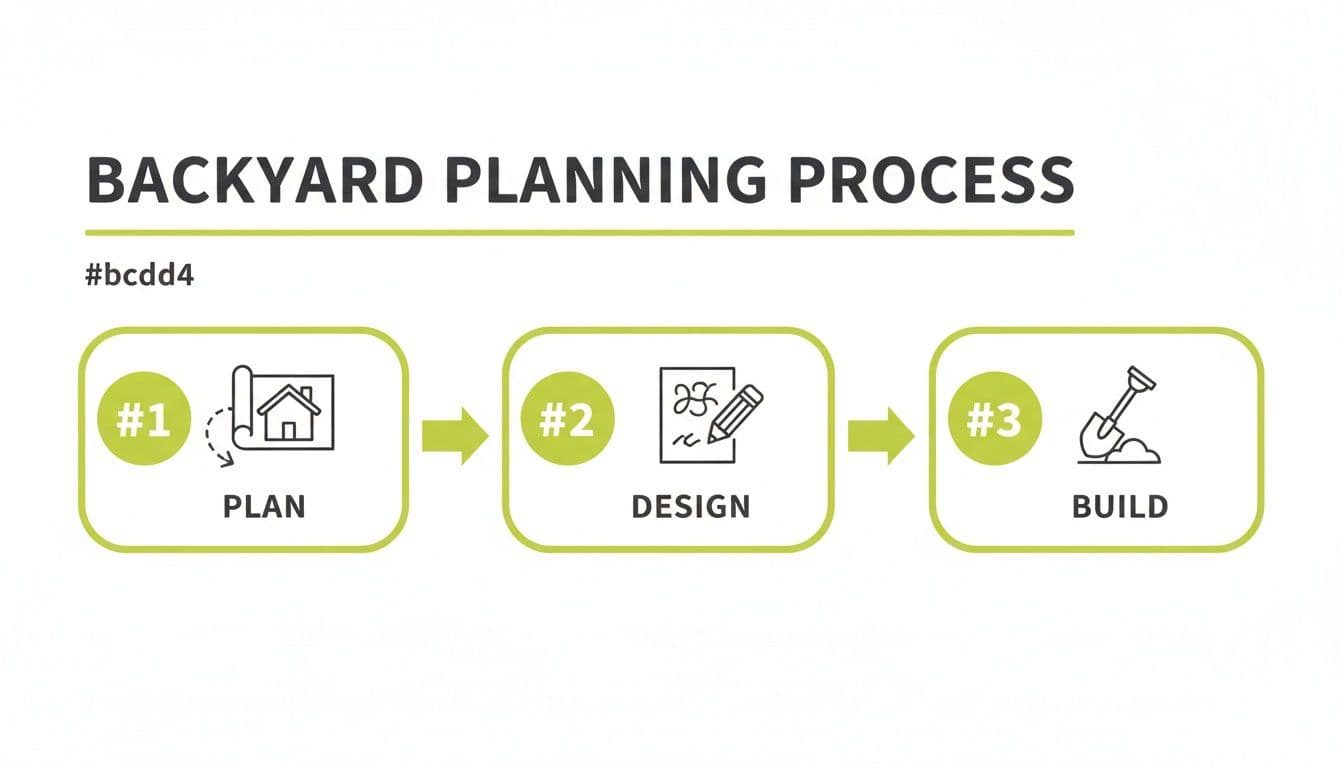
Thinking about the project in these three distinct stages—Plan, Design, and Build—makes the whole thing feel less overwhelming. This deliberate approach is catching on. The global landscaping services market hit roughly USD 314.35 billion in 2023, with design being the fastest-growing segment. Homeowners are seeing the immense value in creating truly personalized outdoor spaces. You can find out more about the growing landscape services market to see how big this trend has become.
Visualizing Before You Build
One of the hardest parts of landscape design is picturing how it will all come together. It's tough to know if those gray pavers will clash with your siding or if that modern garden style you saw online will work in your yard.
By planning your design with clear goals, you move from simply decorating your yard to creating a true outdoor room. It becomes a functional space that adds value to your home and quality to your life.
This is where new tools make a world of difference. AI platforms like OutdoorBrite let you snap a photo of your yard and instantly generate photorealistic redesigns in countless styles. You can play with different layouts, swap materials, and test plant combinations without spending a dime. Think of it as your personal design playground—a way to sidestep expensive mistakes and finalize your vision with total confidence.
1. Getting to Know Your Yard and Defining Your Vision
Every great backyard makeover starts with two things: understanding the space you have and a clear vision for what you want it to become. Before you think about plants or pavers, you need to get to know the unique personality of your yard. This first step is the most important one—it's what makes a design not just beautiful, but practical and sustainable.
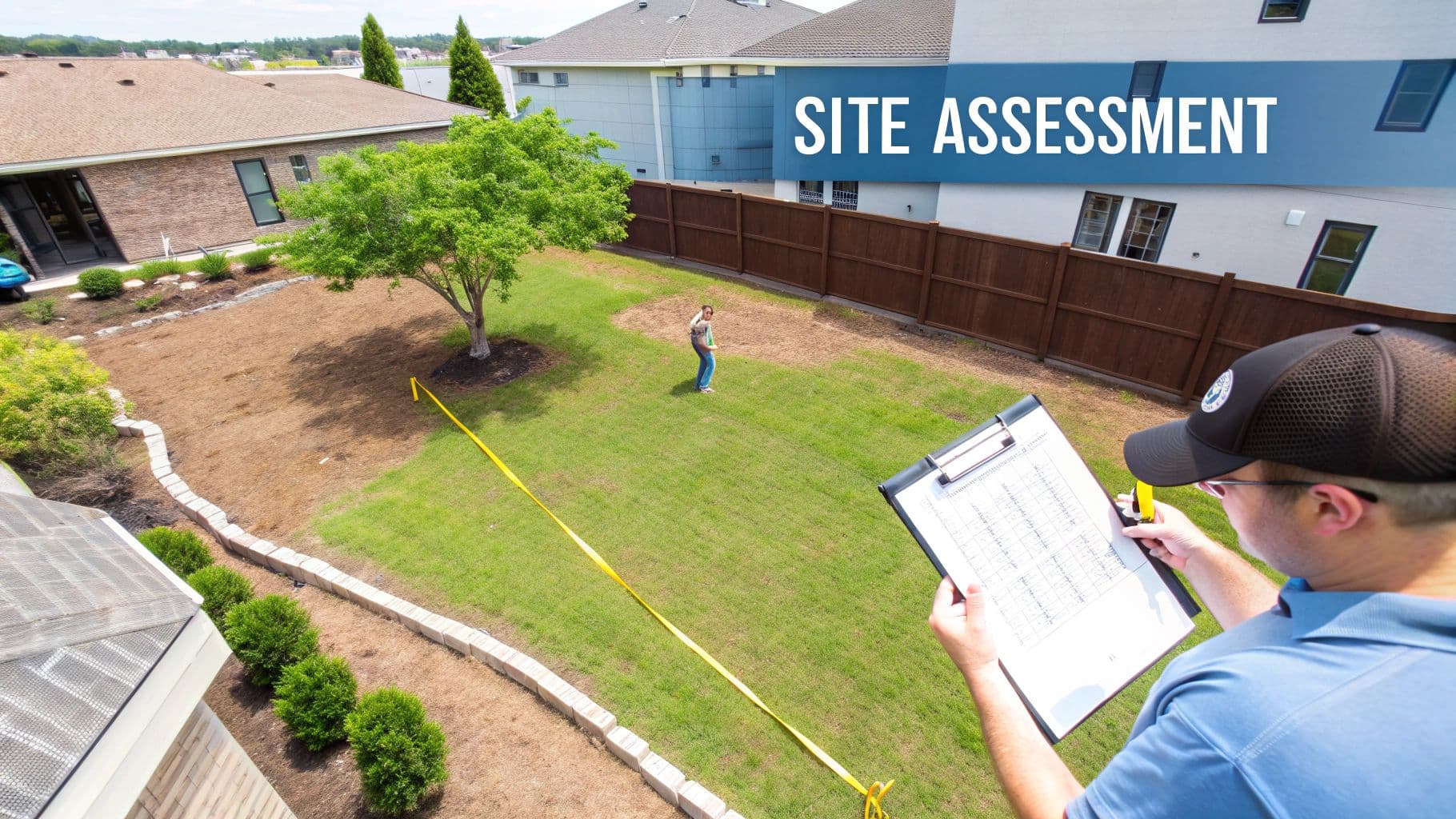
This is about more than just pulling out a tape measure. It's about watching how your yard lives and breathes throughout the day and as seasons change. Think of this site assessment as your blueprint. It's what will keep you from making costly mistakes, like planting sun-loving flowers in a perpetually shady corner.
First, a Thorough Site Assessment
Grab a notebook and walk your property. Your mission is to map out everything—the good, the bad, and the things you can't change. You're creating a "before" snapshot that will guide every decision you make. A good checklist will keep you on track.
Site Assessment Checklist
Use this checklist to evaluate the critical factors in your backyard before starting the design process.
| Factor | What to Look For | Why It Matters |
|---|---|---|
| Sunlight Patterns | Full sun, partial shade, or deep shade. Check morning, noon, and late afternoon. | This dictates your entire plant selection and where you'll want to place seating. |
| Existing Features | Big trees, sheds, slopes, existing patios, utility lines. | You need to decide if you're working around, incorporating, or removing these. |
| Soil Conditions | Is it sandy, heavy clay, or rich and loamy? A simple soil test kit is a great investment. | Soil health determines what will thrive. Fighting your soil is a losing battle. |
| Drainage & Water Flow | Where does water pool after a heavy rain? Are there perpetually dry spots? | Poor drainage can destroy a patio foundation or drown plants. |
| Views & Sightlines | What do you see from your kitchen window? Is there a neighbor's ugly shed to hide? | Good design frames beautiful views and cleverly screens the not-so-great ones. |
Getting this initial analysis right is the foundation of any successful project. Industry reports show a clear trend toward investing in expert planning before breaking ground, and for good reason—a well-planned space adds serious value to your property.
Next, Define Your Purpose and Style
Now that you have a clear picture of your canvas, it's time for the fun part: deciding what you want to create. But don't just think about how you want your backyard to look. Start by thinking about what you want to do there.
The most successful backyard designs are those that solve a problem or fulfill a need. A beautiful space that doesn't fit your lifestyle will ultimately go unused. Function must come first.
Get specific. Are you trying to create:
- A lively hub for entertaining friends and family?
- A durable, safe play zone for kids and pets?
- A quiet, secluded retreat for reading and relaxing?
- A productive vegetable garden for growing your own food?
Once you've nailed down the function, you can dive into the form. Start gathering inspiration from magazines, Pinterest, or walks around your neighborhood. Create a mood board, either on your wall or digitally, to collect images that capture the vibe you're going for. This exercise will help you zero in on a cohesive style, whether it's Modern, Cottage, or Mediterranean. For more help turning these initial thoughts into a concrete drawing, check out our guide on creating a comprehensive backyard landscape plan.
2. From Vision to Blueprint: Zoning and Flow
You've walked your property and have a vision board full of ideas. Now, let's translate that dream into a workable plan. This is where we start thinking like an architect, moving from abstract ideas to a concrete layout. The goal is to create a backyard that not only looks stunning but functions effortlessly for your lifestyle.
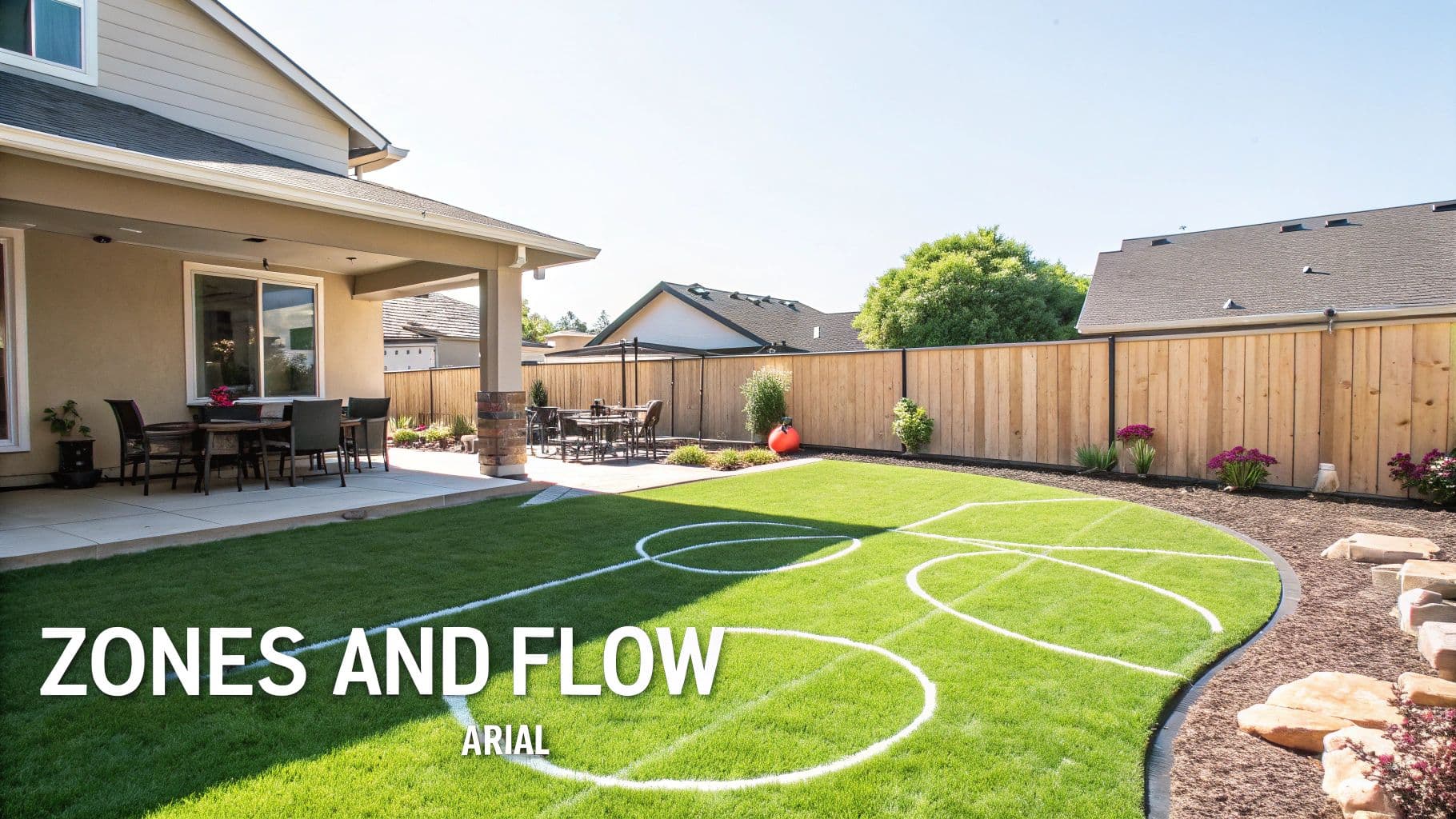
Think of your yard as an outdoor floor plan. You wouldn't put your dining table in a hallway, so the same logic applies here. We need to create dedicated functional zones for all the things you want to do.
Your First Sketch: The Bubble Diagram
Don't be intimidated by a formal plan. The best way to start is with a simple bubble diagram. Grab your site map and some tracing paper, and start drawing loose circles or "bubbles" for each activity. The point isn't precision; it's about relationships. Where should things go in relation to each other?
For instance, the grilling and dining area should probably be close to the kitchen door. The kids' play space? You'll want a clear line of sight to it from the patio or a kitchen window. A quiet reading nook, on the other hand, should feel tucked away and private.
As you sketch, consider these common zones:
- The Landing Pad: The patio or deck right off the house.
- The Outdoor Kitchen: For grilling, dining, and entertaining.
- The Lounge: A more relaxed space, perhaps around a fire pit.
- The Play Zone: Usually an open lawn for games, pets, and kids.
- The Utility Corner: A hidden spot for your shed and compost bin.
This exercise lets you test-drive different arrangements fast. Maybe the fire pit makes more sense on the west side to catch the evening sun. Or you realize the vegetable garden must go in that super-sunny spot you noted earlier.
Creating a Natural Rhythm and Flow
Once your bubbles are in a layout that feels good, it's time to think about flow. A great backyard design guides you through the space without you even noticing. It’s all about the paths and connections that link your zones. Pathways aren't just for walking; they set the mood. A wide, direct path says "get here quickly," while a curving path encourages a leisurely stroll.
The best layouts feel like they were always meant to be there. They intuitively guide you from one space to the next, making the entire yard feel connected, usable, and so much bigger.
Look at your sightlines, too. When you’re sitting in your favorite spot, what’s the view? A well-thought-out design creates beautiful "vistas" that draw your eye toward a focal point—a striking sculpture, a specimen tree, or a bubbling fountain. Just as important, it uses smart planting or hardscaping to screen things you don't want to see, like the neighbor's RV.
With a solid bubble diagram in hand, you're ready to add detail. Using landscape design software for homeowners can turn your 2D sketch into a 3D model. You can see how the patio furniture really fits, preventing costly mistakes down the line.
Choosing Your Hardscape and Softscape Materials
Once you have a solid layout, it's time to pick the materials that will bring your design to life. Every backyard landscape is a conversation between hardscape (non-living elements like patios and walls) and softscape (the living plants). Getting that balance right is how you create a space that’s not just beautiful, but one that will last.
This is where your vision becomes a reality you can touch and feel. The choices you make here will affect your budget, maintenance time, and the overall vibe of your backyard for years to come.
Building the Bones with Hardscape
Hardscaping is the foundation of your outdoor world—the patios, walkways, and decks that give your yard structure and function. Your decision comes down to balancing aesthetics, cost, and long-term maintenance. For example, a natural flagstone patio has a timeless beauty but comes with a bigger price tag. Concrete pavers are wallet-friendly and offer design flexibility, though you might have to re-level a few down the road.
Think of hardscape as the permanent furniture of your yard. It defines the rooms, directs traffic, and sets the stage for everything else. Choosing wisely now prevents headaches later.
To give you a better feel for your options, here's a quick comparison of common materials for patios and walkways.
Hardscape Material Comparison
Here’s a look at some of the most popular hardscape materials to help you find the perfect fit for your budget, style, and maintenance tolerance.
| Material | Average Cost | Pros | Cons |
|---|---|---|---|
| Concrete Pavers | $8 - $15 per sq ft | Highly versatile; easy to repair individual units. | Can shift over time; may require periodic weeding. |
| Natural Stone | $15 - $30+ per sq ft | Unmatched natural beauty and durability. | Expensive; requires professional installation. |
| Composite Decking | $15 - $35 per sq ft | Extremely low-maintenance; resists rot and stains. | High upfront cost; can get hot in direct sun. |
| Stamped Concrete | $10 - $20 per sq ft | Mimics stone or brick at a lower cost. | Can crack; repairs are difficult to blend. |
Ultimately, your hardscape should feel like an extension of your home. The goal is a seamless transition from your indoor living space to your outdoor one. For a deeper dive, this guide on DIY hardscape design is a fantastic resource.
Painting with Plants: Your Softscape Palette
If hardscape is the bones of your design, softscape is its soul. Plants bring color, texture, and life to the yard, turning a static space into something that grows and changes with the seasons. The most important rule is simple: right plant, right place. This means picking plants that will naturally thrive in your specific conditions—your sun, your shade, your soil. Trying to fight your yard's natural tendencies is a recipe for frustration.
A stunning garden isn't a random collection of pretty flowers. It’s a thoughtfully composed picture that uses layers, repetition, and year-round interest.
- Group in Odd Numbers: Plant in clusters of three, five, or seven for a more natural look.
- Repeat for Rhythm: Using the same plant or color in different areas helps tie everything together.
- Think in Layers: Arrange plants by height. Taller shrubs in back, mid-sized perennials in the middle, and low-growing groundcovers at the front.
- Plan for All Seasons: Mix in evergreens for winter structure, spring bulbs for early color, summer perennials for the main show, and trees with great fall color.
It's tough to picture how all these separate decisions will come together. This is where a tool like OutdoorBrite can be a game-changer. You can upload a photo of your yard and get instant mockups with different materials. See how a gravel path looks versus a wooden walkway in seconds. It lets you experiment without commitment, so you can make those final decisions with confidence.
Ready to stop guessing and start seeing? With a tool like OutdoorBrite, you can upload a photo of your yard and generate stunning, realistic design mockups in seconds. It lets you see exactly how that new paver patio or those hydrangeas will look in your space before you spend a dime. Start designing your dream backyard with confidence at https://www.outdoorbrite.com.