
Design Ideas
Backyard Projects: A Backyard Makeover on a Budget That Works
Discover a backyard makeover on a budget with practical DIY tips, smart sourcing, and design hacks that maximize impact at low cost.
Free landscaping tool
Pick a material, enter your fence line, and see a realistic price range in seconds, installed or DIY. Gates, slopes, and old-fence removal included, plus a full shopping list. No sign-up.
Typical installed price at this height: $20 – $35 per linear foot.
Fence length & height
Fence height
Who's building it?
Labor, post setting, and concrete are included in the estimate.
Gates
Site & extras
Ground along the fence line
Remove an old fence?
Post spacing
Your estimate
Estimated installed cost
$3,200 – $5,750
About $21.33 – $38.33 per linear foot
Where it goes
Your shopping list
Ranges reflect national 2026 pricing. Quotes in high-cost metro areas can run 10–25% above the top of the range; rural areas often land near the bottom.
See the fence on your actual yard
Upload a photo of your yard and OutdoorBrite renders it with the fence styles you're pricing: wood, vinyl, metal, and more. Compare looks before you spend a dollar.
Try AI fence design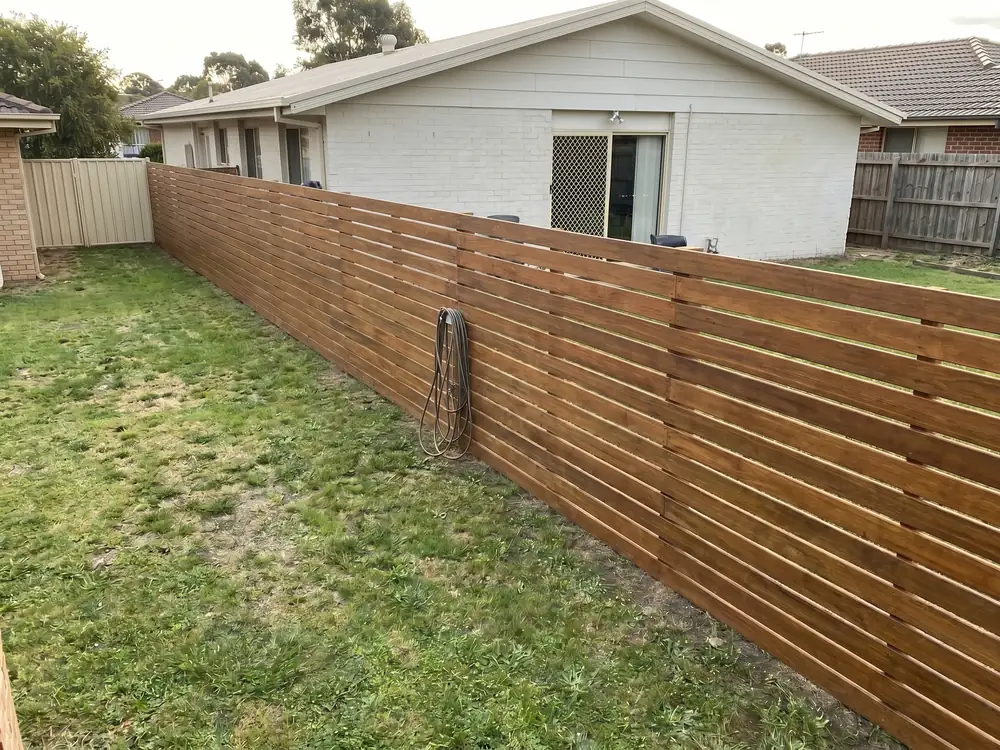
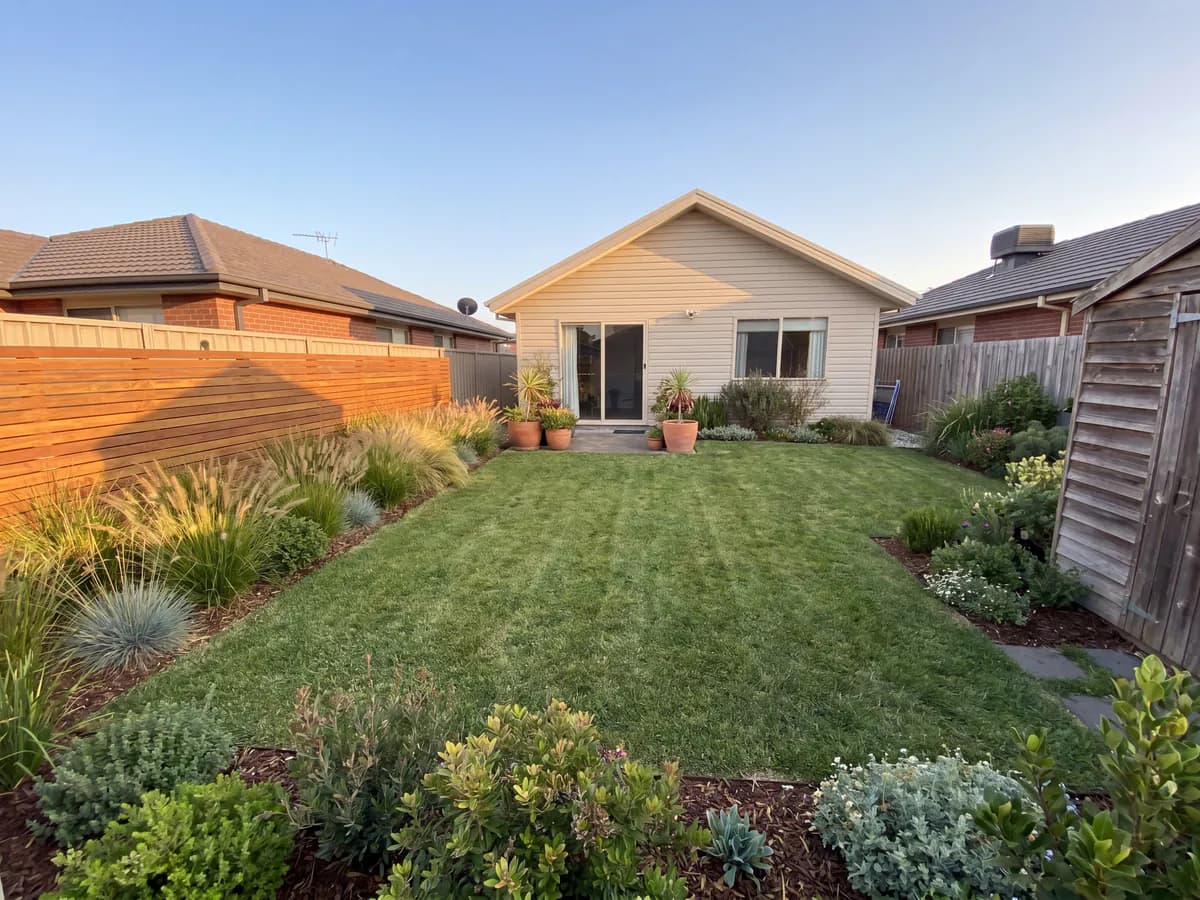
Upload a photo of your yard and OutdoorBrite renders it with the fence styles you're pricing: wood, vinyl, metal, and more. Compare looks before you spend a dollar.
Try AI fence designA new fence is one of those projects where quotes land anywhere from reasonable to triple what you expected, with no easy way to tell which bid is fair. The price depends on the material, the height, the ground the line crosses, and how many gates you want, so a single average number tells you very little.
This calculator prices your fence line the way an estimator would: a per-foot rate for your material and height, labor adjusted for terrain, gates priced separately, and removal of the old fence if you need it. Switch to DIY mode and it strips labor out, then writes your shopping list, down to the bags of concrete.
Five inputs get you a realistic range. Grab a tape measure, or pace it off, and you're set.
Pick your material
Chain link, pressure-treated or cedar wood, split rail, vinyl, composite, aluminum, or wrought iron. The hint under the dropdown shows the going per-foot rate for your setup.
Enter the total length
Add up every run of fence in feet or meters. The presets cover common projects; 150 ft is a typical suburban backyard perimeter.
Set the height
6 ft is the standard privacy height. 4 ft suits front yards and pool fencing, while 8 ft needs taller posts and an extra rail, so it costs more per foot.
Add gates, slopes, and removal
Count your walk and driveway gates, tell it if the ground slopes, and switch removal on if an old fence has to come out first.
Read the range, not a single number
Real quotes vary with lumber grade and local labor. If your bids don't land inside this range, ask the contractor what's different about your yard.
Pricing a job for a client? Flip to DIY mode to sanity-check material costs, then back to pro install to frame your quote against the market range.
These are the national 2026 ranges this calculator uses, for a 6-ft fence: materials only, professionally installed, expected lifespan, and what the fence costs per year of service. Cheaper up front isn't always cheaper over time; aluminum overtakes wood once lifespan enters the math.
| Material | Materials / lin ft | Installed / lin ft | Lifespan | Cost per year of life |
|---|---|---|---|---|
| Chain link | $8 – $15 | $15 – $30 | 15–25 yrs | $1.13 per ft |
| Wood (pressure-treated) | $10 – $20 | $20 – $35 | 15–20 yrs | $1.57 per ft |
| Wood (cedar) | $15 – $30 | $27 – $45 | 20–25 yrs | $1.60 per ft |
| Split rail | $8 – $16 | $14 – $25 | 15–20 yrs | $1.11 per ft |
| Vinyl | $15 – $30 | $25 – $45 | 25–30 yrs | $1.27 per ft |
| Composite | $20 – $45 | $35 – $60 | 25–30 yrs | $1.73 per ft |
| Aluminum | $20 – $40 | $30 – $60 | 40–50 yrs | $1.00 per ft |
| Wrought iron | $25 – $55 | $35 – $80 | 50–60 yrs | $1.05 per ft |
Rates assume a 6-ft fence on flat ground. Use the calculator above for other heights, slopes, and gates.
Per-foot rates are quoted at 6 ft. Shorter fences use less lumber and shorter posts; an 8-ft fence needs longer posts, deeper holes, and an extra rail. The example column prices a 150-ft pressure-treated wood fence, installed.
| Height | Cost vs 6 ft | 150 ft of wood, installed |
|---|---|---|
| 3 ft | 70% | $2,100 – $3,675 |
| 4 ft | 80% | $2,400 – $4,200 |
| 5 ft | 90% | $2,700 – $4,725 |
| 6 ft | 100% | $3,000 – $5,250 |
| 8 ft | 125% | $3,750 – $6,563 |
The factors follow the spread in published height pricing: roughly 20–30% less at 4 ft and about 25% more at 8 ft.
Two neighbors can fence the same length and get bills 40% apart. These are the usual reasons.
Material choice
The single biggest lever. Chain link starts near $15 per foot installed; wrought iron can pass $80. The table above shows where each option lands.
Height
Going from 6 ft to 8 ft adds about 25% per foot: longer posts, deeper holes, one more rail, and more picket lumber.
Slopes and soil
Crews charge more to dig on a grade or through rocky, rooty ground. Expect roughly 15% extra labor on a sloped run and up to 40% on steep or rocky ground.
Gates
Every gate adds hinges, a latch, a frame, and time. A walk gate runs a few hundred dollars; a driveway gate can cost as much as 30 ft of fence.
Old fence removal
Tearing out and hauling away an existing fence adds $3–5 per foot with a crew. DIY, you mostly pay dump fees.
Where you live
Labor is local. High-cost metros routinely quote 10–25% above the national range; rural markets often beat it. Get three local bids before you commit.
Labor is roughly half of an installed fence bill. On a 150-ft wood privacy fence, that's $1,500–2,250 you could keep by building it yourself, if you have a free weekend or three, a post-hole digger, and a strong back.
DIY mode prices exactly that trade. It keeps the materials, the gates at their hardware price (about 60% of installed), and the concrete, and drops the labor line. The shopping list next to the result tells you what to put in the truck: posts, rails, pickets or panels, and bags of concrete.
Be honest about the hard parts. Digging twenty post holes is the job; nailing pickets is the reward. If your run sits on a slope, crosses roots, or needs a driveway gate hung square, the pro's share starts looking like money well spent.
Gates are priced per gate, not per foot, and they're where cheap fences get expensive. A wrought iron driveway gate can cost more than 40 ft of chain link. The ranges below are installed; in DIY mode the calculator counts about 60% of these, the hardware share.
| Material | Walk gate (3–4 ft) | Driveway gate (10–12 ft) |
|---|---|---|
| Chain link | $150 – $350 | $400 – $900 |
| Wood (pressure-treated) | $200 – $500 | $500 – $1,200 |
| Wood (cedar) | $250 – $600 | $600 – $1,500 |
| Split rail | $150 – $400 | $400 – $1,000 |
| Vinyl | $250 – $650 | $700 – $1,800 |
| Composite | $350 – $800 | $900 – $2,200 |
| Aluminum | $300 – $800 | $800 – $2,200 |
| Wrought iron | $400 – $1,200 | $1,200 – $3,500 |
Automatic openers, keypads, and custom arches are extra and not included.
The shopping list uses the same formulas estimators and the big-box material calculators use. Posts: divide your length by the post spacing and round up, then add one to close the run. Rails: two per section up to 4 ft, three at 6 ft, four at 8 ft. Pickets: your length in inches divided by the picket's real face width (a 1×6 is actually 5.5 in wide).
Posts need to go deep. A third of the fence height, and at least 2 ft, sits underground, which is why a 6-ft fence buys 8-ft posts. Each hole takes about two 60-lb bags of concrete.
Worked example
A 150-ft wood privacy fence, 6 ft tall, posts 8 ft apart:
Add 5–10% to pickets and rails for cuts and culls; lumber yards take returns, but a second delivery fee hurts more.
Get three written quotes and hand each contractor the same spec: length, height, material, gates. If a bid is missing concrete or haul-away, it isn't really the cheapest.
Talk to the neighbors who share the line before you dig. Some will split the bill; all of them can make your life miserable over 6 inches of property line.
Most towns regulate fence height (often 6 ft in back, 3–4 ft in front) and some require a permit. Check before ordering materials, not after.
Call 811 before digging post holes. Utility-line strikes are expensive, dangerous, and entirely avoidable. The service is free.
Spend on posts before pickets. Posts fail first, and replacing one means demolishing the sections around it.
Book in late fall or winter if you can. Fence crews discount the slow season, and your yard recovers before summer.
The estimate is your length times a per-foot rate for your material, adjusted for height. Material and installed rates stay as ranges because that's how the market prices: lumber grade, gauge, and finish move the floor and the ceiling. The base ranges reflect national 2026 pricing, cross-checked against published cost tables and the $33–54 per foot national installed average for wood.
Labor is the gap between the installed and materials rate, multiplied by a terrain factor (flat ×1, sloped ×1.15, steep or rocky ×1.4), since slopes add digging time, not lumber. Gates are added per gate, removal per foot. DIY mode keeps materials, hardware-share gate prices, and bagged concrete, and drops labor.
What it can't know: your local labor market, soil, HOA rules, or permit fees. Treat the result as the range fair bids should land in, not a quote. The numbers were last reviewed in June 2026.
This calculator gives planning estimates, not quotes. Fence pricing varies with local labor, lumber prices, and site conditions; always confirm with licensed local contractors before you commit to a budget.
Guides from the OutdoorBrite blog for the projects on either side of the fence line.
Discover a backyard makeover on a budget with practical DIY tips, smart sourcing, and design hacks that maximize impact at low cost.

Transform your space with these 10 actionable diy backyard landscaping ideas. Find inspiration for patios, gardens, lighting, and more for any budget.

Plan a thriving outdoor space with a backyard landscape plan: assess layout, choose resilient plants, and visualize your dream yard today.
The numbers behind the questions everyone asks before building a fence.
For a 6-ft pressure-treated wood privacy fence, plan on $4,000–7,000 installed (200 ft at $20–35 per foot). Cedar runs $5,400–9,000 and vinyl $5,000–9,000. DIY materials for the wood version come in around $2,000–4,000 plus concrete and gates.
About $800–1,400 for 6-ft wood and $600–1,200 for chain link. One caveat: many contractors carry a minimum job charge of $1,000–1,500, so very short runs cost more per foot than the math suggests.
Measure each straight run along the property line and add them up; that total is your fence length. For materials, divide by your post spacing (usually 8 ft) and round up for sections, add one post to close the run, then count rails and pickets per section. The calculator above does this for you and prints the shopping list.
Chain link, at $15–30 per foot installed, with split rail close behind ($14–25) where you only need a boundary, not privacy. Among privacy options, pressure-treated wood is cheapest up front ($20–35 per foot), but vinyl's longer lifespan makes it cheaper per year of service.
Roughly $10–15 per foot for a 6-ft wood fence, which is about half the installed bill. Slopes and rocky ground add 15–40% to the labor share; flat, open runs land near the bottom.
With 8-ft spacing: 100 ÷ 8 = 12.5, round up to 13 sections, plus one closing post, so 14 posts. With 6-ft spacing it's 18. Corners and gates don't usually change the count; they claim posts within it.
Often, yes. Many municipalities require a permit above a certain height (commonly 6 ft) and cap front-yard fences at 3–4 ft. Rules are local, so check your city's site and your HOA before ordering materials. Permit fees of $20–100 aren't included in this calculator.
Practical tools for planning and picturing an outdoor space — built around your own photo.

The whole-yard tool. Redesign any space from a single photo.
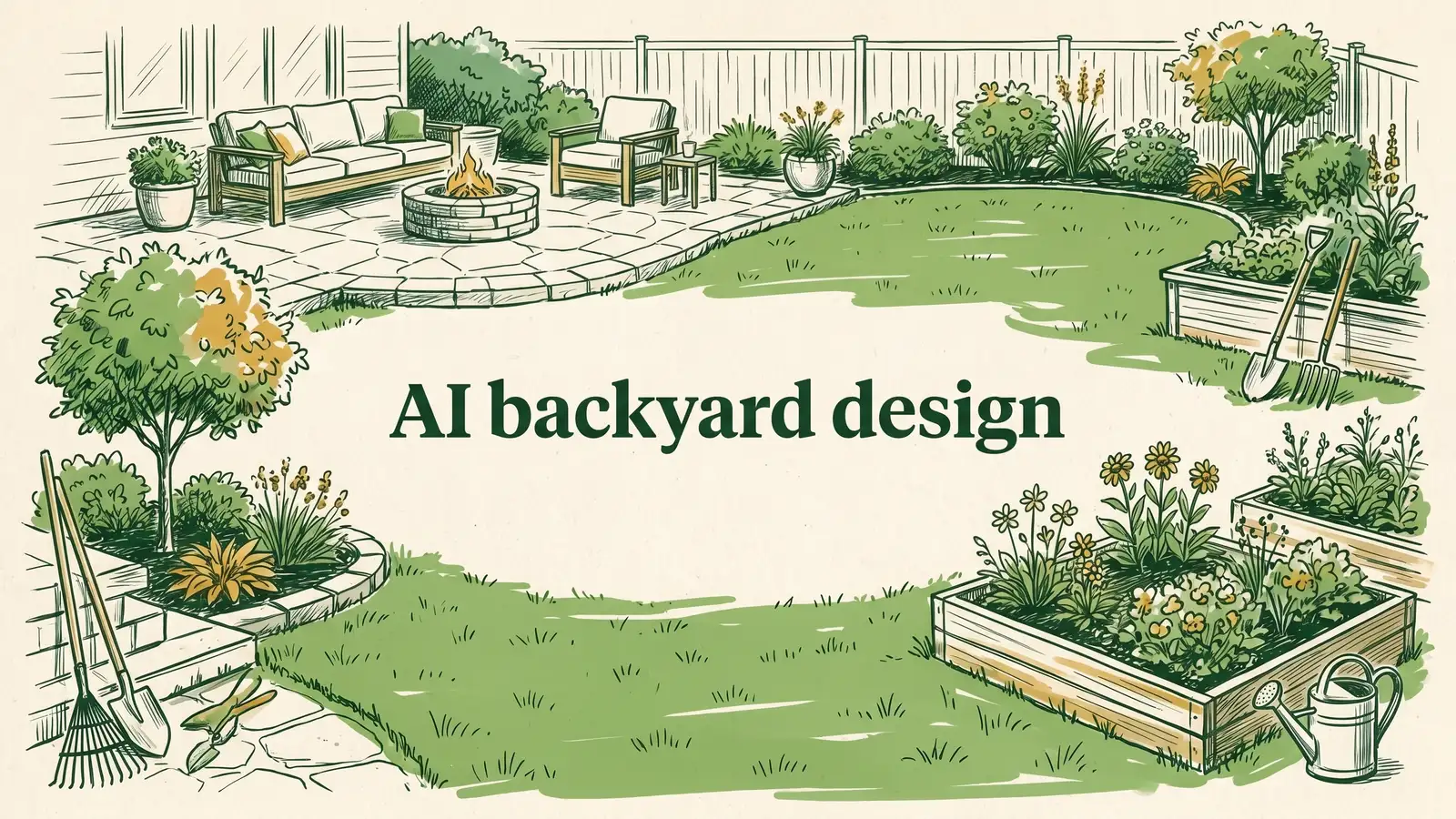
Pool, deck, and fire-pit layouts on your real backyard.

Garden beds and planting plans by style, cottage to xeriscape.

Your AI garden designer: redesign beds and borders from one photo.

Your AI garden planner: lay out beds and planting from one photo.

Your patio designer: redesign your patio and compare materials from one photo.
Upload one photo and see your yard finished, in seconds. Compare real styles on your own space, then build the one you love. No designer, no software.