Arbor vs pergola: 5 key differences and which one fits your yard
Arbors and pergolas both hold up climbing plants, but they do very different jobs in a yard. Here is how size, cost, and purpose separate them, plus where a trellis and a gazebo fit in.
Walk through any garden center and you will hear "arbor" and "pergola" used for the same thing. Even contractors mix them up. The arbor vs pergola question has a short answer, though: an arbor is a small garden accent you walk through, and a pergola is a room-sized structure you sit under.
That one distinction drives everything else. The footprint, the roof shape, where each belongs in a yard, and what you will pay all follow from it. A professionally installed pergola averages around $4,255 in the US. A prefab arbor kit can be standing, with a climbing rose planted at its feet, for a few hundred dollars.
This guide covers what each structure is, the five differences that matter, verified 2026 costs, where a trellis and a gazebo fit into the picture, and a simple way to decide which one your yard needs.
Arbor vs pergola at a glance
| Arbor | Pergola | |
|---|---|---|
| Typical size | 2 to 4 feet wide, walk-through scale | Around 100 sq ft, covers a seating area |
| Posts | 2 or 4 | 4 or more, or attached to the house |
| Roof | Simple slats, often arched | Flat, open beams or cross slats |
| Placement | Garden entrance, gate, path | Patio, deck, outdoor kitchen |
| Main job | Decorative accent and transition | Shade and defining a living space |
| Typical installed cost | $1,600 to $3,500 | $2,120 to $6,435 |
If you only remember one line from this article, make it this: you walk through an arbor, and you live under a pergola.
What is an arbor?
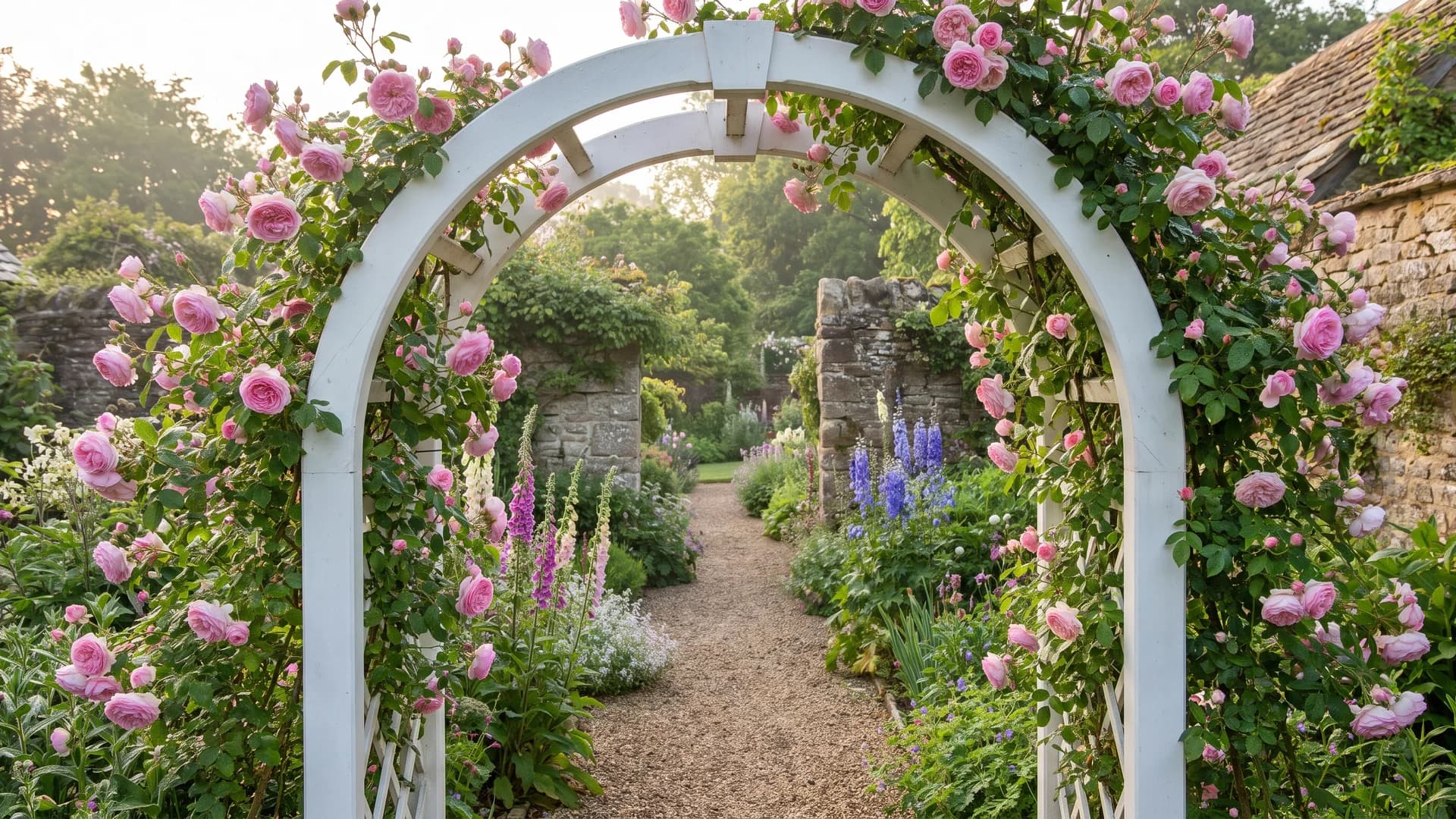
An arbor is a small, usually freestanding garden structure: two or four posts topped with a slatted roof, often arched. The sides are frequently filled with lattice so vines have something to climb.
Arbors mark transitions. Set one over a gate and it becomes an entrance. Place one where the lawn meets a planting bed and it tells visitors a different part of the garden starts here. Tuck a bench inside a wider one and you get a shaded reading spot barely bigger than the bench itself.
Because the structure is small, the plants tend to be the point. Climbing roses, clematis, and honeysuckle can cover an arbor completely within a couple of seasons, which is why they act as a natural focal point even in a modest garden. If you are sketching out a planting plan around one, an AI garden design concept can show you how a covered arbor would sit against the rest of your beds.
What is a pergola?
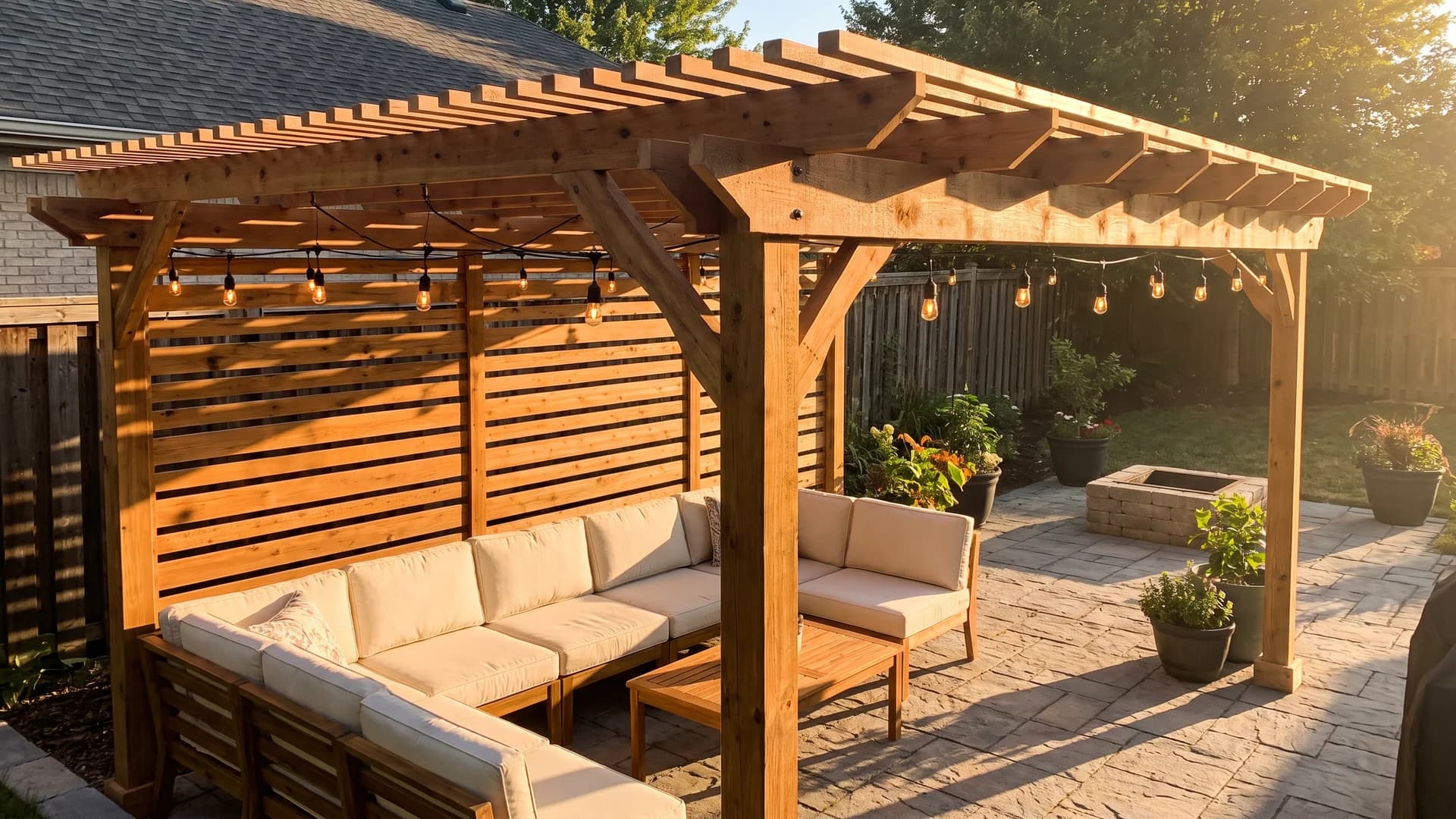
A pergola is a post-and-beam structure with an open roof, traditionally flat, made of parallel beams or cross slats. It can stand free on four or more posts, or attach to the house on one side and extend over a patio or deck.
Where an arbor decorates, a pergola works. It throws partial shade over a seating area, gives string lights and curtains something to hang from, and visually connects the house to the yard. Modern versions go further: louvered aluminum pergolas have adjustable roof slats that close against rain, and some homeowners even run them over swimming pools.
A pergola also supports climbing plants, and a wisteria-covered one is a classic look. The difference is scale. A pergola with nothing growing on it is still a functional shade structure. An arbor with nothing growing on it looks a little unfinished.
The 5 differences that matter
1. Size
An arbor is measured in feet, a pergola in square feet. Most arbors are 2 to 4 feet wide and 7 to 8 feet tall, just enough to walk through. A typical pergola covers about 100 square feet, and larger ones over outdoor kitchens go well past that.
2. Roof shape
Arbor roofs are often arched and always simple. Pergola roofs are traditionally flat, built from beams that can stay open, hold cross slats, carry a fabric canopy, or support vines. That flat top is the fastest way to tell them apart in a photo.
3. Placement
An arbor goes where people pass: a gate, a path, the edge between two garden areas. A pergola goes where people stay: over a patio, a deck, a dining table, a hot tub. Attached pergolas extend directly off the back of the house.
4. The job each one does
An arbor is landscaping. It frames a view, supports plants, and adds charm to the walk from the driveway to the door, which is also why it pulls its weight for curb appeal. A pergola is closer to architecture. It defines an outdoor room and changes how you use the yard, where an arbor mostly changes how the yard looks.
5. Price
An arbor is one of the cheapest structures you can add to a yard. A pergola is a mid-size hardscaping project. The numbers are below.
Arbor vs pergola cost in 2026
Current US pricing, based on 2026 data from Angi and HomeGuide:
| Cost | Arbor | Pergola |
|---|---|---|
| Prefab kit, installed | $375 to $1,380 | $1,450 to $5,750 |
| Professional build, average range | $1,600 to $3,500 | $2,120 to $6,435 |
| Custom build | $3,000 to $6,000 | $30 to $65 per sq ft |
| National average | about $2,800 | about $4,255 |
A few notes on those numbers:
- Materials drive most of the price. For a pergola, materials are roughly 80% of the project cost and labor around 20%, per Angi.
- Cedar and redwood cost more than vinyl or aluminum but weather into a nicer patina. Vinyl arbors are the budget path and still hold plants fine.
- Attached pergolas often need footings, ledger work, and sometimes a permit, which adds cost that arbors almost never incur.
- A basic arbor kit from a garden center can run under $200 before installation. It will not last like a cedar build, but it is a cheap way to test whether you like the look.
Where a trellis fits in
Searches for arbor vs pergola vs trellis come up constantly, so here is the third structure in one line: a trellis is a flat panel, not a walk-through or sit-under structure at all.
A trellis has no roof and no real footprint. It leans against a wall, stakes into a bed, or attaches to a fence, and its only job is giving climbing plants a grid to grab. Arbors often use trellis panels as their sides, which is where the confusion starts.
| Structure | Roof | Footprint | Main job |
|---|---|---|---|
| Trellis | None | Flat panel | Plant support |
| Arbor | Arched or flat slats | Walk-through | Entrance, garden accent |
| Pergola | Flat, open beams | Room-sized | Shade over a living area |
| Gazebo | Solid, closed | Room-sized | Weather-proof outdoor room |
And a gazebo?
A gazebo is the structure people most often confuse with a pergola from a distance. The difference is the roof: a gazebo's roof is solid and closed, usually on a hexagonal or octagonal base, often with a built-in floor and railings. It keeps rain out entirely, where a pergola only filters sun.
So the ladder goes: trellis (panel), arbor (doorway), pergola (open roof room), gazebo (closed roof room). If a fully covered structure is what you actually want, look at AI gazebo design concepts instead of pergola ones. The two photograph very differently on the same yard.
Where the names come from
Pergola comes from the Latin pergula, a projecting roof, and the structure goes back to Egyptian and Roman gardens. English gardeners revived it in the late 1800s to show off flowering vines like wisteria and roses.
Arbor arrived through Old French herbere, related to herbs and grass rather than trees. The overlap in meaning is centuries old, so if the two words feel tangled, that is not on you.
Which one should you choose?
Choose an arbor if:
- You want an entrance moment at a gate, path, or garden transition
- The budget is a few hundred to a couple thousand dollars
- Climbing plants are the main event
- You are working in a small yard where a pergola would crowd the space
Choose a pergola if:
- You want shade over a patio, deck, or dining area
- You are trying to make the backyard function as an extra room
- You plan to hang lights, fans, or curtains
- The project budget supports a few thousand dollars of hardscaping
Plenty of yards end up with both, and they do not compete: an arbor at the garden gate and a pergola over the patio solve two different problems.
See both on your own yard before you build
Photos of other people's arbors and pergolas only get you so far, because the real question is what either structure looks like on your yard, at your scale, next to your house.
That is a cheap question to answer now. Upload a photo of your patio or garden to OutdoorBrite and generate concepts with a pergola over the seating area, then a version with an arbor framing the path. For structure-specific ideas, the AI pergola design page shows how the tool handles beams, proportions, and placement on a real backyard photo.
A few takeaways before you spend anything:
- Match the structure to the behavior. Shade for sitting means pergola. A pretty transition means arbor.
- Price the real project. Compare an installed pergola quote against the $2,120 to $6,435 Angi range, not against the kit price alone.
- Check your local rules first. Attached structures and anything with footings may need a permit. A quick call to your building department beats a tear-down order.
- Test the look before committing. A generated concept on your own photo settles the arbor or pergola debate faster than a Pinterest board ever will.
FAQ
What is the difference between an arbor and a pergola? An arbor is a small walk-through garden structure, usually 2 to 4 feet wide with an arched, slatted roof, used to frame a gate or path. A pergola is a much larger post-and-beam structure with a flat, open roof that shades a patio, deck, or seating area. Size and purpose are the two separators: arbors decorate transitions, pergolas cover living space.
Is an arbor cheaper than a pergola? Usually, yes. A prefab arbor kit installed runs $375 to $1,380, while an installed pergola averages $2,120 to $6,435, according to 2026 Angi data. Custom versions of either cost more, but at every tier the arbor is the smaller project because it uses less material and less labor.
What is the purpose of a pergola? A pergola provides partial shade over an outdoor living area and visually defines it as a room. The open-beam roof filters sunlight, supports climbing plants or a canopy, and gives you somewhere to hang string lights or a ceiling fan. Attached pergolas also connect the house to the yard so the patio reads as an extension of the indoor space.
Arbor vs pergola vs trellis: which is best for climbing plants? All three support climbers, so pick by scale. A trellis is a flat panel and the cheapest way to grow a vine against a wall or fence. An arbor suits a plant you want to walk under, like climbing roses over a path. A pergola handles the big, long-lived climbers such as wisteria and grape vines that need a heavy structure.
Do you need a permit to build an arbor or pergola? Small freestanding arbors rarely need one. Pergolas depend on your municipality: attached pergolas, structures over a certain footprint, and anything with concrete footings often require a permit. Rules vary a lot by city and HOA, so check with your local building department before construction starts.
Can a pergola be attached to the house? Yes. Attached pergolas mount to the house on one side, usually with a ledger board, and extend over a patio or deck on posts. This costs less than a fully freestanding build of the same size, creates a covered walkout from the back door, and is one of the most common pergola configurations.
Where should a pergola go in your yard? Put it where you already spend time: over the patio, the deck, or the outdoor dining table. Consider sun direction, since a pergola filters light rather than blocking it, and orientation of the roof slats changes how much shade you get in the afternoon. Generating a few placements on a photo of your yard is a fast way to compare options before digging footings.
What plants grow well on arbors and pergolas? Climbing roses, clematis, and honeysuckle are the classic arbor plants because they stay relatively light. Pergolas can carry heavier growers: wisteria, grape vines, trumpet vine, and kiwi all need the stronger frame. Match the plant's mature weight to the structure, since a full-grown wisteria can damage a lightweight arbor.