Design Ideas
How to Plan a Garden Layout From Scratch
Learn how to plan a garden layout with our expert guide. From assessing your site to choosing plants, discover the steps to create your dream garden.
Free landscaping tool
Measure your beds, pick a depth, and see exactly how much mulch to buy, in cubic yards and bags. No sign-up, no guesswork.
Area 1
Mulch depth
3 in recommended
Bag size
Estimate cost (optional)
What you need
Cubic yards
0.74
3 cu ft bags
7
Cubic feet
20.0
Total area
80 sq ft
Round up and add about 10% for settling and uneven ground. Buying in bulk is usually cheaper than bags once you pass 6 to 8 bags.
Wonder how it'll actually look?
Upload one photo of your yard and OutdoorBrite redesigns it in seconds. Try different styles and bed layouts before you spend a dollar on mulch, plants, or stone.
Redesign your yard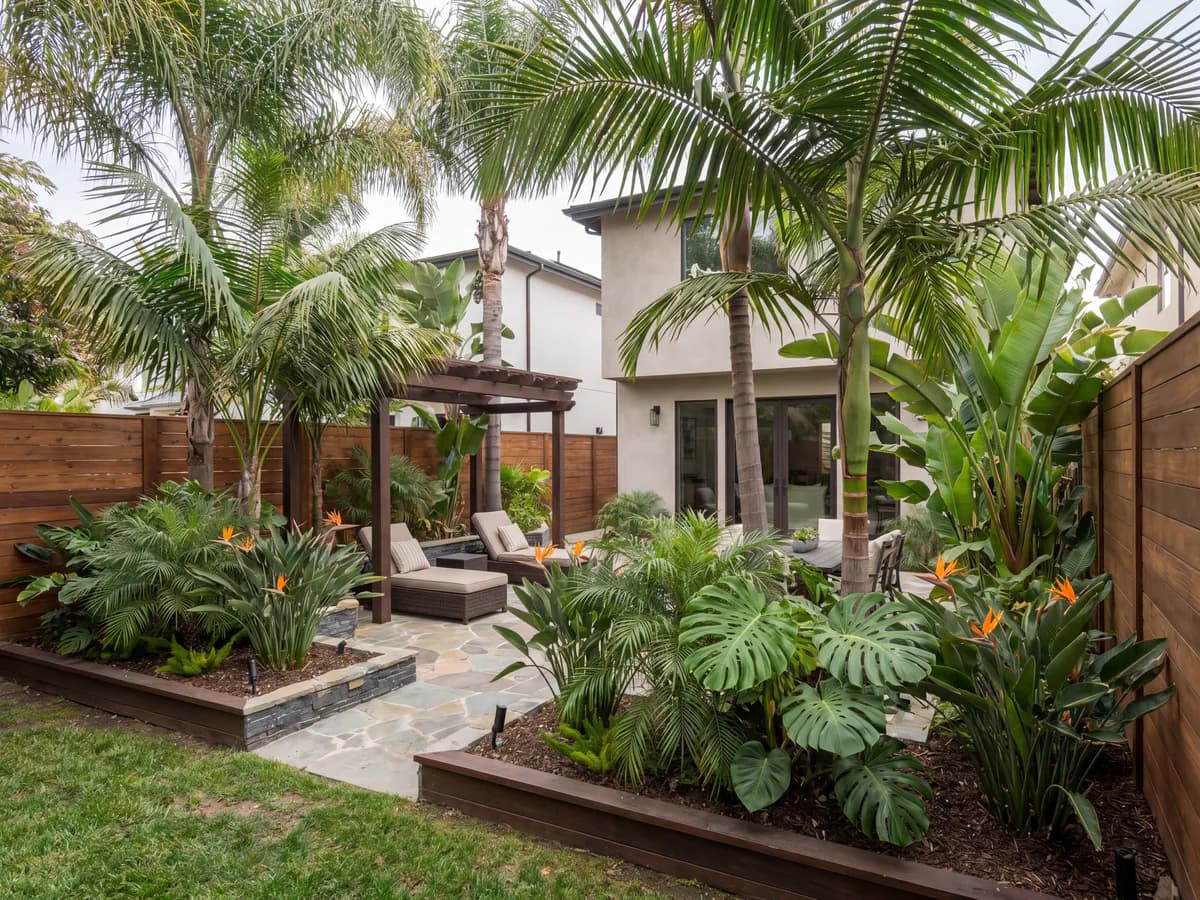
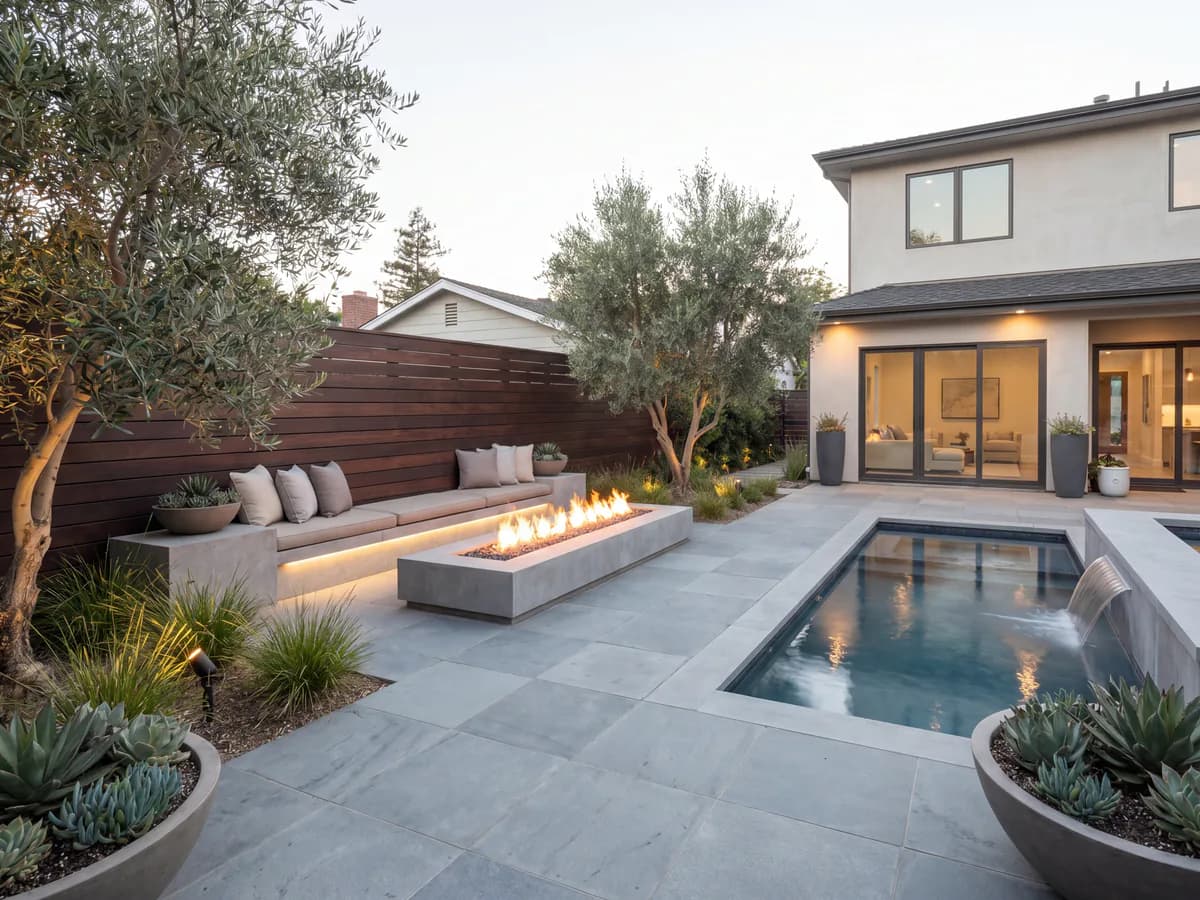
Upload one photo of your yard and OutdoorBrite redesigns it in seconds. Try different styles and bed layouts before you spend a dollar on mulch, plants, or stone.
Redesign your yardThree numbers get you an answer: how big the area is, how deep you want the mulch, and which bag size you're buying.
Enter length and width, or a total square footage if you already know it. Add a row for each separate bed.
Most beds want 2 to 3 inches. Choose the bag size your store sells, and the calculator converts it to cubic yards and bags.
You get cubic yards for bulk, the number of bags, and an optional cost estimate. Buy a little extra for settling.
It comes down to two numbers: the area you're covering and how deep you want the layer. Multiply the area in square feet by the depth in feet (inches divided by 12) and you have the volume in cubic feet. Divide that by 27 for cubic yards if you're buying in bulk, or by your bag size for a bag count. The calculator above runs all of that the moment you type.
For depth, 2 to 3 inches covers most beds. Go 3 to 4 inches on new beds to smother weeds, and 1 to 2 inches for a yearly top-up over mulch that's still in place. Thinner than that and weeds push through; thicker and water struggles to reach the roots.
Rule of thumb: one cubic yard covers about 108 square feet at 3 inches deep. So a 200-square-foot bed at 3 inches needs a little under 2 cubic yards, or about 17 bags of 3 cubic feet.
Depth depends on what the mulch is doing. Too thin and weeds push through; too thick and water can't reach the roots.
3–4 in
New beds
Start fresh beds at 3 to 4 inches so weeds stay down and the soil holds moisture through summer.
2–3 in
Established beds
Around shrubs and perennials, 2 to 3 inches is plenty. Keep it off the stems.
2–3 in
Around trees
Spread a wide ring 2 to 3 inches deep, but pull it back from the trunk. No mulch volcanoes.
1–2 in
Yearly refresh
Topping up faded mulch? 1 to 2 inches over the old layer brings the color back.
One cubic yard is 27 cubic feet. How far it spreads comes down to depth, as the chart shows.
| Depth | Coverage per cubic yard |
|---|---|
| 1 inch | 324 sq ft |
| 2 inches | 162 sq ft |
| 3 inches | 108 sq ft |
| 4 inches | 81 sq ft |
| 6 inches | 54 sq ft |
Bagged mulch is sold by the cubic foot, so the bag count per yard depends on the bag size.
27
cubic feet in one cubic yard
A yard of mulch is a cube three feet on each side: 3 × 3 × 3 = 27 cubic feet.
| Bag size | Bags per cubic yard |
|---|---|
| 1.5 cu ft bag | 18 bags |
| 2 cu ft bag | 13.5 bags |
| 3 cu ft bag | 9 bags |
Say you have one bed that's 20 ft by 10 ft and you want 3 inches of mulch.
Find the area
20 ft × 10 ft = 200 square feet.
Convert the depth
3 inches is 0.25 feet (3 ÷ 12).
Get the volume
200 sq ft × 0.25 ft = 50 cubic feet, which is 1.85 cubic yards.
Count the bags
At 3 cubic feet per bag, that's 17 bags. Or buy 2 cubic yards in bulk.
A 2- to 3-inch layer does real work in a bed, not just for looks. Here's what it buys you.
Holds moisture
Mulch shades the soil and slows evaporation, so beds dry out more slowly. You water less often, and plants ride out hot spells better.
Blocks weeds
A solid 2- to 3-inch layer keeps light off weed seeds, so far fewer sprout. The few that do come up pull out easily from the loose surface.
Steadies soil temperature
It insulates roots from afternoon heat in summer and hard frosts in winter, holding the root zone in a steadier range year-round.
Sharpens the look
Fresh mulch gives beds a clean edge and an even color that makes the plants stand out. It's the quickest way to tidy up a yard.
Mulch splits into two camps: organic, which rots down and feeds the soil, and inorganic, which lasts for years but adds nothing to it. The math here is the same either way (volume is volume), so the type only changes how long it lasts and how it looks.
Breaks down over a season or two and improves the soil as it goes. The trade-off is that you top it up regularly, and some kinds can bring in pests or weed seeds.
Bark and wood chips
The most common landscape mulch. Holds color for a while, breaks down slowly, and suits beds, borders, and rings around trees.
Shredded hardwood
Knits together as it settles, so it stays put on slopes and washes away less in heavy rain. A tidy look for front beds.
Shredded leaves
Free if you have trees. Shred them first so they don't mat into a wet layer that blocks air and water.
Straw
Cheap and light for vegetable gardens and newly seeded lawns. Breaks down fast, so treat it as a one-season cover.
Grass clippings
Free from mowing and high in nitrogen. Dry them first, since fresh clippings mat down and can heat up or mold.
Doesn't break down, so it lasts for years and rarely needs topping up. It won't feed the soil, though, and some types trap heat or block water if you use them in the wrong spot.
Rubber mulch
Made from recycled tires. Doesn't rot, holds its color, and is common under playsets and on paths. Keep it away from beds you plant in.
Plastic sheet and fabric
Landscape fabric or film under a thin top layer blocks weeds well. Air and water still need a way through, so it works better on paths than in planted beds.
Rock and gravel
A permanent cover for paths, dry beds, and xeriscapes. Sold by weight, but you still size it by volume the same way.
Order about 10% more than the calculator shows. Mulch settles and ground is never perfectly flat.
Keep mulch a couple of inches off plant stems and tree trunks so they don't rot.
Refresh color with a thin top layer each spring instead of piling on a full depth again.
Past 6 to 8 bags, bulk by the yard is usually cheaper, even with a delivery fee.
Edge the bed before you spread. A clean trench keeps mulch in and grass out.
Water fresh mulch lightly so wind doesn't scatter it and dyed mulch sets its color.
These are estimates to help you plan and shop. Actual coverage varies with mulch type, how settled it is, and how level your ground is. Round up rather than down.
Planning the beds these go in? These walk through the rest.
Learn how to plan a garden layout with our expert guide. From assessing your site to choosing plants, discover the steps to create your dream garden.
Discover 10 actionable low maintenance garden ideas to create a beautiful, effortless outdoor space. From xeriscaping to smart tech, save time and water.
Discover 10 stunning drought tolerant landscaping ideas to save water and create a beautiful, low-maintenance garden. Explore xeriscaping, natives, and more.
Quick answers to the questions people ask while estimating mulch.
Multiply the area in square feet by the depth in feet to get cubic feet, then divide by 27 for cubic yards. This calculator does it for you. As a rule of thumb, one cubic yard covers about 108 square feet at 3 inches deep.
27. A cubic yard is a cube three feet on each side, so 3 × 3 × 3 = 27 cubic feet.
It depends on the bag size: about 18 bags of 1.5 cubic feet, 13 to 14 bags of 2 cubic feet, or 9 bags of 3 cubic feet.
Two to three inches suits most beds. Go 3 to 4 inches on new beds to suppress weeds, and 1 to 2 inches for a yearly refresh.
Split it into rectangles, measure each one, and add a row per section so the calculator totals them. For curves, measure the longest length and widest width and round up.
Bags are easy for small jobs and tight access. Once you need more than 6 to 8 bags, bulk by the cubic yard is usually cheaper, even after delivery.
About 324 square feet at 1 inch, 162 at 2 inches, 108 at 3 inches, and 81 at 4 inches. Coverage halves as the depth doubles.
At 2 inches deep, 100 square feet needs about 17 cubic feet of mulch, roughly 0.6 cubic yards or 6 bags of 3 cubic feet. At 3 inches it's about 25 cubic feet, or 0.9 cubic yards.
Yes. If the old layer has thinned to an inch or less, just top it up. If it's matted or more than 3 inches deep, rake it loose first so water and air still reach the soil.
Mid to late spring, once the soil has warmed, works for most beds. A lighter fall layer helps insulate roots over winter.
No. Volume is volume, so the math is the same for bark, hardwood, rubber, or rock. Type affects how long it lasts and how it looks, not the cubic yards.
Yes, it's completely free with no sign-up. It's one of OutdoorBrite's landscaping tools, alongside our AI design app that shows your yard in a new style from a single photo.
Practical tools for planning and picturing an outdoor space — built around your own photo.

The whole-yard tool. Redesign any space from a single photo.

Pool, deck, and fire-pit layouts on your real backyard.

Garden beds and planting plans by style, cottage to xeriscape.

Your AI garden designer: redesign beds and borders from one photo.

Your AI garden planner: lay out beds and planting from one photo.

Your patio designer: redesign your patio and compare materials from one photo.
Upload one photo and see your yard finished, in seconds. Compare real styles on your own space, then build the one you love. No designer, no software.