Design Ideas
Landscape design for beginners: Build beautiful outdoor spaces
Landscape design for beginners: Learn simple steps to analyze your yard, visualize ideas, and choose plants and materials with confidence.
Free landscaping tool
Measure each part of your lawn, pick your grass, and see exactly how much sod to order, in square feet, pallets, or rolls. No sign-up, no guesswork.
Section 1
Grass type
Delivery format
Waste factor
10% covers cuts and edges on most lawns. Go 15% for curves and tight corners.
Estimate cost (optional)
What to order
Total sod needed
1,650 sq ft
Pallets (540 sq ft)
4
Lawn area
1,500 sq ft
Waste (10%)
+150 sq ft
Sod sells in whole pallets and rolls, so the count is rounded up. Pallets range from 400 to 540 sq ft by farm; confirm coverage on your quote.
New lawn going in. What about the rest?
Upload one photo of your yard and OutdoorBrite redesigns it in seconds. Try lawn shapes, beds, and styles before you order a single pallet.
Redesign your yard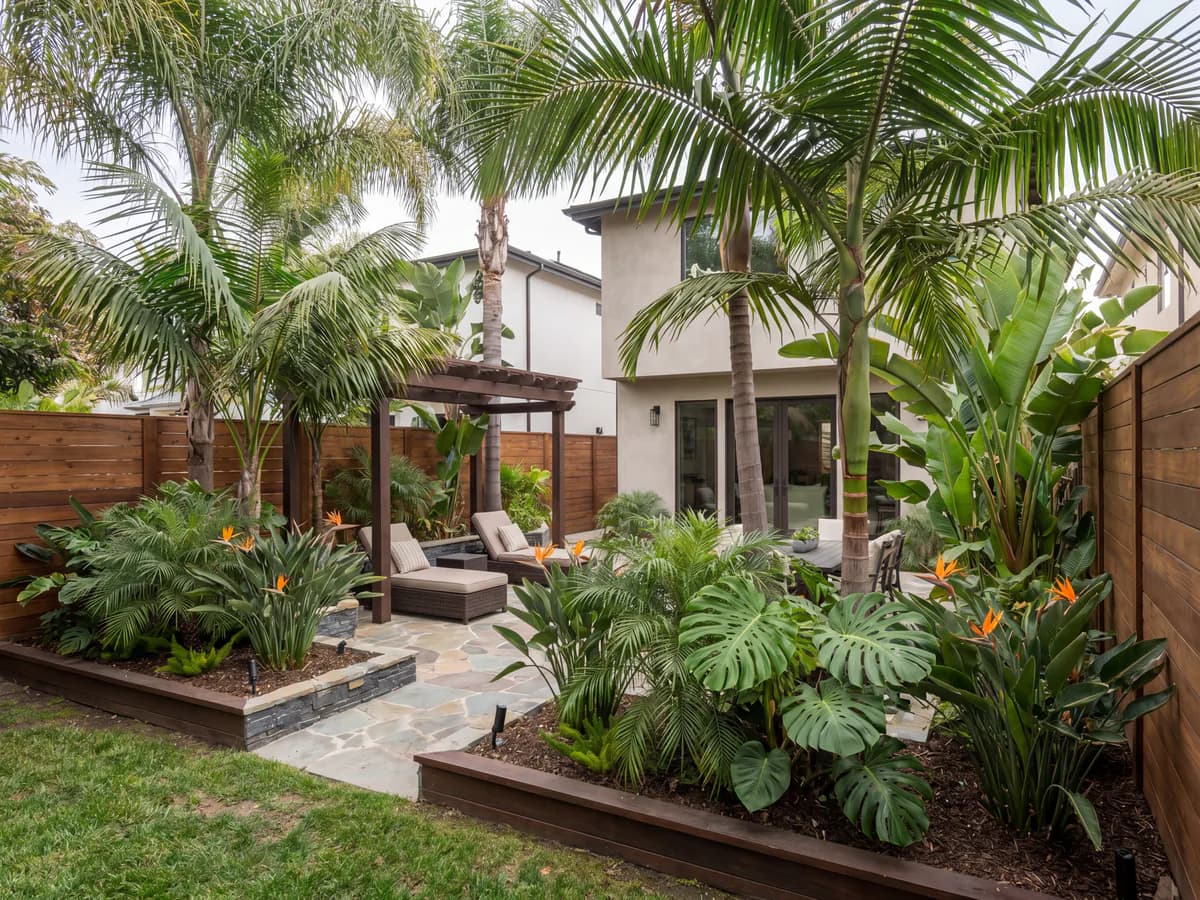
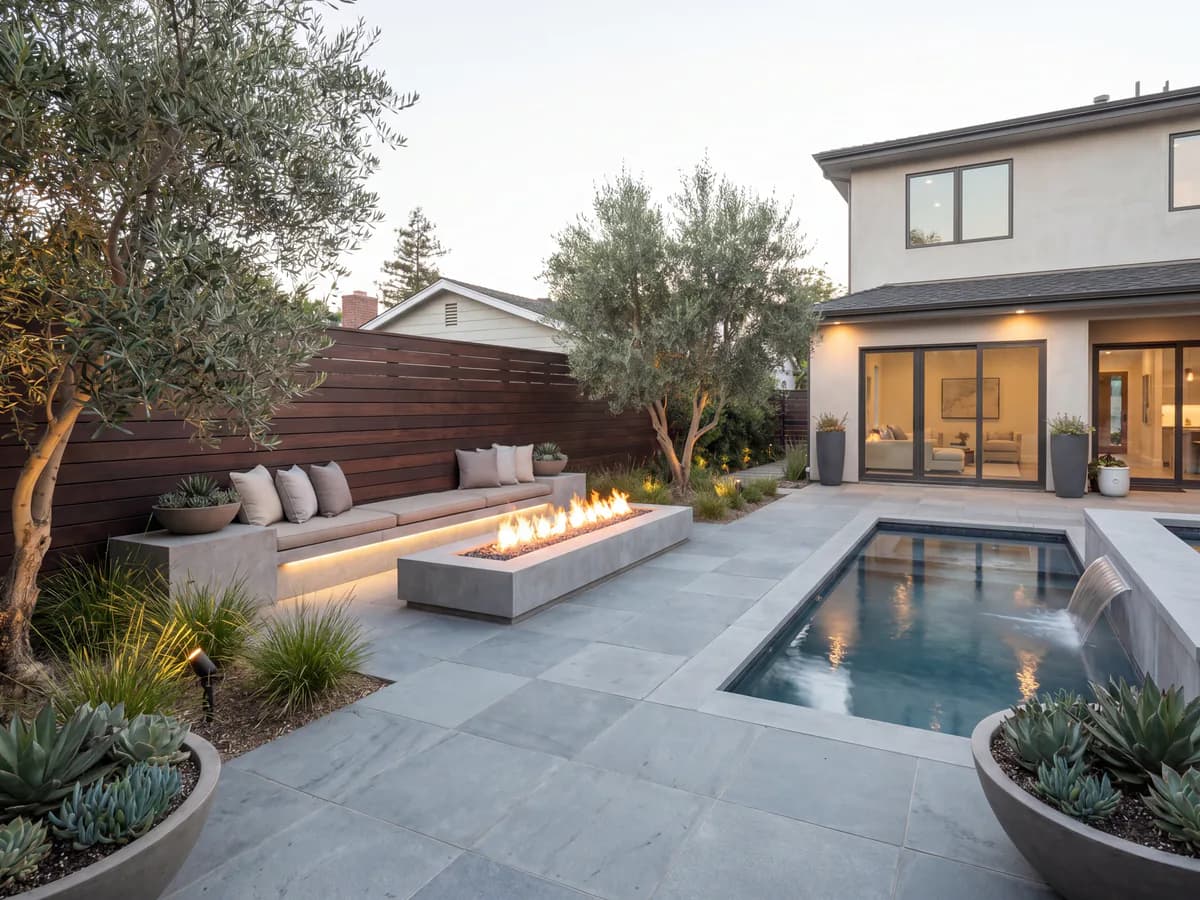
Upload one photo of your yard and OutdoorBrite redesigns it in seconds. Try lawn shapes, beds, and styles before you order a single pallet.
Redesign your yardThree choices get you an answer: the size and shape of your lawn, the grass you're buying, and how it ships.
Pick the shape that matches each part of your yard and enter the dimensions in feet. Add a section for every separate area.
Bermuda, zoysia, and St. Augustine ship on different pallet sizes. Choose pallets, big rolls, or small rolls and the coverage adjusts.
You get the square footage with waste included, the number of pallets or rolls to order, and an optional cost estimate.
Multiply the length of your lawn by its width to get square feet, then add 5 to 15% for cuts and edges. A 50 by 30 ft lawn is 1,500 sq ft, which becomes 1,650 sq ft with 10% waste.
Sod is sold in whole units, so divide that total by what one unit covers and round up. On 540 sq ft pallets, 1,650 sq ft means 4 pallets. For a 100 sq ft patch, order about 110 sq ft; for 200, about 220.
Quick rule: lawn square feet × 1.1, divided by your farm's pallet size, rounded up to the next whole pallet.
Sod comes off a truck, not out of a bag, so your measurements decide the whole order. Fifteen minutes with a tape measure covers most yards.
Break up odd shapes
Split an L-shaped or curved lawn into rectangles, circles, and triangles. Measure each one and add it as its own section in the calculator.
Round up as you go
Measure to the nearest half foot and round up. Coming up short means paying a second delivery fee for a handful of rolls.
Subtract what stays
Take out patios, decks, beds, and sheds. A 40 by 25 ft yard with a 200 sq ft patio only needs 800 sq ft of sod.
Check it twice
Walk the yard a second time before ordering. The waste factor covers cuts, not a mismeasured lawn.
Coverage depends on the grass and how the farm cuts it. Bermuda, fescue, and bluegrass usually ship on larger pallets than zoysia or St. Augustine.
| Grass type | Per pallet | Per big roll |
|---|---|---|
| Bermuda, fescue & bluegrass | 540 sq ft | 450 sq ft |
| Zoysia | 450 sq ft | 360 sq ft |
| St. Augustine & centipede | 450 sq ft | 360 sq ft |
10
sq ft per standard retail roll
A small roll from a garden center measures about 16 by 90 inches, roughly 10 sq ft. Big farm rolls cover 360 to 450 sq ft and need machinery to lay.
Farms cut pallets anywhere from 400 to 540 sq ft, so confirm the coverage on your quote before dividing. The calculator uses the most common rate for each grass family.
Prices move with grass type, region, and season, but most orders land in these ranges. Enter your quoted price in the calculator for an exact figure.
$0.30–$0.85
Per square foot, material only
Common bermuda and fescue sit at the low end. Zoysia and shade blends cost more.
$150–$450
Per pallet, before delivery
A 450 sq ft pallet of St. Augustine often runs $200 to $300. Delivery adds $50 to $150 by distance.
$1–$2
Per sq ft, installed
Covers old lawn removal, soil prep, and labor. Prep work is what moves quotes around, so get more than one.
Ranges reflect typical US retail and farm pricing. Your local sod farm's quote is the number that matters; plug it into the cost field above.
Say your back lawn is 50 by 30 ft and you're laying bermuda from 540 sq ft pallets.
Find the area
50 ft × 30 ft = 1,500 square feet.
Add 10% waste
1,500 × 1.1 = 1,650 sq ft of sod to order.
Divide by coverage
1,650 ÷ 540 = 3.06, which rounds up to 4 pallets.
Sanity-check the cost
At $0.45 per sq ft that's about $743 in material, before delivery.
Order everything in one delivery. A second trip for two more rolls can cost more than the sod on it.
Lay sod the day it arrives. Rolls left stacked in summer heat start yellowing within 24 hours.
Spread 4 to 6 inches of loose topsoil first and rake it smooth. Sod roots through loose soil far faster than compacted fill.
Stagger the seams like brickwork and butt the edges tight. Straight seam lines stay visible for months.
Water within 30 minutes of laying, then keep the first inch of soil moist for two weeks.
Past about 2,000 sq ft, ask the farm about big rolls. Fewer seams, and crews lay them faster.
This calculator multiplies your measured area by the waste factor, divides by the coverage of one pallet or roll, and rounds up to a whole unit, since farms don't sell partial pallets. It estimates material only; soil, delivery, and labor are separate. Coverage rates used: bermuda, fescue, and bluegrass at 540 sq ft per pallet and 450 per big roll; zoysia and St. Augustine at 450 per pallet and 360 per big roll; small retail rolls at 10 sq ft.
Guides that pick up where the sod order ends.
Landscape design for beginners: Learn simple steps to analyze your yard, visualize ideas, and choose plants and materials with confidence.
Discover 10 front yard landscaping ideas on a budget to boost your home's curb appeal. Get practical tips on plants, mulch, DIY paths, and more.
Tired of mowing? Discover top ground cover alternatives to grass, from clover to creeping thyme, for a beautiful, sustainable, and low-maintenance lawn.
Quick answers on measuring, pallets, and ordering.
Order about 110 sq ft, which is 100 plus a 10% waste factor. That's 11 standard retail rolls at 10 sq ft each, or a quarter of a 450 sq ft pallet.
About 220 sq ft with 10% waste, or 22 retail rolls. If your farm only sells full pallets, one pallet covers it with sod left over.
Multiply your lawn's square footage by 1.1, then divide by the pallet coverage and round up. A 5,000 sq ft lawn on 450 sq ft pallets works out to 5,500 ÷ 450, so 13 pallets.
Most pallets cover 400 to 540 sq ft. Bermuda, fescue, and bluegrass commonly ship at 540 sq ft; zoysia and St. Augustine at 450. The exact number is on your quote, so check it before dividing.
Usually $150 to $450 depending on grass and region. Bermuda tends to be cheapest, St. Augustine mid-range, and zoysia at the top. Delivery is often a separate $50 to $150.
Between 1,500 and 3,000 pounds, depending on soil moisture. That weight is why farms deliver by truck and why a standard pickup can't carry a full pallet.
Split the lawn into simple shapes, measure each in feet, and add them up. Rectangle is length times width, circle is 3.14 times the radius squared, triangle is half the base times height.
10% extra covers cuts and edging on a typical lawn. Go to 15% for curved beds and tight angles; 5% is enough for one open rectangle.
4 to 6 inches of loose topsoil. For a 1,000 sq ft lawn, a 4 inch layer works out to about 12 cubic yards. Grade it smooth before the sod arrives.
Retail slabs usually measure 16 by 24 inches, about 2.7 sq ft, with roughly 165 pieces on a 450 sq ft pallet. Small rolls are 16 by 90 inches, close to 10 sq ft.
Yes. Pick the custom shape and use the presets: a football field with end zones is 57,600 sq ft, a FIFA soccer field 76,900, a baseball infield 8,100.
No, seed costs a fraction of what sod does. Sod wins on speed: it looks finished the day it goes down and takes light foot traffic in two to three weeks, while seed needs a season or two.
Practical tools for planning and picturing an outdoor space — built around your own photo.
The whole-yard tool. Redesign any space from a single photo.
Pool, deck, and fire-pit layouts on your real backyard.
Garden beds and planting plans by style, cottage to xeriscape.

Your AI garden designer: redesign beds and borders from one photo.
Your AI garden planner: lay out beds and planting from one photo.
Your patio designer: redesign your patio and compare materials from one photo.
Upload one photo and see your yard finished, in seconds. Compare real styles on your own space, then build the one you love. No designer, no software.