Landscape design for beginners: Build beautiful outdoor spaces
Landscape design for beginners: Learn simple steps to analyze your yard, visualize ideas, and choose plants and materials with confidence.
Every great landscape project begins with a simple question: what do I really want from my yard? The most beautiful and functional outdoor spaces aren't just collections of pretty plants; they're a direct reflection of your lifestyle and personal taste. Taking the time to get this vision clear before you ever pick up a shovel is the single most important step.
Define Your Dream Yard Before You Dig
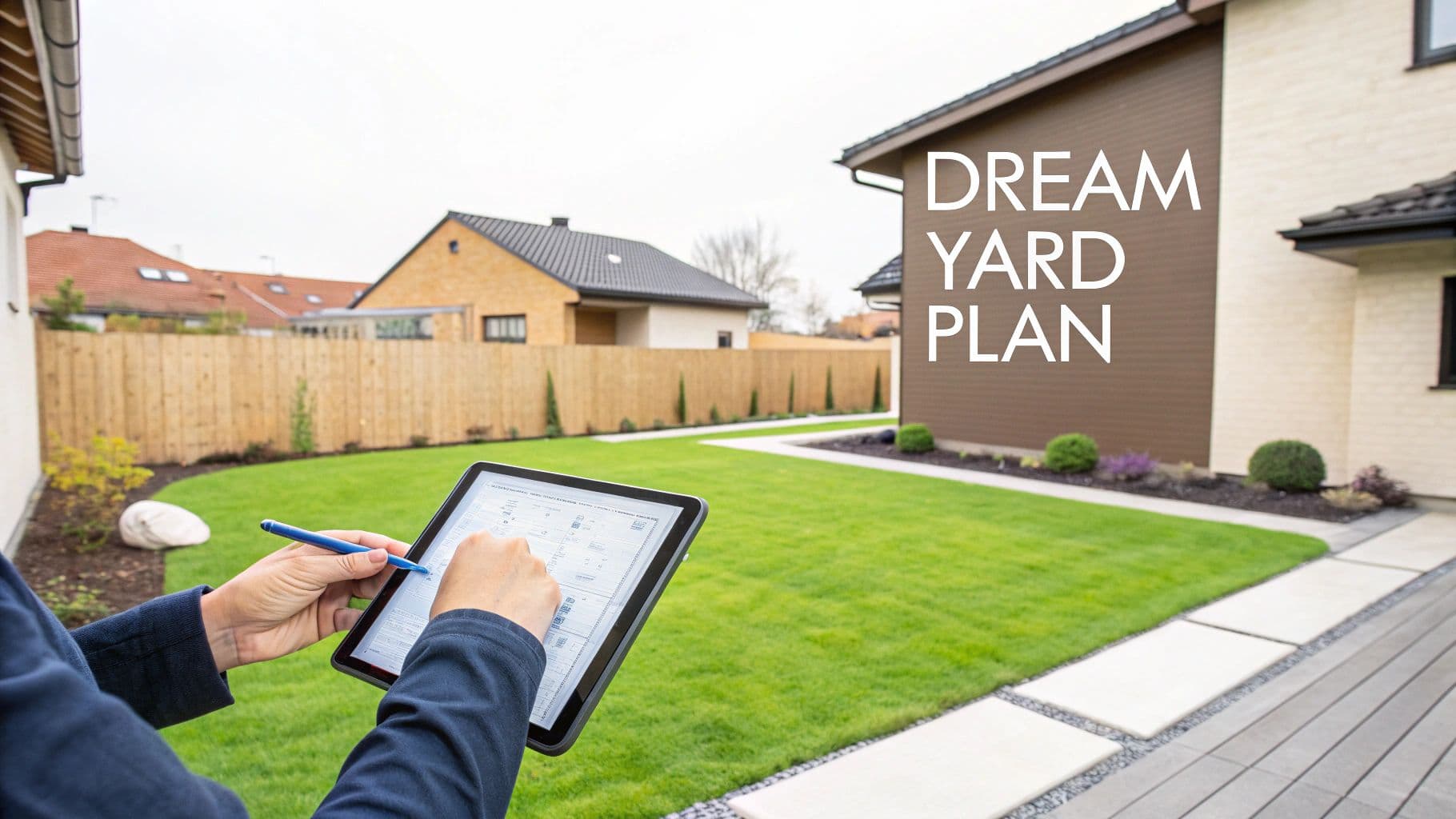
It’s easy to feel overwhelmed when you’re just starting out. The trick is to begin with questions, not with a shovel. Forget about specific plants or paving stones for a minute and think big-picture: what is the main purpose of this space? This is the foundation that ensures your final design works for you.
Are you dreaming of a vibrant, open area for summer barbecues with friends? Maybe you'd prefer a quiet, secluded nook for your morning coffee and a good book. If you have kids, a safe and fun play area is probably at the top of your list. Your lifestyle is the anchor for every decision you'll make.
Setting Realistic Goals for Your Space
Once you know the primary function, you can start layering in the details. Think about the feeling you want to create. Do you lean toward clean, modern lines or the lush, overflowing look of a cottage garden? Don't get hung up on official design terms; just focus on the vibe that makes you happy.
To really nail down your vision, ask yourself some practical questions:
- How will you entertain? Big parties or small, intimate dinners? The answer will help determine the size of your patio or deck.
- How will you relax? Is a hammock in the shade your idea of heaven? Or maybe a comfortable lounge set or the gentle sound of a water feature?
- What about family activities? Do you need a wide-open lawn for games, a dedicated sandbox, or maybe a vegetable garden to teach the kids where food comes from?
- How much maintenance are you up for? A low-maintenance design with native plants and extensive hardscaping is a world away from a yard filled with prize-winning roses that need constant care. Be honest with yourself here.
Find Your Style with Early Visualization
One of the toughest parts for a beginner is picturing how all these ideas will actually look in their own backyard. This is where technology can be a game-changer. You don't have to guess what a "Modern" or "English Cottage" style would look like on your property anymore. If you want a tour of the styles themselves, our guide to home landscape designs breaks down ten of them.
An effective landscape design is a living, breathing discussion about nature that draws every gardener closer to the knowledge that life is equal parts mystery and miracle. It's about creating a space that speaks back to you.
Platforms like OutdoorBrite are like having a design assistant right from the start. You get instant visual feedback by just uploading a photo of your yard and cycling through different styles. Seeing how various themes completely transform your space helps build confidence and allows you to find a look you genuinely love. It's the best way to make sure your final design truly feels like you.
Learn to Read Your Yard Like a Professional
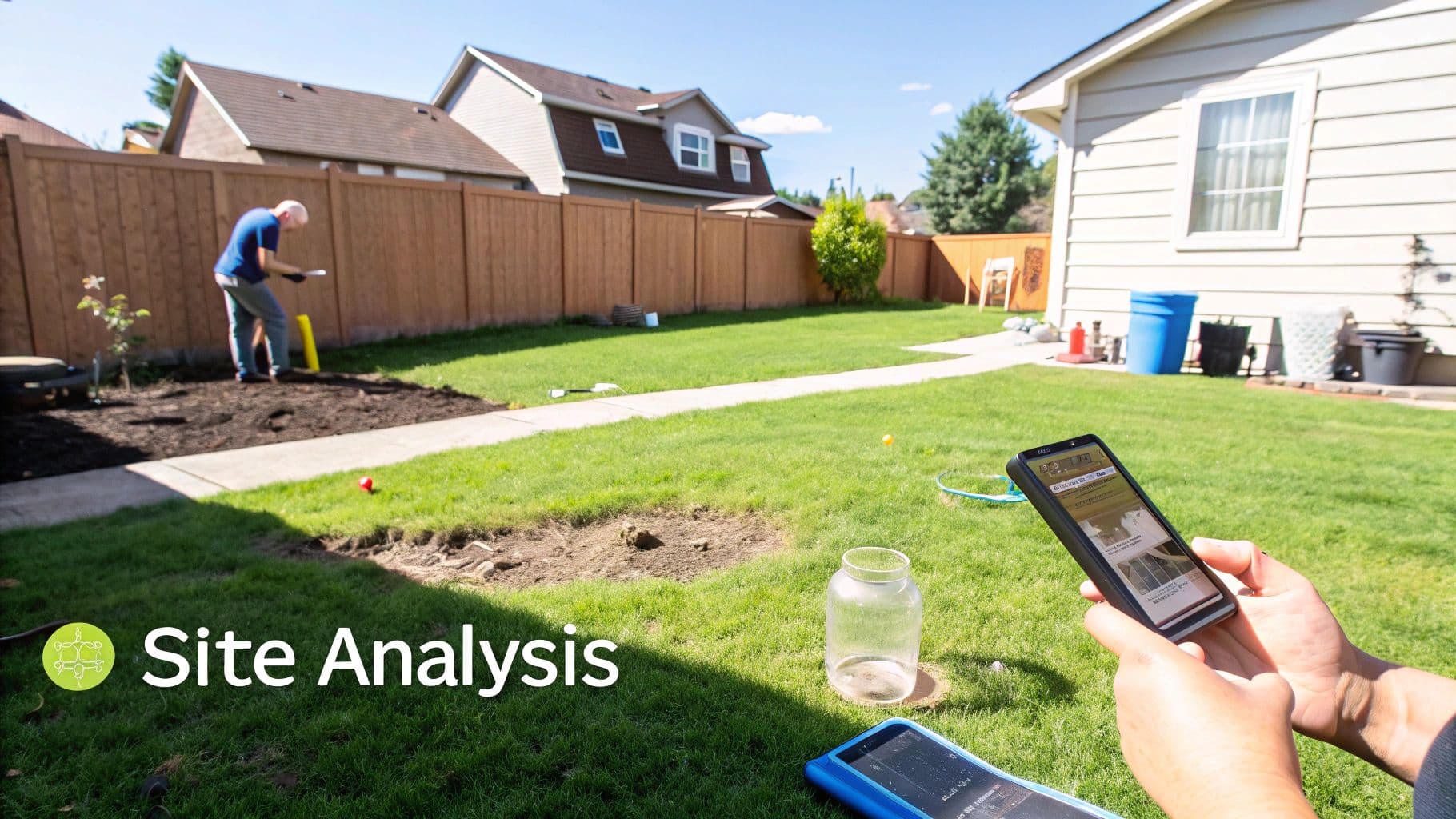
A great design works with the yard's natural personality, not against it. Before you even think about buying a single plant, you have to play detective and get to know your property. We call this a "site analysis," and it's the foundation of every successful project. A plant that flourishes on one side of your house might wither and die on the other. Getting this part right from the beginning saves you time, money, and heartache down the road.
Map Your Sun and Shade
Sunlight is the single biggest factor determining what you can and can't grow. You simply can't fake it; a plant that needs six hours of direct sun won't survive on less. The first step is to figure out exactly how the sun moves across your property.
Grab a notepad and draw a quick, rough sketch of your yard. Then, throughout a full day, make notes on which areas are sunny and which are shady. You need to identify the patterns.
- Morning Sun: Where does the sun hit first? This gentle light is perfect for plants that wilt in the intense afternoon heat.
- Afternoon Sun: Find the spots that get blasted by the sun from noon onward. These zones demand tough, heat-loving plants.
- Full Shade: Pinpoint the areas that rarely see a direct ray of sun, like the north side of your house or under a dense tree.
This simple sun map is your new best friend and will guide all of your plant choices.
Understand Your Soil and Water
The next piece of the puzzle is right under your feet. Your soil type dictates how it holds water and nutrients. You can get a good read on your soil with a simple 'jar test'.
A professional landscape design is a living, breathing discussion with nature. The land's drainage, the path of the sun, and the composition of the soil are the opening lines of that conversation—you have to listen before you can reply.
To do this, just fill a clear jar about halfway with soil from your garden. Add water until it's almost full, screw on the lid, and shake it vigorously. Let it sit undisturbed for a day, and you'll see distinct layers form.
- Sand: If the bottom layer is the thickest, you have sandy soil. It drains fast and dries out quickly.
- Silt: A healthy middle layer of fine particles means you have well-balanced silty soil.
- Clay: A thick layer of super-fine particles at the top means you're working with heavy clay, which holds water and can get compacted easily.
Pay attention after the next big rainstorm, too. Puddles that don't go away are a clear sign of poor drainage. Knowing this upfront means you can either choose plants that don't mind "wet feet" or plan to amend the soil.
See Your Ideas Come to Life with AI Design Tools
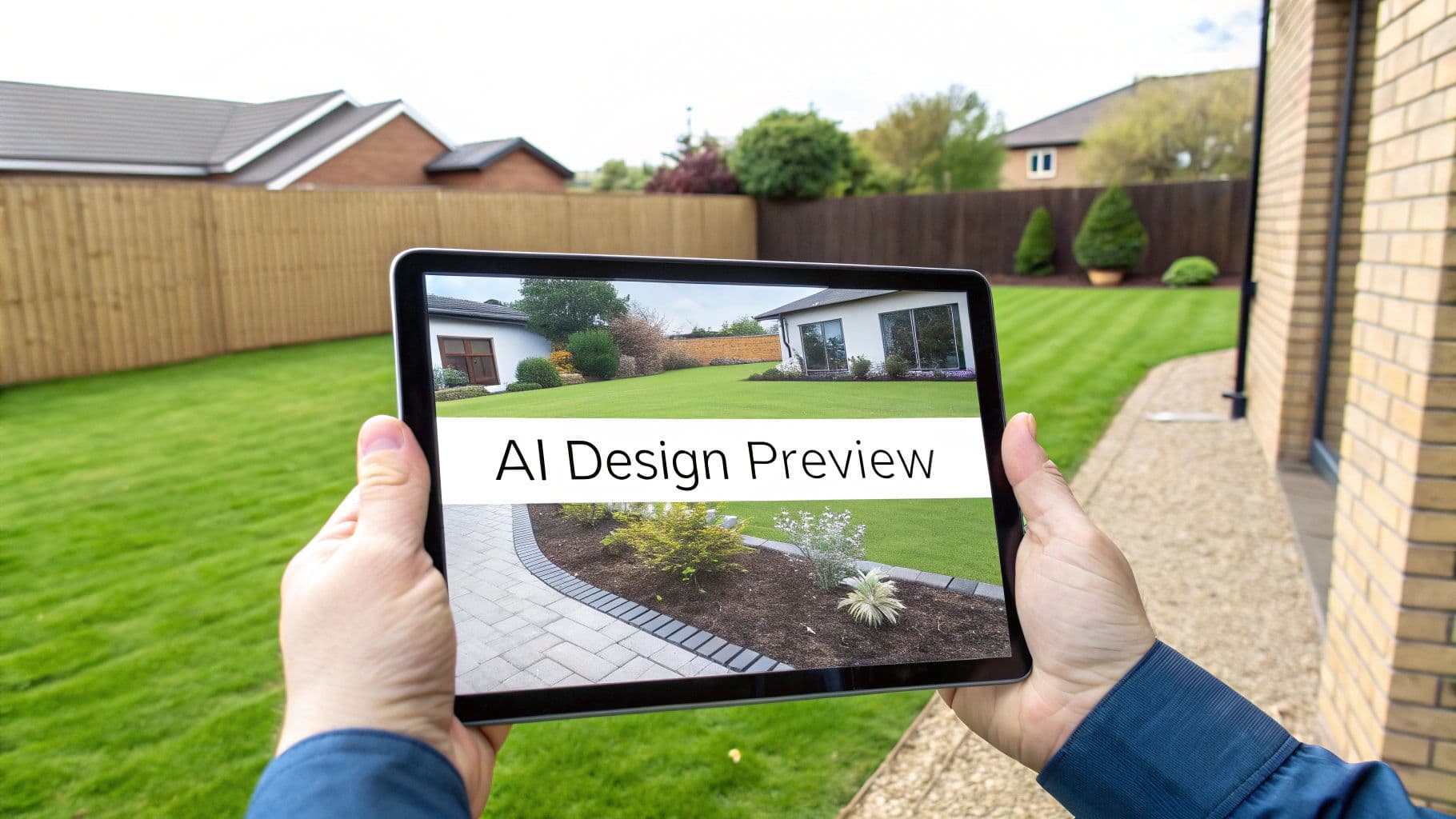
Here's where all that thinking and measuring starts to pay off. You’ve walked your yard, you know your goals—now it’s time to turn those notes into an actual picture. Today, technology gives us a much easier way to "test drive" a design before committing a single dollar.
Instead of just guessing what might look good, you can use an AI platform like OutdoorBrite to play with different concepts risk-free. It's surprisingly simple: snap a photo of your yard, pick a style you're curious about, and let the tool generate realistic redesigns in just a few seconds.
The landscape design market is massive—valued at around $150 billion in 2025 and expected to hit $220 billion by 2033. For a beginner, AI tools put professional-level ideas right at your fingertips, letting you see photorealistic concepts in over 80 styles, from sleek modern to peaceful Japanese Zen. You can dig deeper into these trends by exploring the market insights on landscape design services.
Turning Inspiration Into a Plan
Use these AI-generated images as a creative springboard, not a final blueprint. Think of it as brainstorming with a partner who has endless ideas.
Look at the concepts and start asking yourself some pointed questions:
- How does the layout feel? Notice where the AI placed patios, walkways, or garden beds. Does it make sense for how you move through the space?
- What specific things jump out at me? Maybe you fall in love with a certain type of tree but aren't crazy about the flowers around it.
- Does this style actually work for my house? Does a lush, tropical design complement your home's architecture or local climate?
This back-and-forth process is where the magic really happens. You can take an initial idea, tweak the layout, swap out plants, or experiment with different hardscape materials. For example, you might be inspired by some beautiful island landscaping ideas and then use the tool to see how a similar concept would fit your yard's specific shape and size.
Avoid Expensive Mistakes Before You Break Ground
One of the biggest perks of designing virtually is catching problems before they become real, expensive ones. By visualizing the final product, you can see how things might look in different seasons or realize that patio you planned is actually too small for your grill and furniture.
This digital "dress rehearsal" is the modern way to avoid costly missteps. It gives you the confidence to move forward with a plan you’re genuinely excited to build.
Ultimately, this step closes the gap between dreaming and doing. It turns your goals and site knowledge into a solid visual guide, ensuring your effort and money are well spent.
Choose Plants and Materials That Will Actually Work
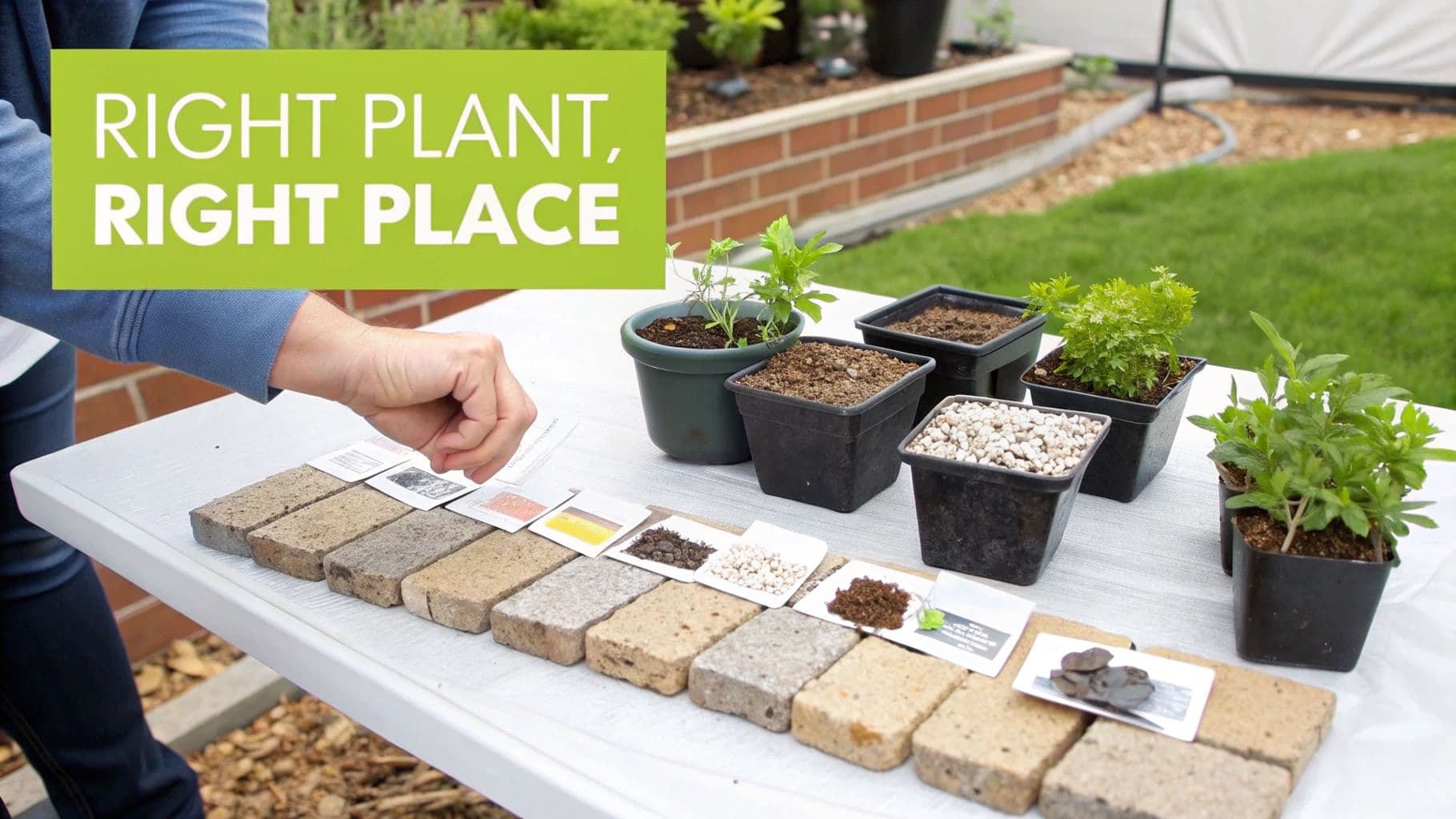
With a solid visual plan from your AI landscape generator, you can stop dreaming and start choosing the actual plants and hardscape materials that will bring your design to life. Making the right choices now is the difference between a garden that thrives and one that's a constant struggle.
Picking Plants That Thrive, Not Just Survive
If there's one golden rule in gardening, it's this: right plant, right place. It means you work with your environment, not against it. Remember that sun map you made? It's now your most important shopping guide.
When you're at the nursery, look beyond just the pretty flowers. A truly stunning garden has depth and contrast. Think about creating layers:
- Vary the height. Mix taller anchor plants with mid-sized shrubs and low-growing groundcovers.
- Play with texture. Combine plants with big, bold leaves with those that have fine, feathery foliage.
- Commit to a color palette. A professional design sticks to two or three main colors and repeats them throughout the space.
A thoughtful landscape design is a living discussion with nature. The choices you make in plants and materials are your response to what the land has already told you. Listen carefully, and the conversation will be a beautiful one.
Selecting Your Hardscape Materials
Hardscaping refers to all the non-living elements in your design—the patios, paths, walls, and borders. These are the bones of your landscape, and material choices impact the final look, cost, and maintenance. What you choose really depends on how you plan to use the space. A sleek dining patio needs a smooth, stable surface, while a meandering path through a cottage garden can be more informal.
Beginner-Friendly Plant and Material Options
| Item | Best For | Average Cost | Maintenance Level |
|---|---|---|---|
| Pavers | Patios and formal walkways requiring a durable, level surface. | Moderate to High | Low |
| Gravel/Pea Stone | Casual paths, seating areas, and modern designs on a budget. | Low | Medium |
| Flagstone | Naturalistic patios and stepping-stone paths for a rustic feel. | High | Low to Medium |
| Decomposed Granite | Inexpensive, soft-looking paths and informal patios in dry climates. | Low | Medium |
Choosing materials that fit both your budget and your lifestyle is key. A little forethought here goes a long way.
Bring Your Design to Life on a Budget
Turning your design into a real-world oasis is where the real magic happens. It's also the point where many people get overwhelmed, especially when thinking about the cost. The secret? Don't think of it as one massive, expensive project. The best approach is to treat it as a series of smaller, achievable victories spread out over time.
This strategy is called phased implementation, and it's how professionals and savvy homeowners get things done without breaking the bank. It breaks the project into manageable pieces you can tackle as your time and budget allow.
Prioritize for Impact and Function
Instead of trying to do everything at once, zero in on what will give you the most bang for your buck right away. What will immediately improve how you use your yard? For most people, that means starting with the "bones" of the landscape.
- Hardscaping First: Think patios, walkways, decks, and retaining walls. These foundational elements are usually the most disruptive to install, so getting them out of the way first is a smart move.
- Planting in Stages: With the hardscape in place, move on to the plants. Start with the biggest items, like trees or foundational shrubs that need years to mature. Next season, fill in with perennials and groundcovers. Finally, sprinkle in annuals each spring for pops of color.
This step-by-step process transforms a stressful overhaul into an exciting journey where you see progress with each phase.
Budgeting Smarter, Not Harder
Your detailed plan is your most powerful tool for keeping costs in check. When you use an AI design, you can get accurate estimates for materials, preventing waste from over-buying. You'll know the exact square footage for that new patio, how much sod a new lawn takes, or the precise linear feet needed for garden edging.
Don't let a grand vision paralyze you. The most successful landscape design for beginners is one that is built thoughtfully over time, allowing both your skills and your garden to mature together.
If you're just getting into landscape design, you're joining a booming field. The U.S. market swelled to $153 billion in 2024, with much of that growth coming from residential projects. By planning intelligently, you can ensure every dollar you spend directly improves your home's curb appeal. You can find more landscaping industry trends on RealGreen.com.
Foundational DIY Wins
You don't need to be a seasoned pro to make a huge impact. Start by focusing on foundational tasks that deliver big results. Properly preparing a new garden bed is one of the most important first steps. This means clearing out weeds and old grass, then enriching the soil with good-quality compost. Learning simple skills, like how to lay a weed barrier and spread mulch, will save you from countless hours of weeding down the road. Every one of these small wins will build your confidence.
Tackling Common DIY Landscape Design Questions
Diving into a landscape project can feel overwhelming. It's normal to have questions. Let's walk through some of the most common ones from beginners to help you get started on the right foot.
How Much Should I Budget for a DIY Landscape Project?
A DIY project budget can be all over the map—from $200 for a simple garden bed refresh to $5,000 or more for a complete overhaul. Your biggest budget driver will always be your choice of materials. My best advice? Phase your project. Don't try to do it all at once. Tackle one area this season, see how the budget feels, and then move on to the next. Using an AI design tool beforehand is a huge money-saver, as it helps you calculate exactly how much material you'll need.
What are the Biggest Mistakes Beginners Make?
Hands down, the number one mistake is the lack of a plan. It's tempting to go to the nursery, fall in love with beautiful plants, and bring them home impulsively. But without knowing their mature size or light needs, you often end up with an overcrowded and unhealthy garden. The second-biggest misstep is ignoring your site's reality. Planting a sun-loving perennial in deep shade is a recipe for disappointment. Analyzing your yard first saves you from frustration and wasted money.
A thoughtful landscape design is a living conversation with nature. Your plan is your opening line—make it a good one, and the rest of the dialogue will flow beautifully.
Can I Really Do This with Zero Experience?
Yes, you absolutely can. While a professional brings experience, the design process itself has become incredibly accessible. The secret is following a logical process: figure out what you want, understand your space, sketch out a plan, and pick the right plants for the right spots. To see this method in action, you can explore our other design guides on the blog.
AI tools really shine here. They close the experience gap by letting you see what professional concepts look like in your yard. It’s a fantastic, hands-on way to learn about design principles like scale, balance, and color—all without any risk.
Ready to stop guessing and start visualizing? With OutdoorBrite, you can turn a photo of your yard into dozens of professional design concepts in seconds. See exactly how different styles, plants, and materials will look before you commit, and build a plan you can execute with confidence. Try OutdoorBrite and start designing your dream yard today!