21 Backyard Renovation Ideas in the Order to Build Them
Twenty-one backyard renovation ideas sorted into the order a crew builds them, each with a typical cost range, plus budget tiers, a timeline and what to DIY.
The most expensive mistake in a yard makeover usually isn't the patio you picked. It's building that patio first and then tearing up a corner of it to run a drain line the next spring. With backyard renovation ideas, the order matters as much as the ideas, and most inspiration galleries skip it entirely.
So this list runs in build order. It starts with the ground (drainage and grading), moves through the things buried under it, then hardscape, then plants, then lighting and furniture. Each idea has a typical installed cost range from 2025-2026 cost guides, so you can see where a budget goes before you call anyone.
The photos are AI design concepts made with OutdoorBrite, not finished client projects. The first four show one yard at three budget levels.
Quick answer: what order should you renovate a backyard?
Renovate a backyard from the ground up: fix drainage and grading first, then run irrigation lines and lighting wire, then build hardscape (patio, deck, walls, fence), then plant beds, trees and lawn, and finish with lighting fixtures and furniture. Heavy equipment and concrete trucks crush anything planted before them, so plants always come late.
| Phase | What happens | Typical cost range |
|---|---|---|
| 1. Ground | Grading, drainage, retaining walls | $500 to $9,000+ |
| 2. Underground | Irrigation, drip lines, low-voltage wire | $300 to $10,000 |
| 3. Hardscape | Patio, deck, paths, fire pit, pergola, fence | $1,000 to $35,000 |
| 4. Softscape | Beds, trees, privacy plants, lawn | $800 to $16,000 |
| 5. Finishing | Lighting fixtures, furniture | $1,000 to $5,000 each |
The ranges come from HomeGuide and Angi and vary a lot by region, yard size and access.
Same yard, three backyard remodel budgets
Before the list, it helps to see what different budgets buy on one ordinary yard. HomeGuide groups backyard renovations into tiers: up to $10,000 for a minor refresh, $25,000 to $50,000 for a mid-level remodel, and $100,000 to $150,000 for a major one with a pool or a full outdoor kitchen. Angi puts a full backyard renovation at $15,000 to $50,000.
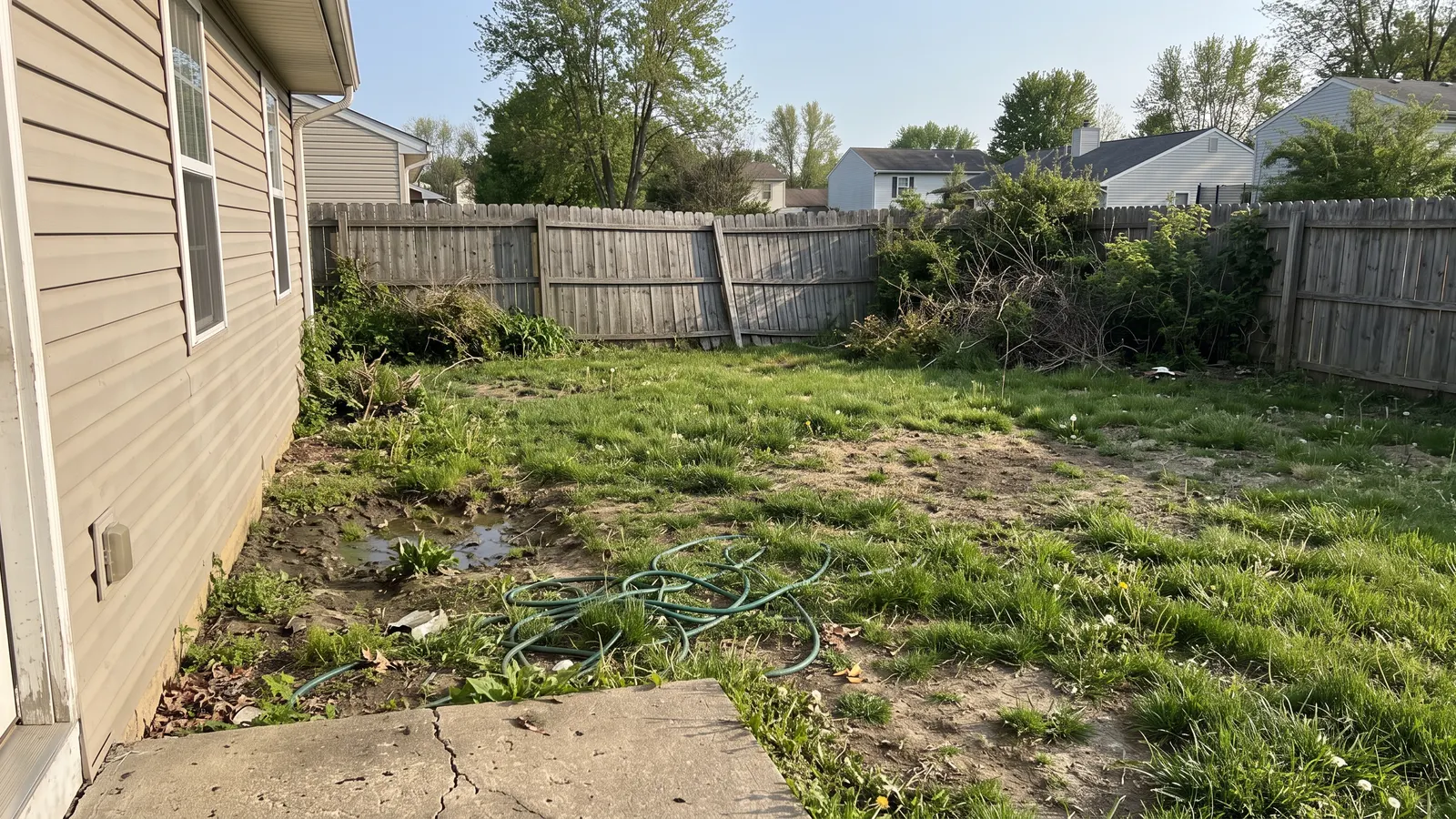
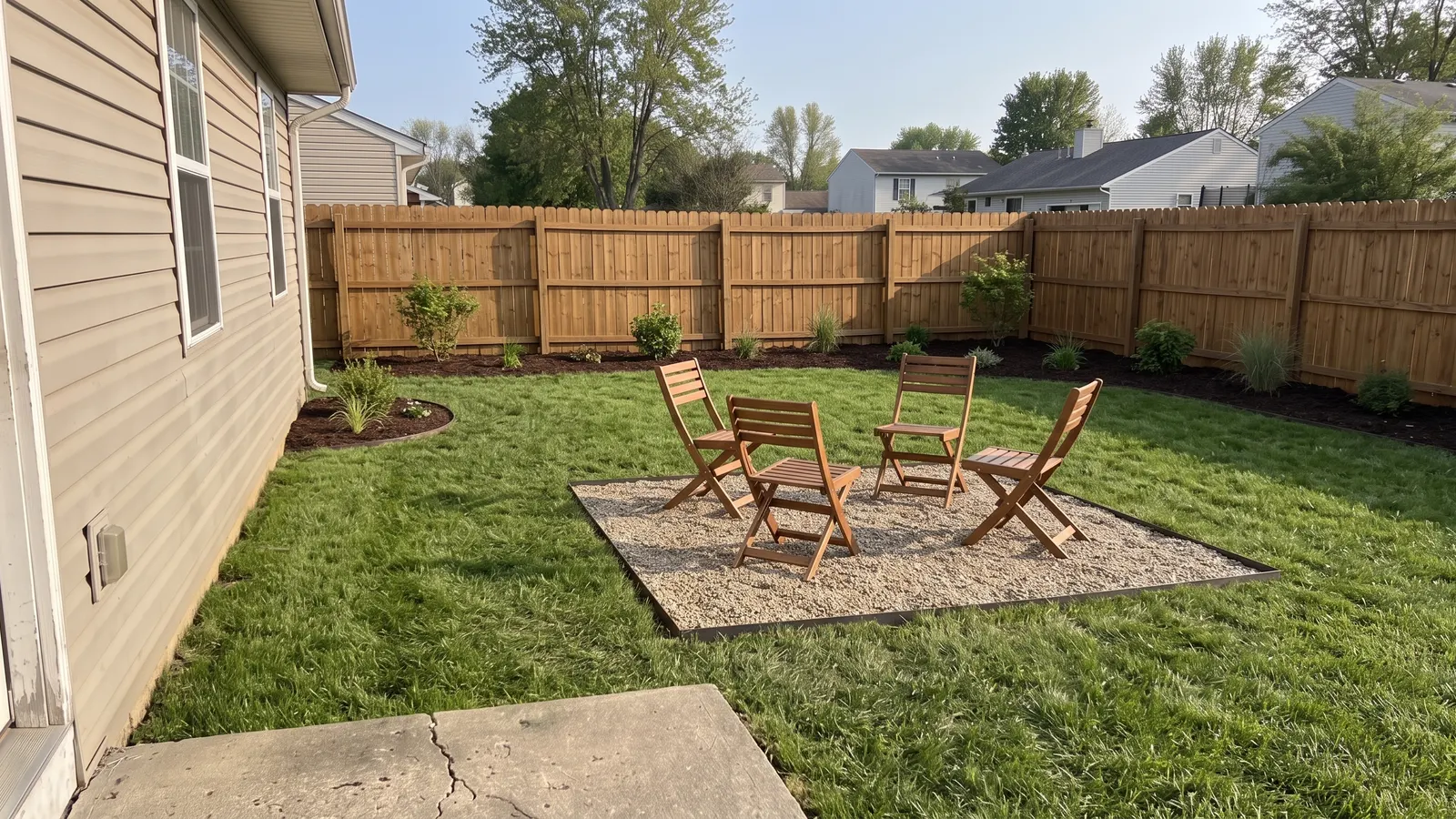
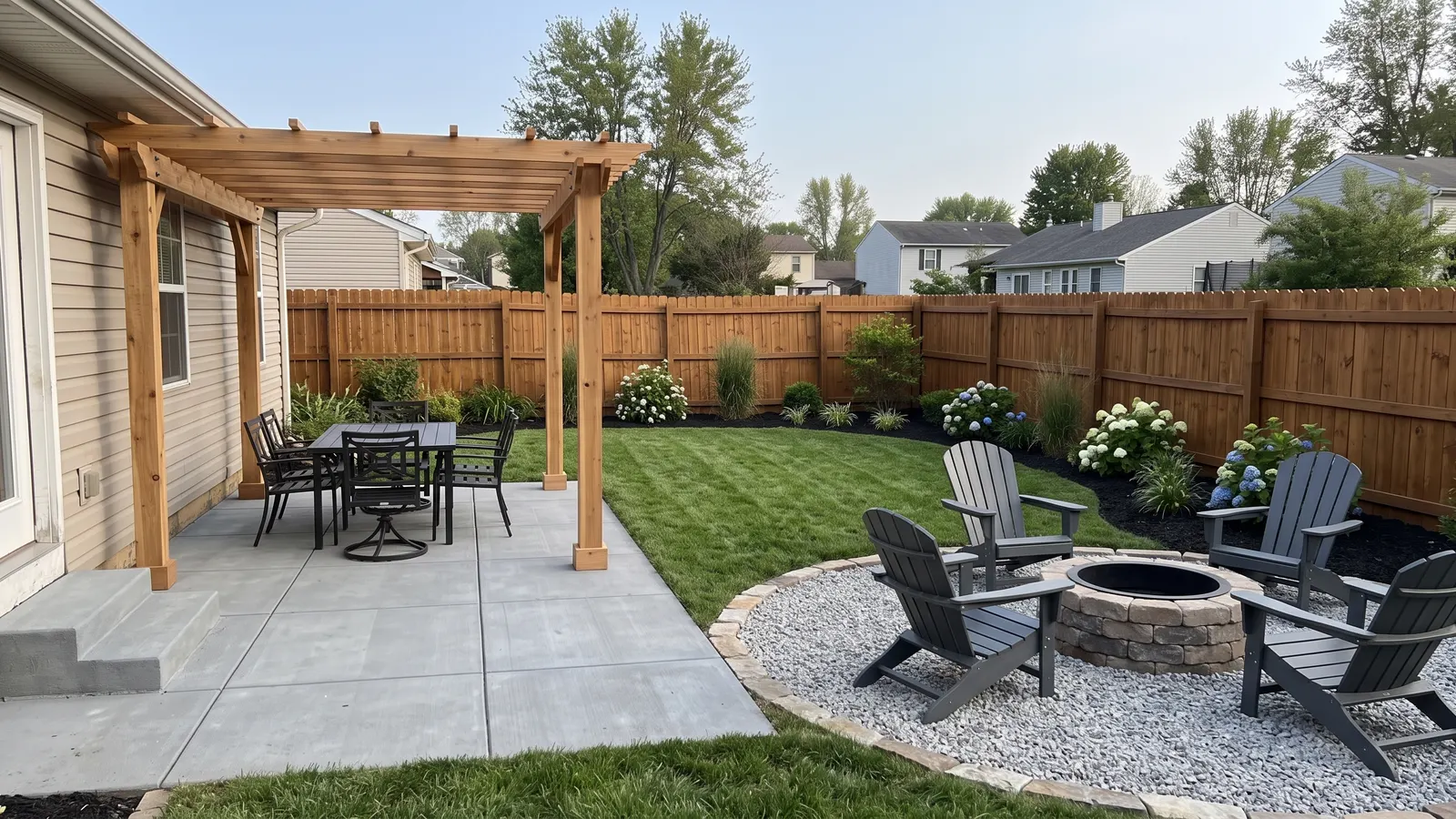
Here is the yard above as three AI concepts. The house, fence line and camera angle stay put; only the budget changes.
Around $10,000: fence repaired and stained, a gravel patio, mulched beds with young shrubs, the lawn reseeded.
Around $25,000: a new concrete patio, a fire pit area on gravel, a pergola kit and fresh beds along the fence.
Around $50,000: a larger paver patio with a stone grill island, a pergola lounge, a horizontal cedar fence and layered planting.
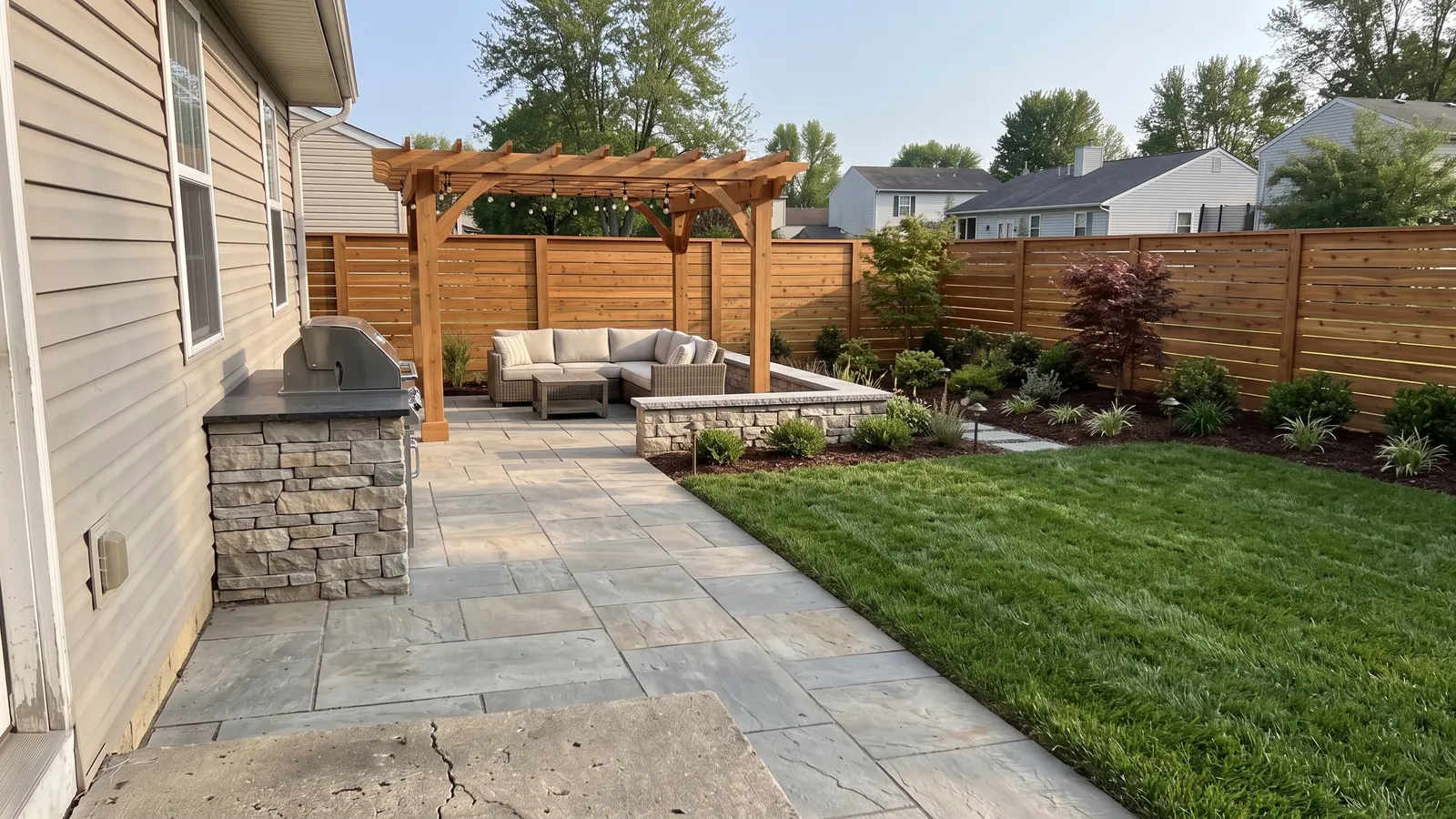
Seeing those three side by side is often what settles the budget conversation in a household. You can see that the jump from $10,000 to $25,000 mostly buys hardscape, and that most of the jump to $50,000 goes into the kitchen and the fence.
Phase 1: fix the ground first
Nothing you build on top will last if water runs toward the house or pools on the lawn every spring. This phase is dull, mostly invisible, and the one part of the job you can't easily redo later.
1. Regrade so water runs away from the house
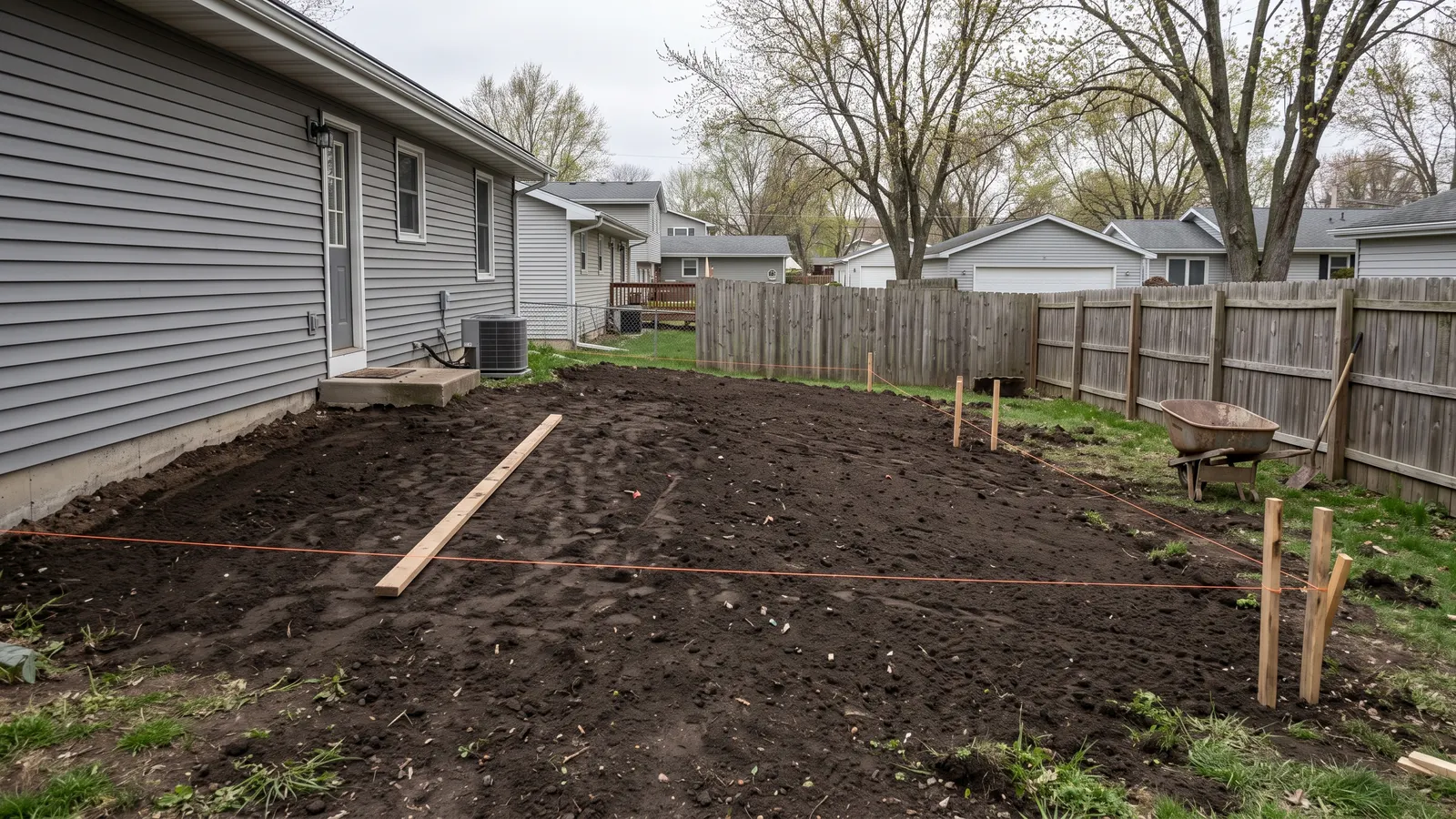
If the yard tips toward your foundation, fix that before anything else. A grader reshapes the soil so the first few feet next to the house fall away from it, then the rest of the yard drains toward a side or back corner. Do this while the yard is already torn up and it's cheap; do it after the patio and you're paying for demolition too.
Cost: about $500 to $1,000 to level a small area, $1,000 to $5,000 to regrade a whole backyard (HomeGuide).
2. Carry runoff with a dry creek bed
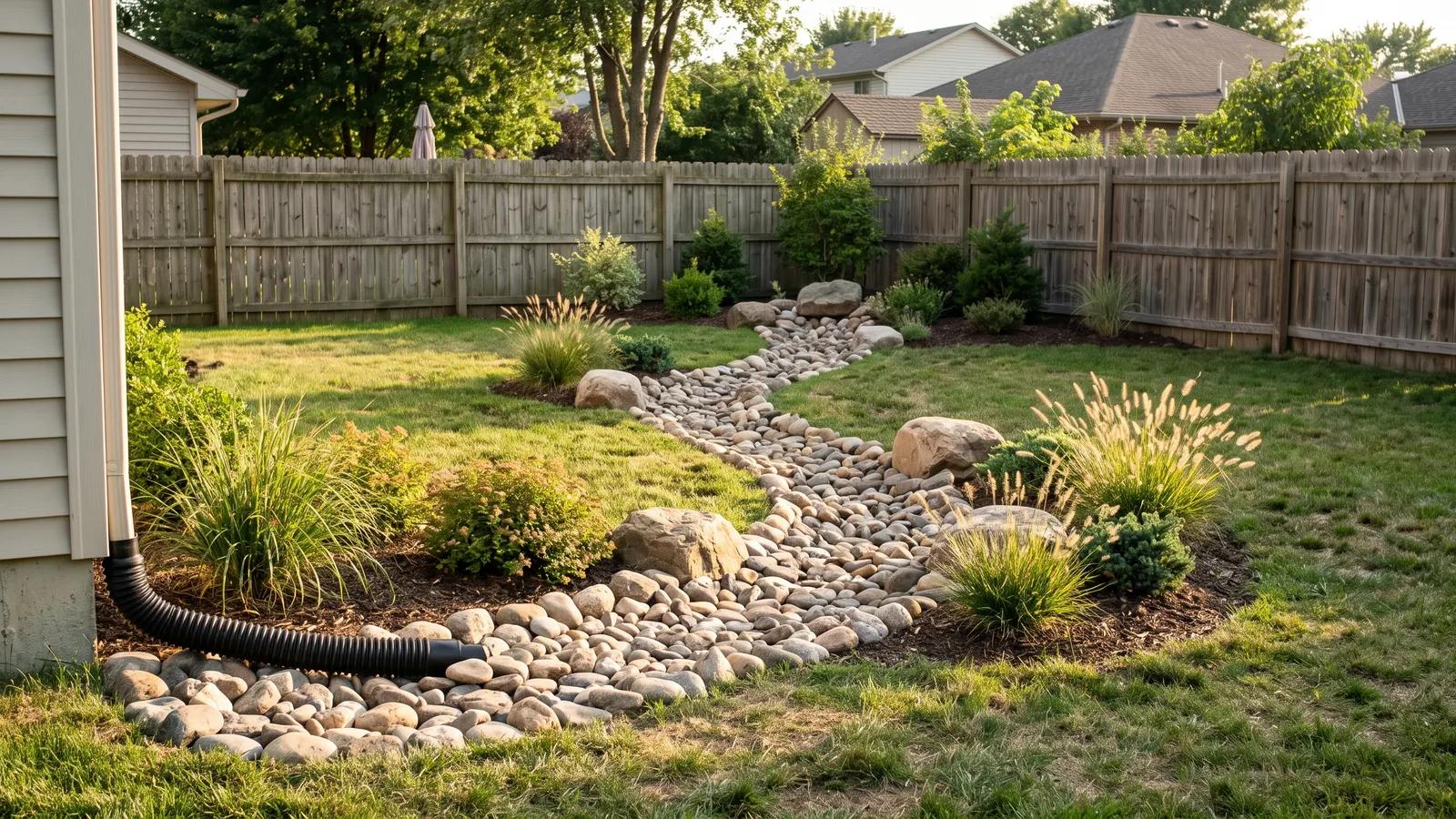
A dry creek bed is a shallow channel lined with river rock that moves water from a downspout or low spot to somewhere it can soak in. It looks like a design feature in July and works as a drain in April. Where the water has nowhere to go on the surface, a buried French drain does the same job out of sight.
Cost: drainage work runs $1,000 to $4,000 when underground pipe is needed (HomeGuide). A short DIY creek bed is mostly rock, at $40 to $100 per cubic yard for gravel (Angi).
3. Put a rain garden at the downspout
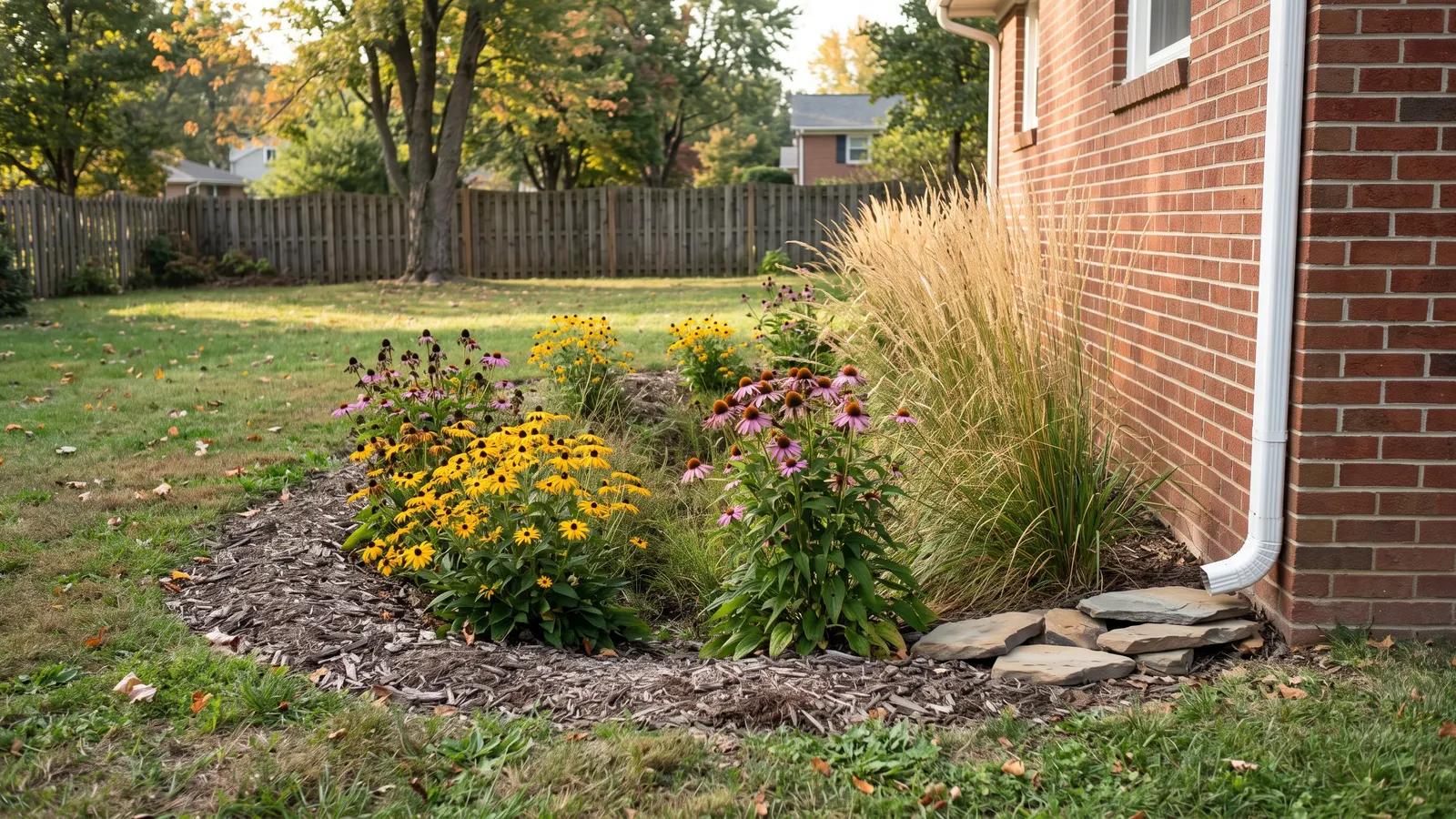
A rain garden is a shallow planted dip that catches roof runoff and lets it drain within a day or two. Native plants that tolerate both wet feet and dry spells do best: coneflowers, black-eyed Susans, switchgrass. Nebraska Extension advises keeping it at least 10 feet from the foundation so you aren't parking water next to the basement.
Cost: mostly digging and plants. A small one is a weekend project; border plants run $2 to $50 each (Angi).
4. Turn a slope into a flat terrace
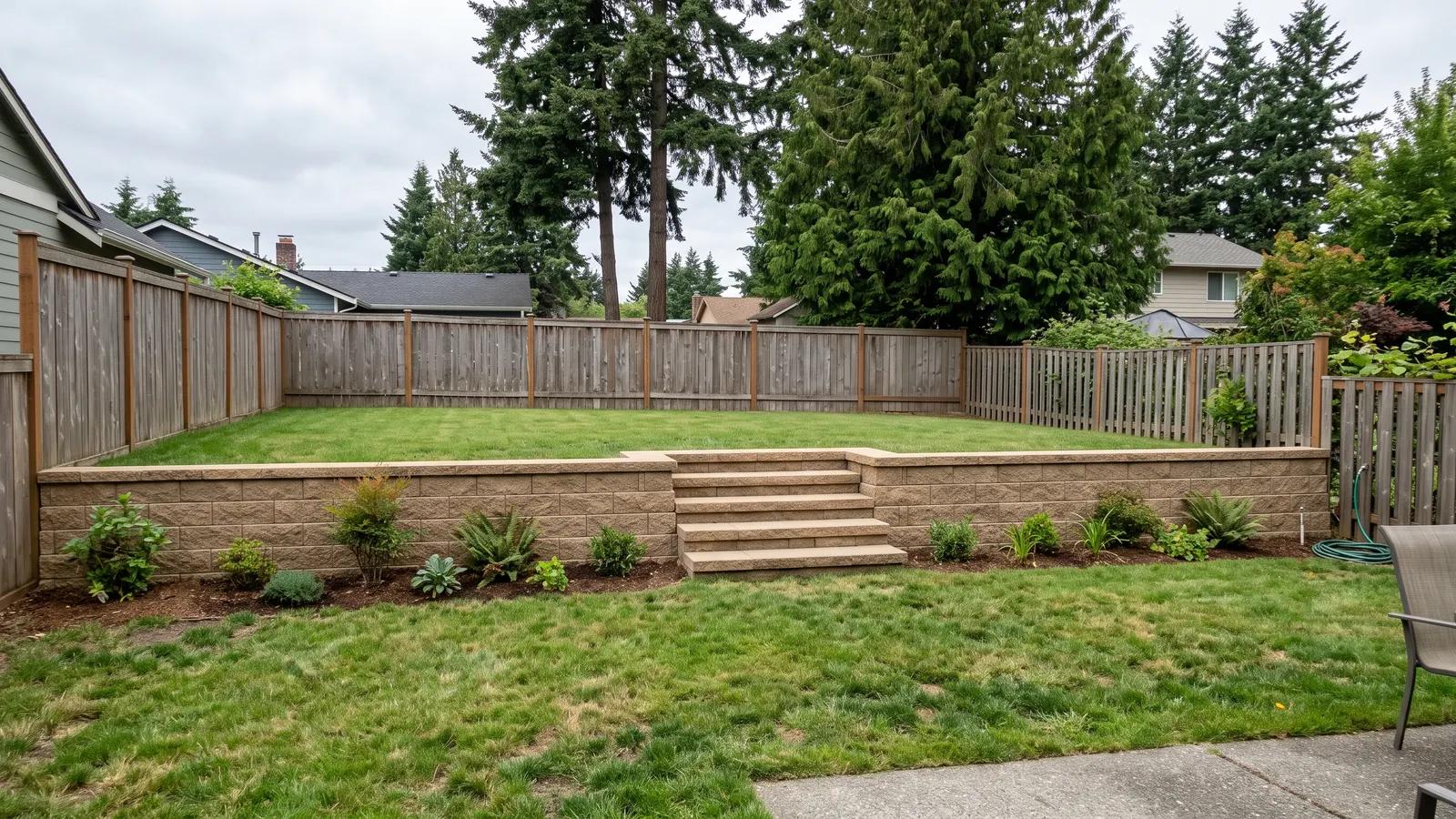
A slope you can't use becomes a lawn or patio you can once a retaining wall holds it back. Segmental concrete block is the common choice for walls up to about three feet. Above 4 feet of retained soil, the International Residential Code calls for an engineered design, and many towns require a permit well before that.
Cost: $35 to $65 per square foot of wall face (HomeGuide); Angi's national average is about $6,083.
Phase 2: run what goes underground
Anything that needs a trench goes in now, before pavers and sod cover the route. Call 811 a few business days before anyone digs (Pennsylvania, for example, requires three) so the utility lines get marked.
5. Lay irrigation and lighting wire before you pave
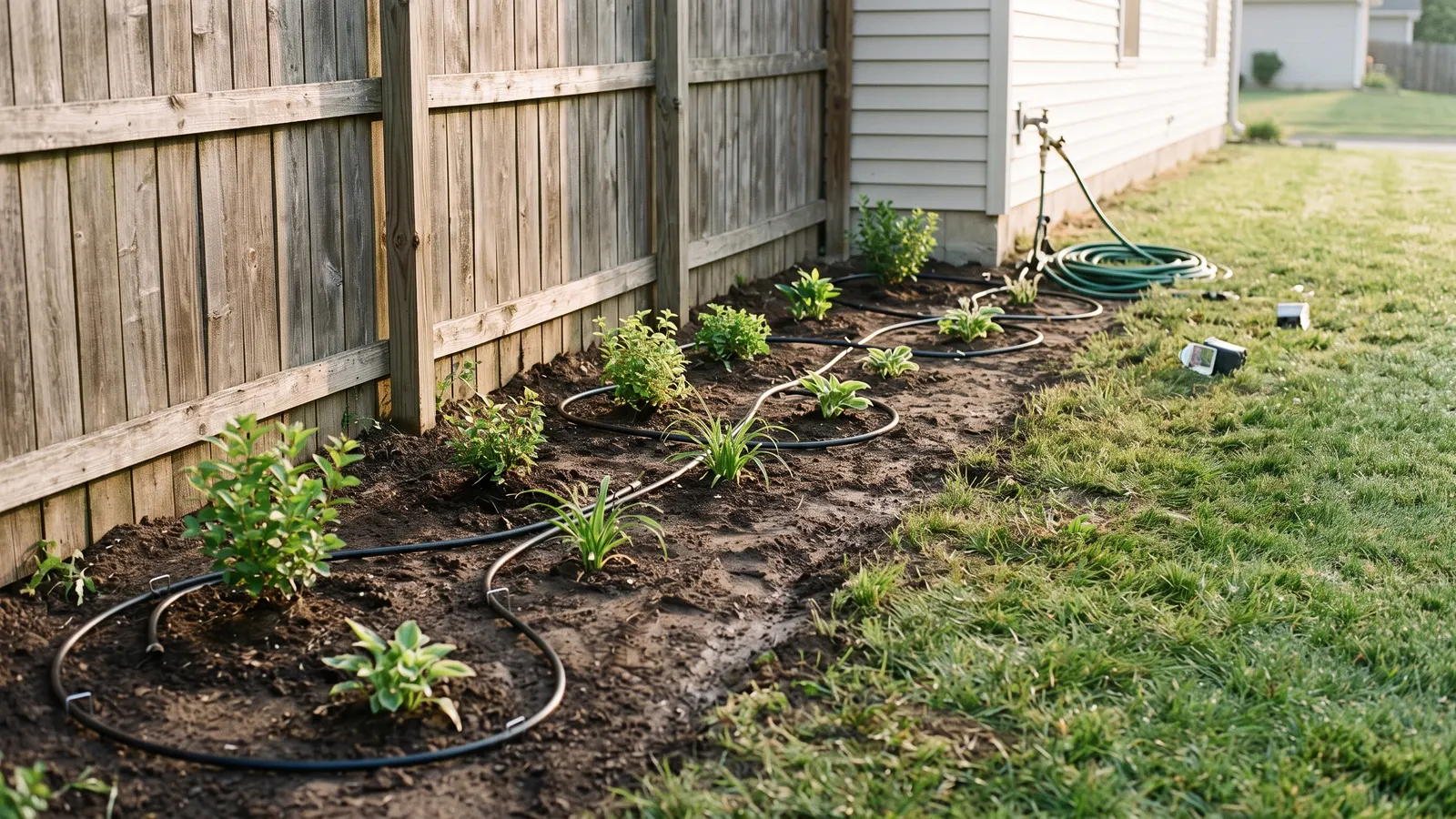
Drip lines for the beds, sprinkler pipe for the lawn, and a run of low-voltage cable for future lights all go in during this phase. Slide a length of PVC pipe under where the patio or path will go, too. A sleeve costs a few dollars and saves cutting pavers later when you want a light on the far side.
Cost: in-ground sprinklers run $600 to $2,000 per zone, and most yards need three to five zones. Drip irrigation for beds is $300 to $1,200 per zone (HomeGuide).
Phase 3: build the hardscape
Hardscaping is everything built rather than grown: patios, decks, paths, walls, fences. It's the bulk of most renovation budgets and the part you'll live with longest, so this is where a visual of the finished space earns its keep.
6. Add a paver patio off the back door
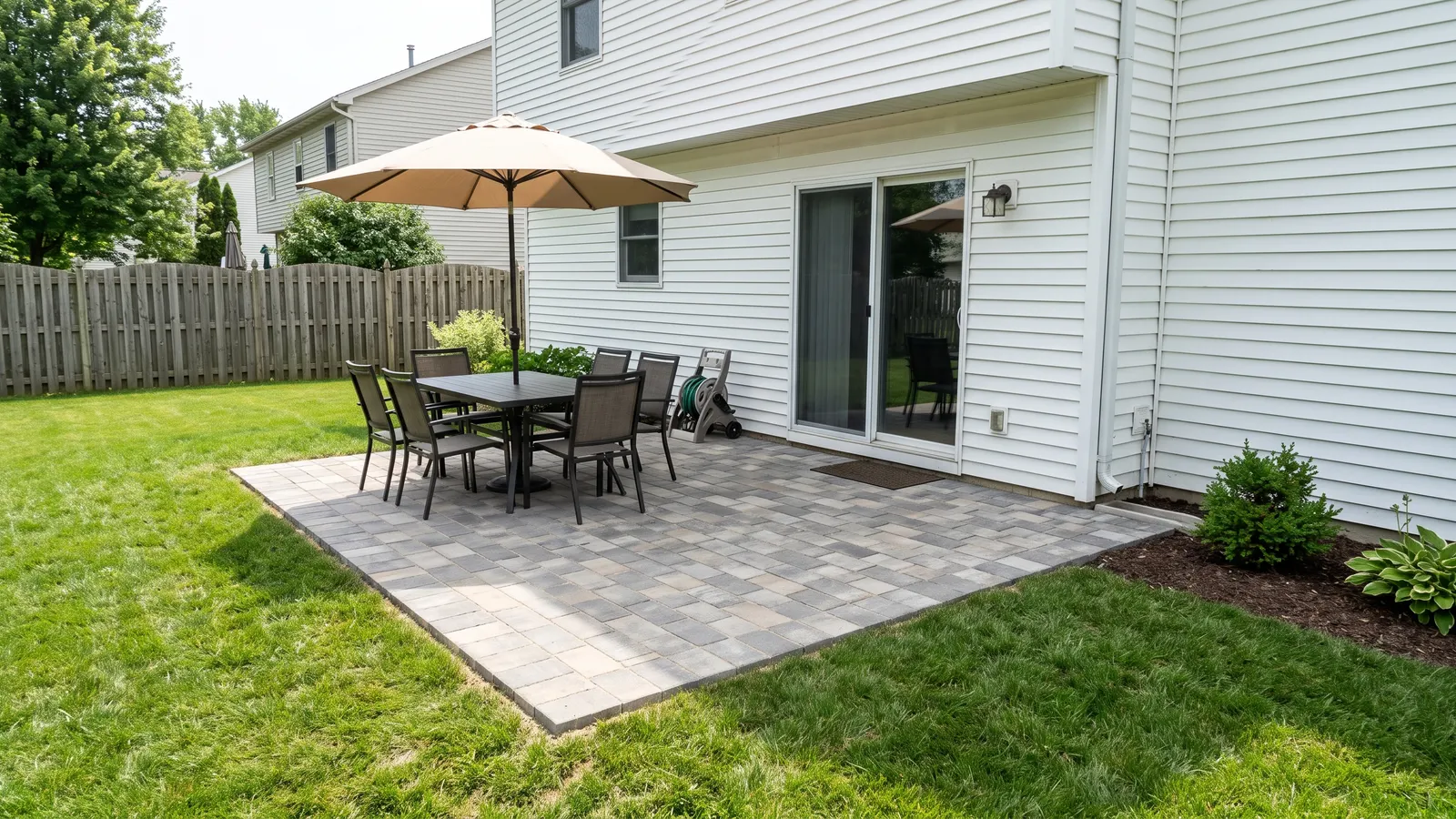
Put the main patio where you already walk out of the house. A dining table for six needs about 12 by 12 feet once chairs pull out; 12 by 16 leaves room for a grill. Concrete pavers are the middle-ground choice, cheaper than natural stone and easier to repair than a poured slab.
Cost: $10 to $17 per square foot installed, so $1,400 to $2,500 for a 12 by 12 patio (HomeGuide). The paver calculator turns your patio size into a paver and base count.
7. Build a ground-level deck on uneven ground
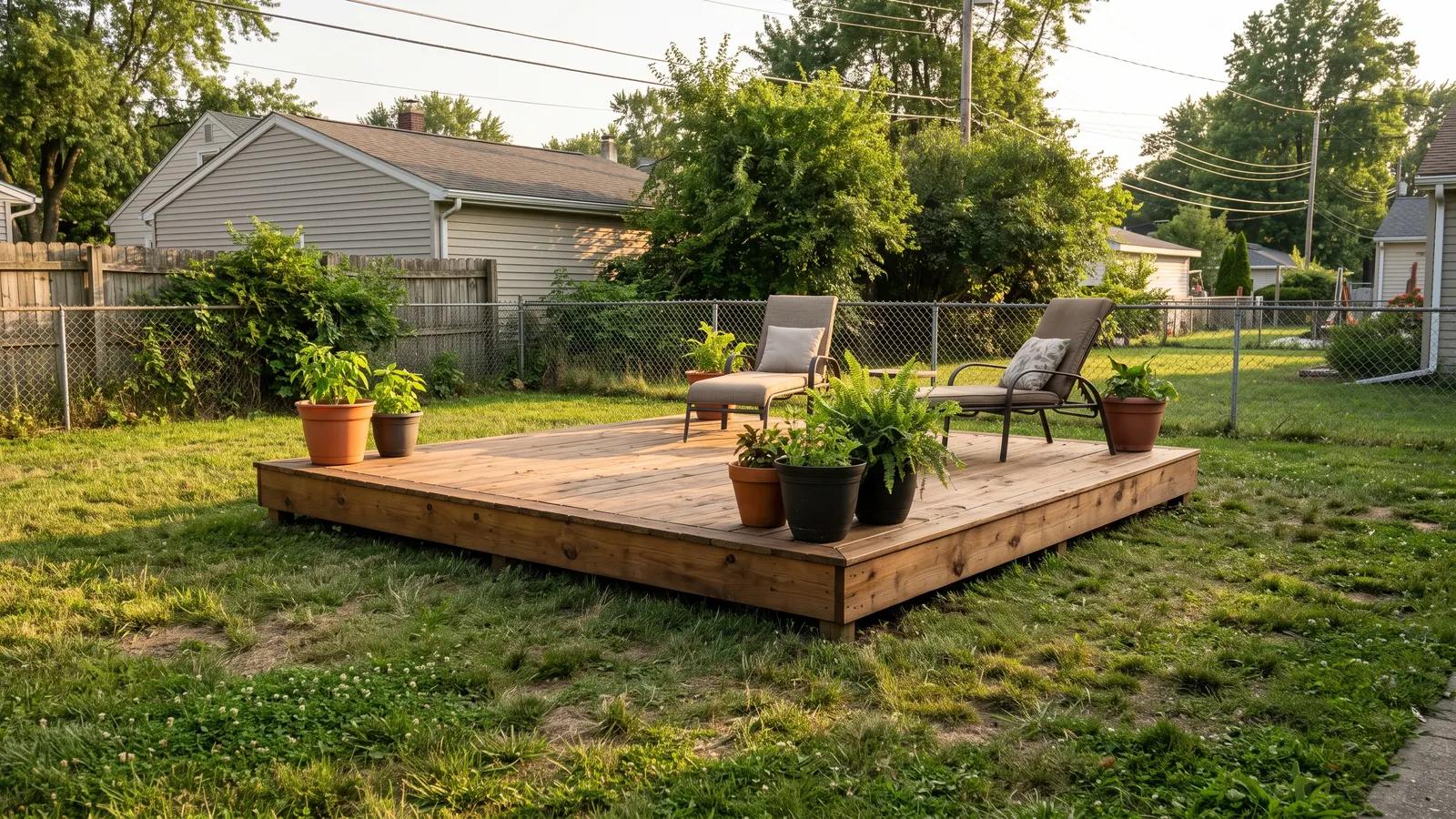
Where the ground dips or roots make paving tricky, a low deck sits on footings and ignores the bumps. Ground-level and floating decks usually skip railings, which keeps the cost and the look down.
Cost: $25 to $50 per square foot for pressure-treated wood, about $3,600 to $7,200 for 12 by 12; floating decks run $20 to $25 per square foot (HomeGuide). See what a deck costs to build for composite and size breakdowns.
8. Go cheap with a gravel patio
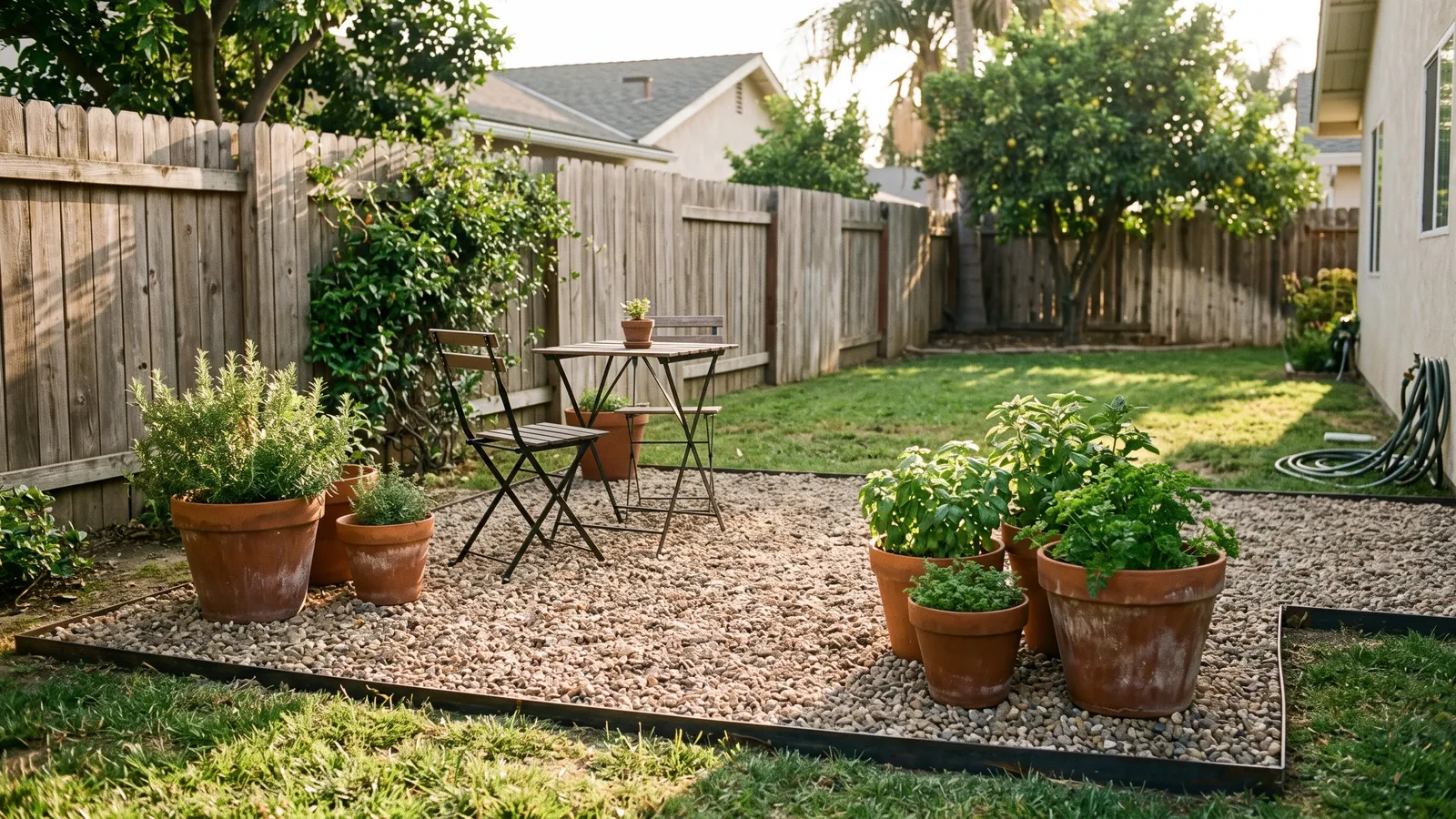
Gravel gives you a usable patio for a fraction of paver money, and it drains on its own. Steel or aluminum edging keeps the stones off the lawn. It's also a good holding move: live with the layout for a year, and pave over the same base later if you love it.
Cost: gravel runs $40 to $100 per cubic yard (Angi). A small DIY gravel patio often comes in under $1,000 with edging and landscape fabric.
9. Connect zones with a stepping-stone path
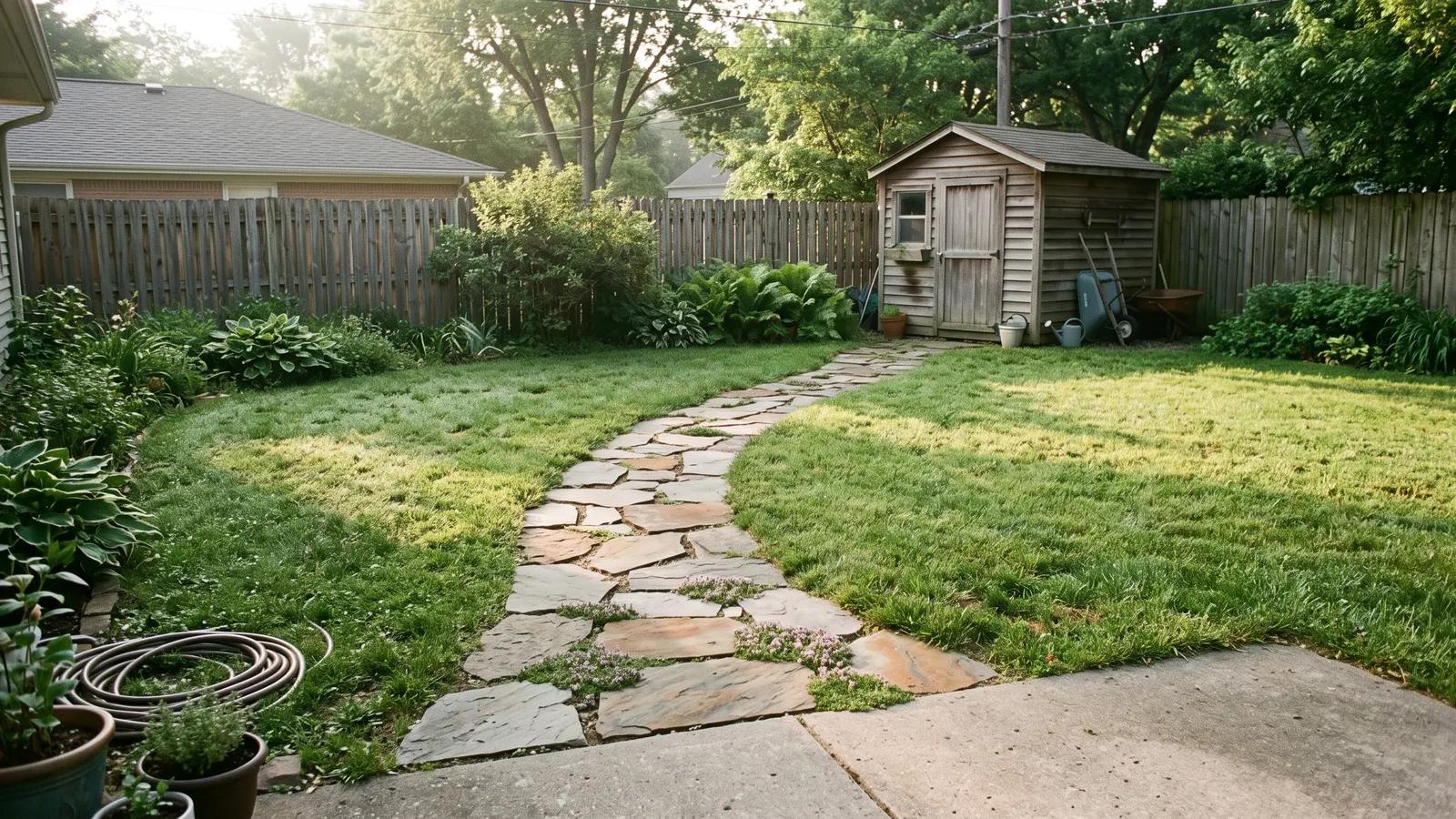
Look at where the grass is worn: that's the path people already take. Paving it with flagstone or stepping stones connects the patio, the shed and the gate, and stops the mud track. Space stones for a normal stride, roughly 24 inches center to center.
Cost: about $1,500 to $3,500 for a 5 by 20 foot stone walkway (HomeGuide). Stepping stones set in lawn cost much less.
10. Give the fire pit its own circle
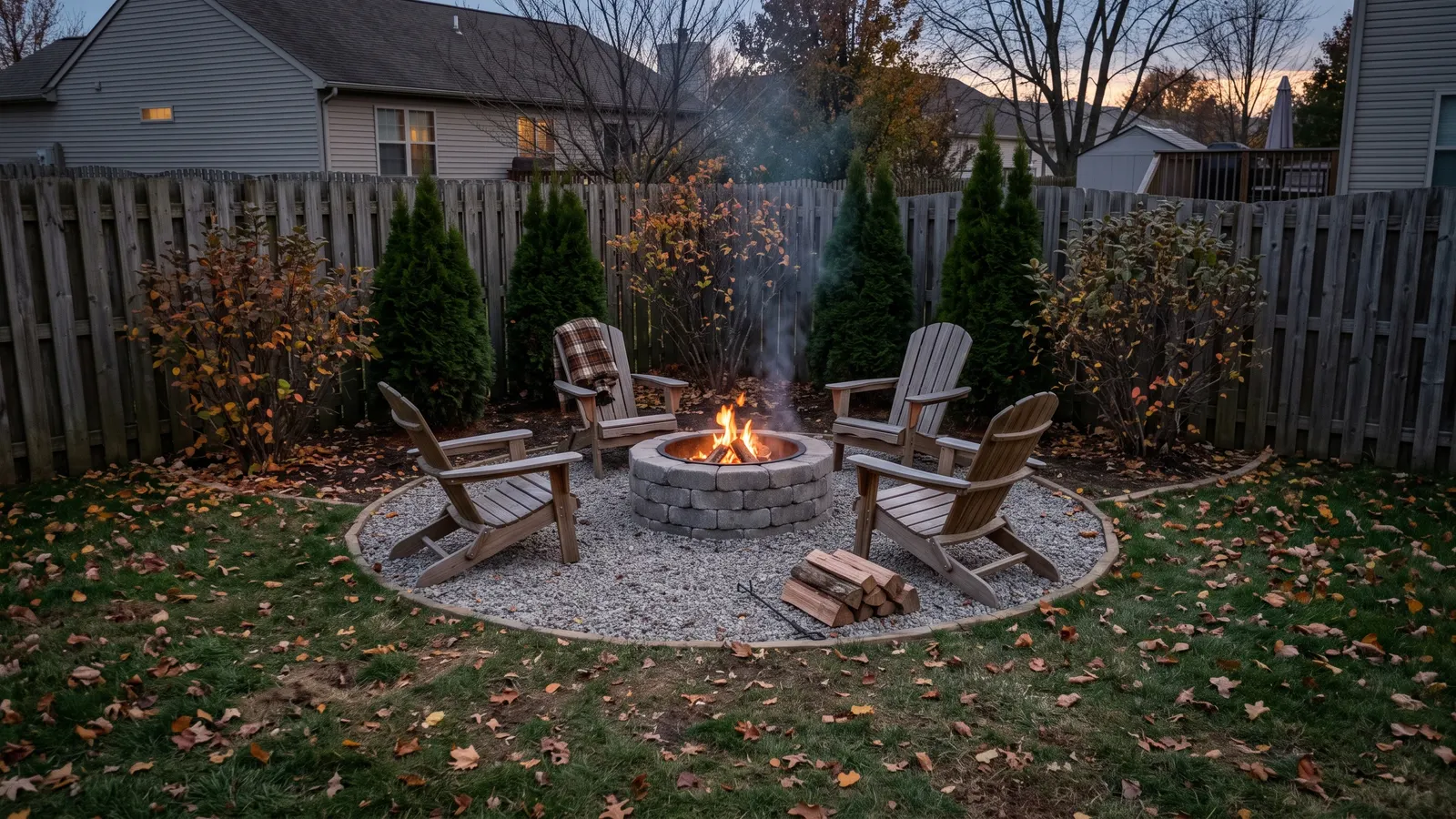
A fire pit works best a short walk from the main patio, with its own gravel pad and chairs that stay put. Check your town's rules on distance from structures and fences before you pick the spot. Many set a minimum, and some ban wood burning entirely.
Cost: $325 to $2,000 for the fire pit, or $2,200 to $6,800 for a patio built around one (HomeGuide).
11. Shade the patio with a pergola
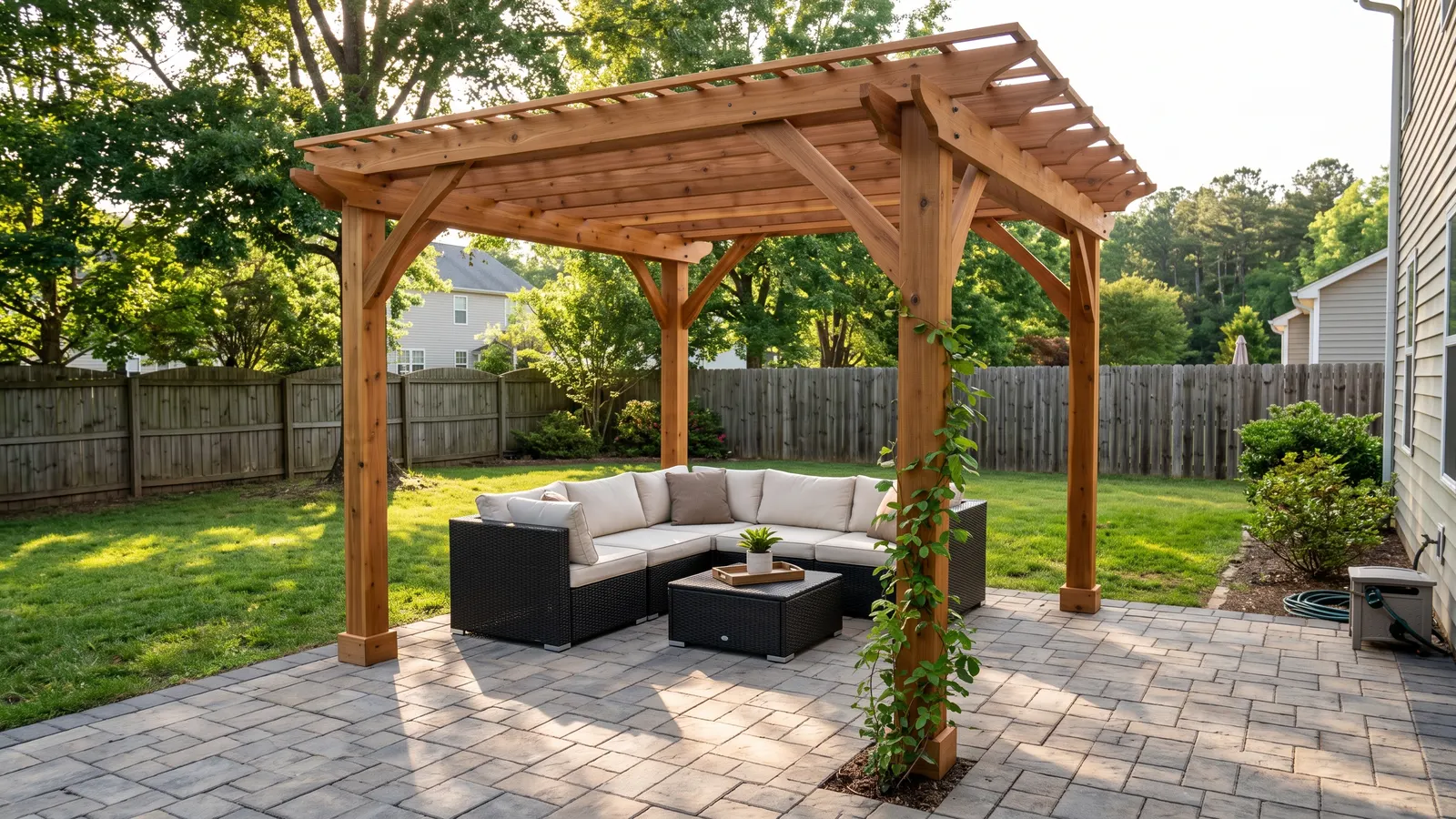
A pergola gives a patio a ceiling, which makes it feel like a room, and gives partial shade that grows as a vine fills in. Kits go up in a weekend or two. Footings should go in with the patio, not drilled through finished pavers afterward.
Cost: $1,500 to $6,000 for a basic pergola, $4,300 to $9,400 custom (HomeGuide).
12. Add a grill station or outdoor kitchen
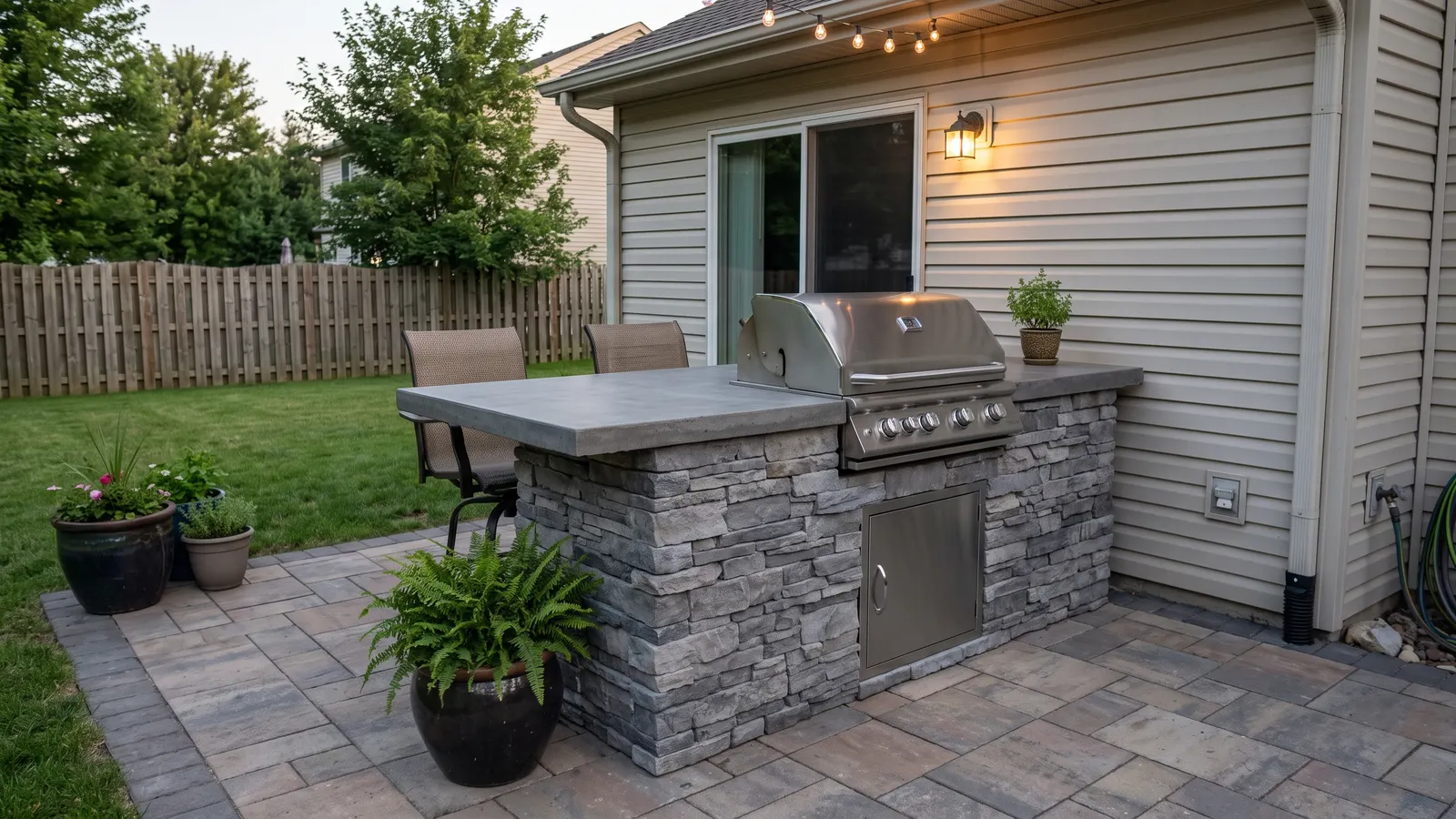
Most households use a straight grill island with some counter space far more than a full kitchen. Keep it close to the back door, since you'll be carrying food back and forth. Gas, water and power for it get trenched in Phase 2, which is one more reason to decide on it early.
Cost: $7,000 to $16,000 for a prebuilt outdoor kitchen installed, up to $35,000 custom (HomeGuide).
13. Replace the fence before you plant against it
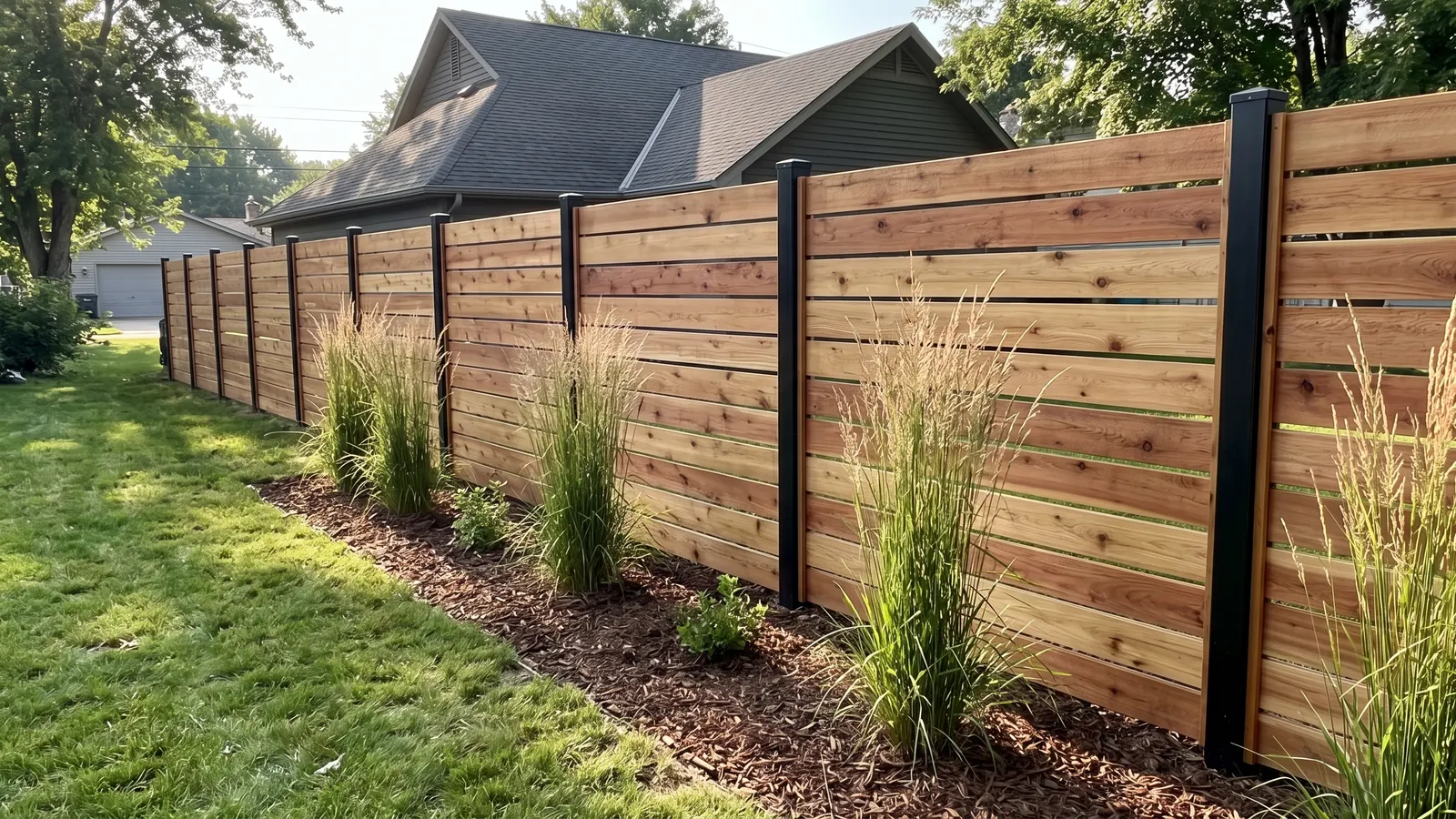
If the fence is near the end of its life, replace it now. Fence crews need a few feet of working room along the line, and that's exactly where your new beds would go. A horizontal cedar fence reads modern; a plain dog-ear privacy fence is the budget pick.
Cost: about $4,000 to $10,000 for 200 linear feet of wood fence, $5,000 to $12,000 for privacy fencing (HomeGuide).
Phase 4: plant last (the softscape)
Softscape is the living part: beds, shrubs, trees, lawn. It goes in after the heavy work so nothing gets crushed by a skid steer or buried under a concrete splash. Spring and early fall are the easiest planting seasons in most of the US.
14. Shrink the lawn and widen the beds
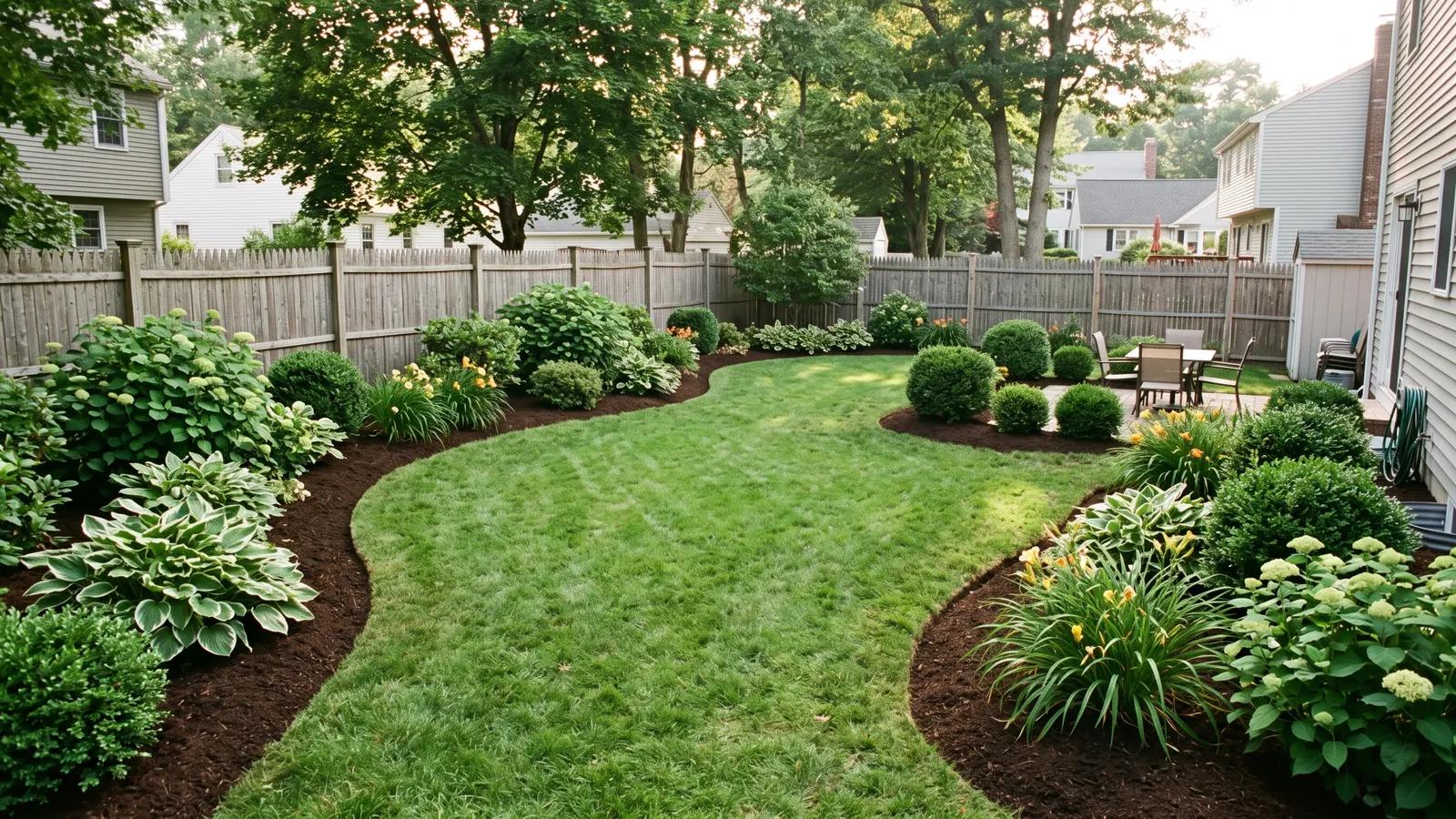
Narrow strips of mulch along the fence look like an afterthought. Beds 4 to 6 feet deep leave room for shrubs in back and perennials in front, and every square foot of bed is a square foot you no longer mow. A clean curve between bed and lawn does a lot of the visual work.
Cost: $800 to $3,000 per flower bed installed (Angi). Mulch runs $15 to $65 per yard delivered, and one cubic yard covers about 110 to 120 square feet at 3 inches (HomeGuide).
15. Plant a native pollinator border
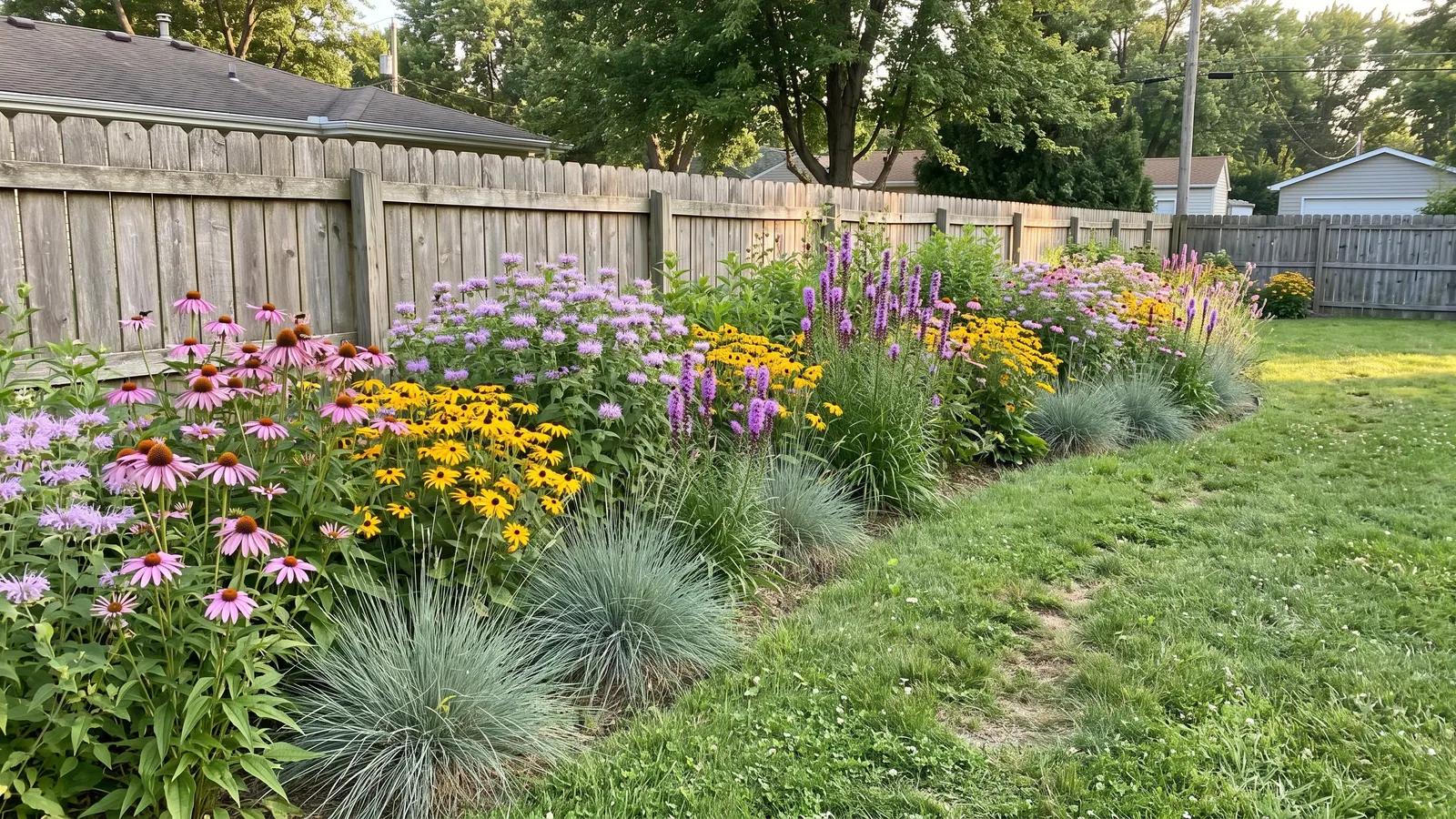
Native perennials planted in drifts handle local weather with little extra water once they settle in, and they bring bees and butterflies. Pick plants for your hardiness zone and sun. A mown path in front keeps the border looking intentional rather than unkempt.
Cost: border plants run $2 to $50 each (Angi). Small plugs fill in within two seasons and cost far less than gallon pots.
16. Screen the neighbors with evergreens
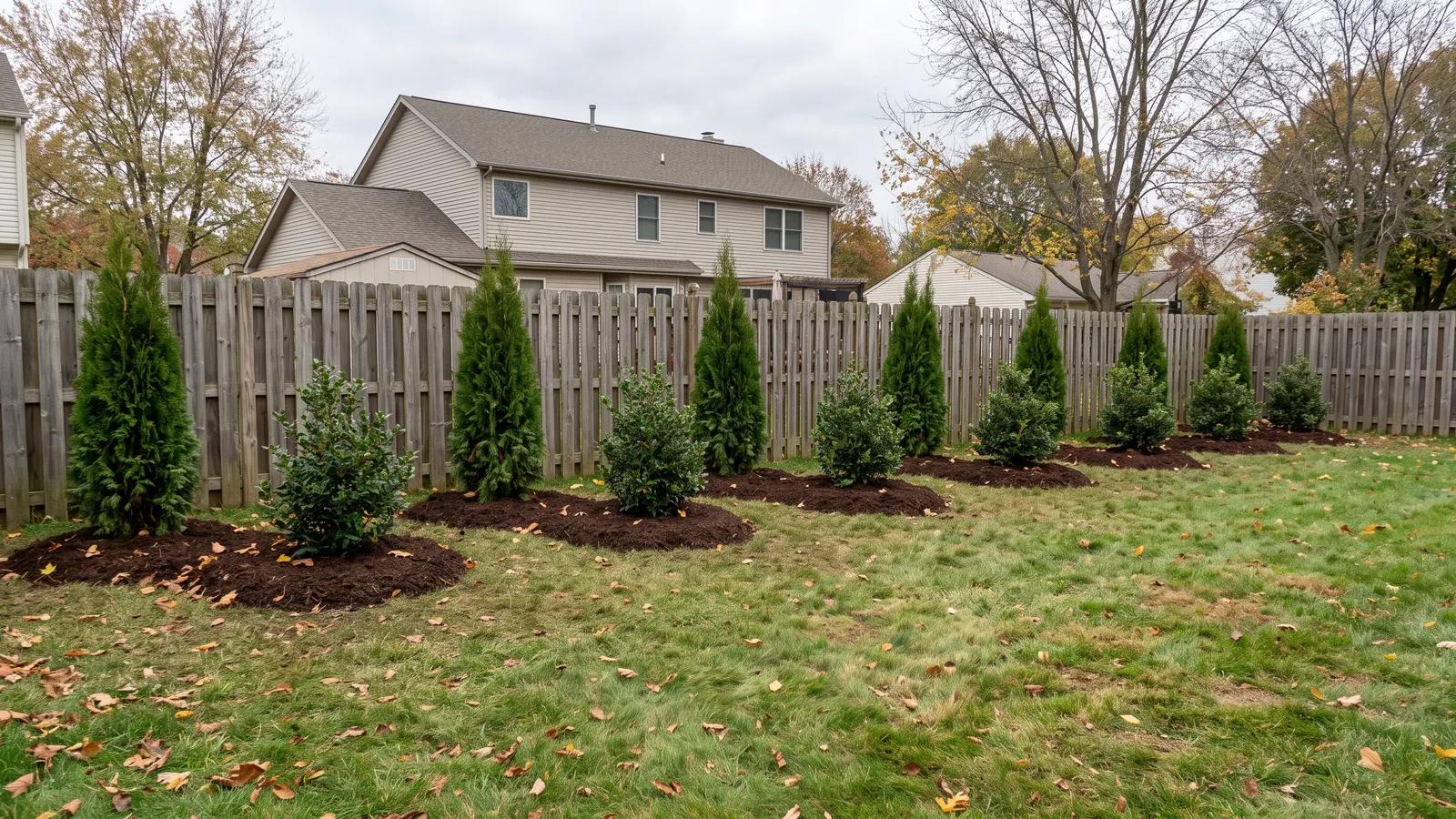
Where a fence can't go higher, plants can. Staggering two kinds of evergreens in a loose zigzag looks more natural than a single straight row and survives better if one variety struggles. Plant for the mature width, not the nursery-pot width, or you'll be thinning in five years.
Cost: small to medium trees up to 10 feet run $200 to $700 each installed (HomeGuide).
17. Plant a shade tree for the afternoon sun
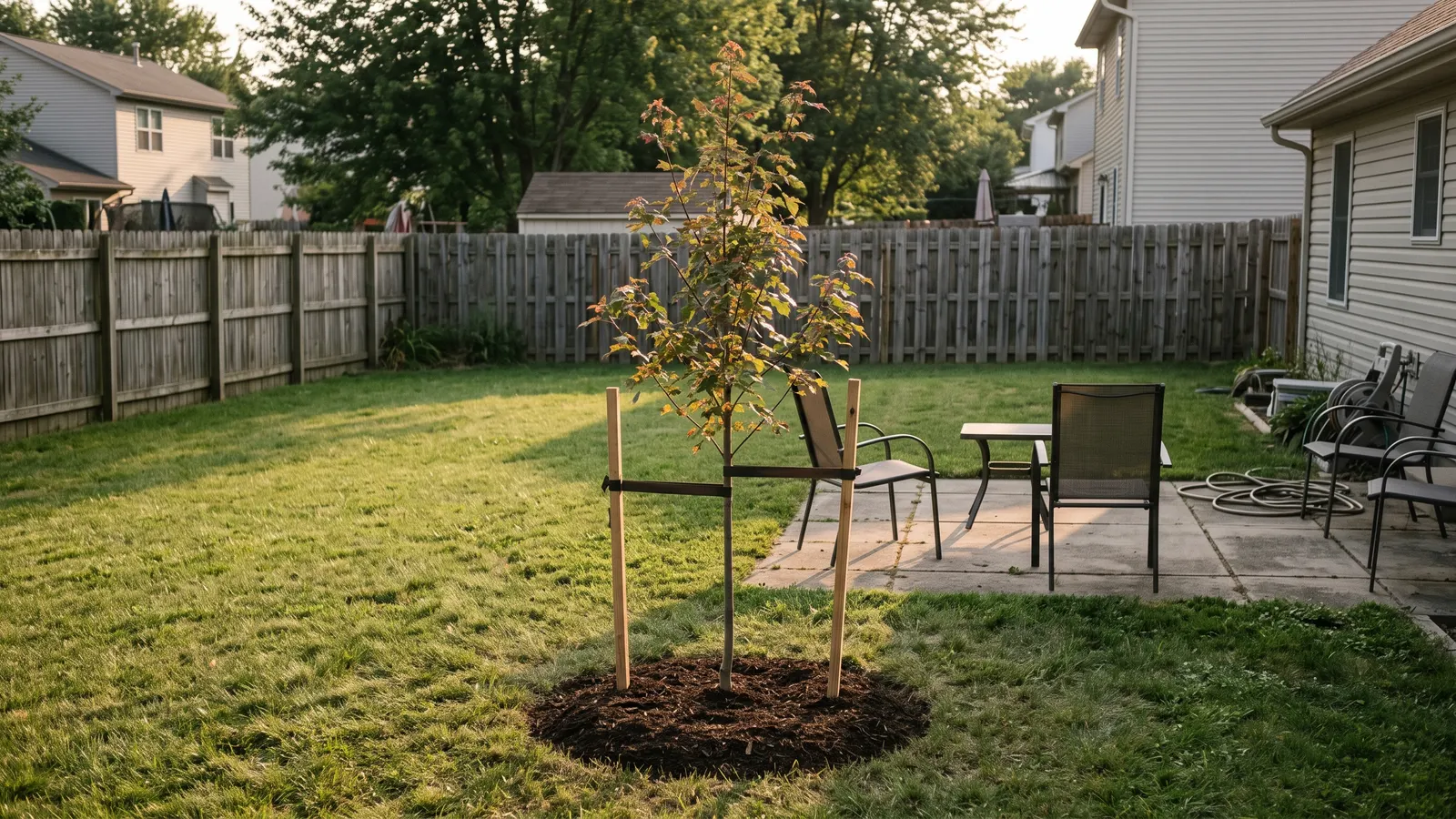
A deciduous tree on the west or southwest side of the patio blocks the hot late-day sun in summer and lets light through in winter. It's the slowest idea on this list, so plant it in year one even if everything else waits. Keep large trees well back from the house, the patio and any sewer line.
Cost: $120 to $2,500 per tree depending on size (Angi).
18. Add raised vegetable beds
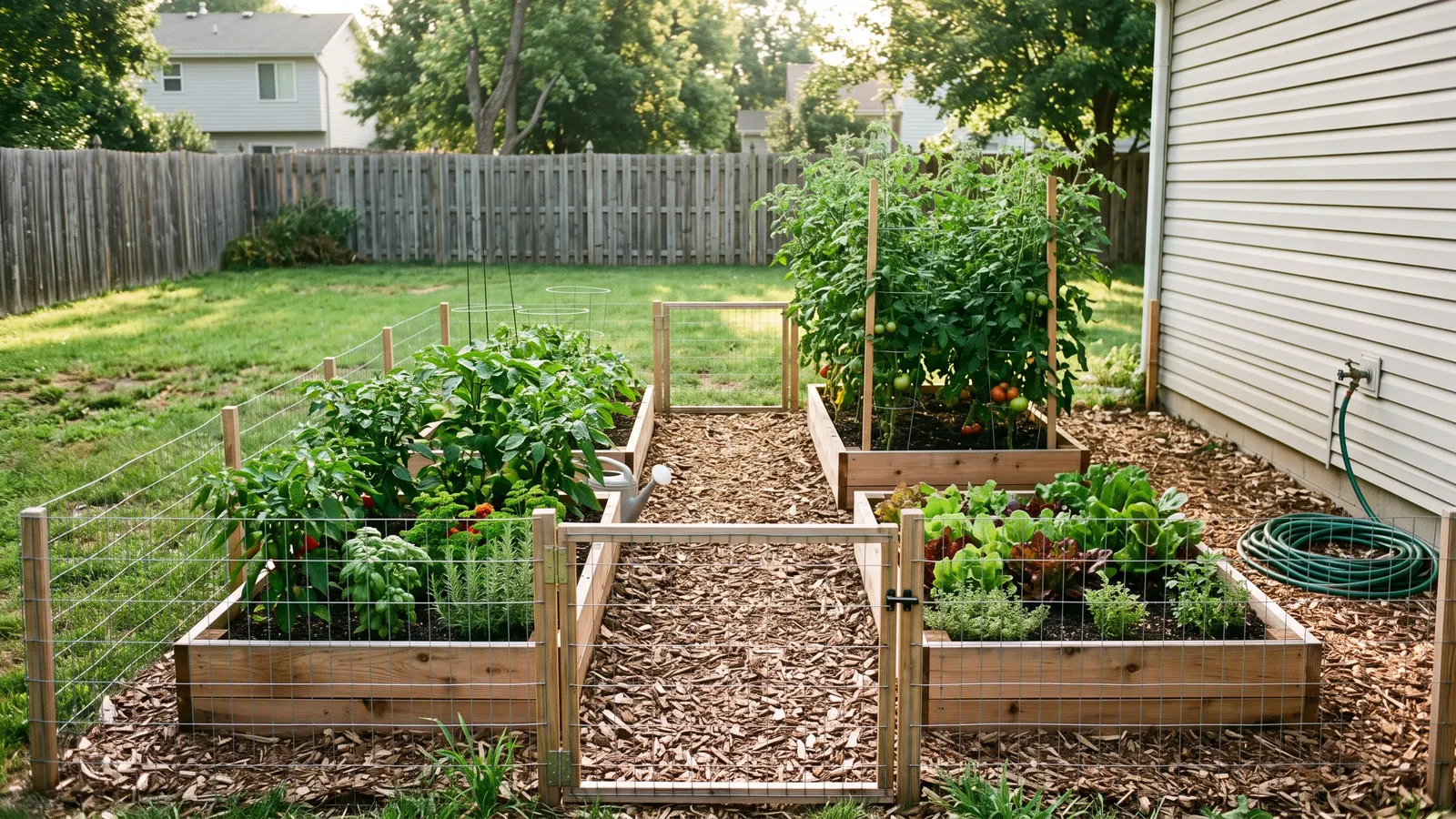
Raised beds warm up faster in spring, drain well and keep you from kneeling in clay. Put them in the sunniest spot you have (six or more hours) and close to a hose bib. Keep beds 4 feet wide or less so you can reach the middle from either side.
Cost: about $1,200 to $4,000 for a custom 5 by 12 raised bed installed (HomeGuide). DIY cedar kits cost a fraction of that.
19. Lay fresh sod where the kids and dogs play
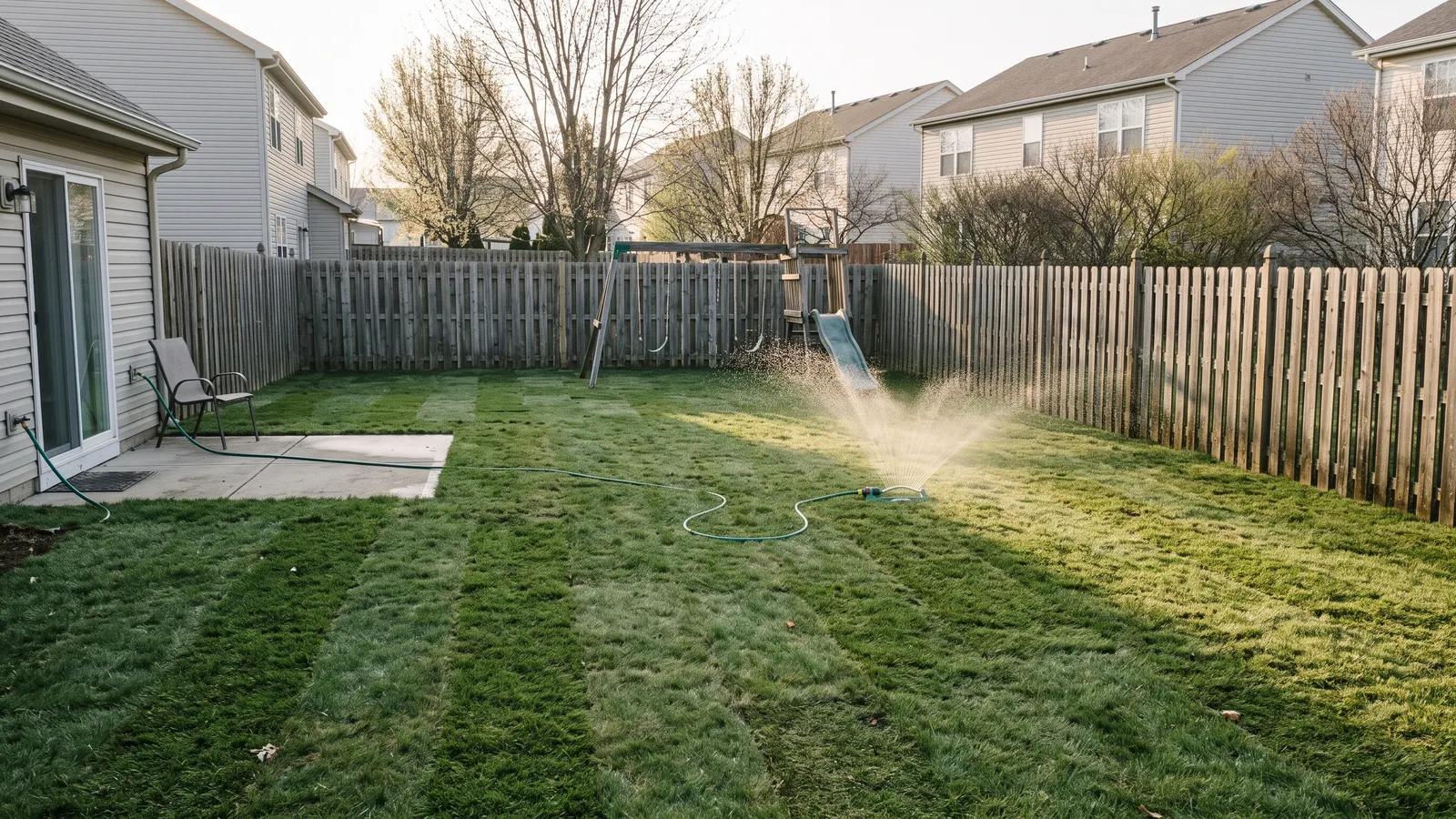
Lawn is still the best surface for running around, so keep the part you actually use and make it good. Sod goes in last, after the irrigation is tested and the beds are planted. In dry climates or deep shade, a lawn alternative may make more sense.
Cost: $1,000 to $3,000 to resod an existing yard; artificial turf runs $10 to $25 per square foot installed (HomeGuide).
Phase 5: finish with lighting and furniture
These are the easiest pieces to add later, so they're the ones to cut first if the budget runs short. The wiring is already in the ground from Phase 2.
20. Light the paths and one tree
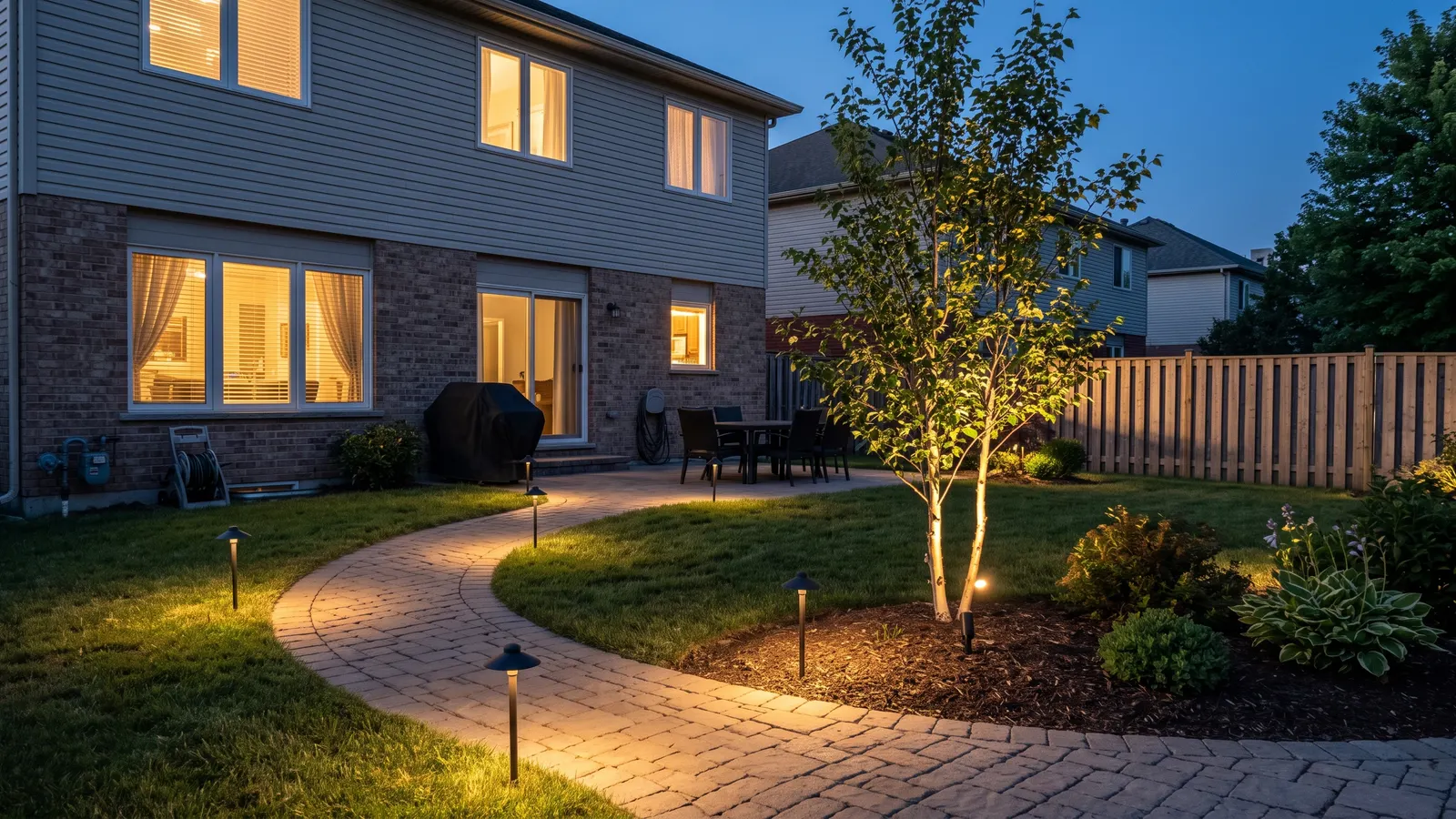
Light the routes people walk at night (steps, paths, the way to the fire pit) and then one or two features, like a tree trunk. That's usually enough. Warm white bulbs look better on plants than bright white.
Cost: $2,000 to $4,500 installed for a typical system, or $100 to $200 per fixture (LawnStarter).
21. Furnish it like an outdoor living room
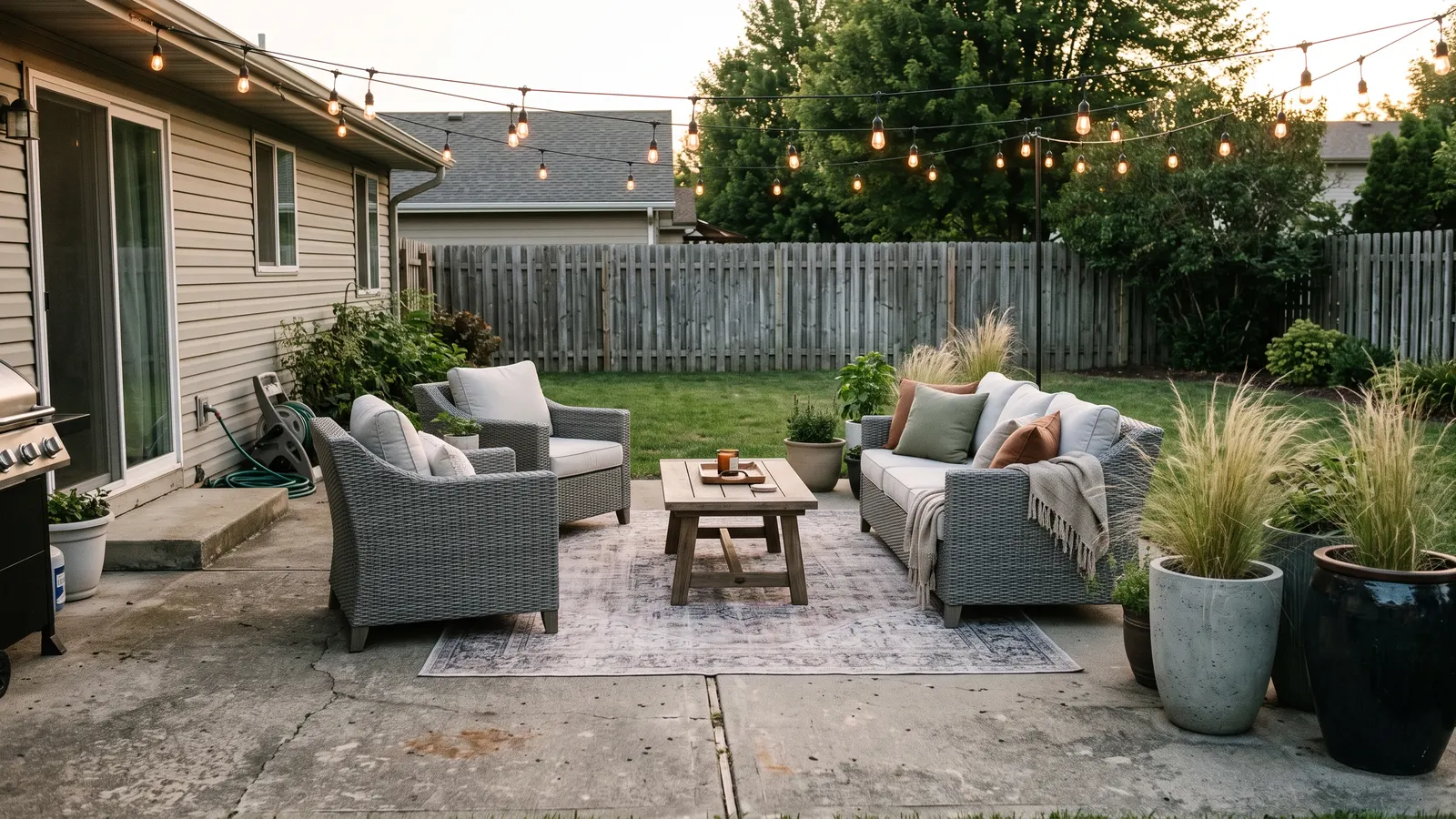
A sofa, two chairs, a rug and a couple of large planters turn a patio into a room people actually sit in. Buy furniture last, once you've measured the finished space. It's the most common place to overspend early and then find the pieces don't fit.
Cost: $1,000 to $5,000 to furnish an outdoor living area (HomeGuide).
Backyard remodel cost by budget tier
Use this to sort the ideas above into what fits your number. These are HomeGuide's tiers, with the projects it says each budget typically covers.
| Budget | What it typically covers |
|---|---|
| Up to $10,000 | Cleanup, mulched beds, plants and small trees, a gravel walkway, shade and furniture for an existing patio |
| Up to $25,000 | A new deck or patio, a pergola or gazebo, a fire pit or water feature, lighting, a basic prefab outdoor kitchen |
| Up to $50,000 | A larger deck or patio, irrigation upgrades, a custom outdoor kitchen, an outdoor fireplace, artificial turf |
| Up to $100,000 | A hot tub, high-end railings, a louvered pergola, an inground pool |
| $150,000+ | A custom pool with spa, a pool house, a multi-level deck with kitchen around the pool |
Two budget lines people forget: permits ($500 to $2,750 for a landscaping project, per Angi) and a 10% to 20% contingency for surprises once digging starts, which HomeGuide recommends. For a wider look at prices, see how much landscaping costs by project and yard size.
If the number on the page is too high, phase it. Do Phases 1 and 2 plus the main patio this year, and plants, lighting and furniture next year. The ground work is the hardest part to retrofit, so it's the part not to skip.
How long a backyard renovation takes
For a standard backyard renovation, plan on about 6 to 10 weeks from first sketch to finished yard, according to Green Canyon Landscaping's project timelines:
| Stage | Standard renovation | Full redesign |
|---|---|---|
| Design | 2 to 3 weeks | 4 to 6 weeks |
| Permits (if required) | 2 to 4 weeks | 4 to 8 weeks |
| Installation | 2 to 3 weeks | 4 to 8 weeks |
| Total | 6 to 10 weeks | 12 to 22 weeks |
Add lead time on top: good contractors in many areas book out weeks ahead in spring. Fall and winter are often the best time to get the design done and the contract signed, so the crew can start when the ground thaws.
Hiring a contractor vs doing it yourself
Most homeowners split the work. The heavy, risky phases go to pros, and the parts that reward patience more than equipment are DIY.
| Job | DIY-friendly? | Why |
|---|---|---|
| Regrading, drainage | Hire for anything beyond a small area | Needs equipment and a correct slope |
| Retaining walls over 3 to 4 feet | Hire | Engineering, permits, safety |
| Sprinkler systems, gas lines | Hire | Licensing in many states |
| Gravel patio, stepping-stone path | DIY | Light tools, forgiving |
| Paver patio | Either | Doable DIY, but base prep is the hard part |
| Planting, mulch, raised beds | DIY | Saves the most labor money |
| Low-voltage lighting | DIY | Plug-in transformers, no electrician needed |
| Furniture, decor | DIY | No special skills |
Labor makes up roughly 40% to 65% of a typical landscaping bill (Angi), so planting and finishing work yourself can save real money. For more ways to stretch a budget, see our guide to a backyard makeover on a budget.
See the finished backyard before you start
The hardest part of a backyard renovation for most people isn't the money. It's committing to a look you can only picture in your head. That's how projects stall for a year on a Pinterest board.
A faster way: take one photo of your yard and try styles on it. With AI backyard design from OutdoorBrite, you upload the photo, pick a style (Modern, Cottage garden, Mediterranean, Desert and others), and get realistic concepts of that same yard in under a minute, like the budget tiers near the top of this page. Plans start at $29 a month for 25 redesigns; the Plus plan ($49) adds a plant list for every design with plants picked for your region.
What it won't do: measure the yard, price the job or draw construction plans. Use the concept to decide on a direction and to brief your contractor, then let them measure and quote it.
Key takeaways
- Build in order. Ground, underground, hardscape, plants, finishing. Reversing any step usually means tearing something out.
- Spend early on the invisible work. Grading, drainage and sleeves under the patio cost little now and a lot later.
- Match ideas to a budget tier. Roughly $10,000 refreshes, $25,000 adds a patio and shade, $50,000 adds a kitchen and new fencing.
- Leave 10% to 20% for surprises, plus permits.
- Decide the look before demolition. Try a few styles on a photo of your own yard with OutdoorBrite, then take the one you like to a contractor.
FAQ
What order should you renovate a backyard? Work from the ground up: grading and drainage, then underground irrigation and wiring, then hardscape like patios, decks and fences, then plants and lawn, then lighting fixtures and furniture. Plants go in late so equipment doesn't crush them, and anything that needs a trench goes in before paving.
How much does a backyard remodel cost? HomeGuide puts a minor backyard renovation at up to $10,000, a mid-level one at $25,000 to $50,000, and a major one with a pool or full outdoor kitchen at $100,000 to $150,000. Angi puts a typical full backyard renovation at $15,000 to $50,000. Region, yard size and access move those numbers a lot.
What adds the most value to a backyard? Usable outdoor living space does: a patio or deck sized for real furniture, shade and good drainage. The 2025 Cost vs Value report puts a wood deck addition's resale recoup at about 95% of its cost. Fixing drainage protects the house itself, which matters more than any single feature.
How long does a backyard renovation take? A standard renovation takes about 6 to 10 weeks from design to finish, with 2 to 3 weeks of actual installation. A full redesign with permits can run 12 to 22 weeks. Contractor lead time in spring can add several more weeks.
Can I renovate my backyard in phases? Yes, and it's often the smartest way to fit a budget. Do the grading, drainage and underground work and the main patio first, since those are the hardest to retrofit. Plants, lighting and furniture can follow a season or a year later.
Do I need a permit for a backyard renovation? Often, for parts of it. Decks, pergolas and covered structures, retaining walls over a certain height, fences above local limits, gas lines and new electrical circuits commonly need permits. Planting, mulch and gravel usually don't. Check with your city or county before work starts.
What should I do first in a backyard makeover? Watch where water goes during a heavy rain, measure the yard, and decide the look before any demolition. Fix drainage problems first. Then get a design or concept you're happy with so the contractor quotes the right job.
How do I visualize my backyard renovation? Take a wide photo of the yard from the back door and try it in an AI design tool, which shows realistic concepts of your own yard in different styles in under a minute. For to-scale layouts, use design software or a designer. Many people use AI to pick a style, then a contractor to price it.
Sources: HomeGuide: backyard renovation cost, HomeGuide: landscaping costs, HomeGuide: paver patio cost, HomeGuide: fire pit cost, Angi: how much does landscaping cost, Angi: retaining wall cost, LawnStarter: landscape lighting cost, Green Canyon Landscaping: landscape install timelines, PA PUC: Call 811 before you dig, International Residential Code R404.4, JLC Cost vs Value 2025, Nebraska Extension: rain gardens, all checked October 20, 2026