23 English Garden Ideas for American Yards
Formal and cottage English garden ideas for American yards, from double borders and rose arches to brick paths, plus a zone-by-zone table of plant swaps sourced from extension services.
Most of the photos that make people want this style were taken in Kent or the Cotswolds, where summers are mild and rain falls in every month. That's why so many English garden ideas look effortless on a Pinterest board and then struggle in a Georgia July or a Colorado August. The look travels well. Some of the plants don't.
This list covers both. There are 23 ideas below, grouped into borders and hedges, roses and flowers, paths and focal points, small spaces, and lawns and hot-climate versions. After the gallery comes a zone-by-zone table of the classic English plants that fail in parts of the US, and what extension services recommend in their place.
Every image here is an AI design concept, generated from a description of an ordinary American yard. None of them is a real client project.
What makes a garden look English
An English garden is less a plant list than a set of habits. Plants are layered, tall at the back and spilling over the front. Beds are generous, often six feet deep or more. Clipped green structure (a hedge, an edging, a pair of topiary balls) holds the loose planting together. Paths lead somewhere, usually to a bench, a birdbath or an arch. And there's almost always some lawn, kept as a calm open space between the busy borders.
None of that depends on English weather. It depends on choosing plants that will actually fill those layers where you live, which is the part most galleries skip.
Formal vs cottage: two versions of the same style
English gardens split into two families. The formal (or country house) version runs on symmetry: straight paths, clipped hedges, matching pairs, a central focal point. The cottage garden version is the opposite: curving paths, plants packed in and allowed to self-seed, roses on everything.
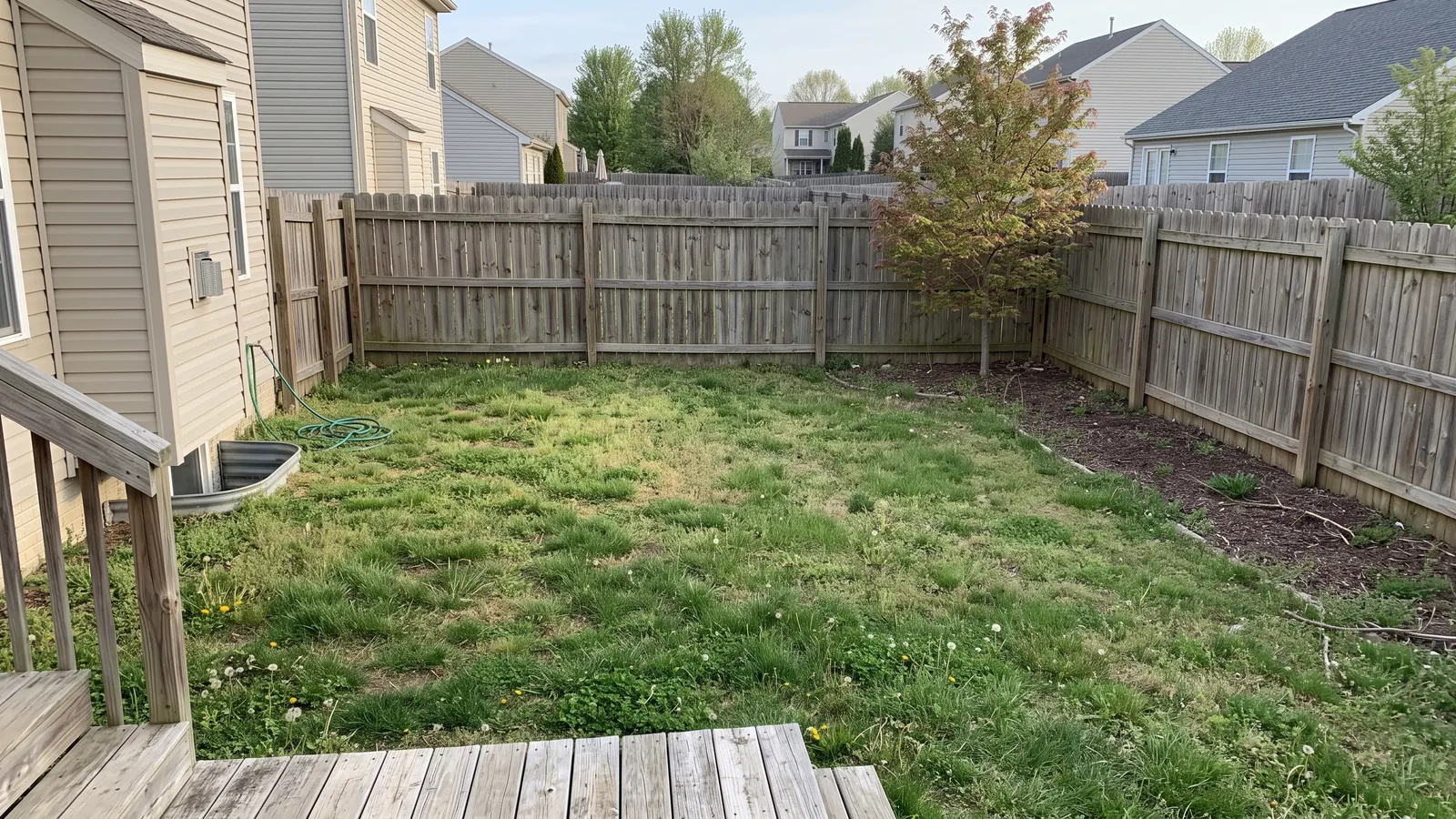
Here's the yard from the photo above, redesigned both ways. These are AI concepts of the same space, which is the quickest way to see which version suits your house:
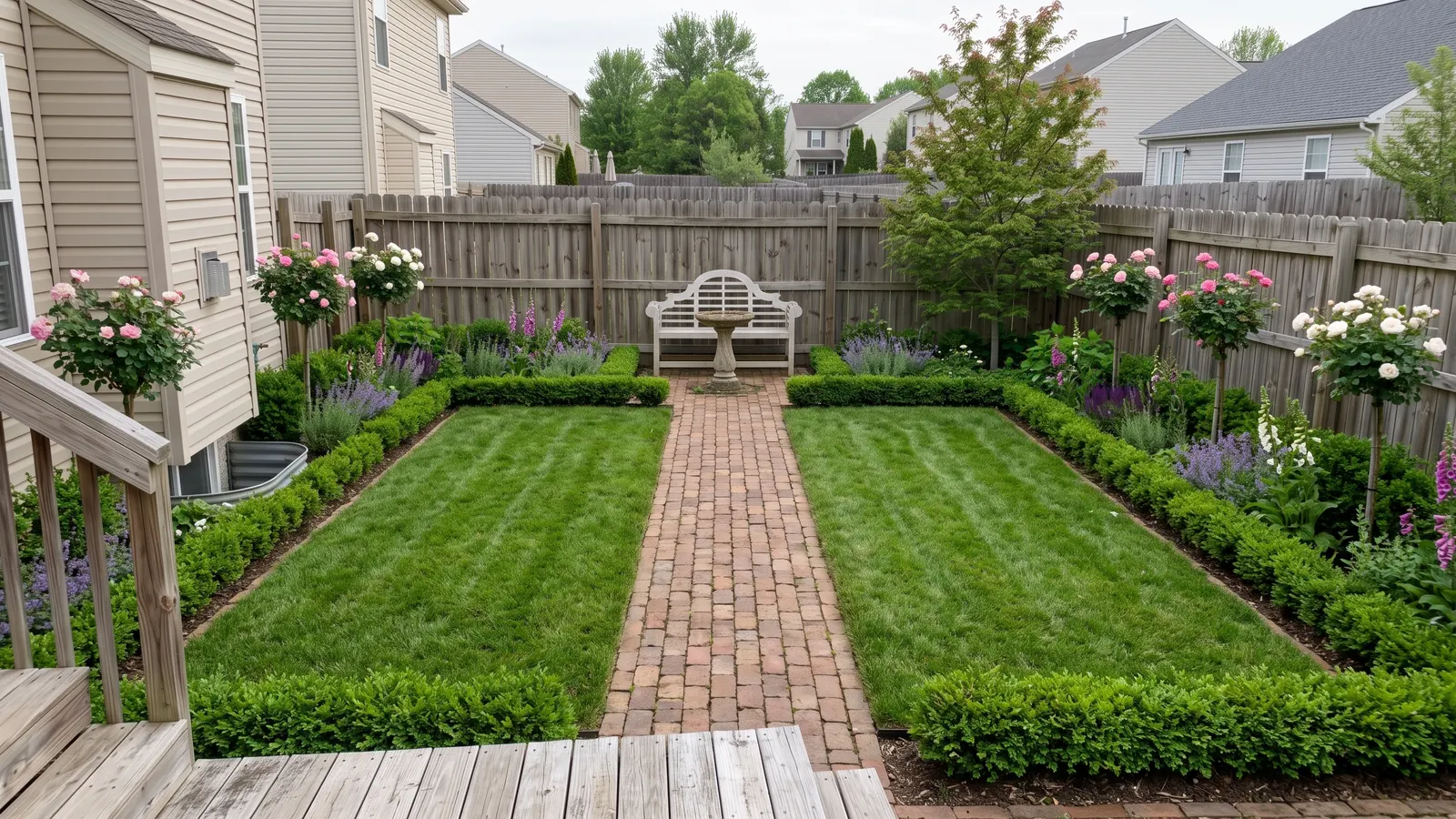
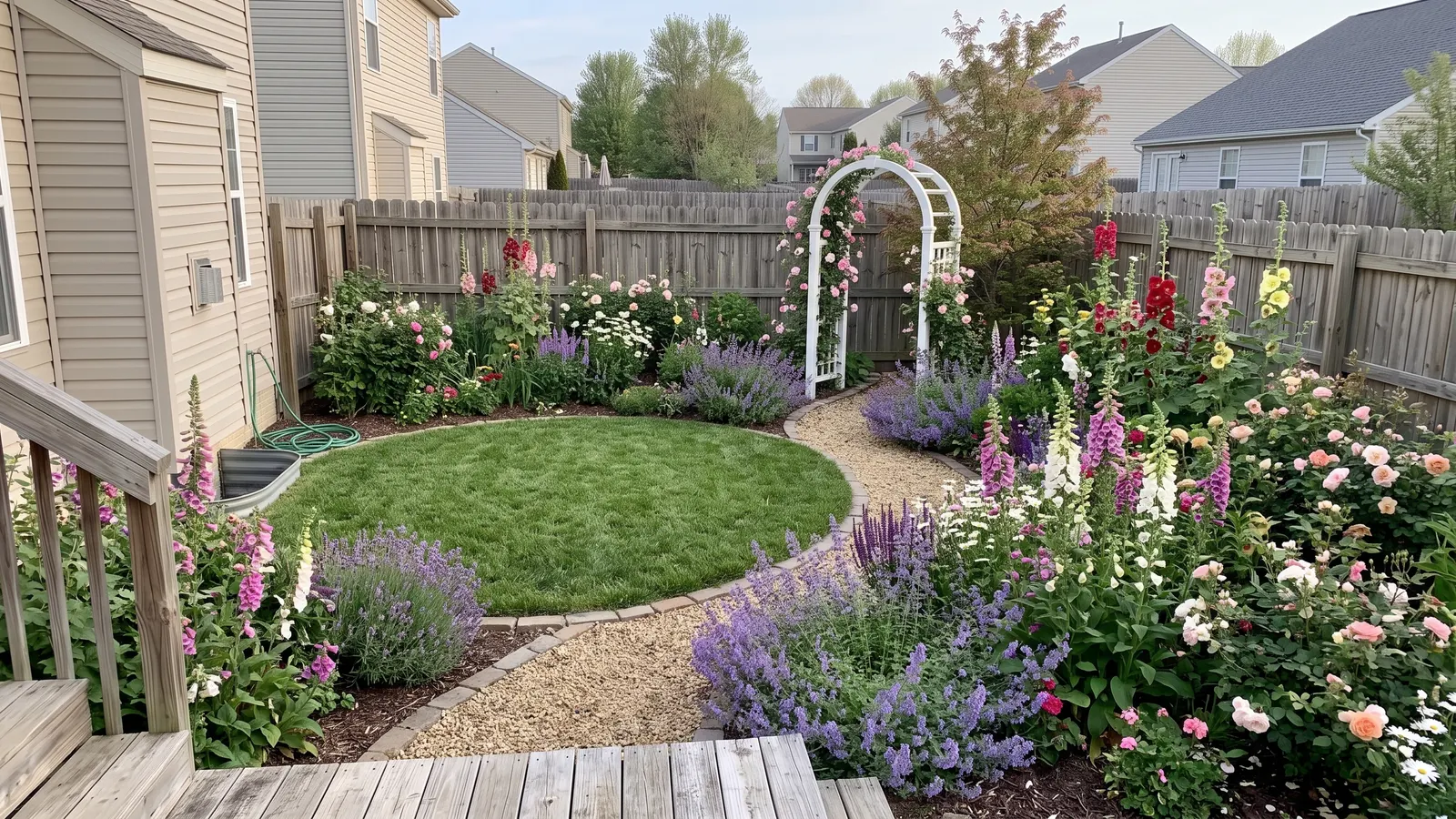
The formal version suits newer, symmetrical houses and owners who like a tidy weekend trim. The cottage version suits bungalows, farmhouses and anyone who'd rather deadhead than prune. Plenty of good gardens mix them: a formal frame with cottage planting inside it. If you're weighing this against other looks entirely, our guide to landscape design styles compares 11 of them.
Borders and hedges
1. Plant a double border along a path
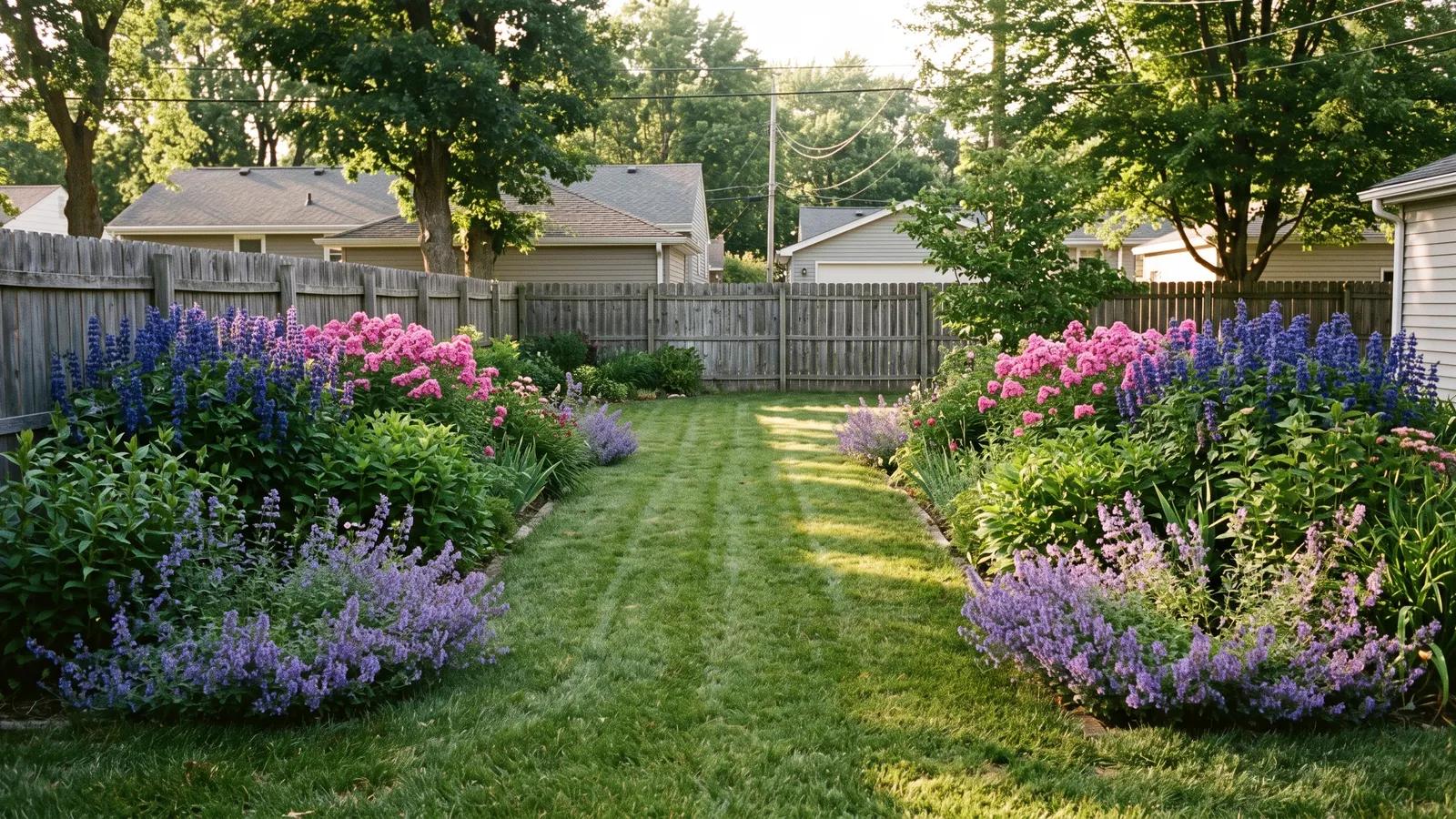
Two matching borders facing each other across a path are the backbone of the classic English layout. Make each bed at least five feet deep, and six is better: that's enough room for three layers. Put 3 to 4 foot plants (salvia, phlox, baptisia) at the back, 18 to 24 inch plants in the middle, and something that flops over the edge, like catmint, at the front. Repeat the same plant every few feet on both sides so the pair reads as one design.
2. Edge beds with a low holly hedge instead of boxwood
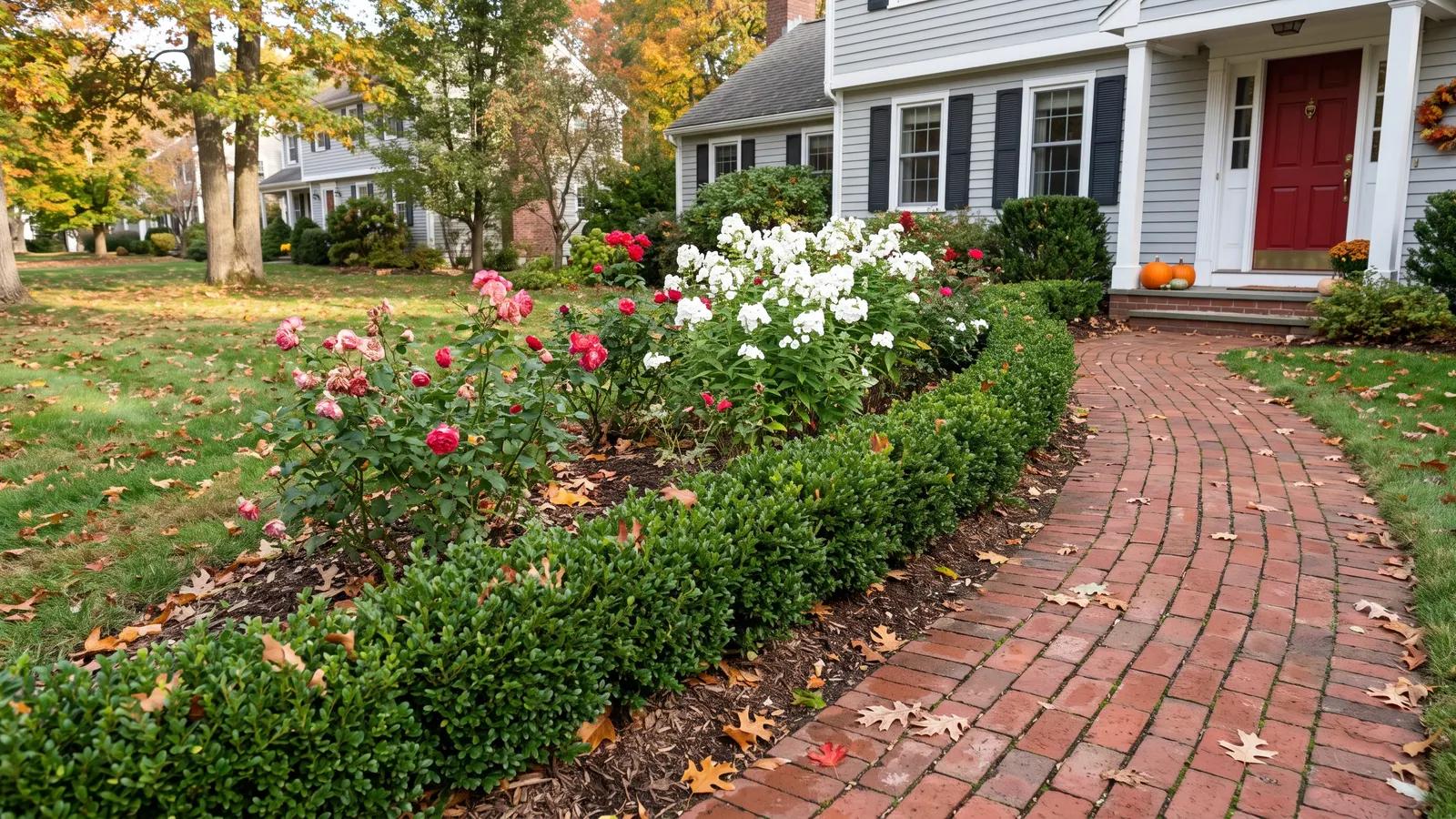
Low clipped edging is what makes a loose bed look deliberate. Boxwood is the traditional choice, but boxwood blight and the box tree moth now mean regular spraying in many states, and Cornell's IPM program lists alternatives. Inkberry holly (zones 5 to 9) and its dwarf cultivar 'Gem Box' give the same small-leaved, clippable look. In zones 7 to 9, dwarf yaupon holly does the job too. Space plants about 18 inches apart and trim twice a year.
3. Layer shrubs and perennials against the fence
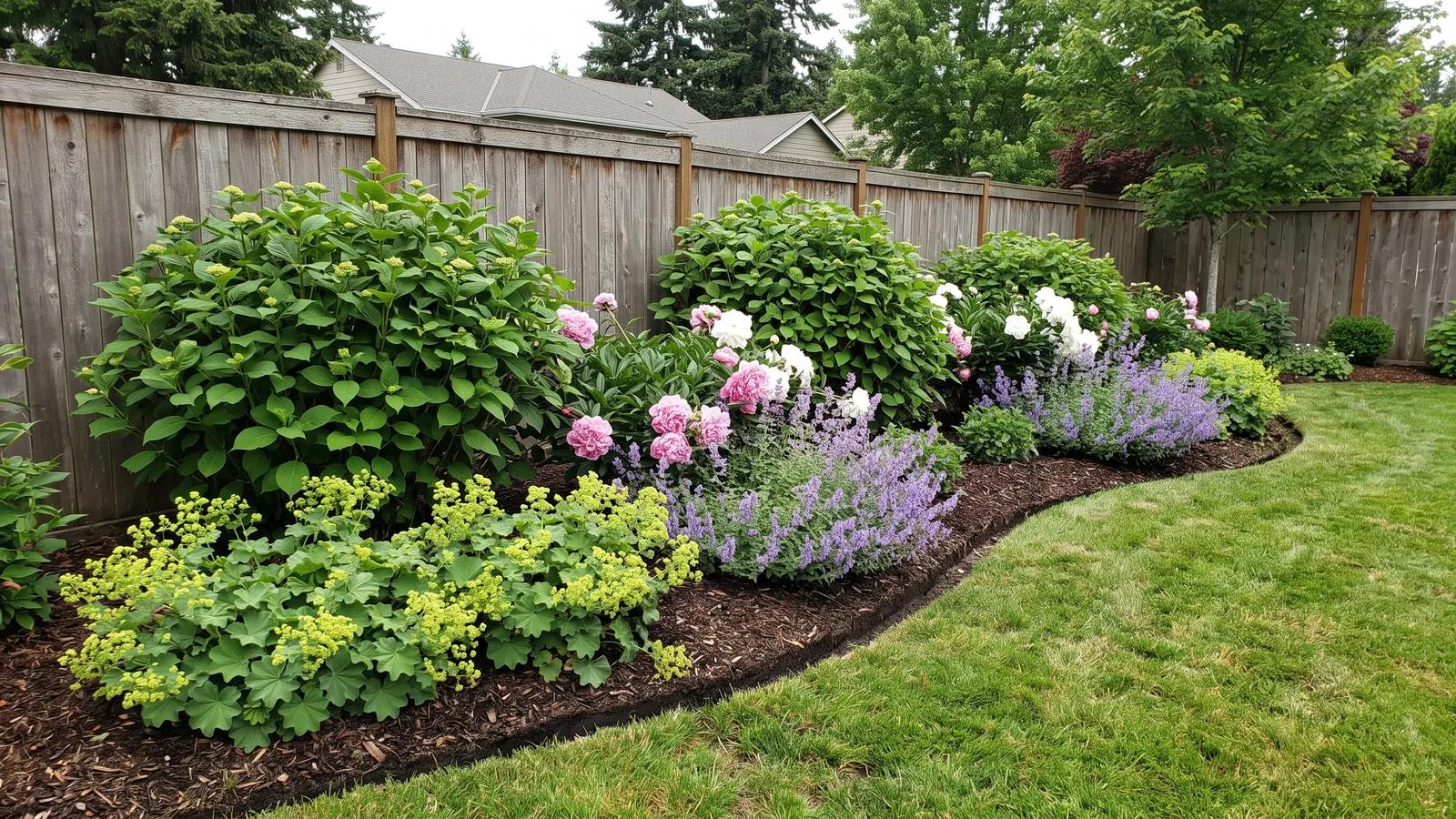
A fence is the hardest-working background in an American yard, so use it the way an English garden uses an old brick wall. Shrubs like hydrangea go at the back for height and winter shape. Perennials fill the middle. A low edge plant softens the lawn line. Cut that lawn edge with a half-moon spade once a season; the crisp line is half the effect, and it costs nothing.
4. Let a tall hedge replace part of the fence
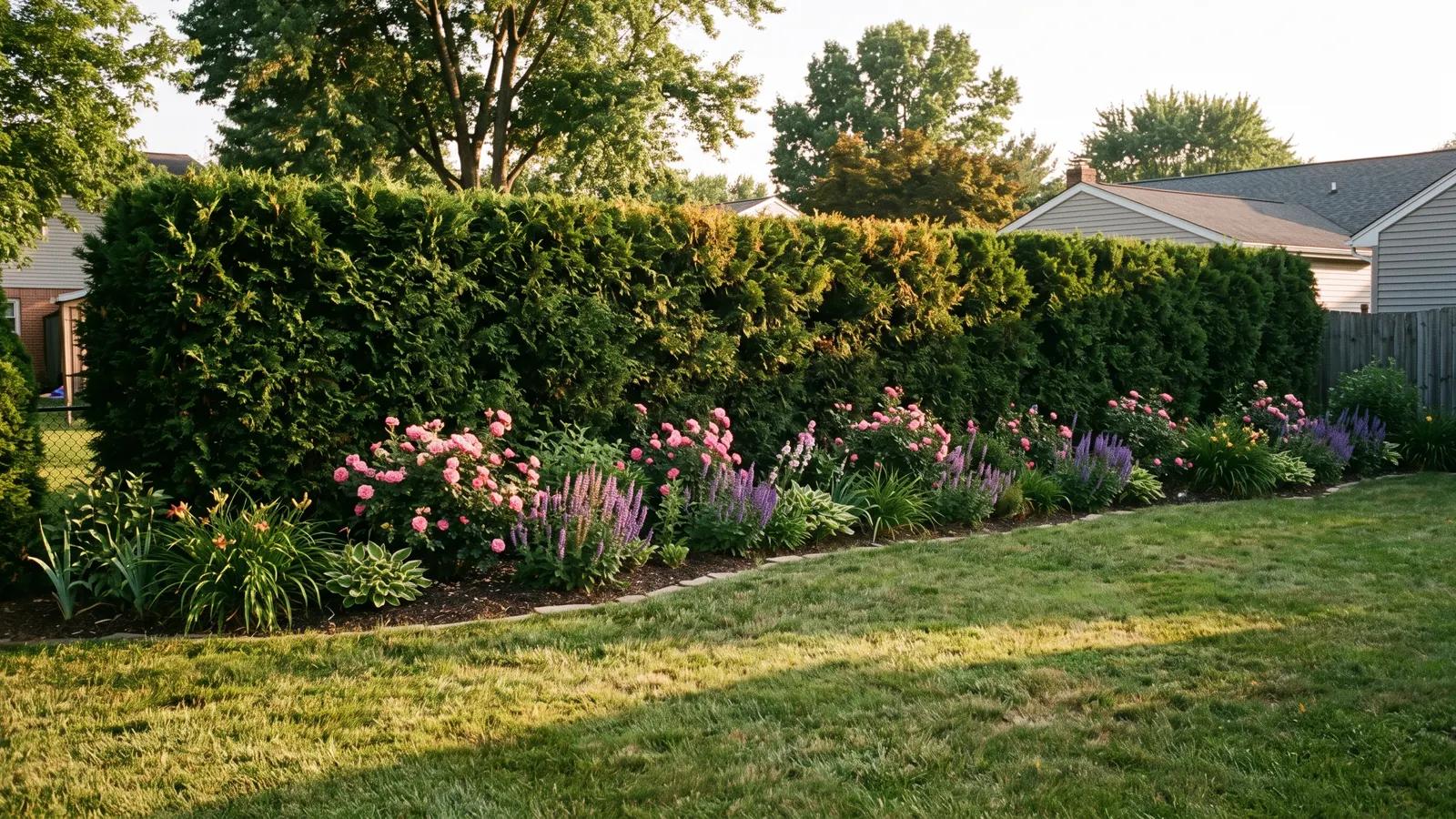
Dark green hedging behind bright flowers is a very English trick: the flowers look brighter against it. Yew is the classic, while arborvitae and Japanese holly are common US choices. In the South, full-size yaupon holly works. Plan for slow going. A 3-foot hedge plant takes several years to close up into a wall, so many people plant the hedge in front of an existing fence and let it grow up to hide it.
5. Build a small parterre
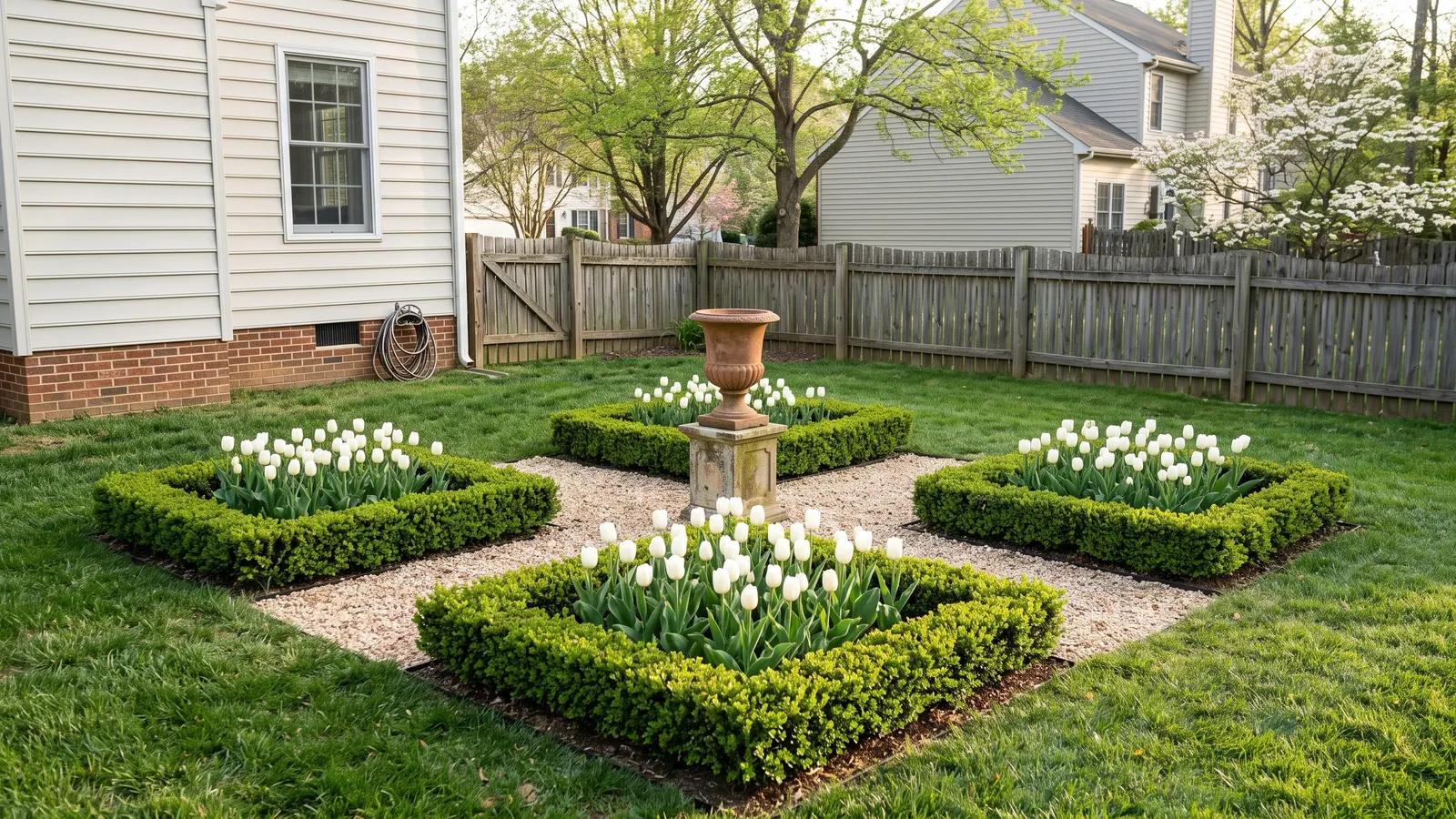
A parterre sounds grand, but four square beds around a center point fit in a 15 by 15 foot space. Edge each bed in low hedging (see idea 2), lay gravel between them, and put an urn, a sundial or a single standard rose in the middle. Fill the squares seasonally: tulips in spring, annuals or herbs in summer. It's the most formal idea on this list and one of the most forgiving to plant, because the hedges carry the design.
6. Line a walk with lavender, or its stand-in
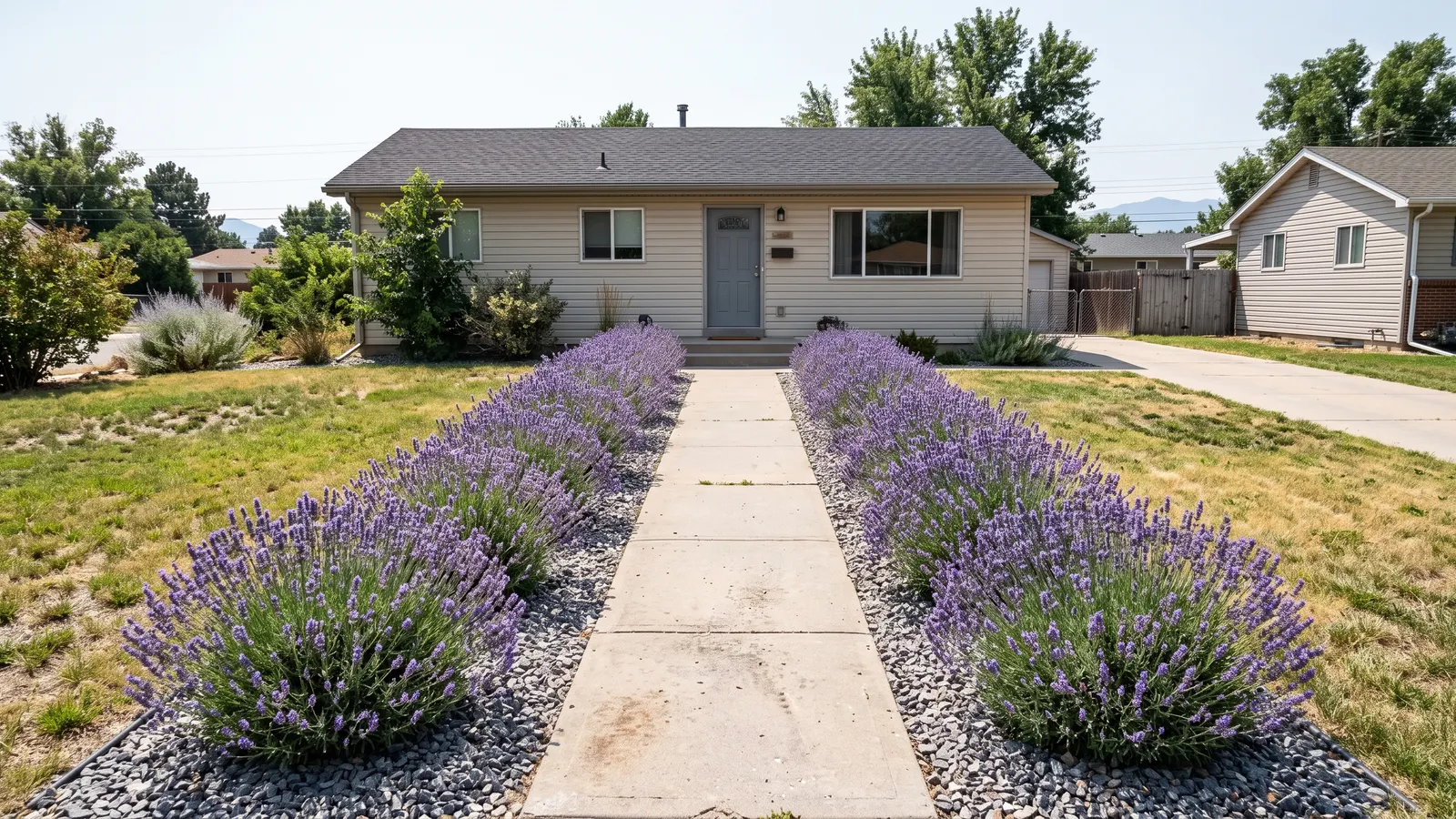
A lavender-lined path smells as good as it looks. English lavender needs sharp drainage, though. NC State Extension notes it dies out in heavy clay and rots when overwatered, so plant it in raised, gravelly soil with gravel mulch. Where winters are too cold or soils too wet, Russian sage (zones 4 to 9) gives the same blue haze at a larger scale, and catmint (zones 4 to 8) makes a softer, lower line.
Roses, climbers and cottage flowers
7. Train a climbing rose along a picket fence
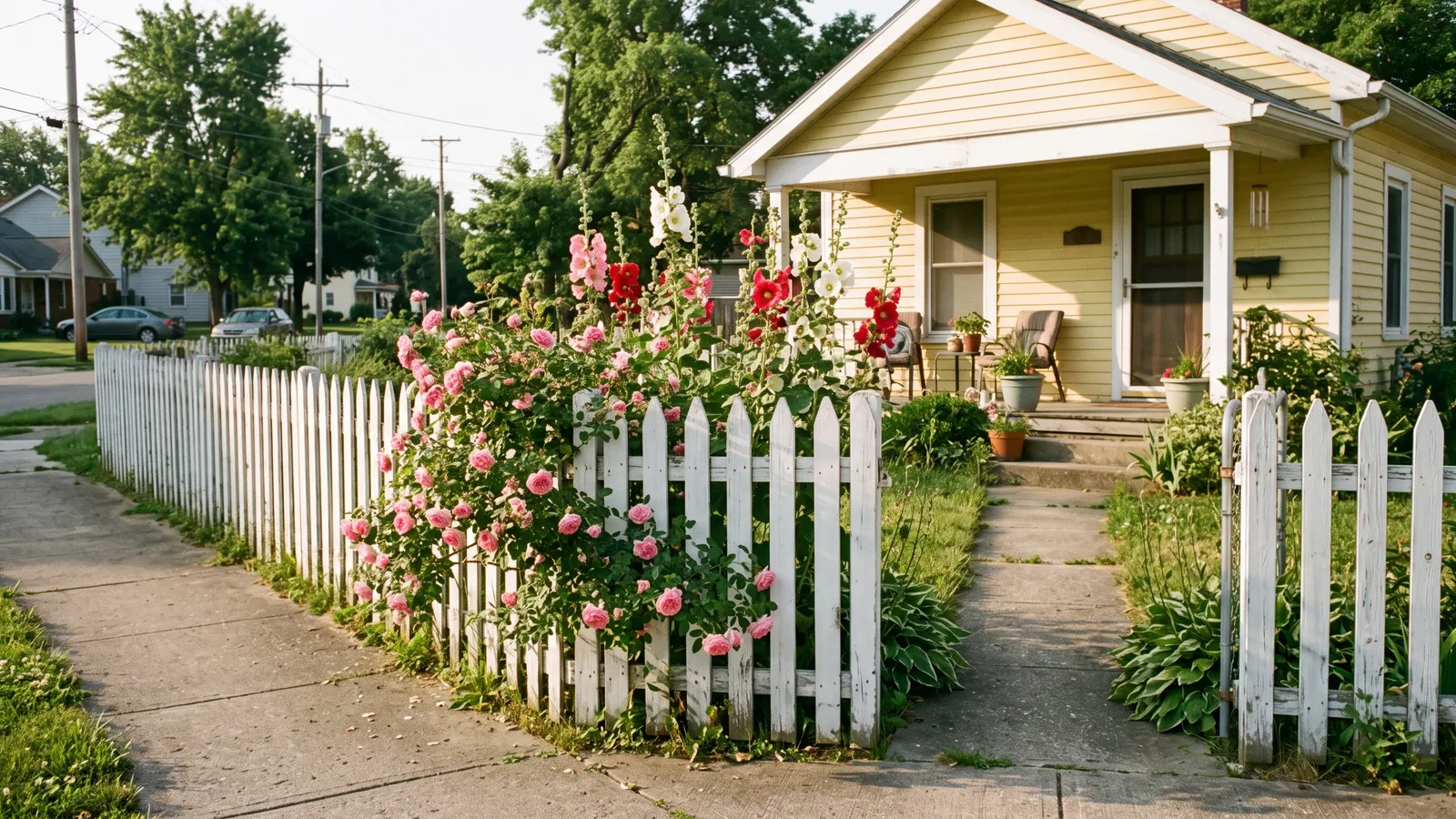
Nothing says English cottage faster than roses on a white fence. Tie the long canes horizontally along the rails rather than straight up; horizontal canes flower along their whole length. In the hot, humid South, pick from Texas A&M's Earth-Kind list, which is made up of roses that passed field trials with few sprays, little fertilizer and limited water. 'Belinda's Dream' and 'Carefree Beauty' are two of them.
8. Put a rose arch over the gate
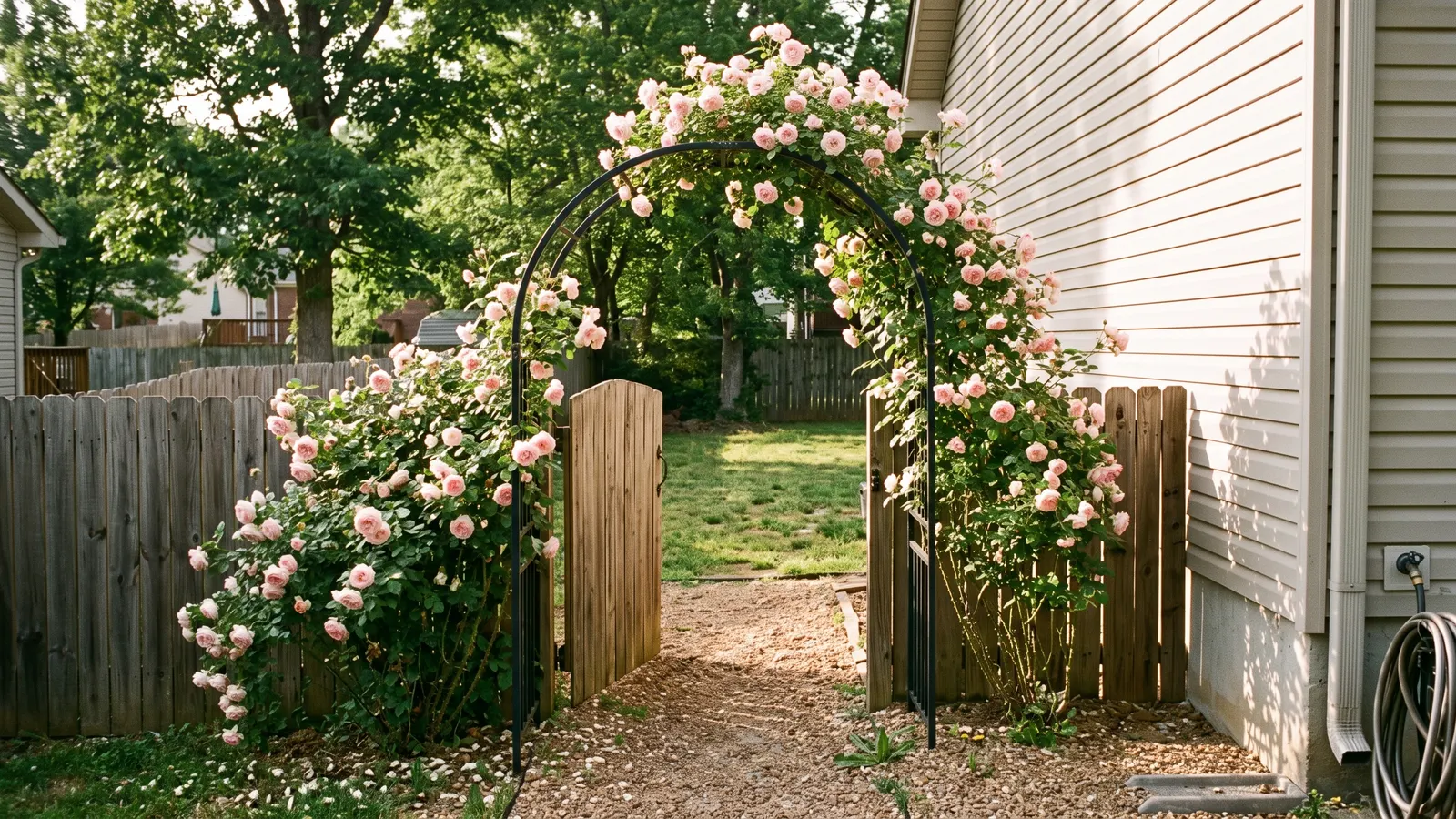
An arch turns a side gate into an entrance. Steel arches outlast wood. Pick one at least 7 feet tall and 4 feet wide, because a rose in full growth narrows the opening by a foot or more on each side. Plant one climber at each leg, about a foot out from the post, and lean the young canes in toward it.
9. Grow clematis up an obelisk
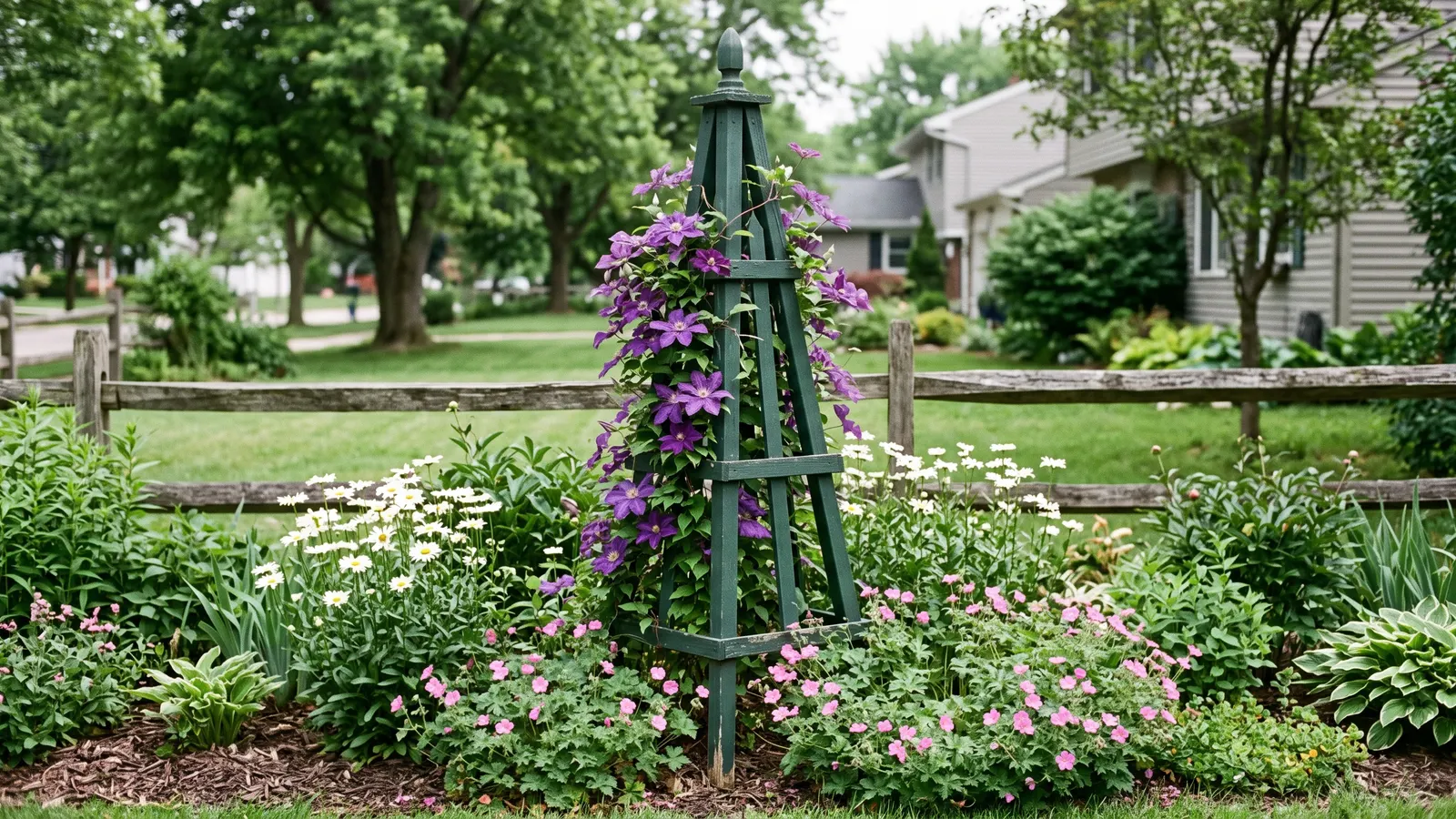
Borders need height in the middle, not just at the back, and an obelisk adds it without blocking the view. A 6 foot wooden or metal obelisk holds a clematis, a sweet pea or a compact climbing rose. Clematis likes its roots shaded and its top in sun, so let shorter perennials like hardy geranium grow around the base. In a long border, two or three obelisks spaced evenly set a rhythm.
10. Add tall flower spires
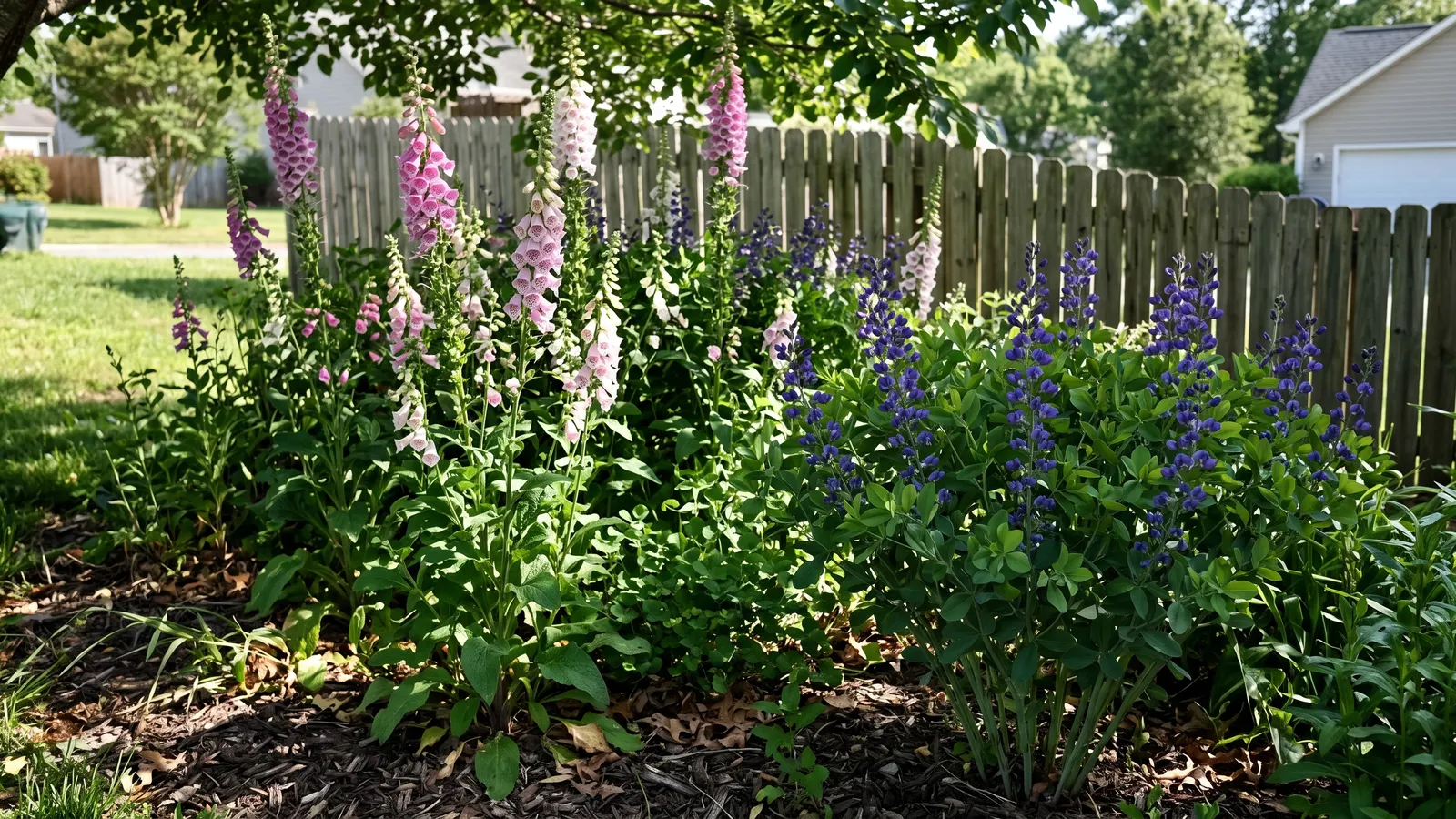
Delphiniums, foxgloves and lupines give English borders their vertical lines, and they're the plants most likely to sulk in the US. NC State Extension says delphiniums are hard to grow in humid summers south of zone 7. Foxglove (zones 4 to 9) is easier but wants afternoon shade in the South. For a lupine look that lasts, UW-Madison Extension suggests blue false indigo, which is hardy from zone 3 to 9.
11. Let a front yard go full cottage
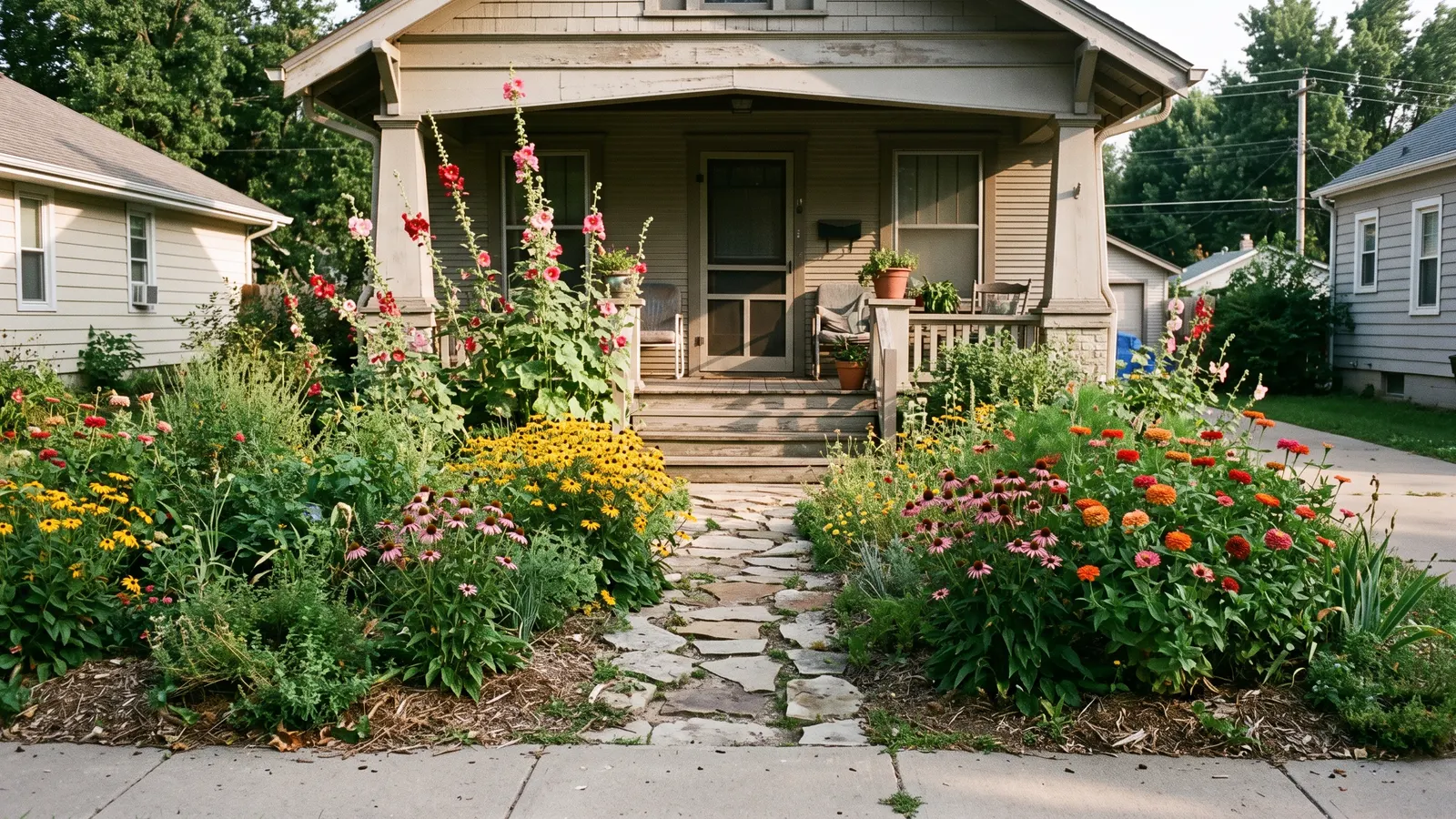
Replacing a small front lawn with flowers is how many Americans get a real cottage garden. Mix English classics like hollyhocks with tough natives like coneflower and black-eyed Susan, which carry the bed through August heat. Let some plants self-seed and move around. Keep one clear path and a defined edge at the sidewalk, or neighbors may read the abundance as neglect. Check HOA rules before you remove turf.
Paths and focal points
12. Lay a brick path in herringbone
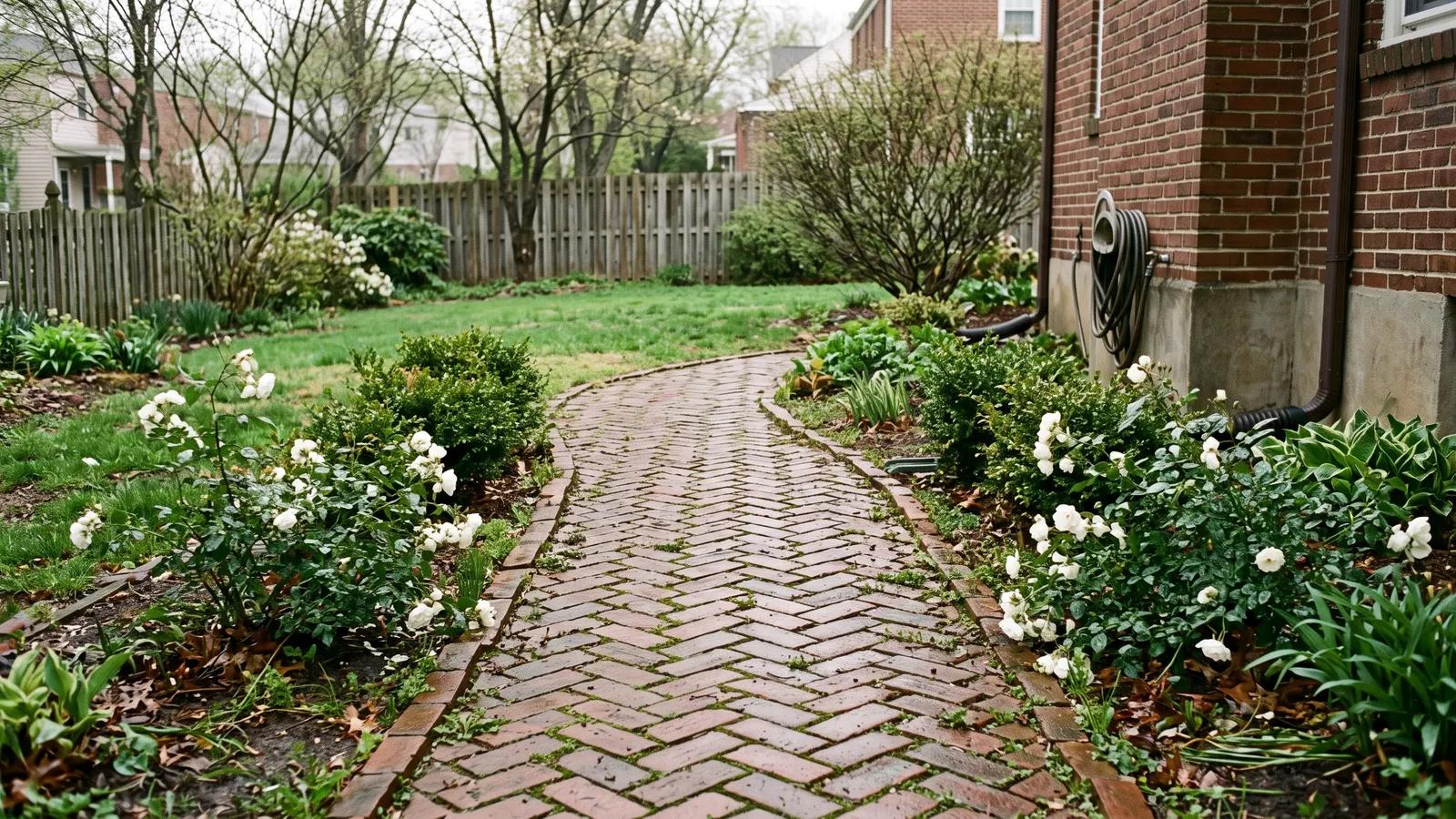
Old brick is the material English gardens are known for. Herringbone is the strongest pattern for a path that gets walked on, and it handles gentle curves better than running bond. Reclaimed brick looks right from day one, while new brick takes a few seasons to weather. Make the path at least 3 feet wide so two plants can spill over the edges and you can still walk it. Set the bricks on compacted gravel and sand, not bare soil.
13. Choose pea gravel with a steel edge
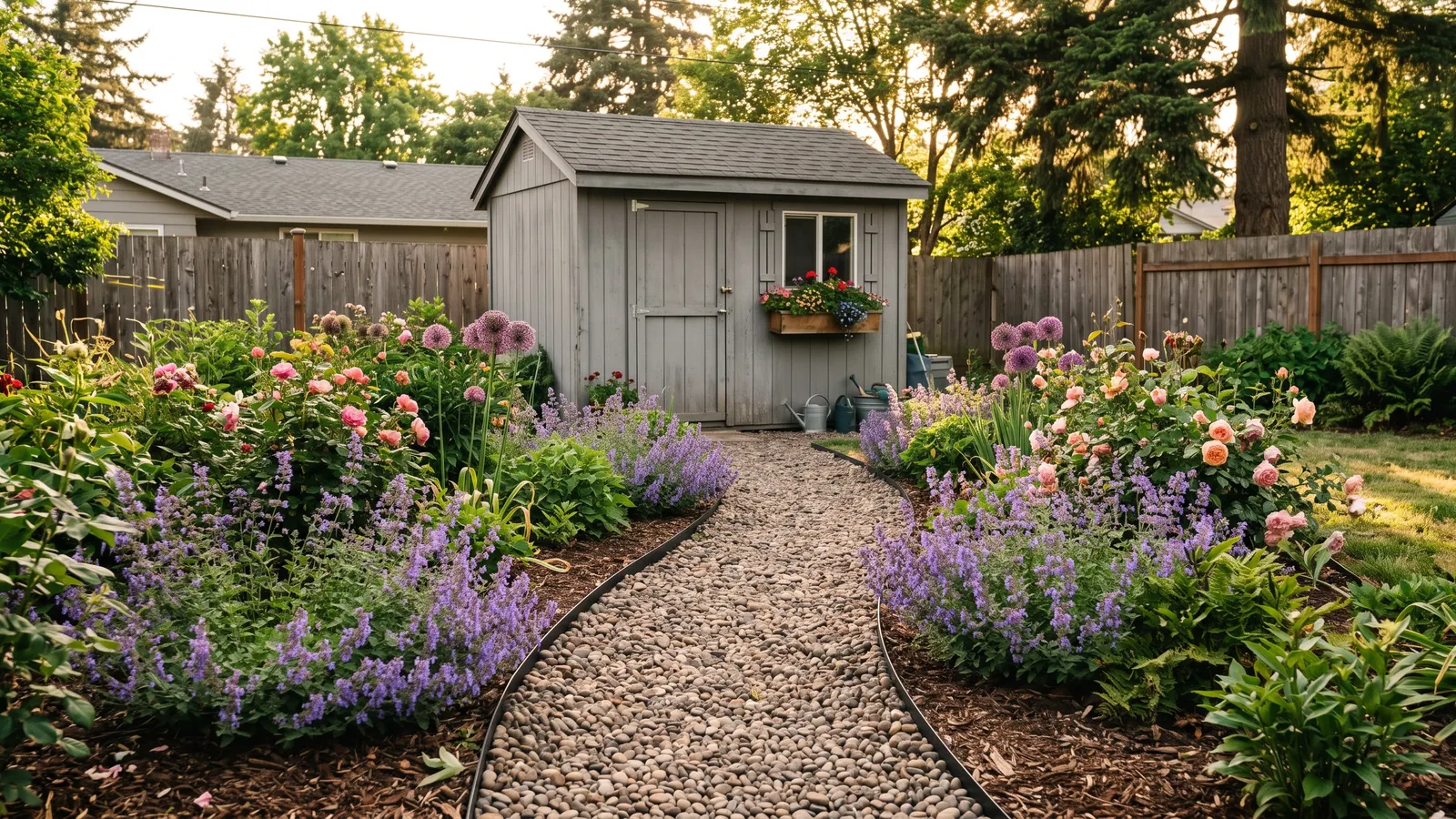
Gravel is the budget path, and it has a satisfying crunch underfoot. Pea gravel 2 to 3 inches deep over landscape fabric costs far less than brick. Steel edging keeps the stones out of the beds and the beds out of the path. Plants can self-seed into the gravel edges, which is very cottage.
14. Mow a grass path through the borders
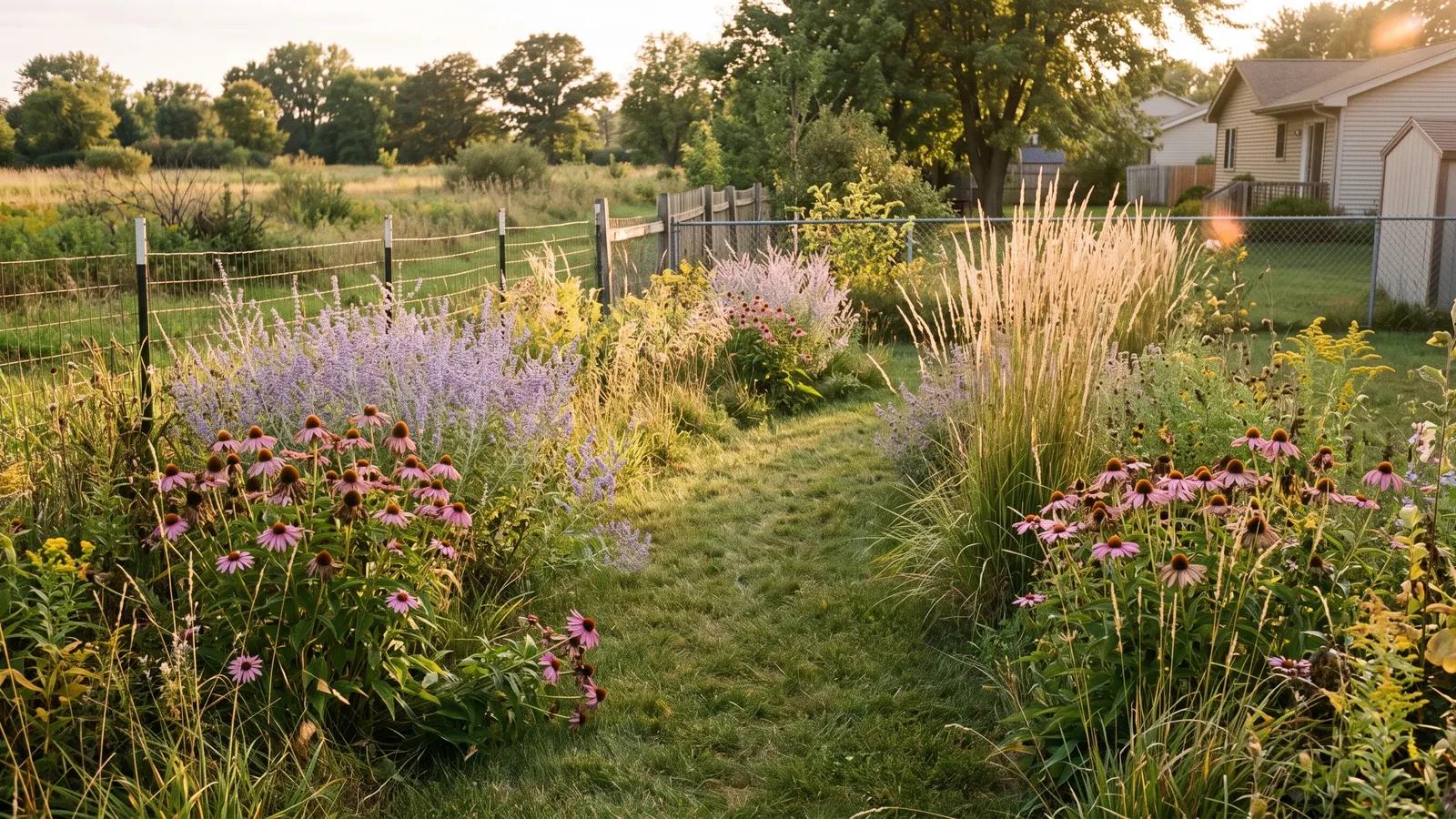
The cheapest path of all is lawn you already have. Leave a curving strip of turf, at least as wide as your mower, and plant everything else. Grass paths feel soft and very English but wear out under daily traffic, so save them for routes you walk a few times a week. In the Midwest, pairing the path with prairie natives like coneflower and Russian sage gives a looser, meadow version of the look.
15. Put a birdbath where paths cross
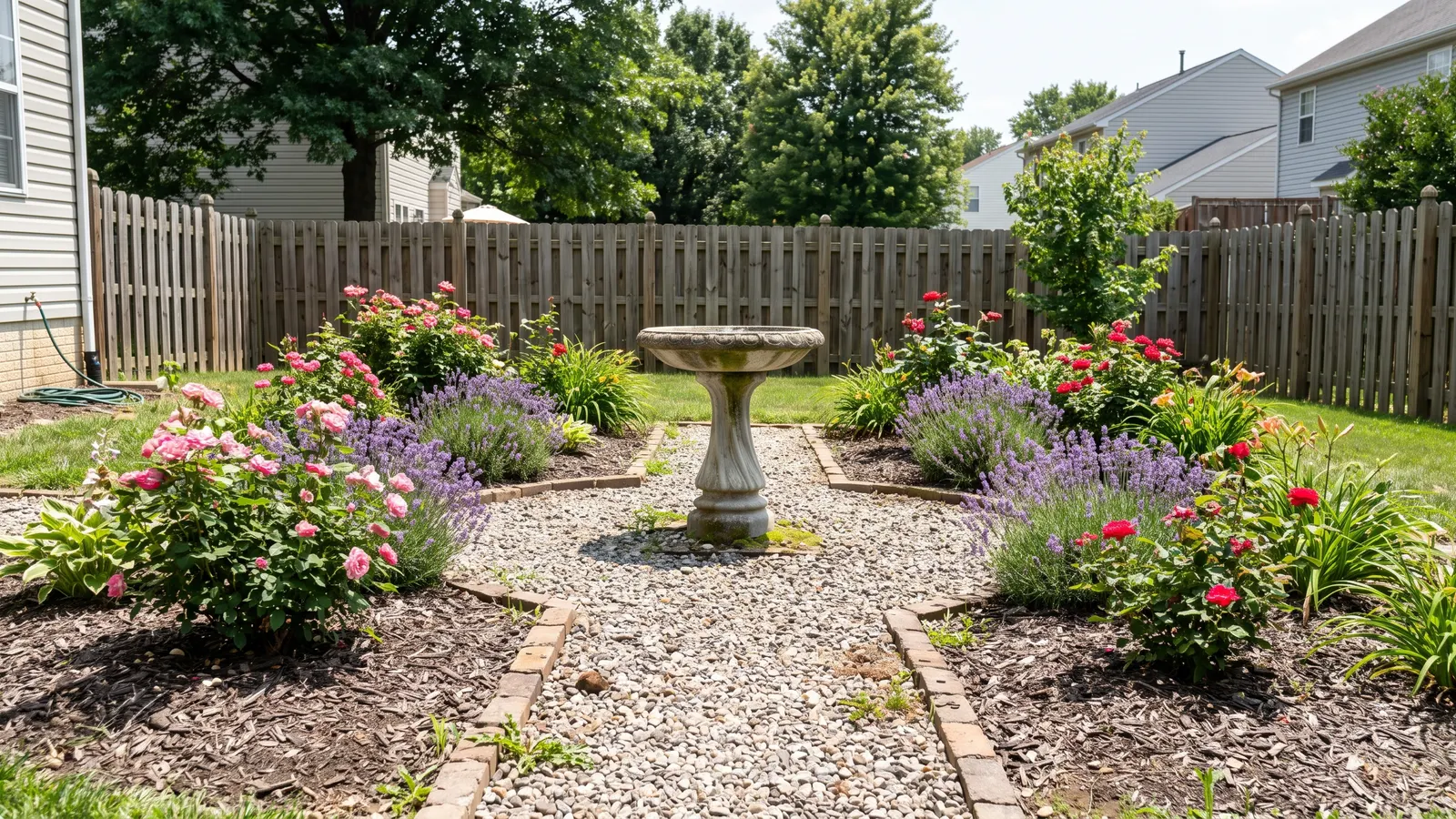
English gardens always give the eye somewhere to land. A focal point works best where it closes a view: at the end of a path, or at the center where two paths meet. A cast-stone birdbath needs fresh water every few days in summer. Pick a size that's in scale with the space. In a small yard, a birdbath under 3 feet tall is plenty.
16. Tuck a bench into a hedge
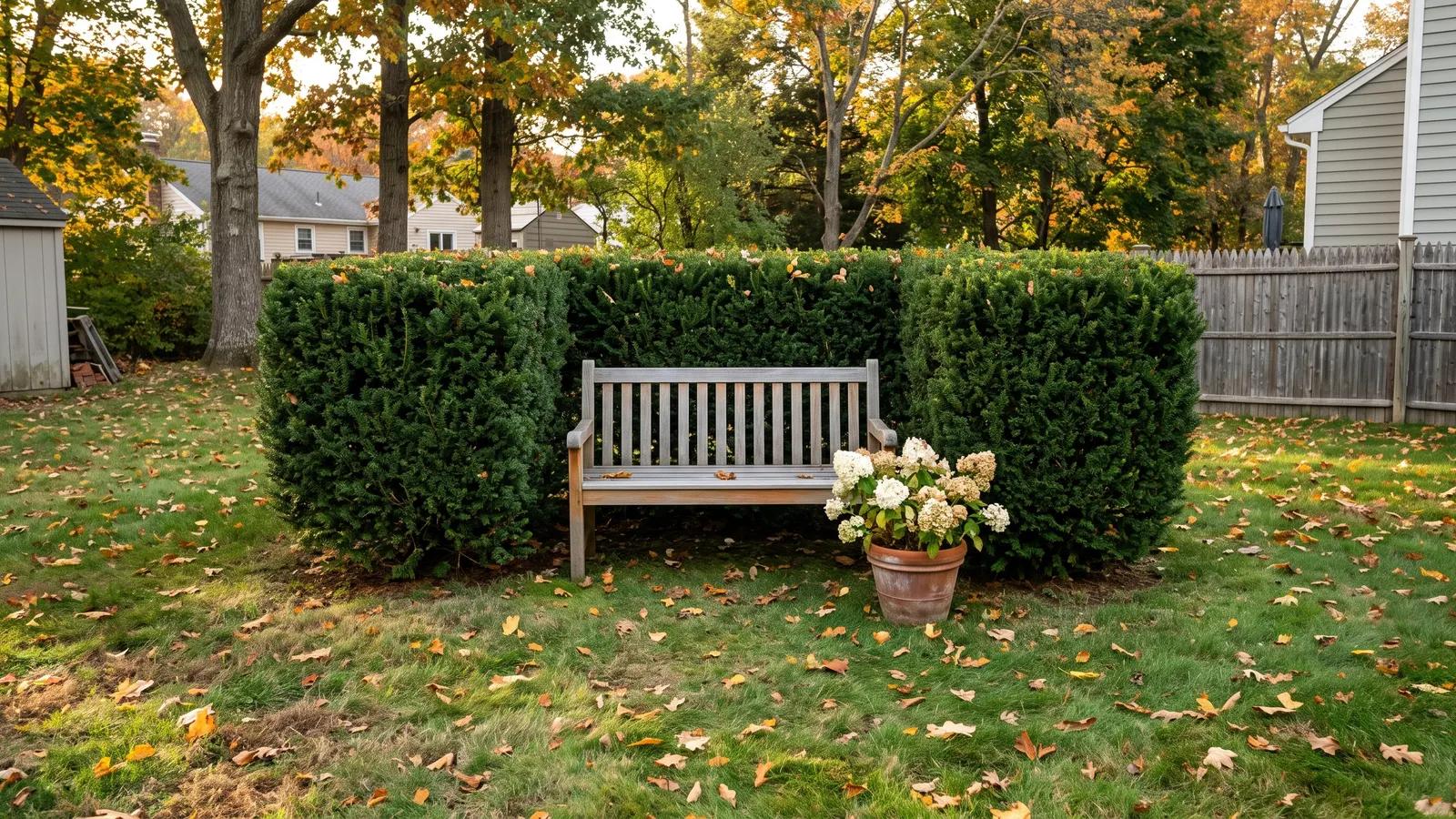
A seat surrounded on three sides by green feels sheltered even in an open suburban lot. Plant a U of hedging about a foot wider than the bench on each side, and set the bench on a few pavers so its feet stay dry. Teak and painted wood look traditional. Place it facing back down the garden, so the seat has a view of the borders and the lawn.
17. Add a small wall fountain
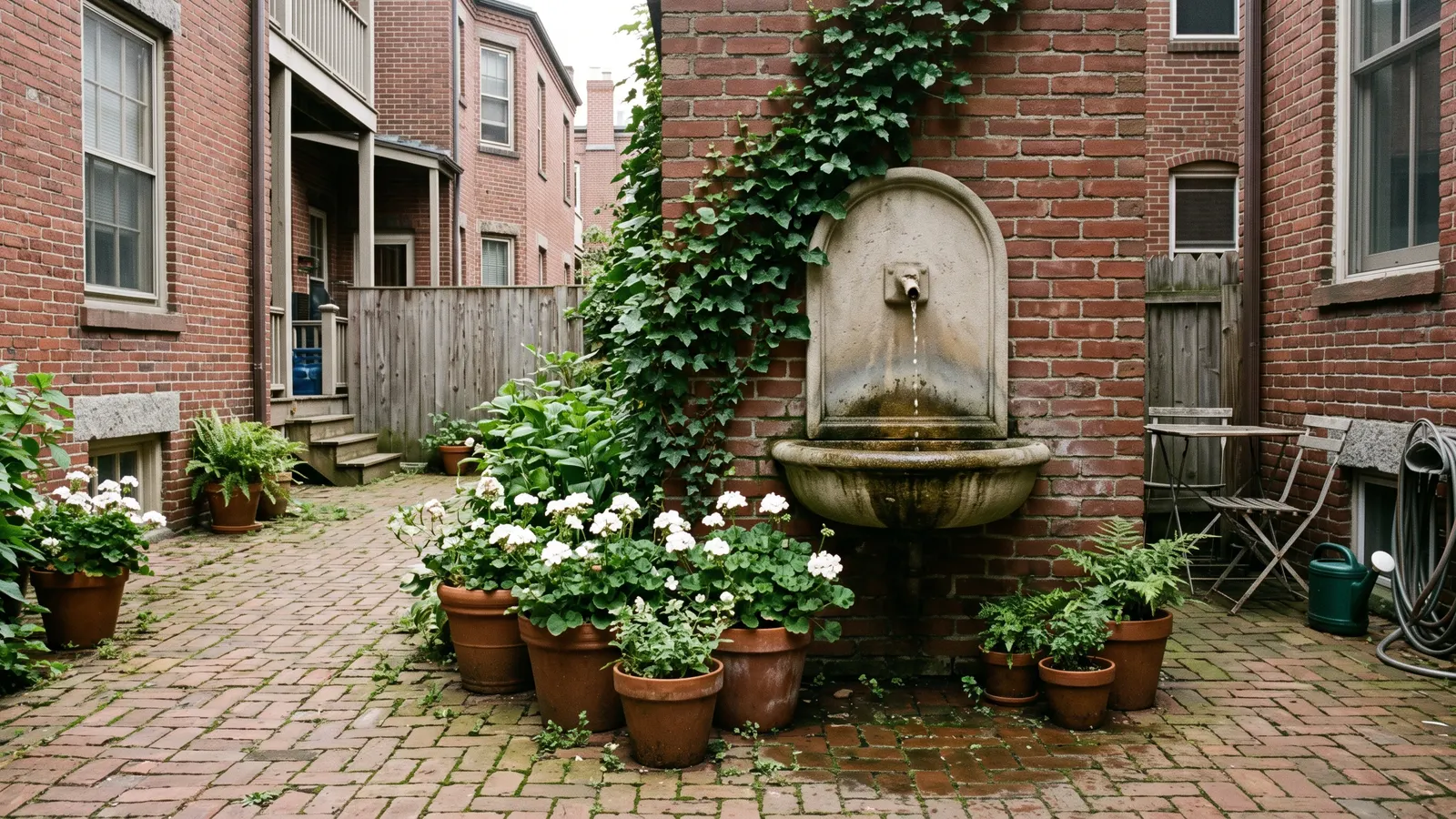
Running water masks traffic noise, which matters more in an American suburb than it ever did on an English estate. A wall-mounted fountain with a recirculating pump takes up almost no ground space and needs only a nearby outdoor outlet. Top up the water weekly in summer and bring the pump inside before the first freeze in cold zones.
Small-yard ideas
18. Turn a patio cottage-style with pots
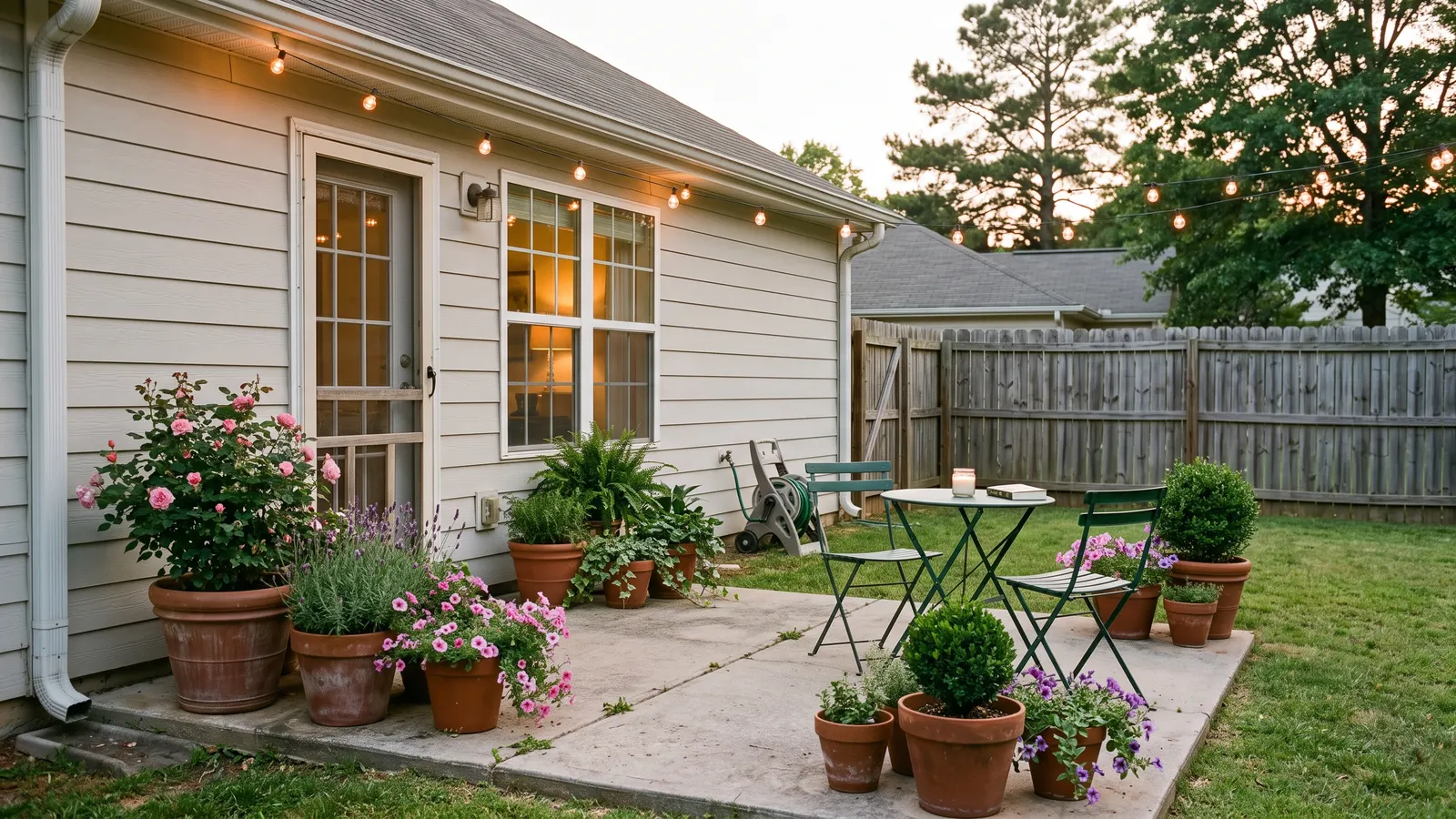
No beds? Terracotta pots give you an English cottage garden on a patio slab. Group them in odd numbers and mix heights: one big pot with a patio rose or a clipped evergreen ball, then mid-size pots of lavender, then small ones with trailing annuals. Use pots at least 16 inches wide for shrubs. Terracotta dries out fast, so in hot zones plan on watering daily in July or setting up drip lines.
19. Make a side yard into a rose walk
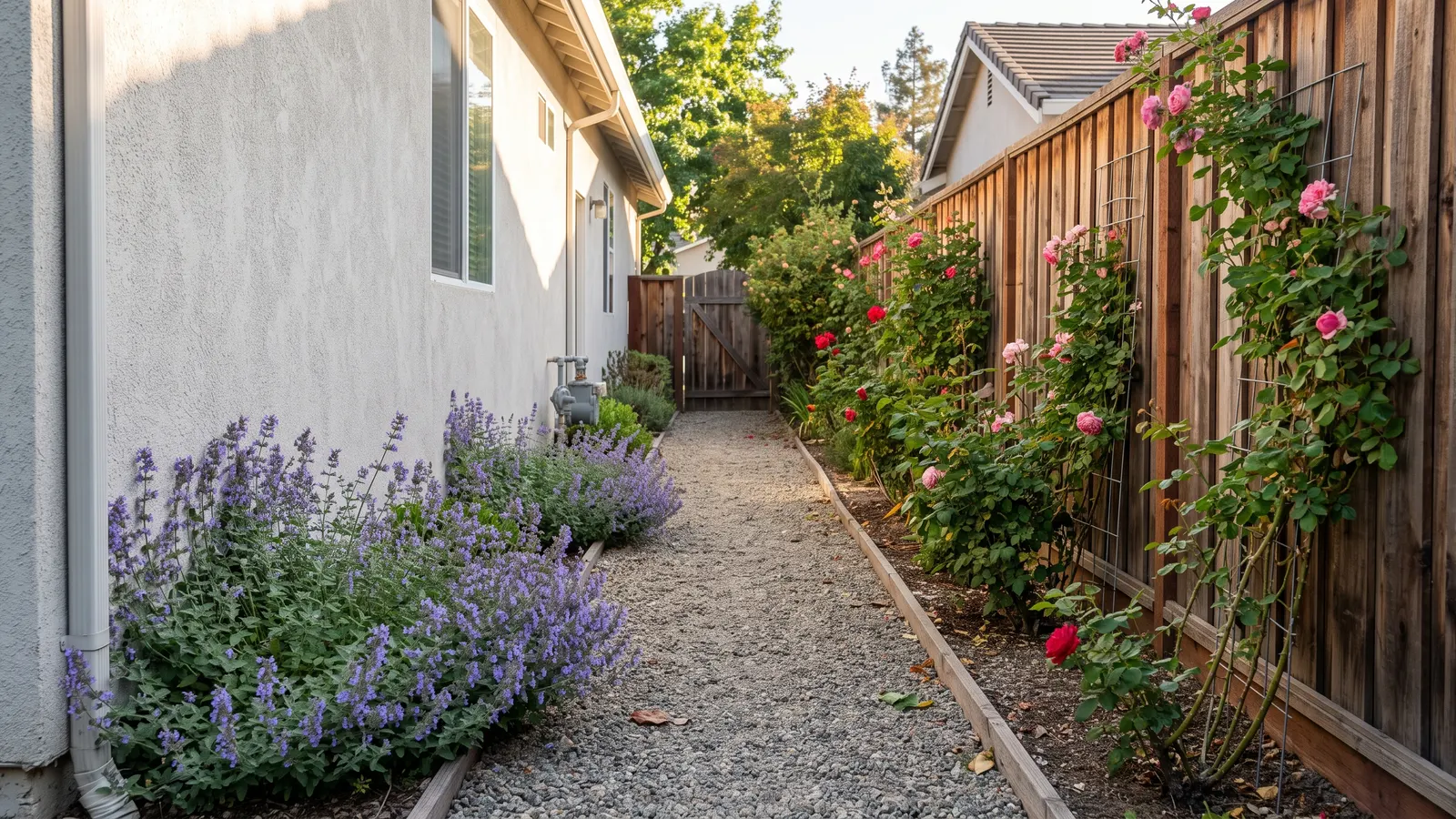
That 8 foot strip between the house and the fence usually holds trash cans. With a gravel walk and climbing roses trained on horizontal wires along the fence, it becomes a corridor you'd actually walk down. Keep plants narrow: climbers need only a foot of bed. Check how many hours of sun the strip gets first. Roses want six or more, and many side yards get less.
20. Use clipped balls in a townhouse courtyard
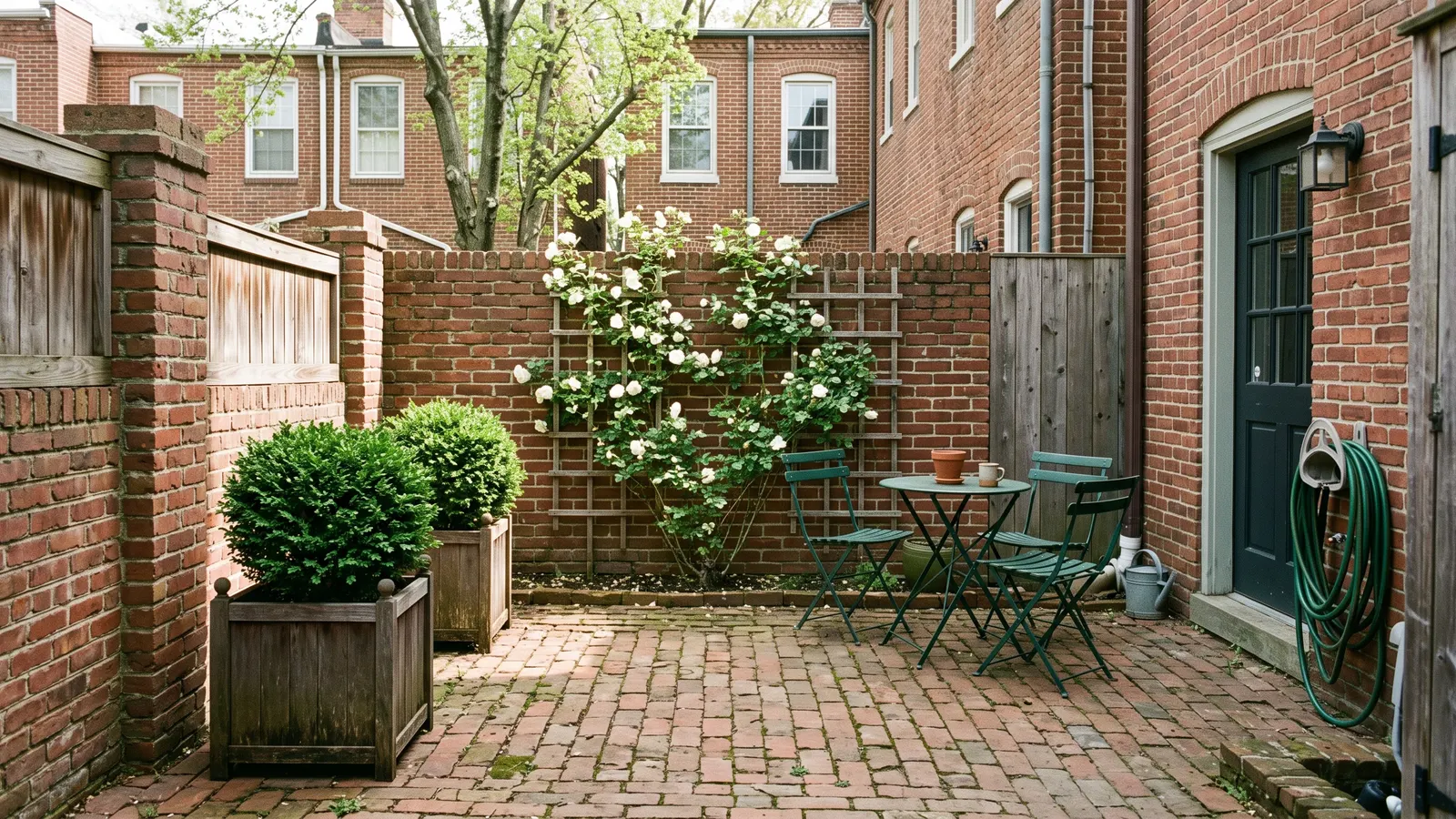
In a tiny space, the formal side of English design does more work than the cottage side. A few clipped evergreen balls in matching planters create order, and one climbing rose on the back wall brings the romance. Brick or stone paving looks right and drains well. Use the same planter style throughout. Small spaces look calmer when there are fewer kinds of things, and our small garden ideas have more ways to make a compact yard feel bigger.
21. Plant a brick-edged herb wheel with a sundial
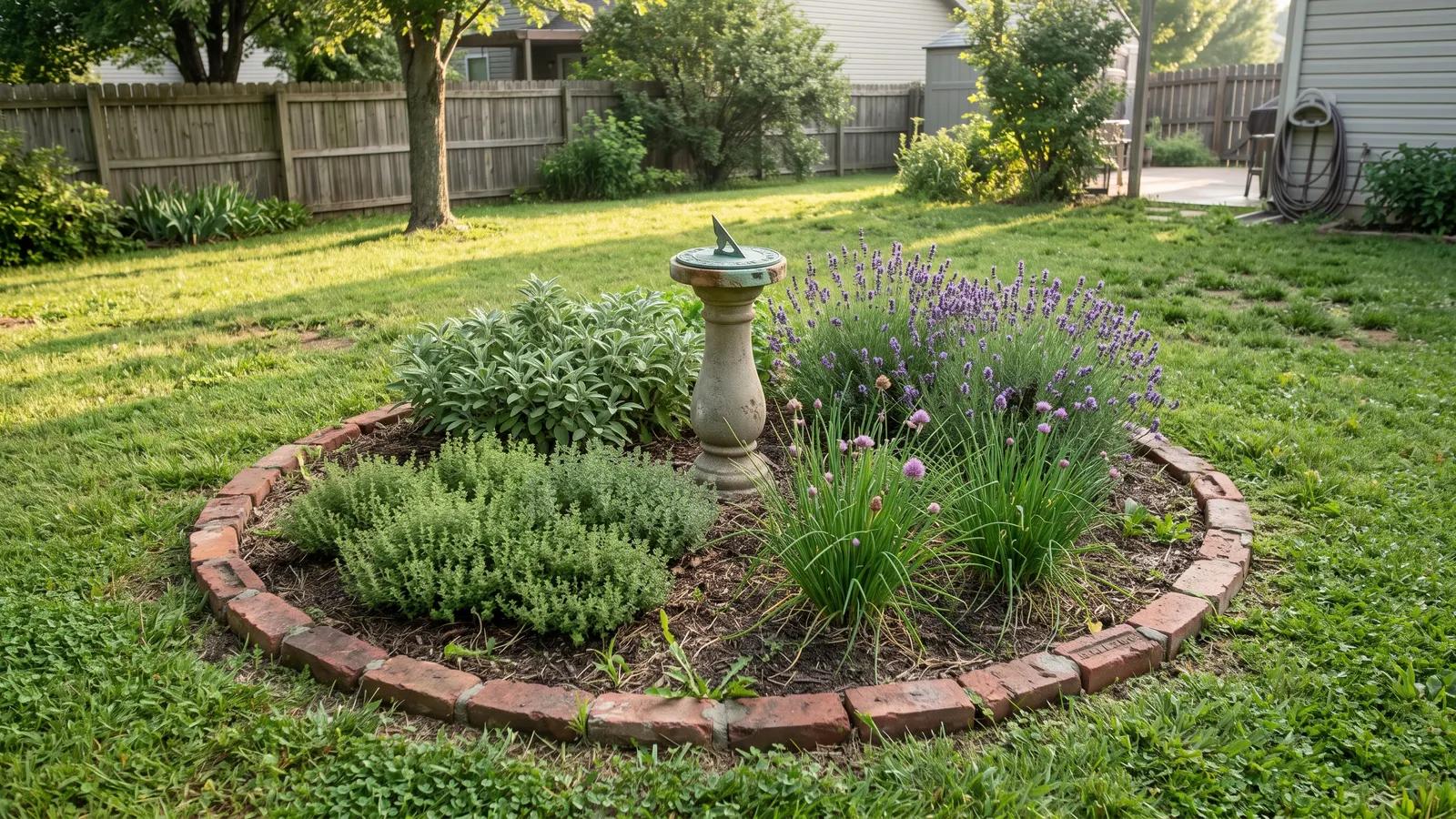
A round herb bed with a sundial in the middle is a kitchen garden and a focal point in one. A circle 8 feet across holds six wedges of herbs. Thyme, sage, chives and oregano come back every year in most of the country. Edge it with bricks set on end. Most herbs want full sun and lean, well-drained soil, so skip the rich compost.
Lawns and hot-climate versions
22. Frame a rectangular lawn with borders
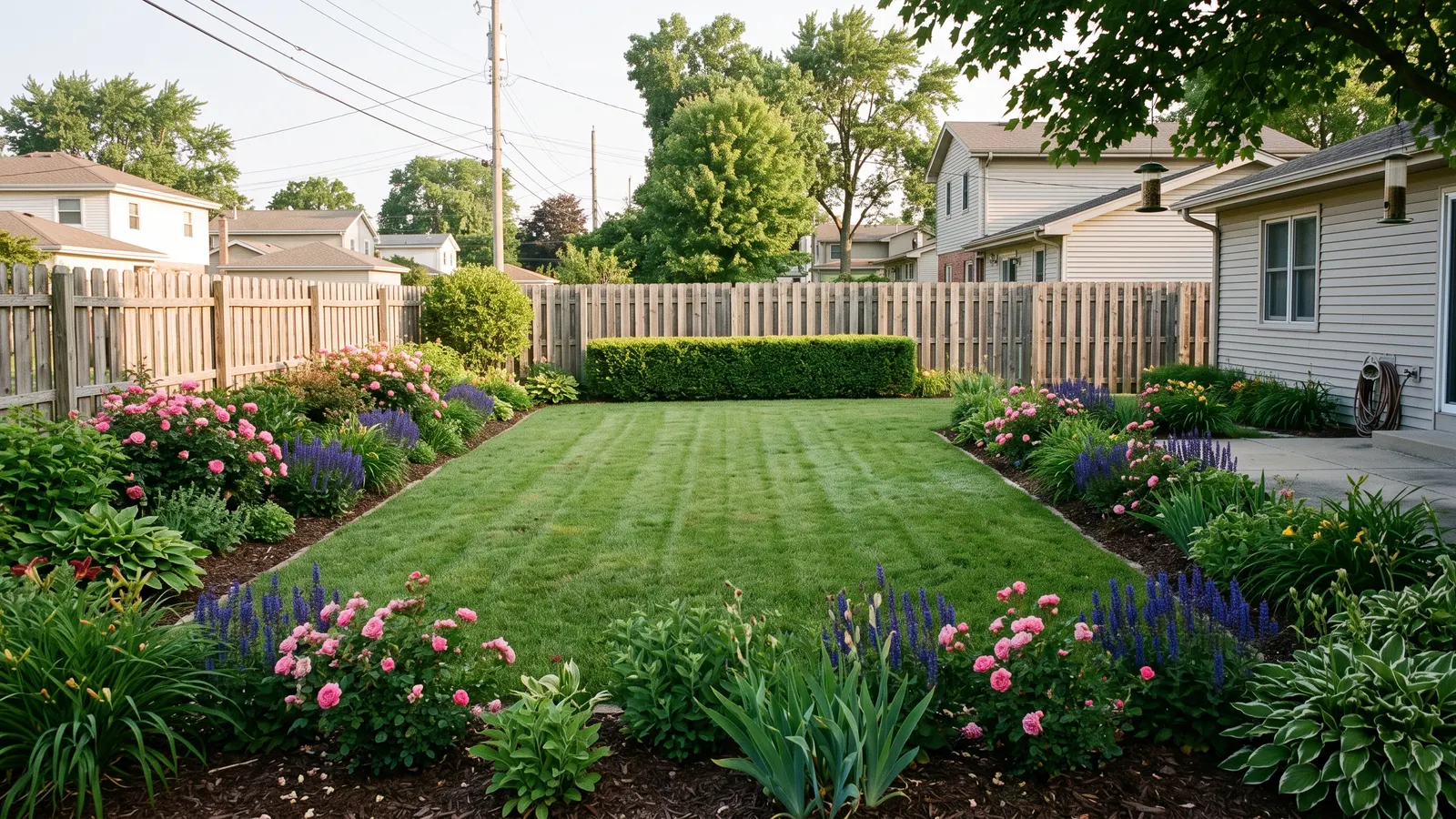
A simple rectangle of lawn surrounded by borders is the easiest way to give a standard American backyard an English shape. The lawn acts like a carpet; the borders do the decorating. Keep the lawn a clean geometric shape rather than a leftover space, and edge it sharply. In drought-prone areas, shrink the lawn and widen the borders, or switch to a low-water turf grass suited to your region.
23. Build the English look from heat-tolerant plants
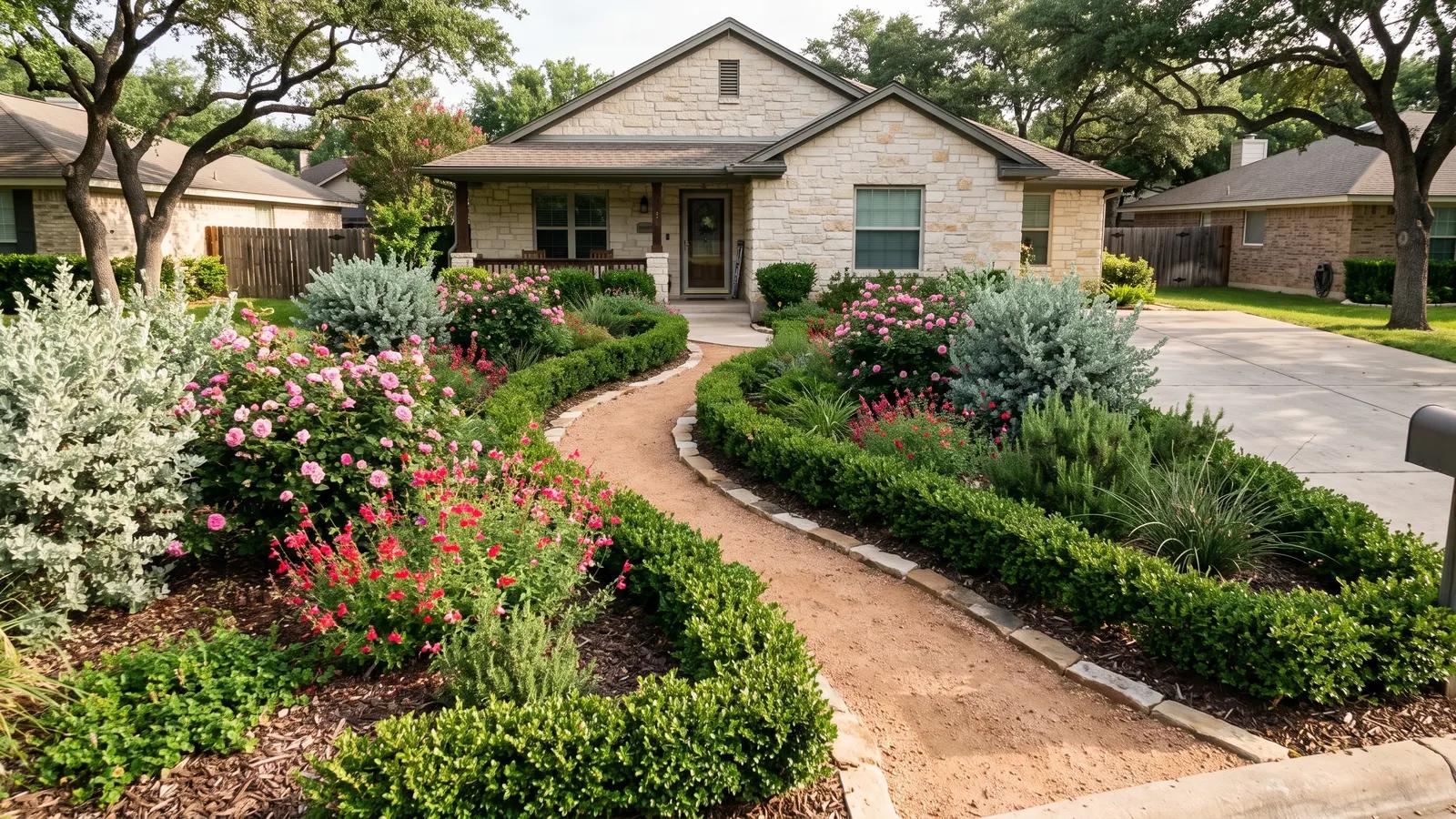
In Texas and the Southwest, keep the English layout and swap most of the plants. Dwarf yaupon holly (zones 7 to 9) makes the clipped edging, as NC State Extension notes it takes heavy pruning and drought. Autumn sage (zones 6 to 9) fills the border. Texas sage brings silver foliage and can be clipped into a hedge. An Earth-Kind shrub rose keeps the roses. Decomposed granite paths replace the lawn walks.
English garden plants by US zone, and what to swap in
The hardiness zone on a plant tag tells you only whether it survives winter. Most failures of English plants in the US come from summer instead: heat, humidity, warm nights or heavy clay. Check your zone on the USDA map (updated in November 2023), then use this table for the plants that most often disappoint.
| Classic English plant | Where it struggles | Swap in | Swap's zones | Source |
|---|---|---|---|---|
| Delphinium | Humid summers south of zone 7 | Annual larkspur, or blue false indigo | Baptisia 3 to 9 | NC State Extension; UW-Madison Extension |
| Lupine | Hot summers | Blue false indigo (Baptisia australis) | 3 to 9 | UW-Madison Extension |
| Boxwood edging | Areas with boxwood blight or box tree moth | Inkberry holly 'Gem Box', Japanese holly | 5 to 9 | Cornell IPM with Cornell Botanic Gardens |
| Boxwood edging (South) | Same pests, plus Deep South heat | Dwarf yaupon holly | 7 to 9 | NC State Extension |
| English lavender | Heavy clay, wet winters, humid heat | Russian sage; catmint where summers are milder | 4 to 9; 4 to 8 | UW-Madison Extension; Missouri Botanical Garden |
| Hybrid tea and old English roses | Humid South, Texas (disease, heat) | Earth-Kind roses such as 'Belinda's Dream' | Varies by cultivar | Texas A&M AgriLife Extension |
| Peony | Lower South, not enough winter chill | Early, single or Japanese-type peonies (upper South) | Varies | Clemson Cooperative Extension |
| Foxglove | Full sun in hot summers | Same plant, given afternoon shade | 4 to 9 | Clemson Cooperative Extension |
| Lavender or box hedges in the desert | Dry heat, alkaline soil | Autumn sage, Texas sage | 6 to 9; Southwest | NC State Extension |
Gardeners in the cool, damp Pacific Northwest and the colder North will need the fewest swaps. Everywhere else, treat the table as a starting list and confirm with your county extension office, which tests plants locally.
How to choose the right ideas for your yard
- Humid South (zones 7 to 9): start with ideas 2, 7, 17 and 23. Use Earth-Kind roses, holly edging and afternoon shade for foxgloves.
- Dry West and Southwest: ideas 6 (with Russian sage), 13, 21 and 23. Gravel paths, silver foliage and clipped native shrubs carry the look.
- Cold North (zones 3 to 5): ideas 1, 3, 10 and 14. Baptisia, catmint and hardy shrub roses survive the winters.
- Small yards and patios: ideas 5, 18, 19, 20 and 21.
- Low maintenance: go formal. Ideas 2, 4, 16 and 22 need a trim twice a year, while a cottage border needs weekly attention in season.
Want to compare formal and cottage on your actual yard before buying plants? OutdoorBrite's AI garden design redesigns a photo of your space in either style, and the Plus plan adds a plant list picked for your region.
FAQ
What plants are in an English garden? Classic English garden plants include roses, foxglove, delphinium, hollyhock, lavender, clematis, catmint, peonies and lupines, held together by clipped evergreens like boxwood or yew. In much of the US, a few of these need substitutes: blue false indigo for lupines, inkberry or dwarf yaupon holly for boxwood, and Russian sage where lavender rots.
Can you grow an English garden in hot climates? Yes, if you keep the layout and change some plants. The deep borders, clipped edging, paths and focal points work anywhere. In hot, humid areas, use heat-tested roses like Texas A&M's Earth-Kind list, holly instead of boxwood, and give foxgloves afternoon shade. In the dry Southwest, autumn sage and Texas sage fill the roles of English border plants.
What is the difference between an English garden and a cottage garden? A cottage garden is one type of English garden. "English garden" covers both the formal country-house style, with symmetry, clipped hedges and lawns, and the informal cottage style, with crowded, self-seeding flower beds and winding paths. Many home gardens combine a formal frame with cottage planting.
How do I make my backyard look like an English garden? Start with structure: deep borders along the fence, a defined lawn shape, one path leading to a focal point like a bench or birdbath, and some clipped green edging. Then fill the borders in layers, tall at the back and spilling at the front, with plants rated for your zone and summer climate.
Is an English garden high maintenance? The cottage version is. It needs weekly deadheading, staking and editing in season. The formal version is lower effort: hedges need trimming once or twice a year and the lawn needs mowing, but the planting is simpler. Choosing plants suited to your climate cuts the work most of all.
How much space do you need for an English garden? Very little. A front yard, a side yard or a patio of terracotta pots can carry the style. The essentials are one layered bed, one path or clear route, and one focal point. Small spaces usually look better with the formal elements, like clipped balls and brick, than with a crowded cottage mix.
Sources: NC State Extension: Delphinium, NC State Extension: Dwarf yaupon holly, NC State Extension: English lavender, NC State Extension: Autumn sage, NC State Extension: Texas sage, Cornell IPM: Alternatives to boxwood, UW-Madison Extension: Blue false indigo, UW-Madison Extension: Russian sage, Missouri Botanical Garden: Catmint, Clemson HGIC: Foxglove, Clemson HGIC: Peonies in South Carolina, Texas A&M AgriLife: Earth-Kind roses, USDA ARS: 2023 Plant Hardiness Zone Map, all checked October 20, 2026