23 Front Yard Fence Ideas for Curb Appeal
Fence ideas for the street side of the house, matched to Colonial, Craftsman, modern, Spanish and farmhouse homes, plus low borders, gates, planting and real height limits from three cities.
A backyard fence has one job: keep things in and eyes out. The fence at the front of the house has a harder one. Everyone who drives past sees it, it has to suit the house behind it, and in most towns it can't be taller than about 4 feet. Good front yard fence ideas work inside those limits and make the house look finished instead of guarded.
This list sticks to the street side. You'll find 23 ideas matched to house styles (Colonial, Craftsman, Spanish, mid-century, farmhouse), low borders that aren't really fences, gate details, and what to plant along the line. Each one comes with a price, a rule or a material note. If you're after a tall privacy screen for the back, that's a different project, covered in our cheap privacy fence ideas.
Every image below is an AI design concept, the same kind of render OutdoorBrite makes from a photo of your own house.
Before you pick: height rules and setbacks
Check the rules before you fall for a design, because they decide which ideas are even possible.
- Front yards are usually capped at 3 to 4 feet. Orlando allows 4 feet in front yards and 6 feet in side and rear yards. Phoenix limits fences in the required front setback to 40 inches. Fairfax County, Virginia, allows 4 feet in most front yards.
- Corners and driveways have their own limits. Orlando, like many cities, keeps fences out of the sight triangles at street corners and driveways so drivers can see people on the sidewalk. Corner lots often end up with two "front" yards.
- The property line is rarely the sidewalk edge. Many lots end a few feet back, and some towns require a setback. Find your survey before you set posts.
- HOAs add a second layer. They often dictate material and color, sometimes the exact picket style.
- Permits are common. Plenty of towns want a permit for any new fence, even a short one.
Search your city name plus "fence height" for the exact wording. It's usually a one-page PDF.
One house, three fences
Style matters more at the front than anywhere else on the property, and the same house can take very different fences. Here is one ordinary house with an open lawn, then three AI concepts made from that same photo:
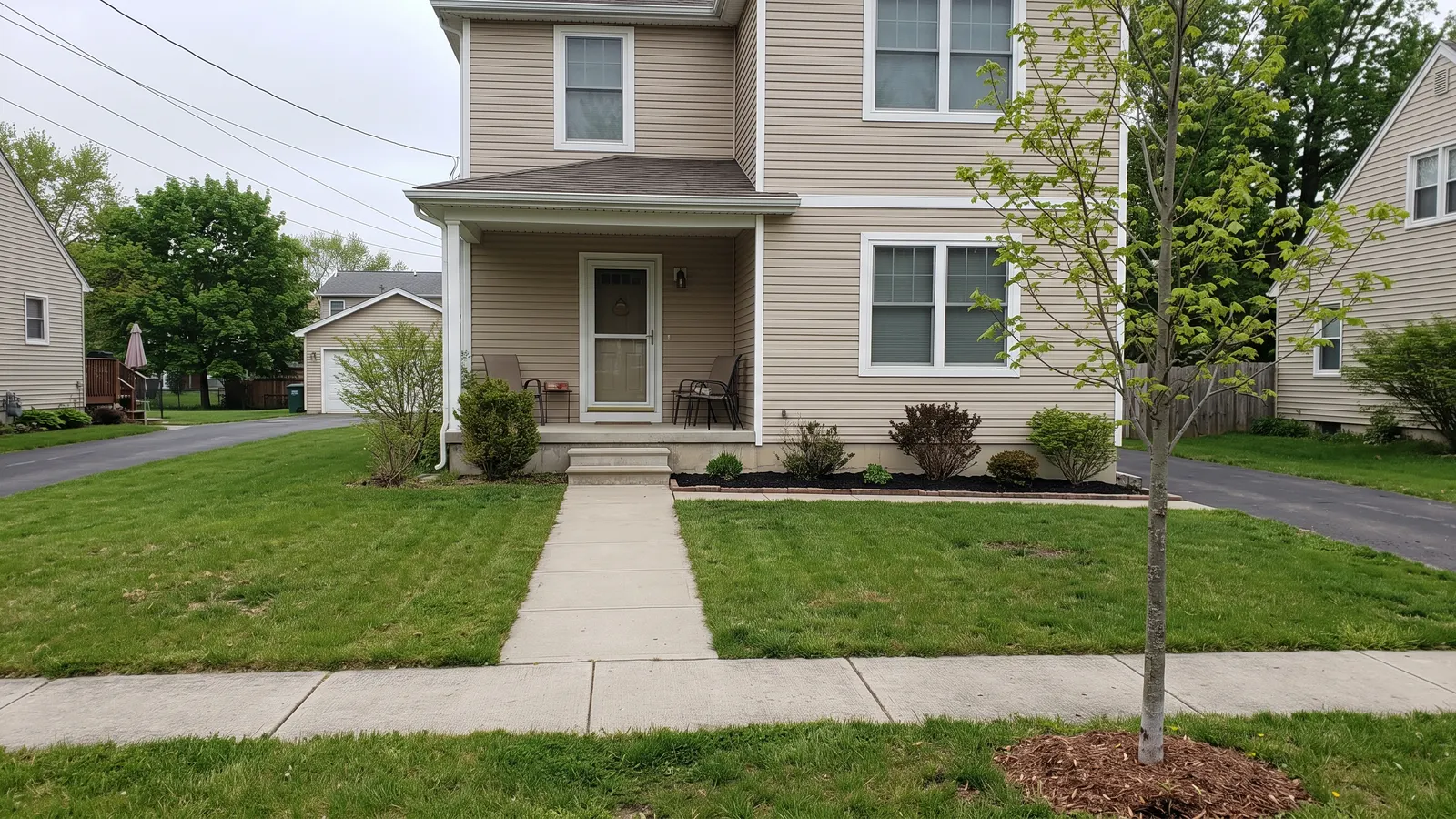
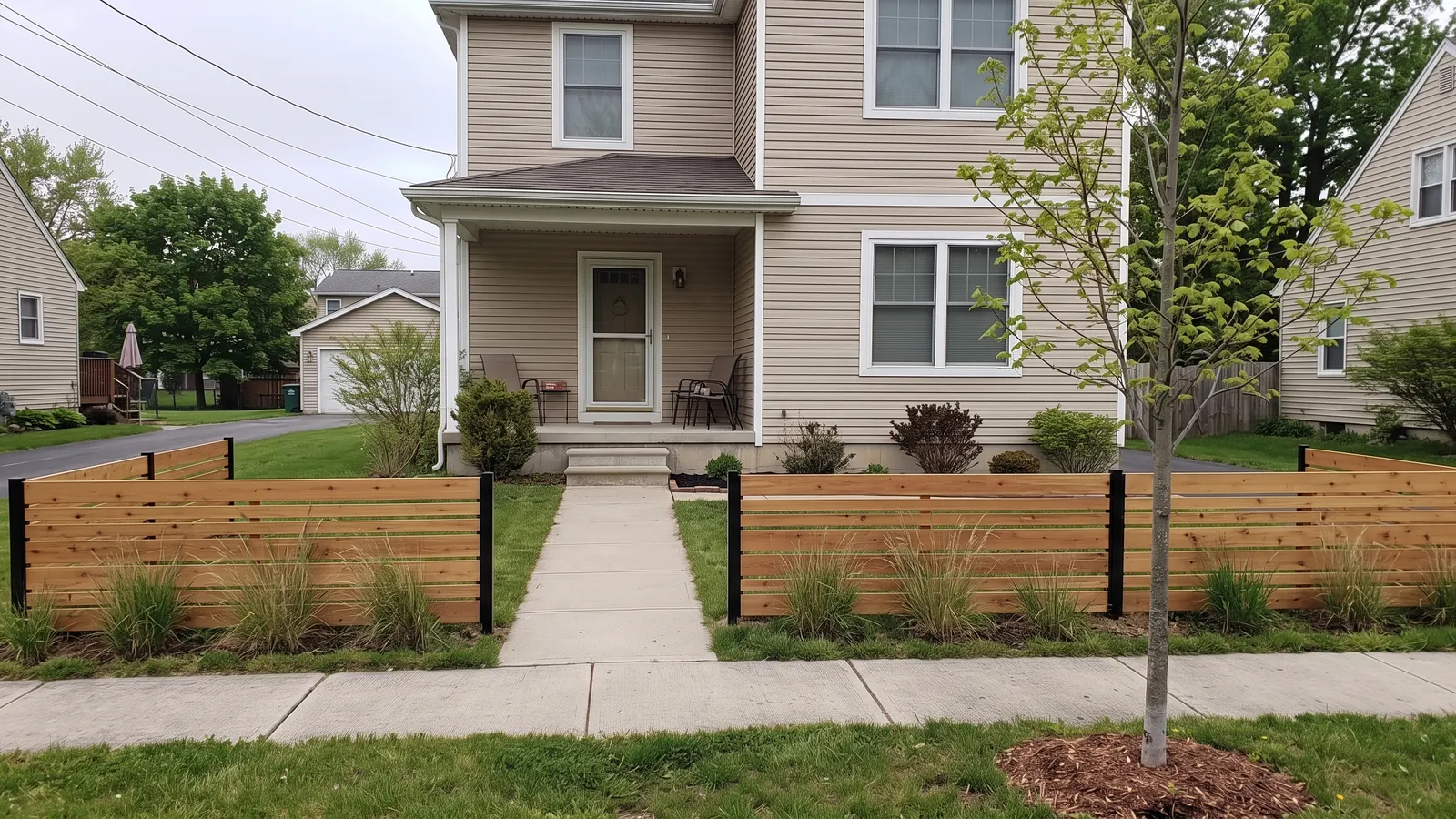
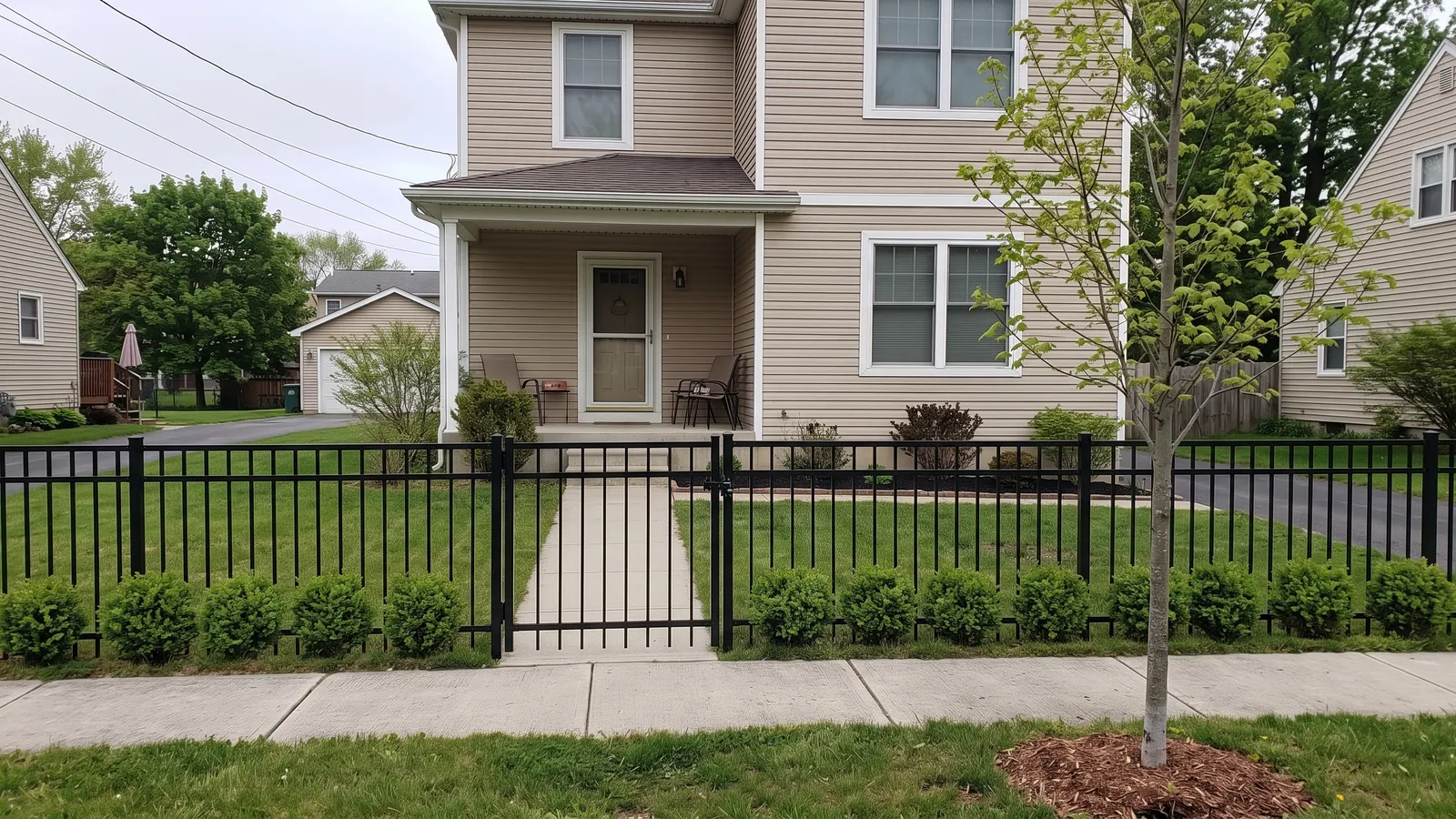
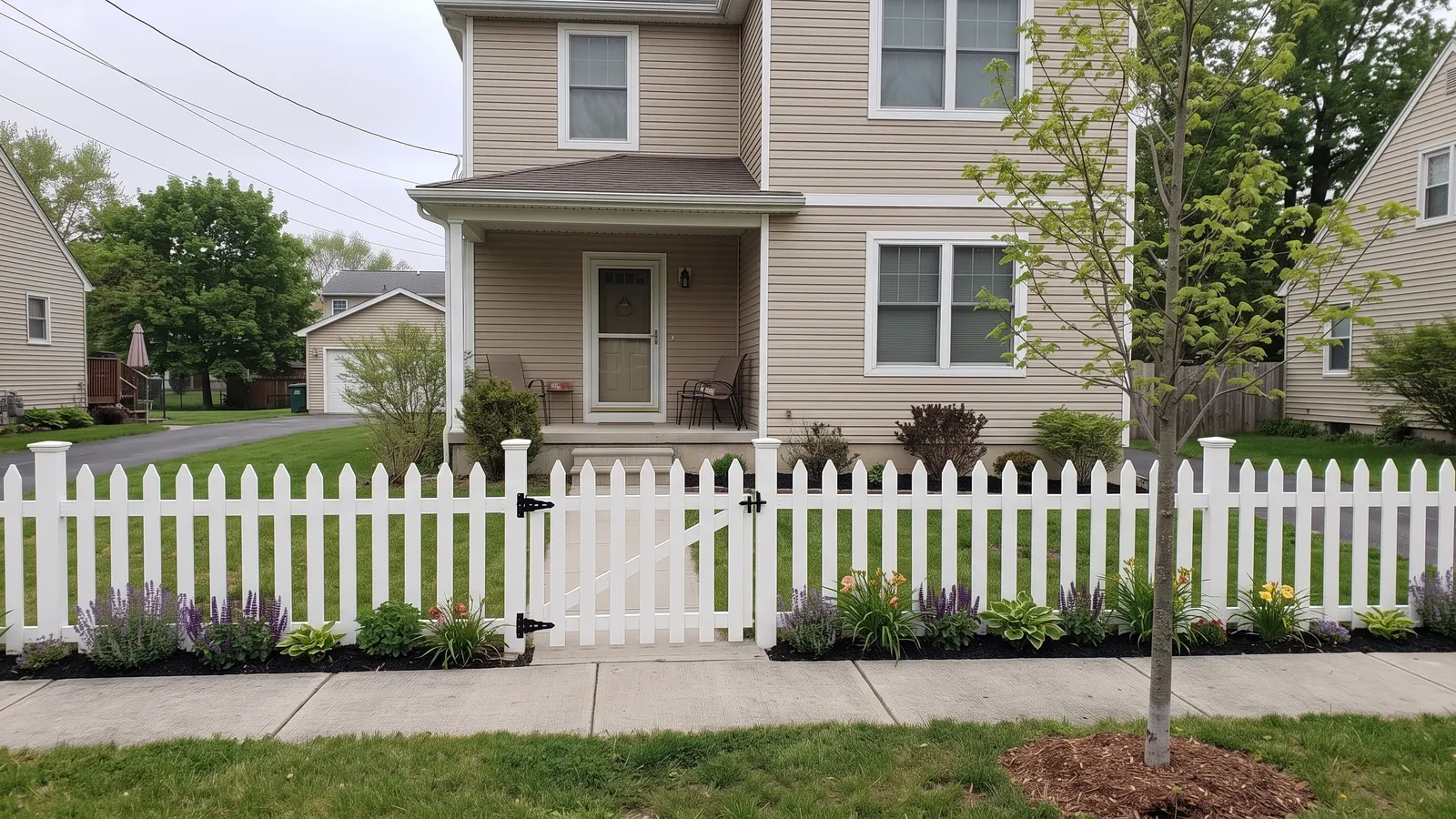
The white picket (shown at the top of this post) makes it read as a traditional family house. The cedar boards pull it toward modern. The black metal looks the most formal and hides the least. Seeing all three on your actual house settles the choice faster than any amount of Pinterest scrolling, and that's what AI fence design is for.
Ideas by house style
1. Put a white picket in front of a Colonial
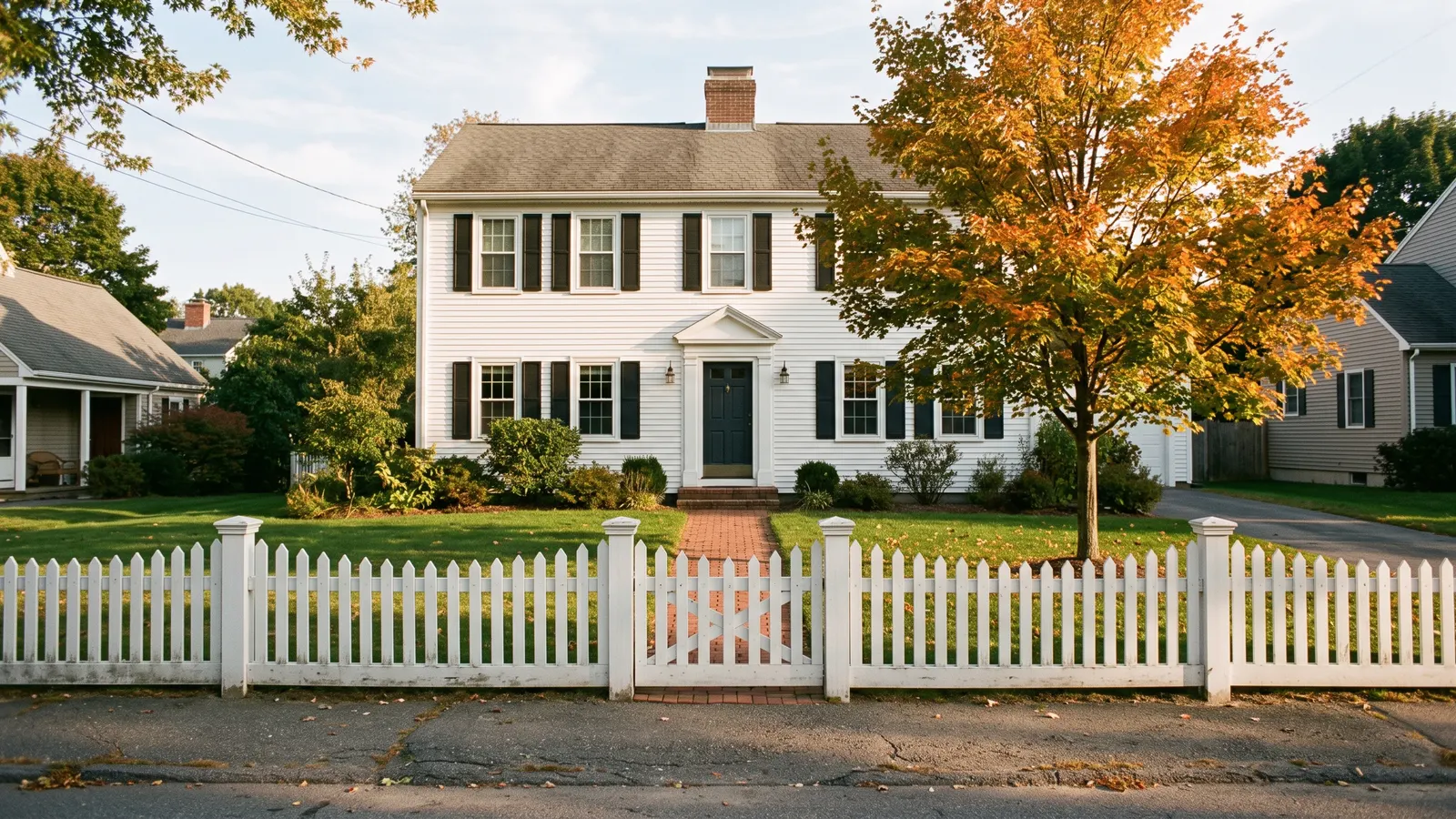
A symmetrical Colonial wants a symmetrical fence: pointed pickets, square posts and a gate lined up with the front door. Keep it at 3 to 3.5 feet so the first-floor windows stay in view. Wood pickets run about $20 to $40 per linear foot installed and need repainting every few years. Vinyl picket costs $30 to $45 a foot and skips the paint.
2. Give a Craftsman chunky posts and flat caps
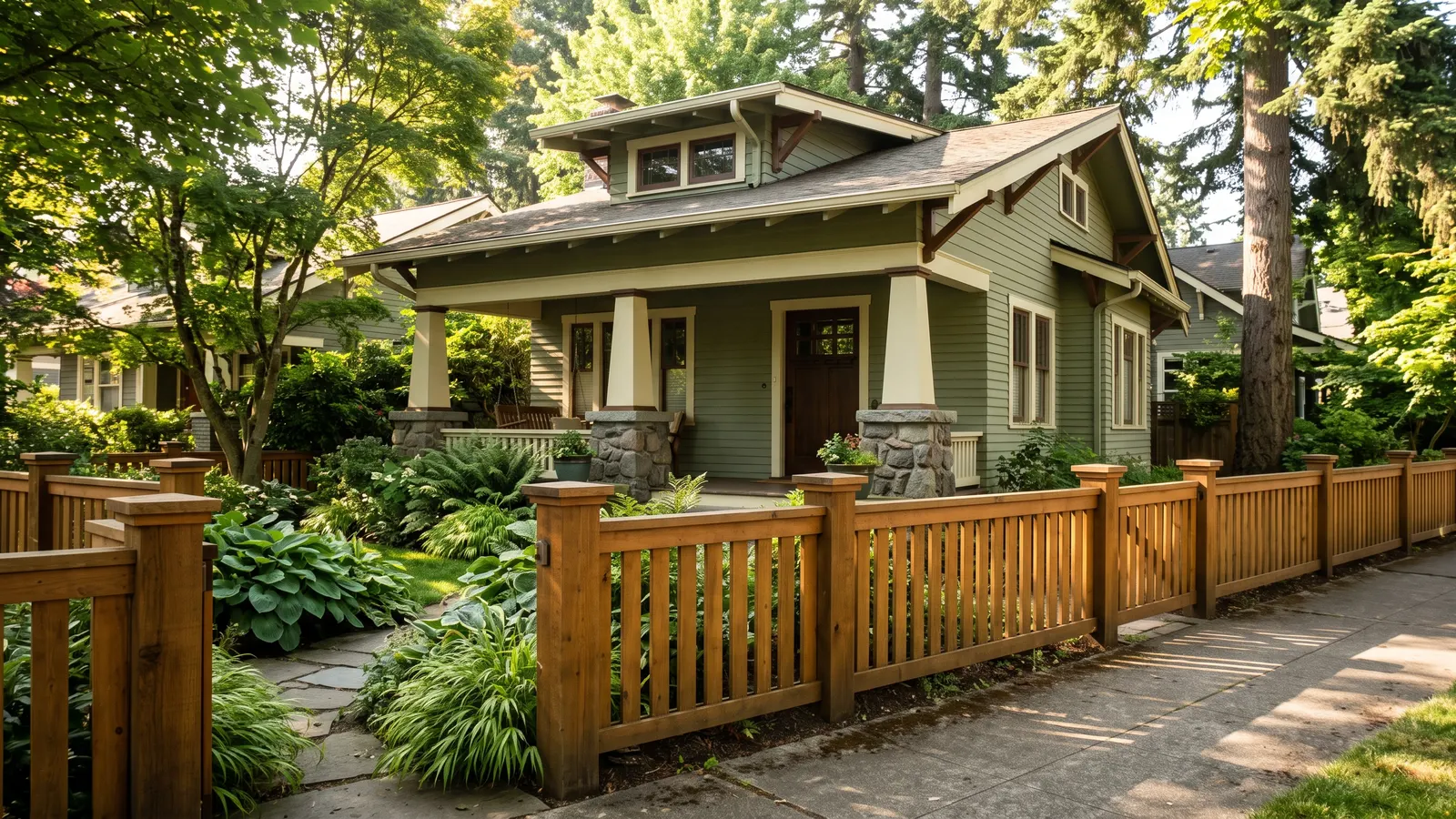
Craftsman houses are built from heavy, square shapes, so a dainty pointed picket looks wrong on them. Use flat-top square pickets, 6x6 posts instead of 4x4, and wide flat caps that echo the tapered porch columns. Stain it a mid brown or a deep green rather than white. The bigger posts add a little to the lumber bill and a lot to how solid the fence looks.
3. Run an X-brace ranch fence along a farmhouse
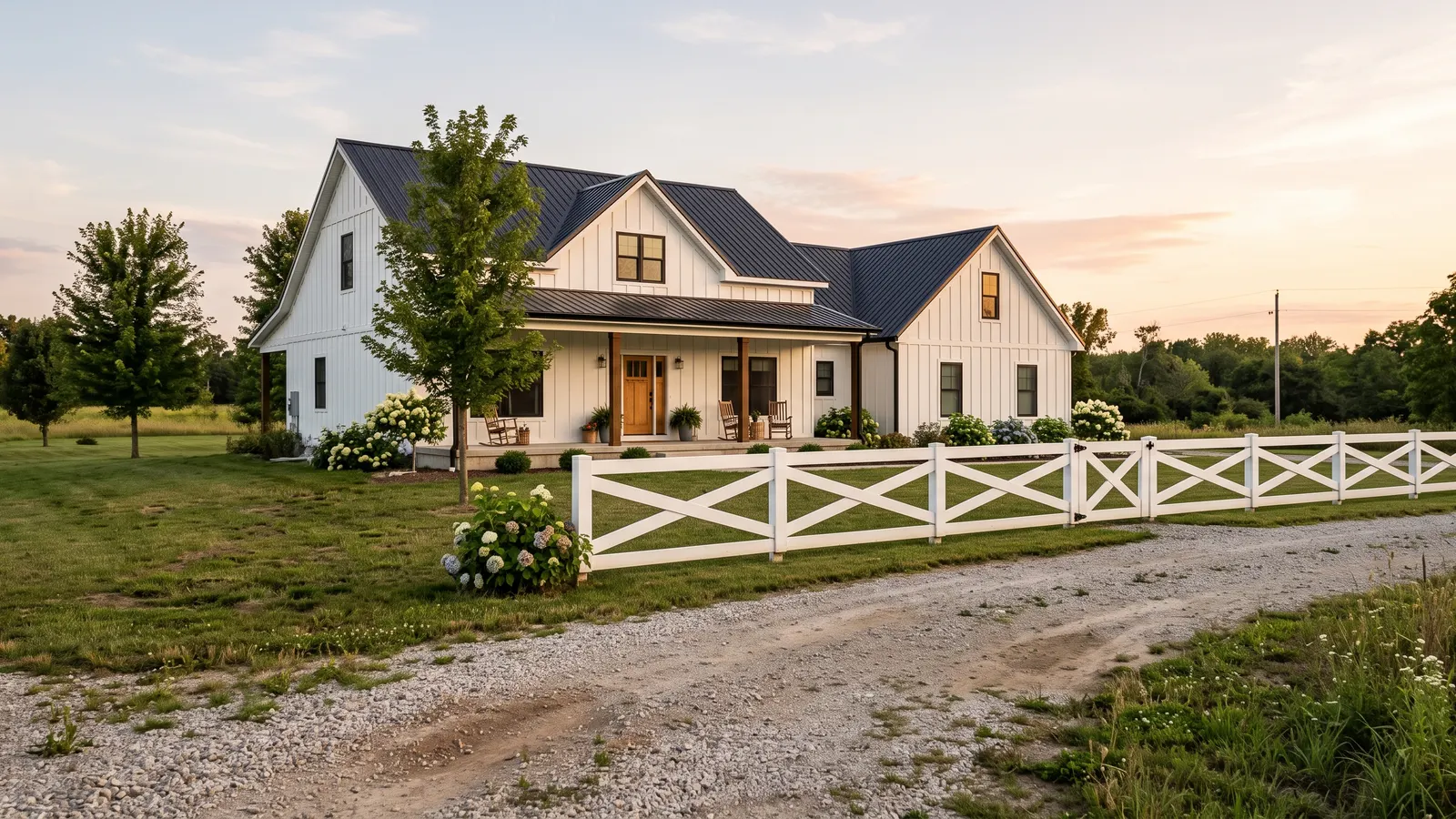
An open rail fence with a big X in each bay suits a farmhouse on a wide lot. It marks the boundary without blocking anything, and it uses far less wood than pickets, so it's one of the cheaper ways to fence a long frontage. It won't hold a small dog. Add black welded wire to the inside if you need it to.
4. Keep a modern house's fence low and horizontal
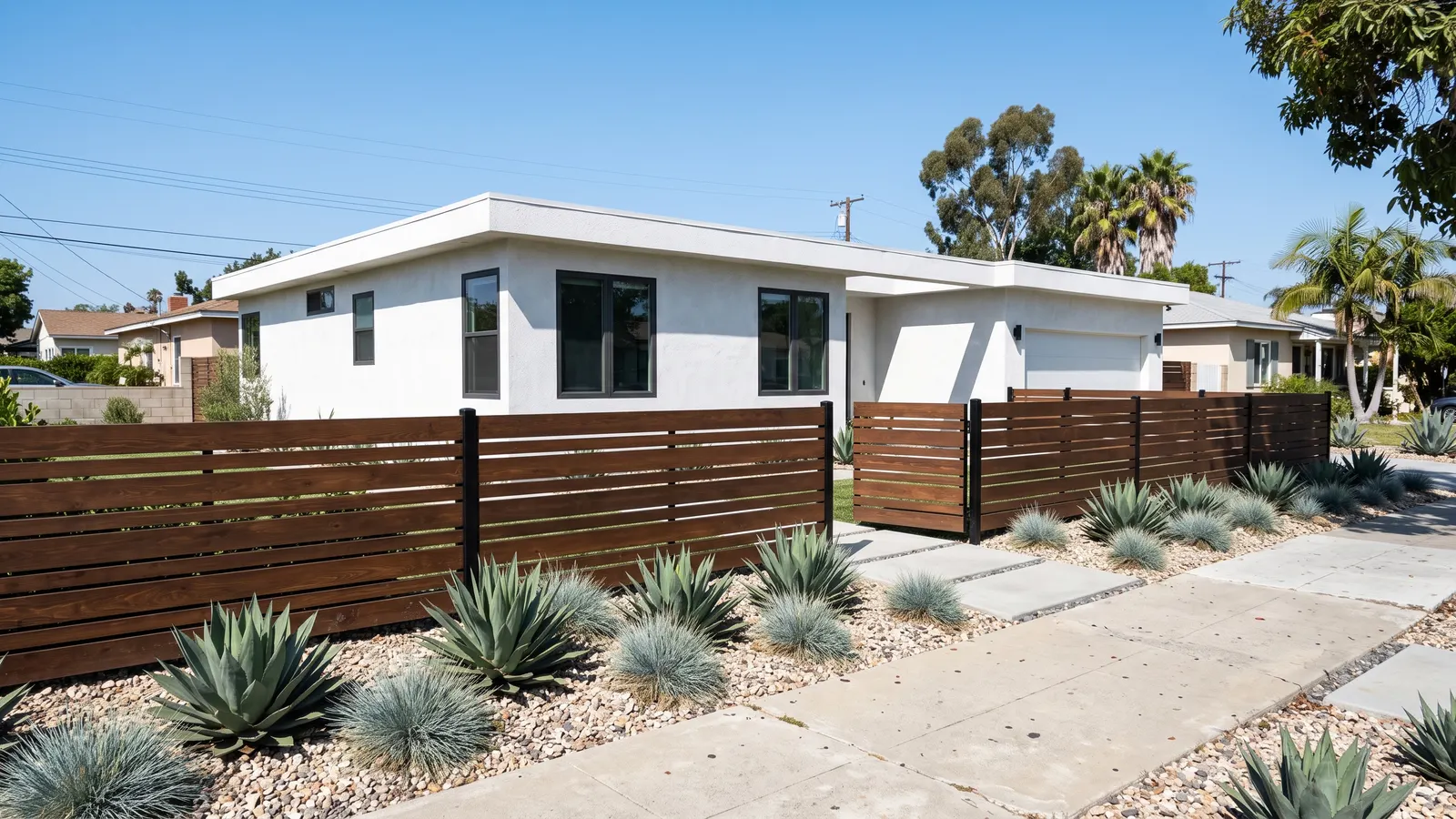
A horizontal front yard fence repeats the long, flat lines of a modern house. At the front, keep it to about 3 feet with half-inch gaps so it reads as a frame rather than a barrier. Slim black steel posts look cleaner than wood posts and won't twist. For board widths, stains and gap spacing, see our horizontal fence ideas.
5. Build a breeze block wall for a mid-century ranch
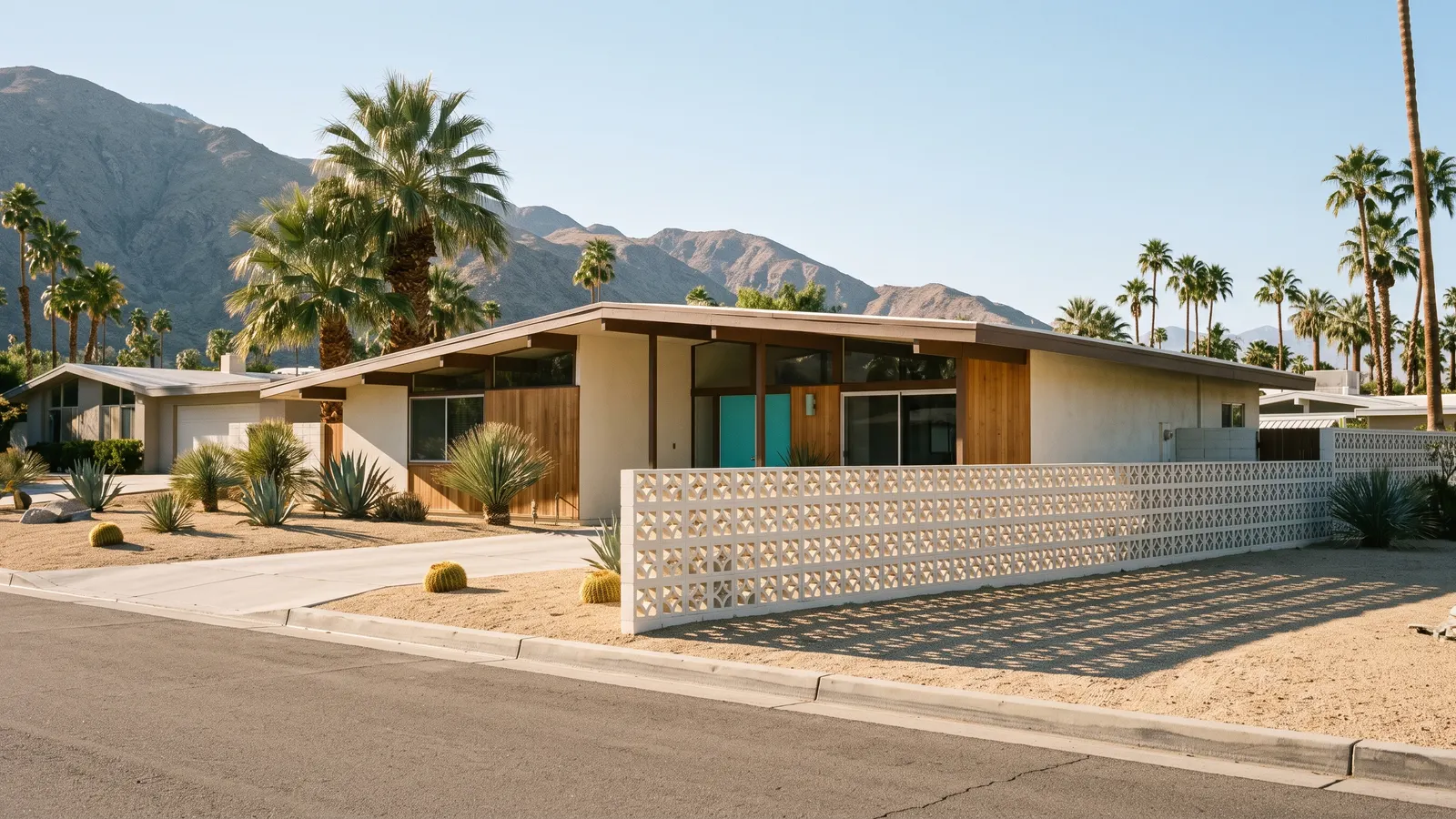
Decorative screen blocks were everywhere on 1950s and 60s houses, and a low wall of them still looks right on a ranch with wide eaves. The pattern lets light and air through, so it doesn't feel heavy. A wall like this needs a concrete footing and steel reinforcement, so it's a mason's job more than a weekend one. Paint it to match the house trim.
6. Add spear tops and finials to a Victorian
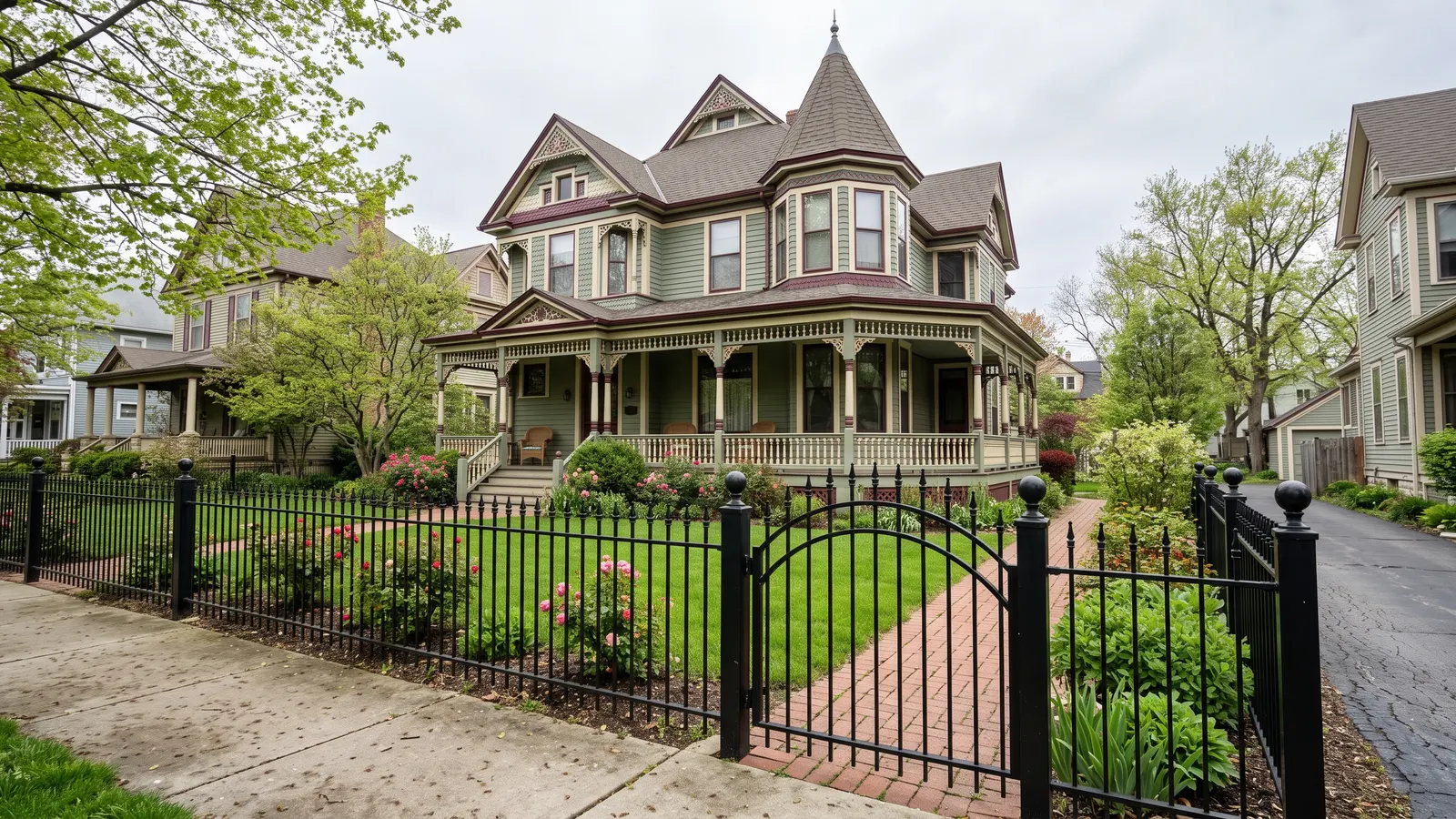
Ornate houses carry ornate metal. Real wrought iron costs about $50 to $85 per linear foot installed for 4 to 6 feet, or $40 to $50 for a 3-foot fence. Powder-coated aluminum in the same spear-top style costs less, about $25 to $75 a foot, and it won't rust. From the sidewalk most people can't tell them apart. An arched gate at the walk is worth the extra money.
7. Wrap a Spanish house in a low stucco wall
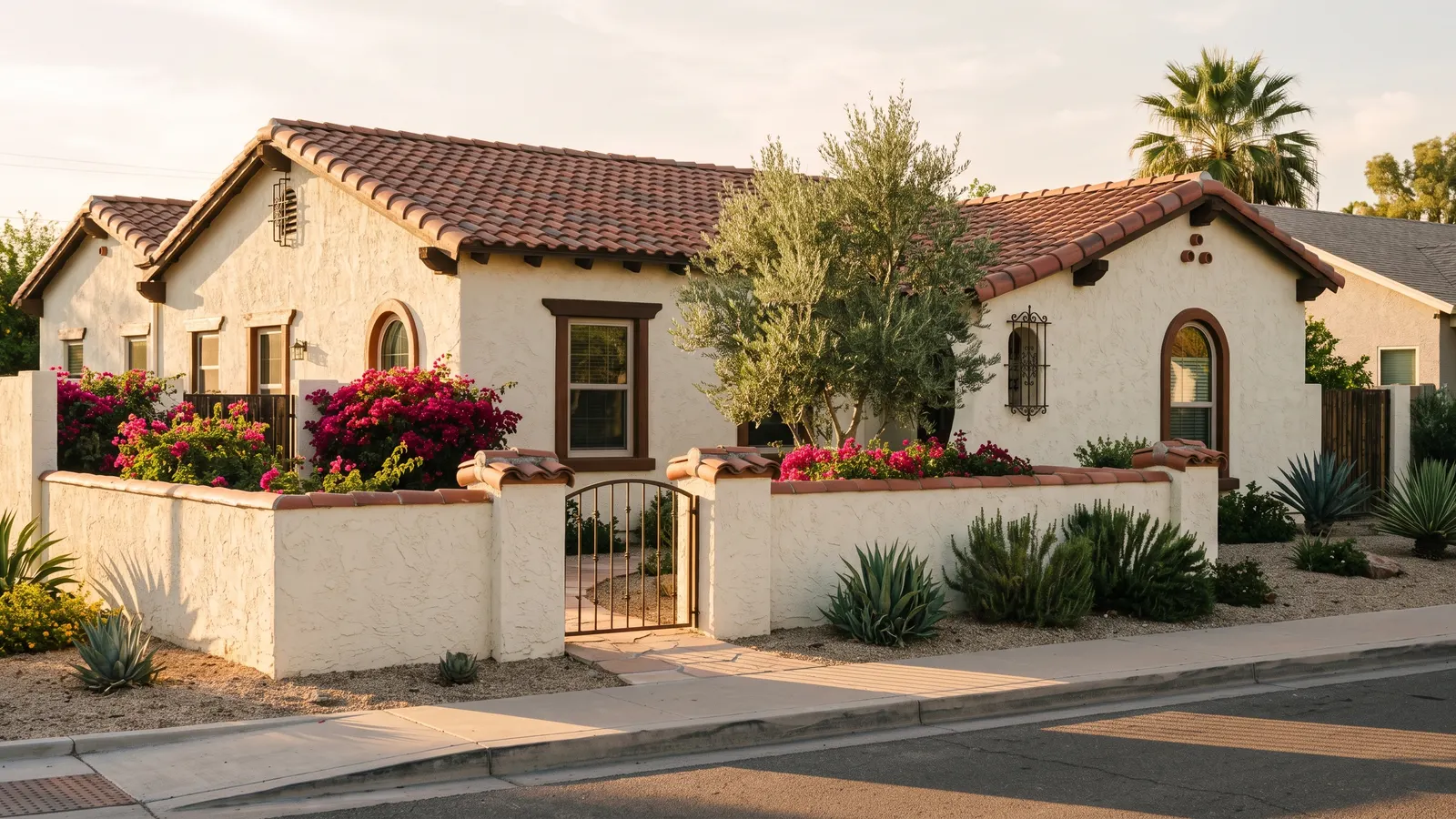
A stucco wall in the house color, capped with clay tile, turns the front yard into a small courtyard. Keep it at 3 feet or under. Phoenix, for one, caps front-setback walls at 40 inches. Put a simple black iron gate in the opening so the door is still visible from the street. Bougainvillea or an olive tree behind the wall softens it.
8. Set metal panels between brick piers
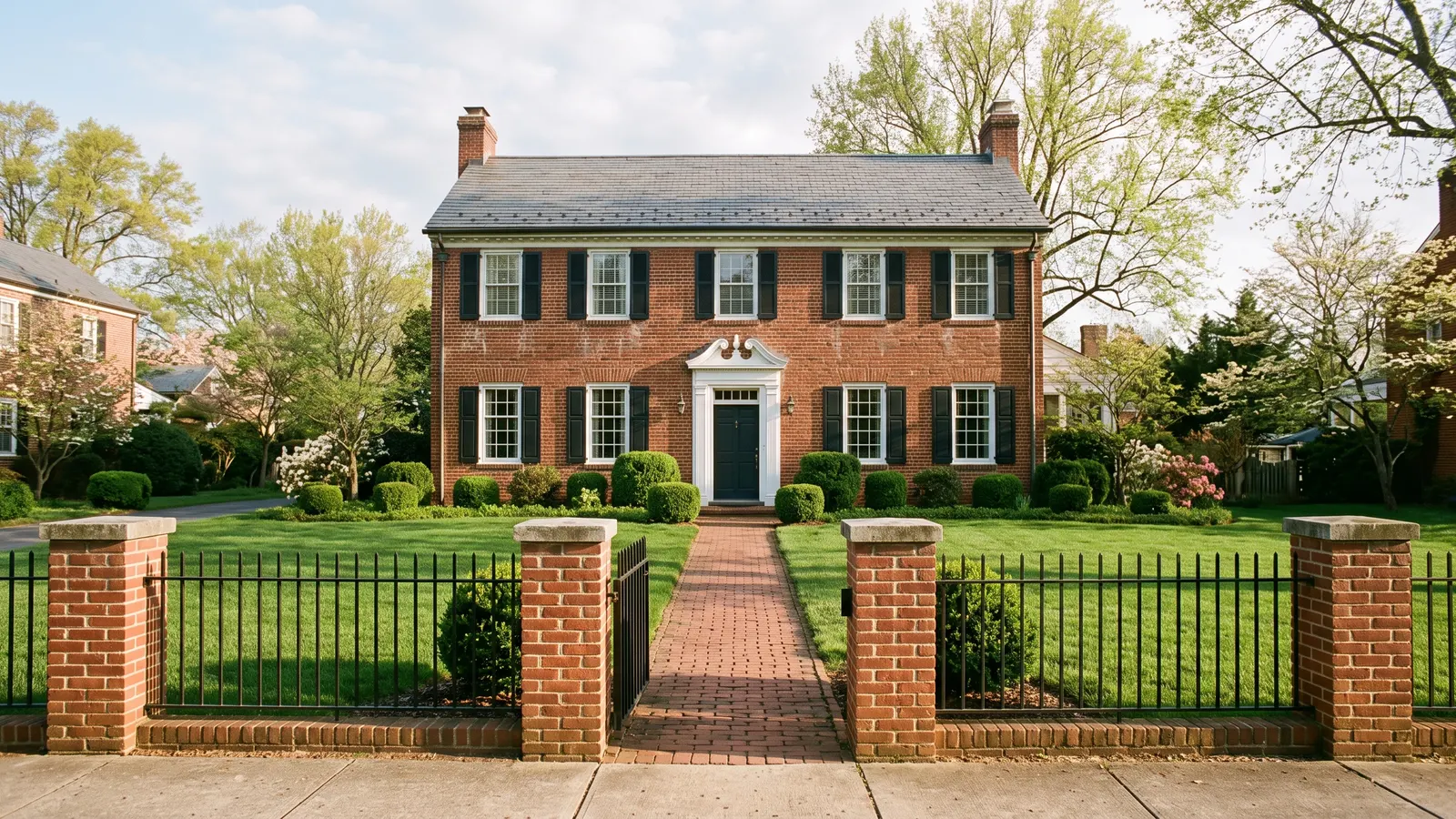
On a brick house, brick piers tie the fence to the house itself. Each brick pillar costs about $500 to $1,800, so most people put them only at the corners and on both sides of the walk, with plain metal panels in between. Use the same brick and mortar color as the house. A close match is what makes it look original.
9. Use posts and rope on a coastal cottage
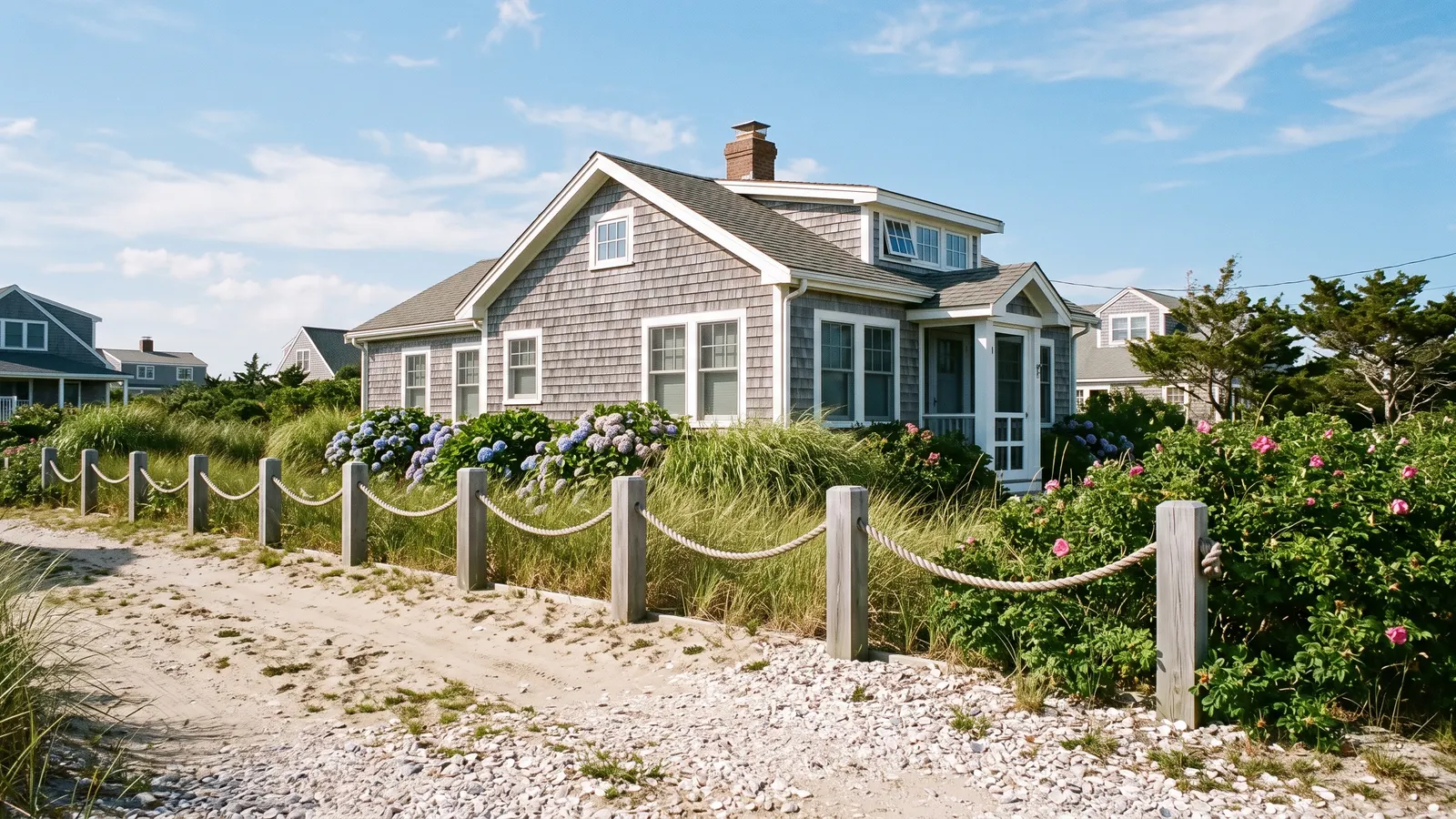
Near the water, a knee-high post-and-rope fence marks the yard without blocking the view or catching wind. Set posts 6 to 8 feet apart and use 1-inch rope made for outdoor use, since natural fiber weathers fast in salt air. It's easy to build yourself. It keeps people off the lawn and nothing else, which is usually all a beach house needs.
10. Line a rural frontage with split rail
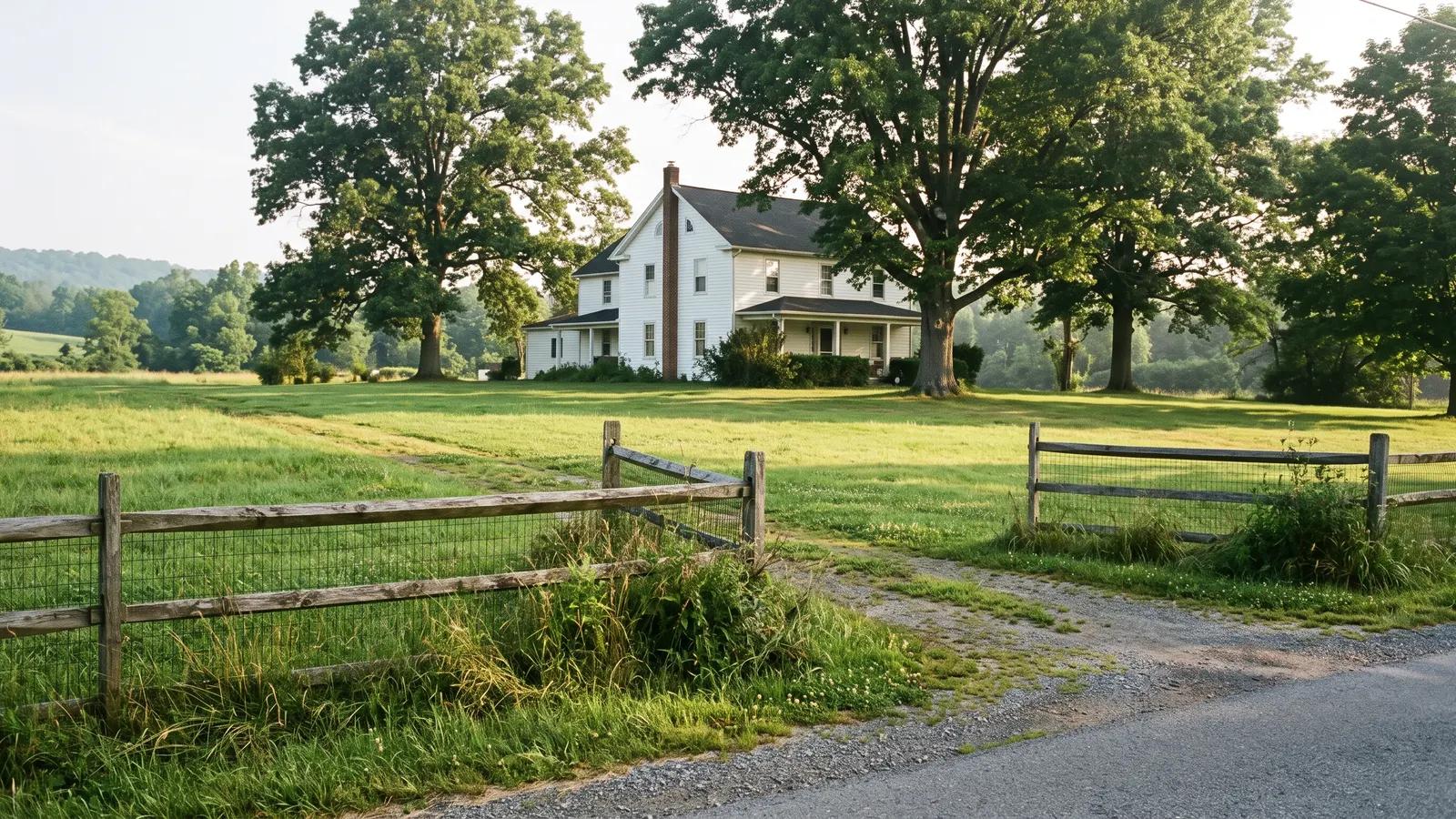
When the house sits far back from the road, split rail is the least expensive way to define a long front line. It costs about $15 to $35 per linear foot installed, or $35 to $40 with wire mesh added to keep pets in. Cedar and locust rails last longest. Leave them unstained and they weather to silver.
11. Fill gabion baskets with local rock
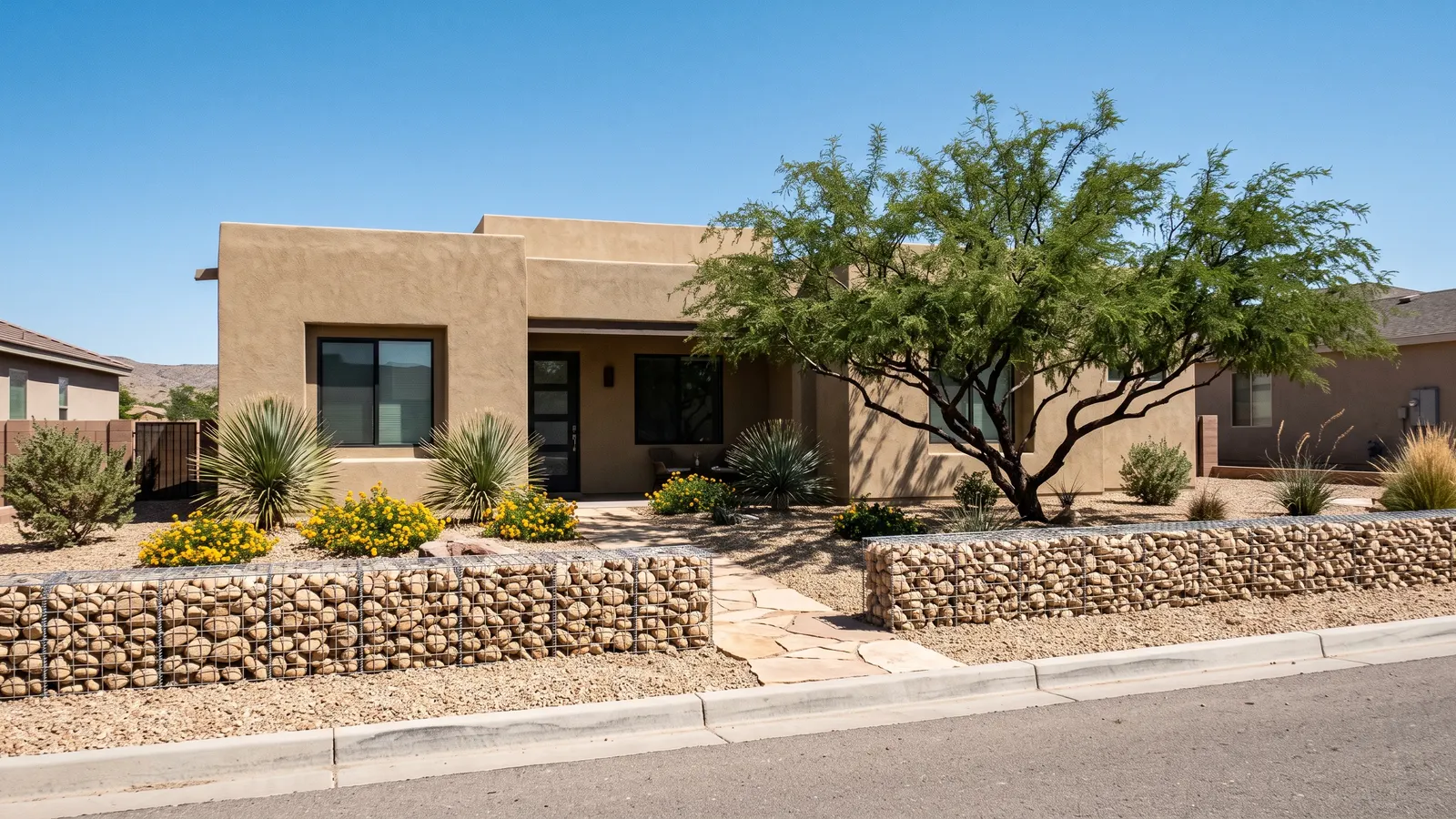
In a gravel yard, a gabion wall looks like it belongs. Galvanized wire baskets filled with rock run roughly $10 to $40 per square foot of wall face. Using stone that matches your gravel keeps it from looking imported. Keep it around 30 inches tall at the front. It needs no paint, no water and nothing else, ever.
12. Mix cedar and black steel on a modern farmhouse
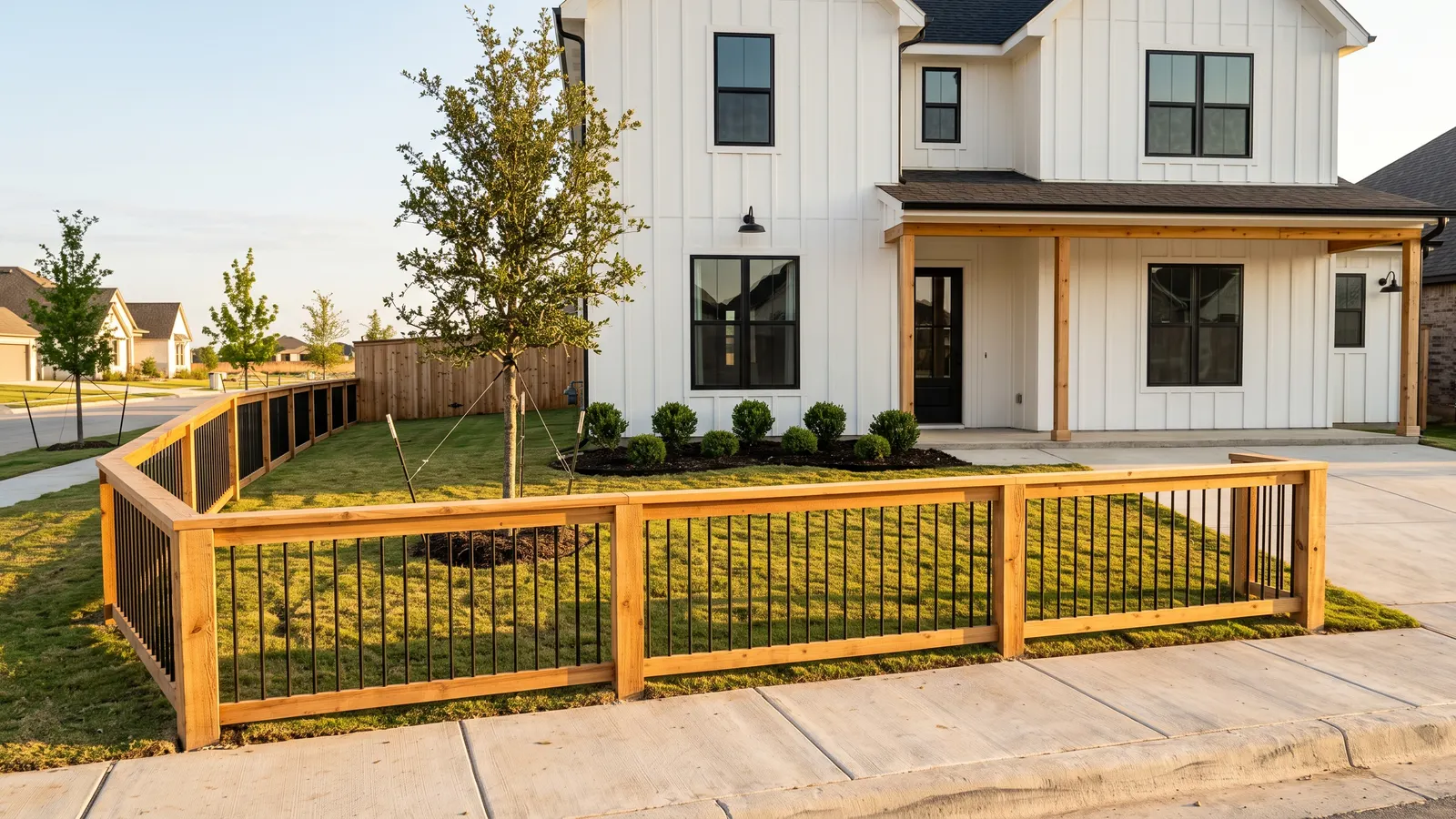
A white house with black windows already pairs wood and black, so the fence can too. Black metal pickets with a cedar top rail and cedar posts look warmer than all-metal and cleaner than all-wood. Seal the cedar every two or three years or let it go gray. Both work on this house.
Low fences and borders
13. Fence only the flower bed
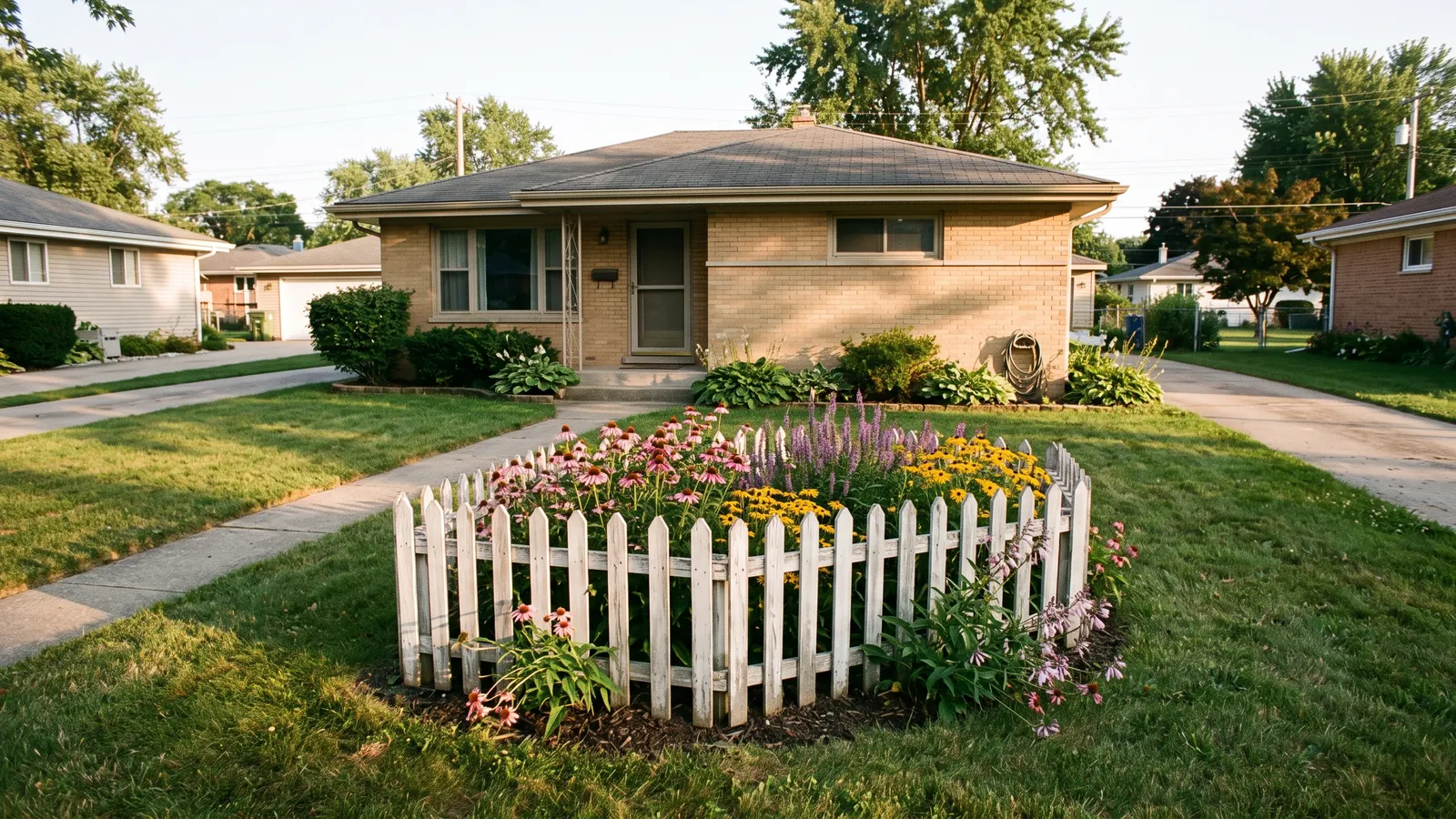
If you don't need to enclose the yard, a 2-foot picket around one bed gives you the cottage look for a fraction of the cost. Hardware stores sell short no-dig picket sections you push into the soil. It also keeps dogs and kids from cutting through the coneflowers on the way to the door.
14. Stack a fieldstone wall
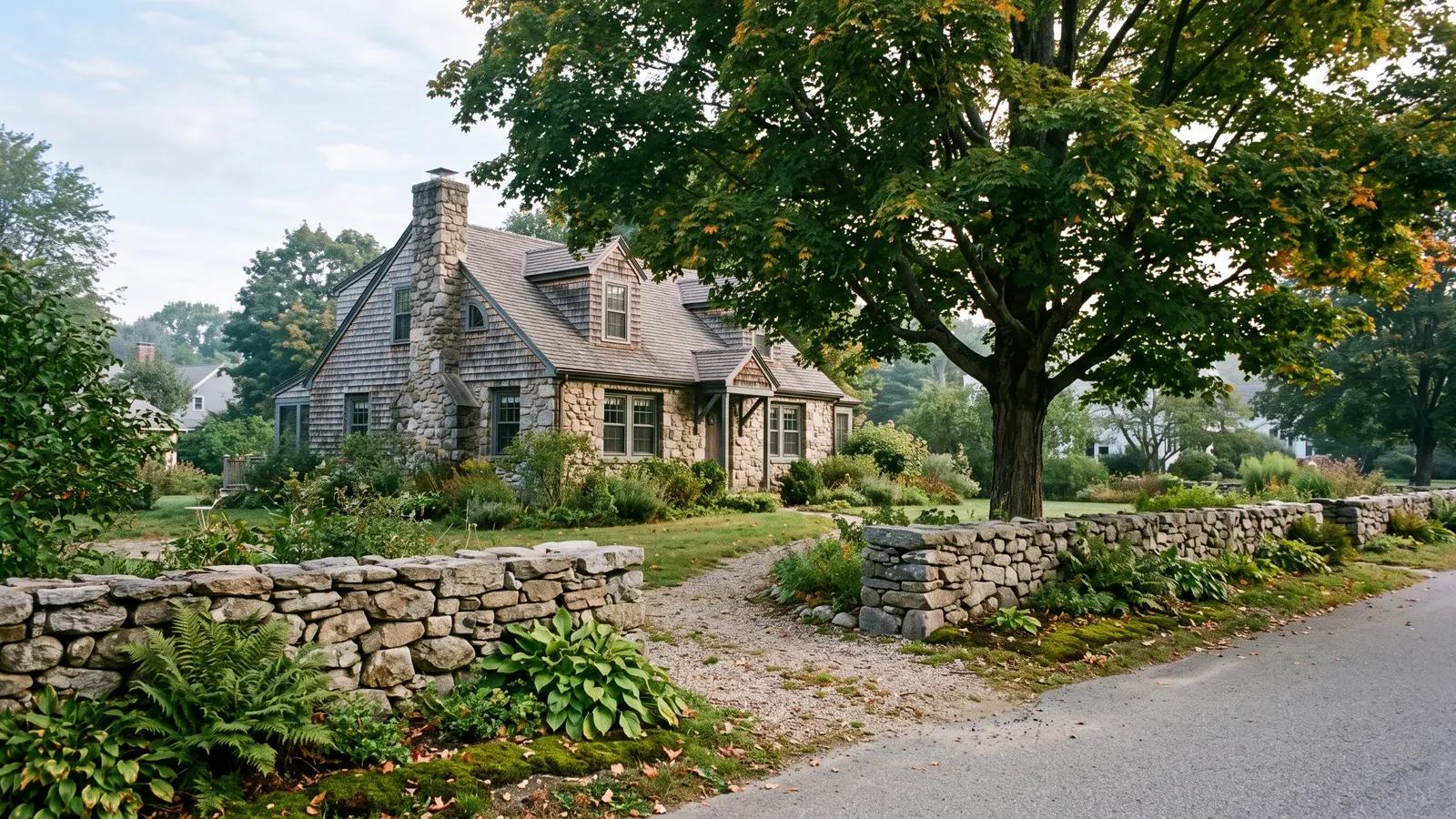
A dry-stacked wall uses no mortar. Each stone sits on the ones below, and a little frost heave just settles it. A freestanding one costs about $20 to $60 per square foot of wall face installed. In New England, Pennsylvania and the upper Midwest it looks like it's been there for a century. Leave gaps at the base for ferns and moss.
15. Grow a boxwood hedge instead
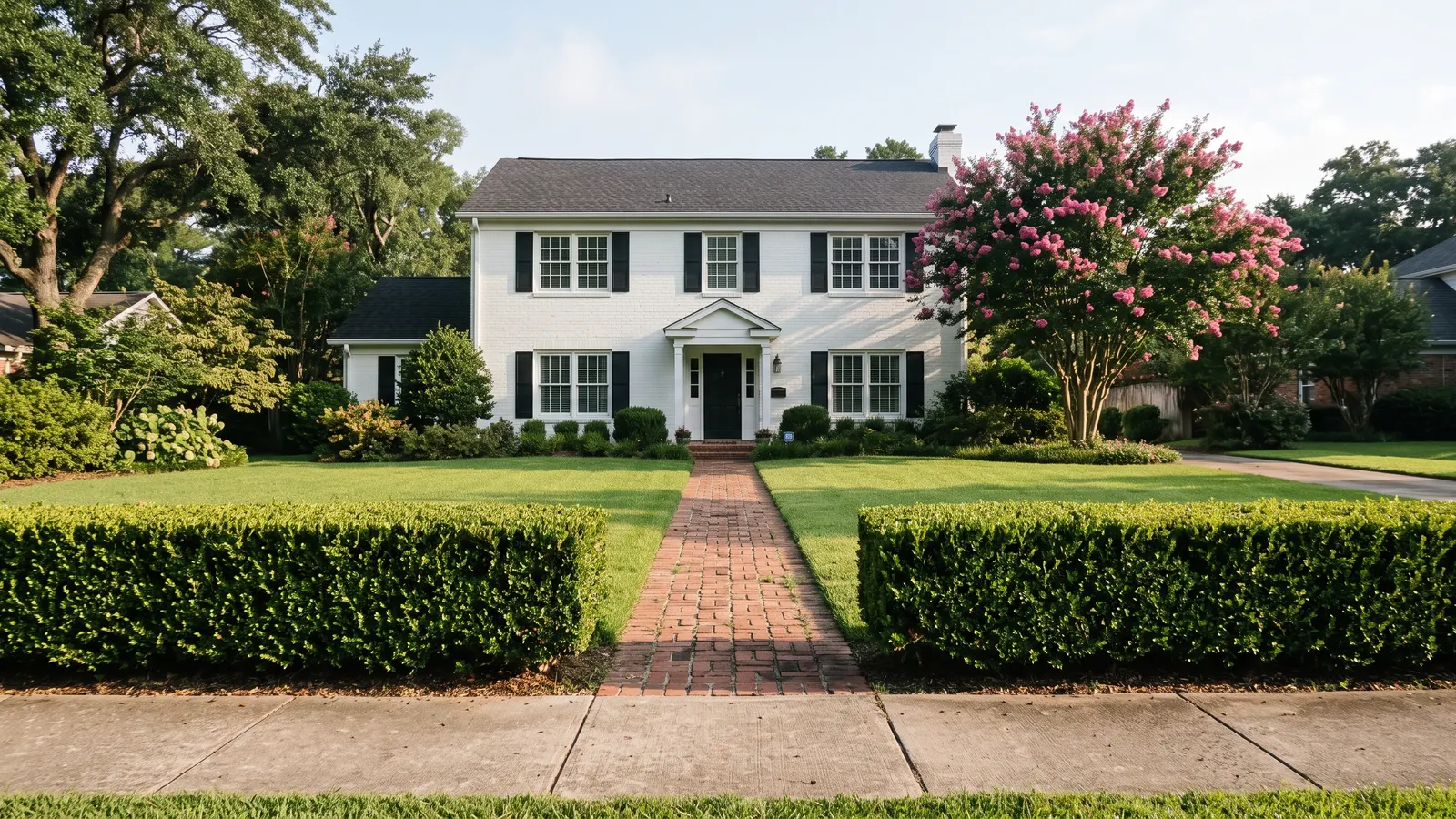
A clipped hedge does a fence's job and usually doesn't count as a fence under height rules (check yours). Most boxwoods grow in zones 5 to 9, and hybrids tolerate zone 4. Plant small shrubs about 18 to 24 inches apart and expect a few seasons before they knit together. Shear twice a year to keep the top level. Where boxwood blight is a problem, ask a local nursery about resistant varieties.
16. Frame just the corners
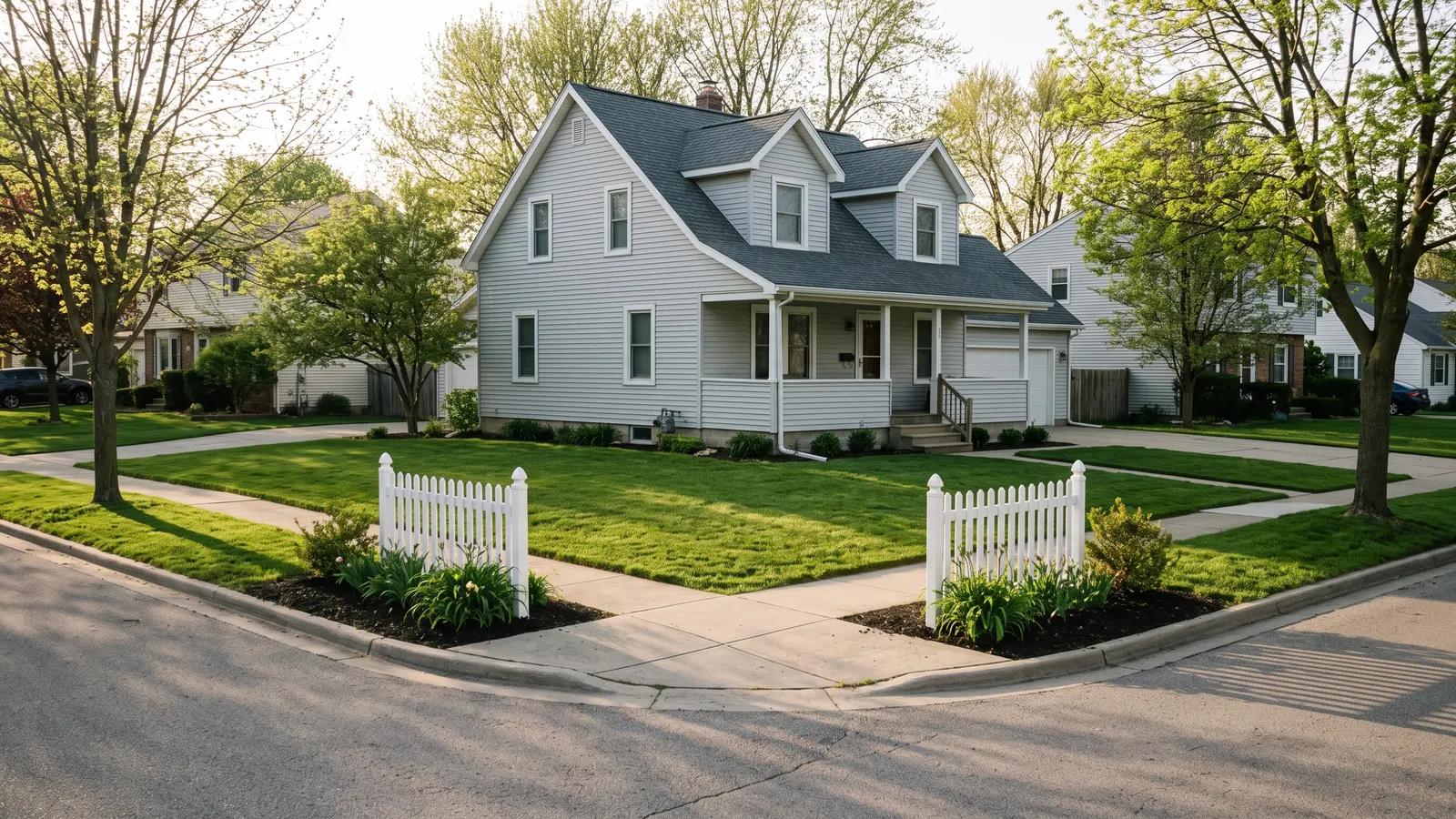
You don't have to fence the whole line. Two 8-foot sections at the front corners, each with a planting bed, frame the yard for very little money. This works especially well on corner lots, where a short fence also stays clear of the driveway and street sight triangles that most codes protect.
17. Step the fence down a slope
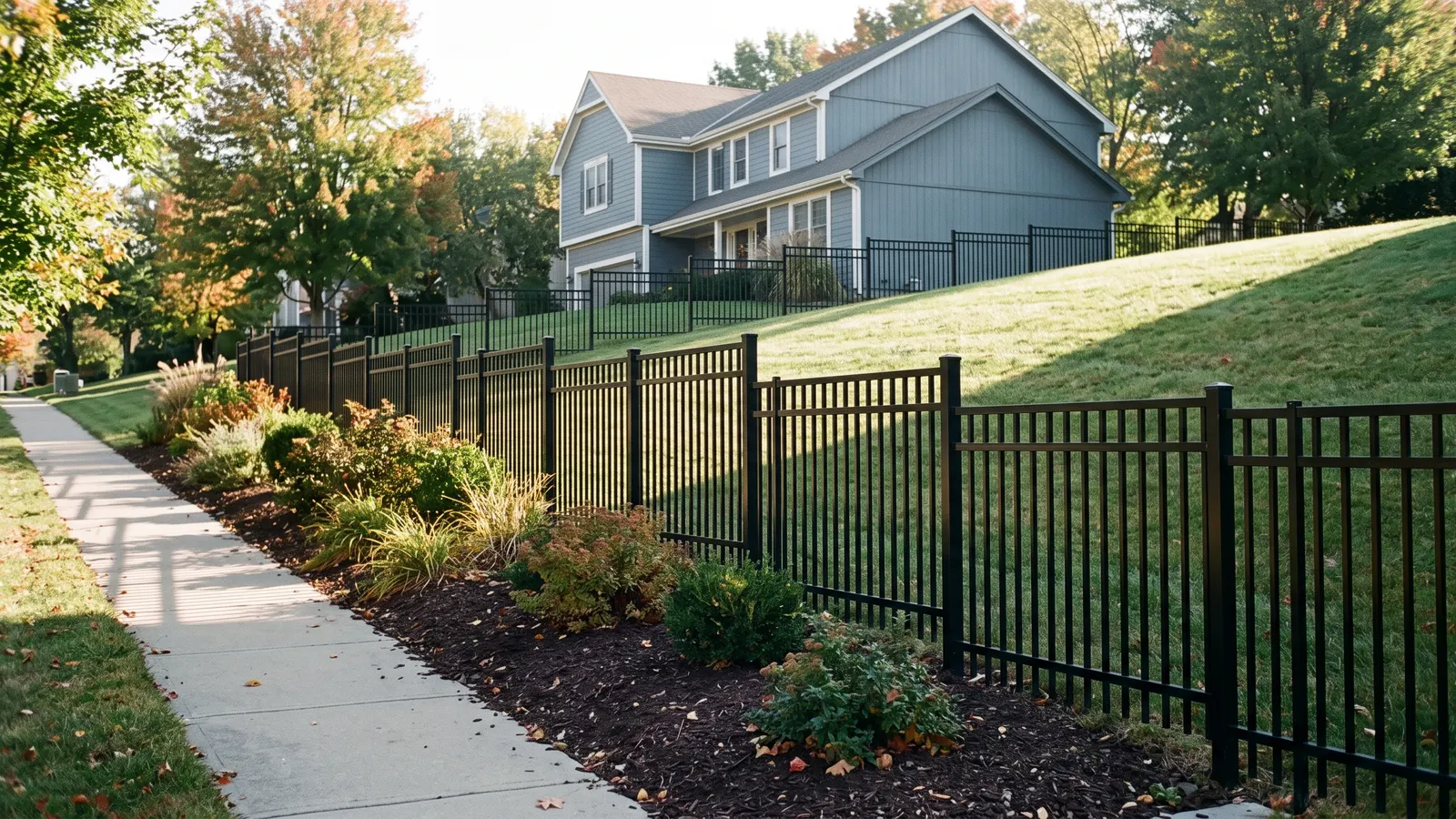
On a sloped front yard, a fence that follows the grade can look like it's sliding downhill. Stepping it keeps every panel level and drops a few inches at each post, which looks deliberate from the street. Many aluminum panels can be "racked" to follow a gentle slope instead. Ask the installer which your grade needs, because steps leave triangle gaps at the bottom that a puppy can squeeze through.
Gates and entry details
18. Put an arbor over the front gate
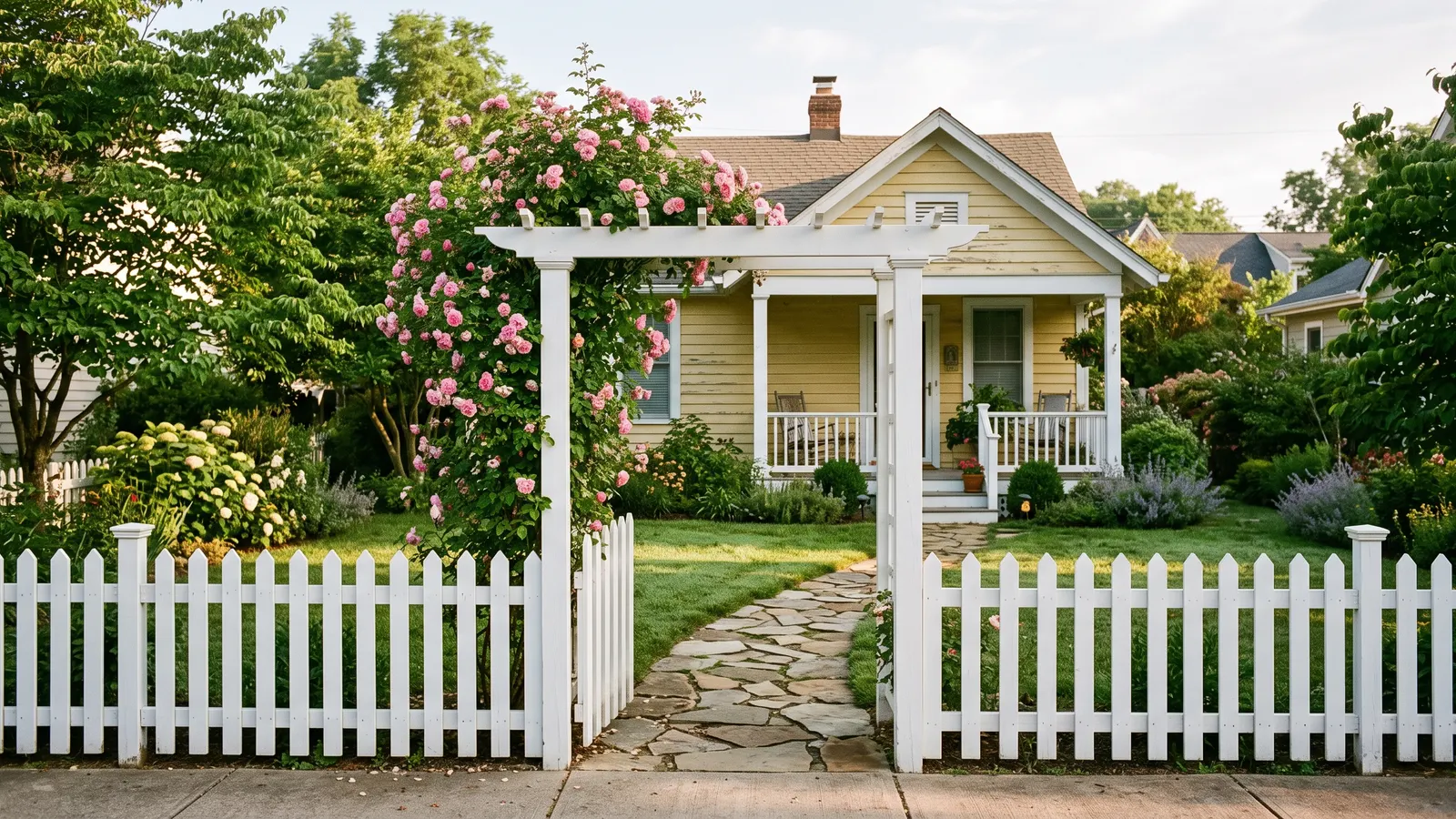
An arbor turns the gate into the entrance. It also lets a short front fence feel taller where it matters without breaking a height rule (some towns treat an arbor over a gate separately, so ask). Choose one with posts at least 4x4 and set them in concrete, because a mature climbing rose is heavy and catches wind.
19. Light the opening with stone pillars
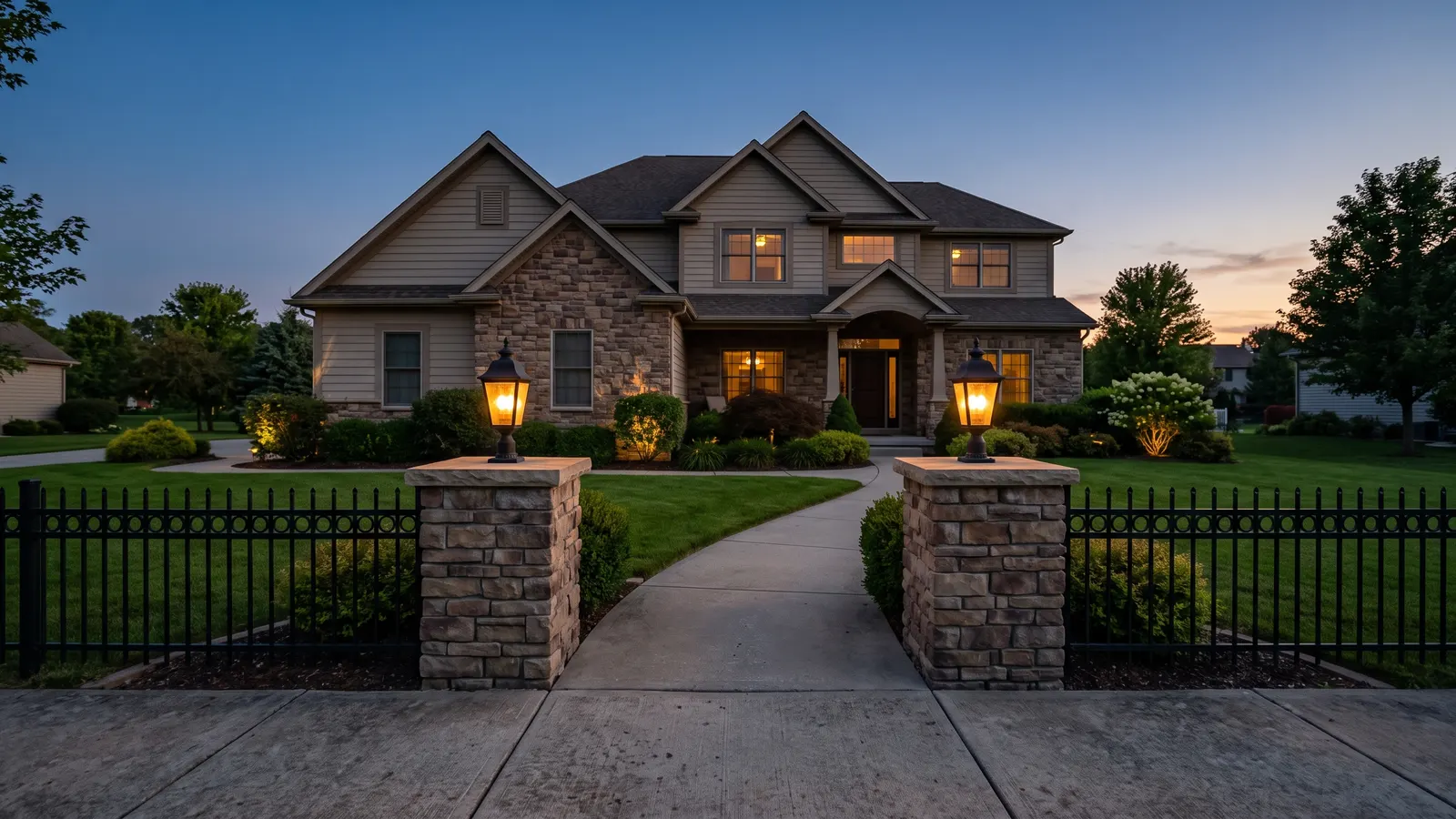
Two pillars where the walk meets the sidewalk make the entry obvious, and lights on top make it safe after dark. A stone pillar runs about $1,300 to $3,000 each, so two at the walk is plenty. Run the wiring conduit through the pillar while it's being built. Adding landscape lighting afterward means drilling through stone.
20. Build the mailbox into a post
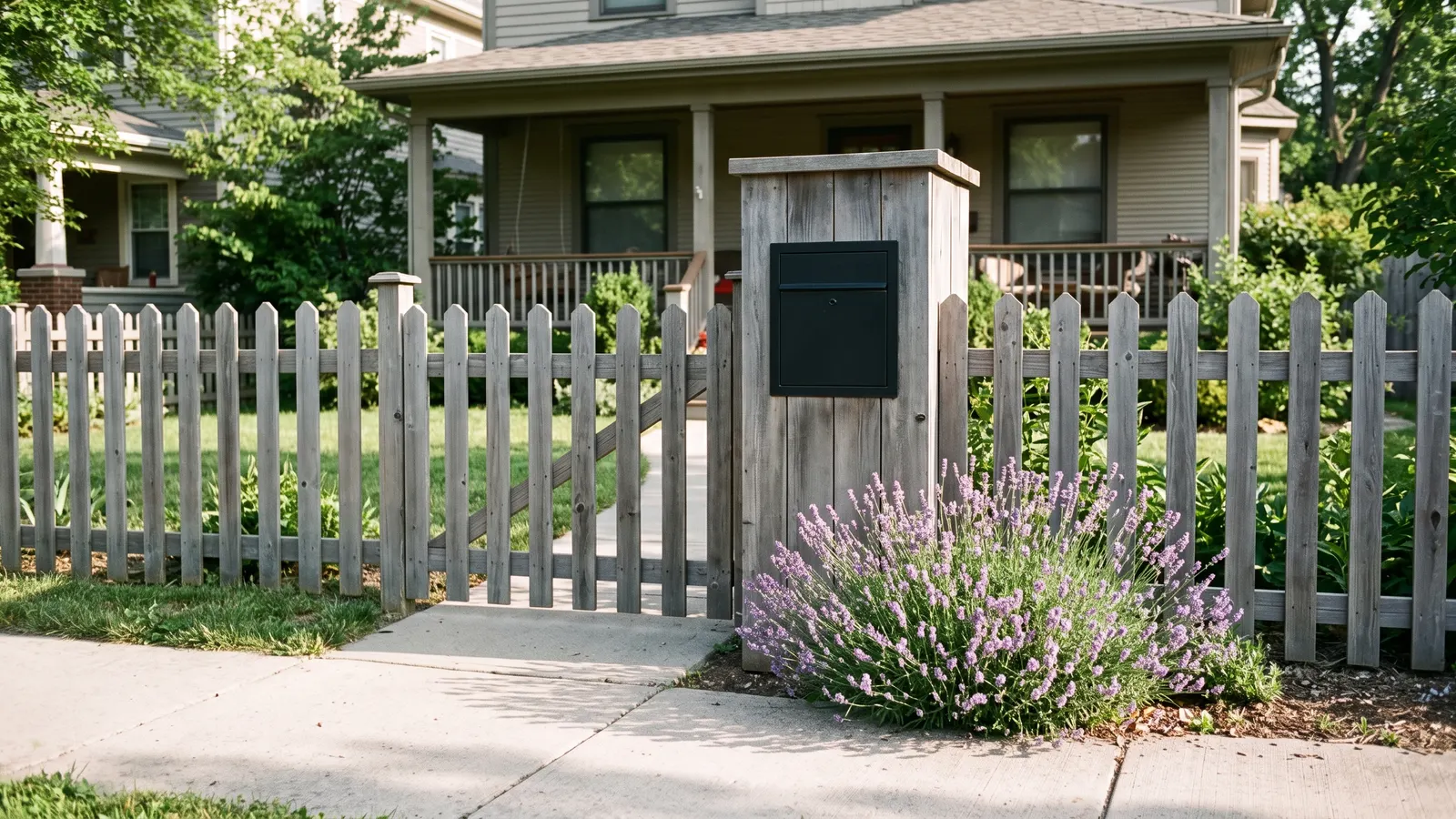
A wider post by the gate with the mailbox set into it gets rid of the lonely mailbox post on the lawn. Put the house numbers on the same post so delivery drivers find you. If your mail comes to the curb, check USPS placement rules with your local post office before you build. They specify height and distance from the road.
21. Match the driveway gate to the walk gate
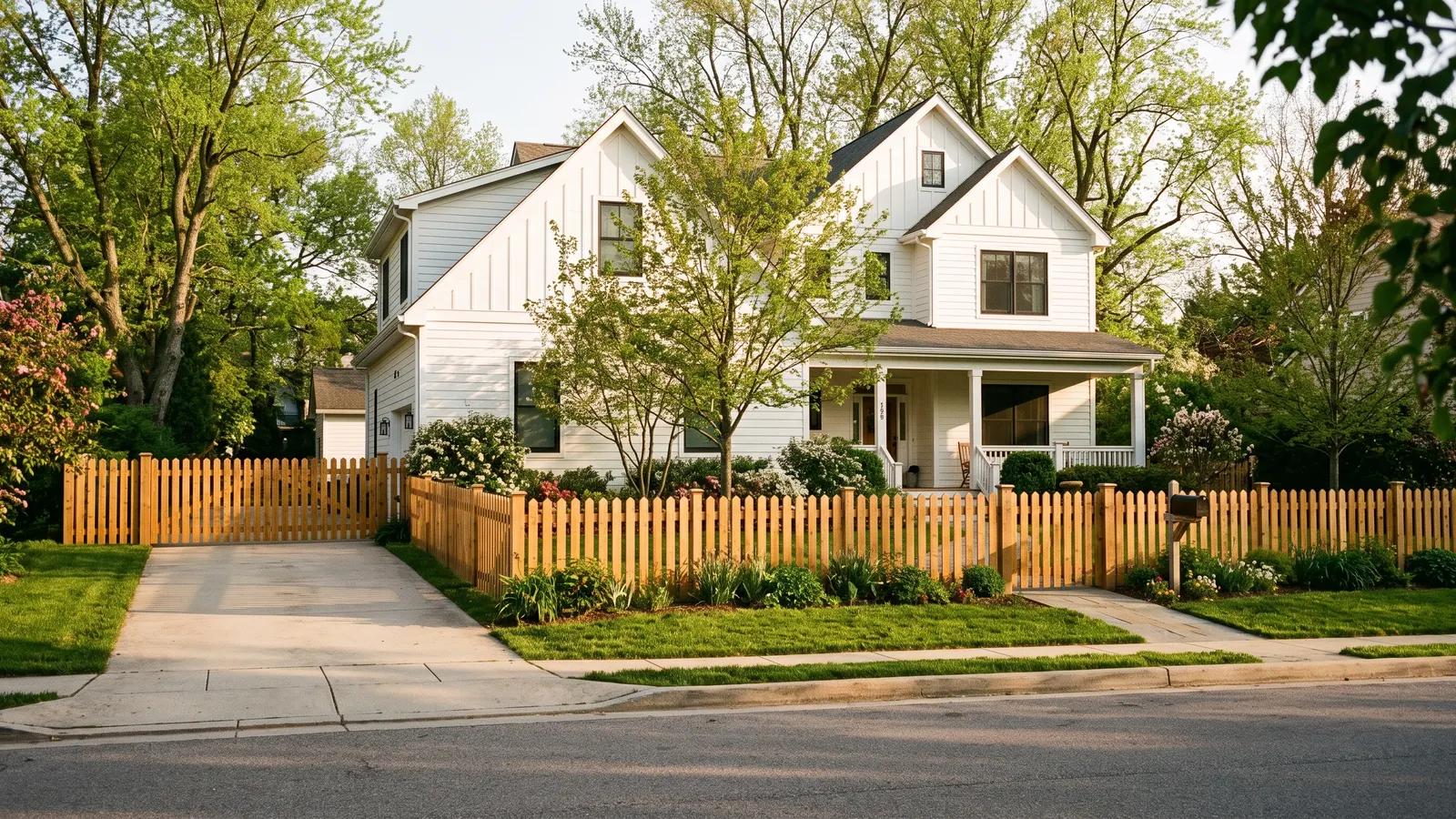
If the fence crosses the driveway, build both gates in the fence's own pattern so the line reads as one piece. A double swing gate needs a flat driveway apron and a drop rod to hold it shut. Manual wood gates run anywhere from about $300 to $4,000 depending on width and hardware. Wide wooden gates sag, so ask for a steel frame or an anti-sag kit.
Planting along a front fence
22. Let perennials spill through the pickets
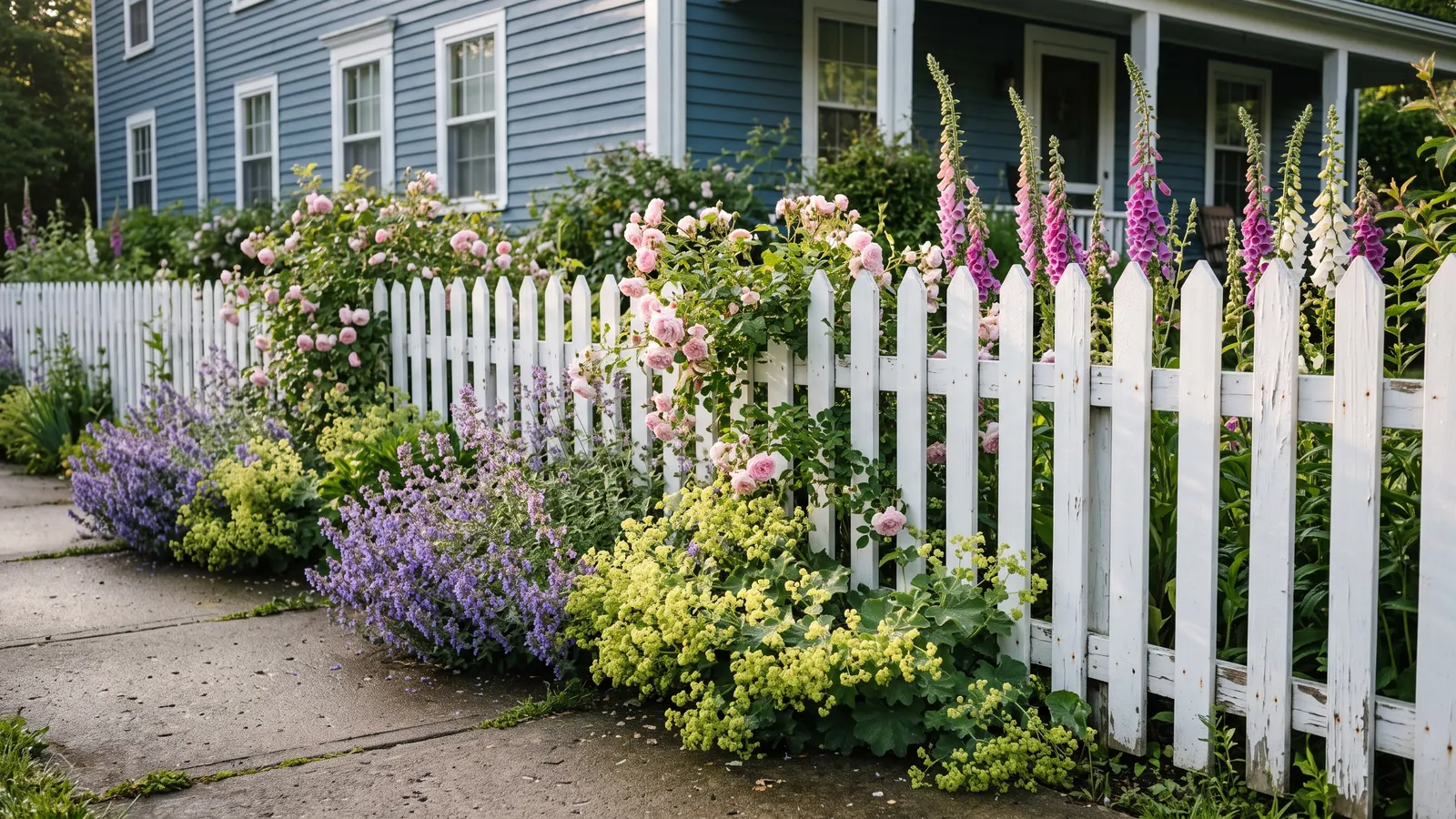
A picket fence looks best when it's half hidden. Plant catmint, shrub roses and lady's mantle in a 2-foot strip just inside the fence and let them lean through. 'Walker's Low' catmint grows in zones 4 to 8, blooms most of the summer and is rarely touched by deer. It's the classic cottage garden look, and nobody notices the fence needs paint.
23. Plant the street side of a modern fence
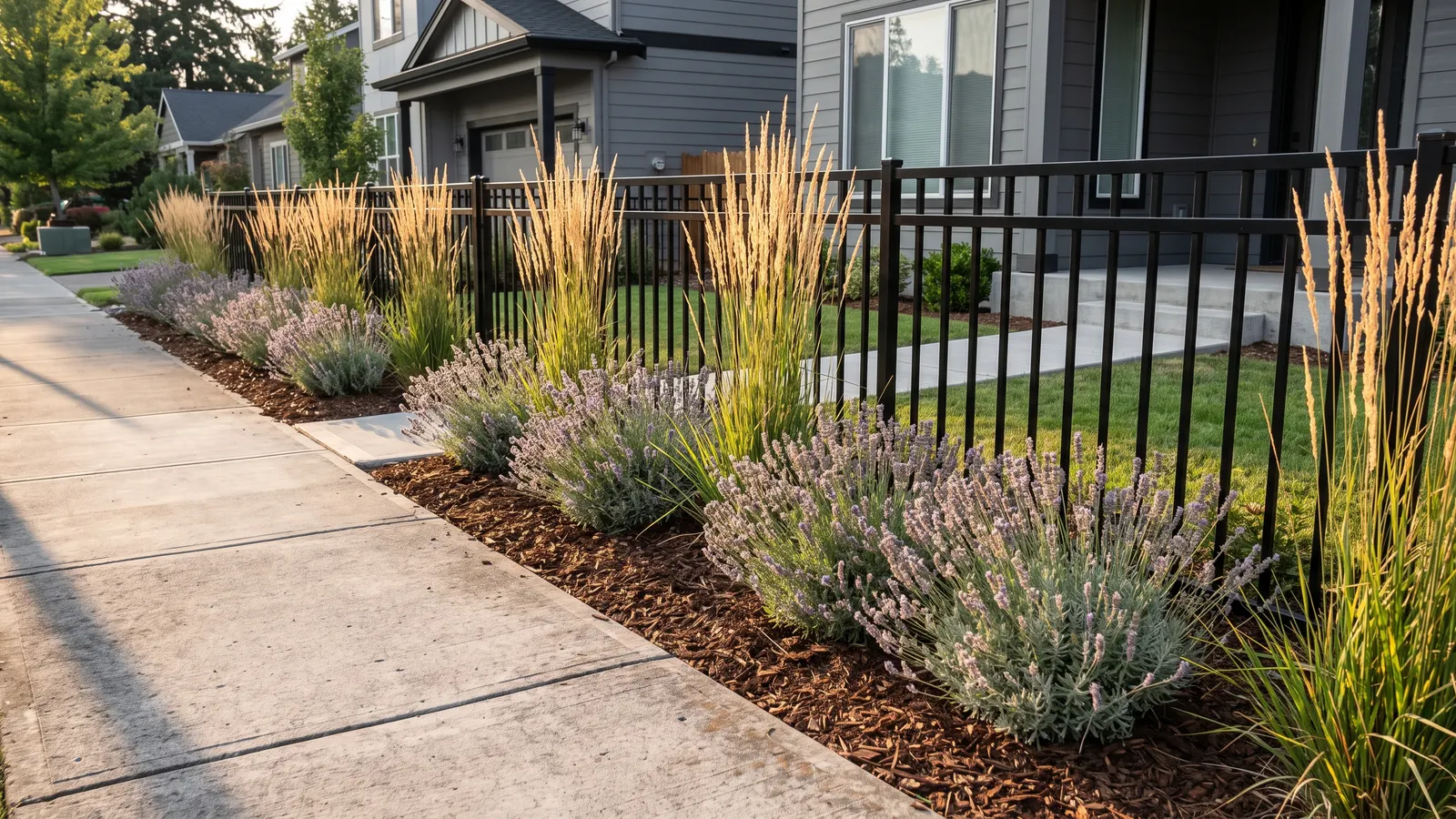
A strip of plants on the sidewalk side keeps a metal fence from looking like a barrier. Feather reed grass (zones 5 to 9) stands straight all year and only needs cutting back in early spring. English lavender (zones 5 to 8) adds color and scent at nose height. Keep the strip at least 2 feet wide so the plants don't spill onto the sidewalk, and check whether the strip is your land or the city's.
What a front yard fence costs
A typical front yard needs 50 to 100 linear feet of fence. Installed prices from HomeGuide, checked October 2026:
| Fence type | Installed cost per linear foot | 60 feet, installed |
|---|---|---|
| Split rail | $15 to $35 | $900 to $2,100 |
| Wood picket (3 to 5 ft) | $20 to $40 | $1,200 to $2,400 |
| Aluminum | $25 to $75 | $1,500 to $4,500 |
| Vinyl picket | $30 to $45 | $1,800 to $2,700 |
| Wrought iron (3 ft) | $40 to $50 | $2,400 to $3,000 |
| Wrought iron (4 to 6 ft) | $50 to $85 | $3,000 to $5,100 |
| Brick garden wall (1 to 2 ft) | $15 to $40 | $900 to $2,400 |
Gates, pillars and a sloped site all add to that. To price your own length and material, try the fence cost calculator.
How to choose
- Start with the house, not the catalog. Pointed pickets suit Colonials and cottages (ideas 1, 18, 22), square shapes suit Craftsman homes (2), and flat horizontal lines suit modern houses (4, 12, 23).
- On a tight budget, fence the corners or one bed instead of the whole line (13, 16), or go with split rail (10).
- If a dog has to stay in, pick pickets with gaps under 3 inches or add wire mesh (1, 10), and use a racked fence on slopes rather than a stepped one (17).
- In dry climates, go for stone or gabion walls and low-water plants (7, 11, 23).
- If you want the house to stand out more than the fence, a hedge or low wall does it (14, 15). Our front yard curb appeal ideas cover the rest of the yard.
FAQ
How tall can a front yard fence be? Most cities cap front yard fences at 3 to 4 feet. Orlando and Fairfax County allow 4 feet, and Phoenix allows 40 inches in the required front setback. Corner lots and driveways often have lower limits inside sight triangles, so check your city's fence rules and your HOA before you build.
Does a front fence add value to a house? Not reliably. Agents surveyed by HomeLight say a new fence comes with no guaranteed return when you sell. A front fence helps most when it suits the house and improves curb appeal, and least when it looks cheap or blocks the view of the house.
What is the cheapest front yard fence? Split rail and post-and-rope fences are the cheapest because they use the least material, with split rail around $15 to $35 per linear foot installed. A short no-dig picket border around one bed or partial fence sections at the corners cost even less in total.
What fence looks best in front of a house? The one that matches the house style. A white picket suits a Colonial or cottage, square pickets with capped posts suit a Craftsman, black metal suits brick and Victorian houses, and low horizontal boards or metal suit modern homes. Keeping it under 4 feet and planting along it matters as much as the material.
Can I see a fence on my own house before I buy it? Yes. Upload a front yard photo to OutdoorBrite's AI front yard design and you get realistic concepts of your own house with different fences and planting in about a minute. It's a visual concept, not a measured plan or a quote, so take the version you like to a fence contractor.
Sources: HomeGuide: wood fence cost, HomeGuide: vinyl fence cost, HomeGuide: aluminum fence cost, HomeGuide: wrought iron fence cost, HomeGuide: split rail fence cost, HomeGuide: brick and stone wall cost, HomeGuide: stone retaining wall cost, HomeGuide: security gate installation cost, City of Orlando: fence guide, City of Phoenix: residential fences, Fairfax County: residential fences and walls, HomeLight: does a fence increase home value, NC State Extension: Buxus, Missouri Botanical Garden: Calamagrostis 'Karl Foerster', Missouri Botanical Garden: Nepeta 'Walker's Low', Missouri Botanical Garden: Lavandula angustifolia, all checked October 20, 2026