11 Landscape Design Styles, Shown on One Backyard
One ordinary backyard redesigned in 11 styles, from modern and formal to prairie and farmhouse. What defines each look, which plants it uses, and how to pick one for your house and climate.
Most people can name their kitchen style in two words, then go blank when someone asks what they want the yard to look like. Part of the problem is how landscape design styles usually get shown: every example is a different, professionally built yard, often three times the size of yours, so you end up comparing the properties instead of the styles.
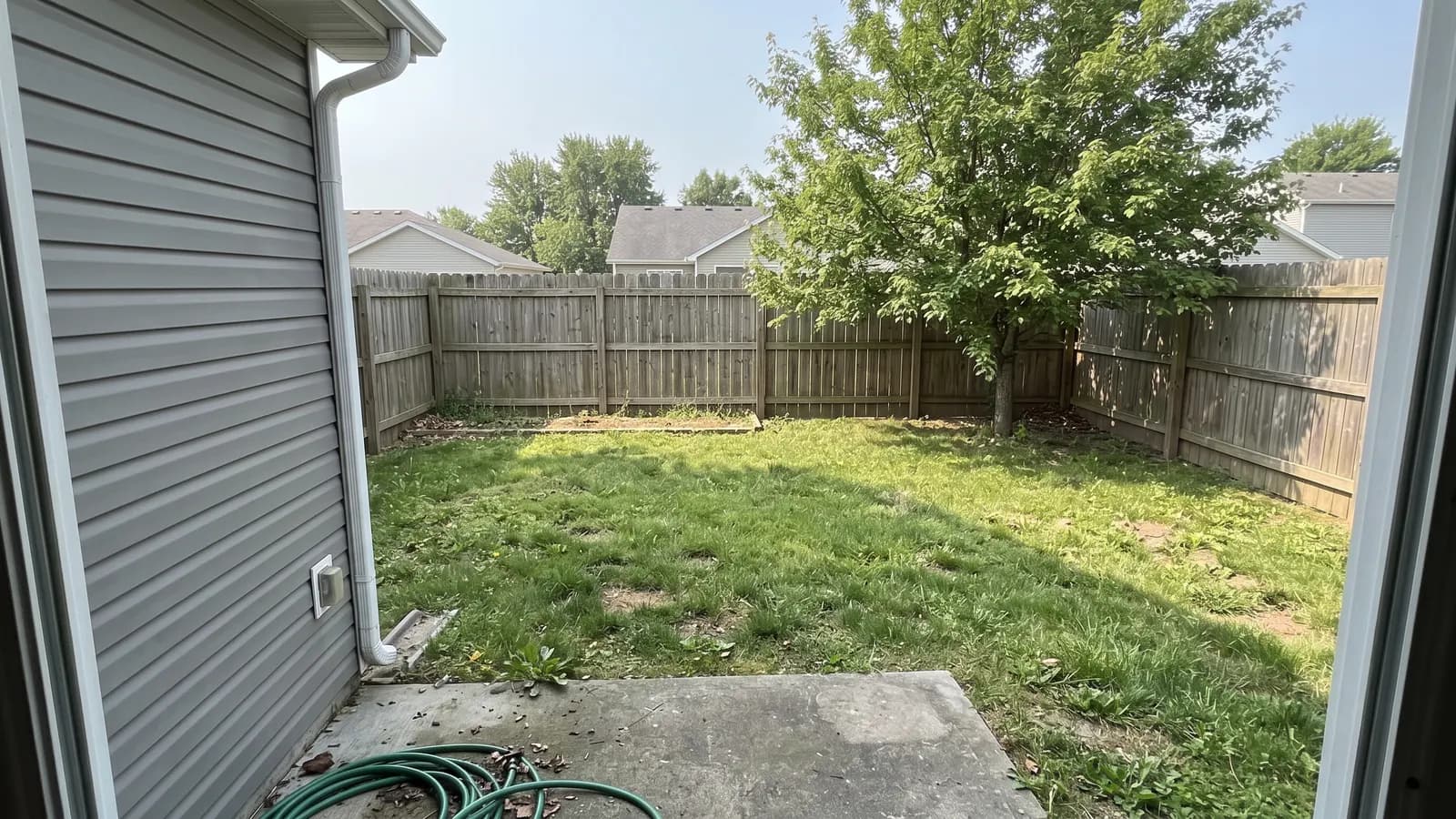
This guide does it the other way around. We took one ordinary suburban backyard (a patchy lawn, a concrete slab, a wooden privacy fence and one tree) and redesigned it in 11 styles. Every image below is an AI design concept made from that same photo, so the only thing that changes from one picture to the next is the style. For each one you get the defining elements, a starter plant list with hardiness zones, and an honest note on upkeep.
How to pick a landscape style
A style is a set of choices that agree with each other: the shape of the beds, the paving material, how many kinds of plants you use, and how tidy the whole thing looks. Before you scroll, keep four questions in mind:
- Straight lines or curves? Formal and modern yards are built on straight edges and symmetry. Cottage, woodland and prairie gardens run on curves and drifts.
- How much time will you spend out there? A clipped formal garden needs regular trimming. A prairie or desert yard needs very little once it's established.
- What does your climate allow? Your USDA hardiness zone decides which plants survive the winter, and rainfall decides how much watering a style will cost you.
- What does the house look like? The yard reads best when it borrows the house's lines and materials. More on that after the list.
If you want the basic principles first (balance, focal points, scale), start with our landscape design for beginners guide.
1. Modern
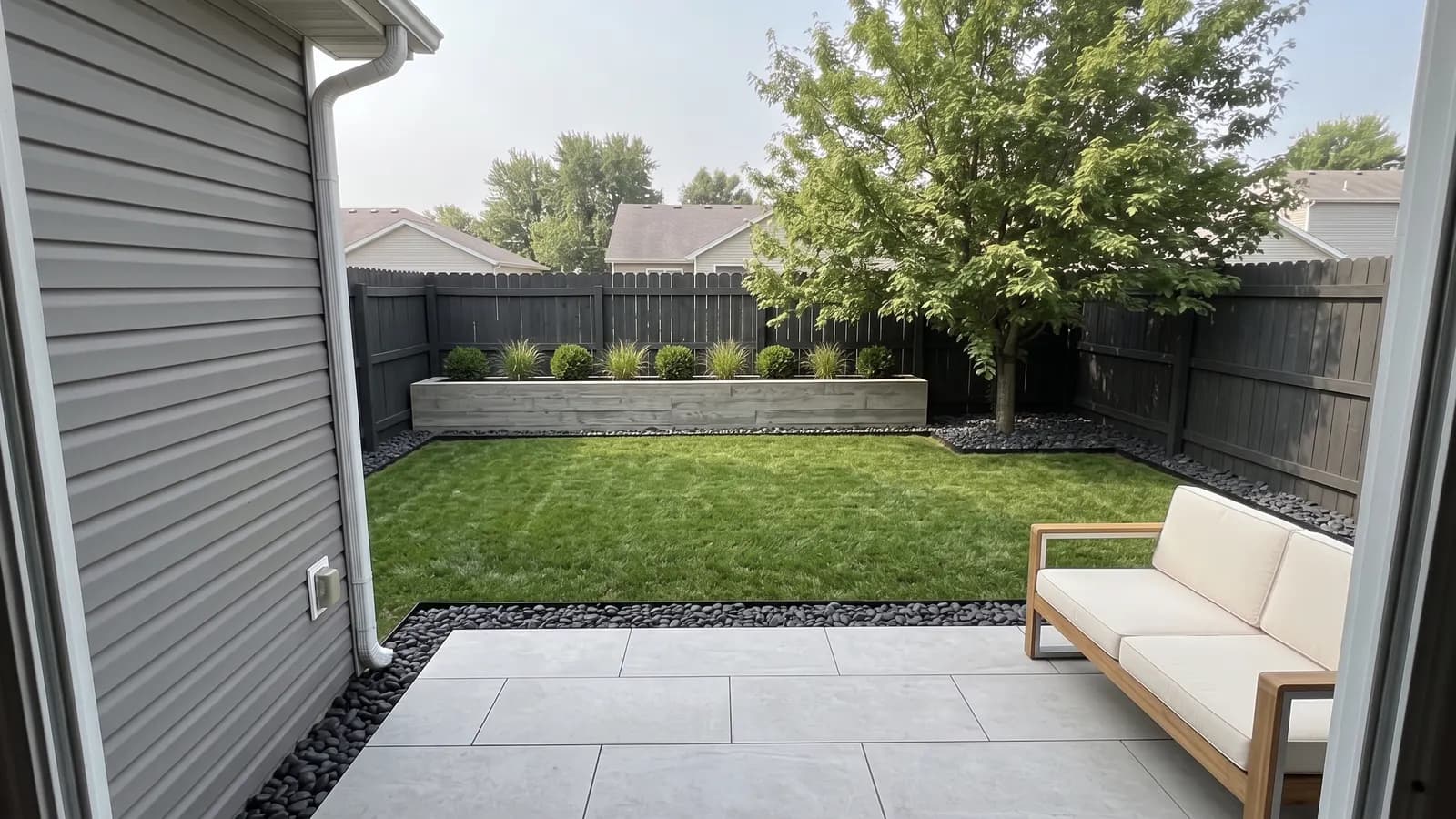
Modern landscaping is about restraint. In our concept the slab became large-format porcelain pavers, the lawn got a hard rectangular edge in black steel, and the planting shrank to two or three species repeated in a row. Materials do most of the work: concrete, steel, horizontal wood, black gravel. Our modern landscape design guide has 15 more ideas and plants by region. A dark fence stain is the cheapest single move here, since it makes the plants in front read as sculpture. Upkeep is low if you keep the plant list short, but clean lines show every weed and stray leaf.
Starter plants: feather reed grass, boxwood (zones 5 to 9), Japanese forest grass for shade.
2. Cottage garden
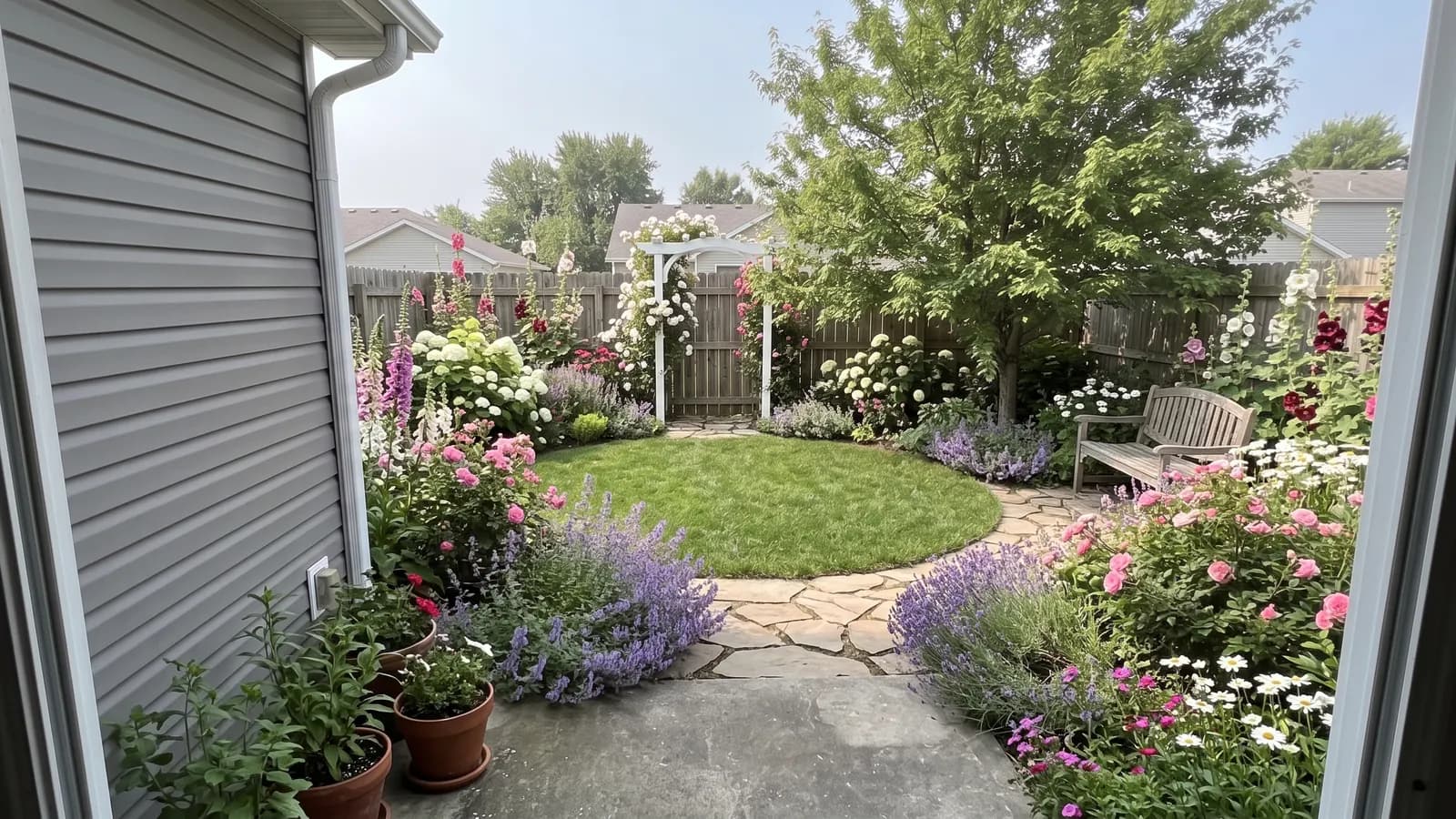
A cottage garden is the opposite of modern: as many plants as you can fit, packed so tightly that soil barely shows. The lawn shrinks to a circle, borders get deep (4 to 6 feet is a good minimum), and a path wanders through them. An arbor or a weathered bench gives the eye somewhere to land. This look takes the most hands-on time of any style in this list, with deadheading, dividing and staking through summer, but it also forgives mistakes, since a gap just gets filled with whatever self-seeds.
Starter plants: roses, catmint, hydrangea, foxglove, hollyhock, lady's mantle.
3. Formal
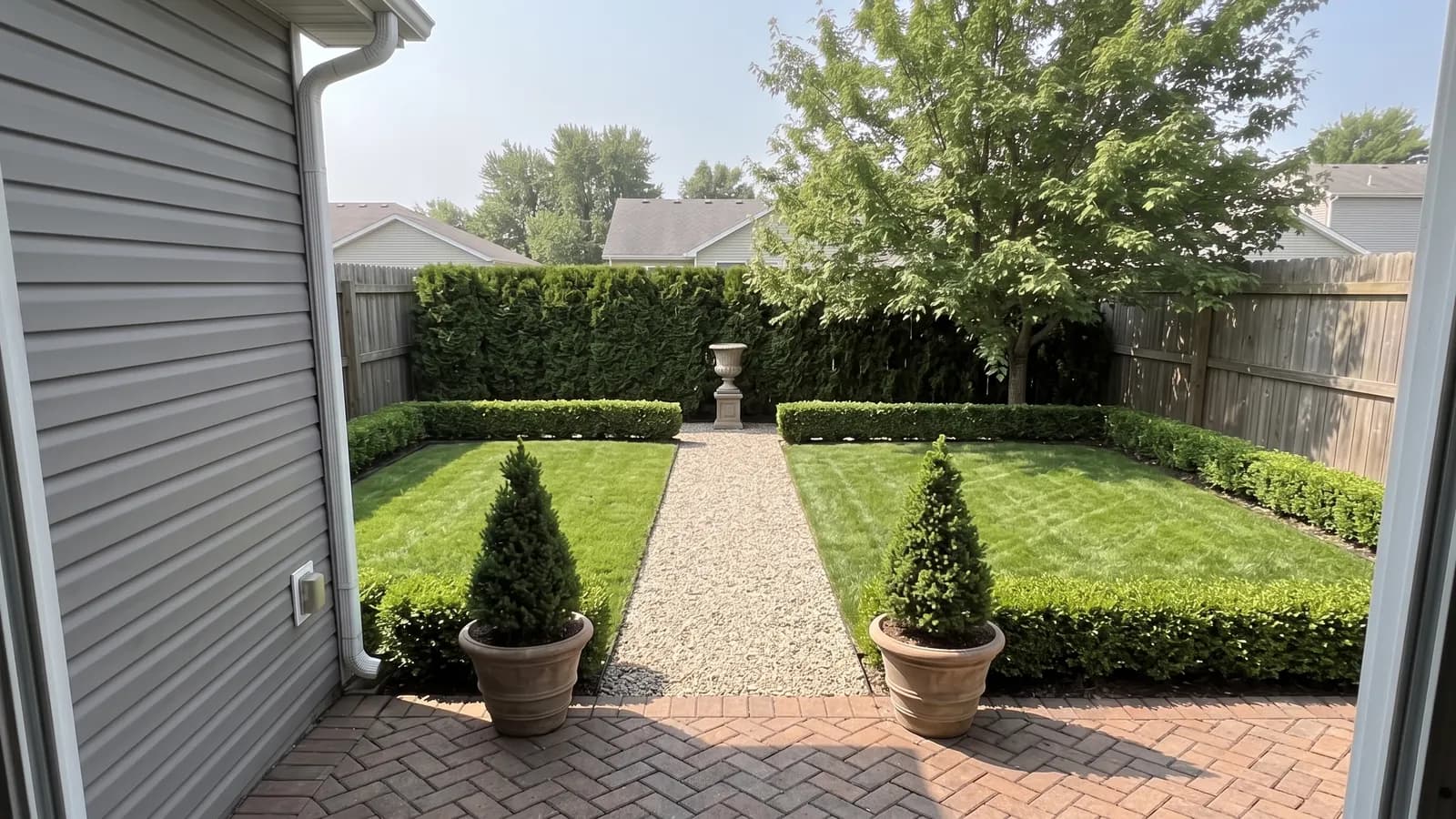
Formal design runs on symmetry: draw a line down the middle of the yard and both halves match. Ours has a straight gravel path to an urn on the back fence, two equal lawn panels framed by low hedges, and a pair of topiary cones. It is the style closest to a classic English garden layout and suits brick colonials and Georgian-style homes. Expect to trim hedges two or three times a season. For borders, roses and plant swaps by zone, see our English garden ideas. Boxwood is the standard edging plant and is rated for zones 5 to 9; in colder areas, dwarf holly or yew can stand in.
Starter plants: boxwood, yew, dwarf hollies, white hydrangea, lavender for a soft edge.
4. Mediterranean
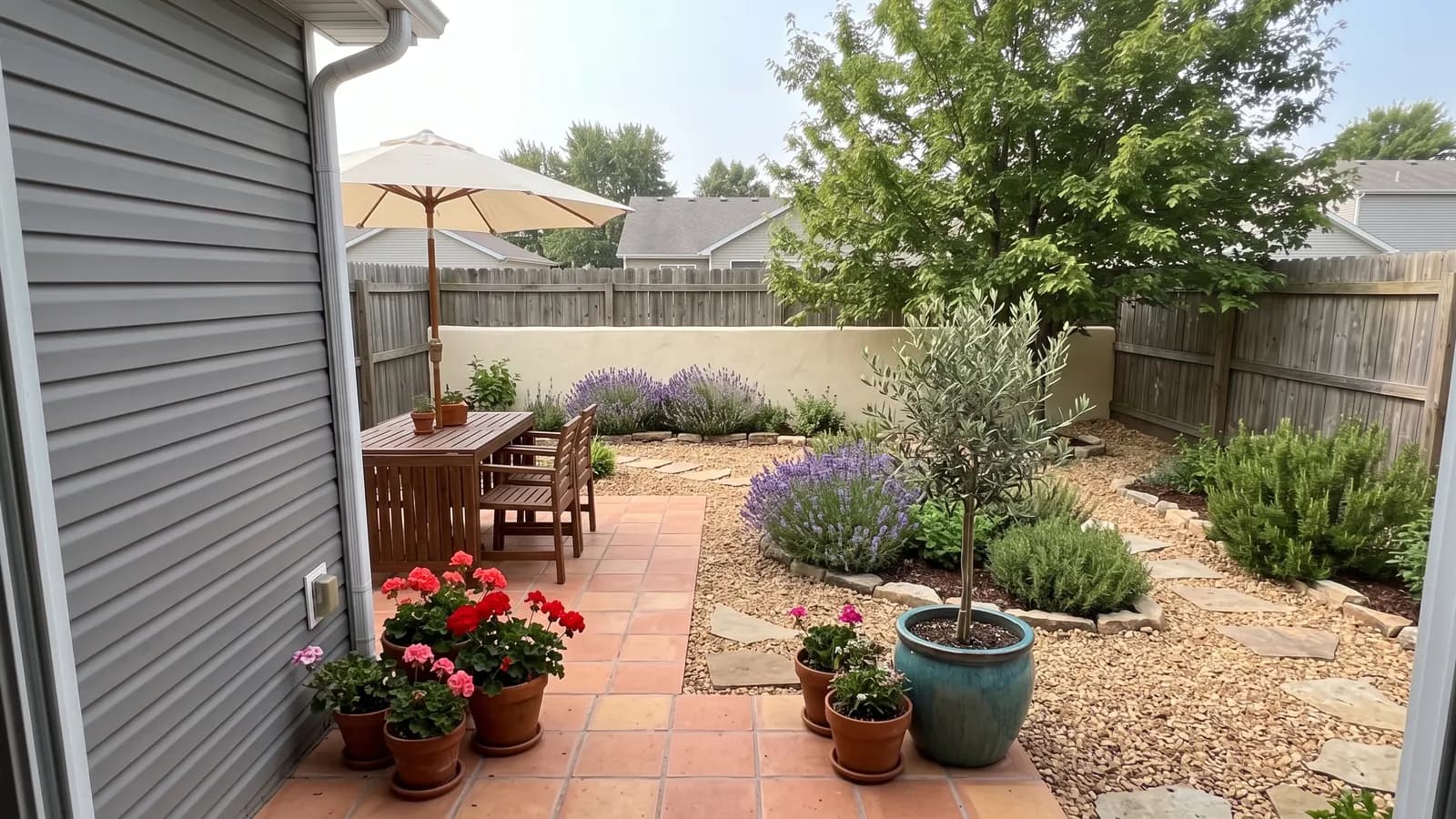
Warm colors and gray-green, scented plants define a Mediterranean garden. Terracotta tile on the patio, gravel instead of lawn, a cream stucco wall and a few big pots get you most of the way. The plants are built for dry summers, so once they're established they need far less water than turf. Lavender with santolina is usually rated for zones 6 to 9, and an olive in the ground needs a mild winter (roughly zones 7 to 10, per Gardenia.net). Further north, keep the olive in a pot and bring it into a garage for winter, as in our concept.
Starter plants: lavender, rosemary, santolina, olive (potted in cold zones), geranium in pots.
5. Japanese
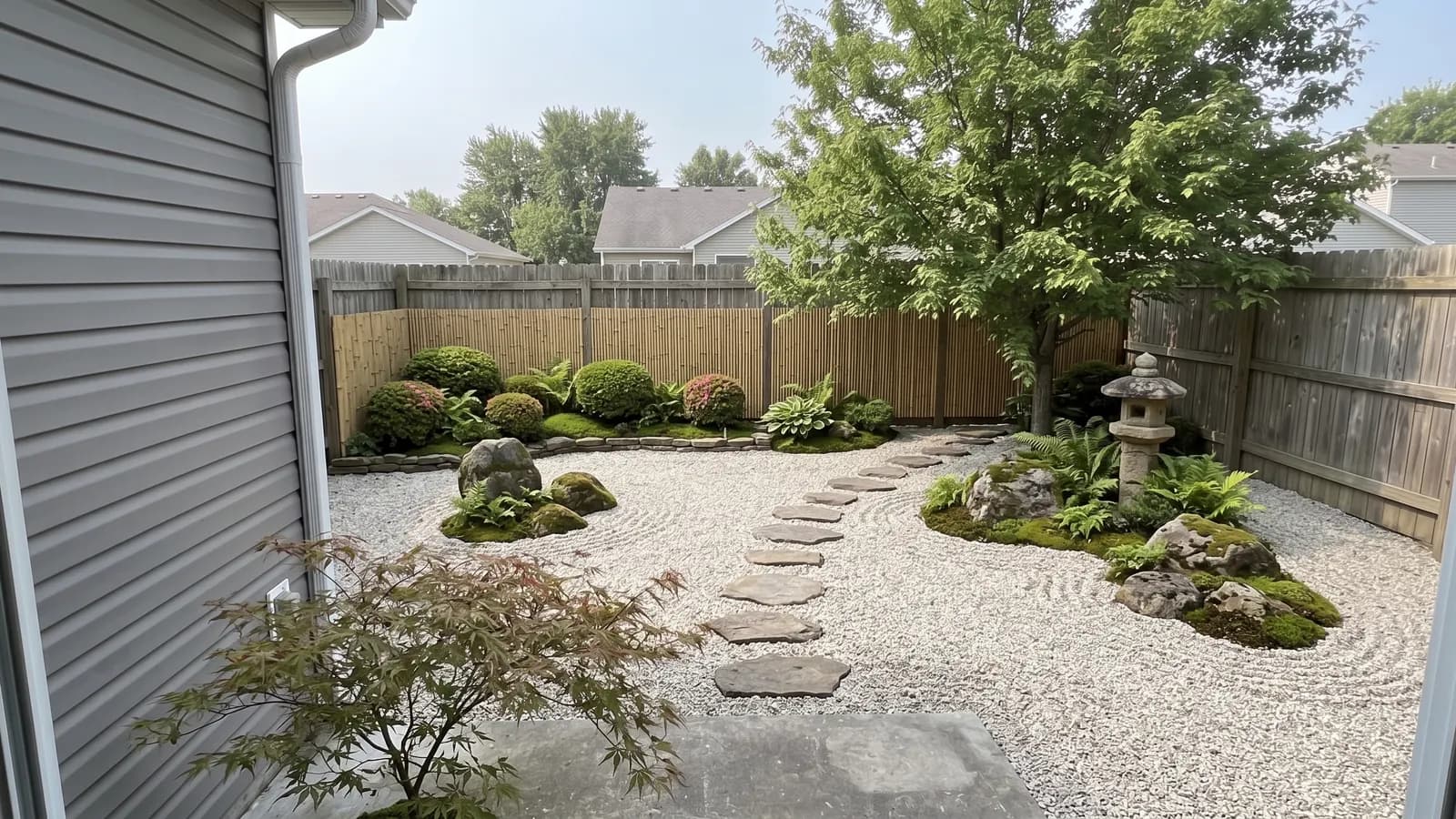
A Japanese-style yard is mostly empty space, and that is the point. Stone, gravel, water (real or suggested by raked lines) and a few carefully placed plants do the talking. We replaced most of the lawn with pale gravel, set three boulders so they look half buried rather than placed, and laid stepping stones across. A small zen garden like this needs raking and leaf picking more than gardening. Use clipped evergreens and moss-tolerant ground covers, and keep flowering plants to a spring moment like azaleas. For more layouts, see our Japanese zen garden ideas.
Starter plants: Japanese maple, azalea, mondo grass, moss, black pine or a clipped juniper.
6. Tropical
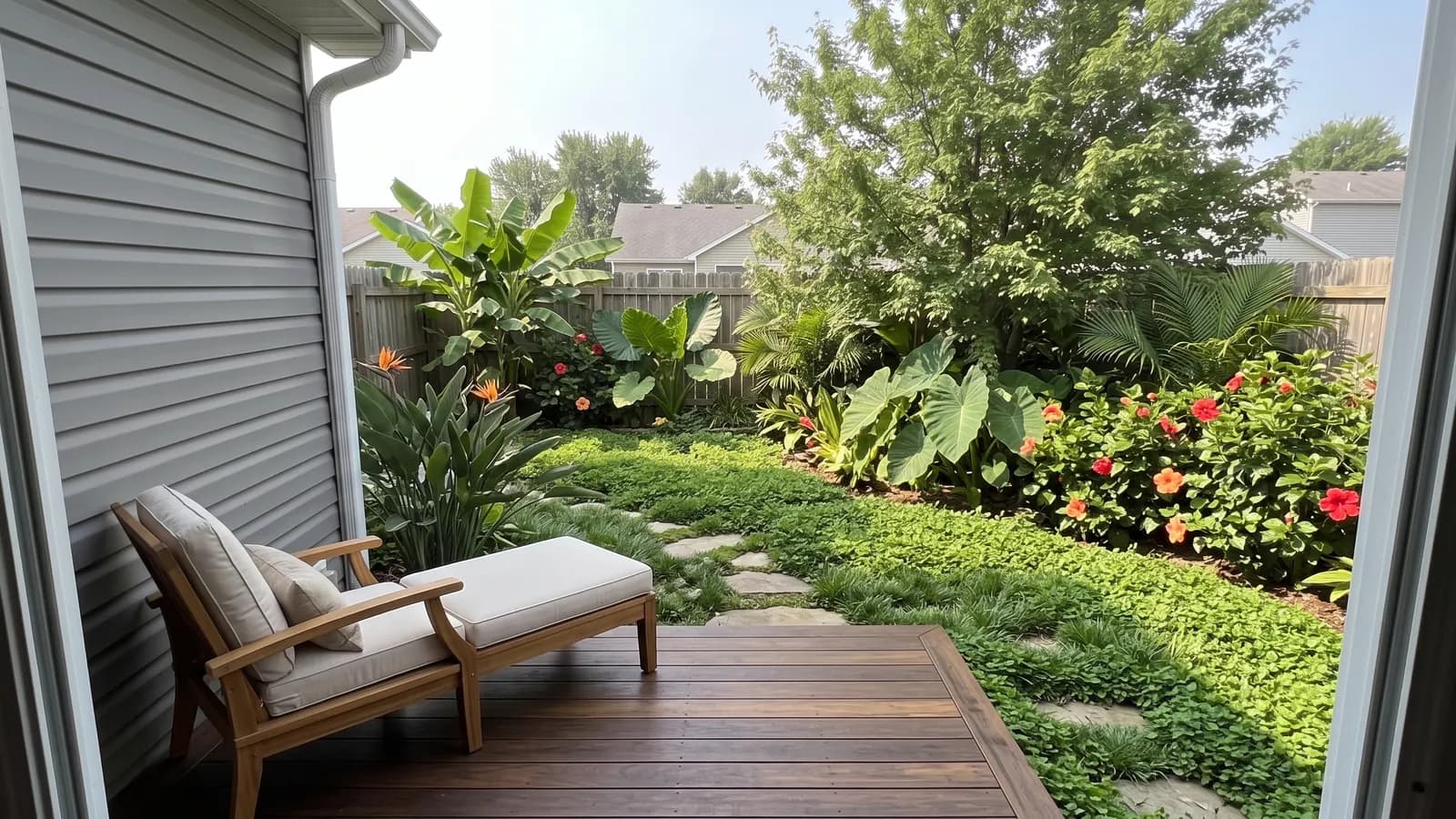
Tropical landscaping is all big leaves, layered tall to short, with hot flower color. The slab became a dark wood deck, and the fence disappears behind bananas, elephant ears and palms. The honest caveat is climate: bird of paradise, for example, is only hardy in zones 10 to 12, per NC State Extension. In colder zones you can fake the look with hardy bananas, cannas and elephant ears, dug up or cut back each fall, plus big-leaf hostas in shade. Expect frequent watering in summer.
Starter plants: banana, elephant ear, canna, hibiscus, bird of paradise (zones 10 to 12 only).
7. Desert
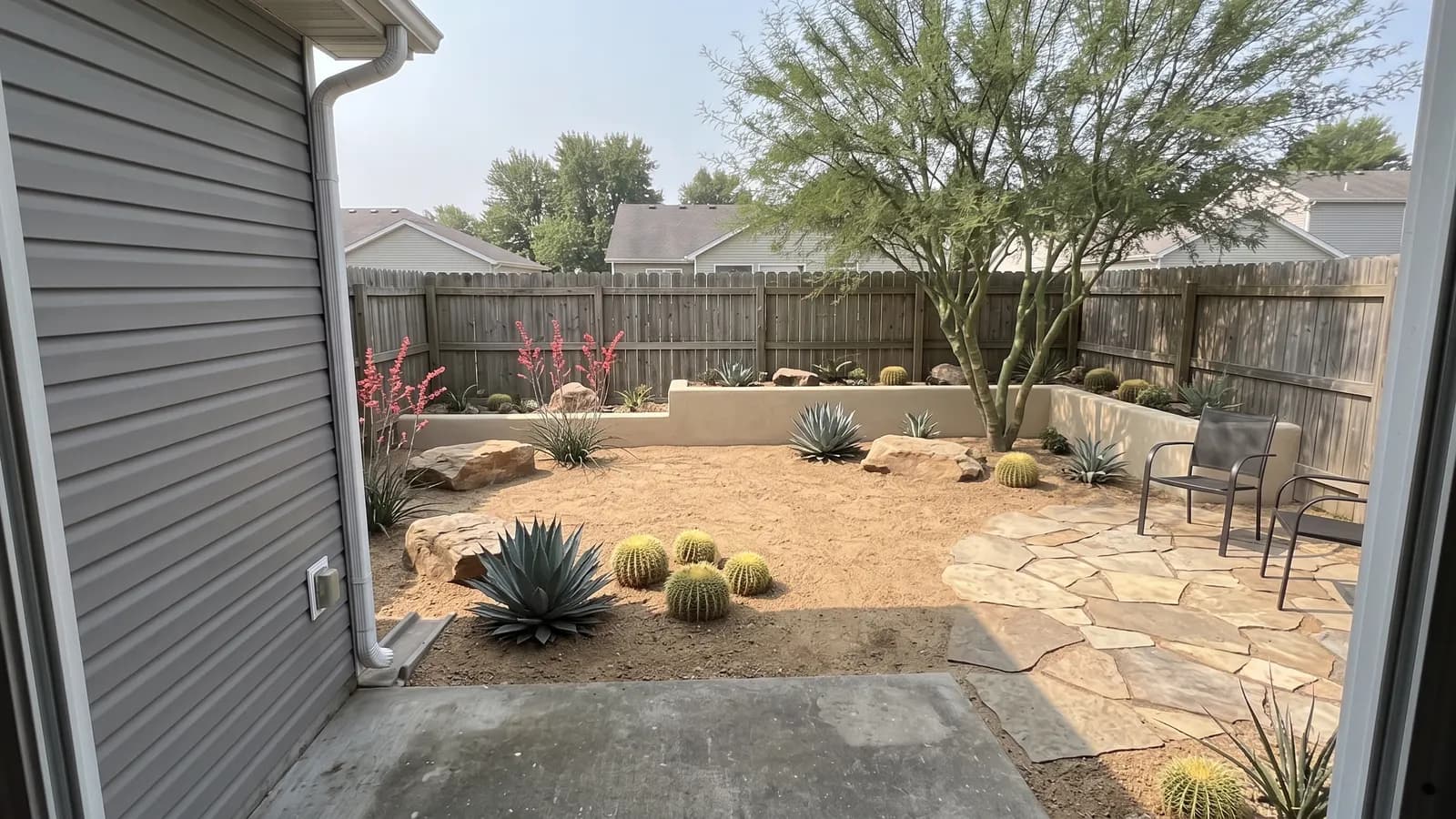
The desert look swaps lawn for decomposed granite, boulders and sculptural plants with lots of space between them. It's a form of xeriscaping, a word Denver Water coined in 1981 from the Greek "xeros," meaning dry. Once the plants are established, they need occasional deep watering rather than the weekly soaking a lawn wants. Watch the cold: Agave americana is rated for zones 8 to 11, so gardeners in colder dry climates use hardier yuccas and cold-tolerant cactus instead. Our desert landscaping ideas post has 20+ more layouts.
Starter plants: agave, golden barrel cactus, red yucca, palo verde, desert spoon.
8. Coastal
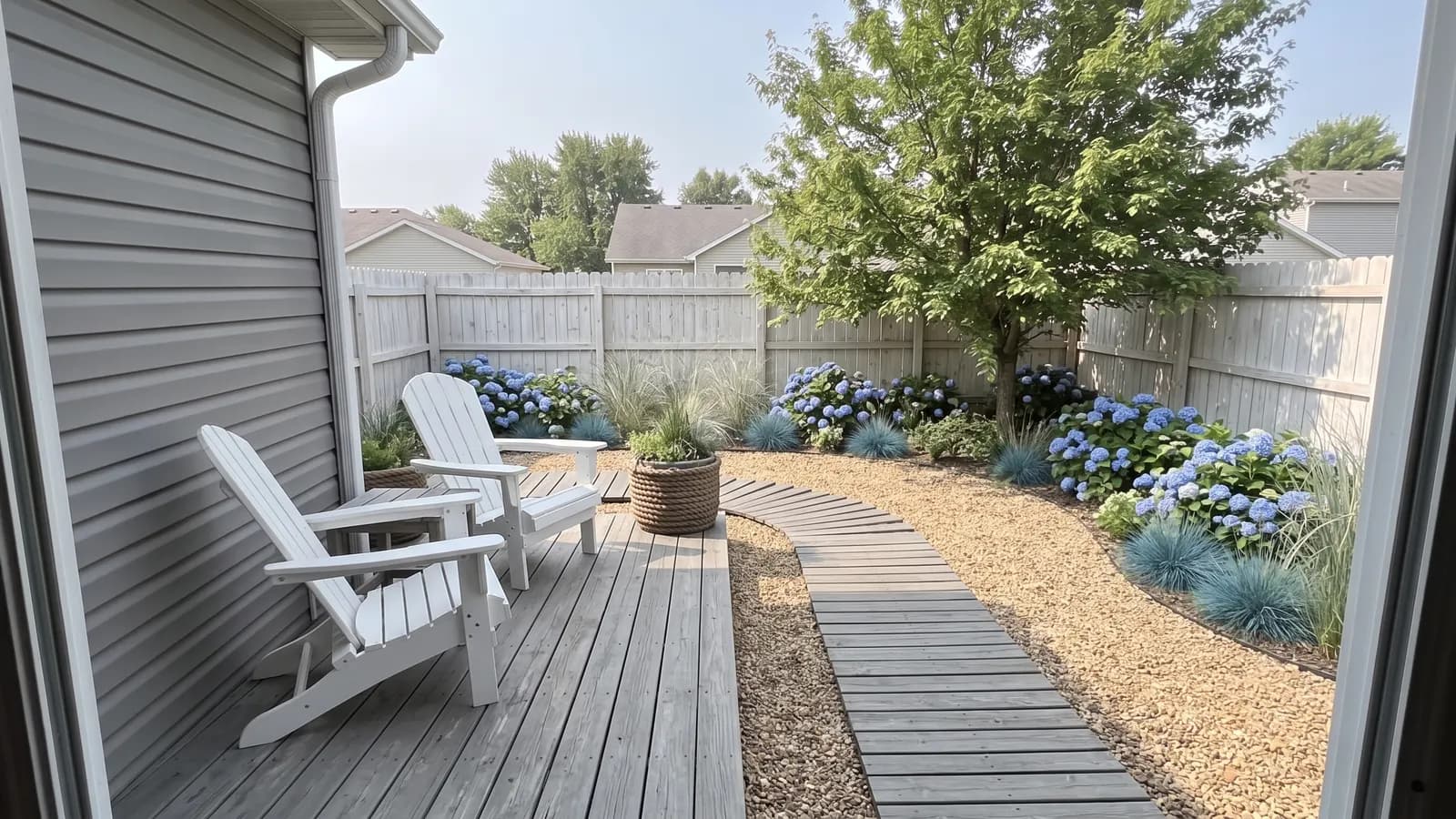
Coastal style borrows from the beach: sandy-colored gravel, weathered gray wood, a boardwalk-style path and silvery or blue foliage that moves in the wind. White chairs and a whitewashed fence keep it bright. You don't need to live by the ocean to pull this off, though if you do, pick plants labeled salt tolerant and give everything a windbreak. Gravel and grasses make it fairly low maintenance. Lay landscape fabric under the gravel and give it a firm edge so it stays out of the beds.
Starter plants: blue fescue, bigleaf hydrangea, Russian sage, beach rose, ornamental grasses.
9. Wild and natural (prairie)
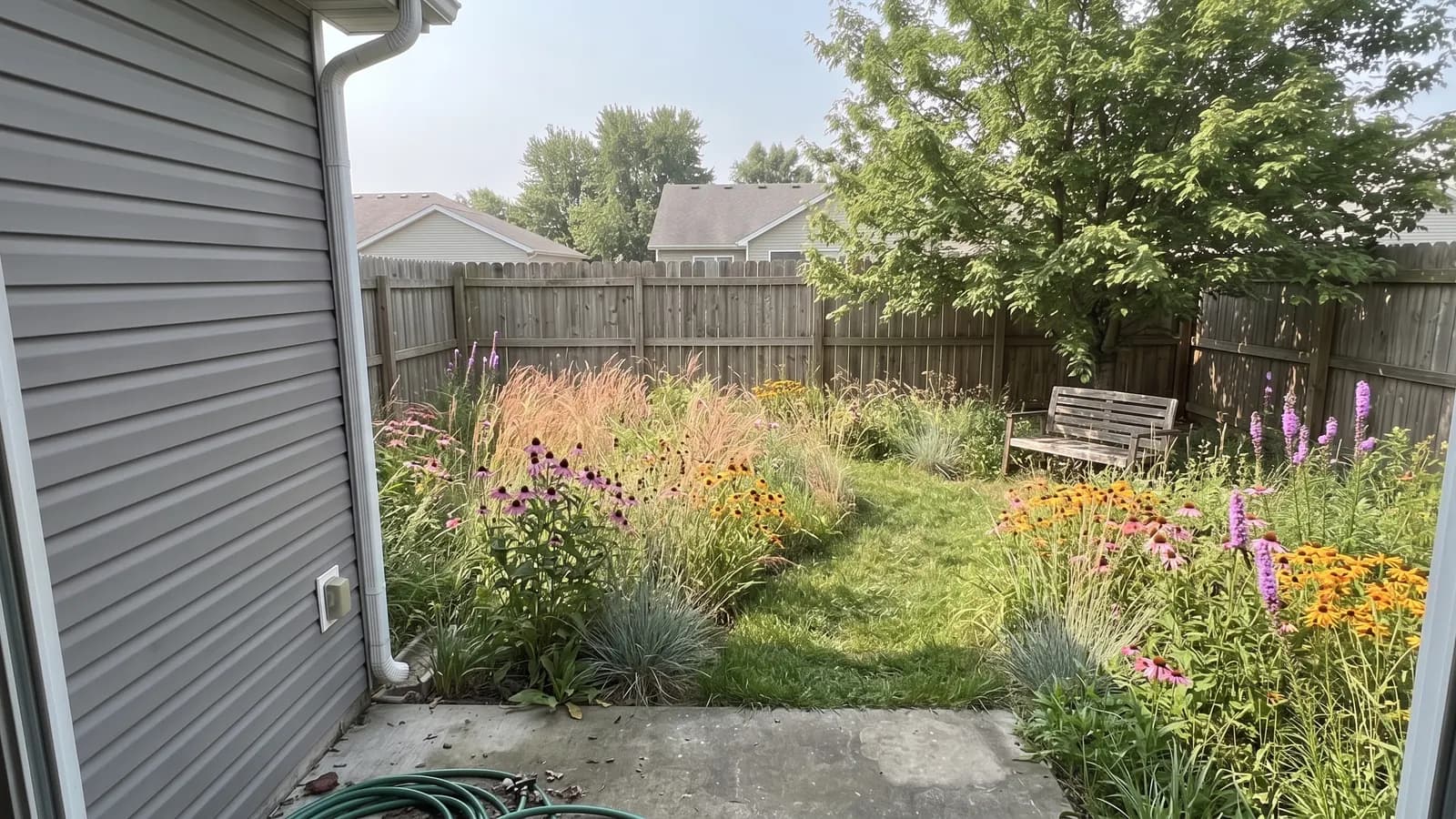
A prairie or meadow garden replaces most of the lawn with grasses and wildflowers planted in loose drifts, and it's the style most likely to bring in bees and butterflies. Using native plants is the core of it, so it works in nearly any region with local species. A mown path keeps it looking intentional to neighbors. Little bluestem, the backbone grass here, grows 2 to 4 feet tall and turns copper in fall. Year one is mostly weeding; after that, one cutback in late winter is the main job.
Starter plants: little bluestem, purple coneflower, black-eyed Susan, blazing star, prairie dropseed.
10. Woodland and shade
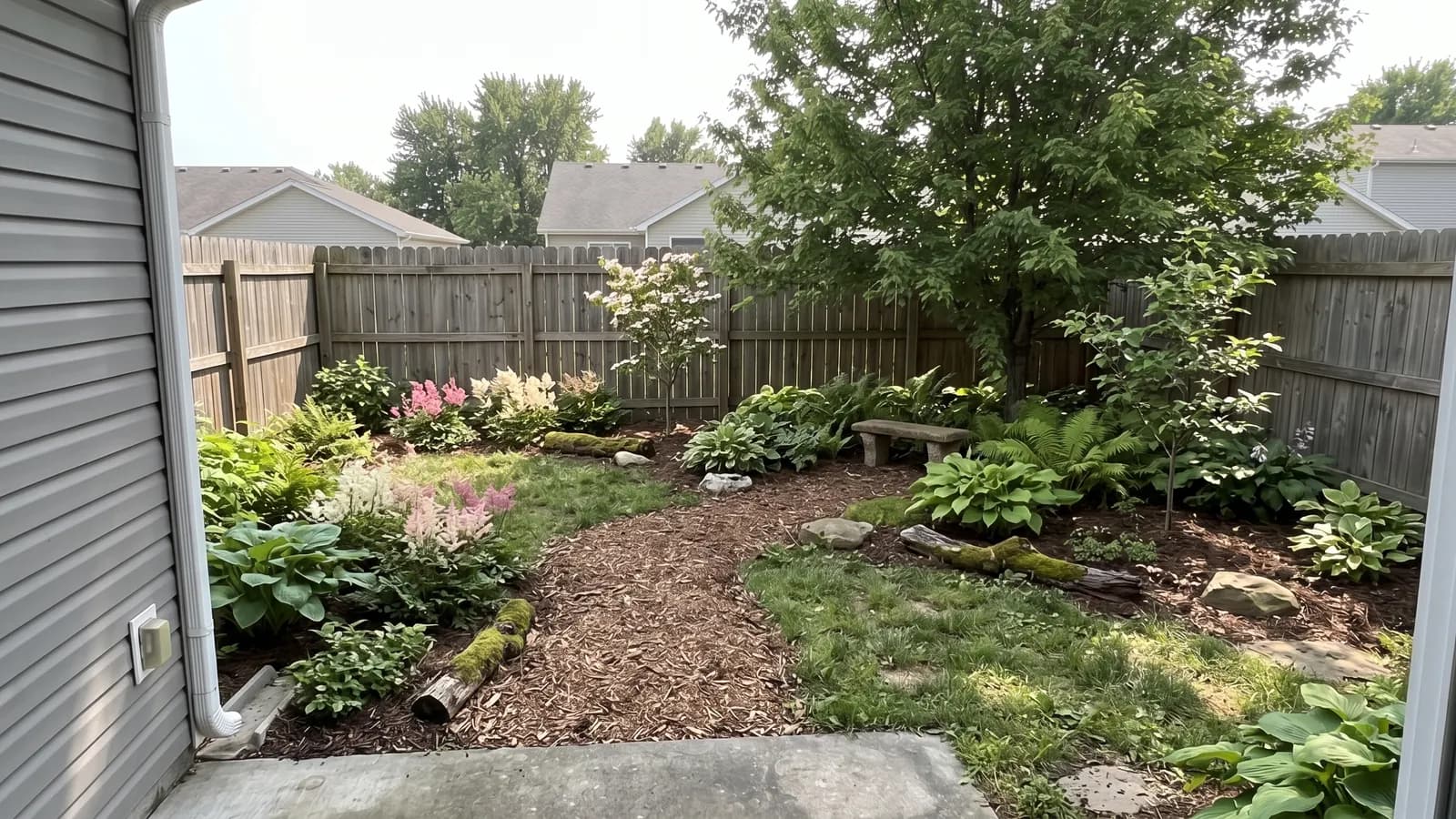
If a big tree already shades half your yard, stop fighting it. A woodland garden layers small understory trees, shrubs and shade perennials under the canopy, with a soft mulch path instead of lawn. In our concept the existing tree stays, a dogwood and a serviceberry join it, and hostas and ferns fill the floor. Hostas are hardy in zones 3 to 9 and do best in partial to full shade. Fallen leaves can stay as free mulch, which makes this one of the easiest styles to keep up.
Starter plants: hosta, ferns, astilbe, serviceberry, dogwood, foamflower.
11. Farmhouse
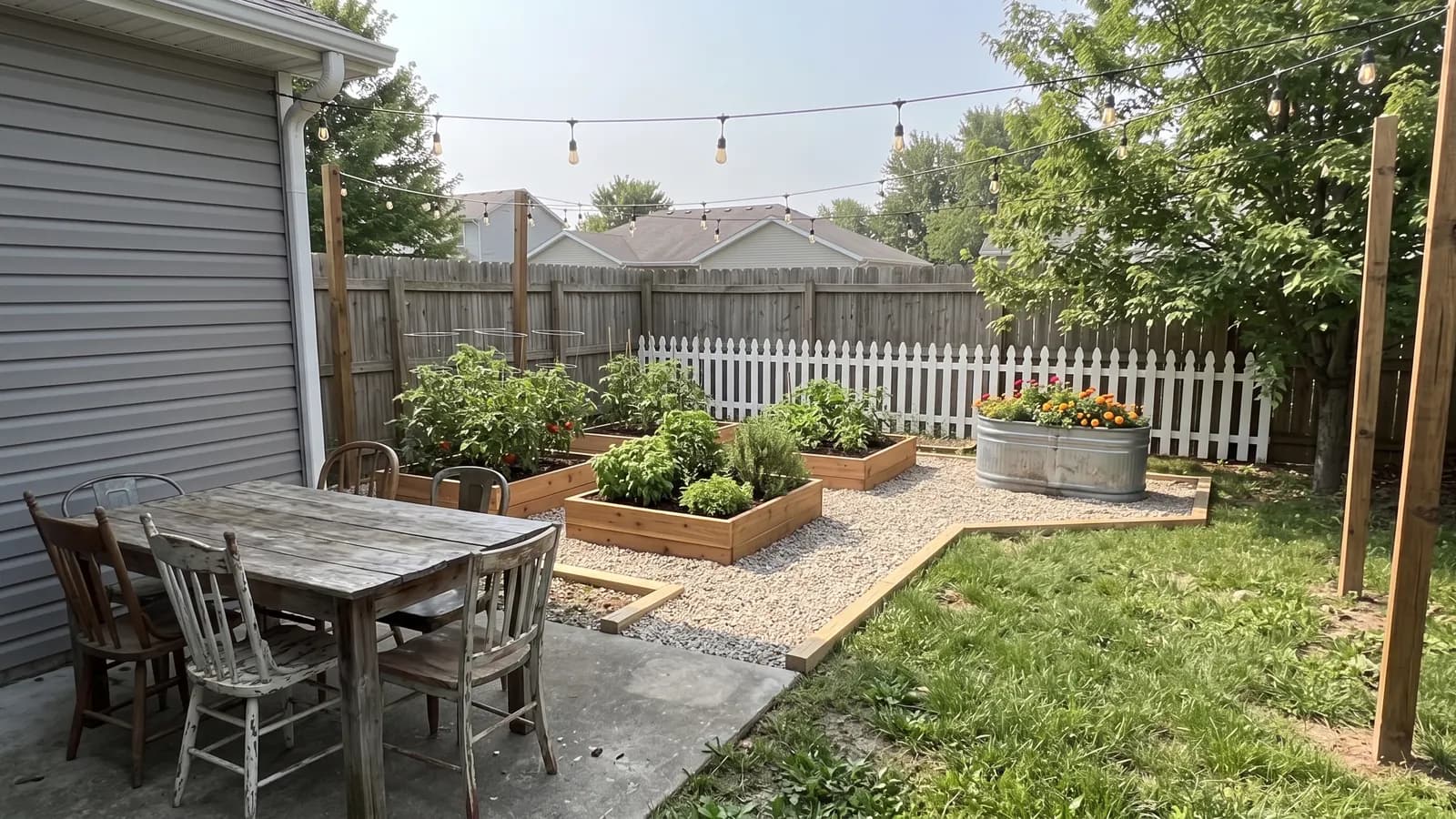
Farmhouse style is practical before it's pretty: raised beds for vegetables and herbs, a gravel path between them, a galvanized trough planted with flowers, and a long wooden table for eating outside. String lights on posts finish it. Put the beds where they get at least 6 hours of direct sun, since most vegetables need it. Cedar raised beds last years without chemical treatment. This style pairs well with modern farmhouse and craftsman homes, and it's the only one in the list that feeds you.
Starter plants: tomatoes, herbs, zinnias, coneflowers, climbing roses on the fence.
Matching a style to your house and climate
A style that looks great online can look odd next to your house. Use the house as the first filter:
- Contemporary or mid-century homes: modern, Japanese or desert. All three share the house's flat planes and clean edges.
- Colonial, Georgian or brick traditional: formal, or a tidier cottage garden.
- Craftsman, farmhouse and cape cod: cottage, farmhouse or woodland.
- Spanish, stucco and ranch homes in warm areas: Mediterranean, desert or tropical.
- Shingled or beach-area homes: coastal.
Then let climate overrule taste. Check your zone on the USDA Plant Hardiness Zone Map before you commit. A tropical look in zone 5 or a cottage garden in Phoenix can be done, but it costs more and takes more work every year. You can also borrow a look with tougher plants: a Mediterranean feel in zone 6 with hardy lavender and Russian sage instead of olives, or a desert look in Denver with hardy yuccas.
Most real yards mix two styles, and that's fine. Pick one as the base for layout and paving, and borrow plants from the other. A modern patio with prairie planting around it is a pairing that holds together well.
Landscape styles compared
| Style | Lines | Upkeep | Water use | Climate fit |
|---|---|---|---|---|
| Modern | Straight, geometric | Low to medium | Low to medium | Any |
| Cottage garden | Curved, loose | High | Medium to high | Moist, temperate |
| Formal | Straight, symmetrical | High (hedge trimming) | Medium | Zones 5 to 9 with boxwood |
| Mediterranean | Mixed | Low | Low | Dry summers, mild winters |
| Japanese | Asymmetrical | Medium (raking, pruning) | Low to medium | Most zones |
| Tropical | Layered, dense | Medium to high | High | Zones 9 to 12, or seasonal |
| Desert | Open, spaced | Low | Very low | Hot, dry regions |
| Coastal | Relaxed | Low | Low to medium | Sunny, windy, sandy sites |
| Wild and natural | Drifts | Low after year one | Low | Any, with local natives |
| Woodland and shade | Curved, layered | Low | Medium | Shady yards, most zones |
| Farmhouse | Grid of beds | Medium to high | Medium | Sunny yards, most zones |
Key takeaways
- Compare styles on one yard. Judging styles from other people's yards mostly tells you which yard is bigger. Seeing them on your own space settles it faster, which is how we built this guide and how AI landscape design works on your photo.
- Use the house and the climate as filters, then choose by taste from what's left.
- Upkeep varies more than cost. A cottage or formal garden asks for weekly attention; desert, prairie and woodland yards ask for a few days a year once established.
- Mixing two styles is normal. One for layout and hardscape, one for planting.
FAQ
What are the main landscape design styles? The most common are modern, cottage, formal, Mediterranean, Japanese, tropical, desert, coastal, prairie (wild and natural), woodland and farmhouse. Many guides group them more broadly into formal and informal styles, or into the four basic types of landscape. Each style is defined by its lines, its materials and how many different plants it uses.
How do I choose a landscape style for my house? Start with the house: match its lines and materials, such as clean modern lines for a contemporary home or symmetry for a brick colonial. Then check your hardiness zone and how much time you want to spend on upkeep. Saving photos you like and looking for what they have in common also helps.
What is the most low-maintenance landscape style? Desert and prairie styles need the least work once established, followed by woodland gardens in shady yards. All three use plants suited to the site and replace most of the lawn. Formal and cottage gardens need the most ongoing care.
What is the difference between formal and informal landscape design? Formal design uses straight lines, symmetry, clipped hedges and a limited plant palette. Informal design uses curves, asymmetry and looser, more varied planting. Cottage, woodland and prairie gardens are informal; formal and most modern gardens are not.
Can you mix landscape design styles? Yes, and most yards do. Pick one style for the layout and hardscape, then borrow plants or accents from a second. Modern with prairie planting, or farmhouse with cottage borders, are common pairings that hold together well.
What landscaping style adds the most value to a home? There's no single answer, but buyers respond to yards that look tidy, match the house and don't look like a lot of work. A clean, low-maintenance version of a style that suits the house's architecture is usually a safer bet than a high-upkeep garden.
Sources: Denver Water: where the term xeriscape originated, NC State Extension Plant Toolbox: Buxus, Hosta, Strelitzia reginae, Agave americana and Schizachyrium scoparium, Lady Bird Johnson Wildflower Center: little bluestem, Gardenia.net: Mediterranean gardens, USDA Plant Hardiness Zone Map, all checked October 20, 2026