23 Backyard Fence Ideas for Every Problem
Fence ideas organized by the problem they solve, from privacy and dogs to pool code, slopes and small yards, each with installed costs and an AI concept on an ordinary yard.
Most people shop for a fence by scrolling photos of styles, then realize halfway through that the photo doesn't answer their real question. Will it stop the dog? Does it pass the pool inspection? What happens where the yard drops 4 feet toward the back? These backyard fence ideas are sorted by the job the fence has to do, so you can skip straight to your problem instead of guessing from pretty pictures.
You'll find 23 ideas across privacy, pets and kids, pools, slopes, small yards and planting, each with an installed cost range, a lifespan or upkeep note, or the rule that decides whether it works. A cost guide at the end compares materials side by side.
Every image is an AI design concept showing the idea built on an ordinary suburban yard, the same kind of render you can make from a photo of your own.
Privacy fences
1. Overlap the boards
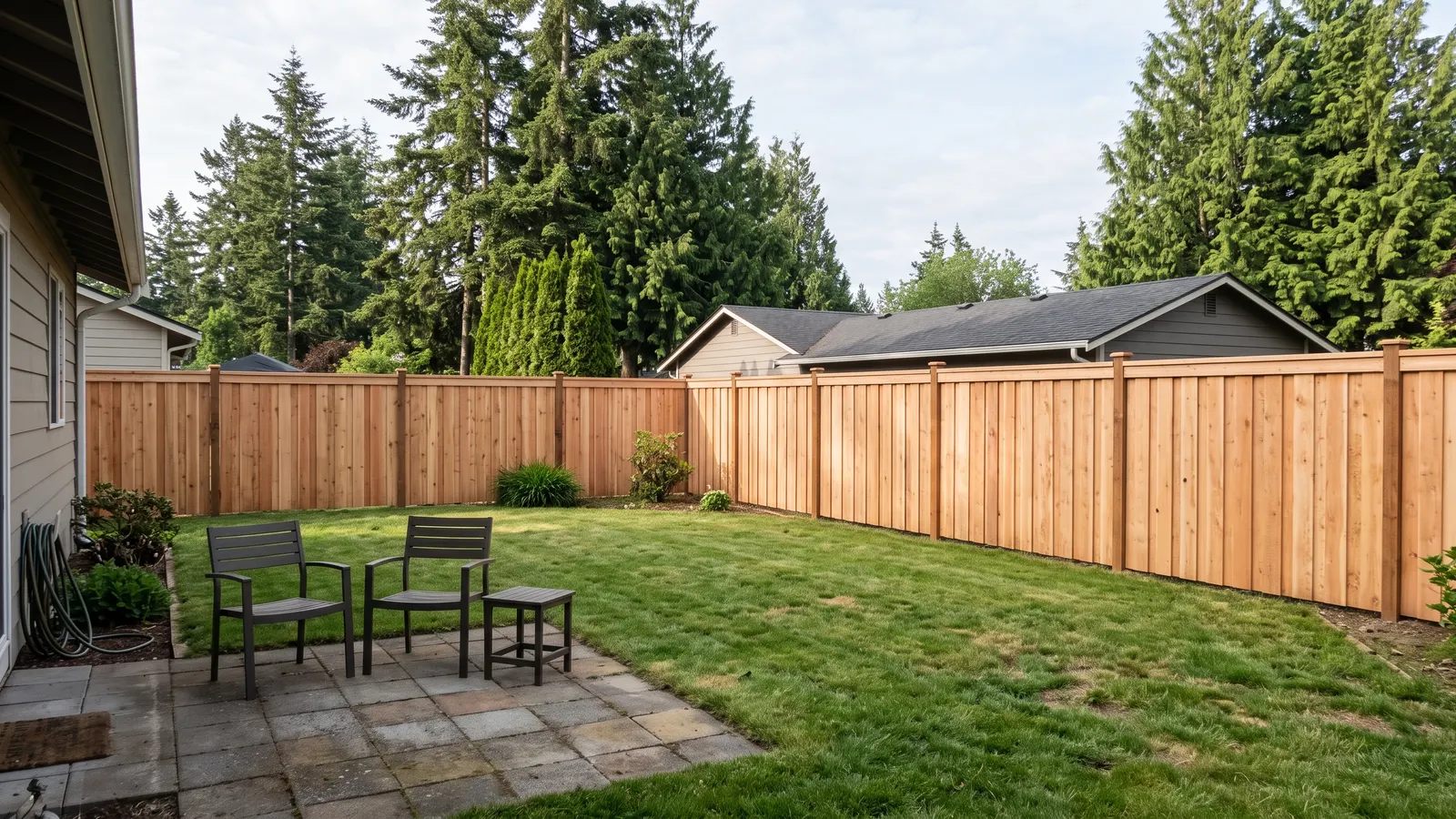
A standard privacy fence develops see-through gaps as the boards shrink in their first dry summer. Board-on-board fixes that by overlapping each board with the next by an inch or so, so the wall stays solid as the wood moves. In cedar, expect $25 to $60 per linear foot installed for a 6-foot fence, and roughly 15 to 25 years of life if you seal it every couple of years.
2. Build a fence that looks good from both sides
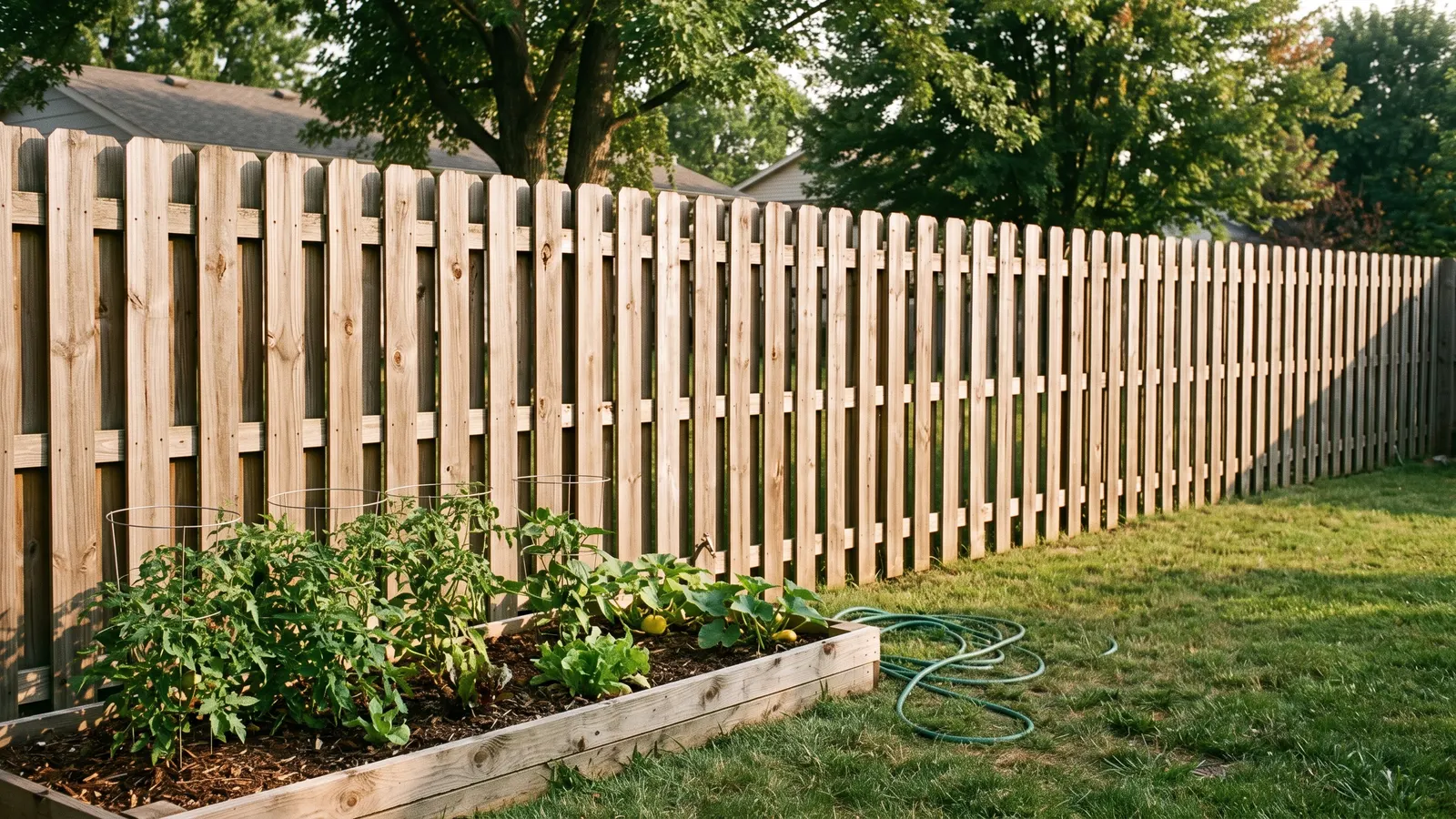
A shadowbox fence (often called a good-neighbor fence) puts pickets on alternating sides of the rails. Neither you nor the people next door get the "back" with exposed rails, which makes it the easy choice for a shared property line. It blocks views from straight on but lets light and wind pass at an angle, so it handles gusts better than a solid wall. It uses more boards than a standard stockade fence, so budget a little higher.
3. Frame each panel
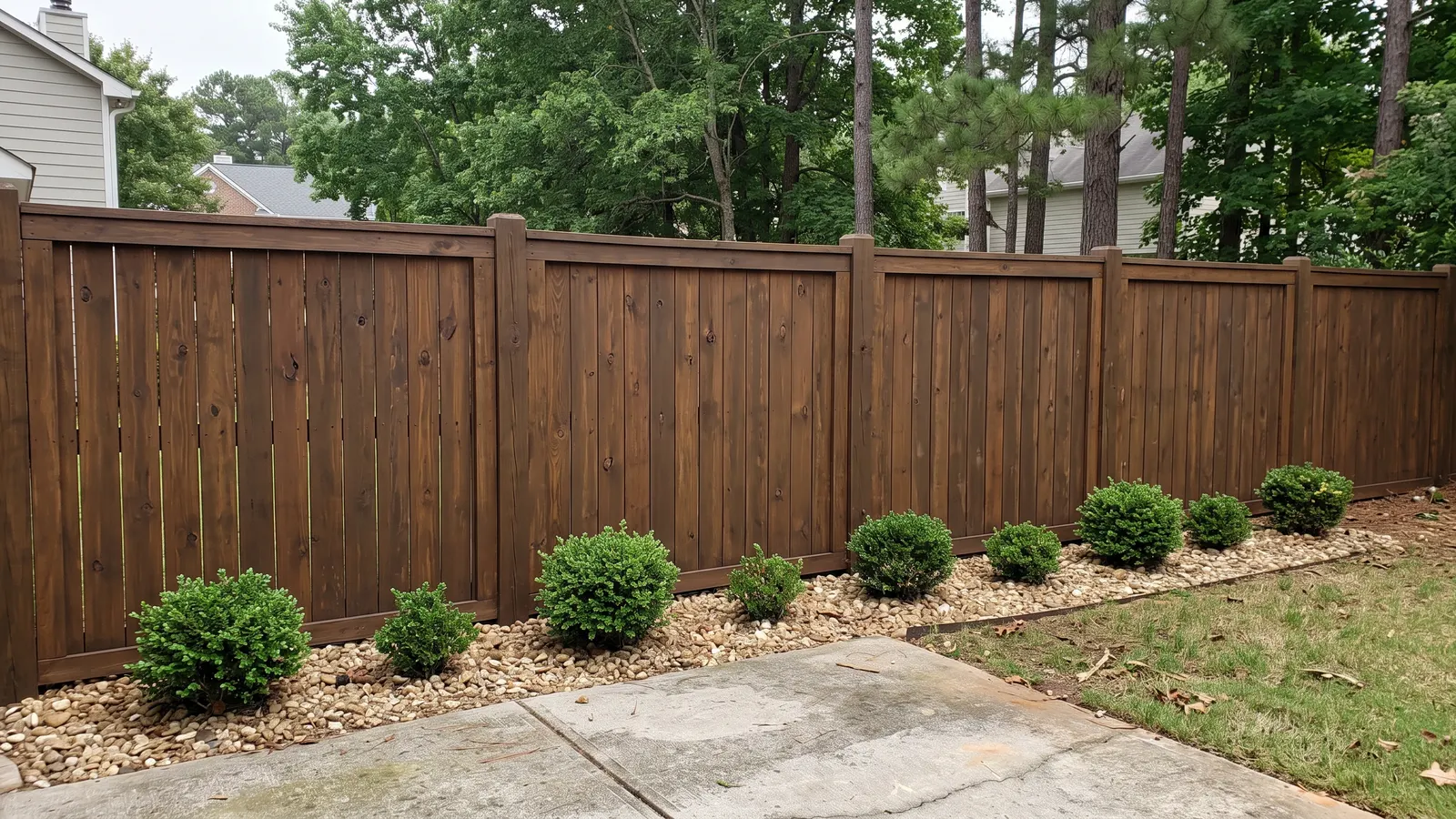
Picture-frame fences wrap every panel in trim on all four sides, which hides the rails and end grain and makes a plain board fence look built-in. The extra cuts add labor, so this one lands toward the top of the wood price range. It pays off most on the stretch you see from the patio or kitchen window. You can frame just that run and use a simpler style down the sides.
4. Skip the staining with vinyl
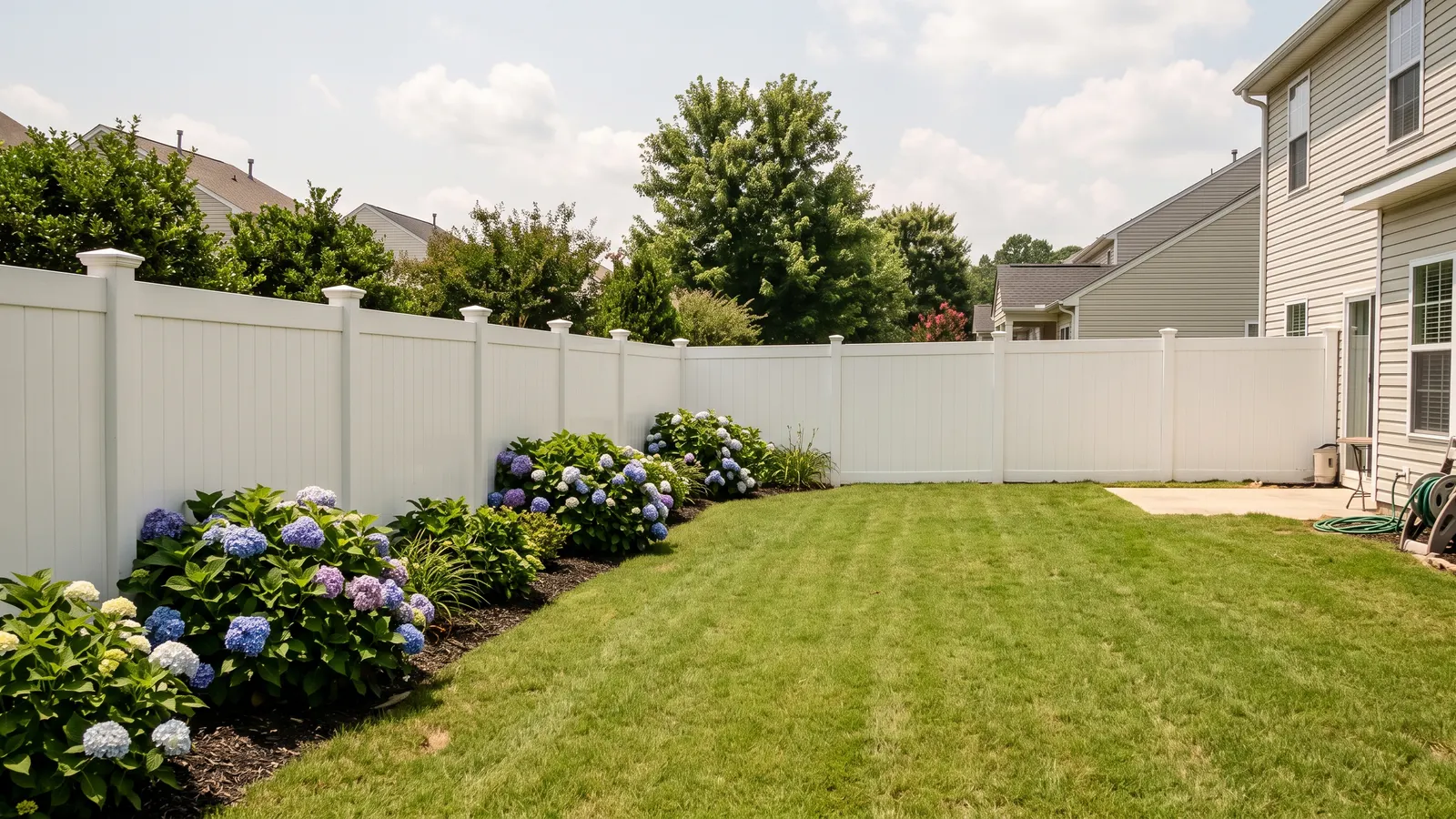
Vinyl never needs sealing, won't rot, and cleans up with a hose. HomeGuide puts installed vinyl at $30 to $60 per linear foot and its lifespan at 20 to 30 years. Two caveats: solid vinyl panels act like a sail, so it's not the best pick for exposed, high-wind lots, and white shows mildew in humid shade. Tan, gray and wood-grain panels hide dirt better.
5. Choose composite for a wood look without the upkeep
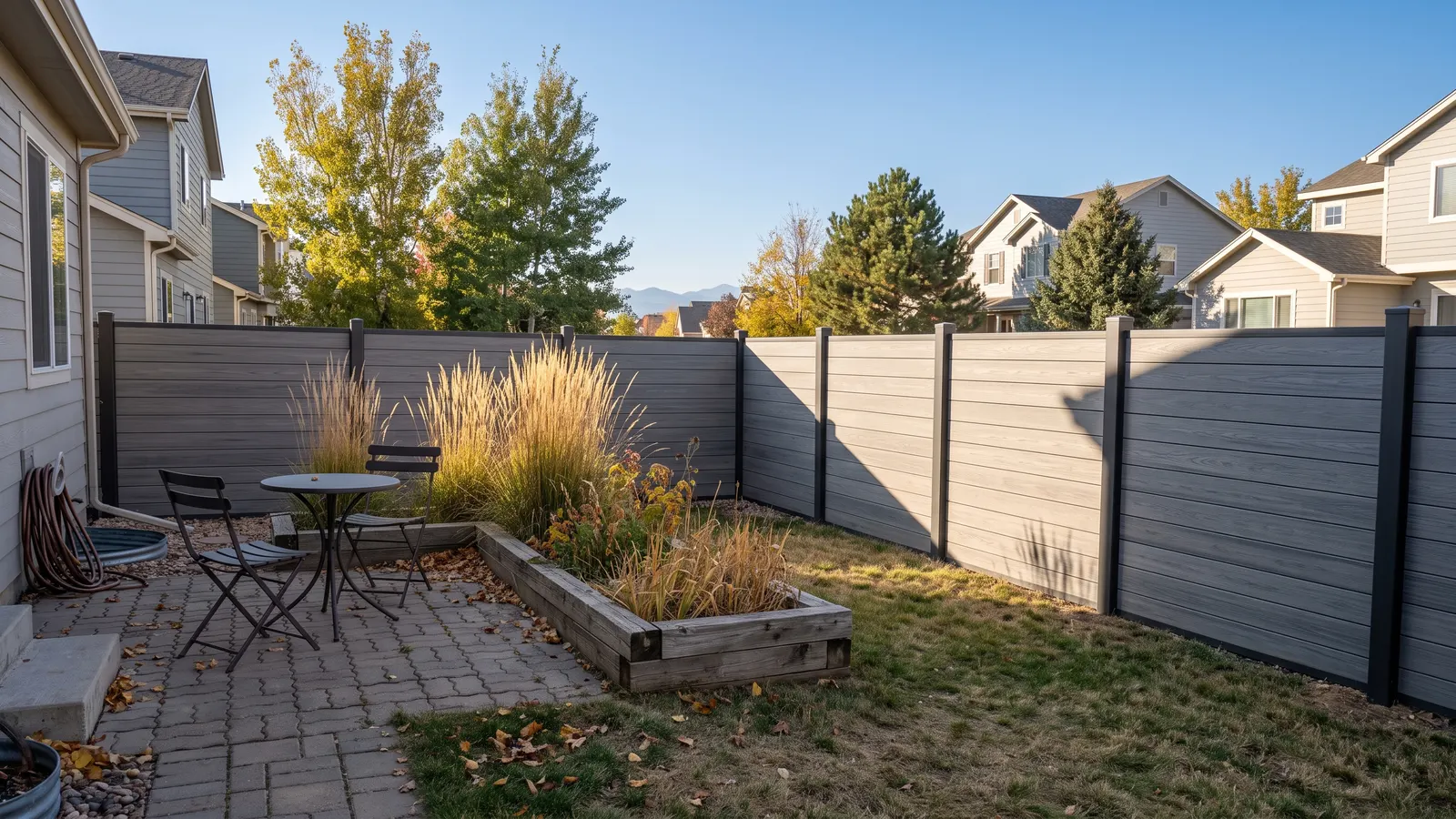
Composite panels are made from wood fiber and recycled plastic, so they read as wood from a few feet away but never need stain. Expect $55 to $85 per linear foot installed for a composite privacy fence, which is more than most wood. The payback is time: well-built composite lasts 25 to 30 years or more, and the only maintenance is a wash in spring. If you want slats running sideways, we collected those layouts in our horizontal fence ideas.
Fences for dogs and kids
6. Bury a dig guard along the base
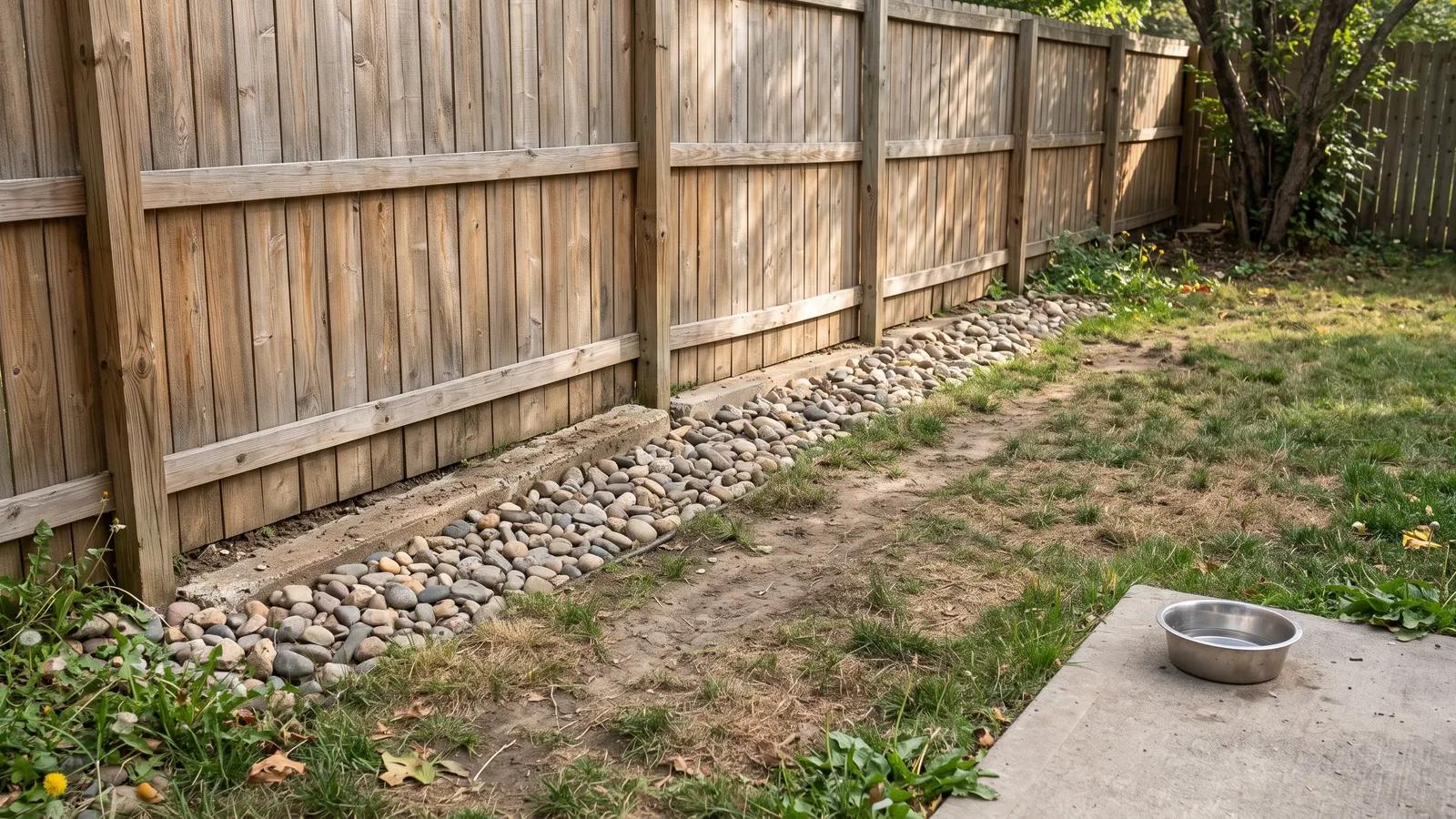
If your dog digs, the fence above ground matters less than what's below it. The American Kennel Club suggests strips of metal, cement or large rocks set 1 to 2 feet below the fence line. A concrete mow strip with a band of river rock on top does the job and also keeps the string trimmer off the boards. Fixing an existing fence this way usually costs far less than replacing it.
7. Go solid and 6 feet for jumpers
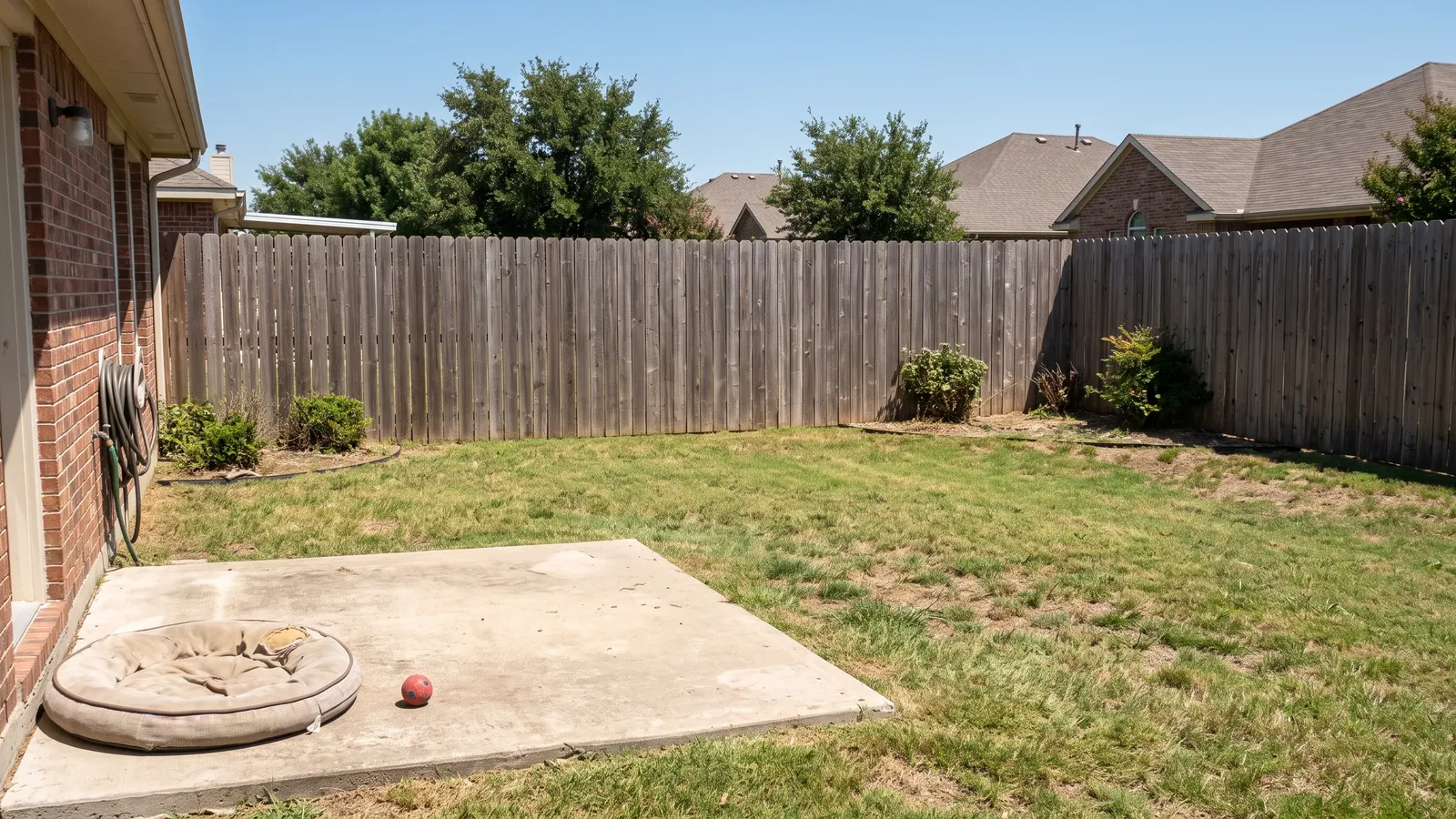
Athletic dogs treat a 4-foot fence as a hurdle. A 6-foot solid fence works better for two reasons: it's taller, and dogs that can't see the squirrel or the mail carrier have less reason to try. Face the smooth side into the yard so rails don't become footholds. Then walk the line and move anything a dog could launch from, like firewood stacks, benches or trash cans.
8. Turn the side yard into a dog run
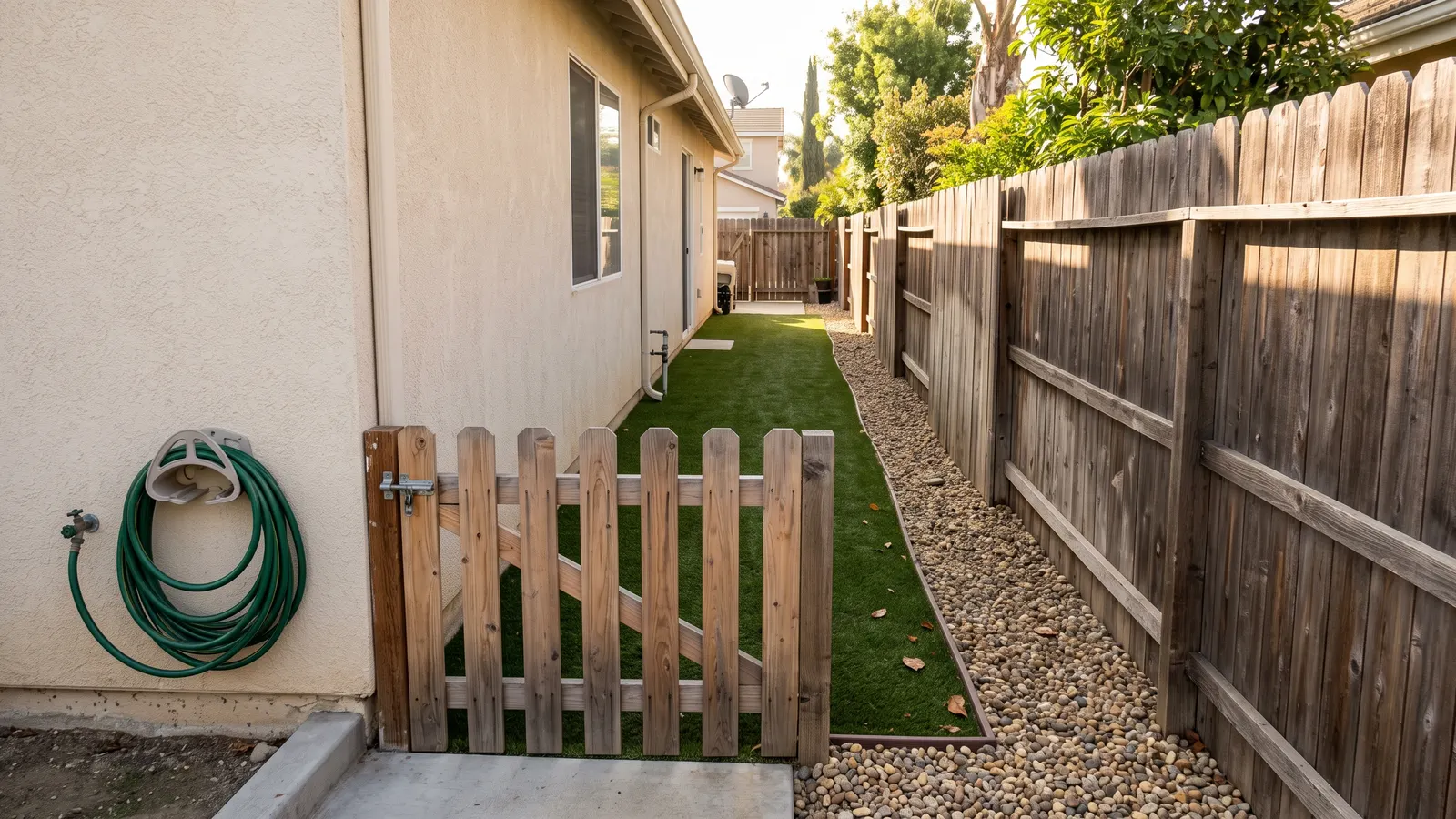
The strip down the side of the house is usually wasted space, and it makes a good dog run. Put a short gate at each end and the dog can be outside while the main yard stays clean for guests. Pet-grade artificial turf or pea gravel holds up better than grass in a narrow, shaded run. Leave a hose bib in reach for rinsing.
9. Line a split rail fence with wire
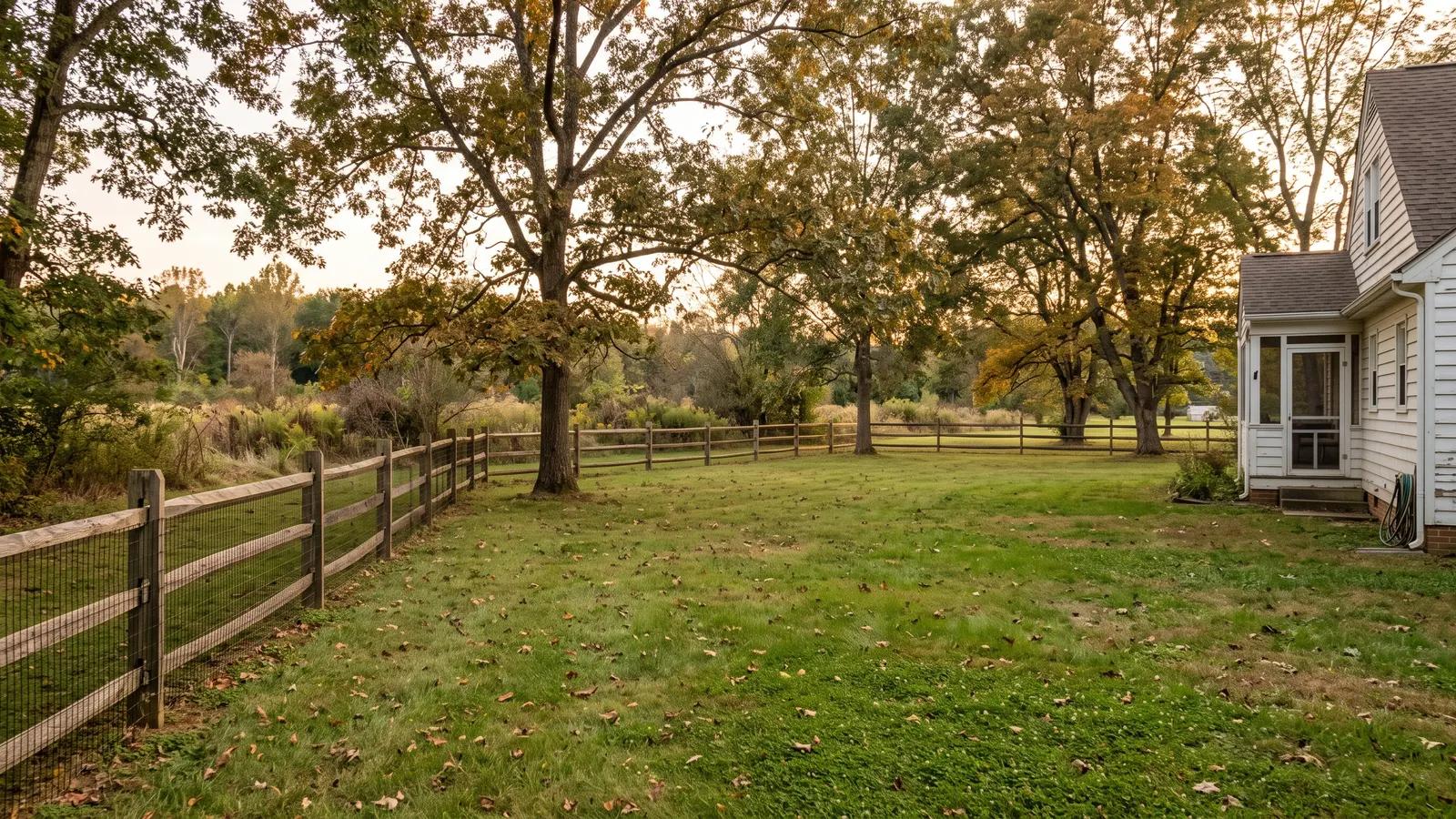
On a big lot, a privacy fence around the whole perimeter gets expensive fast. Split rail costs about $15 to $35 per linear foot installed, and lining it with black welded wire keeps dogs in while the yard still feels open. Black mesh almost disappears from 20 feet away, where galvanized wire catches the light. Run the wire to the ground and pin it, or the dog will find the gap.
10. Fence off the play area, not the whole yard
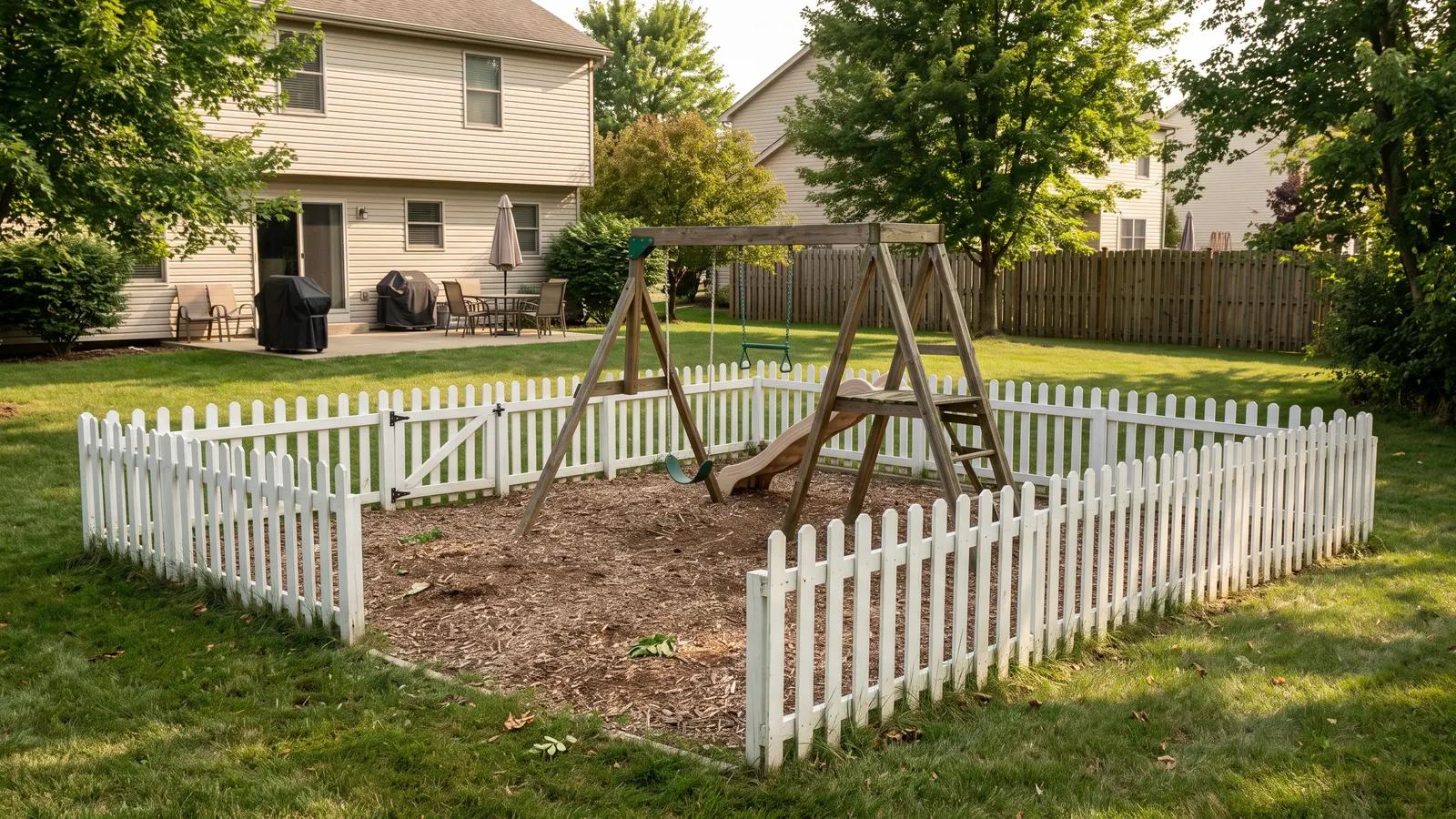
Toddlers don't need the whole yard fenced, just the corner where they play. A 3-foot picket fence with a latching gate around the swing set keeps them out of the garden beds and away from the grill while you can see over it from the patio. Picket fencing runs about $20 to $50 per linear foot installed, and a 60-foot enclosure costs a fraction of a full perimeter.
Pool fences
Pool fences are the one place where taste comes second to rules. The U.S. Consumer Product Safety Commission's barrier guidelines call for a barrier at least 48 inches high, no gap over 4 inches anywhere a child could squeeze through, and gates that swing out from the pool and close and latch by themselves. Your local code may be stricter, and many towns require a permit for a pool barrier even when ordinary fences need none.
11. Use black aluminum pickets
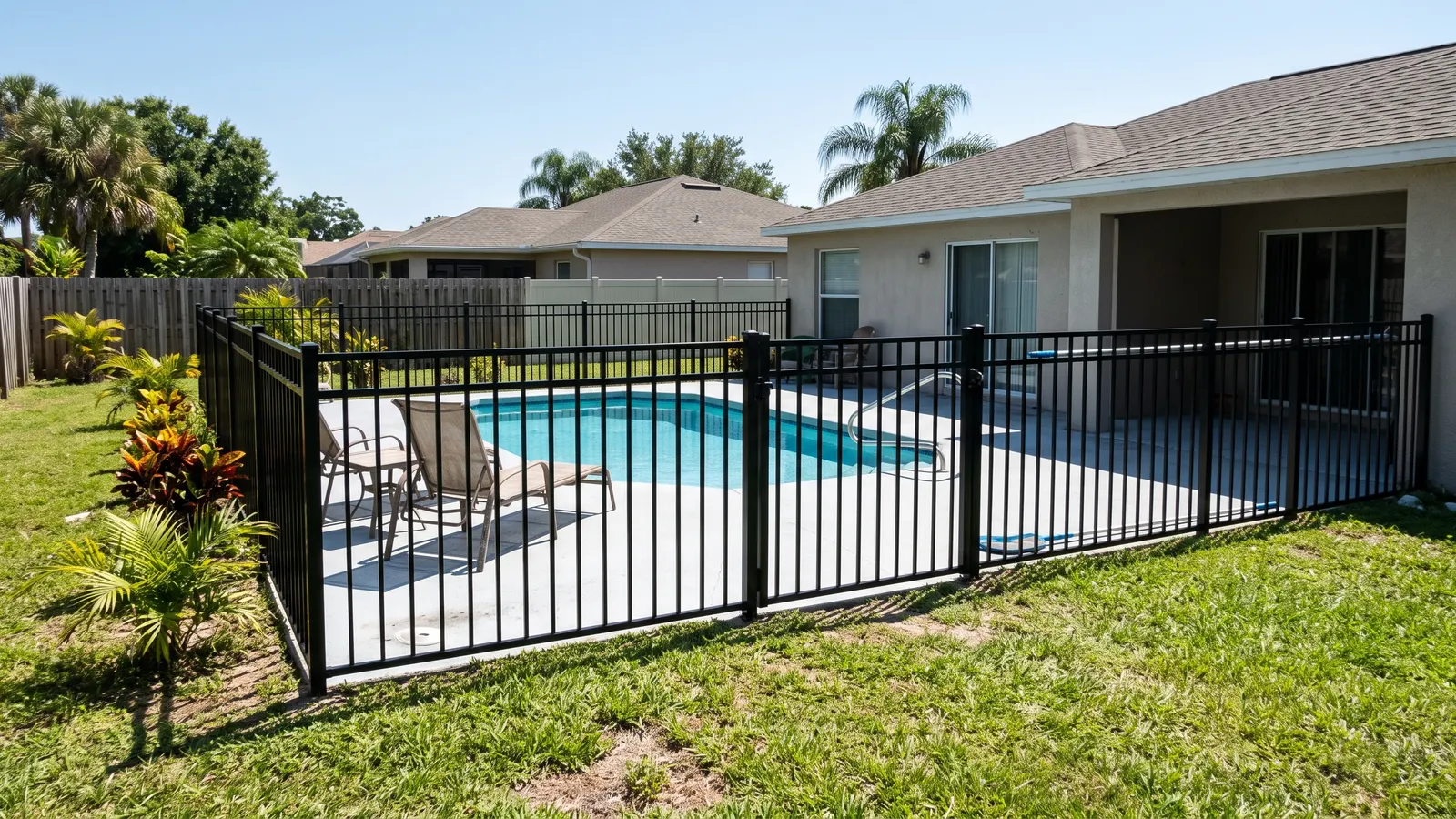
Aluminum is the default pool fence for good reason: it doesn't rust in splash zones, it lasts 30 to 50 years, and it's easy to see through, so you can watch the water from the house. HomeGuide puts aluminum pool fencing at $30 to $45 per linear foot installed. Pick panels with flat-top or pressed-spear pickets and check the spacing, since the CPSC limits vertical gaps to 4 inches.
12. Pay for glass only where you look at the view
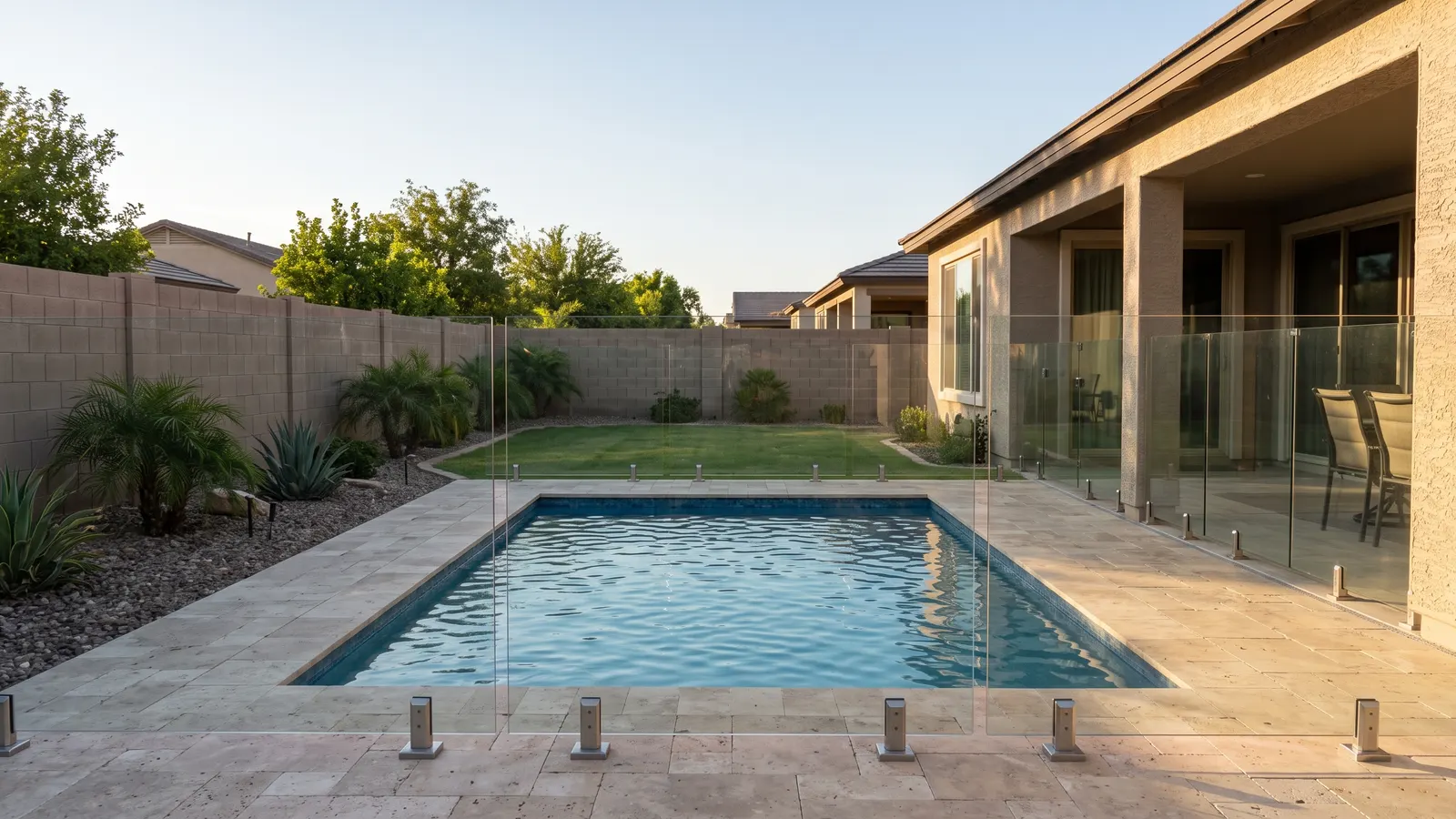
Frameless glass keeps the pool barrier almost invisible, and it has no rails or pickets to climb. It's also the most expensive option by far: $120 to $500 per linear foot installed. A common way to make it affordable is to use glass on the one side facing the house or the view, then switch to aluminum on the sides nobody looks at. Expect to wipe off water spots often in hard-water areas.
13. Go removable with mesh
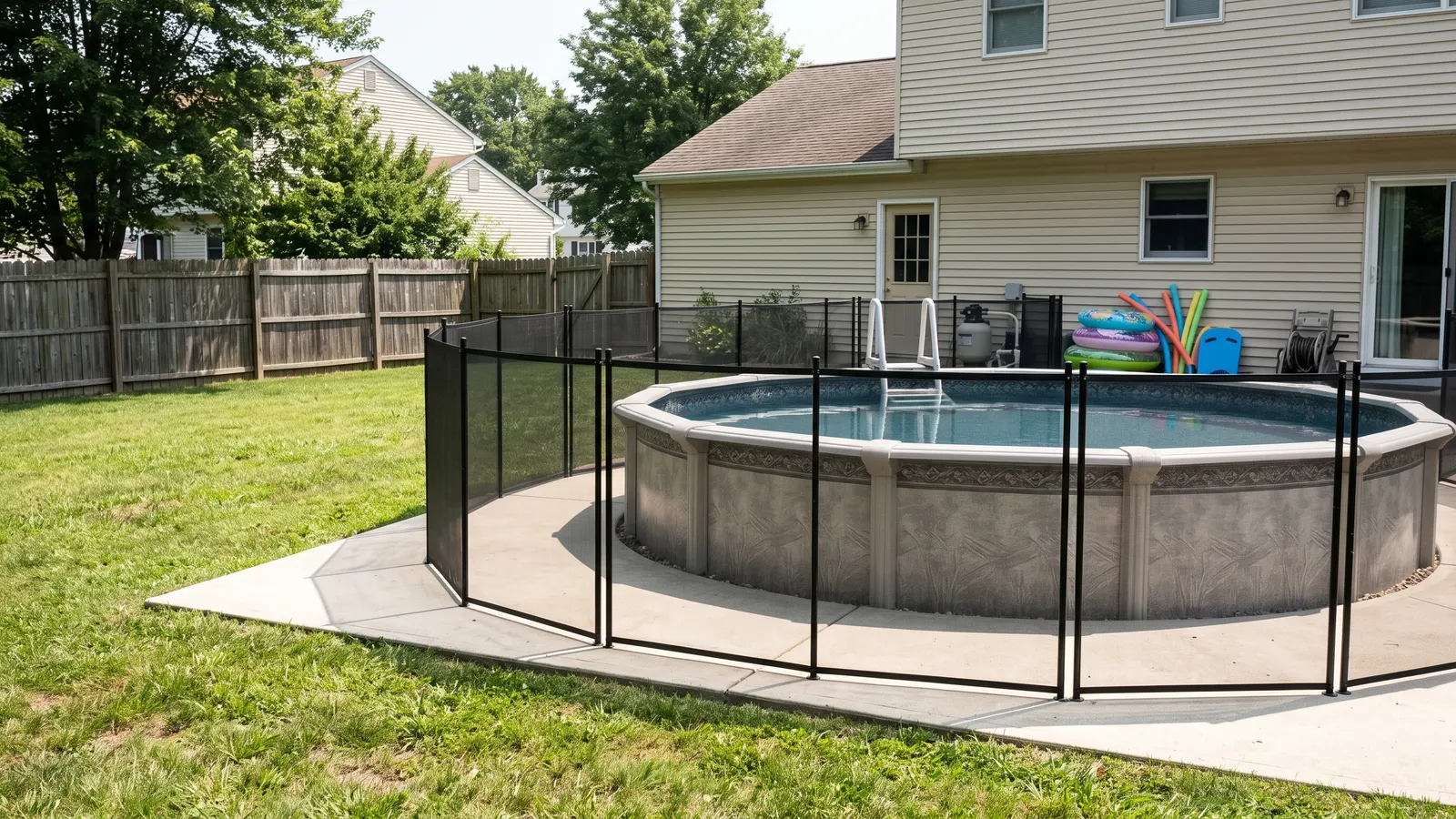
Mesh pool fences are hard for small children to climb and can come down for parties or the off-season. They run $10 to $30 per linear foot installed, among the cheapest pool barriers you can buy. The poles drop into sleeves drilled into the deck, so they need a hard surface. The CPSC's guidelines keep the gap under a removable mesh fence to 1 inch, so the deck needs to be fairly level.
14. Get the gate right
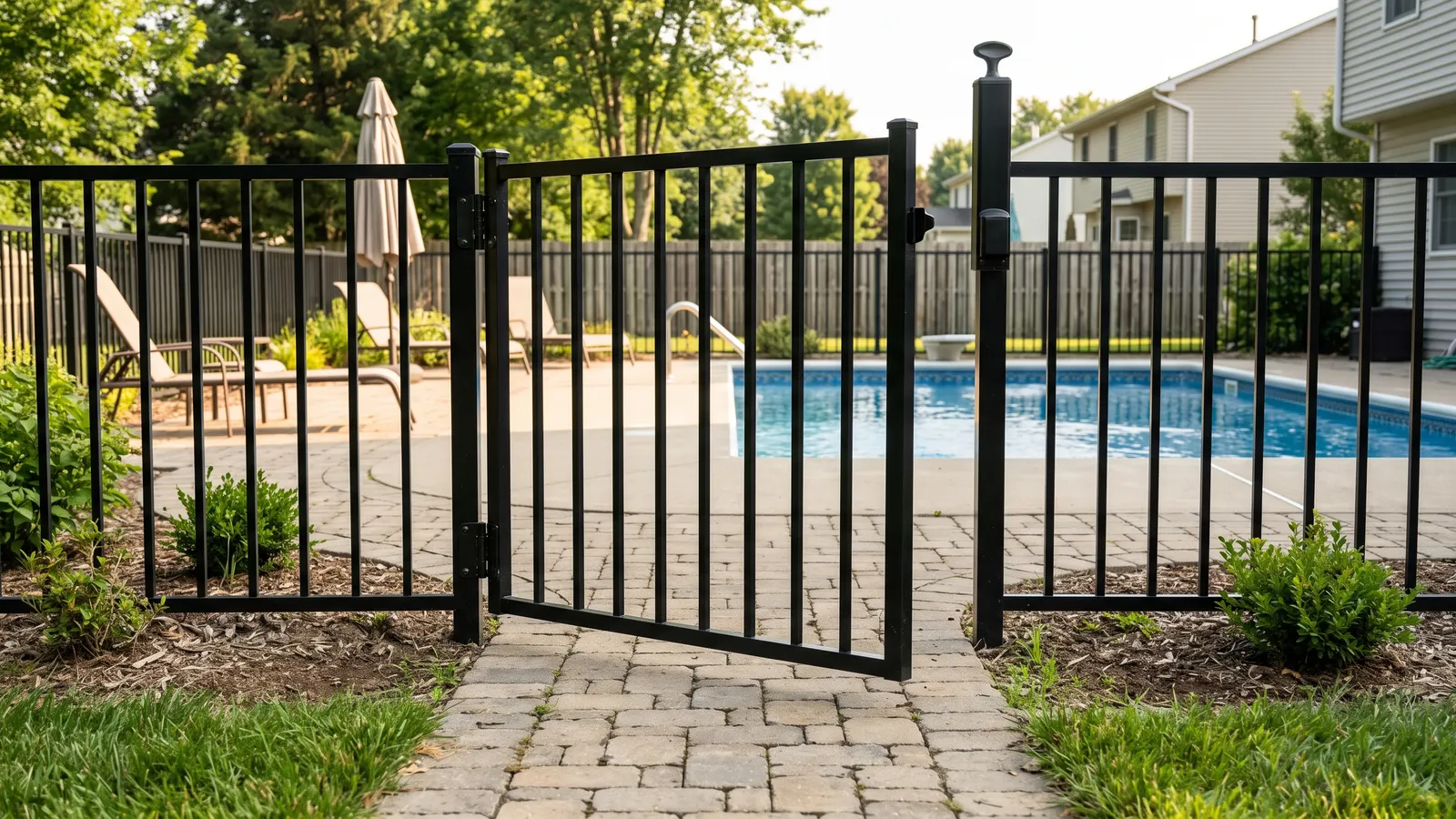
Most pool fence failures happen at the gate, not the panels. Hang it to swing outward, away from the water, and use self-closing hinges with a self-latching catch. If the latch release sits less than 54 inches above the bottom of the gate, the CPSC says to put it on the pool side, at least 3 inches below the top, out of a child's reach. Test the gate monthly, since hinge tension weakens over time.
Fences on slopes
15. Step the panels down the hill
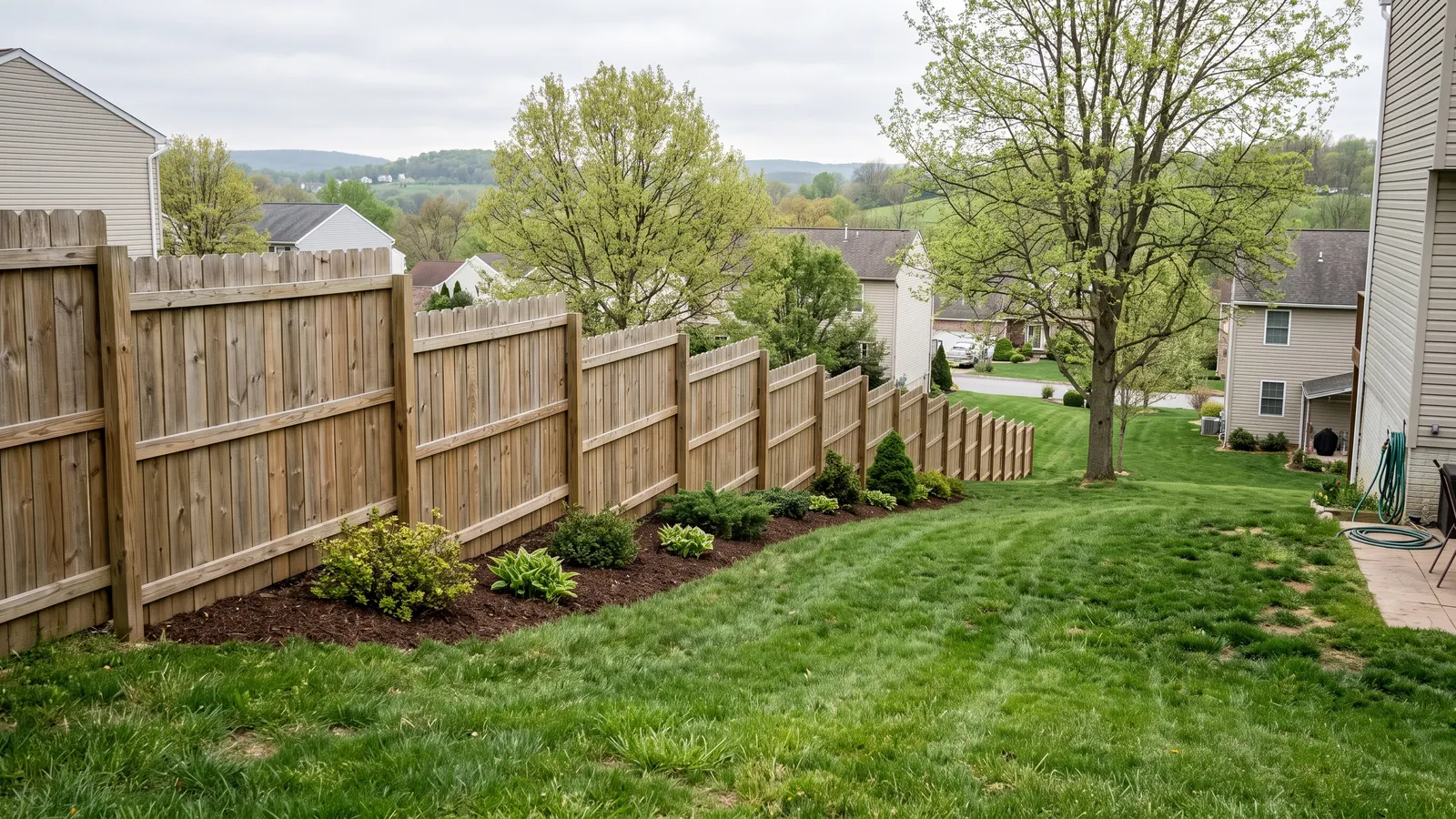
A stepped fence keeps every panel level and drops each one lower than the last, like a staircase. It works on almost any slope and with any style, including horizontal boards. The catch is the triangle of open space under each panel's downhill end. Small dogs fit through it, and it can fail a pool code. Fill the gaps with a low timber edge, rocks or dense shrubs.
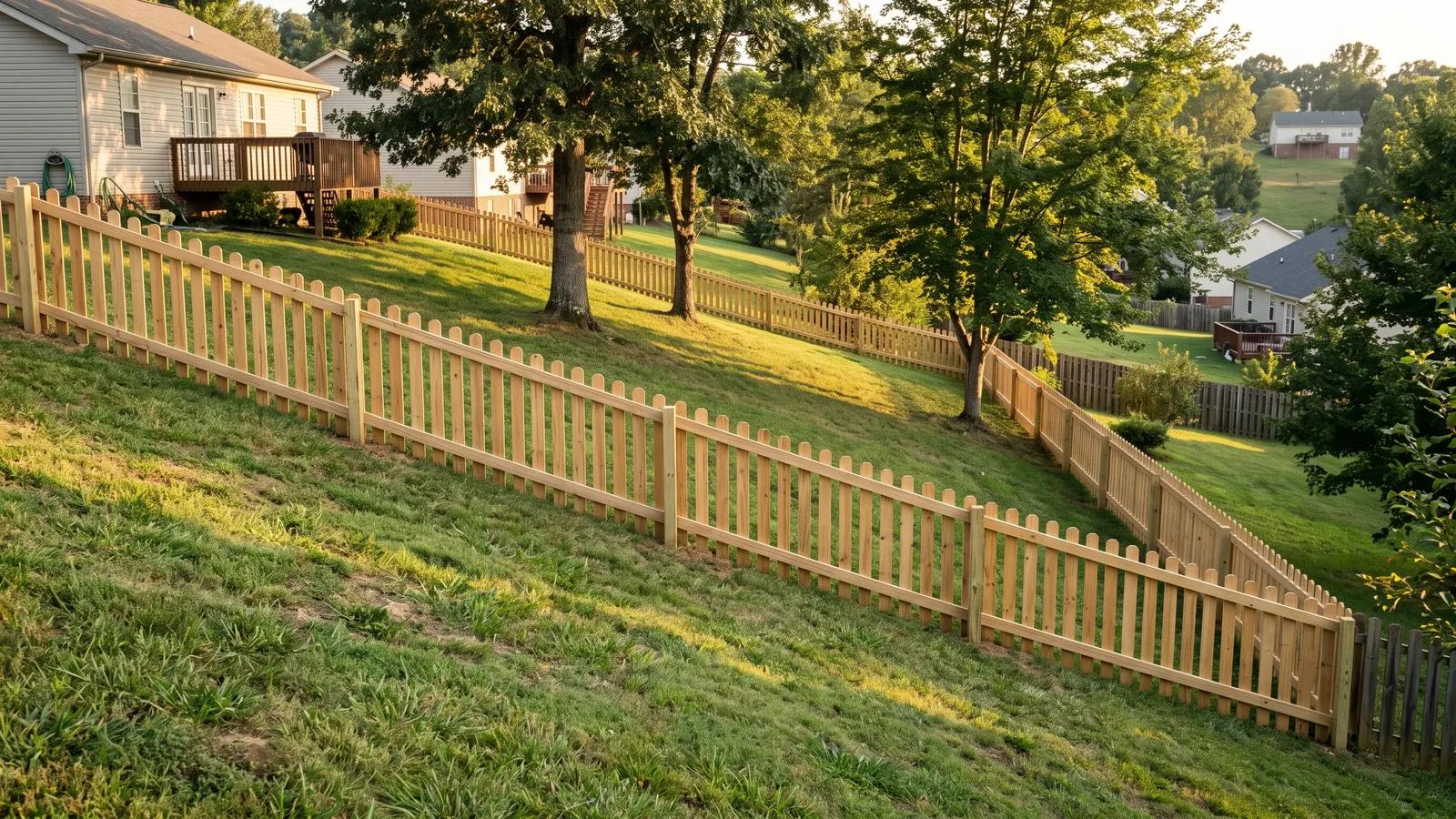
16. Rack the fence to follow the grade
A racked fence tilts its rails to match the slope, so the bottom hugs the ground the whole way down. You get a smooth line and no gaps for pets. Installers typically limit racking to slopes under about 15 degrees, and some styles, like lattice tops and horizontal board fences, can't be racked at all. Picket, aluminum and chain link rack easily, which makes them the usual picks for hillside yards.
17. Set the fence on a retaining wall
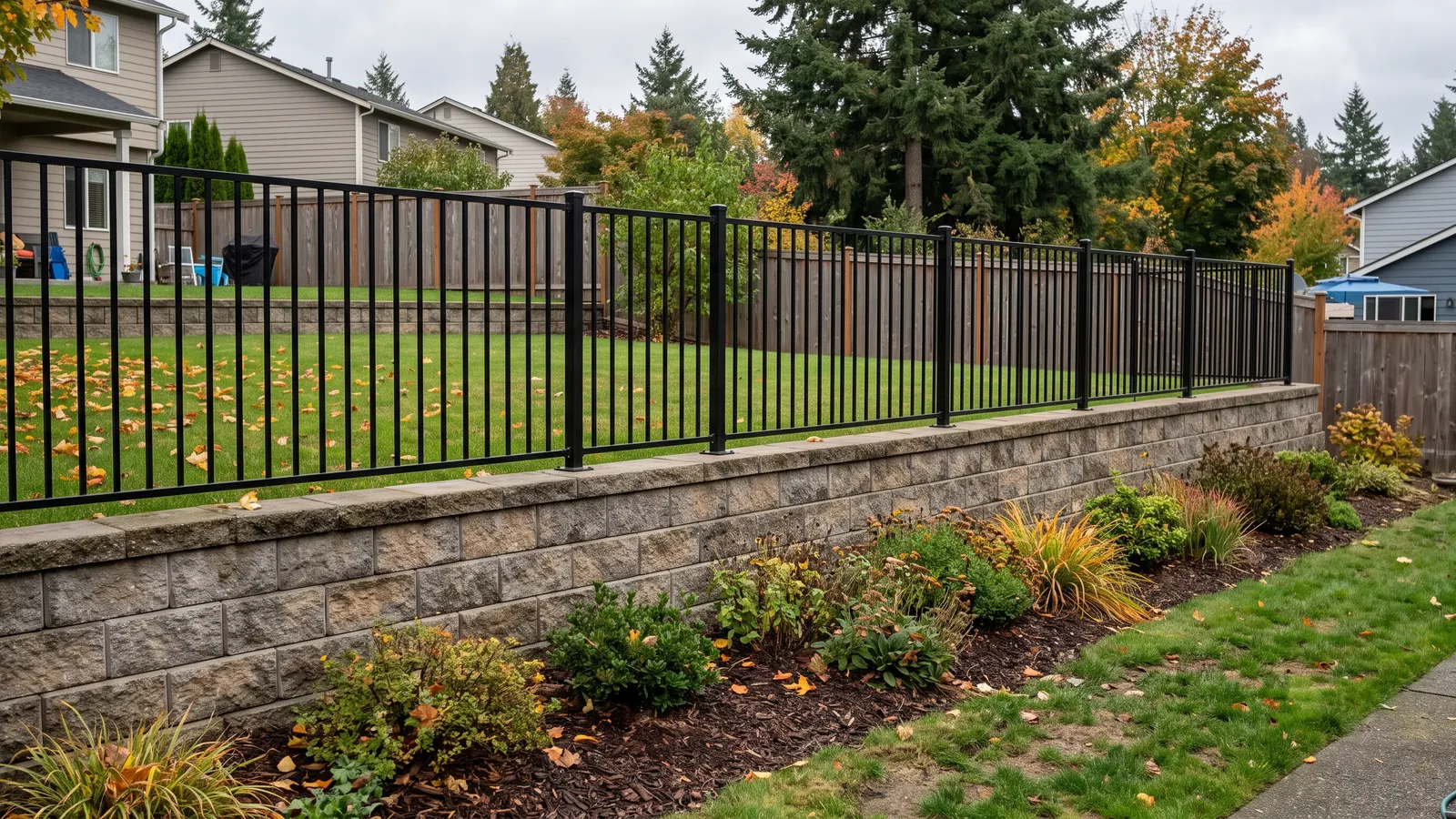
When a yard drops sharply, a retaining wall with a fence on top gives you a flat terrace and a safety rail in one job. Plan the fence before the wall goes up, so the builder can set post sleeves into the top course rather than drilling into it later. Walls holding back more than about 3 feet of soil often need a building permit (Fairfax County, Virginia sets the line at 3 feet). An open metal fence adds less wind load than a solid one.
Fences for small yards
18. Let the view through
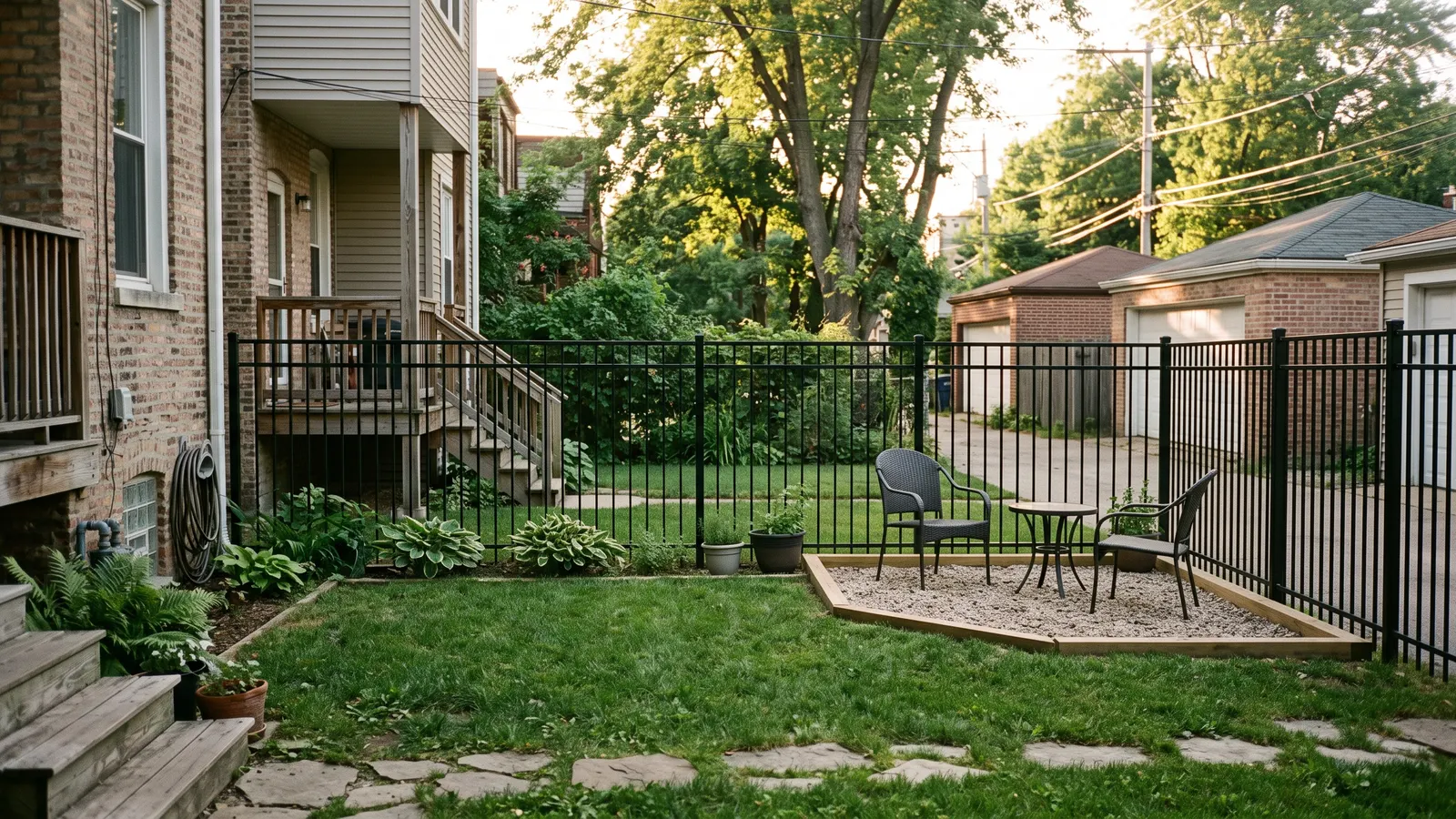
In a small yard, a solid 6-foot fence on three sides can feel like a box. Slim black steel bars mark the boundary but let your eye run past it into the neighbors' trees, which makes the space read larger. Steel fencing costs about $20 to $80 per linear foot installed. If you need privacy on one side only, use the open fence on the others and a solid panel just where the neighbor's window looks in.
19. Build a bench into the fence
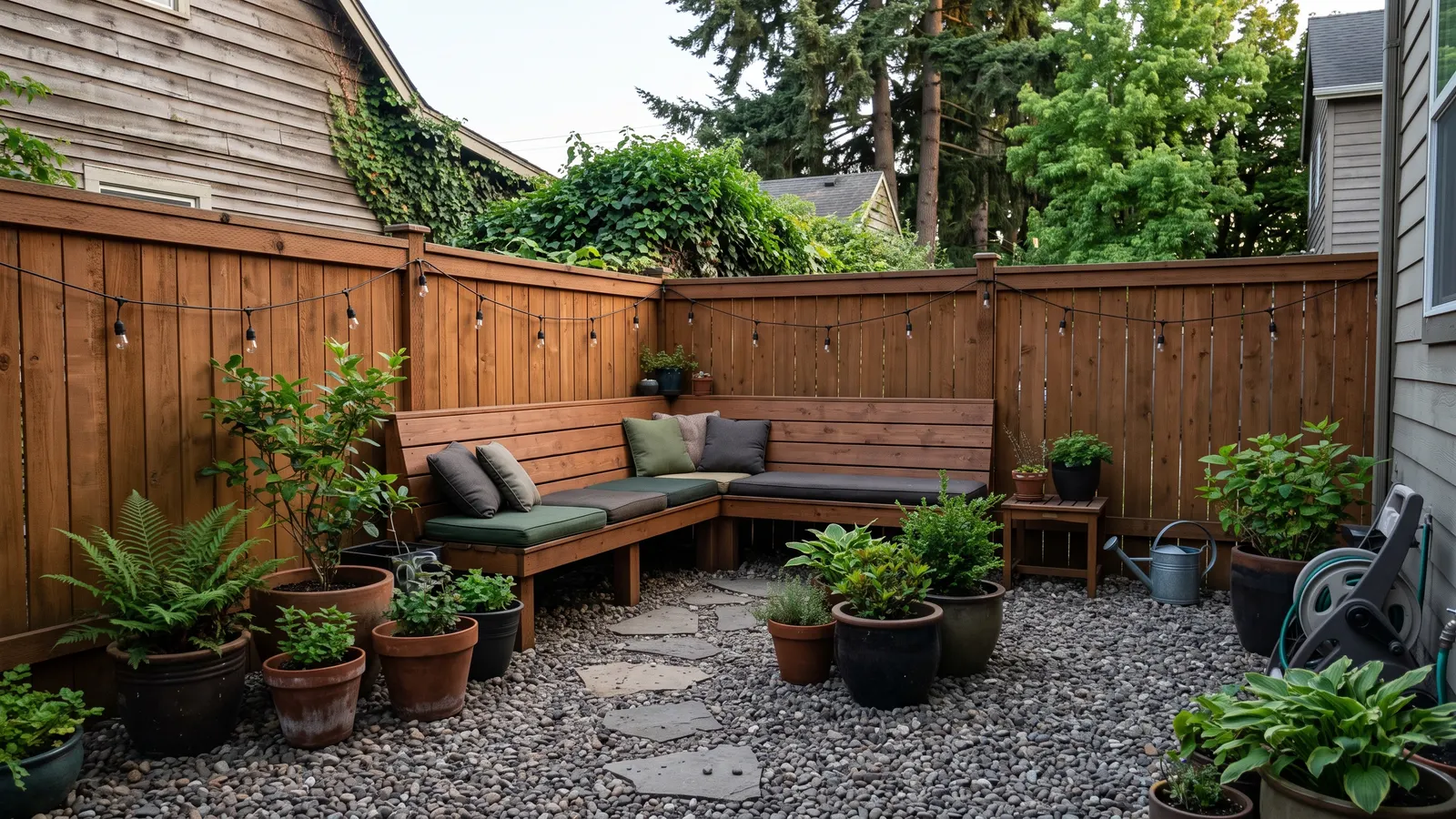
When there's no room for a sofa set, the fence can be the backrest. A built-in bench along one run gives seating for four without anything taking up floor space. Keep the seat about 18 inches high and 18 to 20 inches deep, and set its legs on their own footings so you're not hanging weight off the fence posts. Cedar or composite boards for the seat hold up best.
20. Grow up the fence, not out
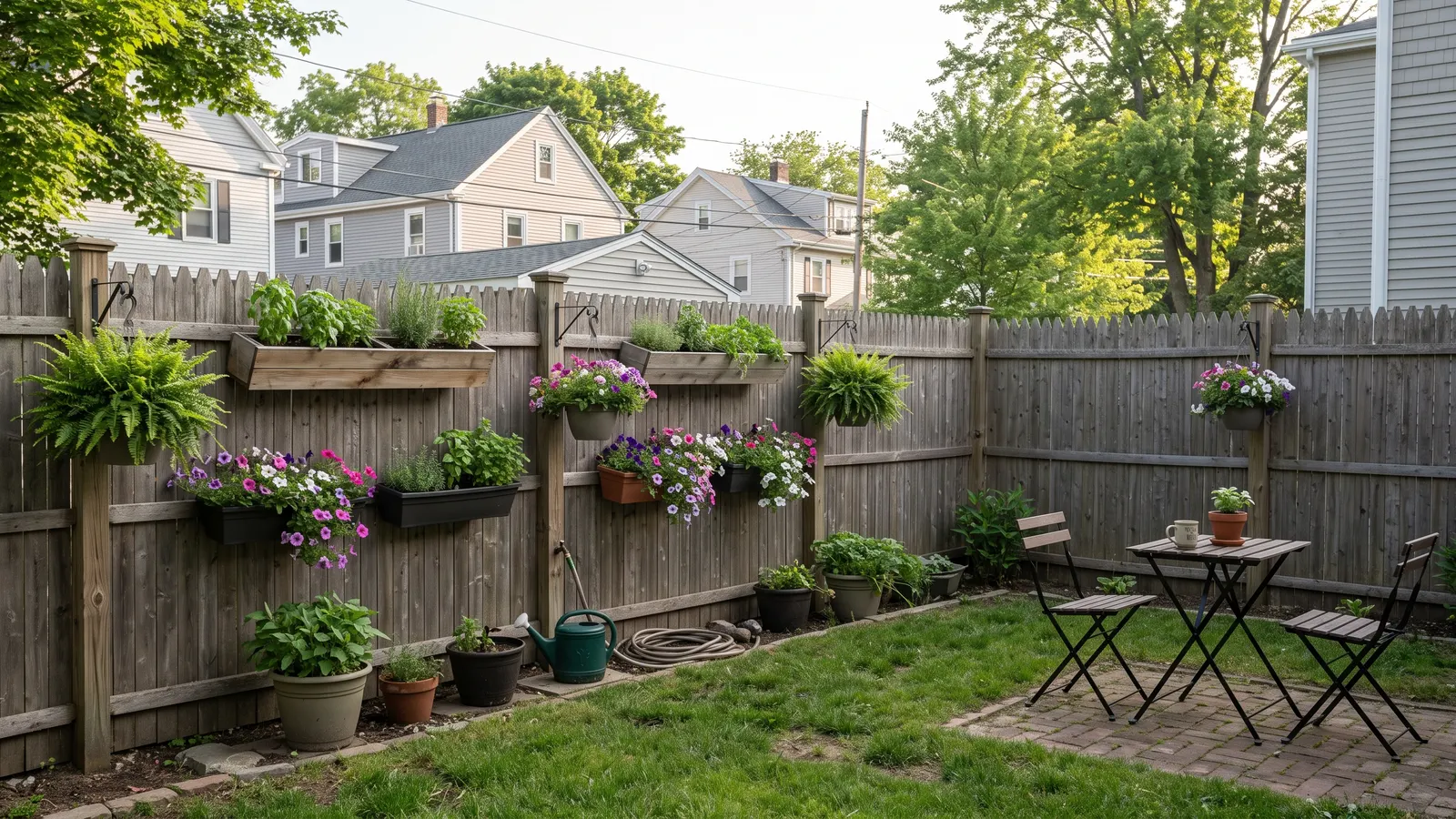
Fence-mounted planters turn the boundary into the garden when the yard has no room for beds. Herbs, strawberries and trailing annuals do well in shallow boxes. Hang them on a sunny run and screw the brackets into posts or rails, not the thin boards. Small boxes dry out fast in summer heat, so a drip line along the fence saves daily watering.
Mixing fence and planting
21. Espalier a fruit tree
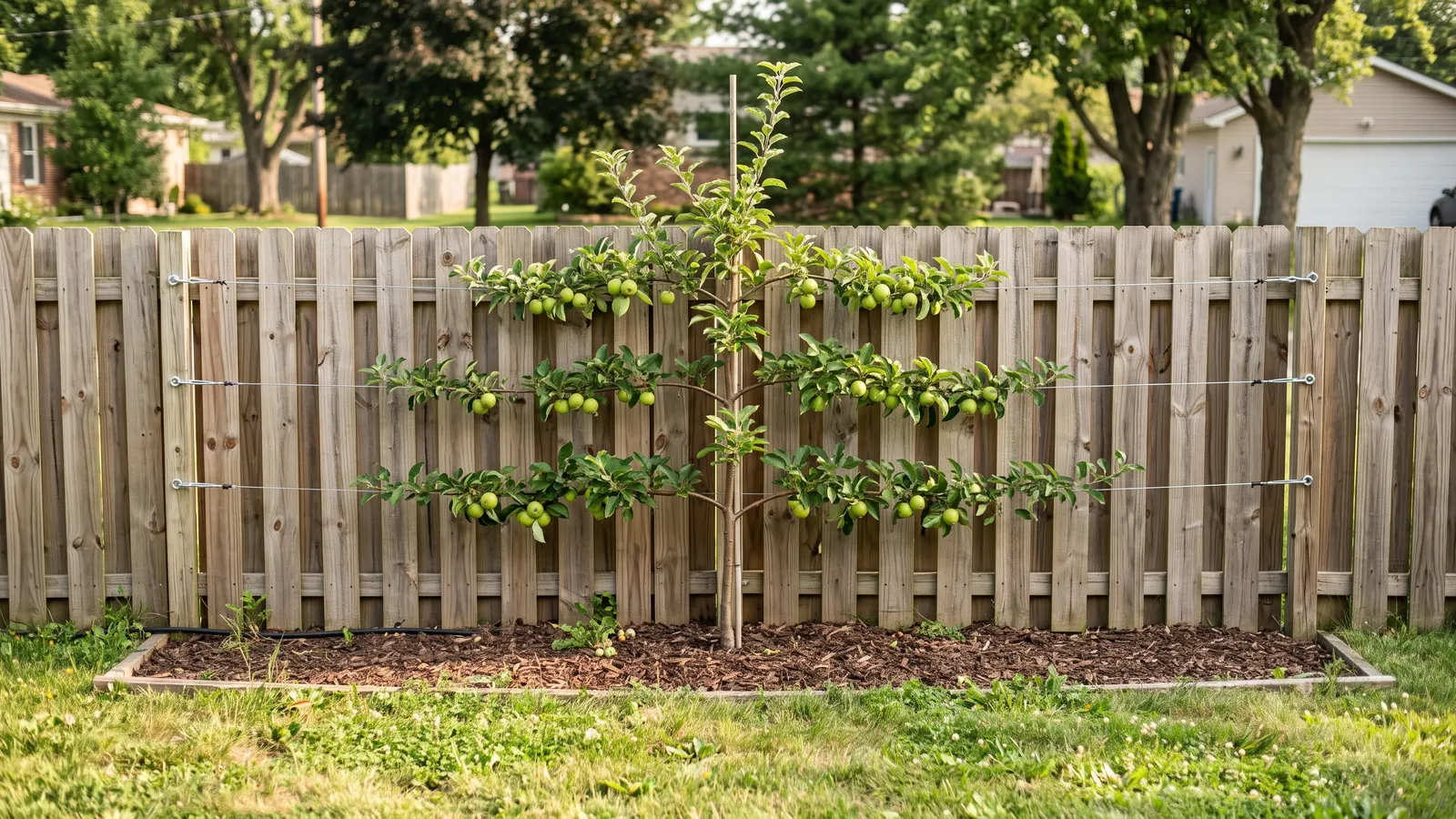
An espalier is a tree pruned flat against a support, and a sunny fence is a perfect one. Apples and pears on dwarf rootstock are the classic choice, trained along wires spaced about 18 inches apart. It takes three or four years of summer pruning to fill in, but you get fruit from a strip of ground only a foot deep. Pick a variety rated for your hardiness zone.
22. Train climbers on wires, not boards
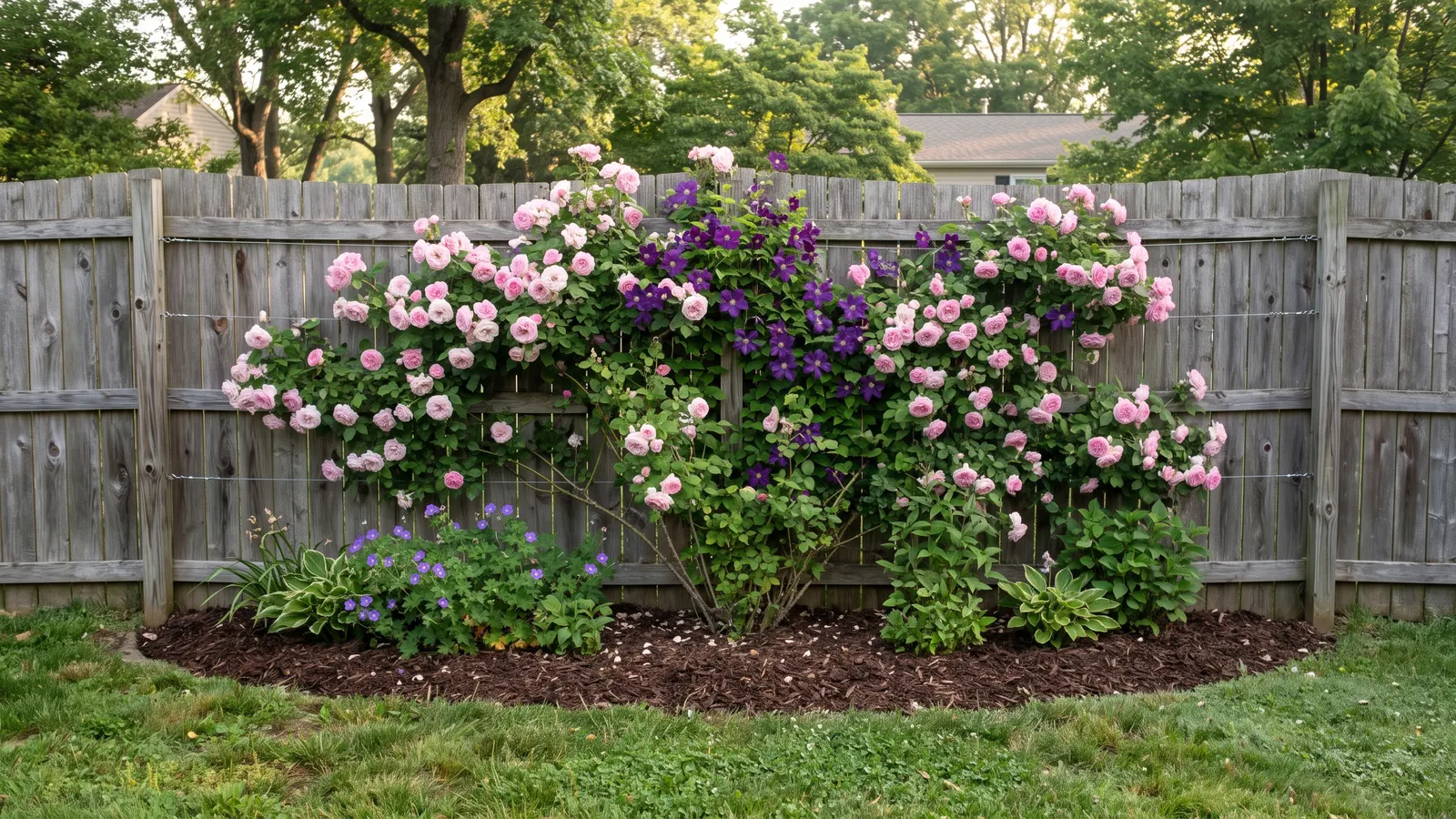
Climbing roses, clematis and honeysuckle soften a long fence in a single season. Run galvanized wires on standoff screws 2 to 3 inches off the boards, so air circulates and you can still reach the fence to restain it. Skip wisteria on a wood fence. It gets heavy and woody enough to pull boards loose within a few years. More ideas for the strip at the base are in our guide to simple fence line landscaping.
23. Layer a border in front of the fence

A deep border with tall plants at the back and low ones at the front makes a plain fence look like a backdrop instead of a wall. Native plants like switchgrass, serviceberry and coneflowers need little water once settled. Leave an 18- to 24-inch gravel path between the plants and the fence, so you can reach the boards for repairs and the wood dries out after rain.
How to choose the right fence for your yard
Start with the problem, then pick a style that solves it:
- Neighbors look in: ideas 1 to 5. If budget is the main limit, see our cheap privacy fence ideas, all priced per foot.
- A dog that digs or jumps: ideas 6 and 7 first, then 8 or 9 depending on lot size.
- A pool: ideas 11 to 14, and check local code before you buy panels.
- A sloped lot: step it (15) for any style, rack it (16) for gentle slopes and pets.
- A small yard: ideas 18 to 20 make the fence work as seating or garden space.
- Deer or rabbits in the vegetable beds: that calls for a different fence; our garden fence ideas cover height, mesh and burial depth by pest.
Before any digging, call 811 to get buried utility lines marked, and confirm your property line. A survey costs $200 to $1,200 and settles where the fence can legally go.
Backyard fence cost guide
Prices are installed costs per linear foot from HomeGuide's 2026 data, for typical backyard heights. Lifespans assume normal maintenance.
| Material | Installed cost per linear foot | Typical lifespan |
|---|---|---|
| Chain link | $10 to $40 | 15 to 20 years |
| Split rail | $15 to $35 | Depends on wood |
| Pressure-treated pine | $20 to $45 | 10 to 15 years |
| Cedar privacy | $25 to $60 | 15 to 25+ years |
| Vinyl | $30 to $60 | 20 to 30 years |
| Aluminum | $25 to $75 | 30 to 50 years |
| Composite privacy | $55 to $85 | 25 to 30+ years |
| Wrought iron | $50 to $85 | Longest of all |
A typical 200-foot backyard fence in wood or vinyl comes to $4,000 to $12,000 installed. Add $40 to $150 for a permit where one is needed, and $10 to $20 per foot to haul away an old fence. For your own numbers, our fence cost calculator works it out by material and height.
Price only tells you part of the story. Here is one ordinary backyard with a tired old fence, then three of the materials above on the same property line. All four images are AI concepts.
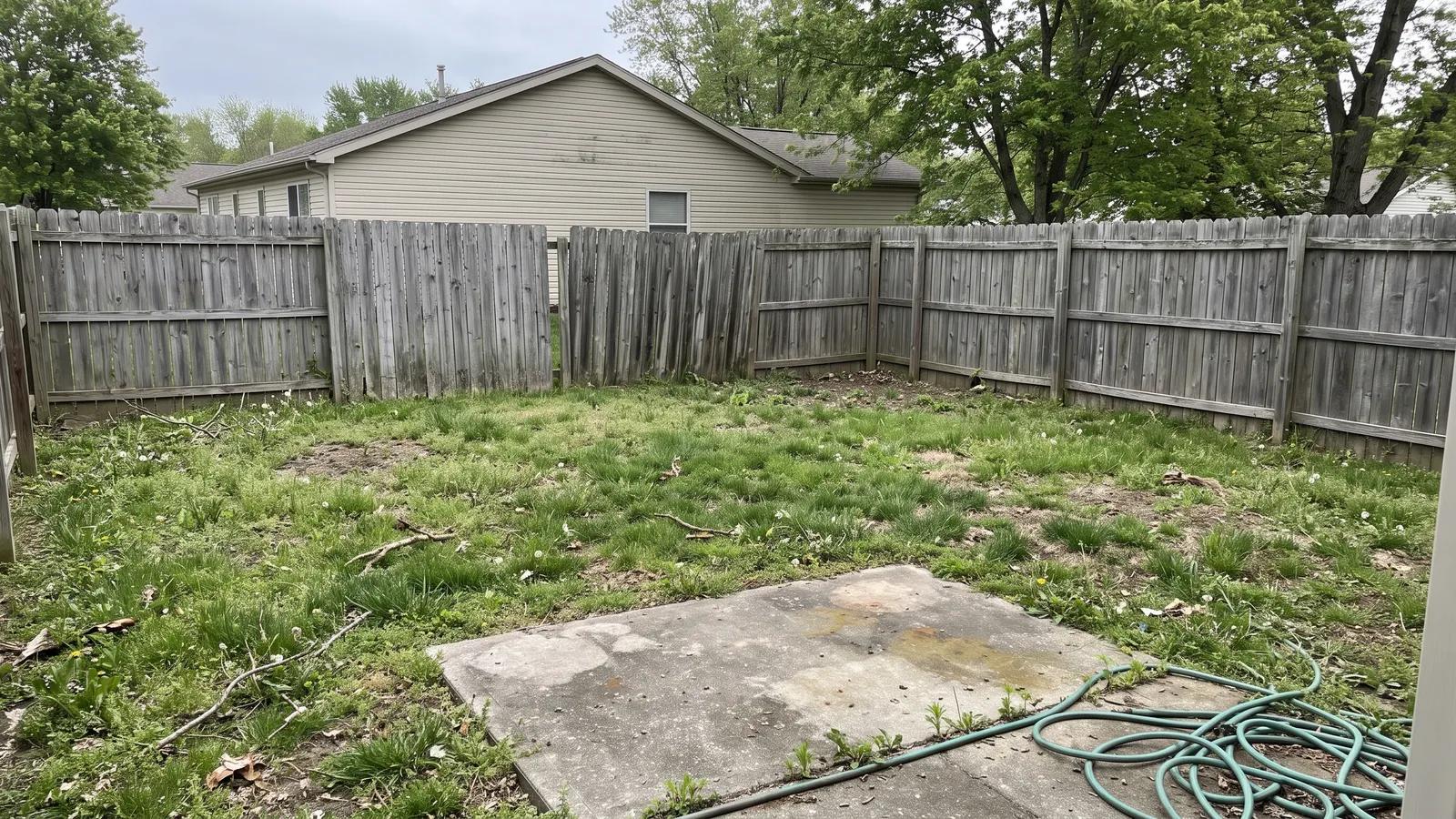
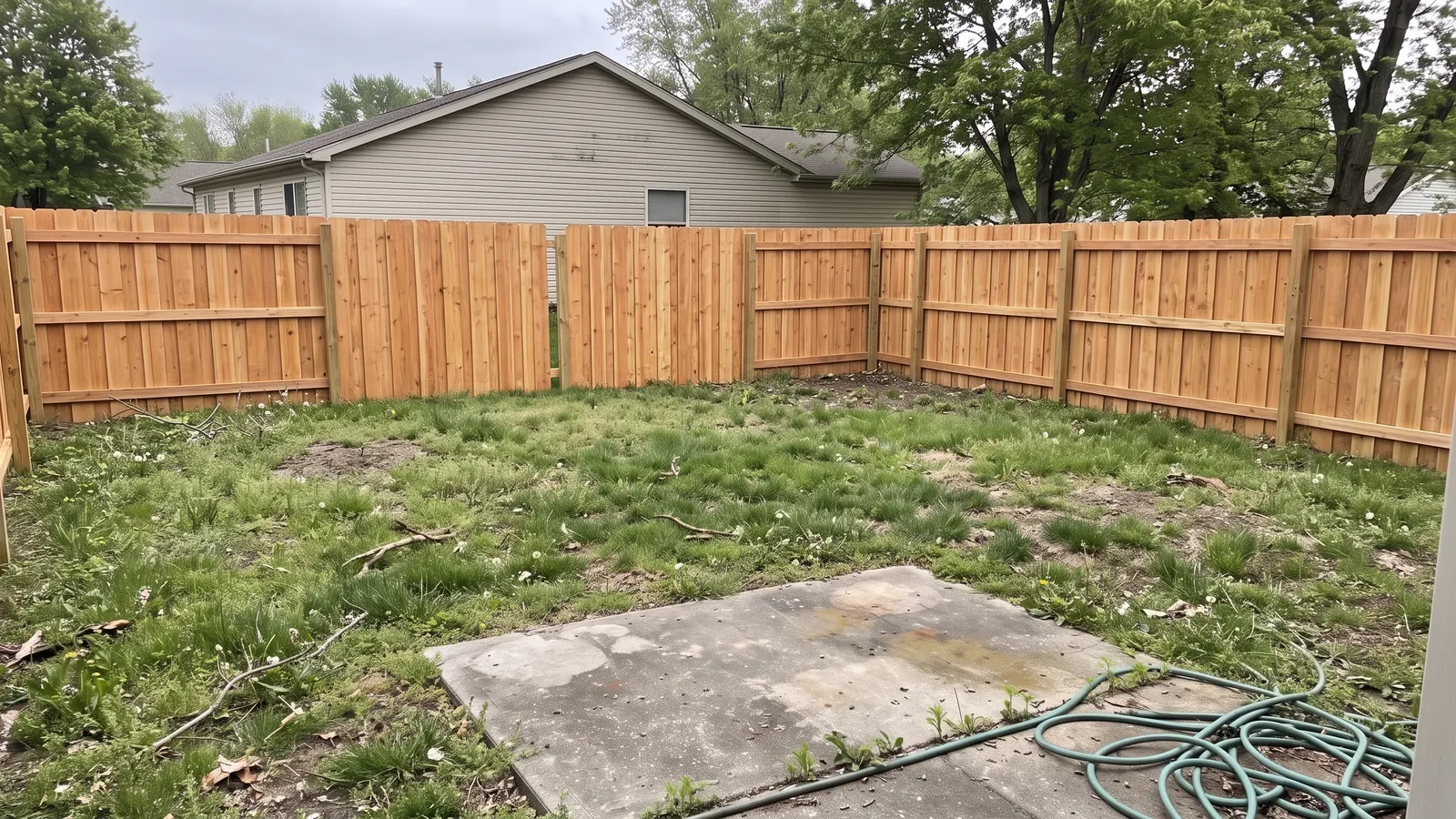
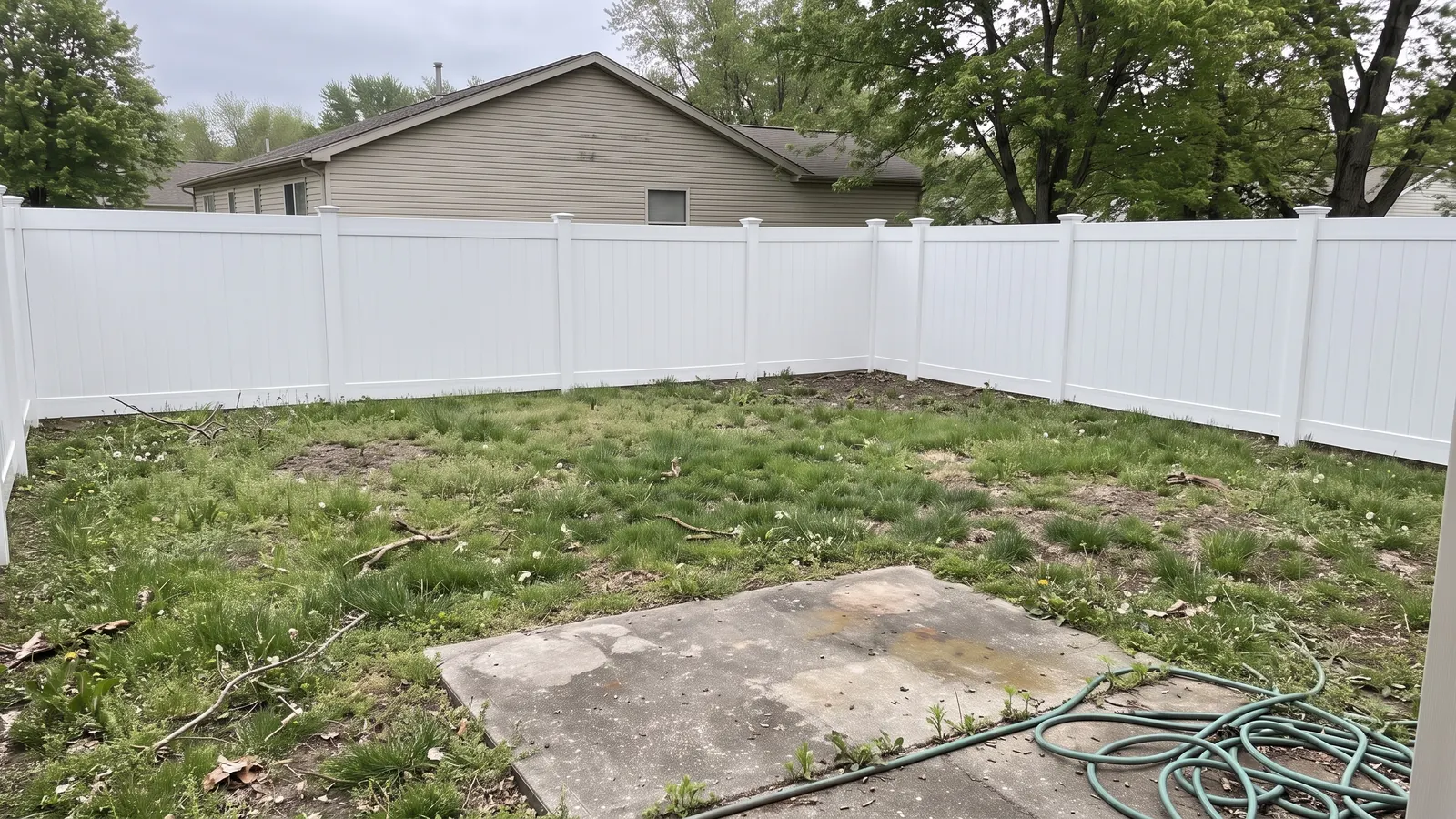
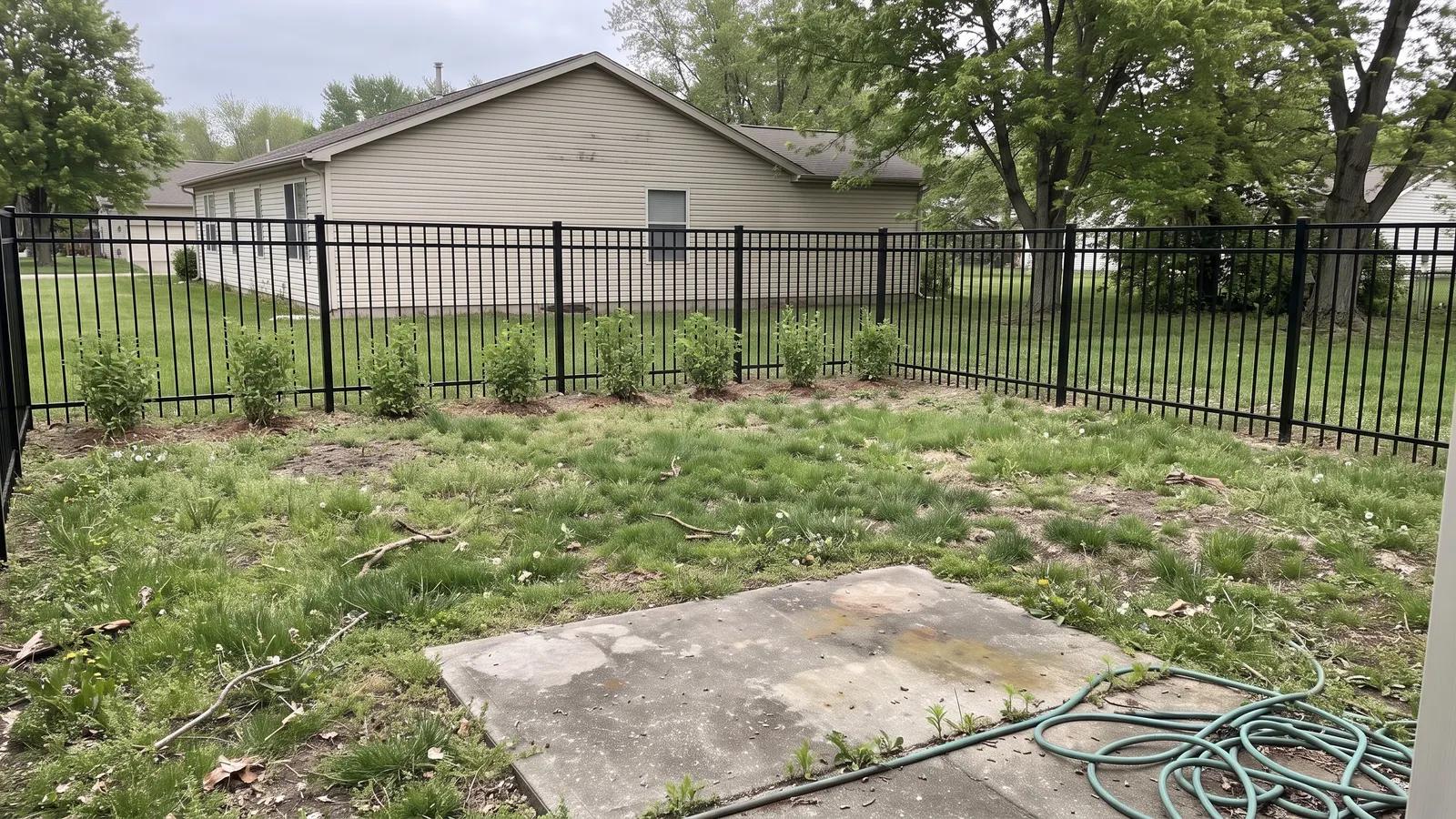
The cedar version warms the yard up and costs the least of the three. The white vinyl reads cleaner and brighter but loses the wood texture. The black aluminum costs the most and gives up privacy, but the yard feels twice as wide. Seeing them side by side on your own property is what AI fence design is for: upload a photo and compare before you collect quotes.
FAQ
What is the best fence for a backyard? It depends on the job. For privacy, a 6-foot board-on-board cedar or vinyl fence. For a pool, black aluminum that meets the 48-inch barrier rule. For dogs, a solid 6-foot fence with a dig guard at the base. If you want low maintenance above everything else, vinyl or composite.
What fence lasts the longest? Wrought iron lasts the longest of the common fence materials, according to HomeGuide, and aluminum follows at 30 to 50 years. Among privacy fences, composite (25 to 30+ years) and vinyl (20 to 30 years) beat most wood. Cedar and redwood are the longest-lasting woods, and basic pine is the shortest.
How tall can a backyard fence be? Rules vary by town, but a common pattern is up to 6 or 7 feet in back and side yards and 3 to 4 feet in front yards. Fairfax County, Virginia, for example, caps rear and side fences at 7 feet. Check your local zoning code and any HOA rules before you order materials.
Do I need a permit to build a backyard fence? Often, yes, and pool barriers almost always need one. Permits typically cost $40 to $150. Some counties only require permits for tall fences or pool barriers, so call your building department first.
What is the cheapest backyard fence? Chain link is the cheapest permanent fence at about $10 to $40 per linear foot installed. If you need privacy too, chain link with slats or a DIY pine fence are the usual budget picks.
What fence is best for a sloped backyard? For gentle slopes under about 15 degrees, a racked picket, aluminum or chain link fence follows the ground with no gaps. For steeper slopes or styles that can't be racked, a stepped fence works, as long as you fill the gaps under each panel.
Sources: HomeGuide: fence installation cost, HomeGuide: wood fence cost, HomeGuide: vinyl vs. wood fence, HomeGuide: aluminum fence cost, HomeGuide: chain-link vs. wood fence, HomeGuide: wrought iron fence cost, HomeGuide: pool fence cost, HomeGuide: glass pool fence cost, CPSC: Safety Barrier Guidelines for Residential Pools, AKC: what type of dog fence should I have, Frederick Fence: stepped vs. racked fences, Fairfax County: residential fences and walls, Call 811, all checked October 20, 2026