21 Cheap Privacy Fence Ideas That Still Look Good
Privacy fence ideas from under $2 a foot to a DIY pine fence, each priced from real October 2026 store listings and shown built on an ordinary suburban yard.
The neighbor's new deck looks straight into your yard, or the house behind you just put in a second-story window, and suddenly you're eating dinner on display. A contractor quote for a full wood fence makes it worse: HomeGuide puts a 6-foot privacy fence at $25 to $60 per linear foot installed, which is $5,000 or more for a typical backyard. These cheap privacy fence ideas start well below that, at under $2 a foot for screen fabric on a fence you already own, and climb to a solid pine fence you build yourself.
Every idea below comes with a real material price per foot, checked at Home Depot, Lowe's and farm-supply stores in October 2026, plus an honest note on how much privacy it gives on day one. Some screens block everything right away. Others only work once the plants fill in.
The images are AI design concepts, each one showing the idea built on an ordinary suburban yard, so you can judge the finished look before buying anything.
Cheapest options ranked by cost per foot
Prices are materials only for roughly 6 feet of height, unless noted. Installed prices come from HomeGuide's 2026 cost data.
| Option | Materials per linear foot | Privacy on day one |
|---|---|---|
| Privacy fabric on an existing chain link | about $1.40 to $2.10 | Full |
| Cattle panels with vines | about $2 to $3, plus T-posts | Low until vines grow |
| Reed fencing on an existing fence | about $3 | Full |
| Arborvitae hedge (small plants) | about $3 to $4 | None for 2 to 3 years |
| Privacy slats in chain link | about $6 | Mostly full |
| Corrugated metal panels | about $11, plus the frame | Full |
| Pine board fence (DIY) | $10 to $30 | Full |
| Bamboo rolls | $12 to $34 | Full |
| Pine fence, installed | $20 to $45 | Full |
The pattern is simple. The cheapest options either reuse a fence you already have or trade time for money, as with plants and vines. If you need privacy this summer and own nothing on the property line, a DIY pine or corrugated metal fence is where the real budget floor sits. If budget isn't the main limit, our backyard fence ideas are sorted by the problem each fence solves.
Wood ideas
1. Build a plain dog-ear pine fence
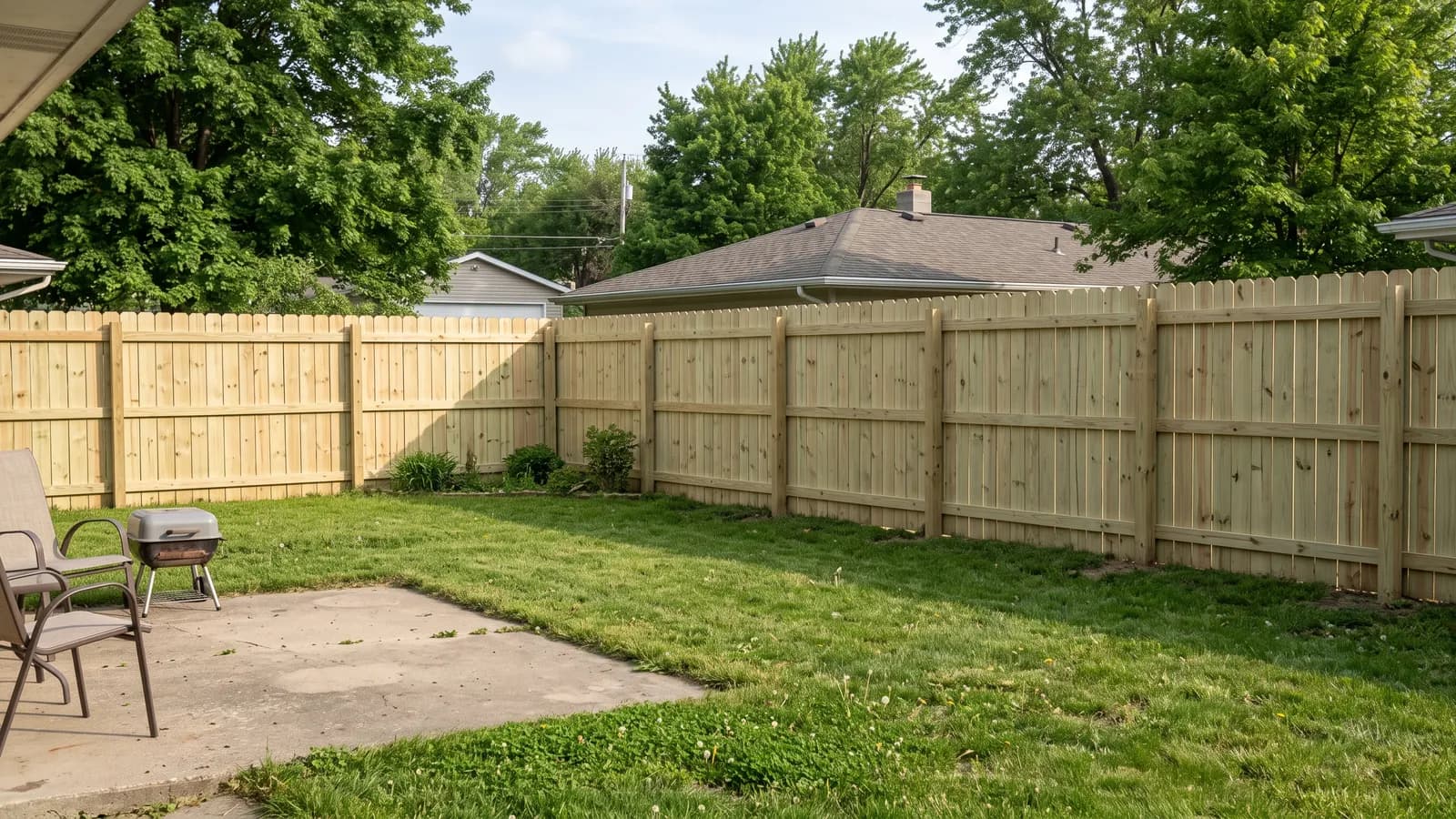
The standard stockade fence is still the cheapest solid wood option for a reason. Pressure-treated pine pickets nailed tight to two or three rails give full privacy at 6 feet, and HomeGuide puts low-grade pine at $20 to $45 per linear foot installed. Build it yourself and you pay only for materials, roughly $10 to $30 a foot. Expect basic pine to last 5 to 10 years, longer if you seal it every couple of years.
2. Run the boards horizontally
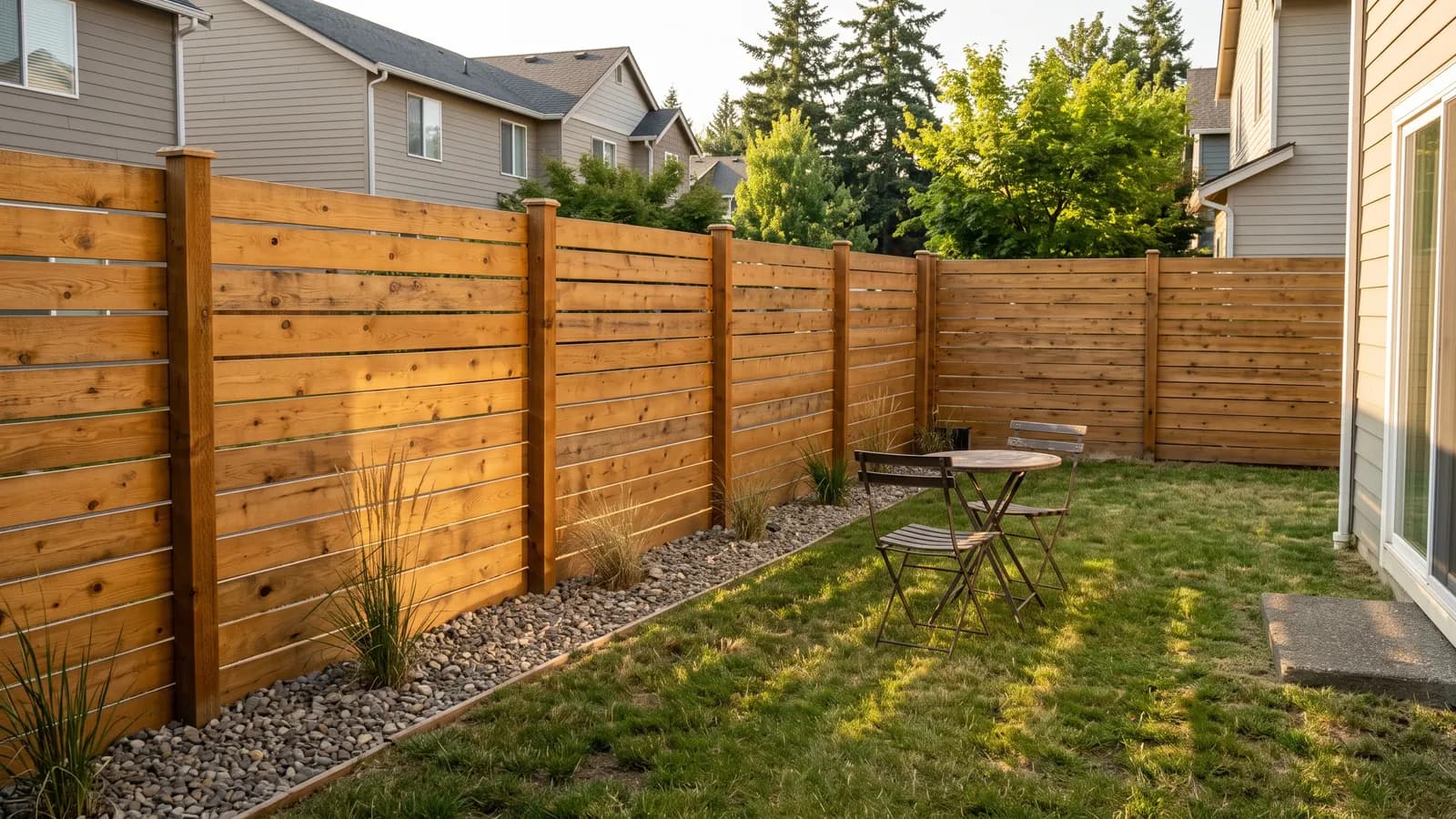
Turning cheap boards sideways makes a builder-grade fence look custom. You use the same pine, screwed to the face of 4x4 posts set no more than 6 feet apart so the boards don't sag. Half-inch gaps keep the modern look while still blocking most views. A warm stain does the rest. We collected more layouts and spacing options in our horizontal fence ideas gallery.
3. Stand up reclaimed pallets
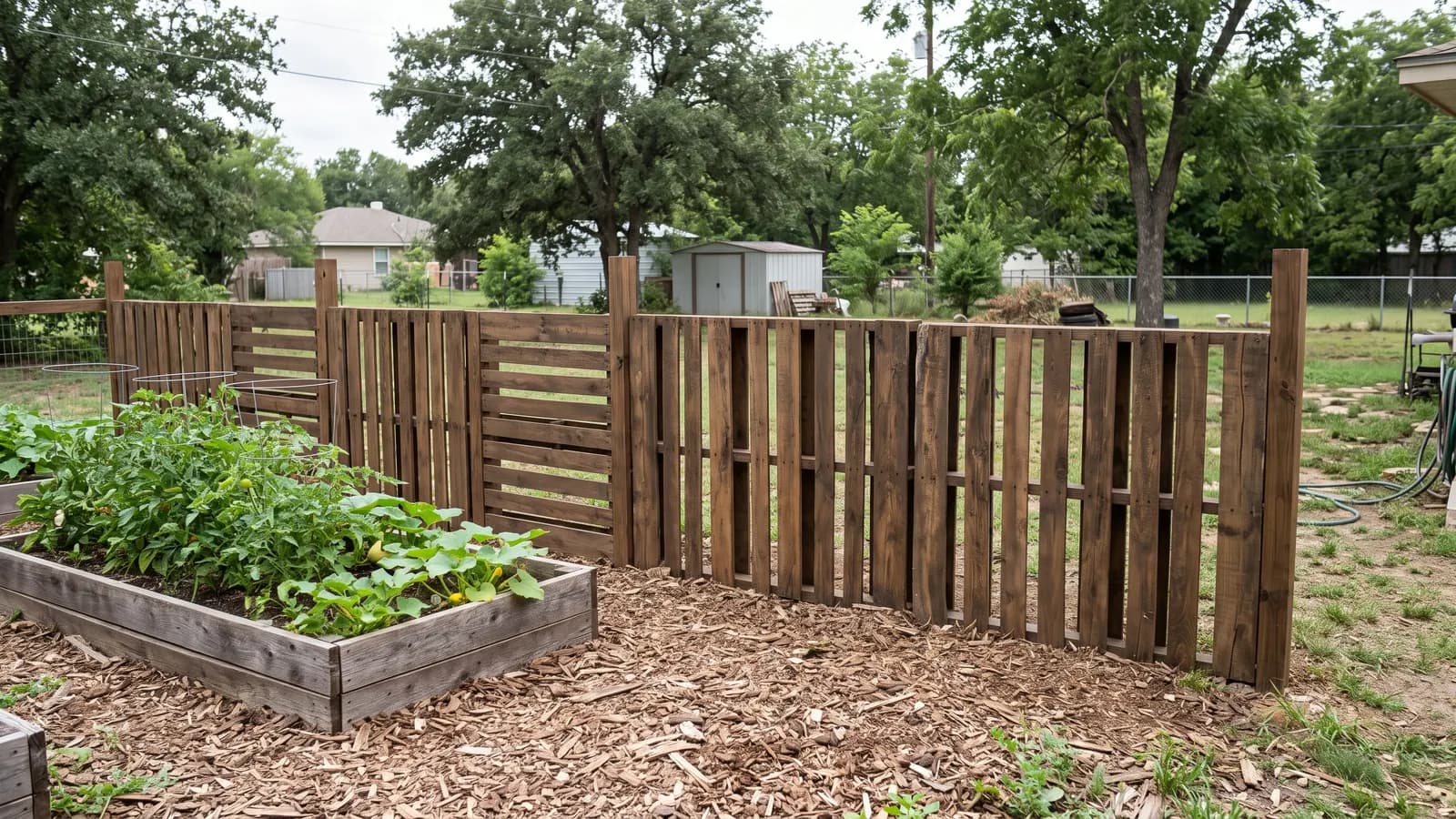
Pallets are the classic near-free fence. Local stores and warehouses often give them away, though many are damaged, so plan on buying a few replacement boards. Set real posts in concrete every two pallets, since pallets alone will lean. Check the stamp: HT means heat-treated, while MB means it was fumigated with methyl bromide, and those are best left out of the yard. A uniform dark stain hides the mismatched wood.
4. Hang lattice panels between posts
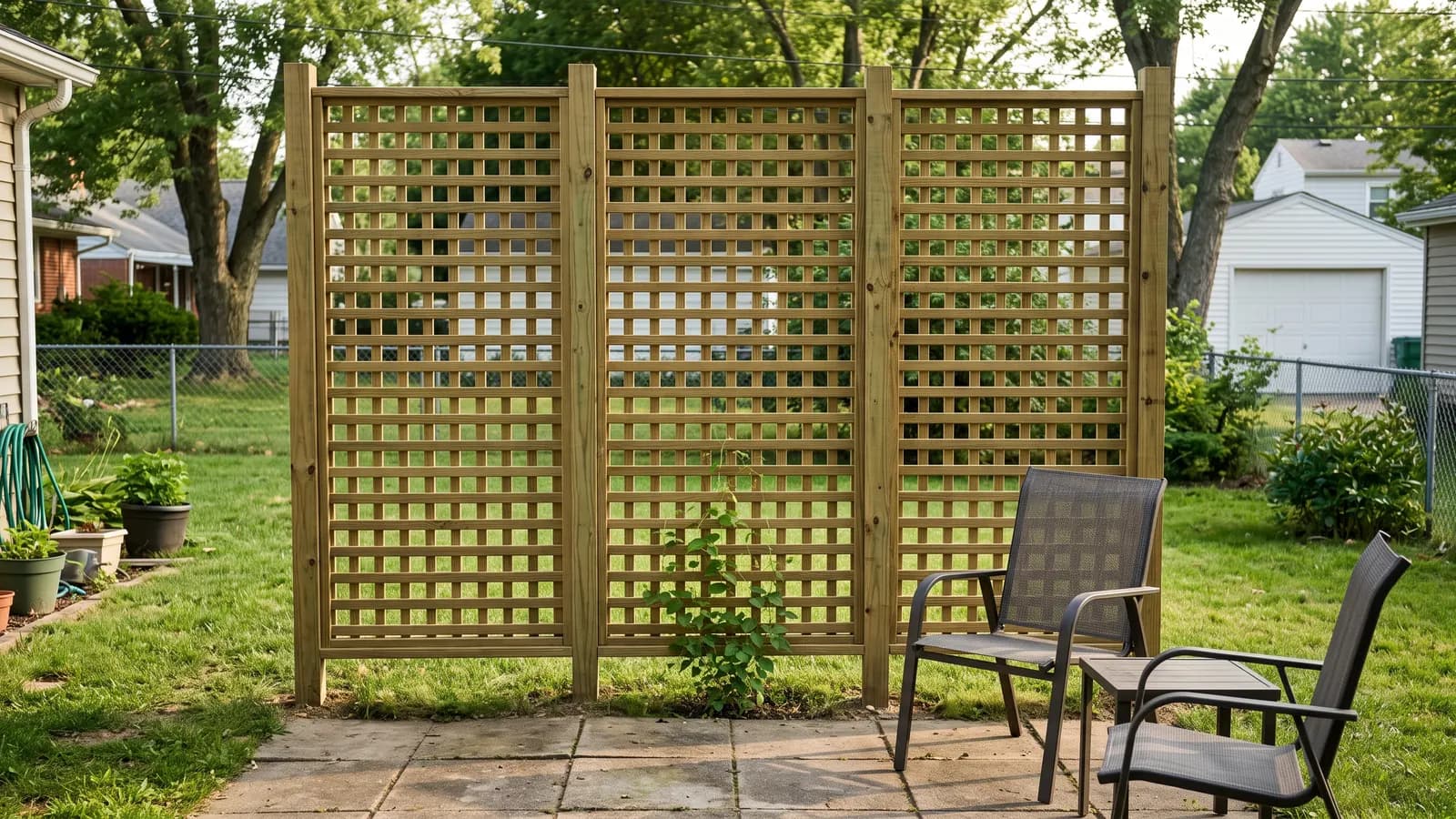
A 4 x 8 foot lattice panel costs about $28 to $45 at Home Depot, which works out to roughly $4 to $11 a foot depending on whether you run it long or stand it tall. Small-opening lattice blocks more than diamond lattice, but neither is solid. Plant a clematis or climbing rose at the base and it fills the holes within two seasons. Frame each panel with 1x4 trim so the cut edges don't splinter.
5. Screen only the sightline
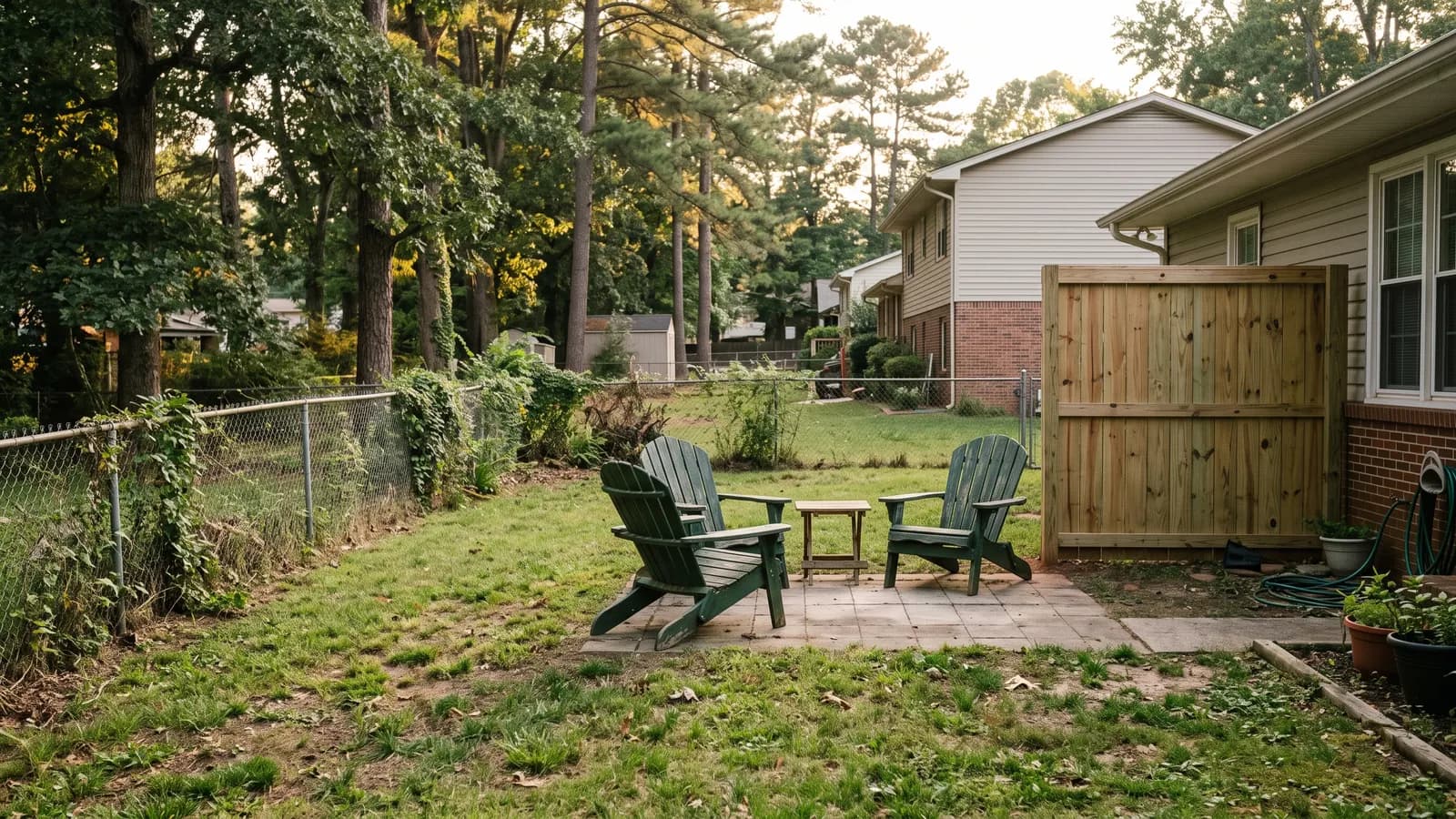
You probably don't need 150 feet of privacy. Sit where you actually sit, look for the window or deck that bothers you, and build two or three panels just there. An 8 to 16 foot run of solid wood screen costs a fraction of a full perimeter, and the rest of the property line can stay as it is. In some towns a short freestanding screen falls outside the fence rules entirely, so ask your building department before you build.
6. Stain cheap pine black
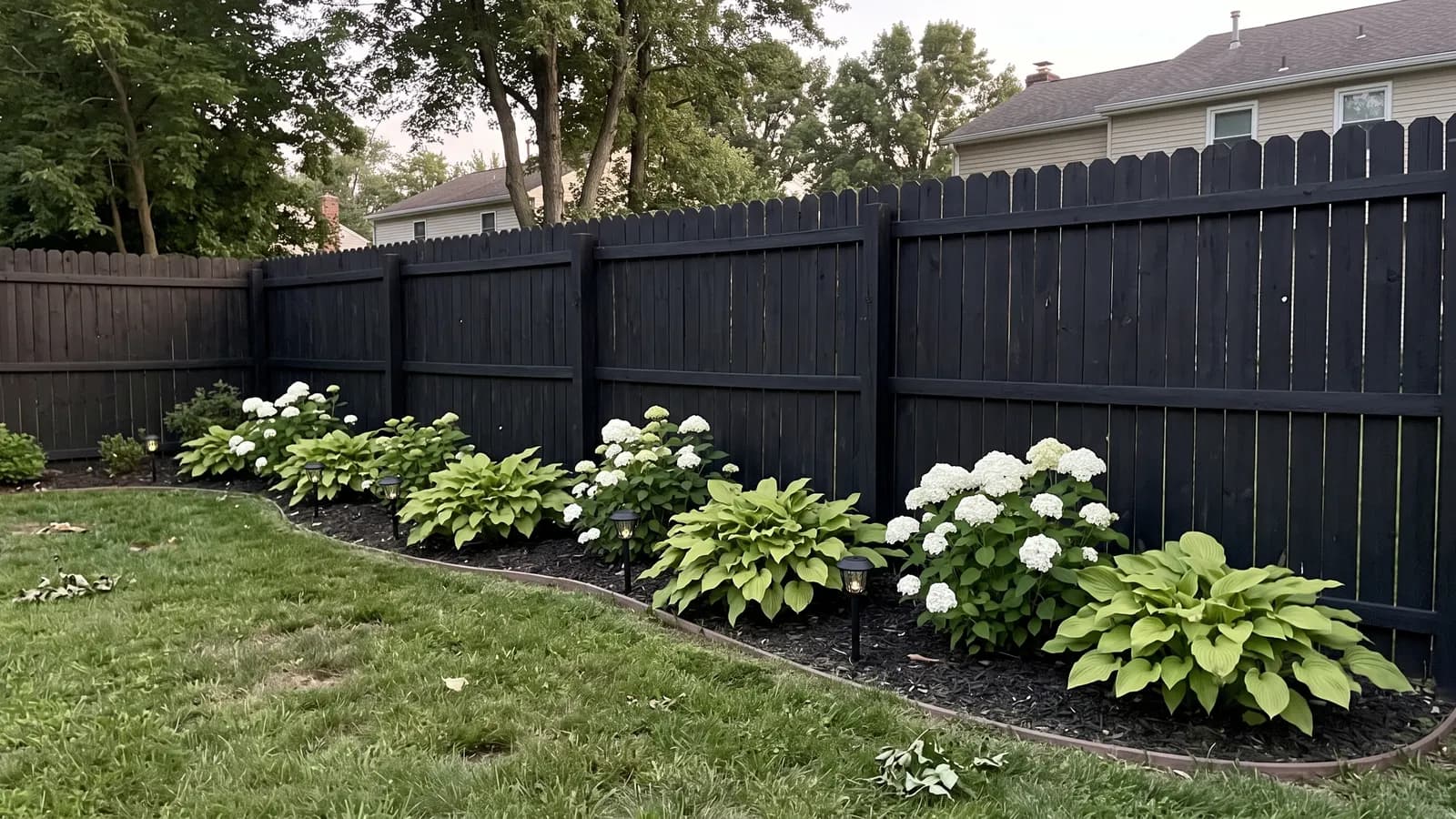
The cheapest pickets look expensive once they're dark. A solid black or charcoal stain hides knots, color variation and mismatched boards, and green foliage pops against it. Staining adds $2 to $14 a foot if you hire it out (HomeGuide), far less if you roll it on yourself. Use a solid-color exterior stain rather than paint, since paint on rough pine peels within a few years.
Metal and wire ideas
7. Grow vines on cattle panels
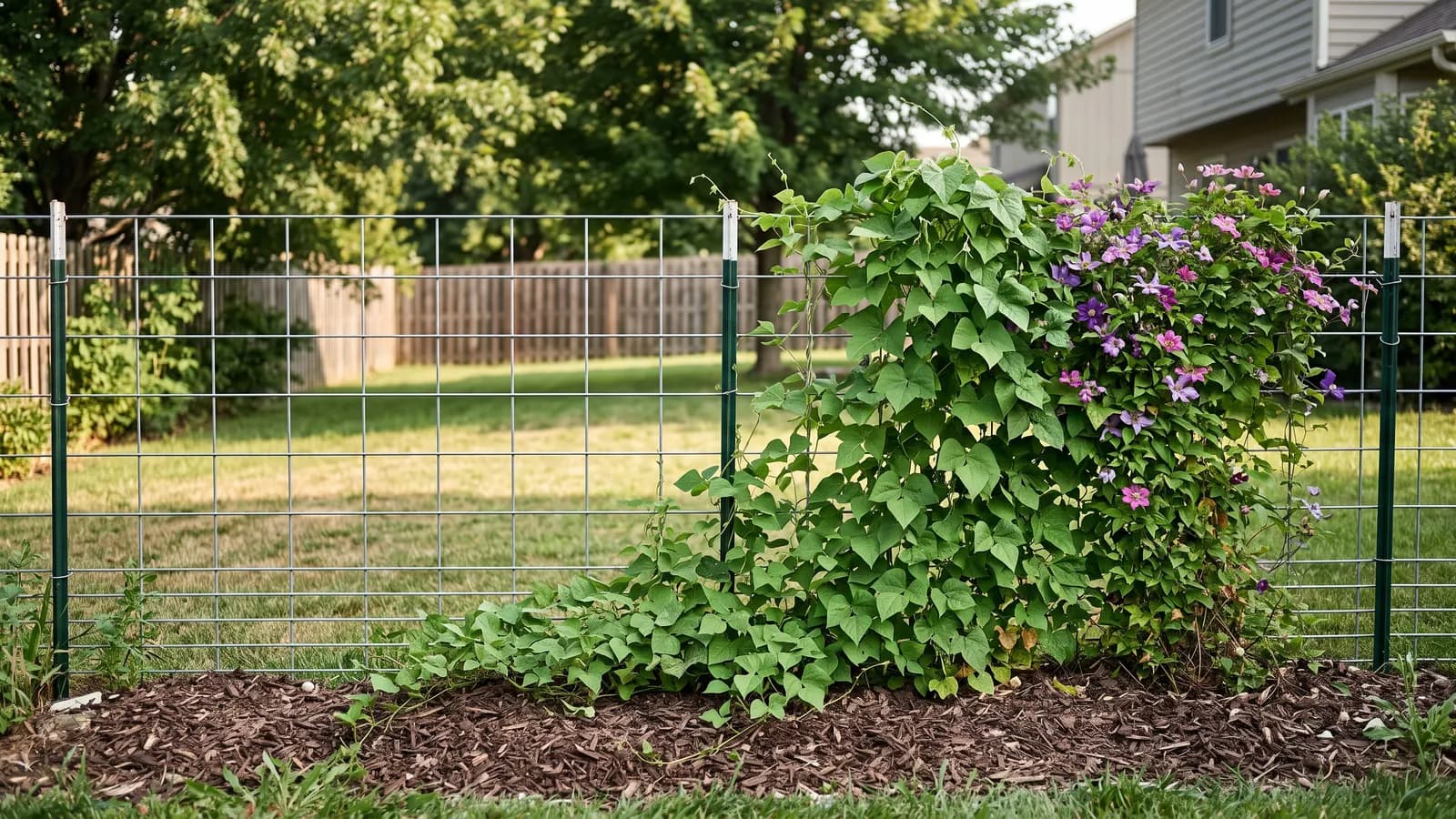
A 16-foot cattle panel costs about $27 to $43 at farm-supply stores, around $2 to $3 a foot, and it stands on cheap metal T-posts with no concrete. The catch: on its own it gives zero privacy. The privacy comes from what you grow on it. Annual pole beans cover it in one summer, while perennial vines like clematis or honeysuckle take two or three years. Panels are 50 inches tall, so stack or raise them if you need more height.
8. Frame hog wire in wood
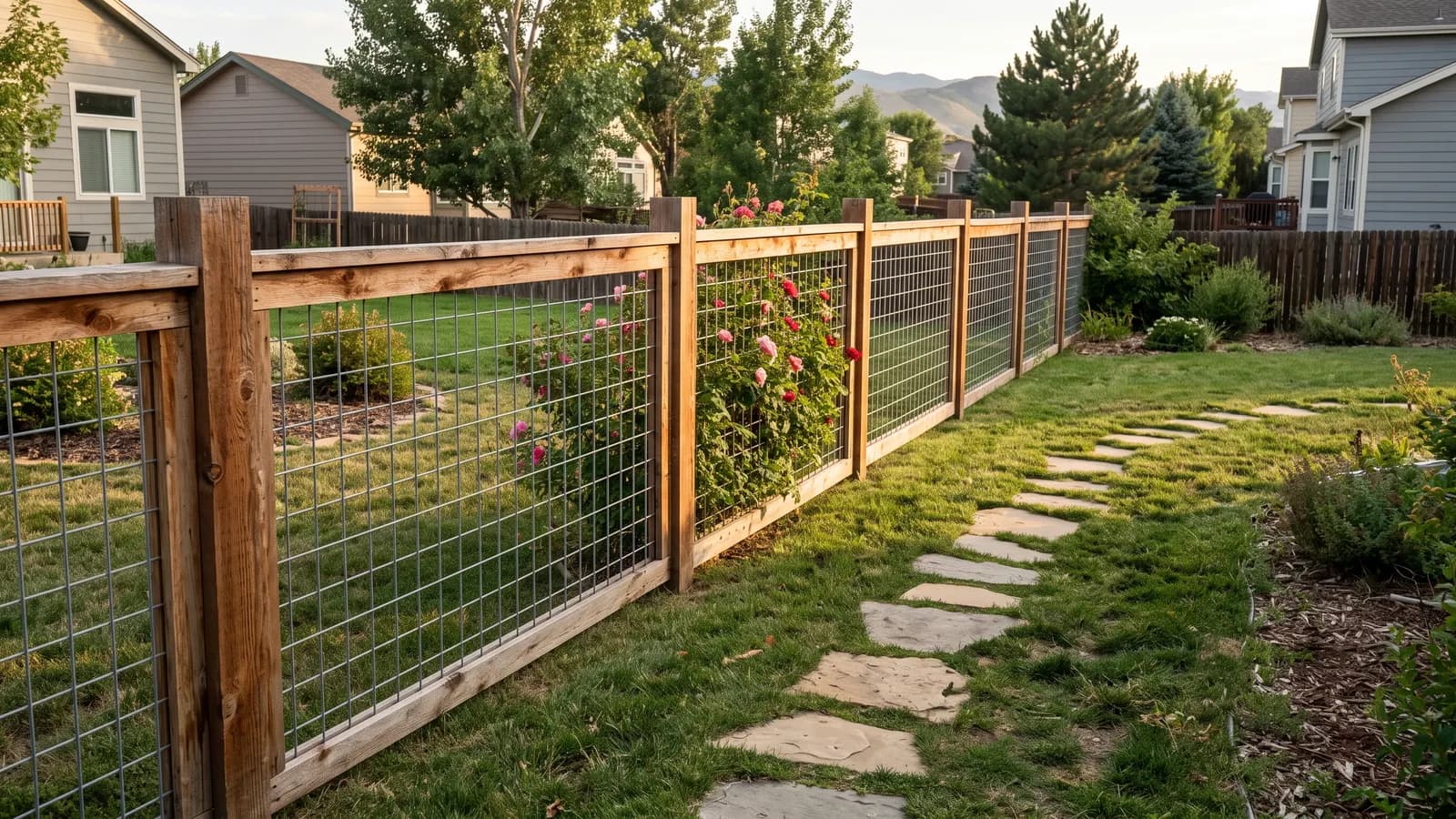
Hog wire panels (34 inches by 16 feet) run around $30, about $2 a foot, and look far more finished inside simple wood frames. The lumber is most of the cost here. Like cattle panels, wire gives you a boundary, not privacy, until roses, jasmine or another climber covers it. Pick a climber rated for your hardiness zone so you're not replanting every spring.
9. Use corrugated metal panels
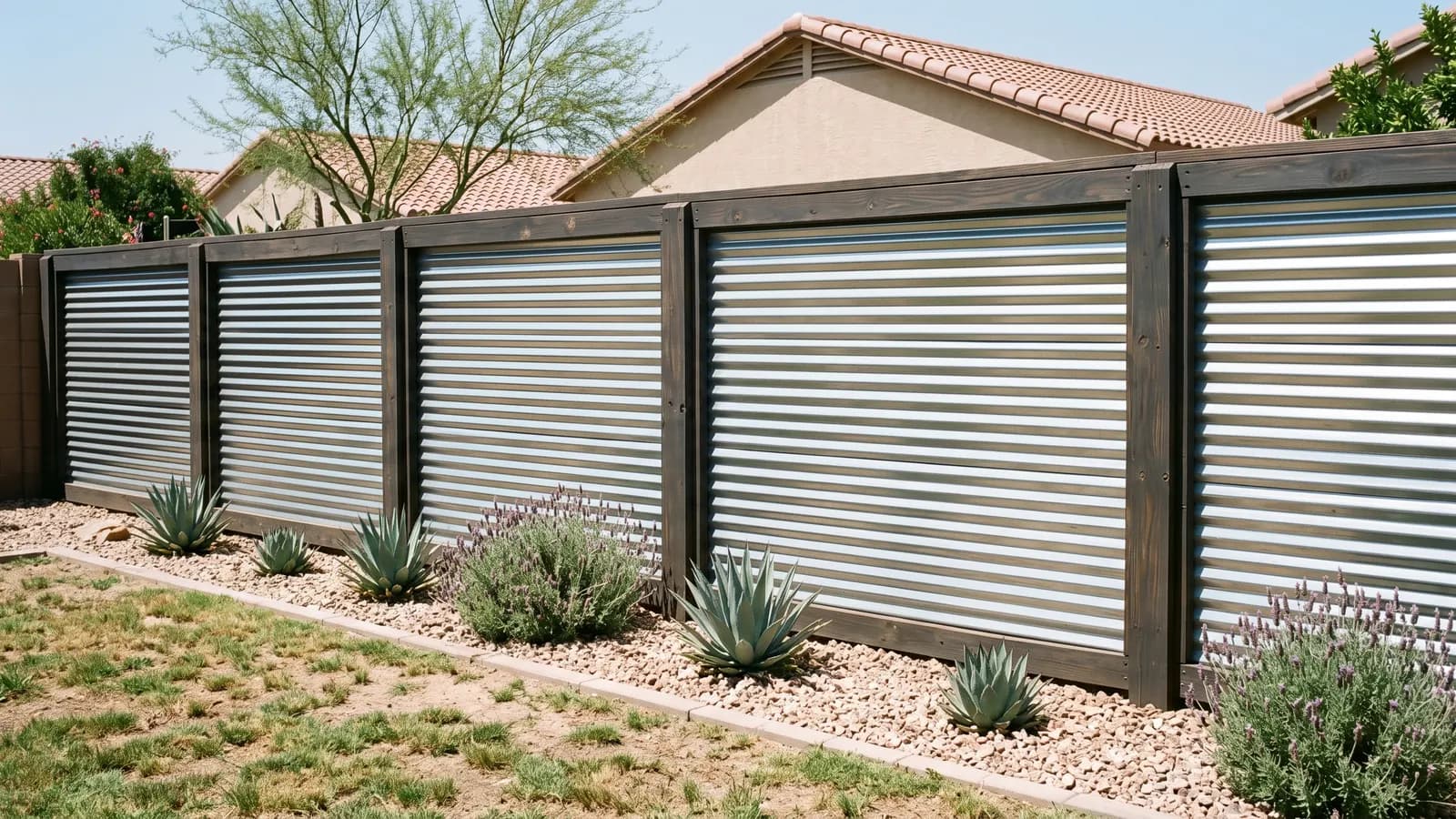
Corrugated roofing makes one of the cheapest fully solid fences. An 8-foot galvanized panel is $29.98 at Home Depot ($23.98 each for 20 or more), and three stacked horizontally cover an 8-foot run at about 6 feet tall, roughly $11 a foot before the frame. Angi lists corrugated metal as the lowest-cost privacy material. Cap the top edge with wood trim, because cut steel is sharp, and expect glare and heat in full sun.
10. Weave slats into chain link
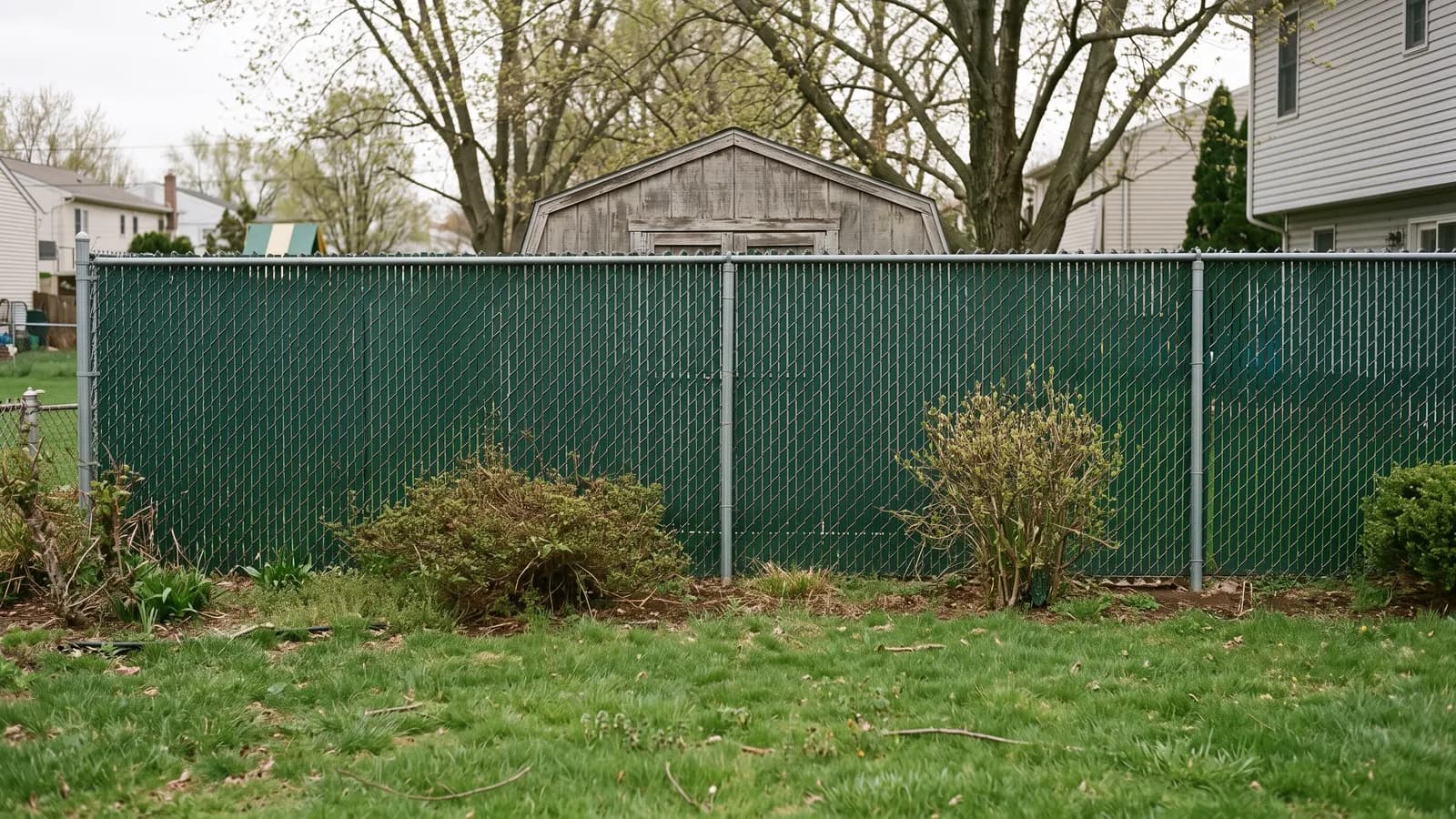
If you already have chain link, slats turn it into a privacy fence for about $6 a foot in materials. A 6 x 10 foot kit of M-D privacy slats costs $58.42 at Home Depot. HomeGuide says slats add $5 to $18 a foot if a contractor installs them, and a new chain link fence with slats runs $14 to $48 installed. Slats block most of the view but not all of it, since a little light shows through the mesh.
11. Zip-tie privacy fabric to an existing fence
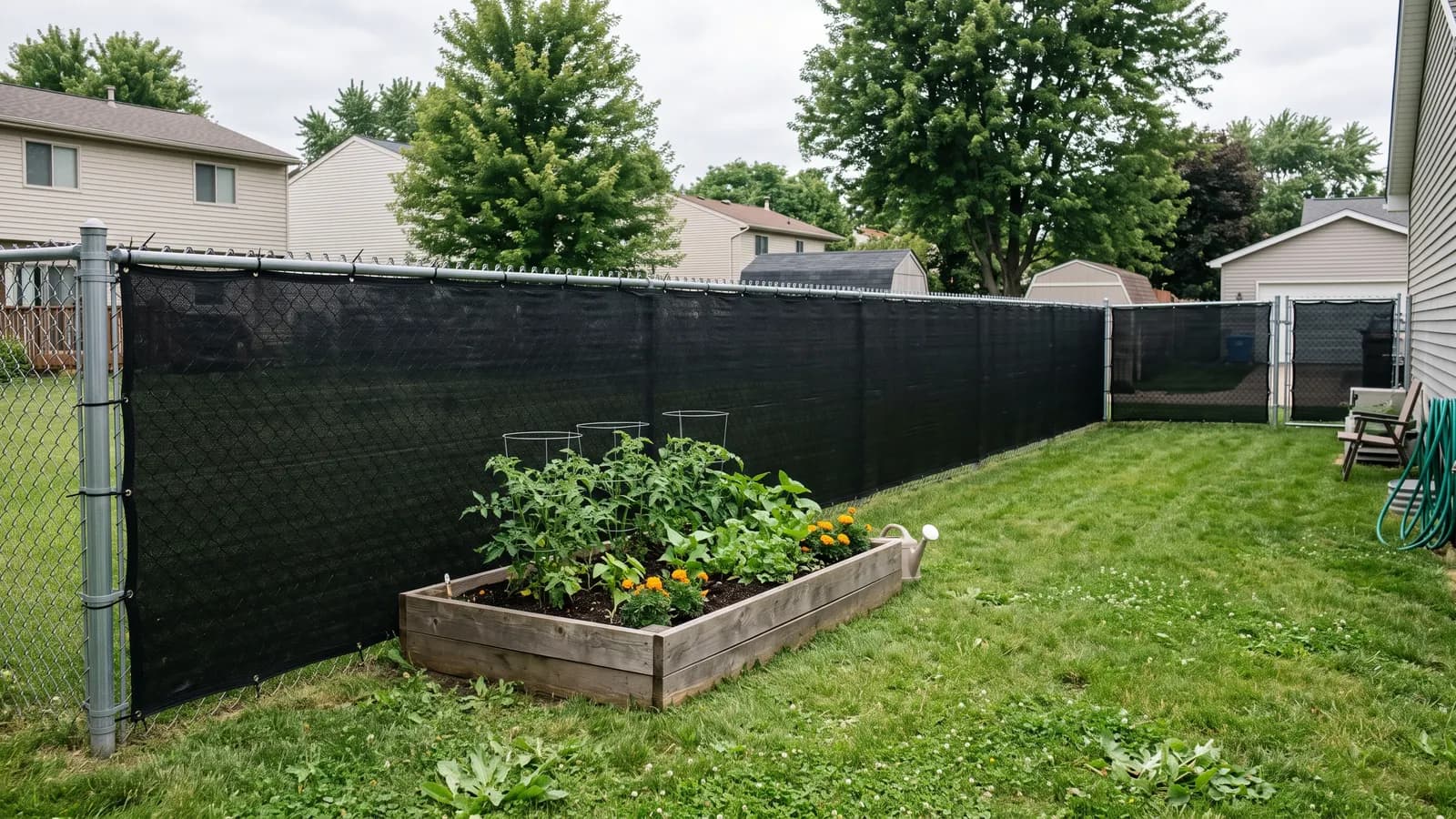
This is the cheapest privacy you can buy. A 6 x 50 foot roll of privacy screen fabric costs $69.98 to $104.99 at Home Depot, so about $1.40 to $2.10 a foot, and it goes up in an afternoon with zip ties. It's a renter-friendly fix too, since it comes off clean. Buy the heavy-duty grade with reinforced grommets. Fabric catches wind like a sail, so check that your posts are solid before covering a long run.
Living fences and screens
12. Cover an old fence with bamboo rolls
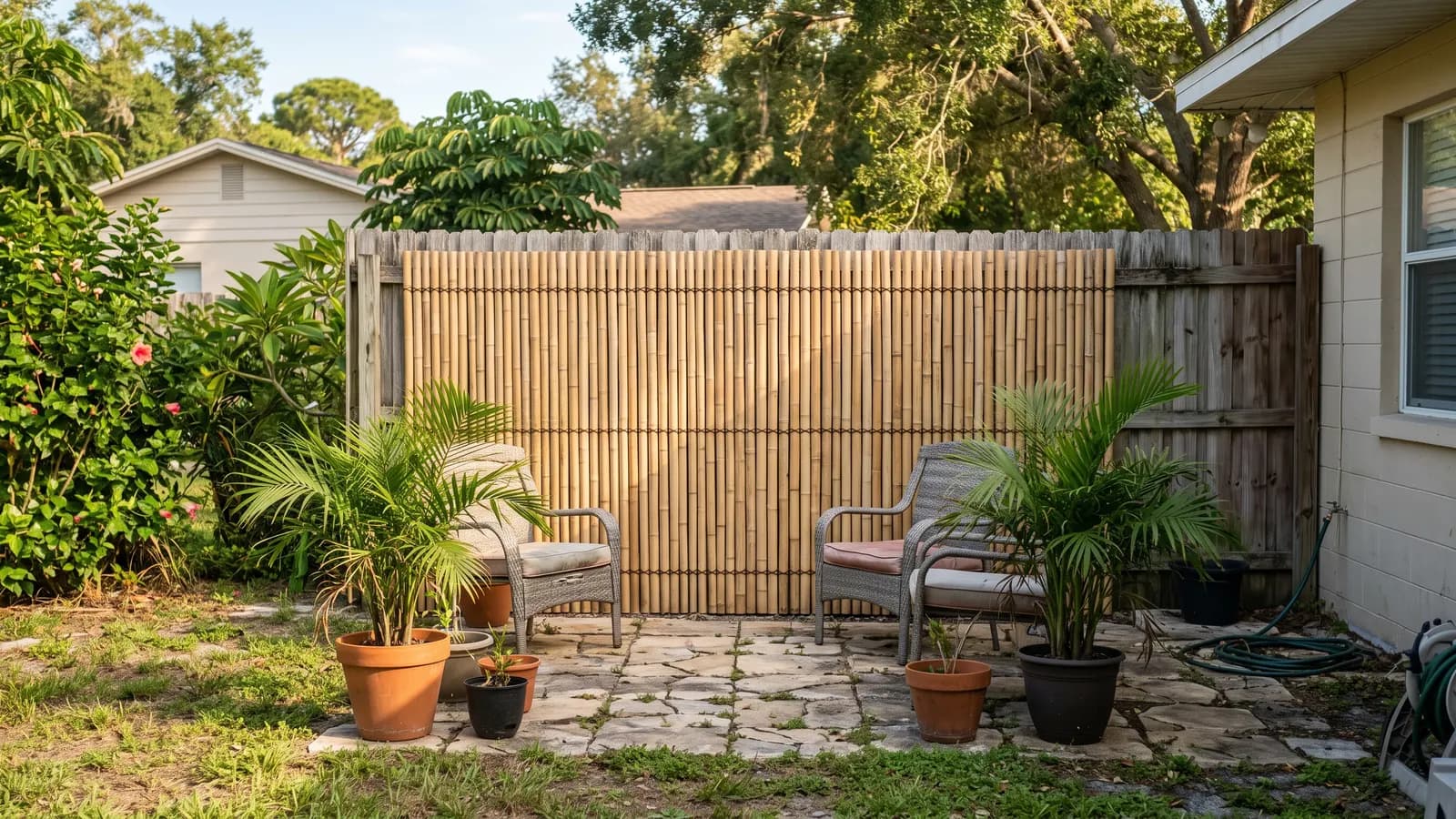
Rolled bamboo goes over an ugly fence or a simple post-and-rail frame and looks tropical right away. It isn't the cheapest material: HomeGuide puts rolls at $100 to $150 or more, and a 6 x 8 foot Backyard X-Scapes roll is $269.92 at Lowe's, so figure $12 to $34 a foot. Installed bamboo fencing runs $20 to $30 a foot. Expect 5 to 10 years outdoors, less in hot sun.
13. Hang reed fencing
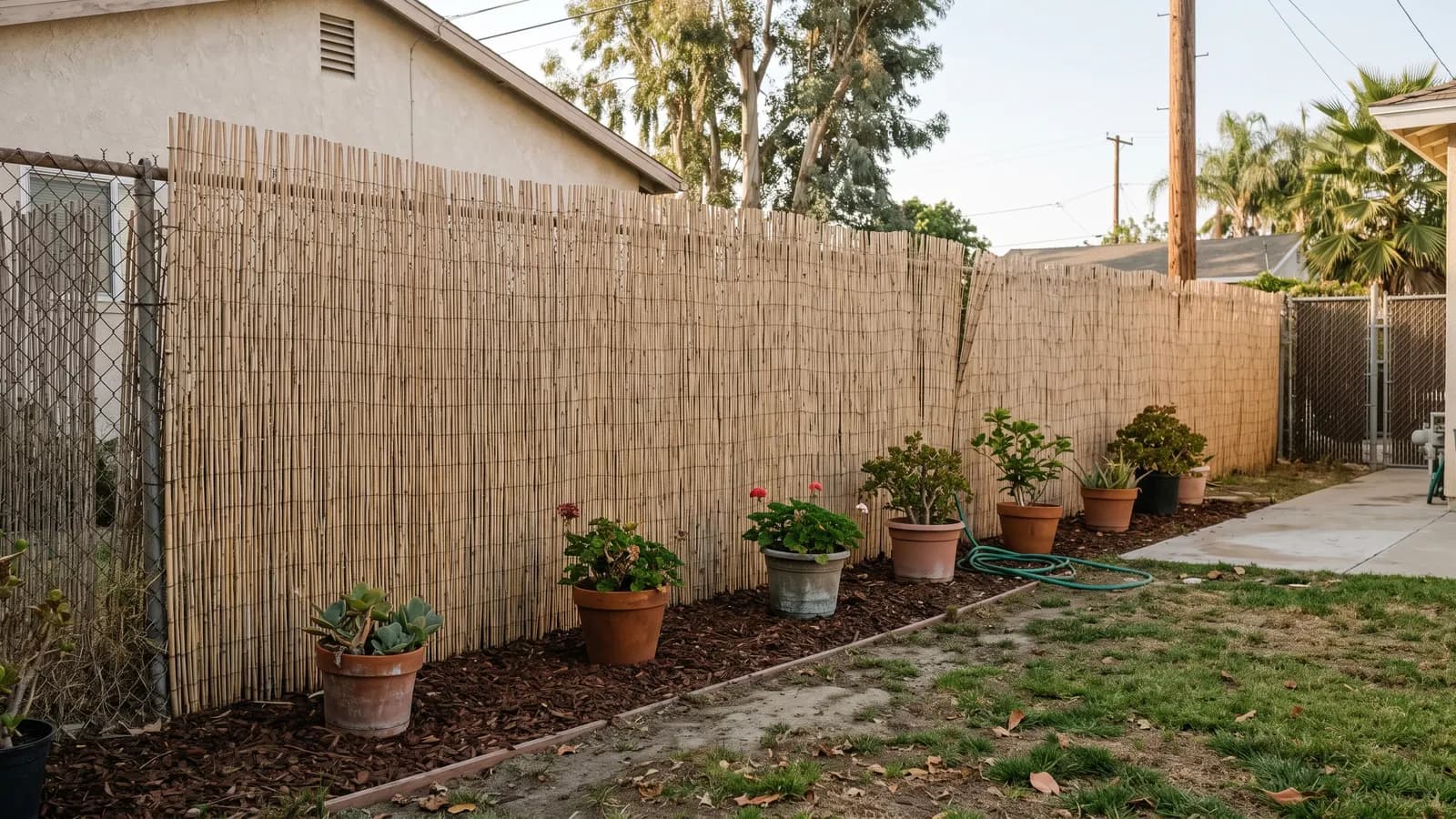
Reed looks like bamboo but costs a fraction: a 6 x 16 foot roll sells for about $50, roughly $3 a foot. It needs something to hang on, such as an old wire or chain link fence, or a frame of posts and rails. Reed is thin, so it blocks views well but offers no security and weathers to gray within a couple of seasons. Treat it as a fast, cheap fix you'll replace, not a permanent fence.
14. Plant an arborvitae hedge
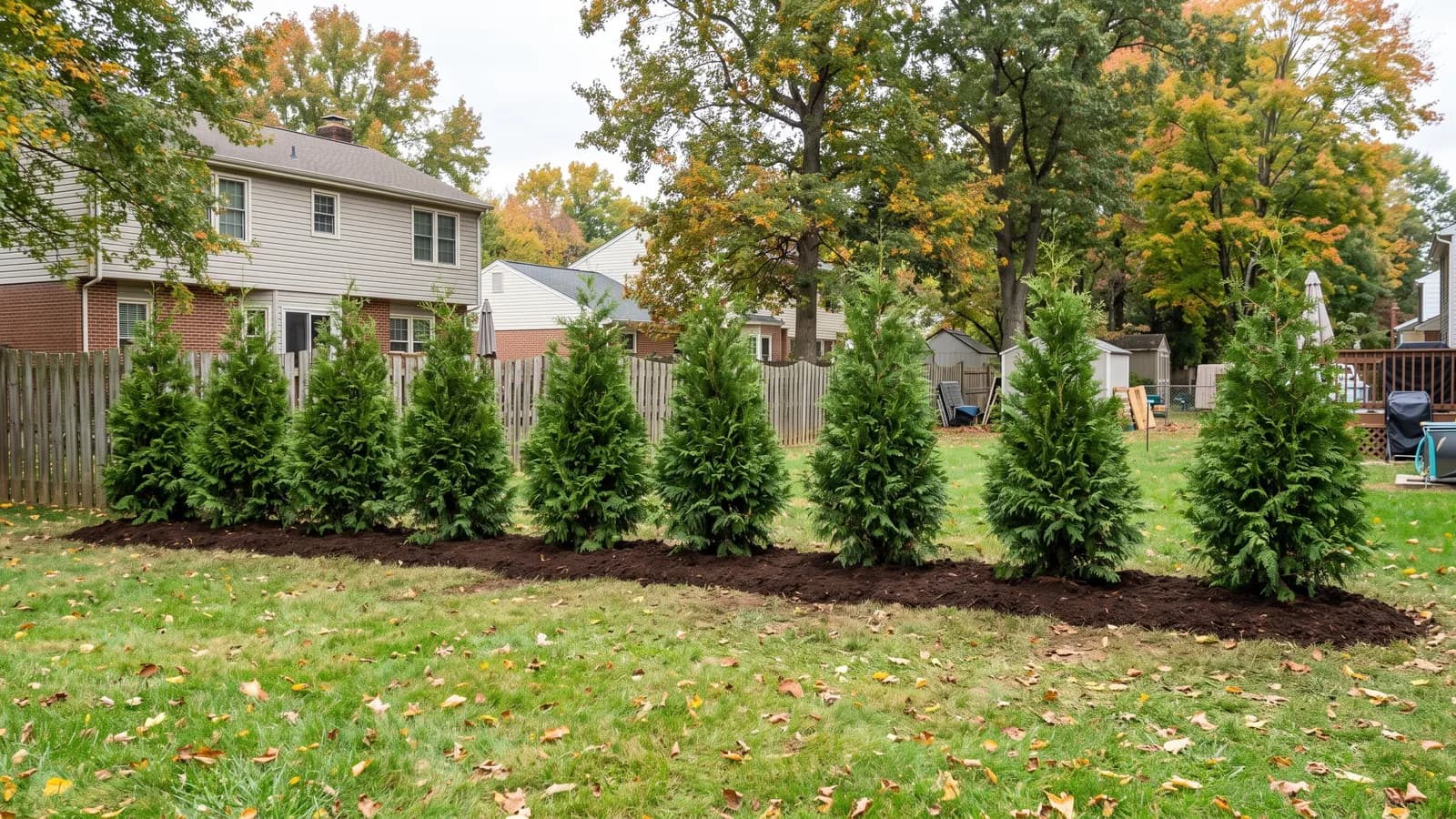
A living fence costs little up front if you buy small. Green Giant arborvitae in the 1 to 2 foot size sells for about $16 to $20 at Trees.com, and planted 5 to 6 feet apart that's around $3 to $4 a foot. NC State Extension says it grows 3 to 4 feet a year in good conditions and suits zones 5 to 8. Plan on two or three years of waiting, and give it room: mature trees reach 12 to 18 feet wide. Our guide to fast-growing privacy plants compares narrower options by zone.
15. Grow a summer screen from seed
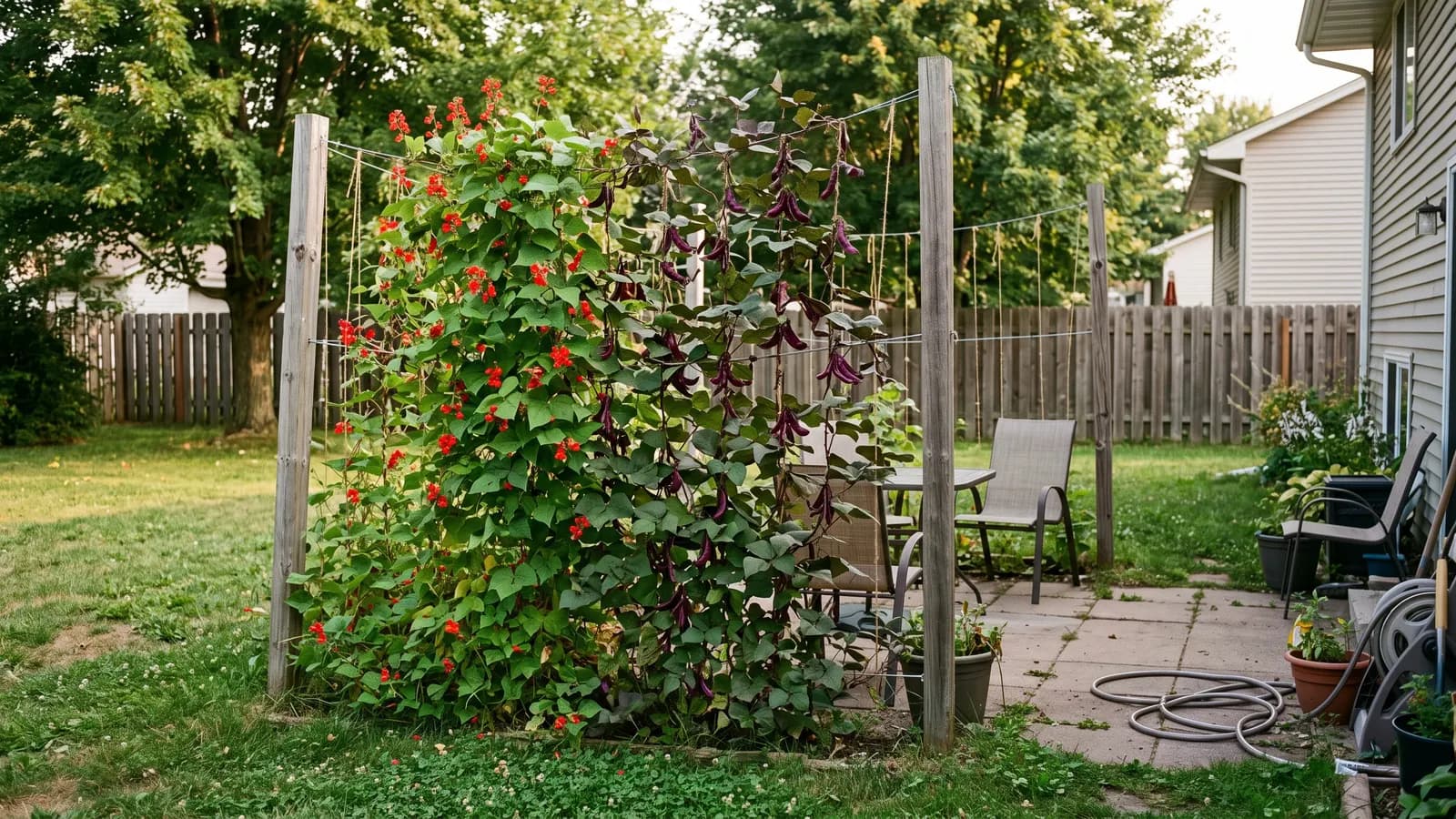
For the price of a few seed packets, annual vines on a string trellis give you a green wall by midsummer. Scarlet runner beans and hyacinth beans both climb past 6 feet in one season, and the beans of the runner type are edible. The posts and wire are the real cost. The trade-off is timing: you're exposed in spring and again after frost, so this works best for a patio you use in summer.
16. Plant a row of tall native grass
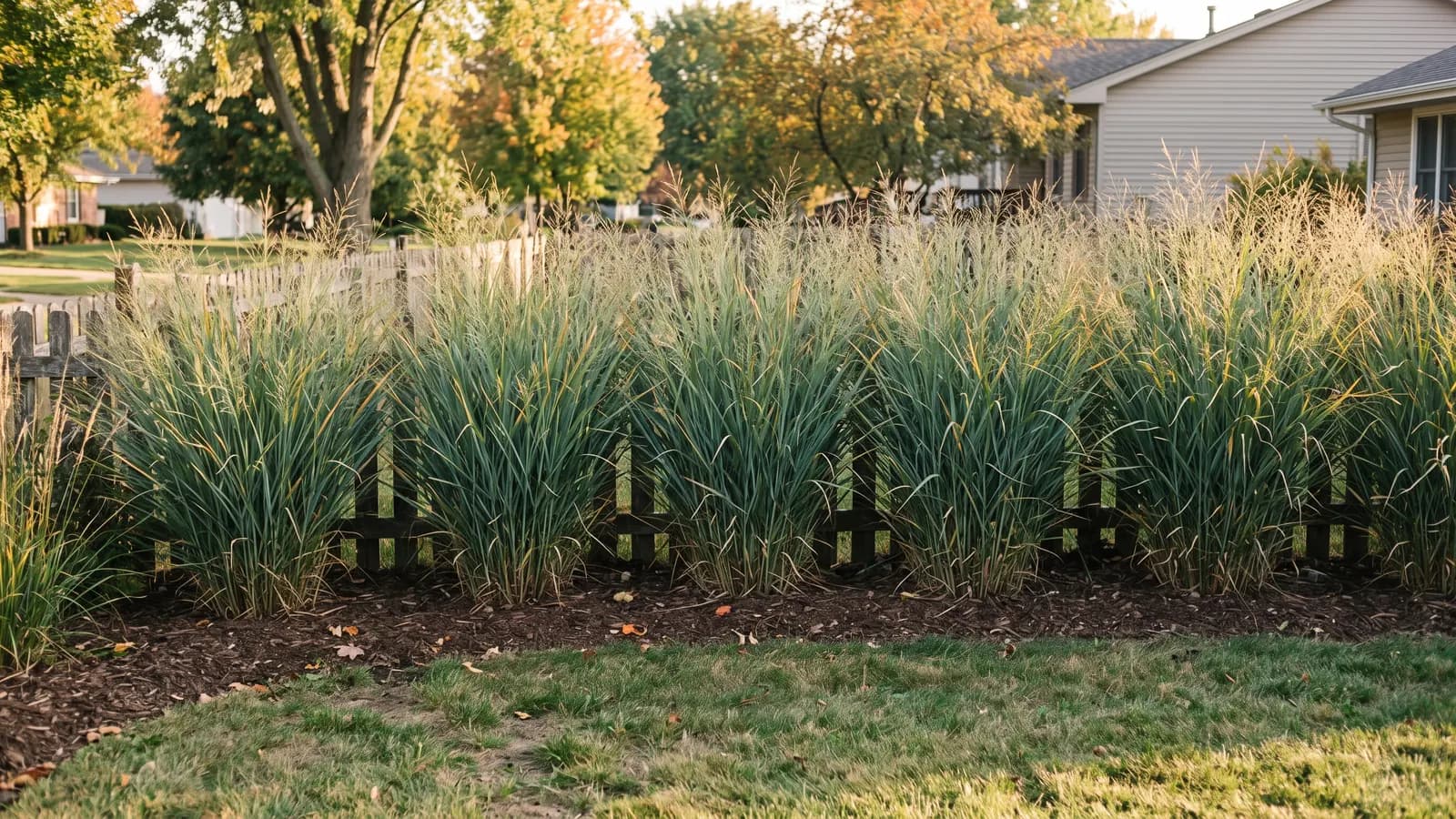
Switchgrass (Panicum virgatum) is a native prairie grass that grows 3 to 6 feet tall in zones 5 to 9, according to the Missouri Botanical Garden. Upright varieties like 'Northwind' make a soft screen that moves in the wind, needs no watering once established and only one cutback in late winter. It dies back to the ground each year, so it screens from about midsummer through winter. More plant-led screens are in our privacy landscaping ideas.
17. Line a patio with planter-box screens
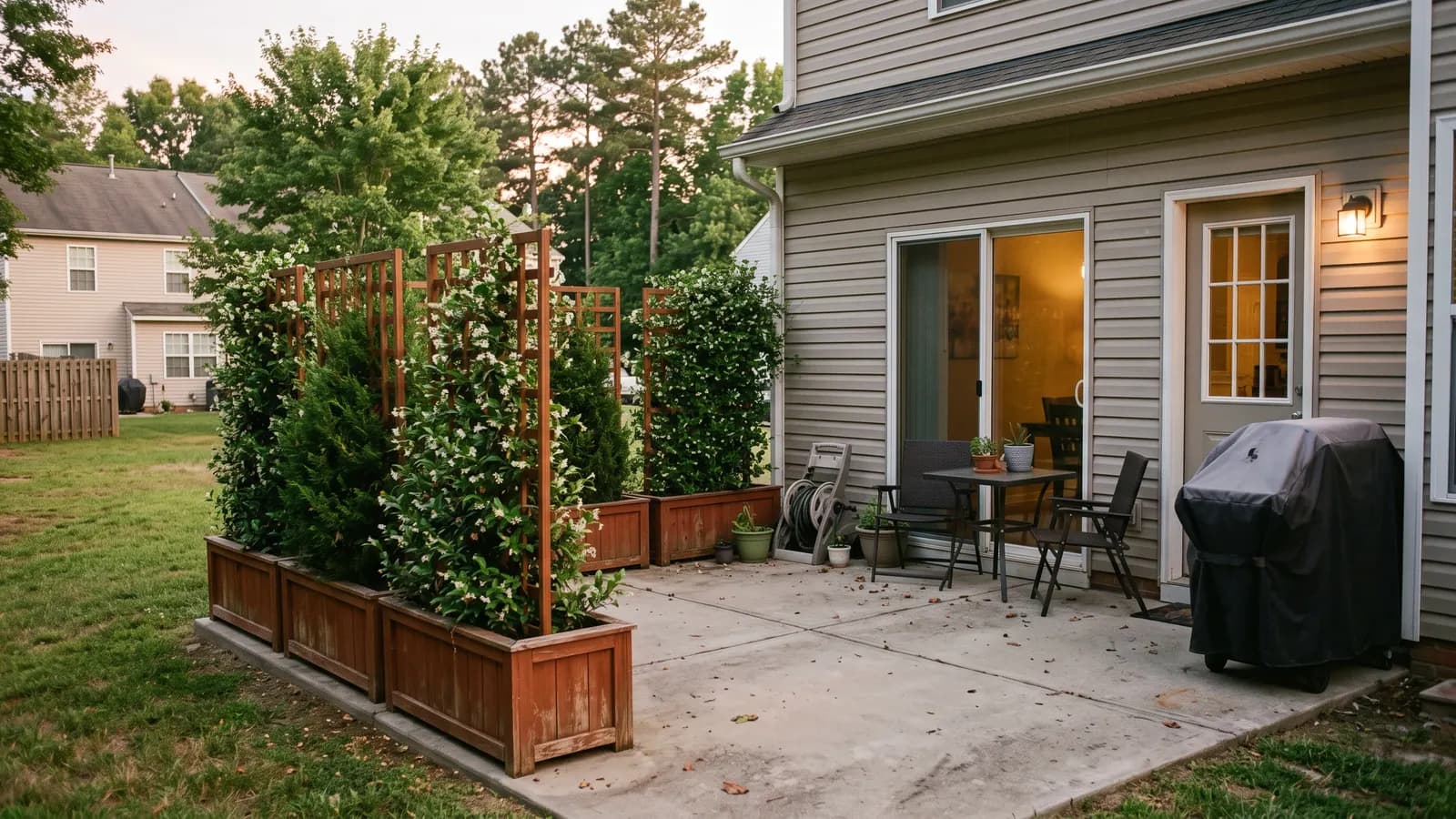
On a small patio, or a rental where you can't dig, planter boxes with a trellis screwed to the back make a movable privacy wall. Build the boxes from cedar fence pickets to keep the cost down, and plant evergreen shrubs or a climbing jasmine so the screen stays green in winter. Line the boxes and drill drainage holes, and make them at least 18 inches deep so roots don't cook in summer.
Mixed and DIY ideas
18. Go solid low, open high
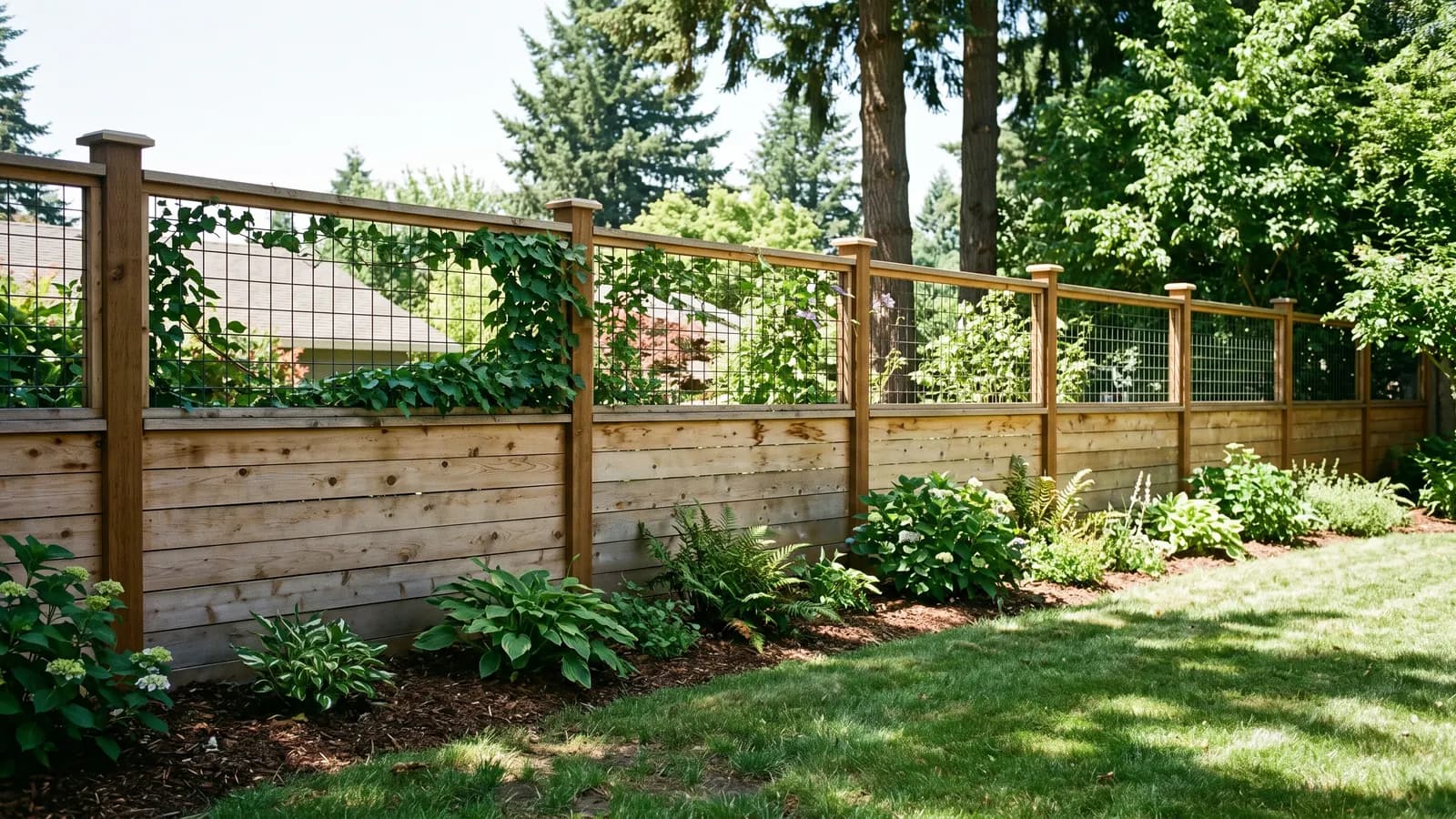
Most privacy problems sit at eye level when you're seated, which is under 5 feet. Build the bottom 4 feet from solid boards and finish the top with welded wire or lattice, and you use about a third less lumber than a fully solid fence. Grow a vine along the top section for extra cover. The open band also lets wind through, which takes stress off the posts.
19. Make freestanding screen panels
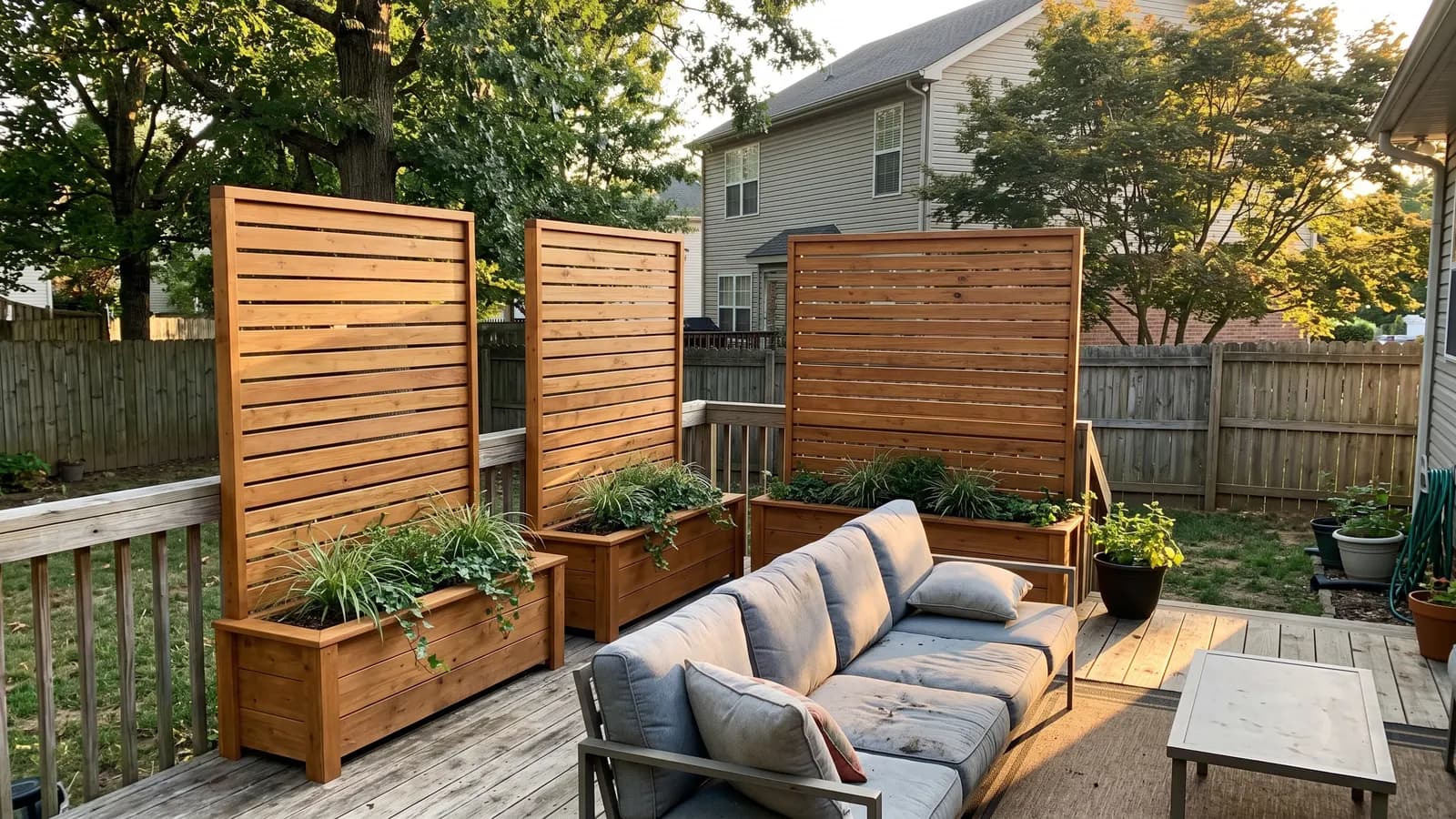
When the view you want to block is from a neighbor's upstairs window, a boundary fence often can't get tall enough anyway. Freestanding slat panels on weighted planter bases sit right next to the seating, where a 6-foot panel blocks a far bigger slice of the view than it would at the property line. They move with you, and because they aren't fixed to the ground, some towns don't treat them as fences at all.
20. Hang outdoor curtains on posts
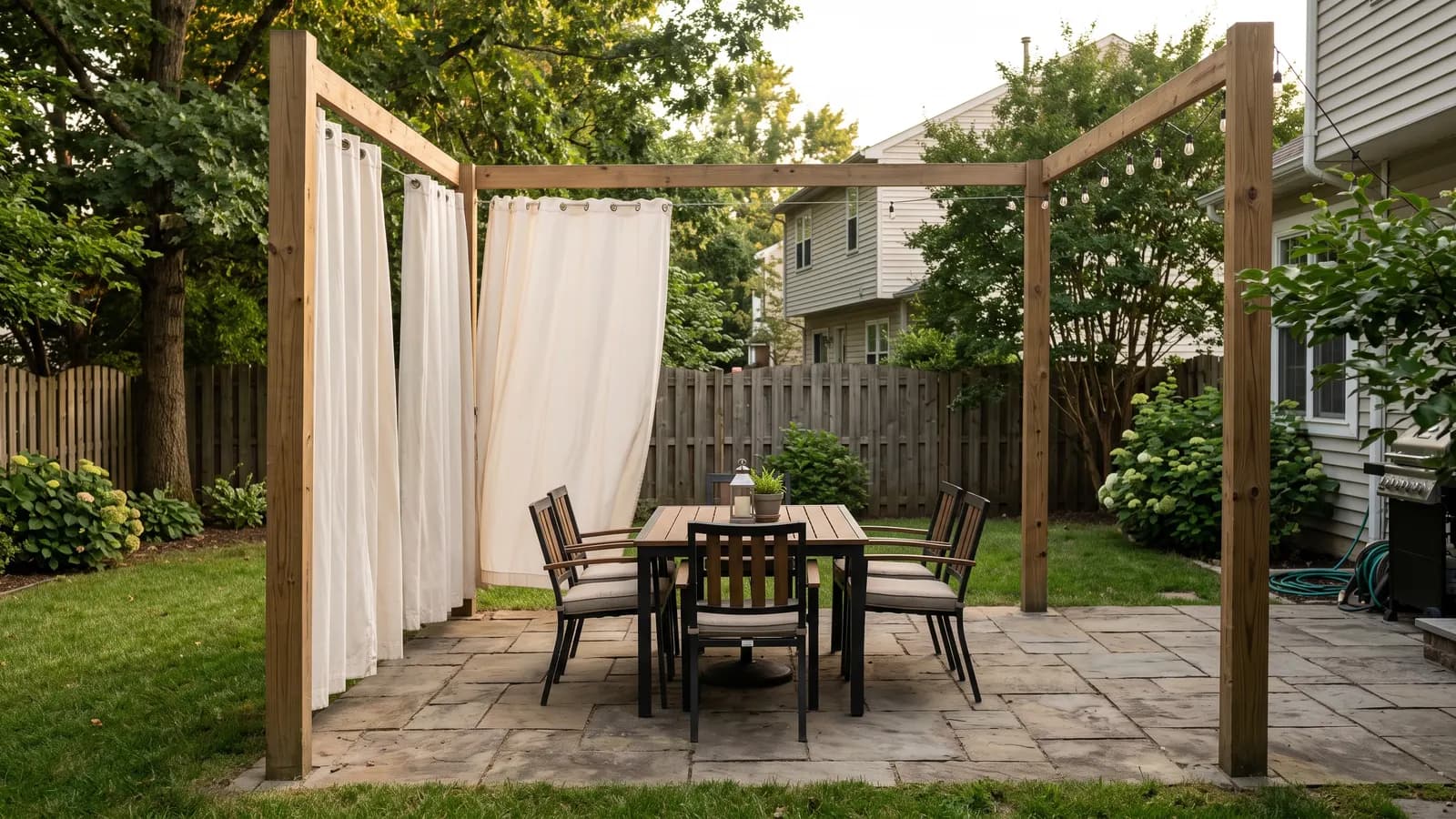
Four posts, a top beam and a pair of outdoor curtains turn a patio into a private room you can open or close. Use solution-dyed outdoor fabric, which resists fading and mildew, and hang it from a tensioned cable rather than a rod for long spans. Tie the curtains back on calm days and draw them when the neighbors are out. Take them down for winter so they last several seasons.
21. Build with reclaimed fence boards
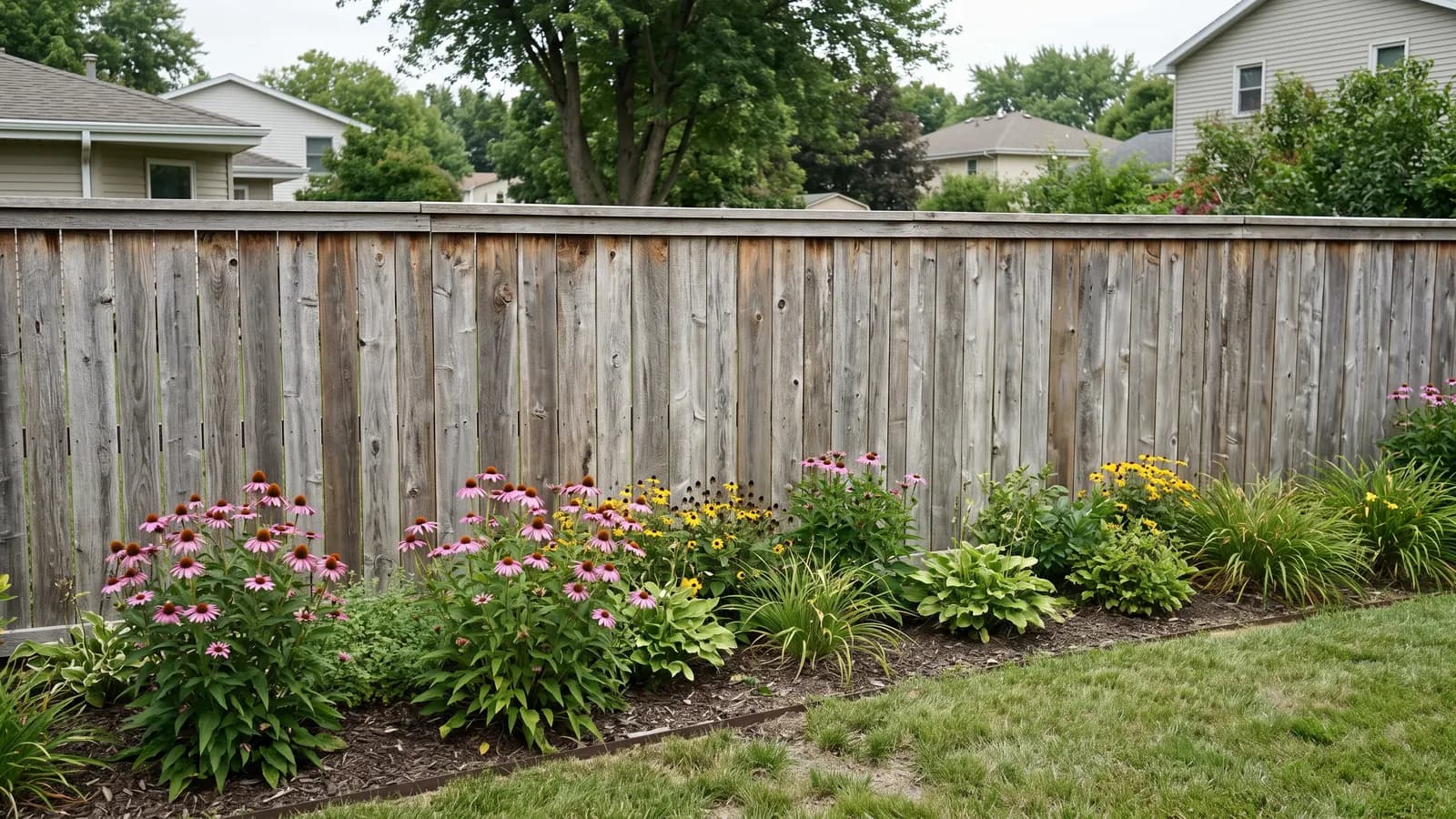
When neighbors replace an old fence, the boards usually go to the dump. Ask for them. Weathered pickets in mixed widths and colors make a rustic fence for the price of posts, rails and screws. Pull the old nails, cut out rot, and run a straight cap rail along the top so the uneven boards read as a design choice. Salvage yards and online marketplaces sell used fence boards too.
Rules to check before you build
A cheap fence that has to come down is the most expensive one. Before you buy materials:
- Height limits. Most towns cap front-yard fences at 3 to 4 feet and side or rear fences at 6 to 8 feet. Fairfax County, Virginia, for example, allows 4 feet in front yards and 7 feet in side and rear yards. Search your city or county name plus "fence height" for the exact rule.
- Permits. Many towns require one for any new fence. HomeGuide puts permits at $40 to $150.
- The property line. Build a few inches inside it unless you and your neighbor agree in writing. A survey costs $200 to $1,200 if your pins are missing.
- HOA rules. Associations often limit materials and colors, and corrugated metal, pallets and reed are the most likely to be refused.
- Buried lines. Call 811 a few days before digging post holes so utilities can mark gas and electric lines. The service costs you nothing.
How to price your fence
Start with the length. Walk the run you need to screen and round up to the next post spacing (6 or 8 feet). Then multiply by the per-foot price from the table, and add posts, concrete, rails, screws and stain. For a quick total, our fence cost calculator does the math by material and height.
Labor is the other half. Angi puts labor at about 50% of a privacy fence project, and HomeGuide puts it at $10 to $20 a foot. That's why every idea above is cheapest as a DIY build.
Price alone won't tell you how a material looks on your yard, though. Here is one ordinary backyard with an old 4-foot chain link fence, then three of the options above on that same fence line. All four images are AI concepts.
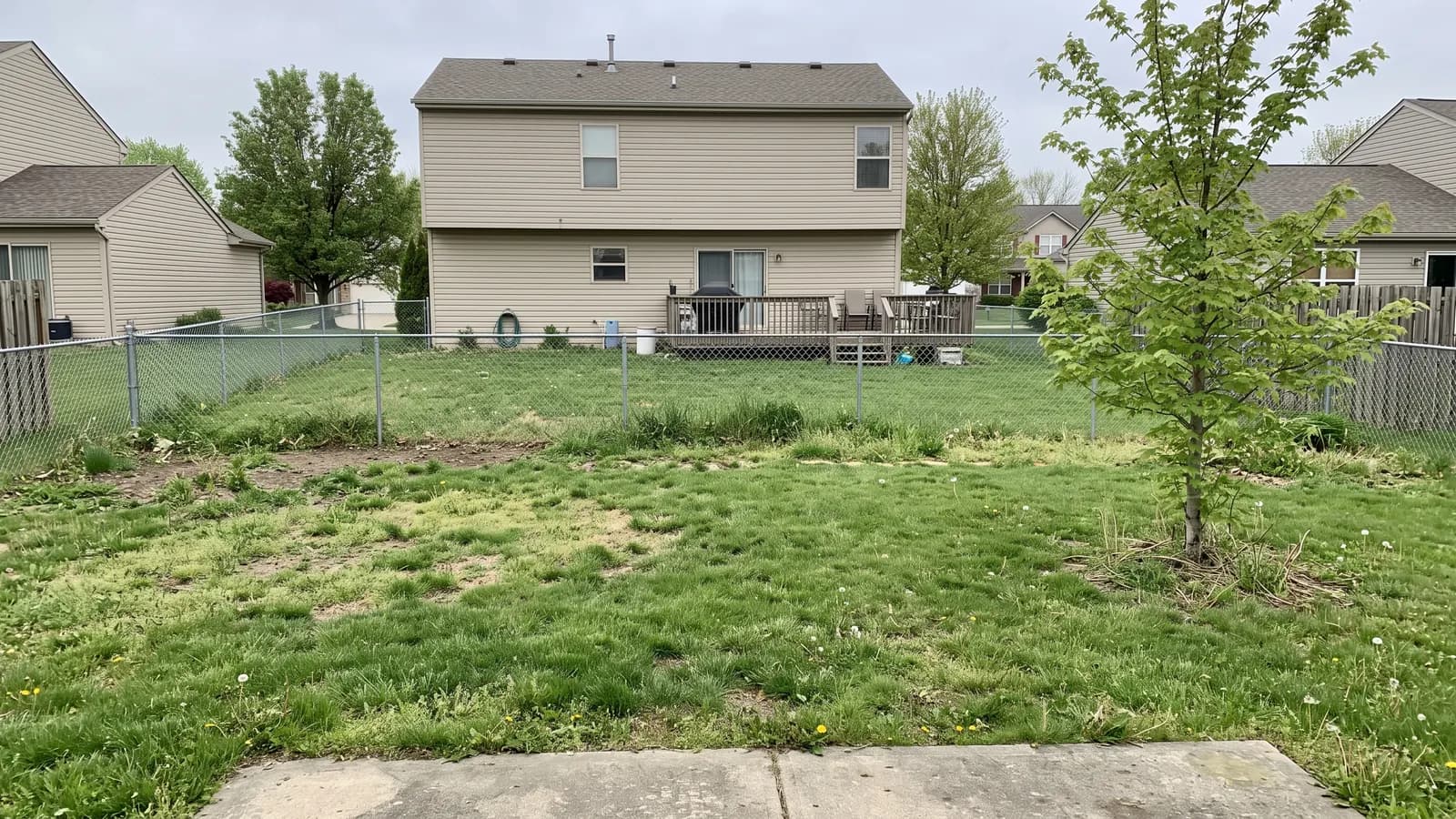
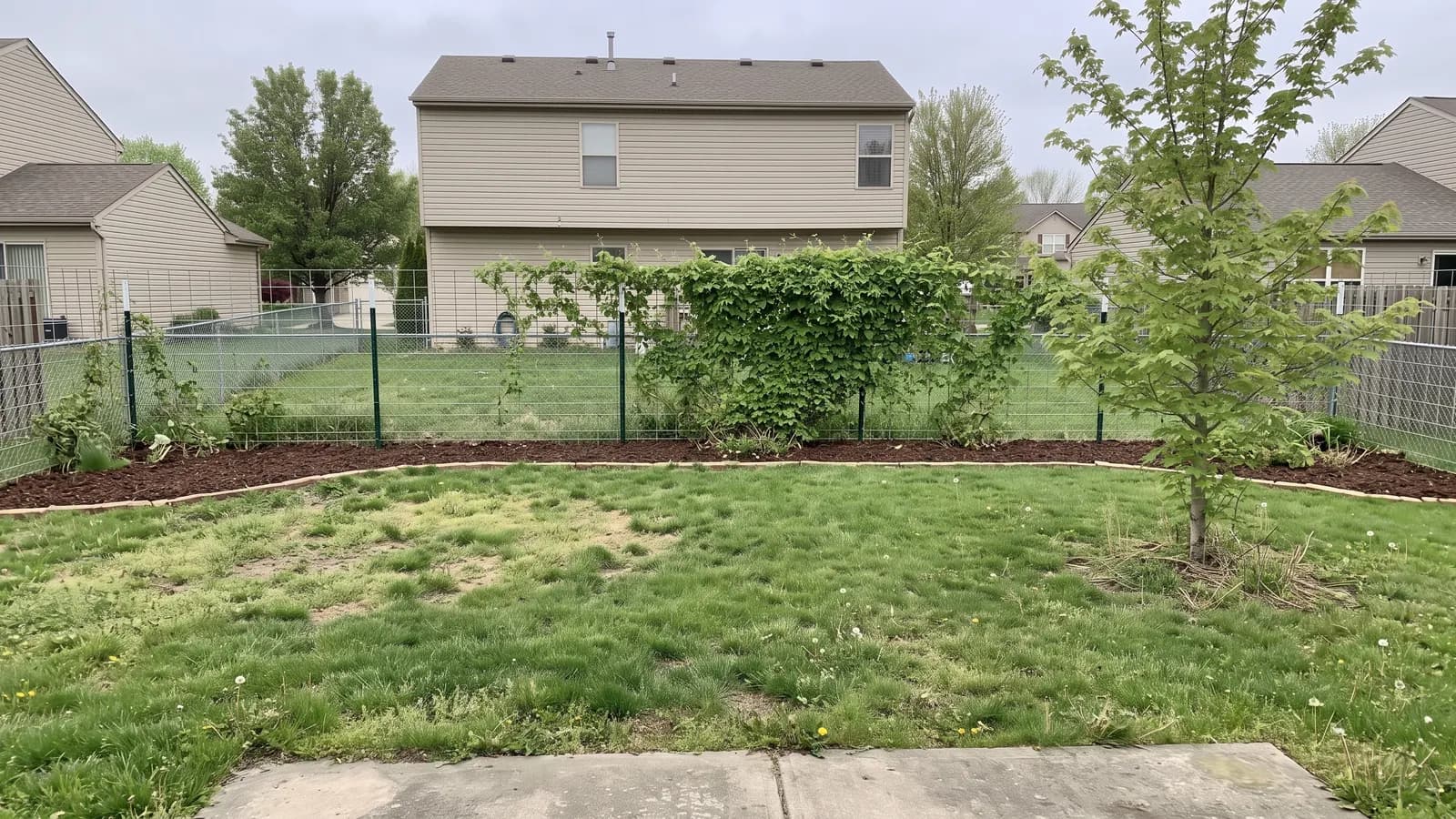
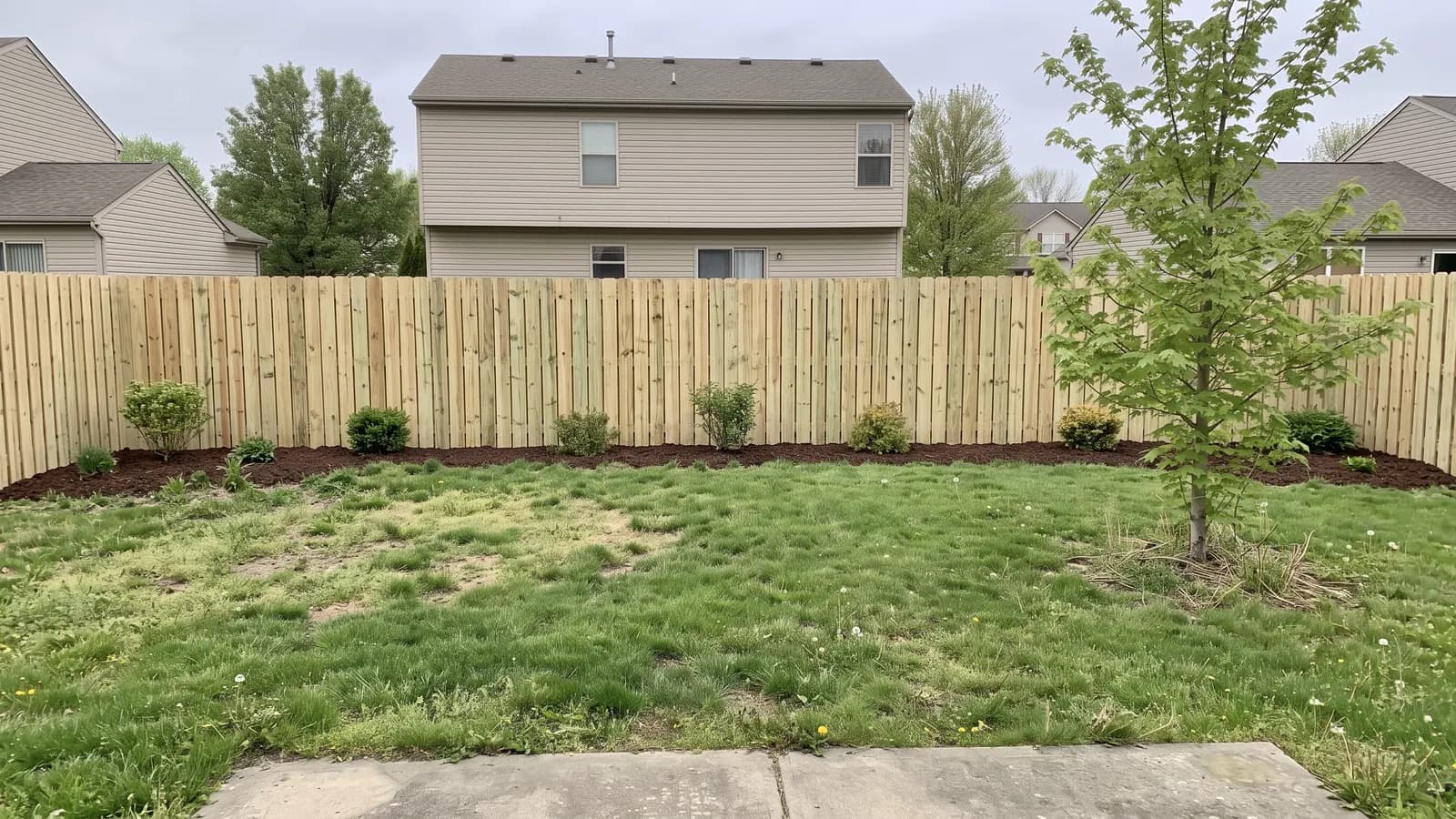
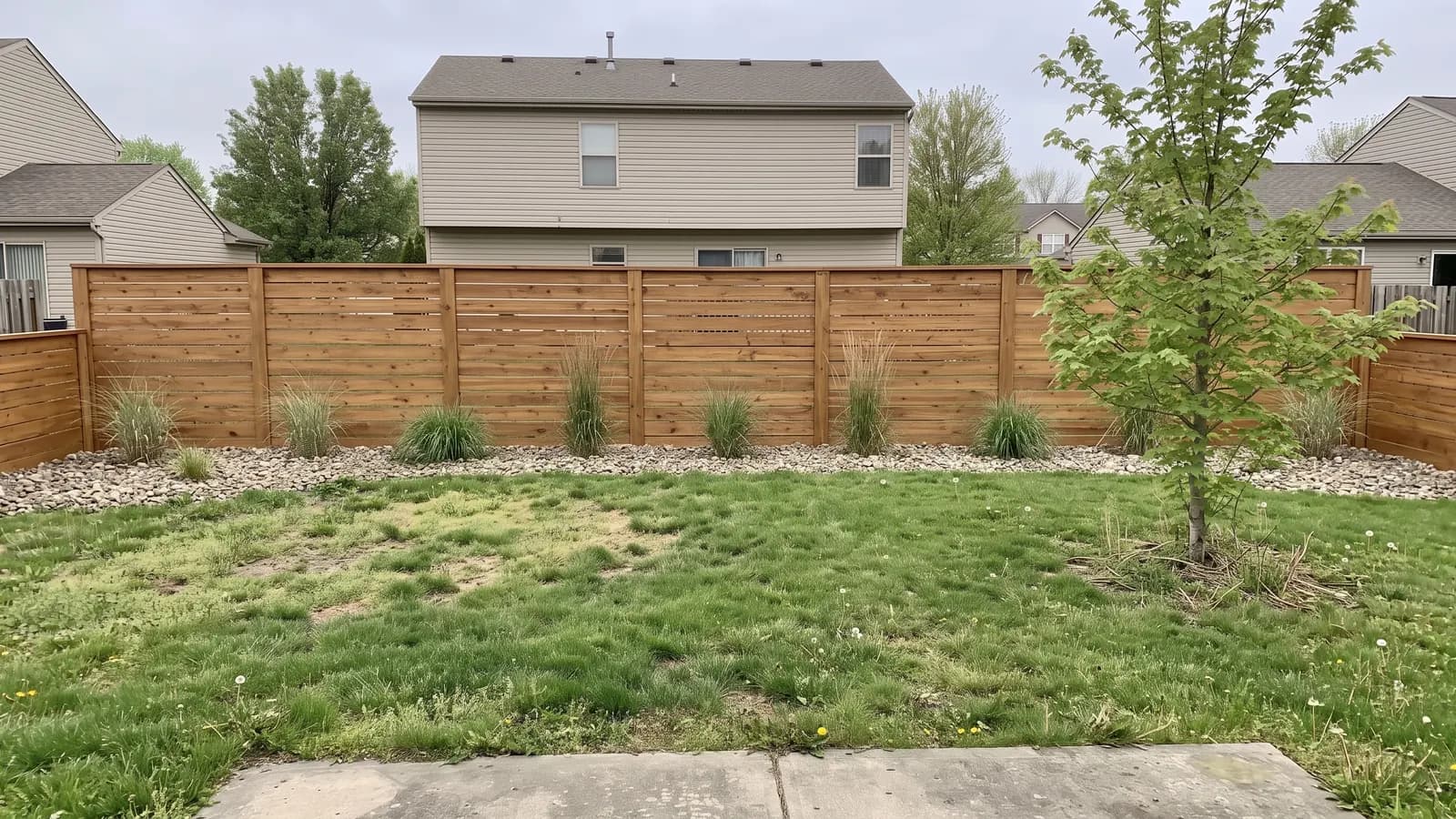
The cattle panel version costs the least by far but still shows the neighbor's deck until the vines fill in. The pine fence closes off the view on day one for a mid-range budget. The horizontal cedar costs the most and looks the most finished. Seeing the three side by side is usually what settles it, and that's the job AI fence design does with a photo of your own boundary. If you also want to dress up the base of the fence once it's built, see these fence line landscaping ideas.
FAQ
What is the cheapest privacy fence? Privacy screen fabric on a fence you already own is the cheapest, at about $1.40 to $2.10 a foot. Without an existing fence, reed or cattle panels on T-posts are the cheapest materials, but they need a frame or vines to give privacy. For a solid fence from scratch, DIY pine boards or corrugated metal panels cost the least.
Is a living fence cheaper than wood? Usually, yes, if you buy small plants. Young arborvitae planted 5 to 6 feet apart cost about $3 to $4 a foot, against $10 to $30 a foot in materials for a DIY wood fence. The trade-off is time: a hedge from small plants takes two to three years to give real privacy and needs watering while it establishes.
How tall can a privacy fence be? Most towns allow 6 to 8 feet in side and rear yards and 3 to 4 feet in front yards. Rules vary by city, county and HOA, so check your local code before you build. Corner lots often have extra limits near the street so drivers can see.
What is the cheapest way to block a neighbor's view? Block the sightline instead of the whole boundary. A few solid panels, a freestanding screen or a planter box with a trellis placed right next to your seating area blocks more of the view than a full fence at the property line, and costs far less.
Do I need a permit for a cheap fence? Often, yes. Many towns require a permit for any new fence regardless of material, and permits typically cost $40 to $150. Freestanding screens and planters that aren't fixed to the ground are sometimes exempt, but confirm with your building department first.
Sources: HomeGuide: privacy fence cost, HomeGuide: wood fence cost, Angi: privacy fence cost, Home Depot: M-D 6 ft privacy fence slats, Home Depot: 8 ft corrugated galvanized steel panel, Home Depot: 6 x 50 ft privacy screen fabric, Lowe's: Backyard X-Scapes rolled bamboo fence, L&M Supply: 16 ft cattle panel, Wheeler Metals: hog panels, Palapa Structures: reed fencing, Trees.com: Thuja Green Giant, NC State Extension: Thuja 'Green Giant', Missouri Botanical Garden: Panicum virgatum, Fairfax County: residential fences and walls, Call 811, all checked October 20, 2026