AI Prompts for Redesigning a Backyard: 12 We Tested on One Yard (2026)
We ran 12 backyard prompts on the same photo, then checked what each one kept and what it changed. One short prompt repainted the house. Here's the wording that stopped it, and where AI still gets your yard wrong.
The first prompt we tried repainted the house. We uploaded a photo of a plain backyard, typed "Redesign my backyard. Make it modern and beautiful," and got back a charcoal house with a new steel porch and a rebuilt fence. It was a lovely picture of somebody else's home.
The problem with that prompt is that it only says what to add. Good AI prompts for redesigning a backyard also say what has to stay. To see how much that matters, we ran 12 prompts on one photo and checked each result against the original, looking at the house, the fence, the tree and the layout.
Below you'll find every prompt exactly as we ran it, what it got right, and what it got wrong. One of them failed badly enough that we rewrote it and ran it again.
How we tested these prompts
We ran everything on November 5, 2026, using Google's Gemini image model (Nano Banana 2.1) through its API. Each prompt got one generation, and we didn't retouch the results. Four limits are worth knowing:
- The test yard isn't a real customer's yard. It's an AI-generated photo of an ordinary yard from our own sample set, chosen because the big tree, fences and house make any redrawing easy to spot.
- We didn't run these in ChatGPT. The wording should carry over, since ChatGPT also accepts photo uploads, but we can only report what we saw in Gemini.
- One generation is one sample. Run the same prompt twice and you'll get two different yards.
- The Gemini app may behave differently from the API we used.
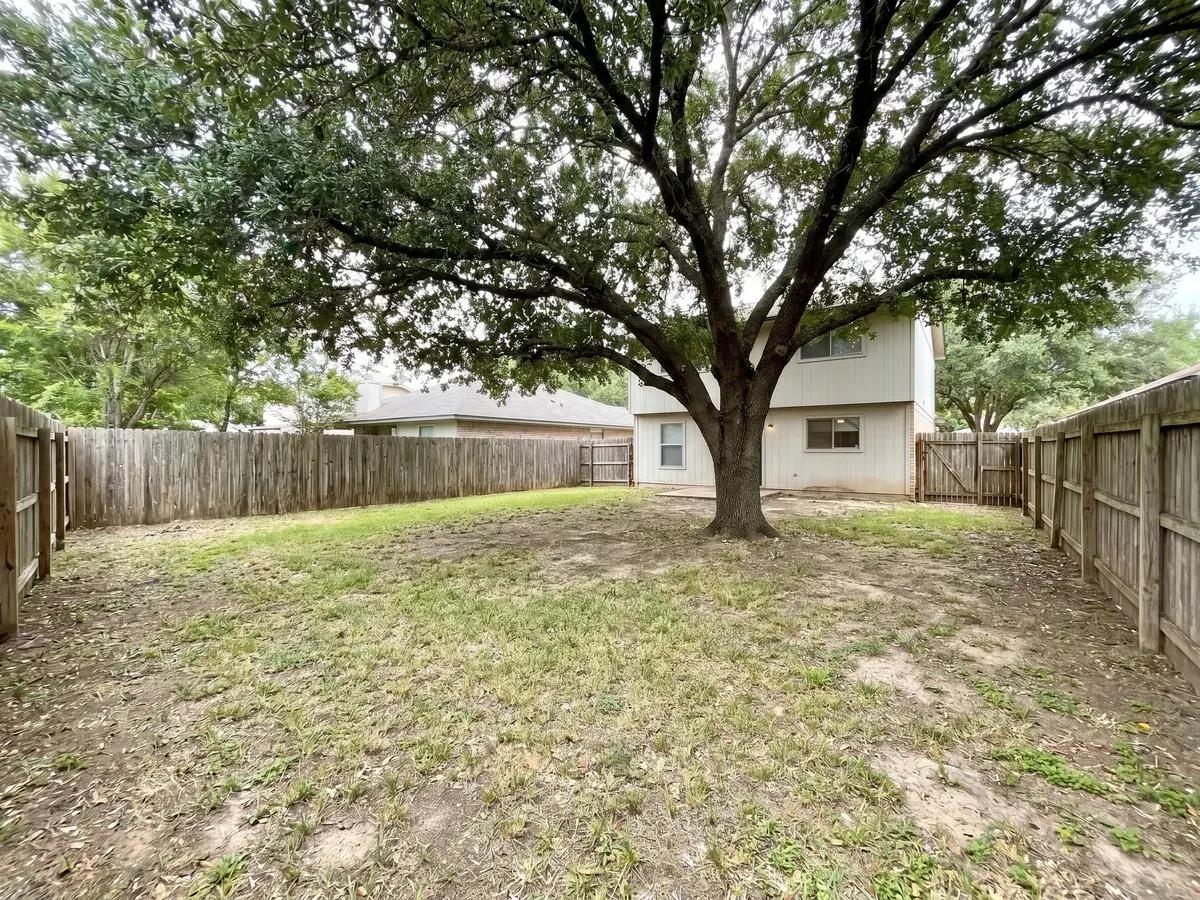
The starting photo. Every result below began from this image.
What a vague prompt does to your yard
Here's the eight-word prompt that opened this article:
Redesign my backyard. Make it modern and beautiful.
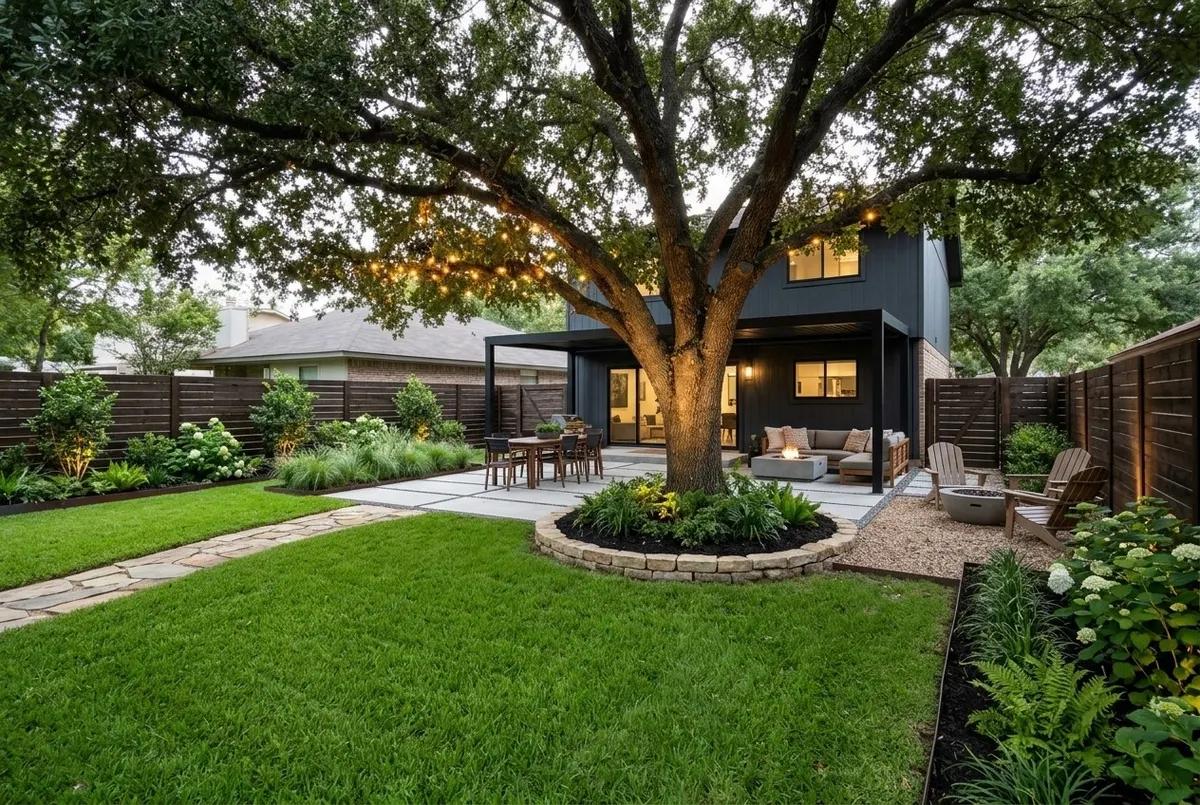
The house turned charcoal, a steel porch appeared and the fences were rebuilt. You can't price or plan from this.
Nothing in that prompt says the house matters, so the model treated it as part of the design. Compare it with a long prompt that real people use. We found this one in our own Search Console data, because people paste it straight into Google:
I want to redo my backyard. Subject: use the yard in the photo I provide. Reimagine it as a completely modernized space. Do not make any changes beyond the fenceline. Style: modern looking style with natural wood textures and rock or concrete accents, shown at blue hour. Include a concrete fire pit, a modern shade structure, string lights, cozy lounge seating, and lush tropical accents like large-leaf bird of paradise plants.
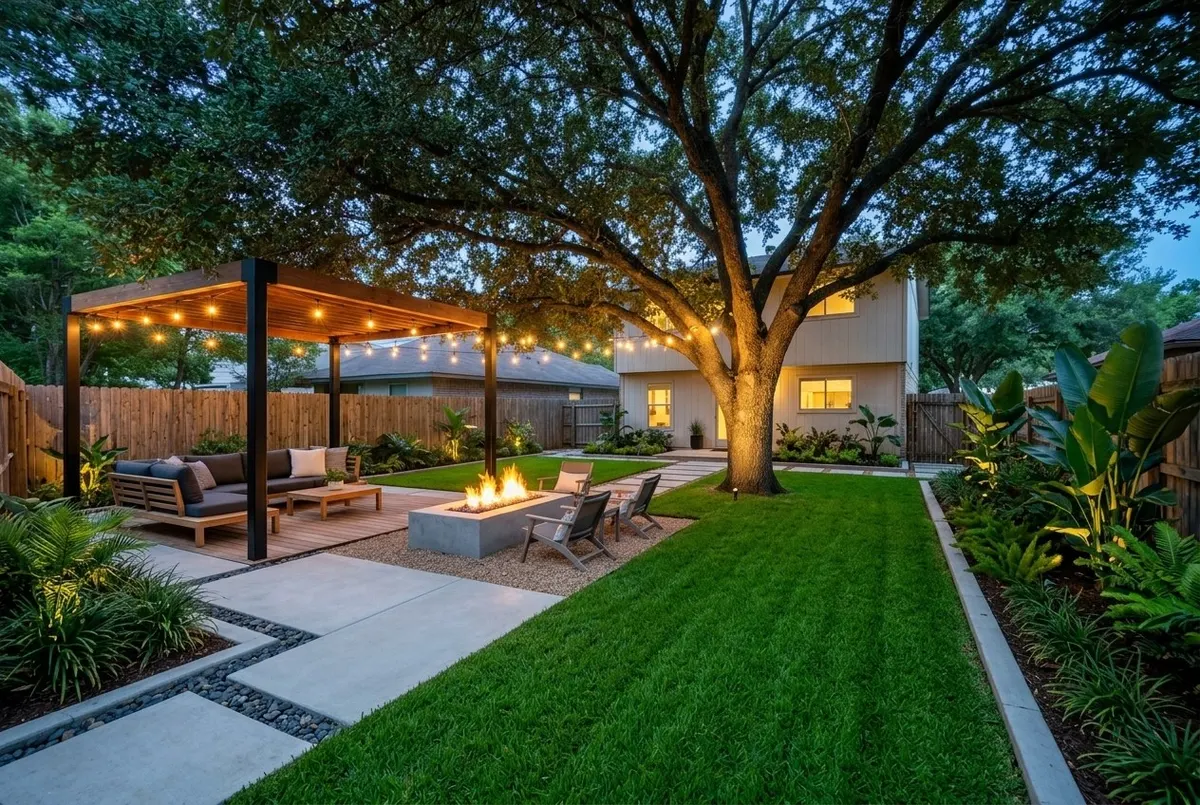
Much closer: the house kept its shape and color. The dusk lighting flatters everything, though, which makes the design harder to judge.
This prompt does a lot right, but it has two weak spots. Blue hour hides flaws, so you're judging the lights more than the layout. And nothing mentions climate. The Missouri Botanical Garden lists bird of paradise as hardy in zones 10 to 12, so across most of the US that plant won't survive winter outdoors.
The ChatGPT landscape design prompt formula
This is the structure we used for the rest of the test. It works as a ChatGPT landscape design prompt or a Gemini one, because it's only a way of ordering information:
| Part | What to write | Why it matters |
|---|---|---|
| Keep clause | The house, fences, large trees and yard size stay as they are | Stops the model redesigning your home |
| Your conditions | Your USDA hardiness zone and how much sun the yard gets | Image models don't know where you live |
| The problem | "The grass is worn out and we have nowhere to sit" | Gives the design a job to do |
| The design | Named plants and materials, placed by location | Each one you skip is a choice the model makes for you |
| The view | Time of day, or how new the planting should look | Keeps the picture honest |
Here's the keep clause we put at the start of every prompt below. Swap "the large tree" for whatever is fixed in your own yard, and find your zone on the USDA Plant Hardiness Zone Map.
Edit this exact photo. Keep the camera angle, the house, the fence, the large tree and the size of the yard exactly as they are. Do not add land or change the neighboring houses. Realistic photo, no people, no text.
The result: all 11 prompts that used this clause kept the tree and the shape of the house. The fences mostly held too, with one exception you'll see in the privacy test.
AI prompts for redesigning a backyard, by project
Each prompt below starts with the keep clause above, so paste that first.
Modern yard
I live in USDA zone 8a and this yard gets full sun except under the tree. The grass is worn out and we have nowhere to sit. Redesign it as a clean modern yard: large concrete pavers set in gravel, a low horizontal cedar bench, ornamental grasses and lavender in straight beds along the fence, and a small lawn panel. Show it as it would look in late afternoon.
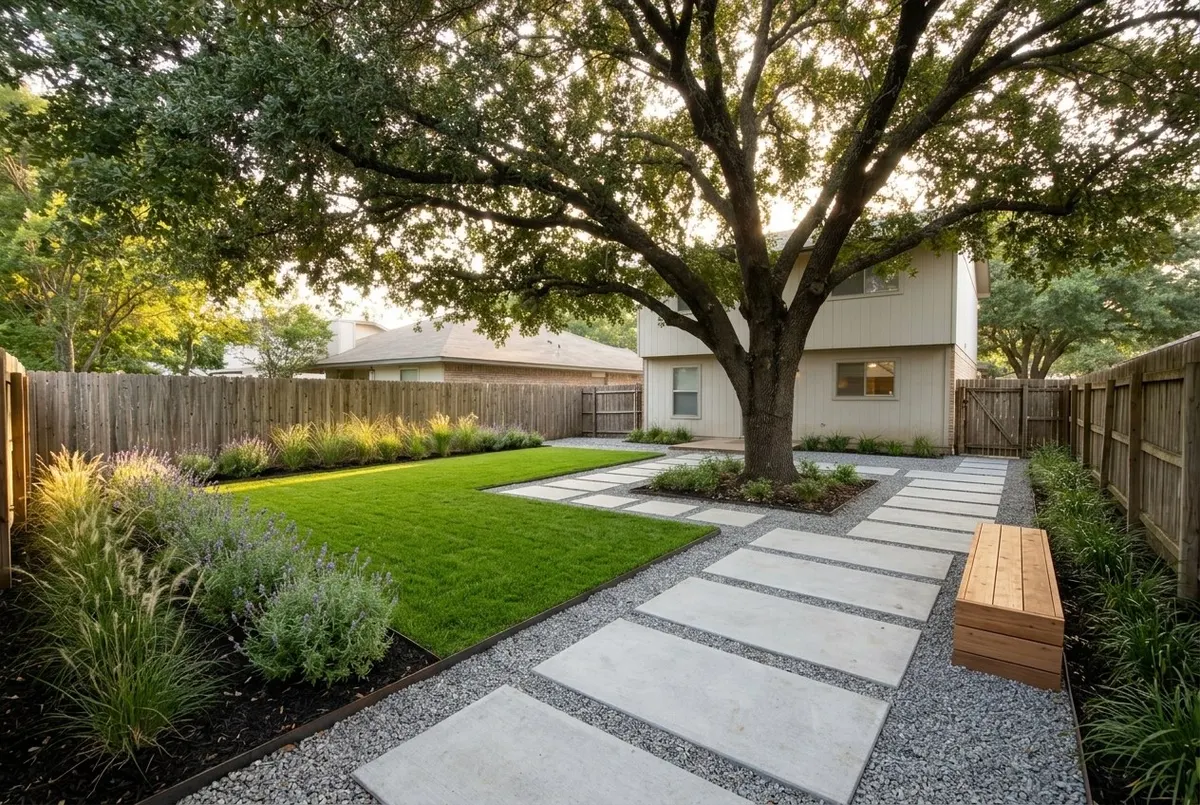
The fence, gate and neighbor's roof all stayed. The bench came out as a plain box, so ask for details if you care about them.
Cottage garden
Redesign the yard as a relaxed cottage garden: curving beds of roses, catmint, foxglove and salvia along the fence, a pea gravel path that loops around the tree, a small wooden bench under the tree, and a neat oval lawn in the middle.
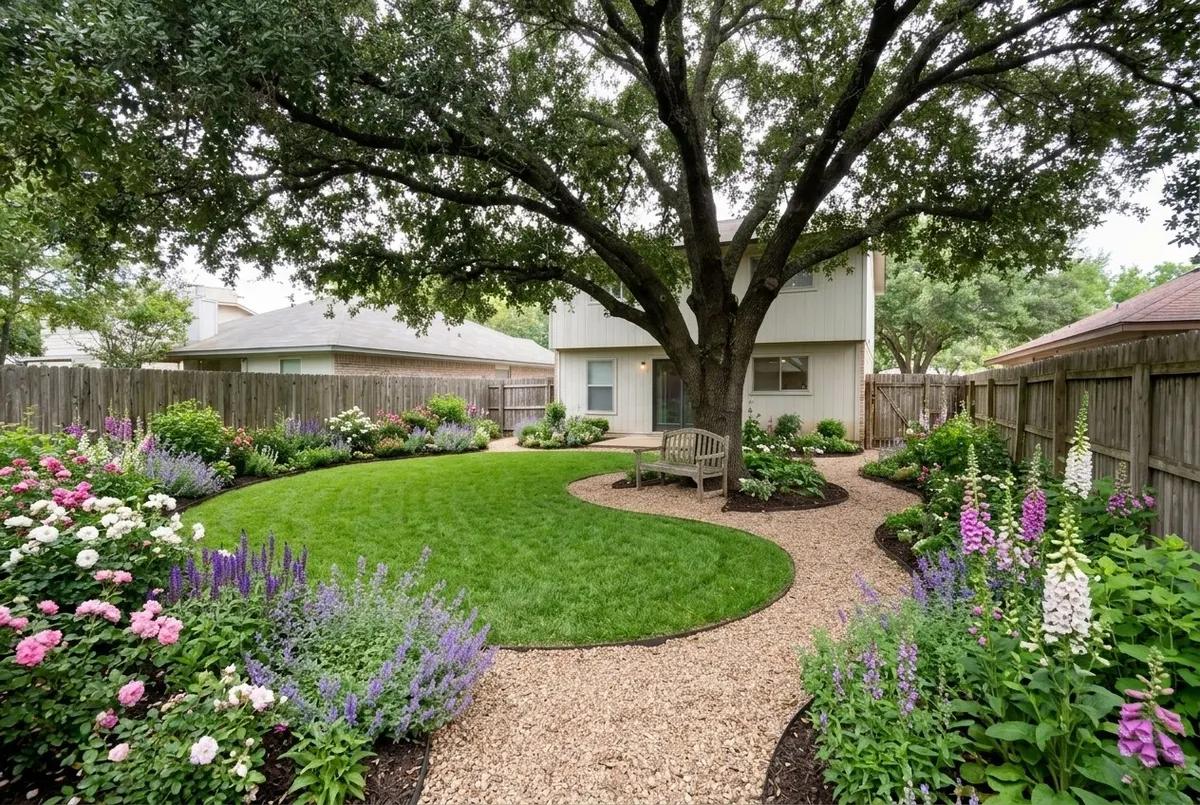
The layout followed the brief closely, but the back of the house gained a glass door, so check small details like this. Everything is also in full bloom at full size, which a new bed won't be for years.
Low-water yard without a lawn
I live in a hot, dry climate, USDA zone 9b, and I want to remove the lawn. Redesign the yard as a low-water xeriscape: decomposed granite, flagstone stepping stones, agave, yucca, deer grass and desert marigold in groups, and boulders around the tree. Show drip-irrigated planting, not a lawn.
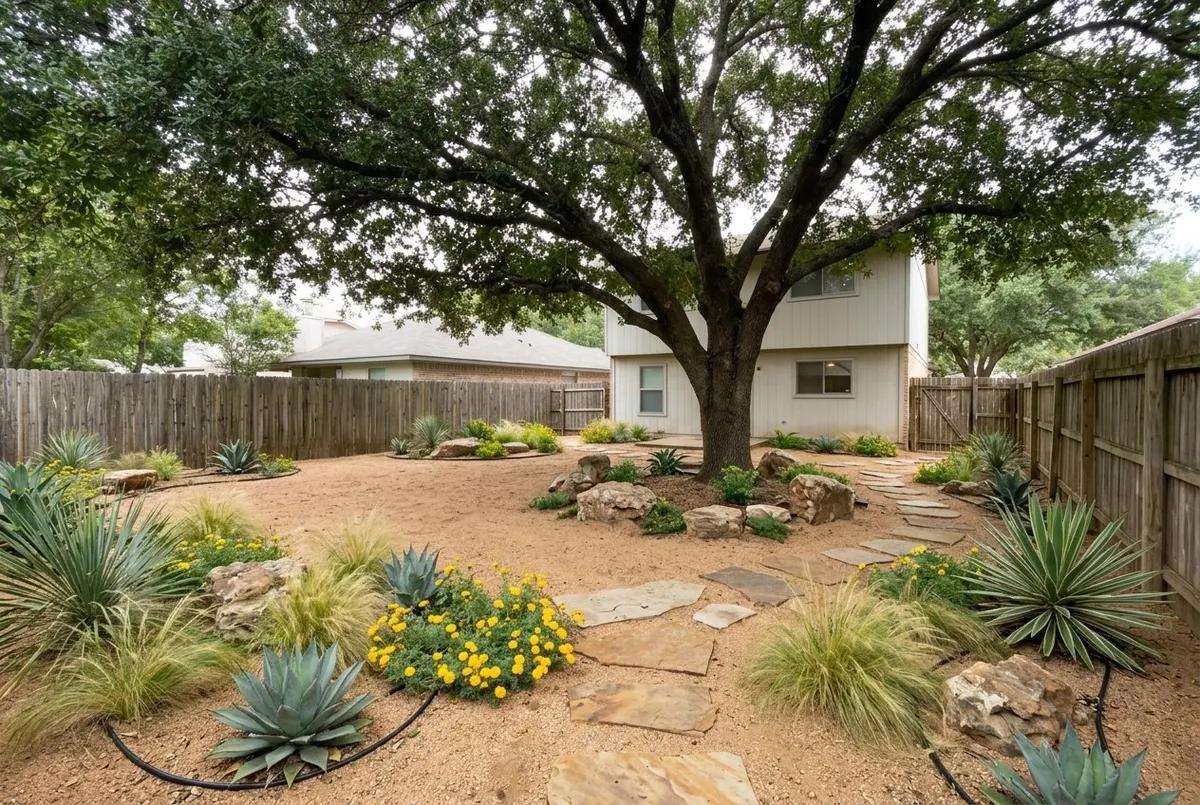
A convincing xeriscape, with one literal mistake: we asked for drip irrigation, so it drew black tubing lying on the ground. Leave equipment out of your prompt.
Two things to check before copying this layout. Agave spines don't belong right beside a path if you have kids or dogs. And ask an arborist before placing heavy boulders over the roots of a mature tree, because the picture can't tell you whether that's safe.
Outdoor dining area
Add one outdoor dining area on the side of the yard nearest the house: a square paver patio, a wooden table for six, a simple timber pergola and warm string lights. Leave the rest of the yard as lawn with a planting bed along the fence.
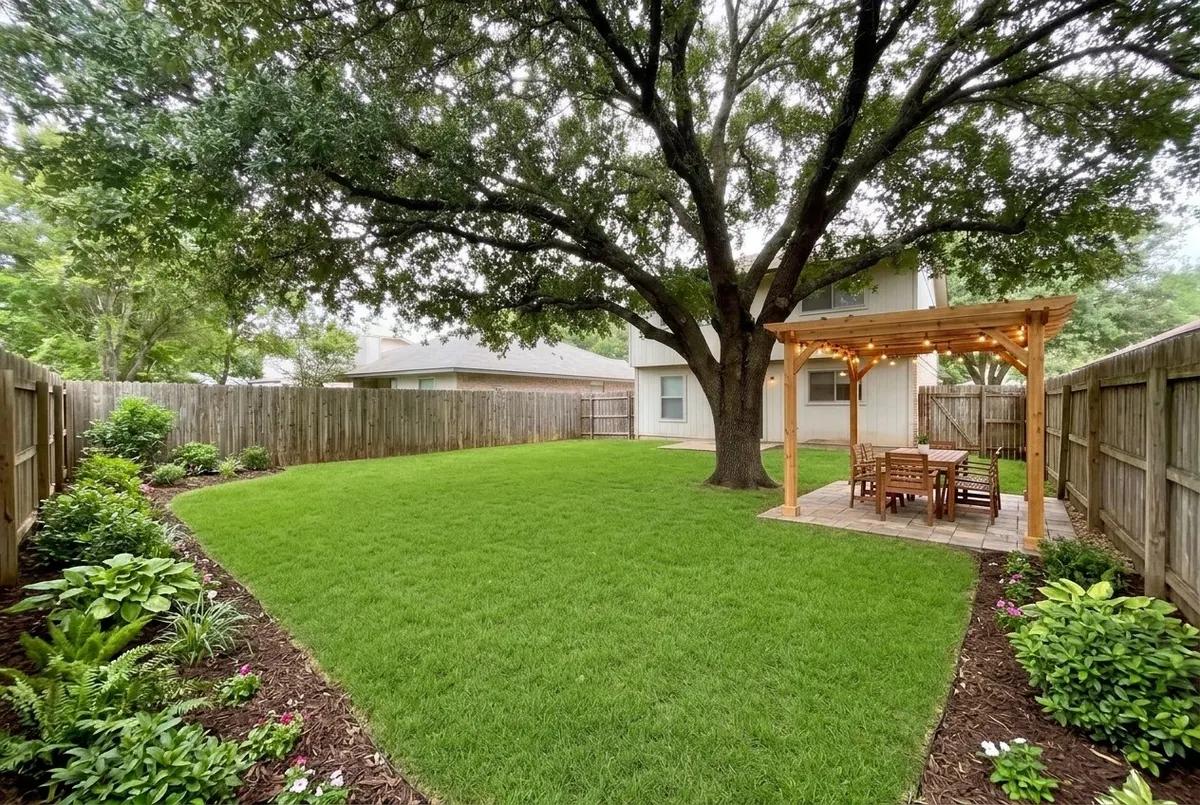
Good placement and believable scale. Look at the lawn, though: thick and green right up to a trunk where the original grass had already died.
Yard for kids and a dog
Redesign the yard for a family with two young kids and a dog. Put a level play lawn in the middle, a wooden swing set in the far corner on wood chips, a small patio with seating near the house, and sturdy shrubs along the fence. No water features and no thorny plants.
This one followed the brief well. It also added a dog toy to the lawn, which we didn't ask for. "Far corner" meant far from the camera, which put the swing set up near the house. That can work, but always name the spot by what's in the photo.
Privacy from the neighbors
This was the one clear failure in the test:
We can see the neighbors over the fence and they can see us. Without raising the fence, add privacy: a row of tall narrow evergreen shrubs along the fence, a slatted wood screen beside a small seating area, and layered planting in front of the shrubs.
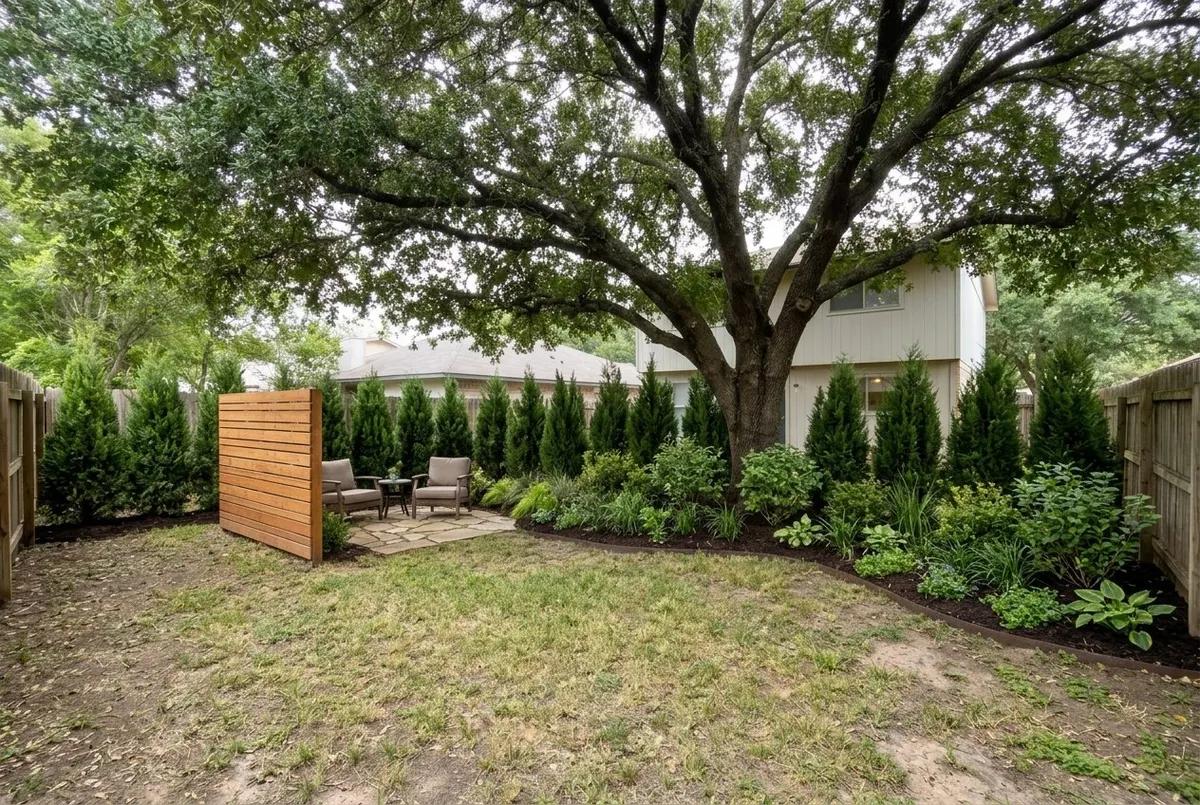
The shrubs run straight across the yard, blocking the house, its windows and the gate. "Along the fence" wasn't specific enough.
So we named the fence and said where planting couldn't go:
We can see the neighbors over the fence on the left side of this photo. Without raising that fence, add privacy: a row of tall narrow evergreen shrubs along the left fence only, a slatted wood screen beside a small seating area on the left, and layered planting in front of the shrubs. Do not plant anything in front of the house, its windows or the gate.
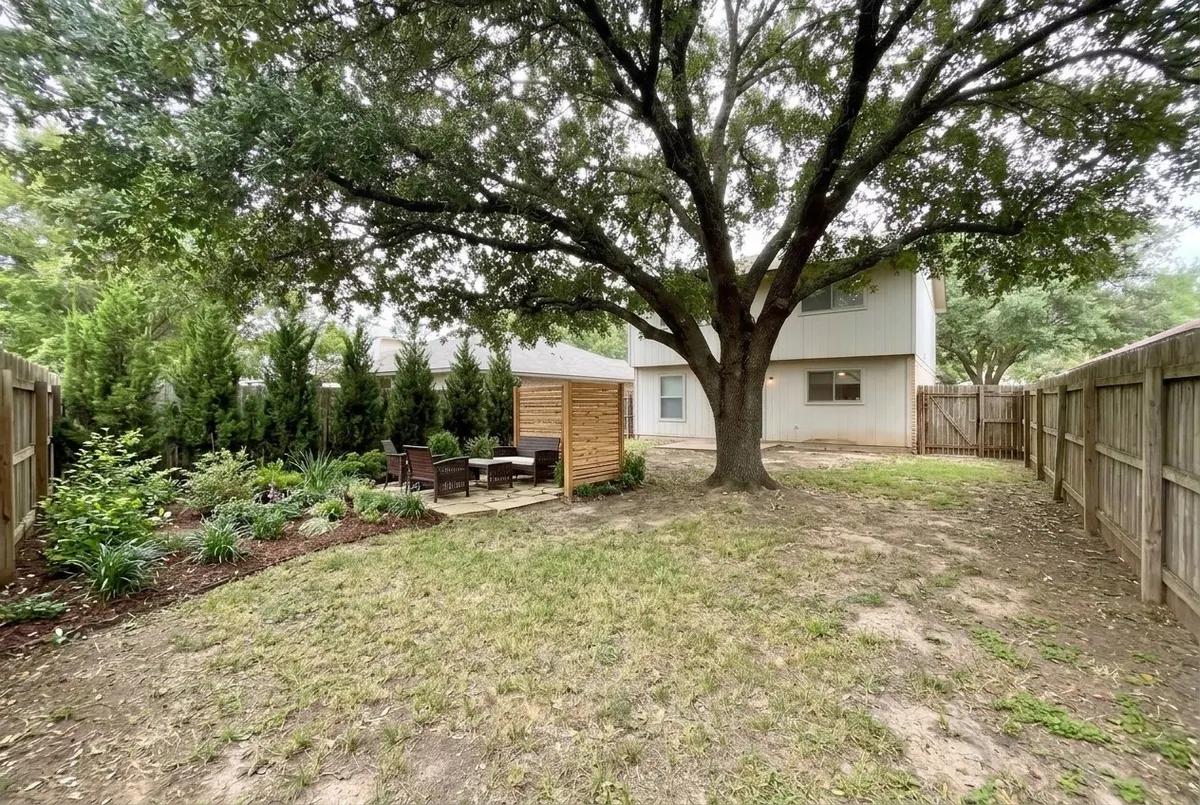
The house and gate are clear now. It isn't perfect: the shrubs hide most of the left fence, and you can't tell if they'd fit on your side of the property line.
Shade garden under a tree
Grass won't grow in the shade under this tree. Change the area under the tree into a shade garden: a mulched bed with ferns, hostas and coral bells, a curved stone edge, and two chairs on flat stepping stones. Keep the tree trunk clear of mulch.
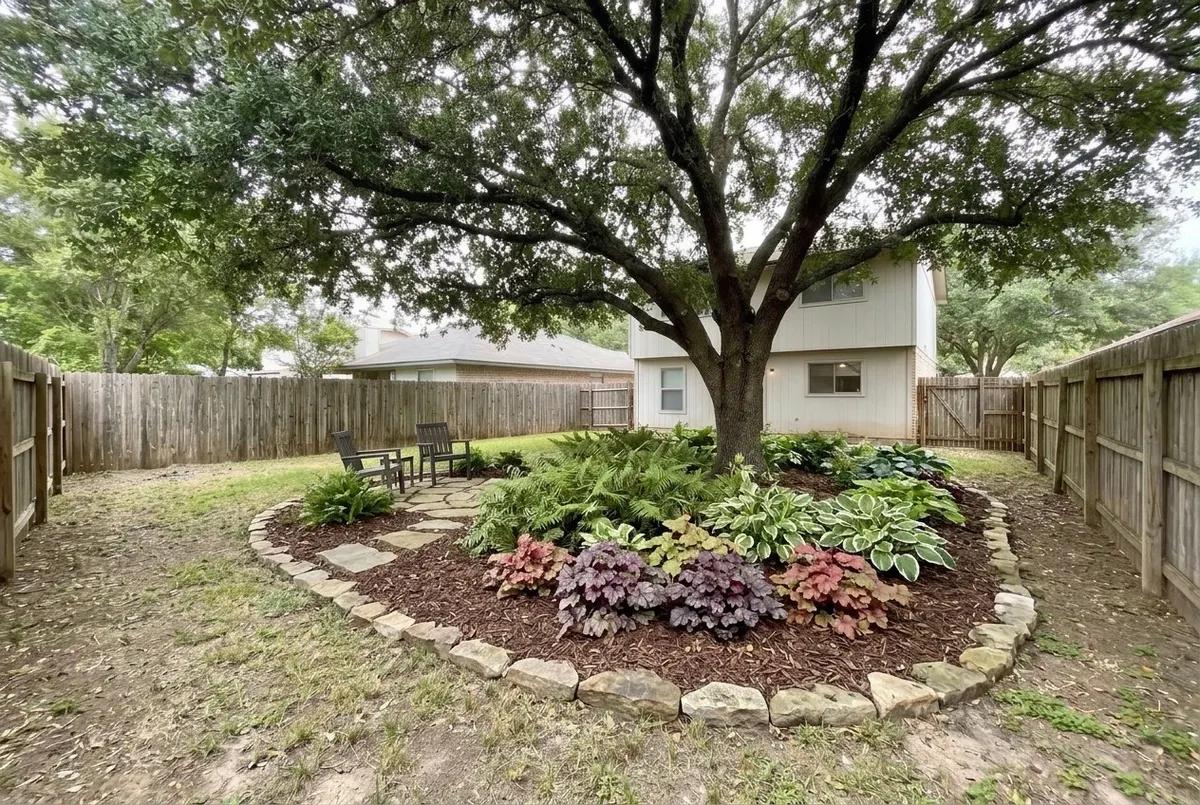
The rest of the yard stayed exactly as worn as it was, because we didn't ask to change it. This prompt solves a real problem and is cheap to try. As with the boulders, ask about digging near the roots first.
Change one thing
Change only one thing: add a curved planting bed with a stone edge along the back fence, planted with shrubs and perennials. Everything else in the photo stays exactly the same, including the worn grass.
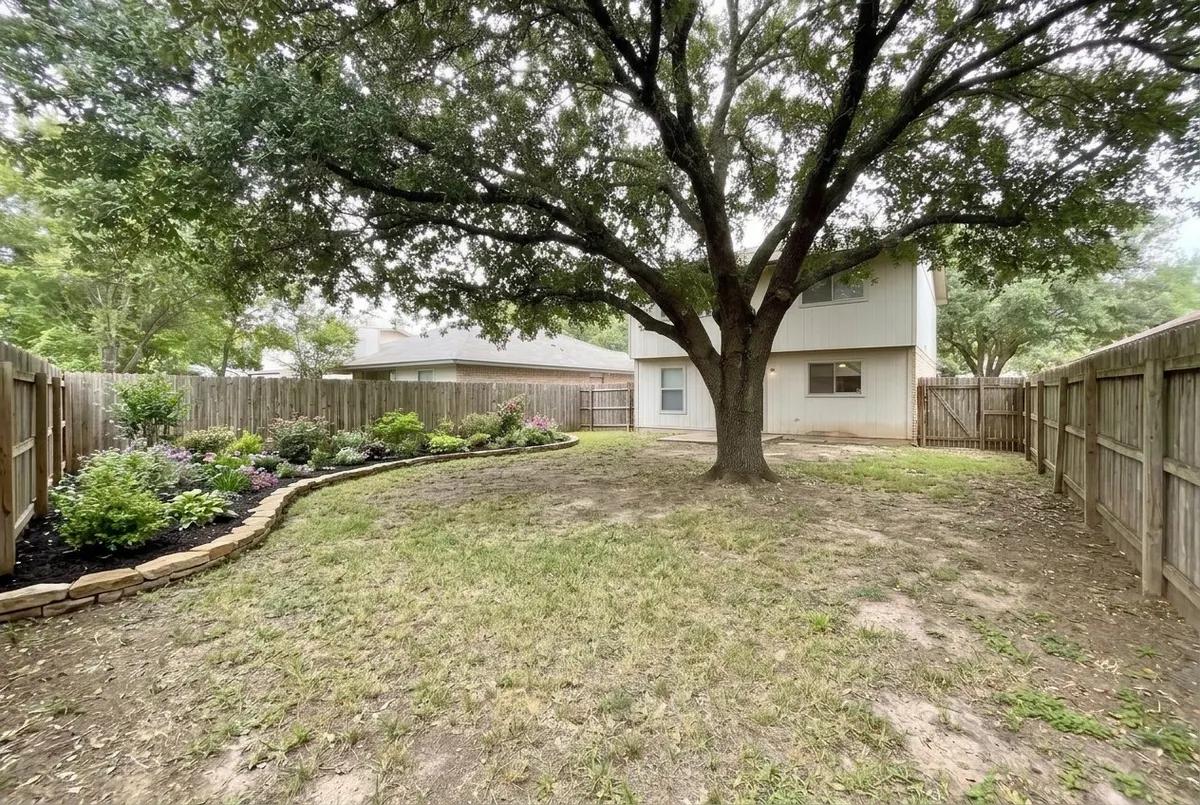
The cleanest result in the test: one bed added, and everything else left alone. This is the format to use once you've chosen a direction.
The first week after planting
Redesign the yard with a paver patio, a planting bed along the fence and a new lawn. Show it the week it was finished: small nursery plants spaced apart with visible mulch between them, not mature planting.
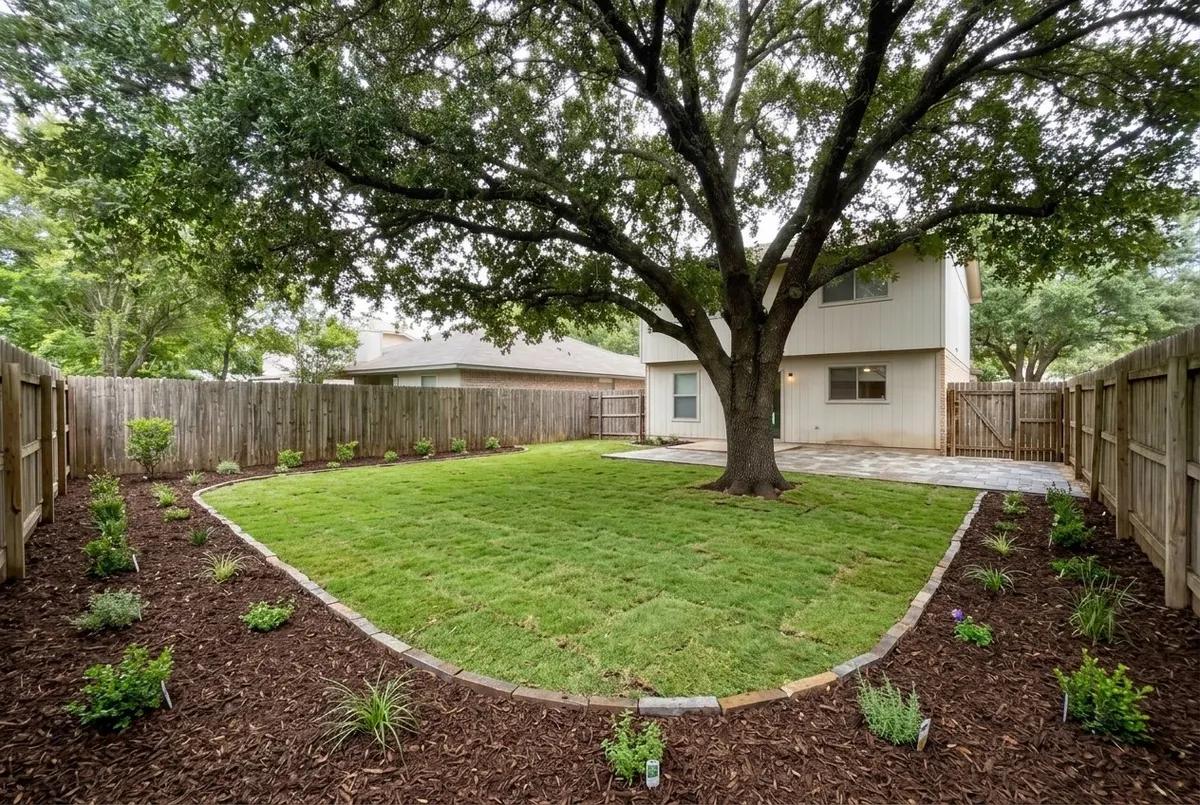
Our favorite result, because it shows what you'd really get in week one: small plants, lots of mulch and visible sod seams, down to the nursery tags.
Small DIY budget
I have a small DIY budget. Refresh the yard using only low-cost materials I can install myself: mulch beds with a simple edge along the fence, a gravel seating area with a fire bowl and two chairs, repaired lawn, and solar path lights. Nothing built or poured.
This gave us the most achievable plan of the set: a mulch bed, solar lights and a gravel circle with a fire bowl. "Repaired lawn" came out as a perfect lawn, though, and that's the expensive part. Price it separately.
What AI still gets wrong in a backyard
These are the problems we saw in this test. Check for each one in your own results:
| What to check | What we saw | What to do |
|---|---|---|
| Grass in shade | Thick lawn under a tree where grass had already died | Ask for a planting bed or mulch under the tree instead |
| Plant size | Mature plants in full bloom in almost every result | Ask for the first-week view |
| Location words | "Far corner" and "along the fence" read from the camera's view | Say "left fence" and name what stays clear |
| Small additions | A new glass door, a dog toy | Compare the result with your photo before you trust it |
| Equipment | Drip tubing drawn on top of the ground | Describe the outcome and leave equipment out |
| Measurements | Nothing in any image can be measured | Measure your yard yourself and treat the image as a concept |
If you want a method for that last step, our guide on how to design a backyard landscape covers measuring and planning.
Two planning prompts to run after the picture
Images are for choosing a direction. A text model is better for checking one. We ran these two in Gemini's text model, using the blue hour result from earlier.
Check the plants:
List every plant you can see in this design. I live in USDA zone 7a, this yard gets shade under the tree and full sun at the edges. For each plant, say whether it is likely to survive my winters, flag anything toxic to dogs, and suggest a swap for each one that fails. Use a table.
The answer caught something useful: it flagged a plant it read as a sago palm as highly toxic to dogs, and marked most of the tropical planting as unlikely to survive zone 7a. But it was naming plants from an AI-drawn picture, so every identification was a guess. Treat the output as a list of questions for a local nursery, and check any swap before you buy.
Find the problems before you pay for quotes:
Act as a landscape contractor reviewing this design for a yard about 40 by 60 feet. List what could go wrong with drainage, tree roots and access. Then write the questions I should ask before getting a quote. Keep it under 200 words.
We got sensible questions about root damage, drains and how machinery would reach the yard. It also described the fire pit as sunken, which the image doesn't clearly show, and assumed a gate width it couldn't know. Keep the questions and verify the assumptions on site.
When prompting is enough, and when it isn't
Our test changed our own view a little. With a good keep clause, a general AI model held the yard together better than we expected. If you only need a handful of concepts and don't mind rewriting prompts, what's on this page may be all you need.
Here's how it compares with a dedicated tool like OutdoorBrite. We haven't run this same test on OutdoorBrite, so this compares how the two work, and it isn't a head-to-head on image quality.
| Prompting in a chatbot | OutdoorBrite | |
|---|---|---|
| What you do | Write and rewrite the instructions | Upload a photo and pick a style, with an optional one-line prompt |
| Best for | A few concepts, and you like tweaking | Comparing many styles on one yard |
| Cost | Free tiers exist, with limits that change | Paid only, from $29 a month, or $23 billed yearly |
| Built for | Anything | Outdoor spaces only |
If you've already tried this in a chatbot and got tired of "try again but keep my patio," see how ChatGPT landscape design compares with a photo-based tool. You can also compare the best AI tools for backyard design.
Key takeaways
- Start with what stays. The keep clause is the first line to copy from this page.
- Name places by what's in the photo. "Left fence" worked where "along the fence" failed.
- Change one thing at a time once you've picked a direction.
- Ask for the first-week view before you fall for the full-grown version.
- Check the plants separately. A picture can't tell you what survives your winter.
FAQ
What is the best AI prompt for redesigning a backyard? The best prompt opens with what must not change, then gives your hardiness zone and sun, the problem, the plants and materials you want, and the time of day or planting age to show. In our test, this structure kept the tree and the shape of the house in all 11 prompts that used it. An eight-word prompt without it repainted the house.
Can ChatGPT redesign my backyard from a photo? ChatGPT accepts photo uploads and can generate an edited image, so you can use the prompts on this page there. We ran our tests in Gemini, not ChatGPT, so we can't say how closely its results would match. Check the house, fences and yard size against your photo either way.
Can Gemini redesign my backyard? Yes. We ran 12 prompts through Google's Gemini image model on one yard photo, and the structured prompts kept the house shape and tree. Results varied in the details, including one privacy prompt that planted shrubs across the front of the house until we reworded it.
Why does AI keep changing my house or fence? Usually because the prompt doesn't say they matter. Our vague prompt repainted the house and rebuilt the fences, while prompts with a keep clause left the house alone. If a fence still changes, name that fence by its position in the photo.
Do I need to tell AI my hardiness zone? Yes, because a photo doesn't reveal your climate, and an image model will draw whatever suits the look. Look up your zone on the USDA map, include it in the prompt, then check the plant list with a local nursery. The picture alone doesn't prove a plant will survive.
Can I build from an AI backyard design? Use it as a concept, not a construction plan. None of our results could be measured, and none checked drainage, roots or property lines. Take the image to a contractor or designer, along with your own measurements.
Are AI prompts for landscape design free to use? The prompts on this page are free to copy. ChatGPT and Gemini both offer free access with usage limits that change over time, so check their current plans. OutdoorBrite has no free plan: pricing starts at $29 a month, or $23 a month billed yearly.
Sources: USDA Plant Hardiness Zone Map, Missouri Botanical Garden Plant Finder: Strelitzia reginae. Prompt results from our own test on November 5, 2026.