Plunge Pool Cost in 2026: Installed Prices by Type
What a plunge pool costs in 2026 by type and size, what the installed price includes, the deck, fence and heating costs that sit around it, and sample all-in budgets for a small yard.
The price on a plunge pool maker's website is rarely what you end up paying. Ecopool lists its container plunge pools from $23,660 and Soake lists its precast concrete models from $25,000, but those numbers cover the pool and, at most, its pump and filter. The hole, the crane, the electrician, the permit and the fence your town requires all come on top. For most homeowners, the plunge pool cost lands between $10,000 and $40,000 installed, with a national average of about $28,000, according to Angi's 2026 data.
Then there's the yard around it. A pool dropped into bare lawn looks unfinished, so most projects also pay for a deck or patio, some planting and lighting. Those pieces can add another $4,000 to $15,000, and they're the part manufacturer pages leave out.
This guide breaks the numbers into three layers: the pool itself by type and size, what installation covers, and the yard work that turns it into a finished space. Prices were checked on October 20, 2026.
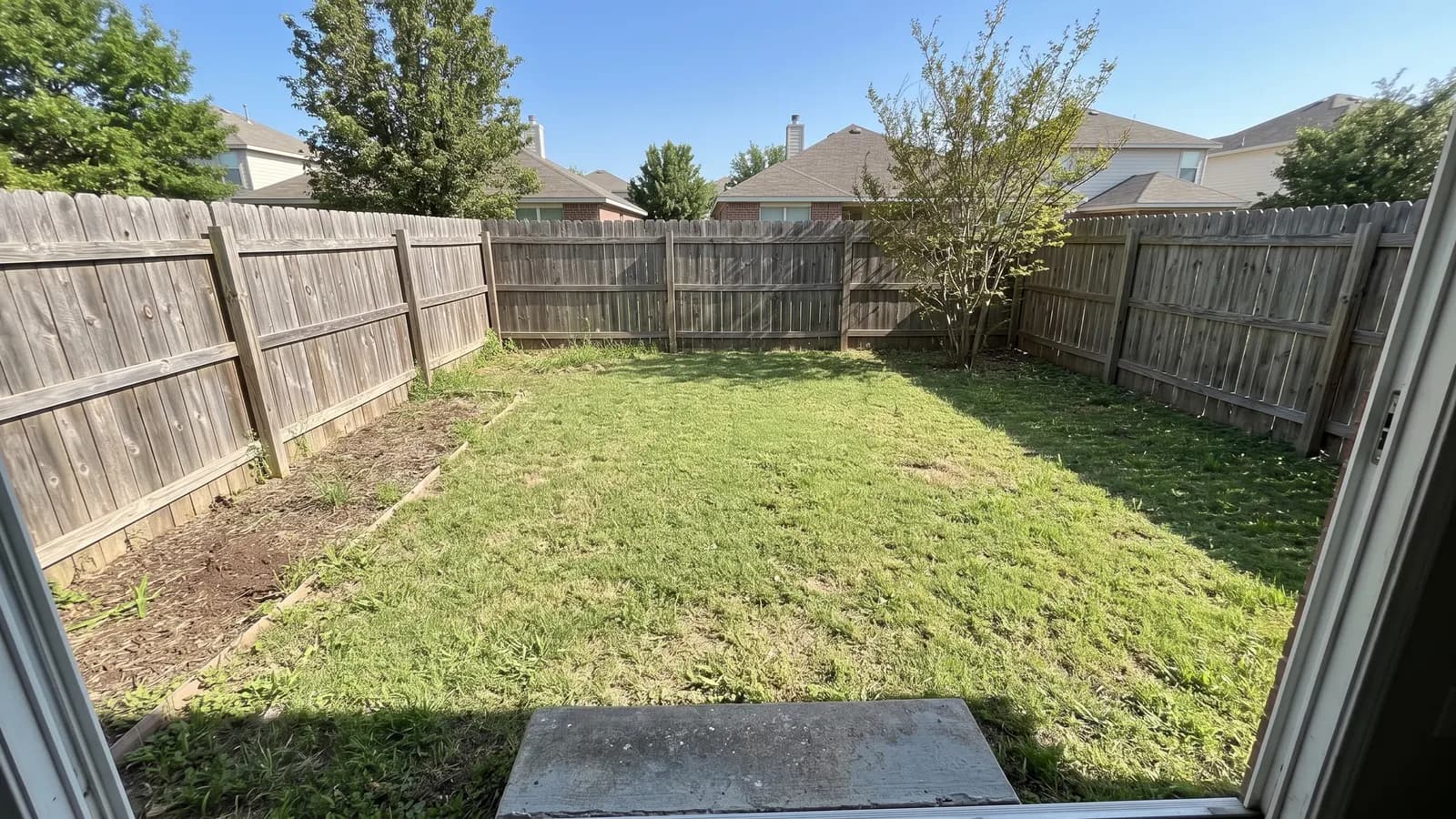
Plunge pool cost at a glance
A plunge pool costs $10,000 to $40,000 installed for most projects, with an average near $27,500 to $28,000 (HomeGuide and Angi, 2026). A small above-ground unit can be as little as $3,000. A large custom concrete pool can pass $75,000. A DIY stock tank pool, the budget outlier, runs $600 to $4,300 with setup.
| Plunge pool type | Typical installed cost | Install time | Best for |
|---|---|---|---|
| Stock tank (galvanized steel) | $600 to $4,300 | A weekend | Tight budgets, renters, trying the idea out |
| Above-ground prefab | $3,000 to $30,000 | Days | Patios and yards where you can't dig |
| Vinyl liner, inground | $10,000 to $30,000 | Weeks | Lowest-cost inground pool |
| Fiberglass, inground | $18,000 to $55,000 | Days to weeks | Low maintenance, quick install |
| Shipping container | $27,000 to $65,000 | Days on site | Modern look, inground or partly above ground |
| Concrete (gunite or precast) | $20,000 to $75,000 | Weeks to months for poured | Custom shapes, tile, bench seating |
Ranges from Angi and HomeGuide's 2026 cost guides. Container figures run from HomeGuide's 8x12 plunge size ($27,000 to $46,000) to its typical 8x20 container pool ($35,000 to $65,000).
Plunge pool cost by type
Material decides most of the bill. Here is what each option costs and what you get for the money, shown as AI concepts on the same small yard from the photo above.
Fiberglass plunge pools: $18,000 to $55,000
A fiberglass plunge pool is a one-piece shell made in a factory, trucked in and set into a dug hole. Angi puts installed costs at $18,000 to $55,000, and HomeGuide's range is $20,000 to $50,000. The gelcoat surface is smooth and resists algae, and there's no liner to replace later.
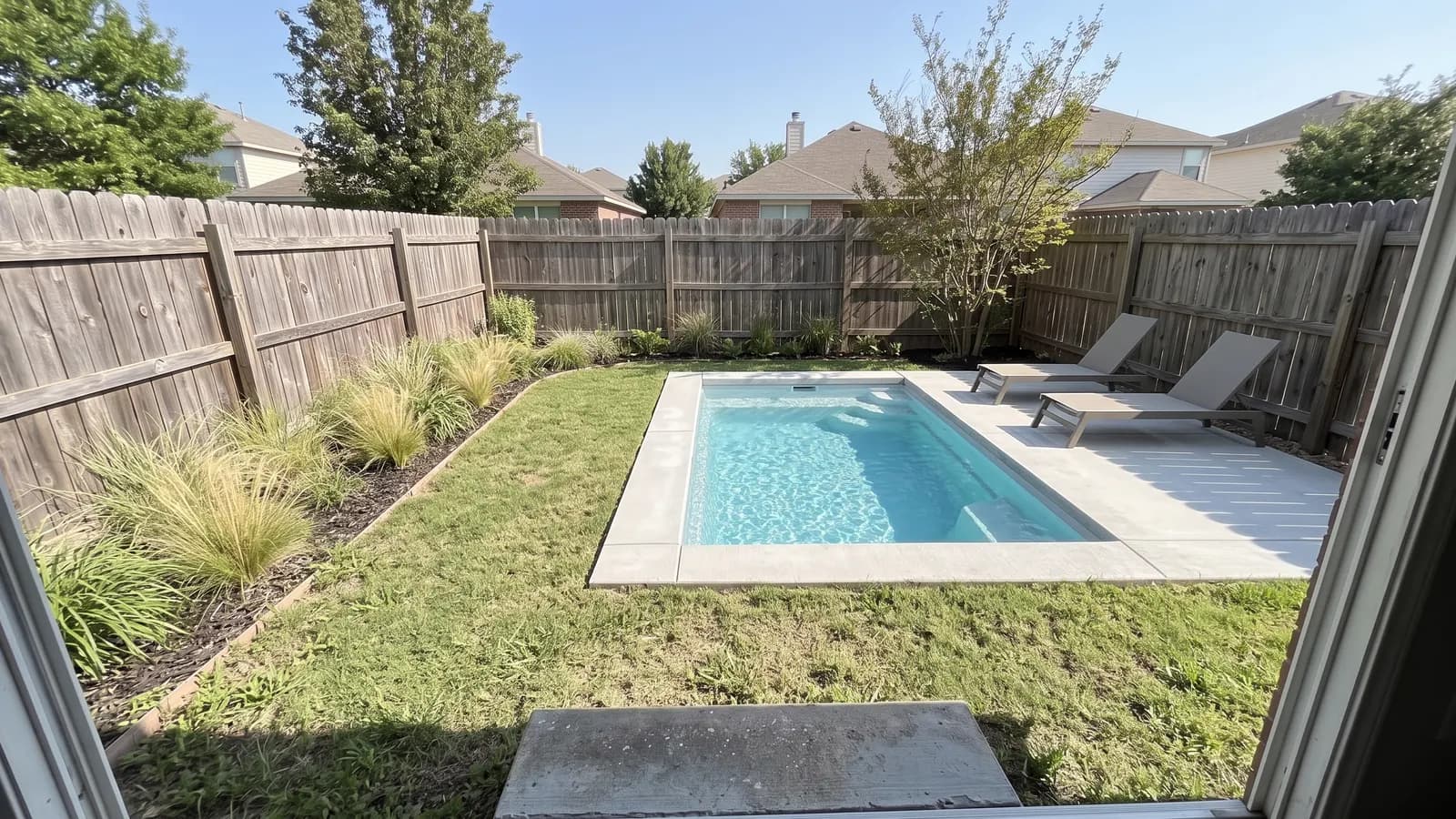
The trade-off is choice. You pick from the manufacturer's shapes and depths. Latham, one of the larger makers, sells fiberglass and vinyl plunge models through local builders rather than with a published price, so you'll need a builder's quote to compare.
Concrete plunge pools: $20,000 to $75,000
Concrete is the widest range because it covers two different products. A poured gunite pool is built in place, fully custom, and can take months. A precast concrete pool is made in a factory and craned in. Soake's precast models start at $25,000 for a 4x4 cold plunge, $31,000 for a 10x6 and $33,500 for its most popular 13x7 size, before installation (soakepools.com, checked October 2026).
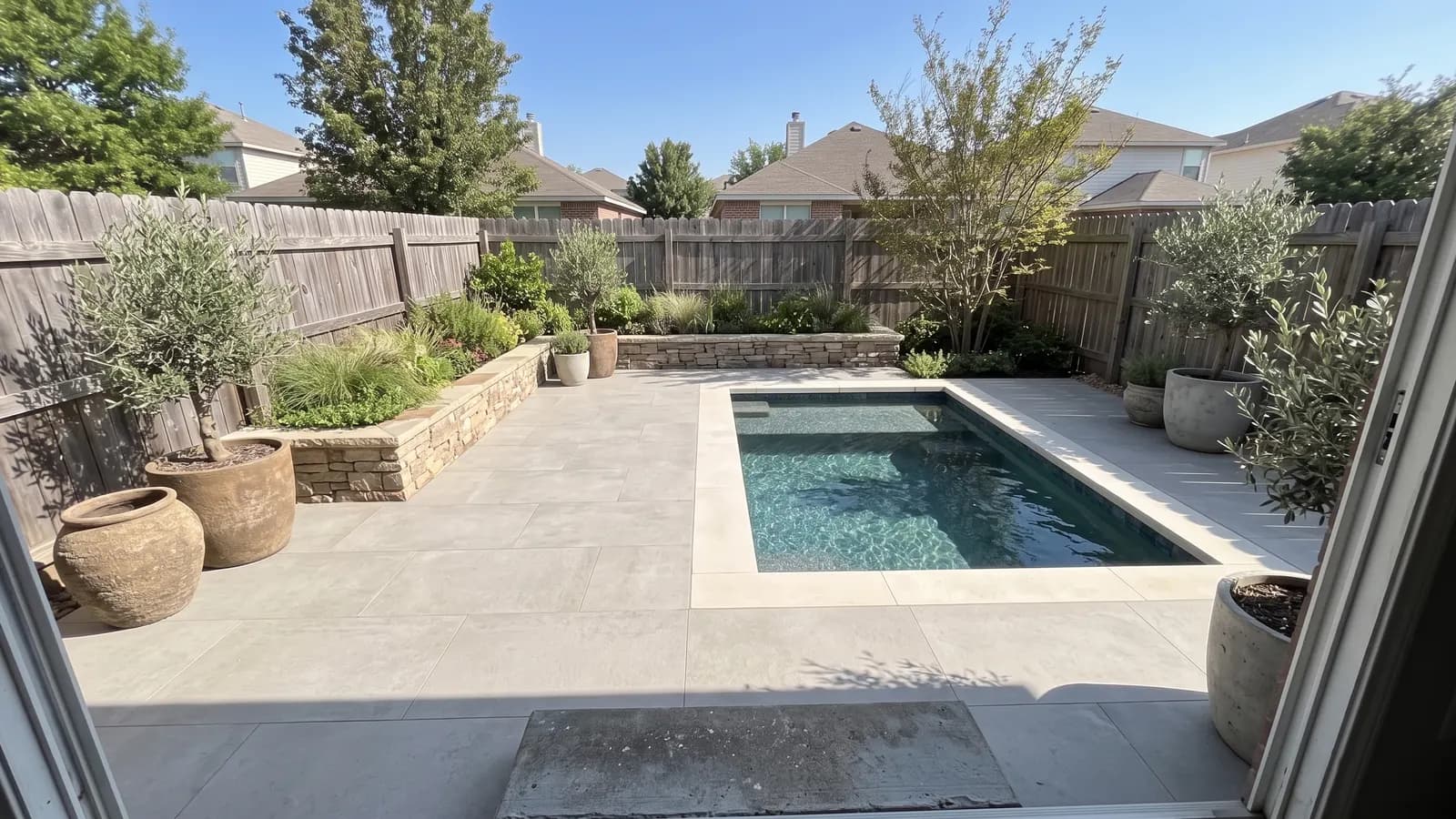
Concrete is the one to choose if you want a tiled interior, a built-in bench or an unusual shape. It also costs the most to keep up. HomeGuide notes concrete pools need resurfacing every 10 to 15 years.
Vinyl liner plunge pools: $10,000 to $30,000
A vinyl pool has a steel or polymer wall frame and a vinyl liner. It's the cheapest way to get an inground plunge pool: $10,000 to $30,000 installed per Angi, $10,000 to $25,000 per HomeGuide. The catch is the liner, which tears more easily than other surfaces and needs replacing over the life of the pool.
Shipping container pools: $27,000 to $65,000
Container pools are steel shipping containers converted into pools in a factory. They arrive finished, with plumbing in place, and can sit inground, above ground or partly in the ground. HomeGuide prices an 8x12 plunge-size container pool at $26,000 to $41,000 for the unit alone, or $27,000 to $46,000 installed. An 8x20 runs $28,000 to $50,000 for the unit. Ecopool's plunge pools start at $23,660 with the pump and filter included (ecopool.com, checked October 2026).
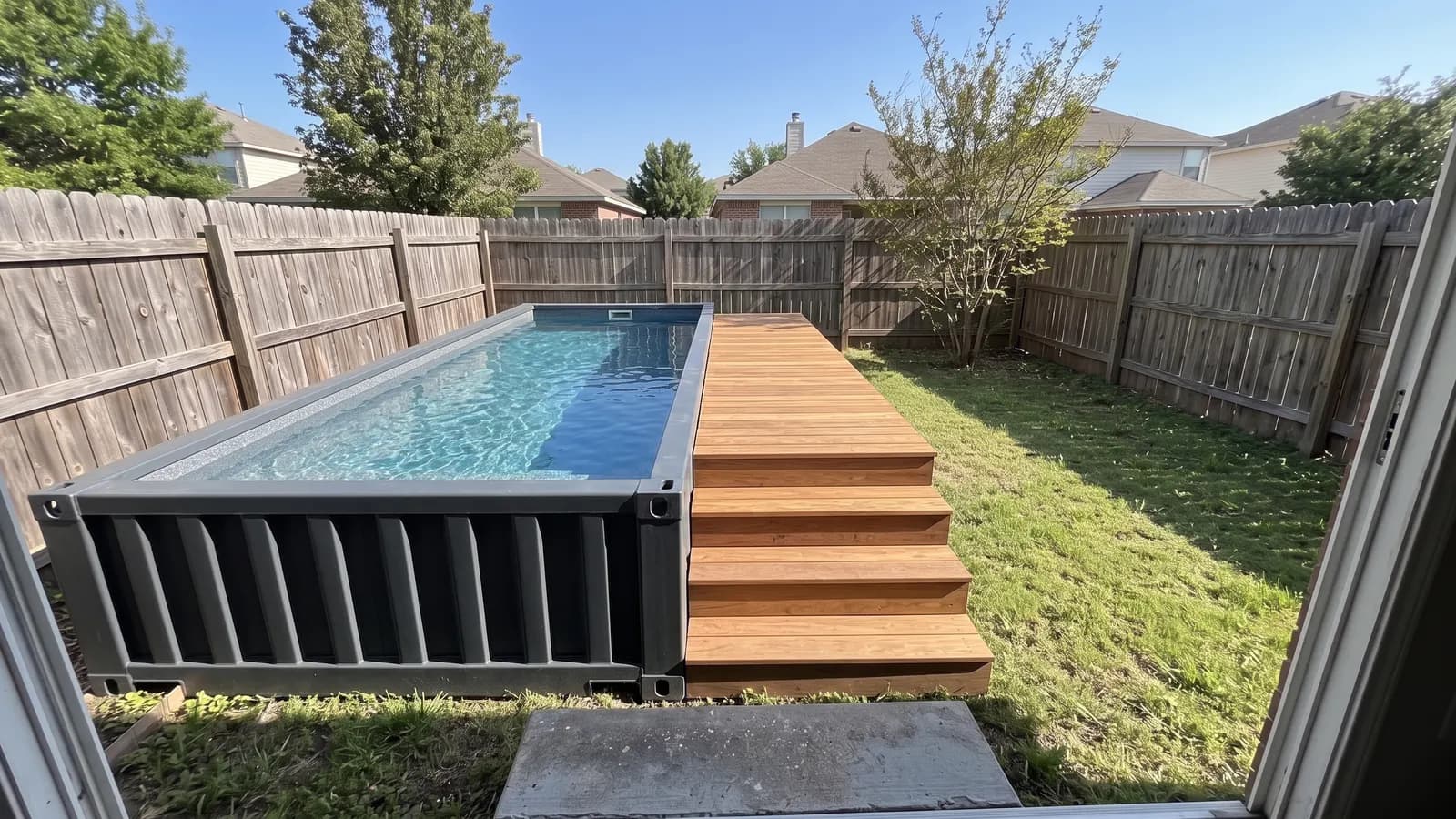
Getting one into a backyard is the hidden line item. If a truck can't reach the spot, a crane lifts it over the house for $500 to $1,500 or more.
Above-ground and stock tank pools: $600 to $30,000
Above-ground plunge pools cost $3,000 to $30,000 installed, depending on the brand. They skip excavation and usually need only a level concrete slab, which costs $6 to $12 per square foot.
The stock tank pool is the do-it-yourself version: a galvanized livestock trough with a small pump and filter. HomeGuide puts an 8-foot tank at $400 to $2,400 for the tank, or $700 to $3,900 with professional setup. It's the cheapest way to sit in cold water on a hot afternoon, and the least like a "real" pool.
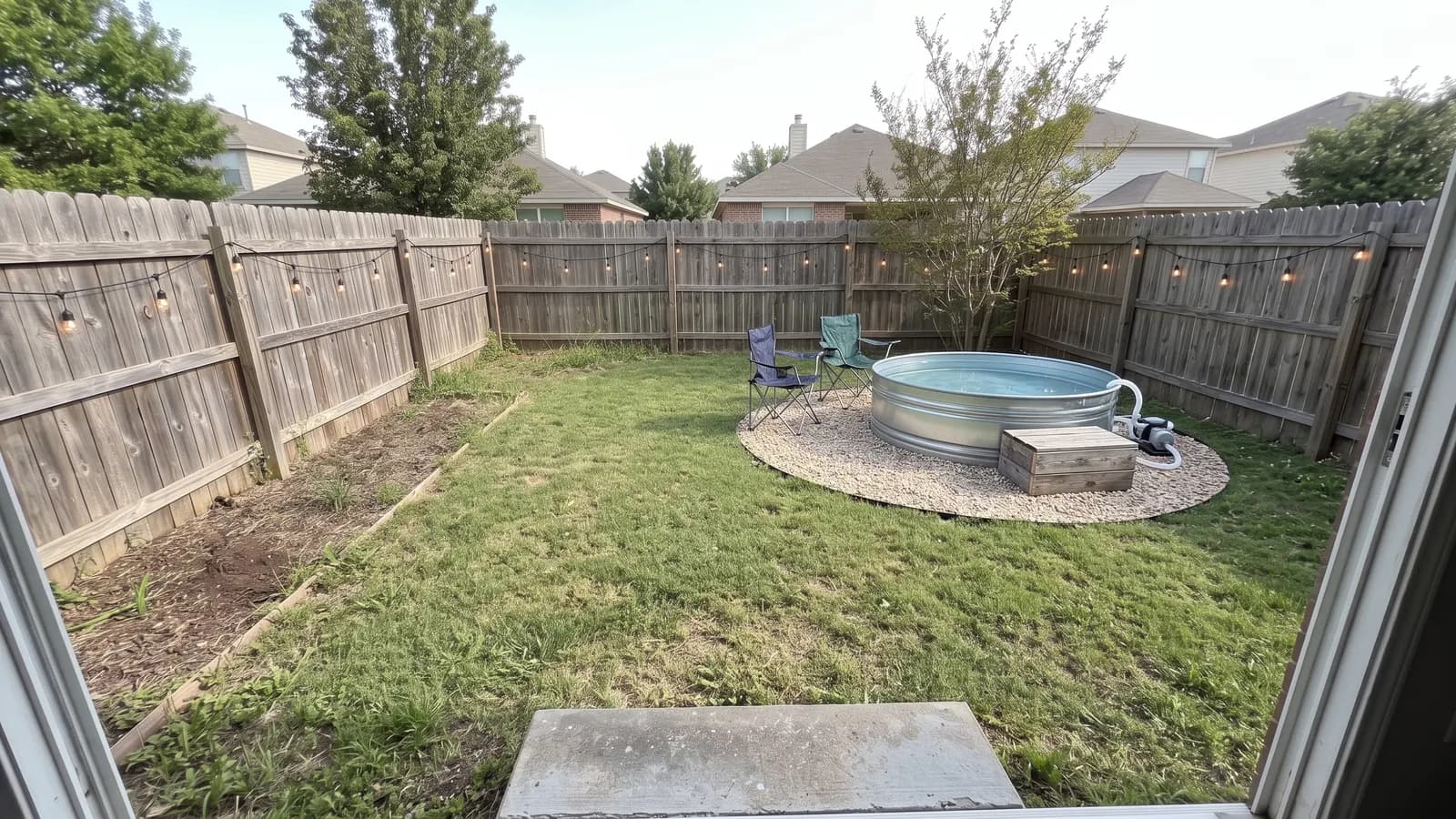
Seeing these four on the same patch of lawn is often what settles the decision. A container pool takes over one side of a small yard; a stock tank barely changes it. You can run the same test on your own yard with AI pool design: upload a photo and get pool concepts in different styles before you call an installer.
Plunge pool price by size
Size is the second biggest lever after material. Angi's 2026 figures:
| Size (feet) | Typical installed cost | Roughly fits |
|---|---|---|
| 4x4 | $5,000 to $10,000 | One person, cold plunge use |
| 7x7 | $10,000 to $30,000 | Two to three people seated |
| 9x5 | $20,000 to $40,000 | Two people, a short soak |
| 10x6 | $30,000 to $50,000 | Three to four people |
| 13x7 | $40,000 to $60,000 | Four to five adults, light water exercise |
Depth usually runs 4 to 7 feet with a flat bottom. Once four or five adults get in, This Old House notes, it starts to feel like a crowded hot tub. If you picture regular parties, size up. If it's for two people after work, a 7x7 or 10x6 is plenty.
What's included in the installed price
An installed quote usually covers the pool, the work to place it and the equipment to run it. Expect these line items, even if a builder rolls them into one number:
- Excavation: $500 to $3,000 (Angi), more for rocky soil or a tight side gate
- Site prep: tree removal ($200 to $2,000) and regrading ($1,100 to $3,300) if the spot isn't flat
- Delivery and placement: $100 to $1,500 for delivery, and a crane or telehandler for prefab shells
- Pump and filter: $1,000 to $2,000 if not included with the pool
- Plumbing and electrical: plumbers charge $75 to $150 an hour and electricians $50 to $130 (HomeGuide)
- Permits: $500 to $2,000 for a building permit (HomeGuide); Angi notes many projects need separate excavation, construction and electrical permits
Prefab pools are heavy. A precast plunge pool weighs around 7,500 pounds before water, according to a manufacturer quoted by This Old House, so the installer needs equipment access to the backyard. Ask about access on the first call, not after the quote.
Call 811 before any digging. Gas, water and power lines decide where the pool can go more often than the view from the kitchen does.
Extra costs: heating, fencing, decking and landscaping
This is the layer that turns "the pool cost $28,000" into "the project cost $40,000." None of it is optional in a finished yard, and some of it is required by law.
Pool fence
Most towns require a barrier around a pool past a certain depth. The CPSC's barrier guidelines call for a fence at least 48 inches tall with self-closing, self-latching gates that open away from the pool, and many local codes follow them. Pool fencing costs $10 to $45 per linear foot installed (HomeGuide), so the 60 or so feet around a small pool and deck is roughly $600 to $2,700. Glass panels run $120 to $500 a foot.
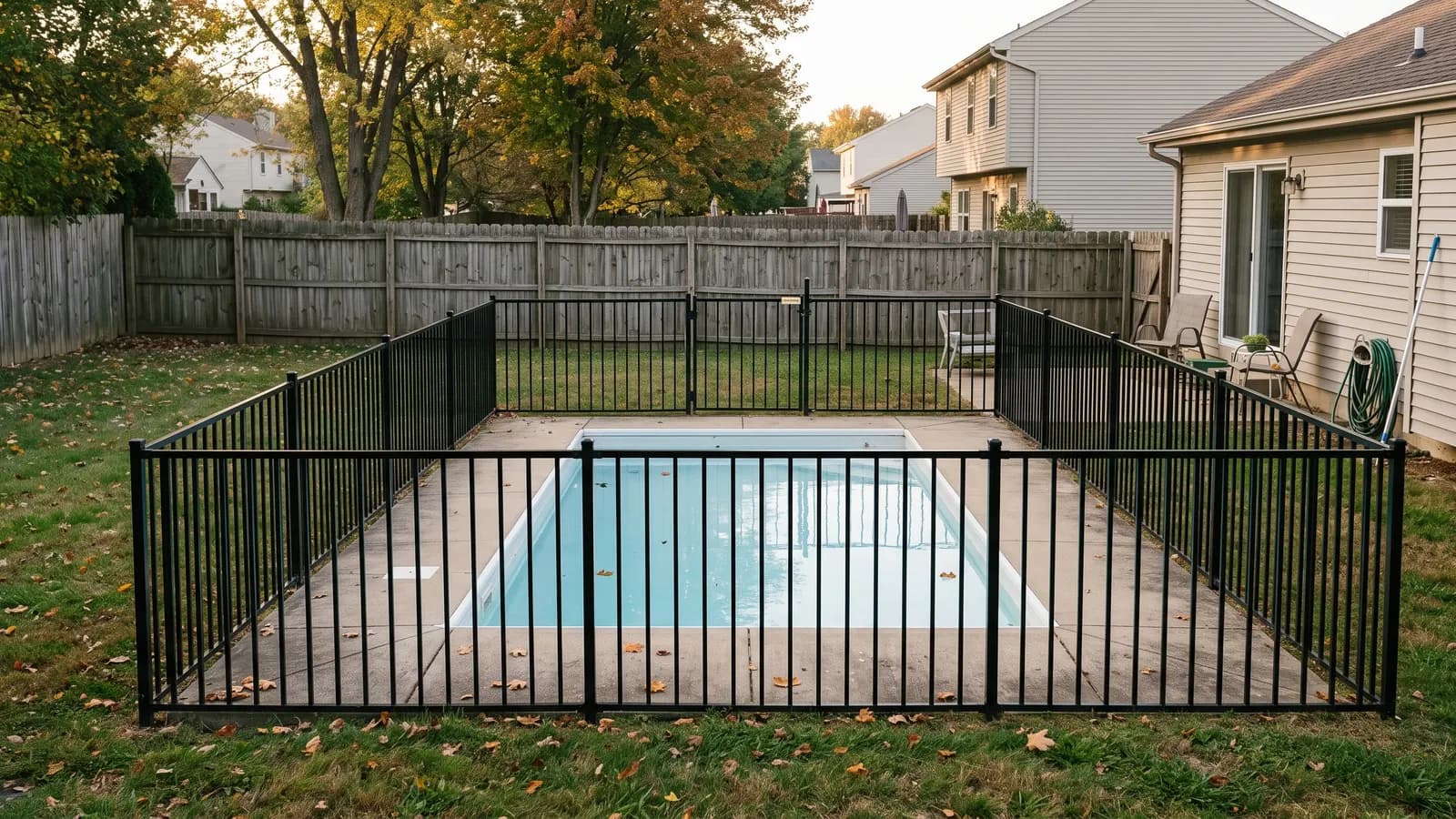
If your existing privacy fence already encloses the yard, it may count as the barrier, as long as the gates meet the rules and the house doors are covered too. Check with your building department. To price a new run, our fence cost calculator gives you a material-by-material estimate.
Deck or patio
You need somewhere to stand, sit and dry off. HomeGuide puts a wood or composite deck at $25 to $50 per square foot and a patio at $5 to $35 per square foot. A plain concrete deck four feet wide around an 8x14 pool is about 200 to 250 square feet. Our guide to concrete patio cost breaks down slab prices by finish if that's the route you take.
Heating
A pool heater costs $1,800 to $4,200 installed (Angi), and running it is the bigger long-term number: gas and propane heaters cost $200 to $850 a month to operate in season. A plunge pool heats faster than a full-size pool because there's far less water, which is one reason people keep them open year-round.
Landscaping and lighting
Planting, edging and a few lights are what make the pool look like it belongs. HomeGuide puts landscaping at $4 to $12 per square foot. Pool lights run about $625 each (Angi). Plan the hardscaping and planting together so the deck, plant beds and fence line meet cleanly. For planting and layout ideas, see our pool landscaping ideas.
Other add-ons
| Add-on | Typical cost |
|---|---|
| Manual safety cover | $4,500 to $7,000 |
| Automatic cover | $9,500 to $11,000 |
| Built-in bench | $2,800 to $9,500 |
| Jets | $800 to $3,000 |
| Saltwater system | $500 to $2,500 |
| Wall window (container pools) | $4,500 to $9,000 |
Sources: HomeGuide and Angi plunge pool cost guides, 2026.
Ongoing costs
Plan for $400 to $2,000 a year in maintenance (Angi), plus about $50 to $100 a year in added homeowners insurance. Professional service runs $80 to $150 a month, and a plunge pool sits at the low end of that range because there's less water to treat.
Sample all-in budgets for a small yard
Here is how the layers add up for three common projects. These are ranges built from the source figures above, not quotes, but they show where the money goes.
| Line item | Stock tank setup | 8x14 fiberglass pool | 7x13 concrete pool |
|---|---|---|---|
| Pool installed | $700 to $3,900 | $20,000 to $50,000 | $25,000 to $70,000 |
| Permits | Often none | $500 to $2,000 | $500 to $2,000 |
| Fence (about 60 ft) | $800 to $2,000 | $600 to $2,700 | $600 to $2,700 |
| Deck or patio | $800 to $3,000 | $1,500 to $5,000 | $3,000 to $8,000 |
| Heater | Usually none | $1,800 to $4,200 | $1,800 to $4,200 |
| Landscaping and lights | $300 to $1,000 | $1,500 to $4,000 | $2,000 to $5,000 |
| Rough total | $2,600 to $9,900 | $25,900 to $67,900 | $32,900 to $91,900 |
Two things stand out. On the inground projects, the fence, deck and planting add roughly 20 percent to the pool price. And on a stock tank, the fence and deck can cost more than the pool.
Plunge pool vs regular pool cost
A plunge pool is cheaper than a regular inground pool, but not by as much as the size difference suggests. HomeGuide puts a full-size inground pool at $25,000 to $100,000, with a national average of $62,500. Angi's average is about $67,000. A plunge pool averages around $28,000.
| Plunge pool | Regular inground pool | |
|---|---|---|
| Typical installed cost | $10,000 to $40,000 | $25,000 to $100,000 |
| National average | About $28,000 | $62,500 to $67,000 |
| Typical size | 7x7 to 10x20 ft | 14x28 ft and up |
| Yearly maintenance | Low end of $400 to $2,000 | $80 to $150 a month for service |
| Install time (prefab) | Days to weeks | Weeks to months |
Why isn't it a quarter of the price? The fixed costs barely shrink. A small pool still needs an excavator, a pump, an electrician, a permit and a fence. What you save is mostly material, digging volume and running costs.
Small-yard layouts that keep costs down
Where the pool goes affects the price as much as which pool you buy. A few layout choices that save money in a small yard:
- Put it near the house. Shorter runs for plumbing and power, and you can see it from inside, which helps with safety.
- Leave a clear path for equipment. A side route wide enough for a small excavator or delivery truck can save you a crane lift.
- Run it along a fence. A long, narrow pool against one side leaves the rest of the lawn usable, and the existing fence may do part of the barrier job.
- Keep one wide side. A deck four to six feet wide on one side, and a narrow coping strip on the others, costs less than a full surround.
- Watch where water goes. Pool decks shed a lot of water. A French drain or a sloped deck keeps it away from the house.
- Check setbacks first. Most towns set minimum distances from property lines and the house. A pool that has to move after the permit review means paying for the design twice.
This is also where seeing the pool on your own yard helps most. A 10x6 and a 13x7 look similar on a spec sheet and very different next to your back fence. If you're comparing tools for that step, we reviewed them in the best AI pool design tools.
How to save on a plunge pool
- Go smaller, then heat it. A heated 7x7 pool gets more use than an unheated 13x7, and costs less to build.
- Pick vinyl or fiberglass over poured concrete unless you need a custom shape.
- Skip the extras you won't use. Jets, a window and an automatic cover can add roughly $15,000 to $23,000 together.
- Do the landscaping yourself. Planting, mulch and simple lighting are the most DIY-friendly parts of the project.
- Get three quotes that list the same items: pool, excavation, electrical, permits and haul-away. Single-number quotes hide the differences.
- Plan the yard before the pool goes in. Deciding the deck and fence layout up front avoids paying a crew to come back.
Are plunge pools worth it?
For small yards, often yes. A plunge pool gives you somewhere to cool off, soak or do light exercise for less than half the average cost of a full-size pool, with lower chemical and heating bills. It also uses far less of the yard.
It's a worse deal if you want to swim laps, have kids who want to cannonball, or expect big pool parties. And if you plan to sell soon, don't count on getting the full cost back. Resale value depends heavily on your local market.
Key takeaways
- Budget for three layers, not one. The pool, the installation and the yard work around it. Manufacturer prices usually cover only the first.
- Material sets the range. Vinyl and fiberglass sit at $10,000 to $55,000 installed; poured concrete and container pools reach $65,000 to $75,000.
- The fence isn't optional. Most towns require a 48-inch barrier with self-latching gates. Price it before you sign.
- Small is often smarter. A heated small pool gets more use than a big cold one.
- See it before you buy. Try a few pool types and deck layouts on a photo of your own yard with OutdoorBrite, then take the one you like to installers.
FAQ
How much does a plunge pool cost? Most plunge pools cost $10,000 to $40,000 installed, with a national average around $28,000 in 2026. Above-ground units start near $3,000, and large custom concrete pools can pass $75,000. Add fencing, a deck and landscaping on top.
Is a plunge pool cheaper than a regular pool? Yes. A plunge pool averages about $28,000 installed, against $62,500 to $67,000 for a full-size inground pool. The gap is smaller than the size difference because excavation, electrical work, permits and fencing cost nearly the same for both.
How much does a small inground plunge pool cost? A small inground plunge pool costs $10,000 to $30,000 for a vinyl or basic fiberglass model around 7x7 feet. A 10x6 runs $30,000 to $50,000 installed. Concrete and container pools of the same size cost more.
What is the cheapest plunge pool? A galvanized stock tank pool is the cheapest, at $600 to $4,300 with setup. The cheapest inground option is a vinyl liner pool, starting around $10,000 installed.
Do you need a fence around a plunge pool? Usually, yes. Most local codes require a barrier around pools past a certain depth, and the CPSC guideline is a fence at least 48 inches tall with self-closing, self-latching gates. Check your town's rules before you plan the layout.
How long does it take to install a plunge pool? A prefab fiberglass or container pool can be set in a few days once the permit is approved. Ecopool says a small on-ground unit can go in within a day. A poured concrete pool takes weeks to months.
How much does it cost to heat a plunge pool? A heater costs $1,800 to $4,200 installed. Running it costs anywhere from about $10 to $850 a month, per Angi, with gas and propane heaters at the top of that range.
Can I see what a plunge pool would look like in my yard? Yes. An AI pool design tool can place a plunge pool, deck and planting into a photo of your yard in under a minute, so you can compare types and sizes before getting quotes. It shows the look, not a construction plan, so an installer still needs to measure the site.
Sources: Angi: plunge pool cost, HomeGuide: plunge pool cost, HomeGuide: inground pool cost, HomeGuide: shipping container pool cost, HomeGuide: stock tank pool cost, HomeGuide: pool fence cost, CPSC: Safety Barrier Guidelines for Residential Pools, This Old House: all about plunge pools, Soake Pools plunge pool sizes, Ecopool plunge pools, all checked October 20, 2026