21 Covered Patio Ideas for Sun, Rain and Snow
Attached roofs, louvered pergolas, awnings, shade sails and freestanding pavilions, each with a cost range and a note on whether it handles sun, rain or snow.
A bare concrete slab is fine for about three months of the year. The rest of the time it's too hot to sit on at noon, too wet to leave cushions out, or buried under snow. Putting a roof over it changes how often you actually use the space, and the right covered patio ideas depend less on looks than on your weather: blazing sun, steady rain or heavy snow each point to a different kind of cover.
This list covers 21 options, from a $50 canvas sheet to a shingled gable roof that matches the house. Each one has a cost range from current HomeGuide and Angi data and a note on the weather it handles best.
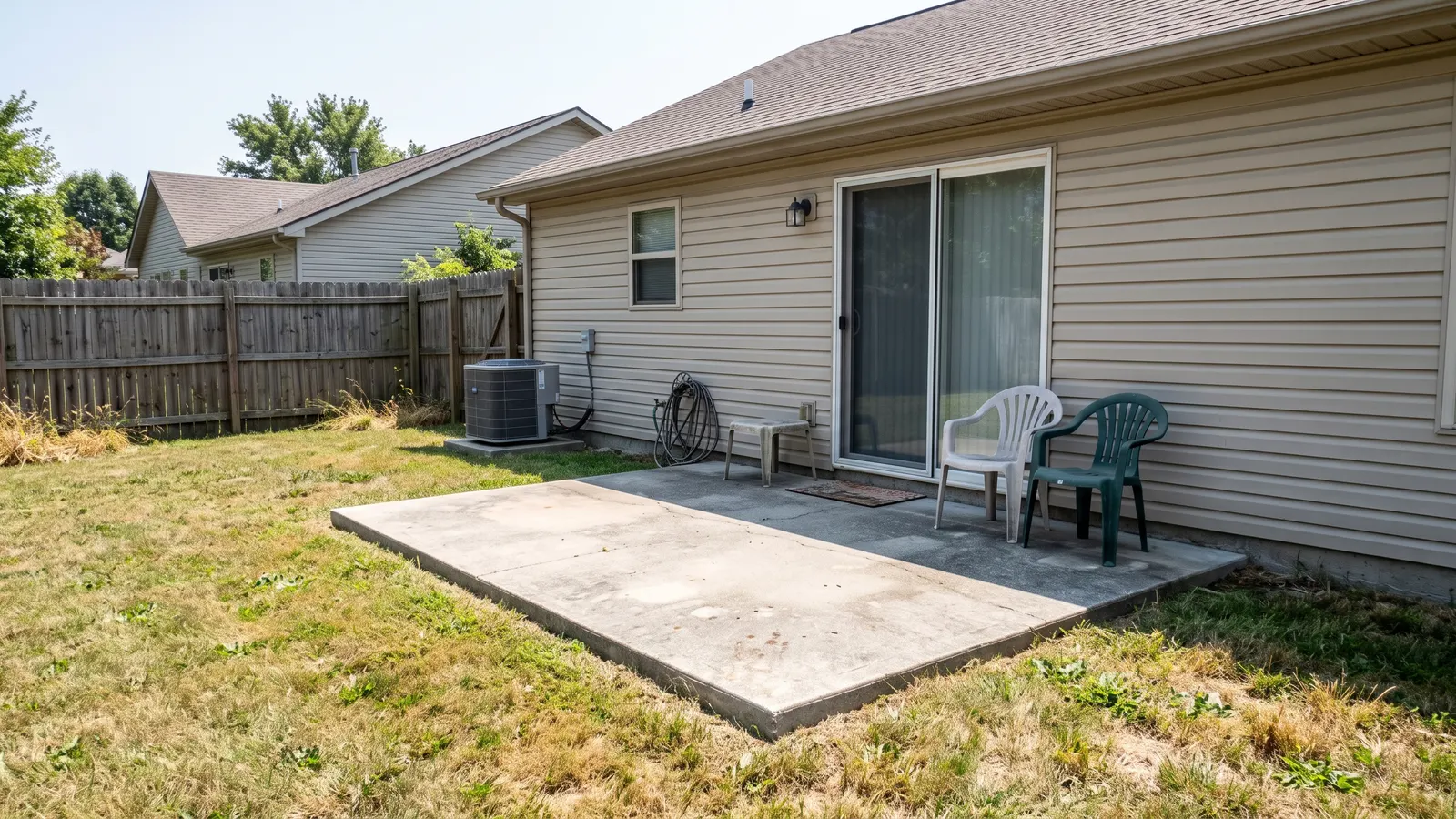
Every image here is an AI design concept, the same kind of render OutdoorBrite makes from a photo of your yard. The first four ideas use one ordinary patio, shown below before any work, so you can compare covers on the same slab.
Quick answer: which patio cover fits your climate?
| Your main problem | Best covers | Typical installed cost |
|---|---|---|
| Hot sun, little rain | Lattice cover, shade sails, awning, louvered pergola | $18 to $22 per sq ft (aluminum lattice) up to $6,500 to $18,000 (louvered) |
| Frequent rain | Solid aluminum, insulated panels, polycarbonate, gable or hip roof | $20 to $60 per sq ft for most patio covers |
| Heavy snow | Gable or hip roof, insulated panels, engineered pavilion | $14,000 to $31,000 for a gable roof cover |
| Tight budget or renting | Umbrella, canvas sheet, DIY shade sail | $30 to $400 for a sail, $50 to $200 for a canvas cover |
Angi puts the national average for a professionally installed patio cover at $8,500, with most homeowners paying $4,500 to $12,000.
Attached roofs (best for rain and snow)
An attached roof ties into the house wall or roofline. It gives you the most complete protection and usually needs a permit.
1. Extend the house roof with a gable cover
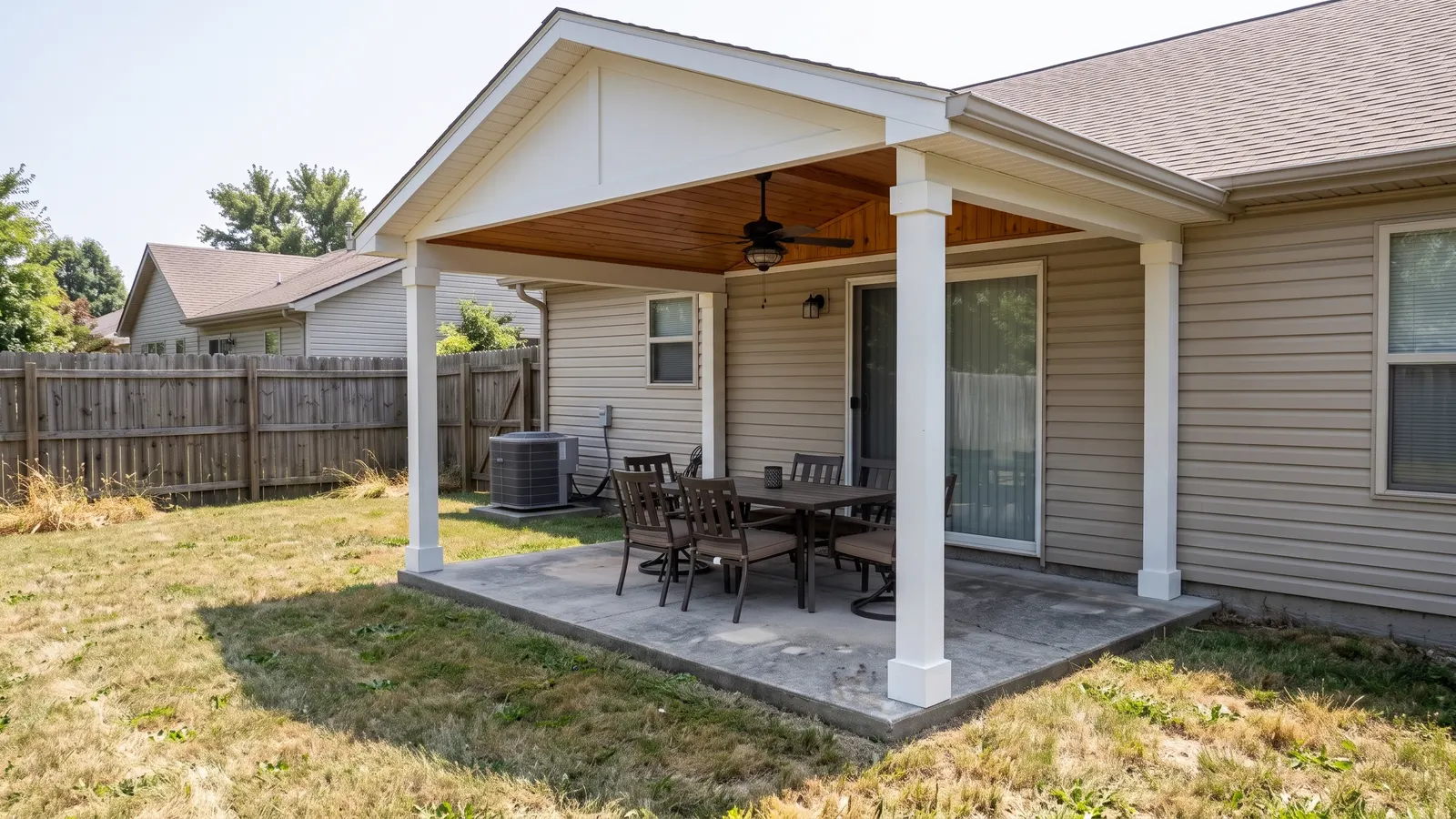
This is the same slab from the photo above, now under a gable roof shingled to match the house. A gable sheds rain and snow fast because of its steep pitch, and the open triangle at the front keeps the space from feeling dark. It's also the priciest attached option: HomeGuide puts a gable roof patio cover at $14,000 to $31,000. Best for: rain and snow.
2. Bolt on insulated aluminum panels
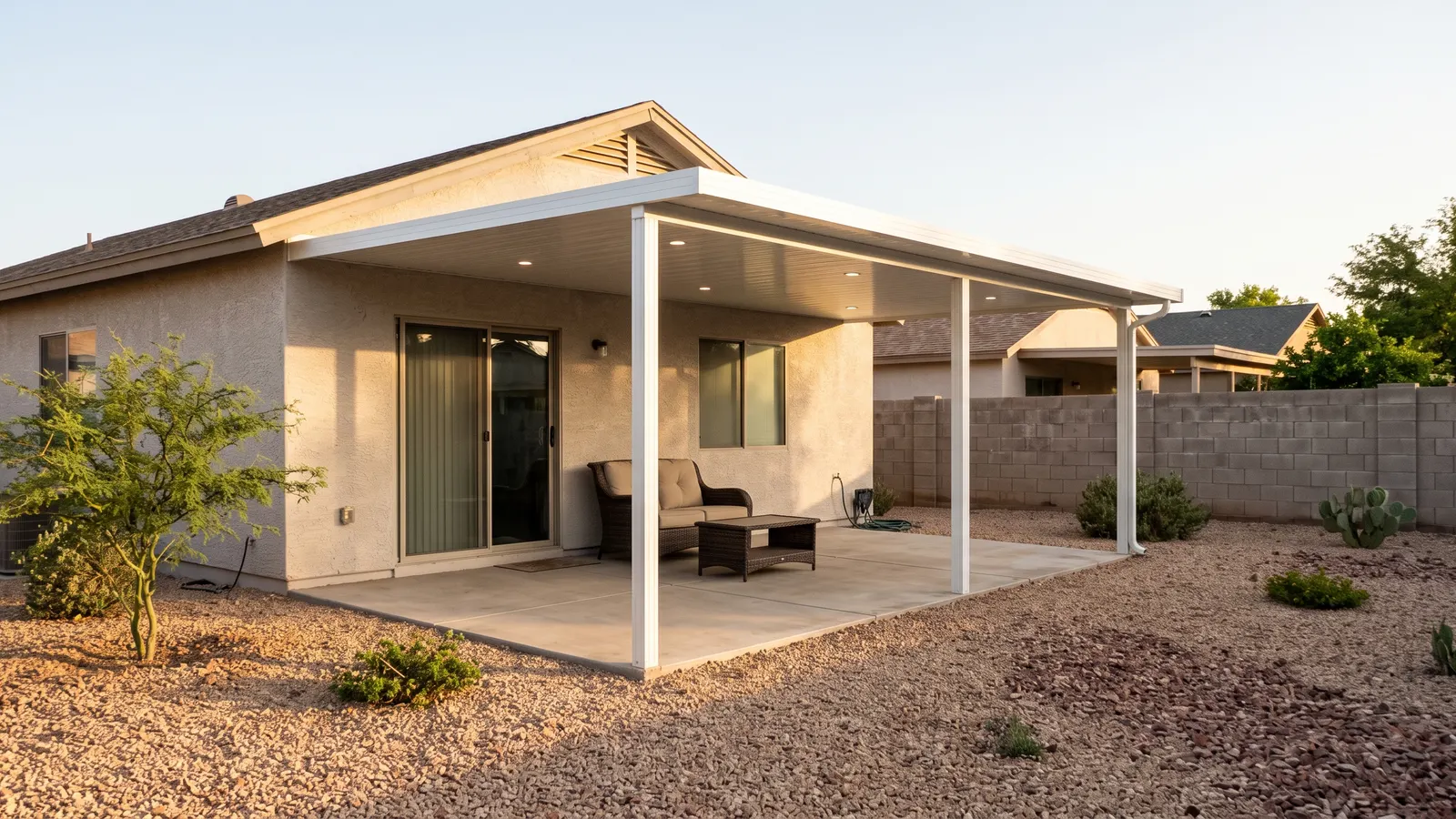
Insulated panels are aluminum skins wrapped around a foam core, and they keep the space under them noticeably cooler than bare metal. They also take recessed lights without a separate ceiling. HomeGuide prices them at $30 to $60 per square foot installed on an existing patio. They work in the desert, where heat is the problem, and in snow country, where the panels can be rated for your local snow load. Best for: sun and snow.
3. Go simple with a solid aluminum shed roof
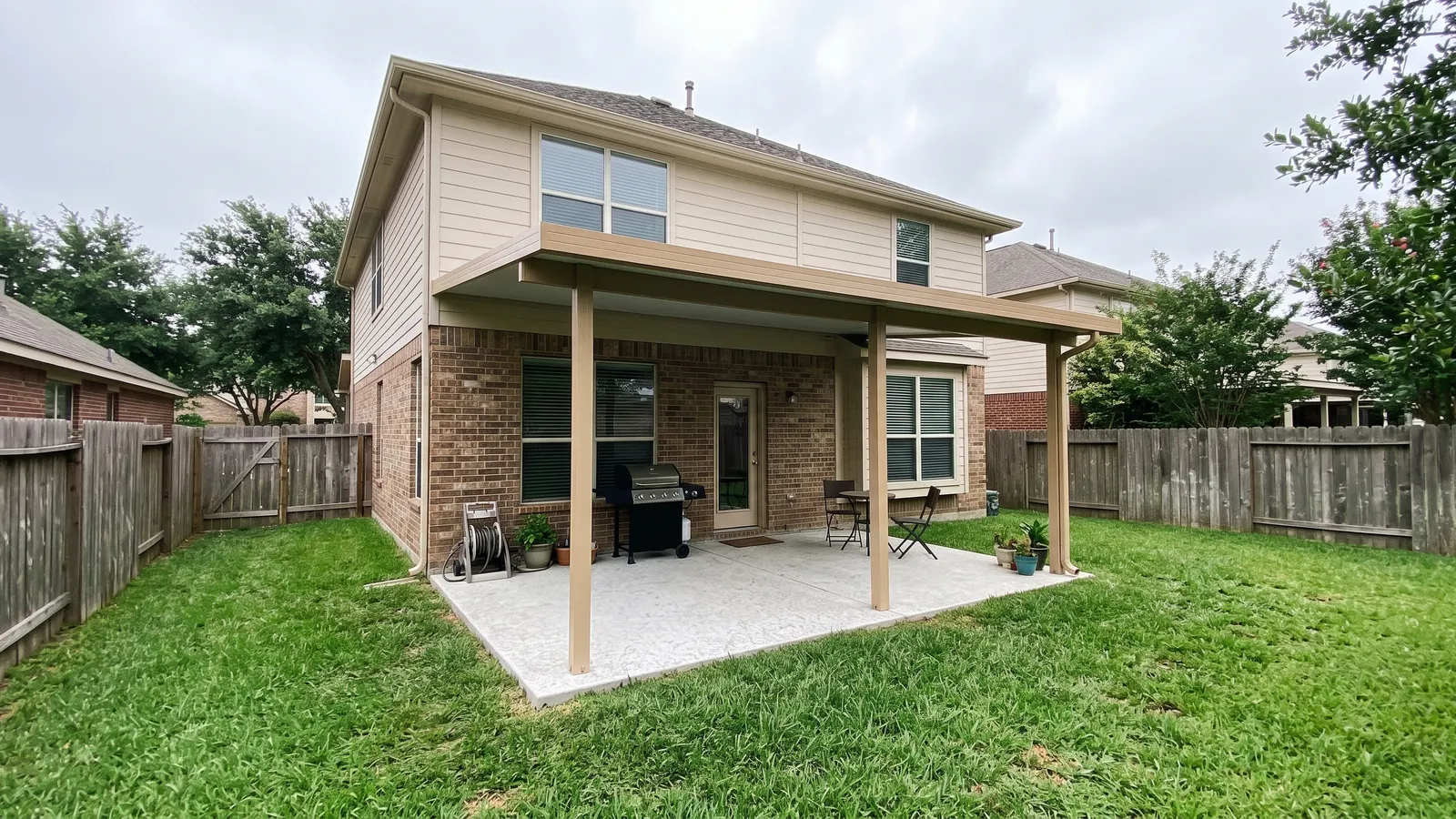
A single-slope roof of solid aluminum panels is the workhorse of covered patios in the South. Wood-grain finishes like Alumawood look like painted lumber from the yard but never need staining. A non-insulated solid Alumawood roof runs $20 to $35 per square foot installed, per HomeGuide. One downside: bare aluminum is loud in a downpour. Best for: rain and sun.
4. Let the light through with polycarbonate
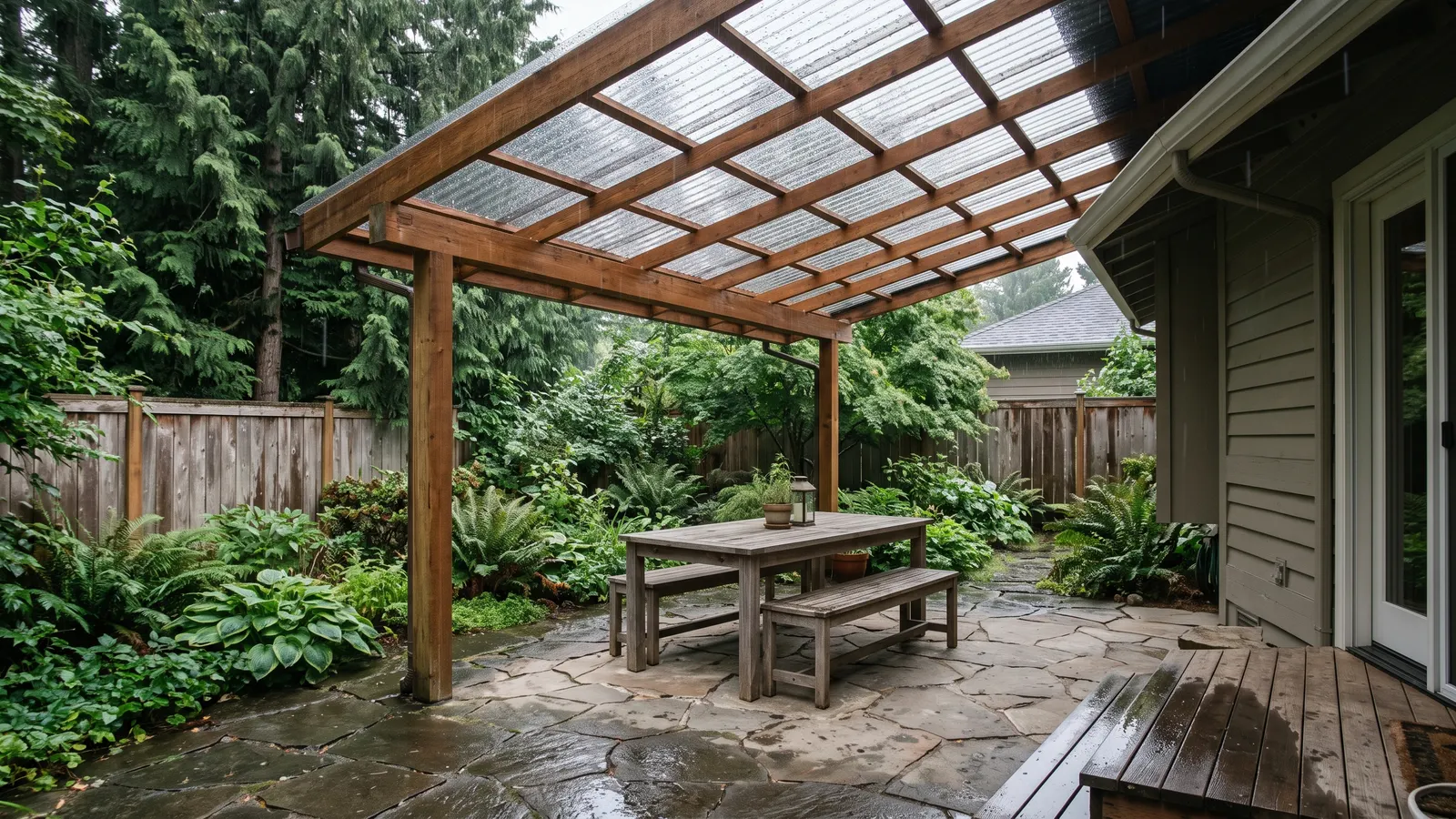
If your patio sits against a north wall or under trees, a solid roof can make the room behind it feel like a cave. Clear or bronze-tinted polycarbonate panels keep the rain off and let daylight through. Multiwall panels like LEXAN Thermoclear run about $20 to $55 per square foot (HomeGuide) and resist hail. Pick a UV-protected grade, and plan a slope of at least a few degrees so water doesn't sit. Best for: rain in cloudy climates.
5. Finish a hip roof with a wood ceiling
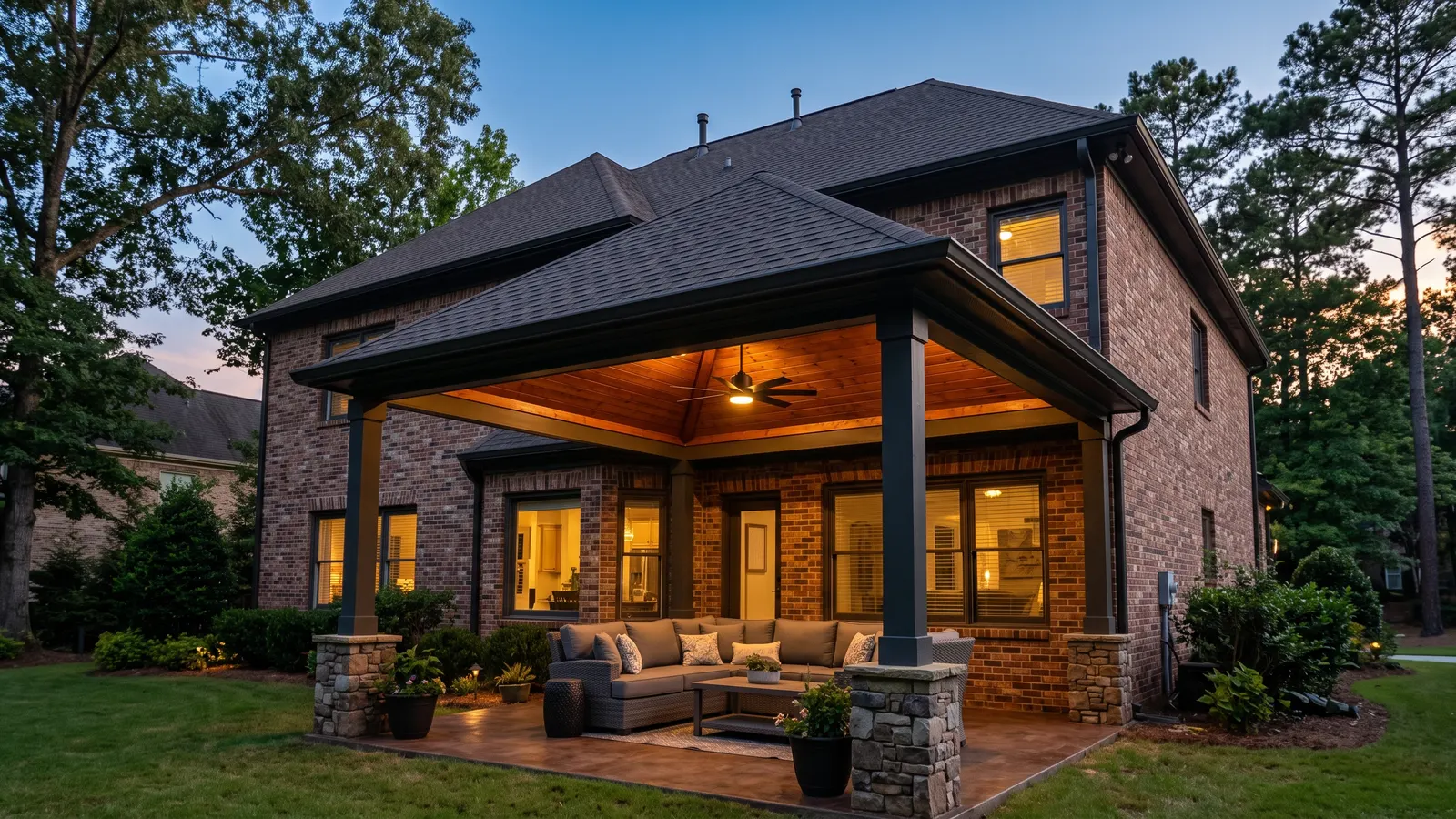
A hip roof slopes down on all four sides, which makes it sturdier in high wind than a gable and a natural fit on brick homes. Stained tongue-and-groove boards on the underside make it feel like an outdoor living room. Budget for the extras: Angi lists ceiling fans at $300 to $800 and integrated lighting at $200 to $1,000. Best for: rain, wind and humid summers.
6. Match a stucco house with a stucco cover
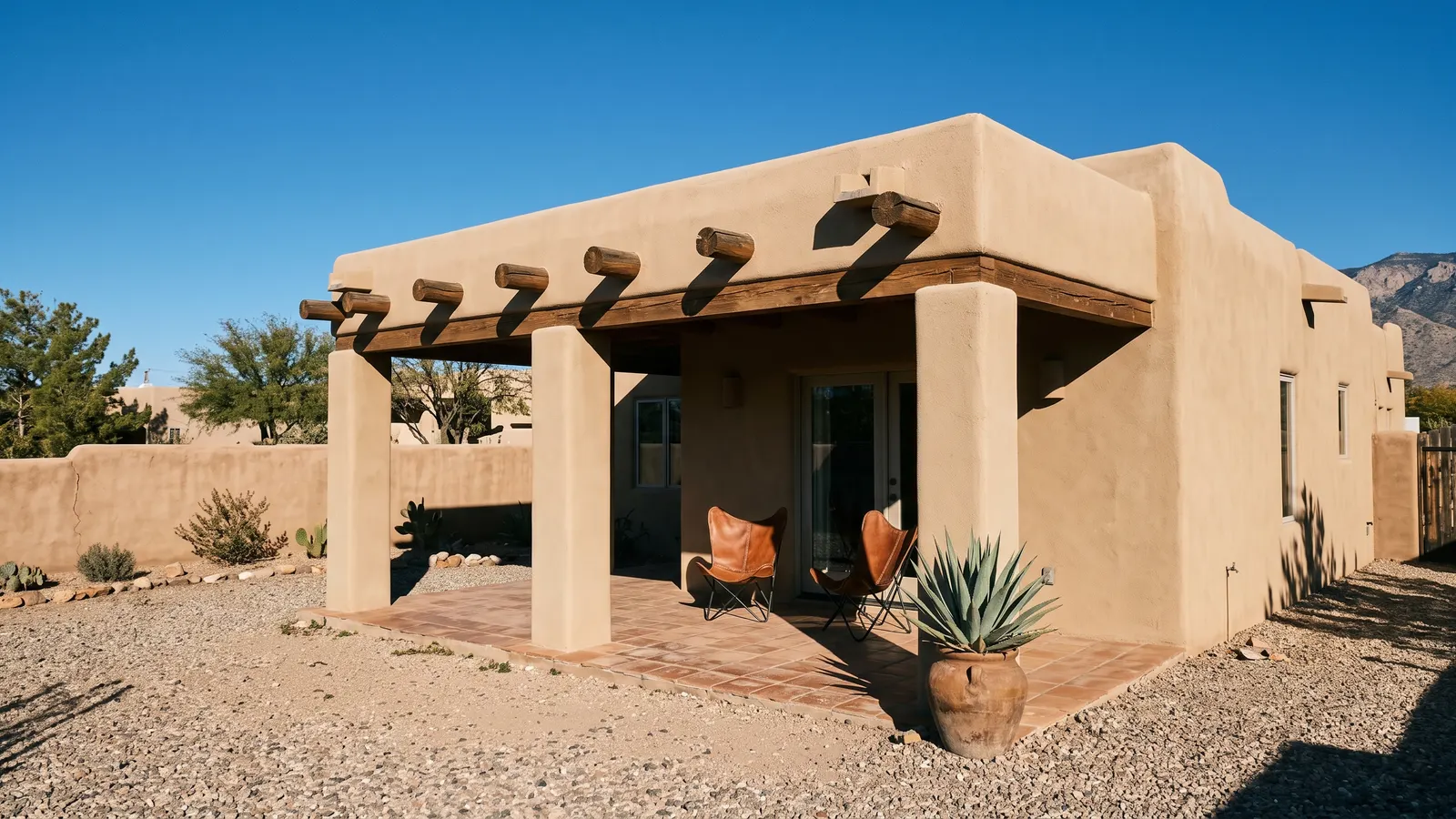
On Southwest homes, a cover finished in the same stucco as the walls looks original to the house. Thick columns and exposed beams throw deep shade, and the mass keeps the patio cooler through the afternoon. HomeGuide puts stucco covers at $40 to $100 per square foot. They're heavy, so footings and framing need an engineer's or builder's sign-off. Best for: intense sun.
Pergolas and louvered roofs (best for sun, some for rain)
A pergola gives you a frame you can cover a little or a lot, and an AI pergola design concept shows how each style sits against your house. If you're torn between a pergola and something smaller, our arbor vs pergola guide explains the difference.
7. Install a louvered pergola
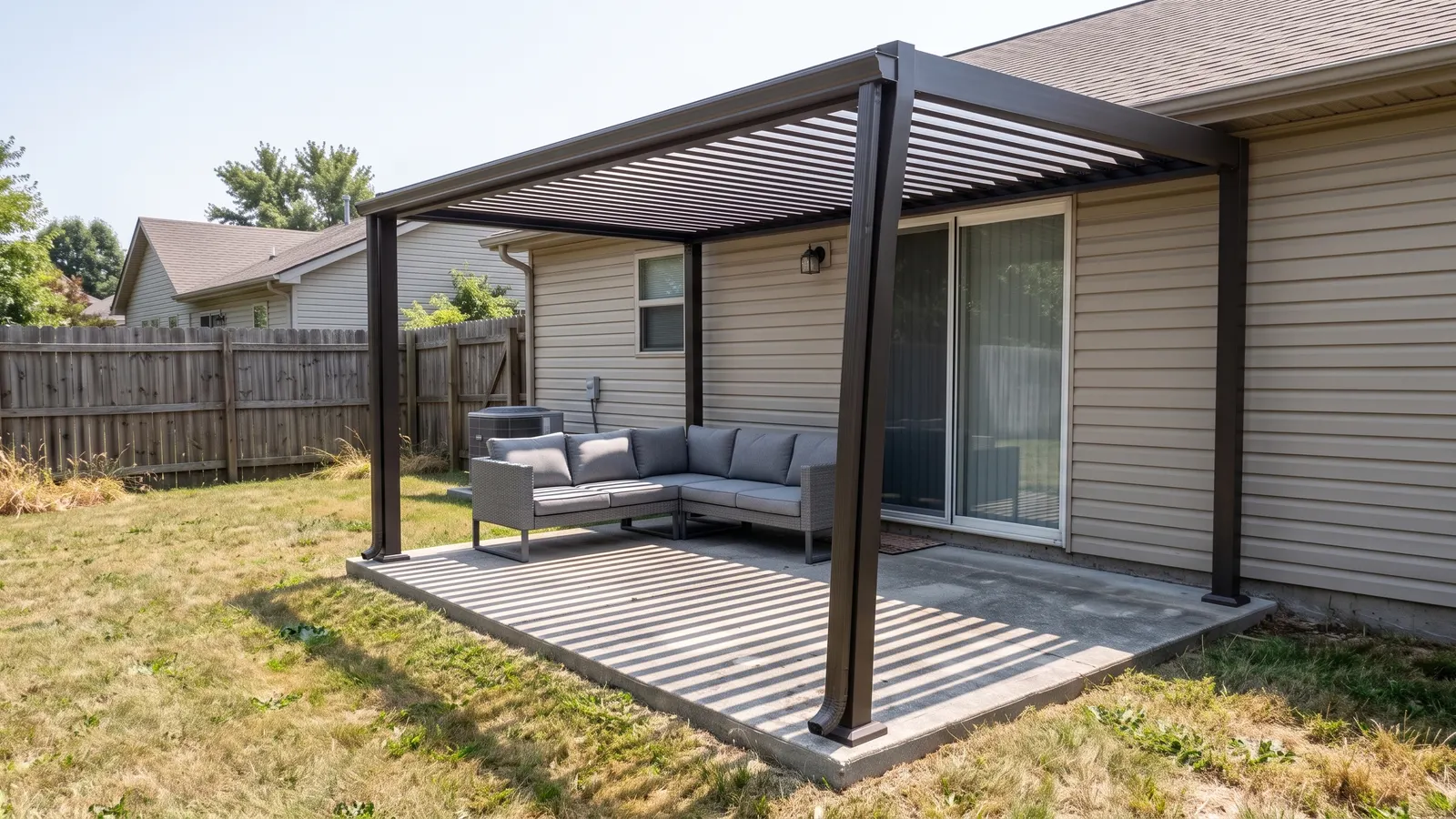
Here is the same slab again, under aluminum louvers that tilt open for sun and close flat for rain. Closed, the slats channel water into a gutter beam and down the posts. HomeGuide prices a louvered pergola at $6,500 to $18,000, depending on size and whether it's manual or motorized. It's the one pergola that works in both July sun and an April storm. Our pergola cost guide breaks the price down by material and size. Best for: sun and rain.
8. Pull shade cloth over an open cedar pergola
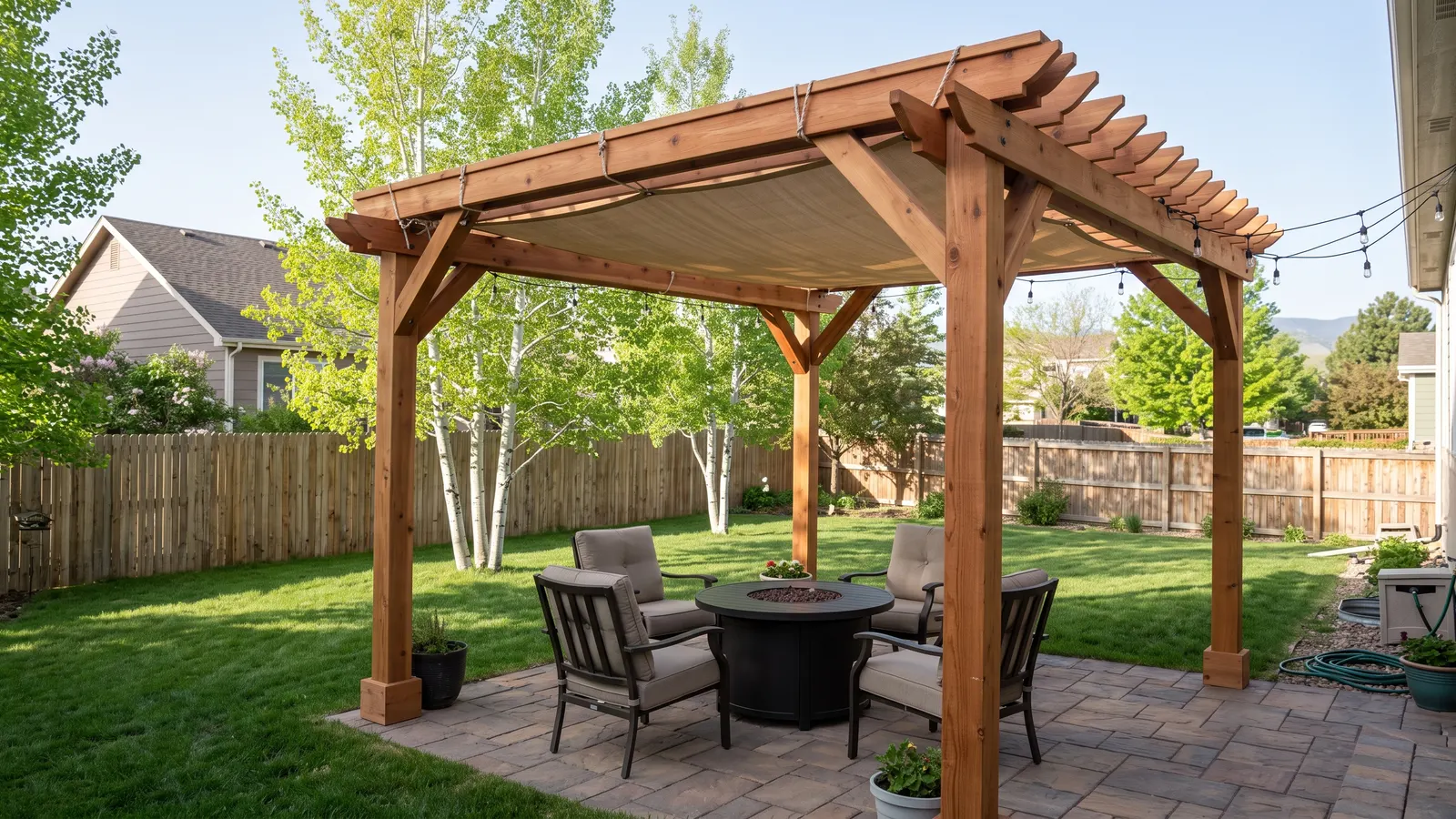
A plain cedar pergola gives only partial shade on its own. Tie a shade cloth across the rafters and it blocks most of the sun for very little money, and you can pull it off for winter. An open-lattice wood cover runs $20 to $40 per square foot installed (HomeGuide). Cedar resists rot without chemicals, but plan to stain it every few years. Best for: sun.
9. Choose an aluminum lattice cover
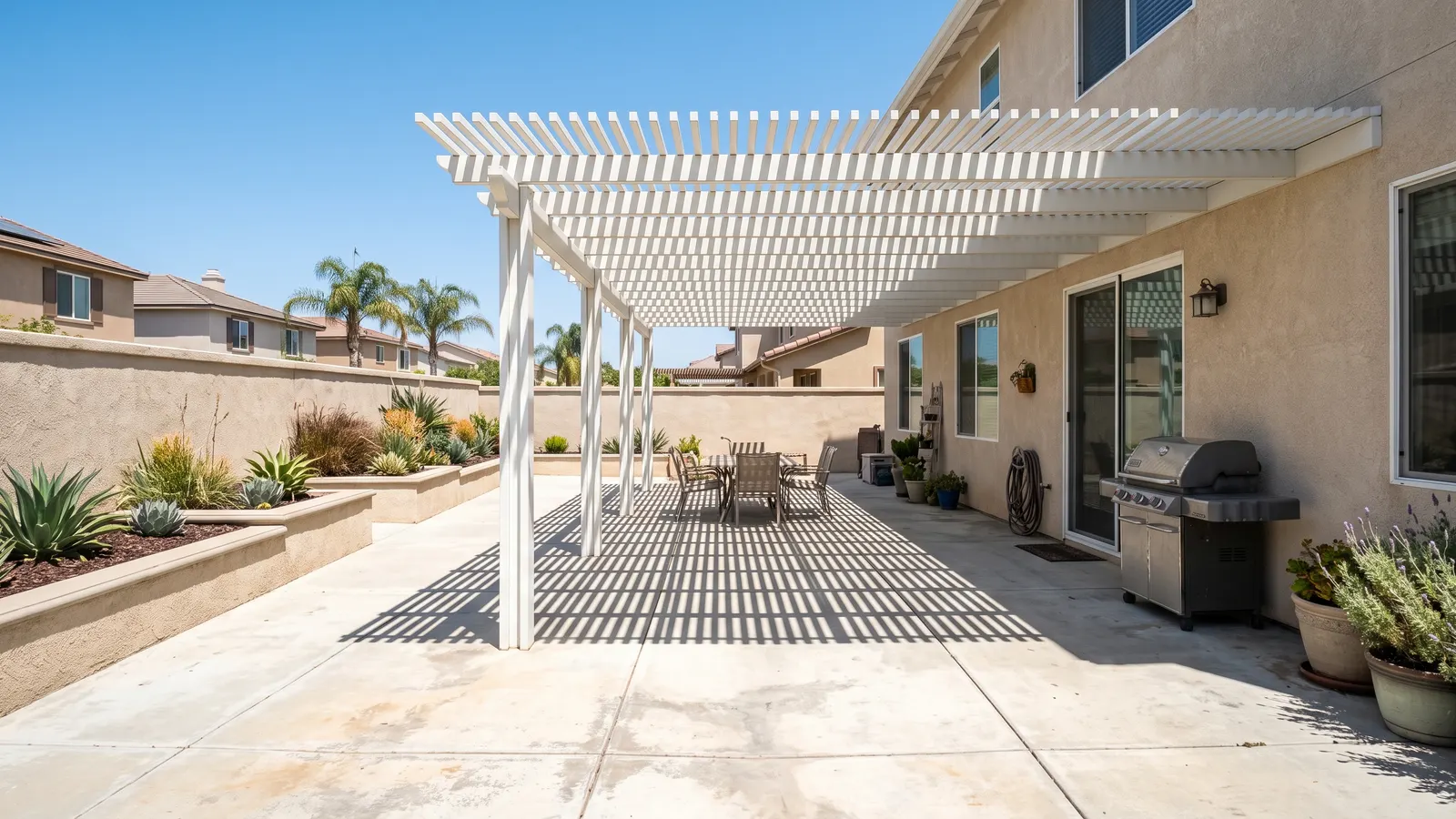
Lattice covers are the budget pick for hot, dry regions. Closely spaced shade bars cut the sun while letting heat rise out through the gaps. The Alumawood Laguna lattice runs $18 to $22 per square foot installed, according to HomeGuide, which makes it one of the cheapest permanent covers you can buy. It won't stop rain. Best for: sun only.
10. Add a sliding canopy to a pergola
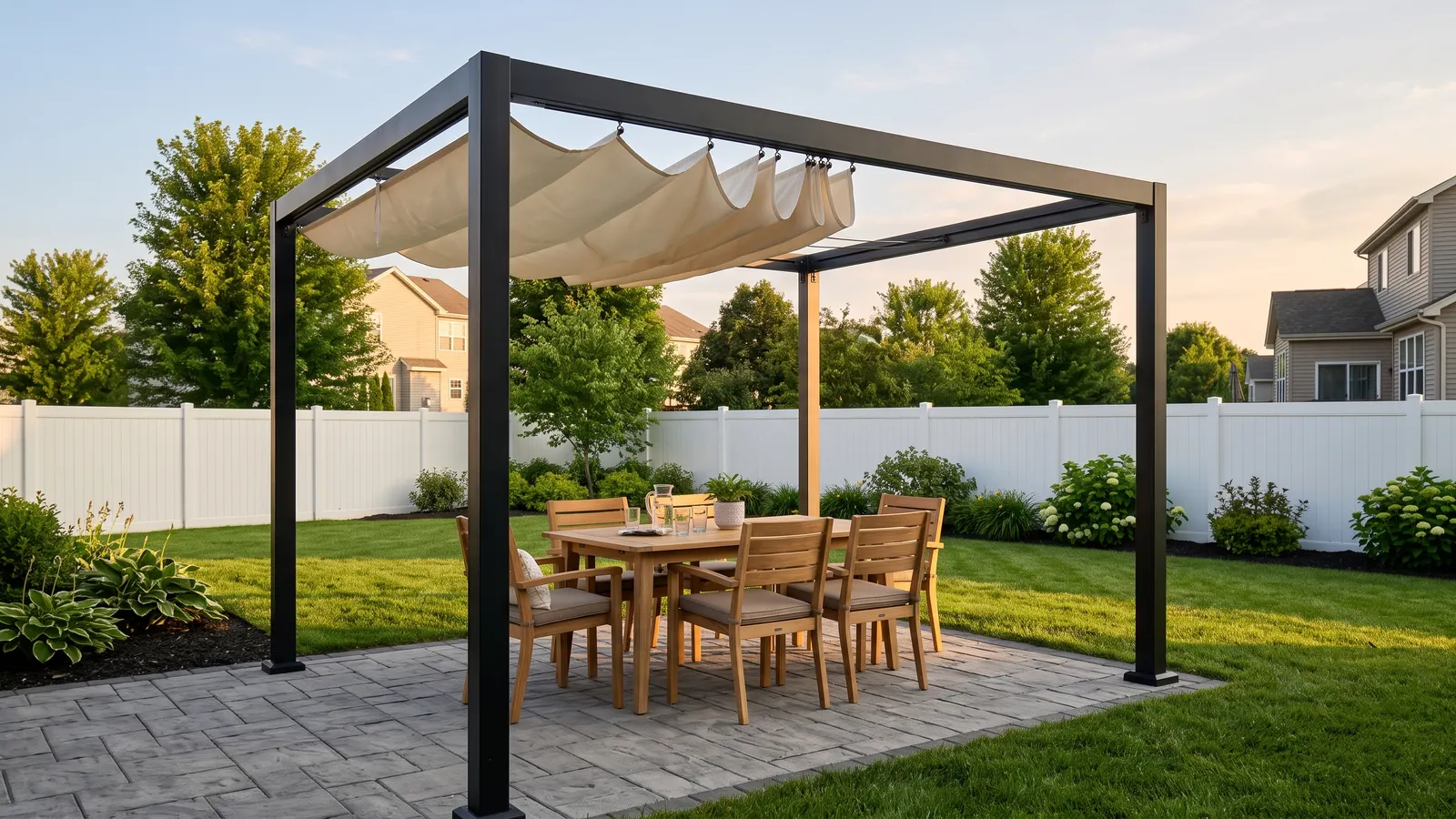
A retractable canopy runs on cables or rails along the top of the pergola, so you can slide it closed at noon and open it at sunset. HomeGuide prices a retractable canopy roof at $4 to $10 per square foot, and replacement fabric at $80 to $250. Most canopy fabric sheds a light shower but sags under steady rain, so pull it back before a storm. Best for: sun.
11. Grow shade with a vine-covered pergola

Vines turn a pergola into a living roof that's dense in summer and bare in winter, which lets low winter sun reach the house. American wisteria (Wisteria frutescens) is a better choice than Chinese wisteria: it's less aggressive and hardy in USDA zones 5 to 9, per NC State Extension. Mature vines are heavy, so build the frame from 6x6 posts rather than 4x4s. Best for: sun in mild climates.
Awnings, sails and budget covers (best for sun)
These are the cheapest ways to cover a patio, and most come down for winter. Many don't need a permit.
12. Mount a motorized retractable awning
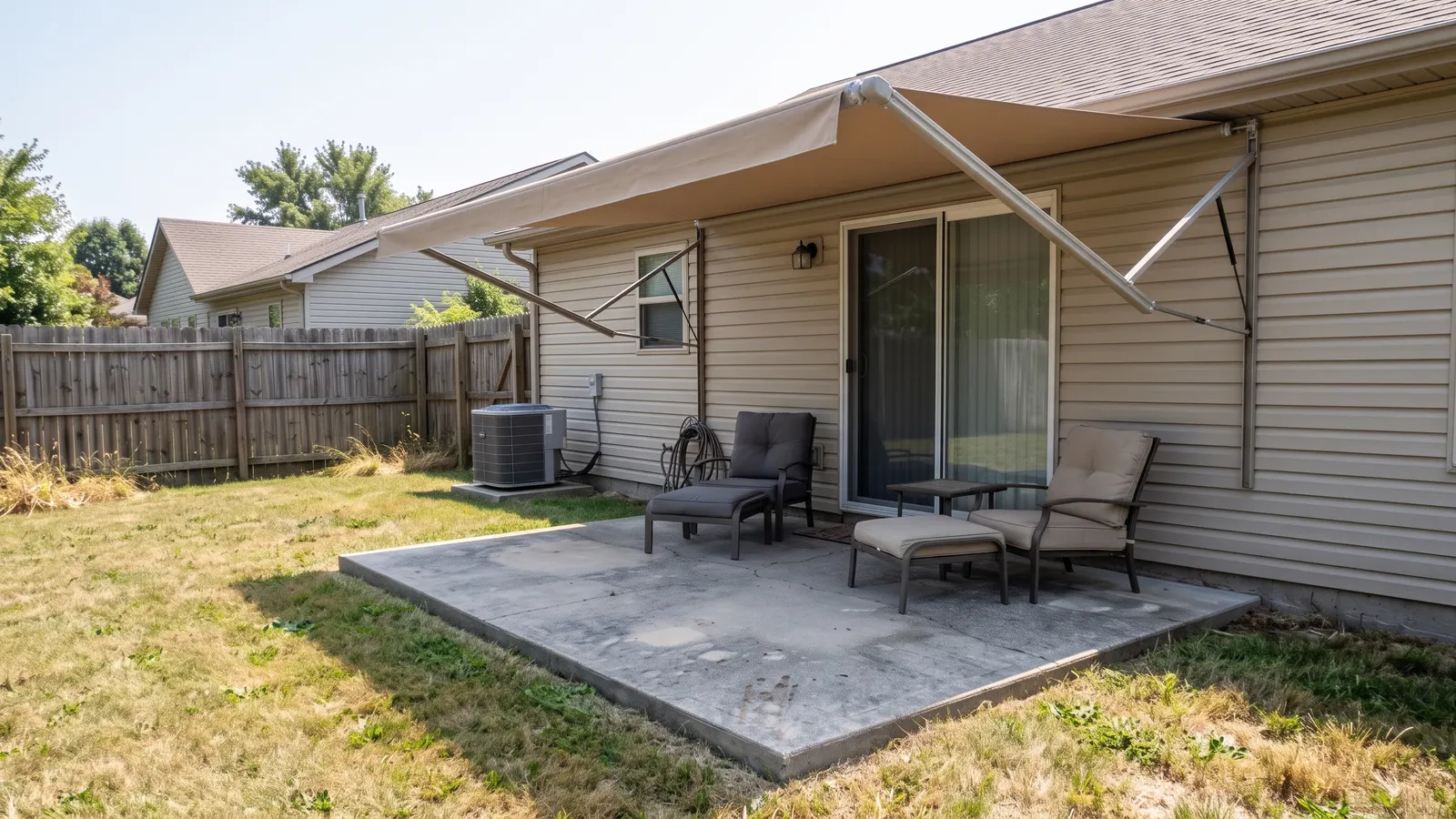
The same slab, now with a wall-mounted awning on folding arms, shown rolled partway out. Run it out farther at midday and it shades the whole patio, then roll it back in the evening. HomeGuide puts motorized patio awnings at $1,000 to $6,000 installed. Add a wind sensor ($200 to $275) so it retracts on its own when gusts pick up, because folding arms can bend in strong wind. Awning fabric is water-resistant, not a rain roof. Best for: sun.
13. Start with a manual awning
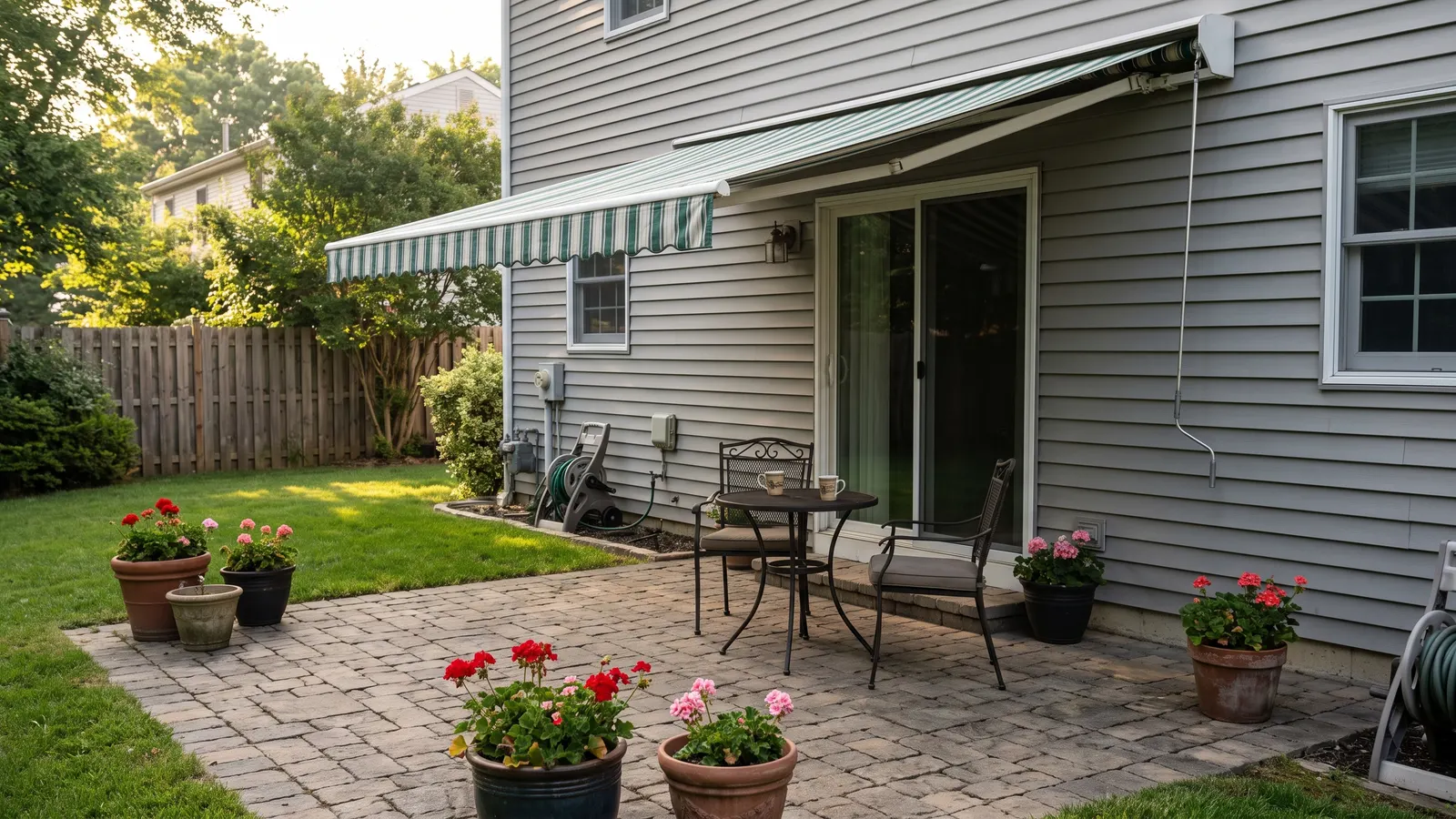
A hand-crank awning does the same job for less. HomeGuide prices manual patio awnings at $600 to $3,000 installed, and installation labor is often only $100 to $400. It's a good fit for a small patio right outside a door, where an 8- to 10-foot projection covers a bistro table. Residential awnings usually don't need a permit, but check your HOA rules first. Best for: sun.
14. Layer triangular shade sails
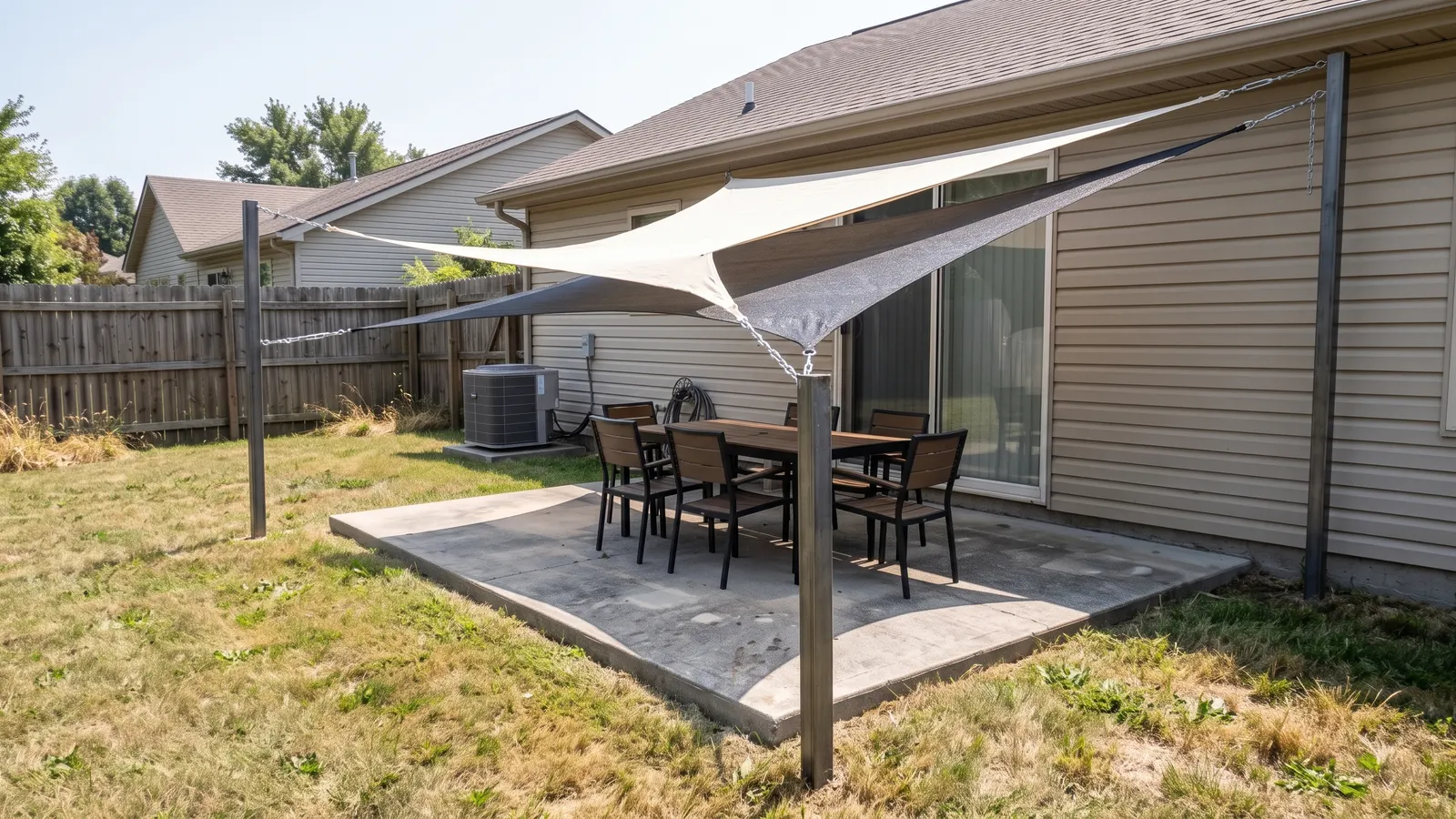
Here's the slab with two overlapping sails stretched between the house and steel posts. Sails cost $30 to $400 or more each, per Family Handyman, but a professional install with posts set in concrete can reach $20 per square foot. Angle them so rain runs off, and take them down before winter in snowy areas, as most manufacturers recommend. Best for: sun.
15. Use a cantilever umbrella
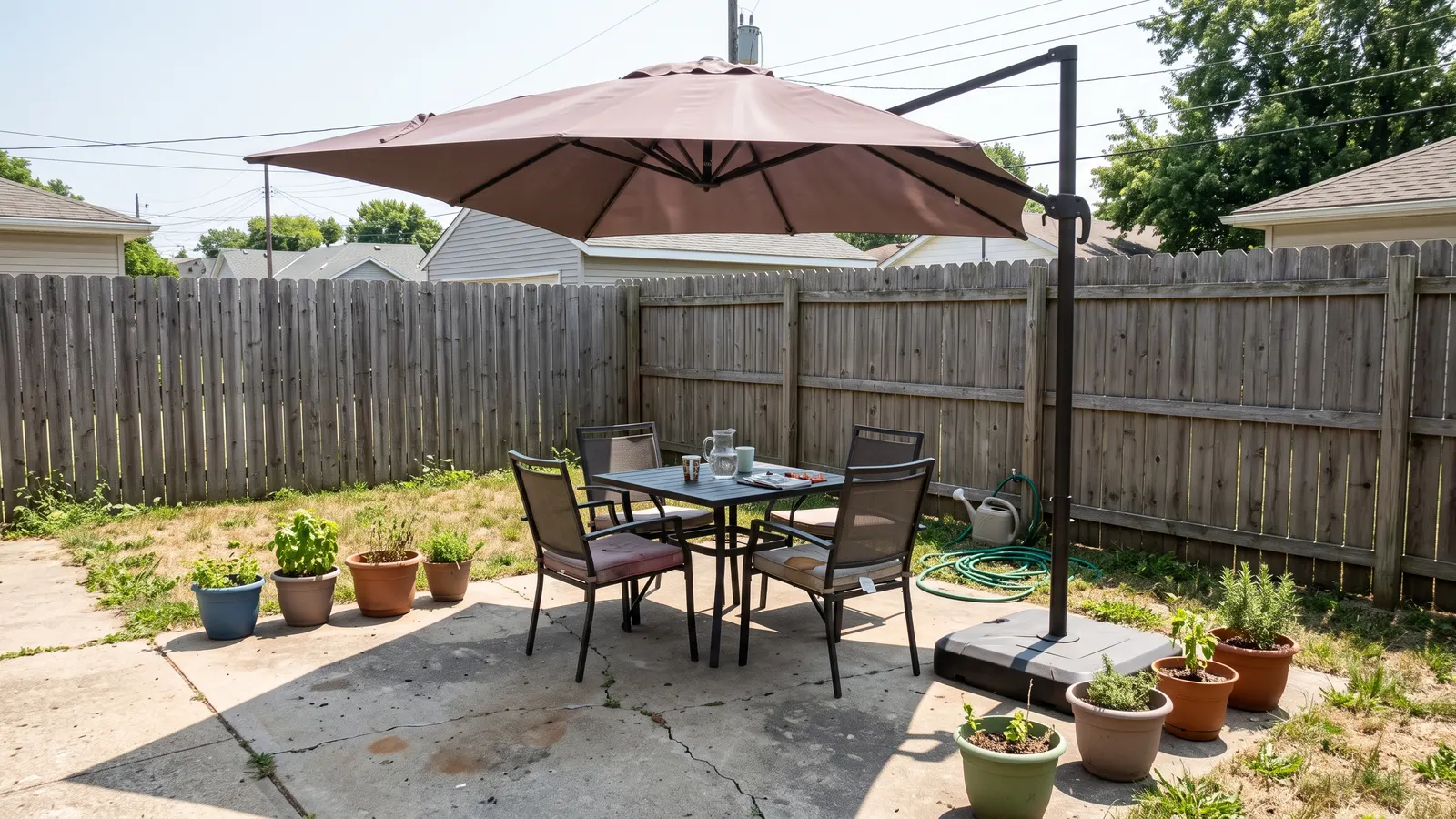
If you rent, or you're not sure where a permanent cover should go yet, a cantilever umbrella is the cheapest test run. The offset arm keeps the pole out of the way of the table, and most models rotate to follow the sun. Weigh the base down to the manufacturer's spec, and close it in wind. A 10- to 11-foot canopy shades a table for four. Best for: sun, renters.
16. Stretch a canvas sheet between posts
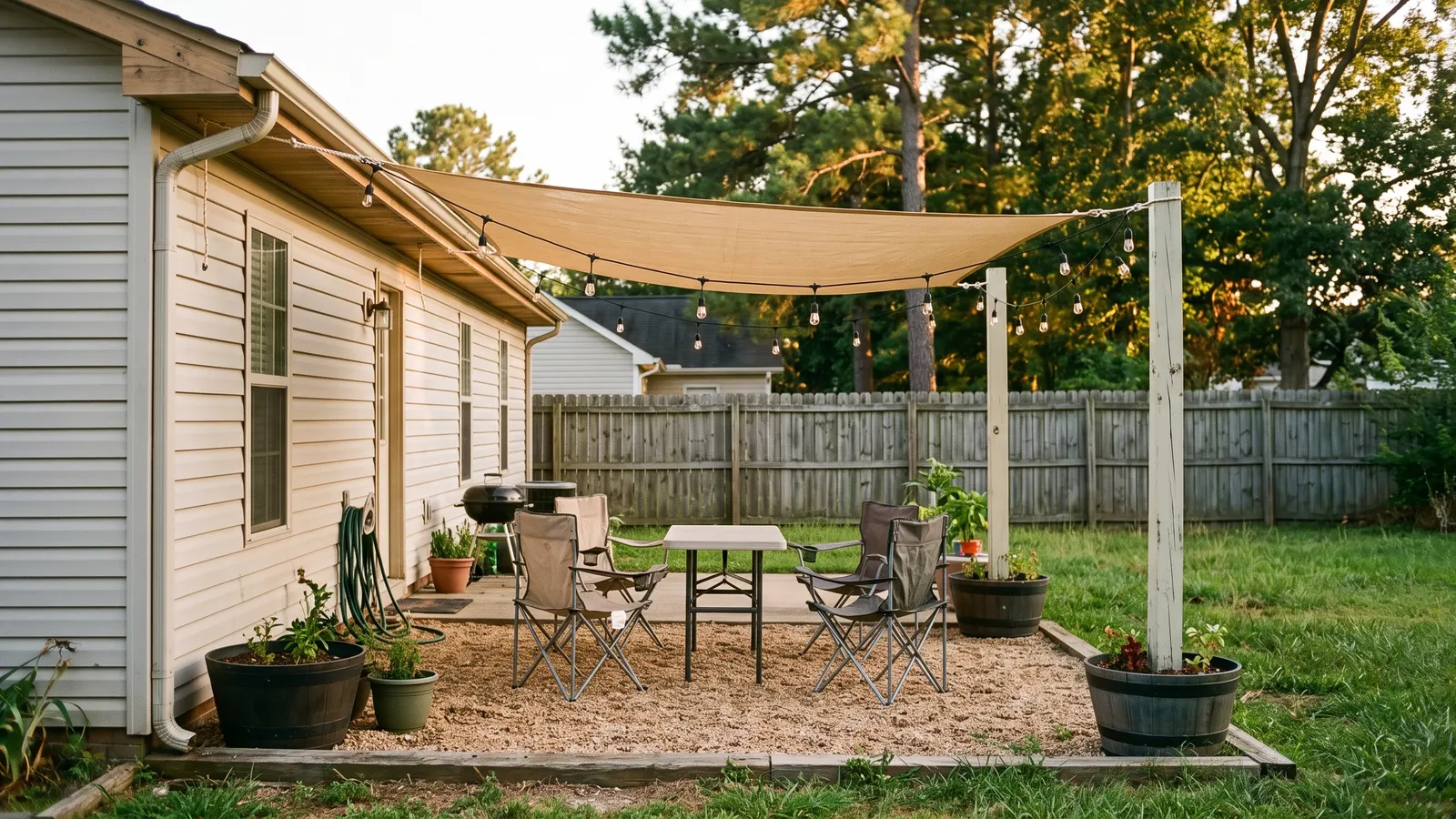
A flat canvas cover is the cheapest real shade you can build. HomeGuide prices a DIY flat canvas cover at $50 to $200. Tie it to the eaves and two 4x4 posts set in heavy planters or concrete, and keep a slight slope so a passing shower runs off. Expect to replace the fabric every few seasons. If shade is the only goal, our backyard shade ideas compare sails, canopies and fast-growing trees. Best for: sun on a budget.
17. Add drop screens and curtains to a cover you already have
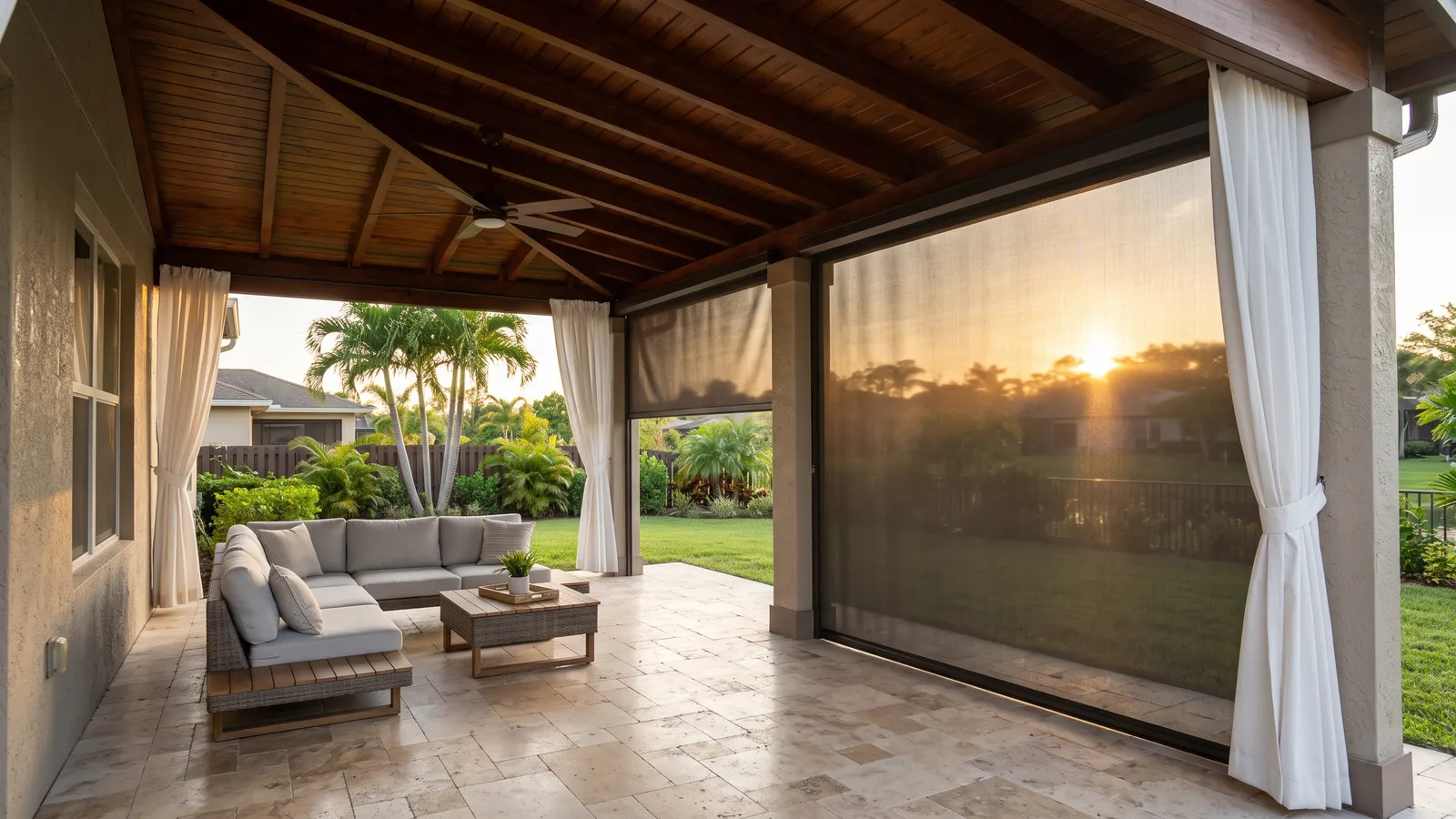
Low afternoon sun gets under every roof. A vertical drop screen on the west side fixes that, and also blocks bugs and some wind. HomeGuide prices vertical retractable screens at $750 to $7,500 and side curtains at $100 to $300. Curtains are the cheap fix for privacy, screens the better fix for glare. Best for: sun from a low angle.
Freestanding pavilions (best for rain, snow and spaces away from the house)
A freestanding structure doesn't touch the house, so you can put it where the view or the shade is best.
18. Build a timber-frame pavilion at the back of the yard
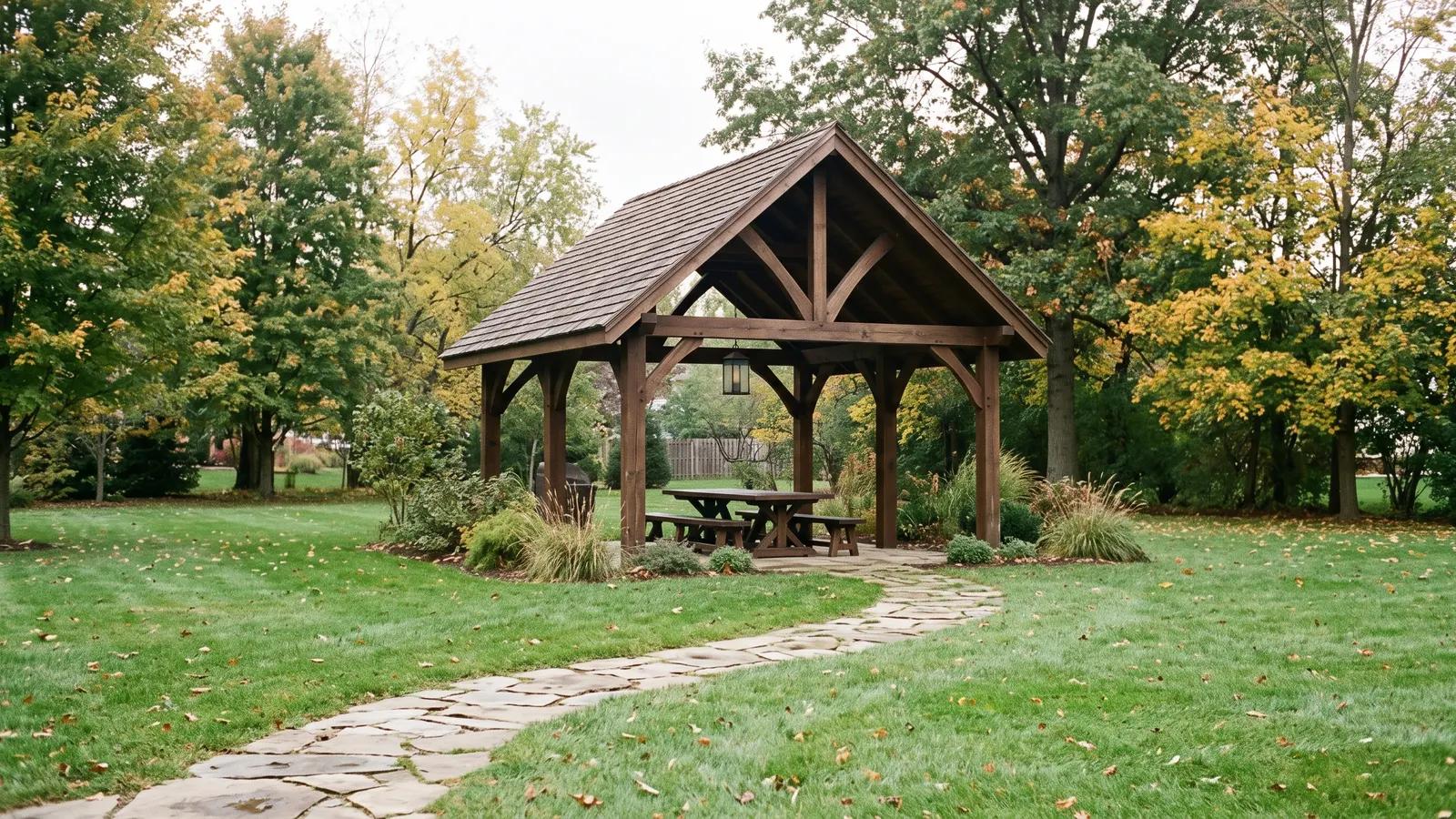
A pavilion turns the back corner of a lawn into a destination, and a stone or paver path makes it feel planned. HomeGuide prices a solid shingled pavilion roof at $35 to $60 per square foot. A full shingled roof can carry snow, but the posts need footings below your frost line. Run power before you pour the pad if you want lights. Best for: rain and snow.
19. Place a gazebo where the view is
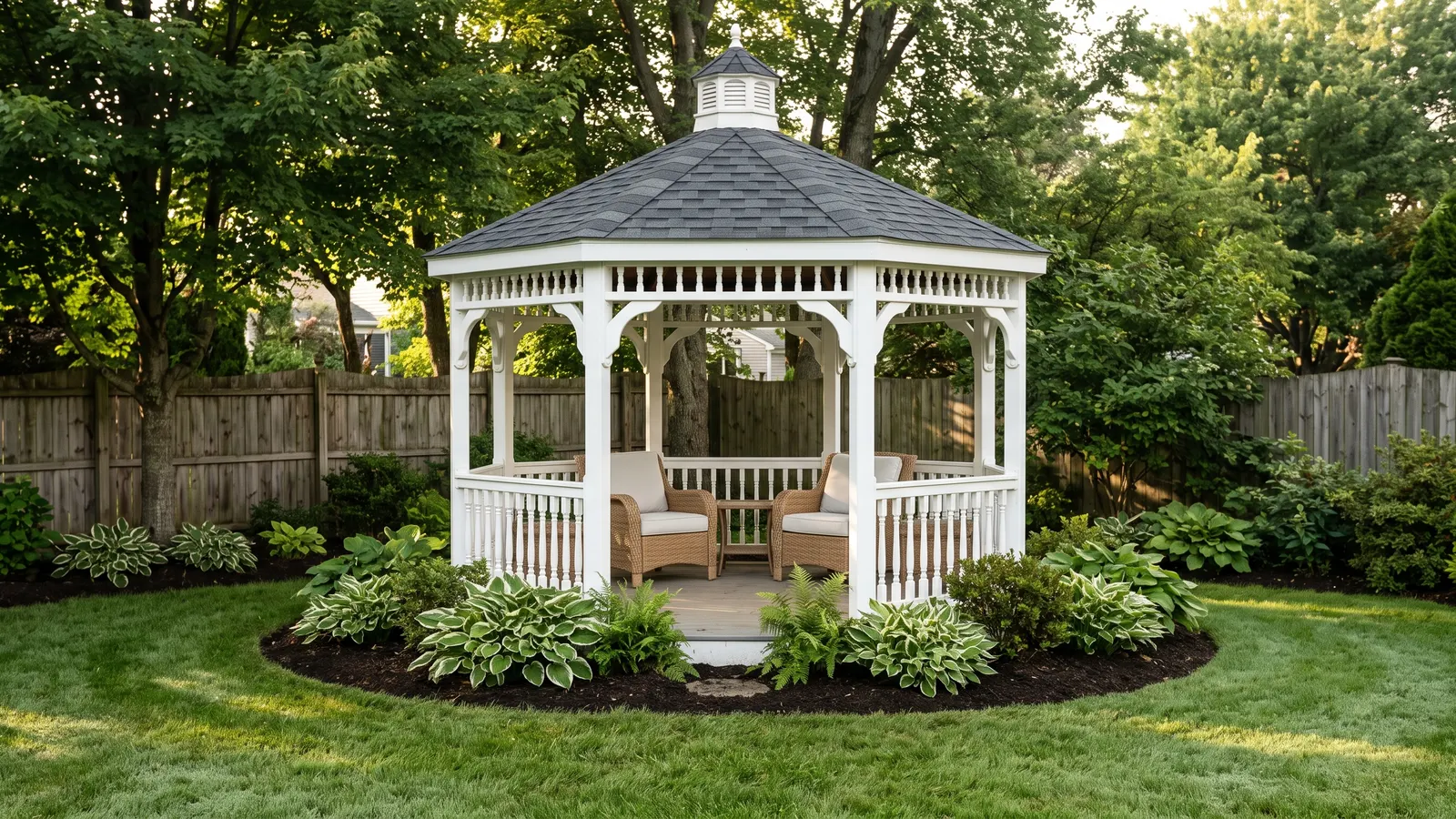
A gazebo is a pavilion with a shape: usually octagonal, with a peaked roof and sometimes screens. HomeGuide prices gazebos at $4,300 to $10,000 installed. Vinyl versions skip the staining, and a planting bed around the base hides the foundation. Size it for the furniture you'll actually use; a 12-foot octagon fits two chairs and a small table. Best for: rain and shade.
20. Roof the outdoor kitchen
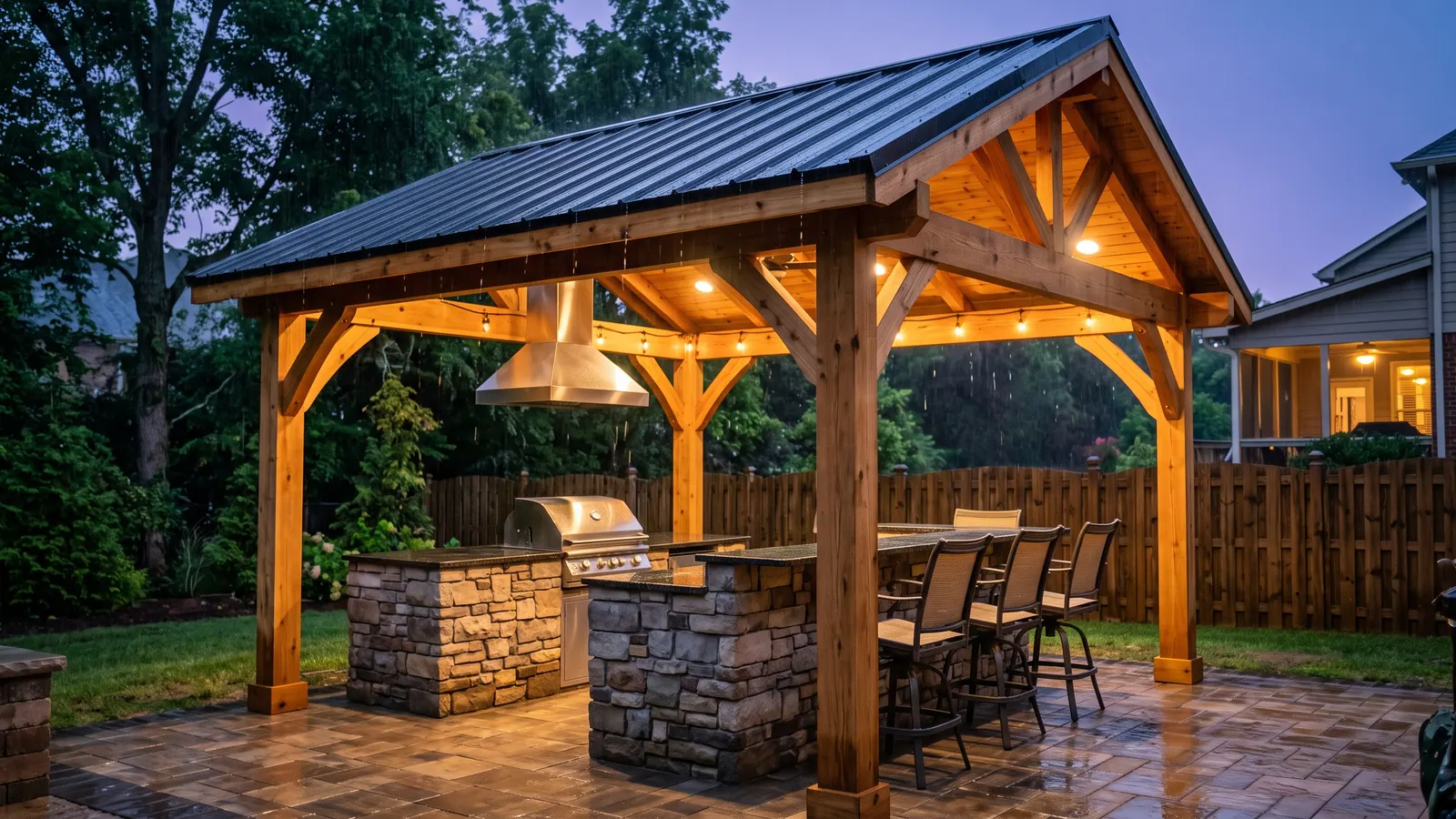
Grilling in the rain is the moment most people wish they'd built a roof. A pavilion over the kitchen counter keeps the grill, cabinets and stools dry, and a standing-seam metal roof sheds water and snow well. Keep any grill under a roof well vented: use a vent hood rated for outdoor use and follow the grill maker's clearance numbers. For full kitchen plans, see these outdoor kitchen layouts. Best for: rain.
21. Frame a modern cover in steel
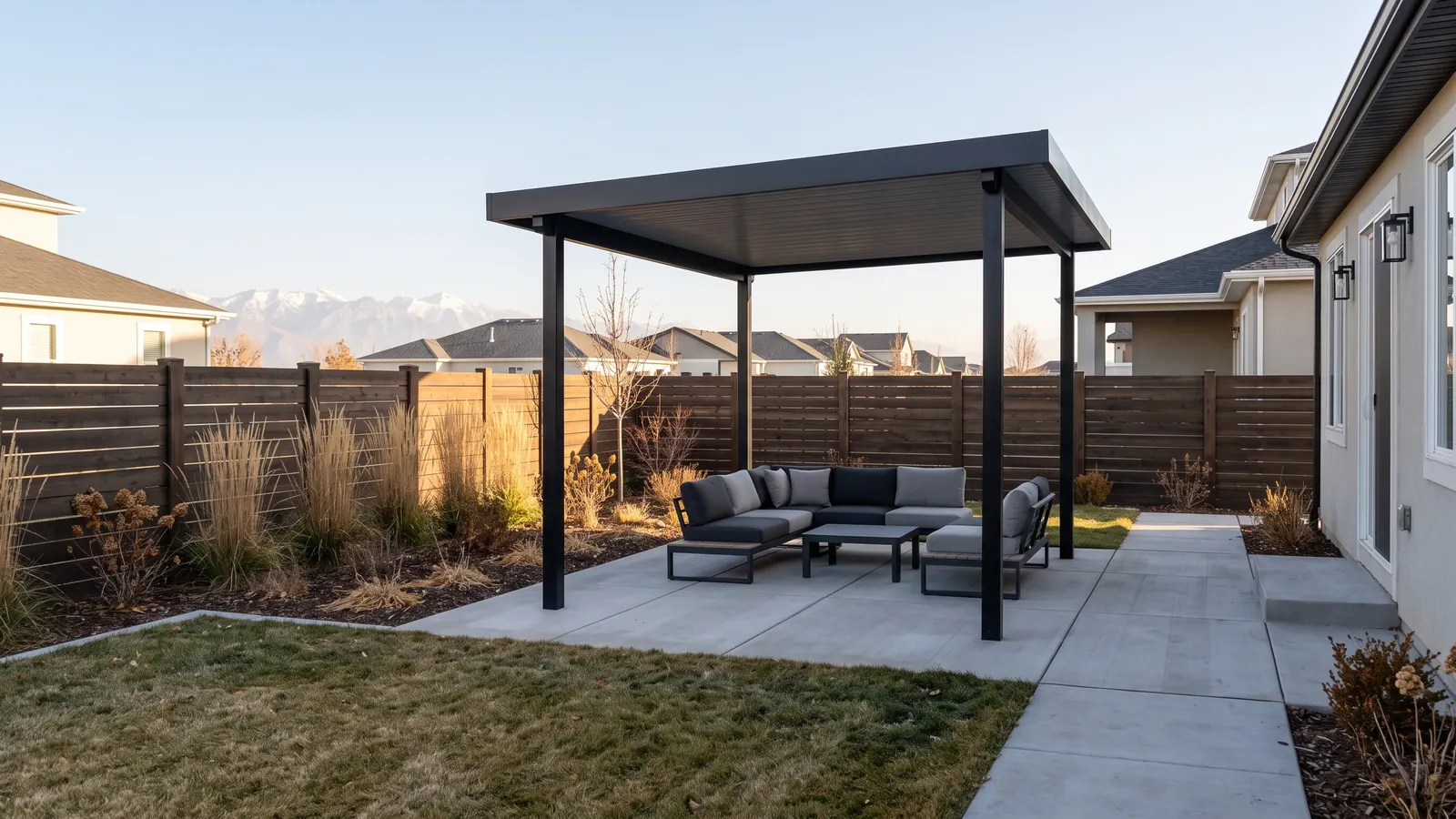
Thin black posts and a flat metal roof suit a modern house and large-format pavers. Steel is stronger than aluminum for the same size posts, so the frame can look lighter. HomeGuide prices a freestanding steel cover at $15 to $30 per square foot. Even a flat roof needs a slight pitch and a gutter on one edge. Best for: sun and snow, if engineered for the load.
Materials by climate
| Material | Installed cost per sq ft (HomeGuide) | Sun | Rain | Snow | Upkeep |
|---|---|---|---|---|---|
| Aluminum lattice | $18 to $22 | Good | Poor | Poor | Rinse |
| Solid aluminum | $20 to $50 | Good | Good | Fair | Rinse; noisy in rain |
| Insulated panels | $30 to $60 | Very good | Good | Good | Rinse |
| Polycarbonate | $20 to $55 | Fair | Good | Fair | Clean to keep it clear |
| Wood (solid roof) | $60 to $120 | Good | Good | Good | Stain or seal every few years |
| Steel | $15 to $30 | Good | Good | Good | Touch up paint to stop rust |
| Fabric or canopy | $4 to $10 | Good | Poor | Take down | Replace every few seasons |
Two rules hold everywhere. First, if it snows where you live, ask the builder for the cover's snow load rating and compare it with the number your building department uses. Second, in hot climates, pick a light-colored roof or insulated panels; dark metal radiates heat onto the people below.
Costs and permits
Angi puts most professionally installed patio covers at $4,500 to $12,000, or about $20 to $50 per square foot. HomeGuide's range is $20 to $60 per square foot for a cover over an existing patio. Size drives the total: Angi estimates about $2,000 for a 10x10 cover and $10,000 for a 20x20. If you also need the slab, see our concrete patio ideas for surface options.
Permits depend on what you build:
- Attached roofs and anything with wiring almost always need a permit. Angi puts permit fees at $100 to $500; HomeGuide cites $60 to $150 for a cover over a patio.
- Freestanding structures may skip the permit below a size limit set by your city, often 200 square feet. Check yours.
- Awnings, umbrellas and sails usually don't need one, though HOAs often have rules about color and placement.
Call the building department before you order anything. A permit costs far less than taking down a cover that fails inspection.
How to choose
- Hot and dry (Southwest, Southern California): lattice (9), stucco (6), insulated panels (2) or sails (14). You need shade, not a rain roof.
- Rainy (Pacific Northwest, Southeast): solid aluminum (3), polycarbonate (4), hip roof (5) or a louvered pergola (7).
- Snowy (Upper Midwest, Northeast, mountains): gable roof (1), insulated panels (2), pavilion (18) or steel (21), all built to your local snow load.
- Renting or testing a layout: umbrella (15), canvas (16) or a manual awning (13).
- Patio away from the house: pavilion (18), gazebo (19) or a freestanding pergola (8).
Not sure which looks right on your house? An AI patio design concept from a photo of your yard lets you compare a gable roof, louvers and sails on your own slab, the way ideas 1, 7, 12 and 14 do here.
FAQ
What is the cheapest way to cover a patio? A flat canvas sheet or a shade sail is the cheapest. HomeGuide prices a DIY canvas cover at $50 to $200, and sails start around $30 each. For a permanent cover, an aluminum lattice is among the least expensive at $18 to $22 per square foot installed.
Do you need a permit for a covered patio? Usually, yes, if the cover attaches to the house or includes electrical work. Freestanding covers under your city's size limit and retractable awnings often don't need one. Permit fees typically run $60 to $500 depending on the city.
What is the best patio cover for rain? A solid roof: aluminum, insulated panels, polycarbonate or a shingled gable or hip roof. A louvered pergola also keeps rain off when the slats are closed. Fabric awnings and sails are water-resistant at best and shouldn't be relied on in a storm.
How much does it cost to cover a patio? Most professionally installed patio covers cost $4,500 to $12,000, with a national average of $8,500, according to Angi. That works out to roughly $20 to $60 per square foot, with gable roofs and solid wood at the top of the range.
What patio cover works best in snow? A pitched roof built to your area's snow load rating: a gable or hip roof, insulated panels, or a pavilion with a shingled roof. Take shade sails and fabric canopies down before the first snow.
Can I add a cover to an existing patio? Yes. Most attached covers bolt to the house and sit on posts with their own footings, so the slab can stay. Ask the installer to check whether the slab is thick enough to carry posts, or whether they'll pour separate footings beside it.
Sources: HomeGuide: covered patio cost, HomeGuide: Alumawood patio cover cost, HomeGuide: retractable awning cost, HomeGuide: pergola cost, Angi: patio cover installation cost, Family Handyman: how to buy a shade sail, NC State Extension: Wisteria frutescens, all checked October 20, 2026