27 Concrete Patio Ideas With the Cost of Every Finish
Stamped, stained, scored and exposed aggregate finishes, curved and stepped layouts, brick and river rock borders, and four ways to refinish a tired old slab. Every idea lists its installed cost per square foot.
Most backyard slabs get poured the same way: gray, broom-swept, square, and done by lunch. That is fine for a grill pad, but it rarely looks like anything you chose. The good news is that concrete takes color, texture and shape better than almost any other patio material, and the concrete patio ideas below show how far a pour (or an old slab) can go once you treat the finish as a design decision.
There are 27 here, grouped by what they change: the finish, the shape, the border, the slab you already have, and what goes on top of it. Each one lists what it costs per square foot installed, based on current national ranges, so you can see the price of a look before you fall for it.
Every photo is an AI-generated design concept rather than a client project, the same kind of render AI patio design makes from a photo of your own yard.
Finishes that change how the slab looks
1. Broom finish, done properly
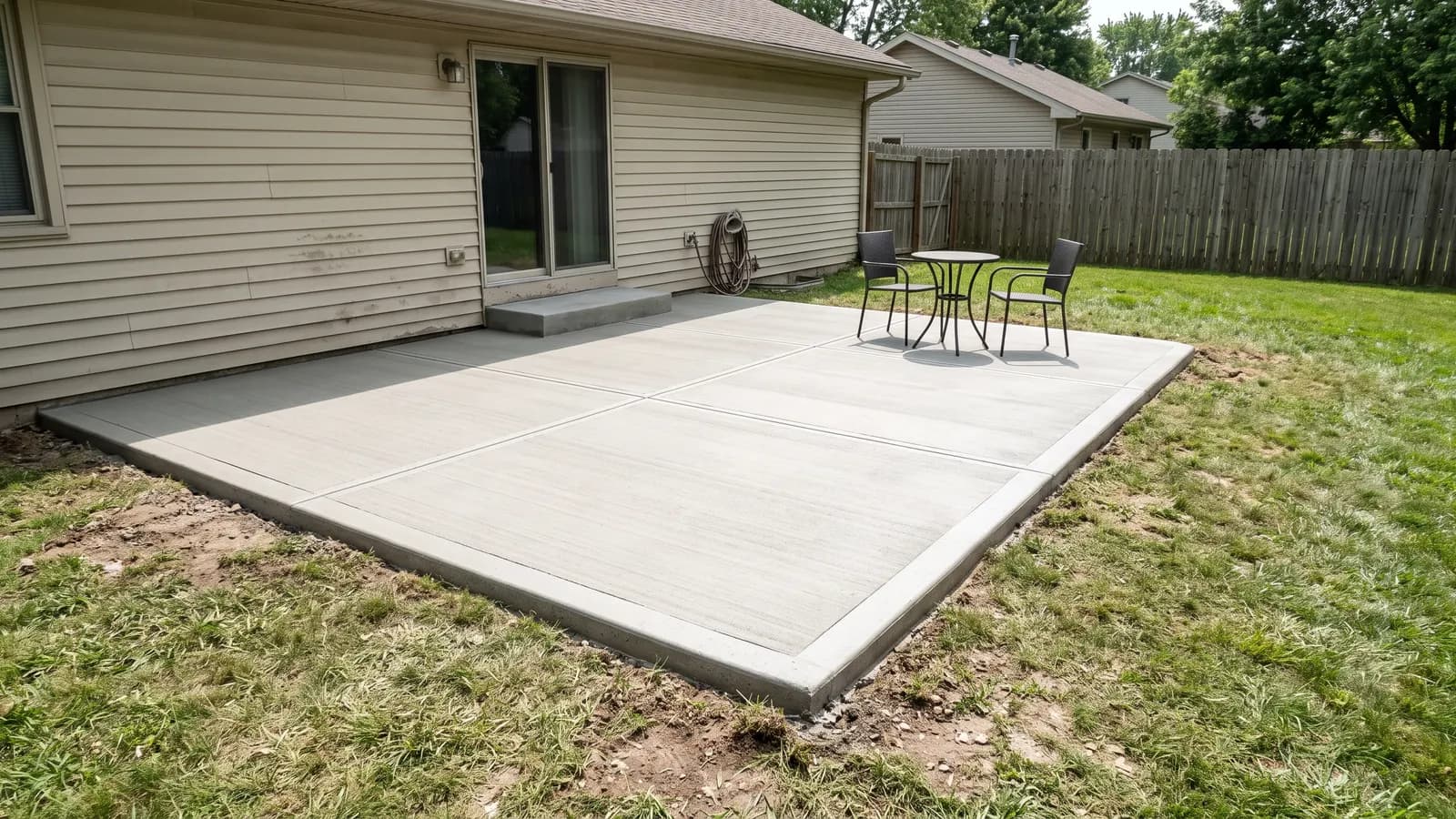
The cheapest finish still has room to look sharp. A broom finish runs about $6 to $13 per square foot installed, and the difference between tidy and tired is in the details: rounded tooled edges, straight brush lines, and control joints cut in a planned grid. For a standard 4-inch slab, joints every 8 to 12 feet keep the cracks where you want them.
2. Go smooth and dark
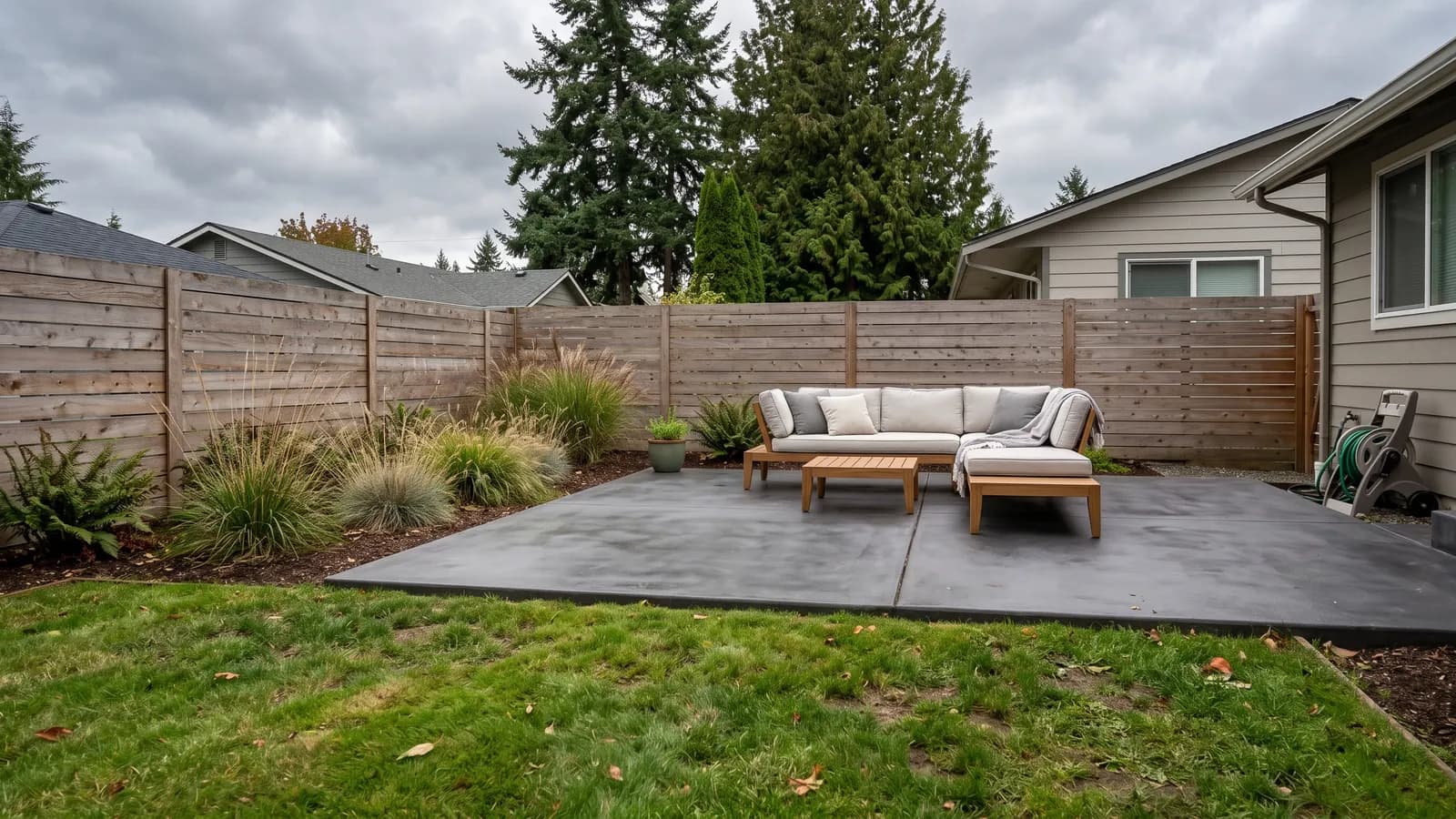
A troweled surface with a charcoal tint reads modern and costs little more than plain concrete, which sits at $4 to $12 per square foot. The catch is grip. Smooth concrete gets slick when wet, so ask for a sealer with an anti-slip additive, and keep this finish away from pool edges and shaded spots that stay damp.
3. Stamp it like cut stone
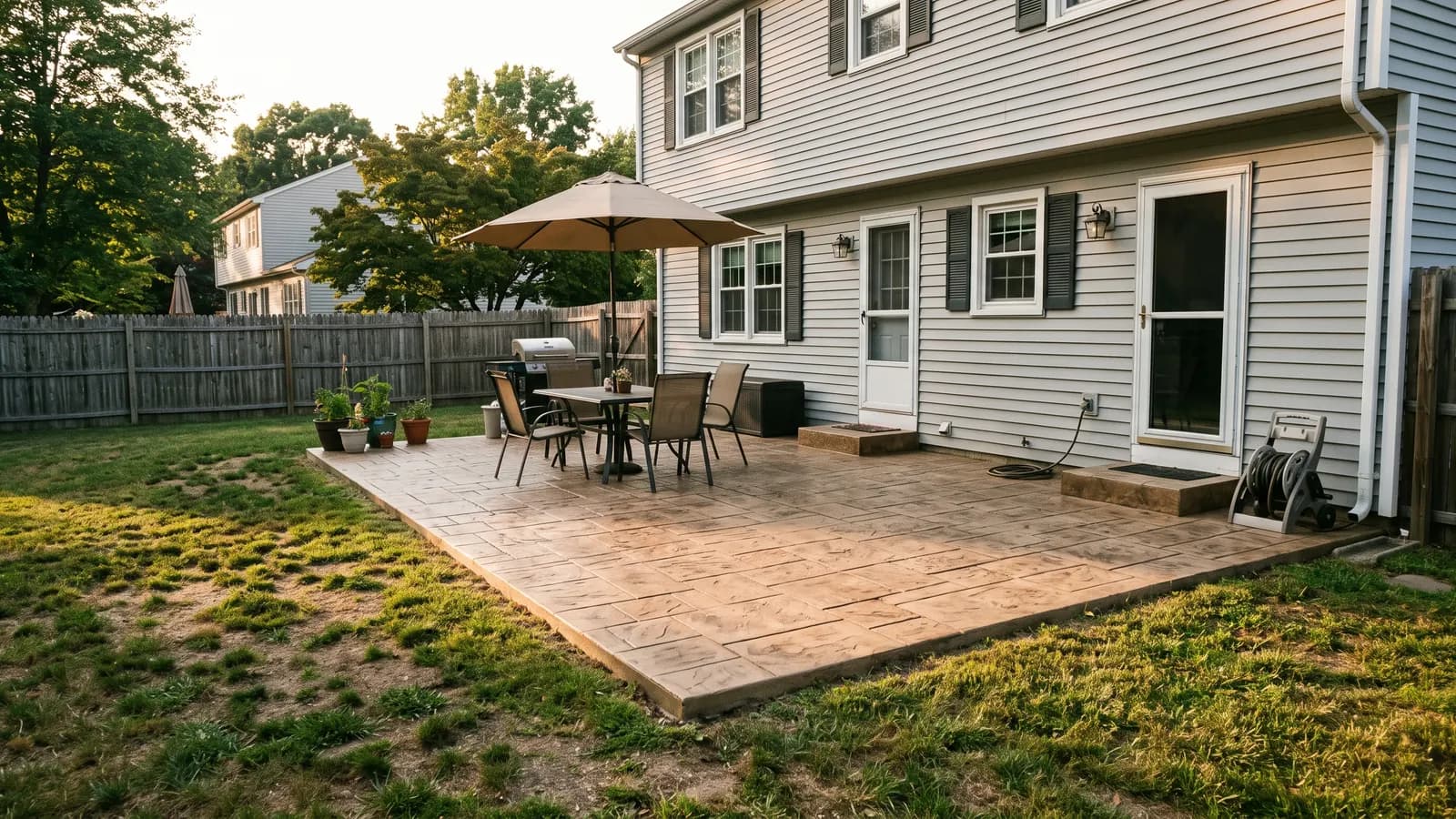
Ashlar slate, a staggered pattern of rectangular "stones", is a safe first choice because its clean lines suit both traditional and modern houses. Basic one-color stamping runs $8 to $13 per square foot. The darker release color that settles into the joints is what makes it look like stone instead of painted concrete, so don't skip it to save a few dollars.
4. Choose a flagstone pattern for curves
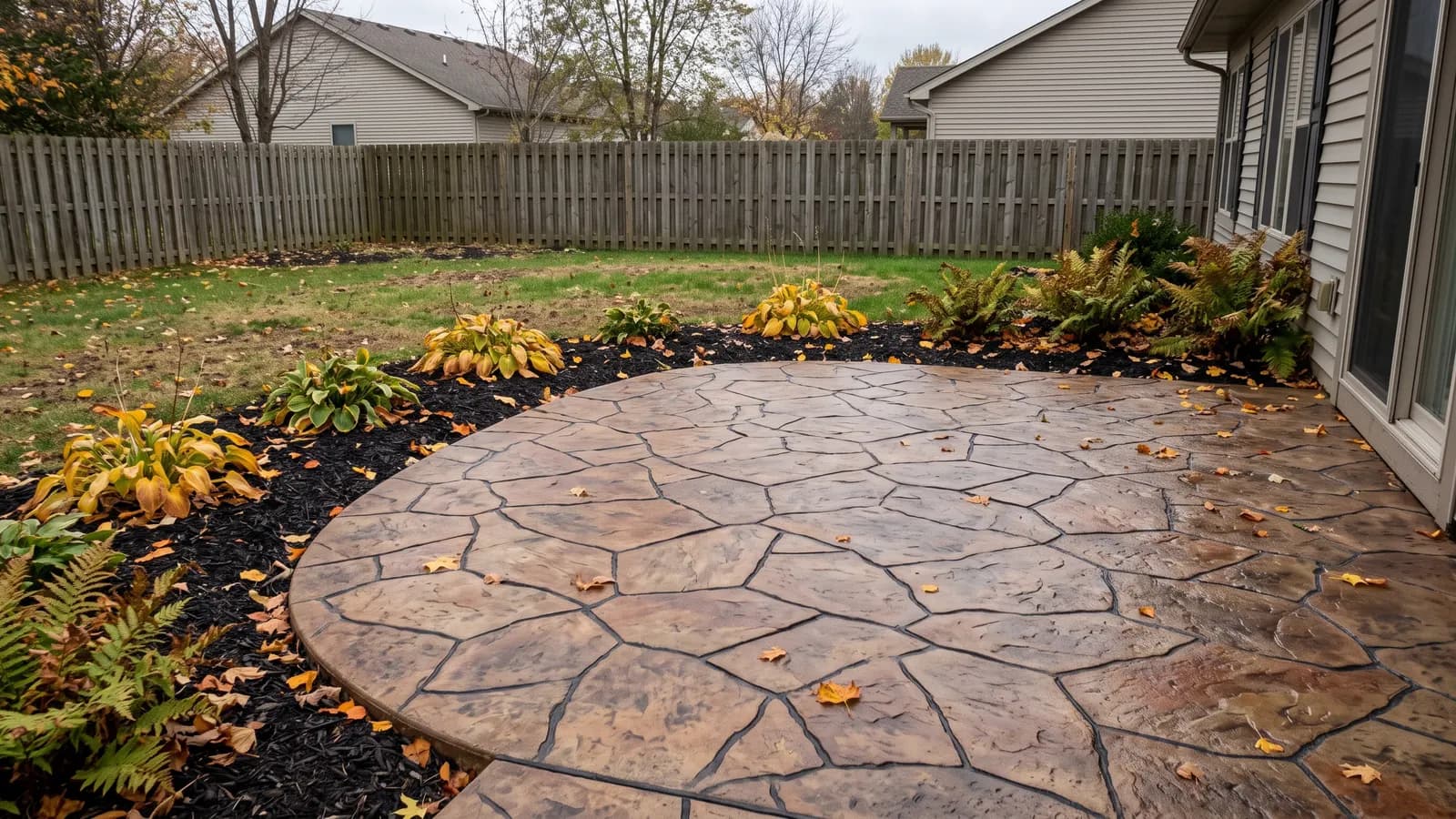
Random flagstone stamps have irregular shapes, so they handle curved edges and odd corners without the pattern looking chopped off. Expect mid-range stamping prices of $13 to $19 per square foot once you add a second color. Warm browns and tans hide dirt and leaf stains better than cool grays, and one New Jersey installer finds they hold their color longer between reseals.
5. Stamp wood planks around a pool
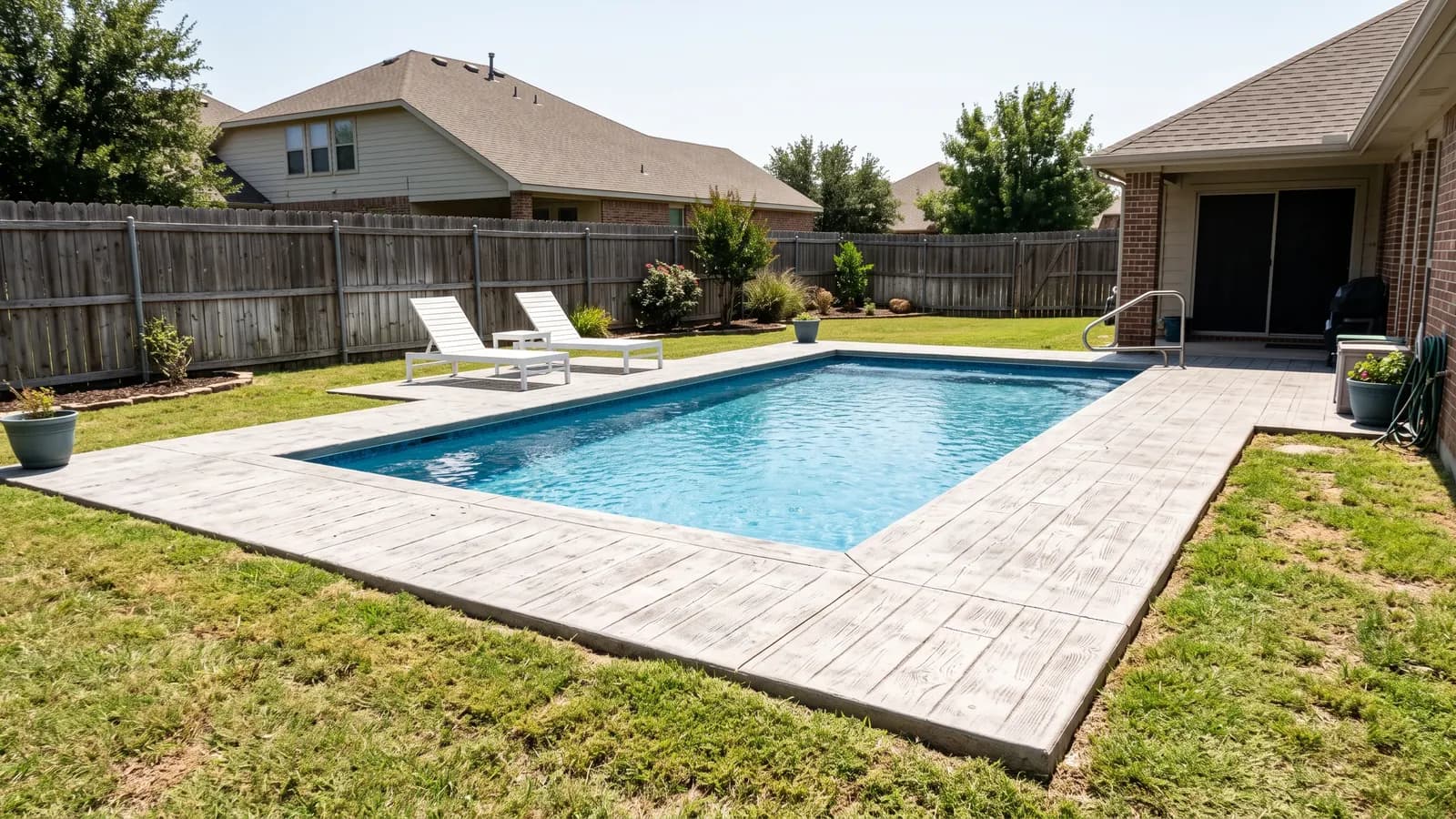
Wood-plank stamping gives you the look of a deck with no rot, no splinters and no yearly stain. Around water, pick a light color: it stays cooler underfoot in July, and the plank texture adds grip. High-end stamping with detailed textures can run $19 to $26 or more per square foot, so price the pool deck separately from the rest of the patio.
6. Acid-stain for a mottled finish
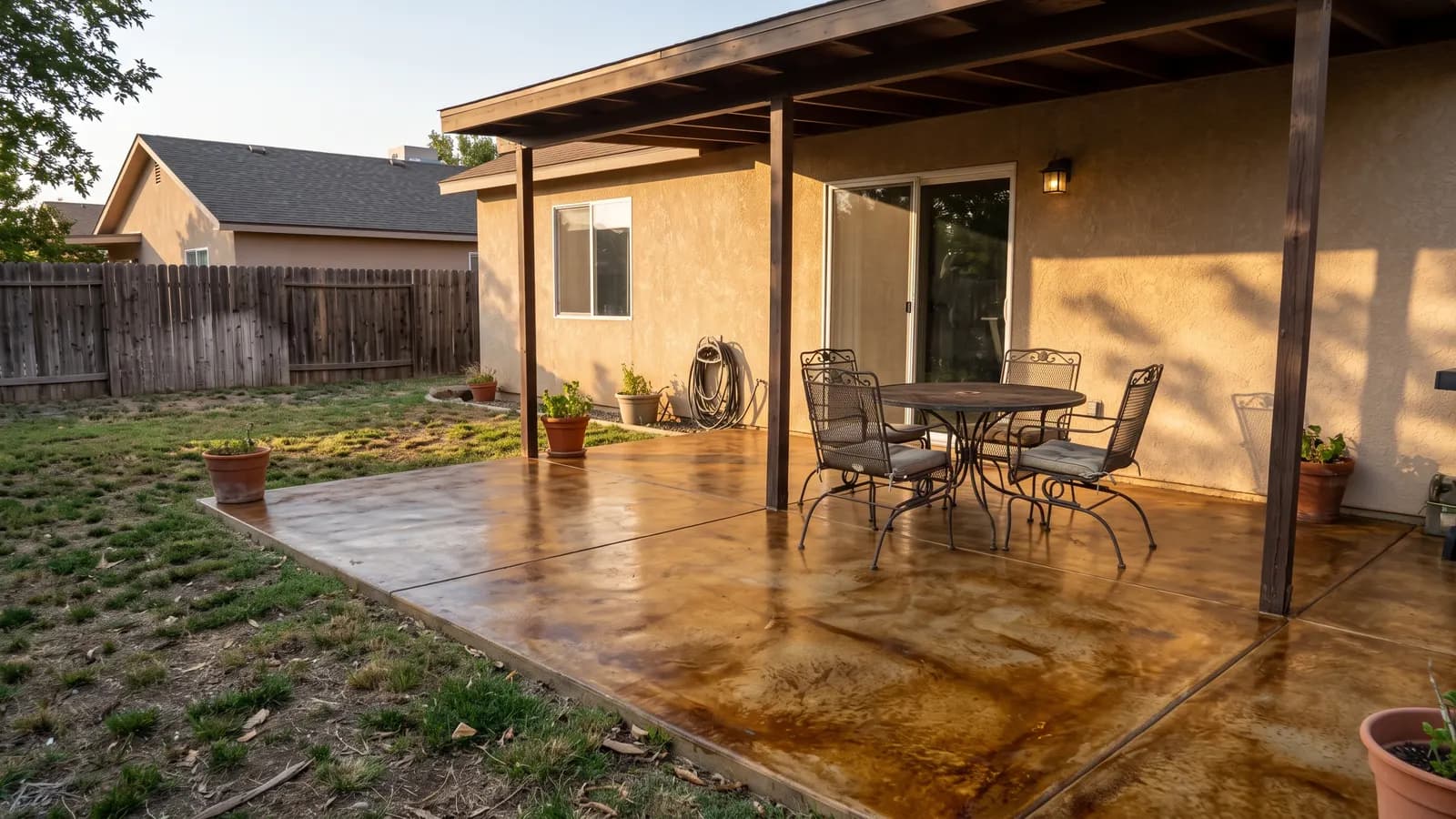
Acid stain reacts with the concrete itself, so the color won't peel and no two slabs come out the same. A new stained patio costs about $8 to $25 per square foot. The result is mottled on purpose, with light and dark patches, which suits Spanish and Southwest houses. If you want an even, predictable color, use a water-based stain instead.
7. Show the stones with exposed aggregate
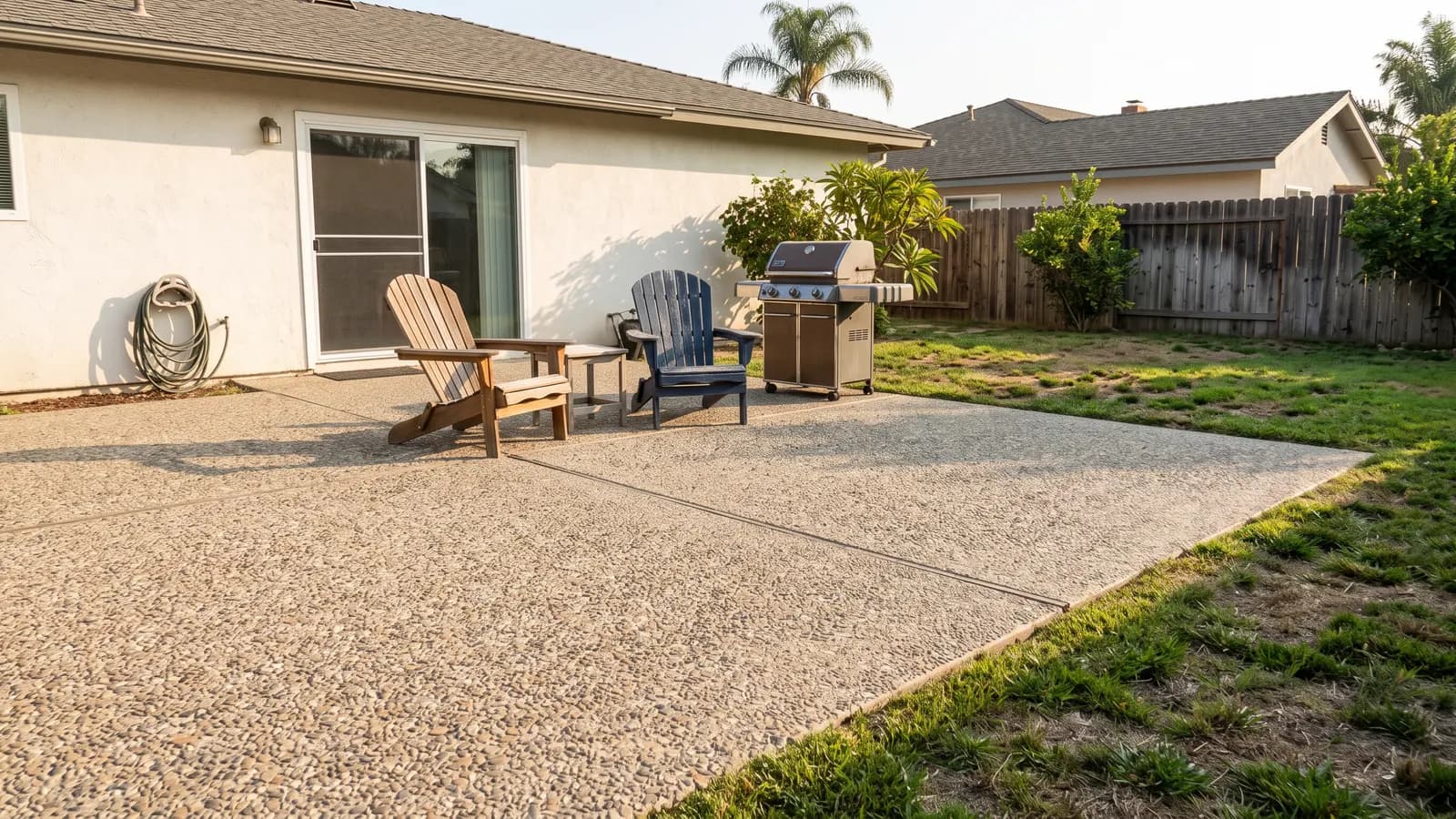
Washing the top layer of cement off before it sets leaves the pebbles in the mix showing. Exposed aggregate costs $7 to $18 per square foot and has one of the best wet-weather grips of any finish. It's also good at hiding dirt. Bare feet notice the texture, so pick small rounded aggregate if people will walk on it barefoot.
8. Score it into tiles
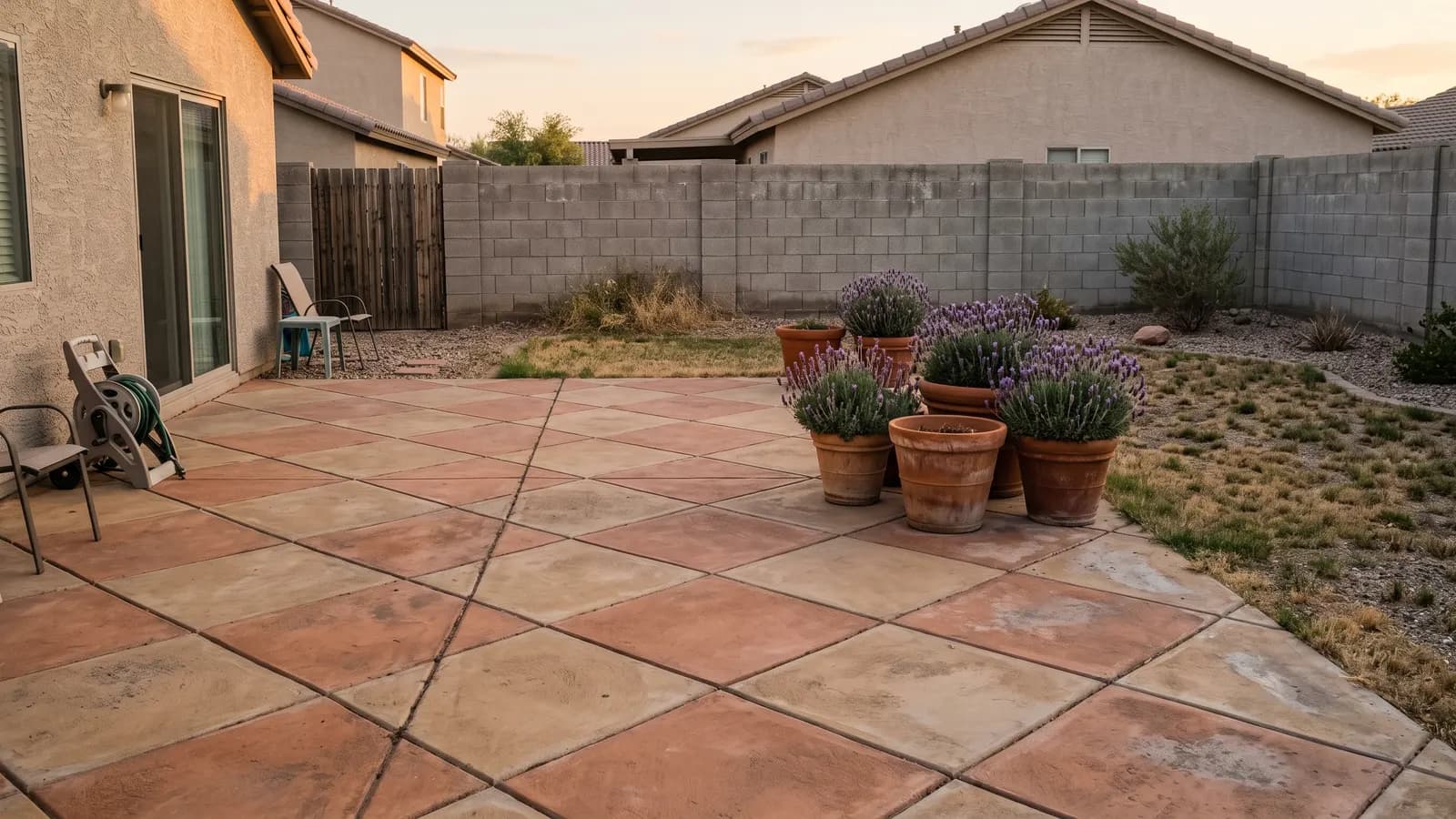
Shallow saw cuts in a grid, then two stain colors in alternating squares, and a slab passes for big terra cotta tiles. Detailed scoring and stencil work sits at the top of the staining range, about $15 to $25 per square foot. A 3-foot diamond grid hides the slab's control joints inside the pattern, so cracks are less likely to show up mid-tile.
Shapes and layouts
9. Curve the outer edge

A rectangle against the house is the default; one long curve on the garden side makes it look designed. Curved forms add some labor, so budget toward the upper end of the plain range ($4 to $12 per square foot). Let the curve set the shape of the planting bed in front of it, so the patio and the garden read as one plan.
10. Pour big squares with gravel between
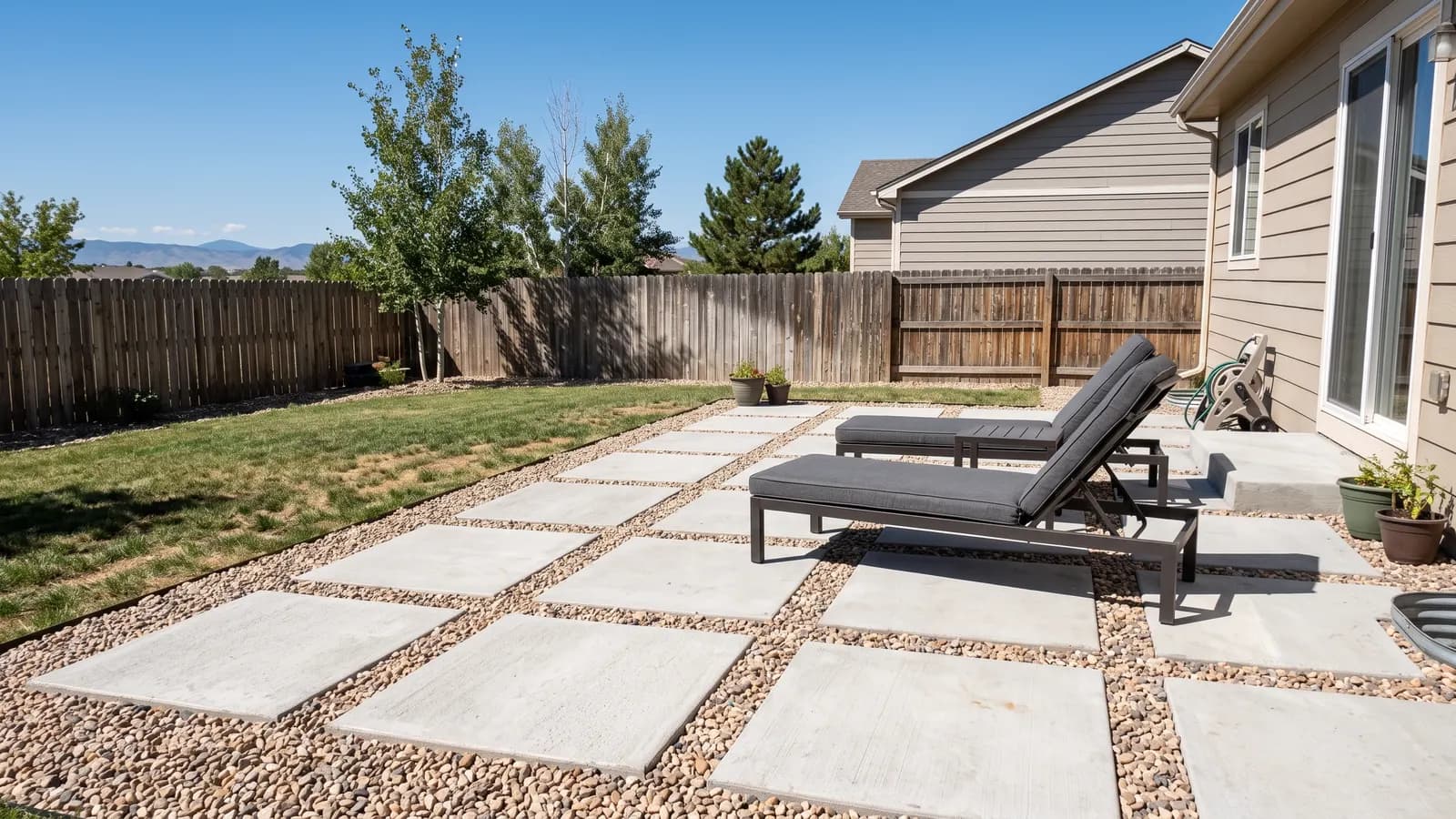
Pouring 3-foot squares in separate forms and filling the gaps with pea gravel gives you the look of large pavers at poured-concrete prices. The gravel joints drain rain straight into the ground, and each square moves on its own, so frost heave cracks fewer of them. Use our paver calculator to rough out how many squares and how much gravel the area takes.
11. Step down to a second level
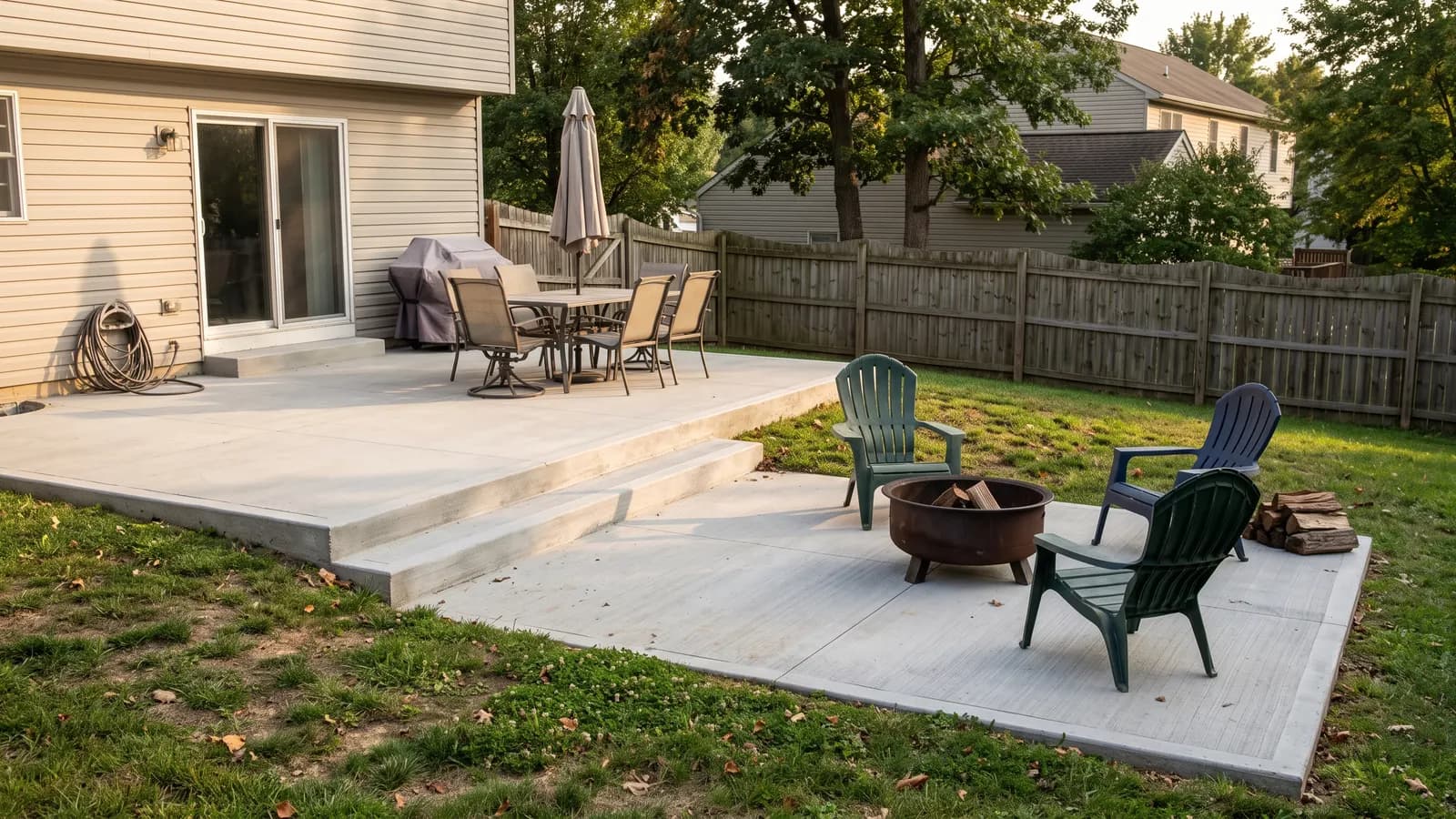
On a sloped yard, two flat levels beat one slab propped up on fill. Put dining up by the house and a lounge or fire pit area on the lower level, with steps at least 4 feet wide. Each level costs about what a single patio does per square foot, plus the steps and any retaining edge, and grade changes like this usually need a permit check.
12. Pour a round patio in the lawn
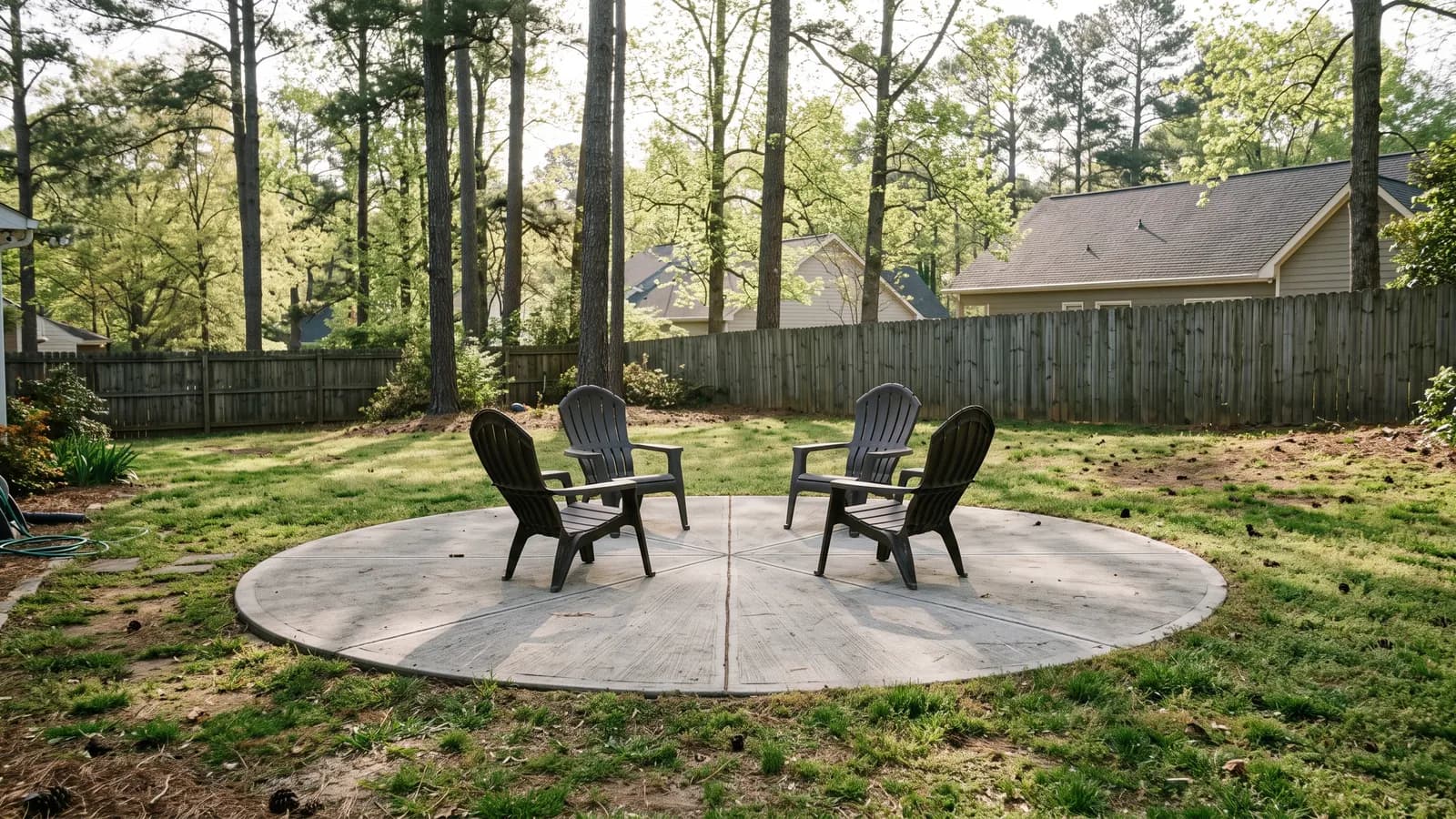
A circle out in the yard turns a patch of grass into somewhere to sit, away from the house. About 14 feet across fits four chairs and a fire pit with walking room. Scored lines running out from the center double as control joints. A plain finish keeps it near $4 to $12 per square foot, and a path of stepping stones from the house is all it needs.
13. Add on to a small slab

Builder-grade patios are often 10 by 10 feet, too small for a table and a grill. Adding an L-shaped section costs $4 to $30 per square foot, the same as new concrete, and needs its own compacted base. The new pour won't match the old color exactly, so plan to stain or resurface both parts afterward or make the seam a deliberate border.
Borders and inlays
14. Frame plain concrete with brick
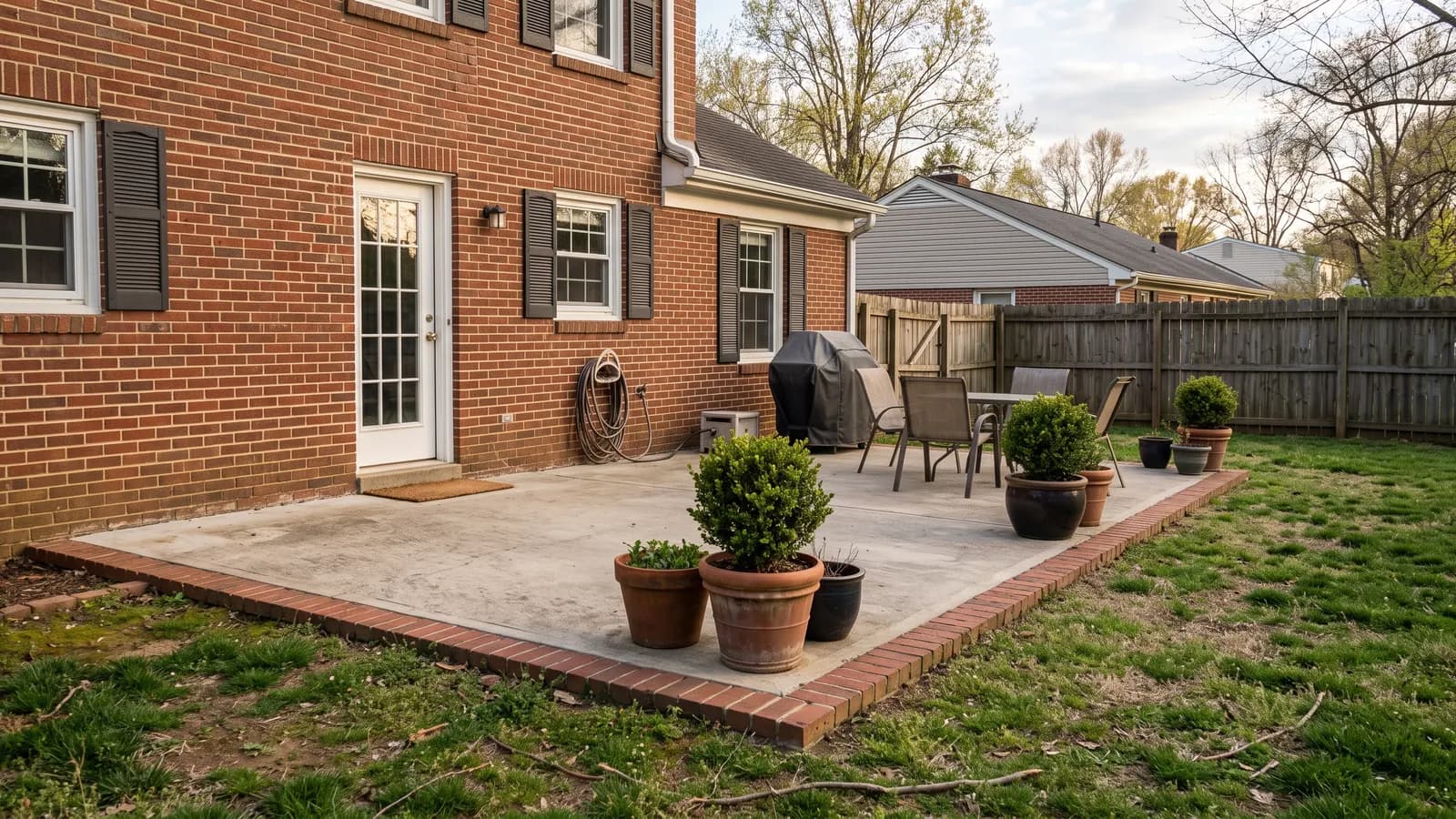
A single row of brick around the edge ties a plain slab to a brick house and covers the rough edge where forms were pulled. Pavers and brick cost $10 to $30 per square foot, but a border uses so little area that the total stays small. Set the bricks on a concrete footing rather than sand so the edge doesn't creep out of line.
15. Stamp only the border
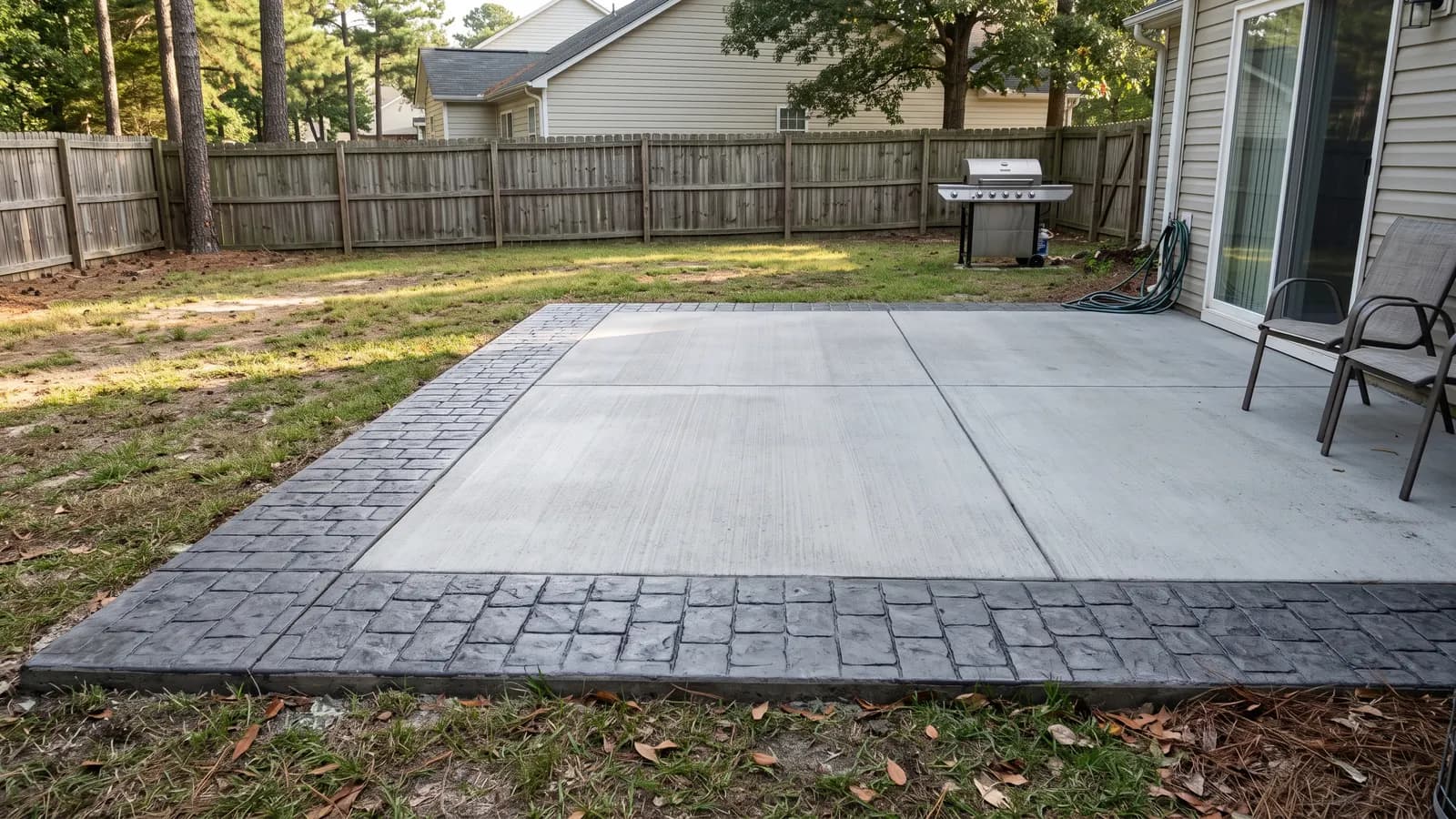
Stamping just a 2-foot band around a broom-finished center gets most of the decorative effect for much less money than stamping everything. Stamped work costs $8 to $19 per square foot for basic to mid-range designs, and on a 16 by 20 foot patio the border is less than half the area. A dark cobblestone band also hides the dirt that collects at patio edges.
16. Leave grass strips between slabs
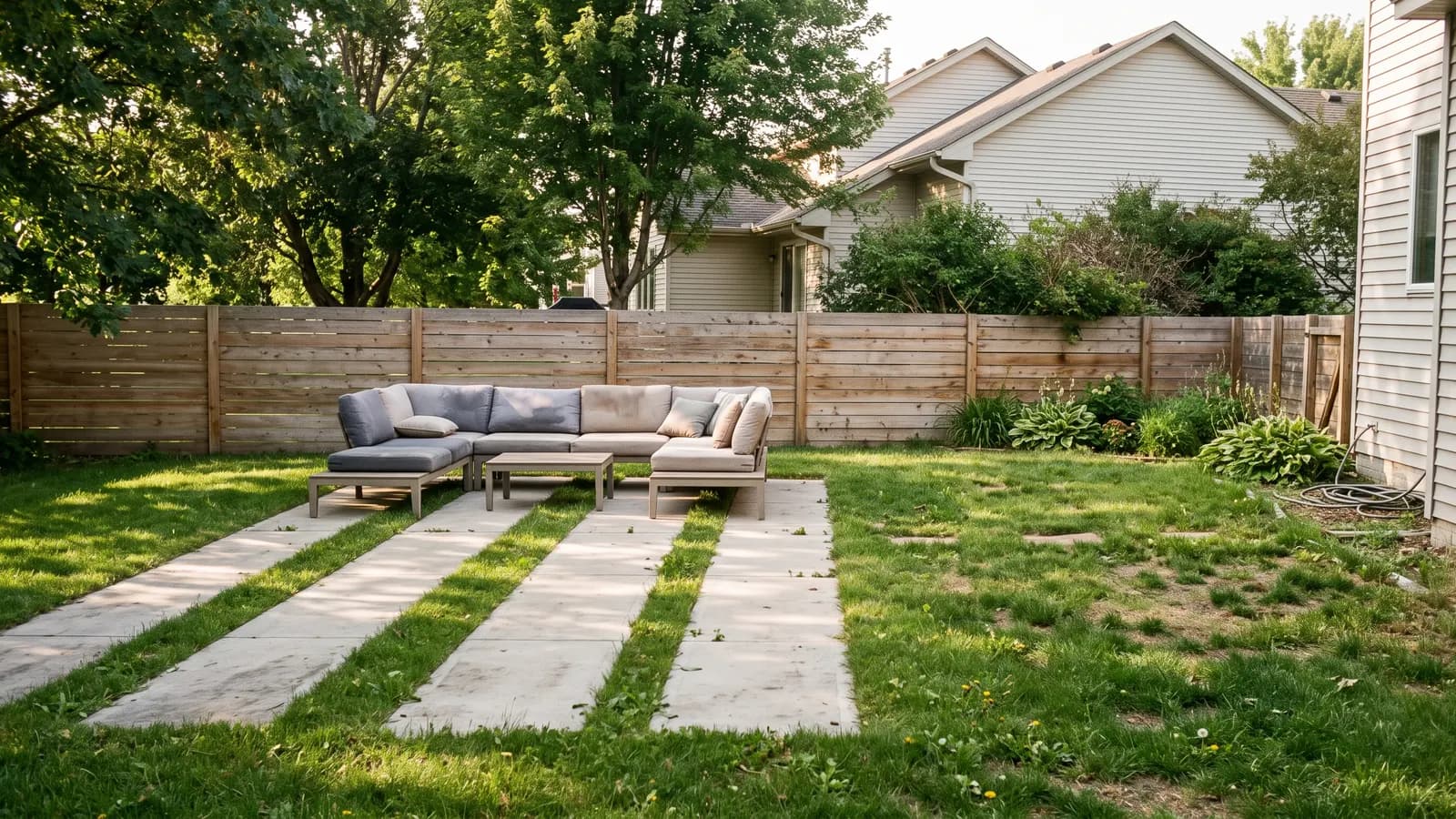
Long slabs with 6-inch grass gaps soften a big expanse of concrete and let rain soak in. The trade-off is mowing: a string trimmer along every strip, every week in summer. In dry climates, swap the grass for a creeping ground cover such as thyme, or for gravel, which looks just as clean and never needs cutting.
17. Inlay a band of river rock
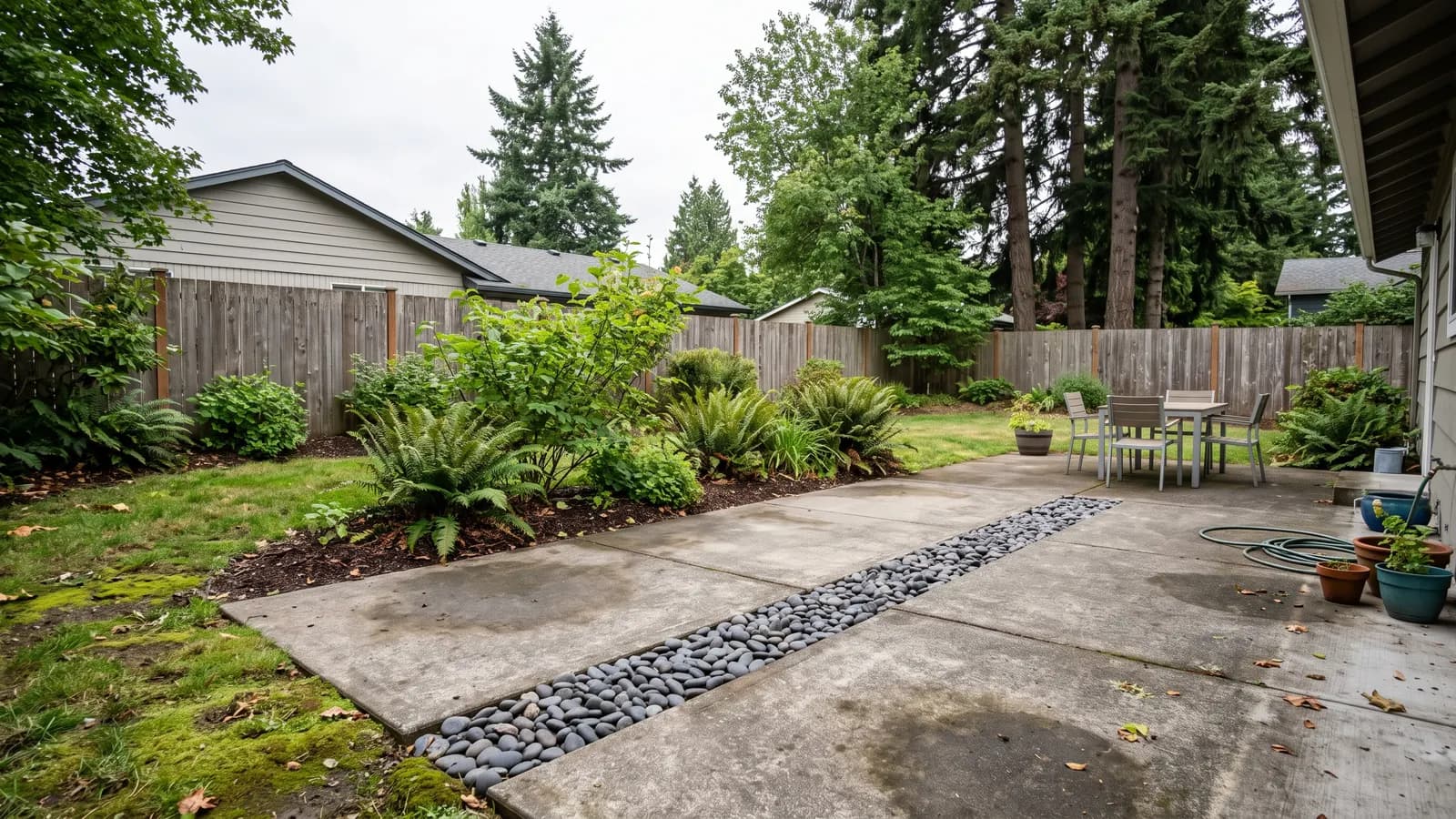
Pressing smooth river rock into a strip of wet concrete makes a band you can still walk on, and it breaks up a long slab. Set the stones flush, not raised, so chairs don't catch. Because the band is poured with the slab, it adds labor more than material, and it can line up with a control joint so the joint disappears into the design.
Upgrading an old slab
A slab that is cracked, stained and faded isn't necessarily done. If it's still level and the cracks are hairline, you can usually refinish it for a fraction of a new pour. Here is one tired 12 by 16 foot patio, and four ways to refinish it. The four after images are AI concepts made from the before photo.
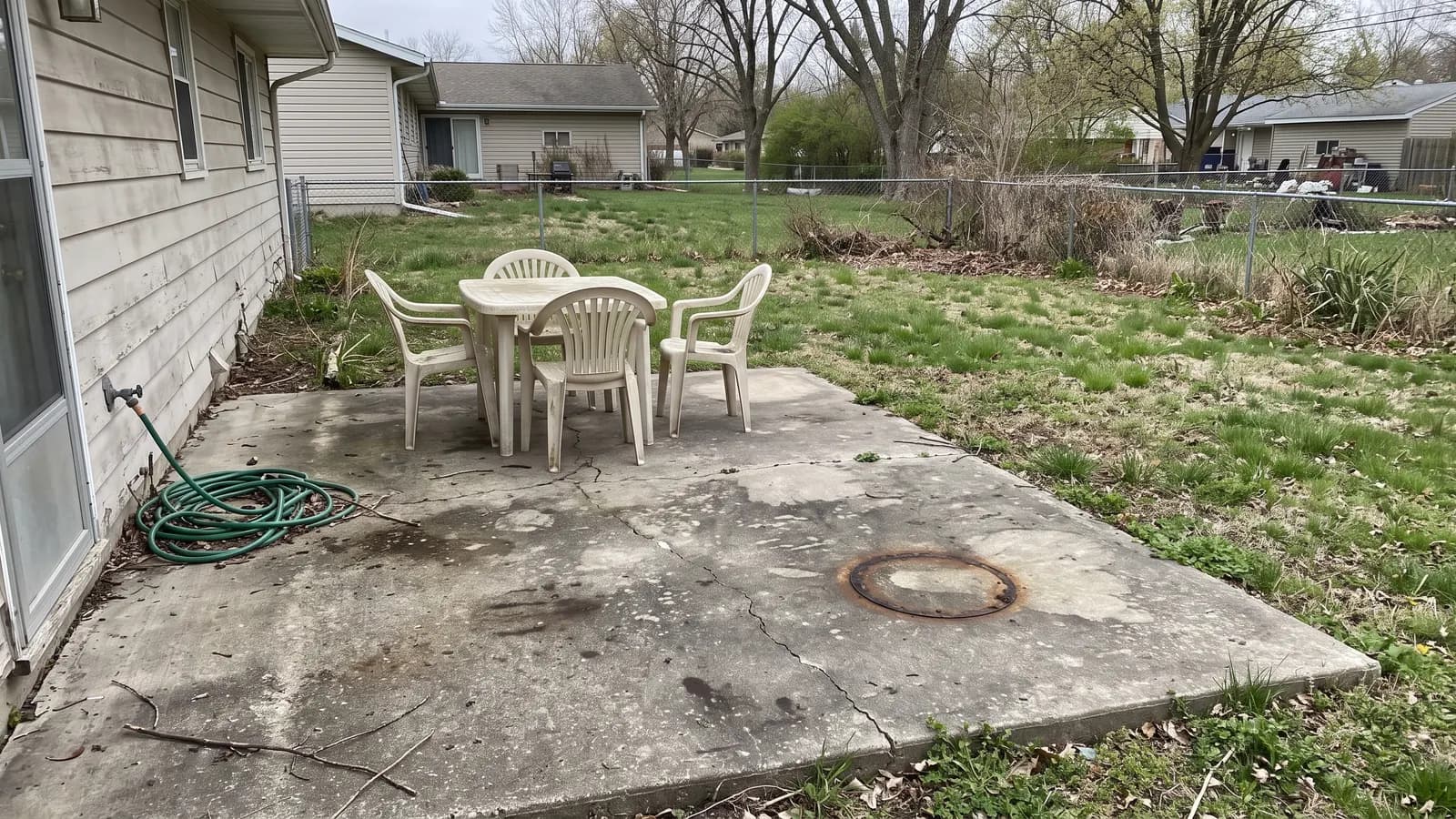
18. Resurface it with a fresh overlay
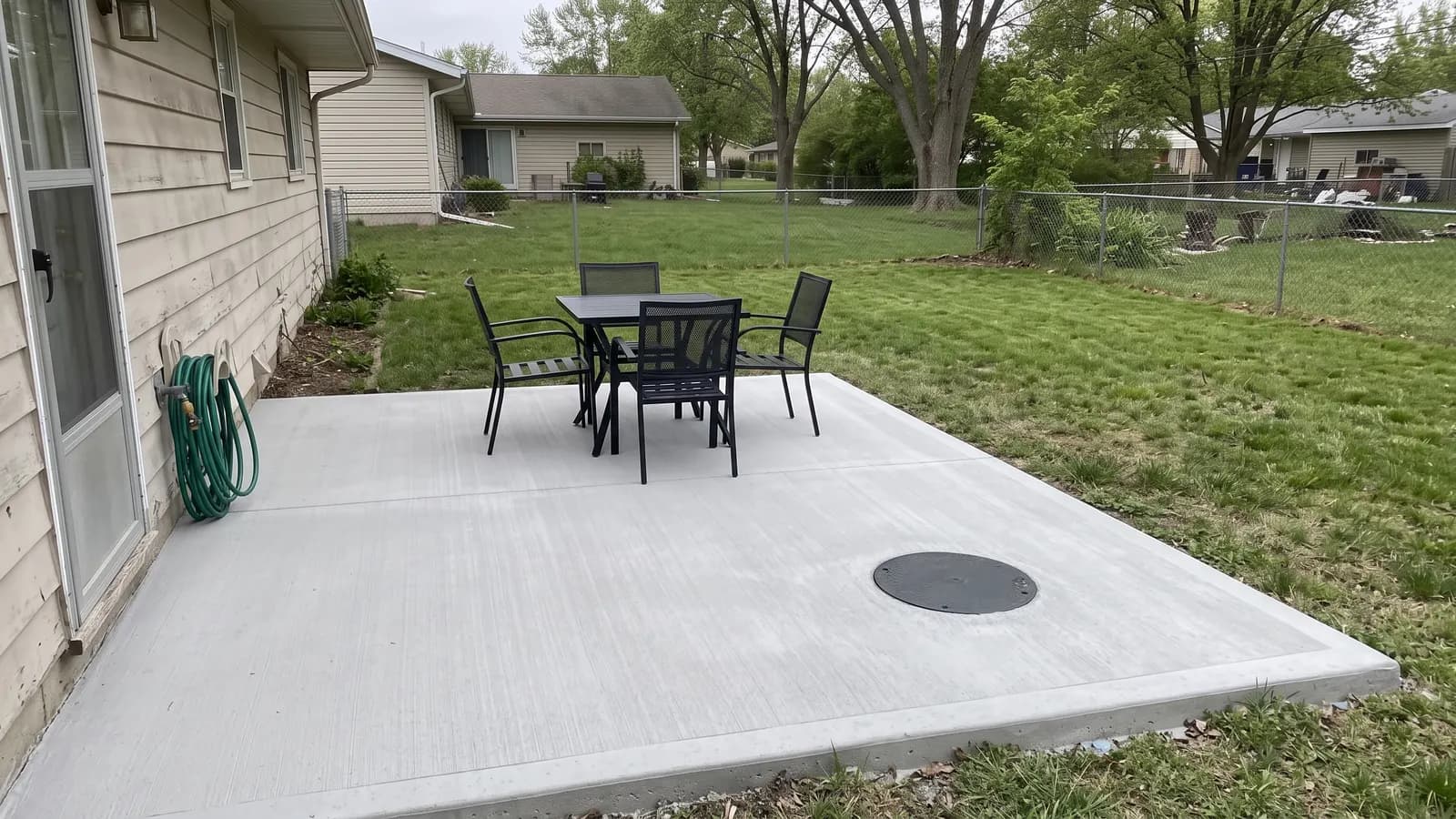
A thin cement overlay covers stains, shallow pitting and hairline cracks with a fresh, even surface. It costs $3 to $7 per square foot, or roughly $300 to $700 for a 10 by 10 foot patio. Overlays bond to sound concrete only. If the slab has sunk, heaved or has cracks you can fit a coin into, replace it instead.
19. Add a stamped overlay
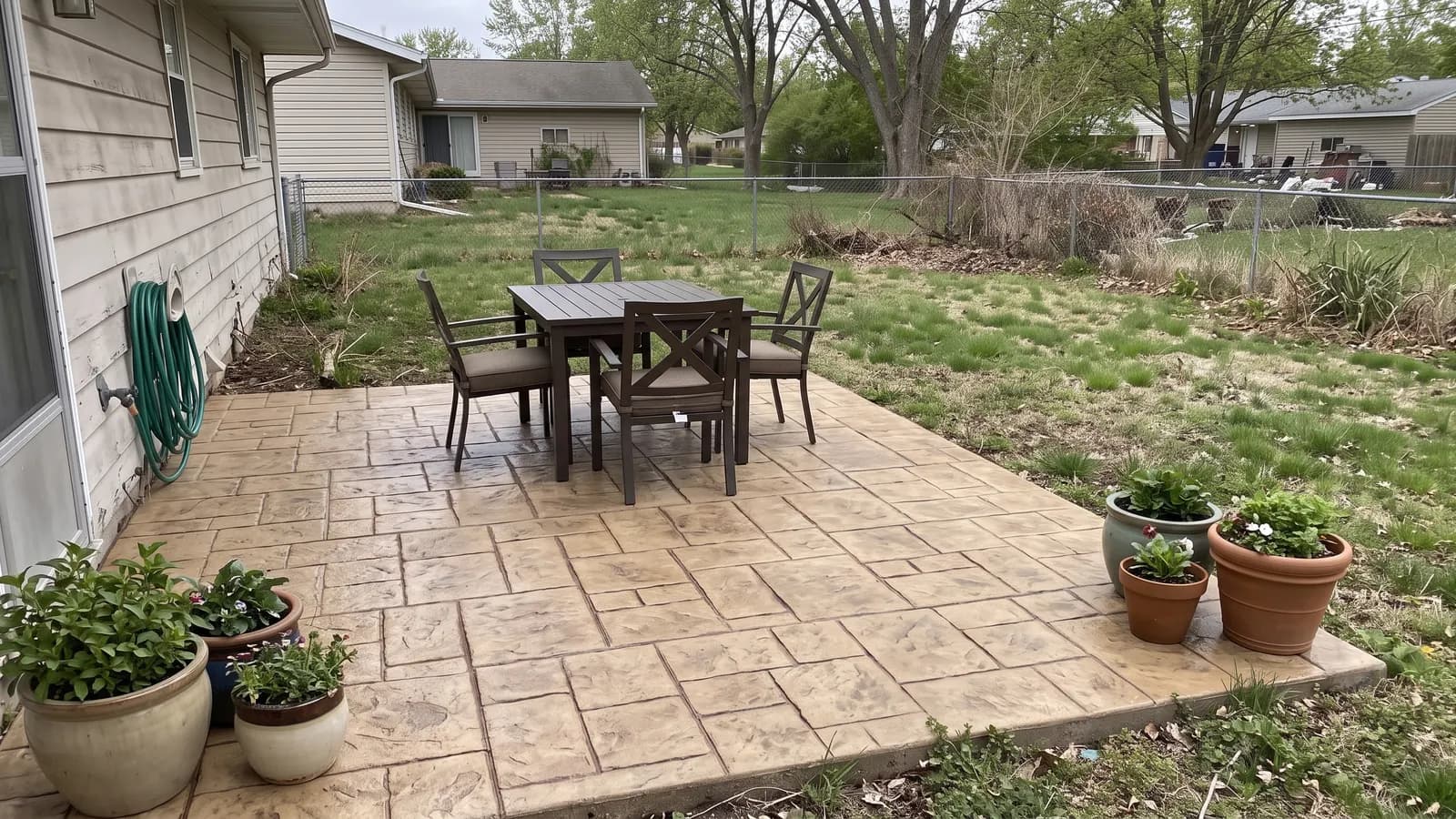
A stamped overlay is a thicker layer pressed with the same patterns as new stamped concrete. At $7 to $20 per square foot it costs about what a new basic stamped patio does, but you skip demolition and hauling. Ask the installer how thick the overlay will be and whether it brings the patio up against a door threshold.
20. Stain and seal it
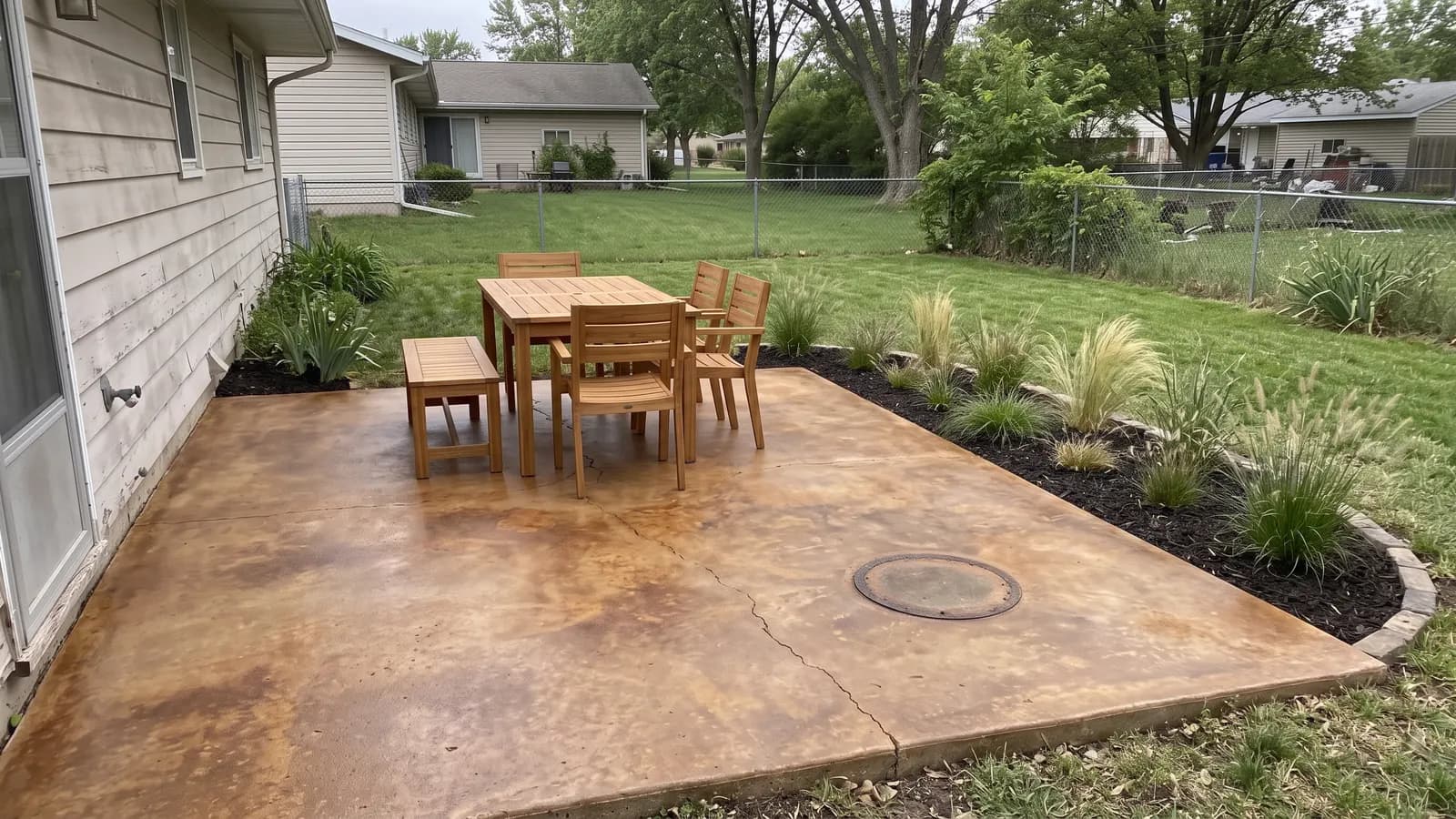
Staining existing concrete costs $3 to $15 per square foot, prep and sealer included, and it's the fastest way to change the color. Stain is translucent, so old patches and cracks still show through, more as character than as damage. Clean and etch the slab first, because stain won't take on concrete that has been sealed or soaked with grease.
21. Coat it and paint a border
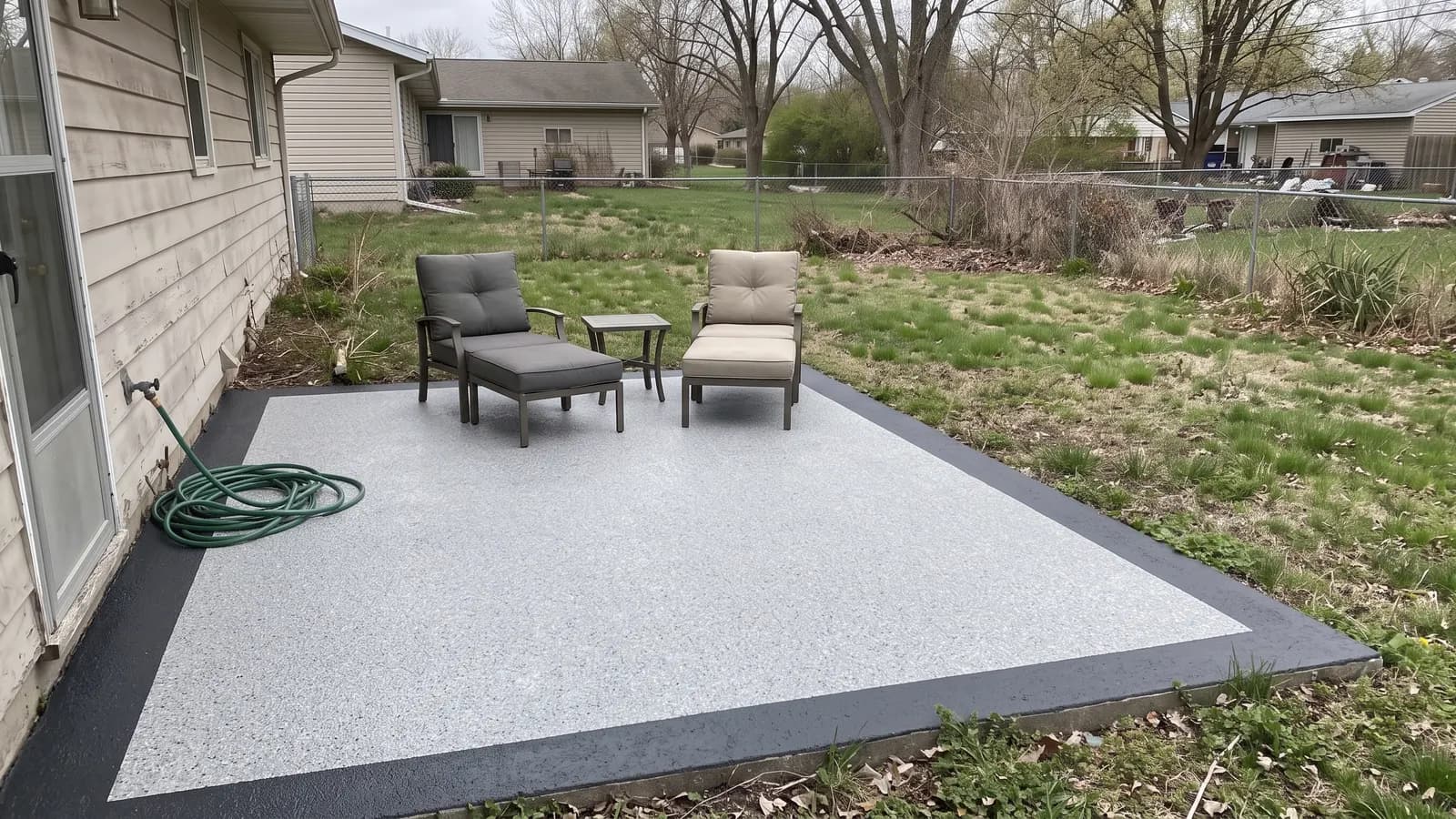
A decorative coating on an existing slab runs about $4 to $12 per square foot and hides more than stain does. A darker border band costs little extra and frames the patio. Choose a coating rated for outdoor use: standard epoxy handles hot sun and humidity poorly, and it can turn yellow and peel on a south-facing patio.
Shade, fire and planting
22. Put a pergola over it
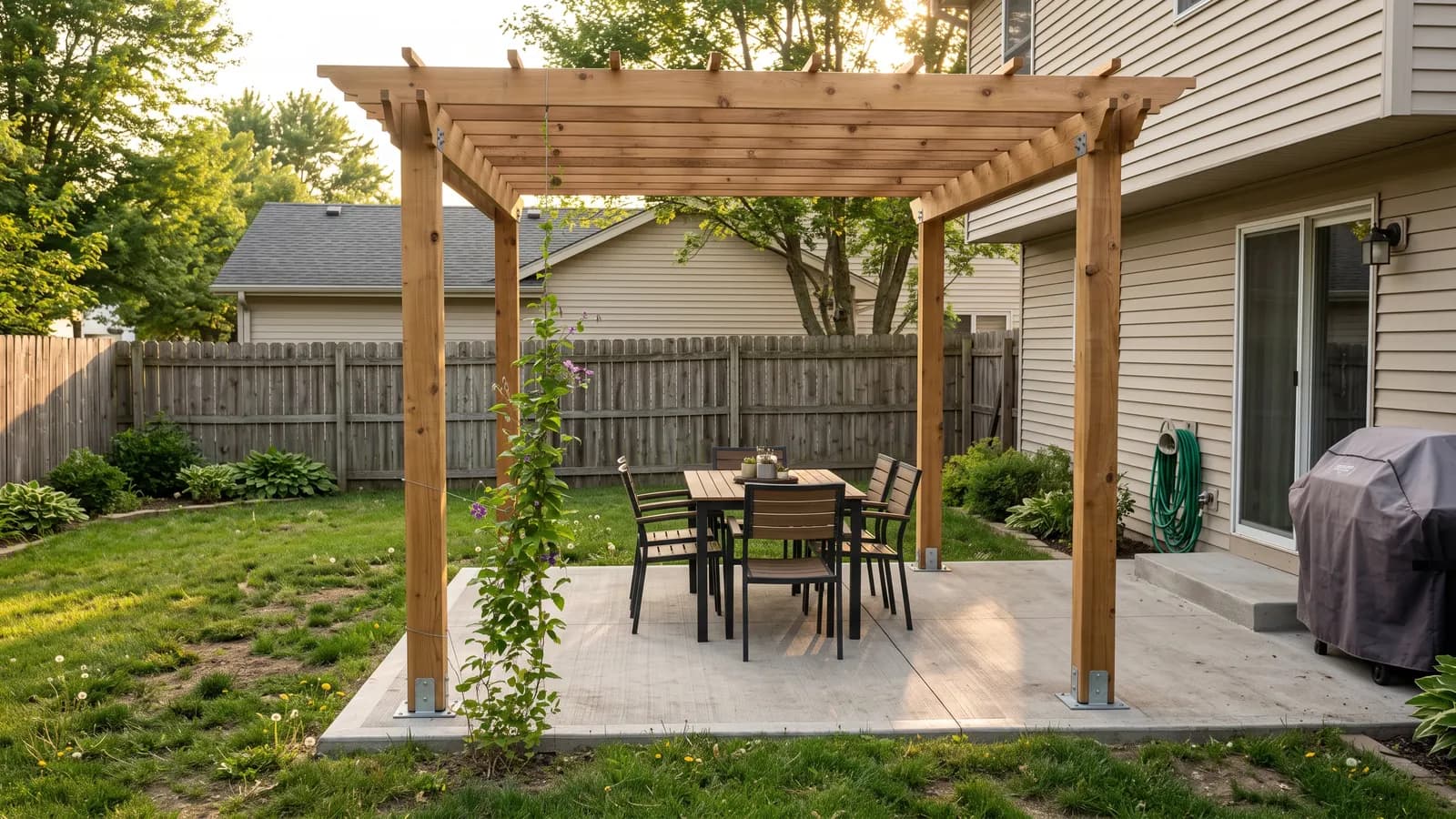
A slab is a good base for a pergola, since the posts bolt to the concrete with post bases or sit on footings poured alongside it. An installed pergola runs about $1,450 to $5,750. Check that the slab is at least 4 inches thick where the posts land, and plant a climber on the sunny side for more shade by year two.
23. Set a fire pit on a heat pad
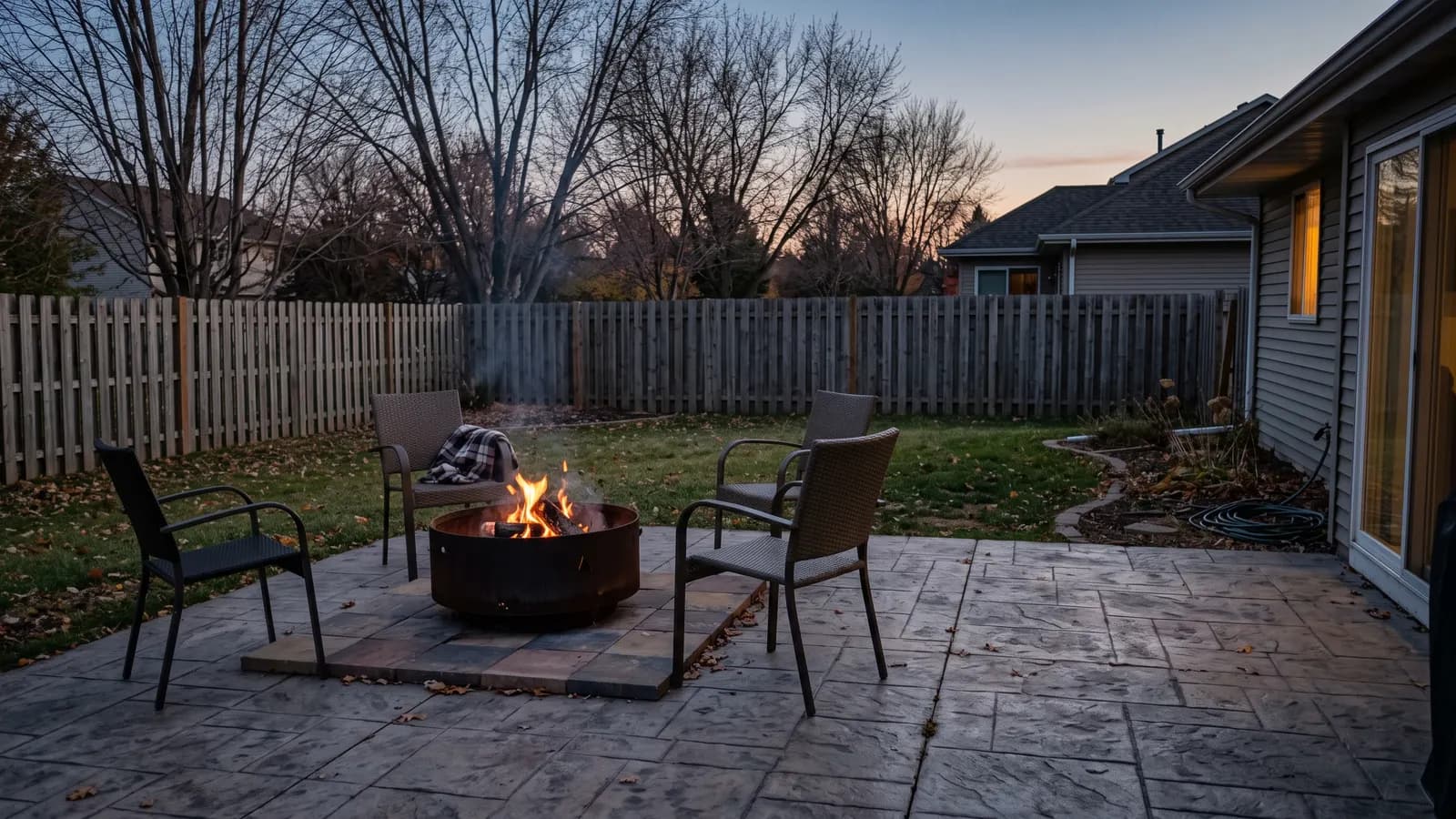
Concrete is fireproof, but direct heat can crack it and make the surface flake, especially on stamped or colored slabs. Put the fire pit on a stone or metal heat pad, or choose a model raised on legs. A fire pit costs about $325 to $2,000 installed, and many towns set minimum distances from the house and fences, so check before you choose its spot.
24. Leave planting pockets in the slab
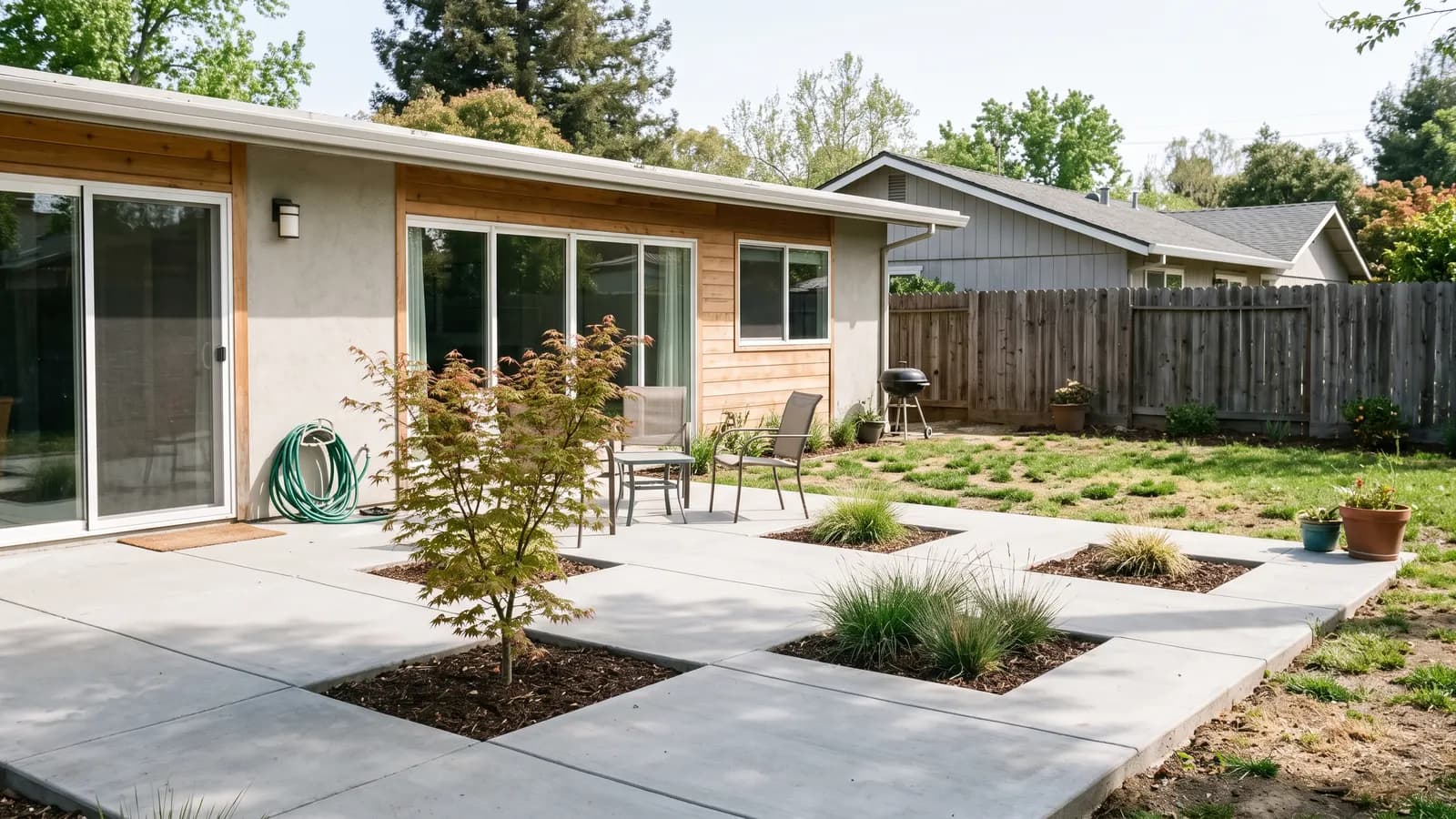
Blocking out a few squares before the pour leaves room for grasses or a small tree right in the patio. It's far easier at pour time than cutting out concrete later. Give a tree pocket at least 4 by 4 feet so the roots don't lift the slab, and choose plants that tolerate reflected heat, such as Japanese forest grass in shade or blue fescue in sun.
25. Pour a seat wall along one edge
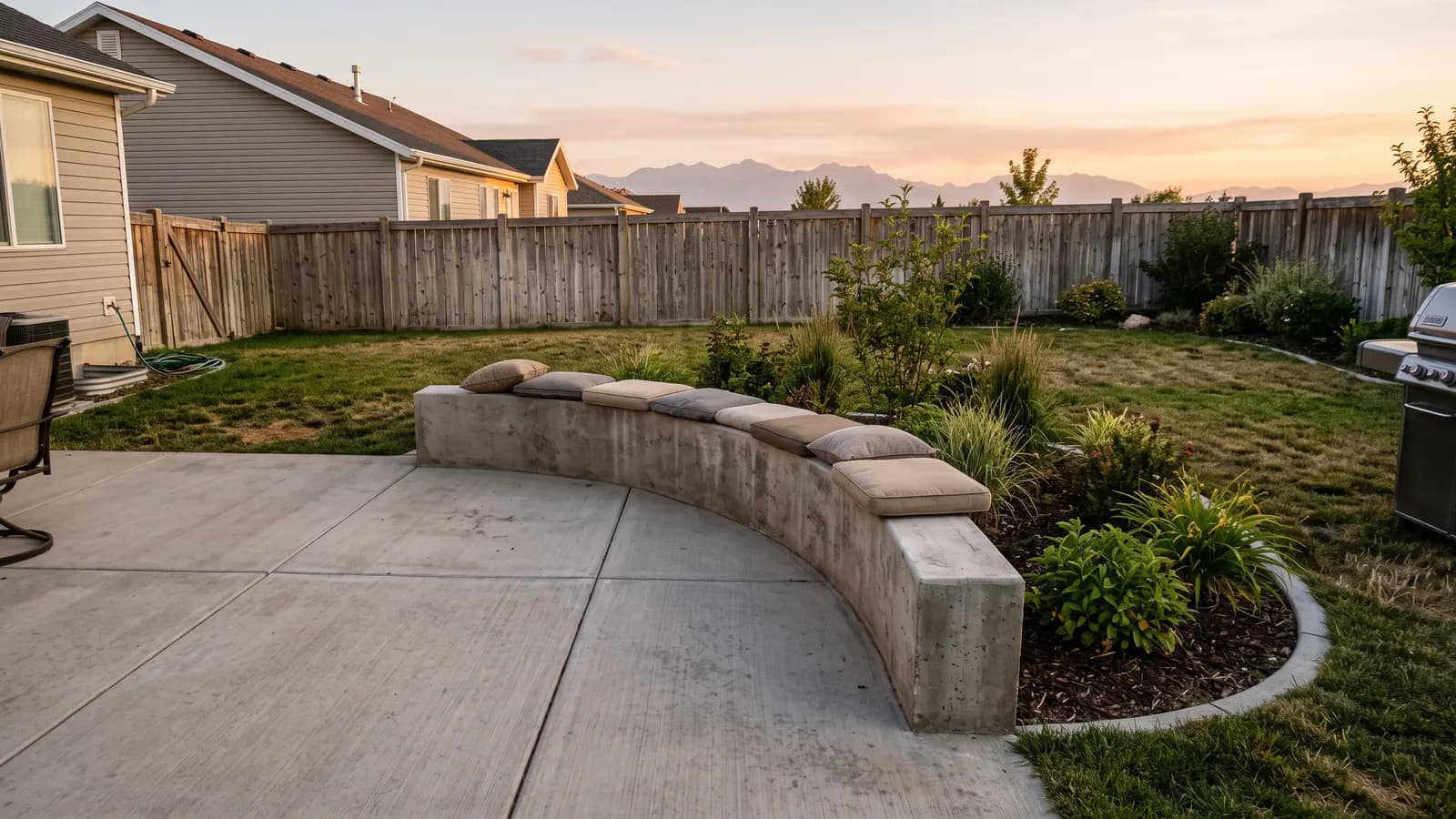
A seat wall 18 to 20 inches high adds seating without adding furniture, and it holds back the planting bed behind it. Curving it along the patio edge makes a small slab feel enclosed. On a sloped yard it can also do the work of a short retaining wall, though anything that holds back more than a couple of feet of soil needs proper drainage behind it.
26. Light it for evenings
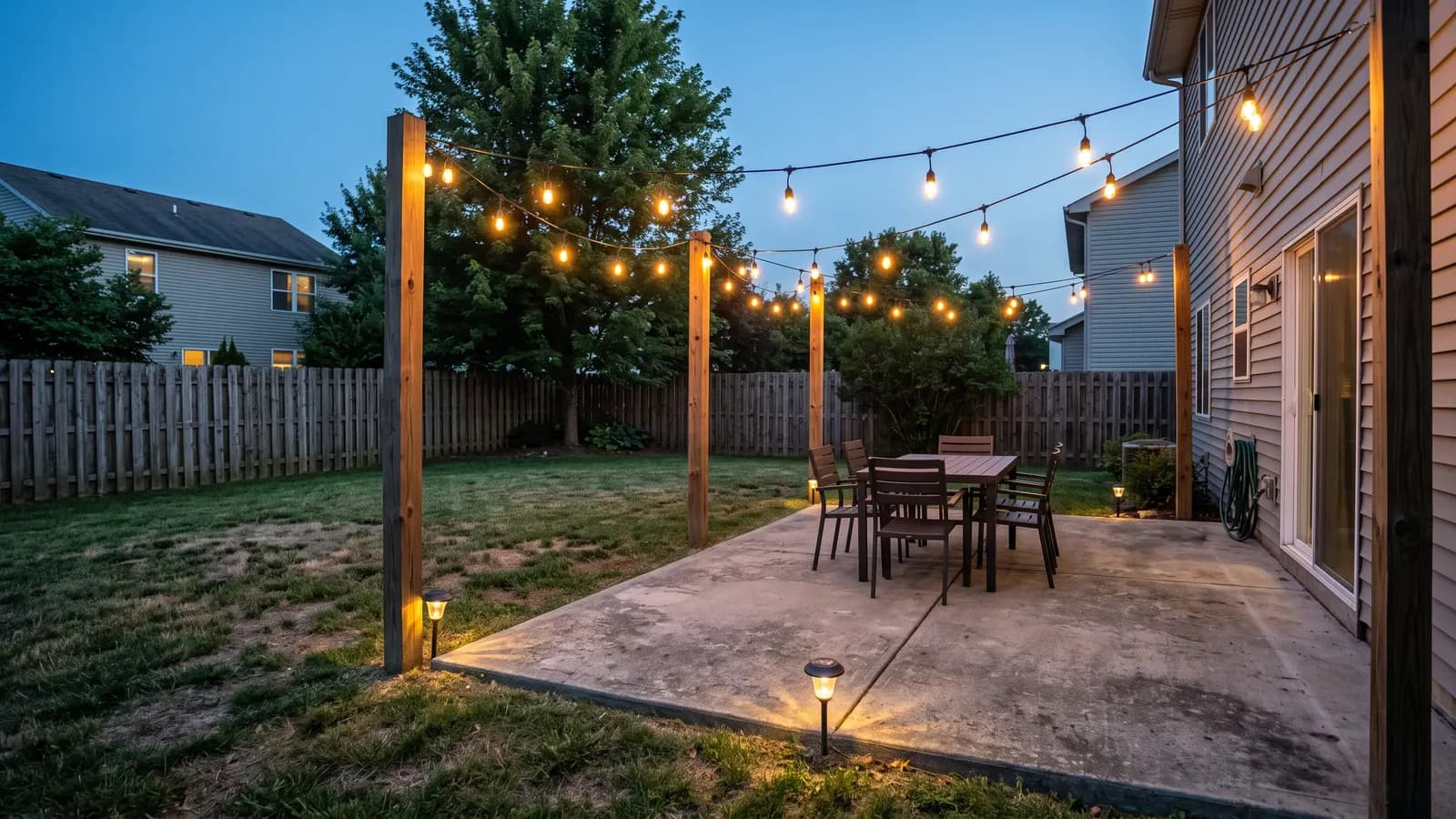
Concrete reflects light well, so a couple of low fixtures go a long way. String lights on posts cost little and can be up in an afternoon. Hardwired landscape lighting costs about $80 to $300 per fixture installed. If you're pouring new, run conduit under the slab before the concrete goes in, because it's much harder to add later.
27. Shade it with a retractable awning
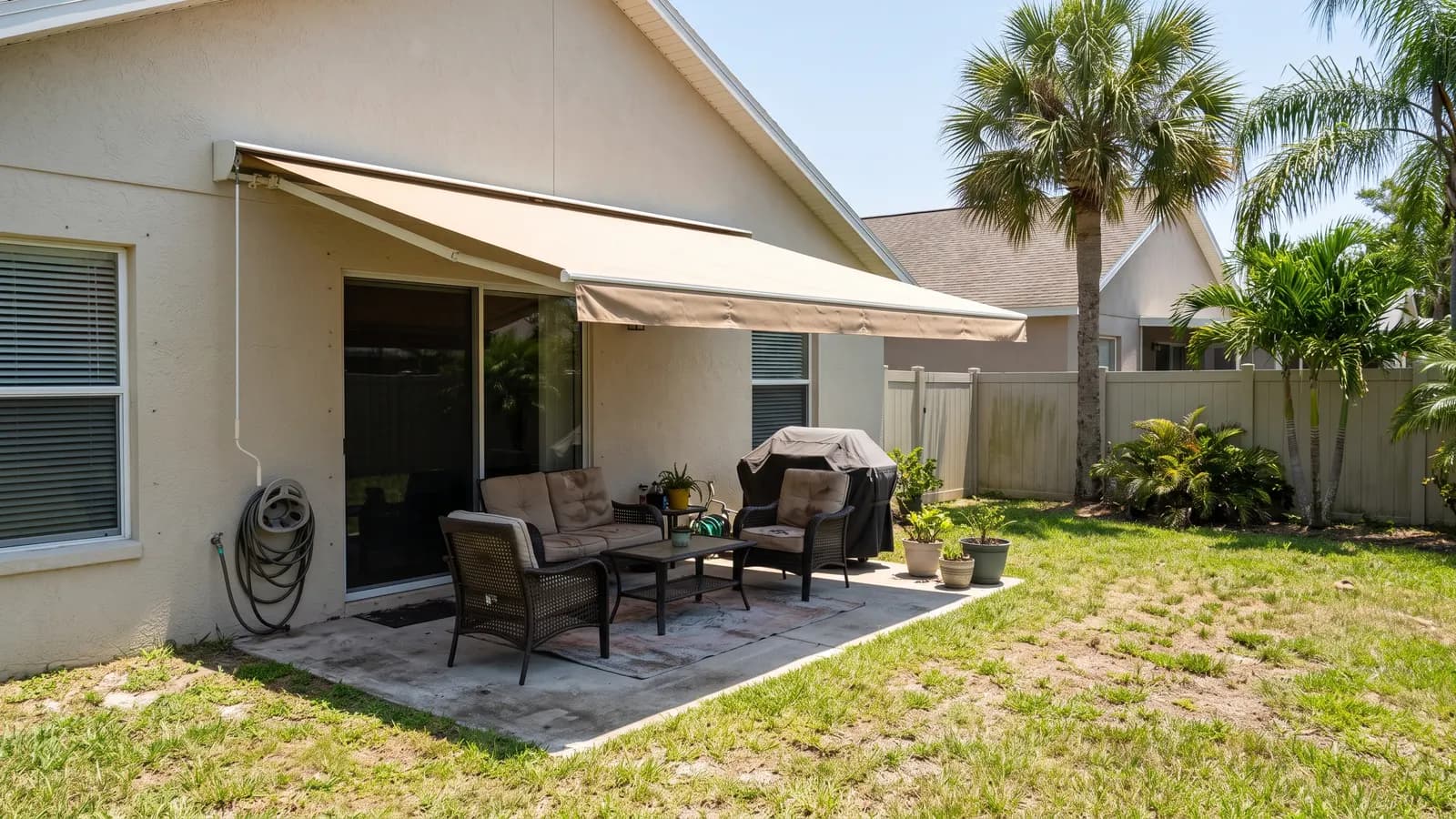
A patio against a south or west wall can be too hot to use from June to August. A retractable awning gives shade when you want it and lets the sun back in for spring and fall. Manual awnings cost about $200 to $3,000 installed and motorized ones up to about $6,000. Mount it to framing, not just siding, and retract it in high wind. We compare awnings with fixed roofs and pergolas in our guide to covering a patio.
Concrete patio costs by finish
Installed prices per square foot, national ranges checked October 2026. Your local price depends on site prep, access, patio size and how many colors and patterns you combine. Smaller patios cost more per square foot.
| Finish | New patio, per sq ft | On an existing slab, per sq ft |
|---|---|---|
| Plain or smooth | $4 to $12 | n/a |
| Broom finish | $6 to $13 | n/a |
| Exposed aggregate | $7 to $18 | n/a |
| Stained | $8 to $25 | $3 to $15 |
| Stamped, basic (one pattern, one color) | $8 to $13 | $7 to $20 (stamped overlay) |
| Stamped, mid-range (2+ colors, border) | $13 to $19 | n/a |
| Stamped, high-end (multi-color, detailed) | $19 to $26+ | n/a |
| Decorative coating | $7 to $22 | $4 to $12 |
| Plain resurfacing overlay | n/a | $3 to $7 |
For a 20 by 20 foot patio, that works out to about $1,600 to $4,800 for plain concrete and $3,200 to $7,600 for typical stamped work. Some estimating tools put fully installed stamped patios at $24 to $29 per square foot, so get at least two local quotes. Our concrete patio cost guide covers thickness, reinforcement, permits and site prep in more detail.
How to choose
- Tight budget: a broom finish with good joints (1), a stamped border only (15) or a stained old slab (20). If you're working on a whole yard on a budget, see our backyard makeover on a budget guide.
- Around a pool or in wet climates: exposed aggregate (7) or wood-plank stamping in a light color (5). Skip smooth, dark finishes.
- Old slab still level: resurface (18) or add a stamped overlay (19) before you pay for demolition.
- Sloped yard: two levels (11) and a seat wall (25).
- Cold winters: separate pads with gravel or grass joints (10, 16) handle freeze and thaw better than one large slab.
Before you pick a finish, it helps to see it on your own house. A pattern that looks great in a gallery can clash with your siding or brick every day you look at it. Try two or three finishes on a photo of your slab and compare them side by side.
FAQ
How can I make a concrete patio look nicer? Start with the surface: staining ($3 to $15 per square foot) or a resurfacing overlay ($3 to $7) makes the biggest change for the money. Then add a border, planting along the edges, and shade or lighting. Furniture and a large outdoor rug finish it off for very little.
Can you resurface an old concrete patio? Yes, as long as the slab is structurally sound. Overlays bond well to concrete that is level with only hairline cracks, and cost $3 to $7 per square foot plain or $7 to $20 stamped. A slab that has sunk, heaved or split badly should be replaced, because an overlay will crack along the same lines.
What is the cheapest way to make a concrete patio look good? Clean it, cut tidy control joints if it has none, and stain it. Stain costs a fraction of a new pour and changes the color completely. Planting along the edges and a few potted plants make it look finished for very little extra.
Is stamped concrete cheaper than pavers? Usually, yes. Basic stamped concrete runs $8 to $13 per square foot against $10 to $30 for pavers. Pavers are easier to repair one piece at a time, while stamped concrete needs resealing every few years to keep its color and should be cut with control joints to manage cracking.
What concrete patio finish is the least slippery? Exposed aggregate and broom finishes give the best grip. Stamped patterns with texture, like slate or wood plank, are close behind. Smooth troweled concrete and glossy sealers are the most slippery when wet, so add an anti-slip additive to the sealer near pools and steps.
How do I see a concrete finish on my own patio before choosing? Take a photo of the slab from the house and try a few styles with AI patio design. Ask the contractor for color samples to hold against your siding as well.
Sources: HomeGuide: concrete patio cost, HomeGuide: stamped concrete patio cost, HomeGuide: concrete staining cost, HomeGuide: concrete resurfacing cost, ConcreteNetwork: concrete patio cost, ConcreteNetwork: stamped concrete cost, Homewyse: stamped concrete patio cost, NRMCA CIP 6: joints in concrete slabs, all checked October 20, 2026