13 Low Maintenance Pool Landscaping Plants That Skip the Skimmer
The right poolside plant holds its leaves, ignores splash, and never meets your skimmer basket. These 13 picks come with zones, mature sizes, planting distances, and the short list of roots that can crack a pool.
Every plant you place near a pool signs a contract: look good in swimsuit season, survive splash and reflected heat, and never send anything into the water. Most plants break at least one clause. The low maintenance pool landscaping plants below keep all three, and each entry lists its zones, mature size, rough cost, and how far from the coping it belongs.
Two numbers explain why poolside is a hard neighborhood. Light travertine decking hits around 102 degrees in summer sun, and dark bluestone right beside it reaches 112; whatever you plant lives over that radiator. And the distance rule that saves pools: shrubs 3 to 4 feet from the coping, trees at least 15 feet or past their mature canopy, aggressive rooters nowhere on the property side of the fence.
The images are AI-generated design concepts showing each plant in real poolside context, the same kind of render AI garden design makes from a photo of your own pool area.
1. Fountain grass, the poolside default
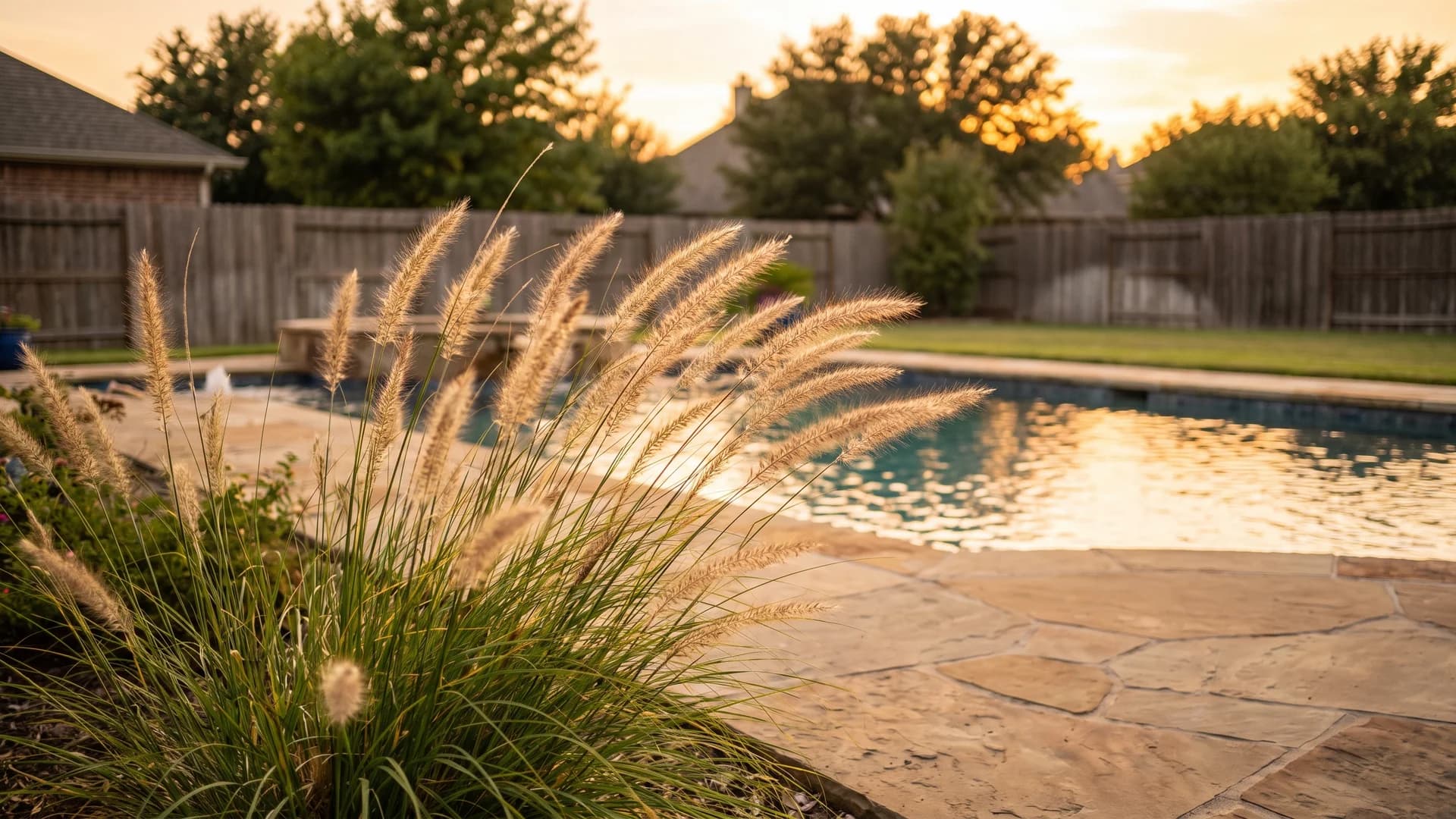
If poolside planting has a default setting, it's fountain grass: soft plumes that move with every breeze, no petals to shed, and a shape that stays tidy without staking. Zones 5 to 9, about 3 feet tall and wide, $12 to $18 a pot. One cutback in March is the whole care calendar. Plant it 2 feet off the deck so the plumes lean over stone rather than water.
2. Sedum 'Pool Party', named for the job
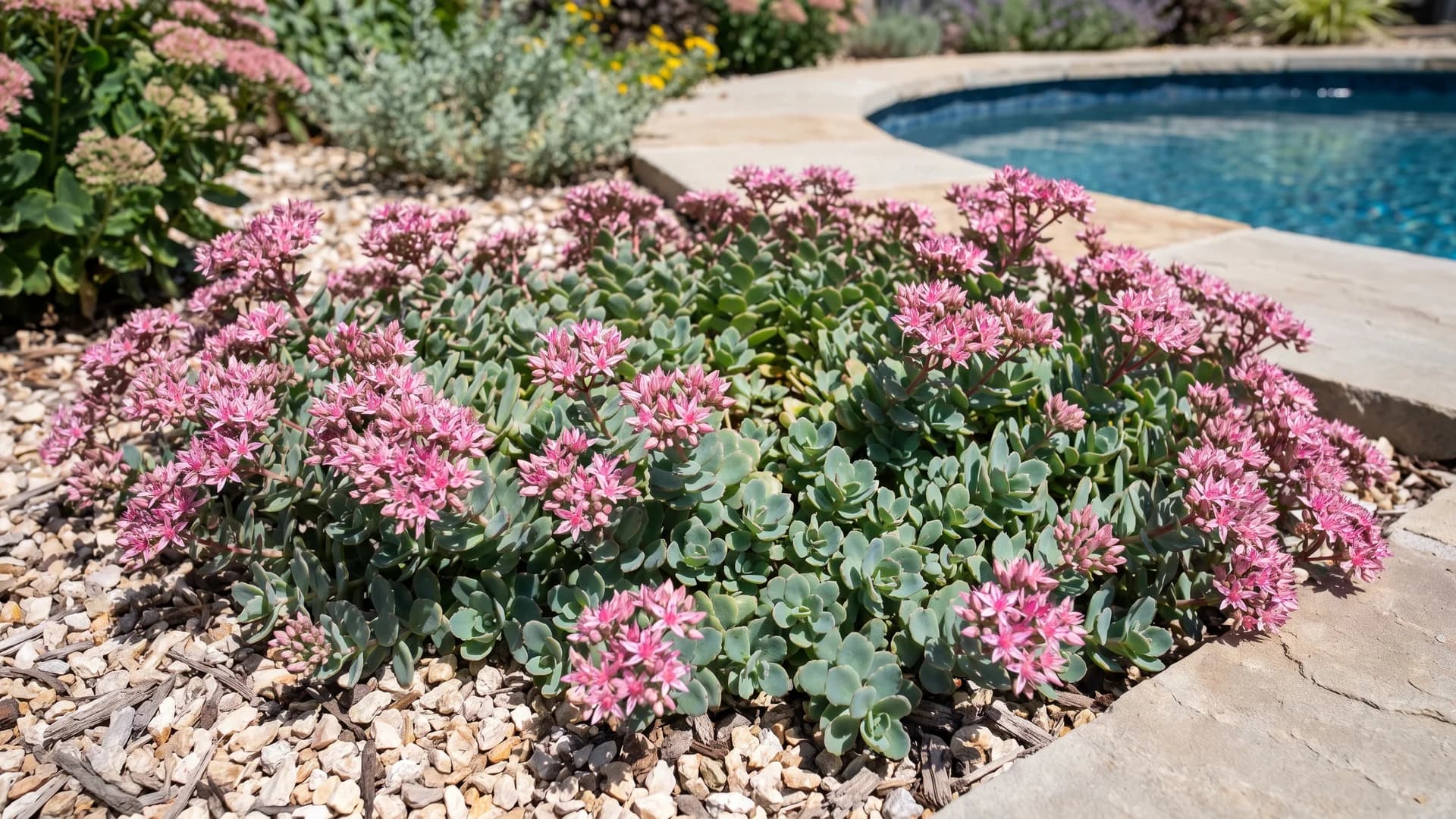
A sedum literally bred for this: 14 inches tall, 25 inches wide, zones 4 to 9, with succulent leaves that shrug off reflected deck heat and late-summer flowers that arrive after peak swim season. Around $12 a plant, and it spreads into a weed-smothering mat you never water once established. The front-of-bed pick for hot southern and western exposures.
3. Boxwood, the structure that never sheds
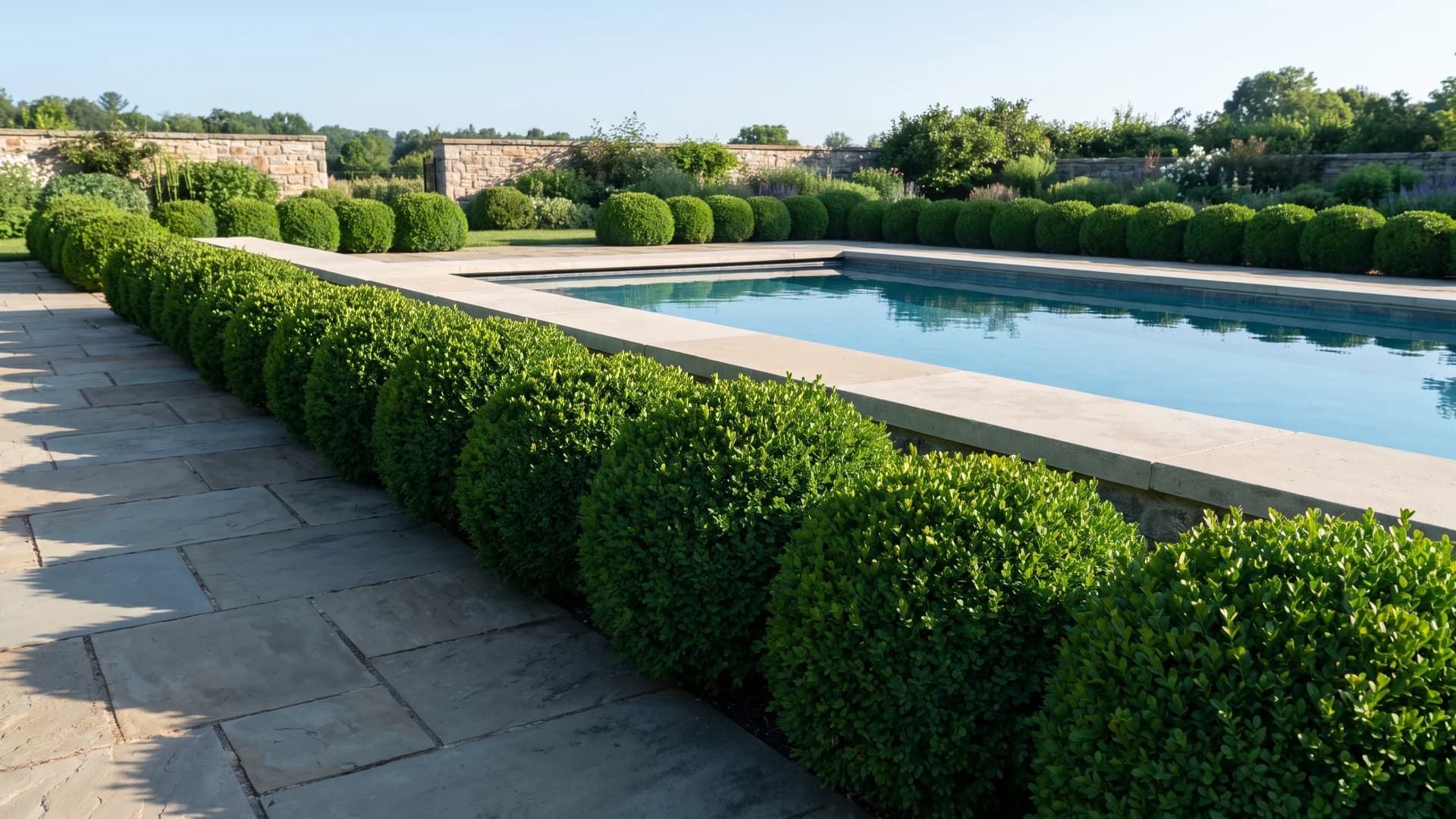
Every pool bed needs something that looks intentional in February, and boxwood is that plant: small evergreen leaves that stay on the shrub, a shape one annual shear maintains, zones 4 to 9 for most cultivars. 'Green Velvet' holds near 3 feet; $25 to $40 in a three-gallon pot. Set it 3 feet off the coping and it defines the pool area's edges year-round.
4. Blue Star juniper, color without flowers
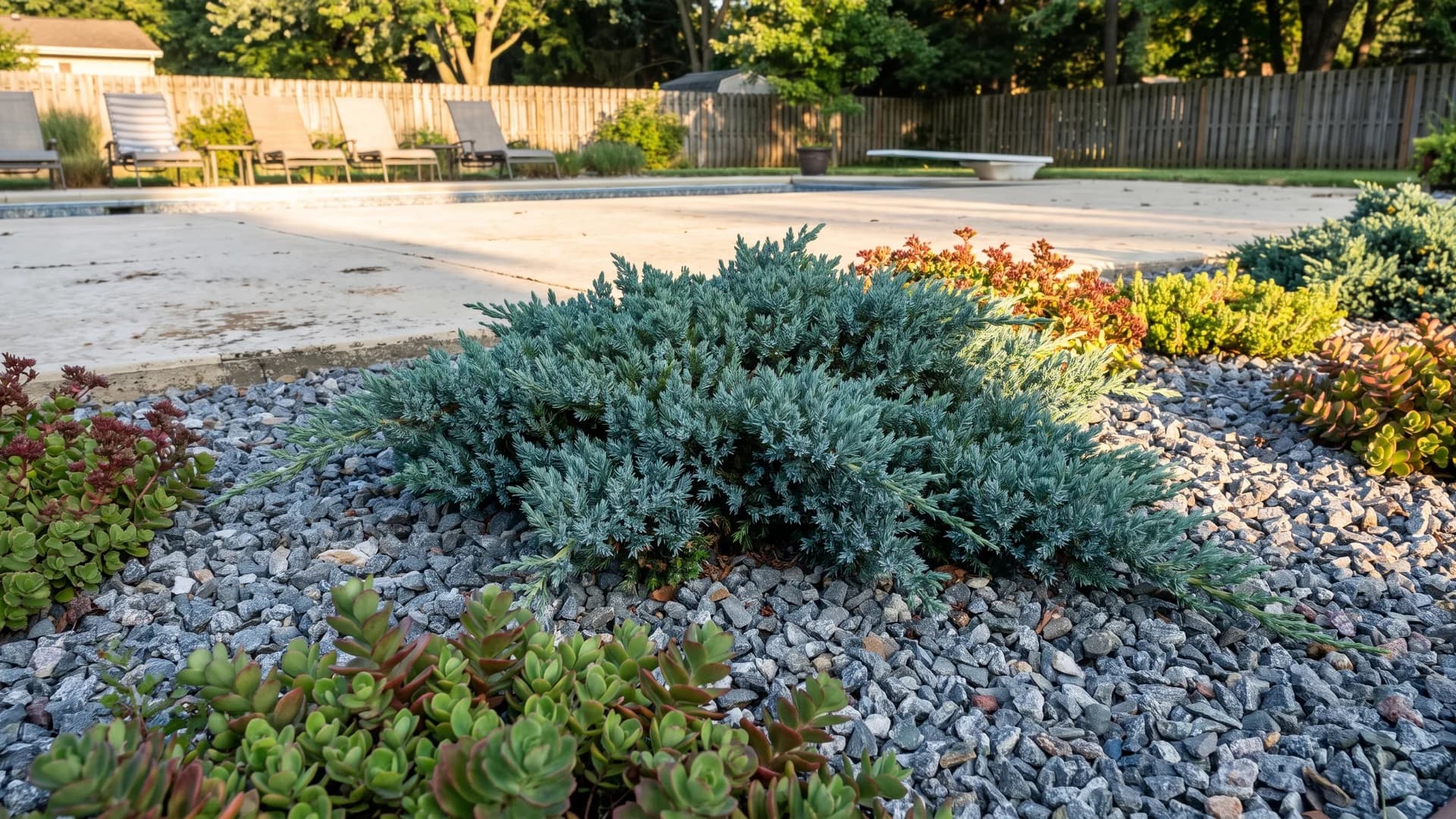
Steel-blue, slow, and indestructible: Blue Star juniper spreads to about 3 feet over years, never needs pruning, and its color reads as design against pale pool decking. Zones 4 to 8, $20 to $35. It's the rare conifer that behaves near water features, no needle storms, no size surprises. Pair it with sedum in gravel for a bed that essentially runs itself.
5. Daylilies, the toughest color per dollar
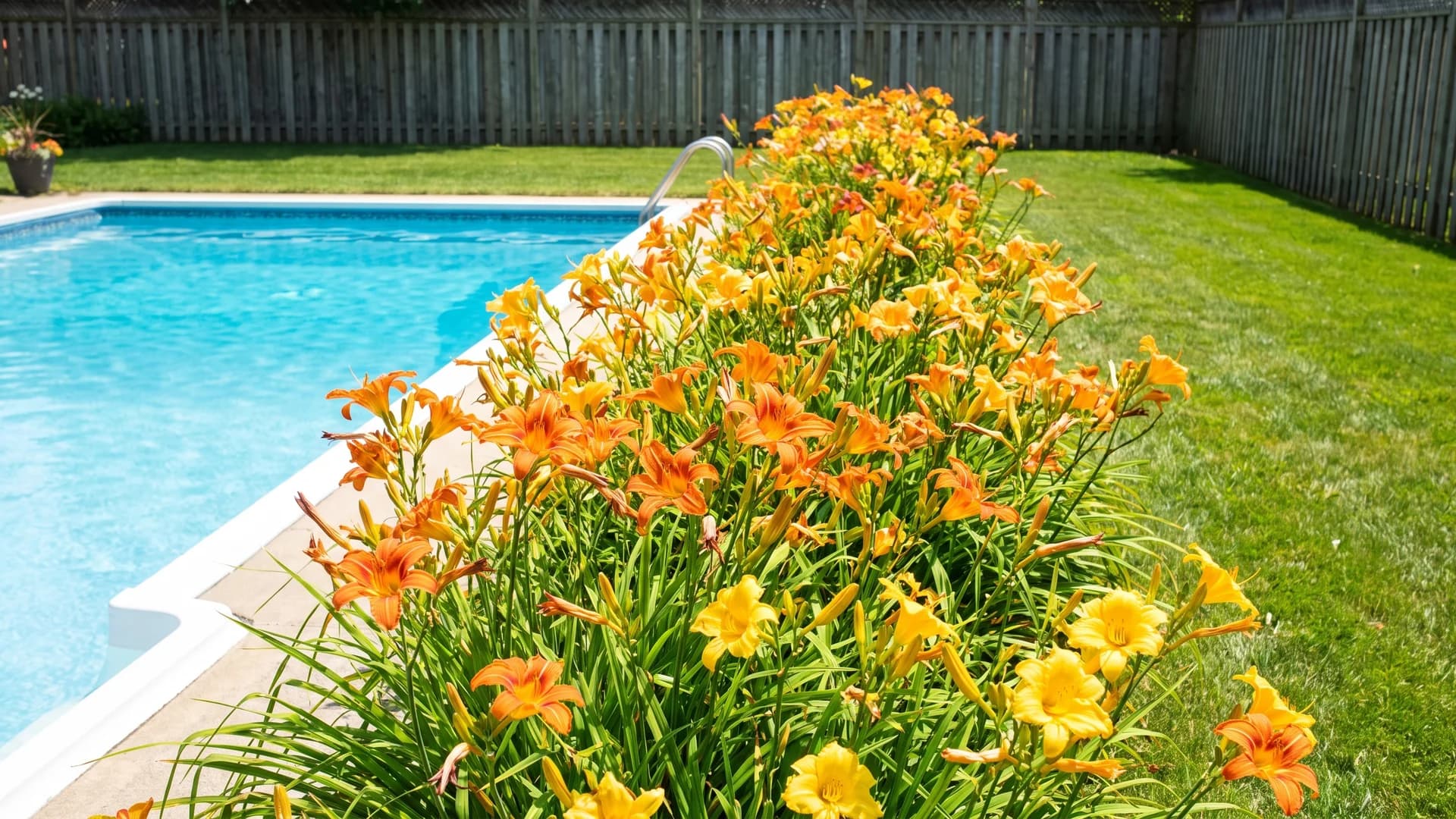
Daylilies tolerate splash, salt systems, drought, and neglect, and still bloom all summer. Zones 3 to 9, clumps about 2 feet tall, $10 to $15 a plant that divides into free plants every few years. Spent blooms drop close to the clump rather than traveling, but give them 4 feet of distance anyway and the skimmer never learns their name. Rebloomers like 'Stella de Oro' stretch the show to frost.
6. Russian sage, the heat-proof haze
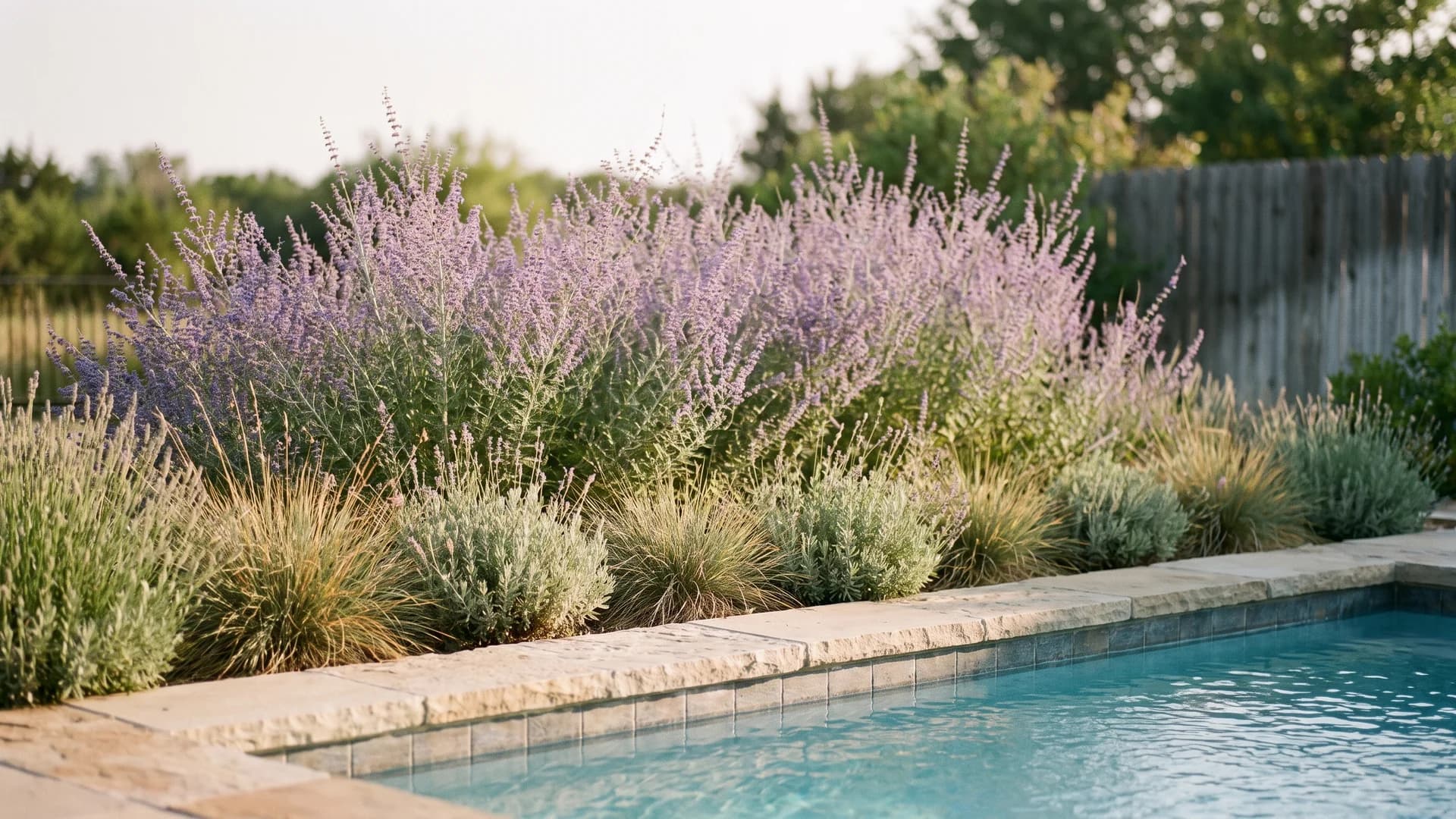
That purple haze behind resort pool beds is usually Russian sage: 3 to 4 feet of airy bloom from July to September, zones 5 to 9, thriving in exactly the hot, dry, reflective conditions a pool deck creates. About $12 to $18 a plant. Cut it to a foot each spring and stand back. Bees visit but stay up in the flowers, another argument for the back row rather than the towel row.
7. Lavender, if you give it drainage
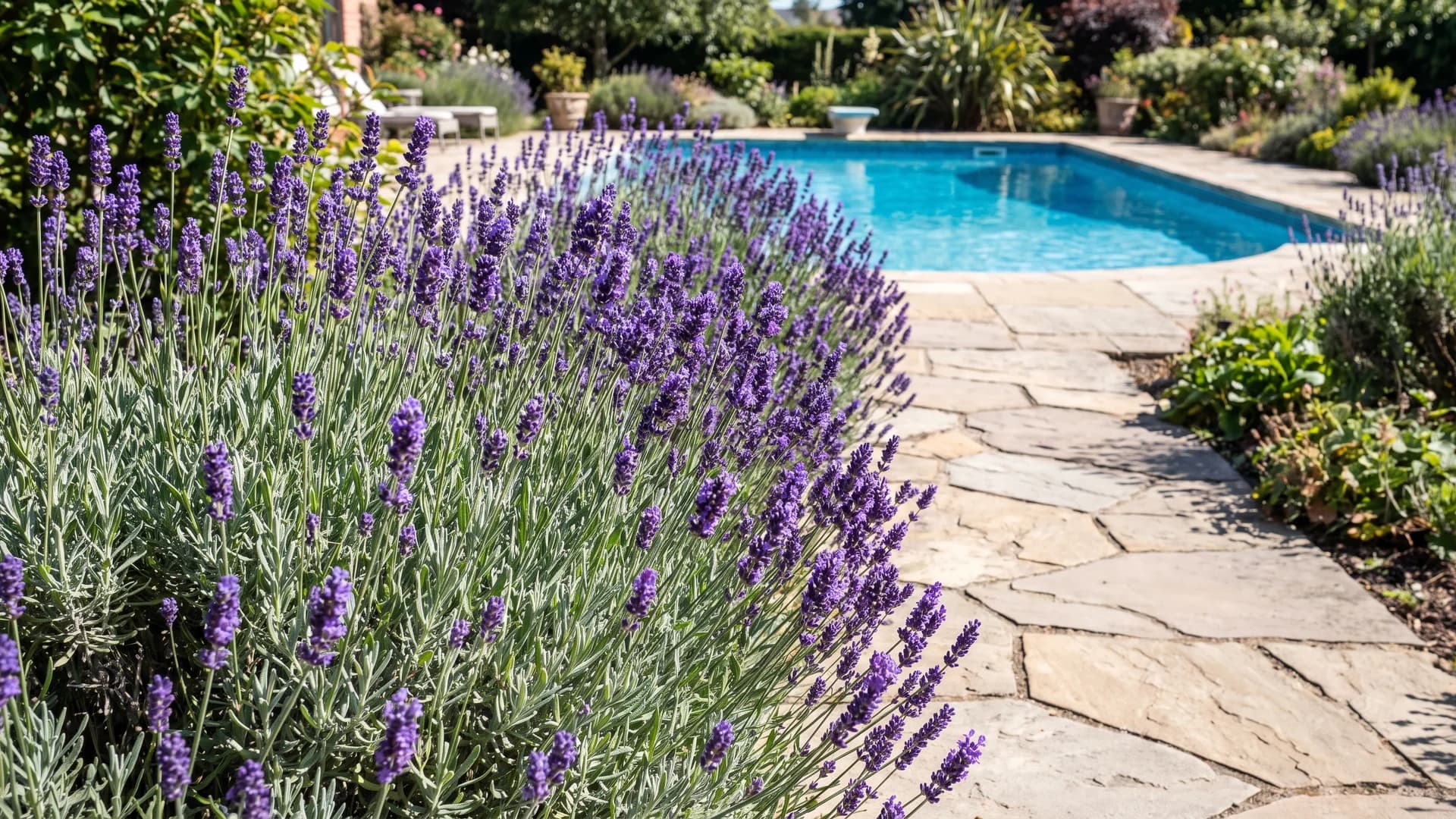
Lavender earns its poolside spot with scent on the walk out and gray foliage that flatters blue water, zones 5 to 9 for English types, $8 to $15 a plant. Its one demand is drainage: it would rather be dry in gravel than damp in good soil. These are true drought-tolerant plants; the sprinkler that keeps the lawn alive is what kills them. Plant the path side, not the splash side.
8. Limelight hydrangea for the big back border
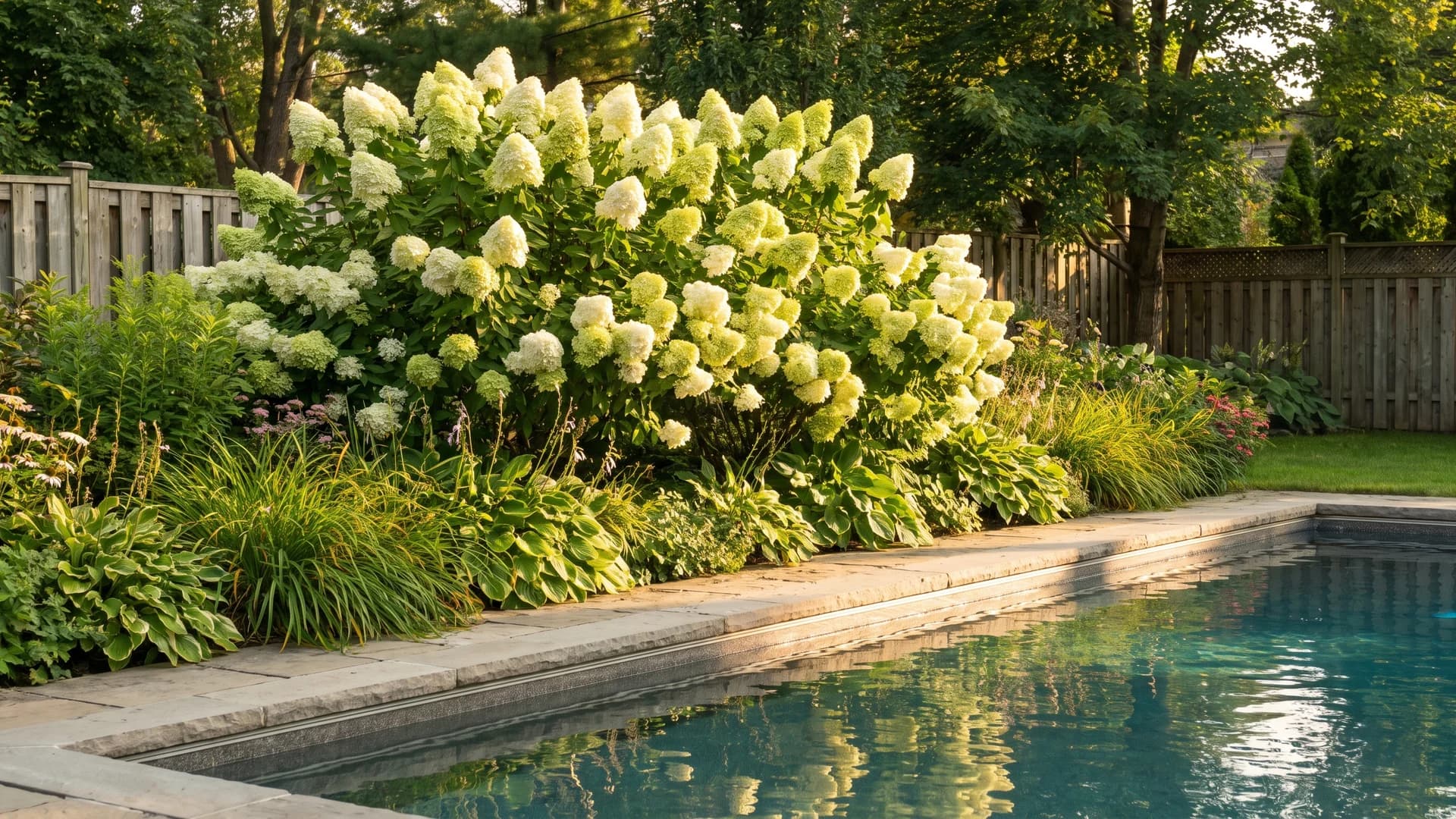
Where the pool bed has depth, a panicle hydrangea like 'Limelight' delivers the biggest flower show per unit of effort: cones of green-white bloom from midsummer on, zones 3 to 8, 6 to 8 feet tall, around $40 to $60. Unlike mophead hydrangeas, panicle types hold their petals rather than confetti-ing the yard. One late-winter prune, full sun, done. Keep it 6 feet back as the skyline of the planting.
9. Canna lilies, the rentable tropics
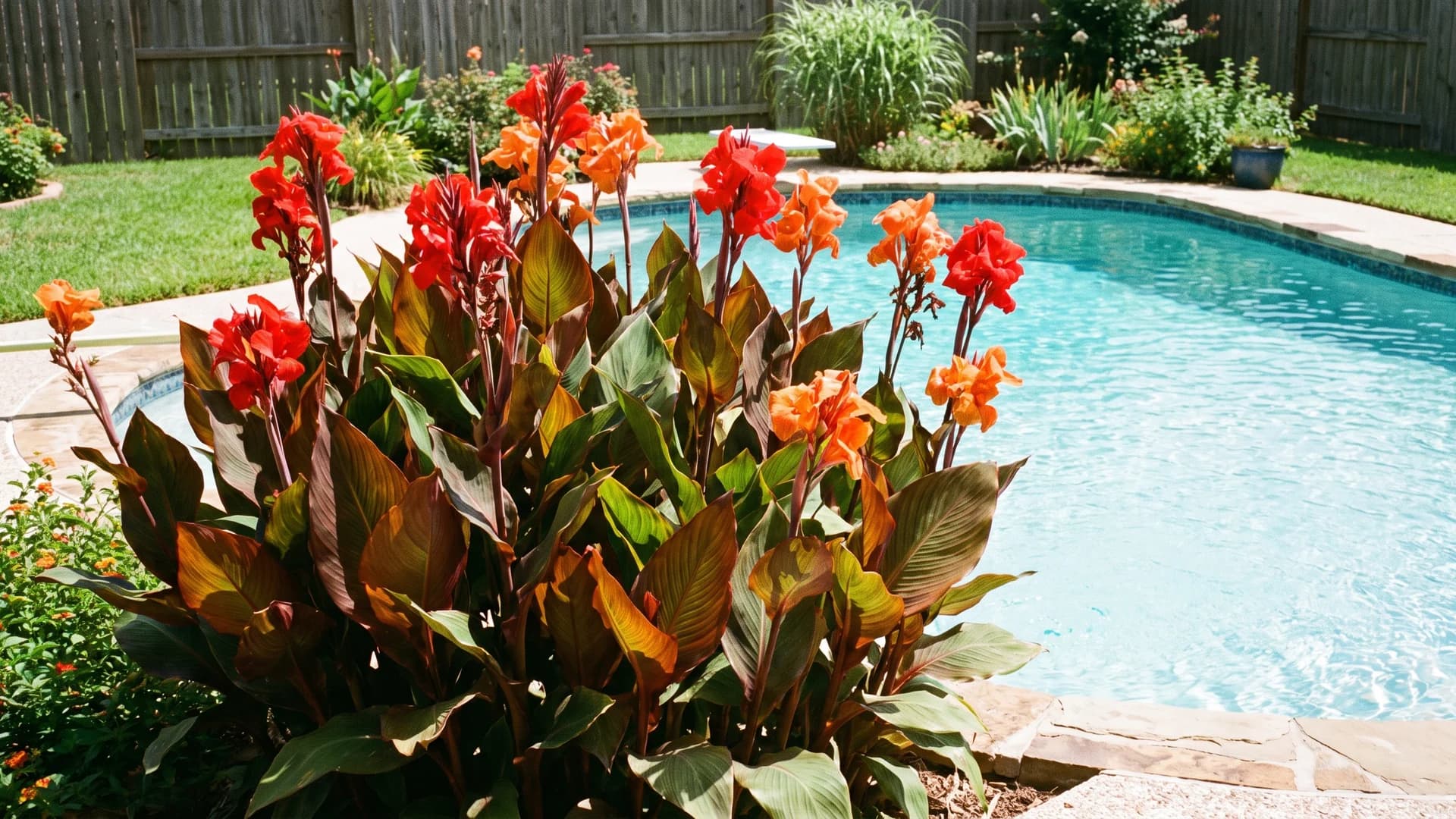
Cannas do the resort look, banana-like leaves, saturated flower spikes, for the price of bulbs: $3 to $6 a rhizome, 4 to 6 feet tall by August. Perennial in zones 7 to 10; colder, you either dig the rhizomes in October or treat the whole show as a $20 annual. Big leaves mean big presence with almost no litter, the tropical landscaping trick that doesn't feed the filter.
10. Hardy banana, the zone cheat
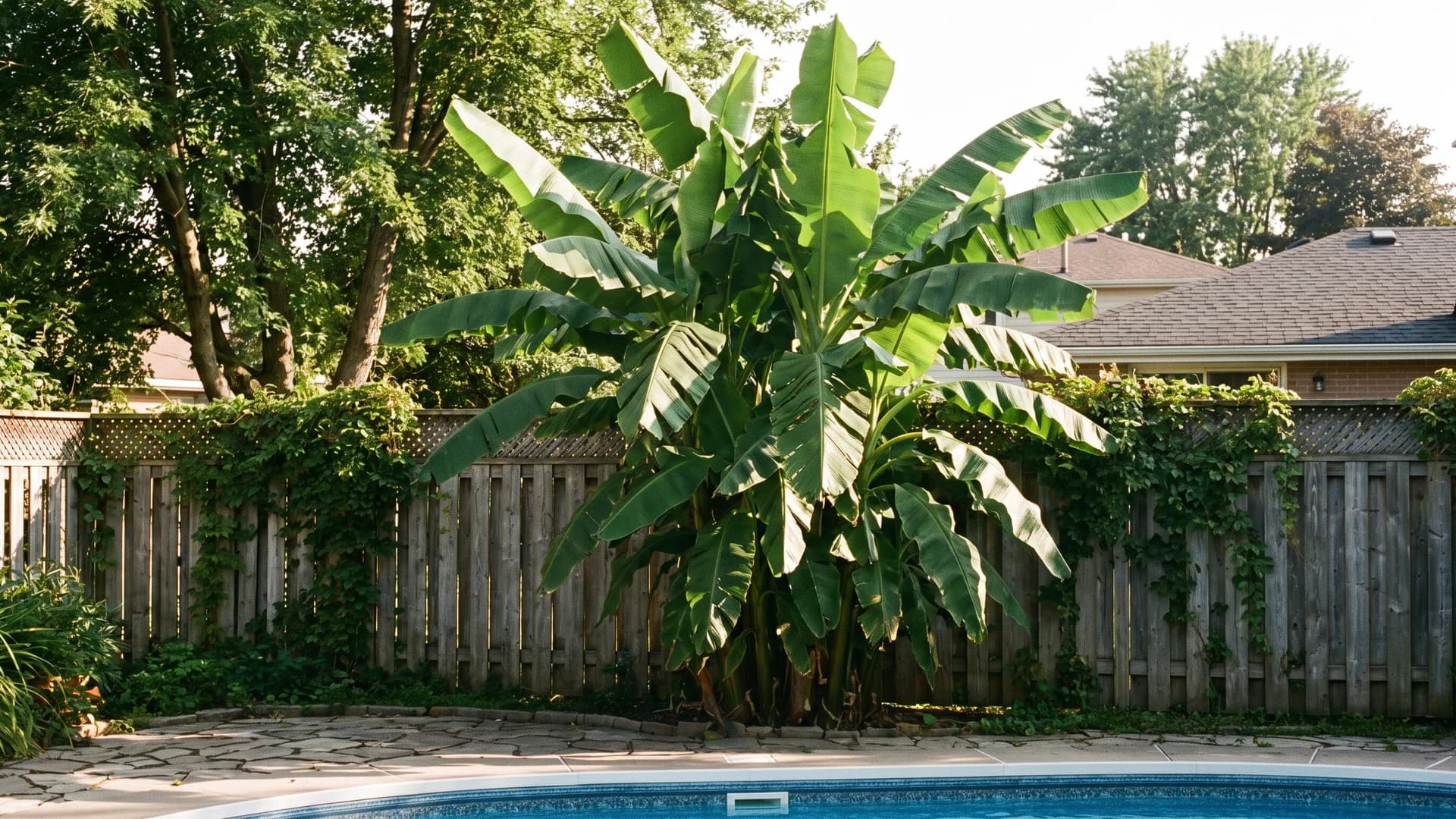
Musa basjoo grows 10 feet of genuine banana leaves in a single Ohio summer. Root-hardy to zone 5 under a thick mulch blanket, it dies to the ground each winter and returns bigger, $25 to $40 to start. No fruit, minimal litter, maximum vacation effect. Give it 5 feet from the deck and wind shelter if you can; shredded leaves are the look's one tax.
11. Bird of paradise where it's warm, potted where it's not
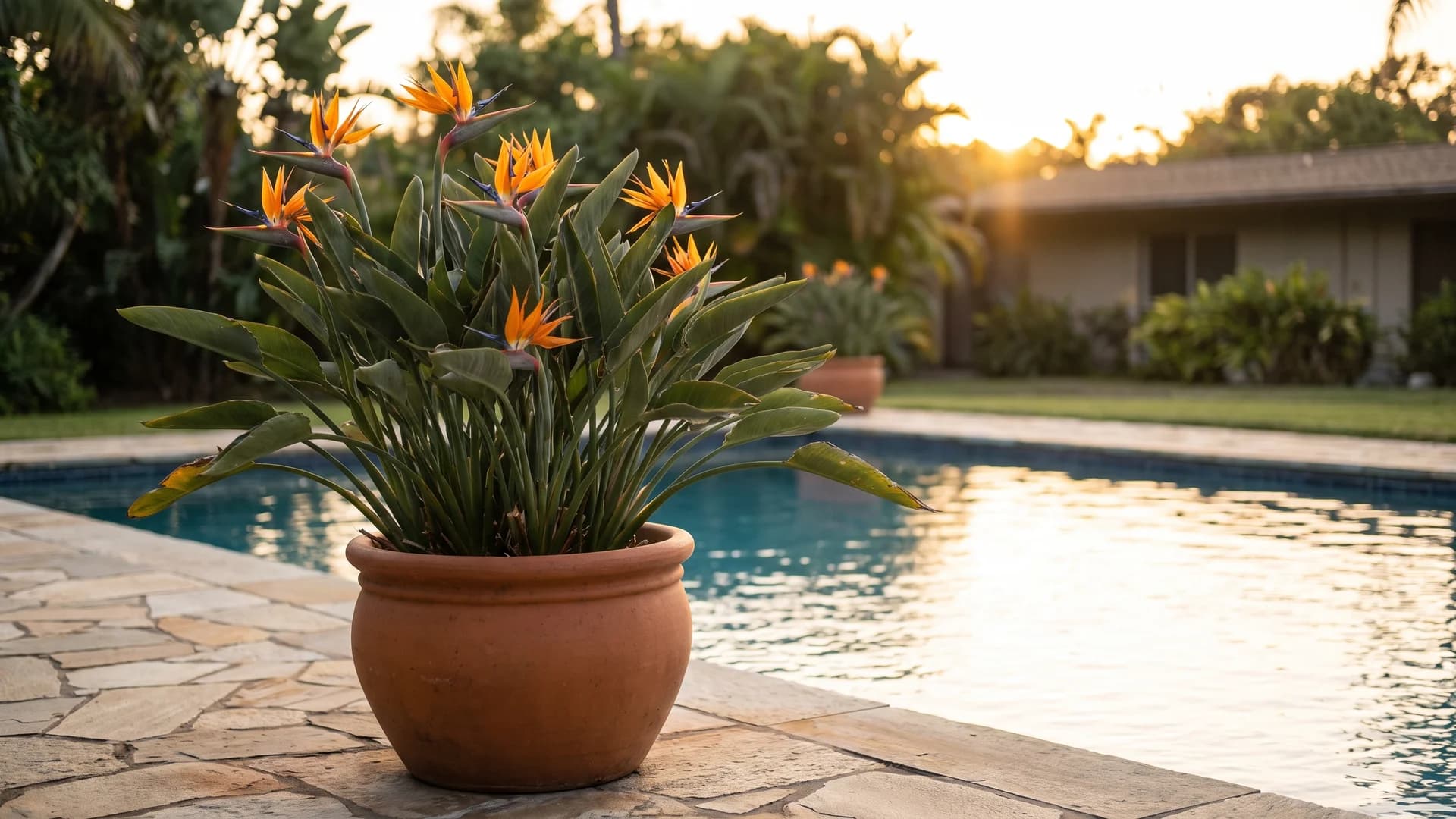
The most architectural poolside plant there is: paddle leaves, sculptural orange flowers, 5 to 6 feet tall by 3 to 4 wide. In-ground it's a zones 9 to 11 plant; everywhere else it summers poolside in a large pot, $30 to $80, and winters indoors as a houseplant. Slow, tidy, and litter-free, it's the one tropical that looks expensive because it grows like it's in no hurry.
12. Non-spiny succulents for the pot cluster
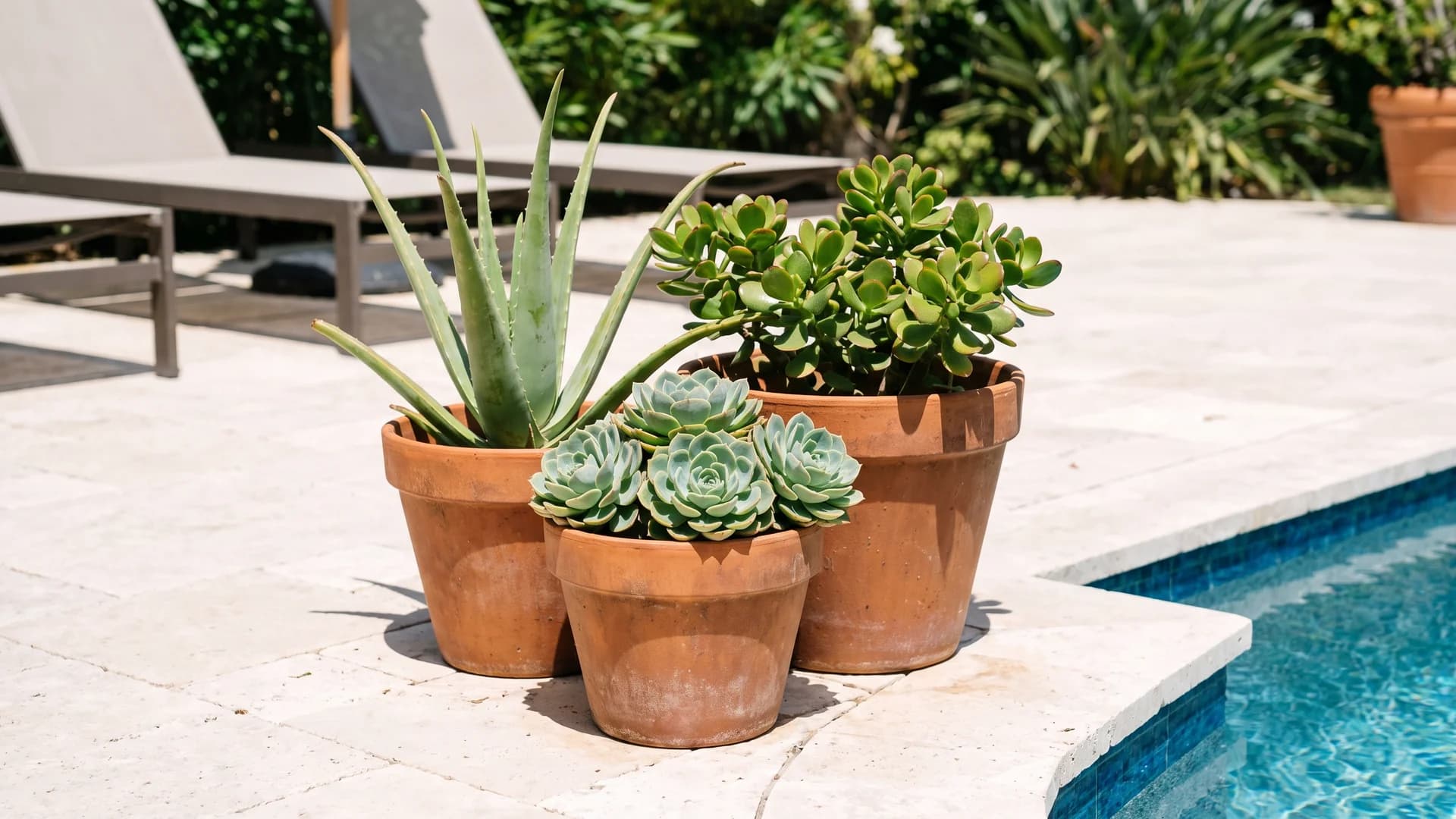
Succulents love everything about a pool deck that stresses other plants, but skip the agave-and-cactus armory where bare feet travel. Aloe, echeveria, and jade give the same sculptural look with no spines: $8 to $25 a pot, watering measured in weeks. Hardy outdoors in zones 9 to 11, they winter on any bright windowsill elsewhere. Cluster odd numbers of pots and the deck styles itself.
13. Miniclover where you still want a green apron
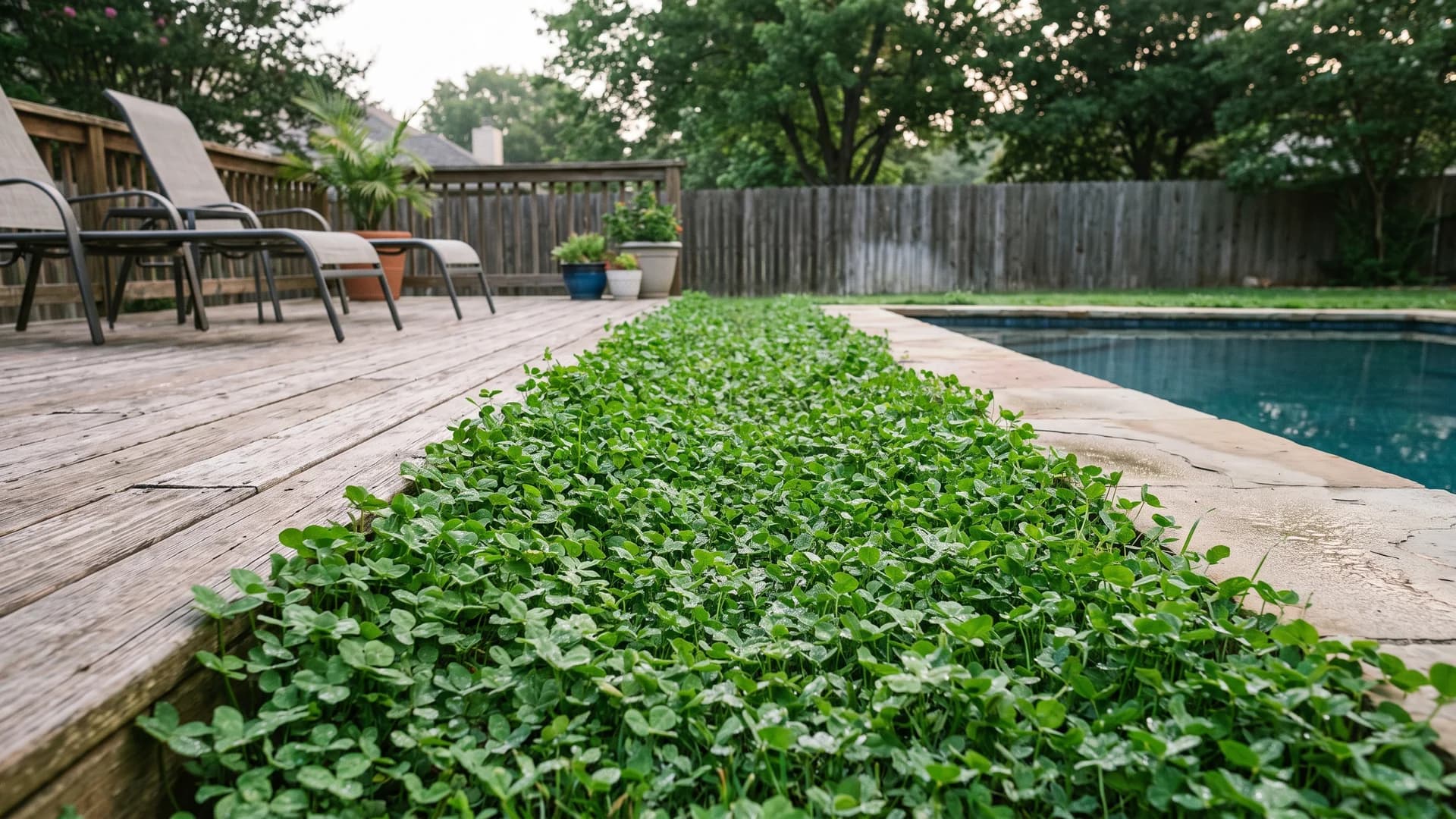
If you want a soft green landing beside the deck without turf's mowing-and-clippings tax, miniclover holds at 4 to 6 inches, stays green through drought, and fixes its own nitrogen. Zones 3 to 10, seed at $15 to $25 covering the typical apron. It's the lawn alternative compromise: living ground, a fraction of the maintenance, and blooms you can mow off if bee traffic worries you.
The do-not-plant list
Some plants are wrong near pools no matter how good they look at the nursery. Willow and river birch roots hunt water aggressively enough to damage pool shells and plumbing. Ponytail palm is a cute 6-foot pot plant that becomes 30 feet tall with a 12-foot base in the ground. Bamboo spreads under decking, pines and deciduous shade trees run a daily leaf service into the skimmer, and anything thorny or heavily bee-trafficked doesn't belong where swimmers walk barefoot. When a plant's root system or leaf drop is a question mark, the answer near a pool is no.
Putting the picks together
- Hot, sunny deck: 2, 4, 6, and 7 in a gravel bed, essentially maintenance-free.
- Resort look in a cold zone: 9, 10, and 11 in its pot.
- Formal and evergreen: 3 with 1 breaking the line; the geometry-led layout that suits it is in the rectangular pool guide.
- The full layout logic for beds, decks, and privacy is in our pool landscaping ideas guide; above ground pool owners should start with the low maintenance above ground pool plan instead.
FAQ
What are the best low maintenance plants around a pool?
Ornamental grasses, sedum, boxwood, daylilies, and Russian sage cover structure, color, and texture with one annual cutback or shear each. All hold their leaves, handle reflected heat, and tolerate the splash zone. Add tropicals in pots for the resort effect without permanent commitment.
What are the worst plants to put around a pool?
Water-hunting root systems first: willow, river birch, and bamboo can reach plumbing and shells. Then the shedders: pines, deciduous shade trees, and petal-heavy bloomers like mophead hydrangeas and roses. Thorny plants and heavy bee attractors round out the list; both pick fights with bare feet.
How far from the pool should I plant?
Groundcovers and perennials, 2 feet from the coping; shrubs, 3 to 4 feet; small ornamental trees, 15 feet or beyond their mature canopy edge, whichever is greater. The mature size on the tag, not the nursery-pot size, is the measurement that matters, for canopies and root zones alike.
How do I keep leaves out of my pool filter?
Choose evergreen and low-litter plants inside the pool's wind fetch, keep deciduous trees downwind and distant, and put stone or gravel rather than organic mulch in the nearest beds so nothing light blows in. A river rock bed in 1-to-2-inch stone is the usual pick, since it stays put when the wind comes through. The planting choices do more for the skimmer than any cleaning schedule.
Does my hardiness zone matter for pool plants?
It decides which of these picks live in the ground versus in pots. Look up your USDA zone by ZIP code, then check each plant's range: a zone 9 bird of paradise is a container plant in Missouri, and a zone 5 hardy banana still needs its winter mulch. Splash and deck heat are the same everywhere; winter is what varies.