15 Low Maintenance Landscaping Ideas Around an Above Ground Pool
The strip around an above ground pool is the most annoying part of the yard to maintain. These 15 ideas replace mowing, weeding, and constant skimming with surfaces and plants that mostly take care of themselves.
Nobody warns you about the strip. The pool goes up in June, and by August you're pushing a string trimmer around pool legs every week, fishing grass clippings out of the skimmer, and pulling weeds from the mud line where swimmers climb out. Low maintenance landscaping around an above ground pool means designing that strip so the work disappears: surfaces that never need mowing, plants that never drop anything in the water, and edges that hold their line for years.
The 15 ideas below trade a little setup effort for summers where the pool area maintains itself. Each one lists what it costs, what it saves you, and where it works. Every photo is an AI-generated design concept built from a typical suburban yard, the same kind of render you can make from a photo of your own pool with AI pool design.
One layout rule carries through the whole list: keep loose stone off the pool wall itself and leave about 30 inches of clear access at the pump and filter. Your liner and your future self both need that buffer.
1. Swap the mowing strip for decomposed granite
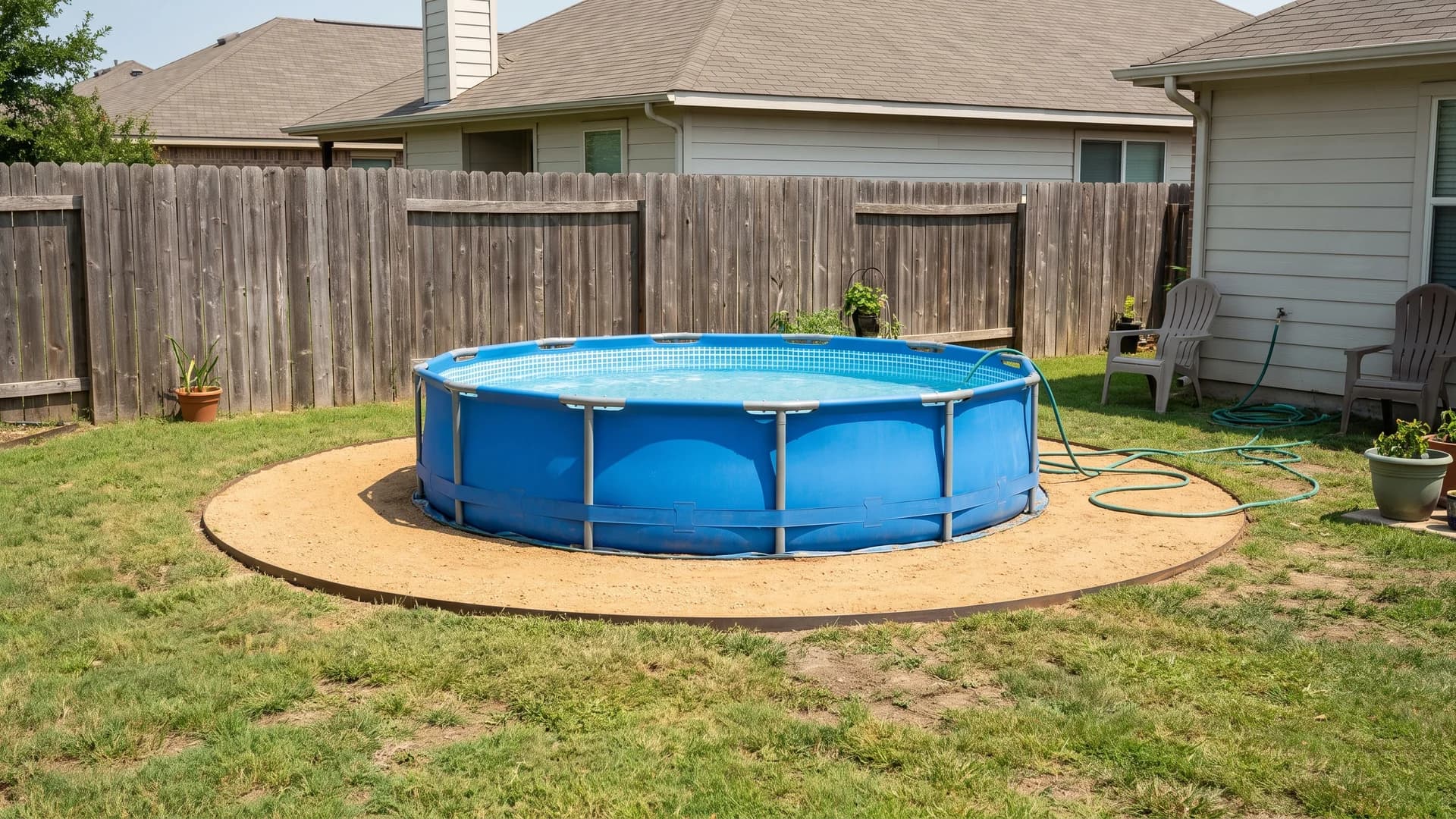
Decomposed granite is the surface that kills the string-trimmer chore for good. Compacted in a 3-inch layer over fabric, it forms a firm, sandy-gold apron that sheds water and never grows anything. Bulk DG runs $50 to $80 a ton, and a ring around a 24-foot pool takes roughly two tons. Rake it flat once a season and you're done.
2. Get the fabric layer right before anything else
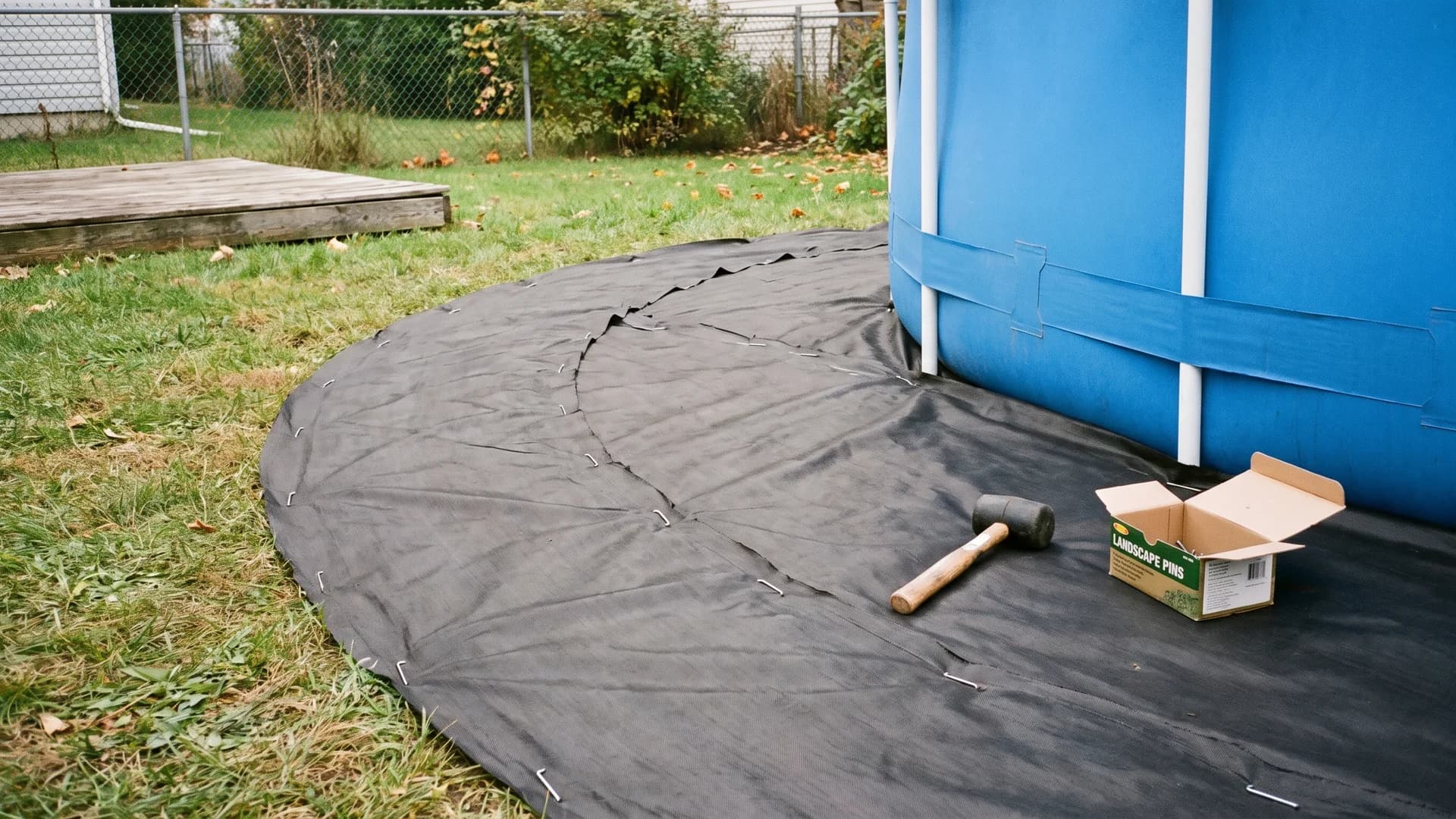
Every no-weed surface in this list depends on what's underneath. Cheap woven fabric from a big-box bundle fails in two summers; commercial-grade barrier lasts 15 to 20 years and costs about $80 for a 300-square-foot roll. Overlap seams by 6 inches, pin every 2 feet, and run the fabric under your edging, not up to it. Weeds exploit gaps, and this is the hour of work that decides the next decade.
3. Use rubber mulch where wood mulch would rot
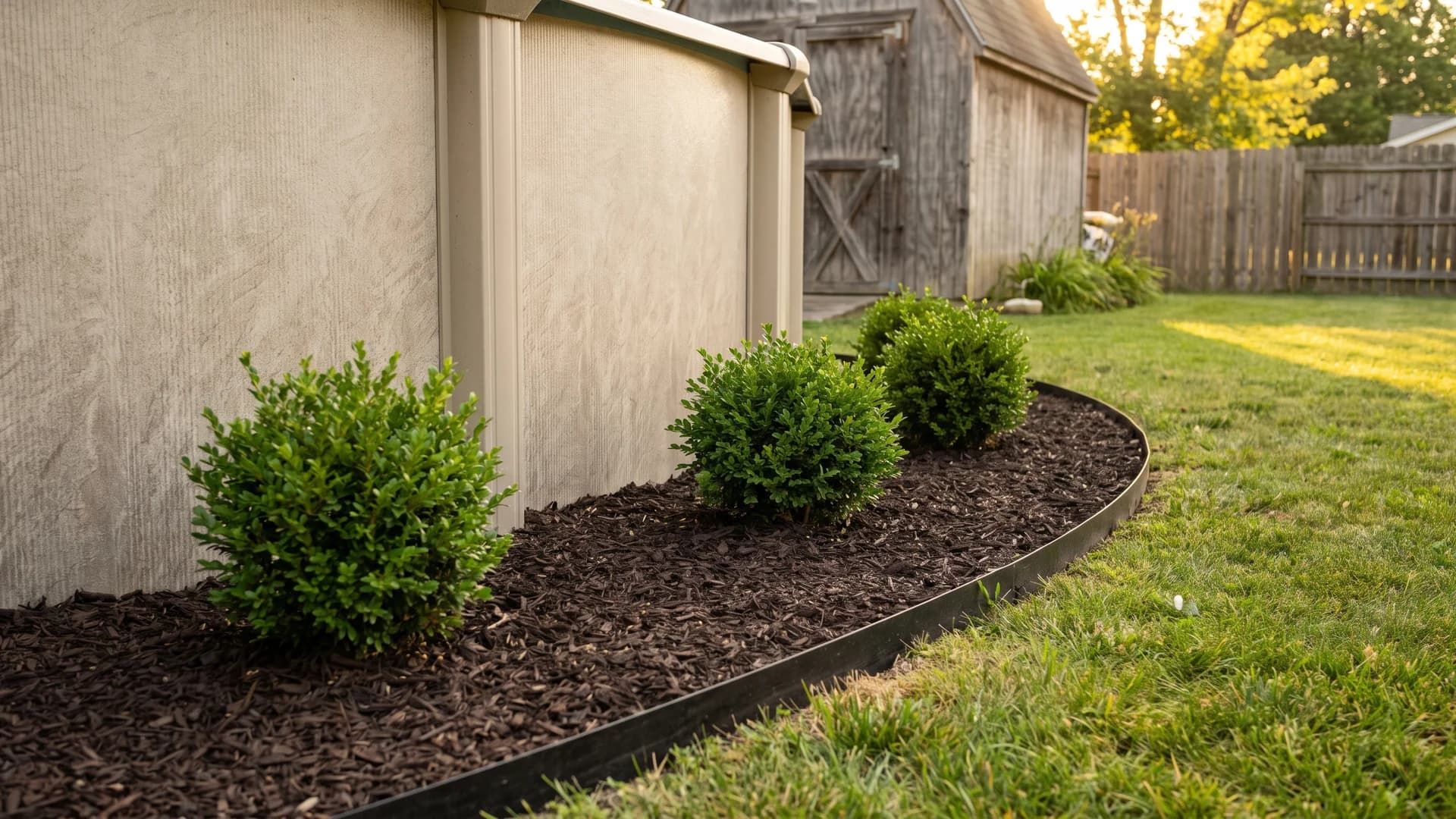
Wood mulch next to a pool bleaches, floats, and needs topping up every spring. Rubber mulch costs more upfront, $10 to $15 a bag against $4, but it holds color for a decade, stays put in rain, and never becomes a slug hotel. Use it in beds at least 2 feet back from the waterline. The mulch calculator tells you how many bags a bed actually needs before you overbuy.
4. Plant evergreens that never shed into the filter
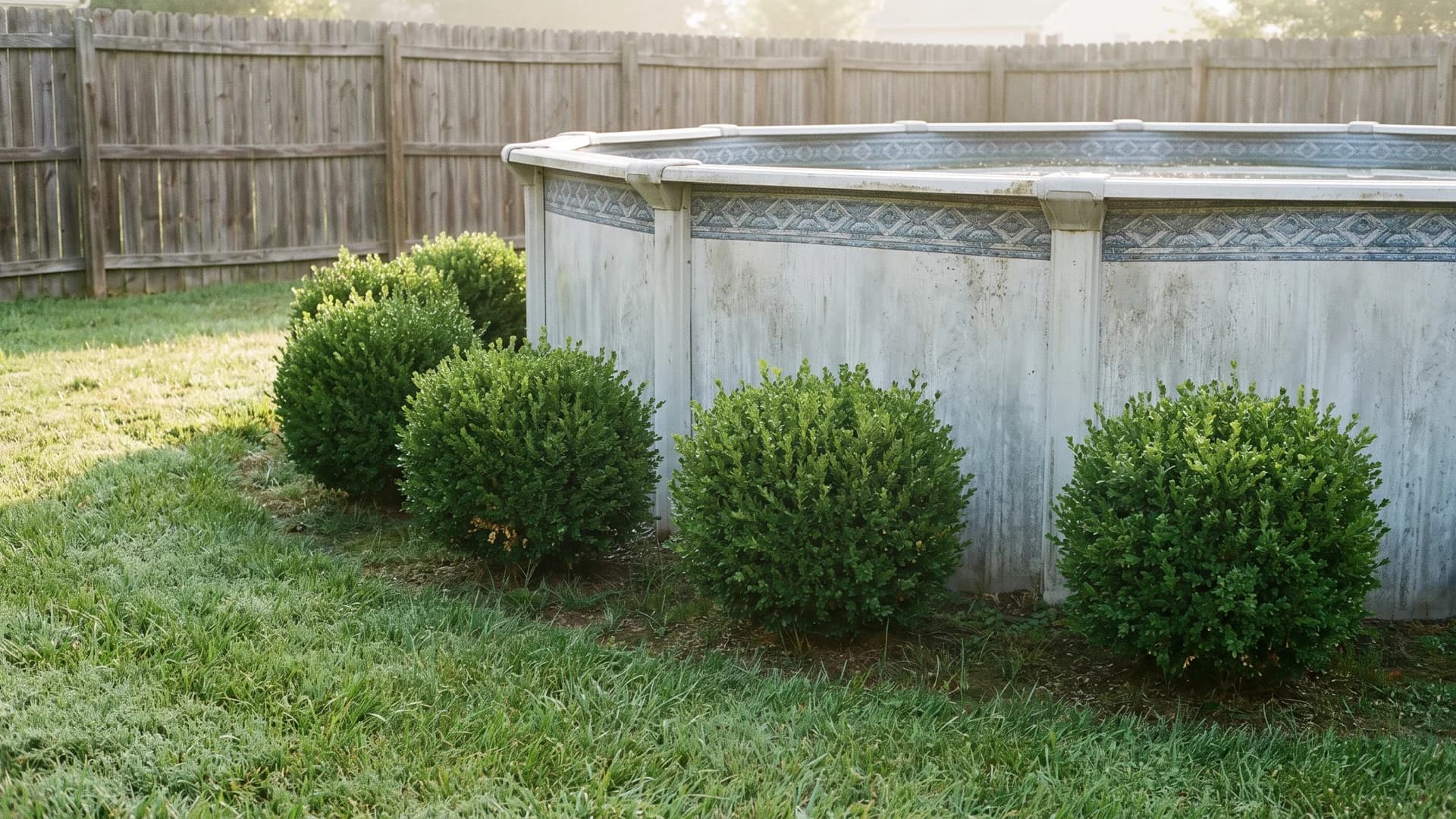
The filter is why plant choice matters more here than anywhere else in the yard. Boxwood holds its small leaves year-round, takes one light shear a season, and stays where you put it. 'Green Velvet' handles zones 4 through 9 and costs $25 to $40 in a three-gallon pot. In the South, dwarf yaupon holly does the same job in zones 7 to 9. Five shrubs make a border; none of them will ever clog a skimmer basket.
5. Tuck ornamental grasses into gravel pockets
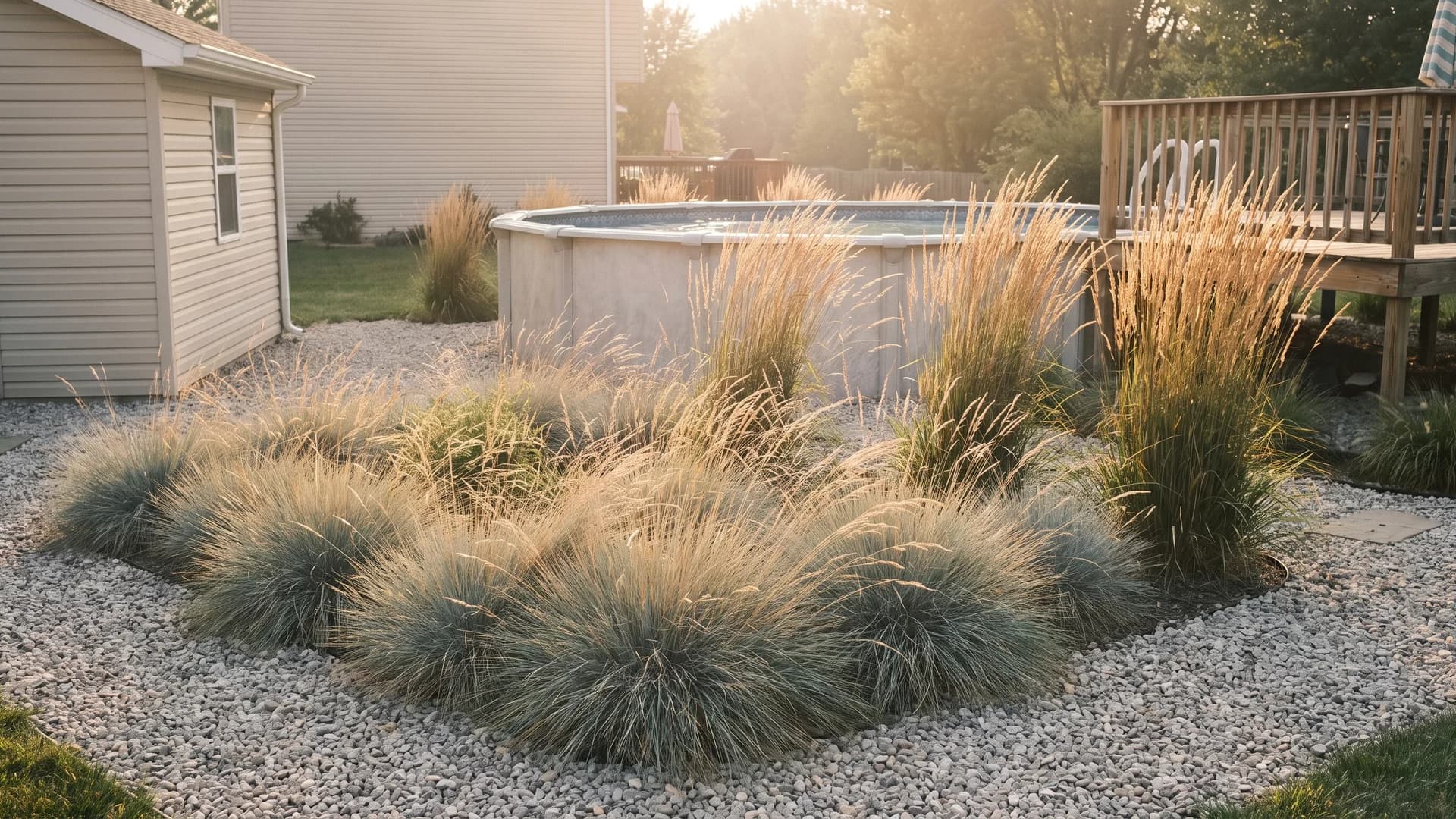
Grasses planted straight into a gravel apron give you movement and softness with exactly one task a year: cut them back in March. Blue fescue stays under a foot in tidy silver mounds, zones 4 to 8, about $10 a plant. Switchgrass reaches 4 feet for screening, zones 5 to 9. Cut an X in the fabric, plant through it, and the gravel acts as permanent mulch around the crowns.
6. Carpet the sunny side with sedum
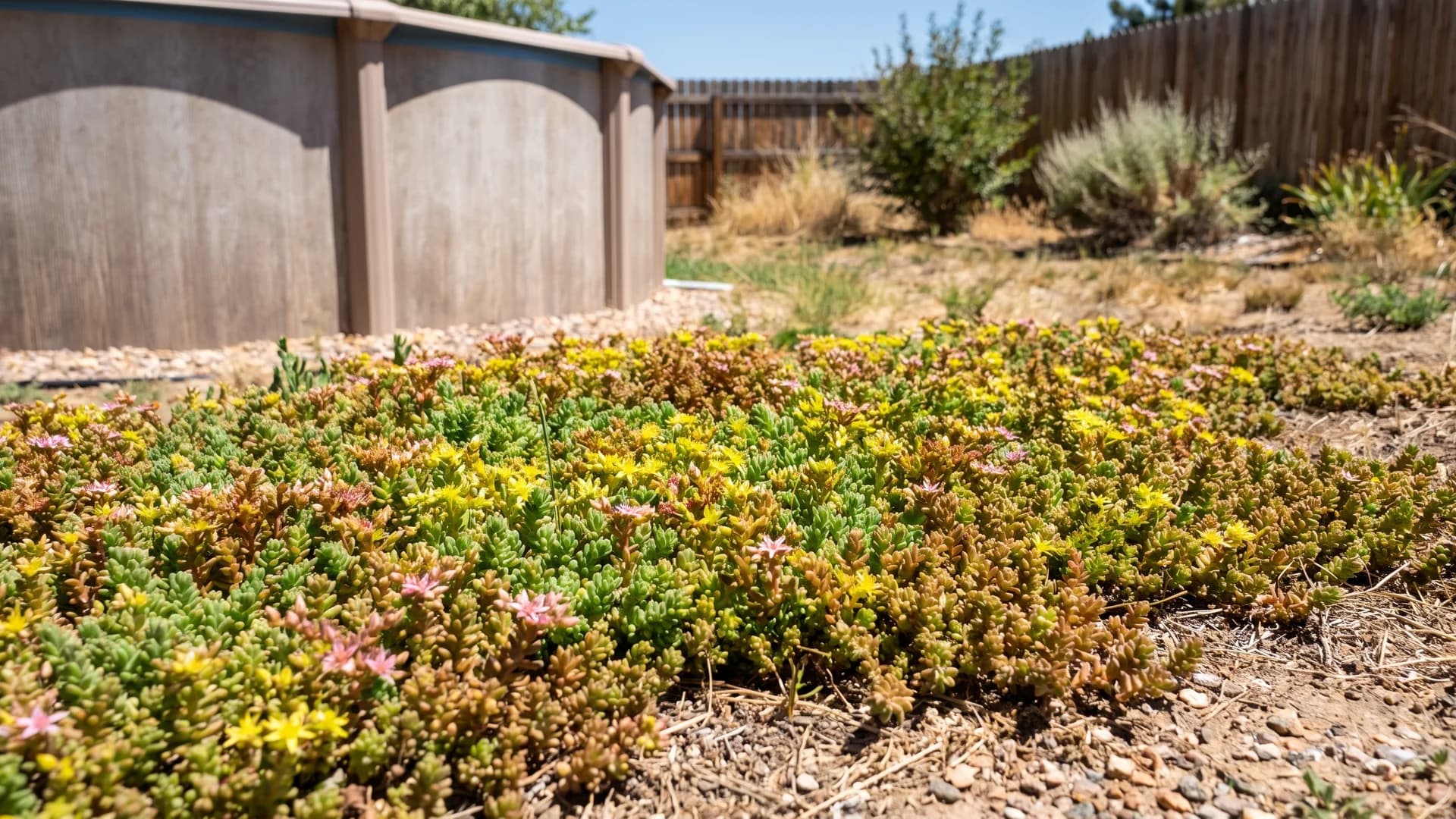
Sedum is the closest thing to a plant you can install and ignore. Sold in pre-grown mats at $12 to $20 a square foot, it forms a dense, 3-inch carpet that needs no mowing, no fertilizer, and water only in a drought. It shrugs off reflected heat from the pool wall that cooks most groundcovers. Hardy in zones 3 to 9, and bees like the late-summer bloom, so keep it a step back from the ladder if that bothers swimmers.
7. Roll turf where wet feet actually land
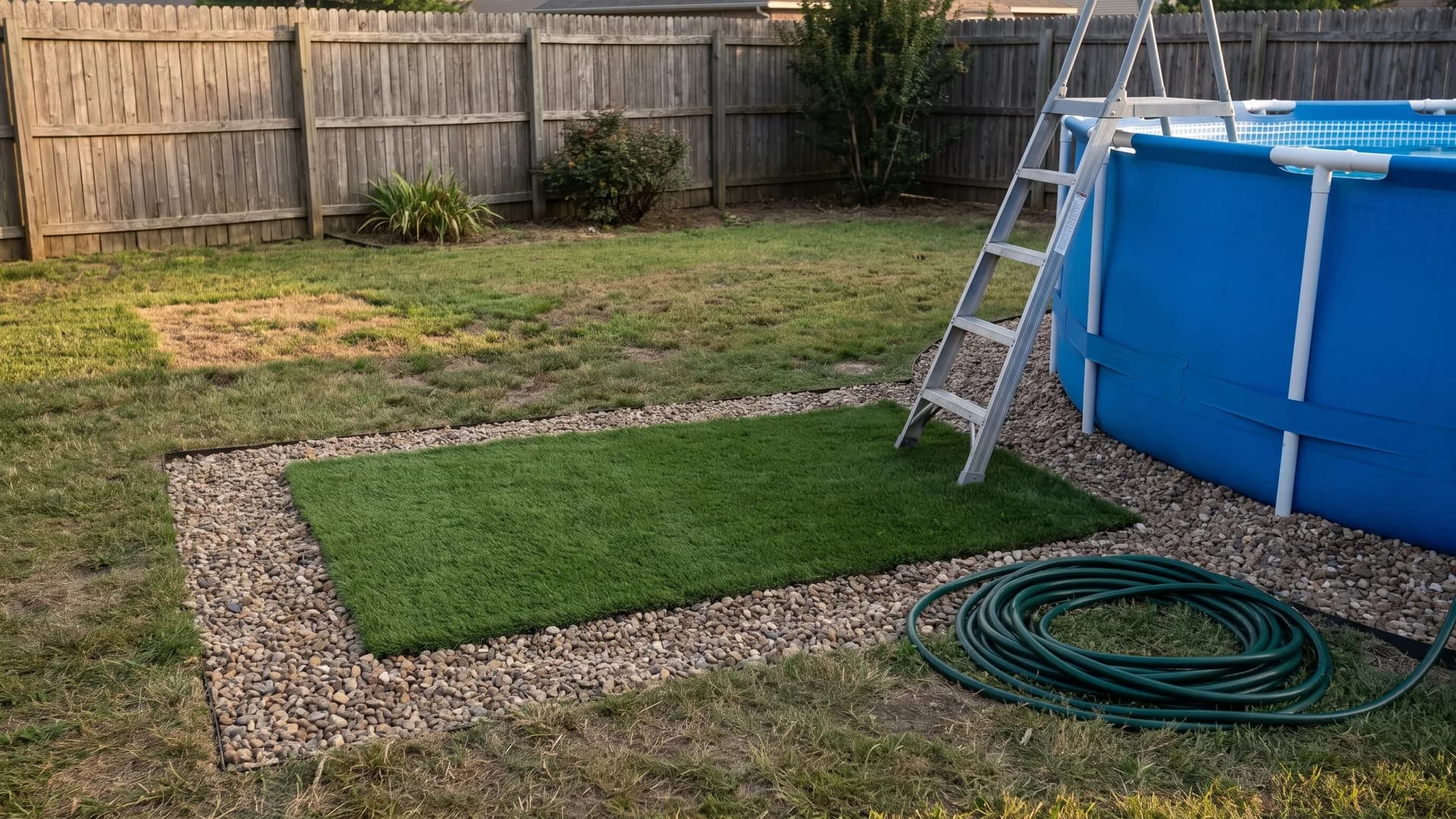
Real grass dies in the splash zone and turns to mud right where traffic is heaviest. A strip of artificial turf on the ladder side stays green with zero mowing, drains through its backing, and rinses clean with a hose when sunscreen and chlorine build up. DIY rolls run $2 to $4 a square foot, and covering just the 10-foot landing zone keeps the cost in the low hundreds.
8. Send water away with a dry creek bed
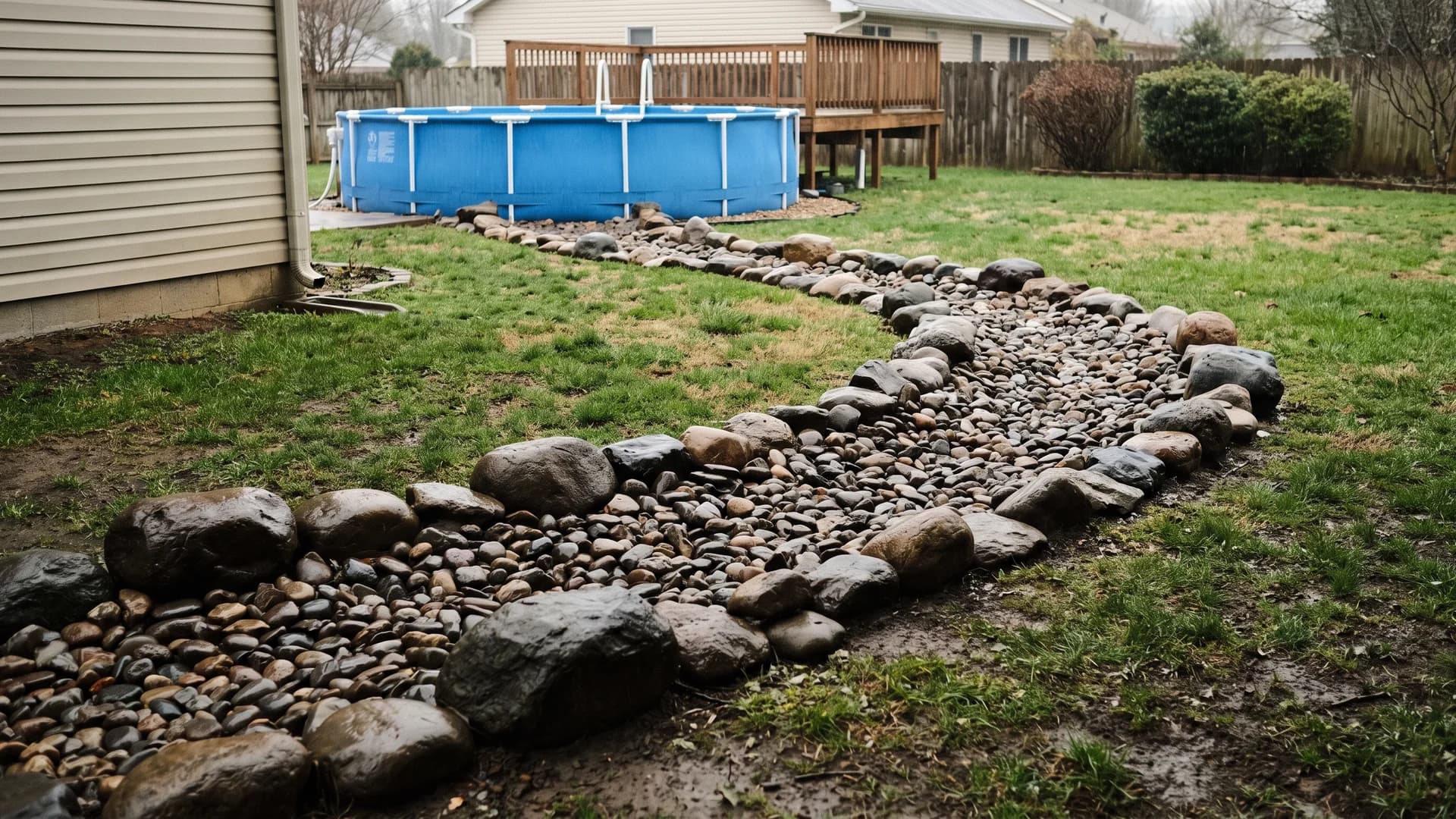
Backwash, filter rinses, and roof runoff all end up somewhere, and if that somewhere is lawn, you get a permanent soggy patch that breeds weeds and mosquitoes. A shallow river-rock channel moves the water to a lower corner of the yard and needs no care once it's dug. Rock runs $80 to $150 a ton. It works like a surface-level french drain, and it reads as a design feature instead of a fix.
9. Lock every border with steel edging
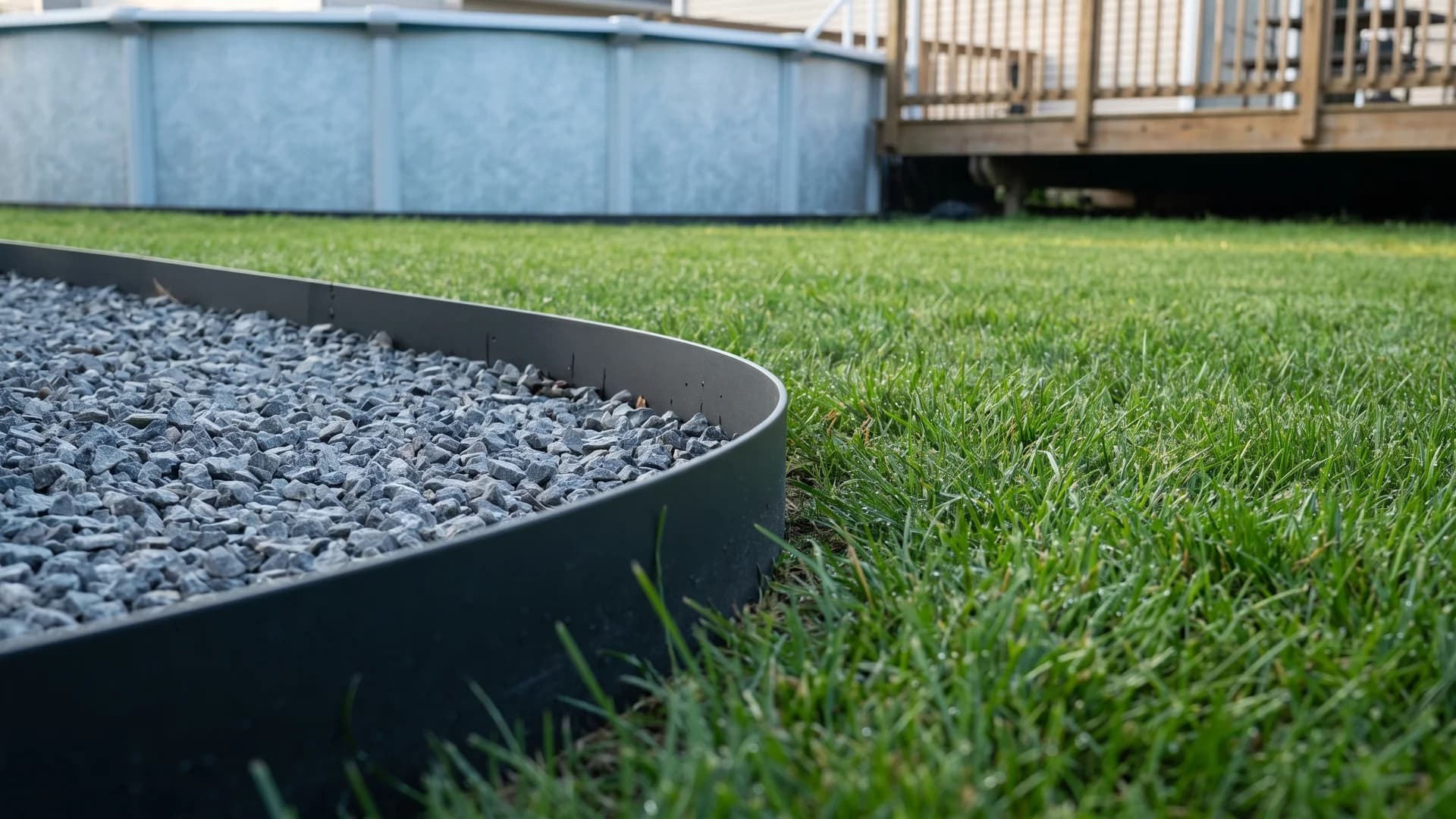
Borders fail at the edges first. Gravel migrates into grass, grass roots into beds, and suddenly you're re-cutting lines every spring. Powder-coated steel landscape edging at $2 to $4 a linear foot ends that: hammer it in once and the line holds for 20 years. It also keeps fabric pinned and mulch contained. Skip the cheap plastic roll edging; frost heaves it out in two winters.
10. Keep every flower in a container
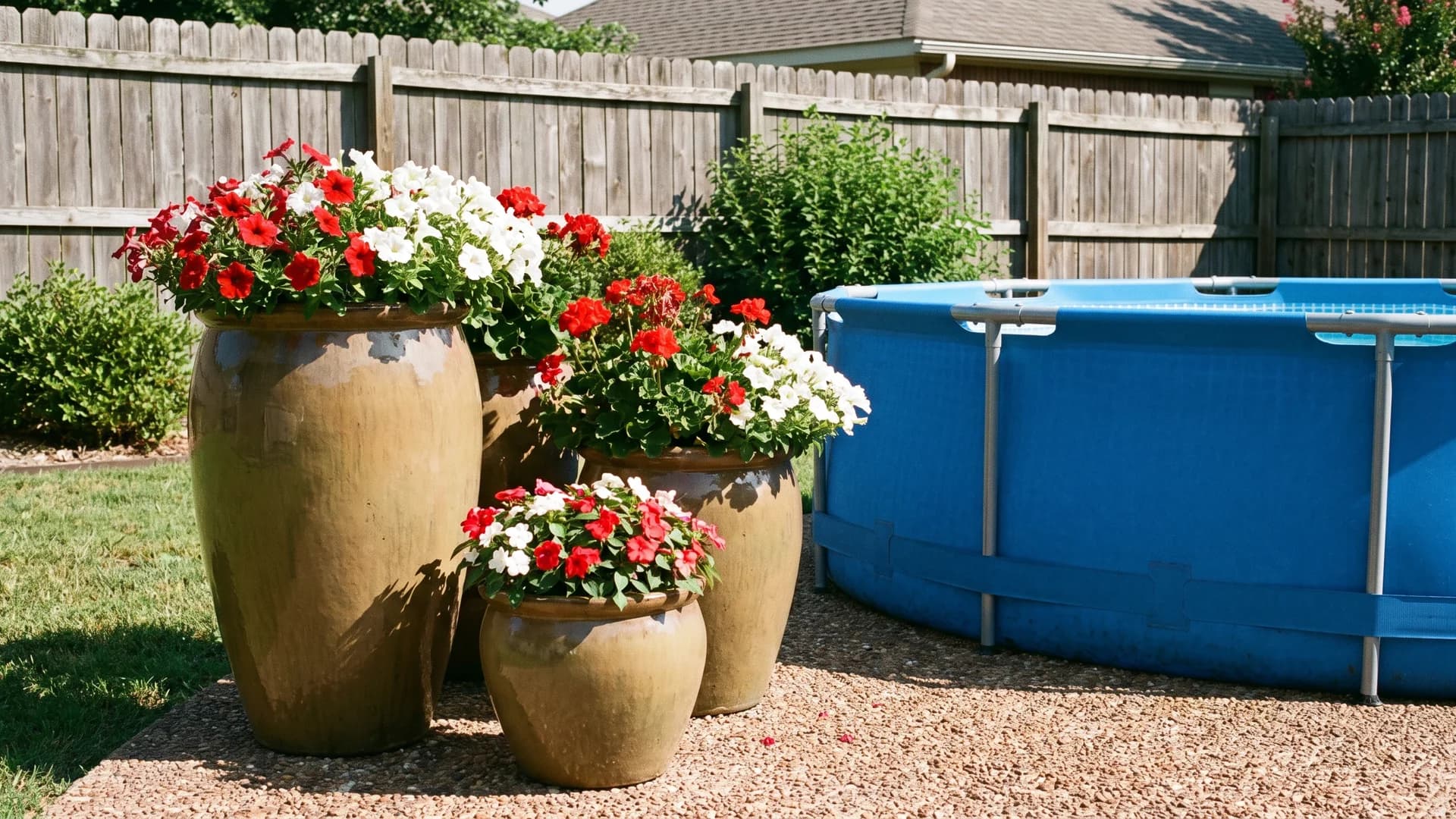
Color around a pool doesn't require a single bed to weed. Three or four oversized pots, 20 inches or larger so they don't dry out daily, hold annuals in summer and can be emptied or moved in October. Self-watering versions stretch watering to once a week. Figure $40 to $80 per pot planted. When a plant fails, you swap it in five minutes instead of digging up a border.
11. Anchor corners with dwarf conifers
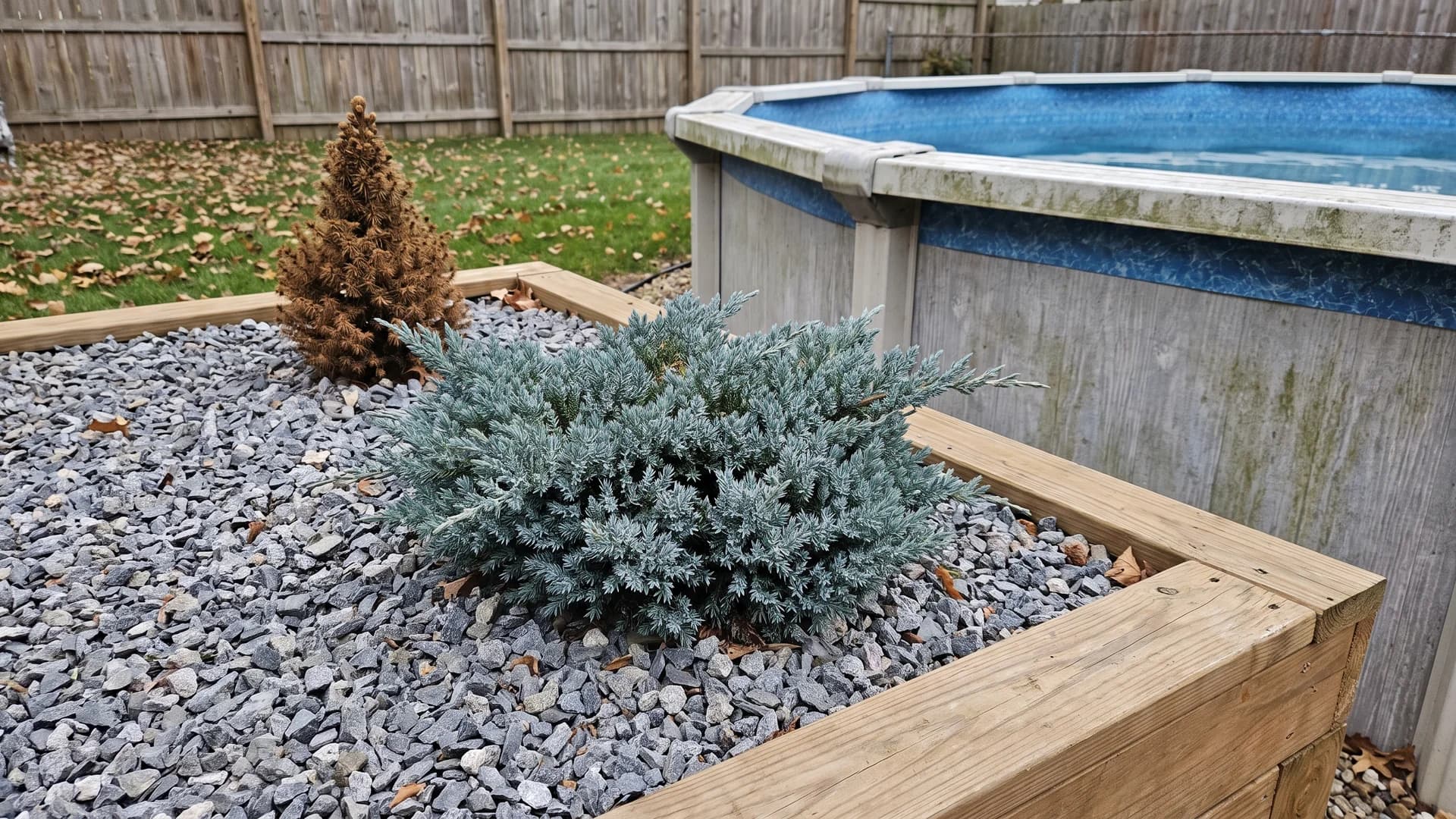
Dwarf conifers give the pool area year-round structure with no deadheading, no staking, and no leaf drop. 'Blue Star' juniper spreads slowly to 3 feet in steel blue, zones 4 to 8, around $25 a plant. Dwarf Alberta spruce makes a 6-foot cone over many years in zones 2 to 6. Plant them once at the corners you see from the house and they quietly do their job for decades. Most are drought-tolerant plants once established.
12. Skirt the pool wall with vinyl lattice
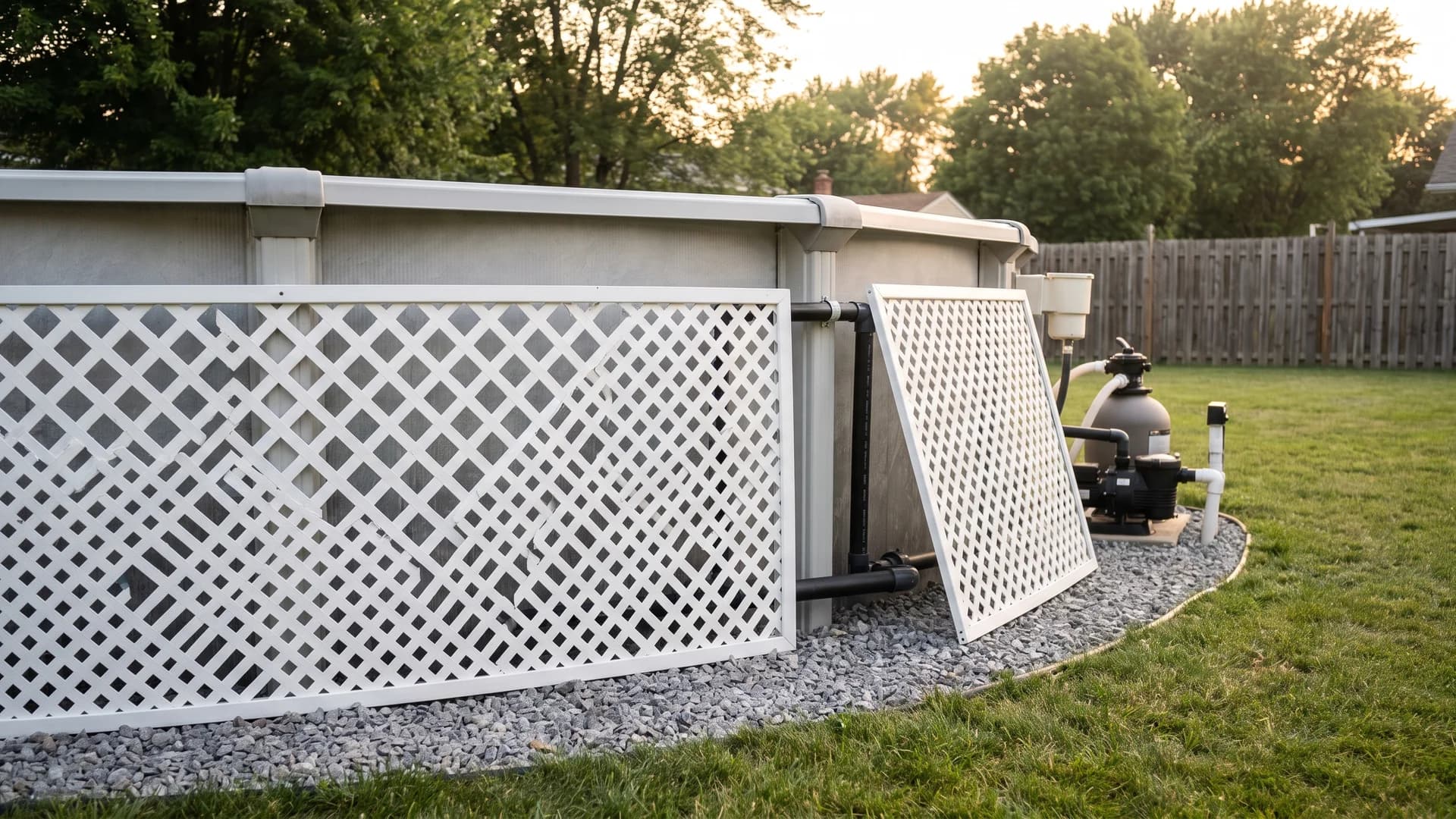
Wood lattice looks good for one season, then demands scraping and restaining on a schedule. Vinyl lattice costs $25 to $40 per 4-by-8 panel, cuts with a circular saw, and its only maintenance is an occasional hose-down. Screwed to simple pressure-treated stakes, it hides pool legs, plumbing, and the bare wall base. Leave one panel on hinges or clips so the pump stays reachable.
13. Light the area with solar stakes, not wiring
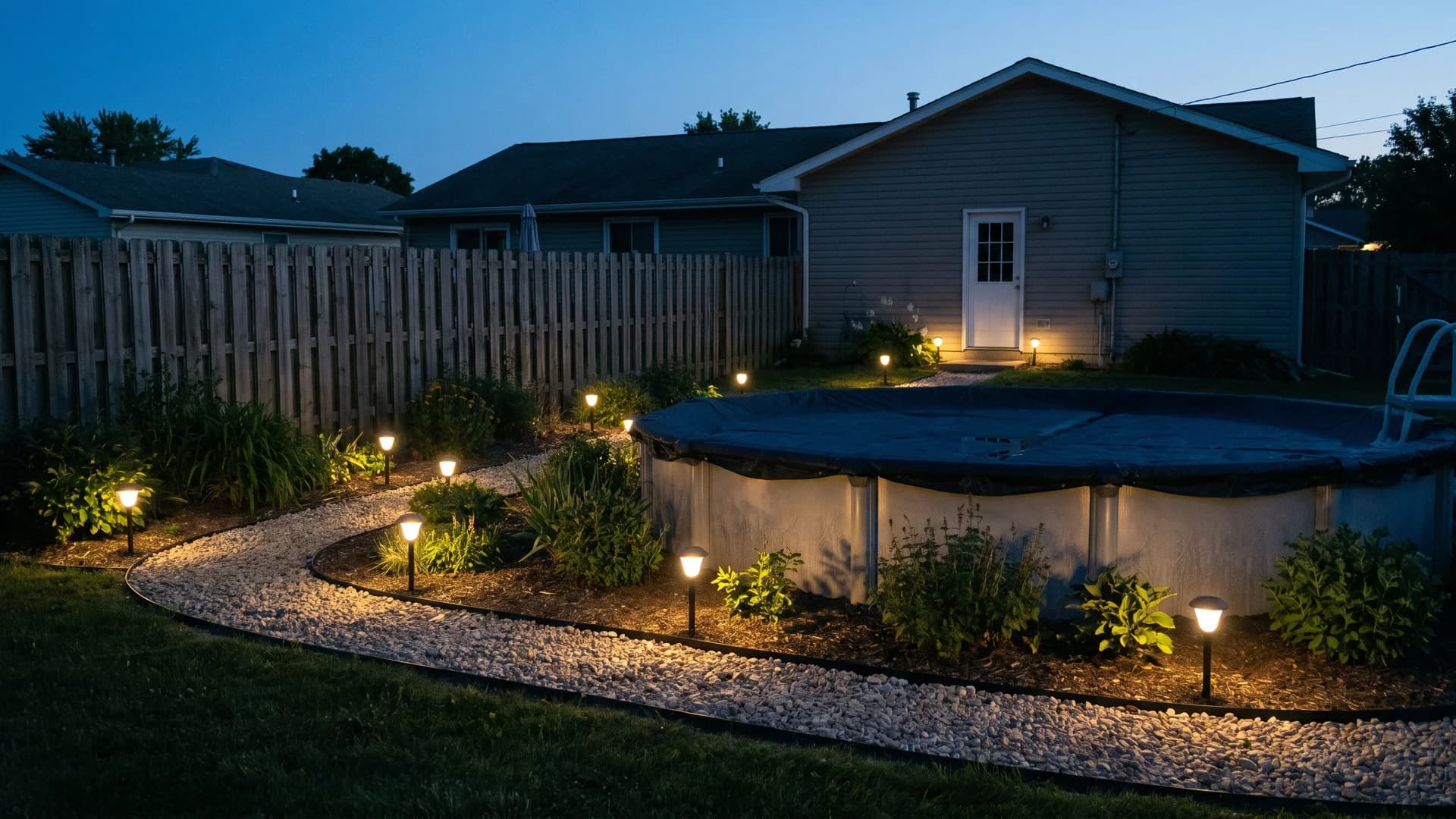
Low-voltage wiring means buried cable, a transformer, and something else to troubleshoot. Solar stake lights need none of it: an 8-pack runs $30 to $60, installs in twenty minutes, and moves whenever the layout changes. Ring the gravel border and the path from the house. Modern landscape lighting on solar holds a charge deep into the evening, which is most of what a pool area needs.
14. Choose composite for the platform
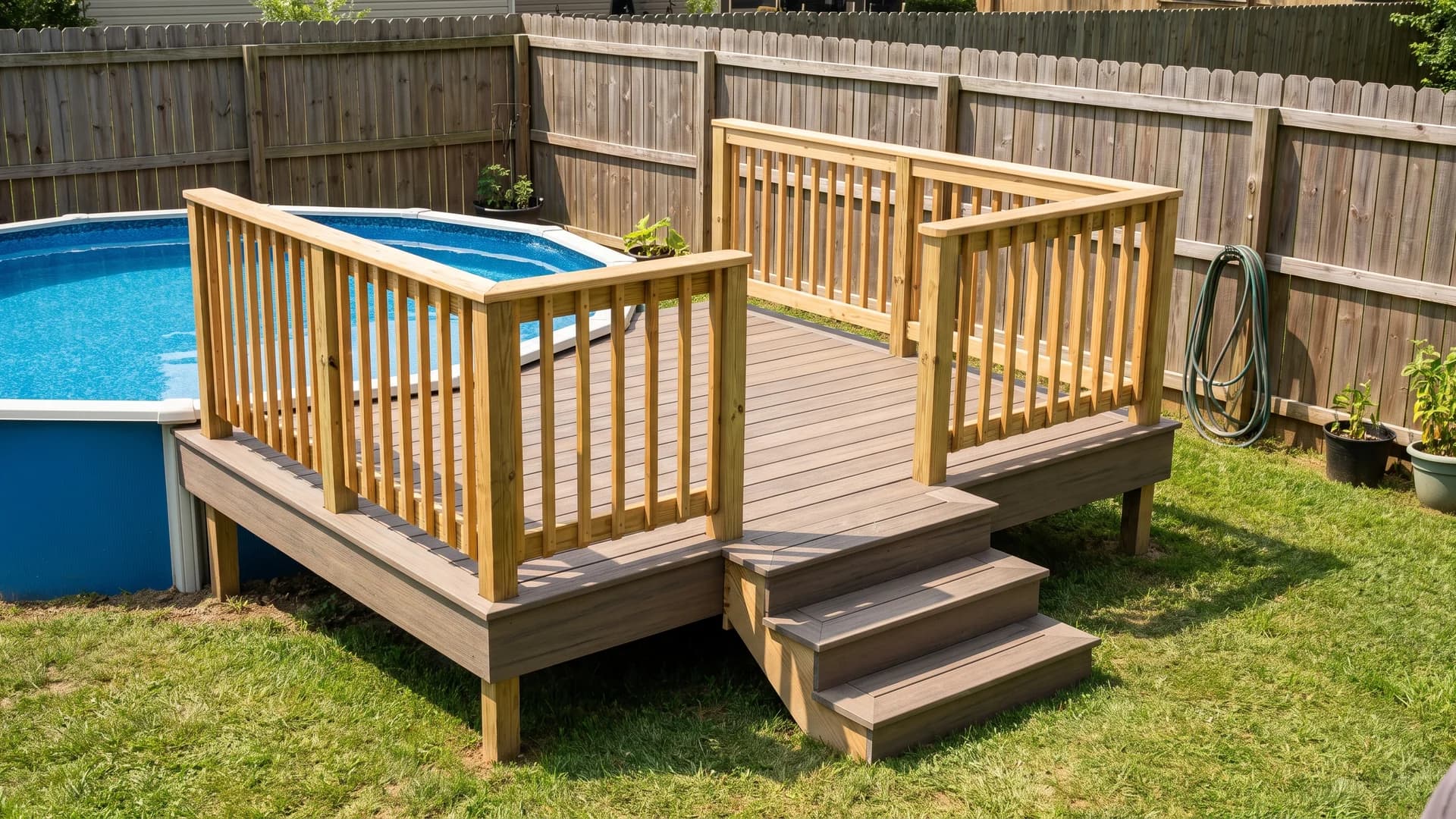
A wood platform adds sanding and staining to your calendar forever. Composite boards cost $4 to $8 a square foot against $2 to $4 for pressure-treated pine, but the maintenance line goes to zero: no splinters, no finish, soap and water once a season. On a small 8-by-10 entry platform, the upgrade costs a few hundred dollars total. Full plans and budget math live in our above ground pool deck ideas guide.
15. Leave a working gravel band at the equipment
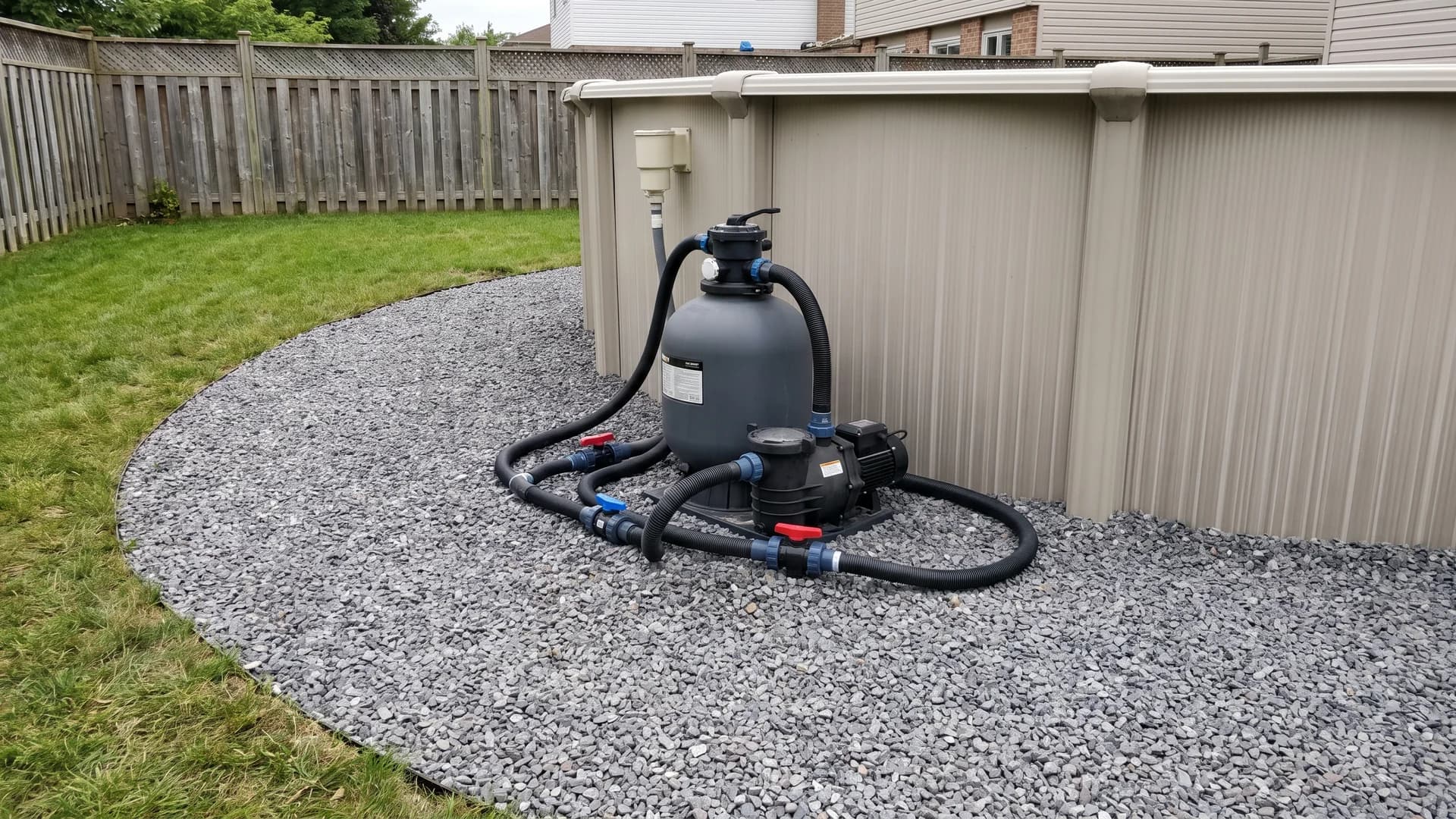
The least glamorous idea on this list saves the most annual effort. A 30-inch band of compacted crushed stone around the pump, filter, and skimmer side means no plants to trample, dry footing for winterizing, and hose connections you can reach without kneeling in a bed. One ton of crushed stone covers it for about $60. Run the numbers with the gravel calculator before ordering.
Matching ideas to your situation
A few shortcuts through the list, depending on what's driving you:
- Weeds are the main enemy: start with 2, 9, and 1, in that order. The fabric-plus-edging combination is the whole game.
- The filter clogs constantly: 4, 11, and 6 replace whatever is shedding with plants that don't; the full species list with zones is our low maintenance pool plants guide.
- Bare dirt and mud: 1, 7, and 15 cover the ground for the least money per square foot.
- Working with a tight budget: ideas 2, 9, and 13 all land under $100 and pair well with the budget-focused projects in our cheap above ground pool landscaping list.
- The pool just looks unfinished: 12, 14, and 5 do the most for how the area reads from the house.
FAQ
What is the lowest maintenance landscaping around an above ground pool?
Rock or decomposed granite over commercial landscape fabric, held by steel edging, with a few evergreen shrubs planted through the fabric. That combination needs no mowing, no watering, and close to no weeding. Add plants only in containers or gravel pockets so there are no open beds to tend.
What should you not plant next to an above ground pool?
Skip anything that sheds constantly or drops fine debris: deciduous trees, pines, bamboo, and berry-producing shrubs all feed the skimmer daily. Avoid aggressive spreaders like English ivy near the wall, and thorny plants anywhere swimmers move barefoot. Broadleaf evergreens and clumping grasses are the safe defaults.
How do I stop weeds from growing around my above ground pool?
Weeds need light and a gap, so remove both. Lay commercial-grade landscape fabric with 6-inch overlapped seams, cover it with 3 inches of rock or granite, and pin the fabric under solid edging. Hand-pull the few that sprout in the surface layer before they root through. Skip herbicides near the pool; overspray ends up in the water.
Can I put rocks right up against the pool wall?
No. Most manufacturers say to keep loose rock off the wall because sharp stones can nick a vinyl liner during maintenance and trapped moisture corrodes steel walls. Leave a small buffer strip at the base, or run a ring of edging a few inches out so the rock stops short of the wall.
What can I use around a pool instead of grass?
Decomposed granite, crushed stone, artificial turf, and sedum groundcover all replace lawn without the weekly mow. Most yards mix two of them, a firm surface on the working side and something green on the visible side. If you want to compare options on your actual yard before buying materials, AI landscape design renders them from a single photo.