25 Pool Design Ideas for Shapes, Finishes and Small Yards
Rectangle or freeform, white plaster or pebble, plunge pool or lap lane. 25 inground pool ideas with costs, finish lifespans and what each one needs from your yard.
A pool is the one backyard project you can't really redo. Once the hole is dug and the shell is in, the shape, the finish and the spot it sits in are yours for decades. That's why the pool design ideas worth saving are the ones that tell you what each choice costs and what it asks of your yard, not just how it looks on a sunny Pinterest board.
This list covers the pool itself: the shape, the interior finish and tile, pools sized for small yards, the features you build into the water, the deck, and the lighting. Costs come from current 2026 contractor pricing data, and each idea notes the trade-off that tends to surprise people later. For planting and hardscape around the water, see our pool landscaping ideas.
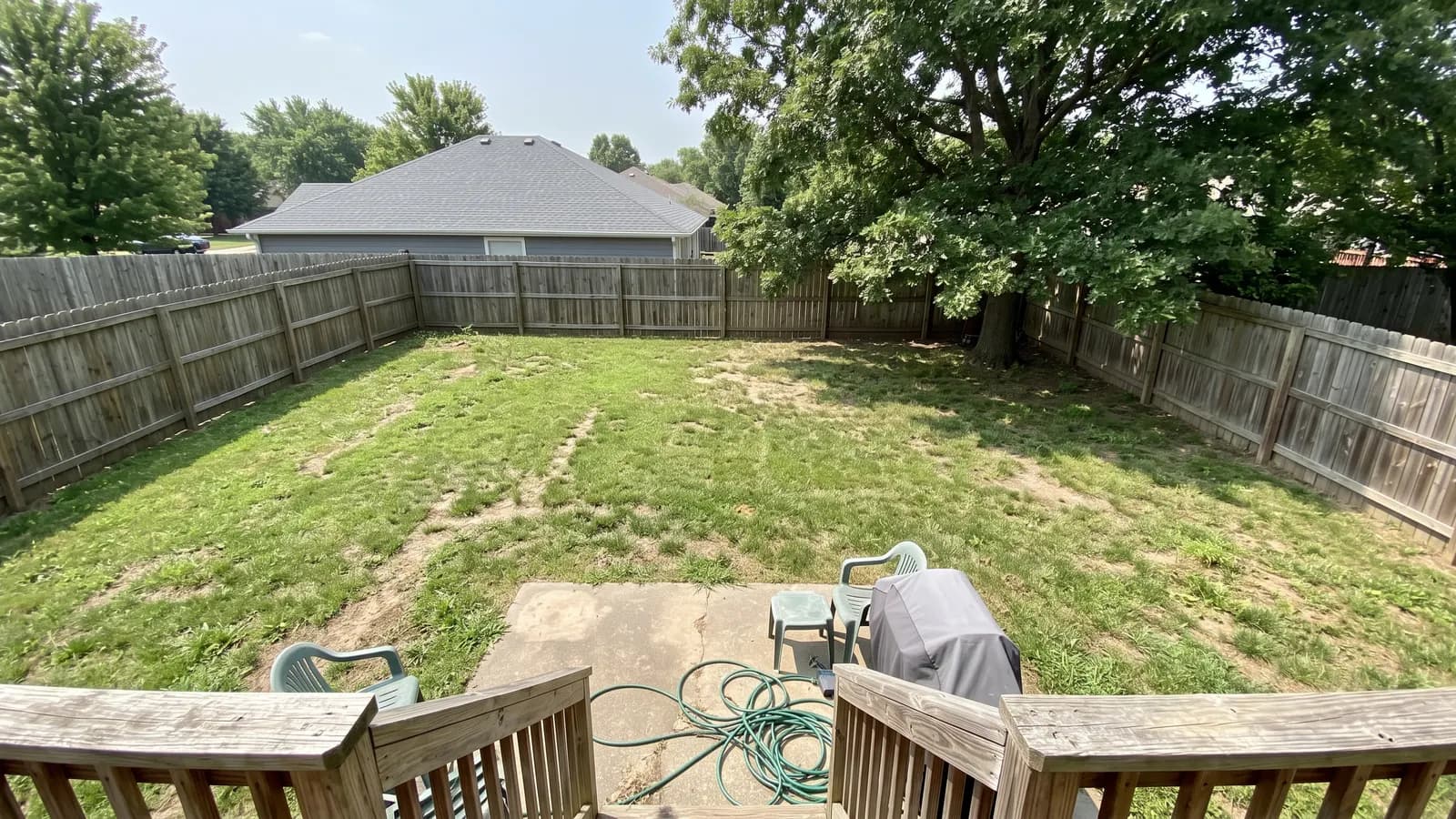
Every image here is an AI design concept, the same kind of render OutdoorBrite makes from a photo of your yard. The first five start from one ordinary backyard, so you can compare shapes on the same space.
Pool shapes
Shape decides more than looks. It sets how much of the yard the pool eats, whether a fiberglass shell is an option, and how easy the pool is to cover. Here is the same fenced yard with five different pools, each an AI concept made from the photo above.
1. Keep it a simple rectangle
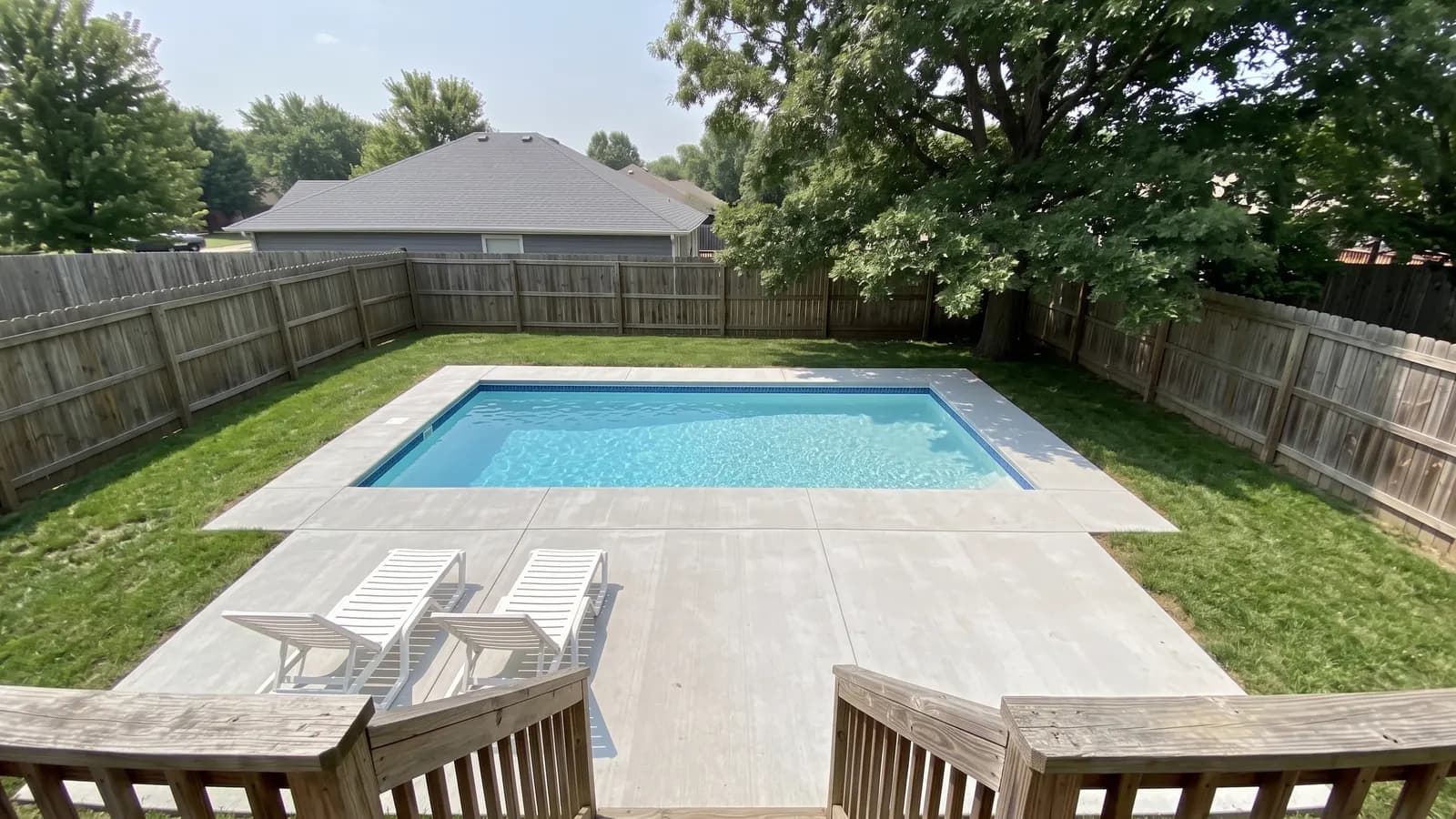
The rectangle is the default for good reasons. Straight sides are the easiest to build, the easiest to fit an automatic cover to, and the easiest to swim laps in. A 15 by 30 foot pool like this one runs $36,000 to $112,500 installed depending on material, according to HomeGuide. The average inground pool is 300 to 400 square feet, so this is a typical size, not a big one.
2. Go freeform where the yard curves
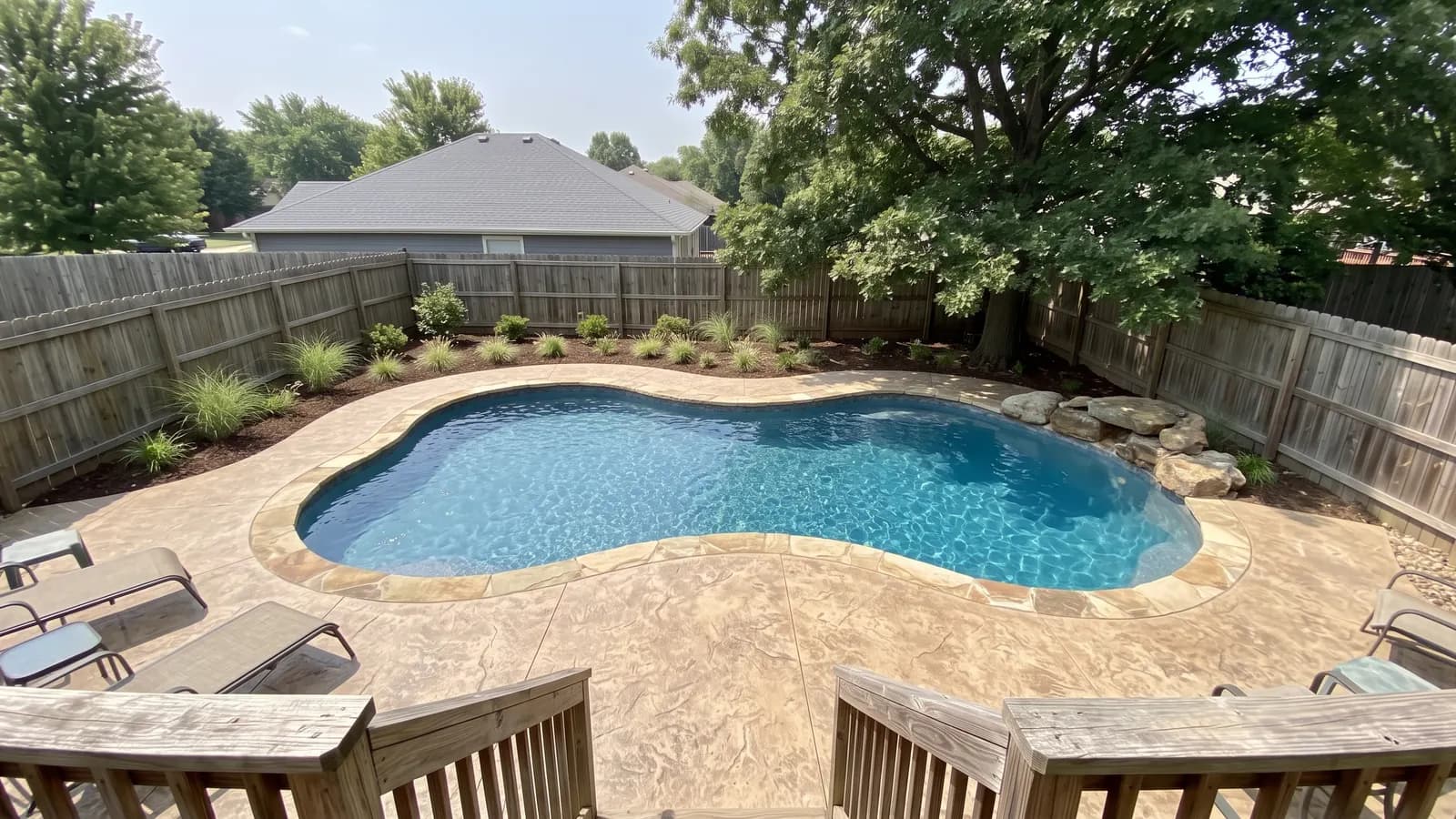
Curves make a pool read like a pond instead of a box, which suits wooded lots and cottage-style homes. Freeform shapes usually mean a concrete (gunite) pool, since concrete can be formed to any outline. That flexibility costs: concrete pools run $50,000 to $120,000 and need resurfacing every 10 to 15 years, though the shell itself can last 50 years or more.
3. Fit a kidney shape around a tree or patio
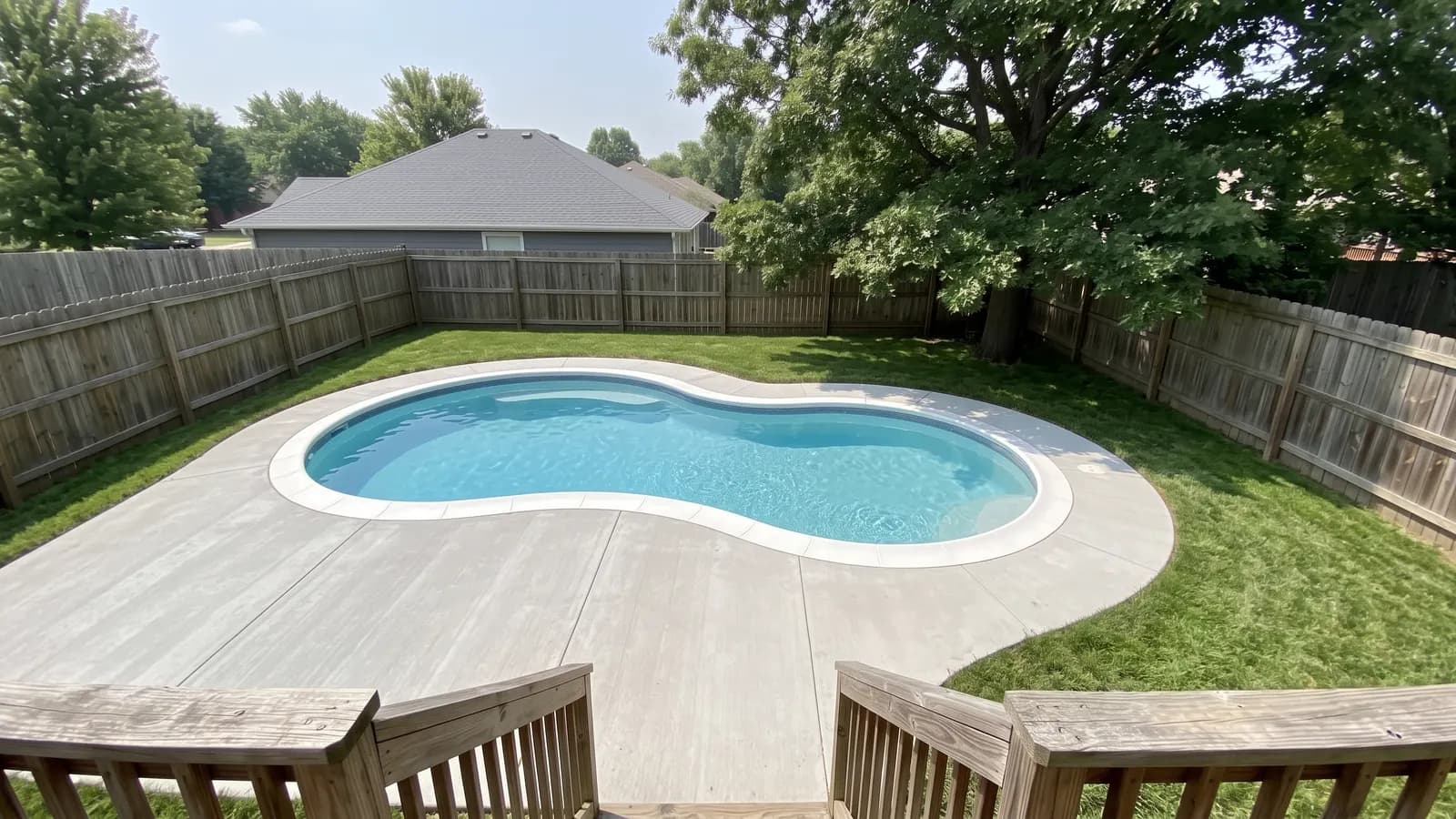
The kidney's inward curve leaves room for a tree, a bed or a strip of lawn, which helps in a yard that's narrower than it looks. It's also one of the most common fiberglass shell shapes. Fiberglass pools cost $45,000 to $100,000 installed and go in faster than concrete, but shells top out around 16 feet wide because they travel by highway.
4. Split swimming and play with an L-shape
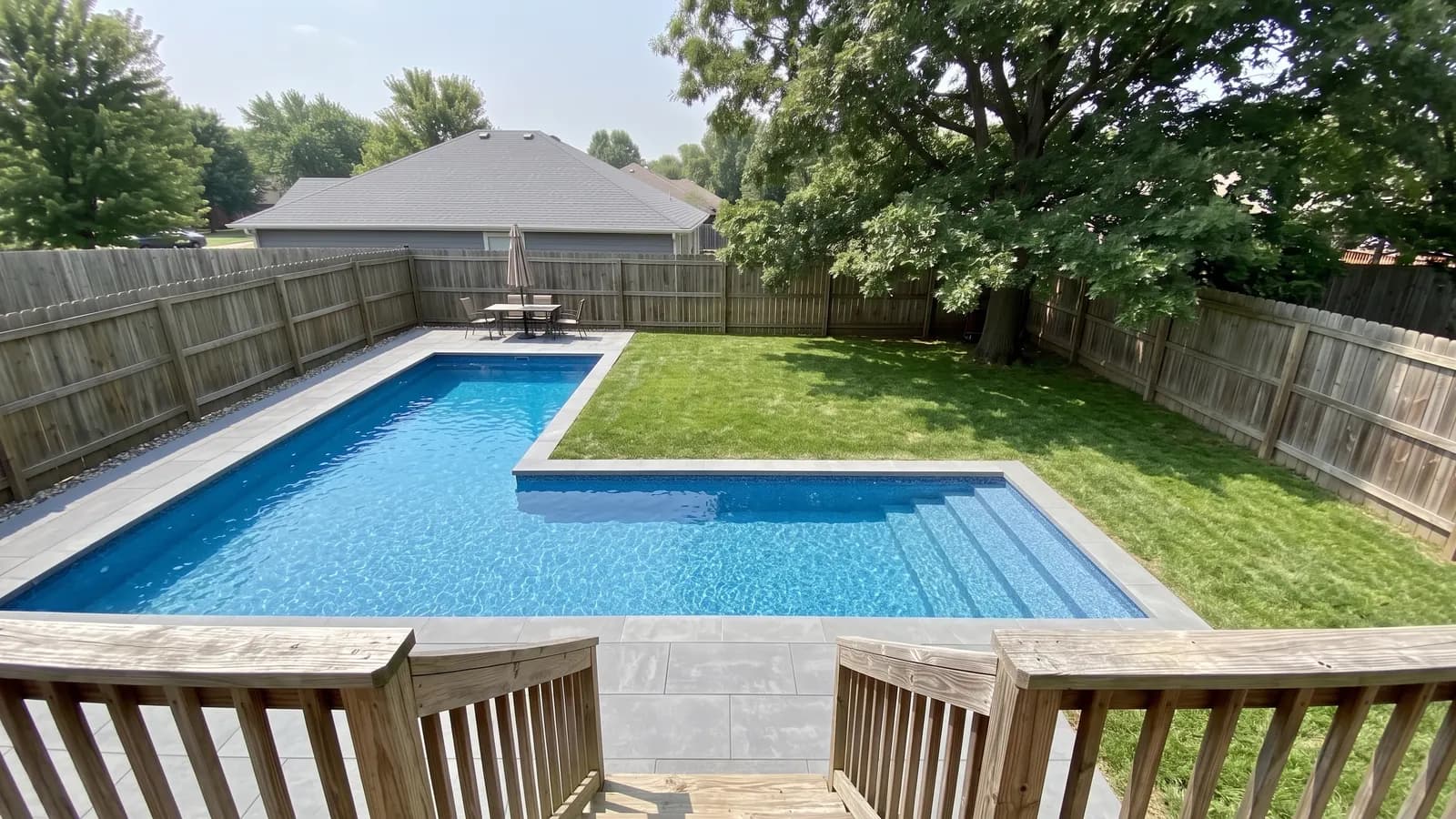
An L gives you two pools in one footprint: a shallow leg with wide steps for kids and loungers, and a long straight leg for swimming. Put the deep end in the long leg. Most residential pools are 6 to 7 feet at their deepest, and you need 9 feet or more if a diving board is ever on the wish list. The inside corner of the L makes a natural spot for a table and umbrella.
5. Add a Roman end for the steps
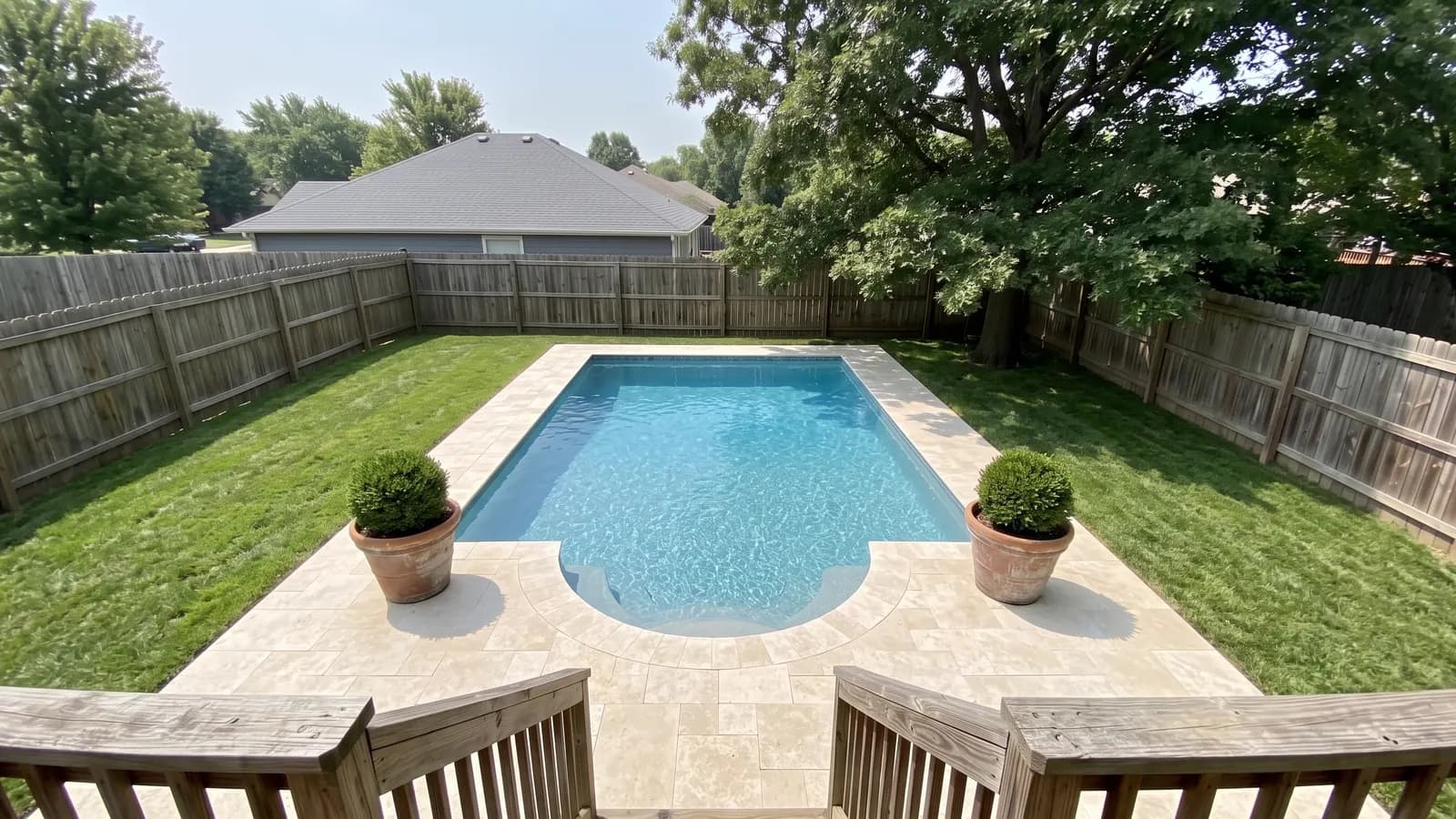
A Roman end is a rectangle with a half-round bump-out at one end, and the curved steps live inside the bump-out. That keeps the main body of the pool clear for swimming instead of losing a corner to stairs. Put the round end facing the house, where you step out of the back door. Cream travertine coping softens the formal outline.
Finishes, tile and color
The interior finish sets the color of the water more than anything else. These four images show one pool with different finishes, so you can see the difference the surface makes.
6. Start with white plaster for classic blue water
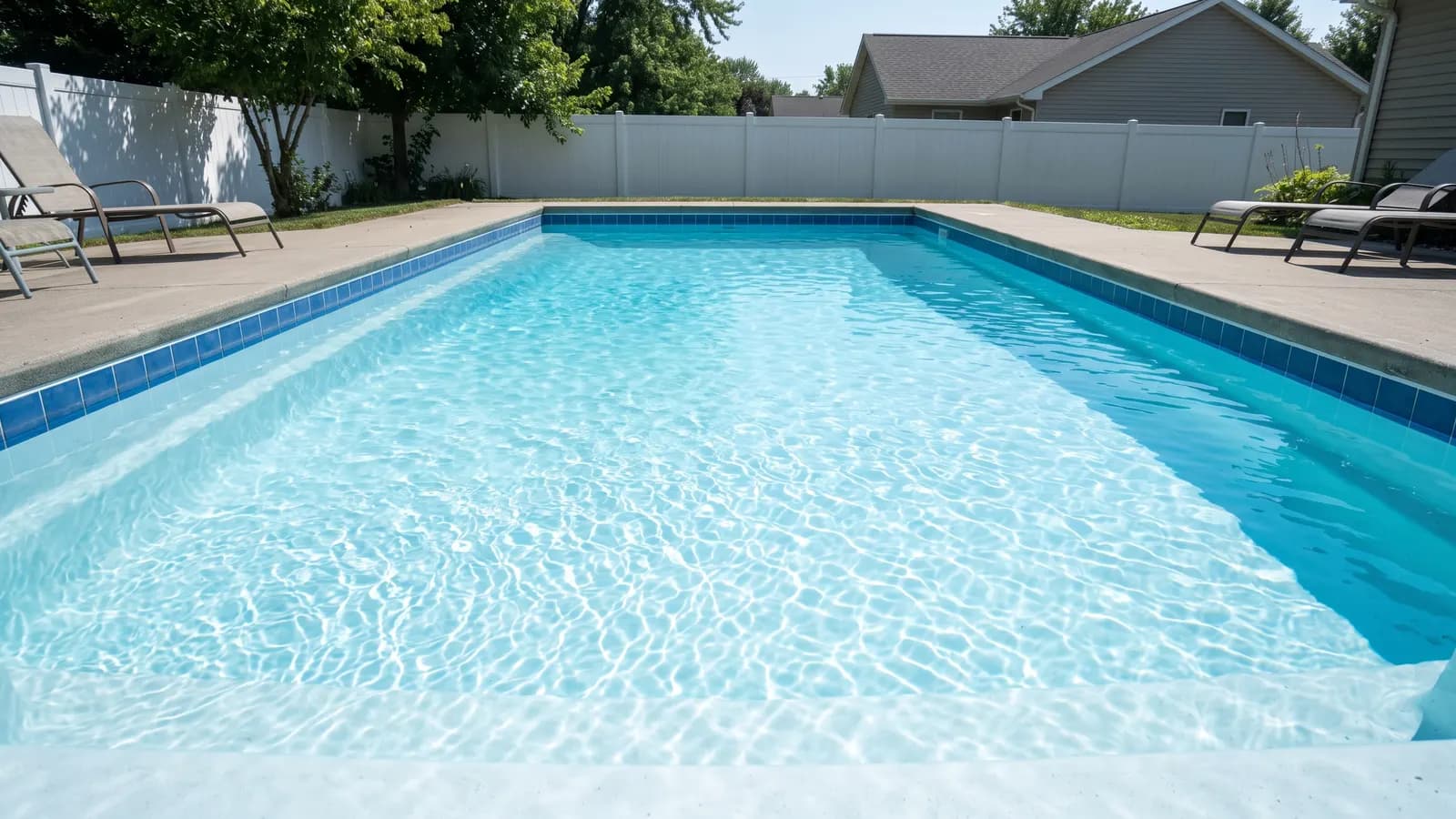
White plaster (marcite) gives you the bright, light blue water most people picture. It's also the cheapest of the durable finishes, at about $6 to $8 per square foot to apply. The catch is lifespan: plaster lasts roughly 7 to 12 years before it starts to etch, stain or flake and needs replastering. Keeping the water's pH balanced is the main thing that stretches it.
7. Upgrade to a pebble finish
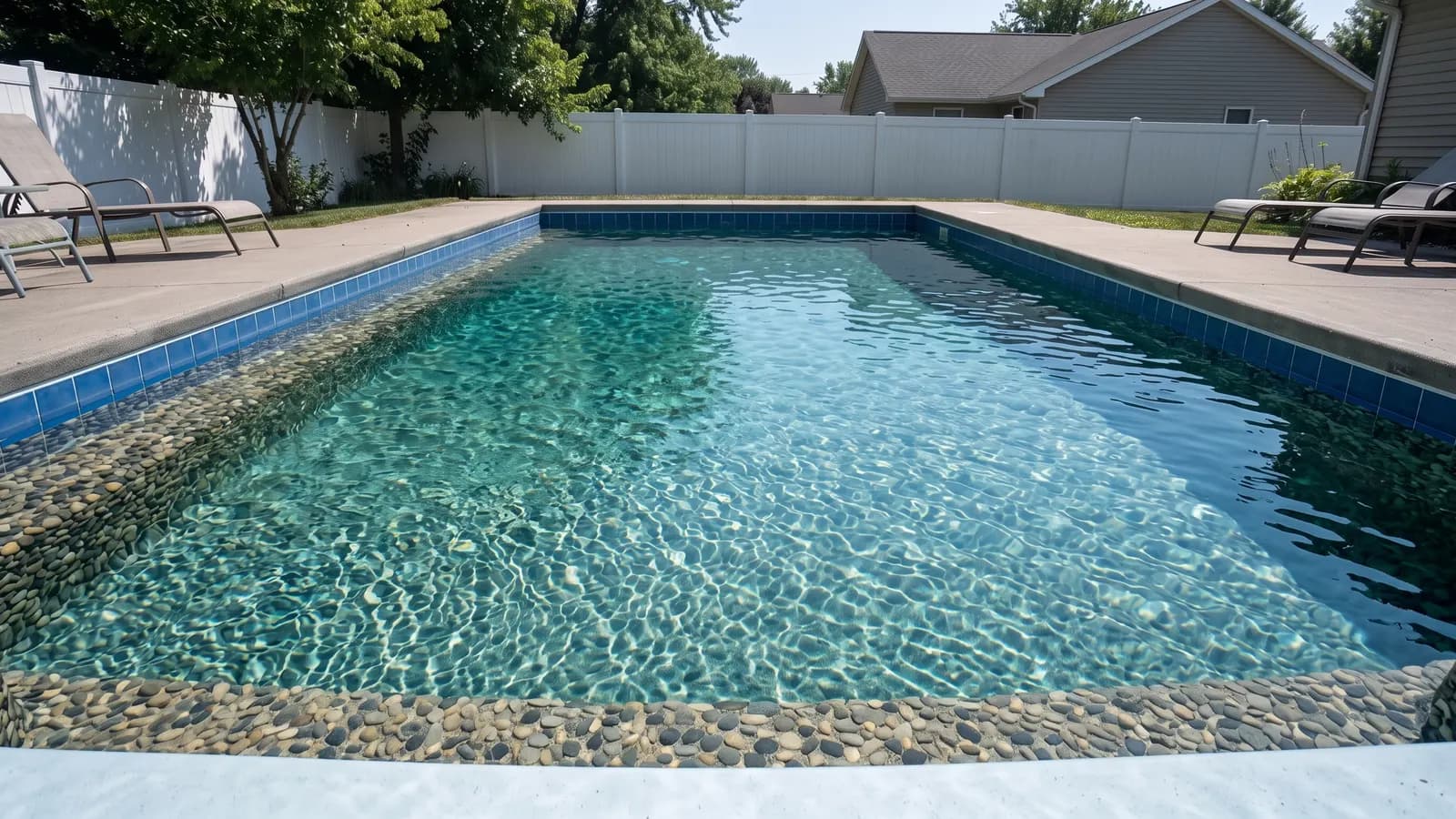
Same pool, different surface. A pebble finish shifts the water toward teal or lagoon green, depending on the pebble blend you choose. It costs $7 to $15 per square foot but lasts 15 to 20 years or more, so over the life of the pool it can come out ahead of plaster. The rounded stones are textured underfoot, smoother than other aggregate finishes but not as smooth as plaster.
8. Darken the water with gray quartz
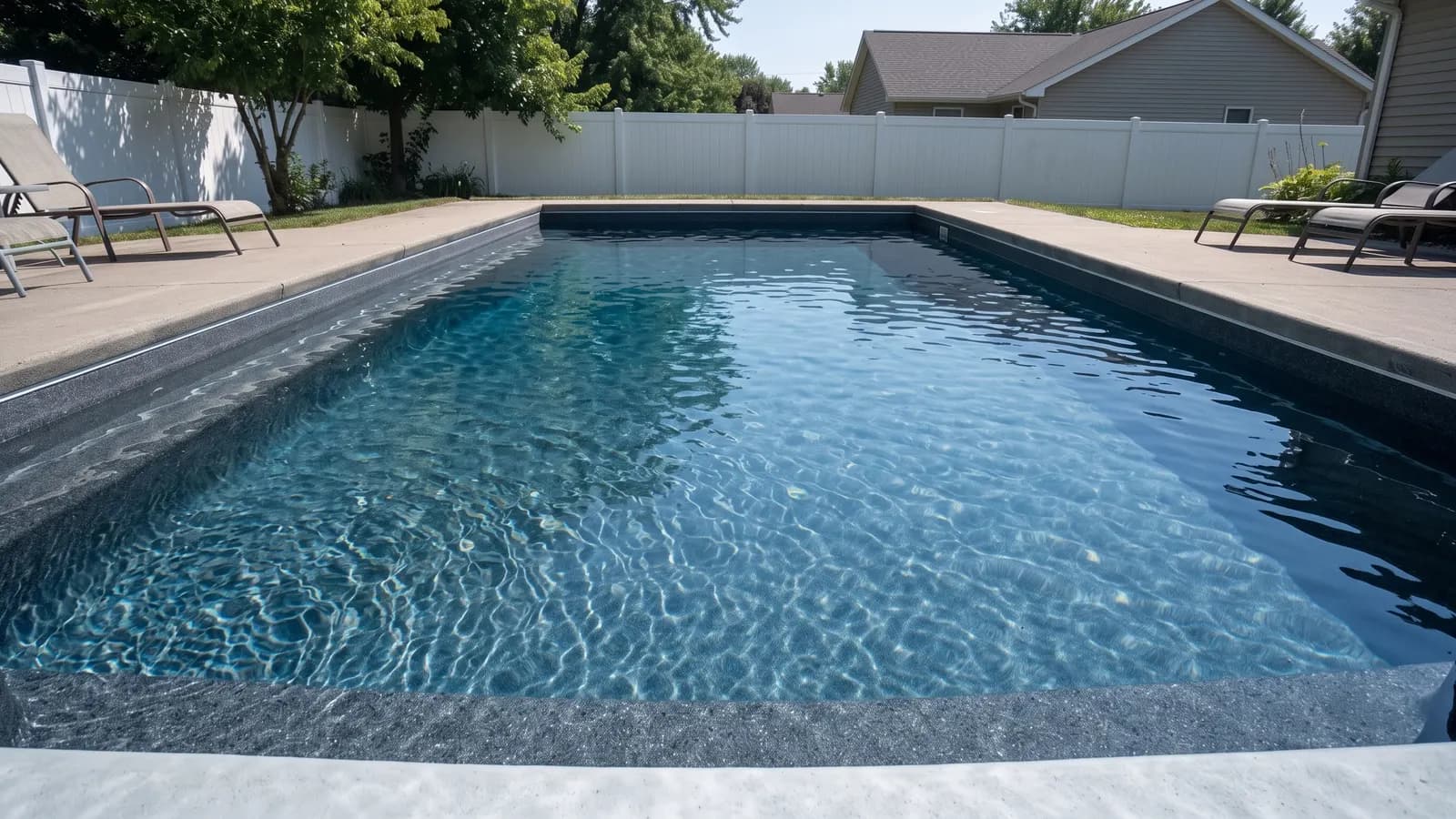
Dark interiors turn the water a deep navy that mirrors the sky and the trees, which suits modern houses and natural settings. Quartz plaster adds colored quartz fragments to the mix, costs $7 to $10 per square foot, and lasts about 10 to 15 years, a few years longer than plain plaster. Ask for a sample board and look at it wet in full sun before you commit, since the color shifts a lot underwater.
9. Run a glass tile band at the waterline
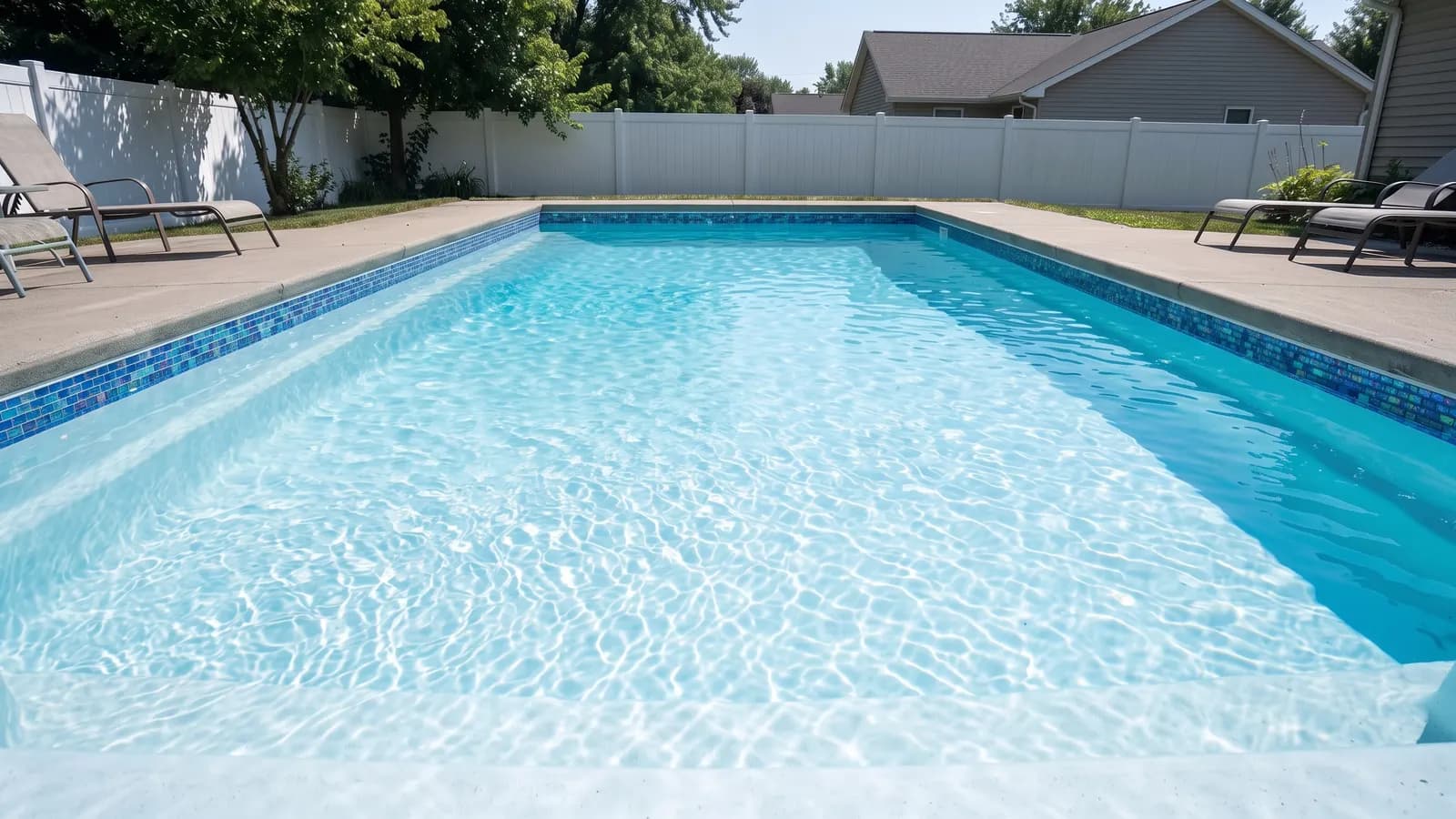
A fully tiled pool is the most durable finish, and the most expensive at $8 to $30 or more per square foot, with glass at the top of that range. You get most of the look for a fraction of the price by tiling only a 6-inch band at the waterline and plastering below. Tile also has a repair advantage: a cracked tile can be replaced on its own, without redoing the whole surface.
10. Pick a patterned liner for a budget build
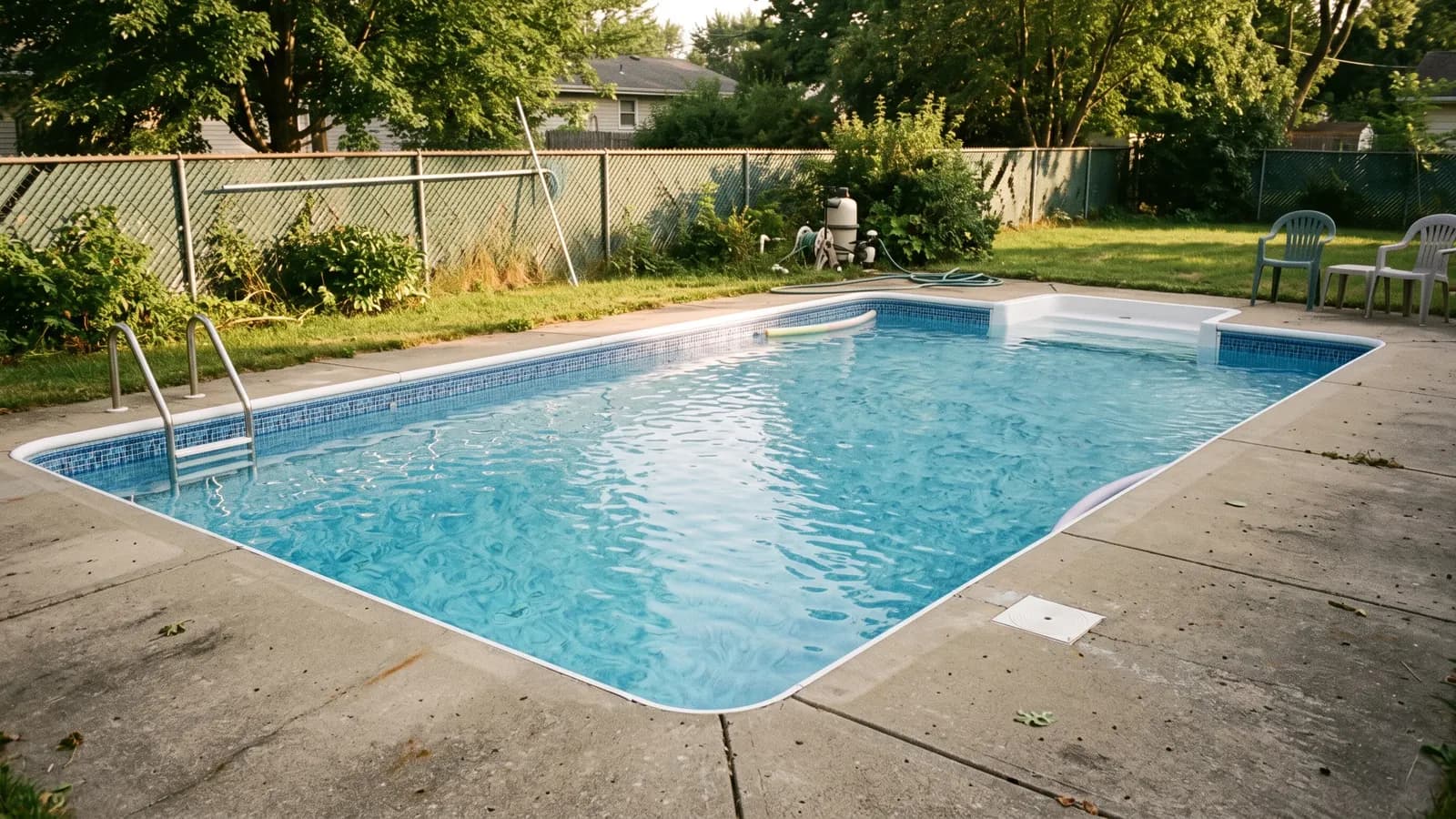
Vinyl liner pools are the cheapest inground option, and the liner itself is the finish. Printed patterns can mimic a tile border and a stone floor at no extra build cost. Plan for the liner as a recurring expense: it lasts about 10 years and costs $3,000 to $7,500 to replace. Liners also scratch more easily than plaster or fiberglass, so they're a weaker fit if a big dog swims with you.
Pools for small yards
You don't need a big lot for a real pool. These four are sized for townhouse yards, narrow lots and slopes.
11. Tuck a plunge pool into a corner
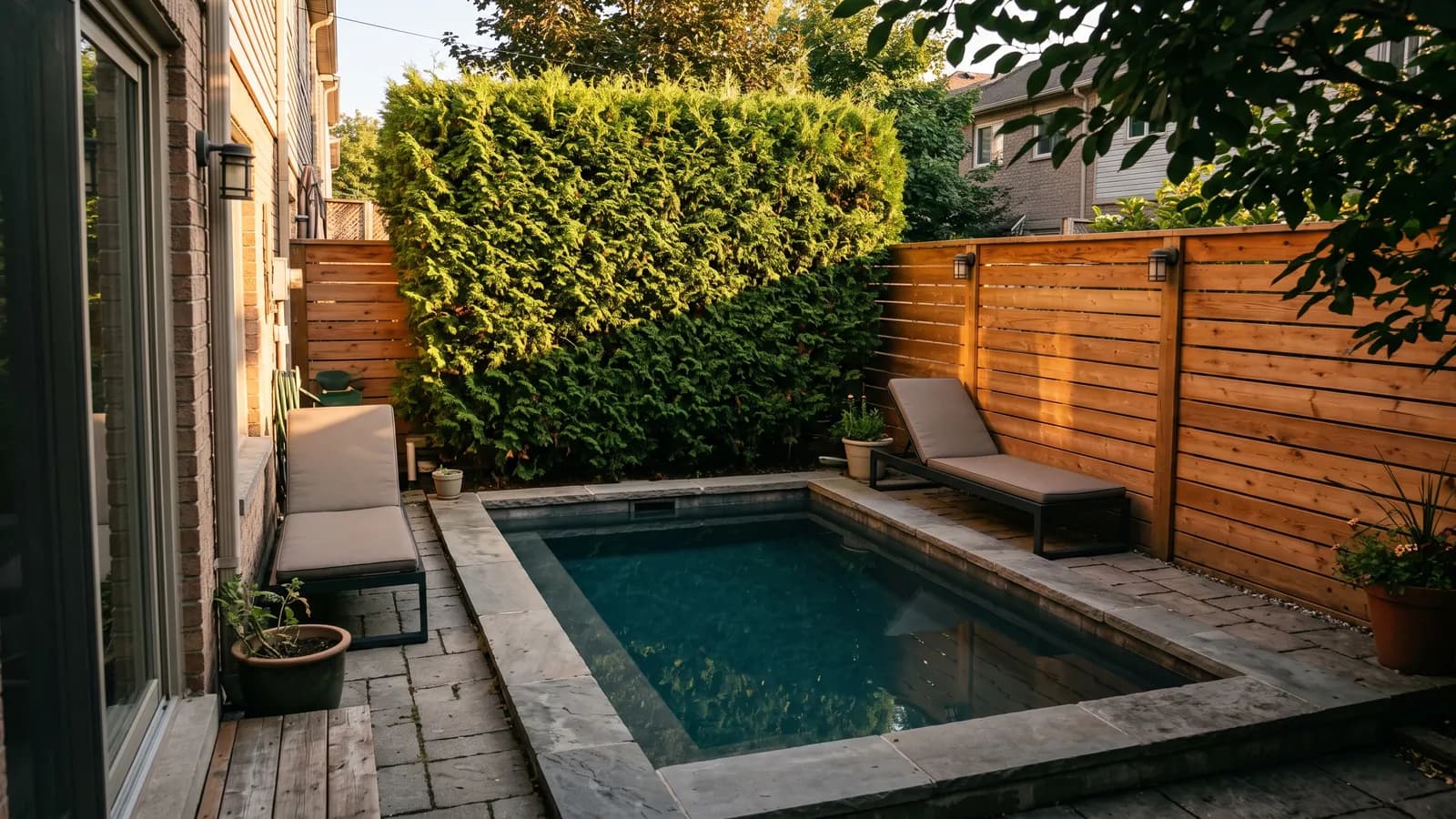
A plunge pool is for cooling off and soaking, not swimming laps. Most are 6 to 12 feet wide, 12 to 21 feet long and 4 to 8 feet deep, and they average $15,000 to $40,000 installed. In a tight yard, set it in a back corner so the rest of the space stays open, and give it at least one side wide enough for a pair of loungers.
12. Build a cocktail pool with a bench
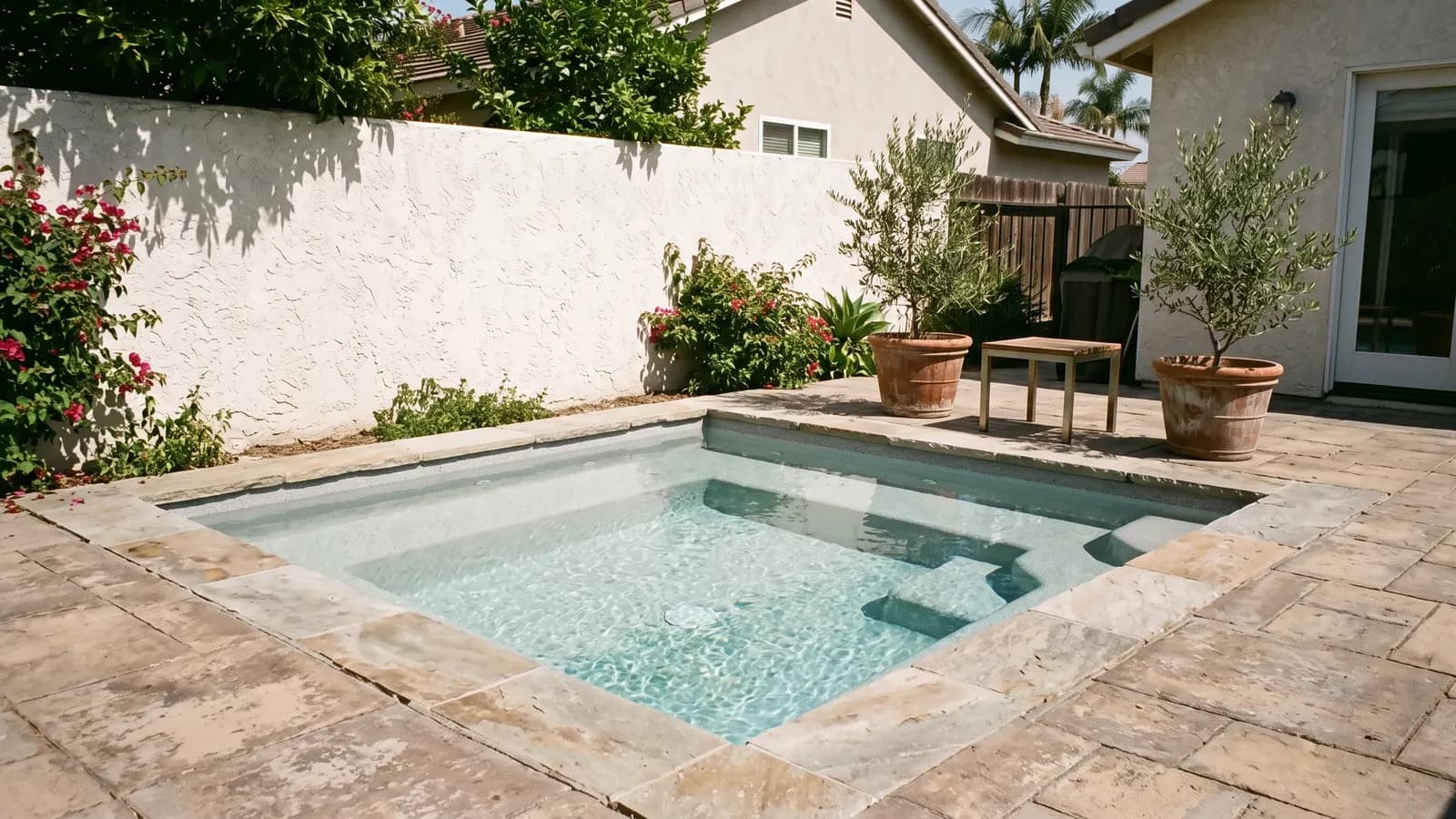
Cocktail pools are small, shallow and built for sitting. A bench running along two walls turns a 10 by 10 foot pool into a place for four people to sit in the water with a drink. Small inground pools like this run $7,000 to $25,000 depending on size, and a built-in bench adds about $2,800 to $9,500. Square and rectangular shapes are also cheaper to install than round ones.
13. Run a lap lane along the fence
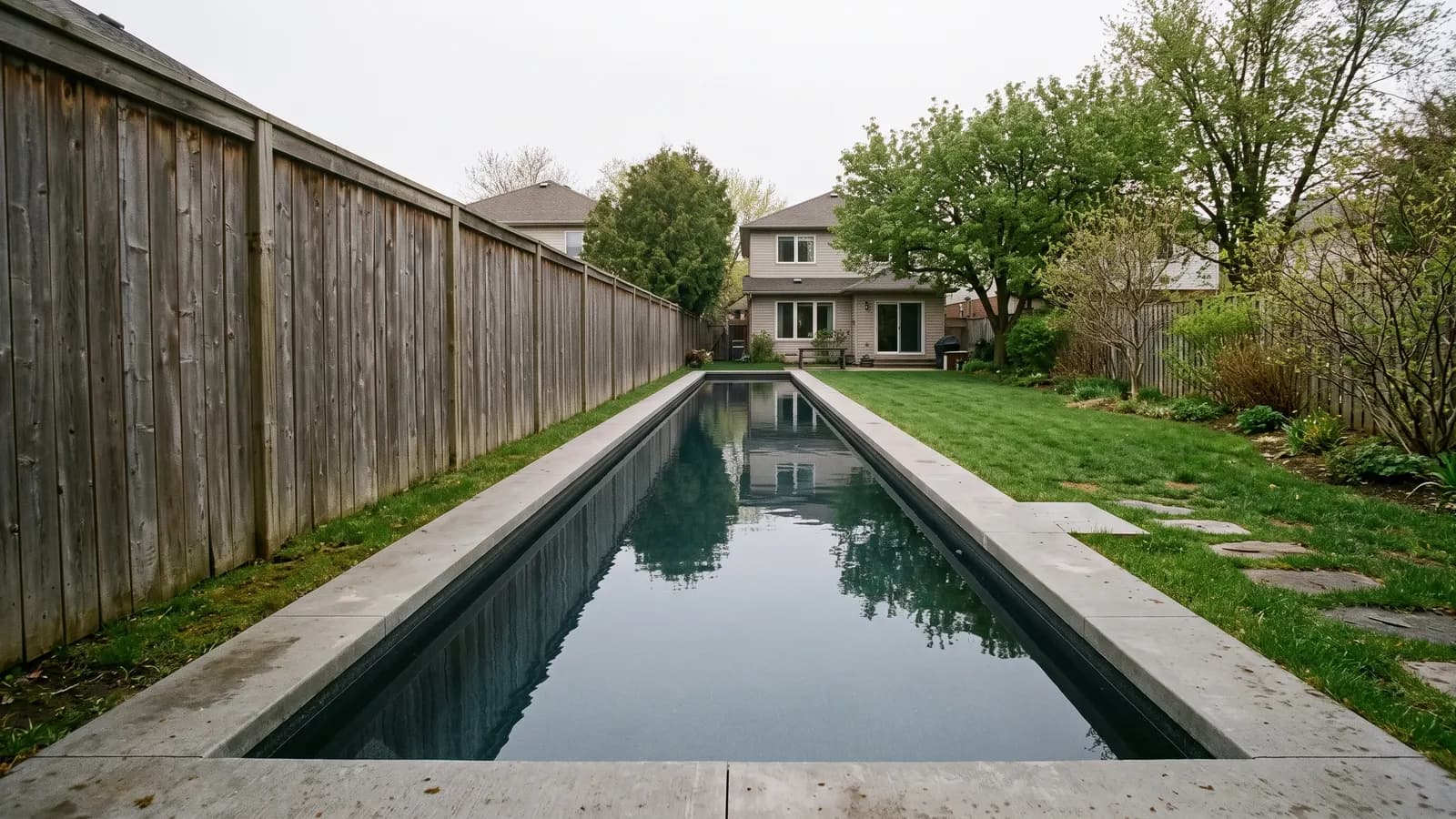
Long, skinny yards suit a lap pool better than a standard one. Most lap pools are at least 8 feet wide and 40 feet long, and 45 feet gives you a more comfortable swim before each turn. Expect $40,000 to $80,000 installed. Running the pool along the side fence leaves the rest of the yard usable, and a dark finish makes the narrow lane look deliberate.
14. Set a semi-inground pool into a slope
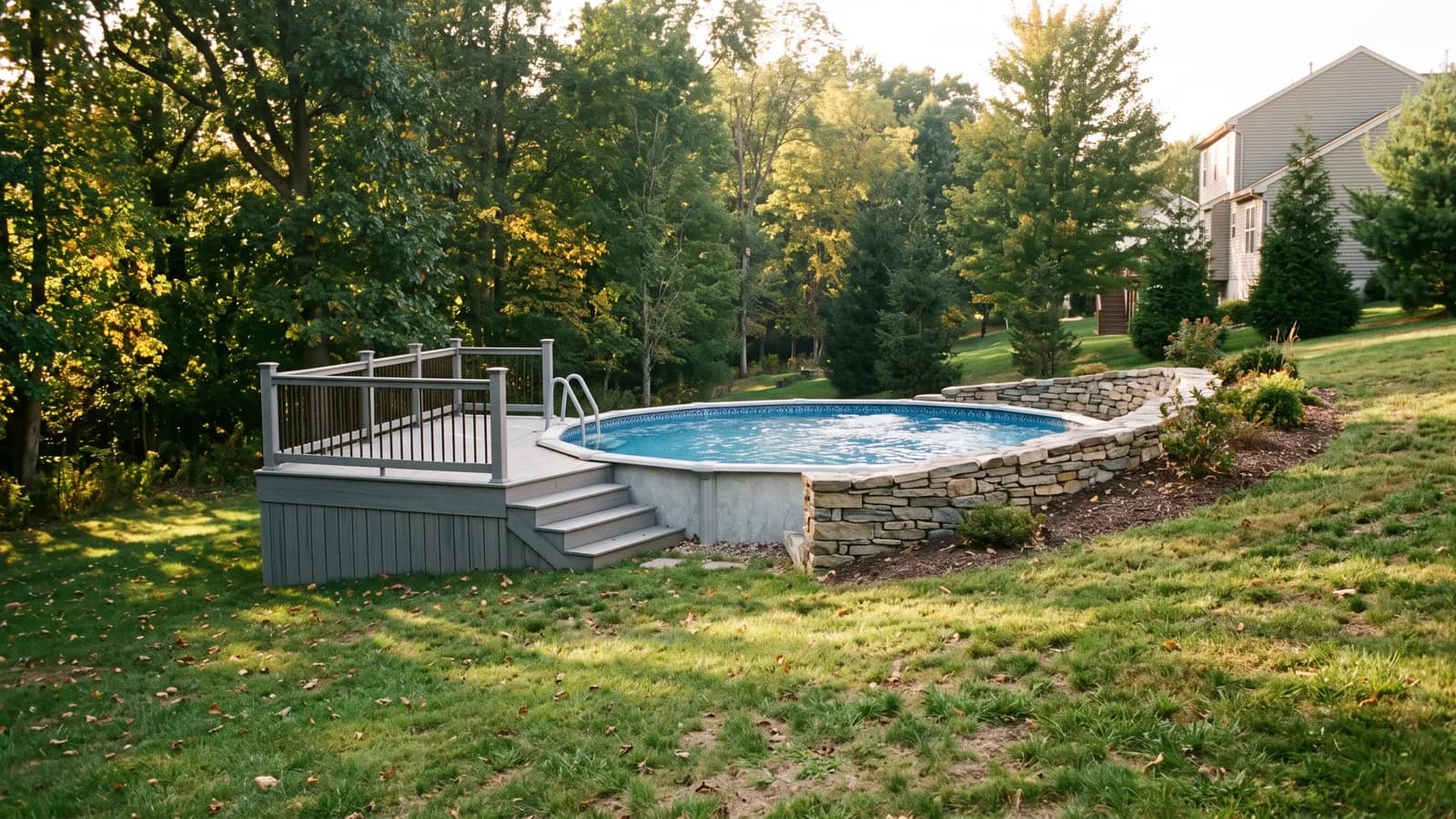
On a sloped lot, a semi-inground pool sits partly in the hill and partly above it, which cuts the digging and the retaining work. A deck wraps the exposed side, so from the house it reads like a built-in pool. Semi-inground pools cost $7,000 to $25,000 on average, far less than a full inground pool, and HomeGuide calls them a good fit for small yards and steep slopes.
Features in and around the water
Ledges, spas and water features are where a pool starts to feel custom. Most of them have to be planned before construction, so decide on them early.
15. Add a tanning ledge for in-water loungers
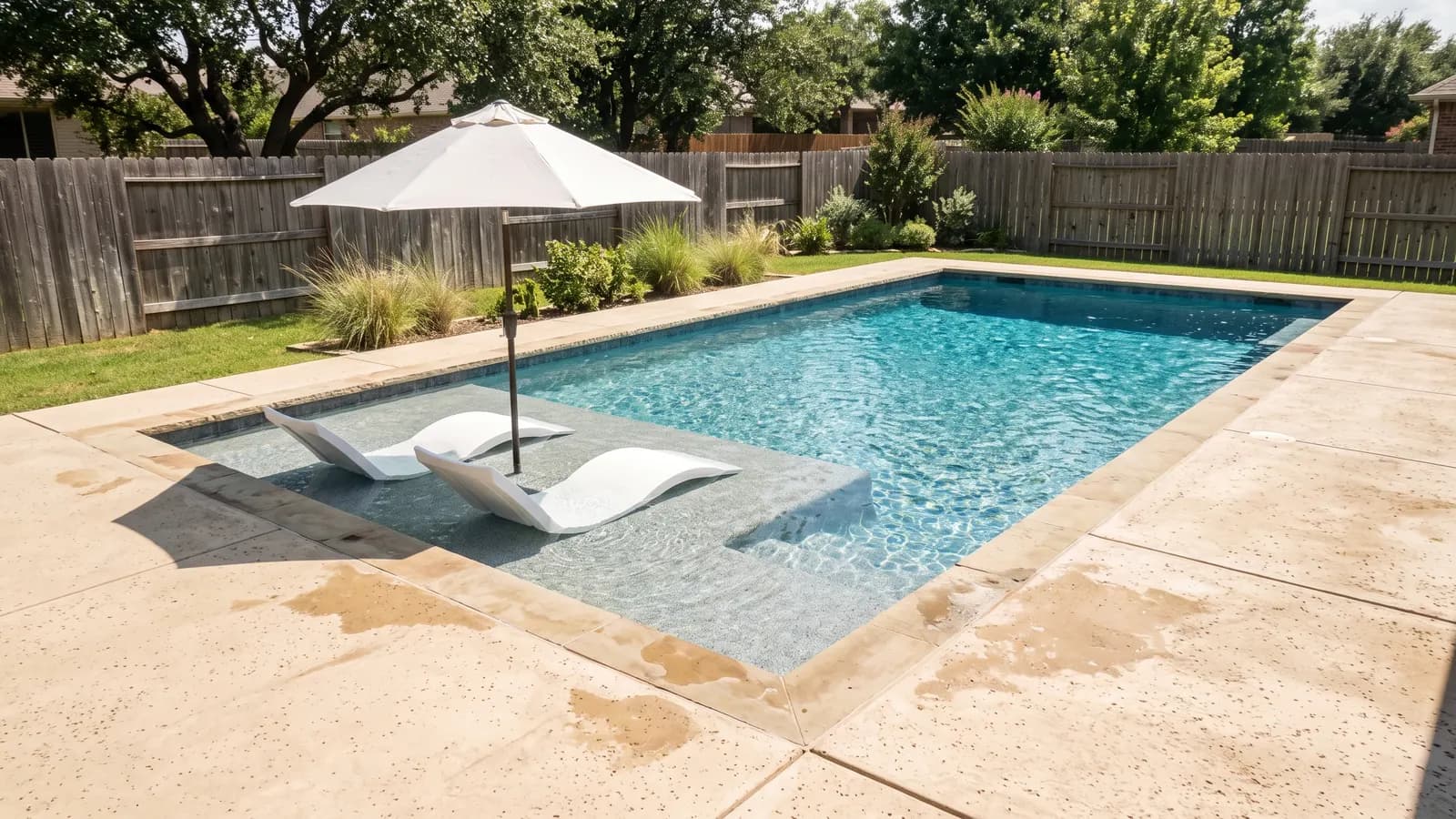
A tanning ledge (also called a sun shelf or Baja shelf) is a wide, flat step covered by a few inches of water. It's where small kids splash, dogs stand and adults lie back with their feet in the water. Depth matters more than size. Fiberglass maker River Pools recommends a ledge 9 to 12 inches deep, which leaves 6 to 9 inches of water. Much deeper and most pool furniture starts to float.
16. Raise a spa that spills into the pool
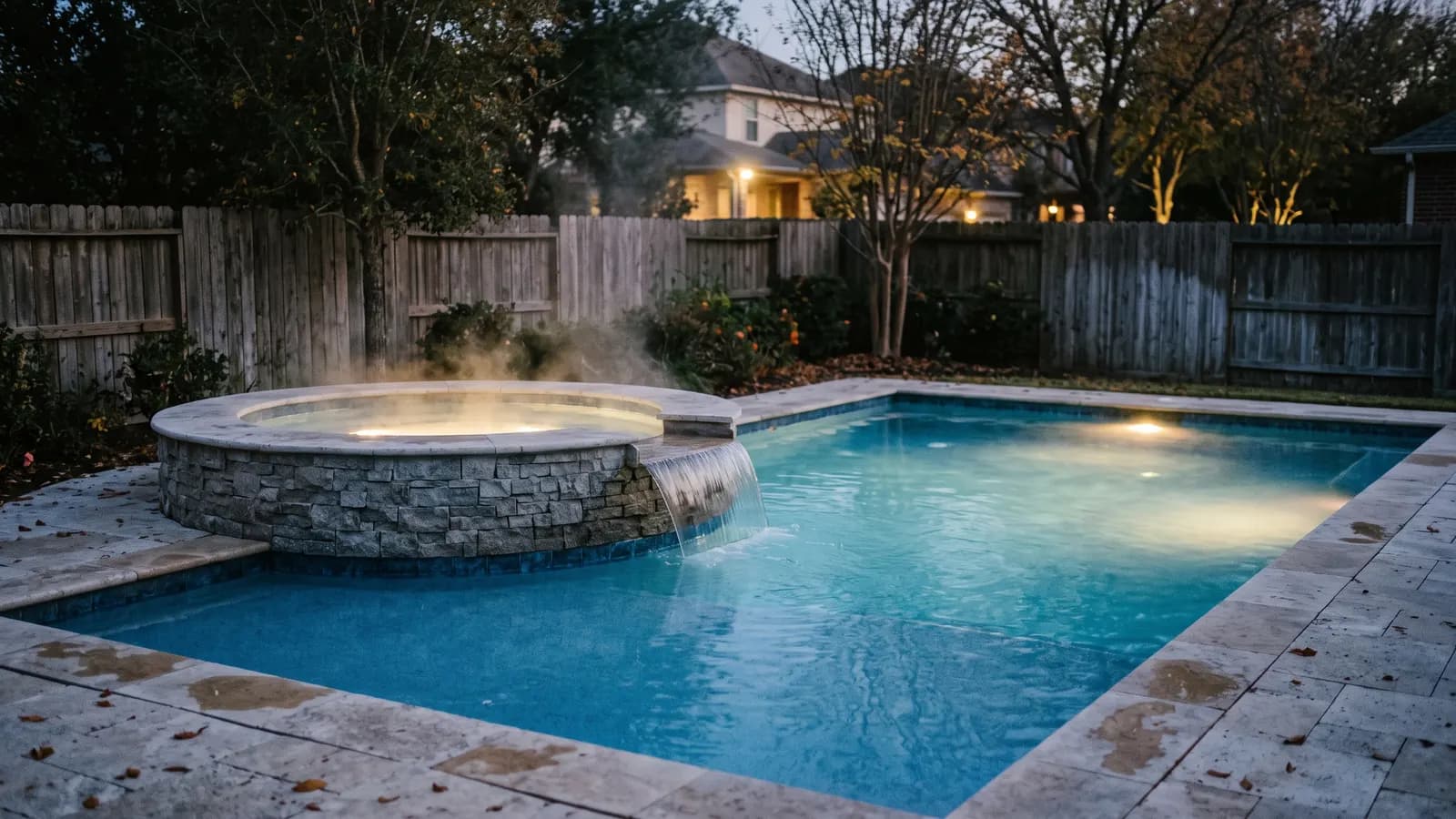
A spillover spa sits at one corner, raised a step above the pool, with its water overflowing back in. You get a hot tub and a small water feature in one build. Raising it 12 to 18 inches makes the spillover visible from the house and gives the spa a sitting wall on the outside. Budget for heating: a pool heater costs $1,600 to $5,200 installed, and a spa you can't warm quickly won't get used in fall.
17. Slope it in with a beach entry
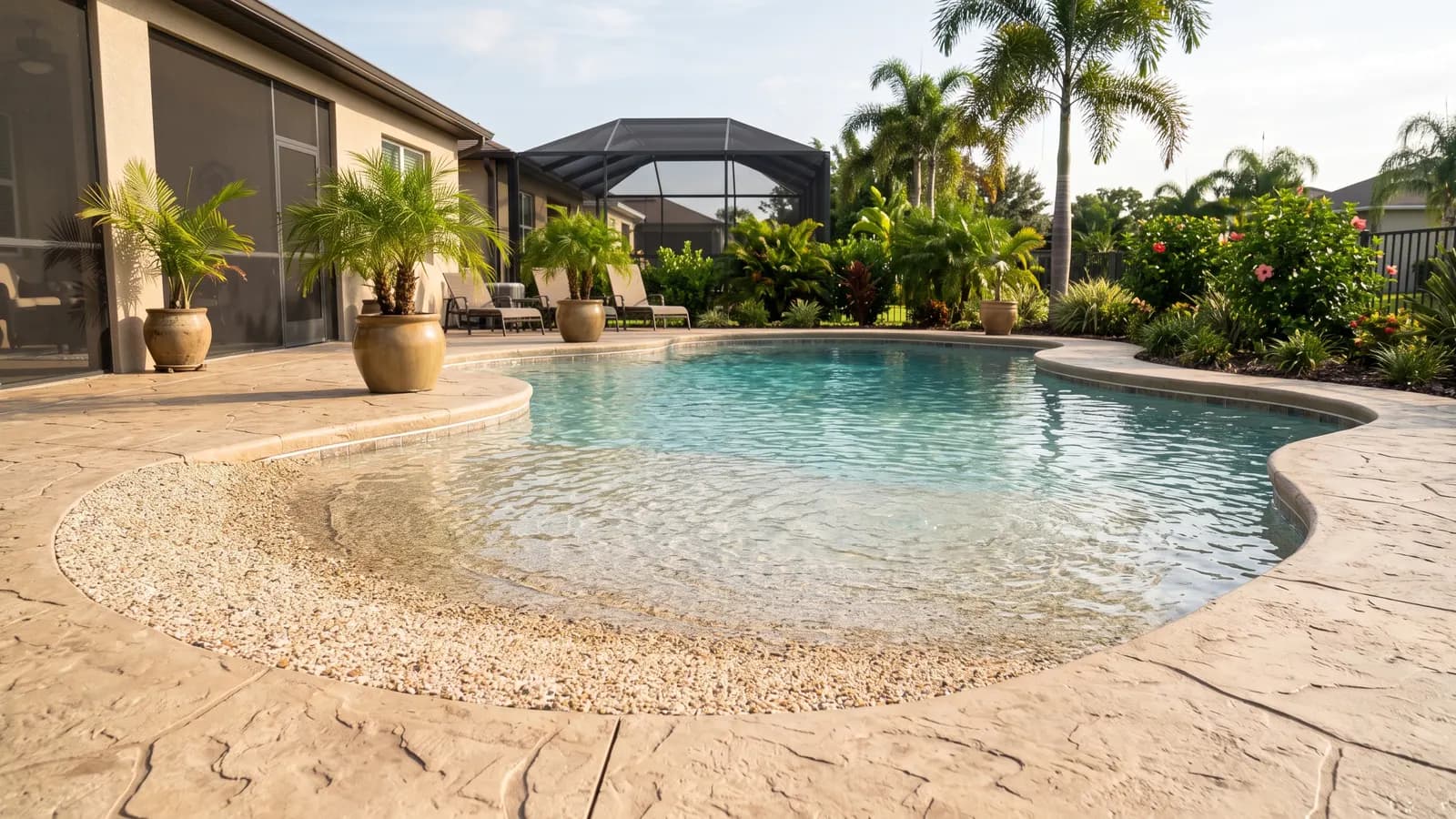
A beach entry slopes from deck level into the water like a shoreline, with no steps at all. It's easy for toddlers, older relatives and anyone with bad knees. The trade-off is length: the slope uses several feet of the pool that are too shallow to swim in, so it works best on a larger freeform pool. A pebble finish on the slope gives bare feet some grip.
18. Line the back wall with sheer descents
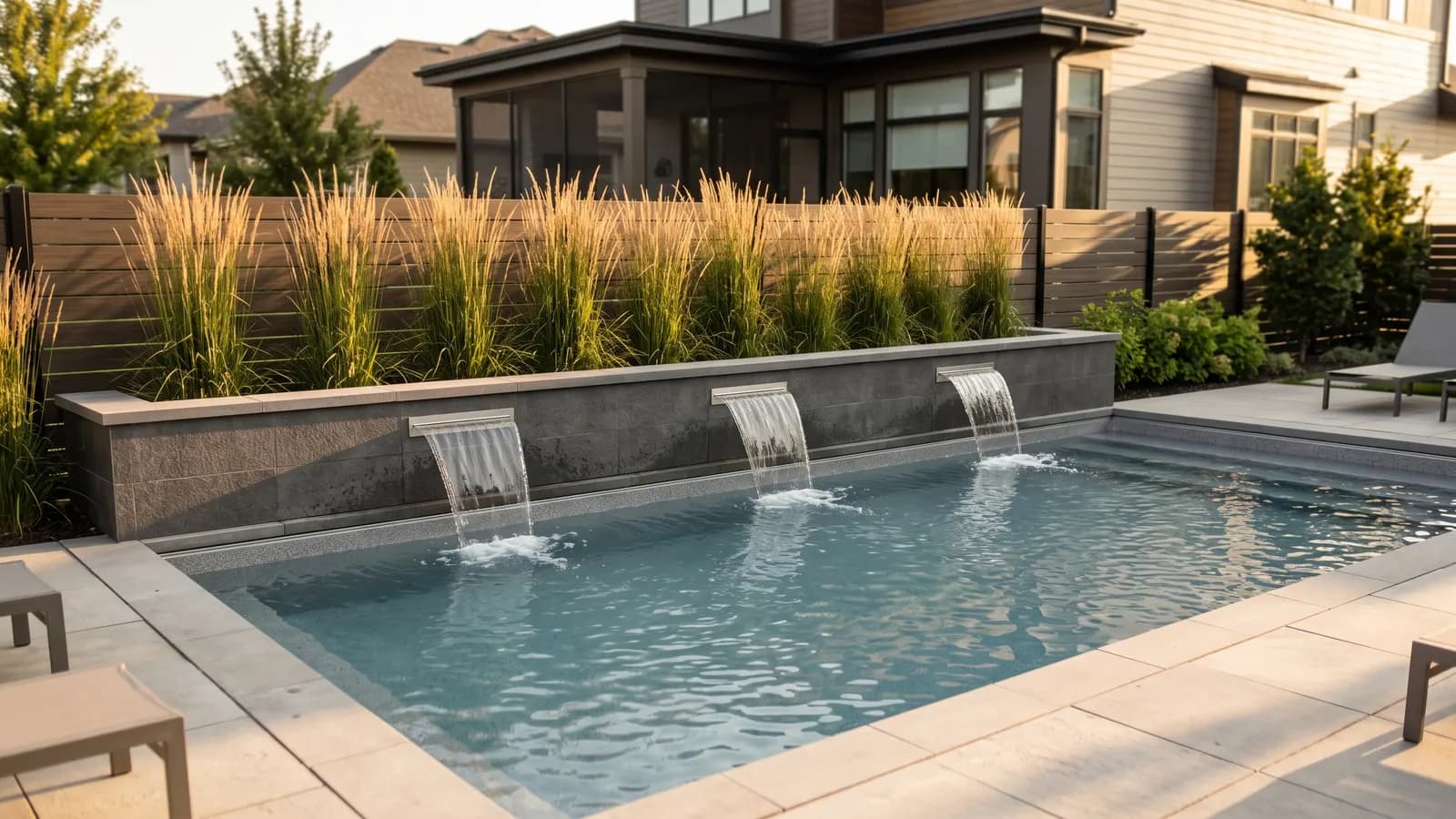
Sheer descents pour a smooth, flat sheet of water from a raised wall. They suit modern pools and add sound that covers street noise and the neighbor's AC unit. Two or three spouts on a low wall at the far edge look intentional without turning the pool into a fountain. Plan the wall and the plumbing with the pool; adding them later means cutting into the deck.
19. Set deck jets along one side
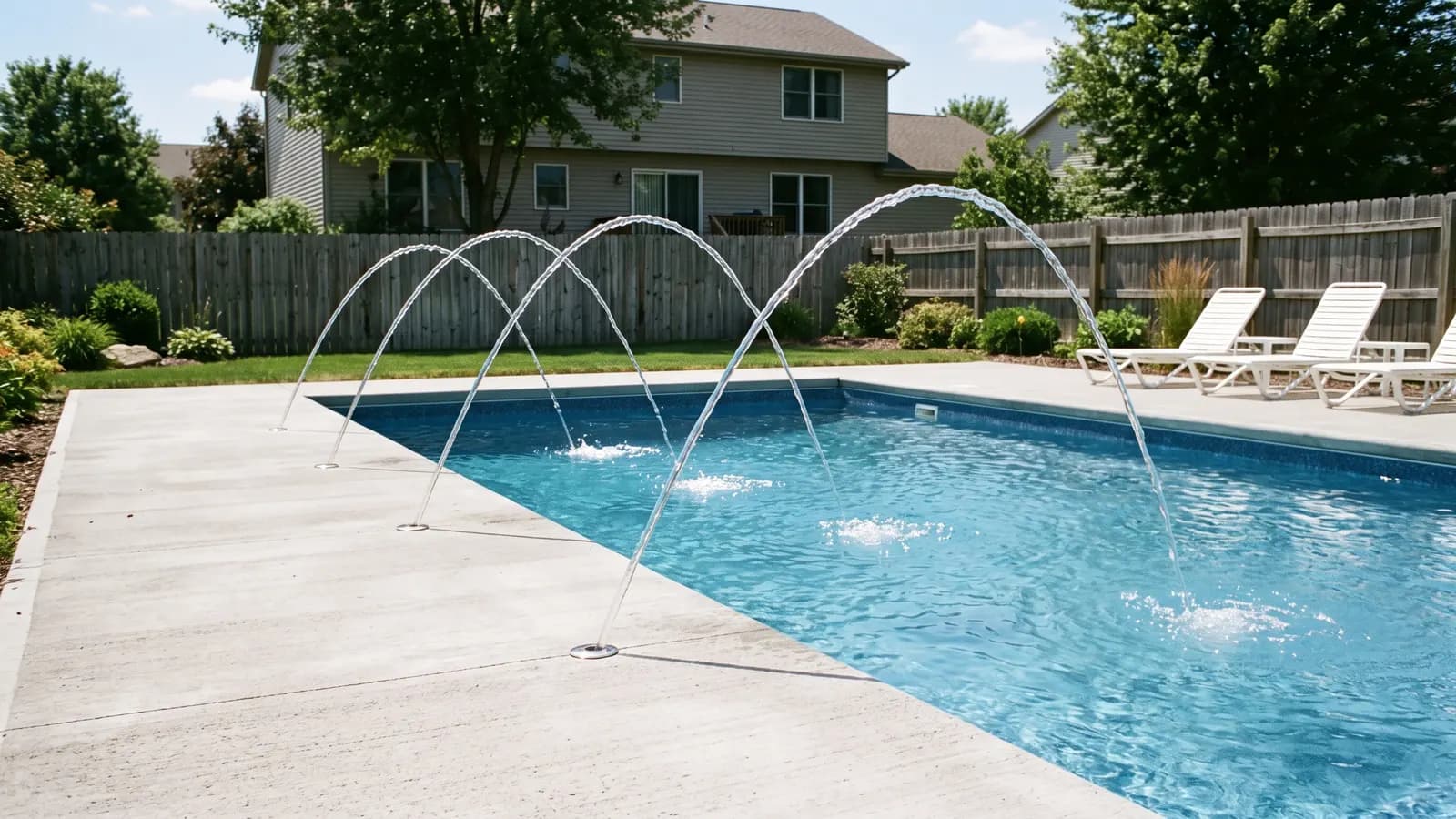
Deck jets are small nozzles set flush in the deck that shoot clear arcs of water into the pool. Kids treat them like a sprinkler, and they cost less than a raised feature because there's no wall to build. Because they're flush with the deck, they're also the easiest feature to walk past. The supply lines run under the deck, so they have to go in before the concrete is poured.
20. Stack a boulder waterfall at one corner
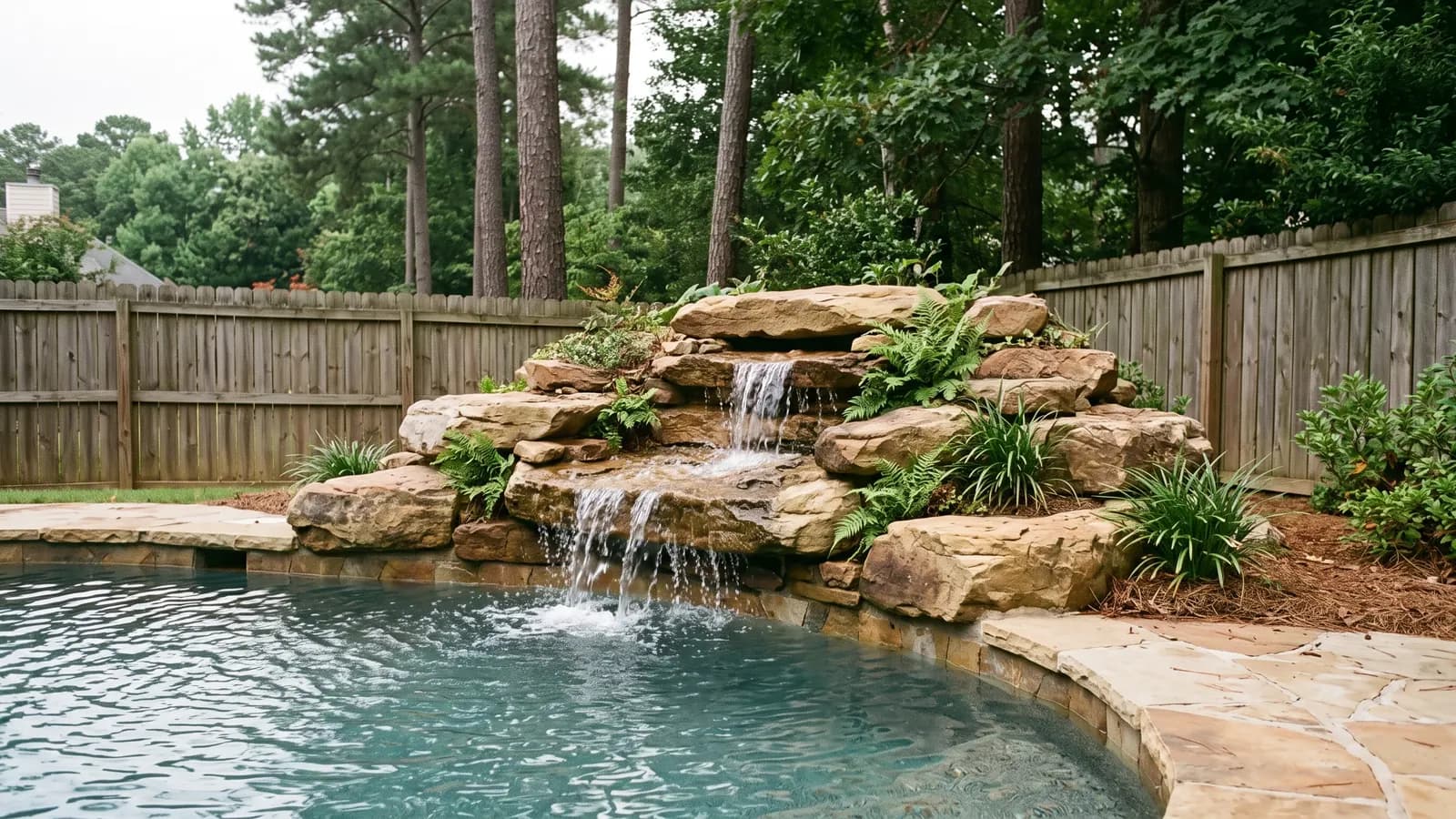
A small rock waterfall suits freeform pools and wooded yards. Keep it modest: a stack about 4 feet tall with two drops reads as natural, while a huge grotto starts to look like a theme park in a suburban yard. A pool waterfall costs $2,000 to $8,800 installed, according to HomeGuide. Tuck ferns or liriope between the rocks so the stack looks settled instead of delivered.
Pool decking
The deck is the part of the pool you touch most. Material sets the cost, how hot it gets underfoot and how much upkeep it needs. A walk-around deck should be at least 15 inches wide, and most people want far more room for chairs.
21. Pour broom-finish concrete on a budget
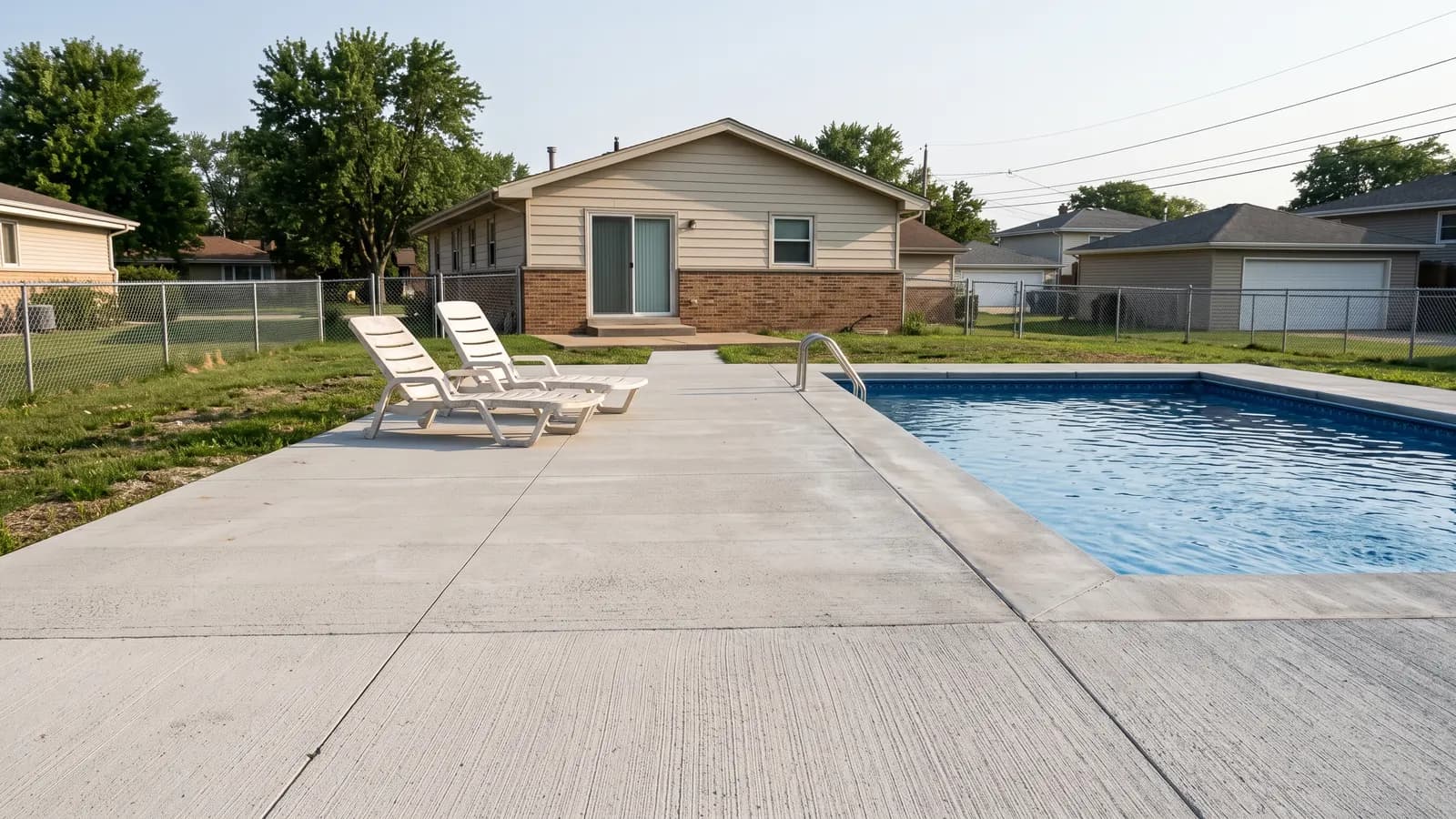
Plain poured concrete is the cheapest pool deck at about $5 to $15 per square foot installed. A broom finish gives it grip when it's wet, and saw-cut joints in a grid control where it cracks. A cantilevered edge, where the concrete overhangs the water slightly instead of using separate coping, makes even a basic deck look tidy. Light gray stays cooler underfoot than a dark tint.
22. Lay ivory travertine pavers
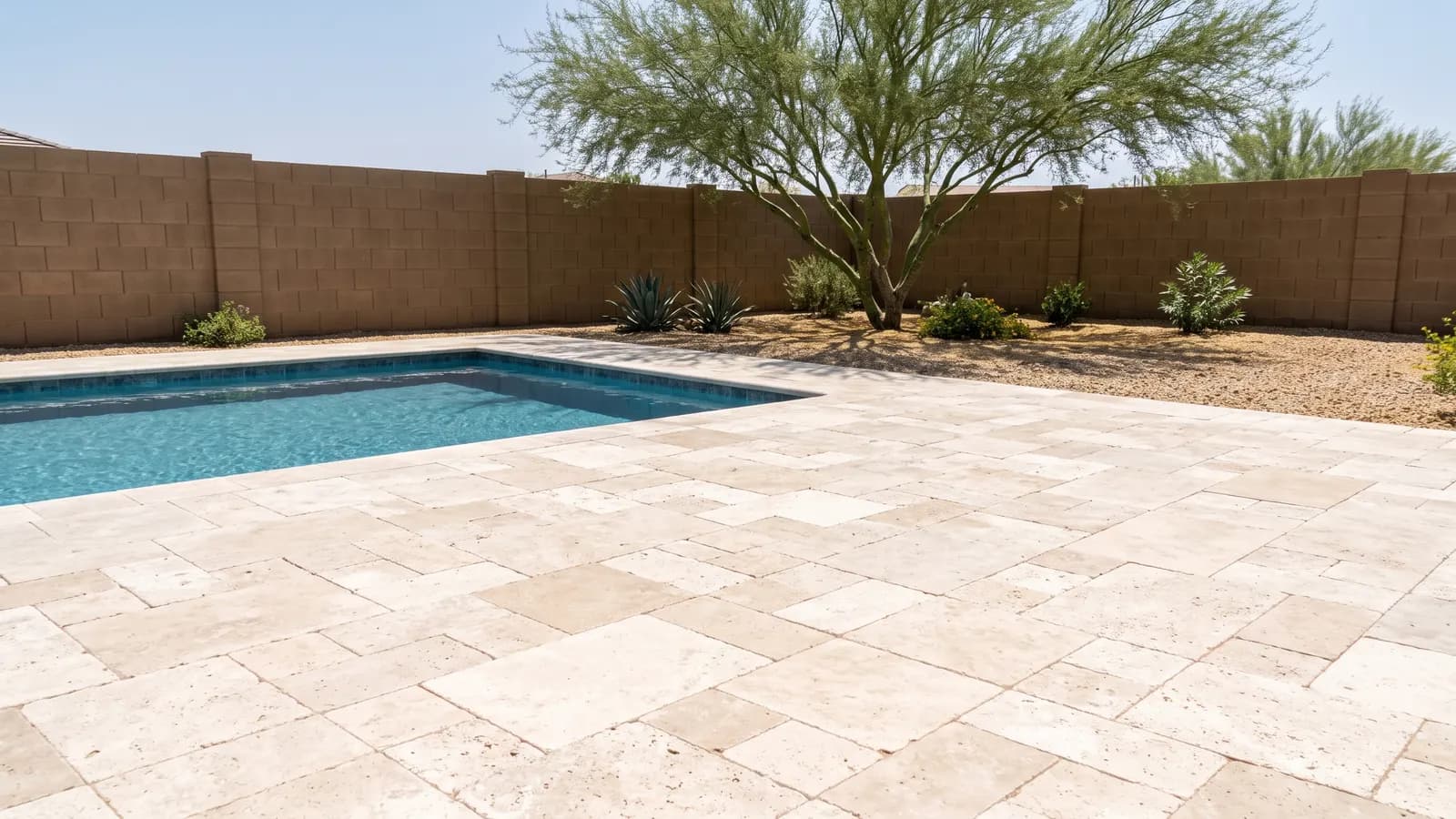
Travertine is the classic stone pool deck in hot climates. Pale stone reflects more sun than dark materials, so it's easier on bare feet in July. Natural stone runs $16 to $35 per square foot installed, against $10 to $17 for concrete pavers. A French pattern of mixed sizes hides small color differences between pavers. To price your own deck, measure the area and run it through a paver calculator.
23. Build a composite deck on the high side
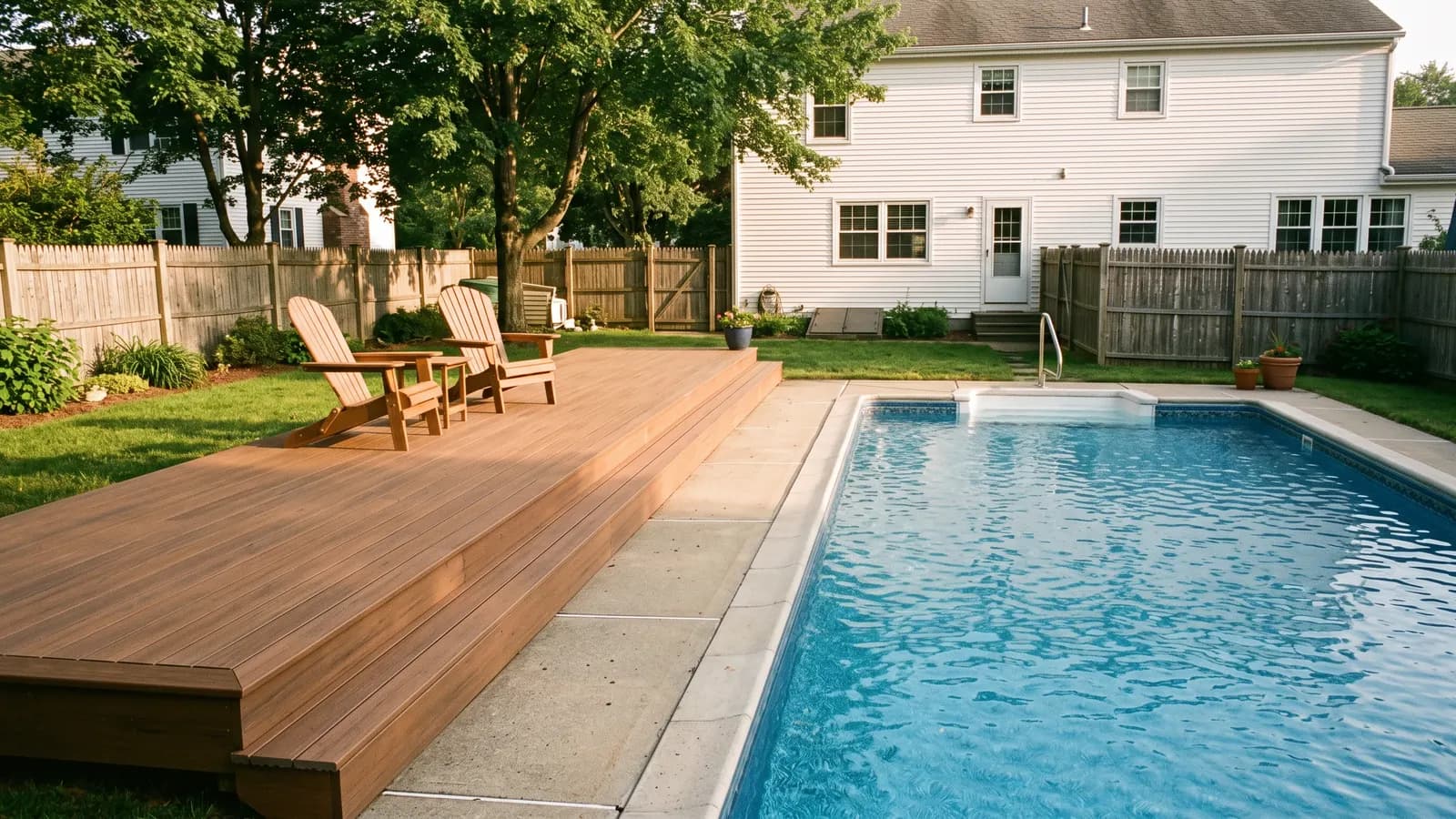
Where the yard rises or the house sits higher than the pool, a raised composite deck along one side solves the grade change and makes a lounging area. Composite decking costs $40 to $80 per square foot installed, and it doesn't need resealing like wood does. Keep a strip of concrete or stone at the pool edge itself so the coping stays separate from the deck boards.
Pool lighting
Lights decide whether the pool is usable after dark and how it looks from the house at night. They're cheap to add during the build and expensive to retrofit.
24. Light the water with color LEDs
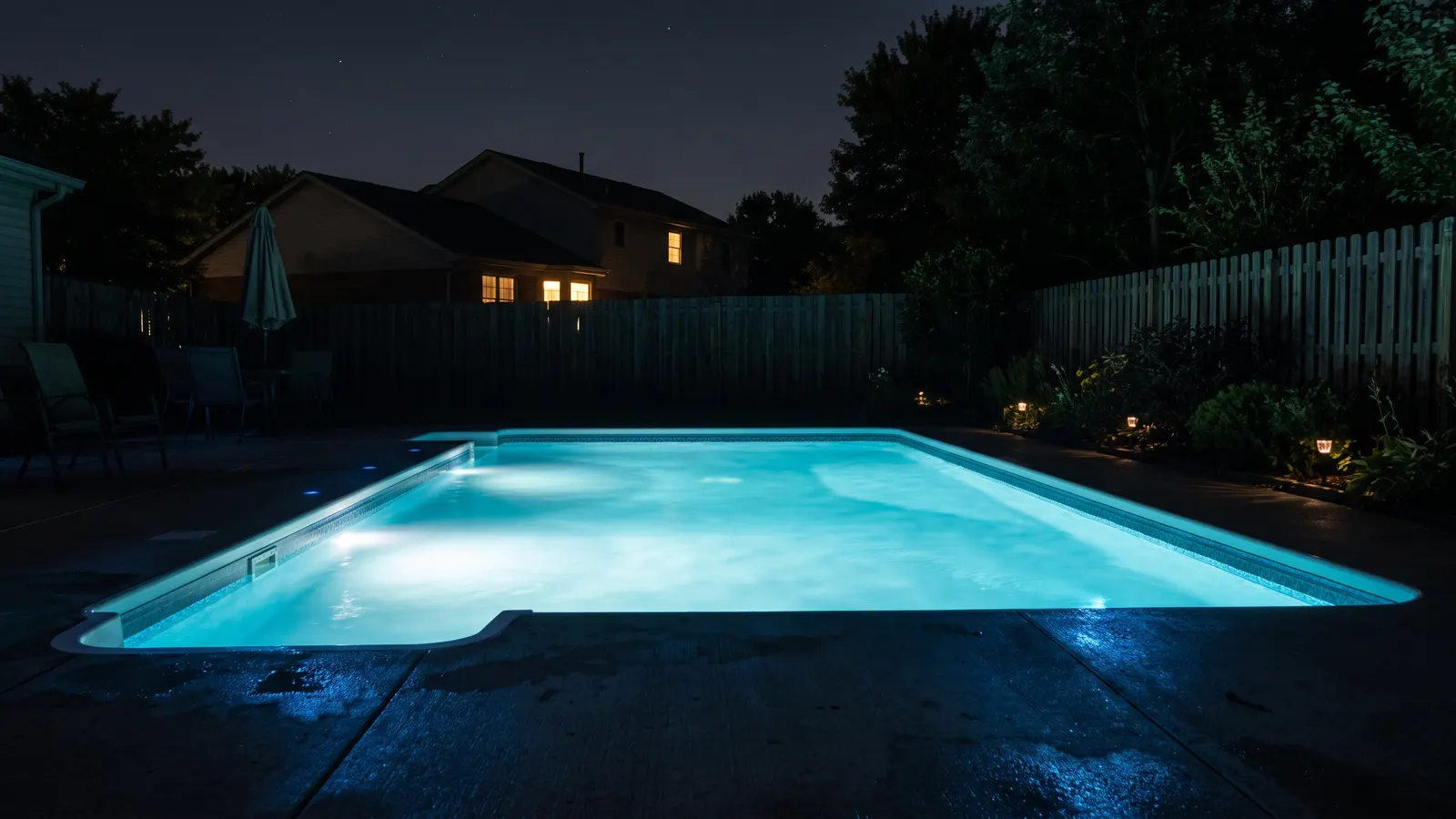
Underwater LED lights are the standard now. They run $600 to $1,500 installed, use less power than old incandescent fixtures, and many can switch colors if you want something besides white. Fiber optic systems cost $1,300 to $1,700 and keep the electrical parts out of the water.
25. Outline the steps and coping
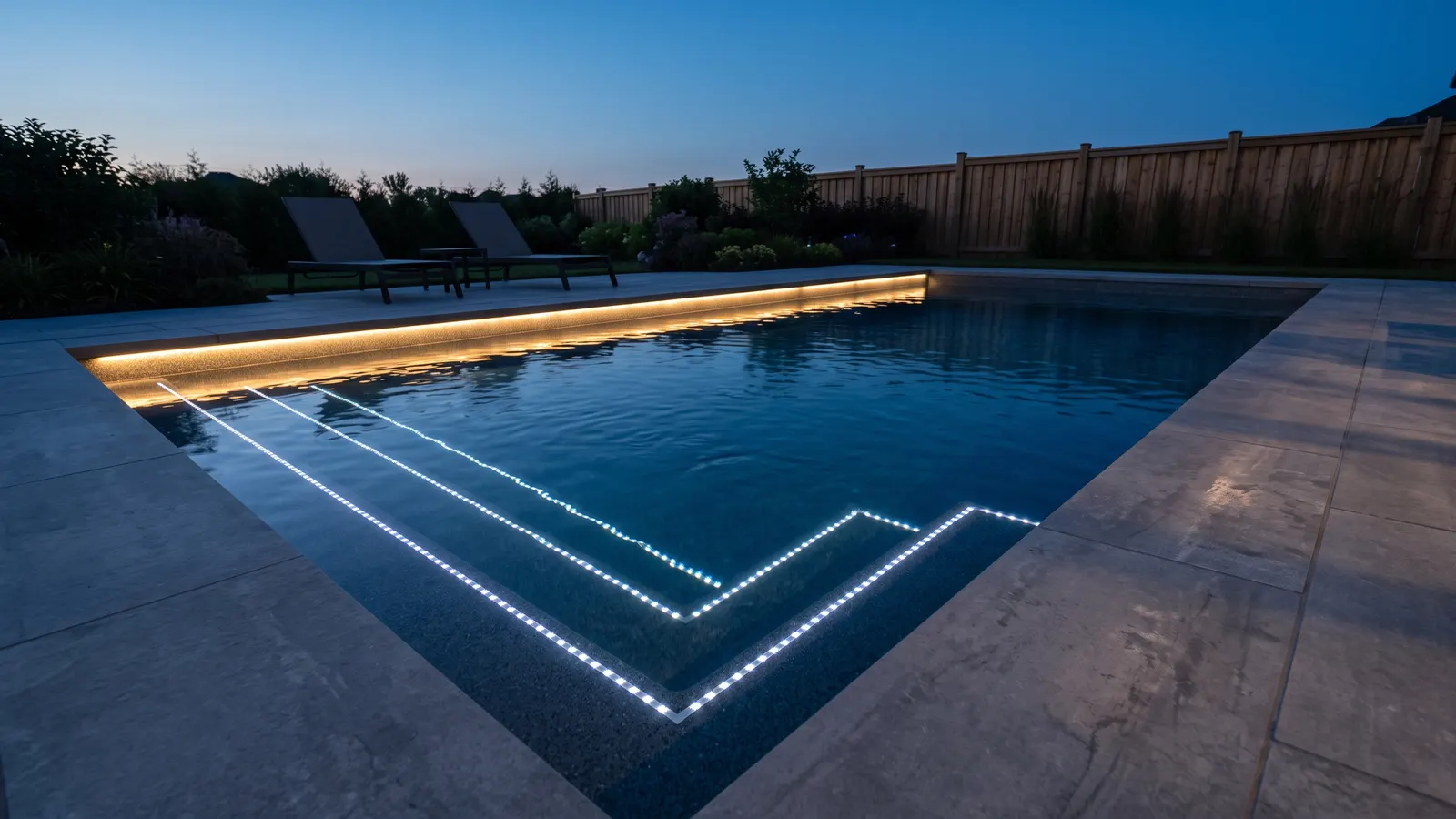
Small step lights along each tread show exactly where the entry is at night, which is the most useful safety light a pool can have. A strip of warm light under the coping lip adds a soft glow without lighting up the whole yard. Pair pool lights with low-voltage landscape lighting on paths and beds so the deck isn't a dark ring around a bright pool.
How to choose your pool design
Start with the yard you have and the way you'll use the water, then pick the look.
- Small or narrow yard: a plunge pool (11), a cocktail pool (12) or a lap lane along the fence (13).
- Sloped lot: a semi-inground pool with a deck (14), or a composite deck on the high side (23).
- Young kids: a tanning ledge (15), a beach entry (17) or the shallow leg of an L (4).
- Lowest long-term upkeep: a pebble finish (7) on a simple rectangle (1).
- Tight budget: a vinyl liner pool (10) with a broom-finish concrete deck (21). Spend on a waterline tile band (9) later.
- Modern house: a dark quartz finish (8), sheer descents (18) and a cantilevered concrete edge (21).
A rectangle fits more yards than any other shape. Our rectangular pool landscaping ideas show how to plant around one so the straight lines don't feel stark. If you want to compare shapes on your own yard before you meet a builder, we tested the best AI pool design tools side by side.
Whatever you build, plan the fence with the pool. The CPSC's barrier guidelines call for a fence at least 48 inches high, and every state except Alaska, Colorado and Delaware requires a safety barrier around a permanent pool. Check your town's rules on gates and latches too.
FAQ
What is the best pool shape for a small yard? A rectangle or a square usually works best, because straight sides waste the least space and are cheaper to install than curved shapes. In a really tight yard, a plunge pool of 6 to 12 feet by 12 to 21 feet fits where a standard pool won't. For long, narrow lots, a lap pool along the side fence leaves the rest of the yard open.
What pool finish lasts longest? Tile lasts longest, and damaged tiles can be replaced one at a time, but it's also the most expensive finish. Among the common finishes, pebble lasts 15 to 20 years or more, quartz plaster 10 to 15 years and standard white plaster 7 to 12 years. Good water chemistry extends all of them.
What is the most popular inground pool shape? The rectangle. On Houzz, rectangular pools outnumber every other tagged shape in its pool photo library. It's the easiest shape to build, cover and swim laps in, and it suits most houses. Custom freeform shapes come next, then kidney and L-shapes.
How much does an inground pool cost? Most inground pools cost $25,000 to $100,000 installed, according to HomeGuide's 2026 data. Vinyl liner pools are the cheapest, fiberglass sits in the middle, and concrete costs the most but lasts longest. Decking, fencing, lighting and features like a spa or waterfall are extra.
How deep should a residential pool be? Most residential pools are 6 to 7 feet at the deep end. If you want a diving board, you'll need 9 feet or more, which adds cost and water volume. Plunge and cocktail pools are usually 4 to 7 feet deep, and a tanning ledge should be about 9 to 12 inches.
Can I see a pool design on my own backyard before I build? Yes. An AI pool design tool like OutdoorBrite takes a photo of your yard and shows realistic pool concepts on that space in seconds, so you can compare shapes, finishes and decks before you get quotes. It doesn't produce construction drawings, so a pool builder still needs to measure and engineer the final plan.
Sources: HomeGuide: inground pool cost, HomeGuide: pool resurfacing cost, HomeGuide: plunge pool cost, HomeGuide: lap pool cost, HomeGuide: pool deck cost, River Pools: how deep should a tanning ledge be, Thursday Pools: fiberglass pool sizes, Houzz pool photos, CPSC: safety barrier guidelines for residential pools, all checked October 20, 2026