15 Rectangular Pool Landscaping Ideas That Work With the Lines
A rectangular pool hands you straight lines to design with. These 15 ideas use that geometry, formal hedges, paver grids, linear water features, instead of fighting it, with costs and climate notes throughout.
A rectangular pool makes a decision for you before you plant anything: the yard now has lines. Freeform pools forgive loose, naturalistic planting; a rectangle asks you to either follow its geometry or contrast it on purpose. The good rectangular pool landscaping ideas all start there, which is why the best-looking rectangle pools tend to be the most disciplined ones.
Each idea below includes what it costs and where its plants grow, and the list ends with the small-yard version, because a 12-by-24 rectangle fits lots where no freeform shape would. Every image is an AI-generated design concept built from a typical backyard, the same kind of render you can make from your own pool photo with AI pool design.
Safety first, since decks and fences come up throughout: most US jurisdictions require a barrier at least 48 inches tall with a self-latching gate around residential pools. Check your local code before moving any fence line for a design.
1. Run matching planters down one long side
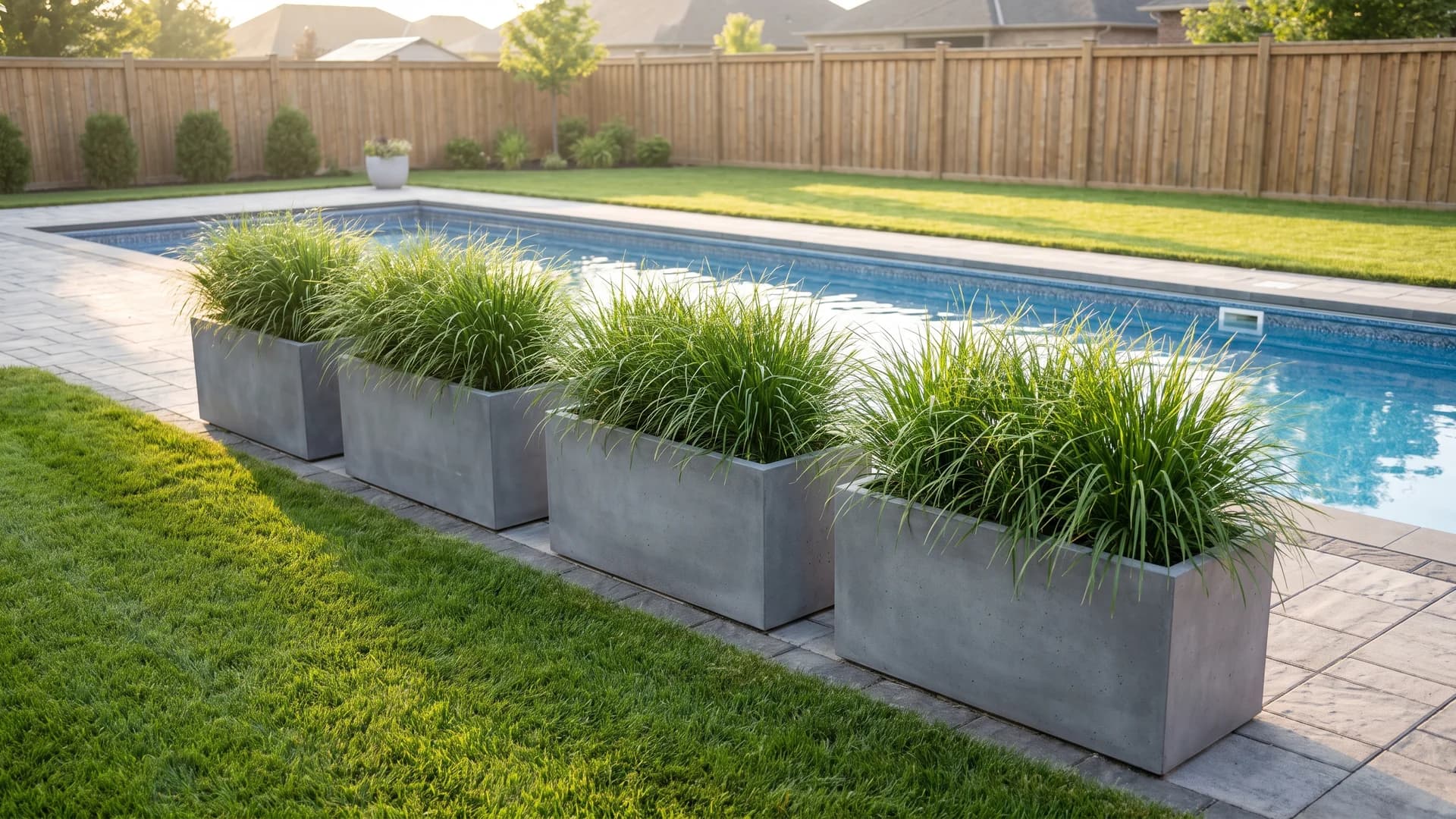
The cheapest way to look intentional beside a rectangle is repetition. Three or five identical planters, evenly spaced along one long edge and planted with the same thing, read as architecture. Figure $60 to $100 per large planted pot. Odd numbers work best, and one species per row; the discipline is the design.
2. Treat the two long sides differently
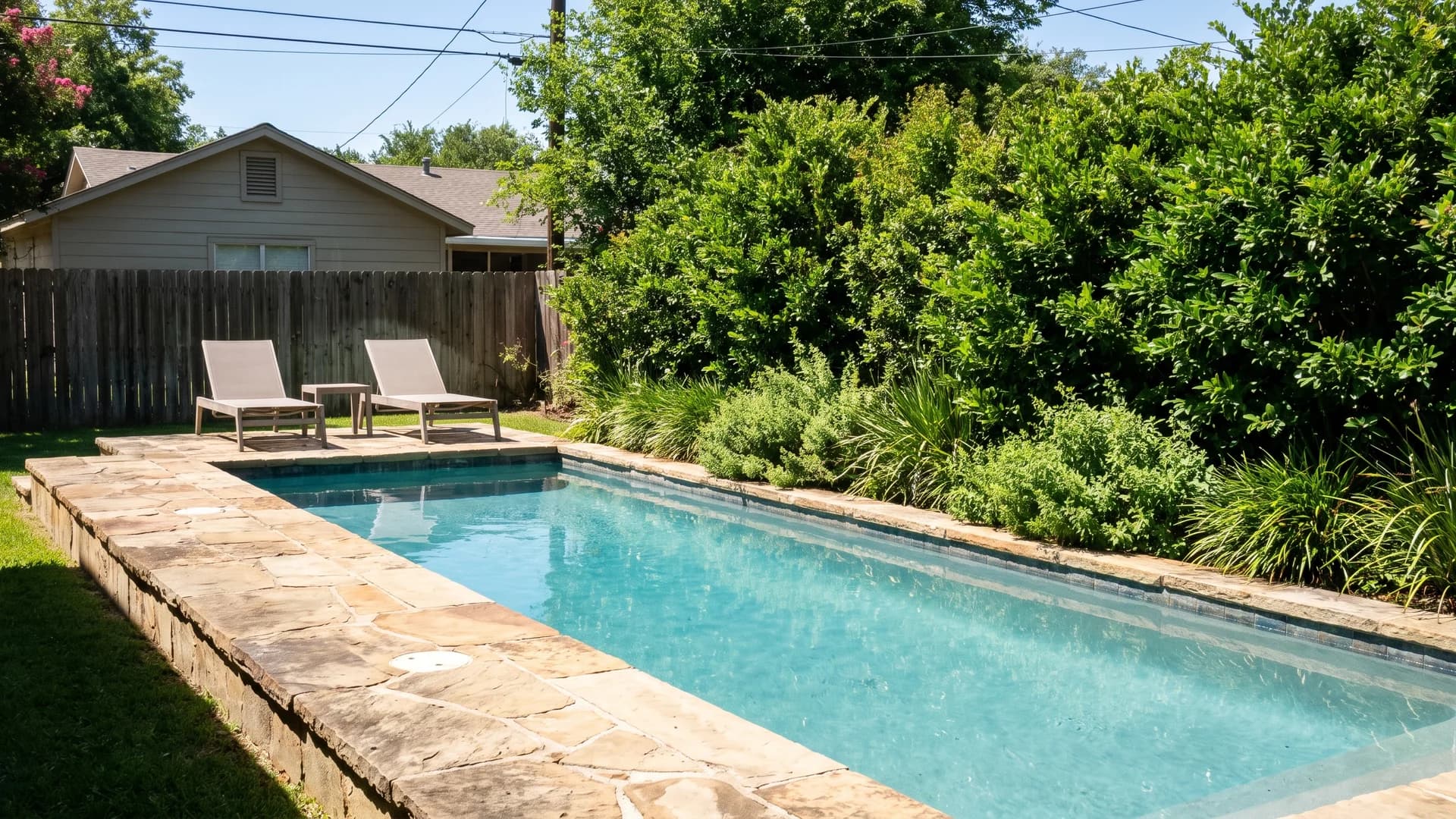
Give one long side to hardscape, the loungers, the traffic, the towel bench, and the other to an unbroken green border. The contrast makes the water read like a canal between two worlds, and it concentrates your budget: full-width decking on one side only, plants where nobody needs to walk. Most rectangle pools that look expensive are doing exactly this.
3. Grow a hedge wall parallel to the water
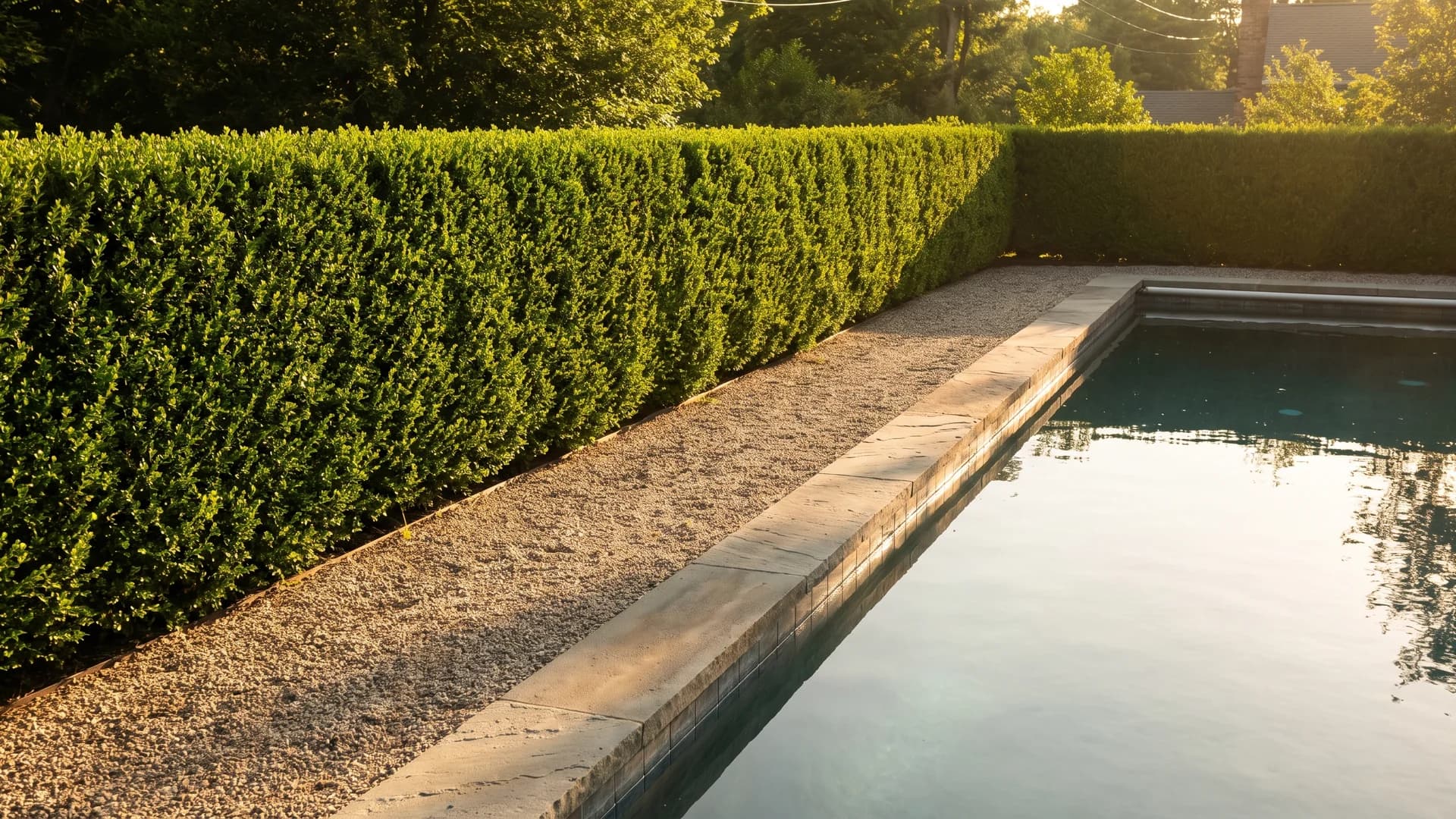
Nothing flatters a rectangle like another rectangle. A clipped hedge line 6 to 10 feet off the long edge gives privacy, wind protection, and a green wall that mirrors the pool's geometry. Arborvitae gets you height fast in zones 3 to 7 at $30 to $60 a plant; boxwood stays formal and lower in zones 4 to 9. Both drop close to nothing in the water, which matters this near the skimmer.
The clearance number
Whatever you plant, keep 30 to 36 inches of walkable space around at least three sides. Rectangles tempt people to push beds tight to the coping; the first pool-cover installation teaches why that fails.
4. Add a linear scupper or sheer descent wall
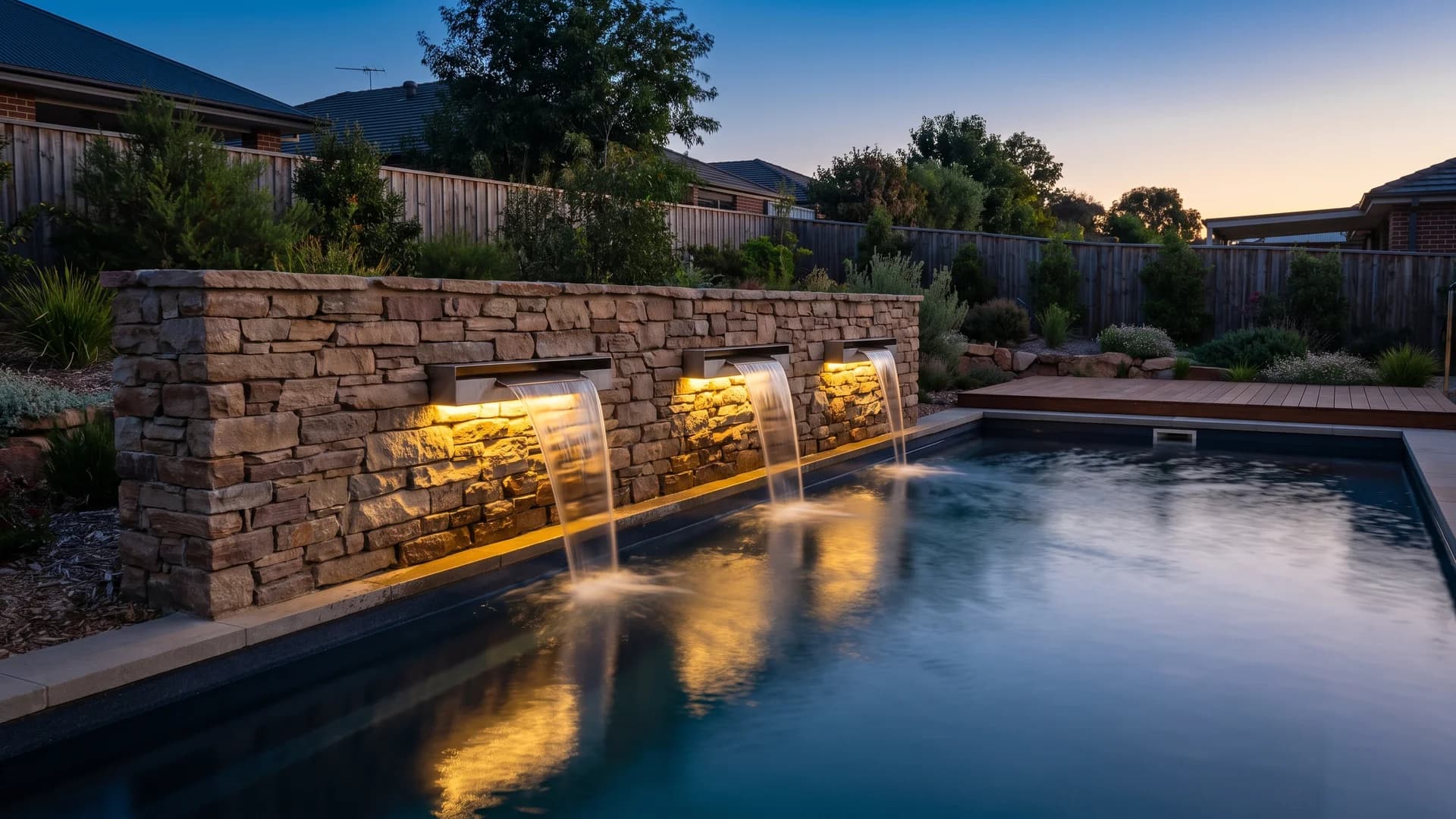
Curved waterfalls fight a rectangle; linear water agrees with it. A raised wall on the far long side with two or three scuppers, or one sheer descent blade, turns the pool's geometry into the water feature itself. Budget $1,500 to $5,000 depending on wall length and plumbing access. It photographs best lit from below at night, which is where idea 12 comes in.
5. Grid the deck with large-format pavers and turf joints
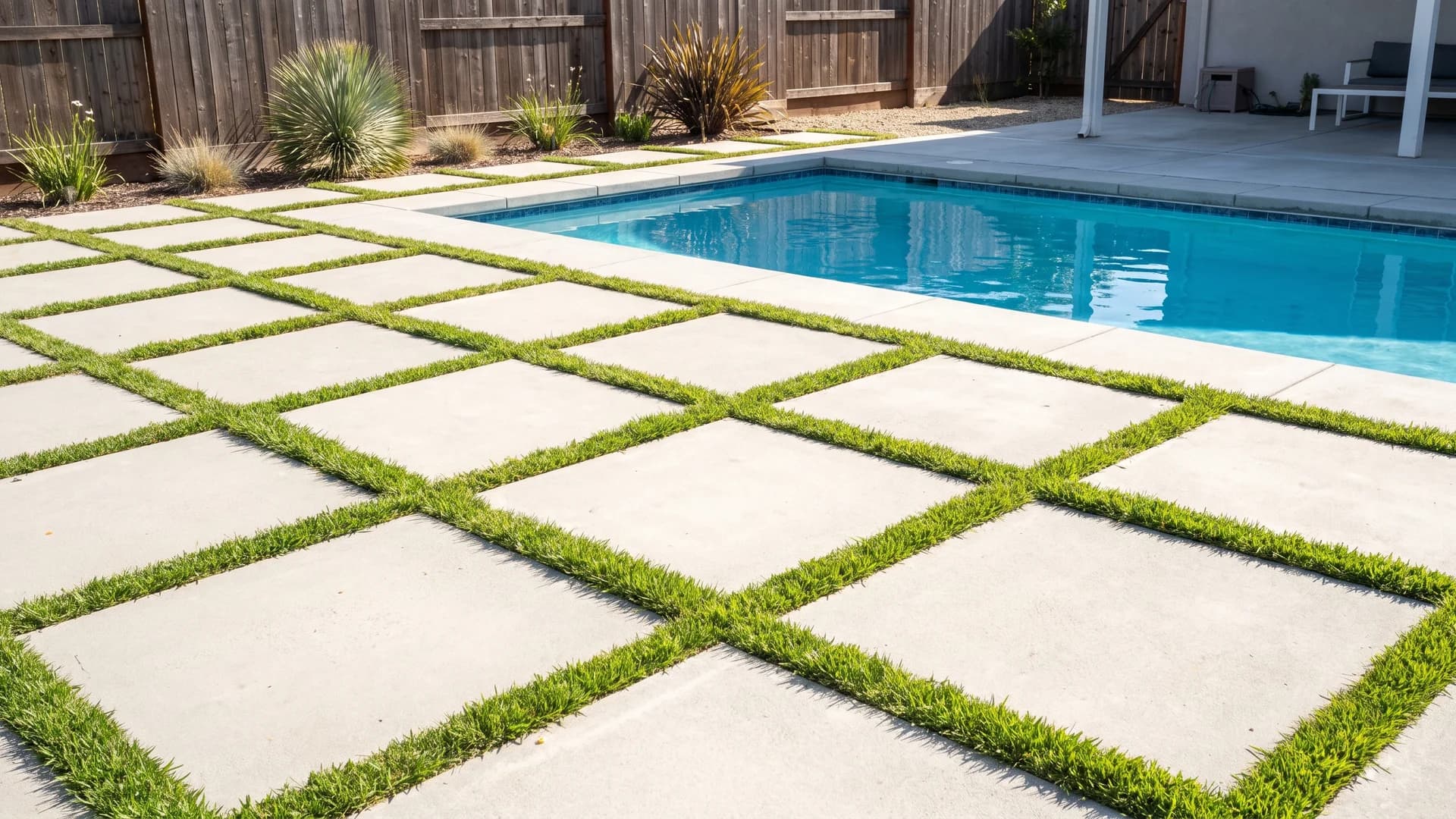
Oversized square pavers set with 3-to-4-inch planted joints extend the pool's grid outward, soften all that stone, and drain rain where it lands. Two-foot concrete pavers run $8 to $15 each; creeping thyme or turf fills the joints. Count them with the paver calculator before ordering. This is the pattern half the modern pools on your feed are using, because it works.
6. Match the coping to a travertine field
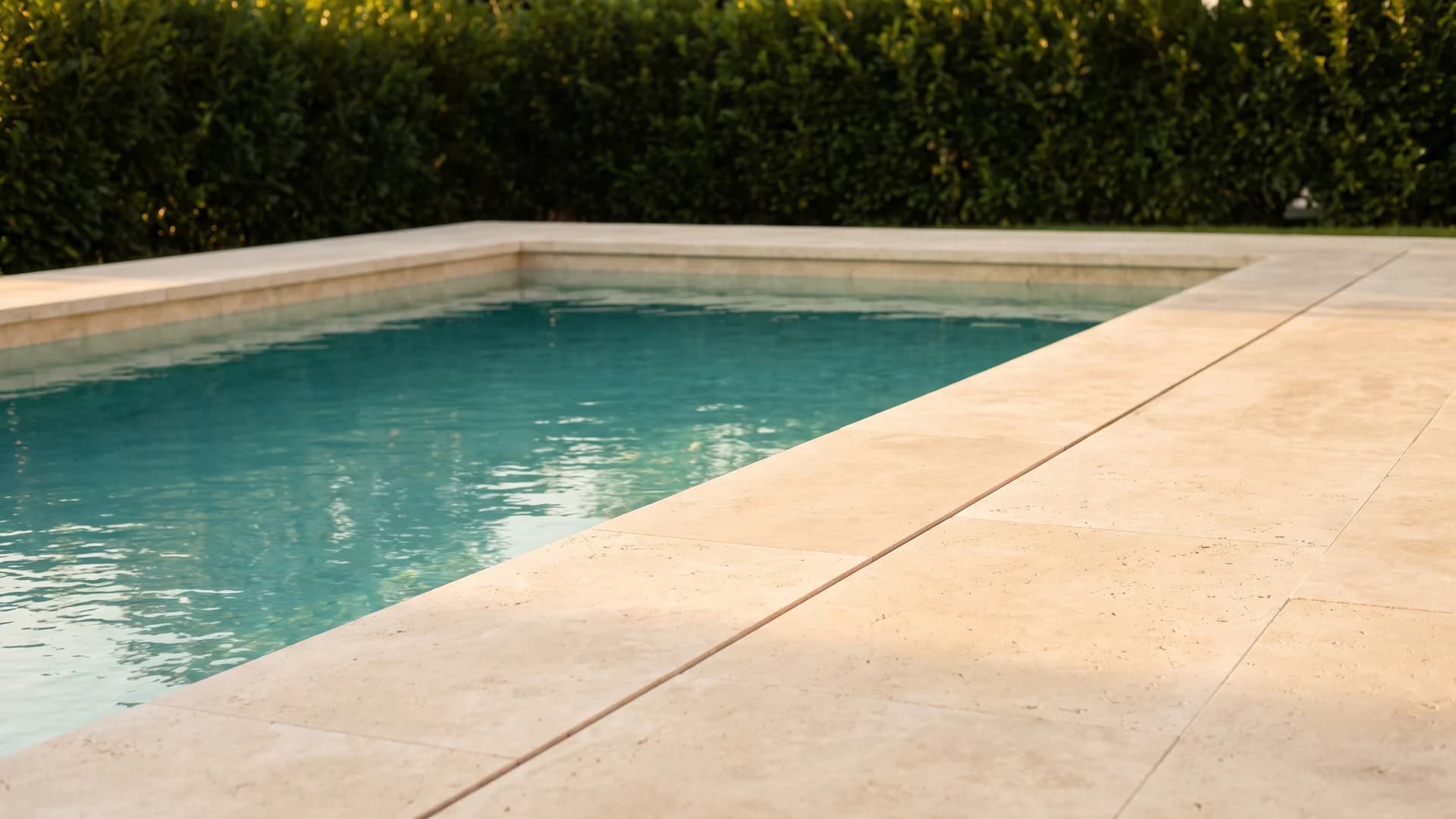
On a rectangle, mismatched coping and deck read instantly because every line is straight and visible. Running the same travertine or limestone from coping through deck makes the pool look carved from one piece. Travertine runs $12 to $30 a square foot installed and stays cooler underfoot than concrete. If a full redeck is out of budget, matching just the coping and a 3-foot border gets the effect.
7. Ribbon the coping with ornamental grass
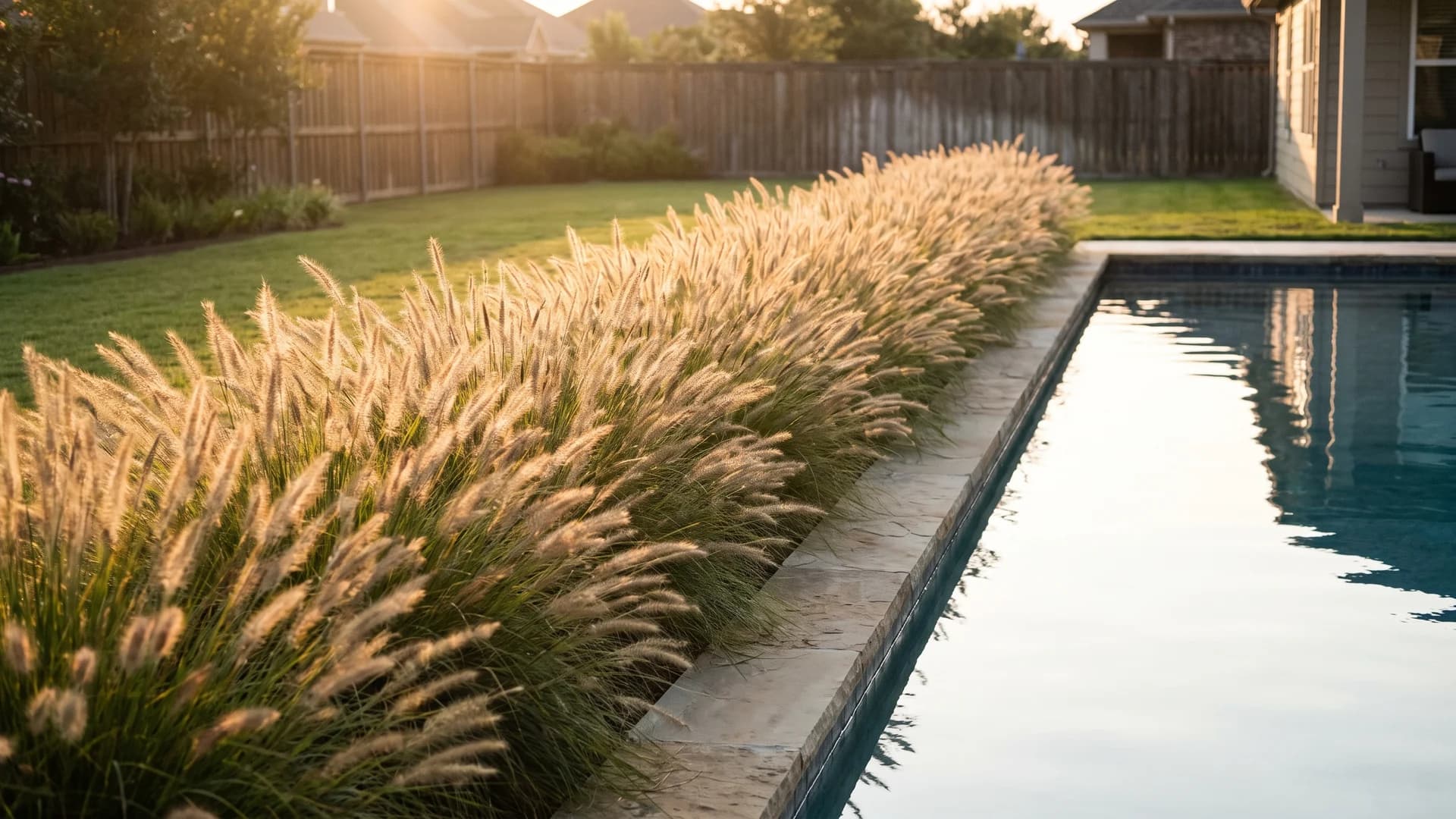
One unbroken line of a single grass species along an edge is the planted version of the pool's own geometry. Dwarf fountain grass makes a knee-high ribbon in zones 5 to 9; lemongrass does it as an annual anywhere and repels mosquitoes as a bonus. Plants run $10 to $16 on 18-inch spacing. One March cutback a year, and grasses drop almost nothing in the water.
8. Put a stacked-stone corner where the lines meet
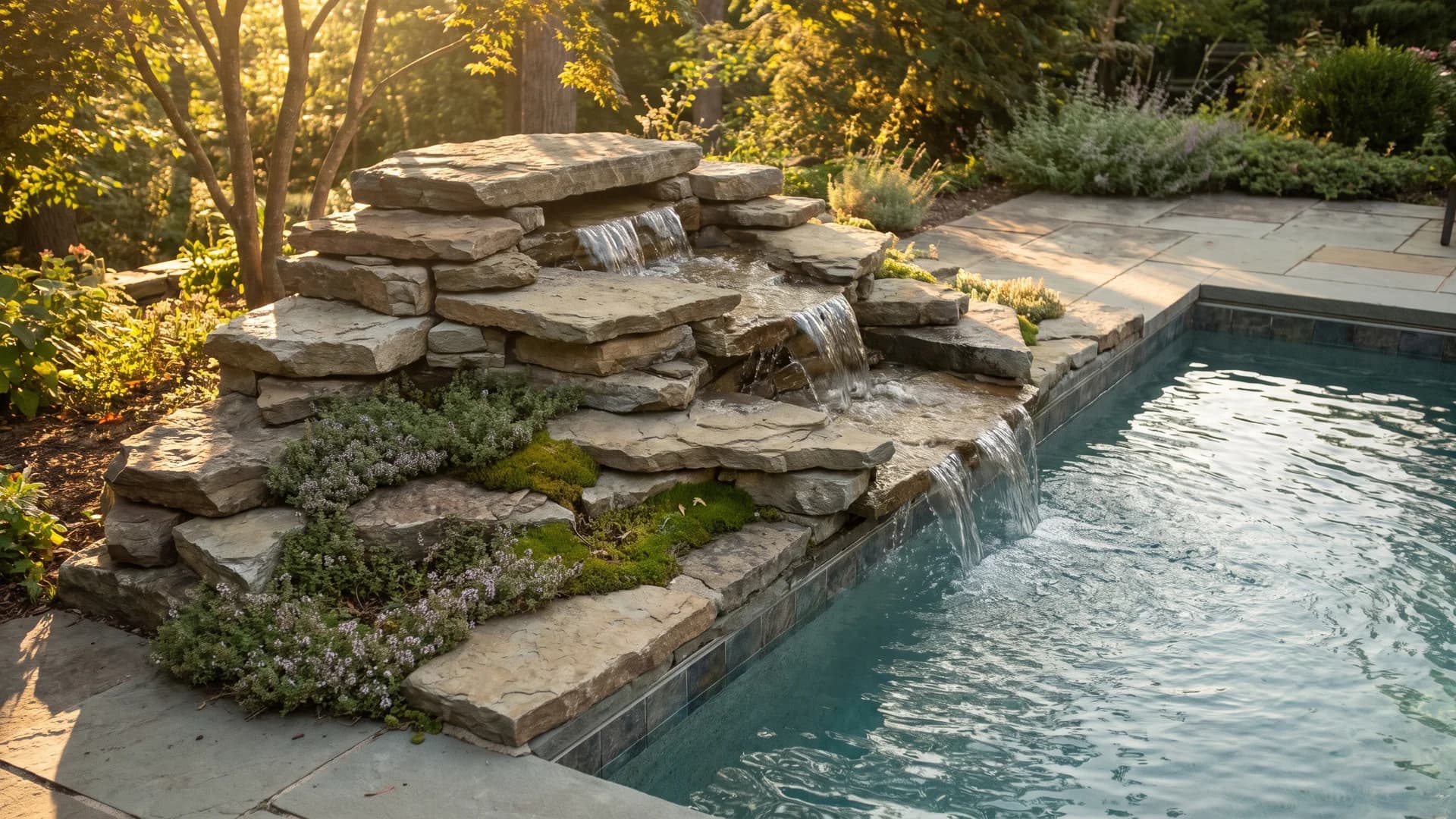
If you want natural stone in a rectangle pool, corner it. A stacked-stone spill feature at one corner reads as a deliberate accent against the straight lines rather than a theme conflict. Kits and materials run $800 to $2,500. Plumb it into the circulation system so the water moves and never stagnates, and let groundcover creep into the lower stones.
9. Echo the pool with rectangular beds
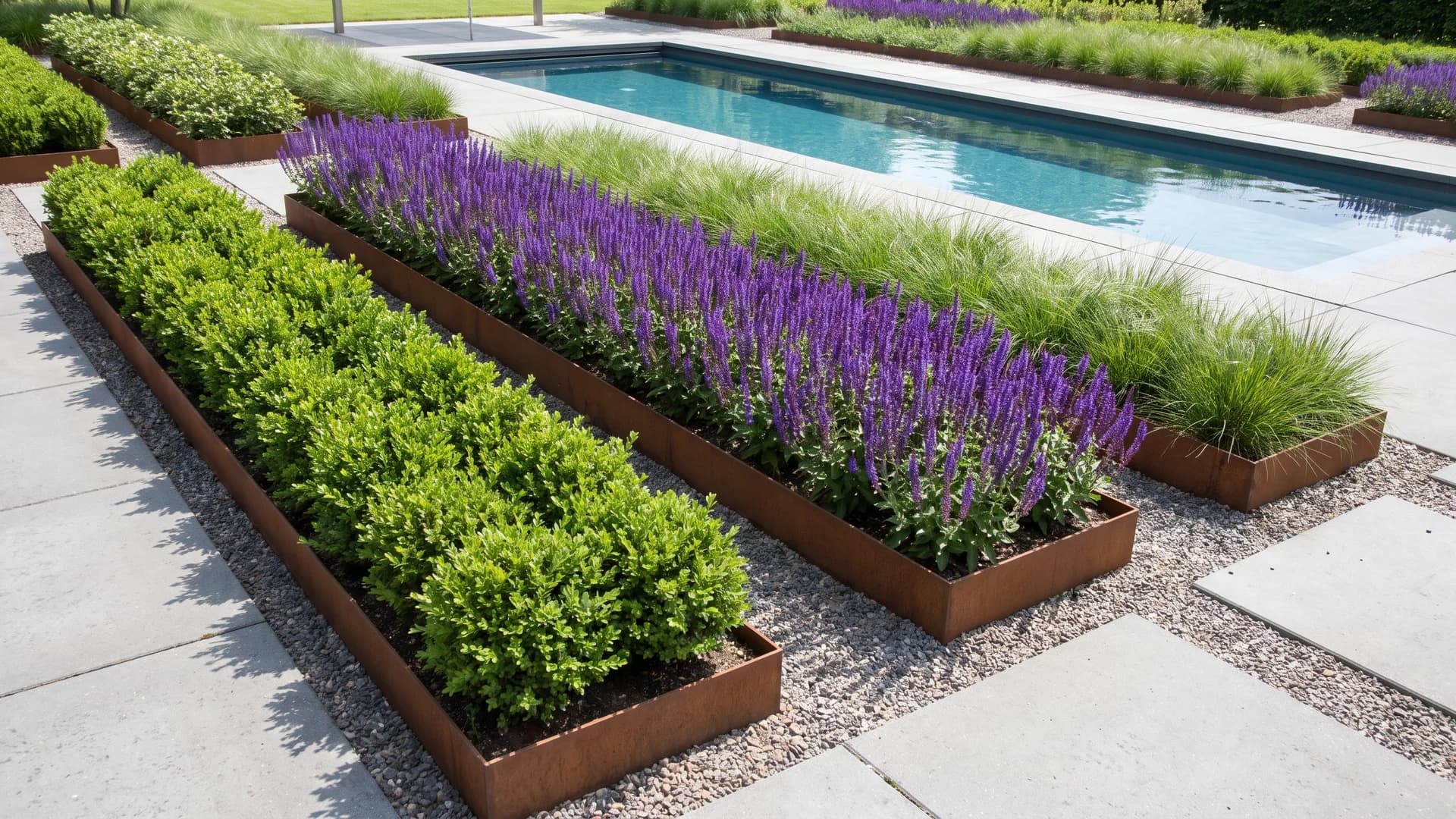
Repeat the pool's proportions in the planting plan: two or three long rectangular beds, each holding one massed species, boxwood in one, salvia in another, grasses in the third. It's modern landscaping logic: few species, strong shapes. Steel edging holds the lines for $2 to $4 a foot, and mass planting means each bed is one maintenance task, not twelve.
10. Align a pergola to the short end
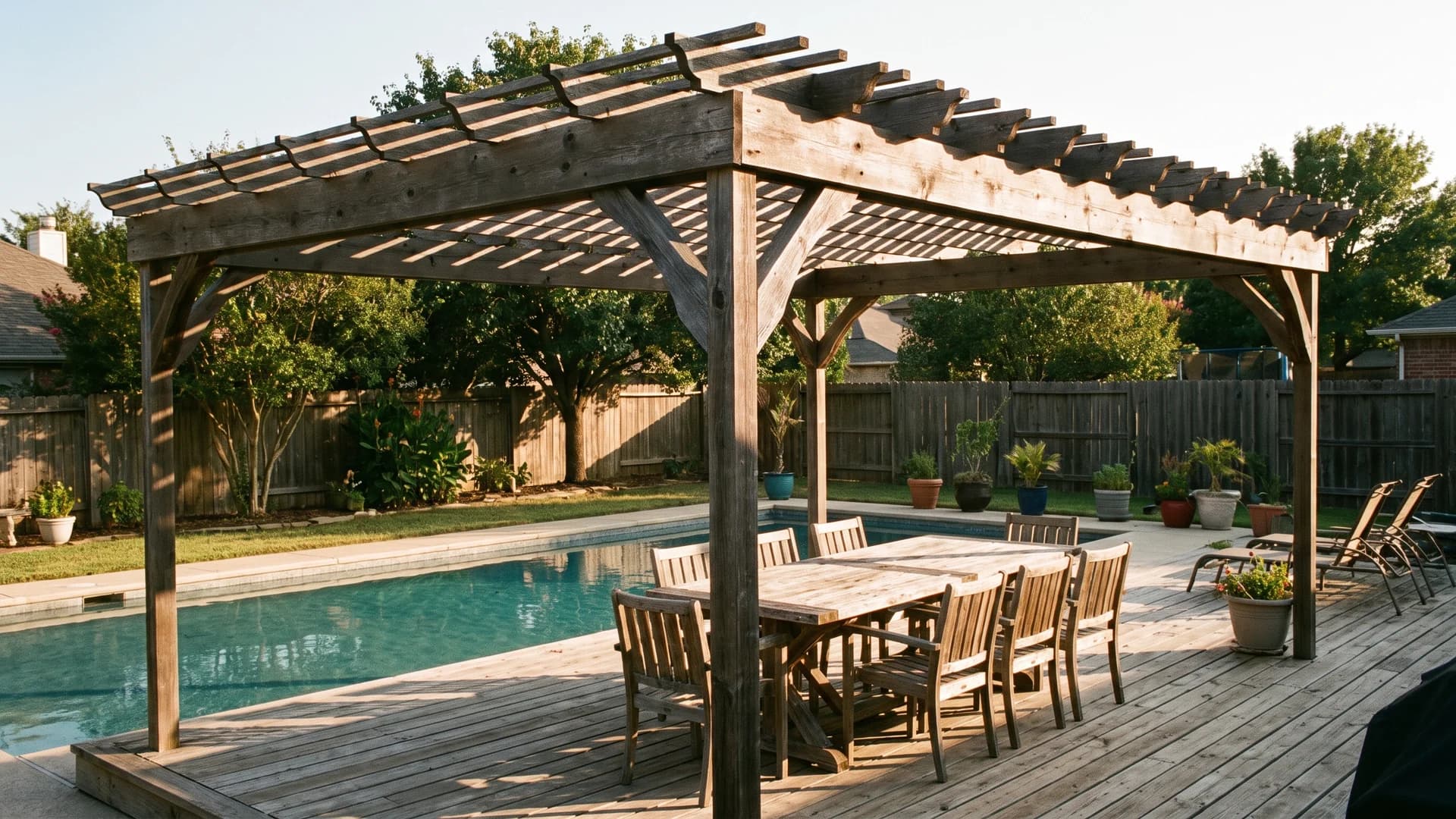
A pergola square to the pool's short end closes the composition like a headboard. It shades the dining or lounge zone, gives the long view down the water a destination, and hangs the string lights. Kits run $1,500 to $4,000. Align its posts with the pool's corners; two inches off axis is visible forever on a rectangle.
11. Give the far short end to fire
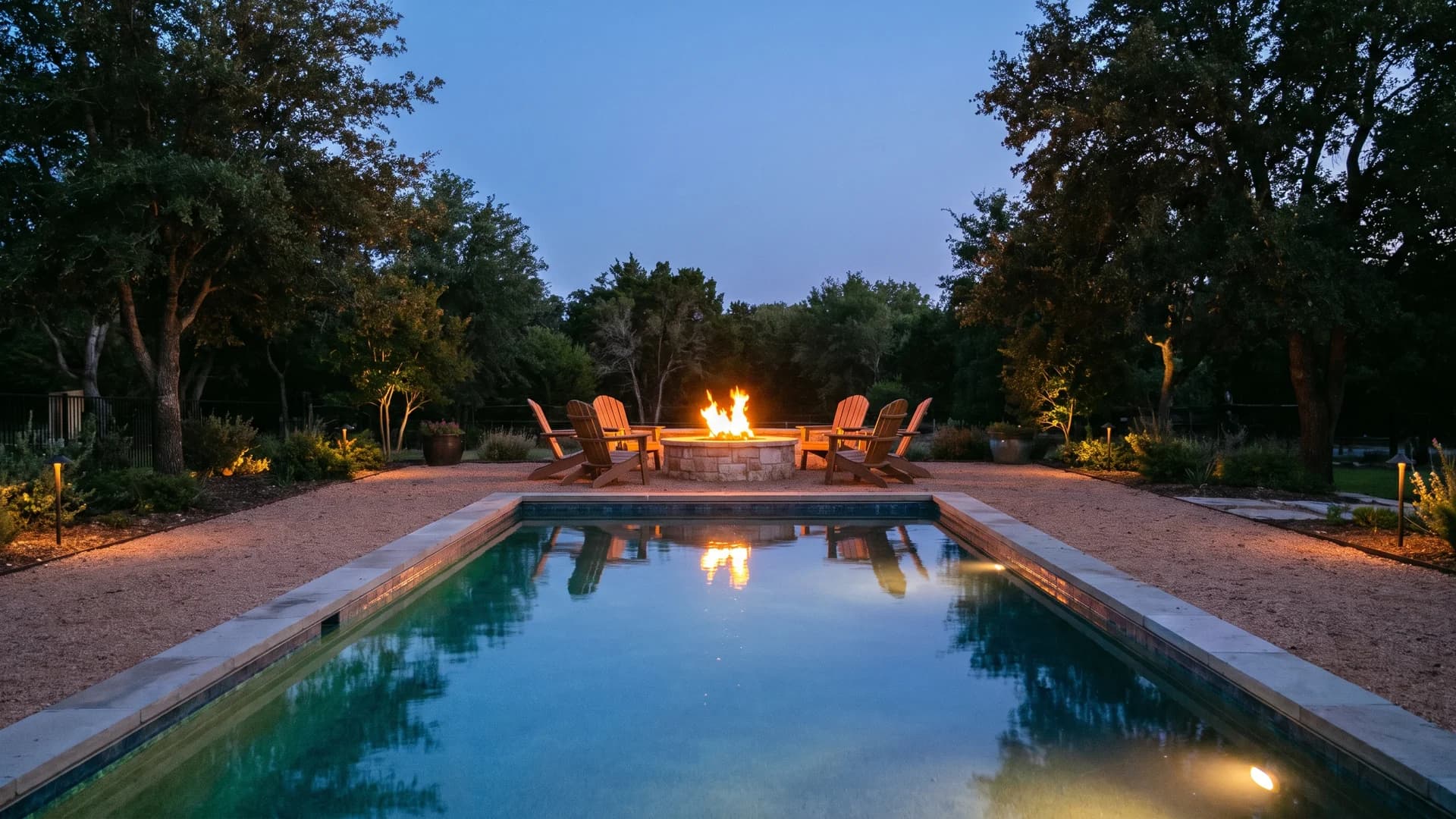
The axis of a rectangle wants something at the end of it. A fire pit with four chairs on a gravel or paver pad, centered on the pool's long line, anchors the view from the house and doubles the hours the yard gets used. A propane pit runs $300 to $800, the pad another $200 to $400 in materials. Keep it 10 feet or more from the water so the seating never crowds the swim lane.
12. Light the lines, not just the water
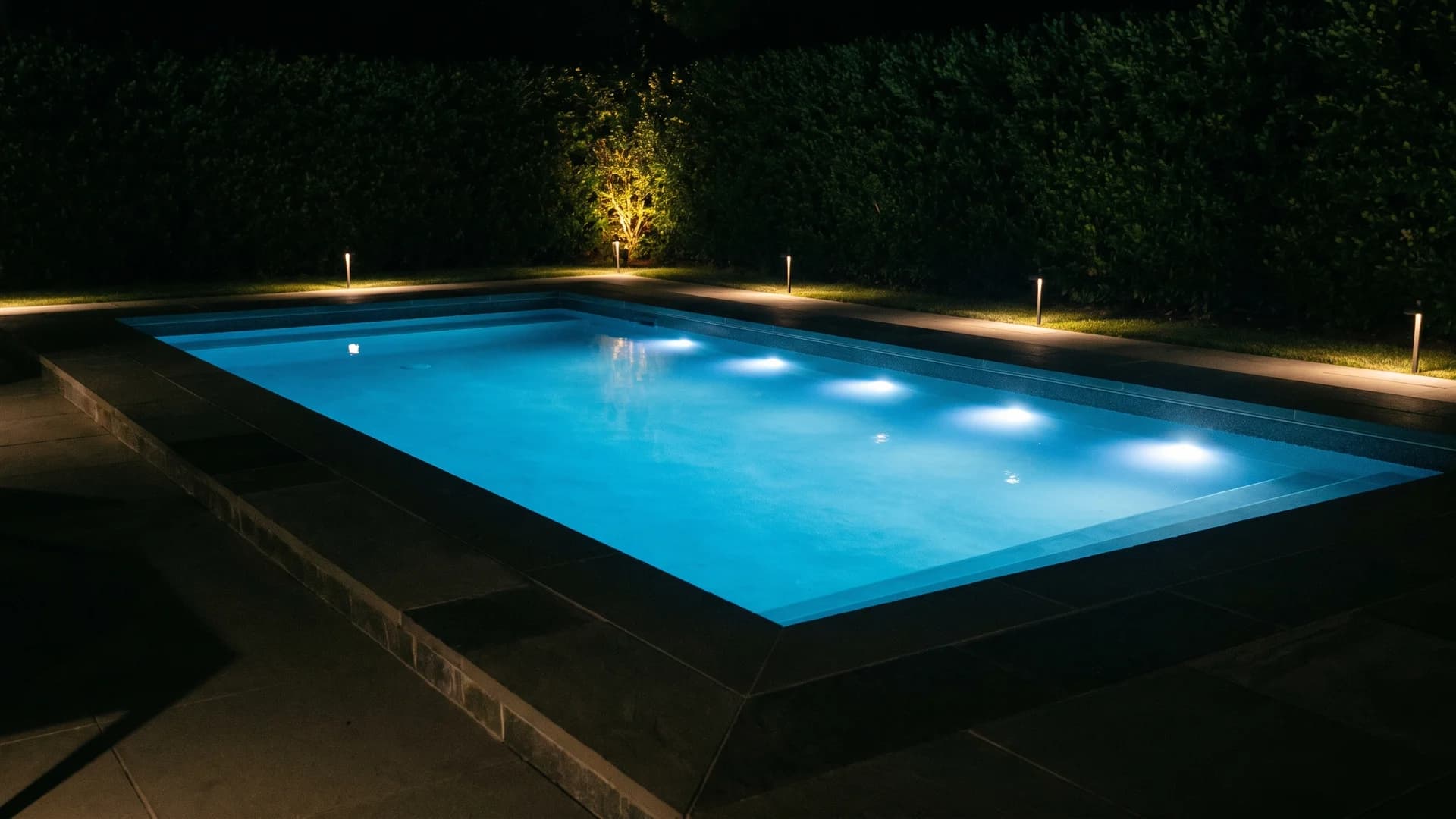
A rectangle at night is pure line work if you light it that way: underwater LEDs along one wall, low path lights tracing the deck edge, one uplight in the hedge or specimen tree. Retrofit LED pool lights run $200 to $600; a low-voltage landscape lighting kit, $150 to $300. Aim for three layers, water, ground, wall, and skip anything that glares into sightlines from the house.
13. Screen with vine panels instead of thicker hedges
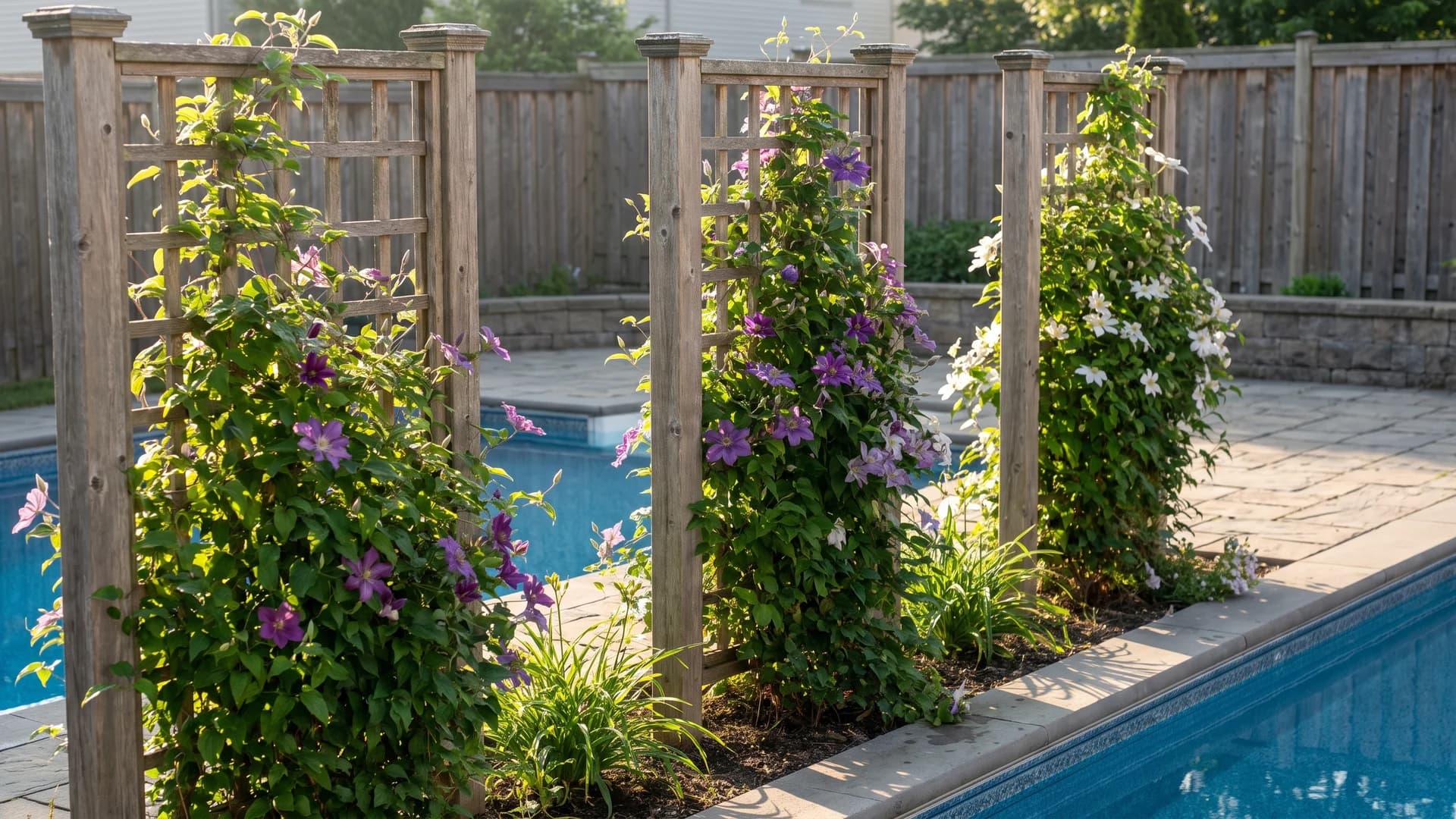
Where a hedge would eat too much width, a trellis panel does privacy in 6 inches of depth. Cedar or steel panels at $100 to $250 each, planted with clematis (zones 4 to 8) or star jasmine (8 to 10), give a green wall on the property line side within two seasons. Panels also match the rectangle's vocabulary: flat, vertical, and aligned.
14. Mark the corners with potted tropicals
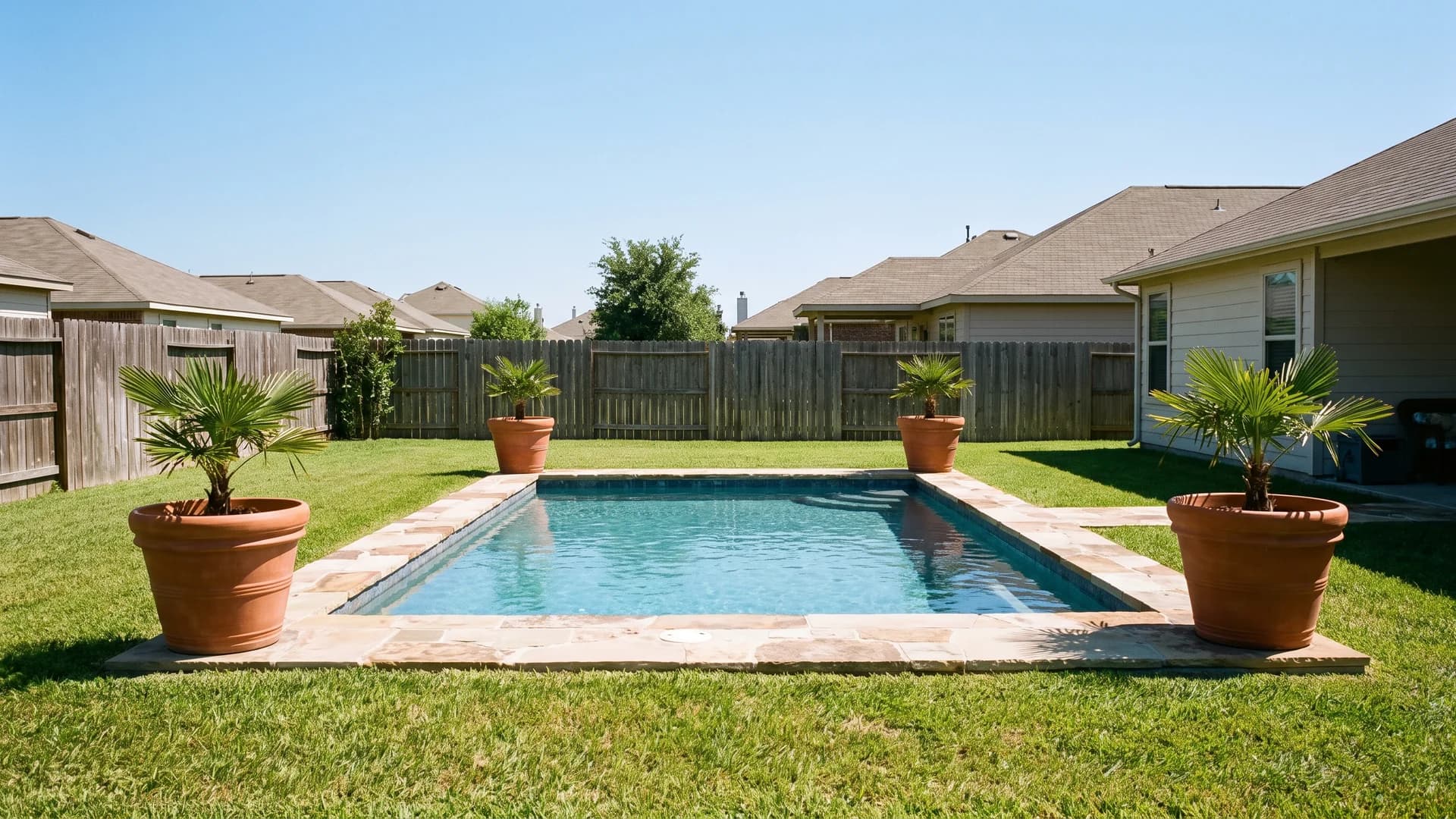
Four corners are a rhythm section waiting to be used. Identical large pots with a dwarf palm, banana, or elephant ear at each corner give resort energy that moves indoors before frost in cold climates. Figure $60 to $120 per planted pot. The hardscaping stays clean because the plants live in containers, and the symmetry costs nothing extra; you were buying four pots anyway.
15. Compose the small-yard rectangle as one frame
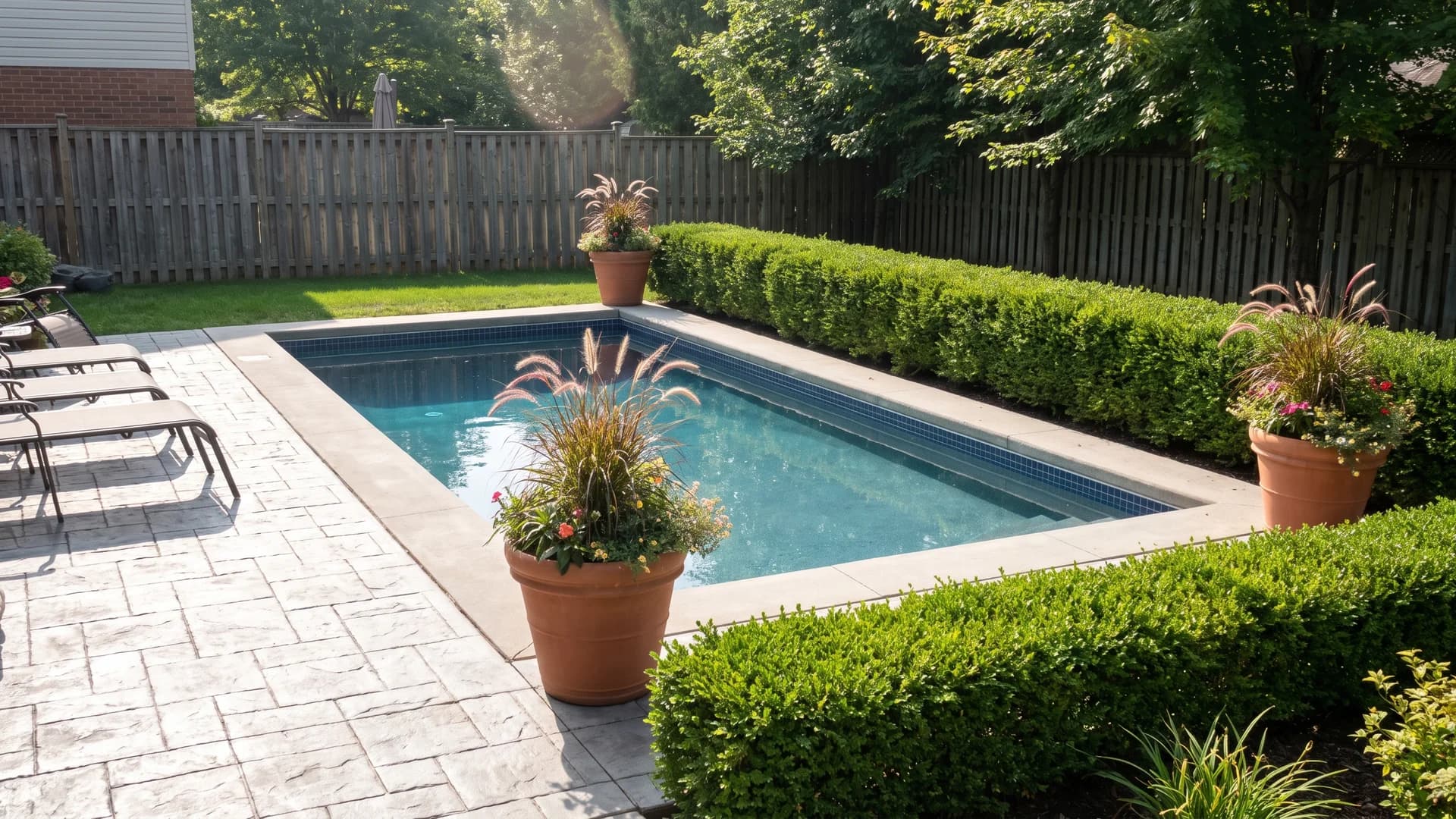
Rectangles are the small-yard pool shape: a 12-by-24 fits where freeform curves waste swimming length. Landscape it as one scene, deck one long side, hedge the other, planters on the short ends, and keep every element inside the same two materials. Small areas punish variety and reward restraint. For the wider planting playbook around any pool, our pool landscaping ideas guide goes deeper on species and costs.
Choosing your moves
- Budget under $500: 1, 7, and 14 are container-and-plant plays with no construction.
- Privacy is the problem: 3 or 13 depending on how much width you can give up.
- Pool looks plain from the house: 4, 11, and 12 build the long view.
- Deck needs the upgrade: 5 or 6, gridded or monolithic.
- Small yard: 15 is the blueprint; steal its restraint even in a big yard.
- Filling the planted side: species, zones, and coping distances are in our low maintenance pool plants list.
FAQ
What plants work best around a rectangular pool?
Plants that hold a line and hold their leaves: boxwood and arborvitae for hedging, ornamental grasses for ribbon borders, and massed single-species beds of salvia or sedum. Formal geometry favors repetition over variety. Keep anything that sheds, fruits, or attracts heavy bee traffic well back from the coping.
How do I landscape a rectangular pool on a budget?
Repetition is cheap and looks expensive: a row of matching planters, one grass ribbon, and solar lighting along the lines together land under $600. Save the stone deck and water wall for later phases. Because rectangle landscaping is modular, side by side, end by end, it phases better than freeform designs.
Can a rectangular pool work in a small backyard?
Better than any other shape. A 12-by-24 rectangle, or a 10-by-20 plunge version, delivers real swimming length on a lot where curves waste space. Landscape it as one composed frame with two materials and clearance on three sides, and the small yard reads deliberate rather than crowded.
What is the lowest maintenance landscaping around a pool?
Hedges plus hardscape. A clipped evergreen line, gravel or paver surfaces over fabric, grasses cut once a year, and container plants for color. No lawn against the coping, nothing deciduous overhead. That combination needs a few hours a season and keeps the skimmer basket almost empty.
Do I need a fence around a rectangular pool?
Almost certainly. Most US jurisdictions require a barrier of at least 48 inches with self-closing, self-latching gates around residential pools, and insurers often ask for more. Design the fence into the landscaping from the start, hedge lines and trellis panels can run along it, rather than treating it as an afterthought.