A Practical Guide on How to Plan Backyard Landscaping
Learn how to plan backyard landscaping from the ground up. Our guide offers practical steps, design tips, and smart budgeting for your dream outdoor space.
Every great backyard project, no matter how ambitious, starts with the same three things: figuring out what you’ve got, deciding what you really want, and being honest about what you can spend. Get these right from the get-go, and you’ll sidestep the expensive headaches that sink so many projects before the first shovel even breaks ground.
Starting Your Backyard Plan the Right Way
A beautiful, functional backyard isn't born in the aisles of a garden center. It starts with a good, hard look at your own property. Before you get lost in dreams of pergolas and flower beds, you need to understand the canvas you're working with. This groundwork is what prevents frustrating, costly do-overs later.
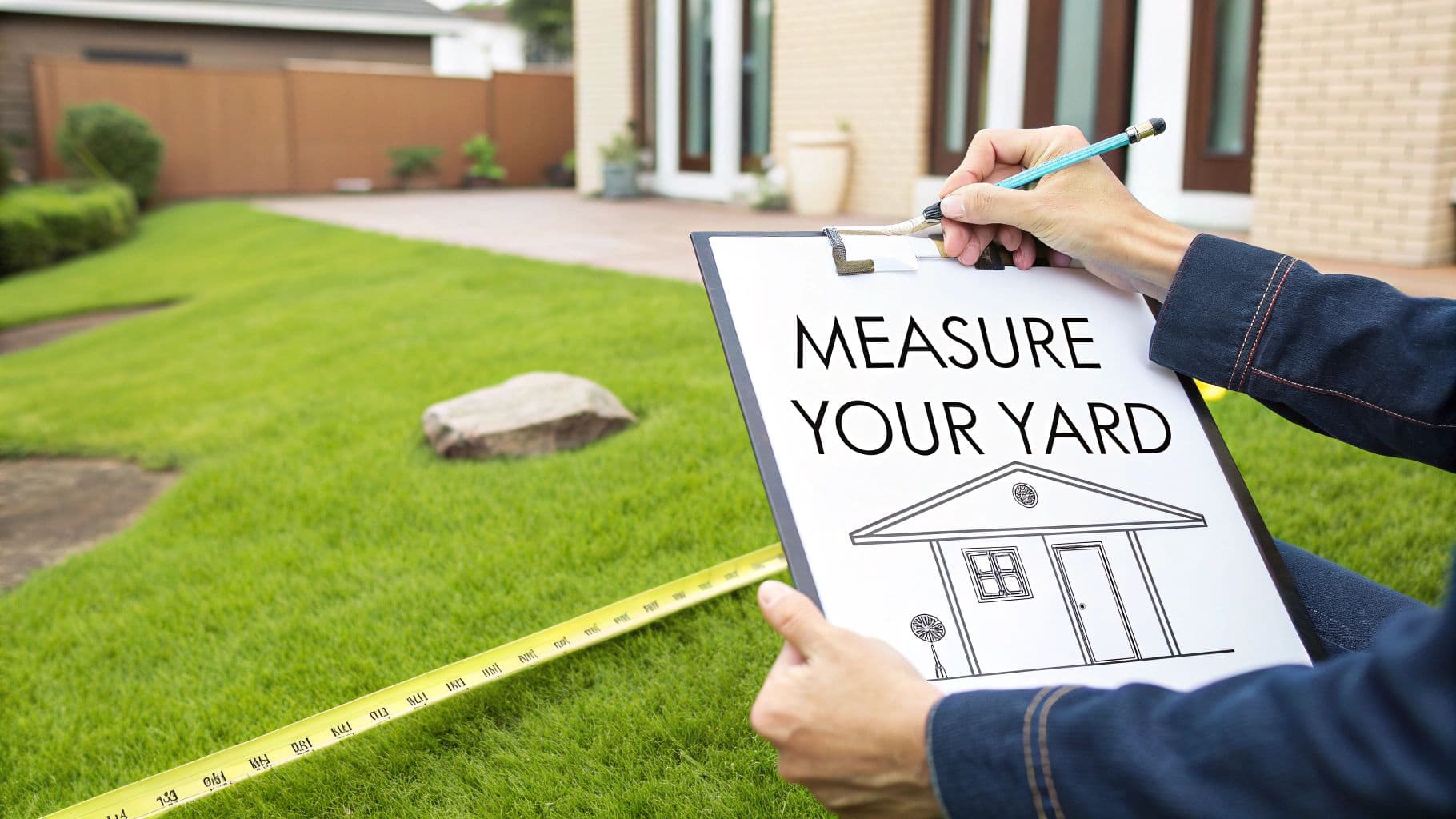
Grab a tape measure, a notepad, and walk your yard. Sketch out a basic map showing the property lines, the house footprint, and any permanent fixtures you have to work around—big trees, a shed, that weird slope in the back corner. This simple drawing is the first, and most important, tool in your design kit.
Get to Know Your Environment
Now, shift from surveyor to observer. Spend a few days watching how the sun tracks across your property. Where are the spots that get baked in full sun all afternoon? Where are the cool, shady areas that could become a perfect retreat on a hot day? Knowing your light is everything.
You also need to get your hands dirty—literally. Figure out what kind of soil you have. A cheap soil test kit from any local nursery will reveal its pH and whether you’re dealing with sand, clay, or a nice loamy mix. This simple step is the key to choosing plants that will flourish instead of fail.
Figure Out Your "Why" and Your Wallet
Once you have a solid understanding of your space, you can start thinking about its purpose. The big question is: what do you need this backyard to do for you and your family?
- An Entertainment Hub? Maybe you envision big family barbecues, which means you'll need a spacious patio or deck.
- A Family Play Zone? If you have kids or dogs, a good stretch of open, durable lawn is probably a top priority.
- A Quiet Escape? Perhaps you just want a tranquil, low-maintenance garden for relaxing. If creating a private oasis is the goal, you might find some great inspiration in these island landscaping ideas.
This simple flow is the bedrock of successful backyard planning.
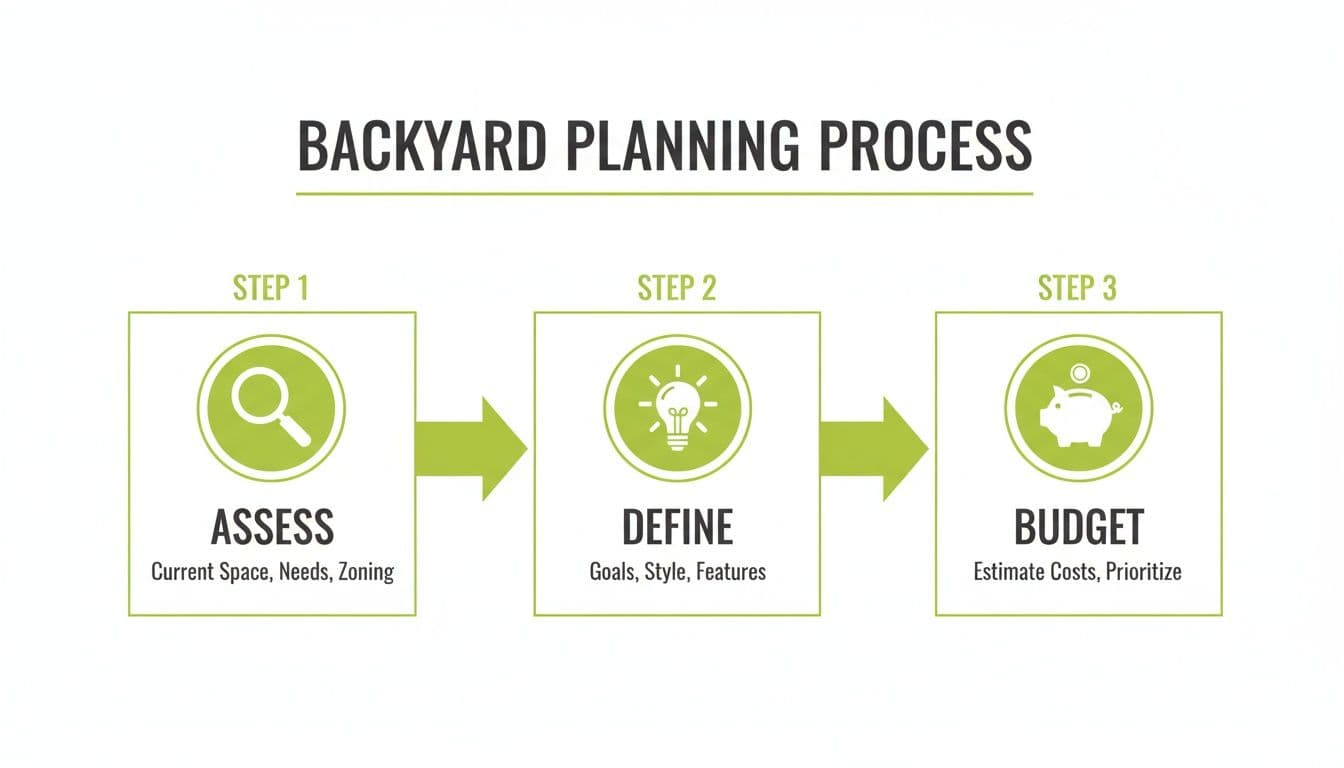
Nailing these initial steps—assessing your site, defining your goals, and setting a realistic budget—builds a solid foundation. It makes every single decision that follows, from picking pavers to planting shrubs, infinitely easier and more successful.
Use AI to Bring Your Backyard Vision to Life
Once you’ve taken a good, hard look at your yard, it's time for the fun part: moving from vague ideas to an actual, visual plan. Forget trying to decipher your own scribbled sketches. Modern tools can make this process incredibly intuitive and, frankly, pretty exciting. This is where you get to see what’s possible without committing to a single thing.
Experiment Without Lifting a Shovel
This is where technology really shines. Platforms like OutdoorBrite let you upload a simple photo of your yard and generate professional-looking designs in just a few seconds.
Want to see how a fire pit would look tucked into that corner? Curious about adding an outdoor kitchen? You can map it all out digitally. It’s a fantastic way to play with dozens of distinct styles—like Modern, Cottage, or Mediterranean—and find one that feels right for your home.
The real game-changer with AI is that it takes the fear out of making a permanent, expensive mistake. You can see exactly how different plants, pavers, and paths will look together before you spend a dime or break ground.
Let's be real: landscaping can be a significant investment. With projects often running anywhere from $5,000 to $15,000, planning is everything. According to landscaping market trends from Grand View Research, the industry is booming, but so are the costs of mistakes.
Think about it: poor plant placement alone accounts for up to 70% of plant failures. AI tools let you explore over 80 different design styles, helping you avoid these common pitfalls and ensuring your final plan is as practical as it is beautiful.
Bringing Your Vision to Life with Plants and Materials
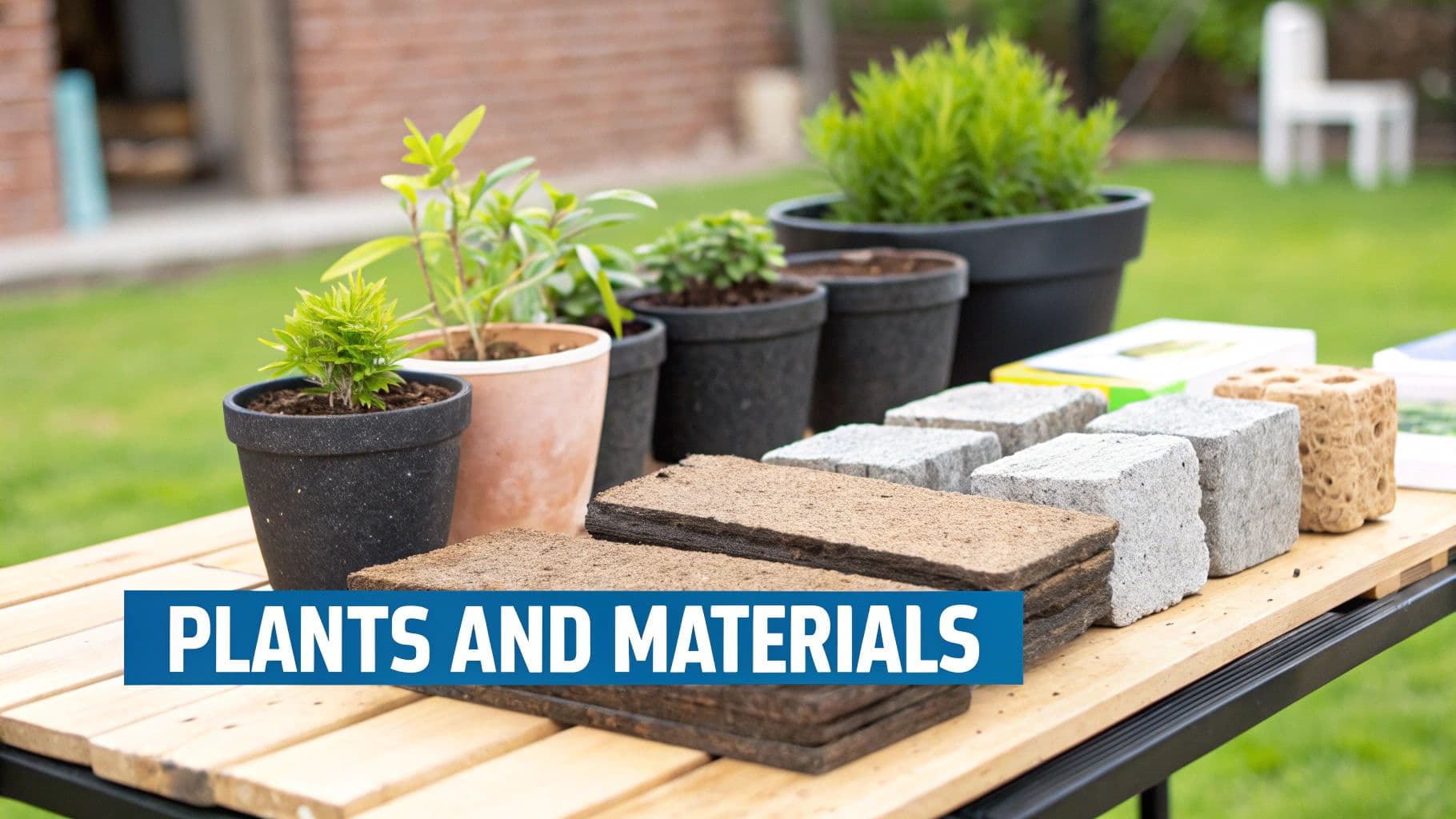
Now that you have a solid design, it's time for the fun part: picking the actual plants and materials that will make up your new backyard. This is where your digital plan starts to feel real. The goal here is to choose components that not only look fantastic but are built to last, fitting your climate and lifestyle perfectly.

Plant Selection: The Right Plant in the Right Place
The old saying is true: the secret to a great garden isn't just having a green thumb, it's putting the right plant in the right spot. Go back to your site assessment notes. Those sun and shade maps you made are your best friends now. A sun-loving perennial won't survive in deep shade, and a hosta will scorch in an all-day sunbeam.
A great strategy is to start with a "backbone" of evergreen shrubs. They provide structure and color all year long, so your yard never looks completely bare. From there, you can layer in perennials for seasonal flowers, and add ornamental grasses for texture and movement.
For a truly low-maintenance garden, lean heavily on native plants. They’ve evolved to thrive in your local climate, soil, and rainfall patterns, meaning they’ll need far less water and fussing from you once they're established.
Hardscape Materials: The Foundation of Your Design
Your hardscaping—the patios, pathways, and walls—is a major investment. These are the bones of your landscape. The materials you choose will set the entire tone for the space, so it’s critical to weigh looks, durability, and cost.
When planning your backyard, think of hardscaping as the permanent foundation. You can always swap out a plant that isn't working, but replacing a patio is a massive undertaking. Get this part right, and everything else will fall into place.
How will you use the area? If you're building a patio for a dining table, you'll want something smooth and level like concrete pavers. For a winding path through a garden, a more rustic choice like flagstone or pea gravel might feel more natural.
It’s about balancing upfront cost with long-term maintenance. A beautiful wood deck looks fantastic, but it demands staining or sealing every year or two. Composite decking or stone pavers might cost more initially but save you countless weekends of work down the road.
Choosing your hardscape is a big decision, so it helps to see the options side-by-side. Here’s a quick comparison of some popular materials.
Hardscape Material Comparison
| Material | Average Cost per Sq. Ft. | Durability | Maintenance Level |
|---|---|---|---|
| Poured Concrete | $6 - $15 | High | Low |
| Concrete Pavers | $10 - $25 | Very High | Low |
| Natural Stone (Flagstone) | $15 - $35 | Very High | Low to Moderate |
| Wood Decking | $20 - $40 | Moderate | High |
| Composite Decking | $30 - $50 | High | Low |
| Gravel/Pea Stone | $2 - $5 | Moderate | Moderate |
Ultimately, the best material is one that you love the look of and that realistically fits your budget and the amount of maintenance you're willing to do.
Integrating the Unseen Essentials
A truly great backyard isn't just about what you see—the lush plants and stylish patio—it's also about the systems working behind the scenes. Getting the lighting and irrigation right from the start is what makes your outdoor space both functional and genuinely enjoyable.
Smart Systems for a Thriving Landscape
Good outdoor lighting works on two levels. First, it’s a matter of safety, lighting up pathways and steps so nobody trips after the sun goes down. But it also creates an incredible atmosphere. A few strategically placed uplights can transform a simple tree into a stunning nighttime feature.
Likewise, a well-thought-out irrigation system can be a lifesaver—for both your plants and your free time.
- Drip Systems: These are fantastic for garden beds, containers, and shrubs. They deliver water right to the roots, which means less evaporation and waste.
- Sprinklers: For big grassy areas, sprinklers are still the most efficient way to get even coverage.
Choosing the right setup from the get-go saves you countless hours of watering by hand and cuts down on your water bill.
Breaking It Down: How to Phase Your Project
Let’s be realistic—most people don't overhaul their entire backyard in one go. Thinking about your project in phases makes it far less daunting and much easier on the wallet.
Maybe you build the hardscape, like the patio and walkways, this year. Next spring, you can tackle the garden beds and major plantings. Then, in the fall, you can add the final touches like landscape lighting. Planning in stages keeps the momentum going without the stress.
You can even use an AI landscape design tool to map out each phase visually. This helps you stay focused on the big picture, even when you're working on one small piece at a time.
A well-designed backyard doesn't just look good; it adds real value to your home and your daily life. The secret is building in smart, low-maintenance systems from day one.
In fact, the demand for low-maintenance yards is a huge trend in the landscaping industry, which is expected to hit USD 657.5 billion by 2035. Considering that nearly 60% of homeowners end up regretting high-maintenance landscaping choices, investing in efficient systems and durable materials is one of the smartest moves you can make. Learn more about current landscaping trends to see just how much planning ahead can pay off.
Tying It All Together: Budgets, Permits, and Long-Term Care
You’ve got the design. Now comes the part where your vision meets reality: figuring out the money, the paperwork, and how you’ll keep your new backyard looking great for the long haul. This is where a great plan becomes a successful, stress-free project.
Nailing Down Your Numbers
A detailed budget isn't just a final price tag; it's a roadmap for your spending. It's surprisingly easy to overspend—many homeowners go over by 20-30% without a detailed breakdown.
A good rule of thumb is to allocate your funds strategically. Think about dedicating around 40% to hardscaping (patios, decks, walkways), 30% to plants and softscaping, and the remaining 20% to systems like irrigation and lighting. Using a tool to get an accurate materials list is a game-changer here. It helps you avoid buying too much and lets you focus on creating a space that could boost your home's value by as much as 20%. For more on the numbers behind landscaping, check out these insights on smart landscape planning on LawnChick.com.
Always, always build in a buffer. A contingency fund of 10-15% of your total budget is a lifesaver. It’s there for the unknowns, like hitting unexpected rock during excavation, so a small surprise doesn’t derail the whole project.
Navigating permits can feel intimidating, but it's a non-negotiable step for certain features. Proactively checking with your local building authority protects your investment and ensures your project is safe and compliant.
You'll almost certainly need a permit for bigger features. Common triggers include:
- Decks built more than 30 inches off the ground
- Retaining walls taller than four feet
- Major electrical or plumbing work for things like outdoor kitchens or complex lighting
Your first stop should be your city or county’s website. They’ll have all the requirements and application forms you need. If you're wading through complex rules or just have questions, feel free to get in touch with our expert team for guidance.
Common Backyard Planning Questions
It’s perfectly normal to have questions pop up, even with a solid plan in hand. Taking on a backyard project is a big commitment, and a little uncertainty is part of the process. Let's tackle some of the most common questions I hear from homeowners diving into landscaping.
How Much Should I Realistically Budget for Landscaping?
Trying to set a budget can feel like a shot in the dark, but there’s a good rule of thumb to get you started. Most landscape pros suggest allocating between 5% and 15% of your home's total value for a full-scale project.
Of course, this isn't a rigid formula, but it gives you a realistic ballpark. For a typical job, the money usually breaks down something like this:
- 40-50% goes into hardscaping—think patios, decks, and retaining walls. These are the bones of the design.
- 30-40% is spent on the softscape: plants, soil, and mulch.
- 10-20% covers systems like lighting and irrigation.
Here’s a pro tip: always, always build a contingency fund of at least an extra 10% into your budget. This buffer is a lifesaver when you uncover something unexpected, like poor drainage after you start digging. It keeps a small surprise from turning into a project-killing disaster.
Can I Plan My Own Landscaping Without a Professional?
You absolutely can. With a methodical approach and the right tools, DIY landscape planning is more accessible than ever. The trick is to follow a structured process. Really get to know your site first—understand your soil type, track the sun and shade patterns, and get crystal clear on what you want from the space.
This is where modern design platforms have really changed the game for homeowners. You can generate and see professional-quality concepts in your actual yard, which takes a ton of the guesswork out of it. It lets you play around with different layouts and styles without footing the bill for a traditional designer. That said, know your limits. For anything complex or potentially dangerous—like major electrical work, significant grading, or building large retaining walls—it's always smartest to bring in a licensed and insured contractor.
What Is the Biggest Mistake People Make When Planning?
Hands down, the single most common mistake I see is people getting excited and heading straight to the nursery to buy plants without a plan. It’s tempting, but it almost always results in a yard that feels disjointed and chaotic. Even worse, you end up with plants that are doomed from the start because they’re in the wrong spot.
Another classic blunder is underestimating how big plants will get. That adorable little shrub looks perfect in that spot today, but in five years, it could be a monster that’s swallowing your walkway or blocking a window.
A thoughtful plan that considers the mature size of every single plant is your best defense against creating an overcrowded, high-maintenance mess. A little patience in the planning stage will save you years of corrective pruning and replanting later.
How Do I Design a Low-Maintenance Backyard?
The secret to a backyard that doesn't feel like a second job is making smart, strategic choices from day one. If low maintenance is your goal, focus on three key areas.
First, choose plants that are built for your climate. Native and drought-tolerant species are your best friends here, as they're already adapted to your local conditions. Second, pick durable hardscape materials. Think composite decking or quality concrete pavers that won't have you staining or sealing them every year.
Finally, install an automatic drip irrigation system on a timer. It's a game-changer. It delivers water right to the roots where it's needed most, which saves you an incredible amount of time, cuts down on water waste, and helps your garden thrive with almost zero effort from you.
Ready to stop guessing and start visualizing? OutdoorBrite uses powerful AI to help you see your dream backyard in seconds. Upload a photo, choose a style, and let our tool generate stunning, realistic designs that make planning easy and fun. Transform your outdoor space with confidence by visiting the OutdoorBrite website.