A Practical Guide to DIY Landscaping Design
Transform your yard with this practical DIY landscaping design guide. Learn how to plan, visualize, and create a beautiful outdoor space you'll love.
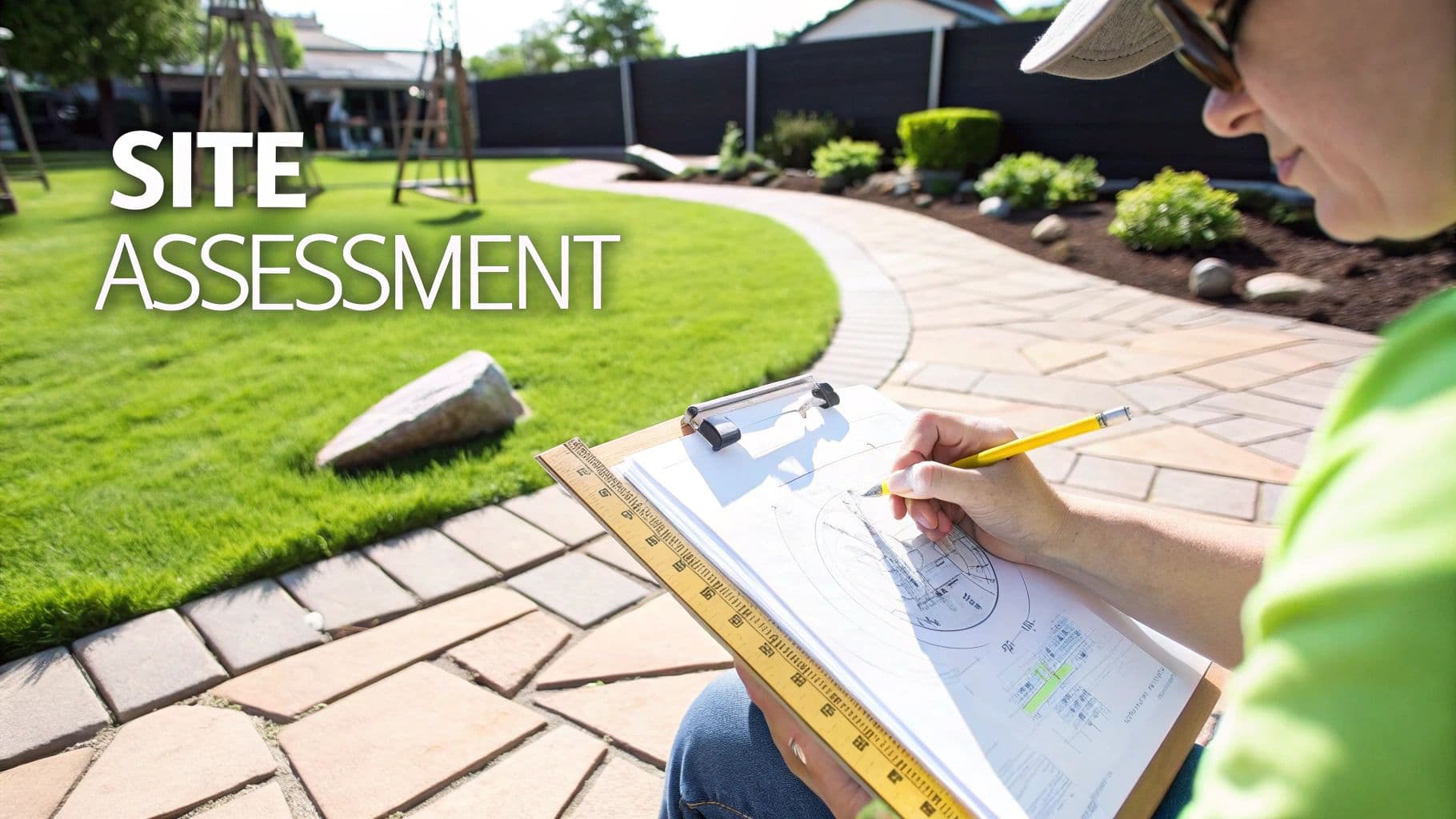
Tackling your own landscaping design can feel like a massive undertaking, but it breaks down into three key phases: figuring out what you have, deciding what you want, and bringing that vision to life. This approach transforms a potential headache into a creative, manageable project. The result is a space that’s not just beautiful but perfectly suited to how you live.
Starting Your DIY Landscaping Design Journey
Looking at a bare yard can be intimidating, but it’s also a blank canvas—your chance to create a personal retreat. This isn't just about saving money; it's about crafting a space that truly fits your life, whether that means a durable play area for the kids or a quiet patio for your morning coffee.
You're in good company. Millions of people are rolling up their sleeves to transform their own yards. The process is simpler than it seems when you follow a clear path: assess, define, and visualize.
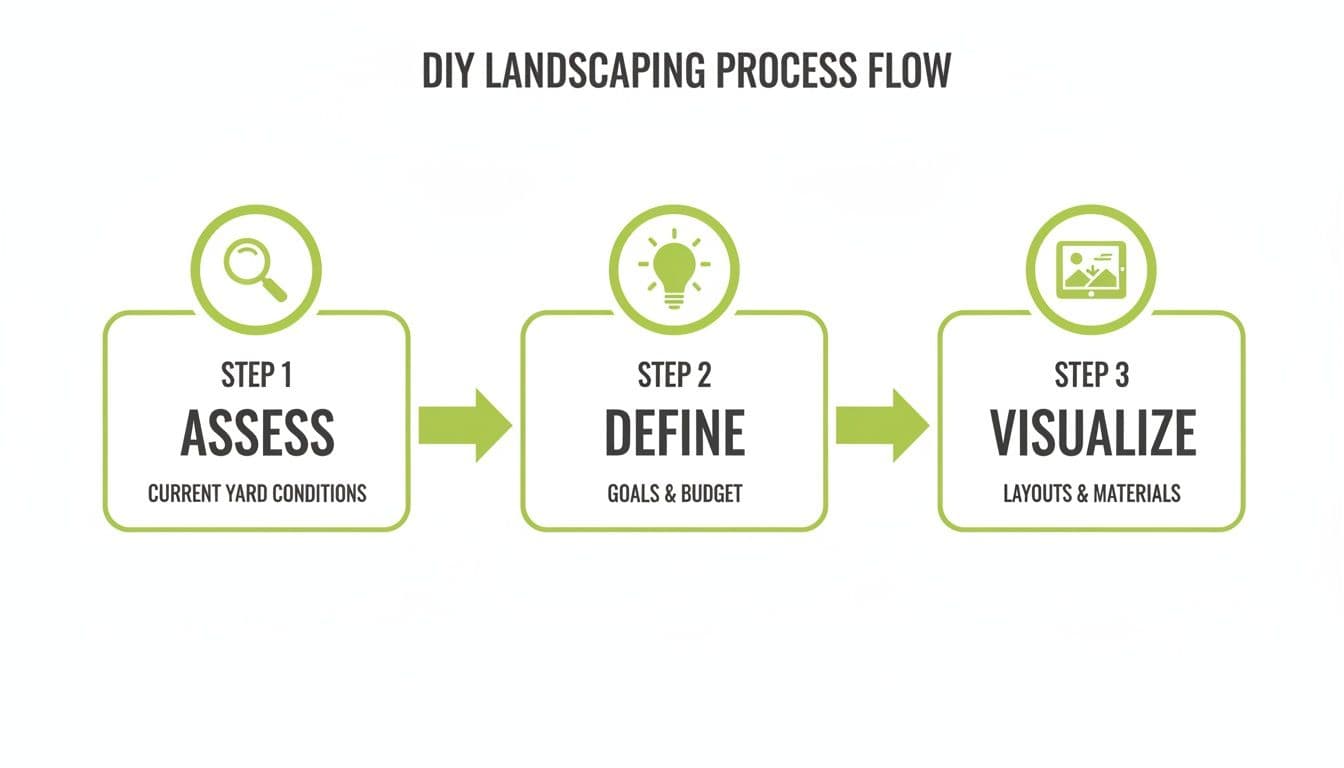
This simple flow highlights the most important part of any successful design: you must understand your space before you start picking out plants and pavers. It’s a global trend; the U.S. market for garden hand tools alone hit USD 3.27 billion in 2023, showing just how many people are getting their hands dirty. For more project ideas and practical tips, you can always find fresh inspiration on the OutdoorBrite blog.
Getting to Know Your Yard and Setting Your Goals
Before you even think about picking out plants, the most important thing you can do is observe. Great landscaping isn't about imposing an idea onto a space; it's about working with what you've already got.
Spend a weekend watching your yard. Pay close attention to the sun. Where are the scorching hot spots in the afternoon, and where are the cool, shady refuges? This is the single biggest factor that will determine what you can grow. Next, get a feel for your soil. Is it gritty like sand or sticky like clay? This simple test tells you about drainage and what kind of plants will thrive. Notice any low spots where water pools—those are drainage issues to solve now, not later.
Once you have a handle on the physical space, think about what you want to do out there. This is where your goals come in, and they're the most critical part of the process.
A stunning yard that doesn't fit your life is just a beautiful chore. Be honest about what you need most—is it a safe place for kids to play, a big patio for entertaining, or a quiet corner to grow some tomatoes?
This groundwork—understanding your site and defining your goals—is the foundation for every decision you'll make from here on out.
Bring Your Vision to Life with AI Design Tools
You’ve got your base map, you know what you want—now for the fun part. This is where you play with layouts and see what your future yard could look like. Think about creating distinct "outdoor rooms" or a focal point like a modern fire pit or a peaceful water feature.
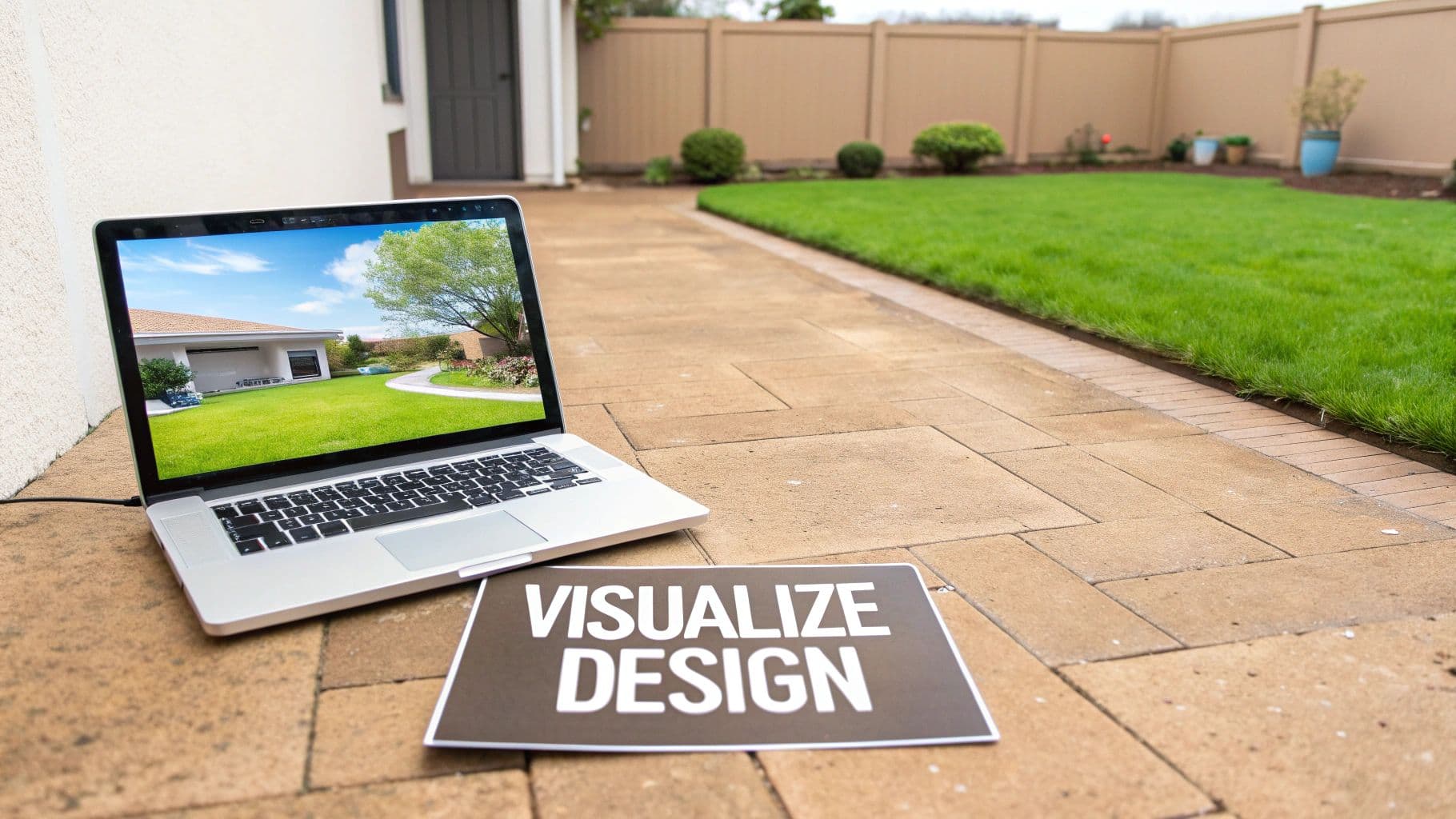
Instead of just imagining it, you can see it. This is where modern tech shines. AI-powered platforms like OutdoorBrite let you upload a photo of your yard and start generating photorealistic designs almost instantly. You can cycle through different concepts—a Japanese garden, a lush English cottage style—in minutes.
Visualizing your ideas this way is a game-changer. It helps you get a feel for scale and see how materials will look next to your house before you spend a dime.
Expert Tip: Use these AI renderings to check your proportions. Does that massive pergola overwhelm the patio? Is the garden bed wide enough? Seeing it virtually helps you avoid costly real-world mistakes.
Considering that the average American household now spends $503 on their yard each year, a virtual test run is smart. It’s an easy way to build confidence in your plan. For more on industry trends, explore the landscaping tools market report at Straits Research.
Choosing the Right Plants and Hardscapes
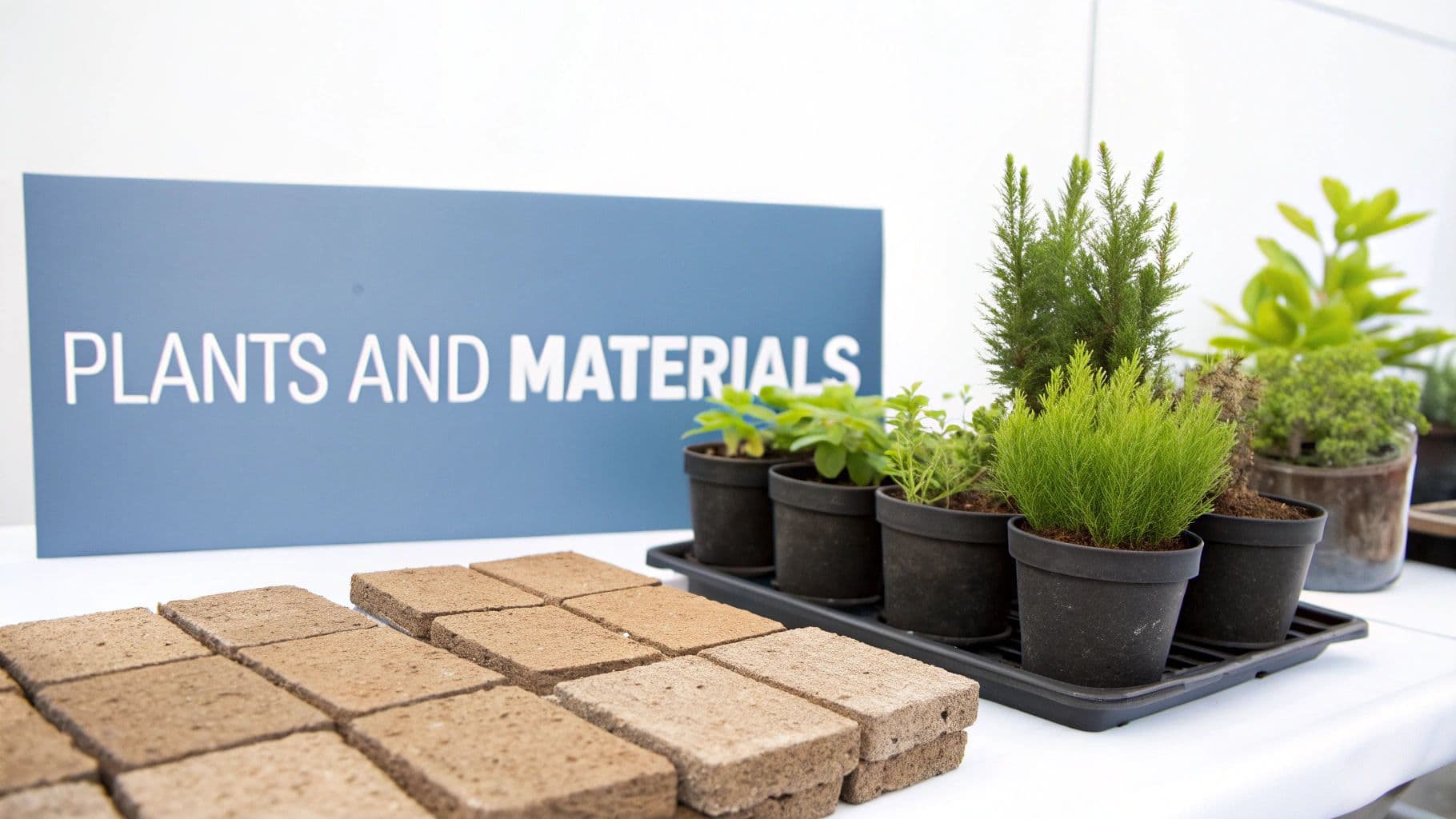
With a solid visual plan, it’s time to pick materials for your diy landscaping design. This is where your vision takes shape, starting with hardscapes and then plants.
Selecting Your Hardscape Materials
Hardscapes are the non-living elements that form the skeleton of your yard—patios, walkways, and decks. They provide structure and define the space.
Choosing materials involves balancing budget, DIY skill, and aesthetics. A paver patio offers a classic look but requires a perfectly prepped base, which can be tricky for a first-timer. A simple gravel patio is much more forgiving and budget-friendly. For decks, composite materials are low-maintenance but have a higher upfront cost than wood.
Here's a quick comparison to help you weigh your options:
Hardscape Material Comparison for DIY Projects
| Material | Average Cost (per sq ft) | DIY Difficulty | Maintenance Level |
|---|---|---|---|
| Pavers (Concrete) | $4 - $8 | Moderate | Low |
| Natural Stone | $15 - $30 | High | Low |
| Gravel/Pebbles | $1 - $3 | Easy | Moderate |
| Composite Decking | $15 - $35 | Moderate | Low |
| Poured Concrete | $5 - $10 | High | Low |
The best choice fits your design goals and your comfort level with installation.
Picking the Perfect Plants
When it comes to plants, it’s easy to get carried away. A smart plant strategy goes beyond just picking what looks pretty. The single best advice is to prioritize native species. They're adapted to your local climate, requiring less water and fuss once established.
Create a layered look by mixing plants of different heights, textures, and bloom times for year-round visual interest. Place taller shrubs at the back of a garden bed, medium-sized perennials in the middle, and low-growing groundcover at the front. For clever inspiration on grouping plants, check out these island landscaping ideas.
Budgeting and Phasing Your Project
A successful diy landscaping design depends on a realistic budget. When mapping out costs, think beyond big-ticket items; account for tool rentals, soil amendments, and delivery fees. Simple online calculators can help estimate material quantities for mulch, soil, or pavers.
Don't feel pressured to do everything at once. Phasing is your best friend.
Tackling a huge overhaul in one go can be a massive strain on your wallet and your back. Splitting it into smaller stages—the patio this year, the garden beds next spring—makes the whole thing feel achievable.
This strategic approach is a huge part of the appeal for DIYers. The landscape services industry in the U.S. is a USD 153 billion market. Doing the work yourself unlocks serious savings. You can see the numbers for yourself in the value of landscaping services on grandviewresearch.com. If you need help mapping out project phases, feel free to contact us at OutdoorBrite.
Common DIY Landscaping Questions Answered
Even a detailed plan can't prepare you for every question that pops up during a diy landscaping design project. Getting solid answers is key to keeping the project moving. Let's tackle some common hurdles.
How Much Should This Really Cost?
While every yard is different, a good rule of thumb is to invest 5-10% of your home's value into your landscape over its lifetime. For any single project, your hardscaping will likely be the biggest expense. I always tell people to add a 10-15% buffer to their budget for unexpected costs.
I'm Overwhelmed. Where Do I Even Start?
It’s normal to feel paralyzed by the scale of it all.
My best advice is simple: start small. Don't tackle the whole property at once. Pick one, clearly defined area—like the front entryway or a tired garden bed. Focus on that single space and see it through. That victory will give you the momentum to take on the next phase.
Avoiding the Most Common Pitfalls
Knowing what not to do can save you a world of headache. I see the same avoidable mistakes over and over.
- Forgetting the Master Plan: Simply buying plants you like and sticking them in the ground leads to a disjointed, chaotic yard. A good design ensures every element works together.
- Fighting Your Site: You can't force a sun-loving plant to thrive in a shady corner. Always match your plants to your specific conditions—sun, soil, and moisture.
- Underestimating the Sweat Equity: Laying a paver patio or building a retaining wall is hard physical work. Be honest with yourself about how much time and muscle a project will demand before you start.
By getting ahead of these common questions and steering clear of these mistakes, you’re putting yourself on the path to a landscape you'll be proud of.
Ready to stop guessing and start seeing? With OutdoorBrite, you can upload a photo of your yard and get stunning, realistic design concepts in seconds. Make confident choices and finally bring that perfect outdoor space to life. Try it now at https://www.outdoorbrite.com.