23 Driveway Edging Ideas for Gravel, Asphalt, Concrete and Pavers
Driveway edging does a different job on gravel, asphalt, concrete and pavers. 23 border ideas grouped by surface, with costs per linear foot and the edges that actually hold up to tires.
Gravel creeping into the lawn, asphalt crumbling at the sides, a concrete slab that just stops in a strip of dead grass: most driveways look unfinished at the edges, not in the middle. The driveway edging ideas below fix that, and they're sorted by the surface you actually have, because the edge does a different job on each. On gravel it has to hold stone in. On asphalt it props up a soft edge that wants to crumble. On concrete it's mostly about looks, and on pavers it's structural.
You'll find 23 options, from a weekend of DIY plastic edging to granite Belgian block set in concrete, with a cost per linear foot and a note on what each one is good and bad at.
Every photo here is an AI design concept, not a real client project. Two driveways appear more than once on purpose: the same gravel and asphalt drives redone with different borders, so you can compare the edges on one house.
Edging ideas for gravel driveways
On gravel, an edge has one main job: keep the stone on the driveway and out of the lawn, the mower and the flower beds. It needs to be at least as high as the gravel layer, and solid enough that tires rolling over it won't push it out. This is the plain gravel drive used for the first four ideas:
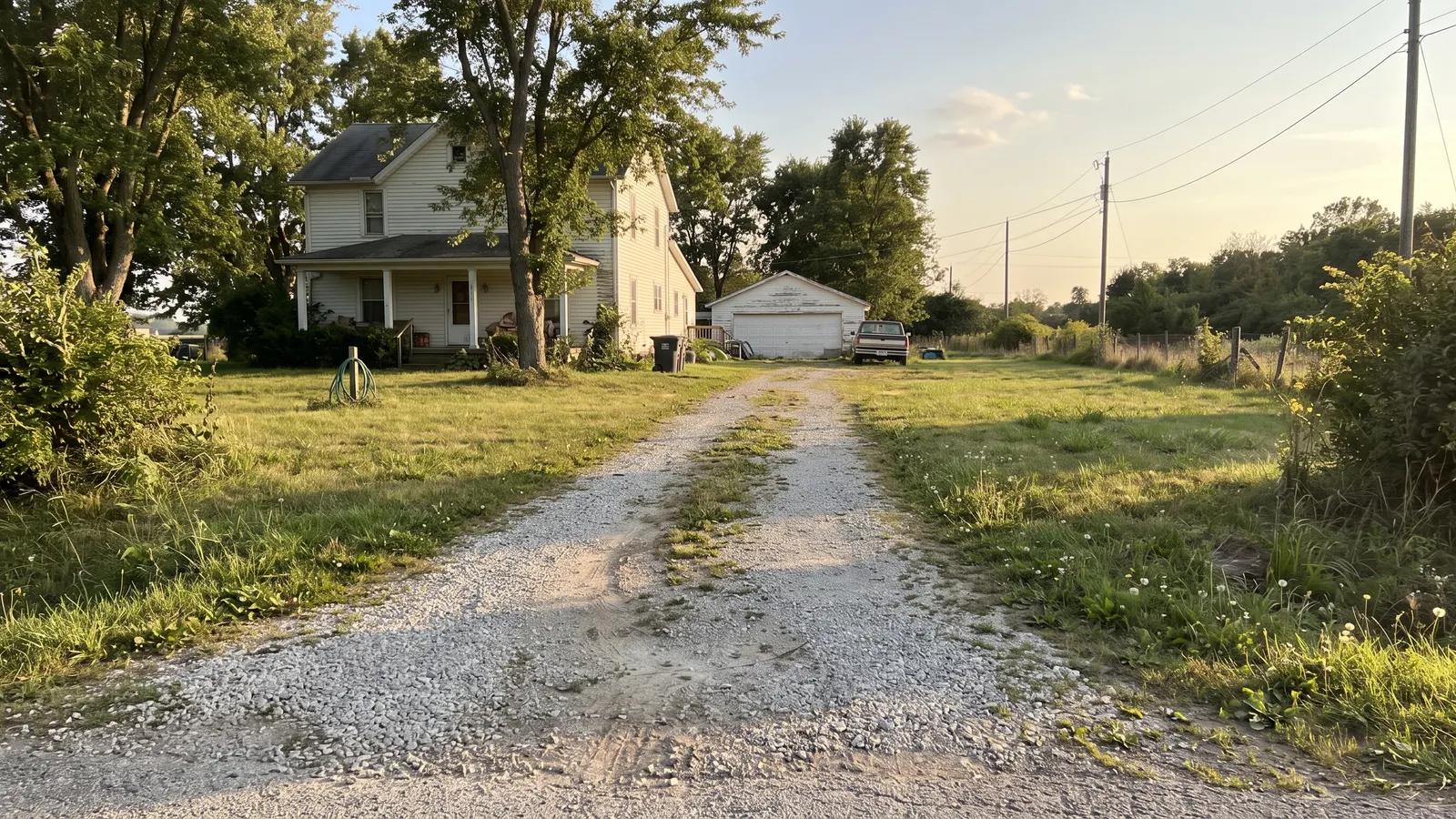
1. Run a steel edge flush with the gravel
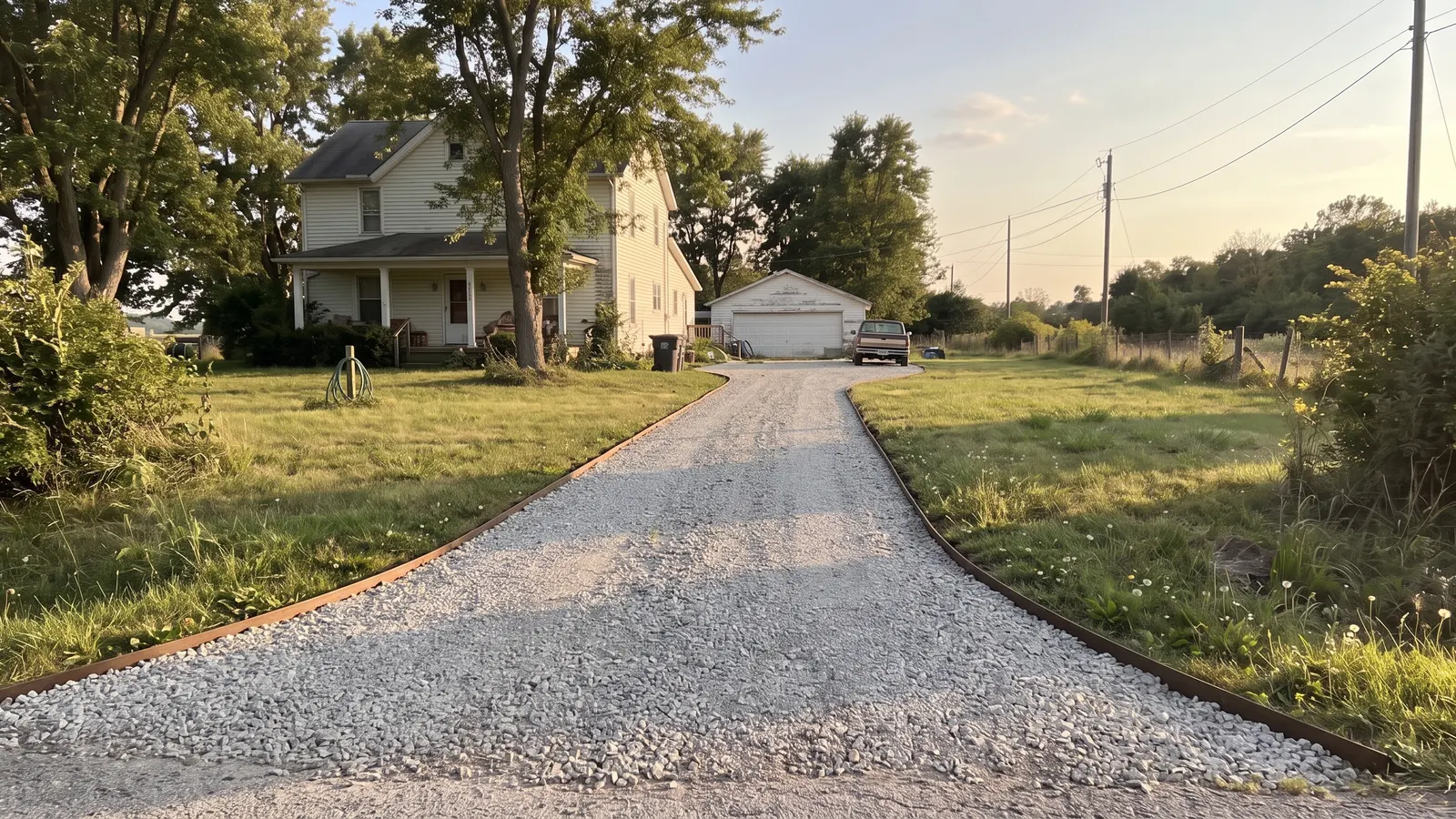
A steel strip set flush with the gravel gives the cleanest line you can get for the money, and it curves easily along a bend. Use heavy-gauge steel (3/16 inch or thicker) where tires might clip it; the thin big-box strips bend the first time someone cuts a corner. Metal edging runs about $2 to $6 per linear foot for materials, per HomeGuide. Corten-style steel rusts to a brown finish on purpose; powder-coated black steel stays dark.
2. Set a granite cobble border
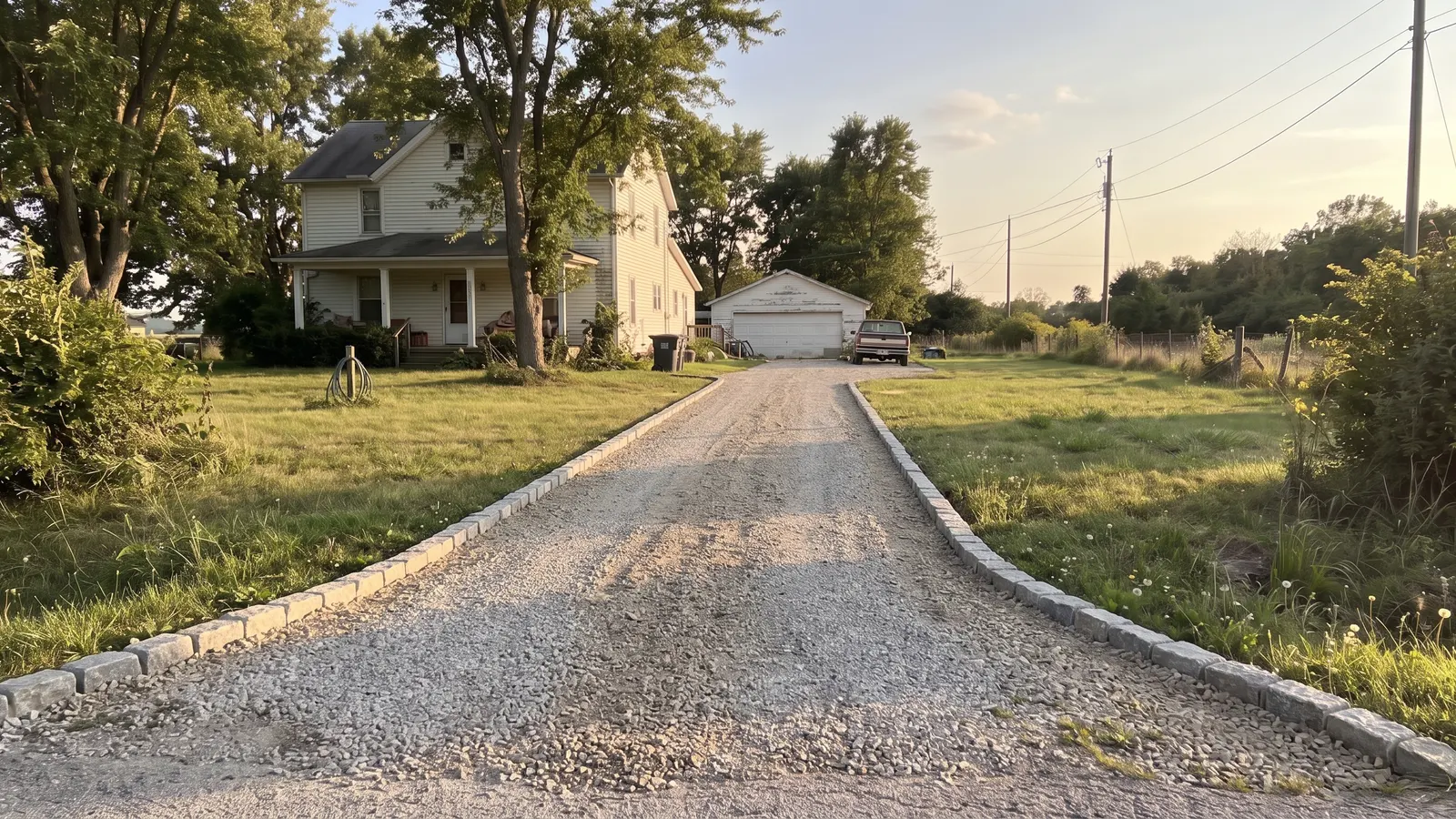
Belgian block (cut granite cobbles) is the heavy-duty answer. Set in a concrete bed, a row of blocks won't move under tires or frost, and the gray stone works with almost any house. This Old House, citing Angi, puts the blocks at roughly $9 to $11 per linear foot, with a typical professional install around $1,350. The trench is about a foot wide and 8 inches deep, so most people hire this one out.
3. Frame the gravel with concrete pavers
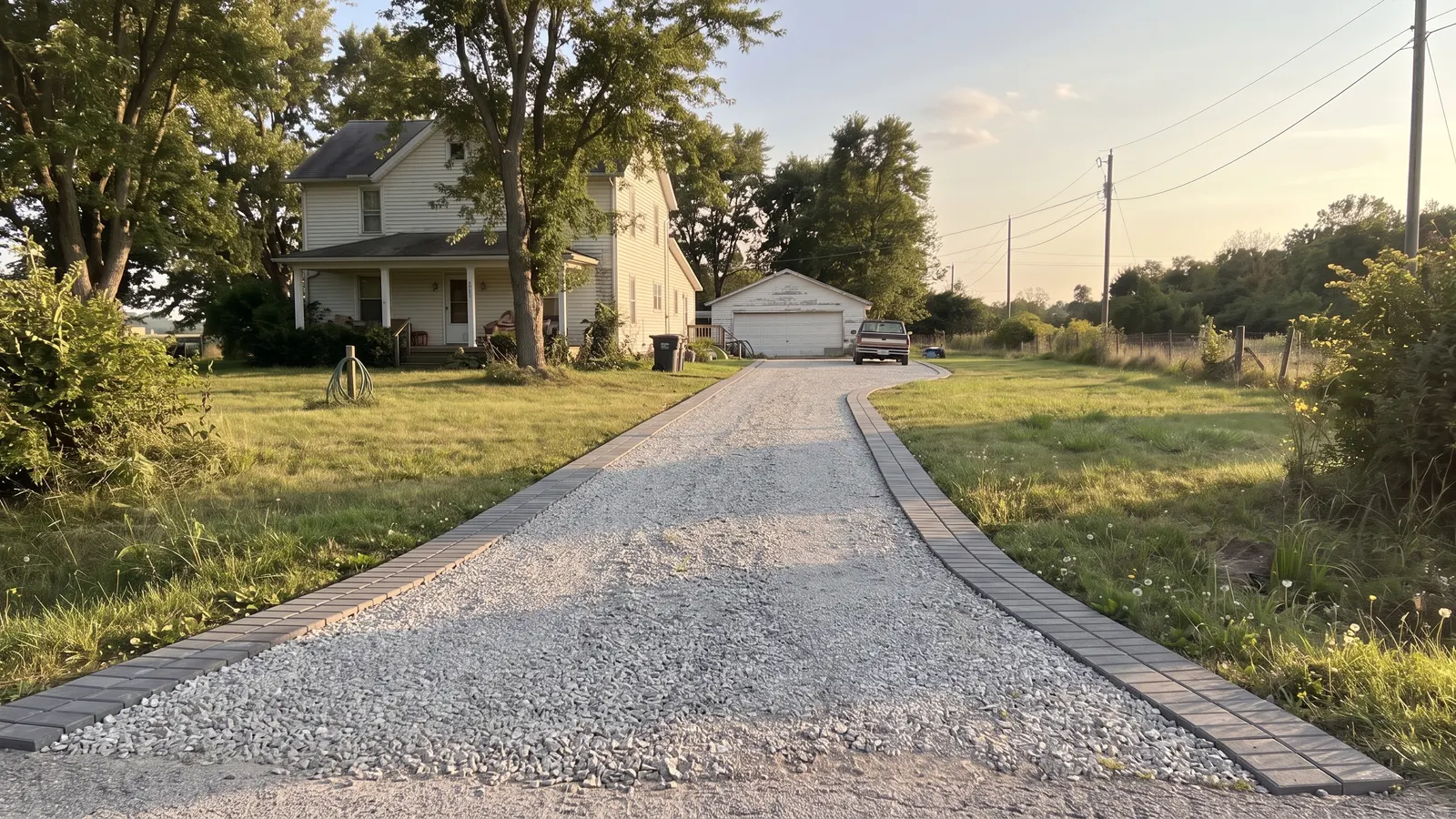
Two rows of pavers along each side make the gravel look like a deliberate choice rather than a budget fallback. Pick a dark color against light gravel so the border reads from the street. Lay the pavers on a compacted base, not on soil, or they'll sink and tip. Our paver calculator works out how many you need for a two-row border.
4. Use landscape timbers for a rustic edge
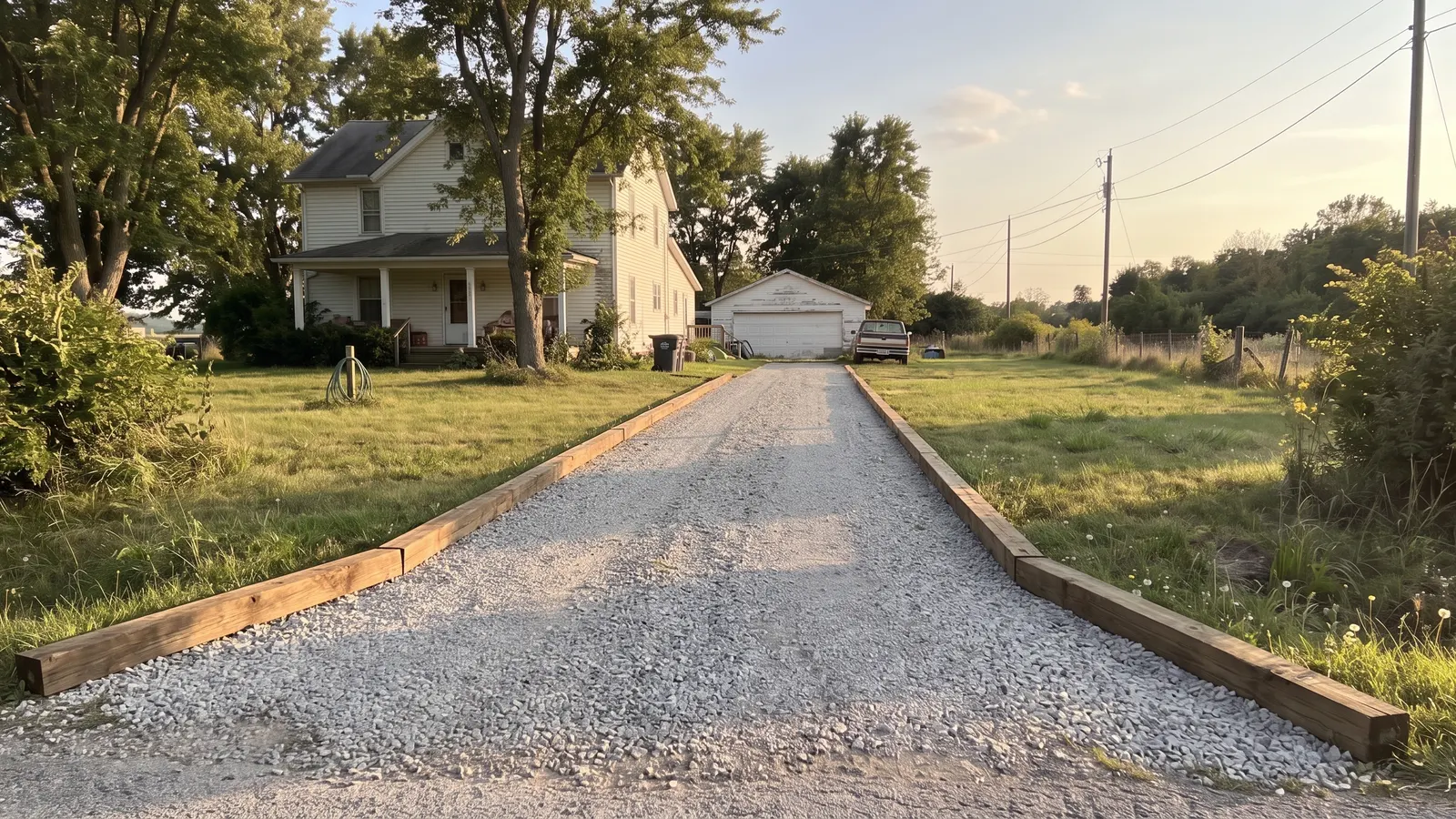
Square timbers laid end to end are cheap, fast and suit a farmhouse or a wooded lot. Pin them with rebar so they don't roll. Wood eventually rots, so plan on 10 years or so before you redo it. Skip old railroad ties: they're usually soaked in creosote, which the EPA and state environmental agencies advise against using around homes, gardens and play areas.
5. Line the drive with boulders
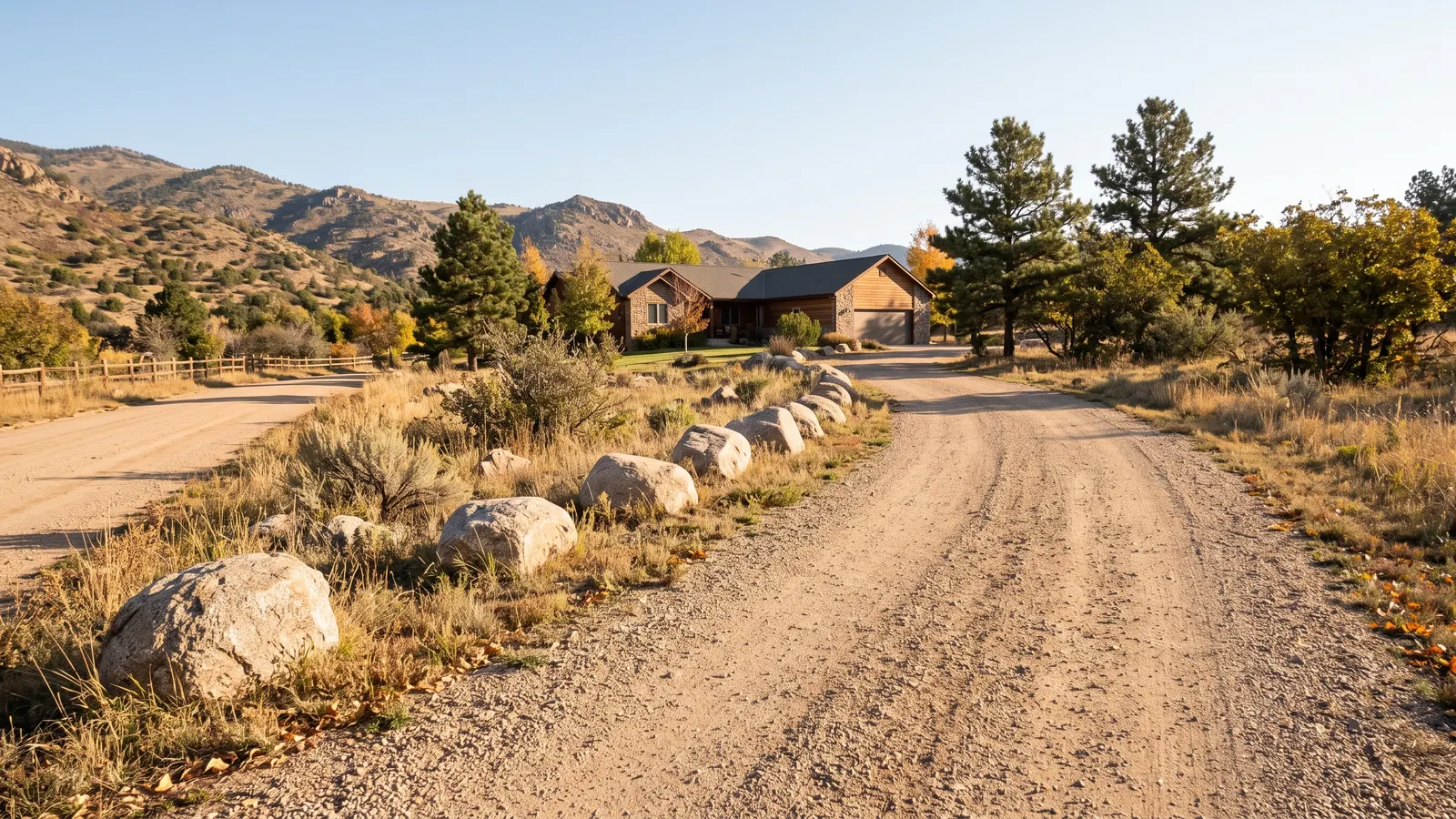
A loose row of boulders doesn't stop every stray pebble, but it does stop cars from cutting across the lawn and it looks at home on rural and mountain lots. Space them a few feet apart and bury each one about a third of its height so it looks settled, not dropped. HomeGuide puts landscape rock at $45 to $130 a ton, plus delivery and a machine to place the big ones.
6. Add a river rock band
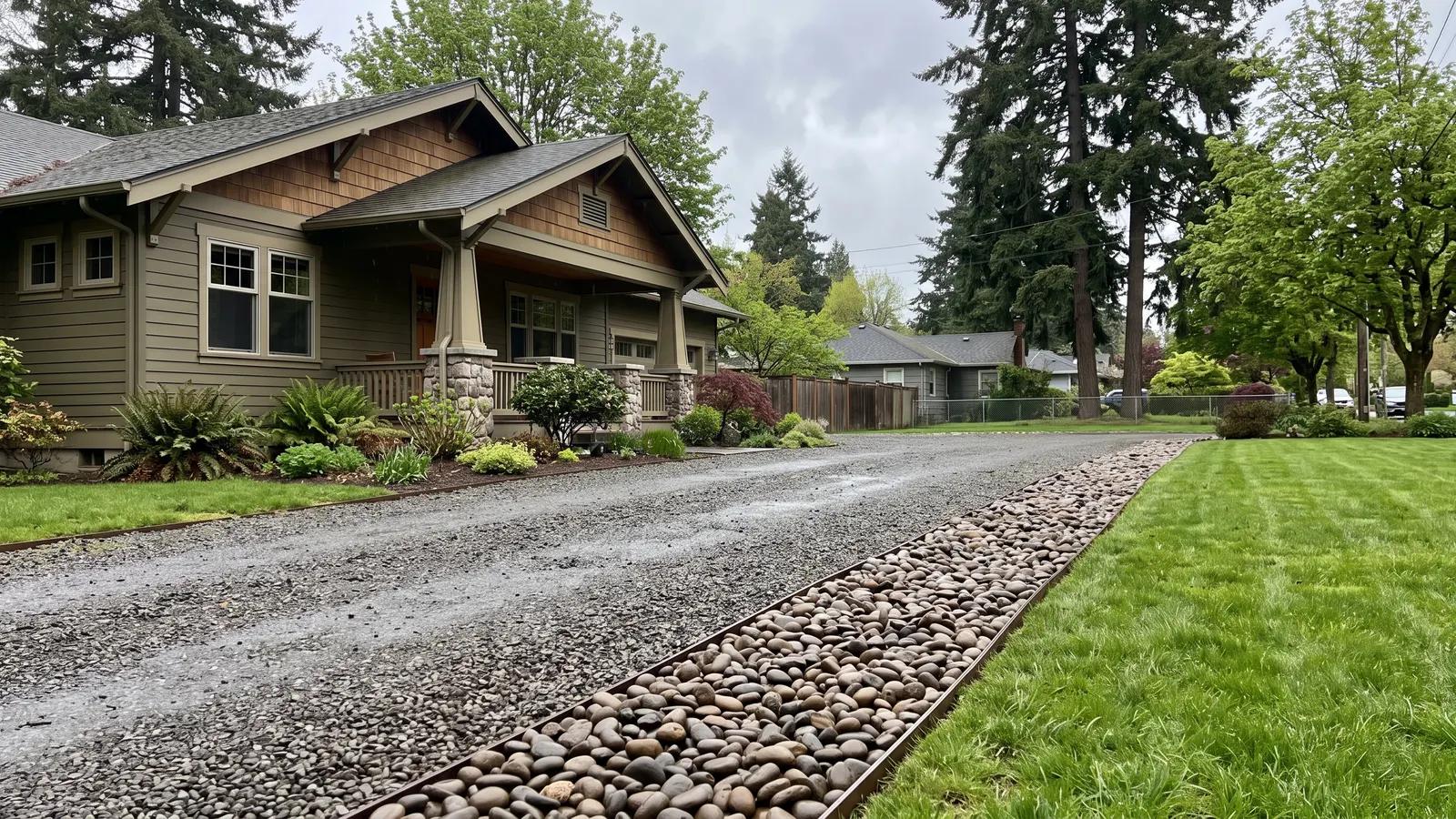
A 12-inch strip of larger river rock between the driveway gravel and the lawn acts as a buffer. Small gravel that drifts sideways settles into the bigger stones instead of the grass. Put a thin metal or plastic edge on the lawn side so the rock band itself stays put. Use our gravel calculator for both the driveway top-up and the band.
7. DIY it with plastic edging
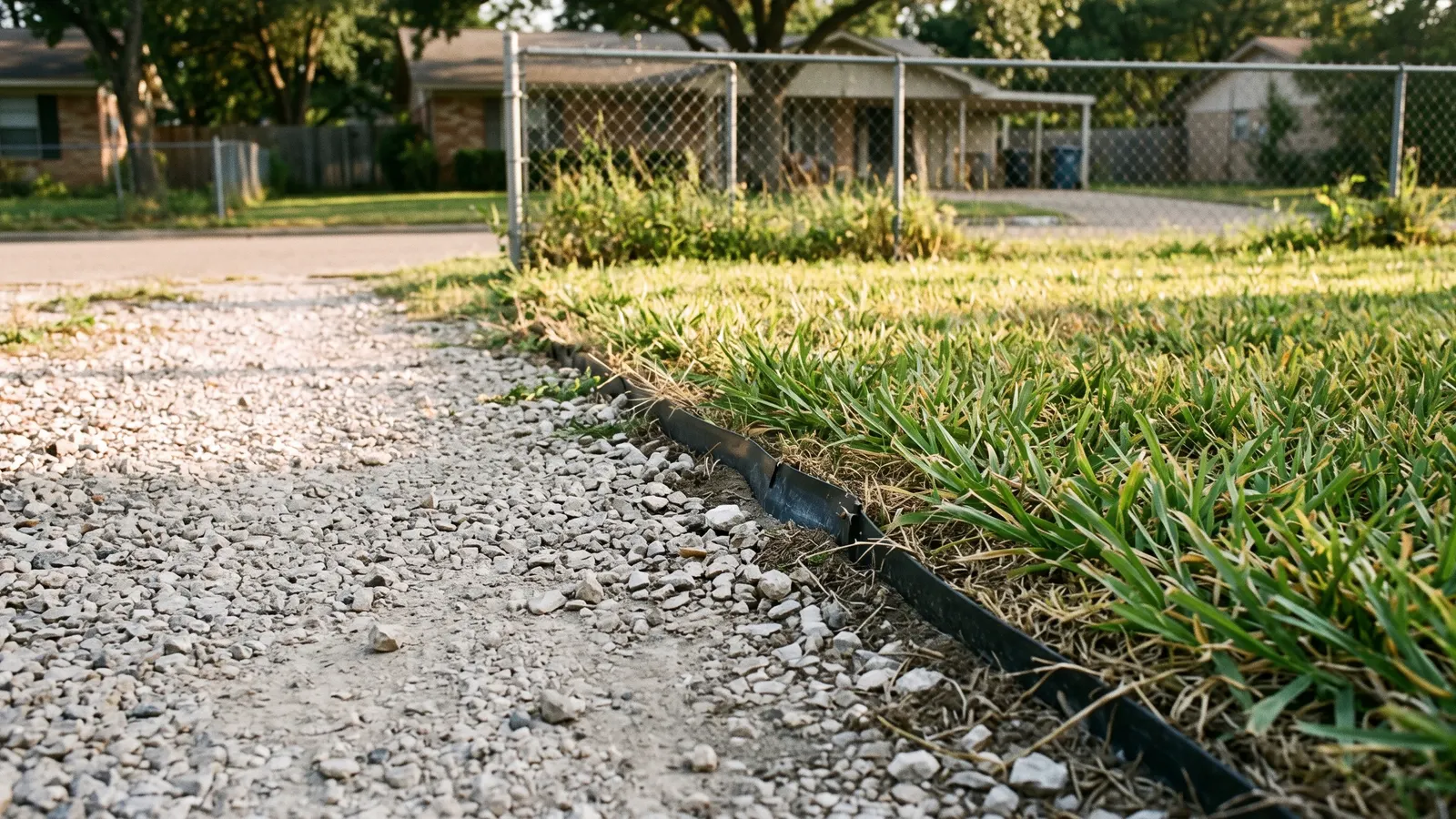
For a quick weekend fix, plastic edging staked into the ground is the cheapest option at about $0.50 to $3 per linear foot (HomeGuide). It works best along the sides where tires rarely go. The honest downside: plastic heaves in frost, cracks in the sun after a few years, and gets crushed where cars cut the corner. Treat it as a stopgap, not a 20-year edge.
Edging ideas for asphalt driveways
Asphalt is flexible, and its edges have nothing holding them up. Over time tires push the sides out and the edge breaks into chunks. A good border supports the asphalt as well as finishing it. Here is the plain asphalt drive used for ideas 8 to 10:
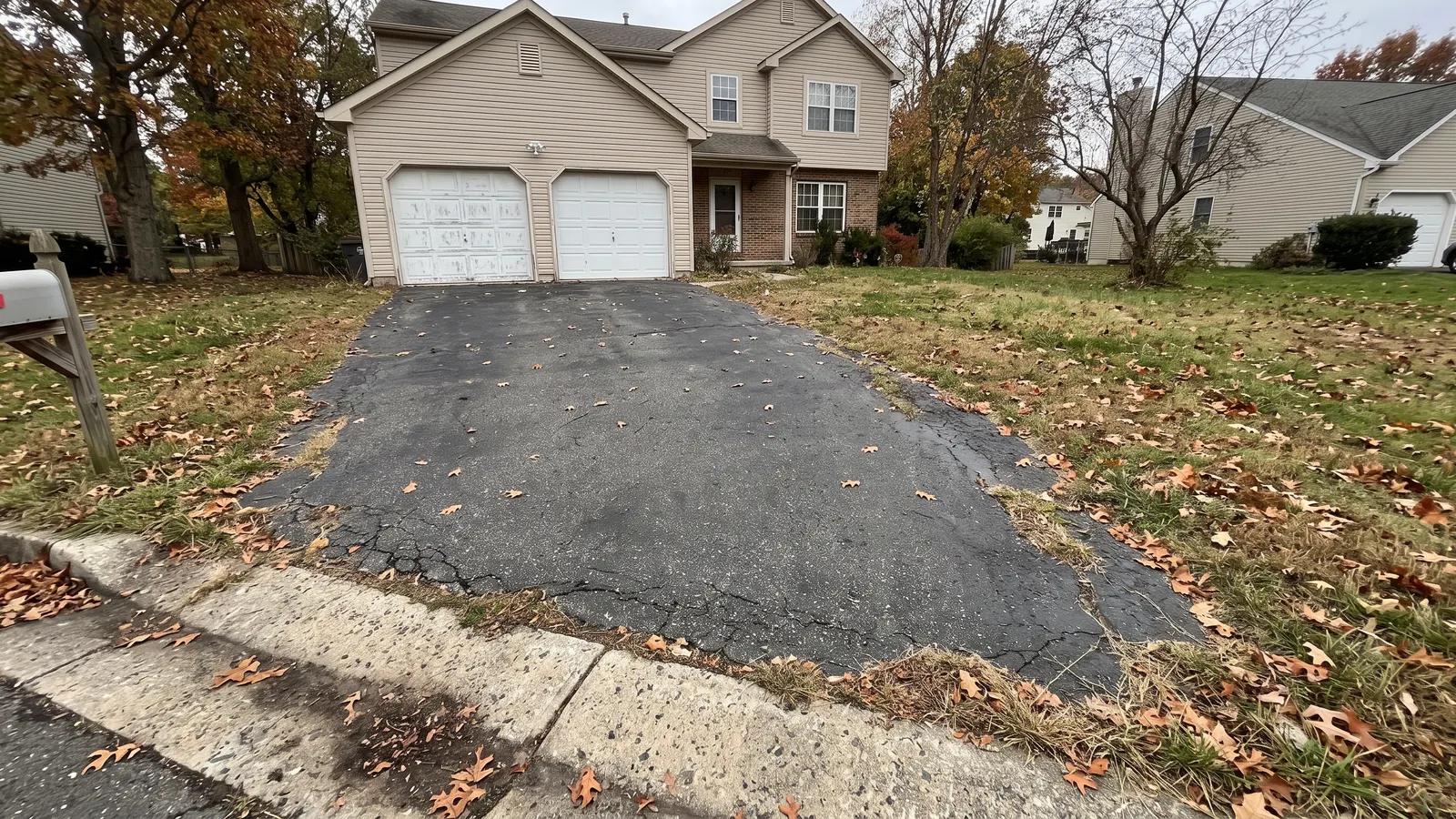
8. Curb it with Belgian block
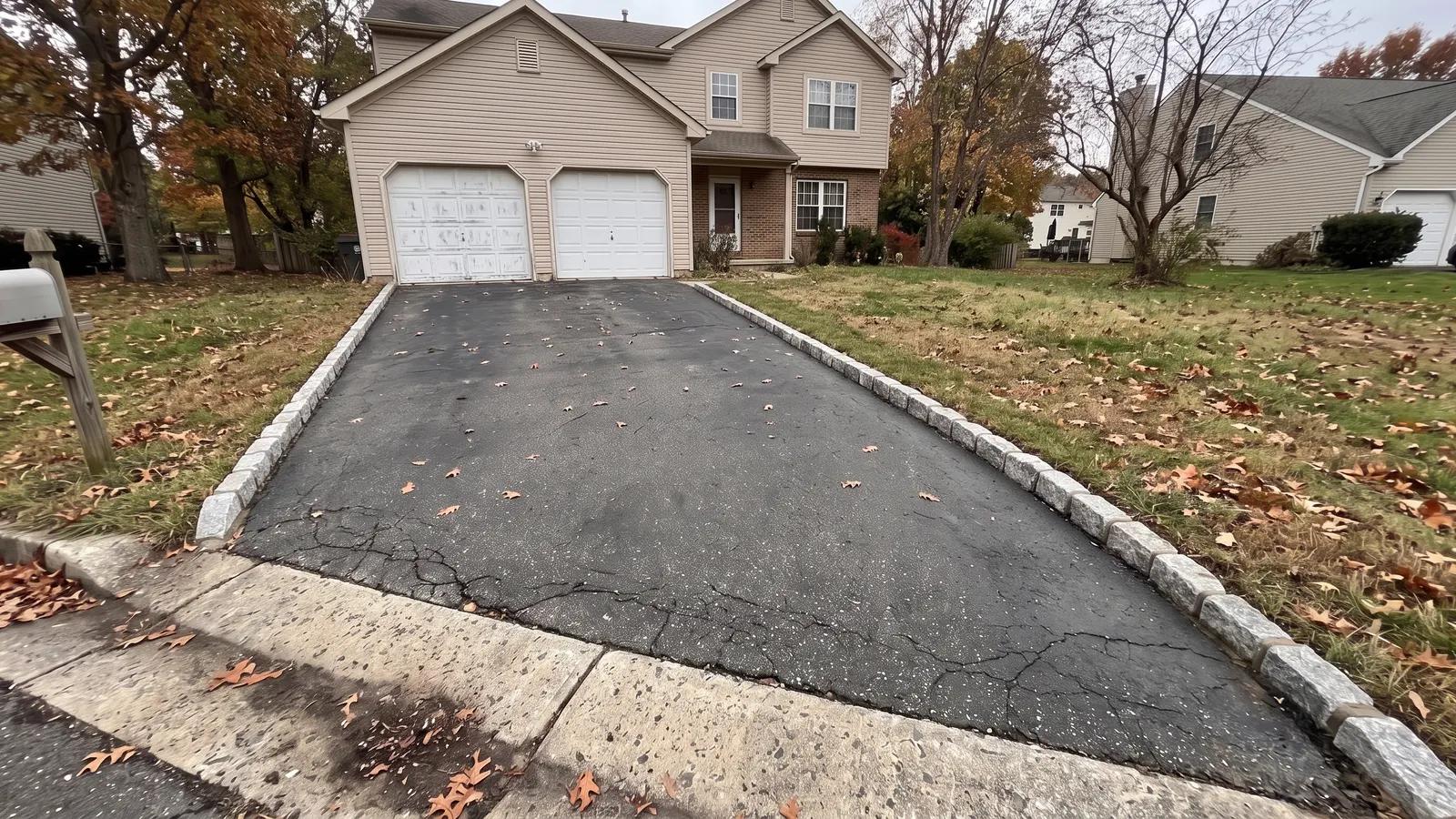
This is the classic Northeast look, and it's popular for a reason. Granite blocks set in concrete along each side hold the asphalt edge in place and stand up to snowplows better than most options. Have the blocks set a little above the asphalt so water still drains off. It's usually done when the driveway is repaved, since the old edge gets cut back straight first.
9. Lay a brick border
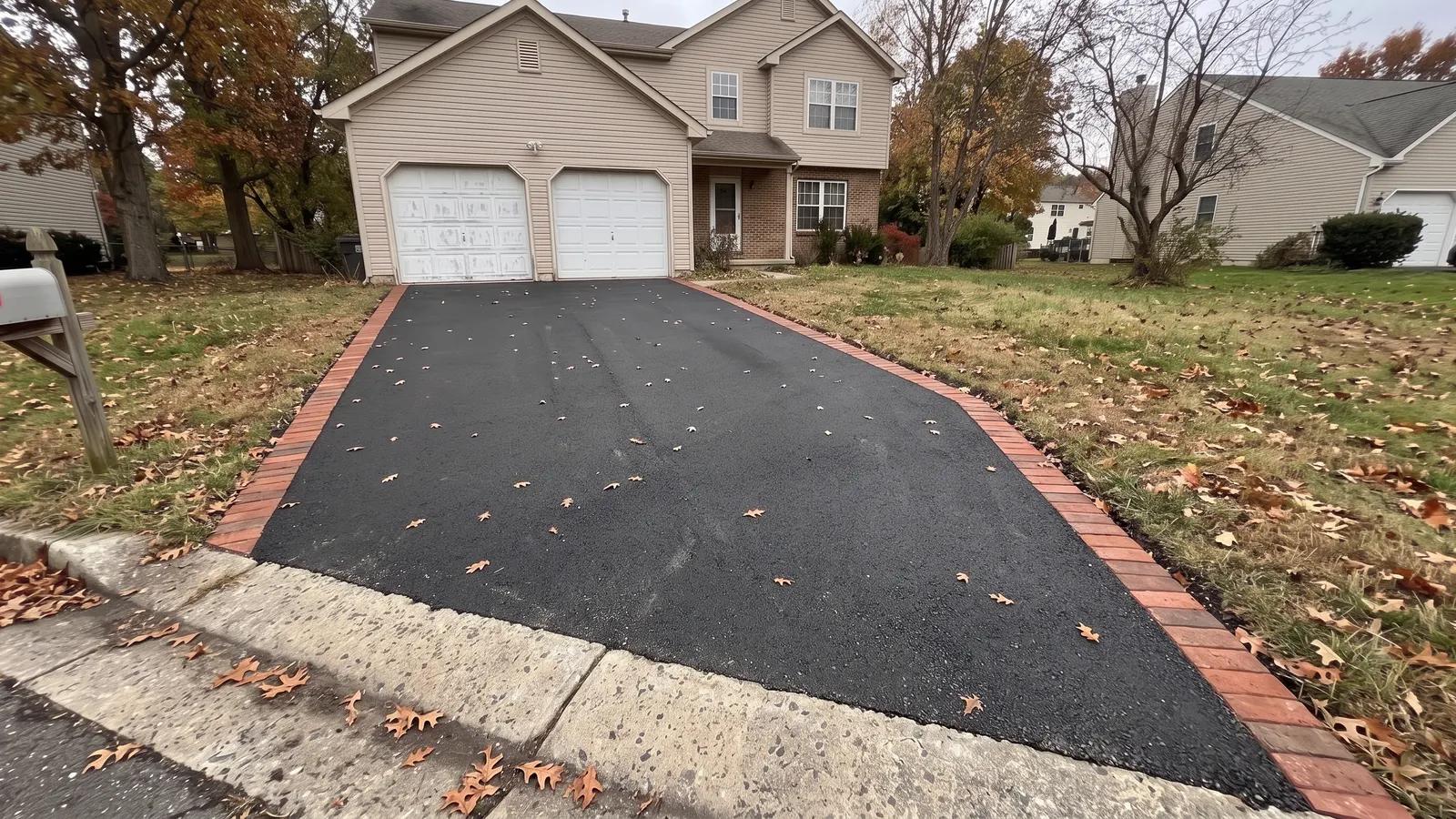
Red brick against black asphalt is a warm, traditional contrast that suits Colonial and brick-front houses. Brick runs about $1.50 to $5.50 per linear foot for materials (HomeGuide). Use solid paving brick rated for driveways, not the hollow-core wall brick, and set it in concrete along the drive, since sand-set brick next to asphalt tends to wander.
10. Pour a concrete mow strip
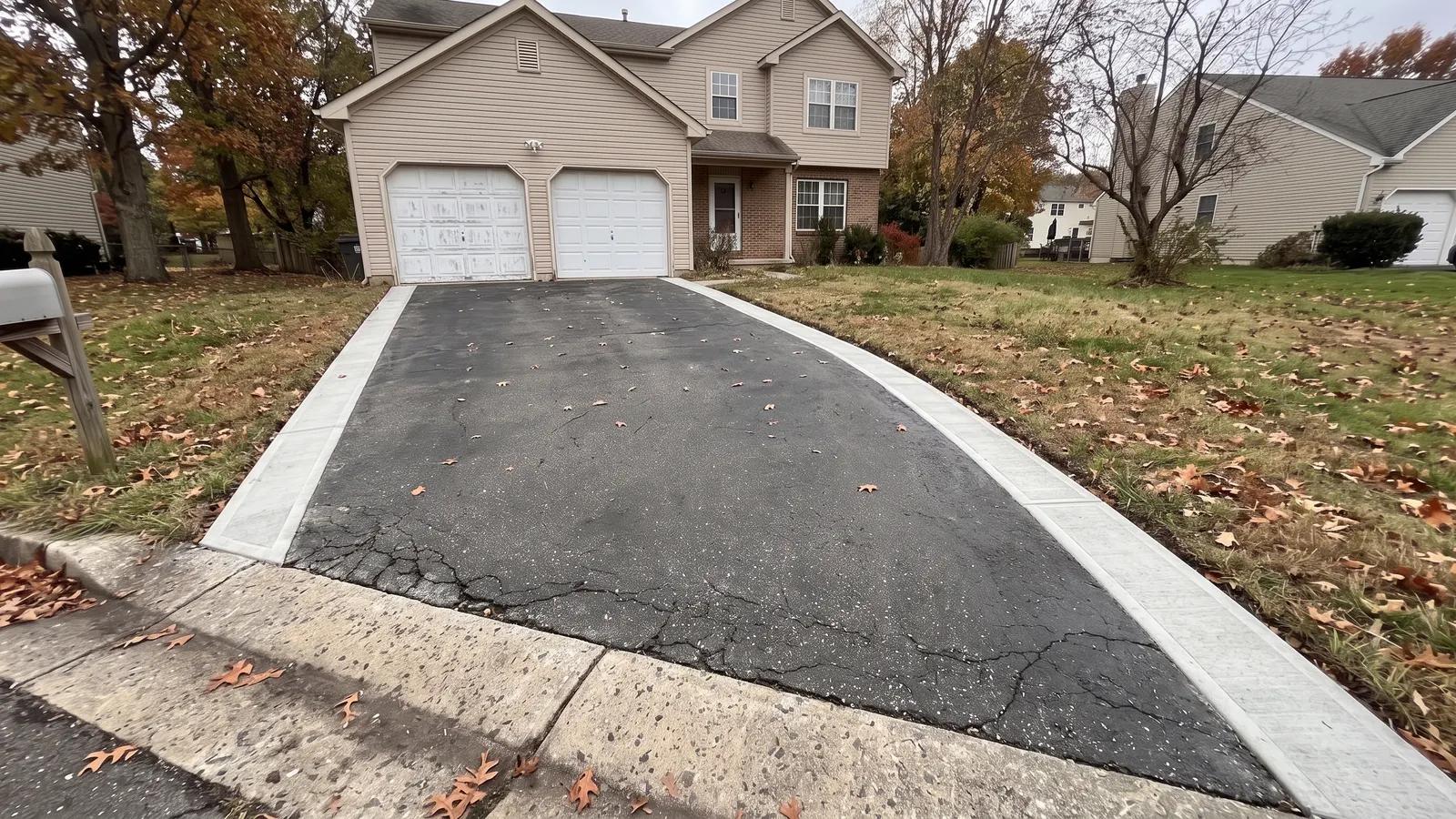
A 6-inch concrete strip set flush with the lawn lets one mower wheel ride along it, so you never need to string-trim the driveway edge again. It also braces the asphalt. HomeGuide puts a concrete mow strip at $3 to $8 per linear foot installed, one of the cheaper permanent options here.
11. Leave a crushed stone shoulder
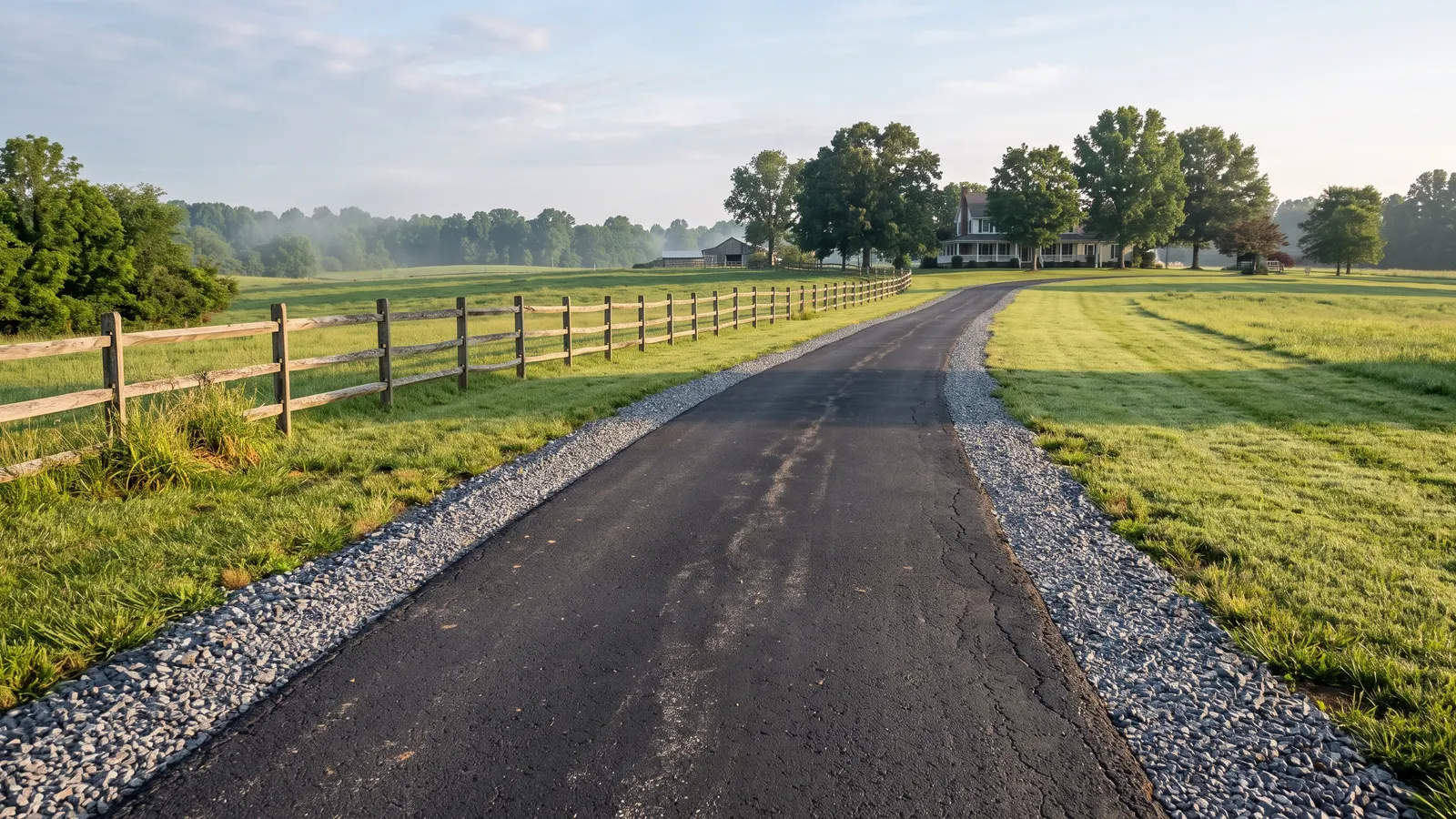
On long country driveways, an 18-inch shoulder of compacted crushed stone does what road shoulders do: it gives the asphalt edge something firm to lean on and catches tires that drift. It costs a fraction of a stone curb and drains well. Top it up every few years, since it gets thrown around by plows.
Edging ideas for concrete driveways
Concrete holds its own edges, so the border here is mostly about looks and about where the lawn or beds start. That leaves more room for something decorative.
12. Add a stamped concrete curb
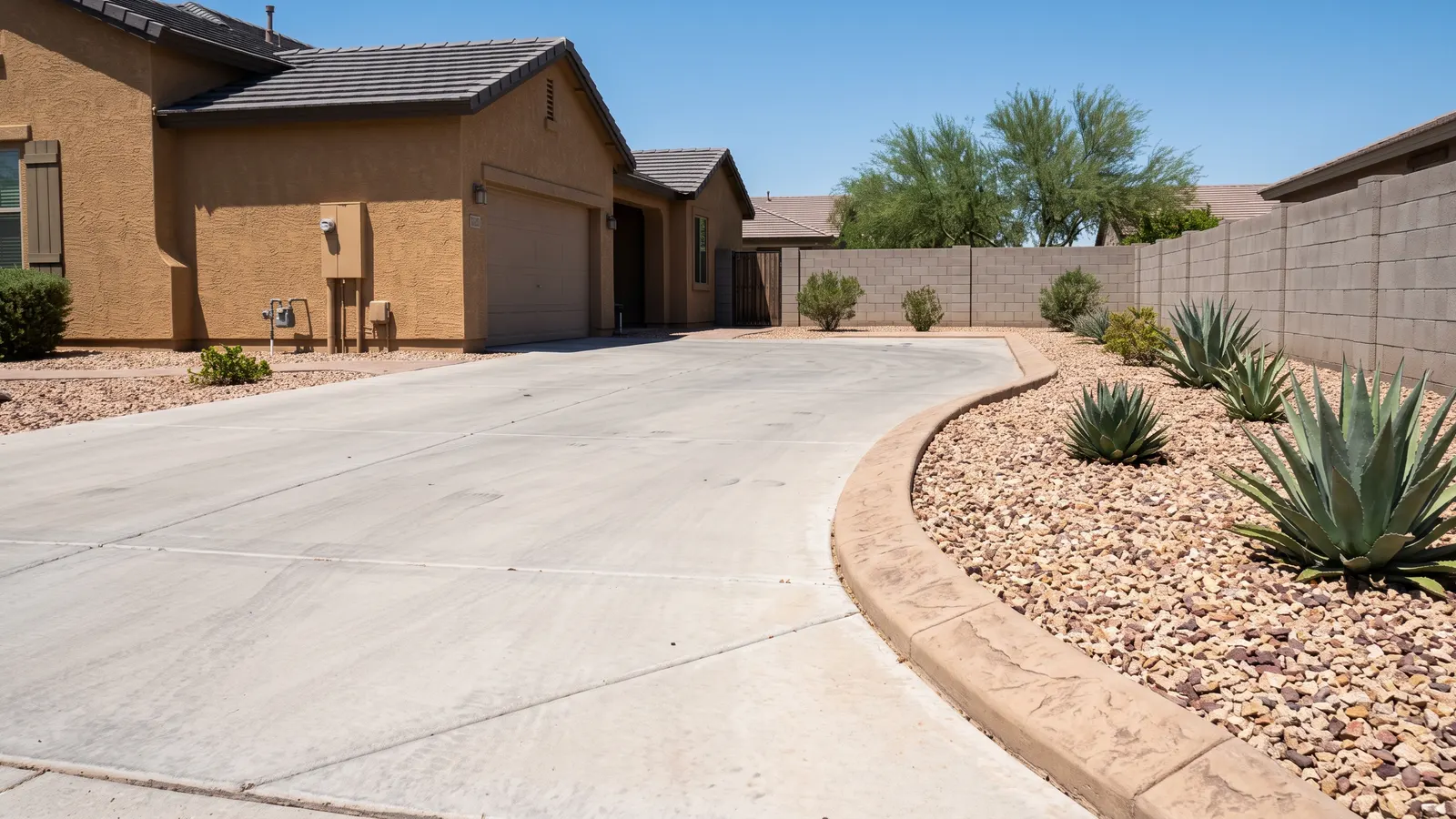
Continuous concrete curbing is extruded on site in one piece, so it follows curves with no joints. Stamped and colored versions mimic stone or brick for less money. HomeGuide lists decorative curbing at $3.50 to $8.50 per linear foot for materials and $5 to $18 installed. Our landscape curbing cost guide breaks that down by profile and color. It's a good fit for desert yards where the bed next to the drive is gravel and cactus rather than lawn.
13. Run a dark paver ribbon
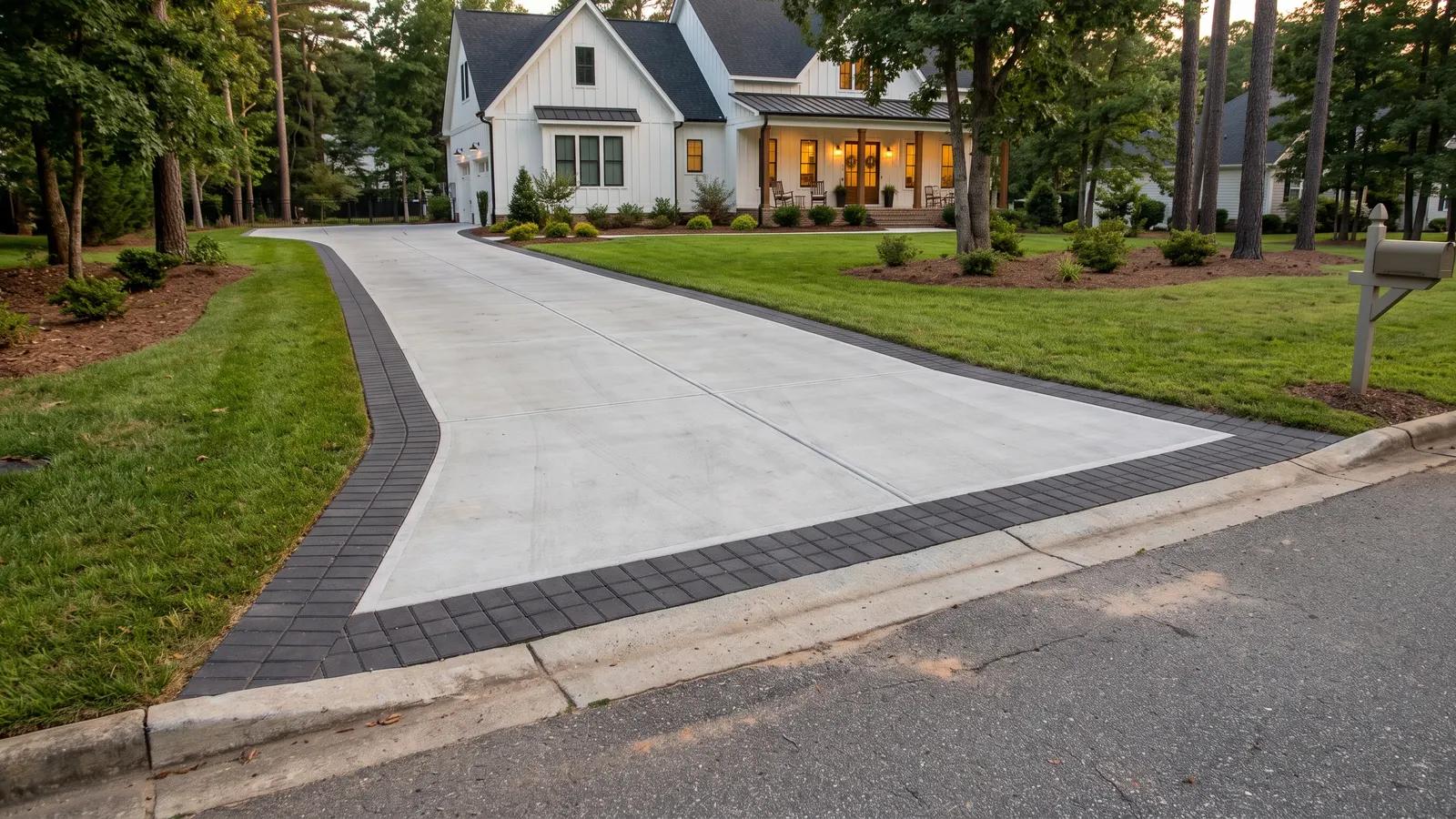
A band of dark pavers along the sides and across the street end makes a plain slab look custom. It's also the easiest way to widen a narrow driveway by a foot on each side. The pavers need their own compacted base and a solid edge restraint on the outside, the same as a full paver drive.
14. Edge a planting bed in black steel
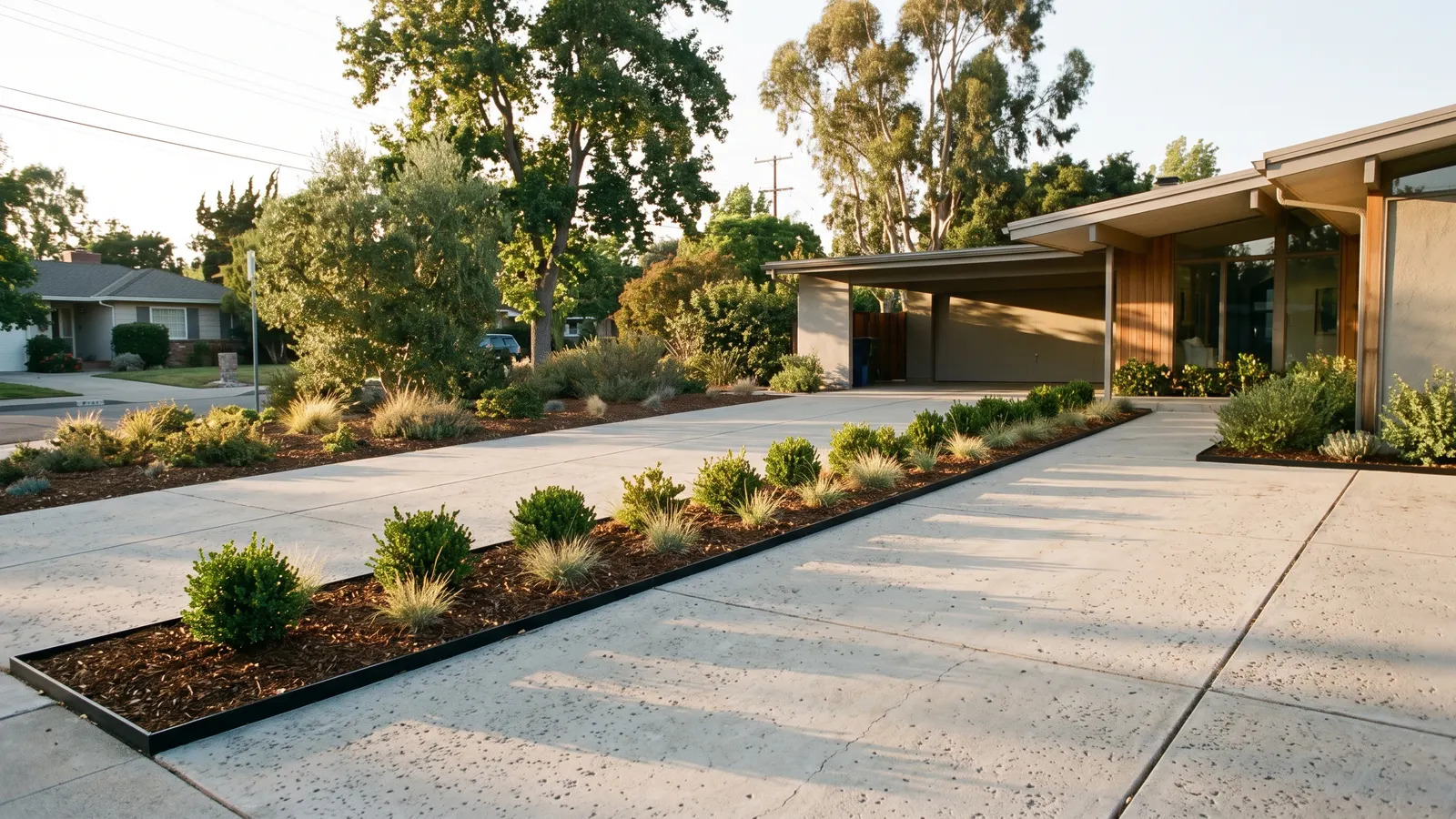
Sometimes the best driveway border is a planting bed. A narrow strip of grasses and small shrubs along the drive, edged in black steel, softens a wide concrete slab and suits mid-century and modern houses. Keep plants low within 2 feet of the drive so they don't block the view of the sidewalk when you back out.
15. Lay a black pebble strip
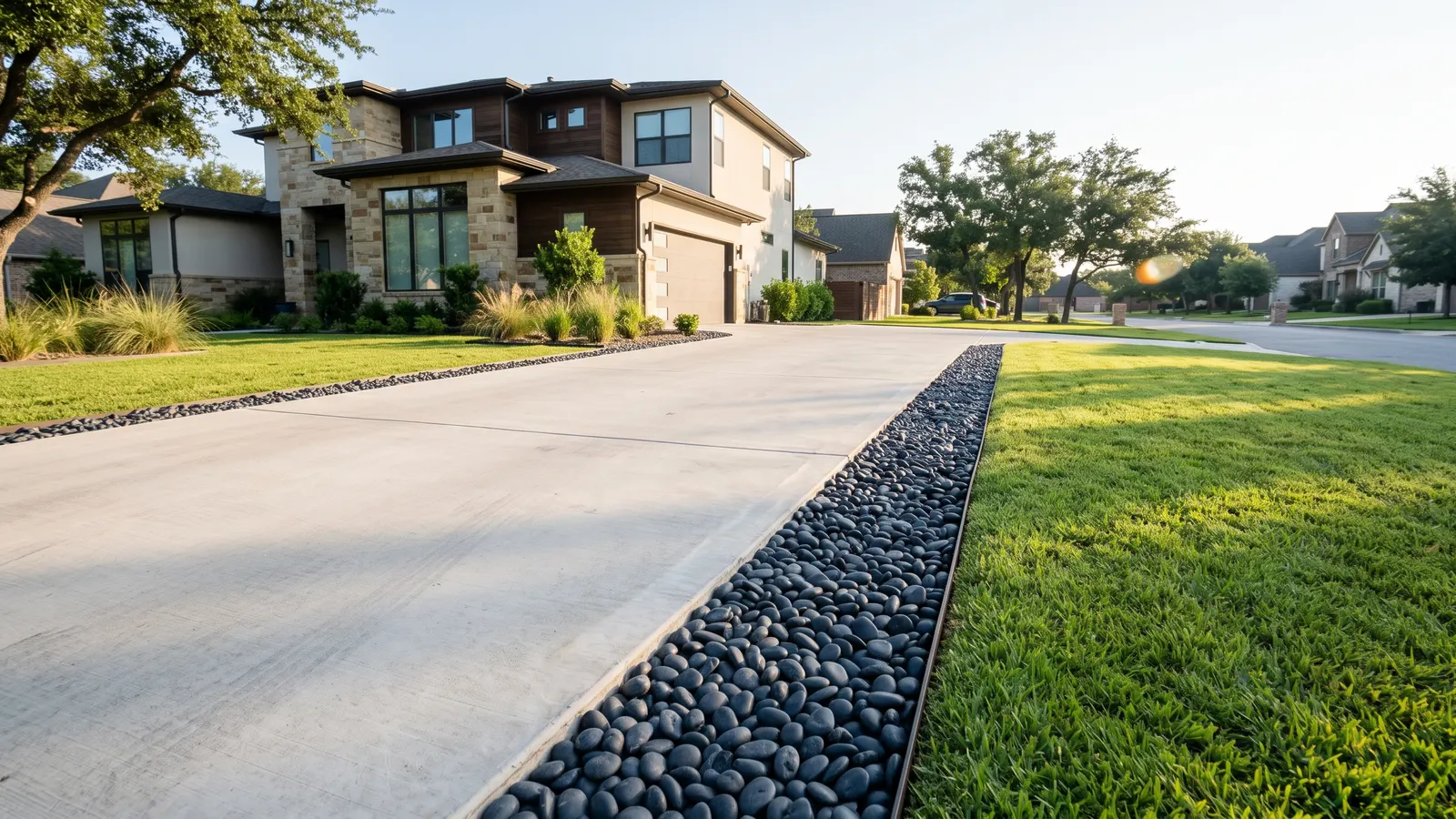
A 10-inch strip of black Mexican beach pebbles between concrete and lawn gives a sharp modern line and handles the runoff that sheets off the slab. Mexican beach pebbles cost more than ordinary river rock, but a narrow strip doesn't take many. Hold them in with a thin steel edge on the lawn side, and leaf-blow rather than rake.
Edging ideas for paver driveways
On a paver driveway the edge is part of the structure. Without a solid restraint, pavers drift apart under turning tires and the joints open up. The Interlocking Concrete Pavement Institute's guidance is blunt: flat landscape edging made for flower beds is not an acceptable restraint for pavers, and spikes go into the compacted base, never into soil.
16. Finish with a contrasting border course
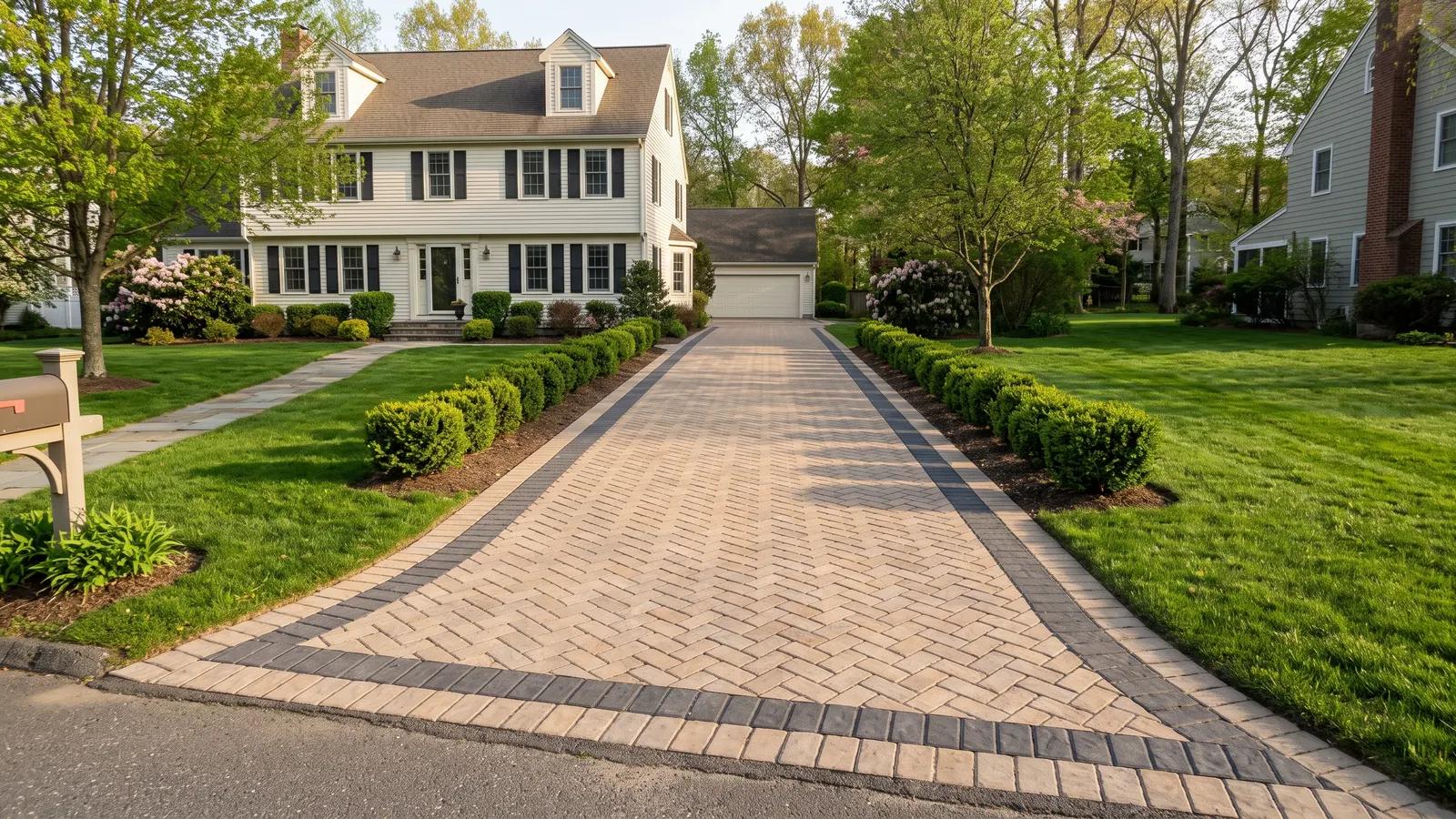
A double row of darker pavers along the edges, laid lengthwise, frames a herringbone or basket-weave field and hides small cuts at the edges. It's the cheapest upgrade on a new paver drive, since you're buying pavers anyway. Behind the border, use the heaviest restraint available: concrete, or thick aluminum or plastic edging rated for driveways.
17. Add a cobblestone apron
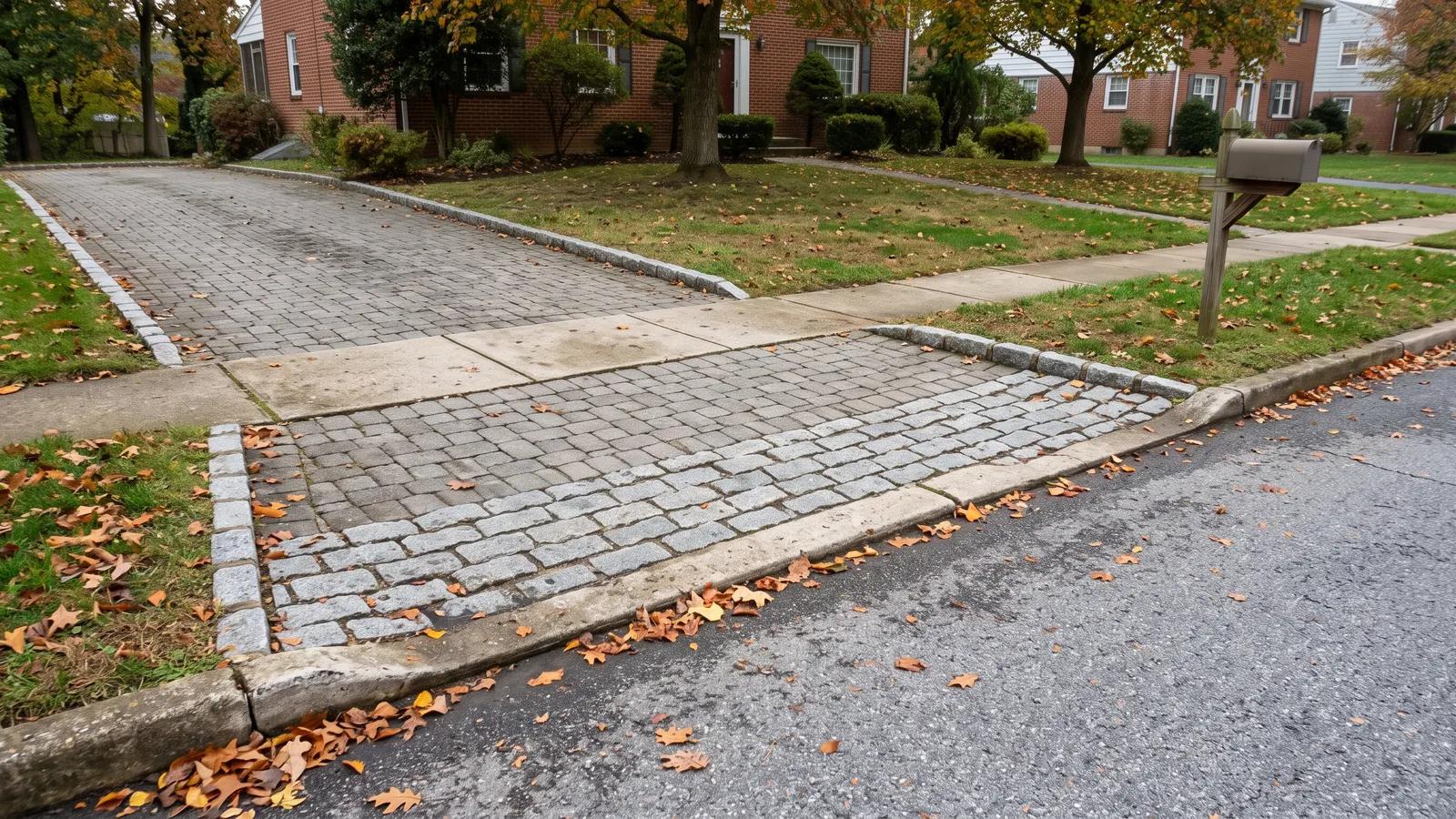
A band of granite cobbles at the street end, continued as a single row along the sides, marks where the drive begins and takes the abuse from the curb transition. Check with your town before changing the apron, since the strip between the sidewalk and street is often public right-of-way and may need a permit.
18. Light the border
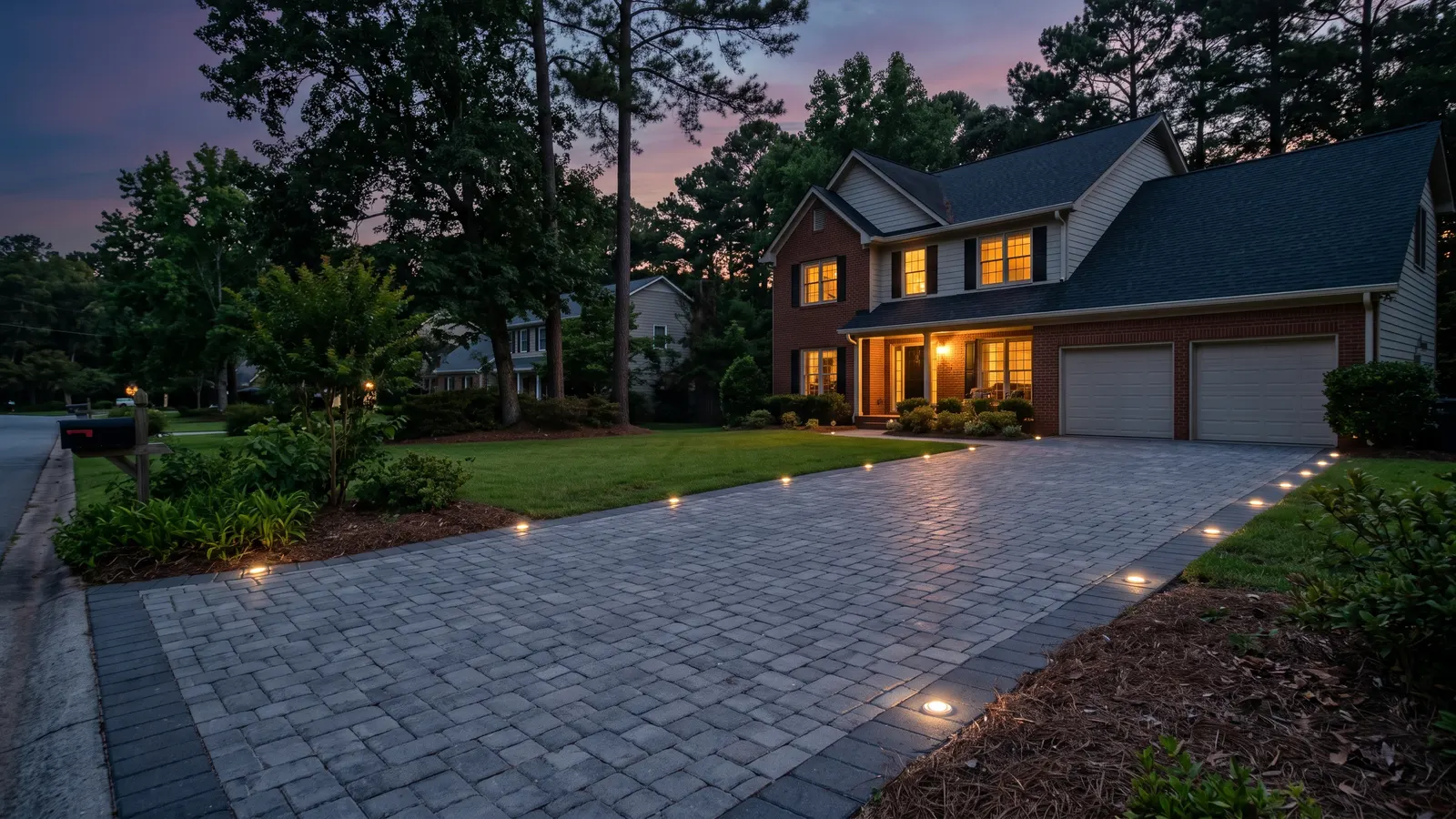
Low-voltage LED lights set flush into the border pavers mark the driveway at night without any posts for the plow or a bumper to hit. Pick fixtures rated for vehicle traffic and plan the wiring before the pavers go down; retrofitting means lifting a row. Our guide to front yard curb appeal ideas has more on lighting the front of the house.
Plant borders for any driveway
Plants work as a driveway border on every surface, alone or behind a hard edge. Keep them a foot or more back from the pavement, choose plants that stay low, and in cold climates leave room for the snow you'll pile there. For full planting plans along a drive, see our driveway landscaping ideas.
19. Plant a liriope line
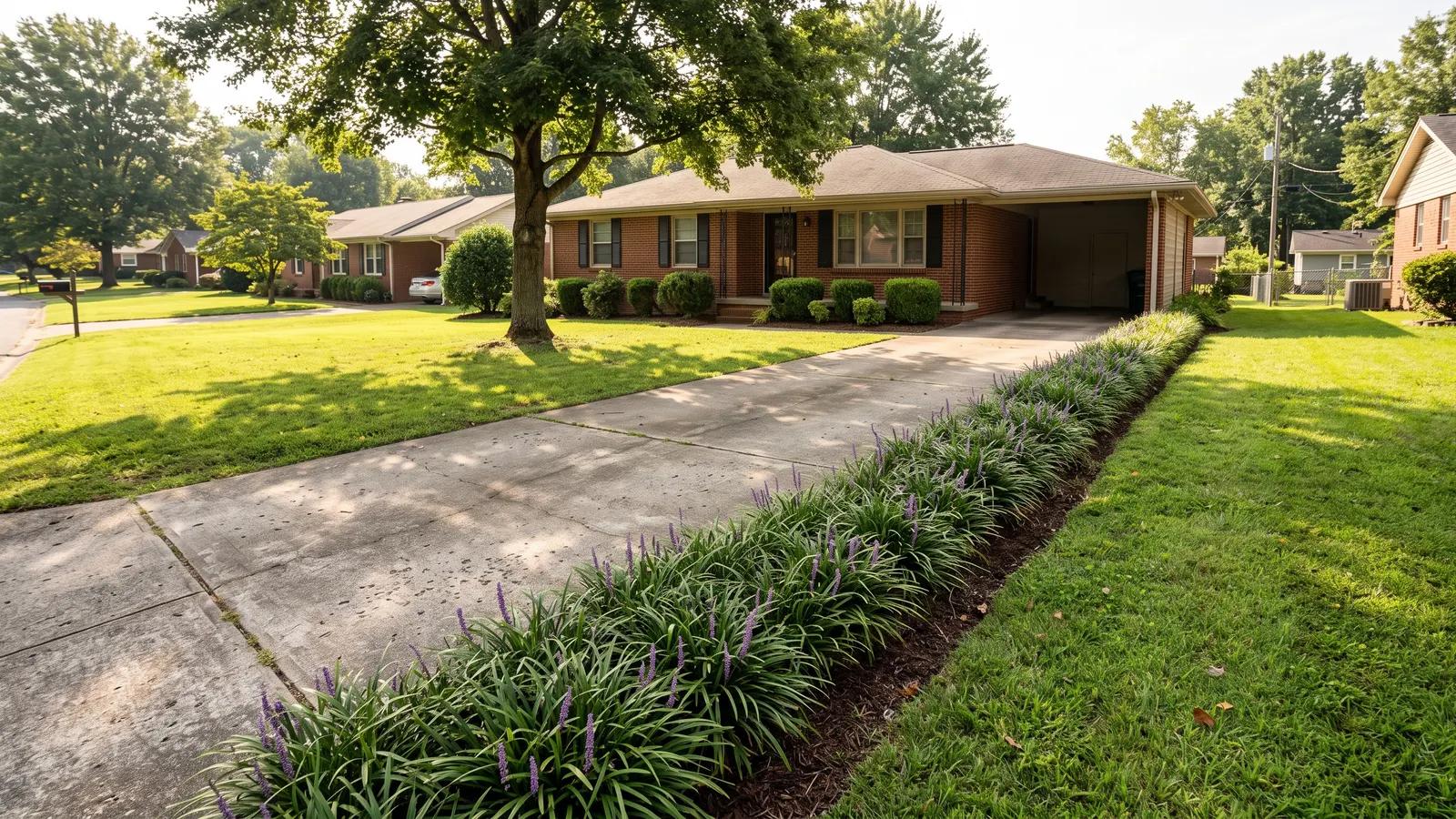
Liriope, often sold as monkey grass, is the workhorse of Southern driveway borders. It grows into a tidy, grassy strip about a foot tall, flowers purple in late summer, and shrugs off heat and dry spells. It's hardy in roughly zones 5 to 10. Mow or cut it back once in late winter, and it looks fresh again by spring.
20. Repeat blue fescue clumps
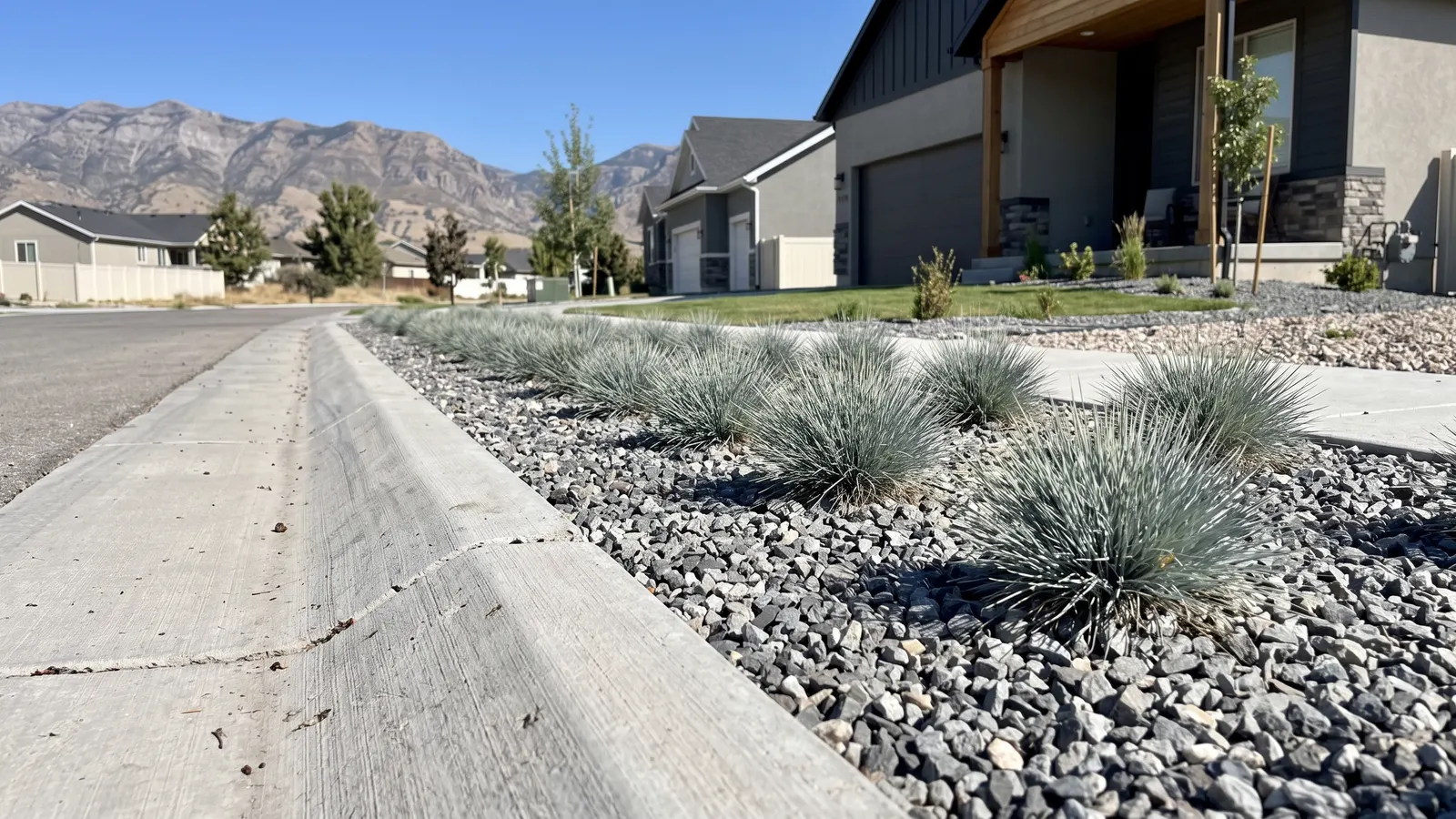
Small round clumps of blue fescue spaced a foot apart in gravel mulch give a modern, drought-tolerant edge with almost no upkeep. The silver-blue color stands out against concrete and dark houses. It does best in full sun and well-drained soil, roughly zones 4 to 8, and tends to sulk in humid Southern summers.
21. Clip a low boxwood hedge
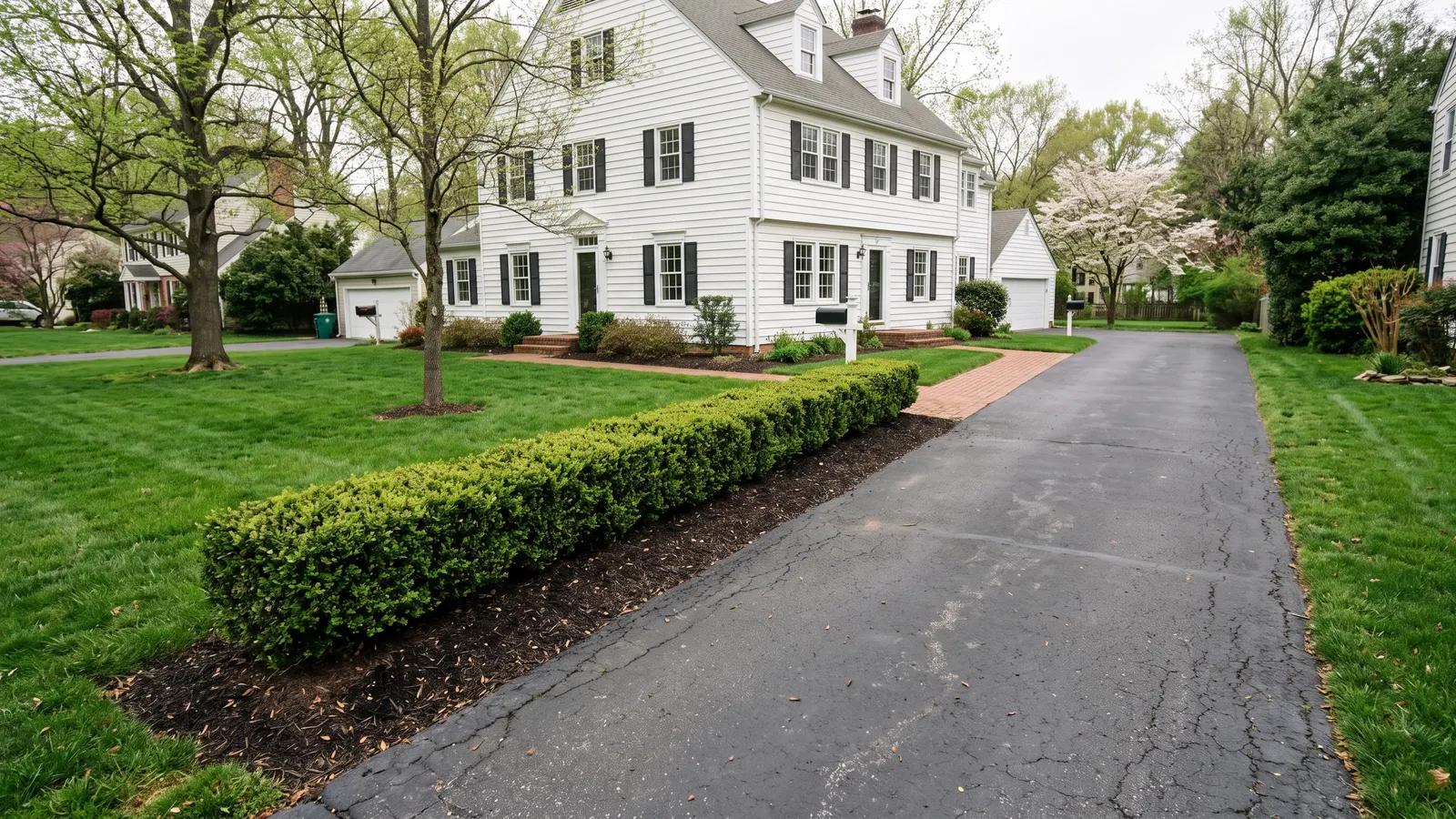
A knee-high boxwood hedge gives a formal, evergreen edge that suits Colonial and Georgian houses. Plant it at least a foot back from the asphalt so mirrors and doors don't scrape it, and shear it once or twice a year. Boxwood dislikes de-icing salt, so where snow from the plow lands, a tougher shrub may be the better pick.
22. Grow a flower border behind stone
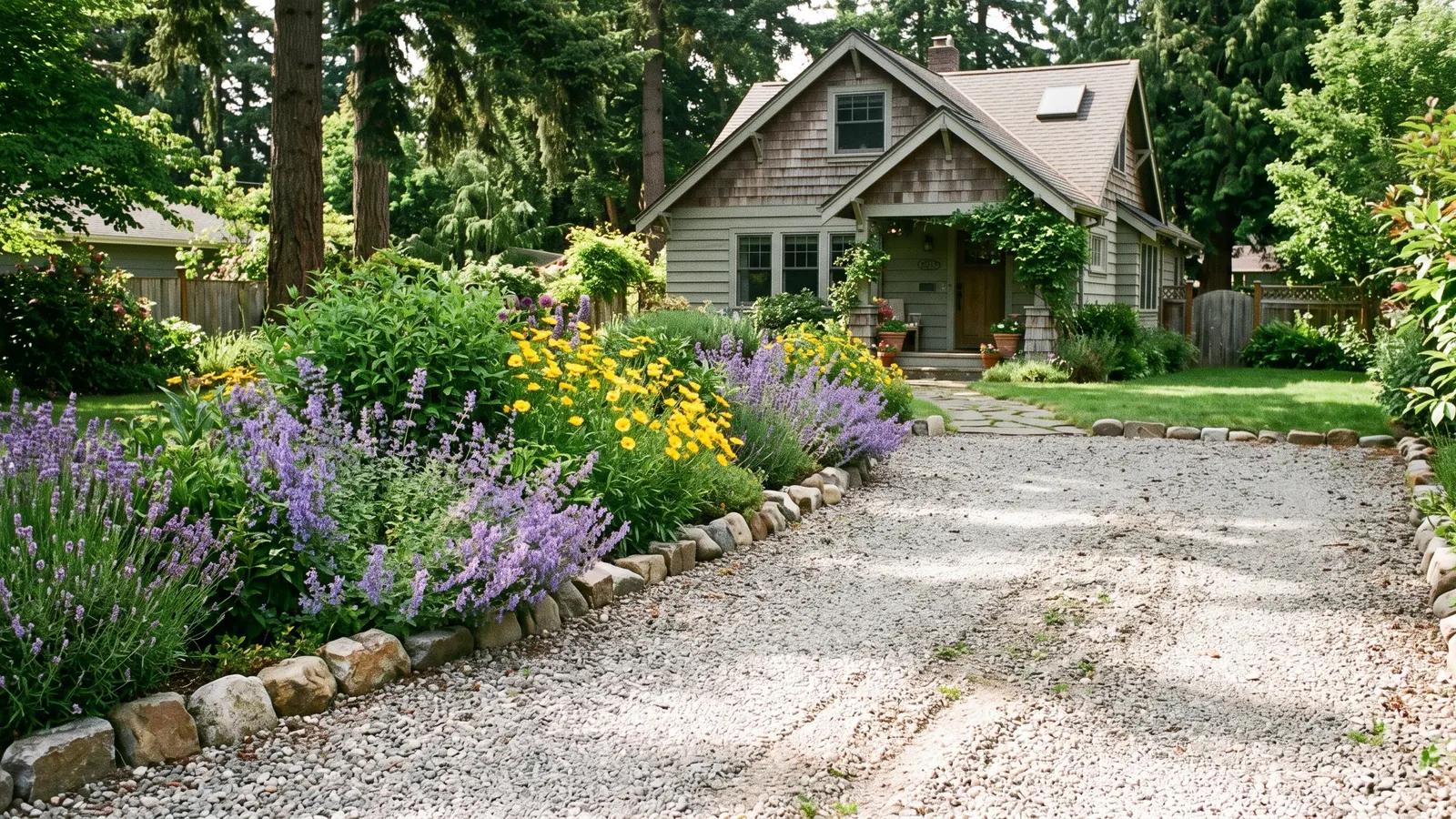
Lavender, catmint and coreopsis behind a low row of tumbled stone turn a plain drive into a cottage-style entrance. The stone keeps soil and mulch off the driveway; the perennials handle sun and dry soil once established. Most of these are hardy to about zone 5. Cut everything back once a year in early spring.
23. Let creeping thyme soften the stones
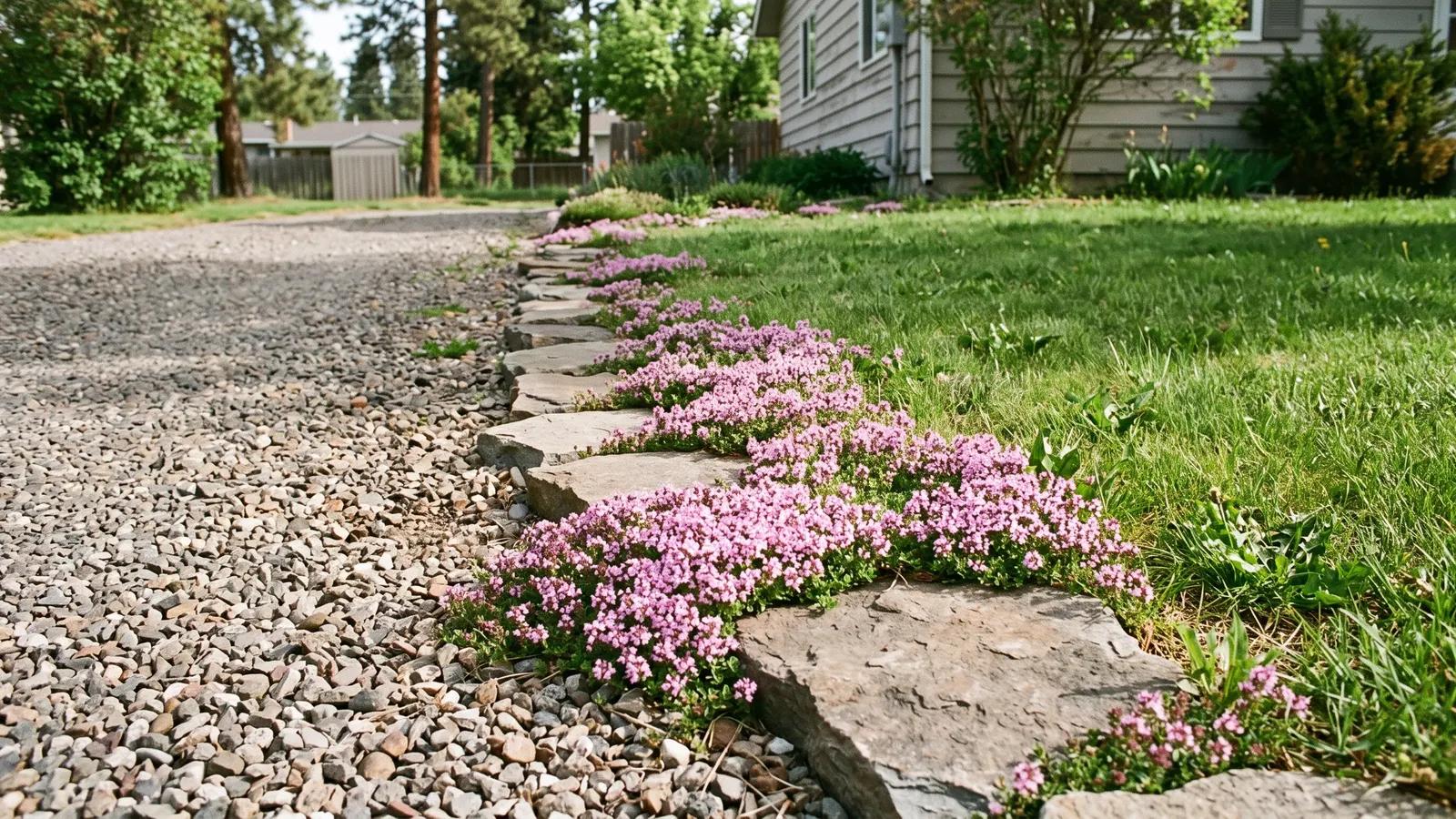
Creeping thyme tucked between large flat edge stones forms a low mat that flowers in late spring and smells good when brushed. It handles light foot traffic, not tires, so keep it on the outside of a hard edge. It wants sun and sharp drainage, which makes it a natural partner for gravel drives in roughly zones 4 to 9.
What driveway edging costs
Most driveway edging falls between $5 and $18 per linear foot installed, according to HomeGuide, and LawnStarter puts general landscape edging at $3.50 to $8.80 per foot. Remember that you usually edge both sides: a 60-foot driveway is 120 linear feet, or roughly $600 to $2,200 installed.
| Edging material | Materials per linear foot | Best on | Notes |
|---|---|---|---|
| Plastic | $0.50 to $3 | Gravel (low traffic) | Cheapest; heaves and cracks over time |
| Steel or aluminum | $2 to $6 | Gravel, beds, pavers (rated types) | Thin strips bend under tires |
| Brick | $1.50 to $5.50 | Asphalt, concrete | Use solid paving brick |
| Precast concrete curbing | $2 to $4 | Any | Easy DIY blocks |
| Poured concrete | $2 to $7 | Asphalt, concrete | Mow strip $3 to $8 installed |
| Stamped concrete curbing | $3.50 to $8.50 | Concrete, beds | $5 to $18 installed |
| Wood or timbers | $4 to $9 | Gravel | Rots in about a decade |
| Granite (Belgian block) | $11 to $16 | Asphalt, gravel, pavers | Most durable; usually pro-installed |
Material prices are from HomeGuide's landscape curbing guide; labor adds about $1.50 to $10 per linear foot. Prices checked October 2026.
How to choose the right driveway border
- Gravel driveway, tight budget: steel edging (idea 1) or timbers (idea 4). Plastic (idea 7) only where tires never go.
- Gravel driveway, done once: granite cobbles (idea 2) or a paver border (idea 3). See our gravel patio ideas if the same gravel continues into the backyard.
- Asphalt with crumbling edges: Belgian block (idea 8) or a concrete mow strip (idea 10), ideally when you repave.
- Plain concrete slab: a paver ribbon (idea 13) or a planted bed with a steel edge (idea 14).
- New paver driveway: a contrast border (idea 16) on a proper restraint, plus lights (idea 18) wired in before the pavers go down.
- Snow country: stone or concrete edges and plants set well back, since plows and salt are hard on everything else.
Not sure which edge suits your house? AI landscape design from OutdoorBrite lets you try borders on a photo of your own front yard and compare a few before you commit. On the Plus plan you can also place elements, like a new driveway edge, directly on your photo.
FAQ
What is the best edging for a gravel driveway? Heavy-gauge steel or granite Belgian block set in concrete are the most reliable, because they stay put under tires and frost. Steel is cheaper and handles curves; Belgian block lasts longer and looks more formal. Plastic edging is the budget choice but tends to heave and crack within a few years.
How do you edge an asphalt driveway? Cut the ragged edge back to a straight line, dig a trench alongside it, and set the border (Belgian block, brick or poured concrete) in concrete so it supports the asphalt. Set it level with or slightly above the asphalt and keep the finished grade sloping away so water drains. It's easiest to do when the driveway is repaved.
What is the cheapest way to edge a driveway? Plastic edging at $0.50 to $3 per linear foot is the cheapest material, followed by steel and precast concrete blocks. A strip of crushed stone or river rock also costs little and is easy to do yourself. Plants like liriope are cheap per foot but take a season or two to fill in.
Do you need edging on a concrete driveway? Not for structure, since concrete holds its own edges. People add borders on concrete for looks, to stop grass creeping onto the slab, or to widen a narrow drive with pavers. A concrete mow strip or a planted bed with a steel edge are the low-maintenance options.
What can I plant along my driveway? Low, tough plants that tolerate heat reflected off the pavement: liriope, blue fescue, creeping thyme, lavender, catmint and dwarf shrubs. Keep them at least a foot back from the edge and check your hardiness zone before buying. In snowy areas, avoid salt-sensitive plants where plowed snow lands.
How deep should driveway edging be? As a rule of thumb, bury at least half of an edging piece below ground. For Belgian block, This Old House recommends a trench about 12 inches wide and 8 inches deep with the blocks set in concrete. Paver restraints are spiked into the compacted gravel base, never into loose soil.
Sources: HomeGuide: landscape curbing and edging cost, LawnStarter: landscape edging cost, This Old House: Belgian block driveway edging, ICPI PAV-TEC-003: edge restraints for interlocking concrete pavements, US EPA: creosote, NH Department of Environmental Services: railroad ties and creosote-treated wood, all checked October 20, 2026