15 Hillside Landscaping Ideas on a Budget, Ordered Cheapest First
A slope eats budgets because everything on it fights gravity. These 15 ideas start at a packet of seeds and stop before the $20,000 contractor quote, ordered cheapest first, with erosion and mowing-safety rules included.
Slopes are where landscaping budgets go to die. Every material wants to slide downhill, every contractor quote has a wall in it, and the mower was never safe up there anyway. But hillside landscaping ideas on a budget do exist, and they share a strategy: let plants and gravity-smart materials do the holding, and save the engineered walls for where nothing else works.
This list is ordered cheapest first, from a seed packet to the phased version of a real terraced yard, with honest cost bands on each. One safety number frames everything: most mower manufacturers say don't mow slopes steeper than about 15 degrees. If your hill is past that, the lawn up there was already on borrowed time, and everything below is its replacement. The images are AI-generated design concepts from typical sloped yards, the same kind of render AI landscape design builds from a photo of yours.
1. Sow the cheap climbers and creepers first
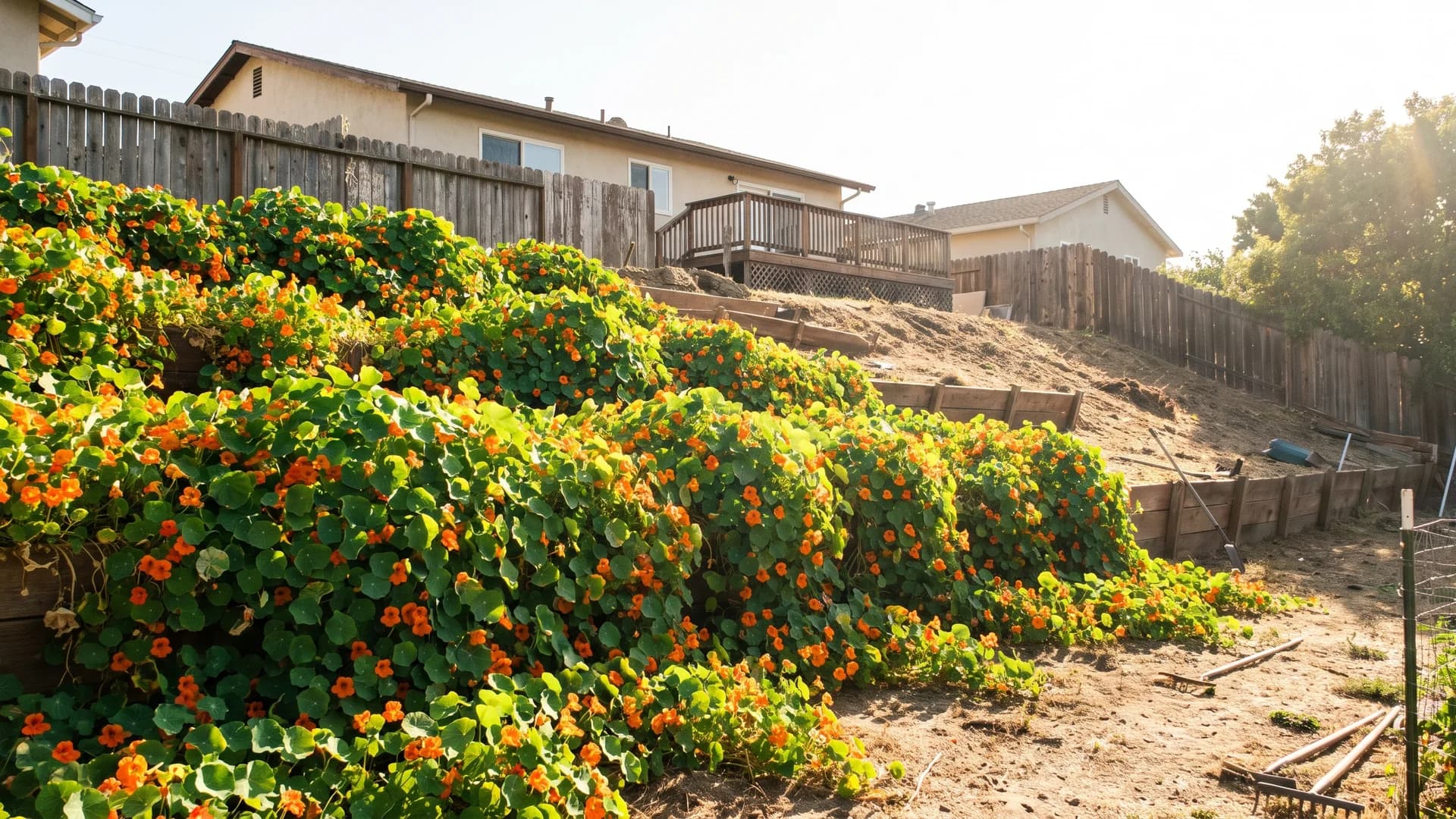
The lowest bid on any slope is seed. Nasturtium tumbles downhill in one season from a $4 packet; scarlet runner beans climb a string trellis just as fast. Neither is permanent, but both buy a green hillside the same summer you start, for under $20, while the long-term plants in the next ideas establish behind them. On a bare slope, fast and cheap beats perfect and someday.
2. Plant groundcover plugs on the whole face
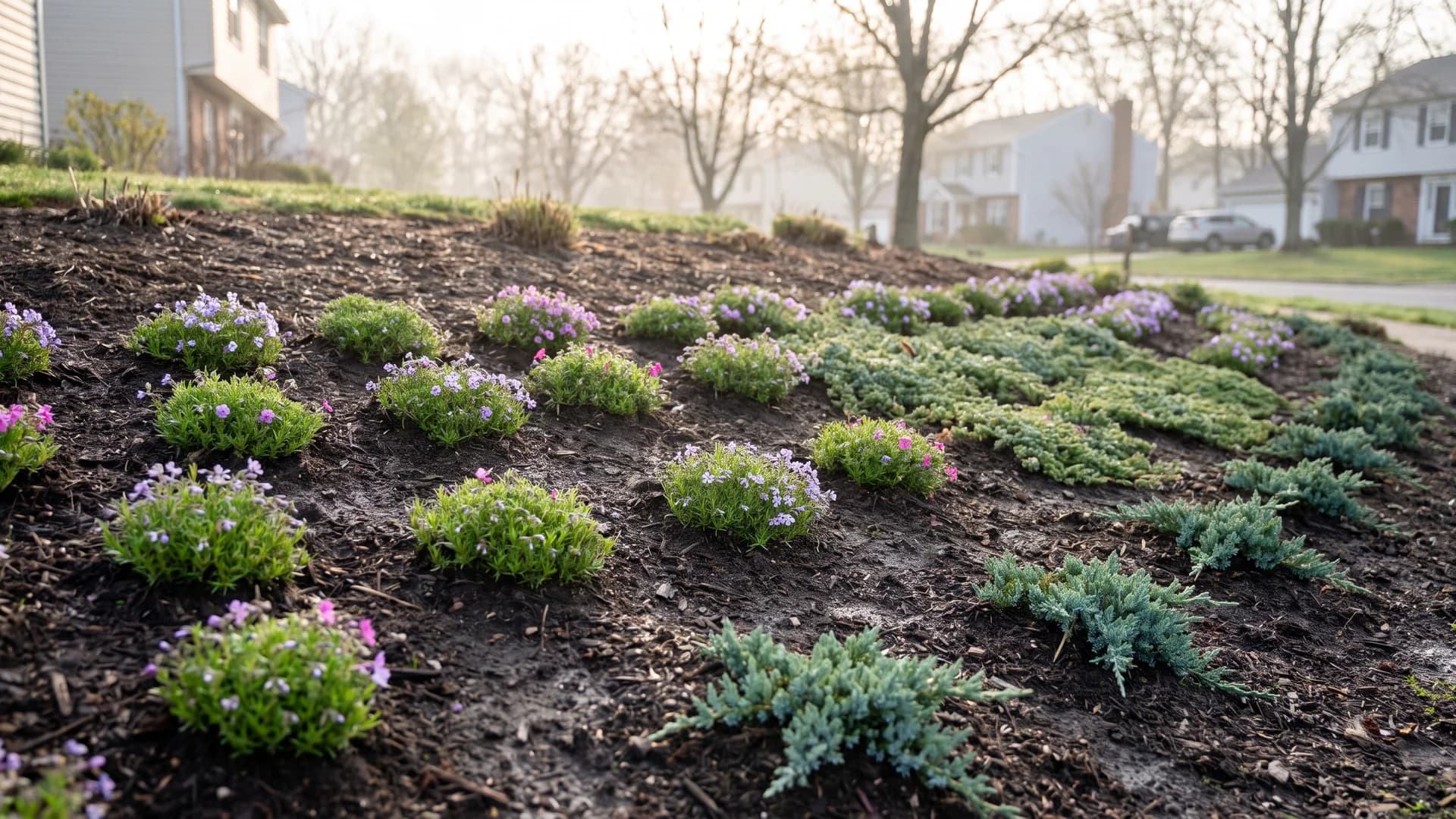
Groundcover is the permanent answer to unmowable grass. Creeping juniper holds evergreen in zones 3 to 9, creeping phlox walls the hill in spring color in 4 to 8, vinca handles the dry shade side. Plug trays bring the per-plant price to $2 to $4; a 200-square-foot face takes 50 to 70 plugs on 18-inch centers, so $150 to $250 total. Two seasons later the slope is closed to erosion and off the chore list.
3. Hold the mulch with fieldstone rows
Mulch alone slides to the bottom by July. Lay loose rows of fieldstone across the slope every 3 to 4 feet, like contour lines, and each row catches what the rain pushes down. Fieldstone runs $150 to $300 a pallet, and one pallet rows a decent face. The stone rows read as design, but they're working as check dams. Shredded hardwood mulch grips better than chips on any grade.
4. Net the bare sections while plants take hold
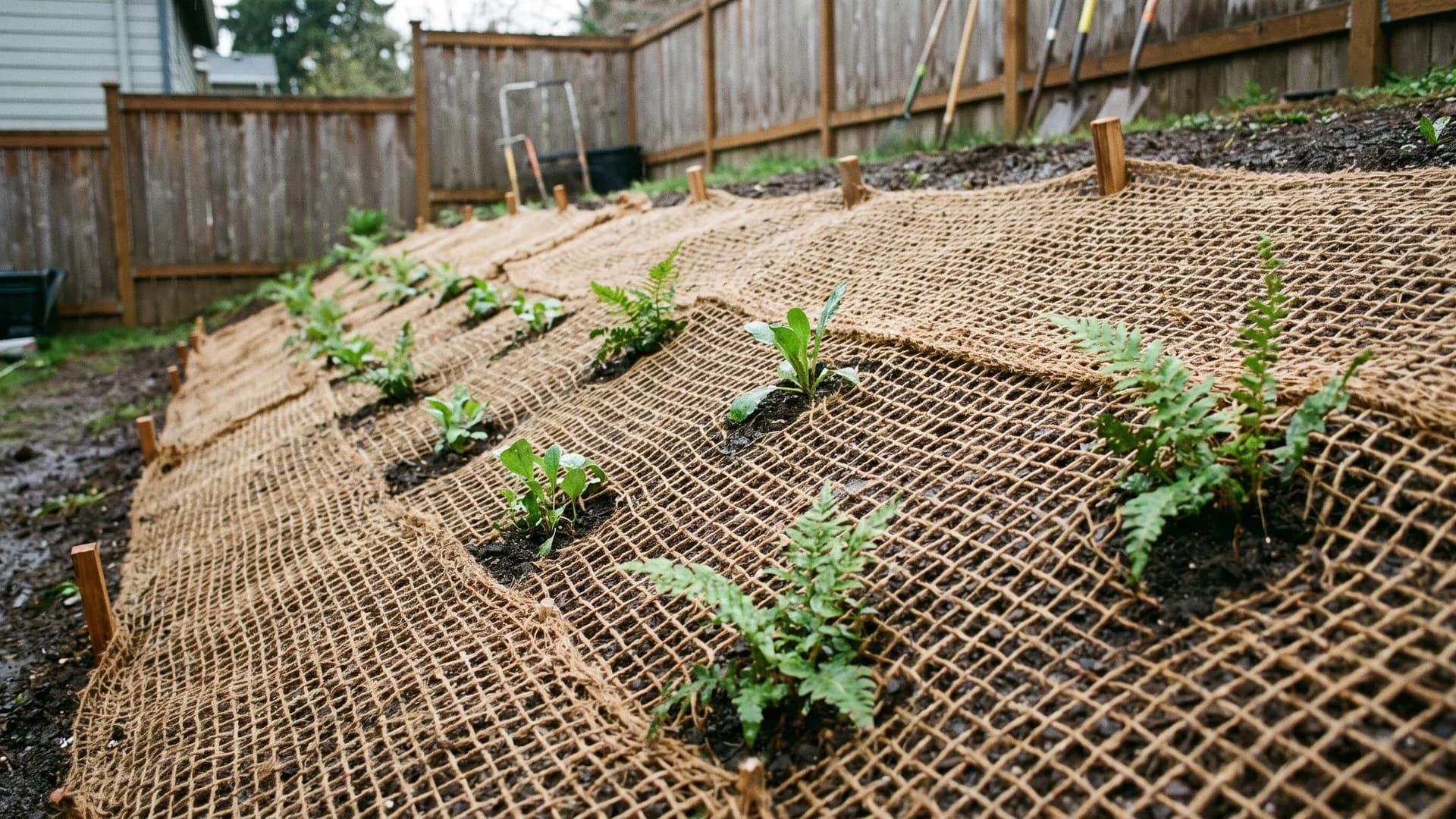
The gap between planting a slope and the roots knitting is when one storm can undo the work. Biodegradable jute netting, $40 to $220 a roll depending on width, pins over the soil and rots away as the plants fill in; straw wattles at about $40 each catch runoff on longer faces. It's the least glamorous spend on this list and the one that protects all the others.
5. Anchor the slope with scrounged boulders
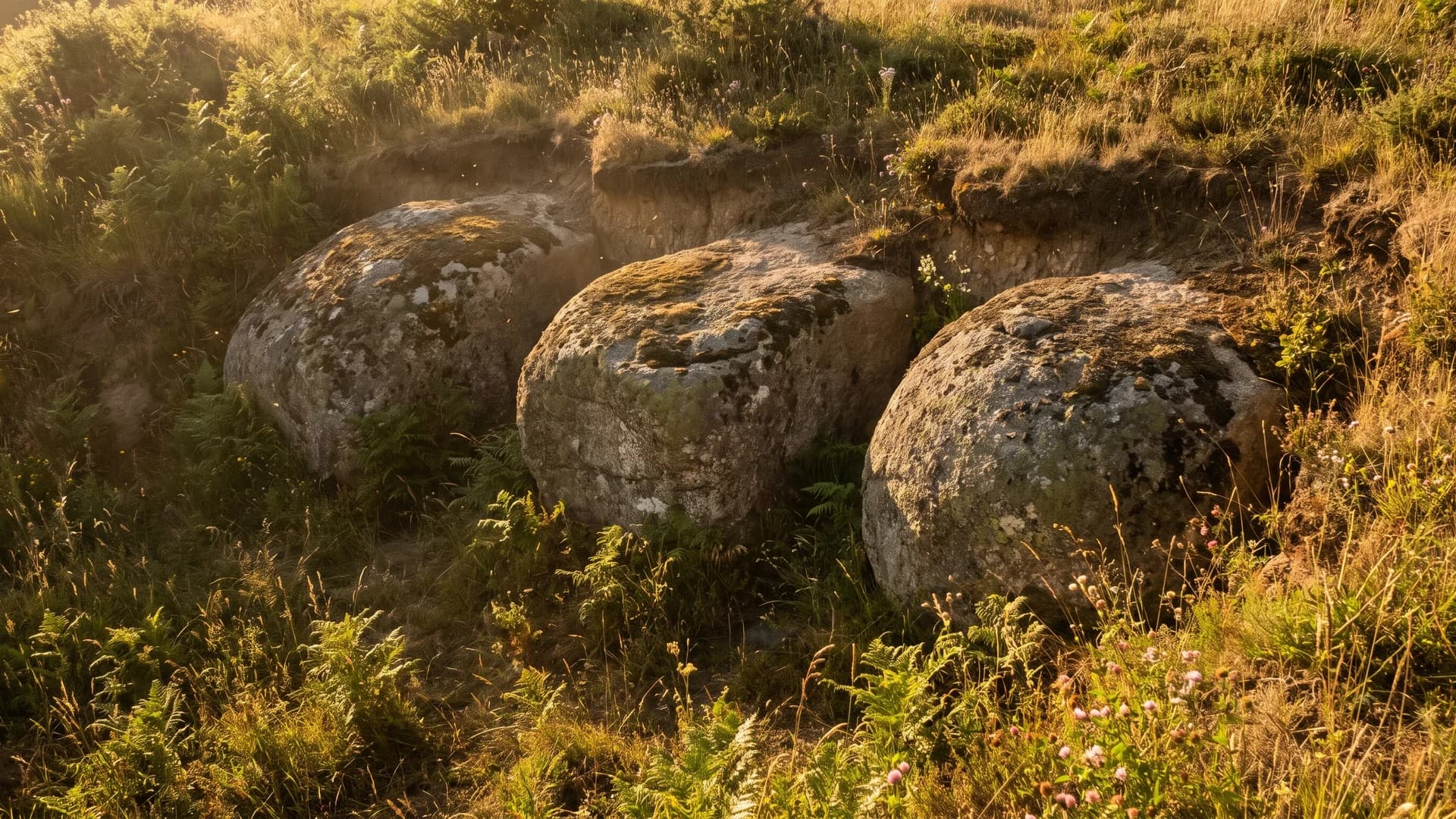
Quarries, excavation companies, and rural roadside listings often sell or give away rock that suppliers charge $300 for; hauling is the real cost. Set each boulder in a dug shelf, buried a third deep with the face leaning into the hill, and it becomes a permanent anchor that breaks the slope's runoff and its visual monotony at once. Three good stones change the entire hill's character.
6. Terrace with timber instead of stone
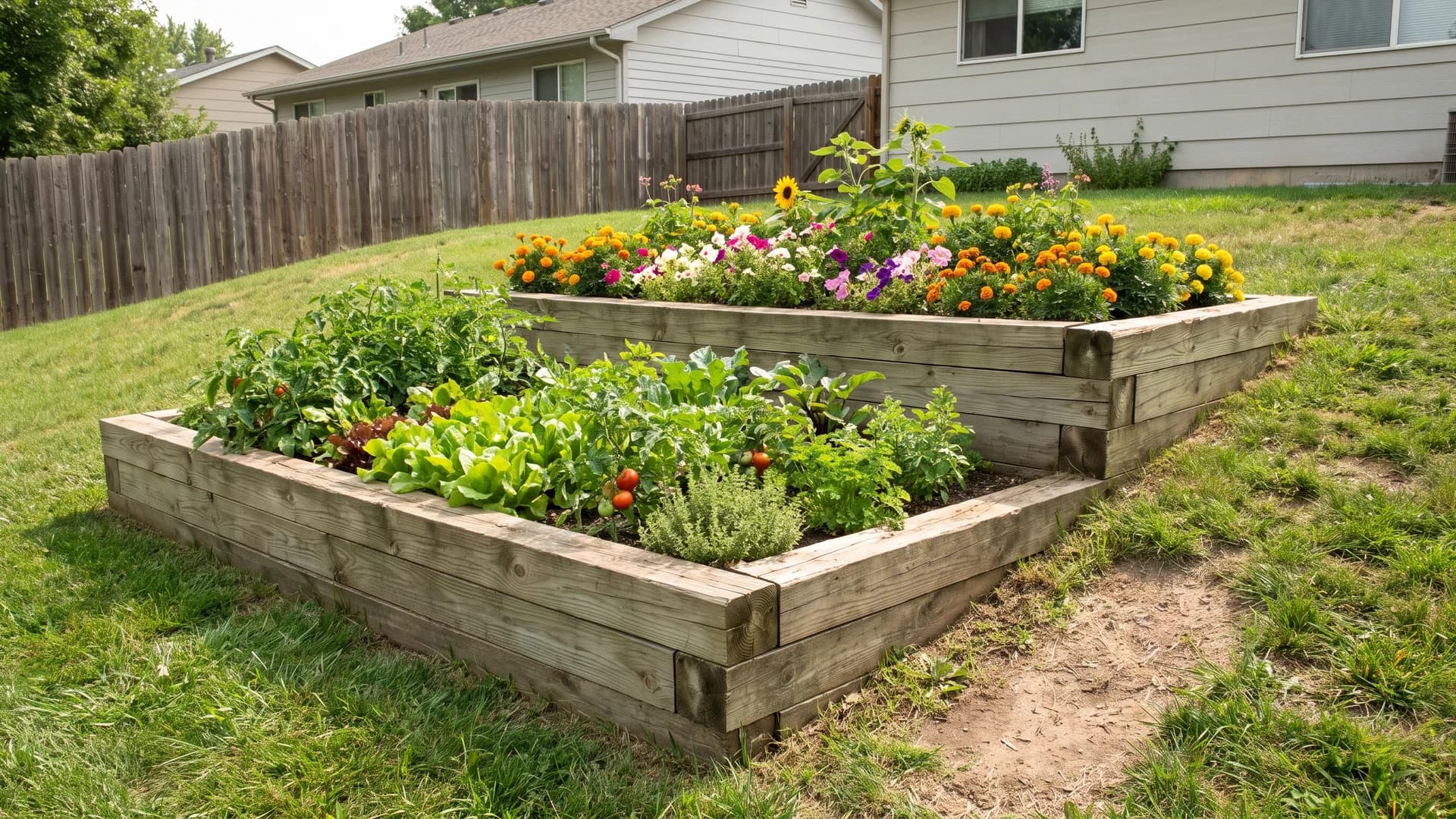
Terracing is how a slope becomes usable ground, and timber is its budget material: pressure-treated 6x6s run a third to half the cost of block or stone for the same hold. Two 16-foot terrace beds, each two timbers high with rebar pins, cost $300 to $600 in lumber. Keep each level under 2 feet of retained height and step them back; that's the line between a weekend build and an engineering job.
7. Stack low dry-stone walls you can build alone
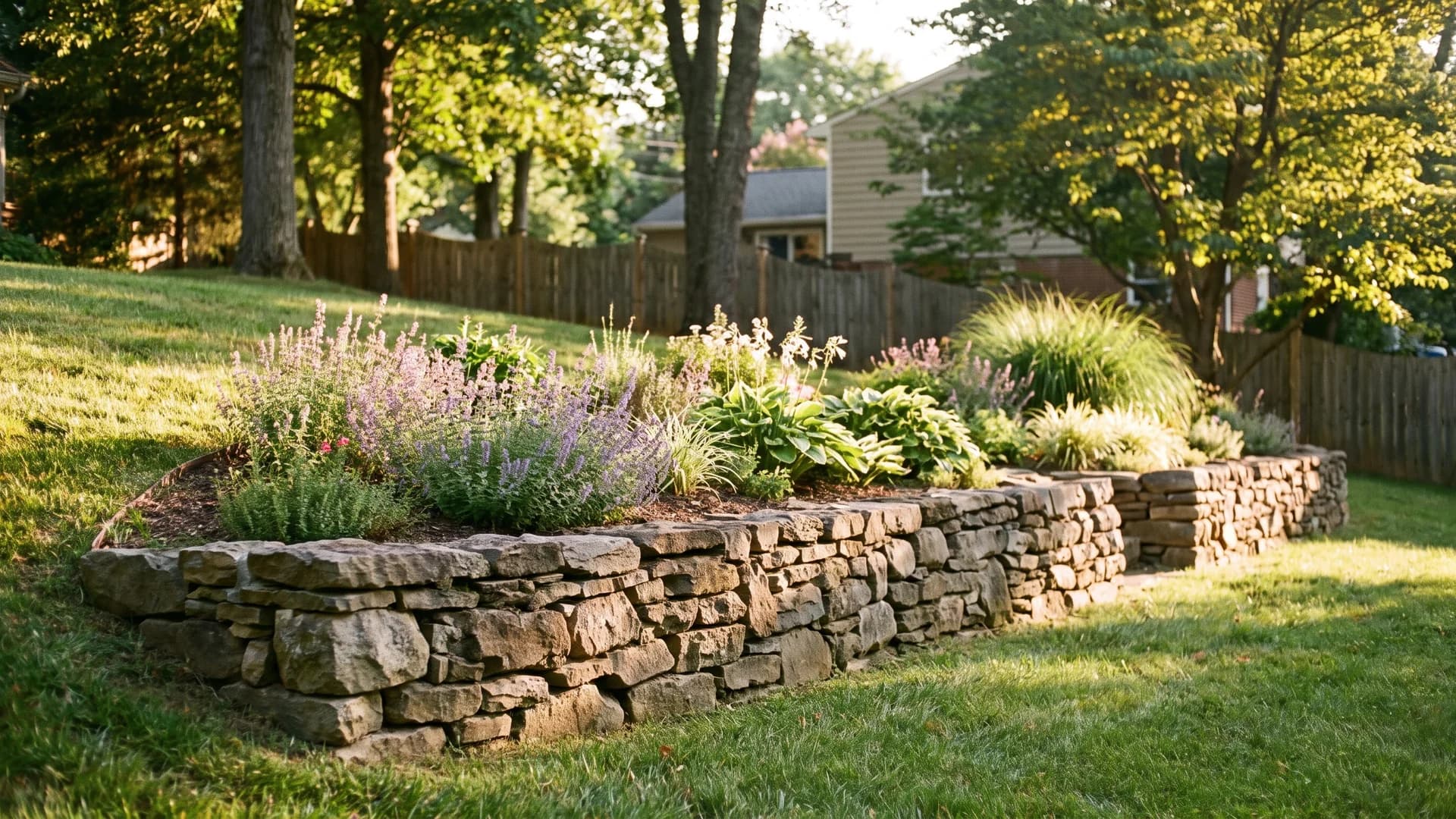
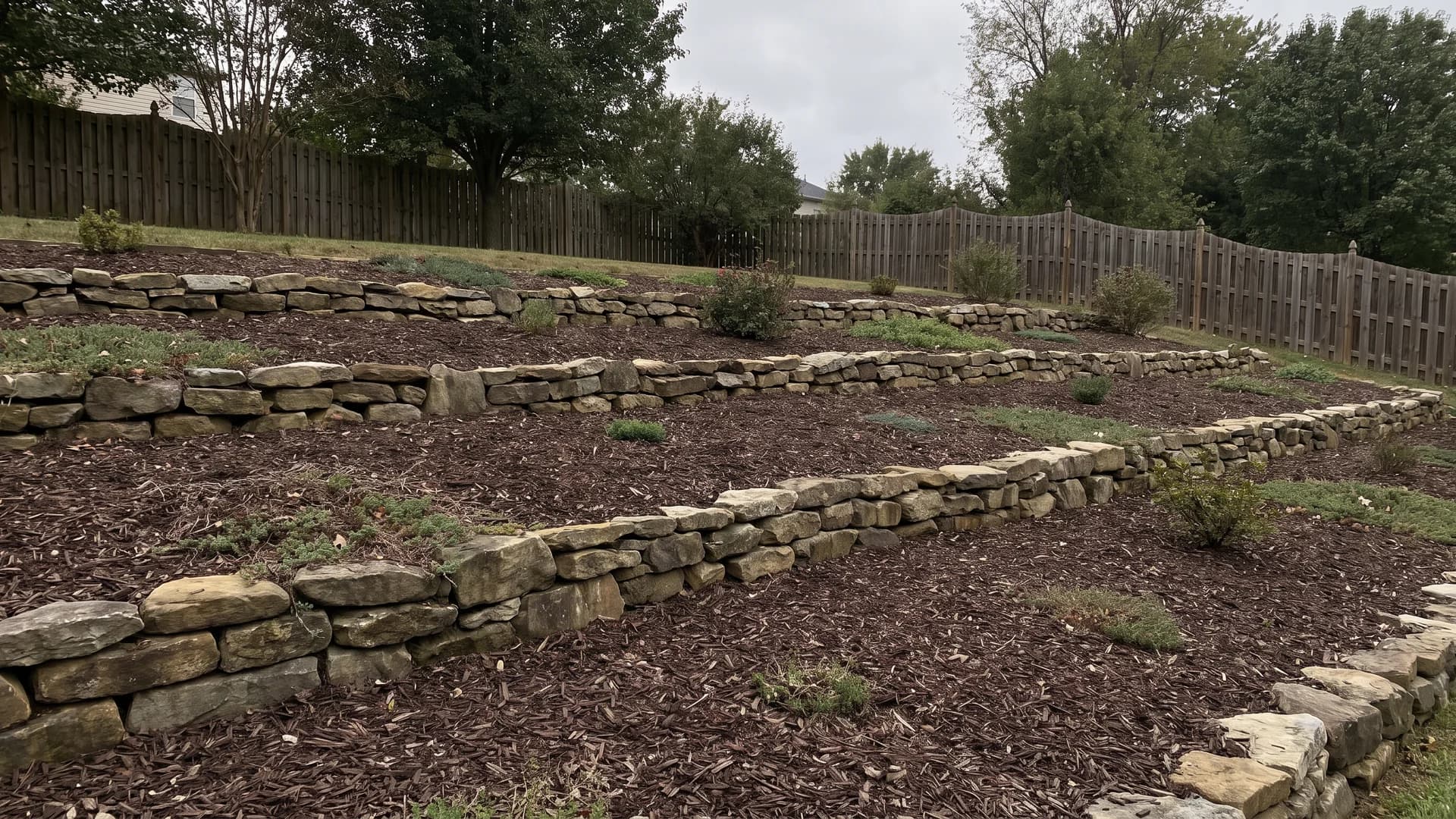
Under 2 feet tall, a retaining wall needs no permit in most areas and no mortar ever: wall stone stacked with a slight lean into the hill, on a gravel footing, drains itself and flexes with frost. Stone runs $250 to $400 a pallet, roughly 30 to 40 face feet. Two short walls holding two shallow terraces beat one tall wall in cost, safety, and looks, and you can build them one Saturday apiece.
8. Terrace in cinder block and cap it
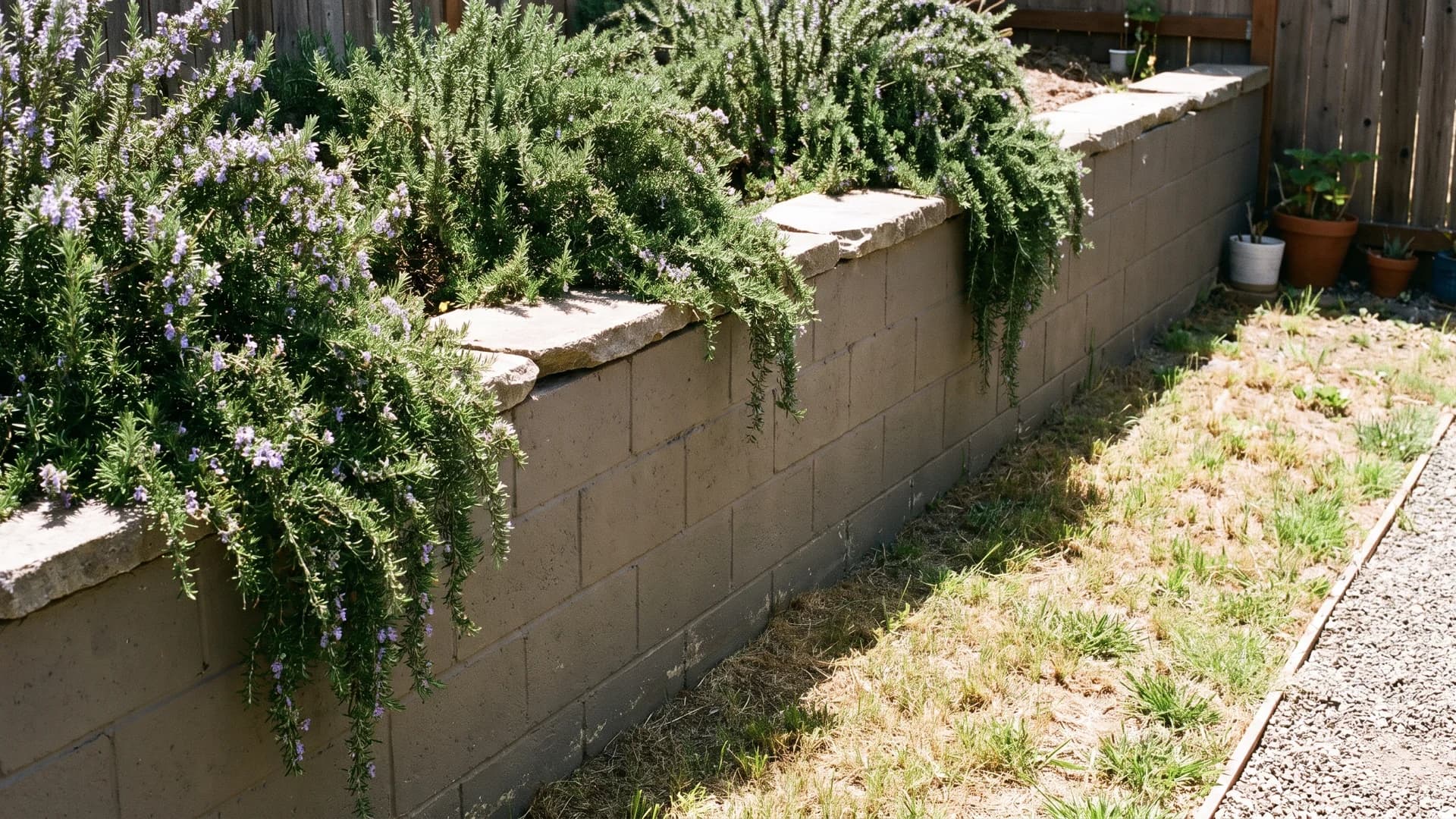
Cinder block is the cheapest wall material at $2 to $3 a block, and the trick is finishing it: a coat of masonry paint and a flat cap stone turn utility gray into something deliberate. A 12-foot, two-course terrace wall lands under $150. Let trailing rosemary or sweet potato vine spill over the cap and by August nobody remembers what the wall is made of.
9. Cut a switchback path from gravel
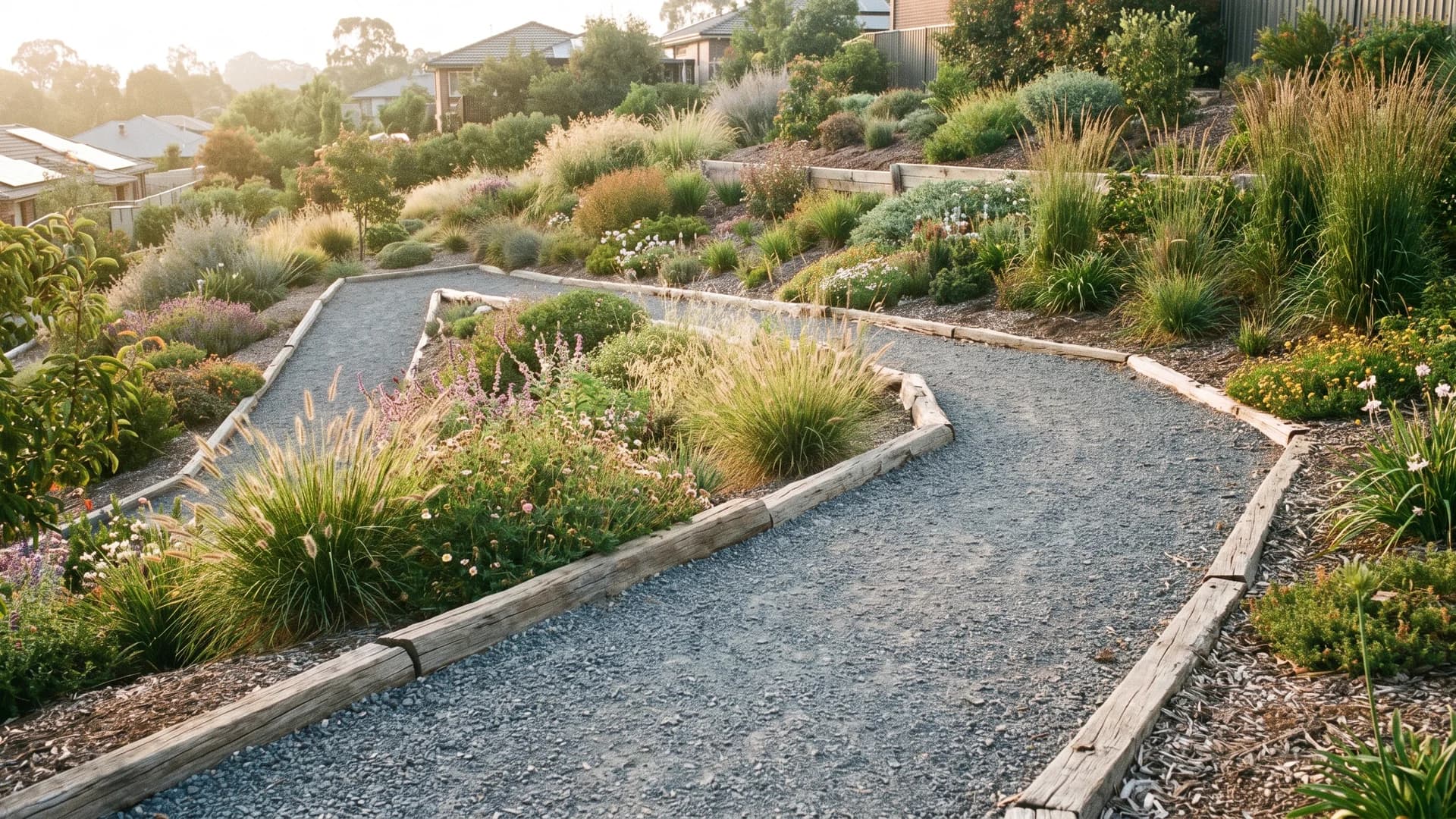
A straight path up a hill becomes a luge track in rain. A switchback doubles the distance, which halves the grade, and crushed gravel over fabric builds it for $60 a ton. Edge the downhill side with timber or stone so the surface stays put. The path also splits the slope into smaller planting zones, which makes every other idea on this list easier to phase.
10. Build wide, deep steps where the path must climb
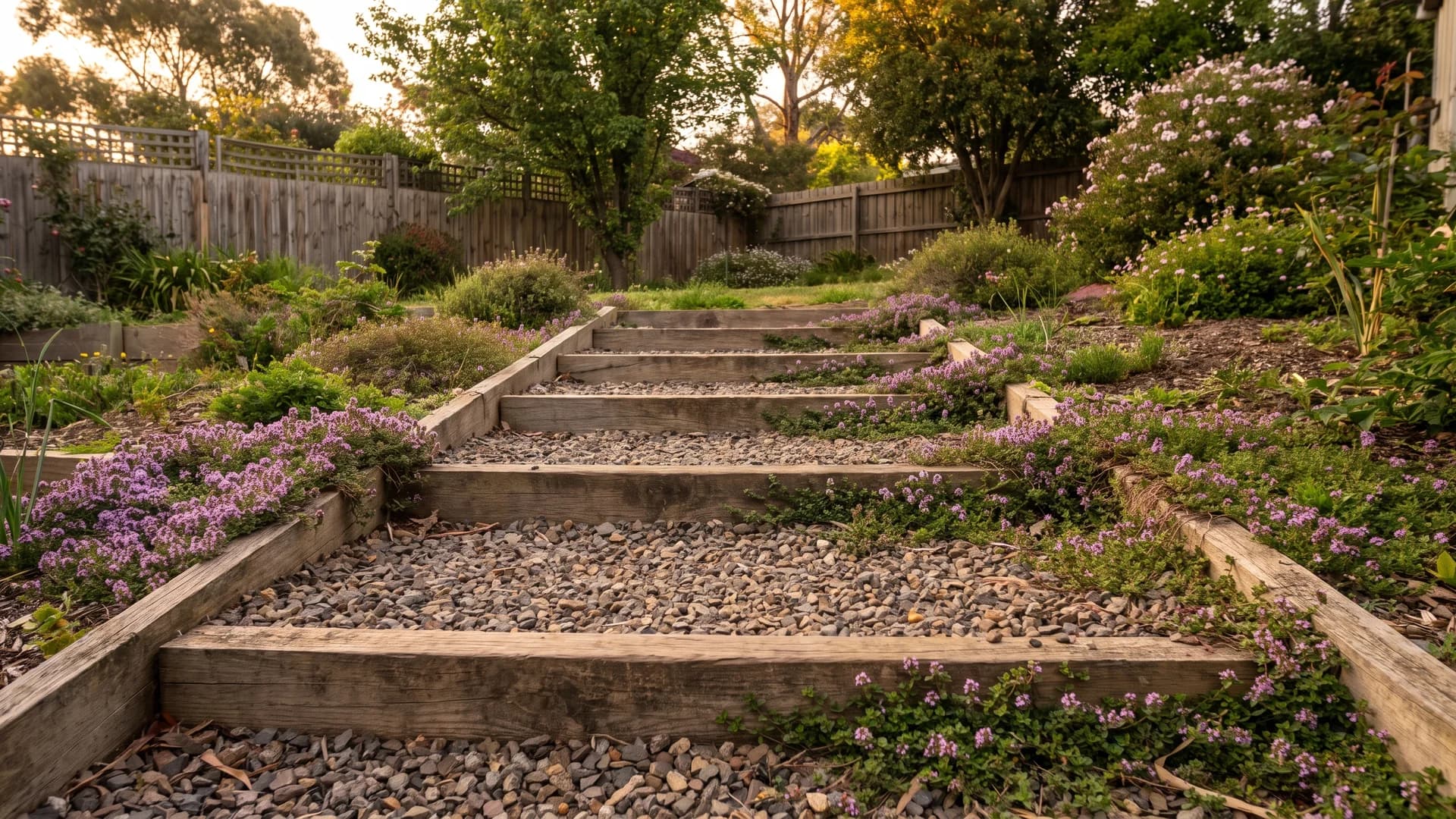
Where a route has to go straight up, make the steps generous: 6-inch rises with treads 14 inches or deeper feel like a garden, not a fire escape. Timber risers backfilled with crushed gravel cost about $20 to $30 a step DIY; stone slabs run $40 to $80 each but never rot. Plant the step edges with thyme or sedum and the stair becomes the hill's best feature.
11. Let native deep roots do the engineering
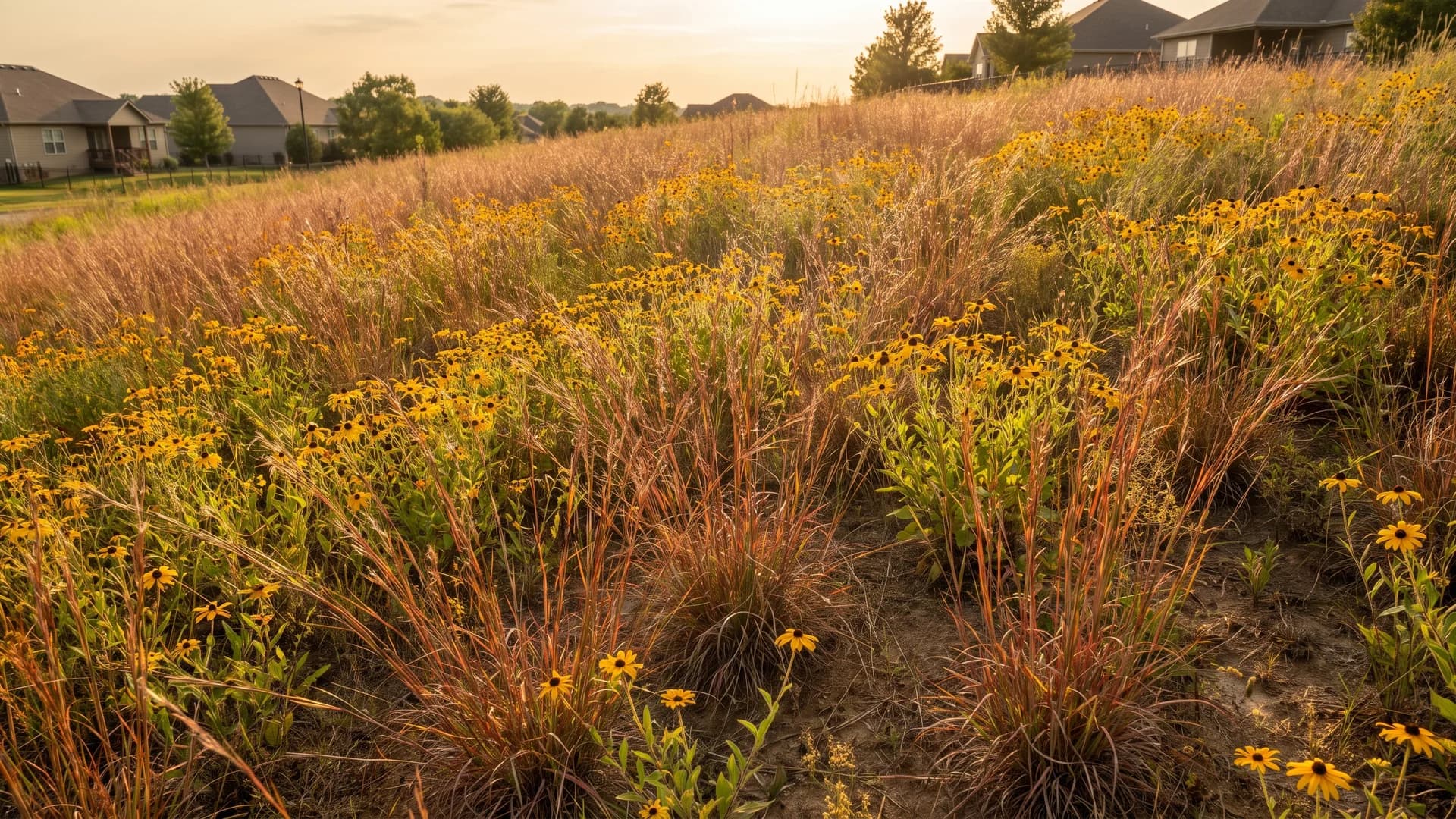
Native plants hold slopes because they evolved on them: little bluestem roots run 5 feet down in zones 3 to 9, switchgrass deeper still, and regional wildflower mixes fill between. A native seed mix covers 500 square feet for $30 to $60, or plugs speed it up at $3 to $5 each. After establishment they take no water, no fertilizer, and no mowing, which on a hill is the entire point.
12. Steer the water down a dry riverbed
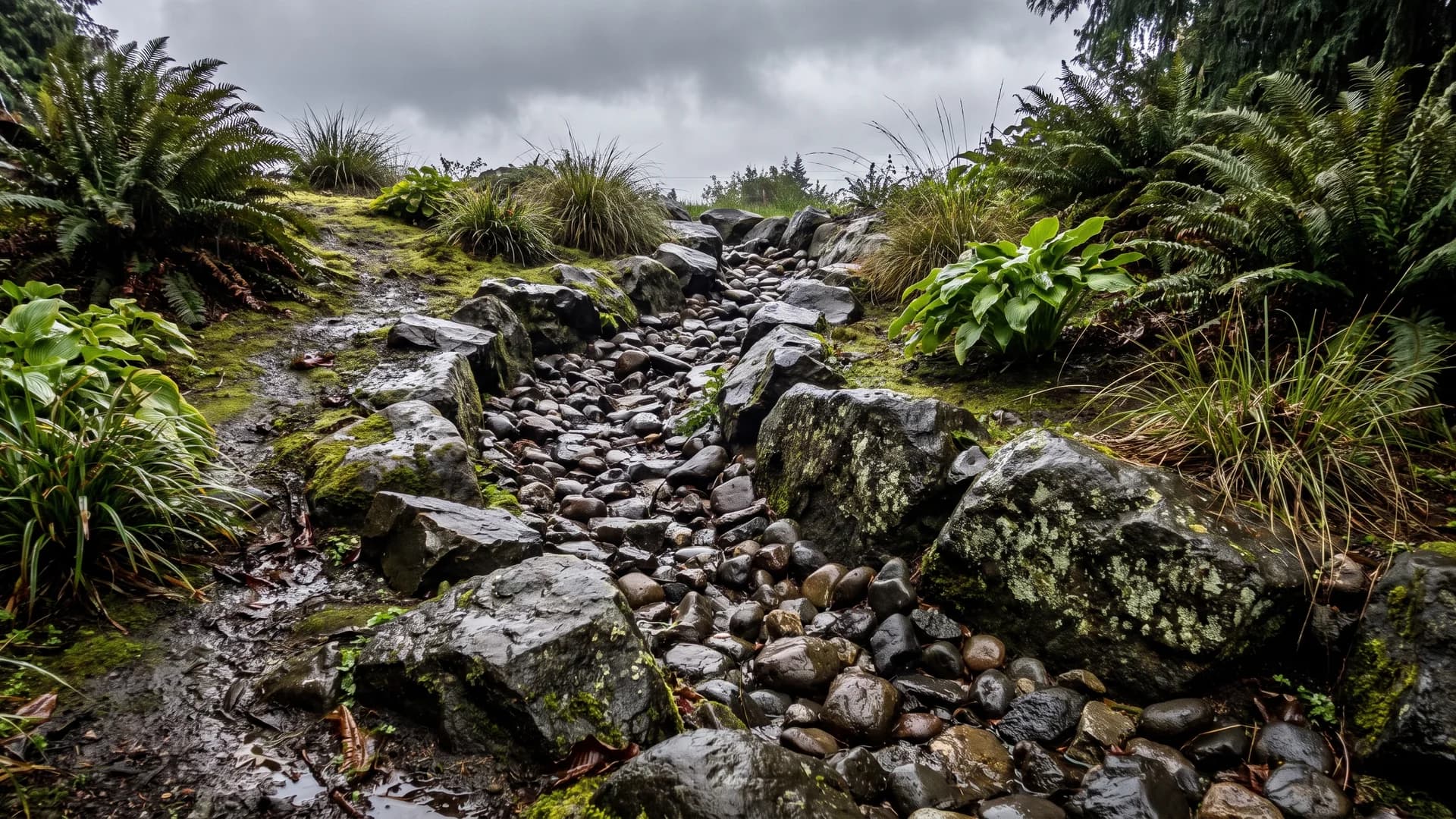
Water will pick a route down your hill; the budget move is choosing it first. A rock-lined channel down the natural fall line, fabric underneath, small stone in the bed, bigger stone at the edges and bends, carries storm flow like a surface french drain and looks intentional doing it. A 20-foot run costs $120 to $220 in mixed rock, and sizing stone for a dry creek matters more than the tonnage does. Everything planted beside it thanks you in the first downpour.
13. Flatten one landing and put a reason on it
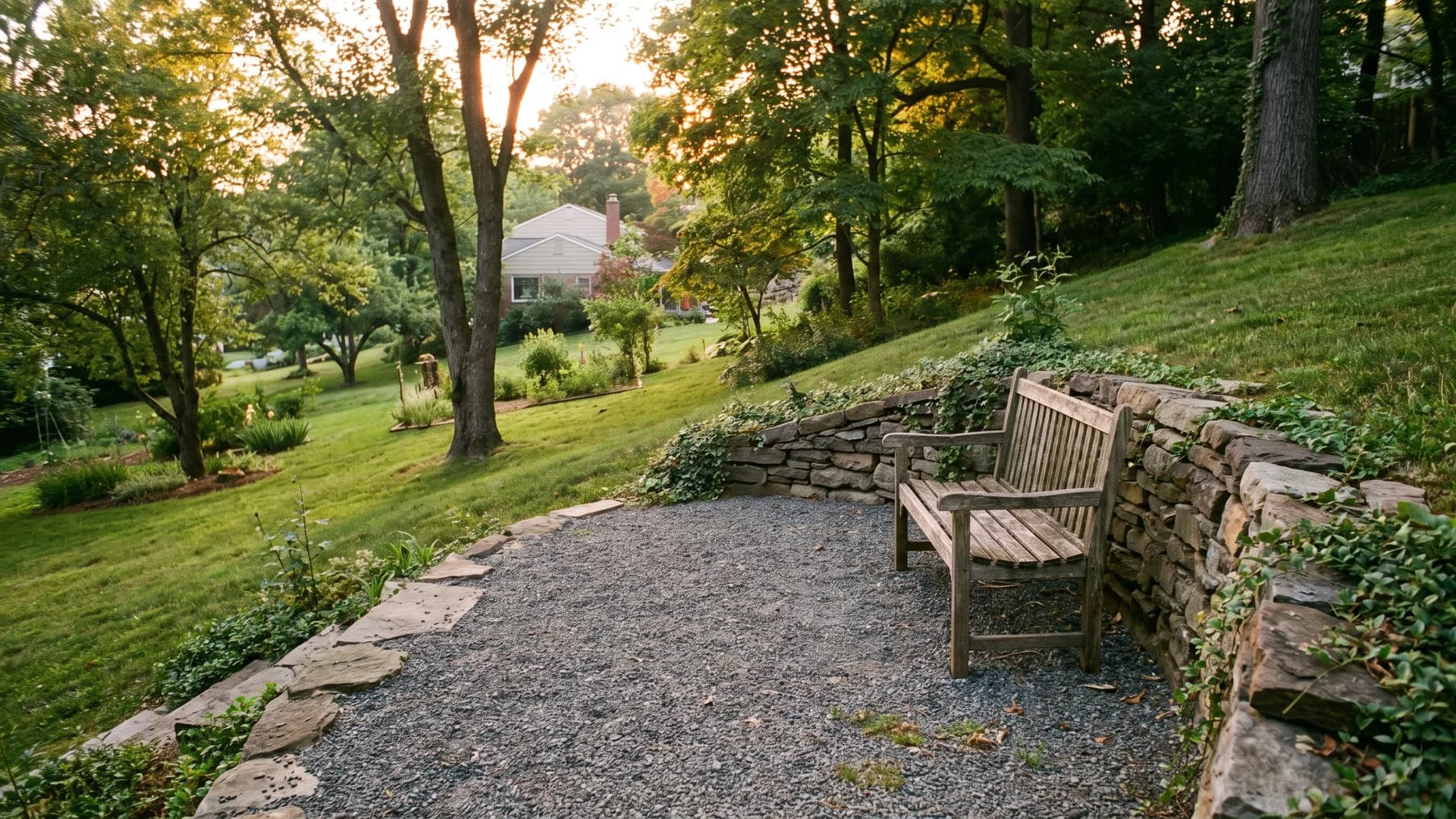
You don't need the whole hill flat; you need one 8-by-10 landing with a destination on it. Cut into the slope, hold the uphill side with a low wall from idea 7, spread crushed gravel, add a bench or two chairs. Materials run $200 to $400. A slope with a place to stop becomes a garden you walk through instead of a problem you look at.
14. Work the vertical with cheap climbers and containers
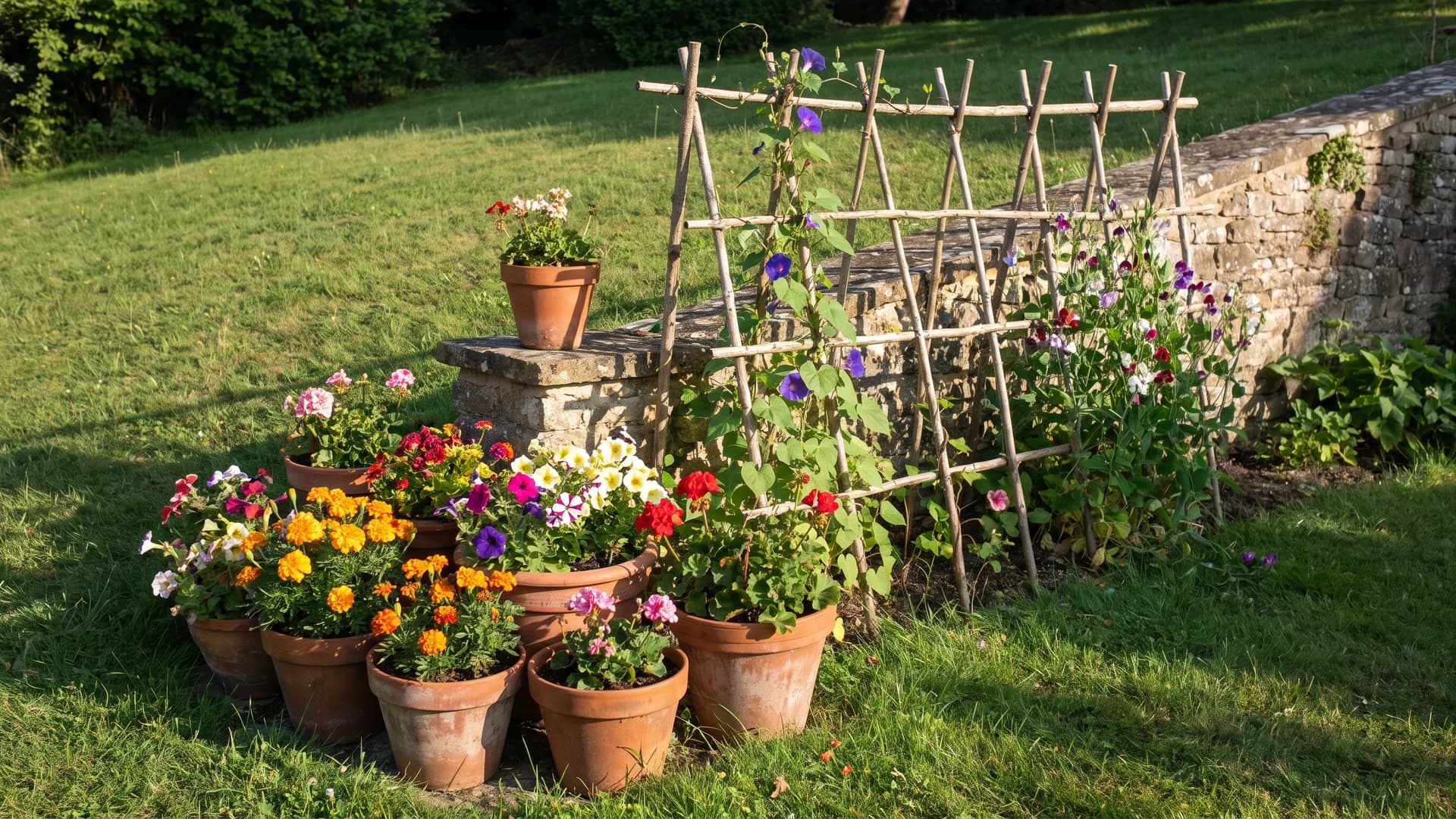
The base of a slope and the top of any wall are free display space. Terra-cotta pots clustered at the bottom, a $30 trellis with annual vines against the terrace face, a repurposed wheelbarrow planted with trailing flowers: none of it fights gravity, all of it reads as abundance. Budget $100 for a composed corner. This is the hardscaping-free way to make a plain slope look gardened this month.
15. Phase the big version instead of financing it
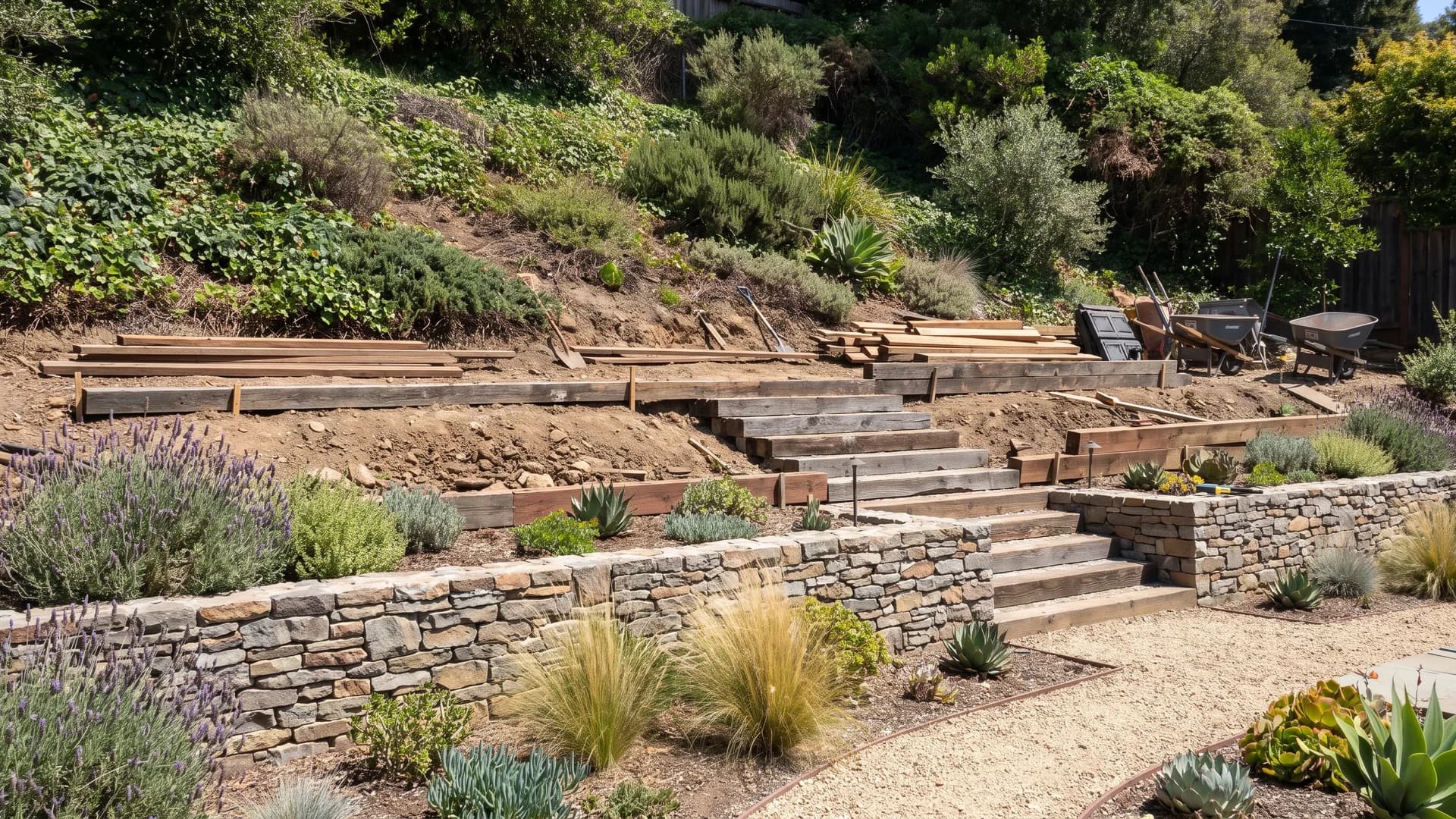
The full makeover, real walls, a cut-in patio, stairs, planting, runs $15,000 to $25,000 contracted, and one real-world version of that bill was $17,000 of it in patio and retaining walls alone. The budget play is sequencing: erosion control and groundcover now (ideas 2 to 4), paths and low terraces next season (6 to 10), and the engineered wall last, only where 2-foot terraces genuinely can't hold the grade. Walls over 3 to 4 feet need engineering and usually permits; preview the layout on your own photo with AI retaining wall design before anyone pours a footing.
Reading your slope
- Bare and eroding now: 4 first, then 2. Stop the bleeding before decorating.
- Gentle grade, just unmowable: 2 and 11 replace the lawn outright.
- Need to actually use the hill: 9, 10, and 13 make it walkable; 6 or 7 make it plantable.
- Water rips through in storms: 12, plus 3 on the mulched sections.
- Rock-heavy region: 5 and 7 are your cheapest materials; see the full rock landscaping ideas list for what stone does elsewhere in the yard.
- Placing boulders right (size classes, burying a third, odd numbers): the rules are in the front yard rocks guide and apply on any grade.
FAQ
What is the cheapest way to landscape a hillside?
Seed and plugs: fast annual vines for this season and groundcover plugs for the permanent cover, roughly $150 to $250 for a typical slope face. Add fieldstone rows to hold mulch and jute netting on bare sections. Everything structural costs more than everything planted, so plant first and build only where plants can't hold.
How do you stop soil erosion on a hillside?
Cover and interruption. Groundcover roots knit the surface, jute netting protects it while they establish, and stone rows or low terraces break the water's speed every few feet. Direct concentrated flow into a rock-lined channel instead of letting it choose. Bare soil on a grade is the only losing position.
How do you keep mulch from washing down a slope?
Use shredded hardwood rather than chips, since it mats and grips, lay it thinner than flat-bed depth, and interrupt the slope with stone rows or timber checks every few feet so no run of mulch is longer than the water can push. On grades past about 30 degrees, switch from mulch to groundcover or netting; nothing loose stays put there.
How steep is too steep to mow?
Most mower manufacturers draw the line around 15 degrees, and riding mowers tip well before grass stops growing. If a slope makes you think about footing, it's past the line. Replace the turf there with groundcover or natives; the mowing you stop doing is worth more than the grass ever was.
Should I DIY a retaining wall or hire a professional?
Under 2 feet of retained height, dry-stacked stone or timber is a safe DIY terrace. Between 2 and 4 feet, be honest about your base and drainage skills. Past 3 to 4 feet, hire it: those walls hold real loads, usually need permits and drainage engineering, and their failures are expensive in every sense.