23 Simple Backyard Landscaping Ideas With Time and Cost
Edged beds, a pea gravel corner, a raised bed, stepping stones and solar lights. 23 easy backyard upgrades, each with how long it takes and what it costs in 2026.
Most backyards don't need a redesign. They need the beds edged, the fence refreshed, somewhere decent to sit and a light or two for after dark. The trouble is that the ideas online tend to skip the part you actually want to know: how long each one takes and what it costs. This list of simple backyard landscaping ideas puts both next to every idea.
There are 23 of them, sorted into weekend projects, upgrades under $500, tricks for small backyards, planting, paths and gravel, and lighting. Time estimates assume one or two people doing the work themselves. Costs come from current home-improvement pricing data, checked in October 2026, and are for materials unless a line says "installed".
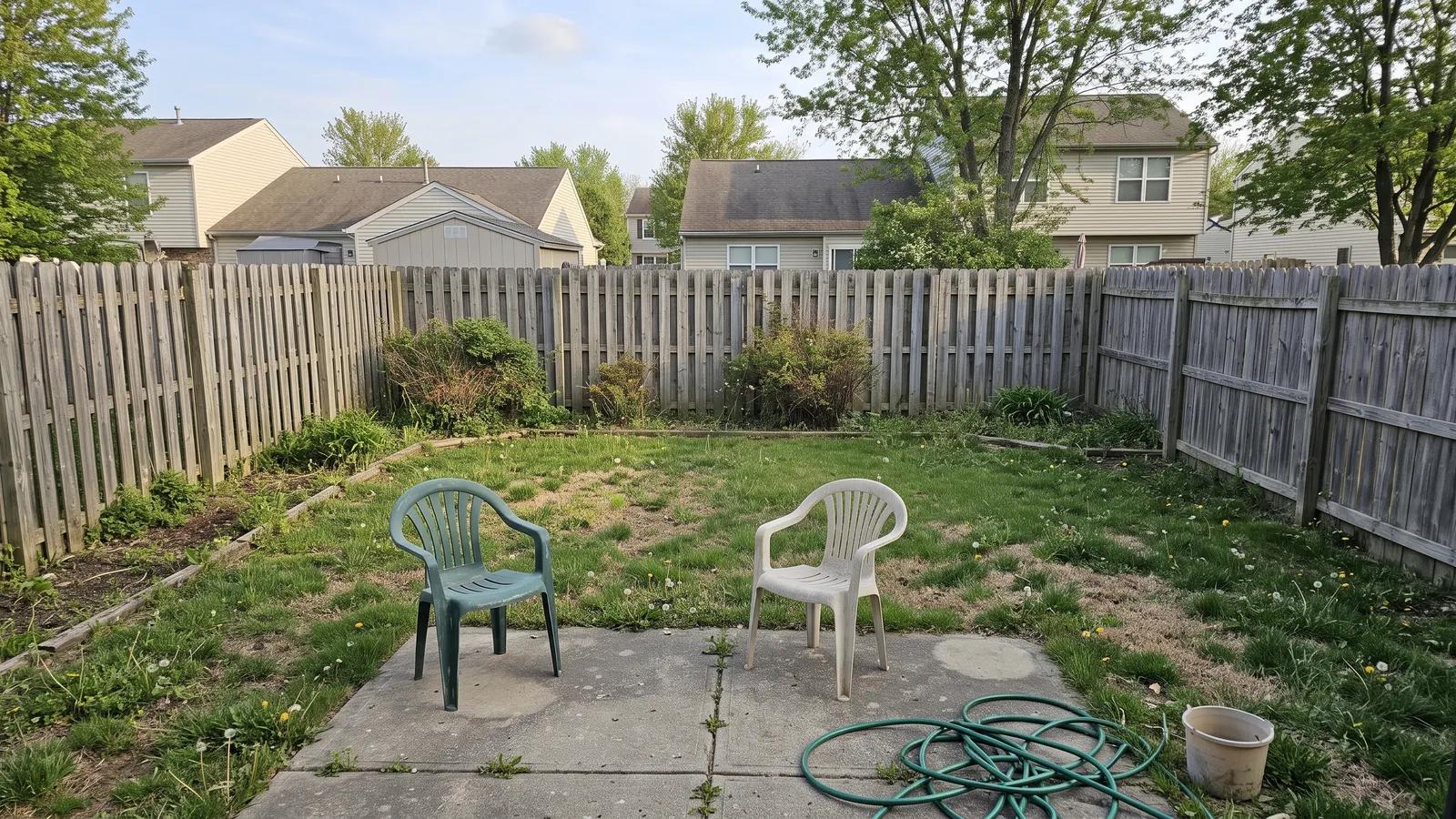
Every image here is an AI design concept, the same kind of render OutdoorBrite makes from a photo of a yard. The first five ideas all start from the plain yard below, so you can see what one weekend changes on the same space.
Weekend projects
Each of these fits into a Saturday and Sunday and changes how the whole yard reads. Here is the yard above with one weekend project at a time.
1. Edge the beds and lay fresh mulch
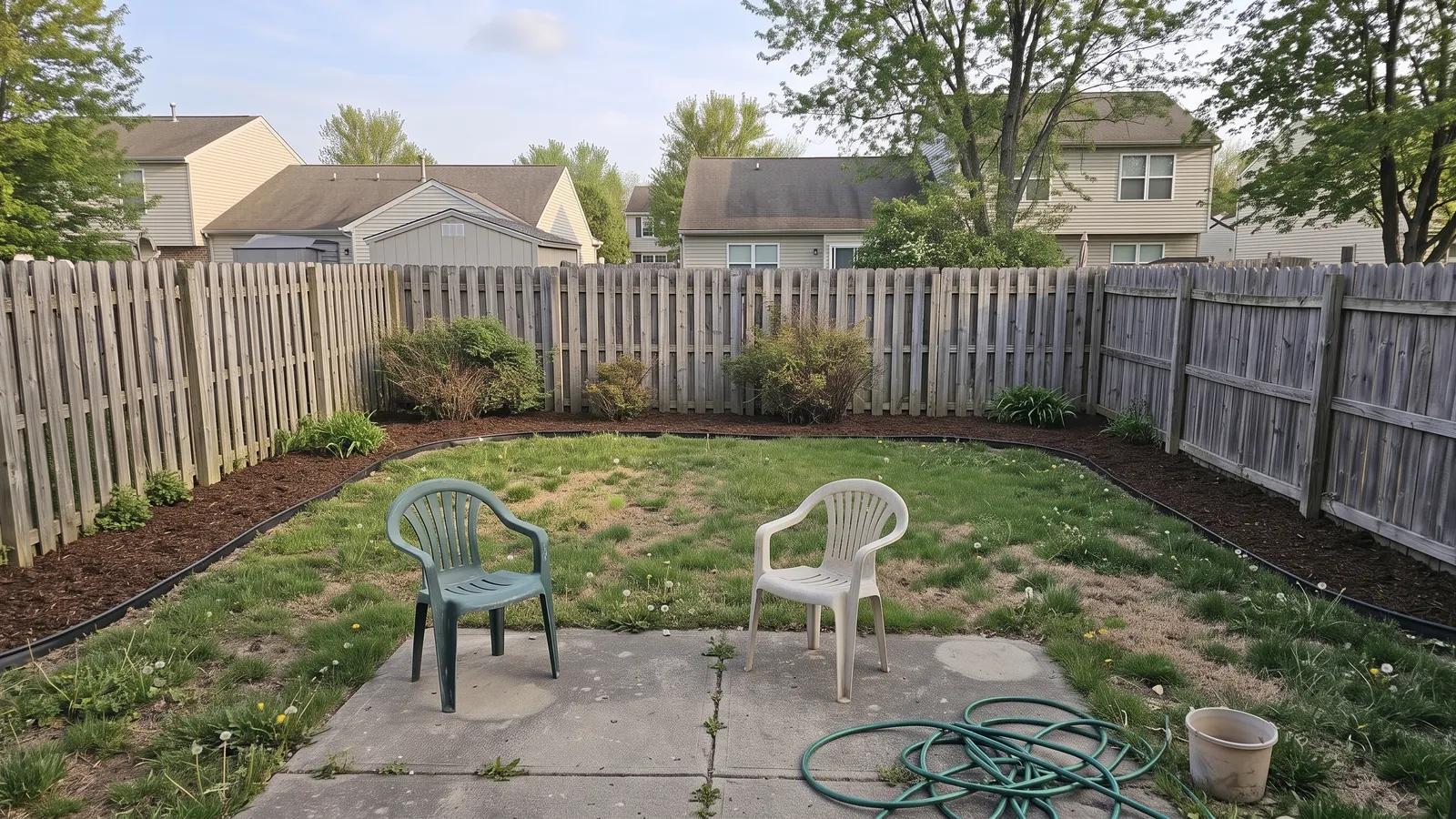
Time: 4 to 6 hours. Cost: $2 to $8 per bag of mulch, or $25 to $100 per cubic yard in bulk. If you only do one thing on this list, do this. Weed first, cut a crisp line with a half-moon edger, then spread mulch 2 to 3 inches deep, kept a few inches off shrub stems. Plastic edging adds $0.50 to $3 per foot. One cubic yard covers about 160 square feet at 2 inches.
2. Stain the fence a darker color
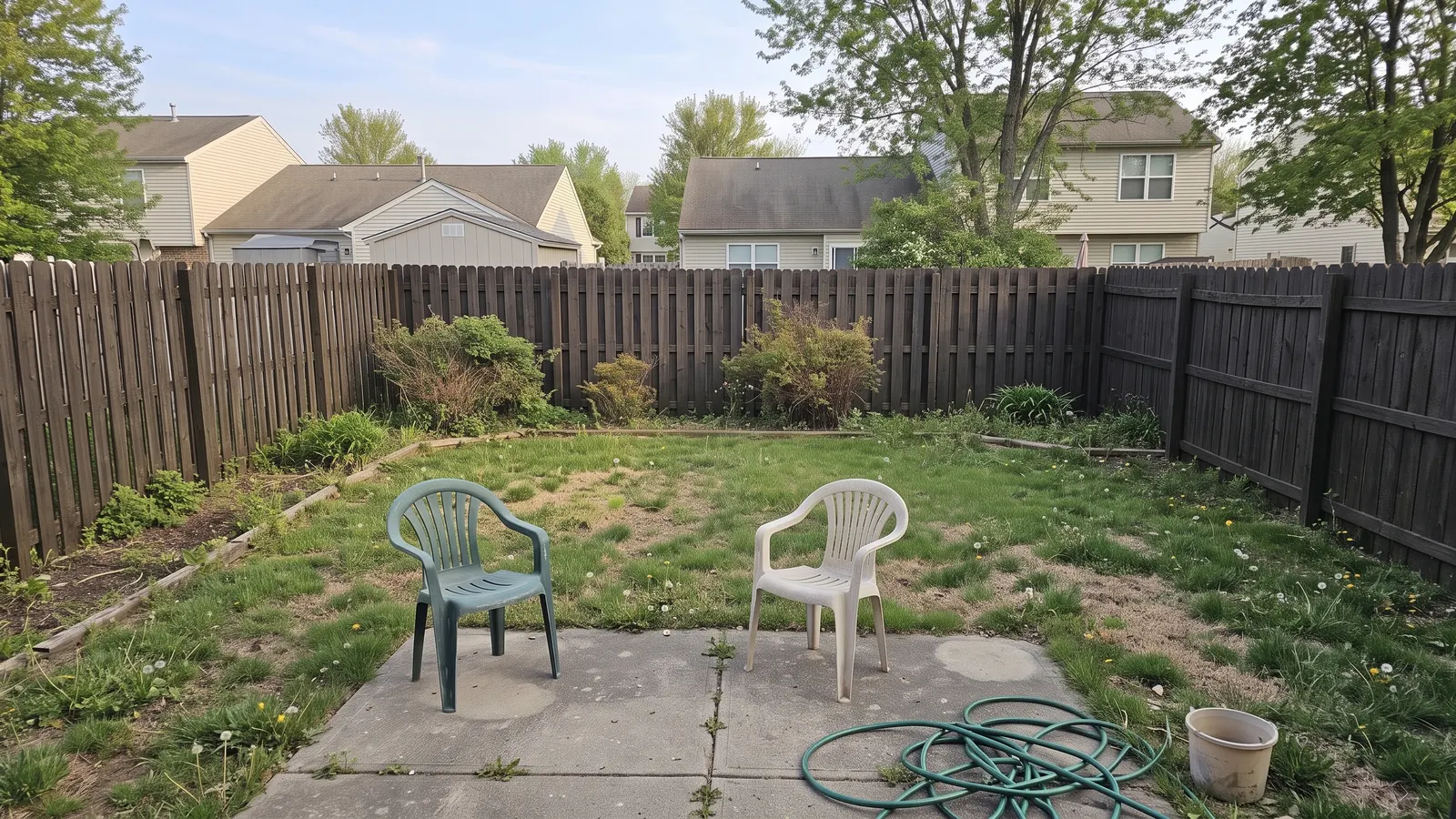
Time: one to two days, plus a dry forecast. Cost: a typical can of exterior stain is around $49 at Lowe's; a painter charges $1.38 to $2.76 per square foot. A gray, weathered fence makes everything in front of it look tired. A dark solid stain does the opposite: green leaves and flowers pop against it, and the fence itself recedes. Clean it with a deck wash and let it dry for two days before you start.
3. Turn a corner into a pea gravel sitting area
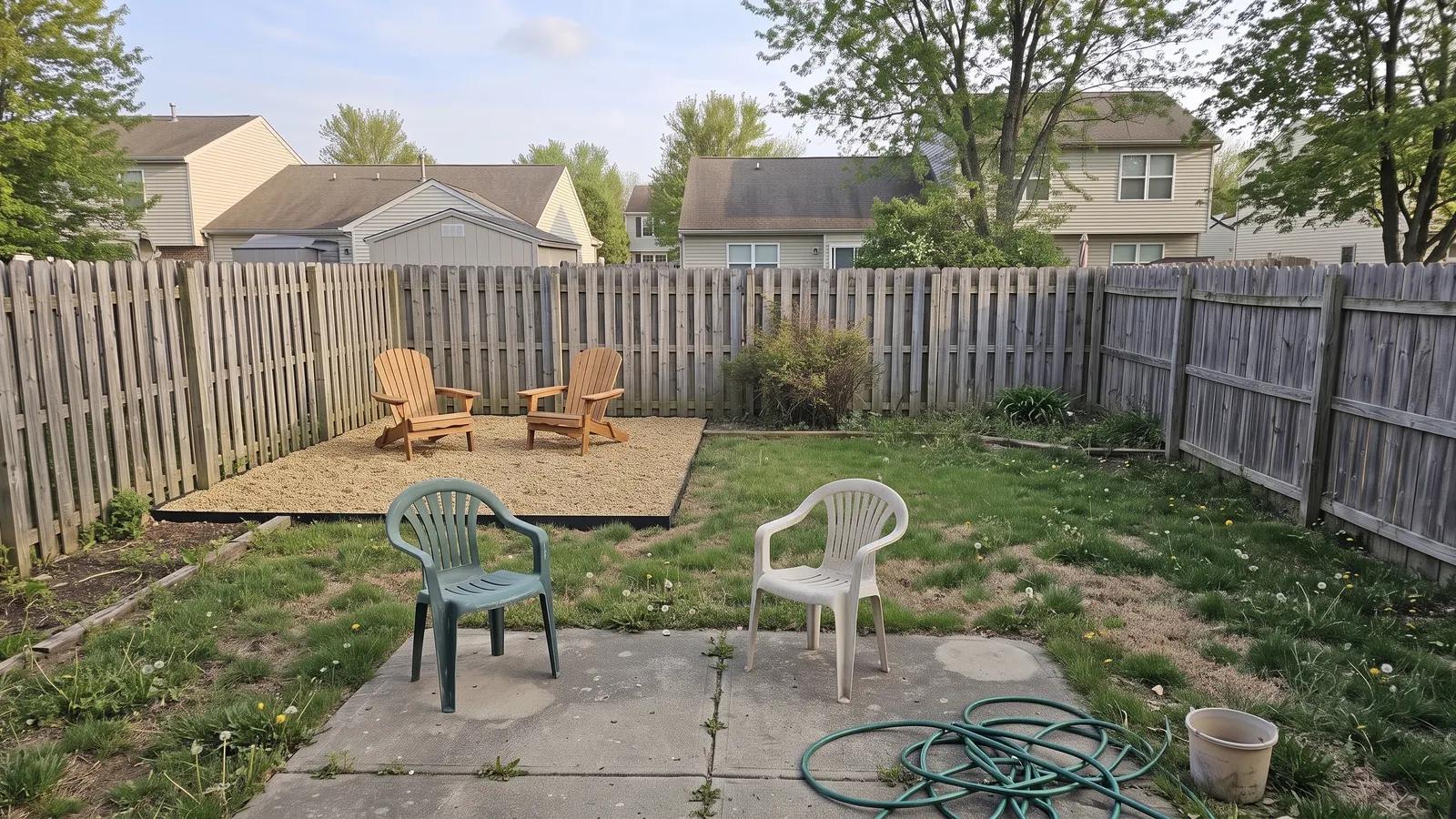
Time: one weekend. Cost: pea gravel runs $0.50 to $1.50 per square foot, so a 10 by 10 foot pad is roughly $50 to $150 in stone plus edging. Strip the turf, lay landscape fabric, set steel or paver edging, and spread 2 to 3 inches of gravel. A gravel calculator turns your dimensions into tons. Two chairs and a side table make it a destination instead of a corner.
4. Add a fire pit ring
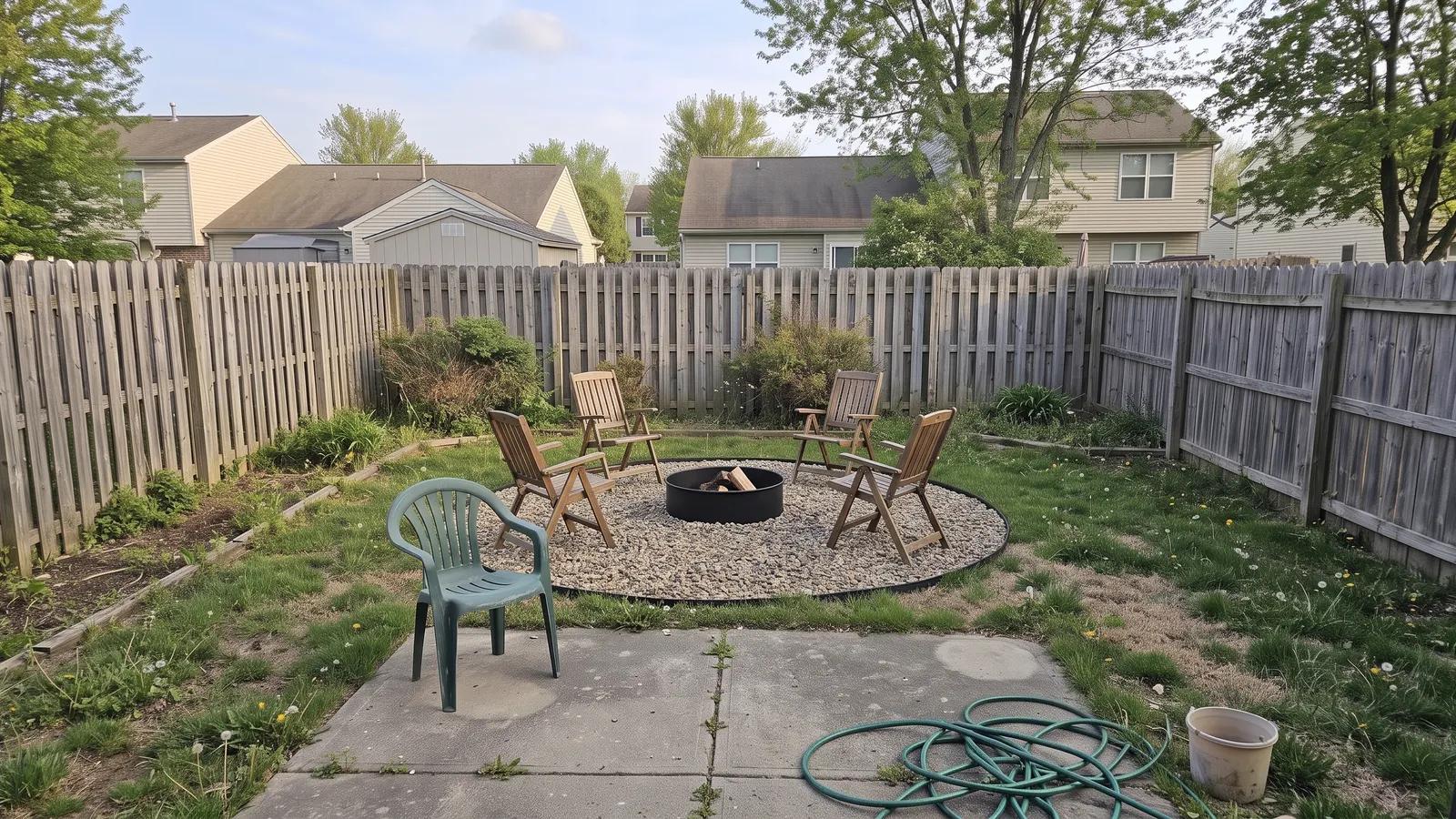
Time: an afternoon for a ring on gravel, a weekend for a block pit. Cost: a steel ring is $50 to $200, and a DIY block fire pit runs $200 to $650 in materials, according to HomeGuide. Placement is the part people get wrong. The International Fire Code keeps wood fires 25 feet from structures and anything combustible, which includes a wood fence, and portable fire pits 15 feet. Check your city's rules before you dig.
5. Group big containers on the patio
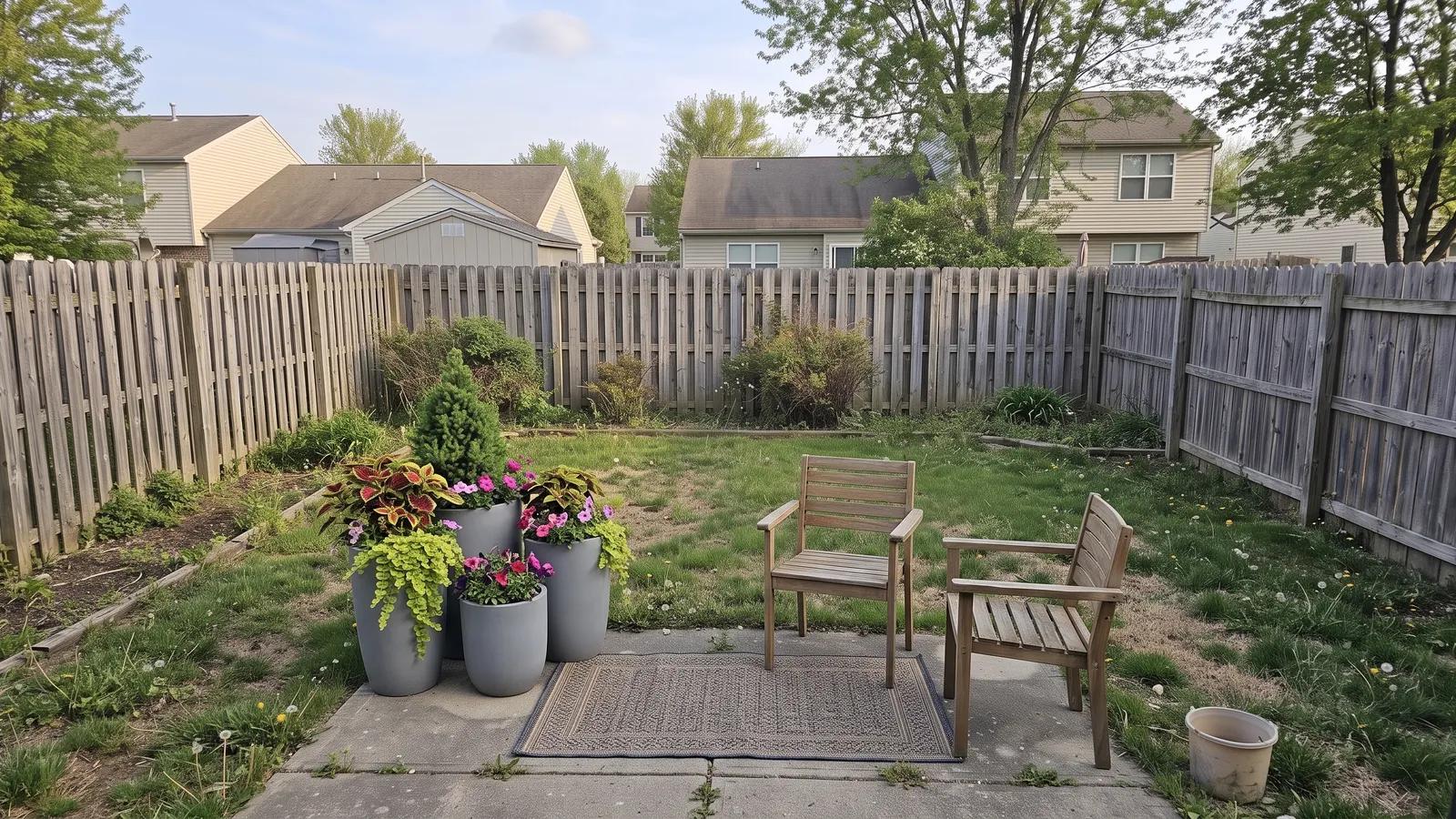
Time: 2 to 3 hours. Cost: mostly the pots; plants are the cheap part. Three large containers grouped together read as one planting and do more than eight small pots scattered around. Vary the heights, repeat one color, and use the classic recipe: one upright plant, one filler and one trailer. Big pots also dry out slower than small ones, which matters in July.
Upgrades under $500
These take a bit more planning or a second pair of hands, but each one stays under $500 in materials for a typical yard.
6. Build a raised bed from a kit
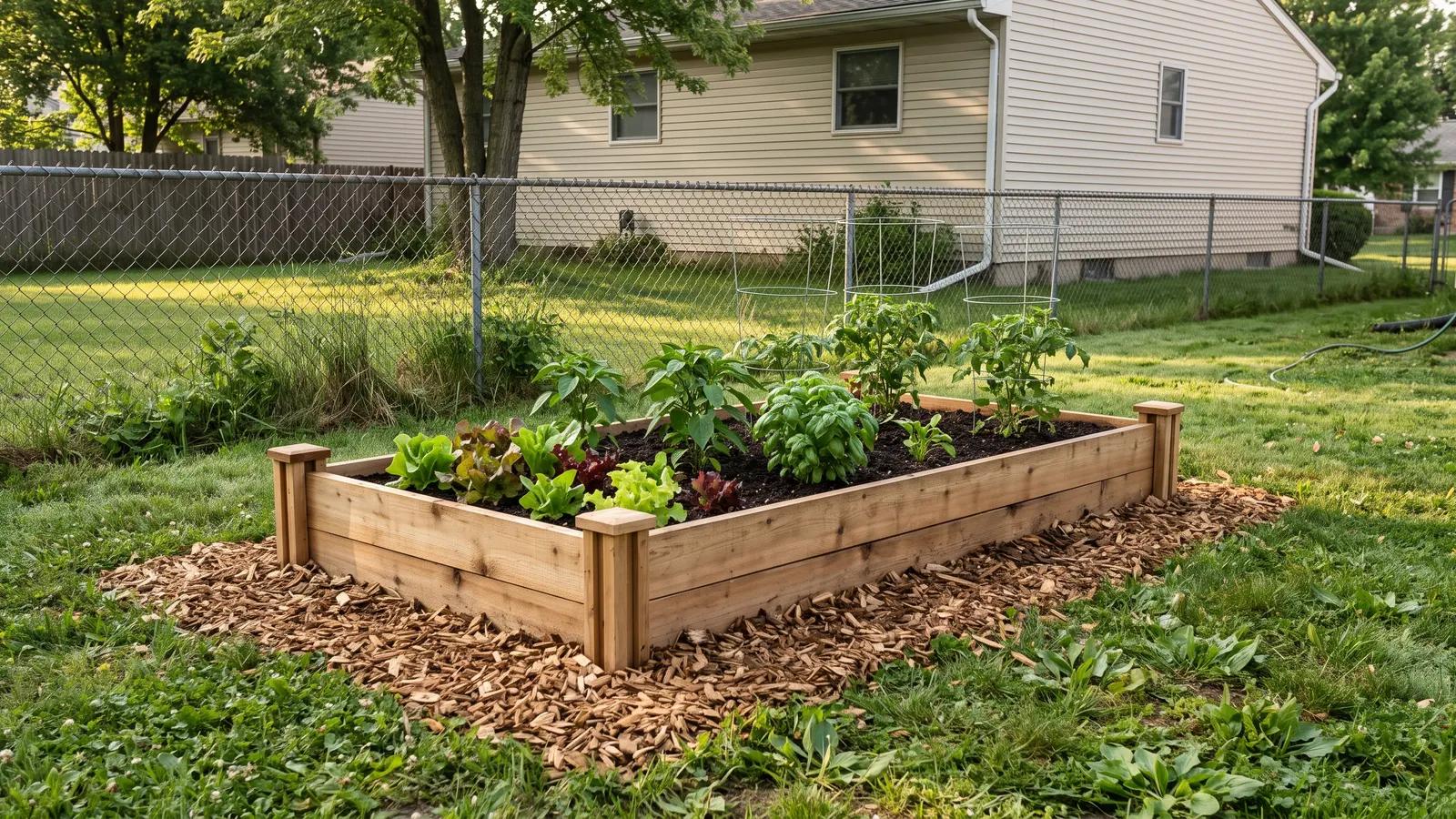
Time: 3 to 5 hours including the soil. Cost: kits run $5 to $15 per square foot of bed, so a 4 by 8 foot bed lands around $160 to $480. Keep it 4 feet wide so you can reach the middle from either side, and put it where it gets at least six hours of sun if you want vegetables. Filling it is the heavy part: a 12-inch-deep 4 by 8 bed holds about 32 cubic feet of soil.
7. Hang a shade sail over the patio
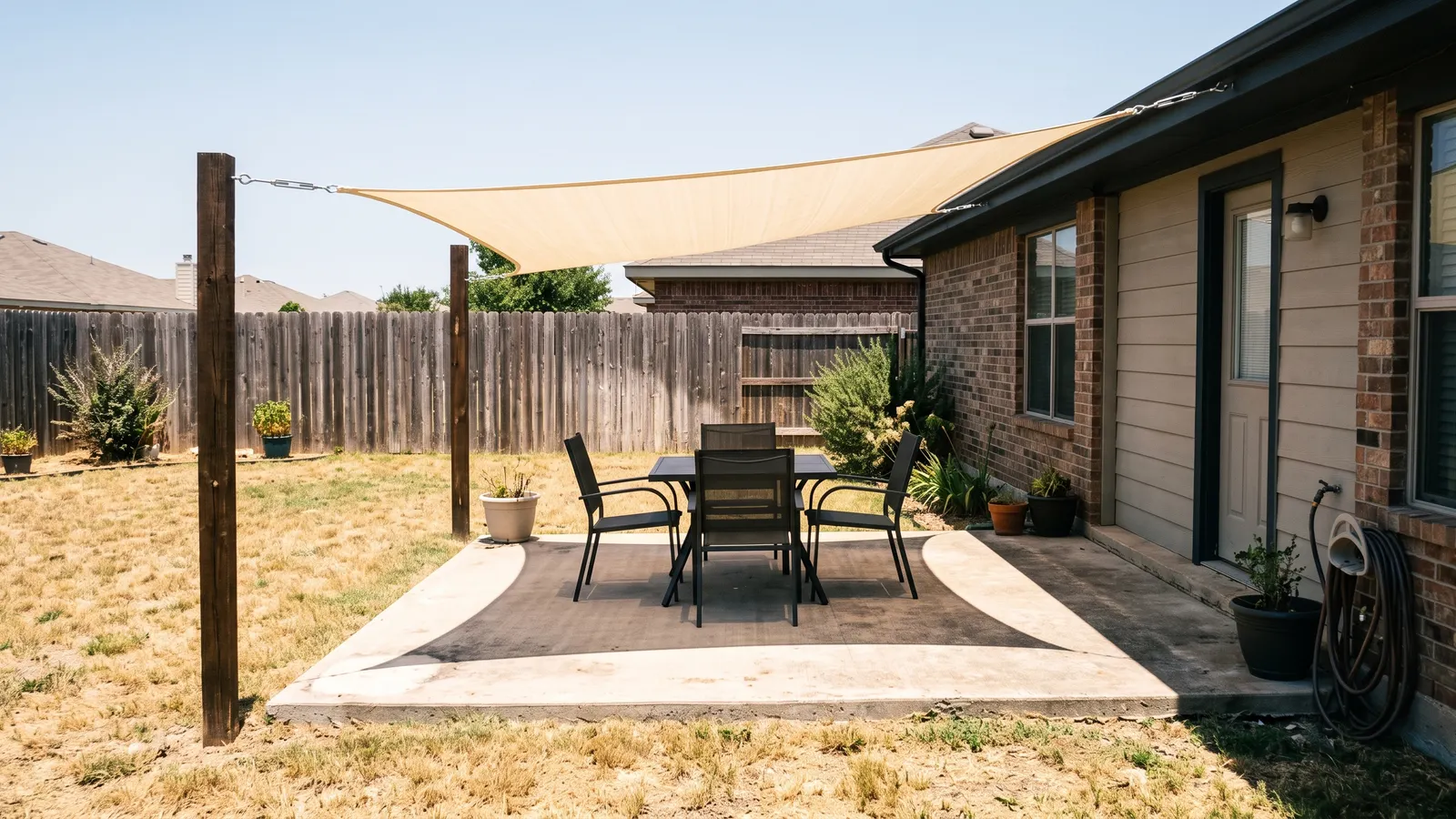
Time: one day, more if you set new posts. Cost: shade sail fabric is around $90 for a typical size at Lowe's, with a range of about $23 to $554. The sail is cheap. The anchor points aren't optional, though: a tensioned sail pulls hard in wind, so it needs solid framing on the house and 4x4 or 6x6 posts set in concrete. Angle one corner lower than the others so rain runs off.
8. Put an arbor over the gate or path
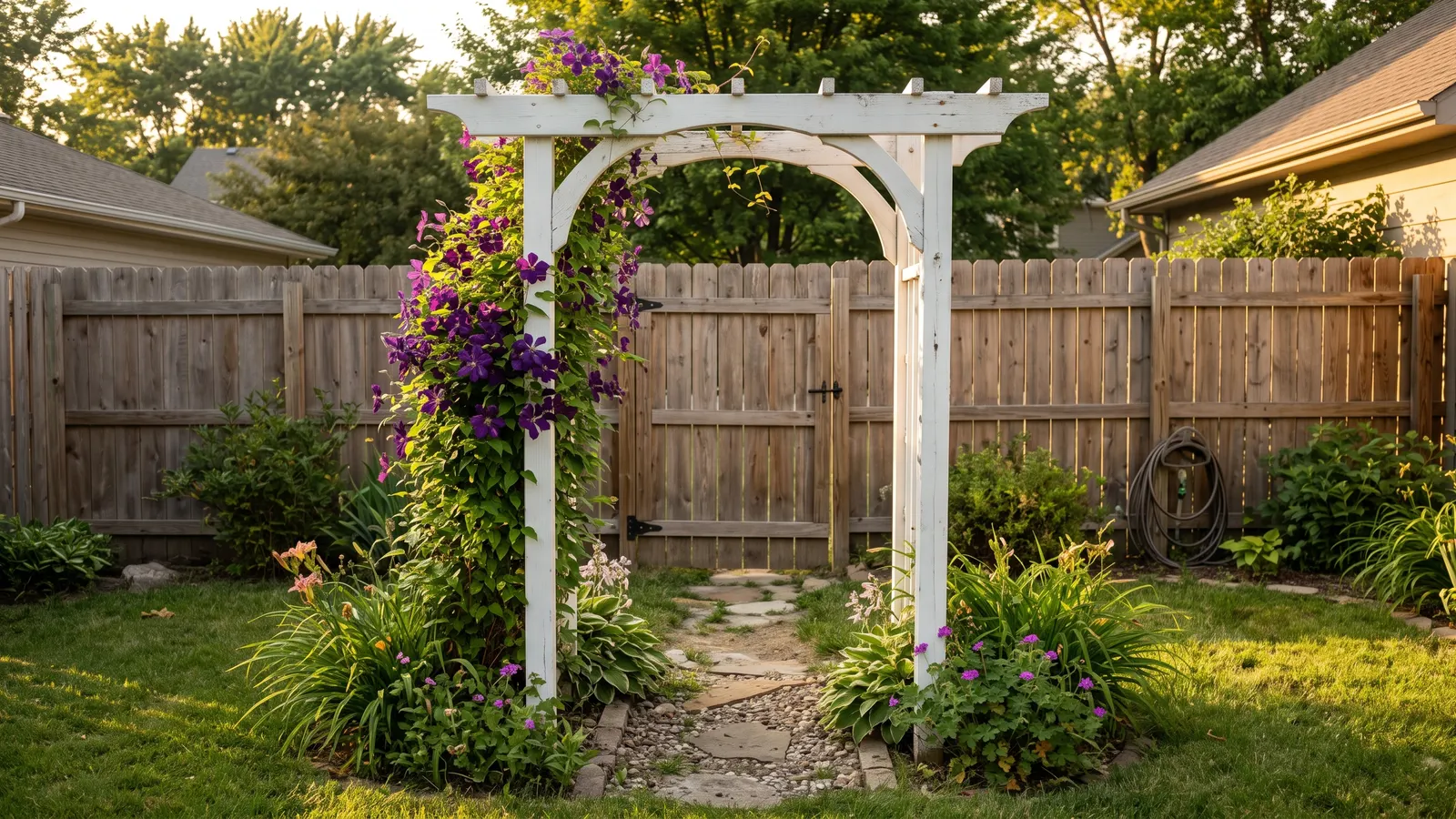
Time: 3 to 4 hours. Cost: a typical garden arbor is about $264 at Lowe's, and the range runs from $29 to $919. An arbor gives a plain yard an entrance, which is a big effect for one object. Anchor it with ground stakes or in concrete, then plant a clematis or climbing rose at each post. Expect the climber to take two seasons to cover it.
9. Overseed part of the lawn with clover
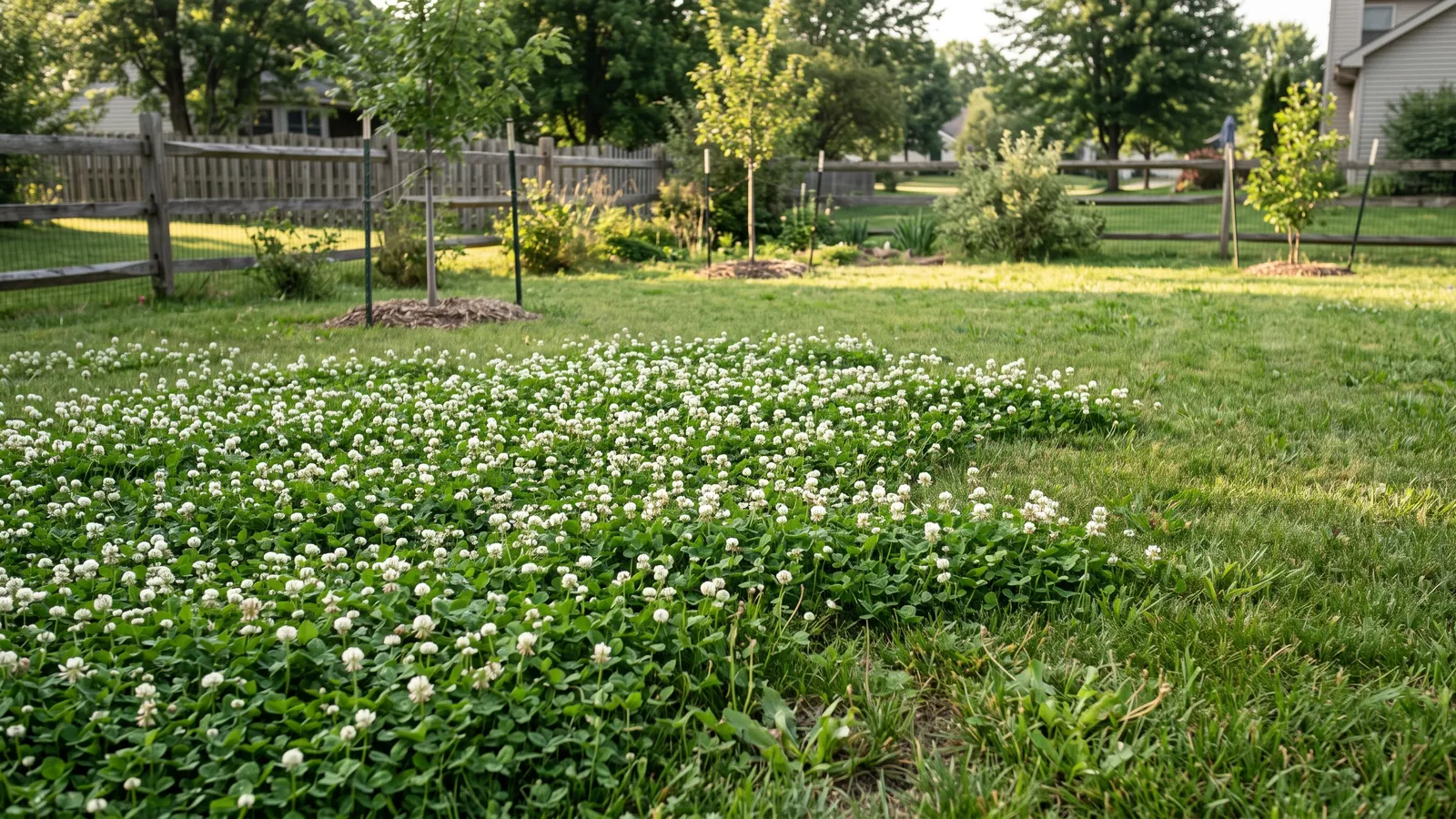
Time: an hour to seed, a season to fill in. Cost: white Dutch clover seed is about $8 per pound, and a pound goes a long way when overseeded into thin grass. Clover stays green through dry spells, doesn't need fertilizer, and handles patchy spots where grass gives up. The trade-off is bees on the flowers, so skip it where kids play barefoot.
Small backyards
In a small yard, every square foot has a job. These ideas make a compact space feel planned instead of crowded.
10. Grow up a trellis wall
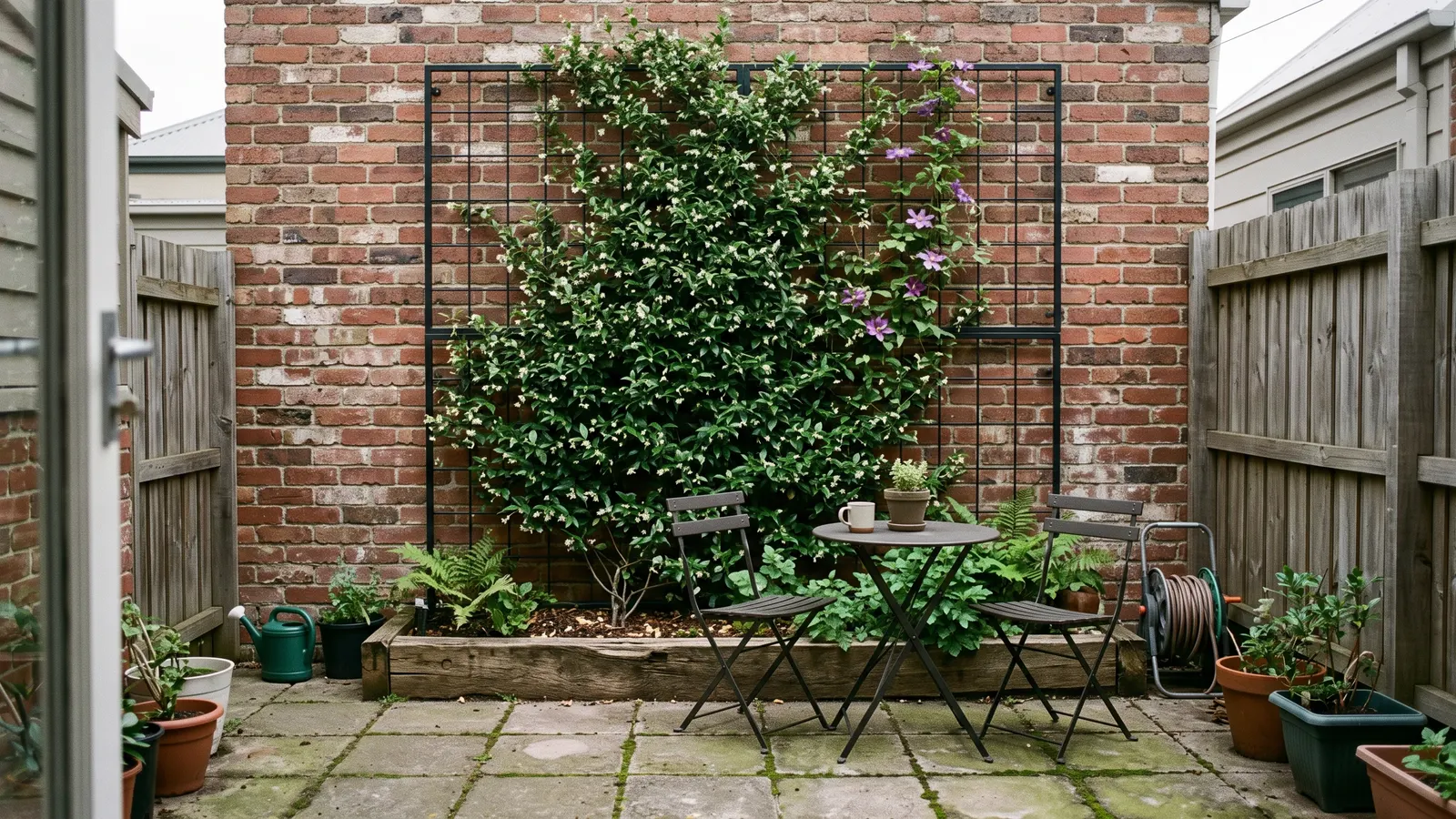
Time: 2 to 3 hours to mount. Cost: a typical garden trellis is about $61 at Lowe's. When there's no room to spread out, go up. A trellis panel takes about a foot of depth and puts a wall of green where a bare fence was. Pick climbers for your climate: star jasmine for mild winters (zones 8 to 10), clematis or climbing hydrangea where it gets cold.
11. Use one paving material for the whole floor
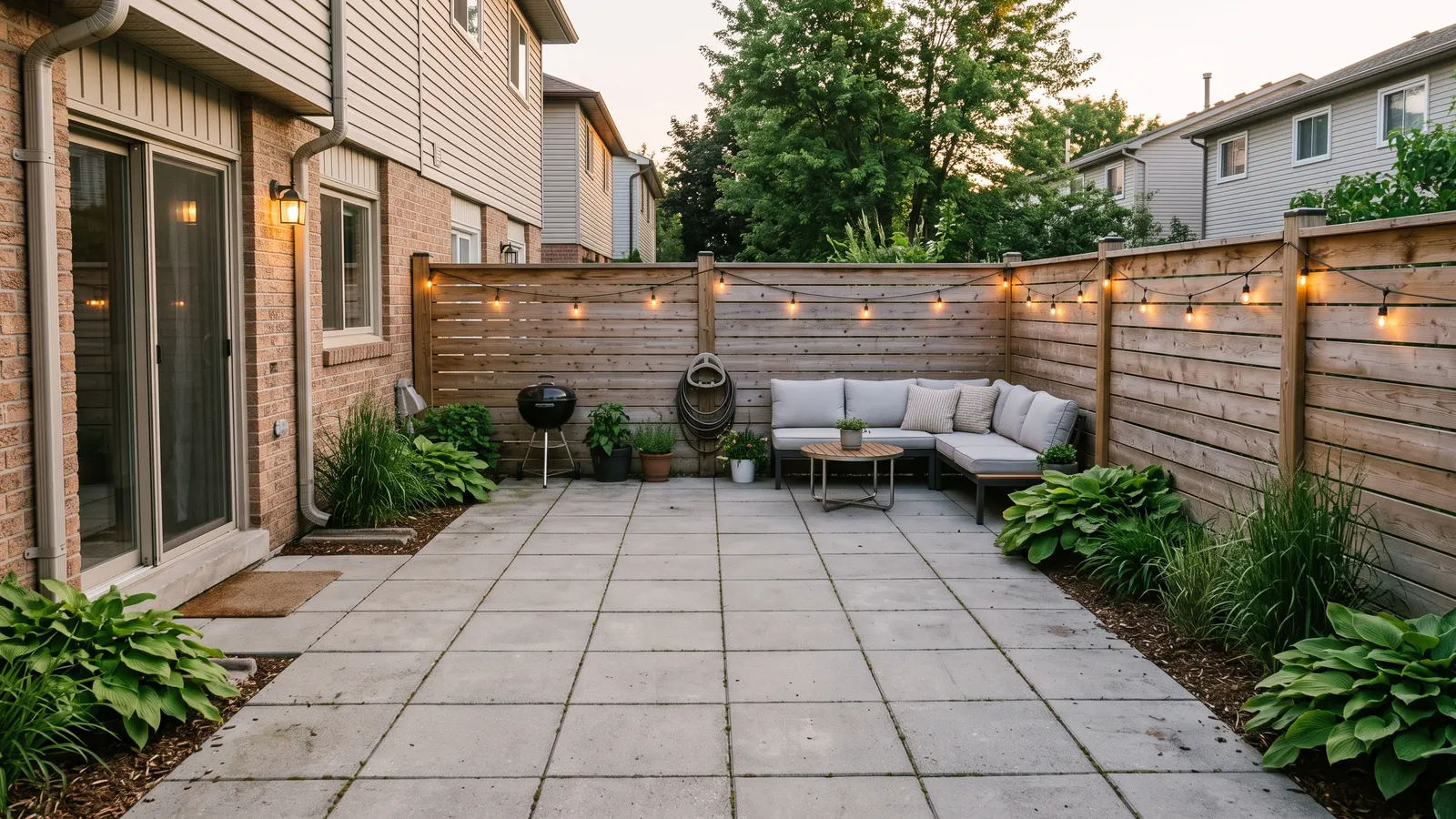
Time: one to two weeks DIY, or a few days for a crew. Cost: a concrete paver patio runs $10 to $17 per square foot installed. This is the splurge in this section, but in a tiny yard a scrap of lawn often isn't worth the mowing. One material from wall to wall makes the space read larger than a patchwork of lawn, gravel and pavers. Leave narrow beds along the edges for plants.
12. Tuck a bistro set into a corner
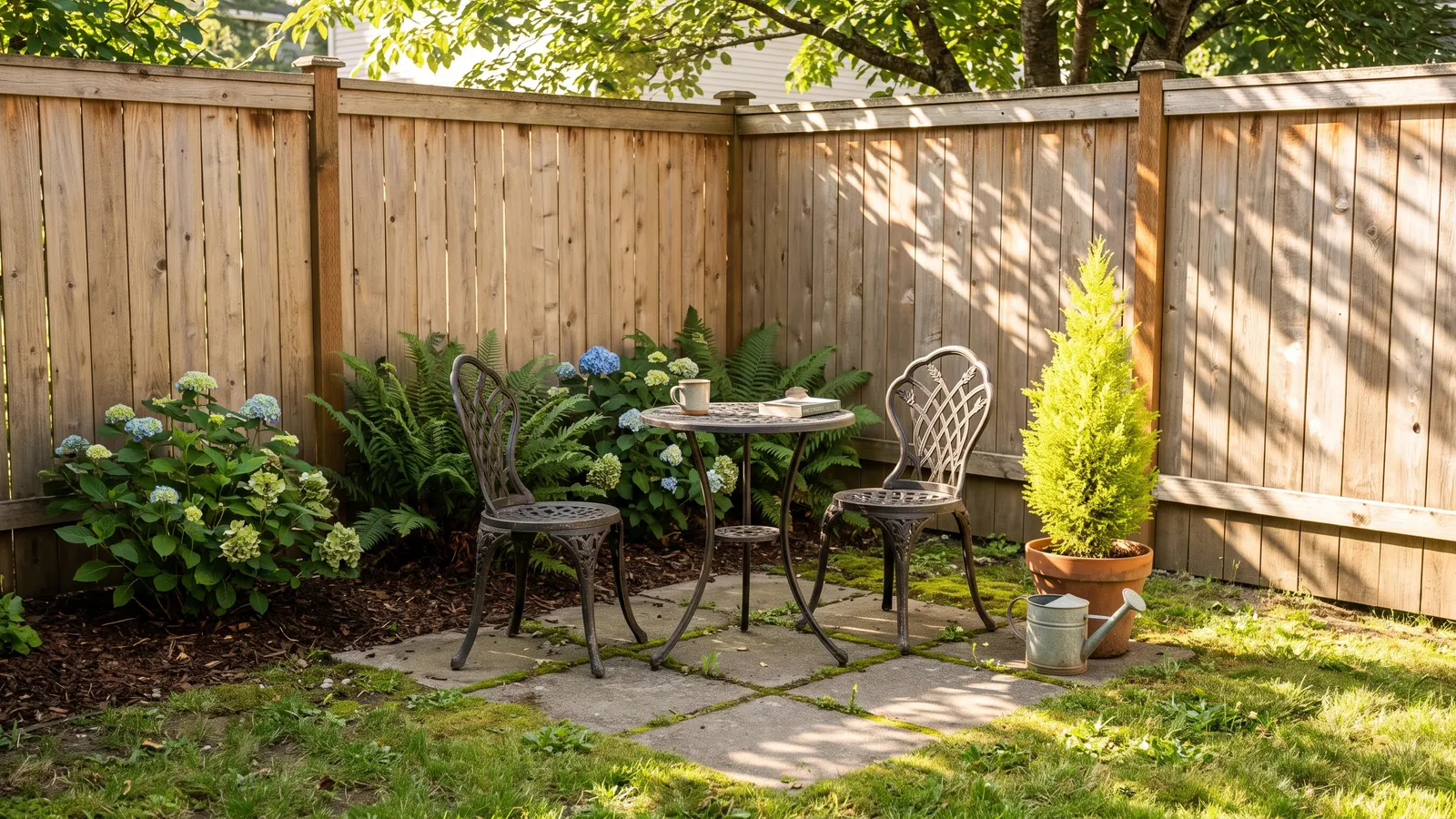
Time: 2 hours. Cost: four large square pavers and a bistro set. A two-person table needs only about 6 by 6 feet, so even a narrow yard has room for a coffee spot. Set the pavers level on a few inches of sand, back the corner with a bed of shade-tolerant plants, and add a pot at the side. Corners with morning sun are the best ones for this.
13. Plant the fence line in layers
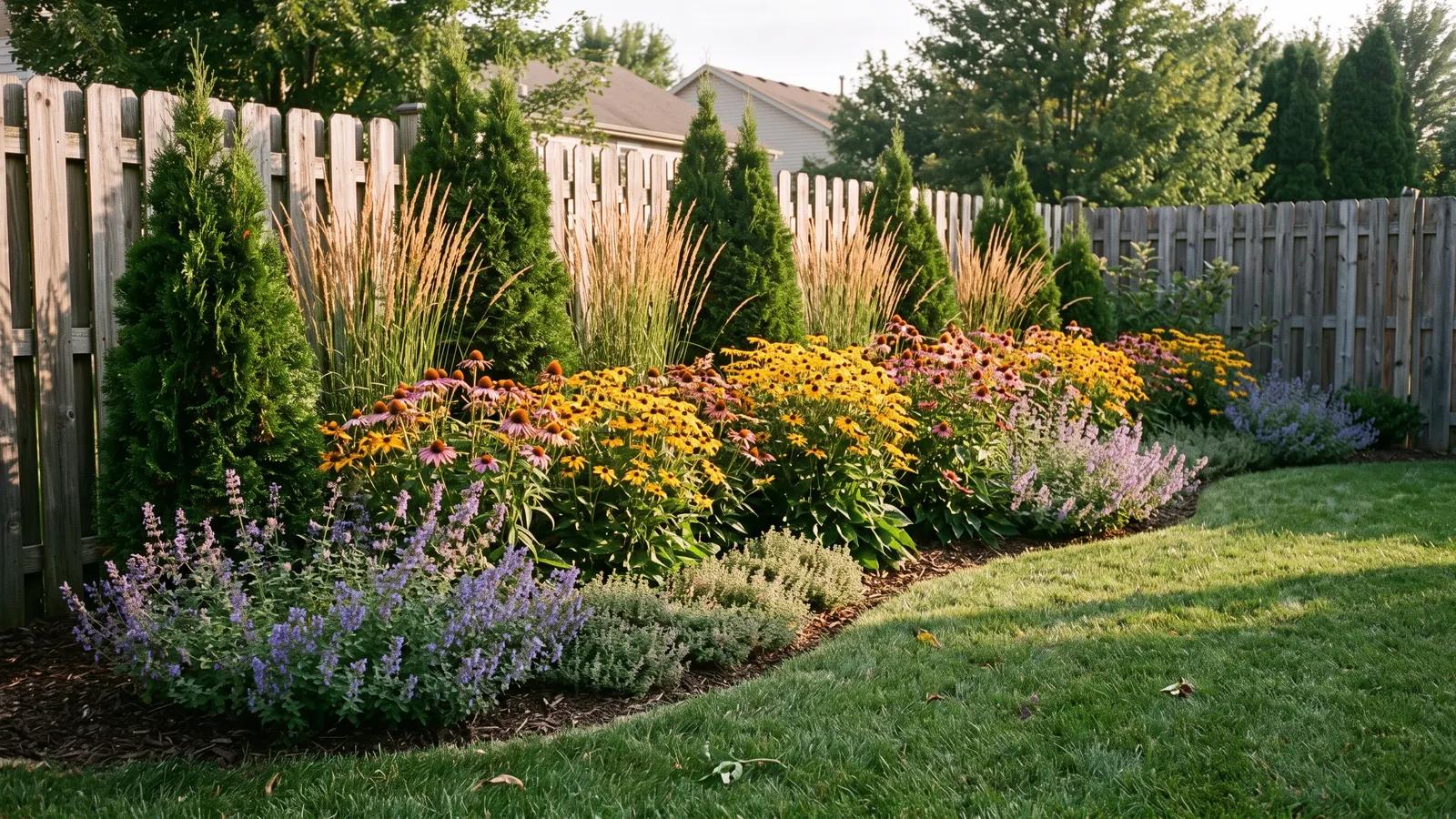
Time: a weekend. Cost: a landscaper charges $25 to $85 to plant each shrub, so doing it yourself saves the most here. Three layers make a skinny bed look deep: tall plants against the fence, medium ones in the middle, low edgers in front. Arborvitae, coneflowers and catmint all grow in zones 4 to 7. For more layouts, see these simple fence line landscaping ideas.
Planting ideas
Plants make a simple yard look finished. They also take a season or two to grow in, so start these early.
14. Plant one small tree
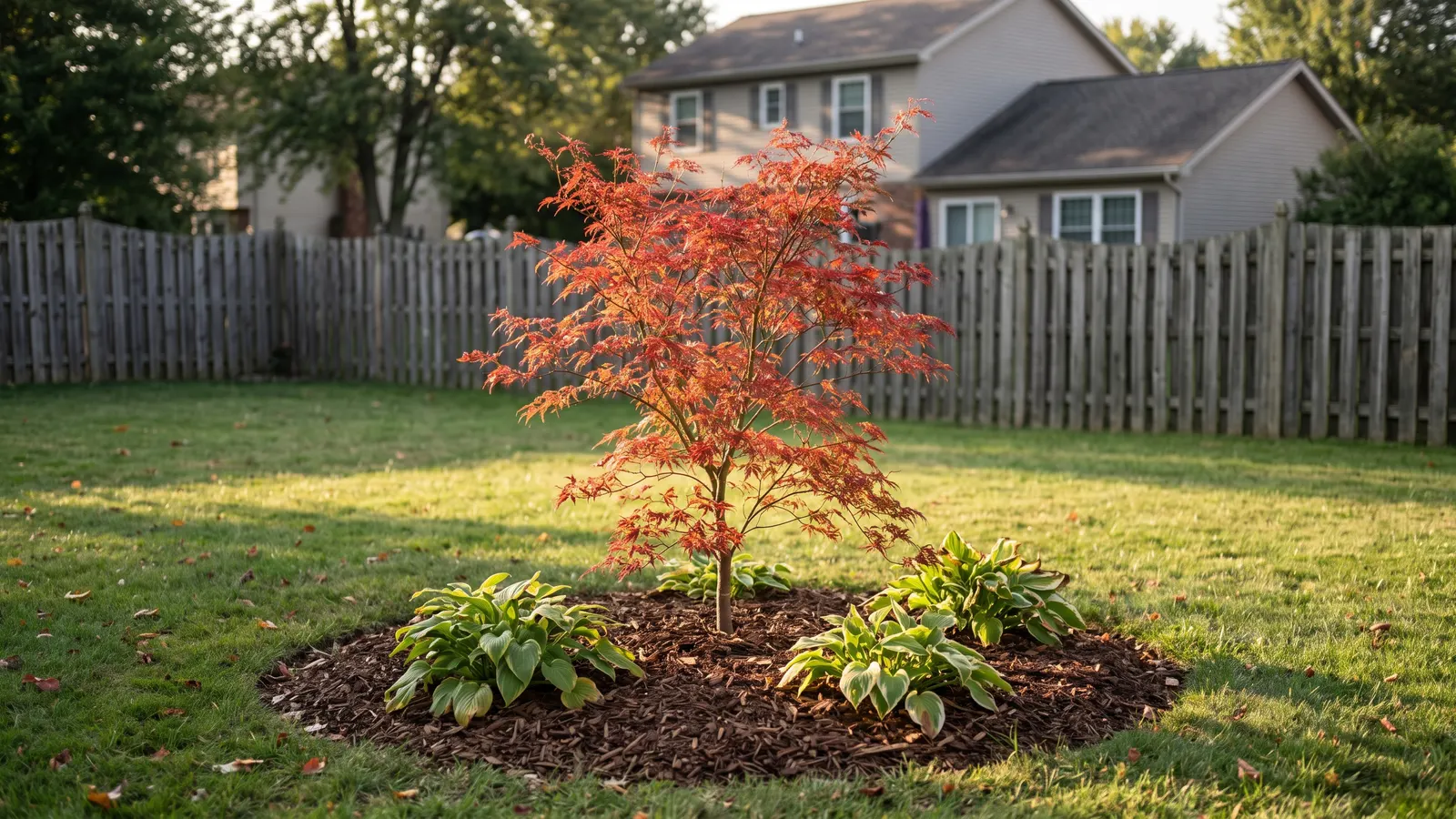
Time: 2 hours. Cost: a tree under 6 feet is $50 to $150, or $125 to $300 planted by a pro, according to HomeGuide. A single tree gives a flat yard a focal point and, later, some shade. Japanese maples suit small yards and zones 5 to 8; serviceberry and redbud are good picks for colder or hotter regions. Plant in fall and dig the hole twice as wide as the root ball, but no deeper.
15. Repeat three plants in drifts
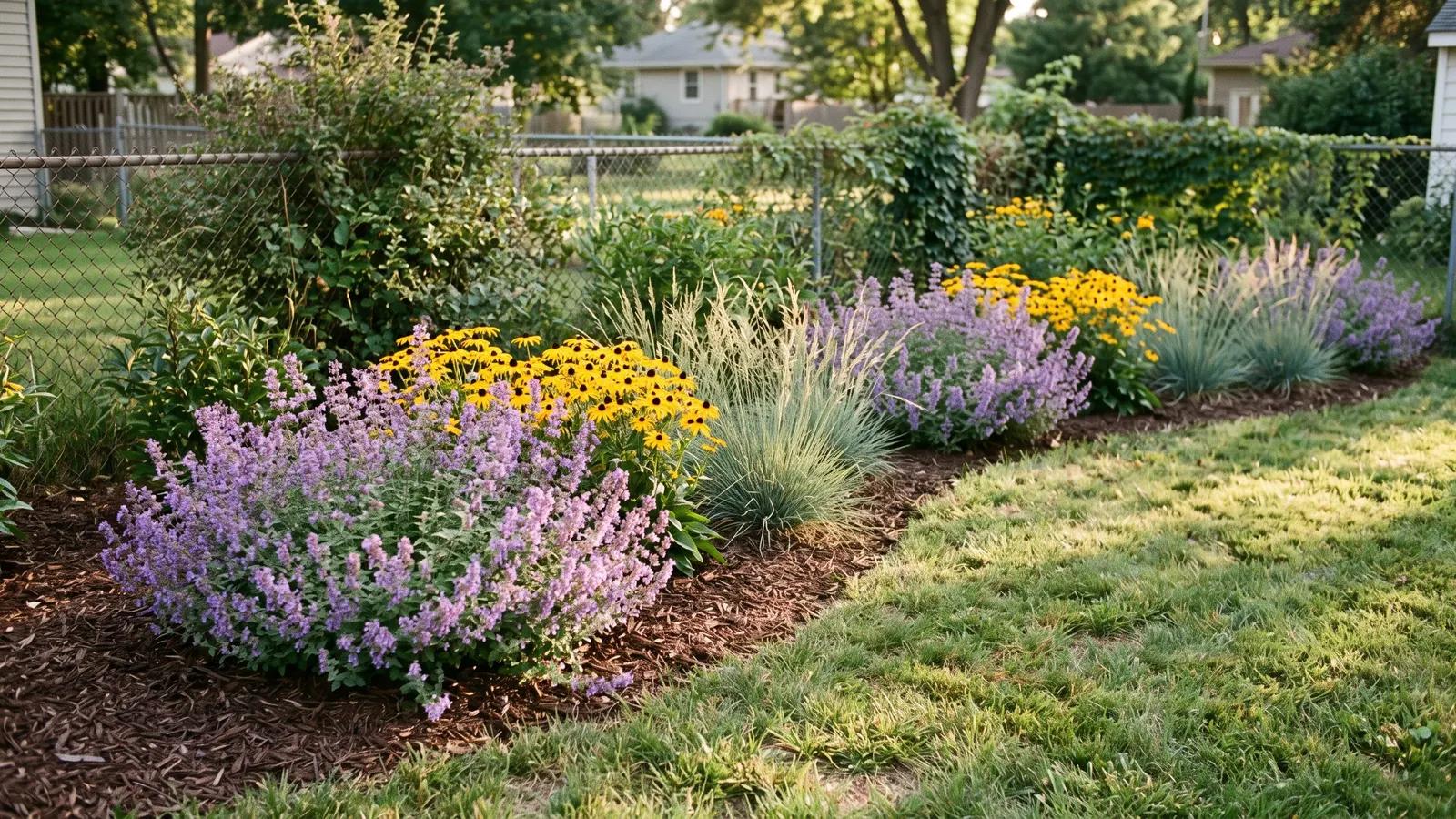
Time: half a day. Cost: perennials are cheapest in quart or 1-gallon pots, and buying several of one plant is often cheaper than a mix. Pick three plants and plant each in groups of five or seven. Repetition is the reason pro beds look calm and DIY beds often look busy. Catmint, black-eyed Susan and little bluestem all bloom for months and take full sun.
16. Start a small native pollinator patch
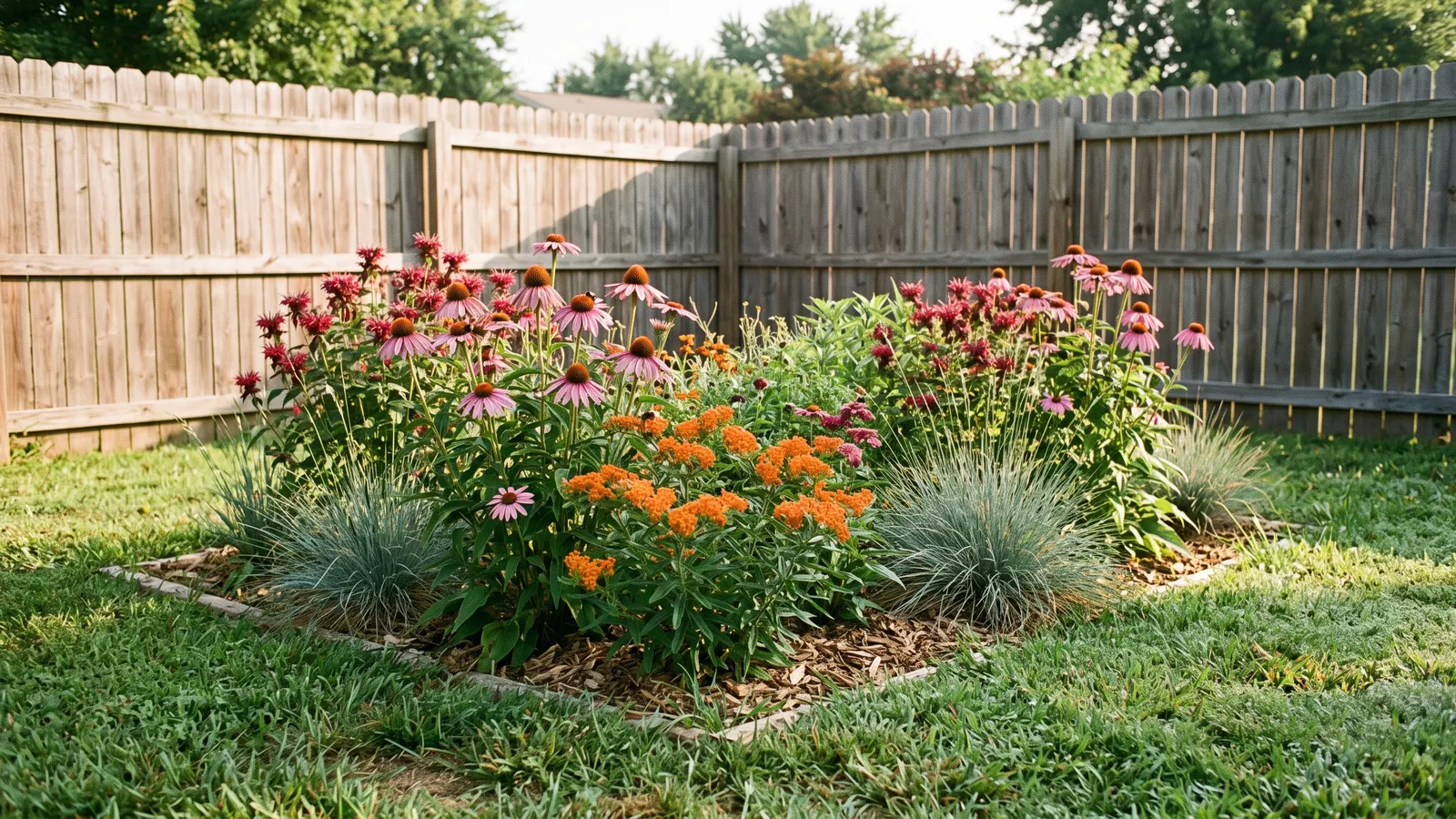
Time: half a day. Cost: low, and lower each year as the plants spread. A 6 by 10 foot patch of native perennials is enough to bring in bees and butterflies. Natives are adapted to your region's rain and soil, so once established they need little watering and no fertilizer. Your state extension service or native plant society lists the right species for your area.
17. Add evergreen shrubs for winter
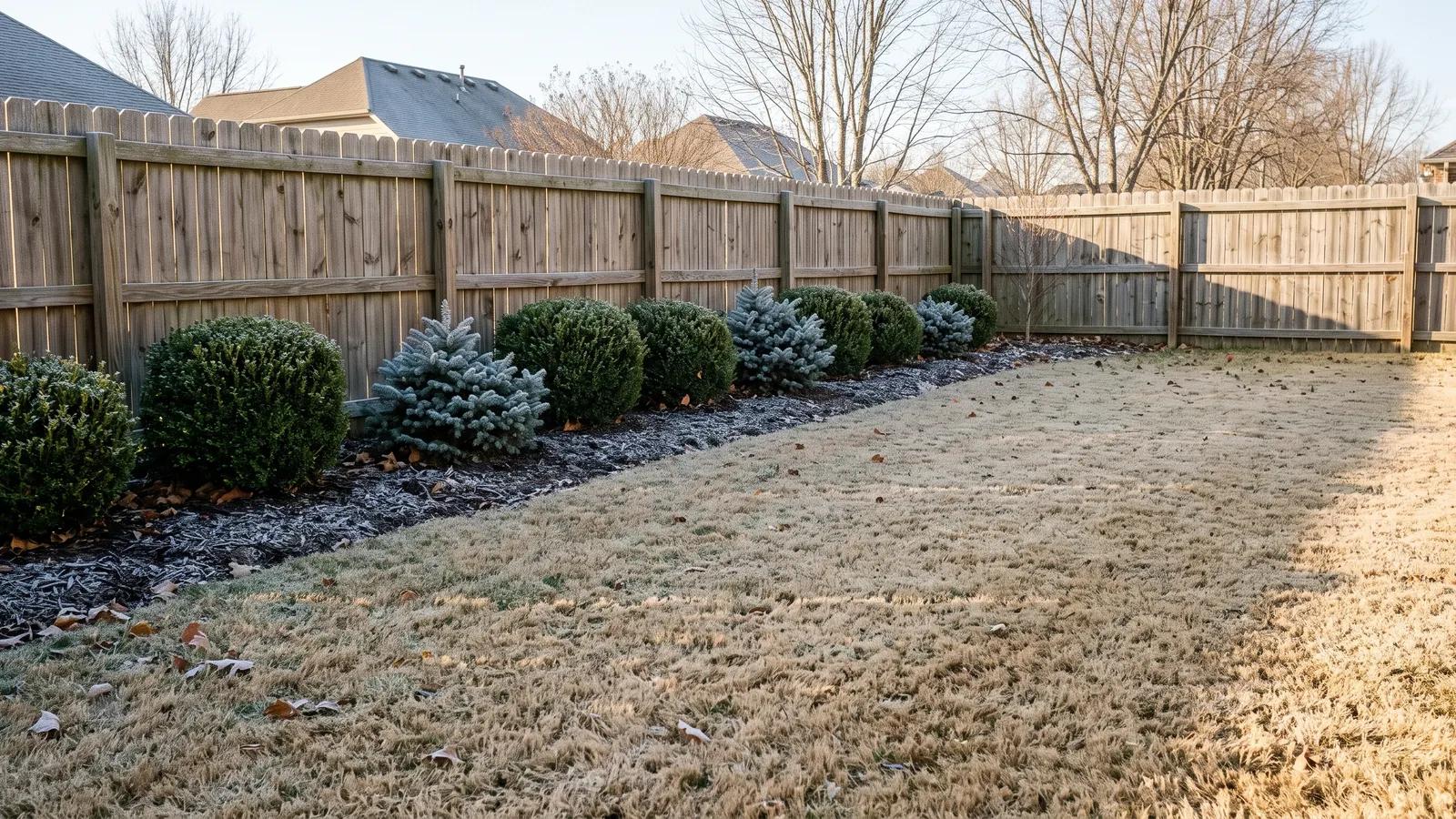
Time: a few hours. Cost: shrubs in 1-gallon to 3-gallon pots, plus $25 to $85 each if a landscaper plants them. A yard planted only with perennials goes flat and brown from November to April. A few evergreens hold the shape all year. Boxwood works in most of zones 5 to 8; in colder areas, dwarf spruce or juniper are tougher choices.
Paths and gravel
A path tells people where to walk and saves the lawn from a worn track. These go from the cheapest to a once-and-done splurge.
18. Set stepping stones into the lawn
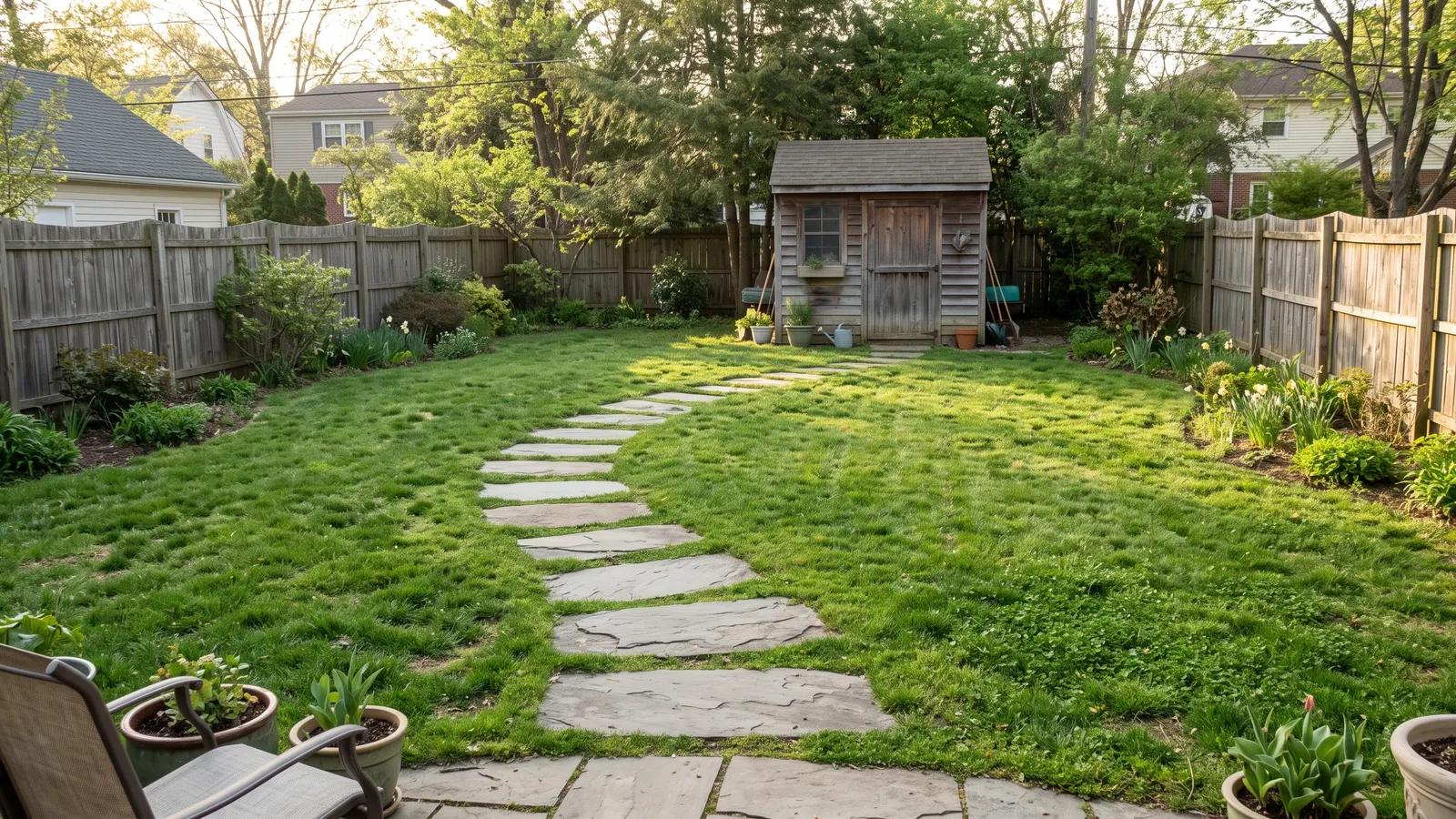
Time: 3 to 4 hours. Cost: stepping stones start around $3.35 per square foot at Home Depot. Lay the stones out on the grass first and walk them at a normal pace to set the spacing. Then cut around each one, dig out the turf, add an inch of sand, and set the stone flush with the soil so the mower rolls over it.
19. Lay a gravel path with steel edging
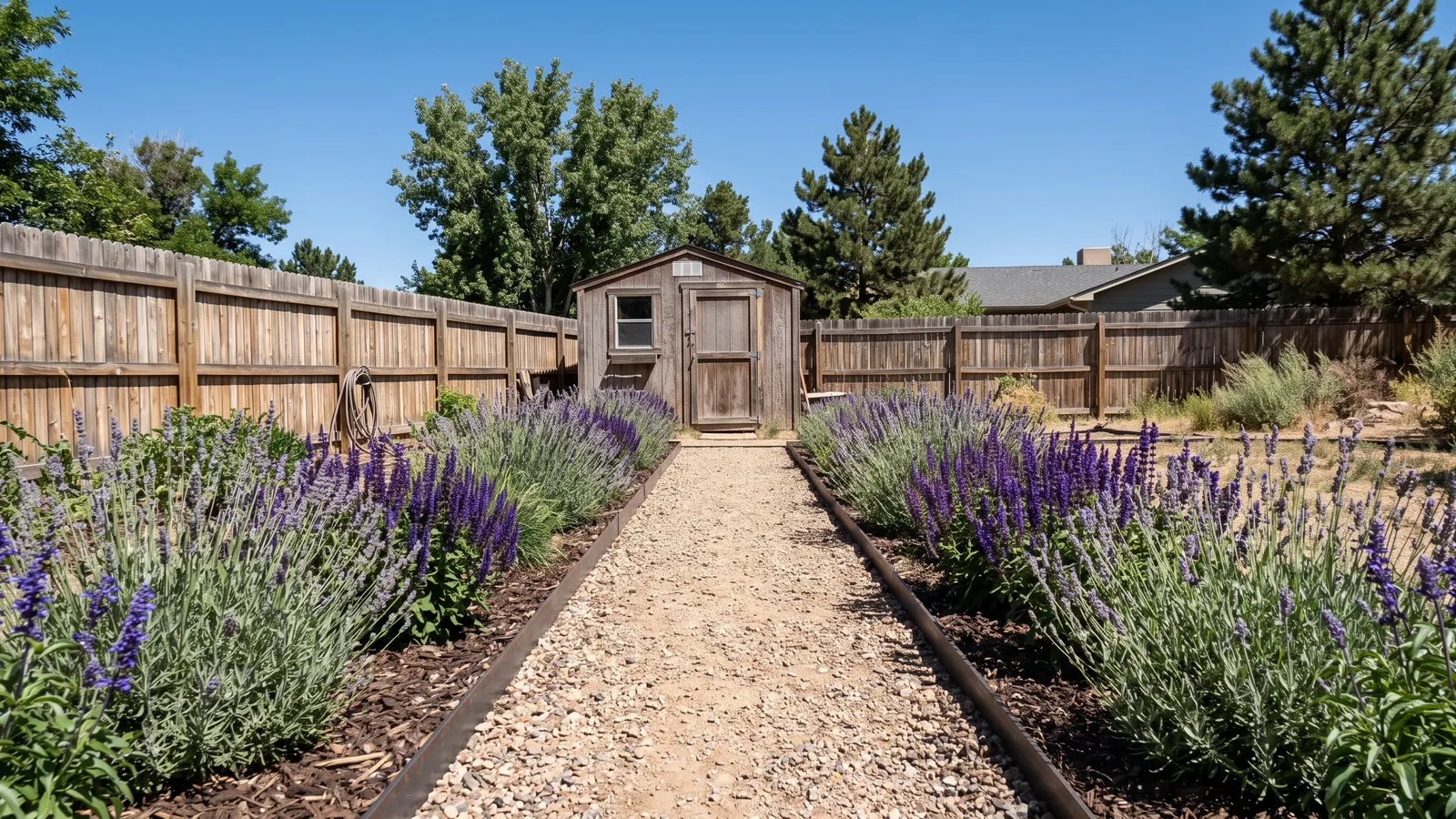
Time: a weekend. Cost: gravel is $30 to $55 per ton, and a 3 by 20 foot path at 3 inches deep needs a bit over half a cubic yard. Crushed gravel with fines packs into a firm surface, while pea gravel rolls underfoot and suits sitting areas more than paths. The edging is what keeps it looking sharp. Without it, gravel ends up in the lawn by the end of the first summer.
20. Make a wood chip path through the beds
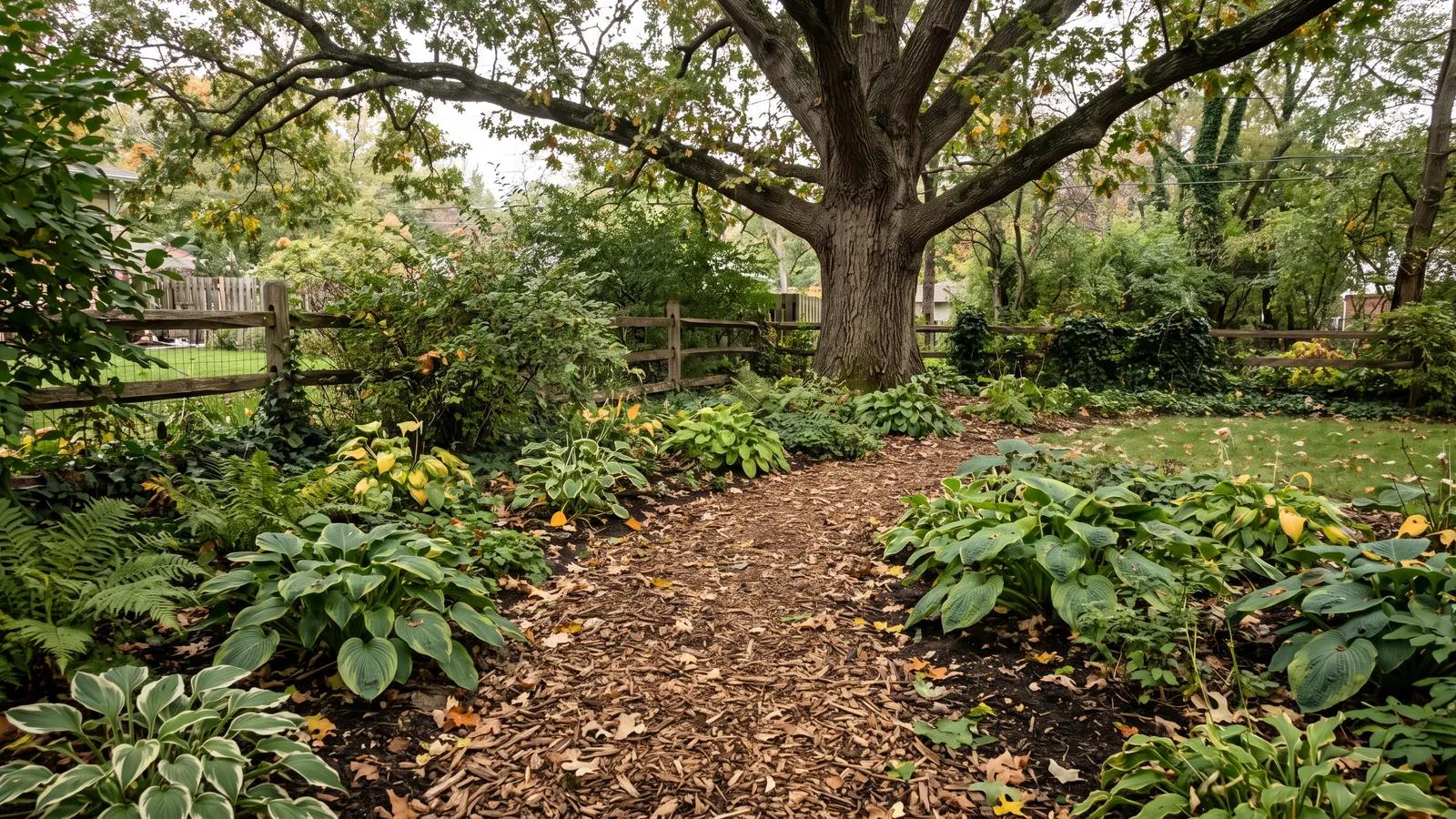
Time: 2 to 3 hours. Cost: the same as mulch, $25 to $100 per cubic yard, and sometimes nothing if a local tree service drops off chips. This is the cheapest path there is, and it suits shady, woodland corners where gravel looks out of place. Lay cardboard underneath to smother weeds and top it up every year or two as it breaks down.
21. Build a flagstone walkway once
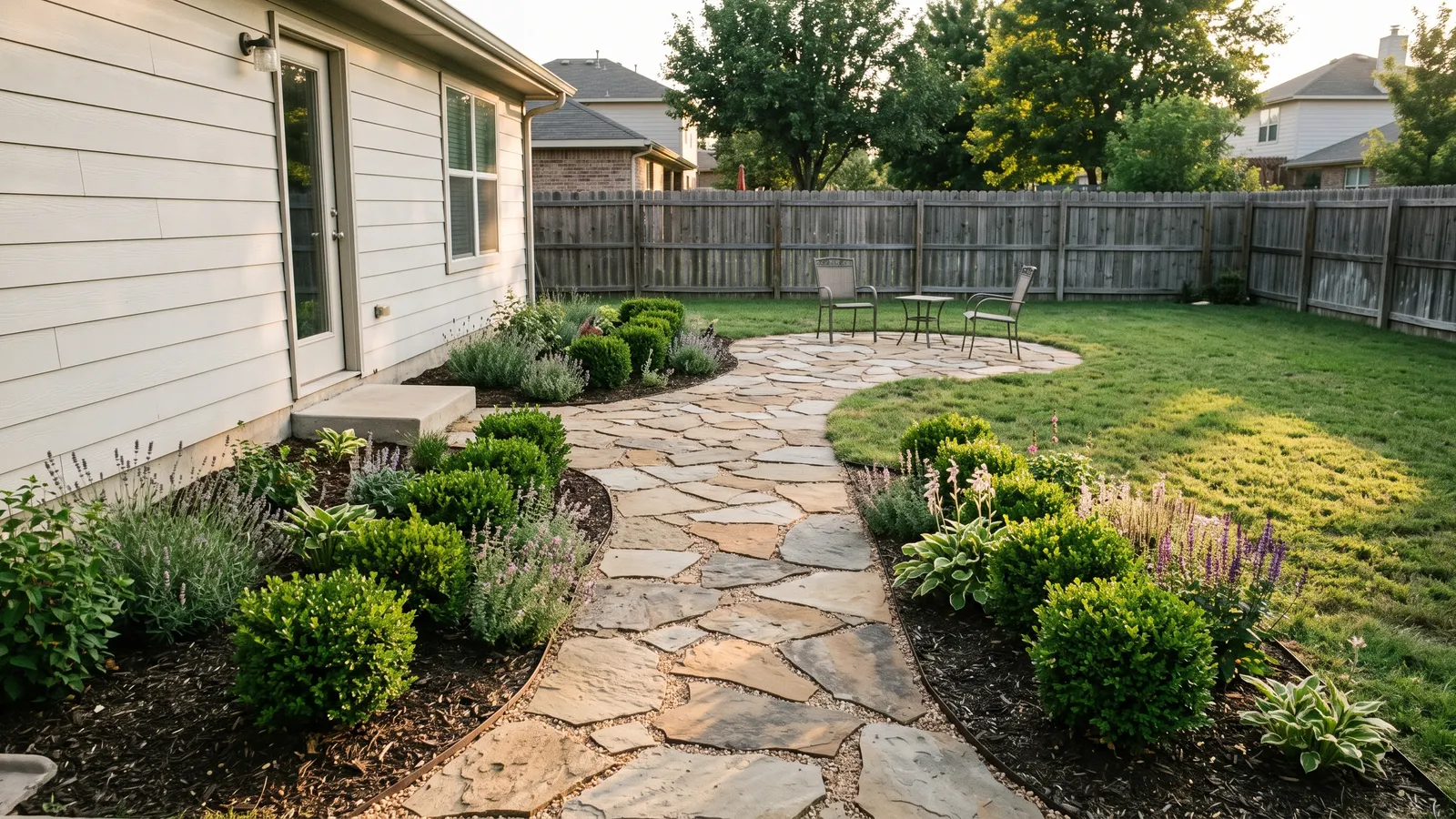
Time: a few days for a crew. Cost: a stone walkway runs $16 to $35 per square foot installed, and a 5 by 20 foot path costs $1,600 to $3,500, according to HomeGuide. It's the one idea here that isn't cheap. It's also the one you never redo. If the route from the back door to the patio gets daily use, a proper walkway on a compacted base pays for itself in years of no maintenance.
Lighting
Lighting is what makes a yard usable after dinner, and it's the cheapest way to make a plain space look intentional.
22. Line the path with solar lights
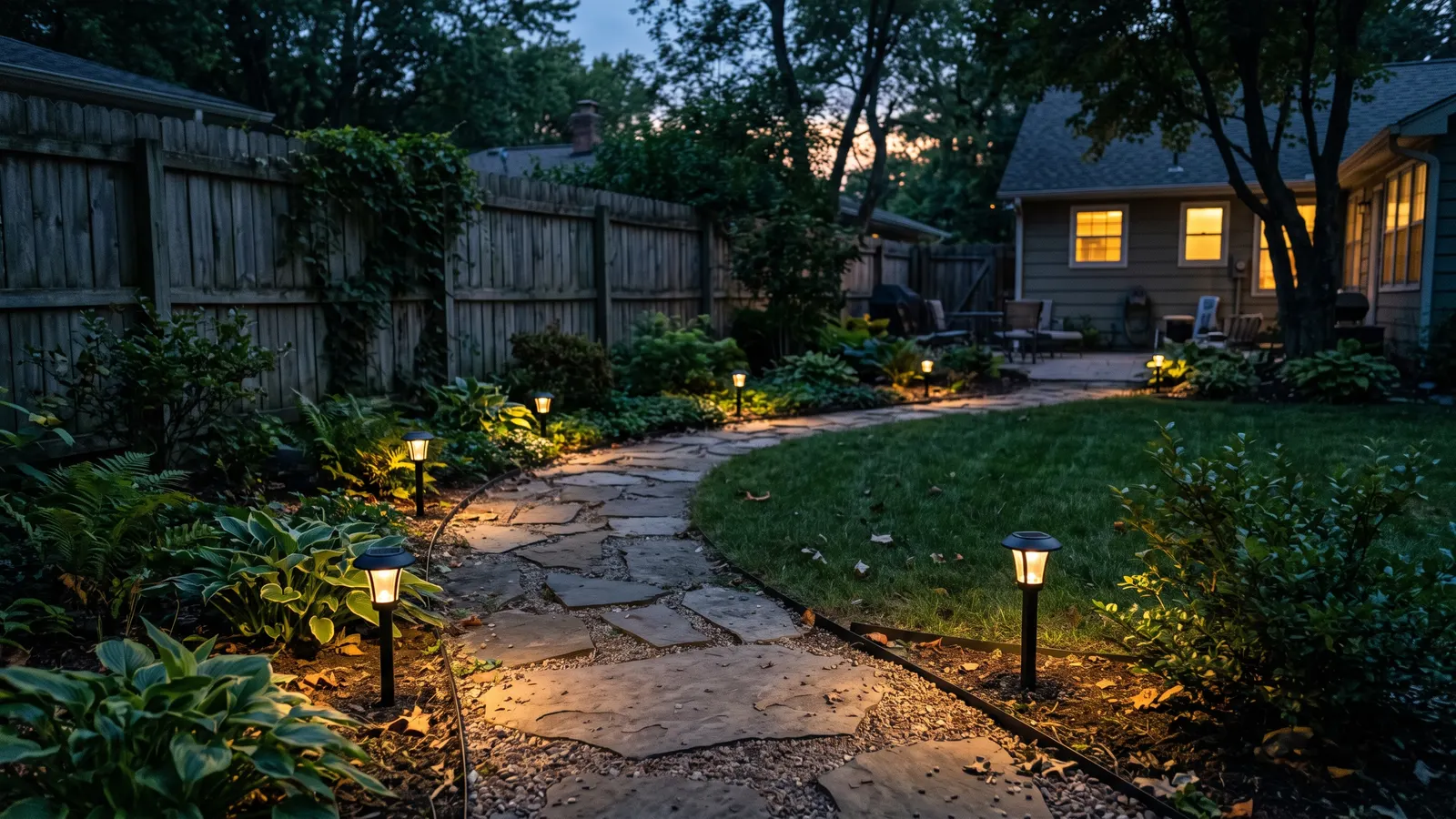
Time: 30 minutes. Cost: from about $1.50 per light in cheap multipacks to $16 or more per light for brighter ones at Home Depot. Space them 6 to 8 feet apart and stagger them along both sides so the path doesn't look like a runway. The cheap ones fade fast, so buy fewer, better lights. Low-voltage wired lights are the upgrade, at $100 to $150 per fixture installed.
23. String lights between posts
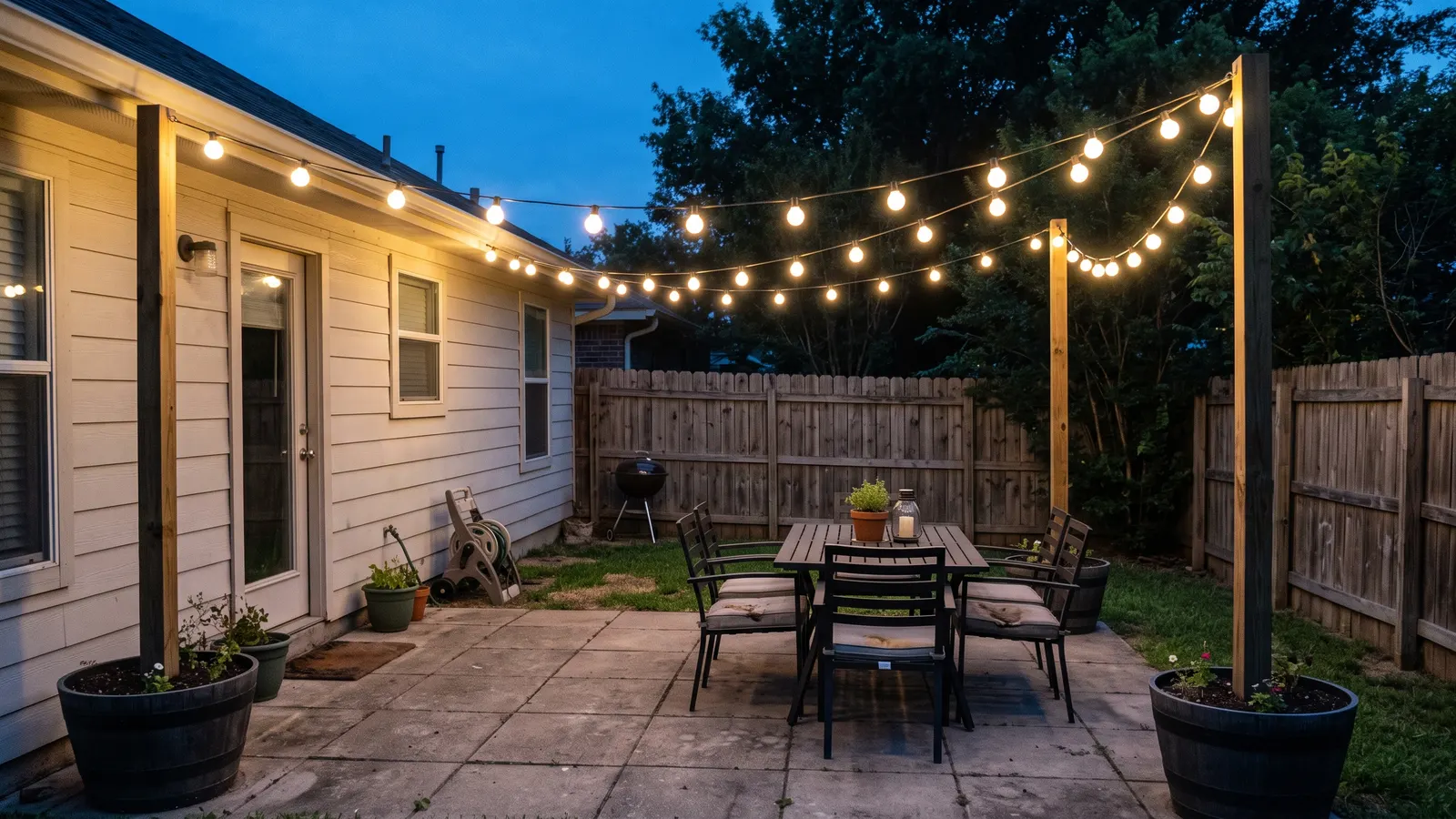
Time: 2 to 4 hours. Cost: a pro charges about $50 to $200 to hang a 50-foot string, according to Fixr, and doing it yourself costs only the lights and posts. No trees in the right place? Set 4x4 posts in large planters filled with gravel or concrete, then run the strings in a zigzag. Use a guide wire for spans over 20 feet so the strings don't sag.
How to pick the right ideas for your yard
Start with what bothers you most when you look out the back door, then match it:
- If the yard looks messy, start with ideas 1, 2 and 17. Edging, mulch and a fence refresh fix most of it in a weekend.
- If there's nowhere to sit, look at ideas 3, 4, 7 and 12. Give the yard one place to go before you add anything else.
- For a small yard, use ideas 10, 11, 12 and 13. Go vertical and keep to one or two materials.
- On a tight budget, ideas 1, 9, 15, 18 and 20 cost little more than a weekend of labor. Our guide to a backyard makeover on a budget covers sourcing cheap plants and materials.
- If you'd rather build it all yourself, these DIY backyard landscaping ideas go deeper on raised beds, water features and decks.
If you're stuck between a few directions, it helps to see them on your actual yard before you buy anything. That's what AI backyard design does: upload a photo, pick a style, and compare realistic concepts of your own space.
FAQ
What is the cheapest way to landscape a backyard? Mulch, edging and plants you divide or grow from seed are the cheapest upgrades. Edging the beds and spreading fresh mulch costs a few dollars per bag and changes how the whole yard looks. After that, a wood chip path, overseeding with clover and repeating a few inexpensive perennials stretch a small budget the furthest.
How can I make my backyard look nice on a budget? Clean it up before you buy anything: weed, edge the beds, trim shrubs and refresh the fence. Then add one place to sit, a few large containers and some solar lights. Most of what makes a yard look cared for is crisp edges and tidy beds, not expensive features.
What are some easy backyard landscaping ideas for beginners? Mulching beds, planting containers, setting stepping stones and installing solar path lights all need no special tools or skills. Each takes a few hours. Start with one of these and save hardscape projects like patios and walkways for later, or for a contractor.
How do I landscape a small backyard? Give each area one job and use vertical space. Trellises and climbers add green without taking floor space, one paving material makes the yard feel bigger, and a small bistro corner gives you a place to sit without crowding the rest. Keep the plant list short and repeat it.
How do I see what my backyard could look like before I start? Take a photo from the back door and either sketch over a printout or use an AI design tool. OutdoorBrite turns one photo into realistic design concepts in under a minute, so you can compare a gravel corner against a new border on your own yard. It doesn't measure the space or estimate costs, so price the work separately.
Sources: HomeGuide: mulch prices, HomeGuide: pea gravel cost, HomeGuide: gravel prices, HomeGuide: landscape edging ideas, Homewyse: cost to stain a fence, Lowe's exterior stains, HomeGuide: fire pit cost, International Fire Code 307.4 via UpCodes, HomeGuide: flower bed and raised garden bed cost, Lowe's shade sails, Lowe's garden arbors, Lowe's garden trellises, Outsidepride white Dutch clover seed, HomeGuide: patio cost, HomeGuide: landscaping installation cost, HomeGuide: cost to plant a tree, Home Depot stepping stones, HomeGuide: stone walkway cost, Home Depot solar path lights, HomeGuide: outdoor lighting installation cost, Fixr: outdoor lighting cost, all checked October 20, 2026