21 Rock Landscaping Ideas That Outlast Every Mulch Bed
Rock is the only landscaping material you buy once. These 21 ideas cover paths, beds, features, and planted rock gardens, with per-ton costs, the right stone sizes, and the honest cases where rock is the wrong call.
Mulch has a subscription model: it fades, floats, and gets topped up every spring, forever. Stone bills you once. That's the honest appeal behind most rock landscaping ideas, and it's why the material shows up in every yard that's trying to shrink its maintenance list, not just the desert ones.
The 21 ideas below are grouped into paths, beds, features, and planted rock gardens, each with real per-ton costs, the right stone size for the job, and plant pairings tagged with hardiness zones. The last two cover the part nobody writes about: building the base correctly and knowing where rock is the wrong answer. Every image is an AI-generated design concept from a typical yard photo, the same kind of render AI landscape design produces from a picture of yours.
One number to keep handy: length times width times depth in feet, divided by 27, is cubic yards of stone. Three inches is the standard depth for coverage that actually suppresses weeds.
Paths and ground you walk on
1. Lay a river rock path with flagstone steppers
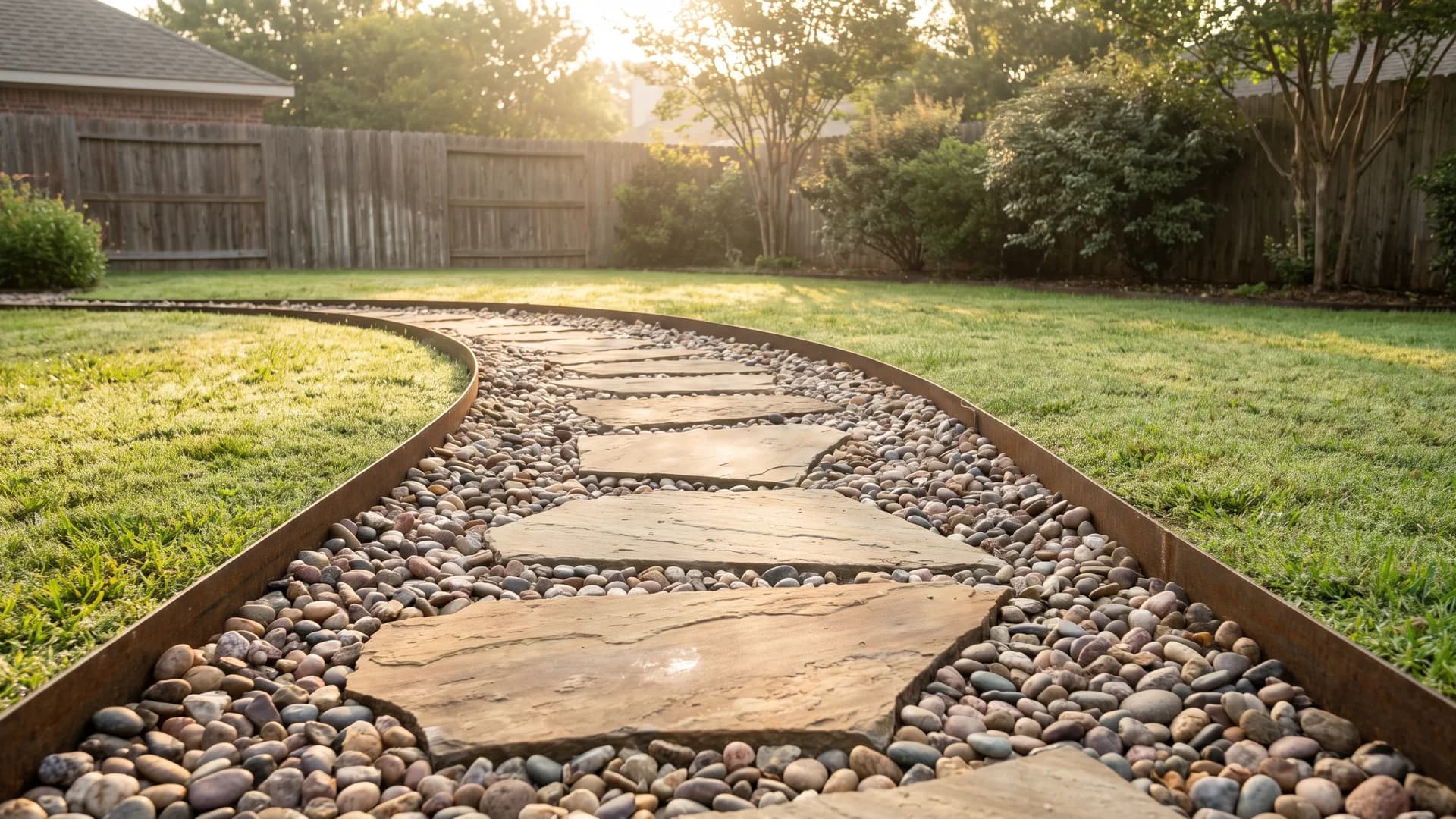
River rock alone rolls underfoot; flagstone alone costs a fortune. Together they solve each other: steppers every 24 inches carry your stride, river rock fills between at $80 to $150 a ton. Flagstone runs $15 to $30 a stone. Set steppers first, walk the path to test the spacing, then pour the rock around them. Edging on both sides keeps the whole thing off the lawn.
2. Build a pea gravel patio for the price of a rug
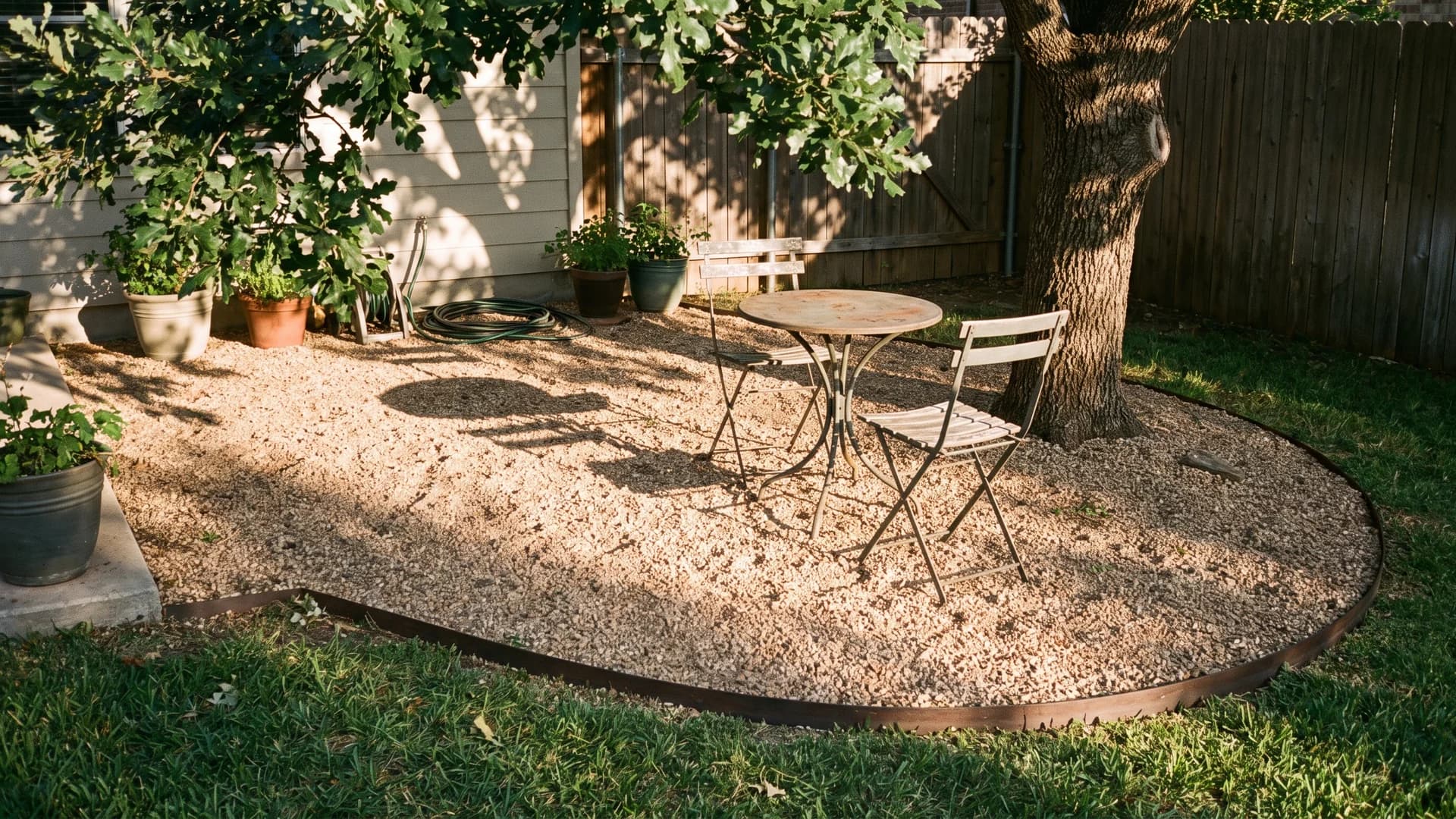
A 10-by-12 pea gravel patio costs $200 to $350 in materials: fabric, edging, and about two tons of stone at $45 to $60 a ton. It drains instantly, feels good underfoot, and installs in a weekend with a wheelbarrow and a rake. Furniture legs sink slightly, so choose wide-footed pieces. It's the cheapest real patio there is, and it doesn't look it.
3. Run a crushed granite path through the garden
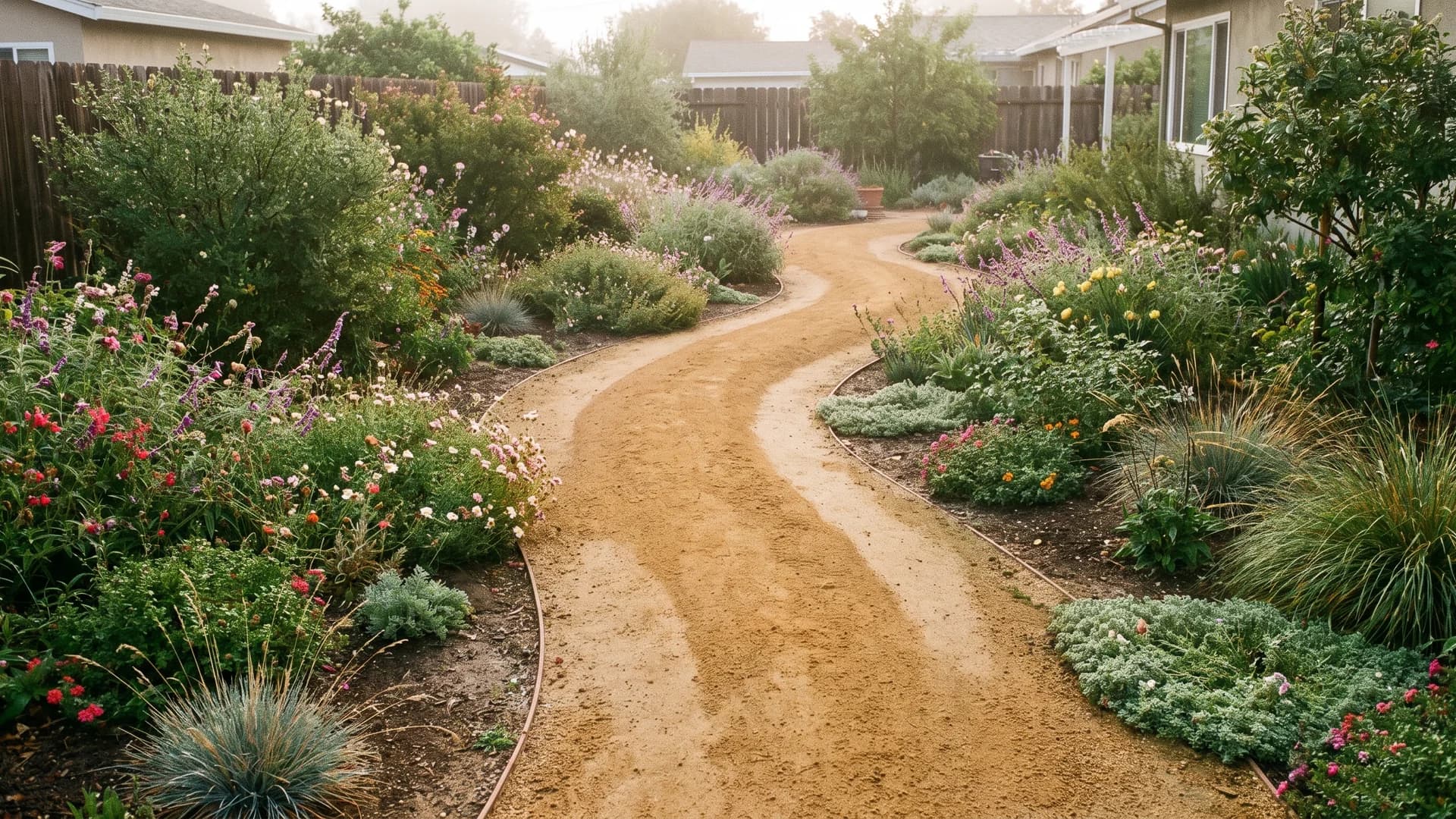
Crushed granite compacts into a firm, sandy-toned surface that wheelbarrows and strollers roll over without complaint, which loose rock never allows. At $50 to $80 a ton, a 3-foot-wide garden path costs about a ton per 25 feet. Compact it in two lifts and crown the center slightly so rain sheds. The gravel calculator does the tonnage math from your path dimensions.
4. Pair pavers with a rock border
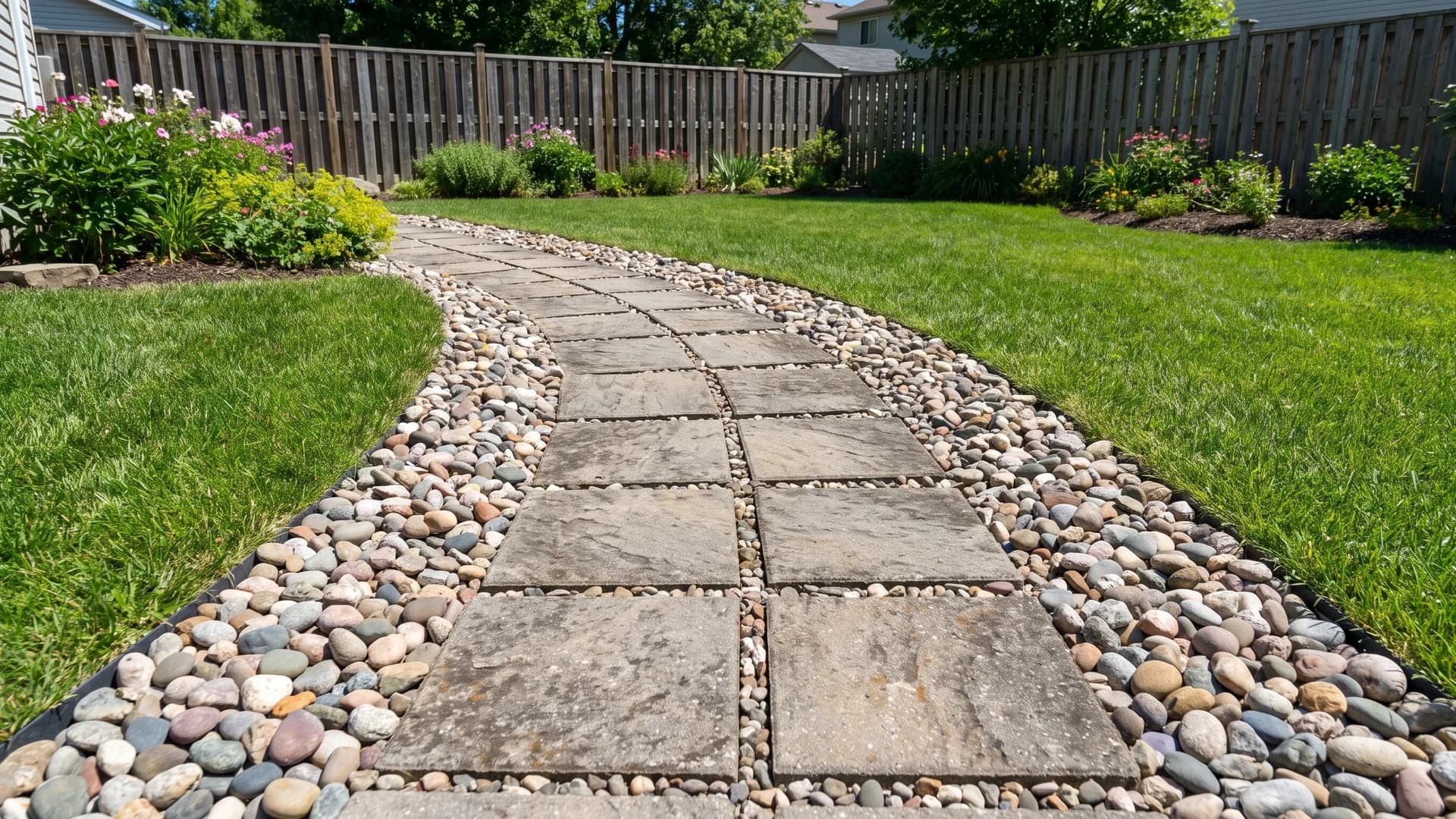
A paver walk with a 6-inch river rock band on each side looks custom, forgives imperfect cuts, and drains the path's runoff. Pavers run $3 to $6 a square foot, the rock border adds maybe $60 total. The band also solves the mowing edge: wheels ride the pavers, trimmer never touches stone. This is the highest look-per-dollar walkway combination going.
5. Circle the fire pit in gravel
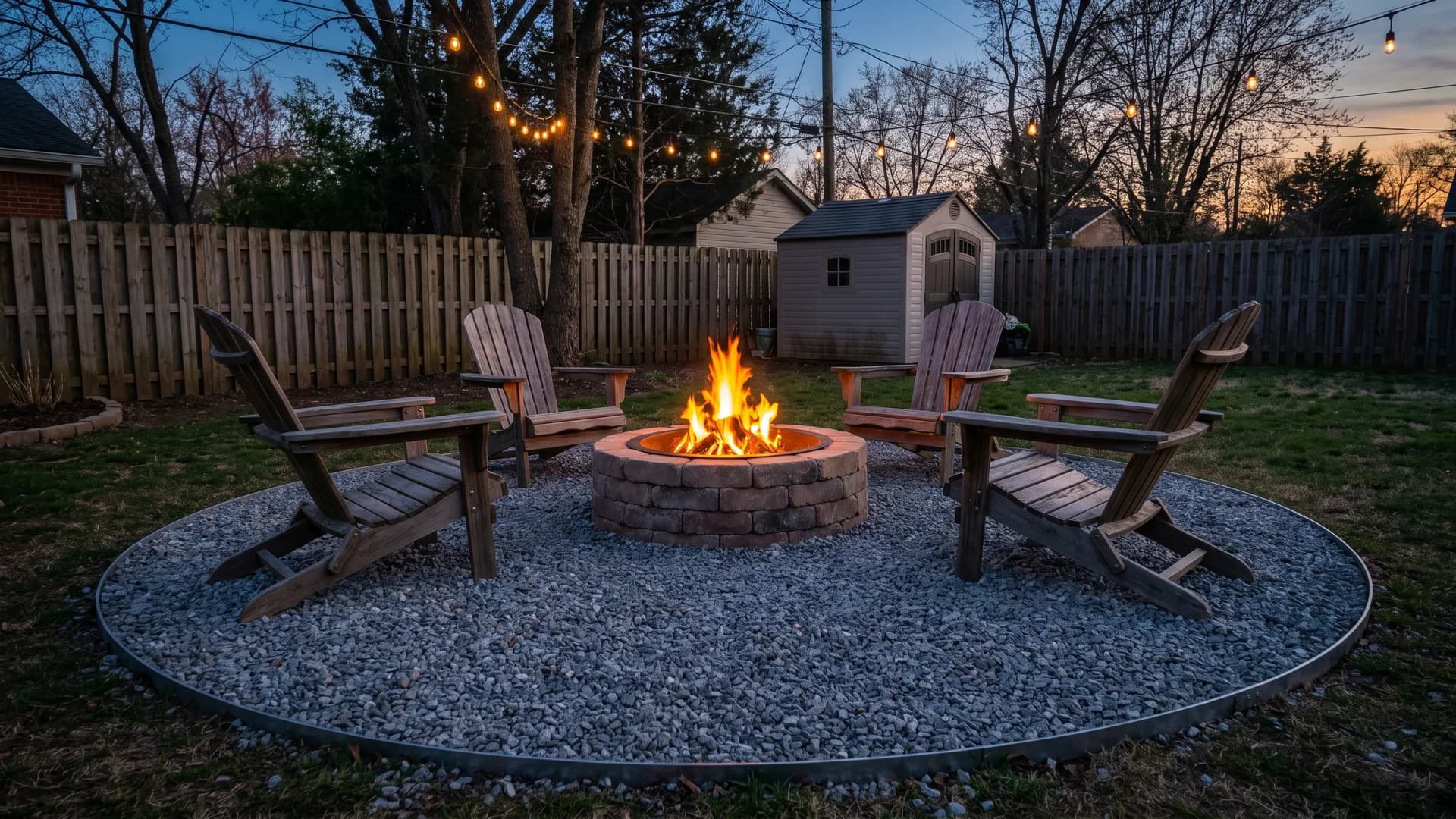
Grass burns, decks char, and pavers cost. A 12-foot gravel circle around a fire pit is fireproof ground for about $150 in crushed stone, plus edging to hold the ring. Crushed compacts firmer than pea gravel under shifting chairs. Keep the pit 10 feet from structures and check local burn rules; the gravel handles the embers either way.
Beds and borders
6. Replace bed mulch with river rock, where it makes sense
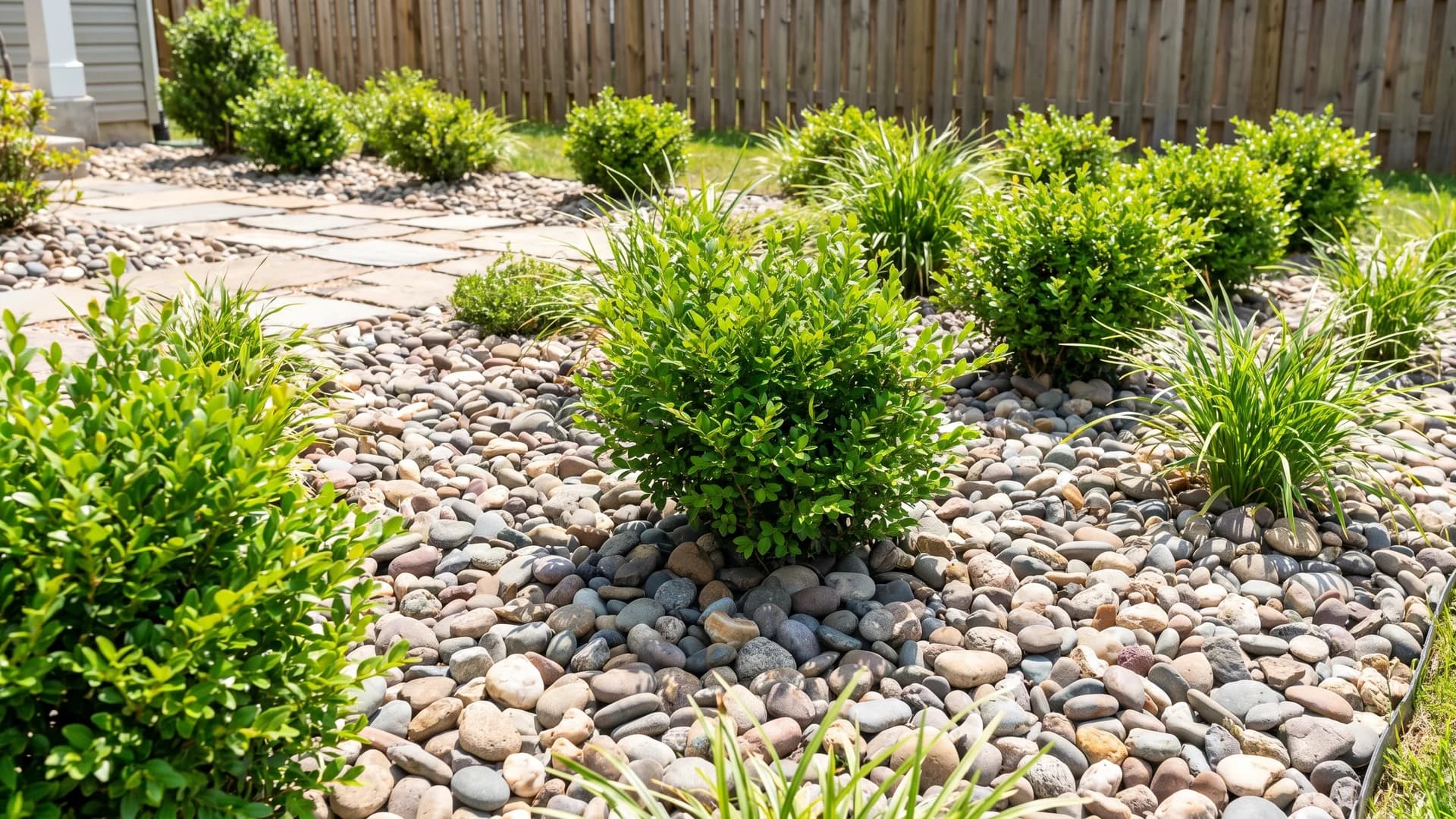
Rock mulch never decomposes, never blows into the pool, and never needs the spring top-up. The trade: it adds no organic matter and holds heat, so it suits shrub and grass beds better than vegetable or perennial beds. At $80 to $150 a ton over fabric, a converted bed pays for itself in skipped mulch within three or four years. Established shrubs shrug off the heat; tender annuals won't. Depth, stone size, and the colors that sit well against different siding are all in our river rock guide.
7. Contrast rock and mulch in alternating beds
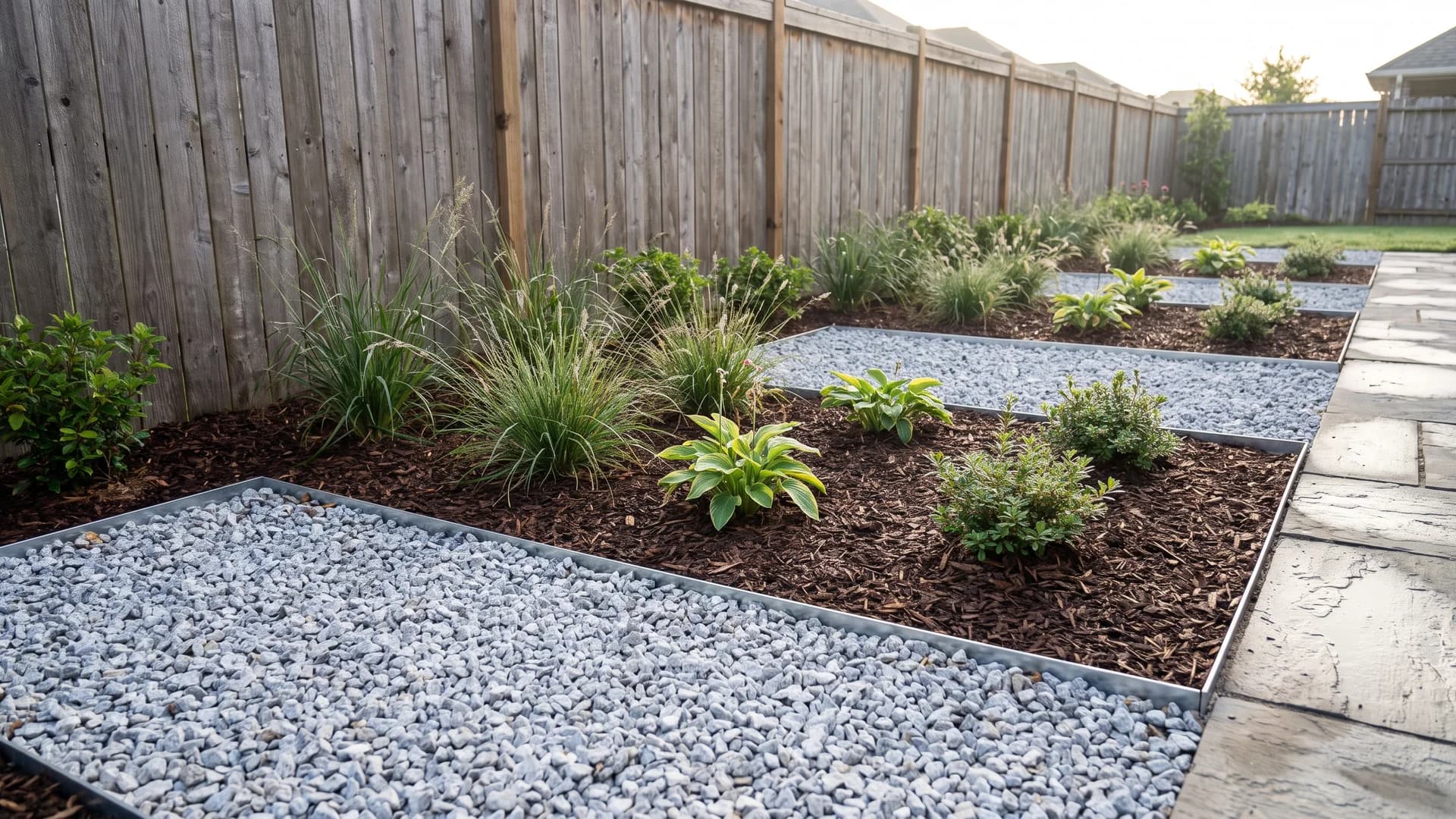
Using both materials is a design move, not indecision: light gravel beds against dark mulch beds give the yard rhythm and put each material where it works, rock in open sun, mulch around plant roots. The color break does what a second plant palette would, for the price of stone. Hold every boundary with landscape edging or the two will trade places in a season.
8. Stack a dry stone bed border
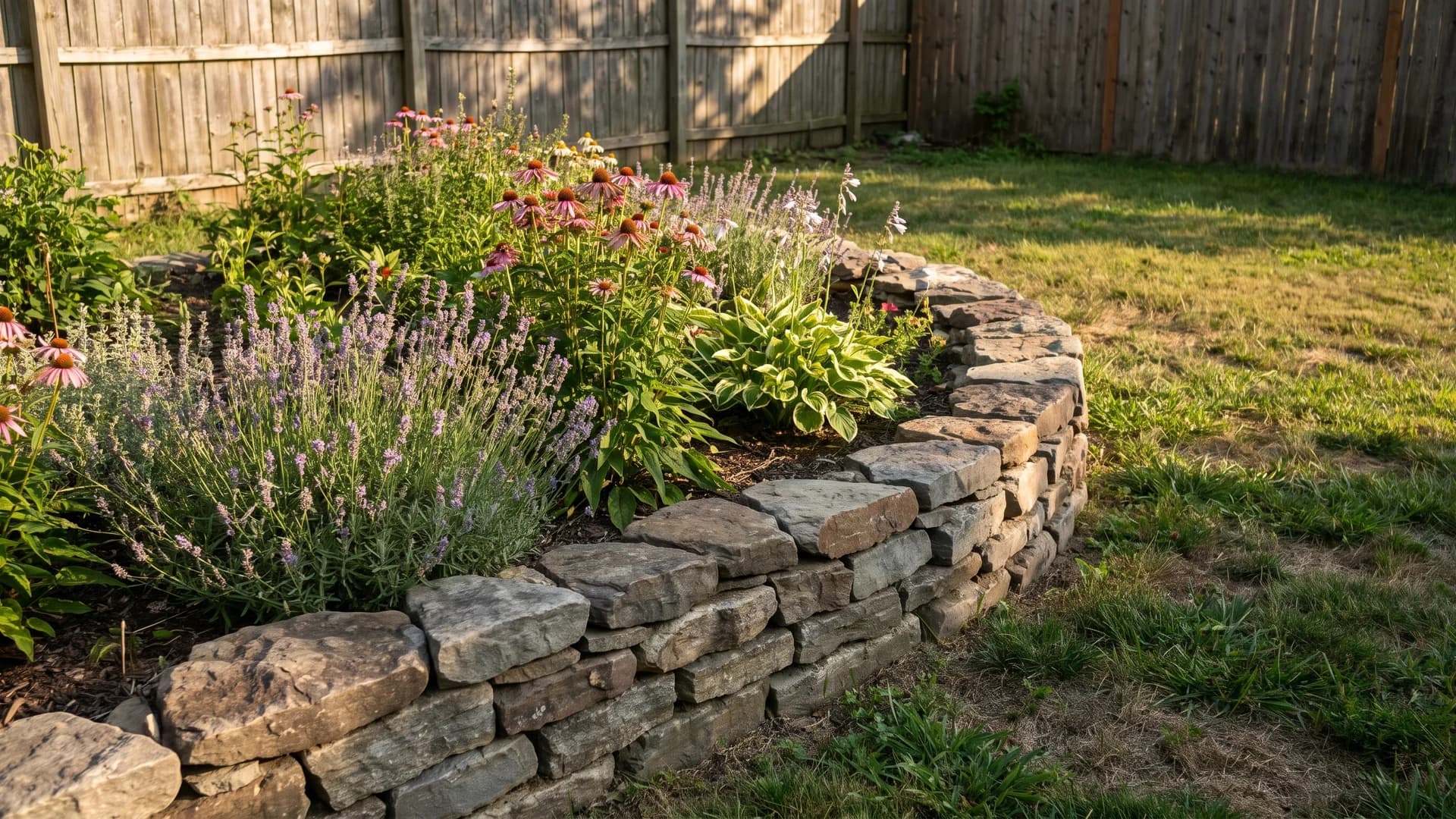
Two courses of stacked flat fieldstone, 6 to 8 inches high, edge a bed with more presence than any plastic or steel product. No mortar: gravity and a slight backward lean do the work. Fieldstone runs $150 to $300 a pallet, and a pallet edges 30 to 40 feet. It also raises the bed's front just enough to hold mulch in during downpours.
9. Ribbon a pebble strip along walls and fences
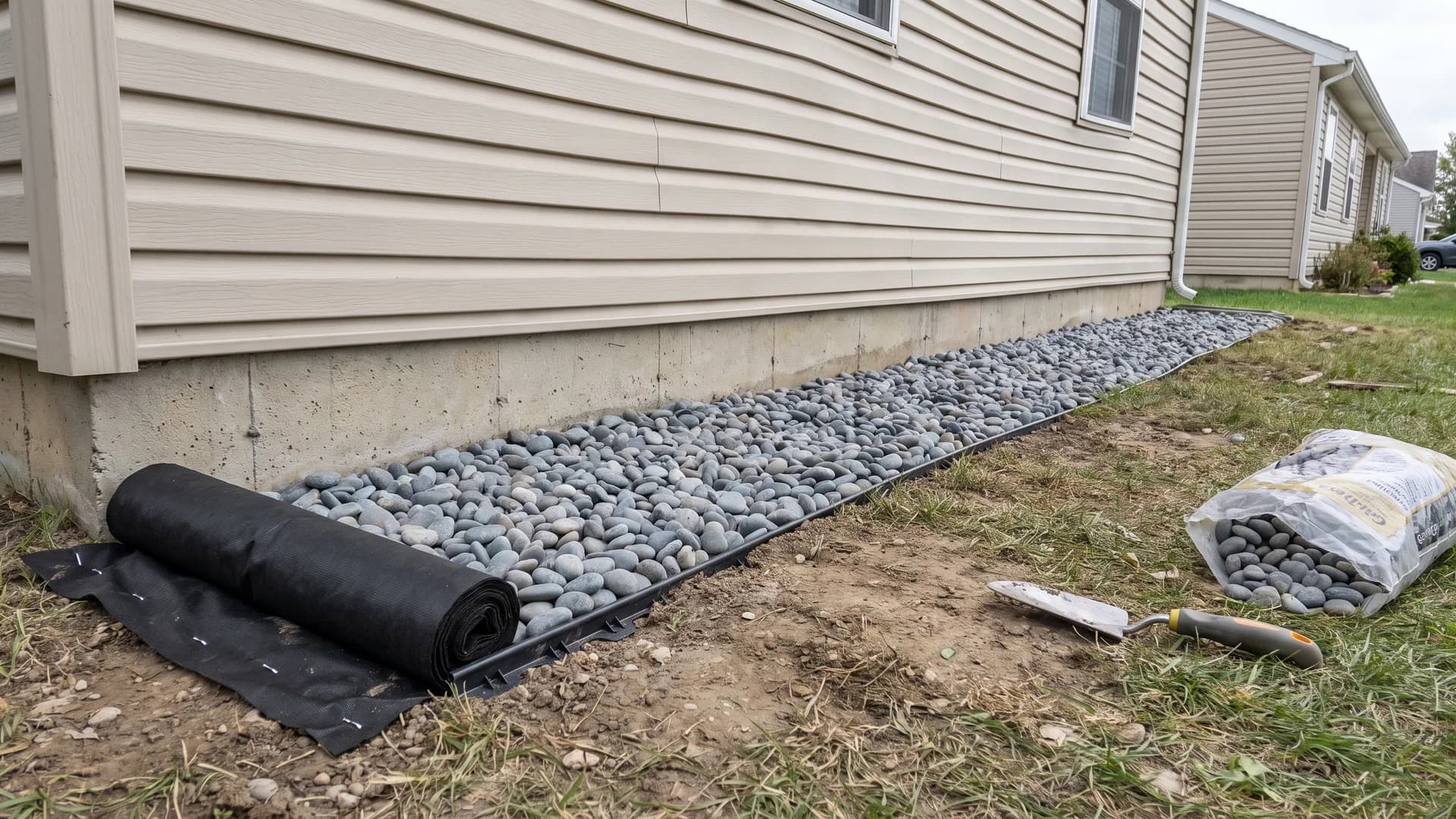
The 12-inch strip along a foundation or fence line grows only weeds and splashback stains. A pebble band over fabric ends both: rain splashes clean stone instead of soil onto the siding, and the trimmer line disappears. One ton of decorative pebble at $100 to $180 covers about 80 linear feet. Slope it slightly away from the wall; the strip should shed water, not store it.
10. Ring tree bases in stone, shallow and wide
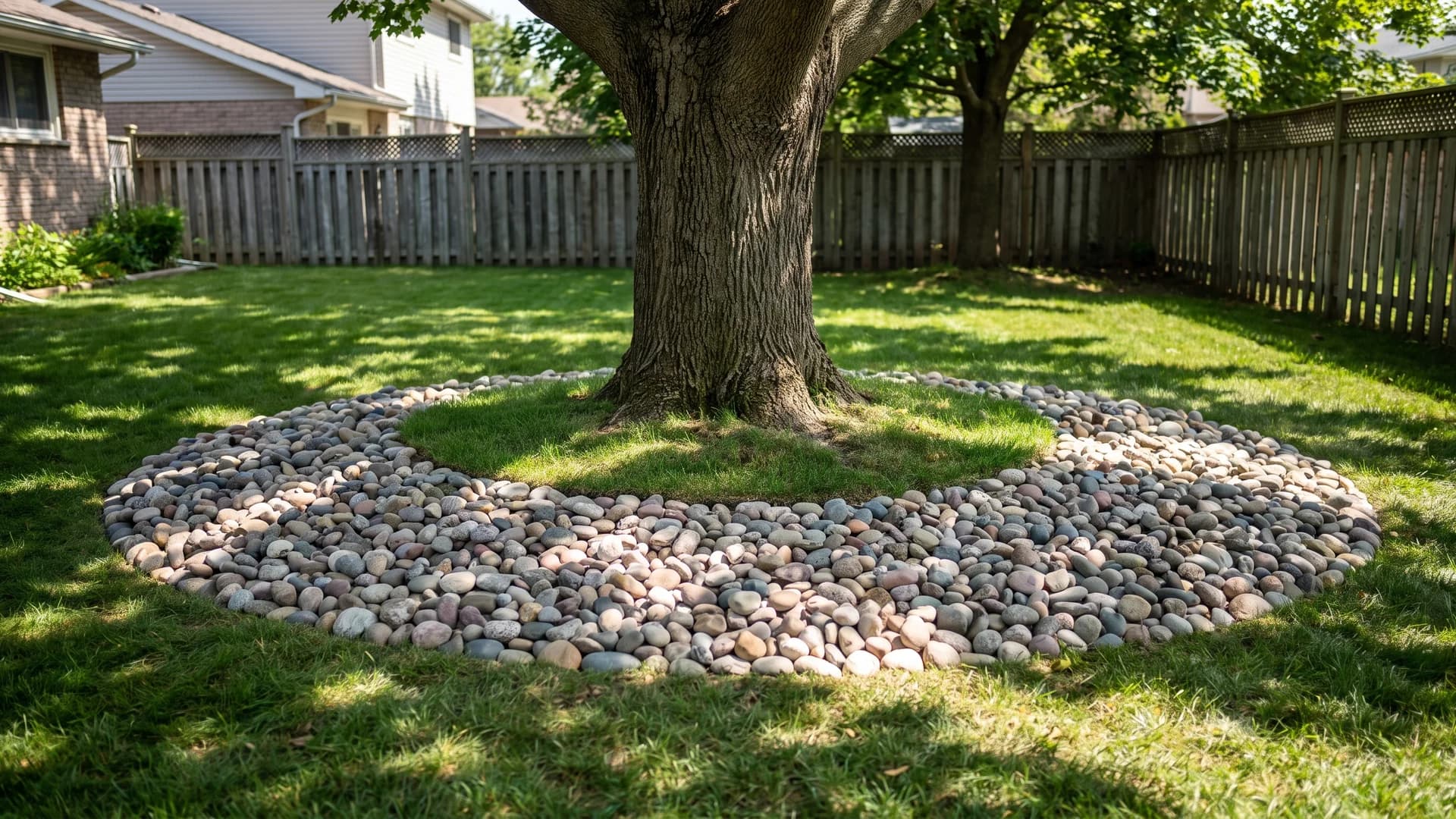
A rock ring solves the bare, root-humped circle under mature trees where grass gives up. Keep it shallow, 2 inches, and keep stone a hand's width off the trunk; piling rock against bark holds moisture where trunks rot. A 5-foot ring takes about half a ton. Skip fabric here, roots need the air exchange, and accept pulling the odd weed as the price of a healthy tree.
Features that anchor the yard
11. Dig a dry creek bed that actually drains something
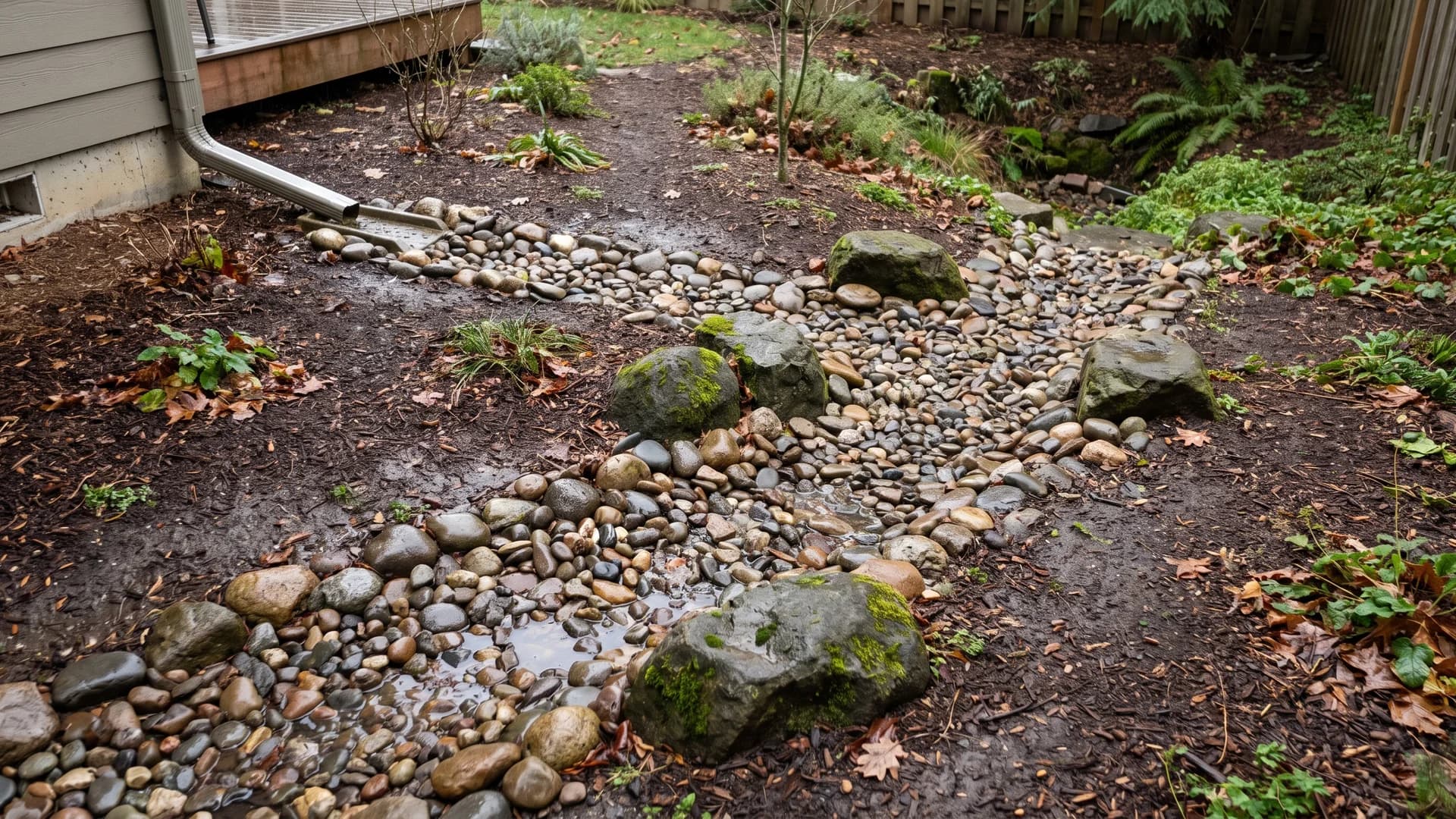
The best rock feature is the one doing a job. Route a shallow, fabric-lined channel from the downspout or the soggy corner toward a low point, fill with mixed river rock, and set a few larger stones at the bends like a real creek deposits them. A 20-foot run takes roughly a ton and a half, $120 to $220. It reads as design; it works as drainage.
12. Set a boulder group where the yard needs weight
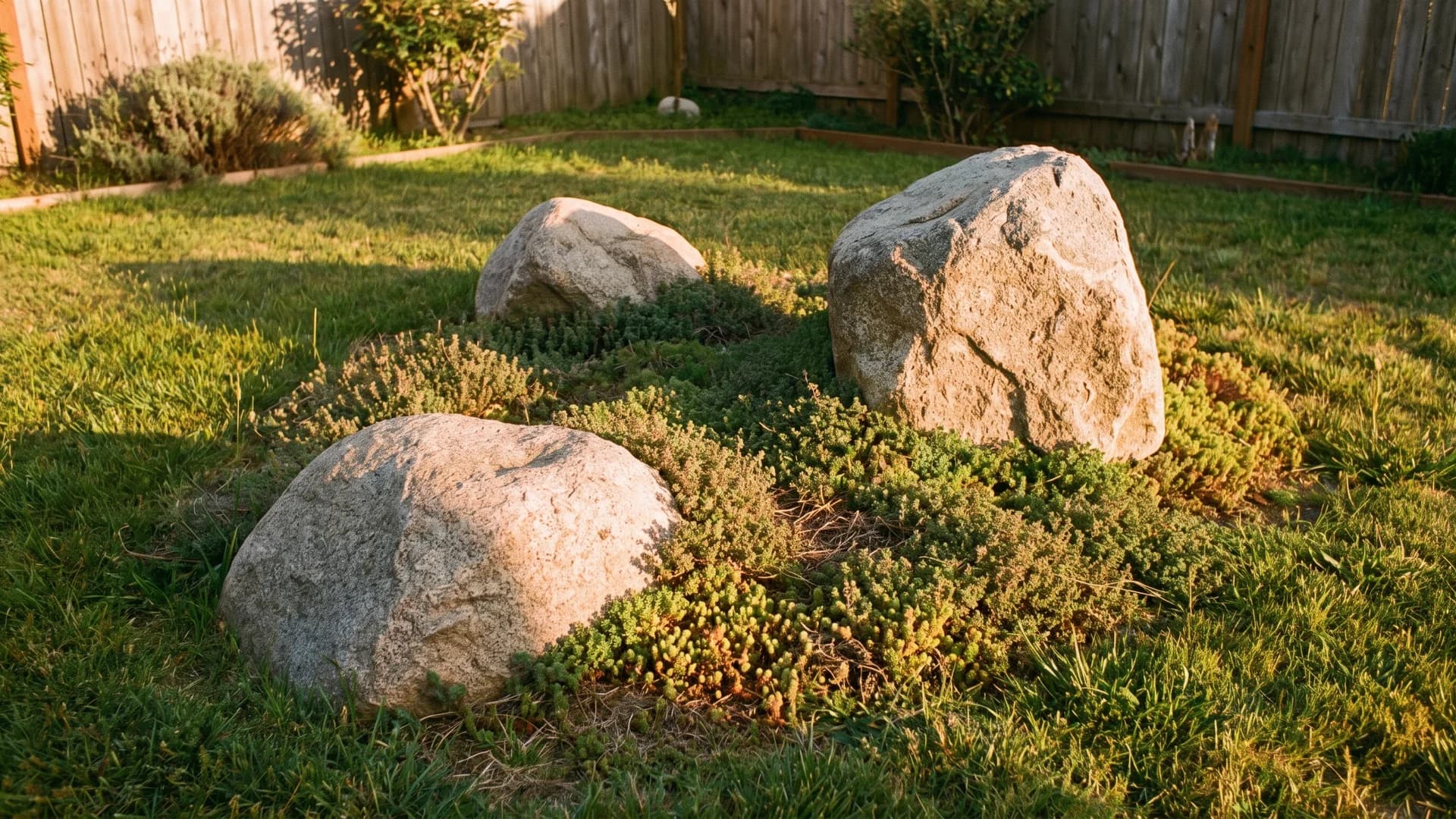
One boulder is a rock somebody left; three are a composition. Group odd numbers, vary the sizes, and bury each stone a third deep so it sits like geology instead of delivery. Landscape boulders run $100 to $300 each delivered. Placed at a bed corner or path turn, they anchor the whole yard's structure through every season, and their maintenance schedule is geological.
13. Rake out a zen corner
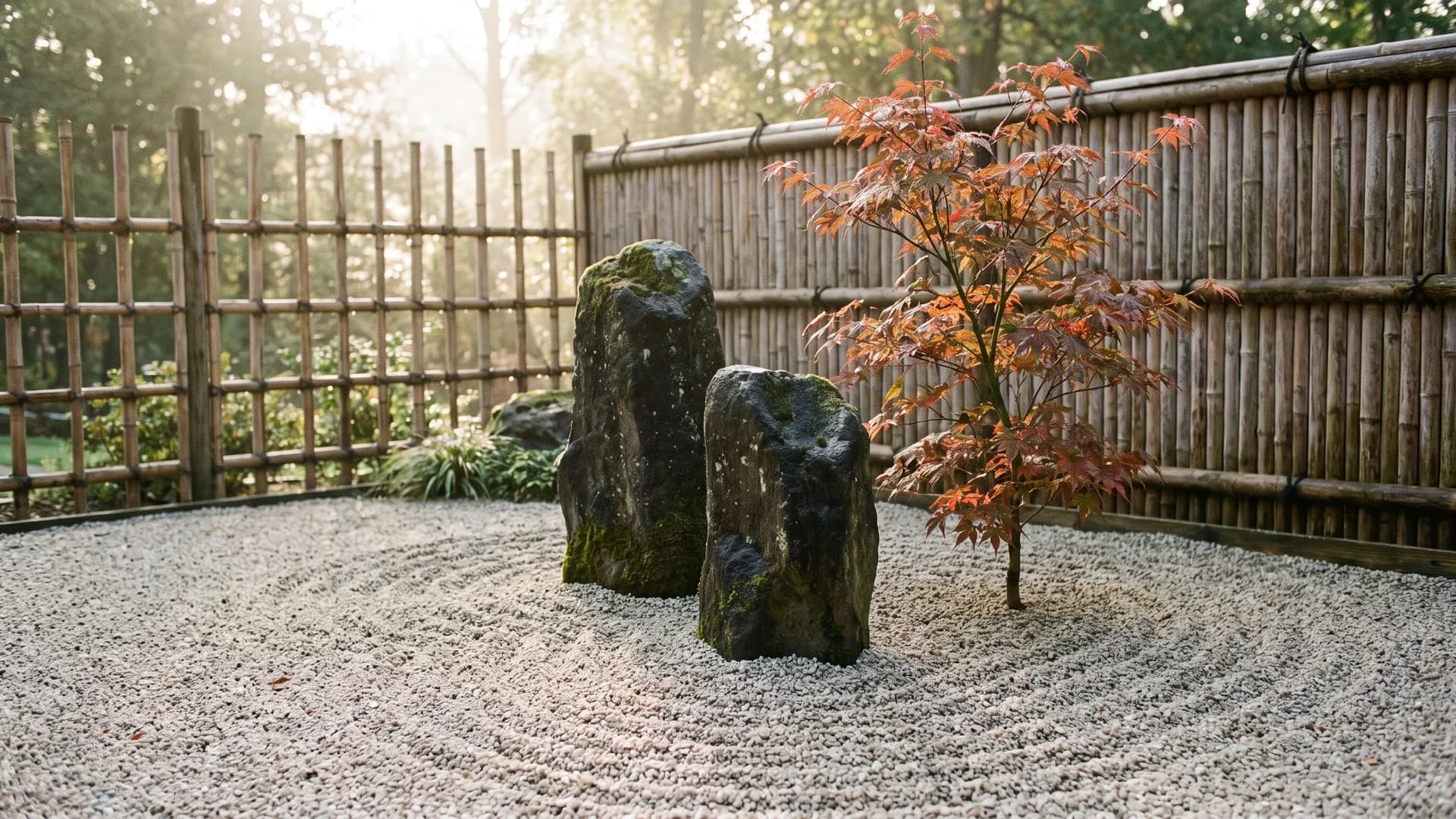
A zen garden corner needs three things: fine gravel raked in patterns, one or two upright stones, and restraint. An 8-by-8 corner costs $150 to $250 in crushed granite fines and a feature stone, plus a $20 wooden rake. Add at most one plant, a dwarf pine or Japanese maple. The emptiness is the design; every object you resist adding improves it.
14. Edge water with the rock it would choose
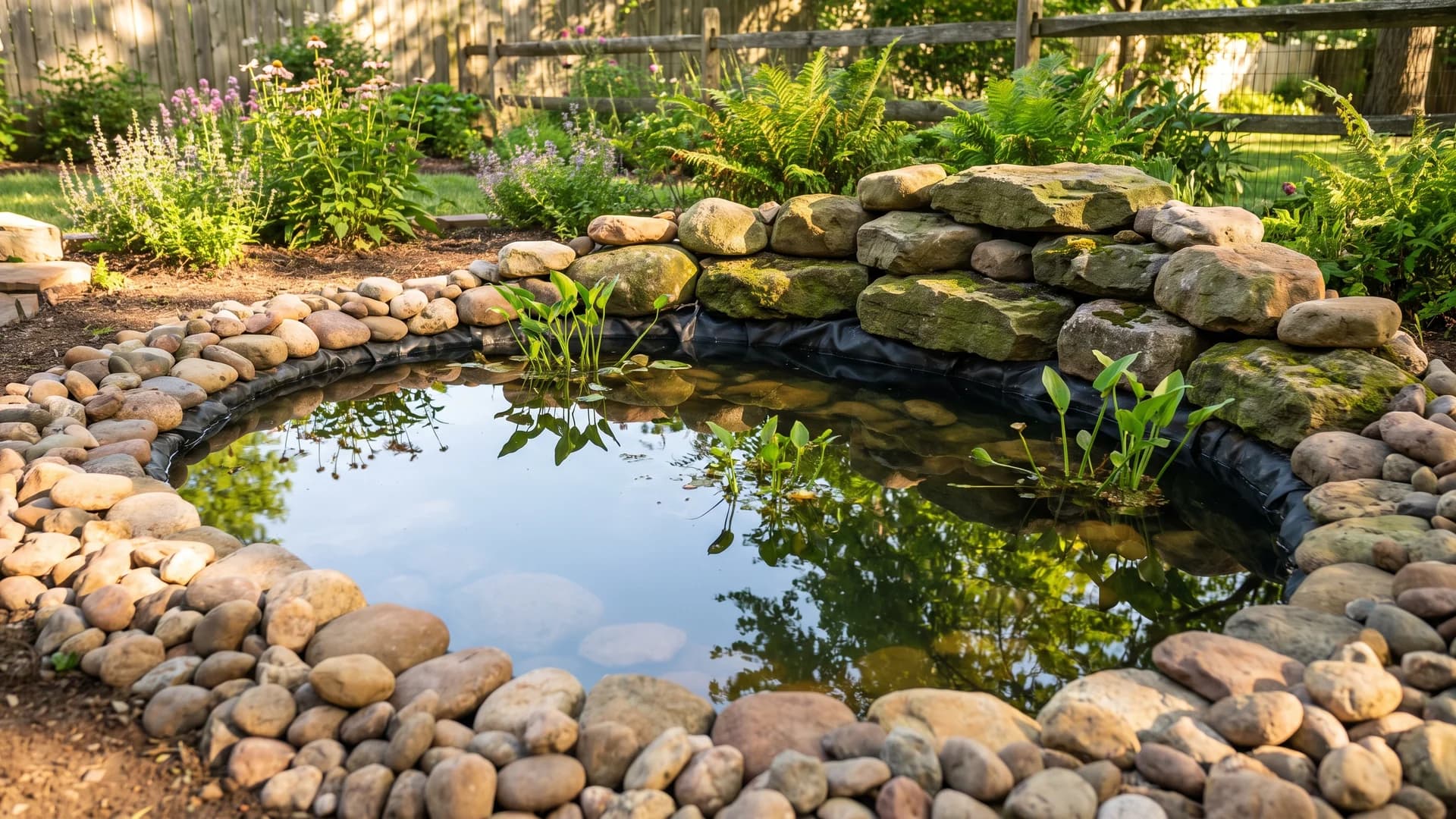
A pond or fountain ringed in matched river rock looks inevitable; one ringed in mismatched stone looks bought. Use 1-to-2-inch river rock at the waterline and larger stones stacked at the back edge of a water feature, hiding the liner completely. A small pond edge takes half a ton, under $100. Wet stone doubles its color, so pick rock you like the look of dark.
15. Hold a grade change with a low rock wall
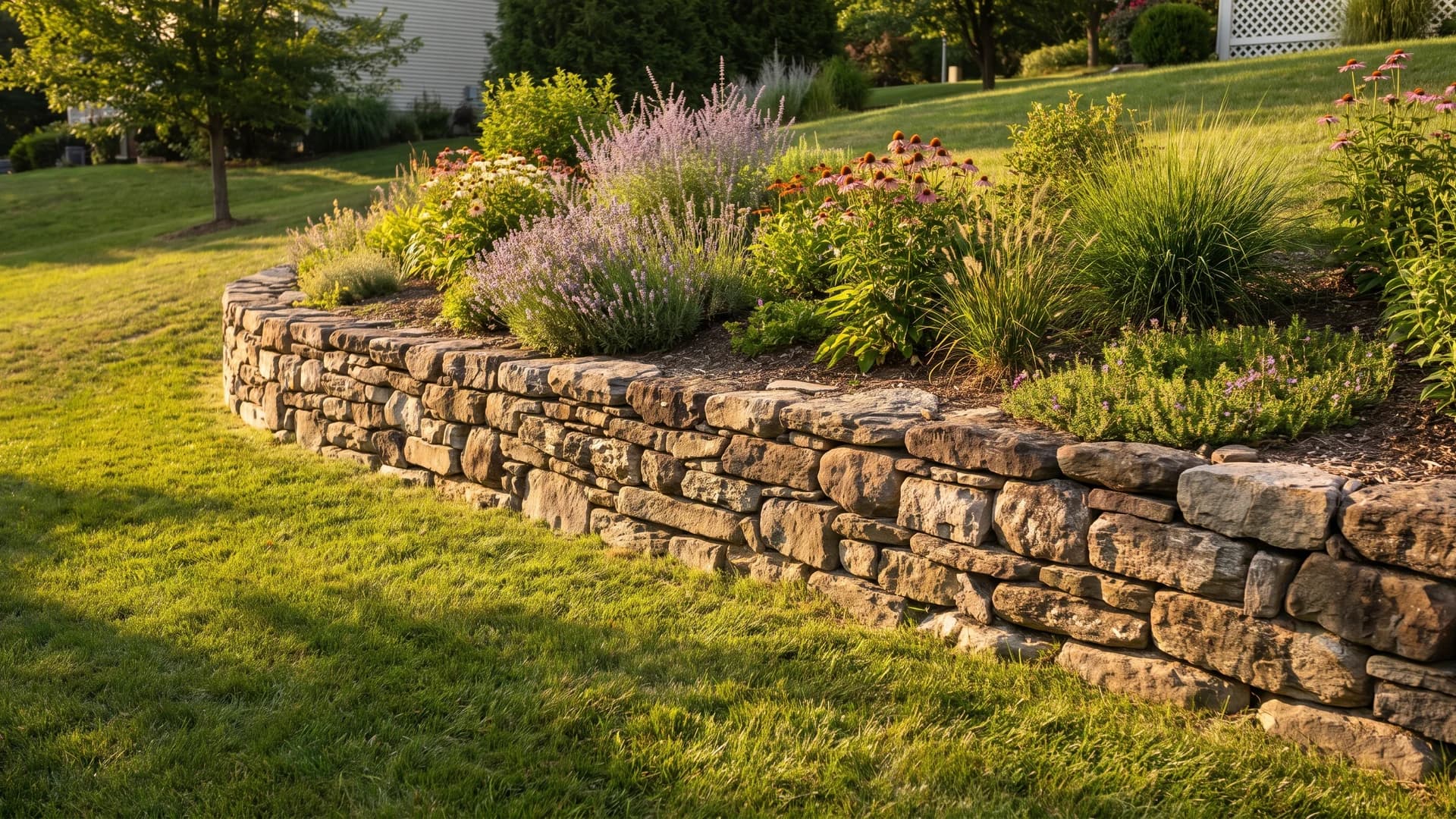
Anything under 2 feet, you can dry-stack yourself: wall stone at $250 to $400 a pallet, a gravel base, and a slight lean into the slope. The wall turns a mowing hazard into a terrace bed and adds the yard's best seat. Above 3 feet, a retaining wall becomes engineering, drainage, permits, and a contractor; know which project you're signing up for.
Rock gardens with plants in them
16. Plant succulents into a gravel mound
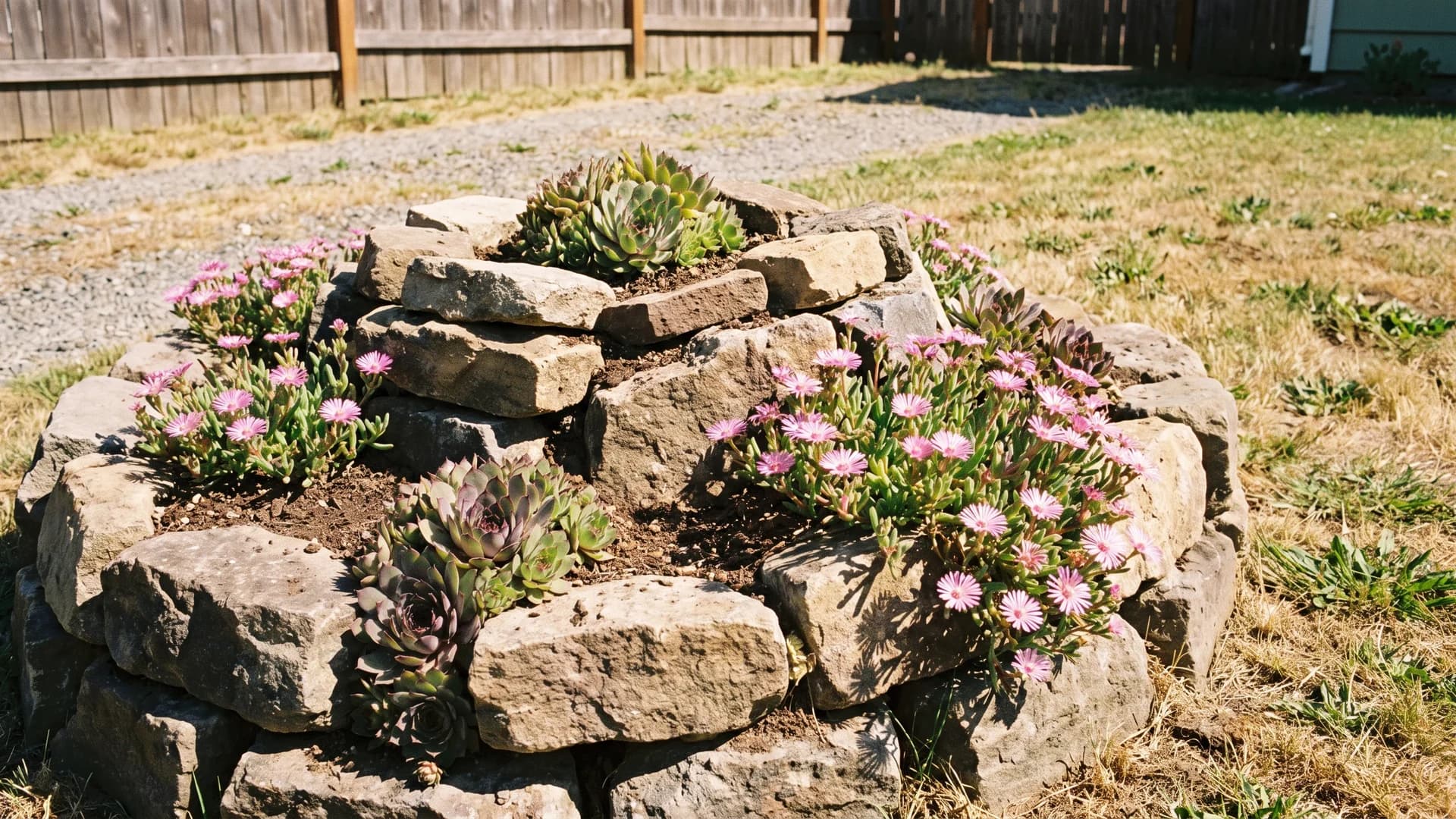
A mounded rock garden drains the way succulents wish everything did. Hens-and-chicks (zones 4 to 10), ice plant (5 to 9), and sedum (3 to 9) tuck into pockets between stones at $5 to $12 a plant and spread on their own schedule. Build the mound from soil and gravel mix, face it with your larger stones, and plant the gaps. Water the first month, then let it run itself.
17. Soften long rock runs with grass clumps
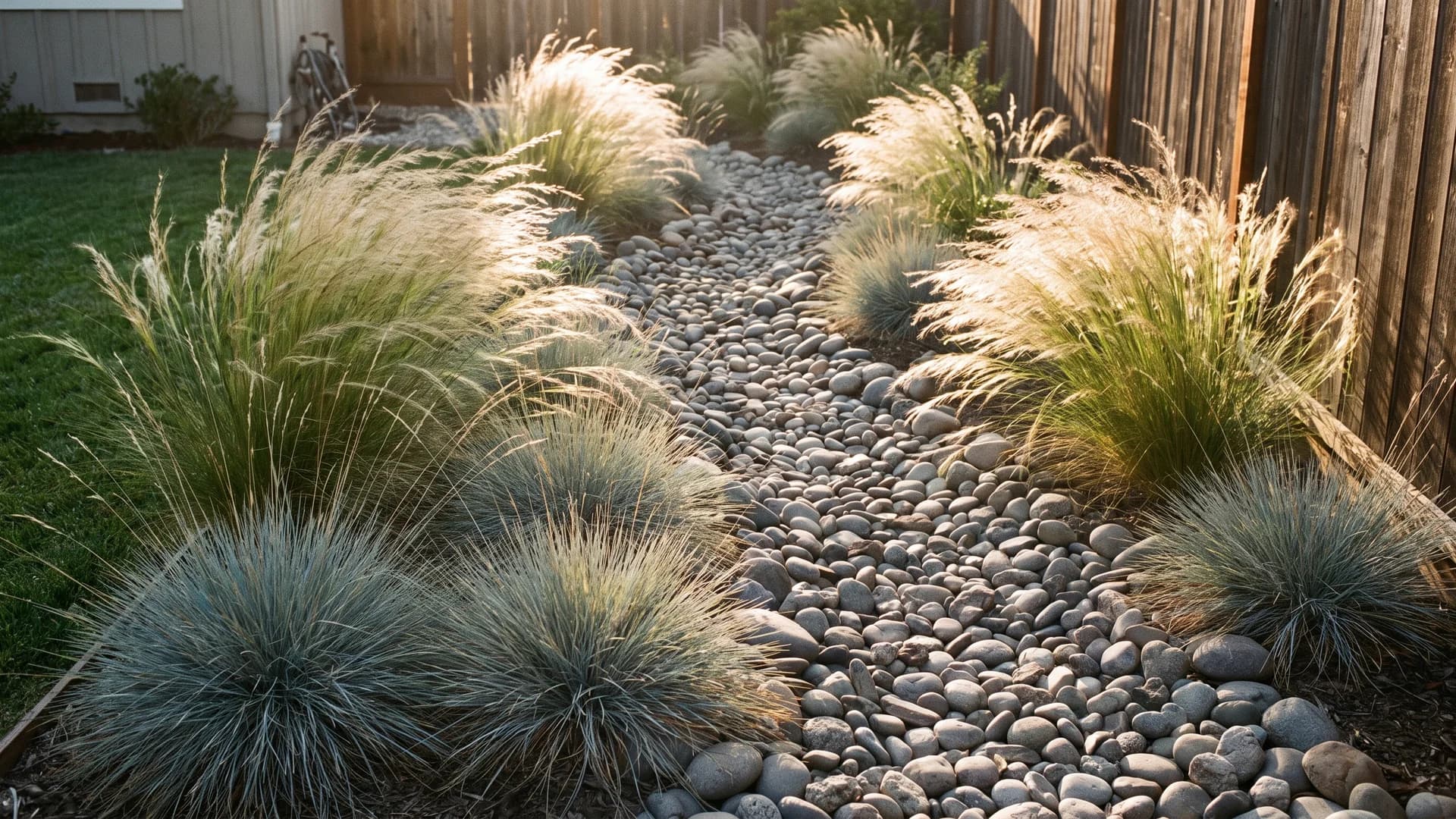
An unbroken rock bed longer than 15 feet starts looking like a parking lot median. Ornamental grass clumps every 6 to 8 feet fix it: blue fescue (zones 4 to 8) stays low and silver, Mexican feather grass (7 to 10) moves with any breeze. Cut an X in the fabric, plant through it, done. The stone is the canvas; the grasses are the brushstrokes.
18. Grow a pollinator gravel garden
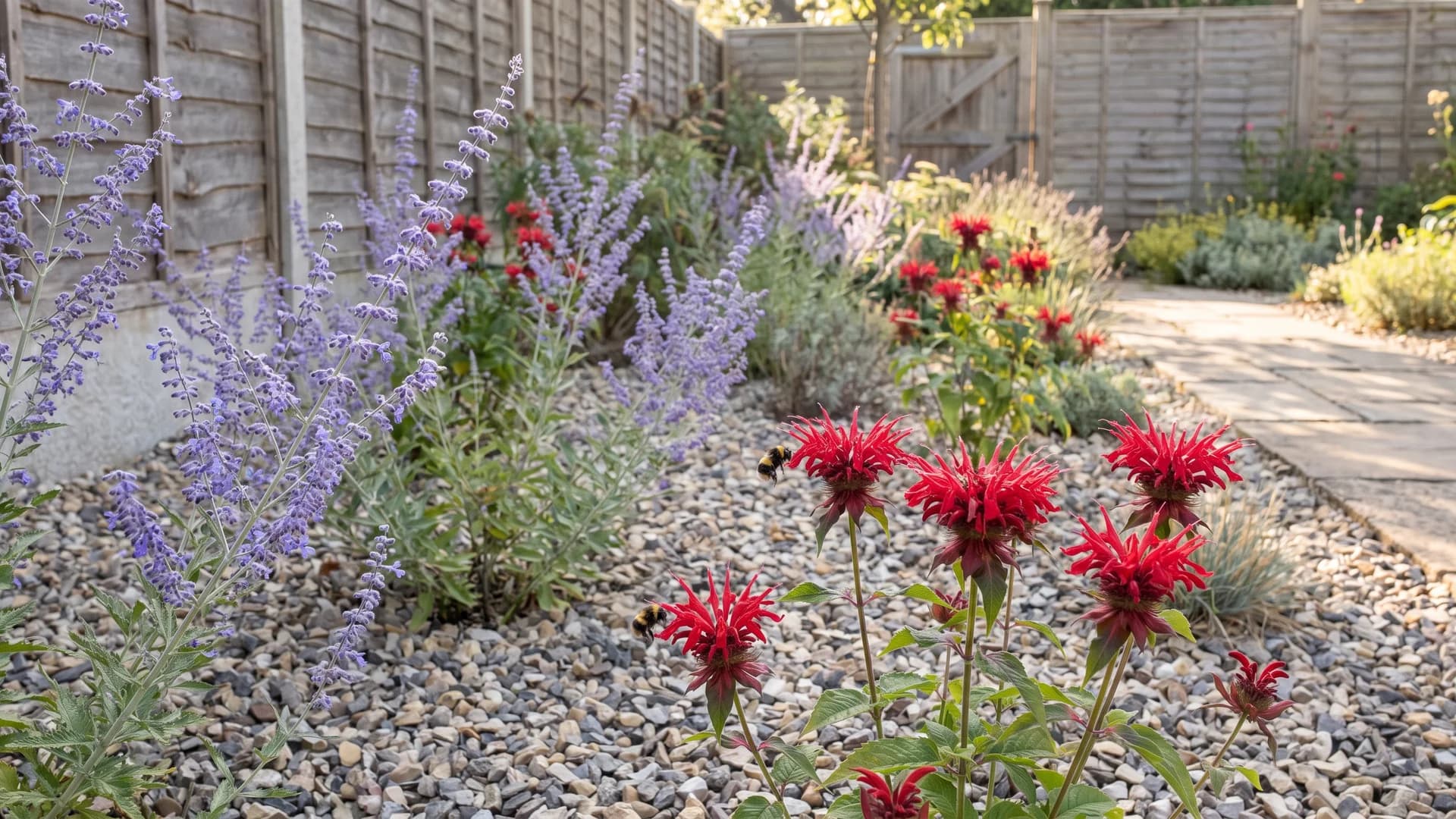
Gravel gardens are having a moment for a practical reason: many pollinator favorites bloom harder in lean, fast-draining ground. Russian sage (zones 5 to 9), bee balm (4 to 9), and blanket flower (3 to 10) planted straight into 3 inches of gravel over soil, no fabric in this style, self-sow into the stone and feed bees all summer. Plants run $10 to $15; the look runs English-garden-meets-quarry.
19. Go full Southwest with yucca and round stone
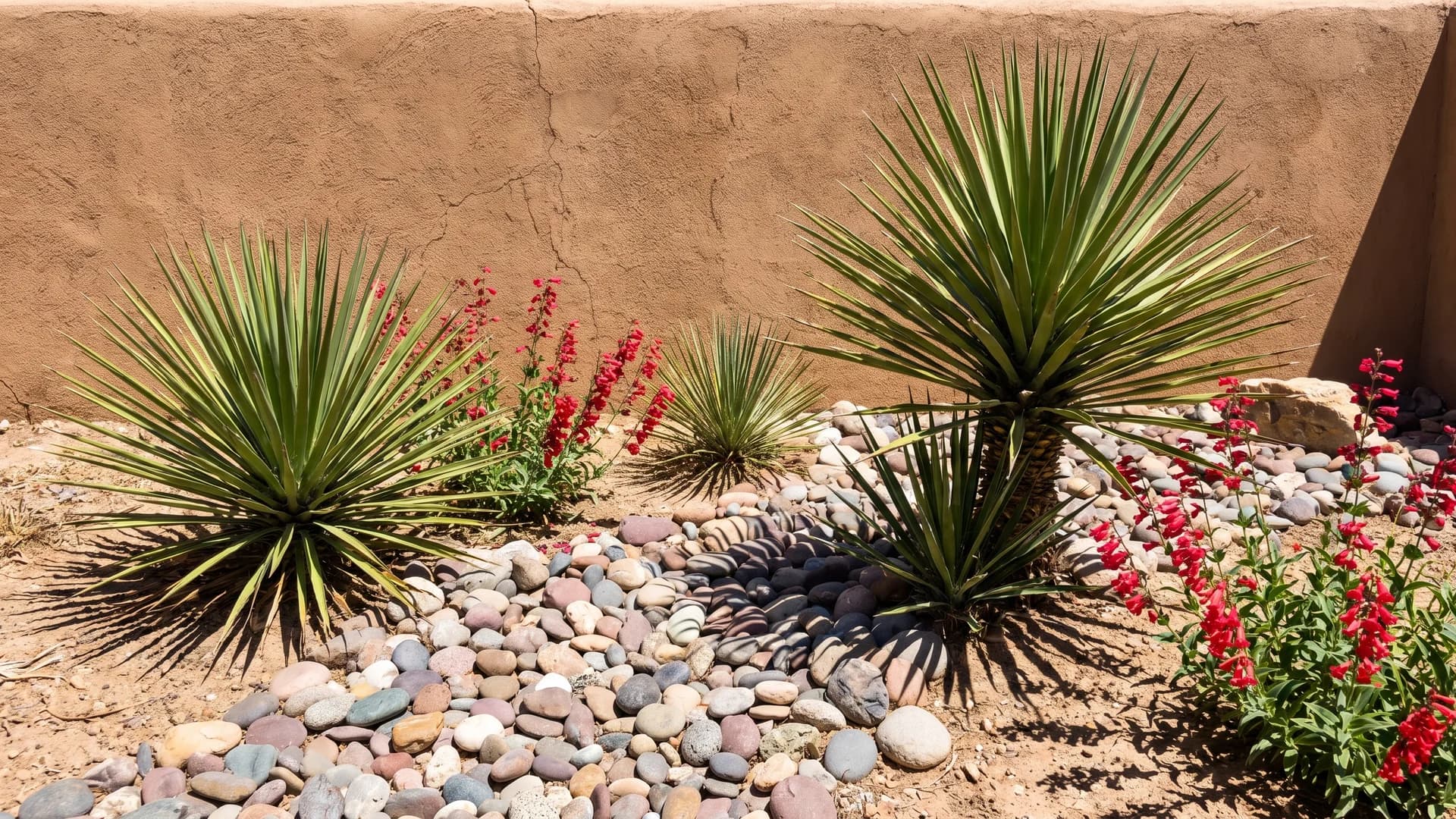
Where summers scorch, stop fighting and build the xeriscaping version: rounded river rock field, three yucca or agave (zones 5 to 11 depending on species), and one flowering drought-tolerant plant like penstemon for hummingbirds. Materials for a 100-square-foot bed run $250 to $400. Irrigation after establishment: whatever falls from the sky.
The two ideas that make the rest work
20. Build the base like you mean it
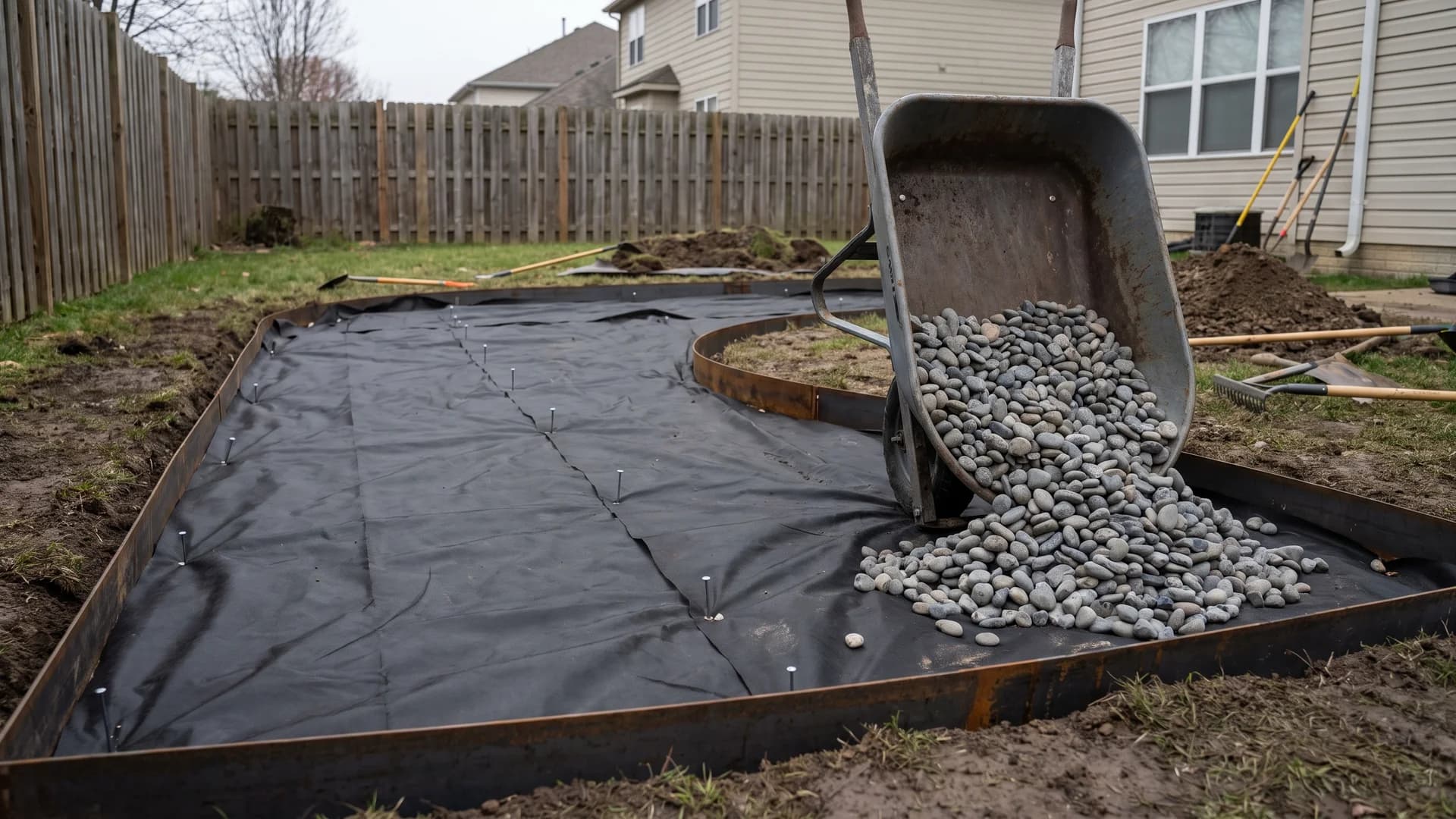
Every failed rock bed skipped the same steps. Commercial fabric (about $80 per 300 square feet), overlapped 6 inches and pinned; solid edging at every boundary; 3 full inches of stone, which is where the L times W times D over 27 math earns its keep. Thin rock over bare soil grows weeds through it in one season and turns your one-time purchase into an annual argument.
21. Know where rock doesn't belong
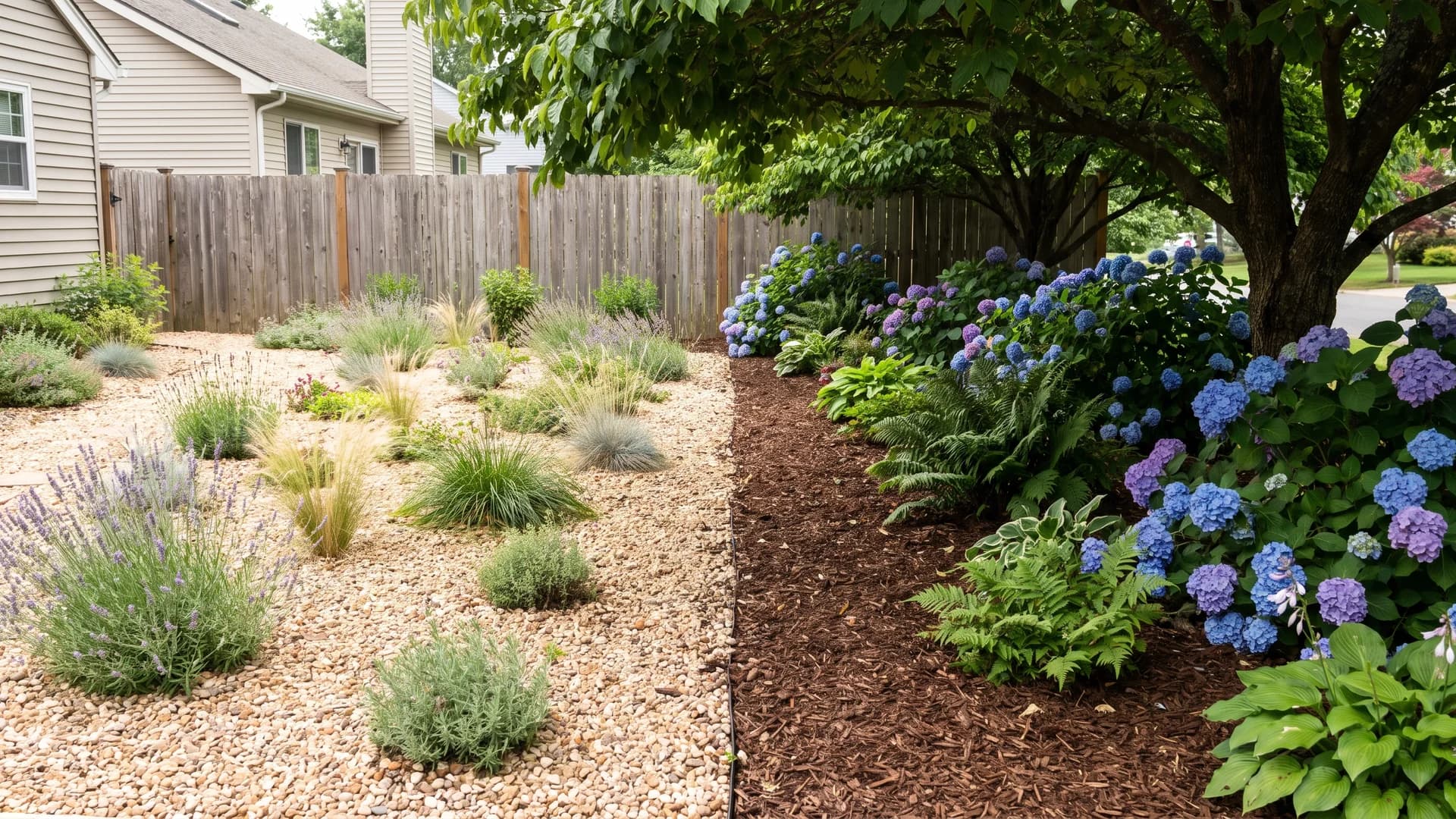
Rock reflects heat onto whatever grows above it, so skip it under roses, hydrangeas, and vegetable beds. Skip loose rock on real slopes, it migrates downhill every rain, and skip dark lava rock against south-facing walls in hot climates unless you want a radiator. Perennial and food beds still want mulch's organic matter. The yards that get rock right use it deliberately, not everywhere.
Match the idea to the yard
- Drainage problems: 11 first, then 9 along the wet wall.
- Cutting the mowing and mulching loop: 6, 7, and 20 as the foundation. The front-of-house version of this play is in our low maintenance front yard landscaping guide.
- No budget for hardscape contractors: 2, 4, and 5 are all weekend DIY under $400.
- Hot, dry region: 16, 19, and 3.
- Yard feels shapeless: 12 and 15 add the bones.
- Real slope, not just a grade: 15 is the start, and the full budget sequence is in our hillside landscaping guide.
- Front of the house specifically: the front yard rocks playbook reworks these moves for curb appeal, boulder sizing included.
FAQ
Is rock or mulch better for landscaping?
Rock wins on lifetime cost and neatness: buy once, no annual top-up, no washouts. Mulch wins wherever plants are the point, because it feeds soil, holds moisture, and stays cool over roots. Most well-built yards use rock for open beds, paths, and borders, and keep mulch in planted and food beds.
What do you put under river rock?
Commercial-grade woven landscape fabric, overlapped 6 inches at seams and pinned every 2 feet, with edging at every boundary before the stone goes down. The exception is around tree roots and in self-sowing gravel gardens, where fabric does more harm than good and a thicker stone layer does the weed control.
What size landscaping rock is best?
Match the size to the job: pea gravel and crushed fines for paths and patios, 1-to-2-inch river rock for beds and water edges, 3-to-5-inch stone for borders and creek banks, and boulders for anchors. On any surface you walk, angular crushed stone beats round rock because it locks in place instead of rolling.
How much does rock landscaping cost?
Bulk pea gravel and crushed stone run $45 to $80 a ton, river rock $80 to $150, decorative pebble up to $180, and boulders $100 to $300 each. A typical converted bed or small path lands between $150 and $400 in materials. Delivery is often the hidden line item, so price the full drop, not just the stone.
What are the downsides of rock landscaping?
Stone holds and reflects heat, which stresses tender plants above it, and it adds nothing to the soil. It's miserable to remove if you change your mind, migrates downhill on slopes, and traps leaves that eventually compost into a weed seedbed on top of the fabric. It's the right tool often, but it isn't neutral.