15 Side Yard Landscaping Ideas for the Strip Everyone Forgets
The side yard is usually a dirt corridor with a hose in it. These 15 ideas turn 5 to 10 feet of forgotten strip into a path, a garden, or a room, with the widths, plants, and costs that narrow spaces actually demand.
Every house has one: the 5-to-10-foot strip between the wall and the fence that exists mainly to store a hose and grow the weeds nobody sees. It's usually the last space anyone designs and the one you walk through most. The best side yard landscaping ideas accept what the strip is, a corridor, and design it like one: a good floor, green walls, light overhead, and a reason to slow down where it widens.
Each idea below includes the numbers narrow spaces force on you, minimum path widths, slim plant footprints, per-square-foot costs, plus hardiness zones where plants are involved. The images are AI-generated design concepts from typical side yards, the same kind of render AI landscape design builds from a photo of your own strip.
1. Get the path width right before anything else
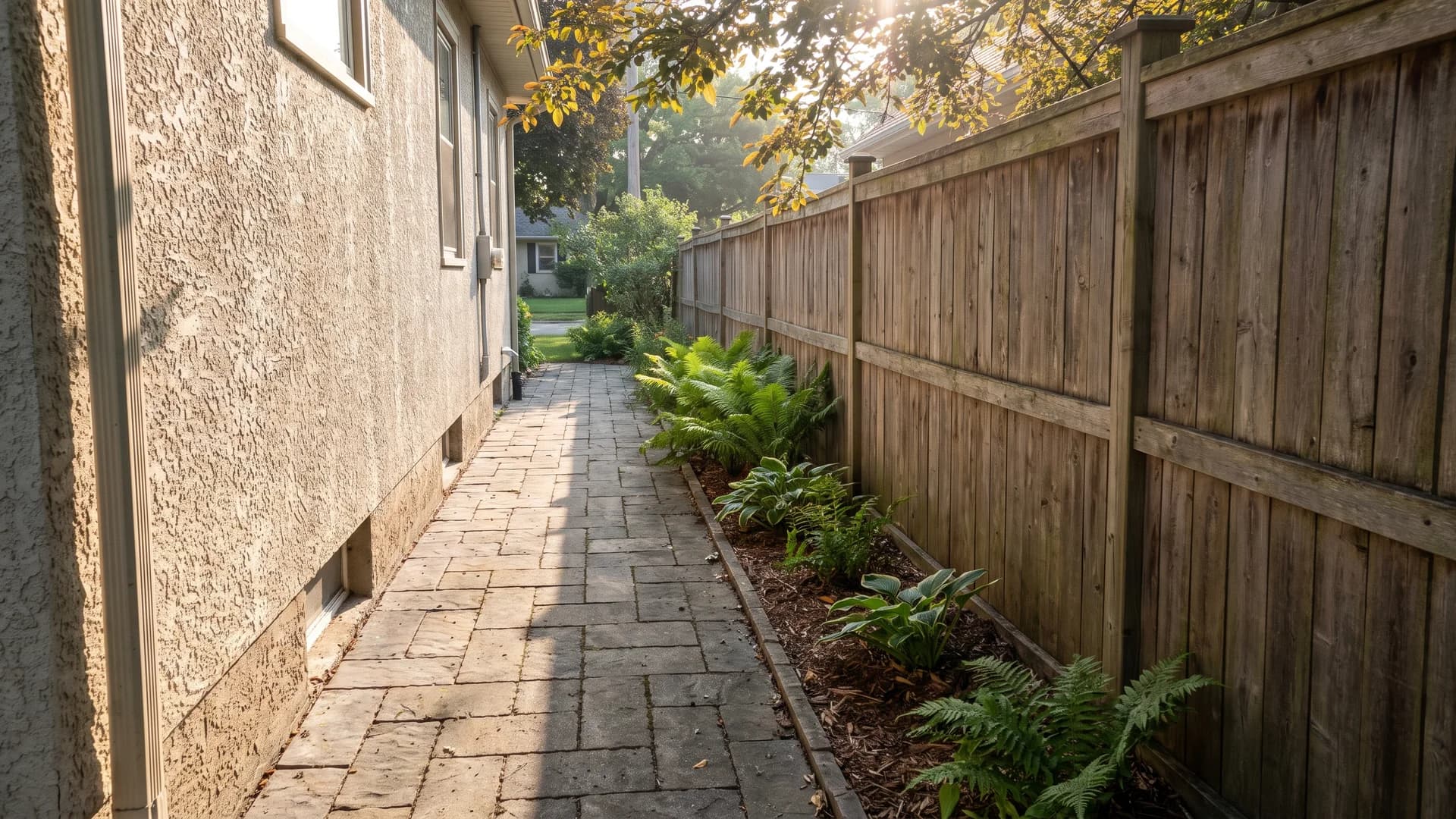
Three feet is the minimum for walking comfortably; four lets two people pass or a wheelbarrow roll without clipped knuckles. Whatever the material, claim that width first and design the leftover as planting. In a 6-foot side yard that means path plus one 2-to-3-foot bed, and that constraint, honestly, makes the design decisions for you.
2. Run gravel and steppers for the utility version
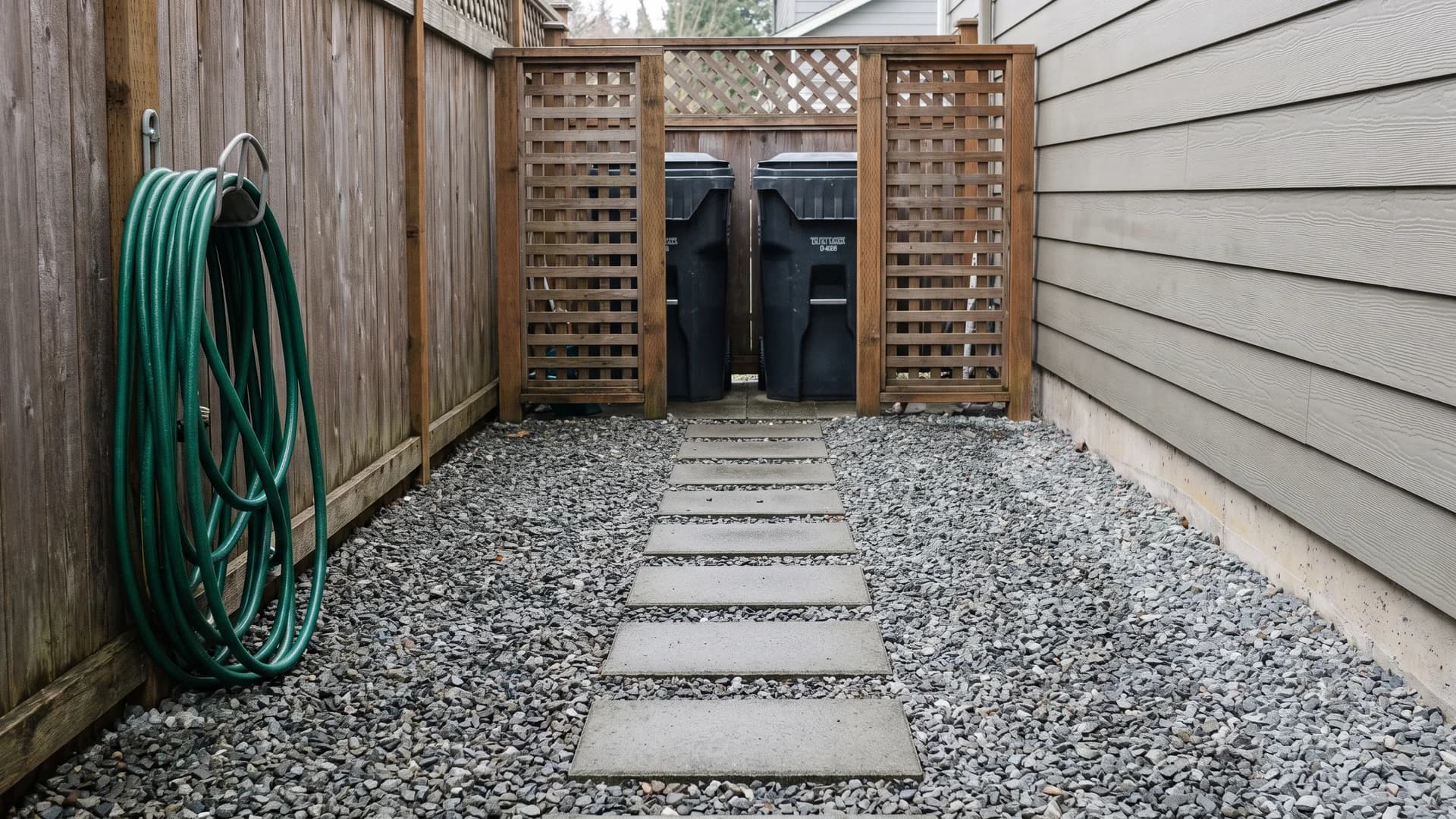
If the strip's real job is bins, AC unit, and hose, build the honest version well: crushed gravel over fabric at $1.50 to $2.50 a square foot with steppers down the middle. A 40-foot run costs about $250 and drains every splash. It's not a garden, but it's clean, dry, and weed-free, which beats what's there now.
3. Upgrade to herringbone brick where it shows
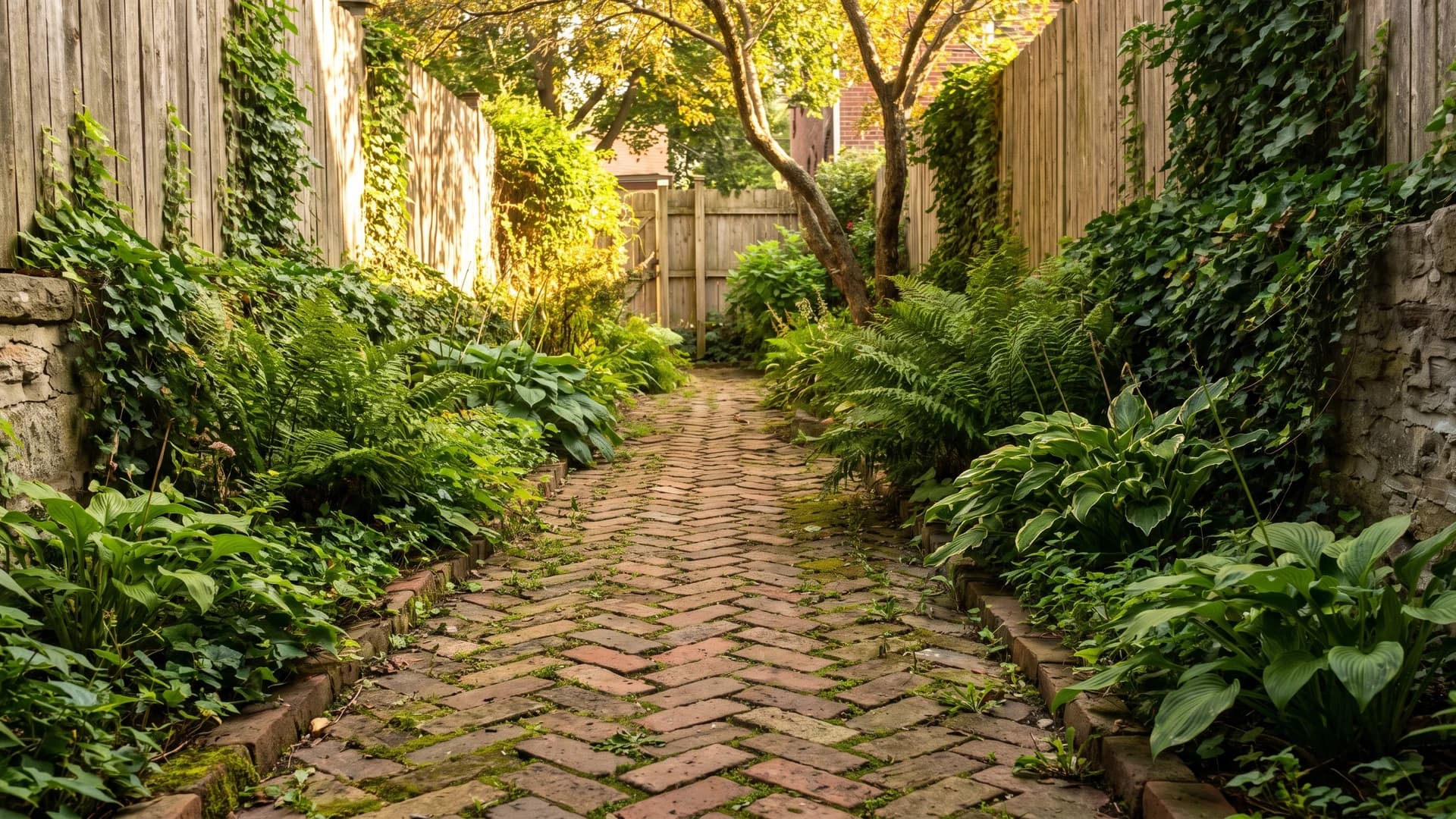
Where the side yard is visible from the street or patio, pattern earns its cost. Reclaimed brick in a herringbone run reads instantly established, at $5 to $10 a square foot laid on a sand bed. The busy pattern also does a narrow-space trick: laid perpendicular to the walls, it visually widens the corridor with every course.
4. Screen with plants that stay slim
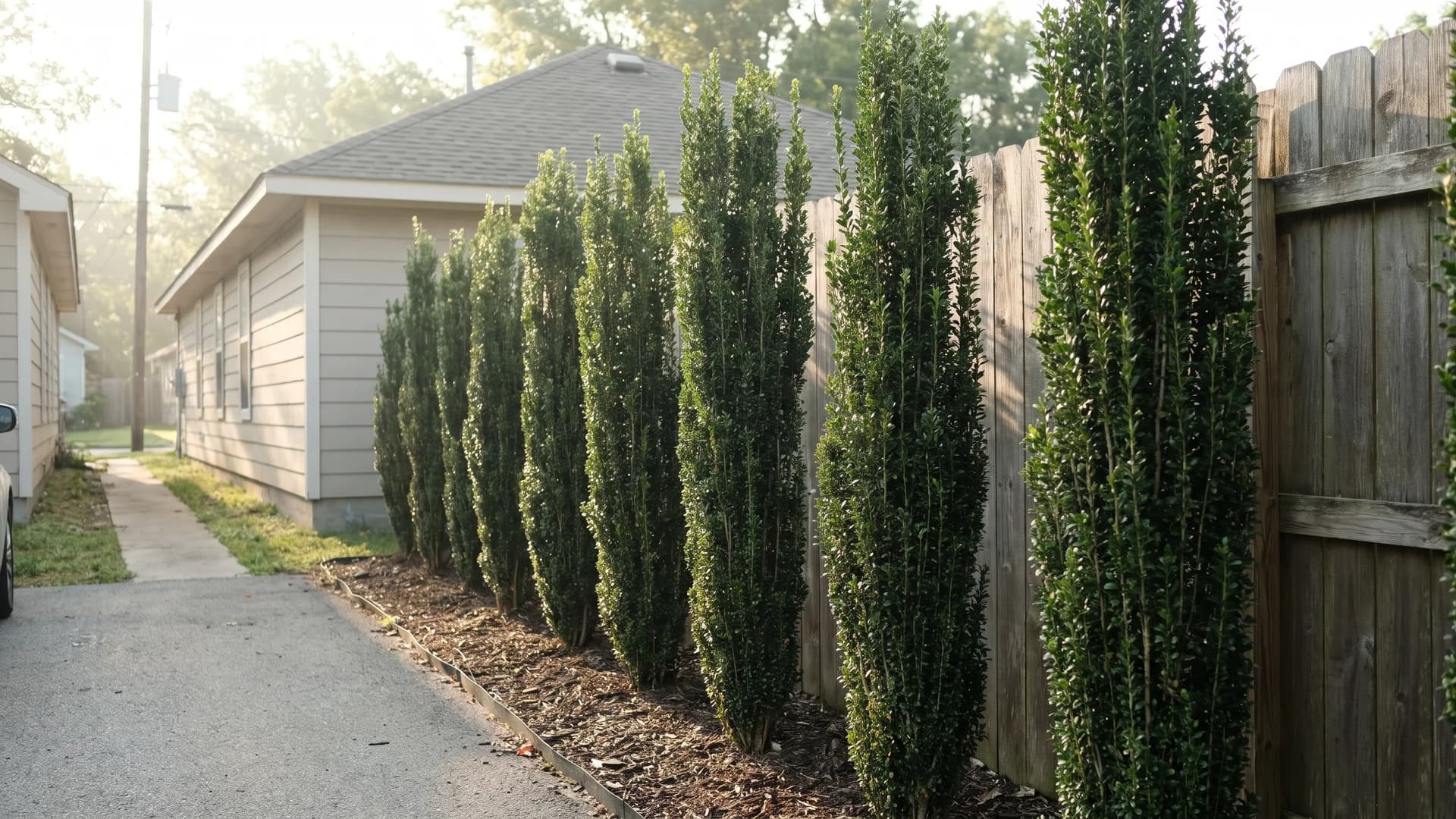
Standard hedges eat 4 feet of a space that doesn't have it. The narrow-footprint screeners: 'Sky Pencil' holly holds to 2 feet wide in zones 5 to 9, Italian cypress does vertical drama in 7 to 10, and leafy pittosporum 'Silver Sheen' screens loosely in 8 to 10 with fewer plants. Expect $30 to $70 each. Buy for the mature width printed on the tag, not the nursery-pot optimism.
5. Turn the fence into a staggered-bloom vine wall
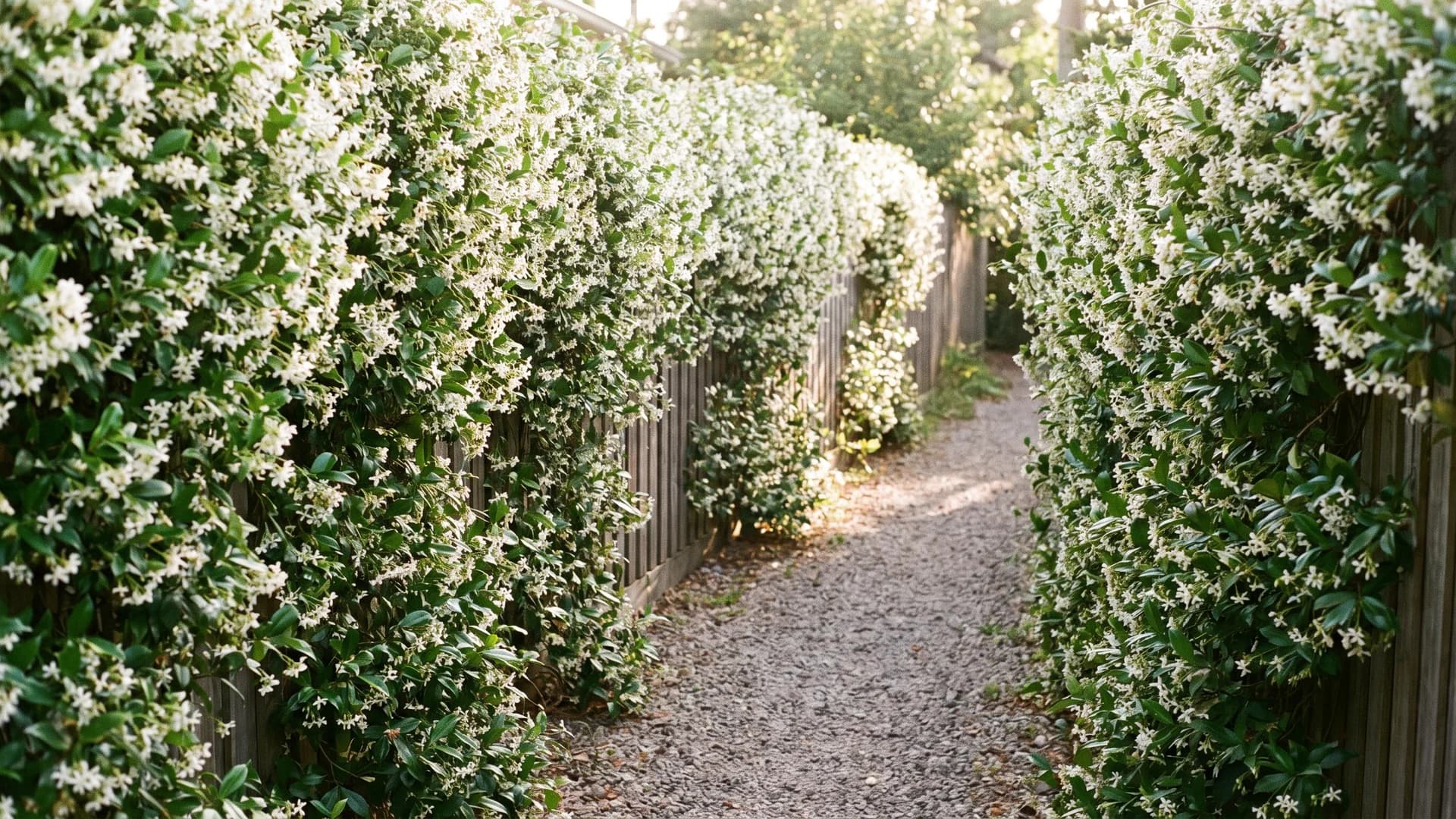
A fence is free vertical ground. Plant vines that hand off bloom shifts: pink jasmine opens first, star jasmine follows for the summer, and clematis covers the cool end in zones 4 to 8 where jasmines quit. Vines run $15 to $30 each with a $20 wire kit, and they take zero floor width, the whole point in a corridor. Most of what works on a full fence line planting works here too, on a narrower bed.
6. Light the dark corridor with bright foliage
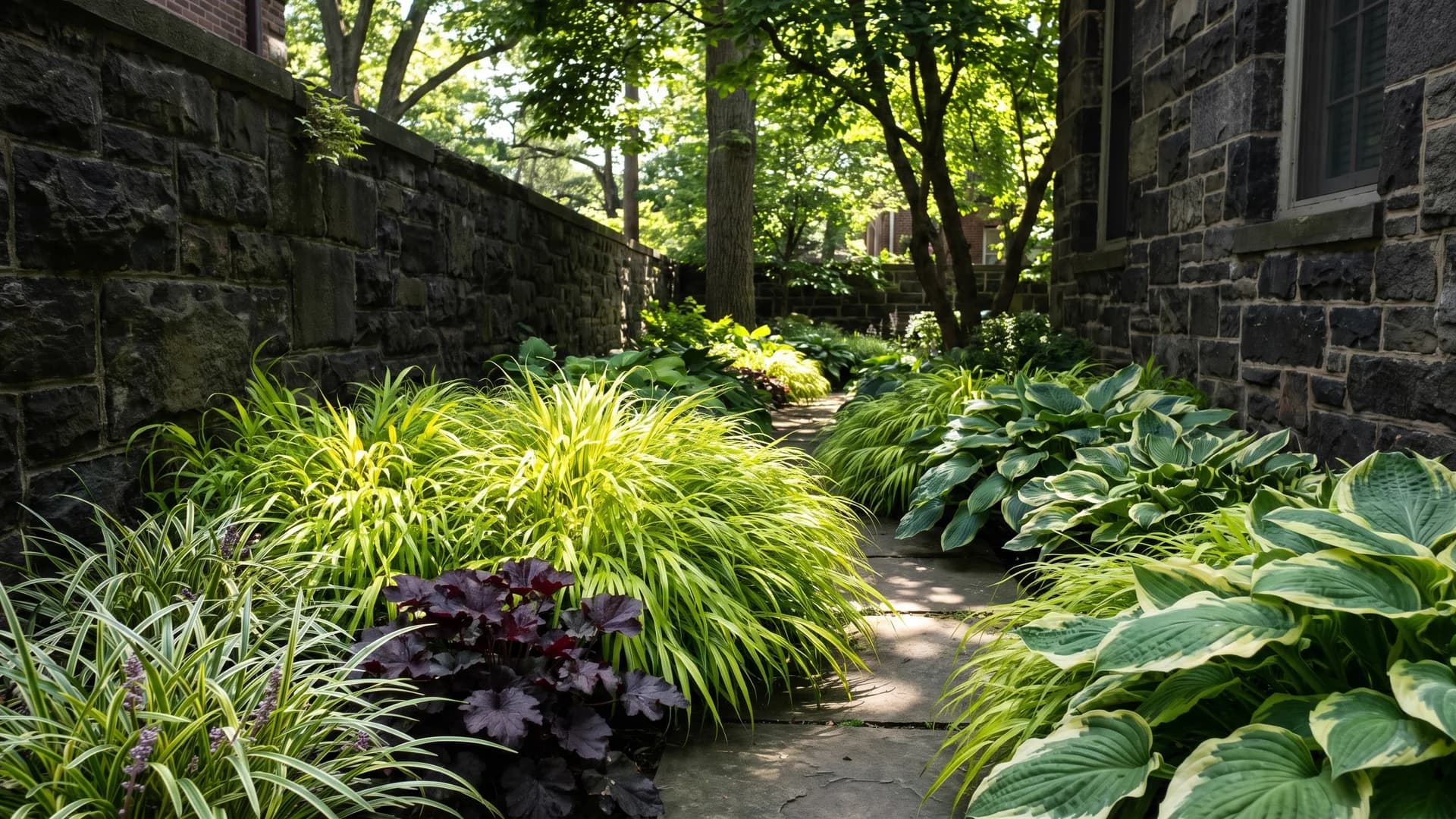
Most side yards live in building shade, and dark corridors want light-colored leaves. Hakone grass pours chartreuse over an edge in zones 5 to 9, variegated liriope stripes silver in 5 to 10, and hostas do the heavy coverage. Plants run $8 to $18. One burgundy heuchera among them adds depth the way a shadow does in a painting; all-bright reads flat.
7. Replace the sad grass with walkable groundcover
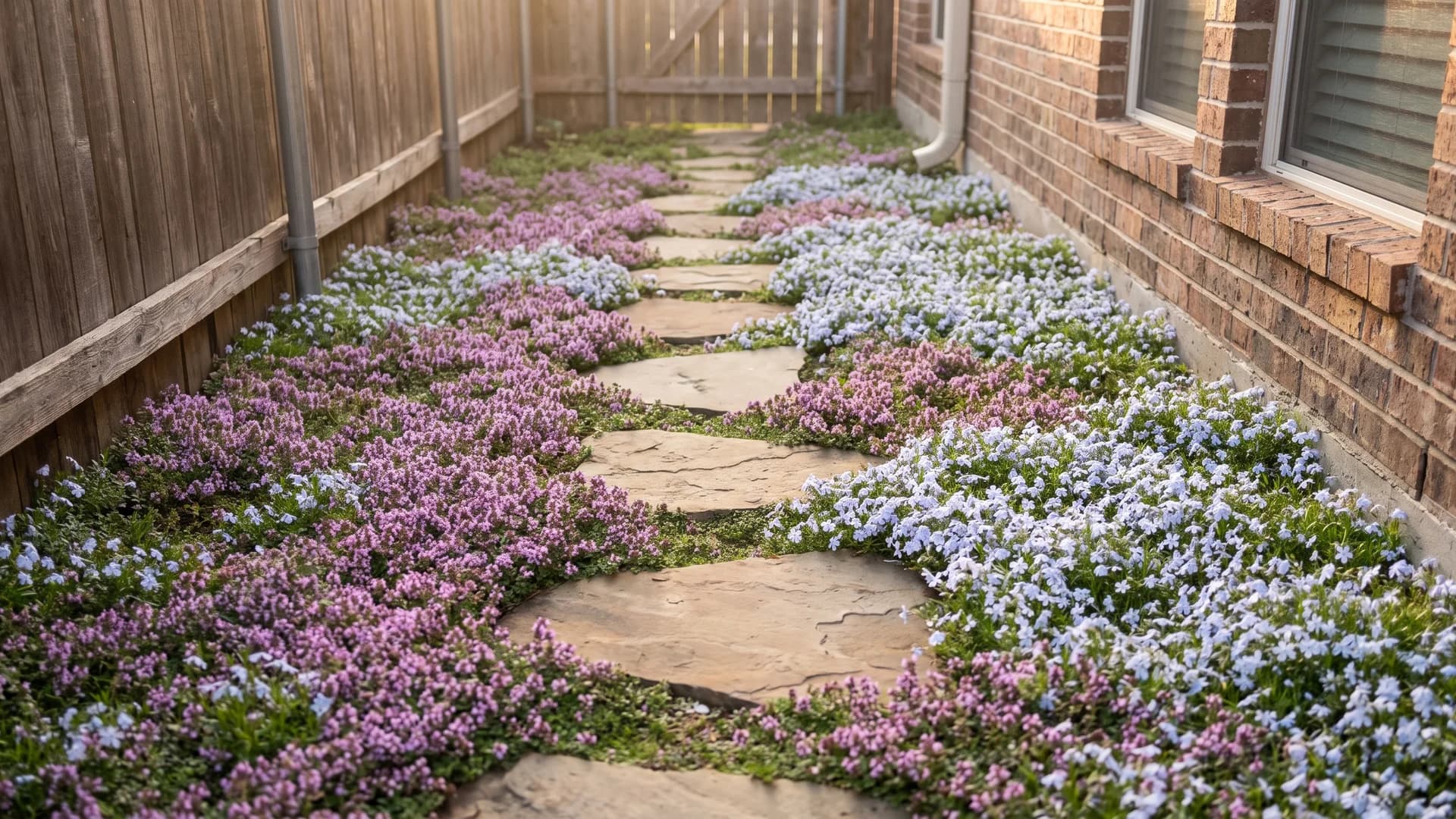
Grass in a shaded 6-foot strip was never going to make it, and mowing a corridor is comedy. Blue star creeper (zones 5 to 9), creeping thyme (4 to 9), and dwarf mondo grass (6 to 10) all take real foot traffic between steppers at $3 to $8 a plug. This lawn alternative approach closes over in two seasons and never meets a mower again.
8. String lights down the length
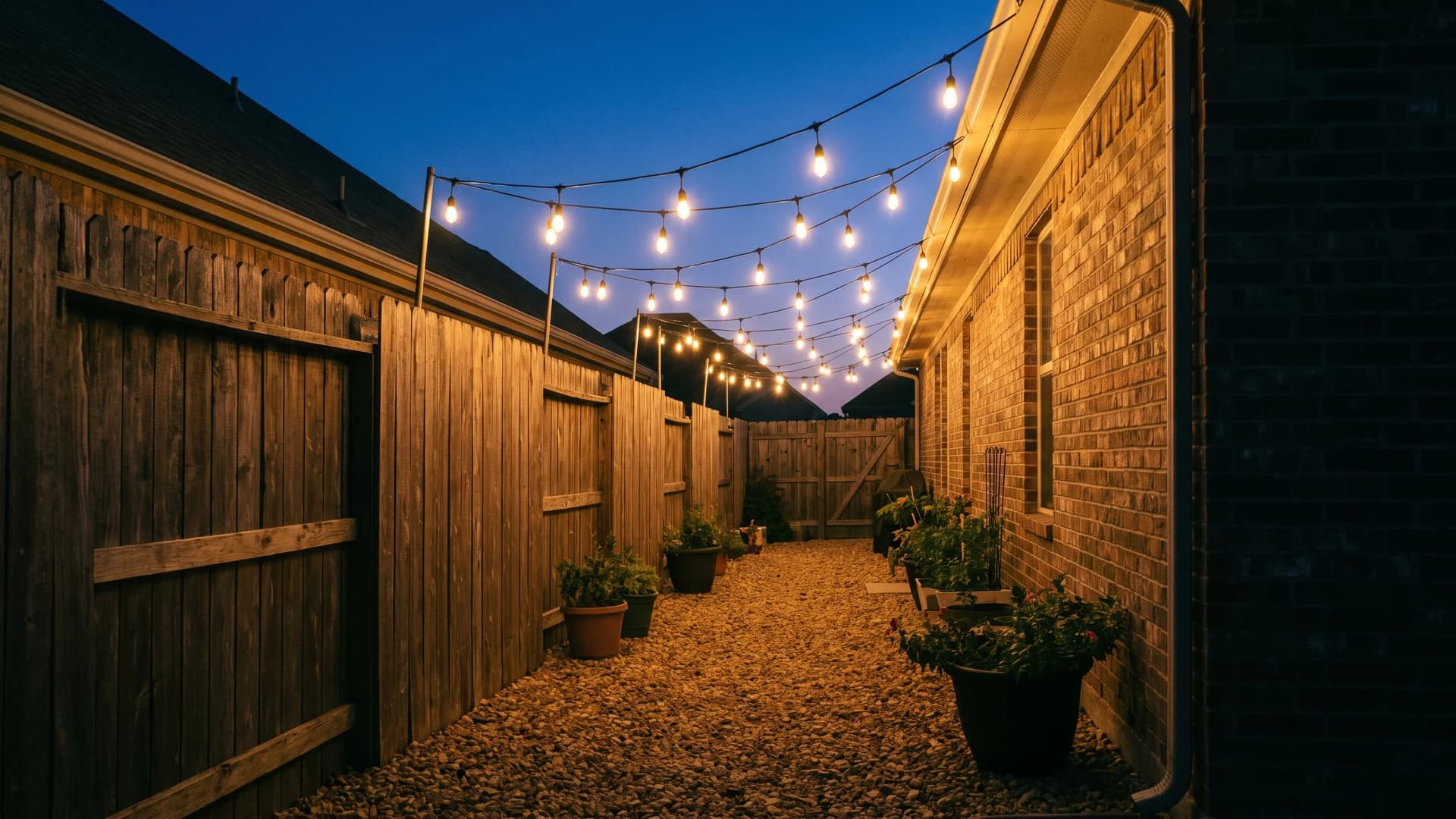
A corridor has what patios don't: two walls to span. String lights zigzagged fence-to-house turn the strip into the best-lit path on the property for $40 to $80 of outdoor-rated strands and cup hooks. Solar versions skip the outlet question entirely. Suddenly the pass-through reads as a destination, which is half the argument for idea 9.
9. Claim the wide spot for a bistro nook
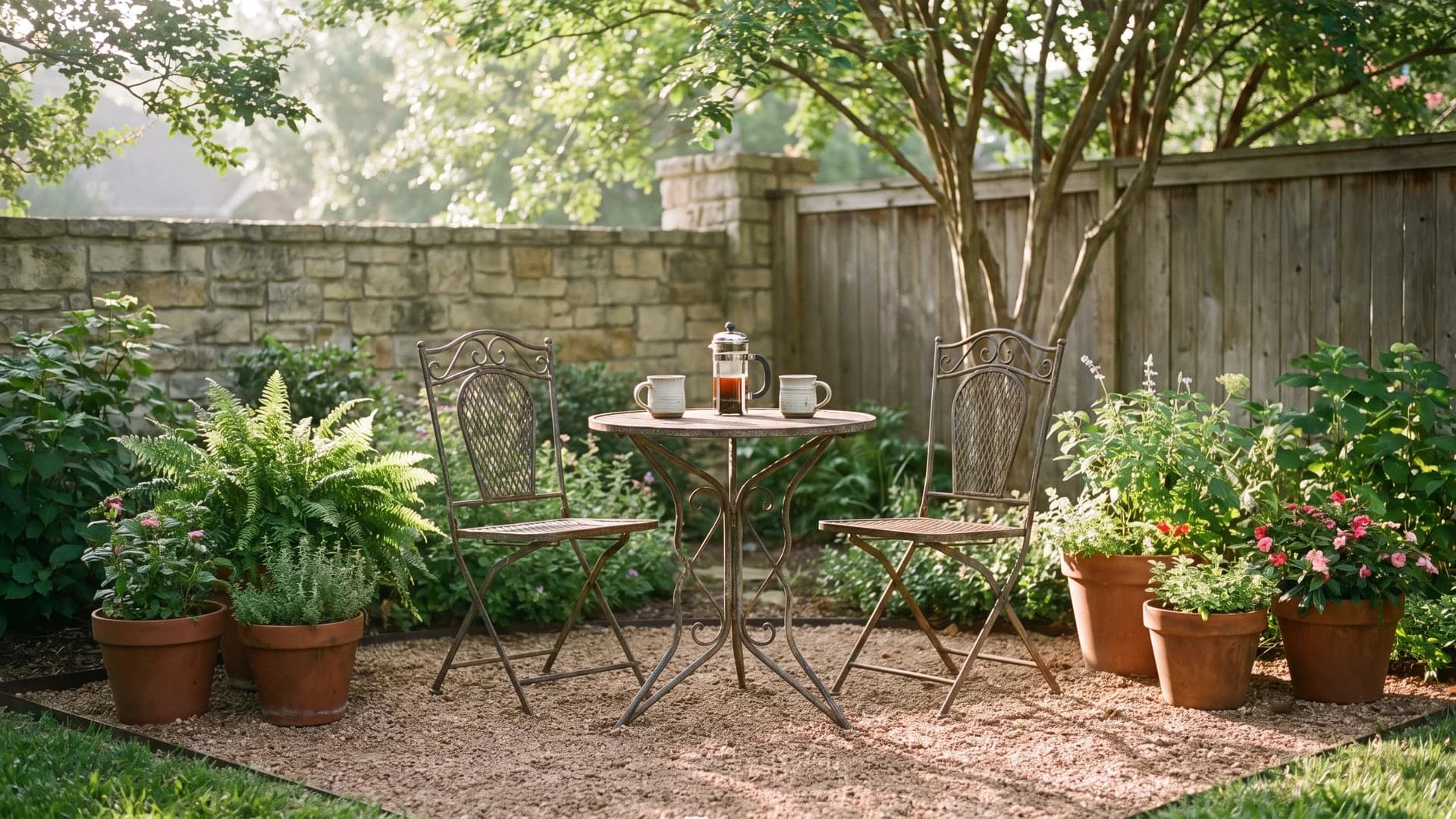
Most side yards widen somewhere, at the gate, the corner, the AC offset. Six feet square is enough for a bistro table and two chairs; a morning-sun side yard beats the patio for coffee anyway. A gravel pad and secondhand bistro set land under $200. If your widest point faces the neighbor's window, that's what idea 11 is for.
10. Line the wall with trough planters
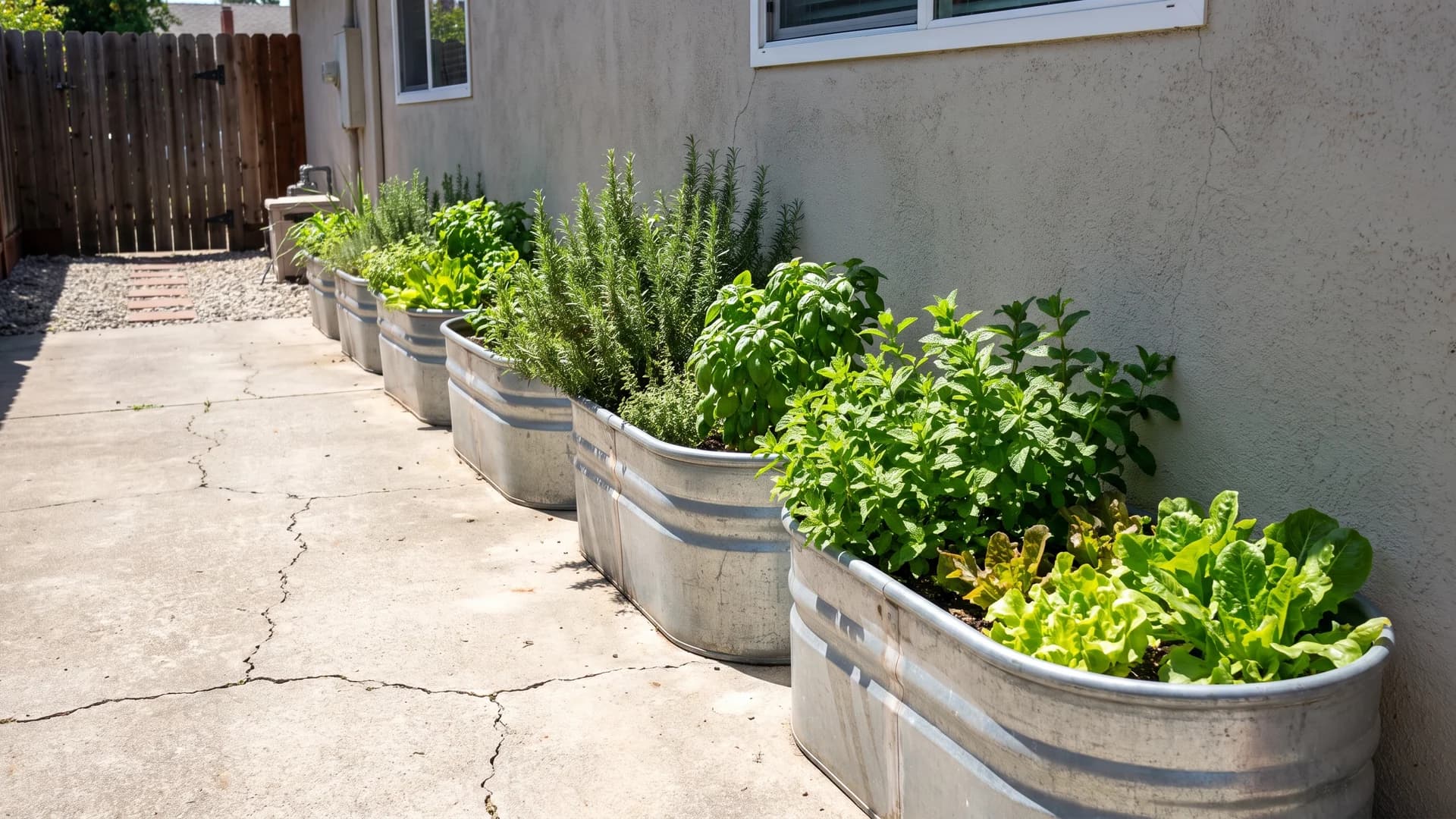
Where the ground is concrete or root-choked, plant on top of it. Galvanized or corten troughs, 12 to 18 inches deep at $40 to $120 each, run a productive border down a wall with zero digging: herbs and salad greens where sun reaches, ferns and hostas where it doesn't. The repeated container rhythm also does the visual work of architecture in a space with none.
11. Stand up a screen panel exactly where you need it
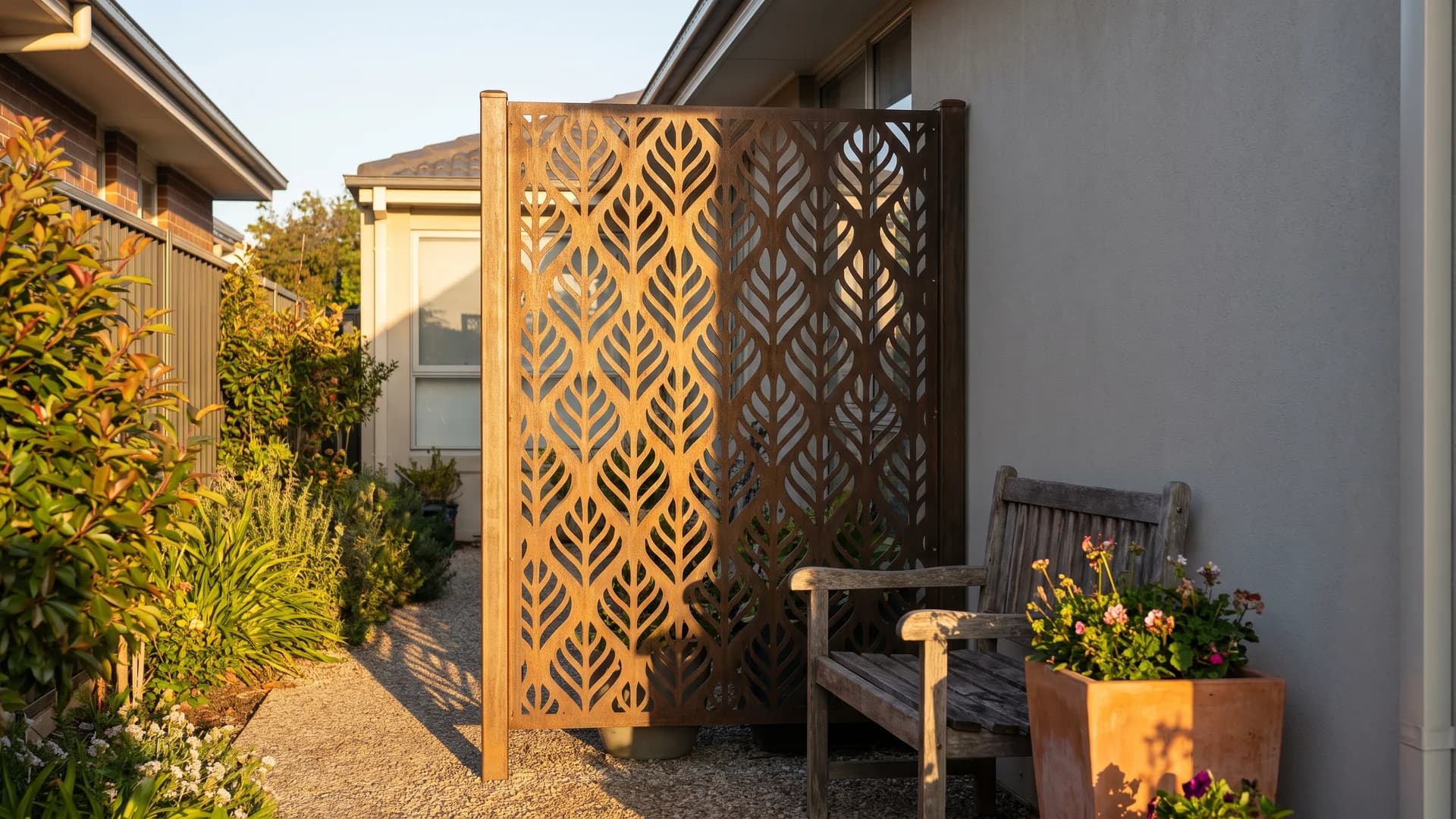
Privacy in a side yard is usually one sightline, the neighbor's kitchen window, the street view through the gate. A single prefab screen panel, laser-cut metal or cedar slat at $100 to $250, blocks that exact line without fencing anything. Panels also back a bench or planter grouping like a stage flat, giving the nook from idea 9 its fourth wall.
12. Add a skinny wall fountain for the sound
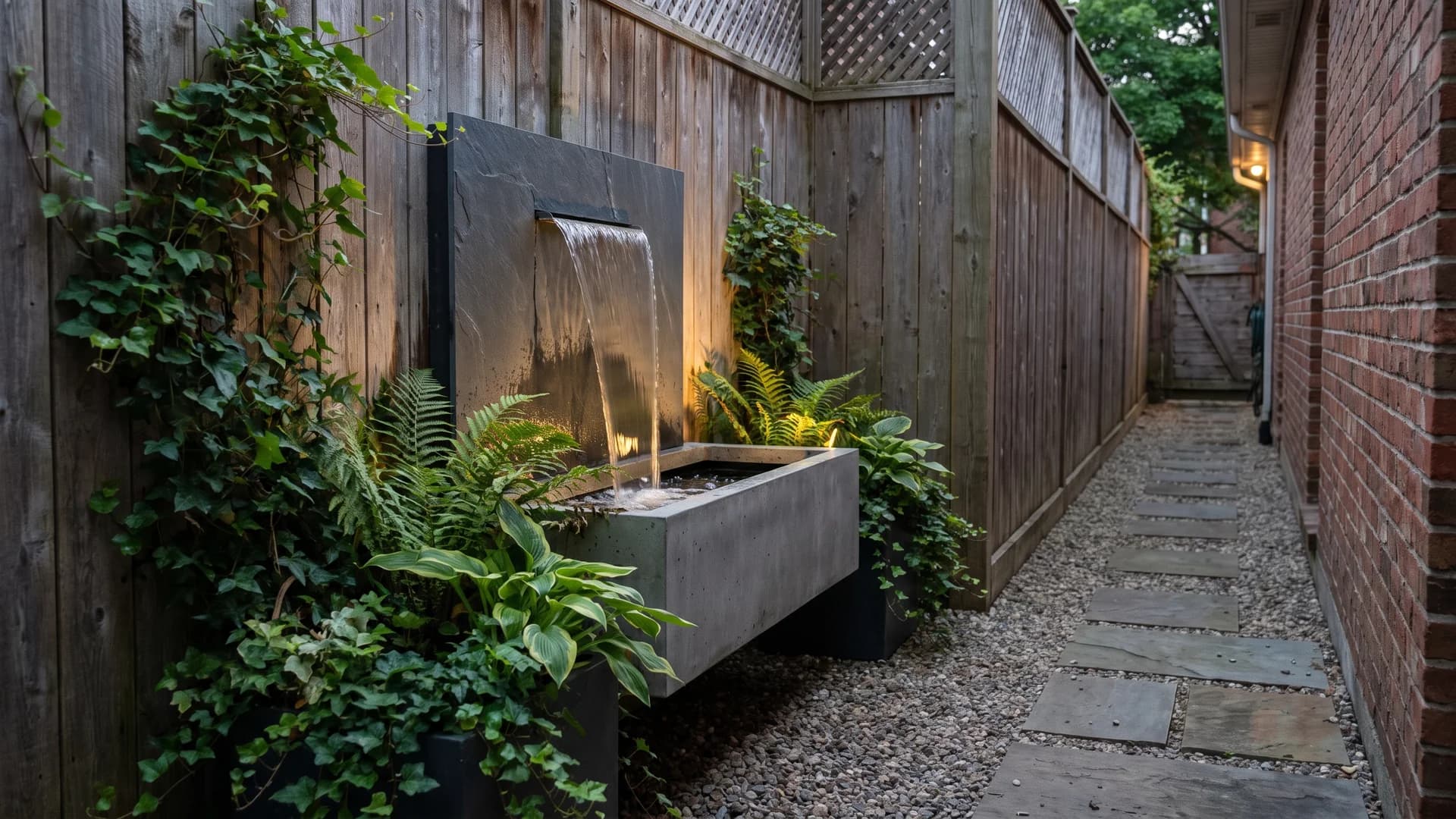
Corridors carry sound, which works for you the moment water enters. A slim self-contained wall water feature at $200 to $500 turns the whole passage into the house's quietest-sounding place and masks the AC unit it probably shares the strip with. Plug-in, recirculating, no plumbing; hang it where you pass daily, not where it hides.
13. Make the storage deliberate
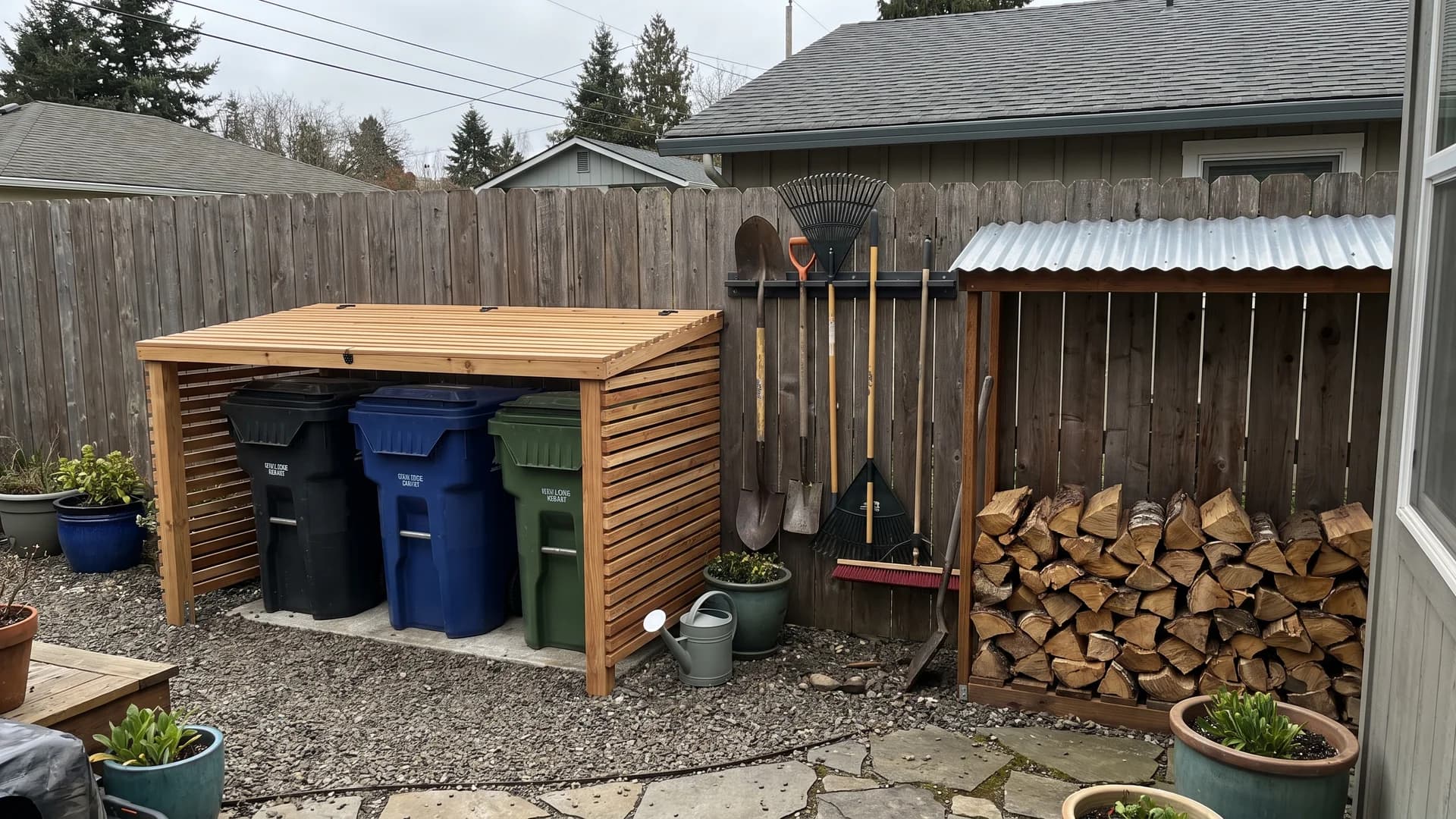
The side yard will store things whether you plan it or not; planning it is the difference between a shed wall and a junk drawer. A bin corral of cedar slats ($150 to $300), wall-mounted tool rails, and a slim lean-to roof over the firewood turn the utility half into something you'd let guests see, and free the rest of the strip for the ideas that aren't storage.
14. Put the roof water to work in a rock channel
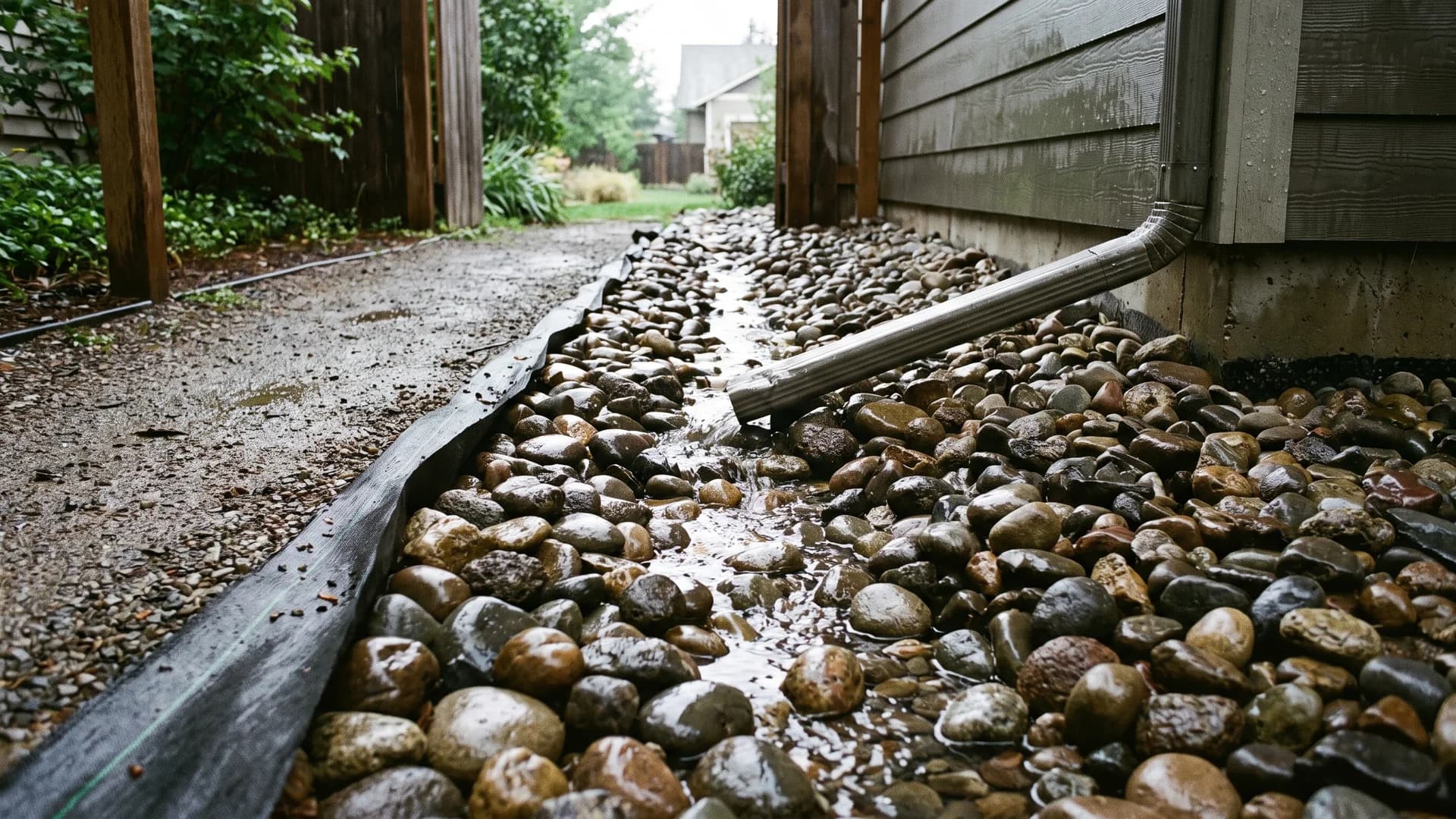
Side yards carry half the roof's downspouts, which is why so many are mud. A river-rock channel along the path's edge, fabric-lined like a surface french drain, moves storm water past the corridor instead of through its soil. A 25-foot run takes about a ton and a half of rock, $150 to $250. Wet-proofing the floor is what makes every other idea here survivable.
15. Design it as the connector it is
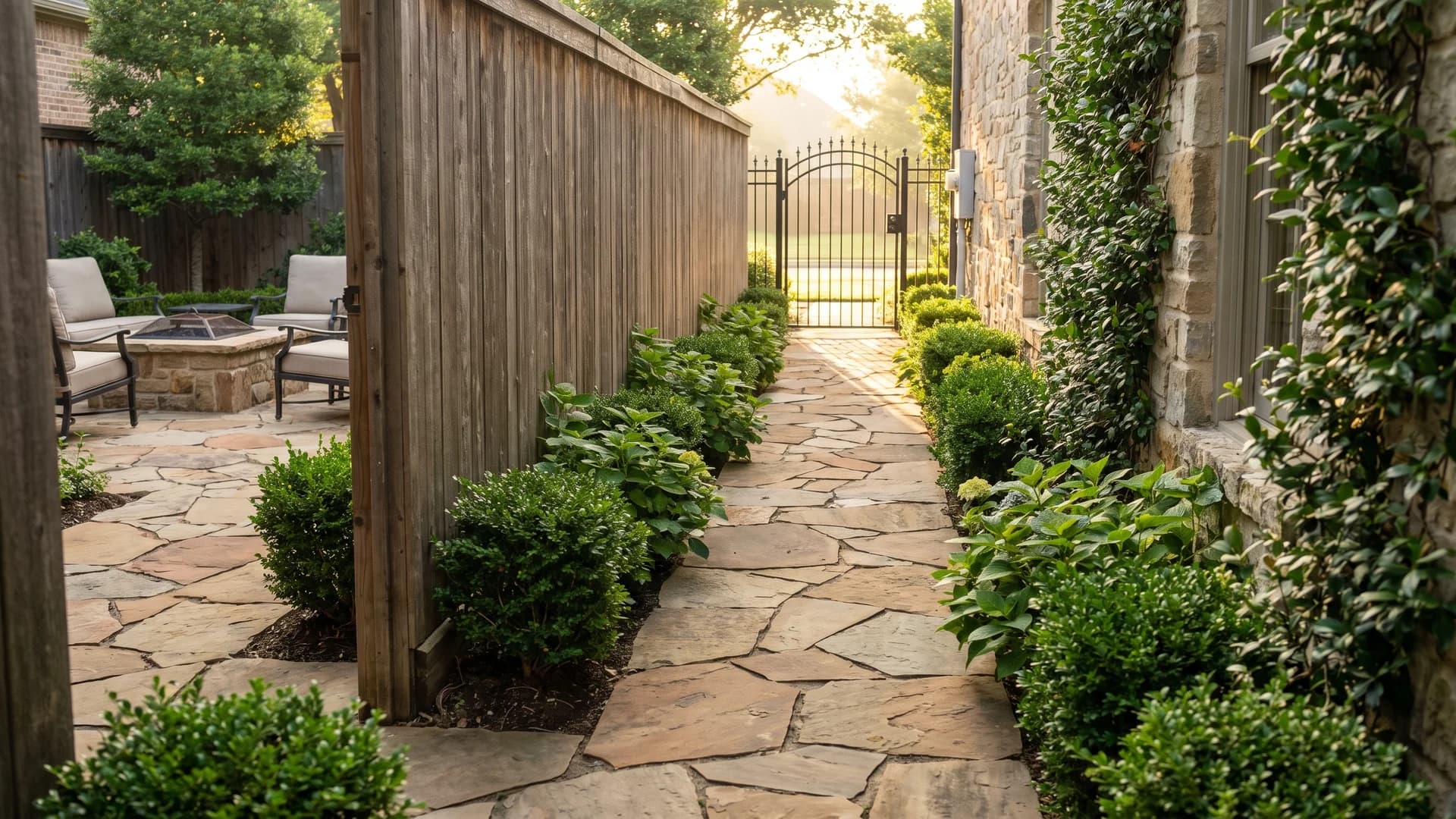
The side yard joins two spaces that probably don't match; repeating one paving material and two plants from each end stitches all three together. Walking the same stone from the front yard through the corridor to the patio makes a small property feel planned rather than accumulated. Same logic as our rock landscaping guide's material discipline: fewer materials, repeated, always reads bigger.
Which strip is yours?
- Pure utility corridor: 2, 13, and 14 make it clean and dry.
- Dark and narrow: 6, 5, and 8.
- Overlooked by neighbors: 4 or 11, then 9.
- Concrete floor, no soil: 10, 8, and 12 need no digging at all.
- Actually 8+ feet wide: lucky you, start at 9 and treat it as a small patio with a great hardscaping excuse.
FAQ
How can I make my dirt side yard look nice cheaply?
Fabric, gravel, and steppers: about $250 for a typical 40-foot run, one weekend, and the mud is gone permanently. Add solar string lights and one vine on the fence and the corridor reads intentional for under $350 total. Every other upgrade can layer on later without redoing that base.
What should I plant in a side yard instead of grass?
Walkable groundcovers: creeping thyme and blue star creeper in sun, dwarf mondo grass and moss in shade. All handle the foot traffic a corridor concentrates and none need mowing. In the planting margins, slim uprights and bright-leaved shade plants beat anything that wants to spread wide.
How do I make my side yard private?
Solve the specific sightline, not the whole strip. One screen panel or two slim upright shrubs placed exactly on the neighbor's-window line usually does it. For full-length screening, narrow-footprint plants like 'Sky Pencil' holly or fence-mounted vines give privacy without surrendering walking width. The same sightline-first approach scales up to screening a whole yard, where two or three well-placed blocks beat a perimeter of hedge.
How wide should a side yard path be?
Three feet minimum to walk comfortably, four to pass someone or push a wheelbarrow. If the whole strip is under five feet, give everything to the path and put the planting on the walls: vines, trough planters, and overhead lights use no floor at all.
Should I use gravel, pavers, or concrete in a side yard?
Gravel is cheapest at $1.50 to $2.50 a square foot and drains best under downspouts. Pavers run $3 to $6, look permanent, and stay repairable when a utility line needs digging, worth considering, since side yards hide most of a house's buried services. Poured concrete is the one to avoid: similar cost to pavers, zero access afterward.