21 Low Maintenance Front Yard Landscaping Ideas That Cut Yard Work
A front yard that looks good without eating your weekends comes down to what you plant, what you replace, and what you stop maintaining entirely. These 21 ideas cover all three, with costs and upkeep for each.
The front yard is the part of your property you maintain for other people. You barely sit in it, but you mow it, edge it, water it, and weed it more than any space you actually use. Low maintenance front yard landscaping flips that math: replace the surfaces that demand weekly attention, plant things that handle themselves, and keep just enough lawn to frame the house.
The 21 ideas below are organized by how they cut the work, from shrinking the lawn to plants you prune once a year. Each one includes what it costs, where it grows, and roughly how much attention it demands. Every image is an AI-generated design concept built from a typical suburban front yard, the same kind of render you can make from a photo of your own house with AI front yard design.
Shrink what you mow
1. Cut the lawn down to one clean shape
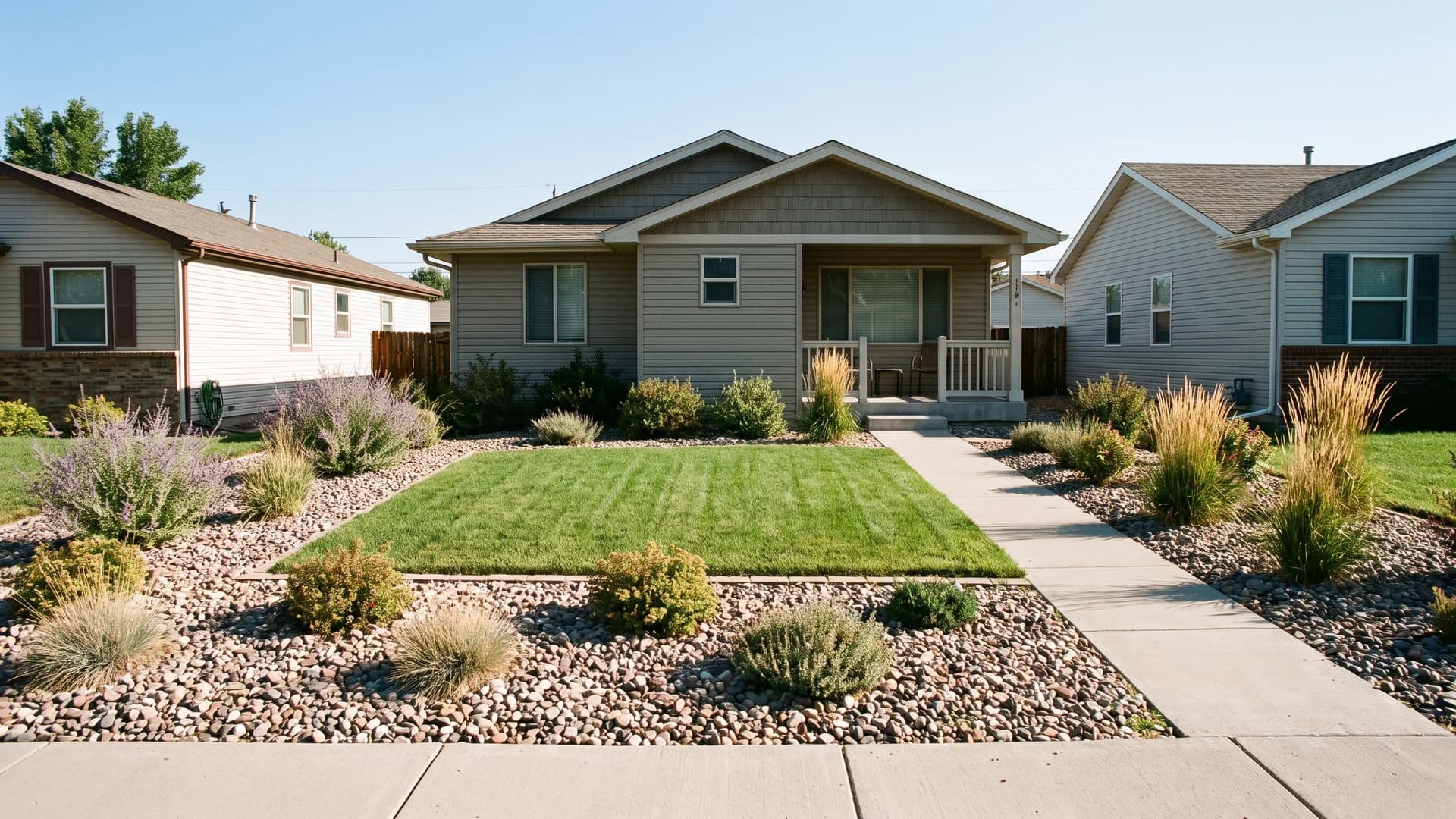
Most front lawns are big by default, not by decision. Reduce yours to one simple rectangle or oval and convert the rest to beds, and a 40-minute mow becomes a 10-minute one. The conversion costs almost nothing if you sheet-mulch the retired sections with cardboard and wood chips over a fall season. A mower still fits the shape in straight passes, which is the point.
2. Seed clover instead of grass
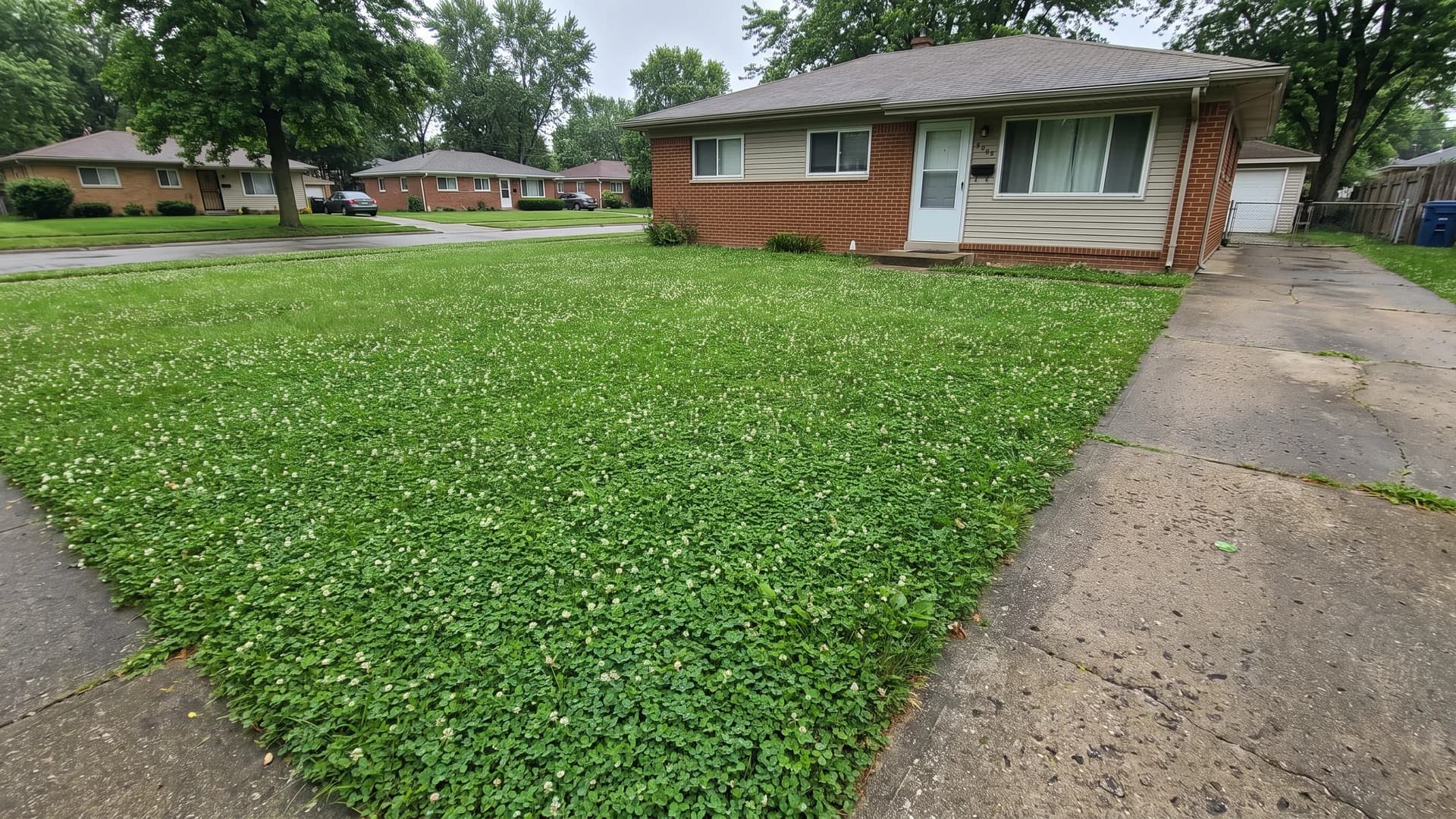
Clover stays green through dry spells that brown a fescue lawn, fixes its own nitrogen so it never needs fertilizer, and holds at 4 to 6 inches with a mow every three or four weeks. Seed costs about $10 to $20 a pound, and a pound covers roughly 1,000 square feet. Microclover blends read closest to a conventional lawn. Bees visit the blooms, worth knowing if kids play out front.
3. Let creeping thyme take the strip you hate
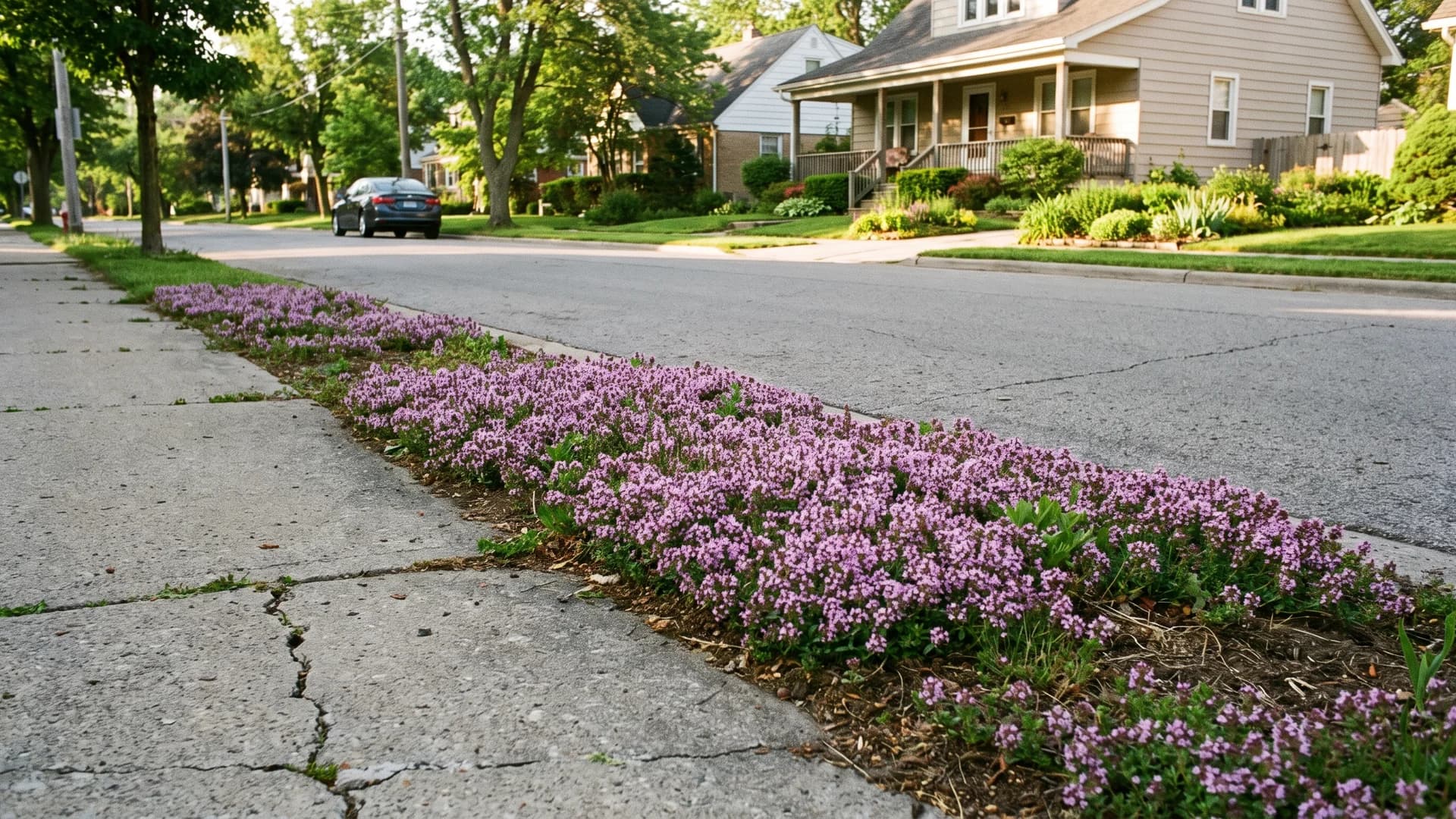
The strip between sidewalk and street is the worst mowing on the property. Creeping thyme fills it with a 2-to-3-inch mat that never needs cutting, takes foot traffic, and blooms purple-pink in early summer. Plants run $8 to $12 each, spaced a foot apart, and knit together in two seasons. Hardy in zones 4 to 9, and it wants the same full sun that strip already gets.
4. Use artificial turf where nothing grows
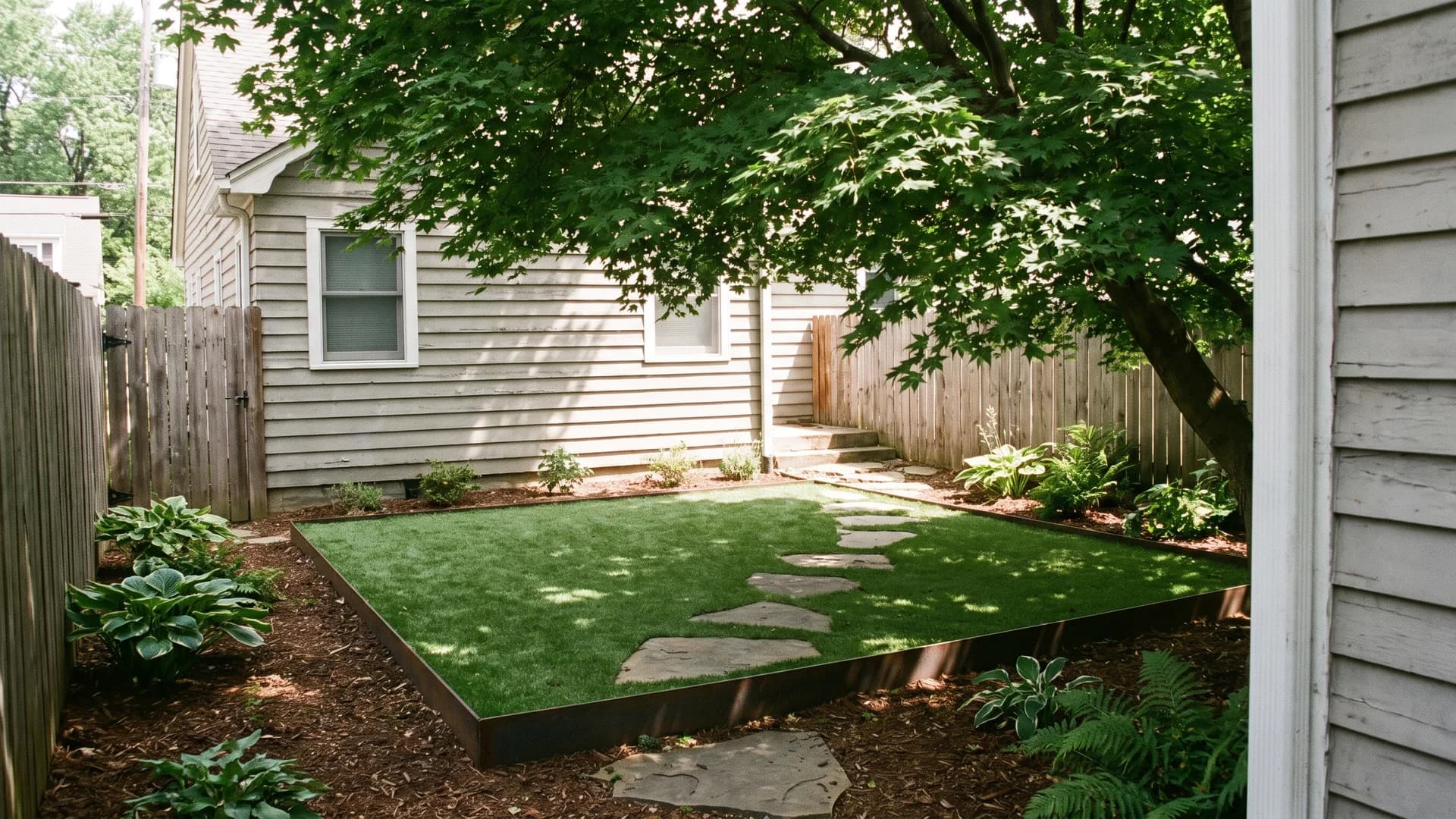
Deep shade under a maple, a dog run, the three feet between path and fence: places where real grass fails every year are where artificial turf earns its cost. DIY rolls run $2 to $4 a square foot. Keep it to defined small panels with a crisp border so it reads intentional, and rinse it a few times a summer. As a whole-lawn replacement it gets hot in full sun; as a problem-spot fix it's unbeatable.
5. Convert the sunniest section to xeriscape
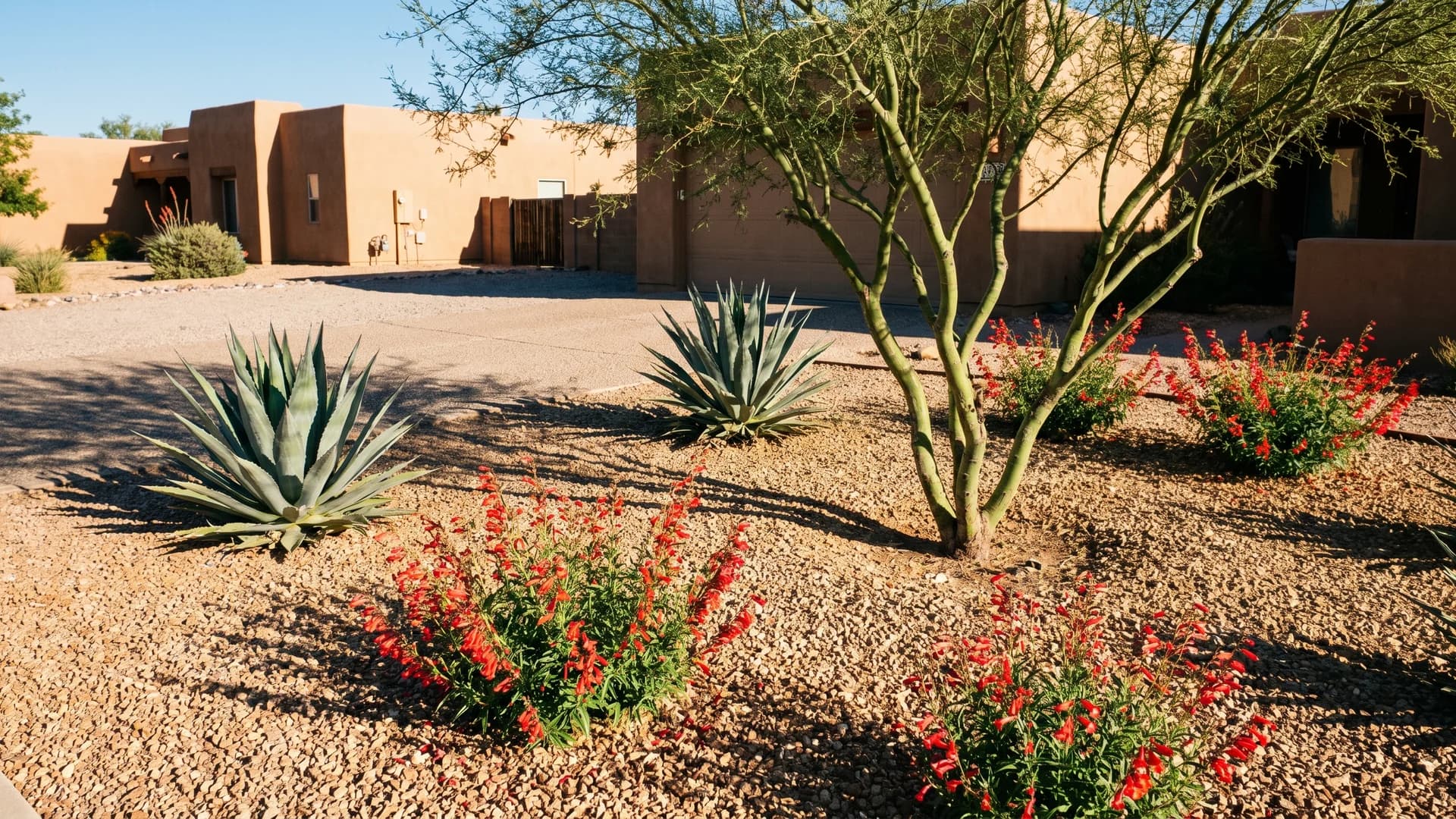
Xeriscaping is the deepest cut you can make in front yard upkeep: gravel mulch, drought-adapted plants, and no irrigation once established. A 200-square-foot conversion costs $400 to $800 in materials. In the Southwest, build it around agave, penstemon, and a palo verde; in wetter climates the same logic works with sedums, yarrow, and ornamental grasses. Watering drops to nearly zero after the first summer.
Rock and mulch groundwork
6. Mulch every bed you cannot mow
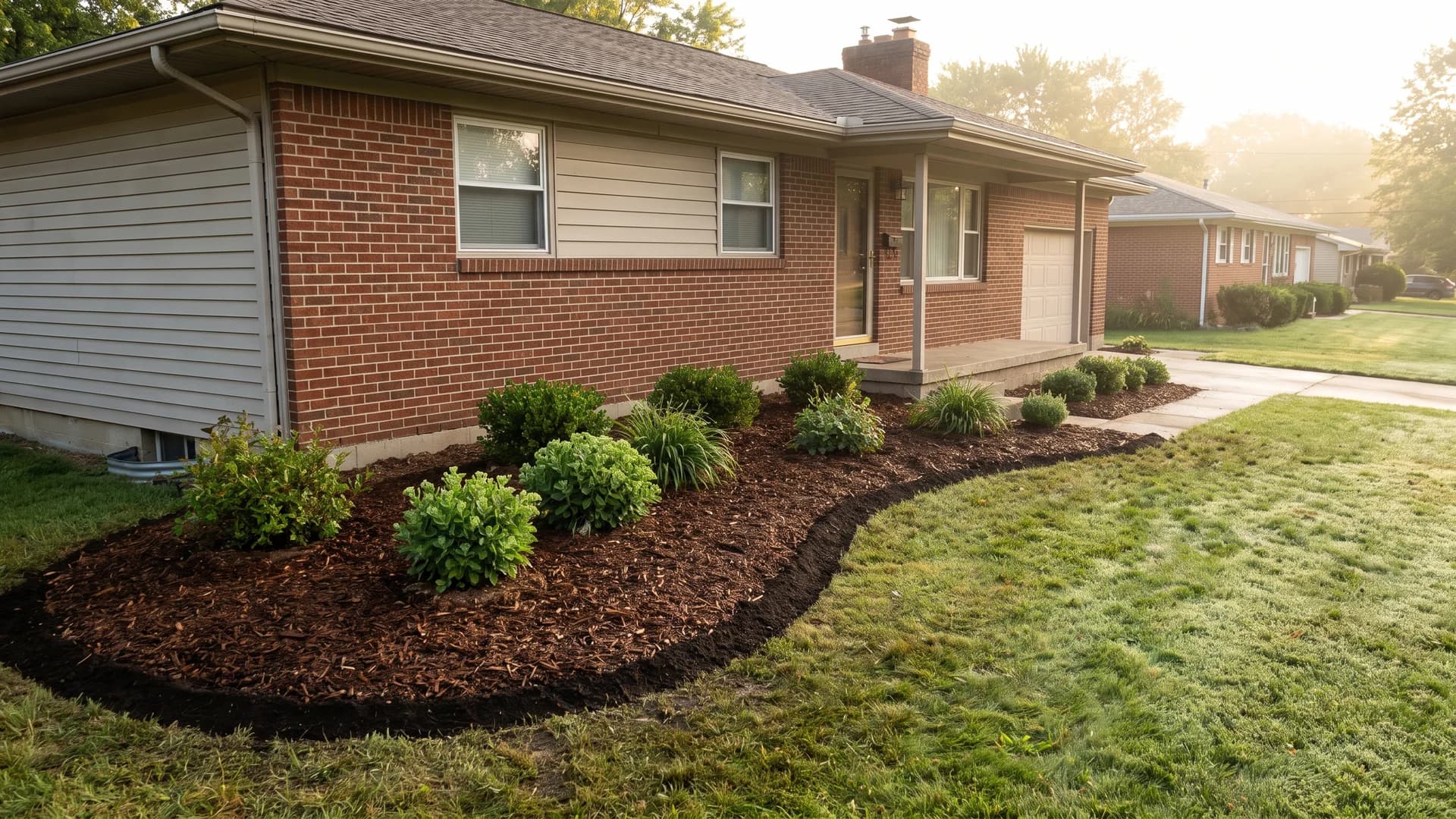
Any spot the mower can't reach cleanly should be mulch, not grass. Natural wood chips or pine straw cost about $4 a bag or $25 to $45 a cubic yard bulk, and unlike dyed mulch they feed the soil as they break down. Spread 3 inches deep and top up once a year. The mulch calculator turns bed dimensions into an exact bag count so you buy once.
7. Build two-tone rock beds
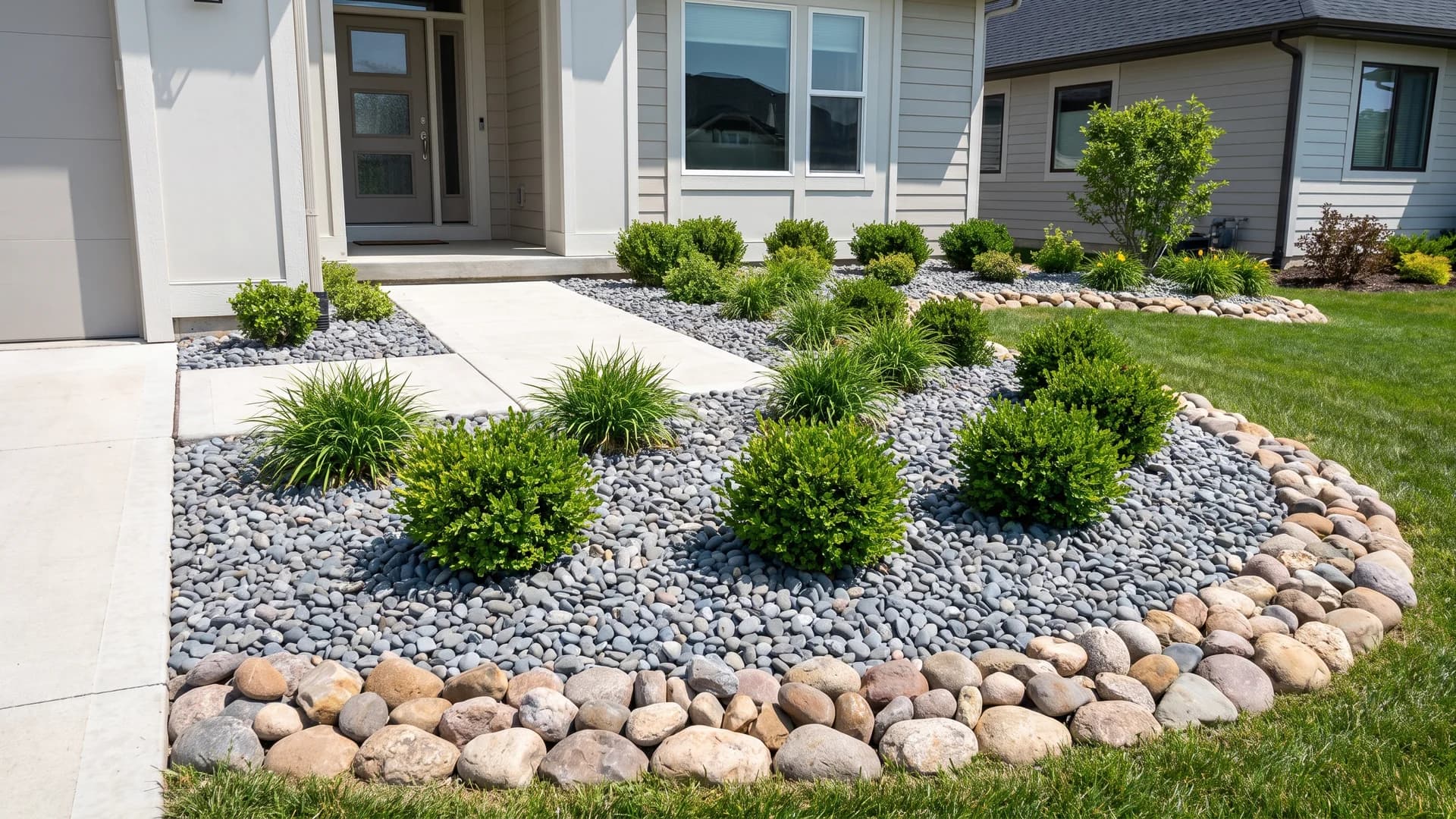
Rock mulch never decomposes, never floats, and never needs topping up. The trick that makes it look designed instead of dumped is two sizes: 1-to-2-inch stone as the field, bordered by a band of 3-to-5-inch river rock that keeps the small stuff from scattering. Expect $80 to $150 a ton. Lay commercial landscape fabric underneath or you will weed gravel by hand, which is worse than weeding soil.
8. Turn the downspout mess into a dry creek bed
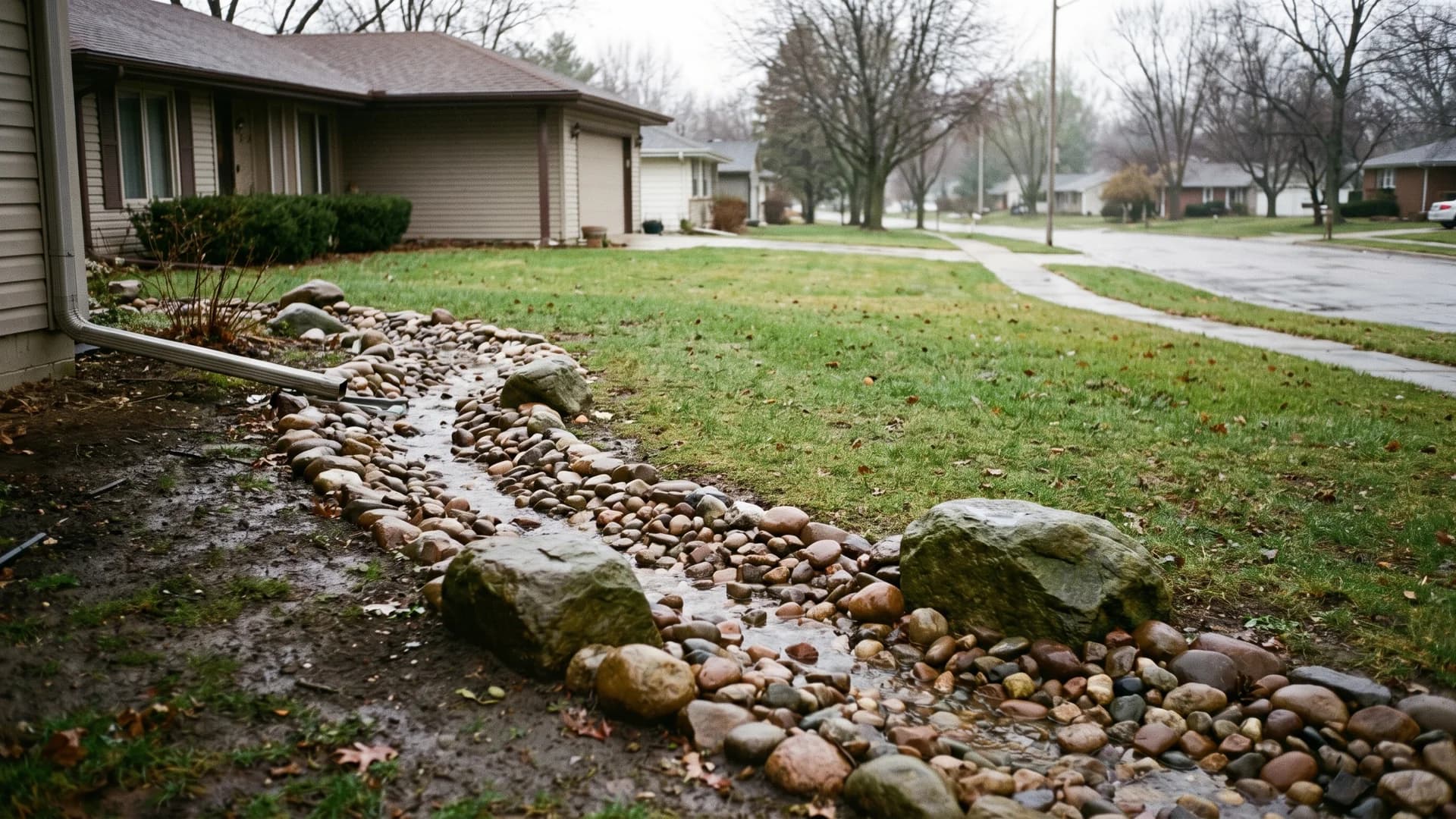
A soggy stripe below the downspout kills grass every spring. Dig a shallow channel, line it with fabric, and fill it with mixed river rock, and the water rides a feature instead of a mudline. It behaves like a surface french drain and needs no attention after installation. A 15-foot run takes about a ton of rock, $80 to $150 depending on region.
9. Install steel edging once, stop re-cutting lines forever
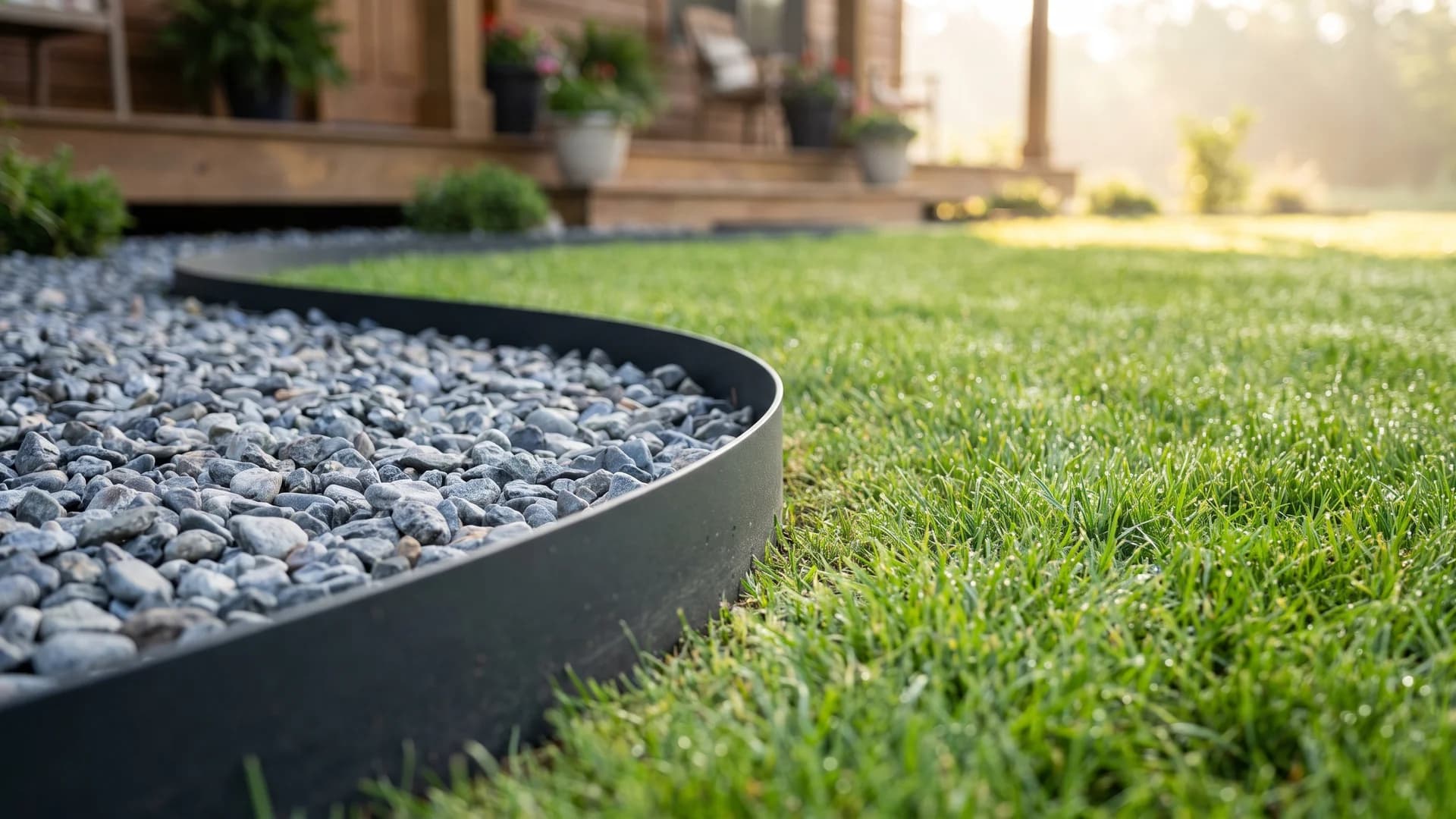
The annual ritual of re-spading bed edges exists because soft edges fail. Powder-coated steel landscape edging costs $2 to $4 a linear foot, hammers in over a weekend, and holds the same line for 20 years through frost and string trimmers. It is the least visible upgrade on this list and the one that most changes how sharp the yard reads from the street.
10. Put fabric under everything inorganic
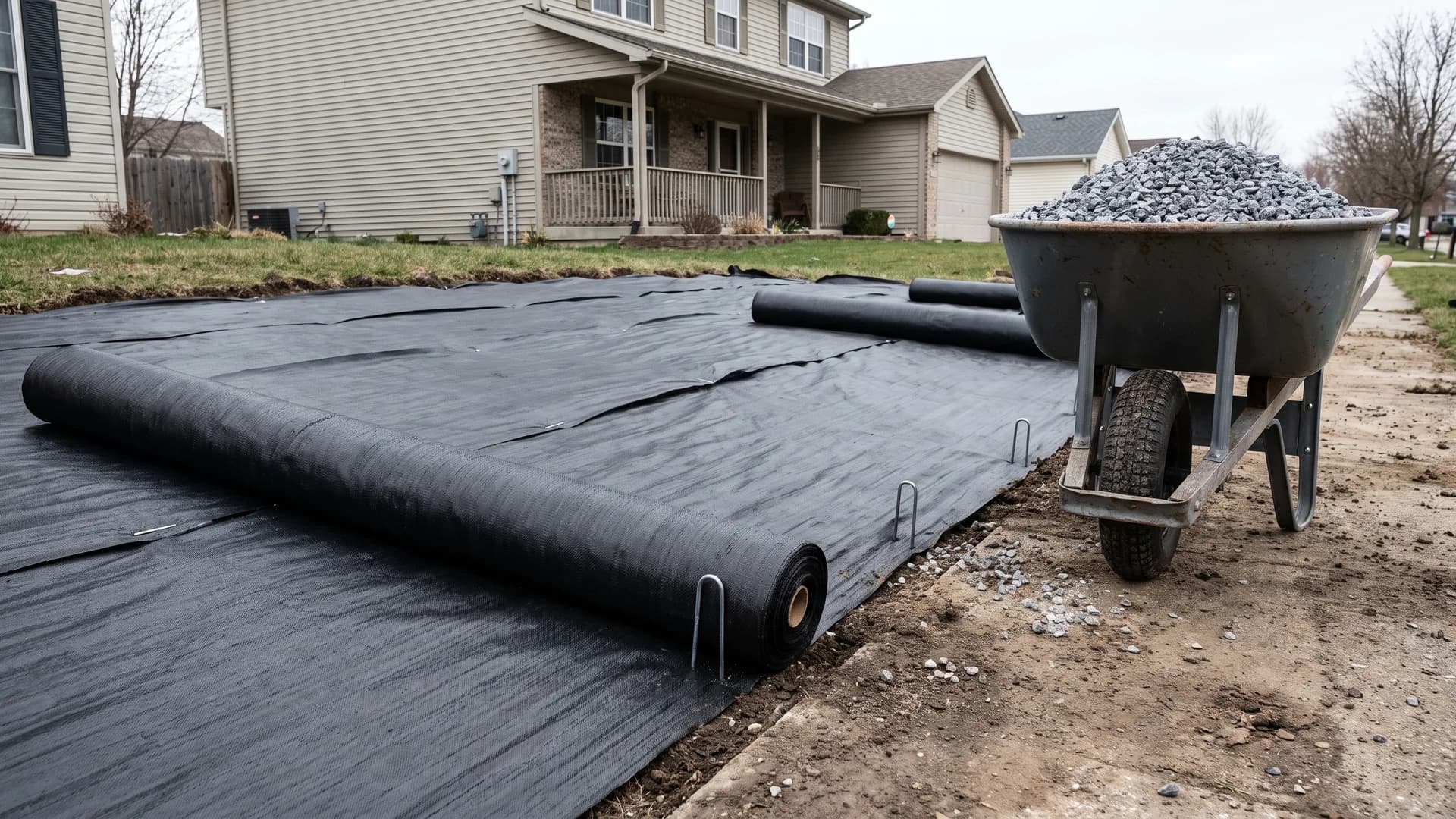
Every rock bed, gravel path, and dry creek in this list depends on what's under it. Commercial-grade woven fabric runs about $80 for a 300-square-foot roll and lasts 15 to 20 years; the thin big-box version surrenders to weeds in two. Overlap seams 6 inches, pin every couple of feet, and run it under the edging. One careful afternoon here decides the next decade of weeding.
Plants that handle themselves
11. Mass one perennial per bed
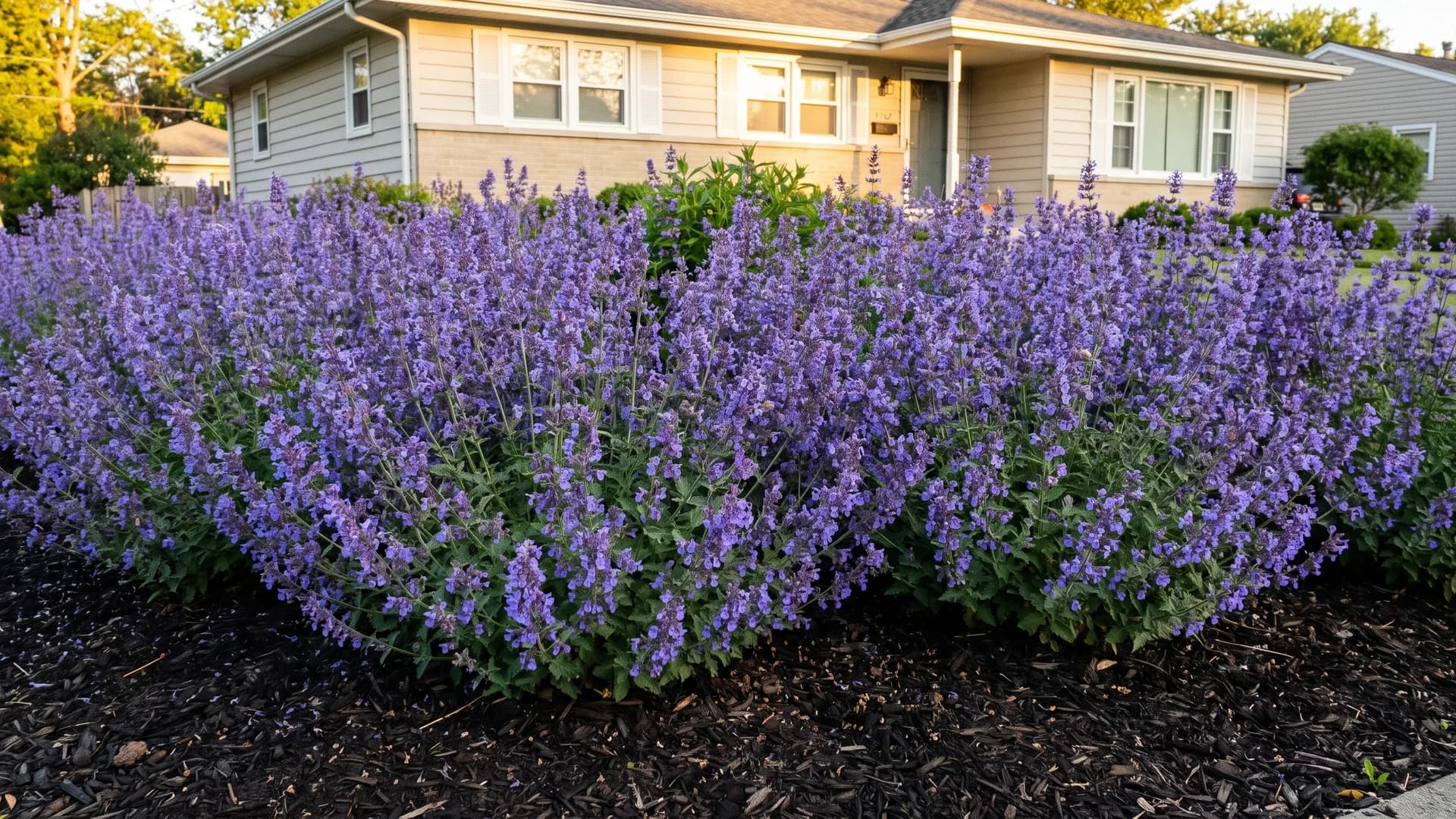
A bed with twelve species is a part-time job; a bed with one is a chore you do annually. Catmint is the front yard workhorse: blooms purple from May to frost, shrugs off drought, deer walk past it, and it needs one cutback in late winter. Plants cost $10 to $15, hardy zones 4 to 8. Coreopsis and daylilies run the same play in brighter colors.
12. Anchor the foundation with dwarf evergreens
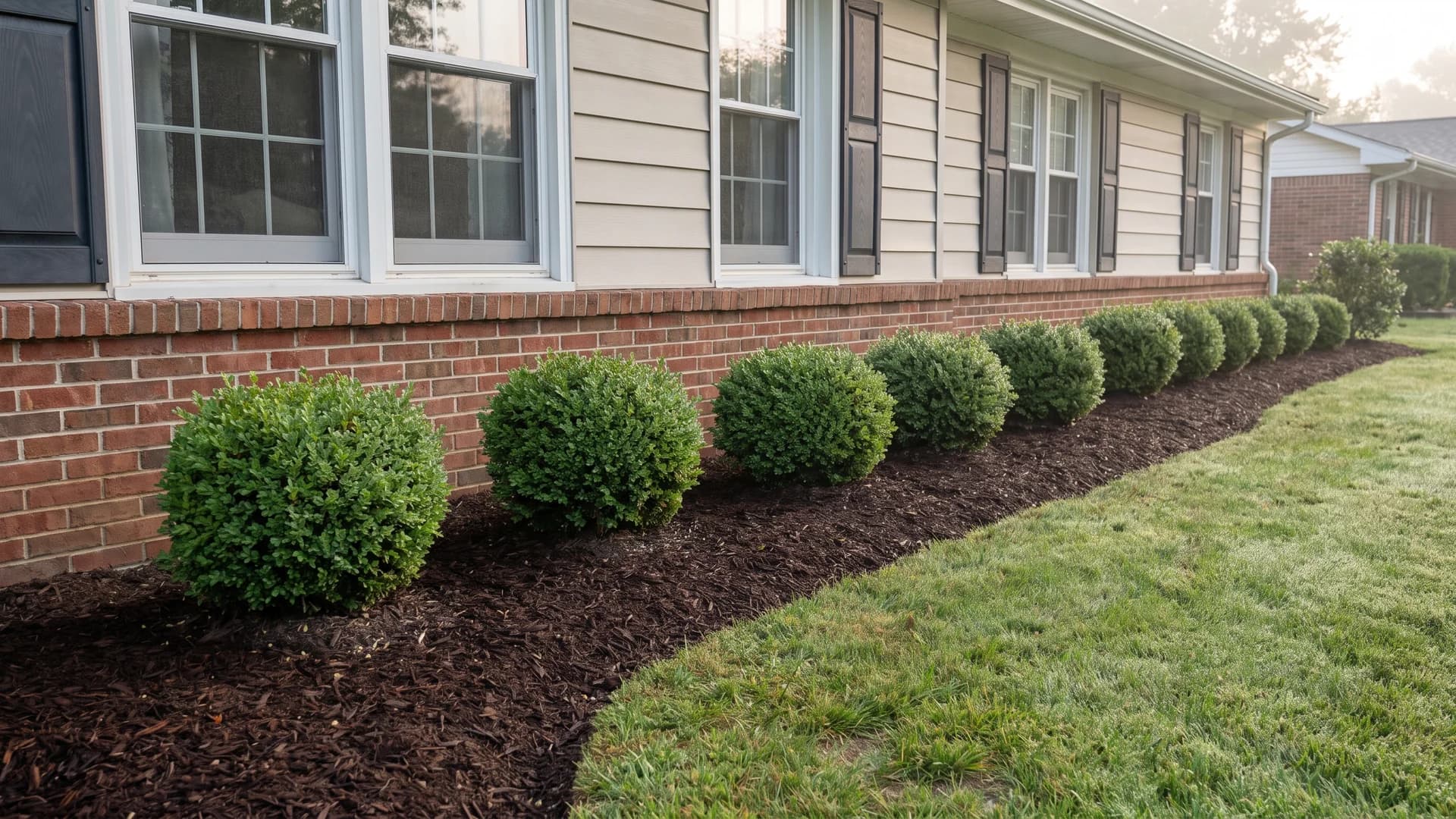
Foundation planting fails when shrubs outgrow the windows and demand constant shearing. Dwarf cultivars end that fight: 'Green Velvet' boxwood holds near 3 feet, dwarf yaupon holly stays tidy in the South, and both take one light shear a year. Plants run $25 to $50 each in three-gallon pots. Buy the mature size you want, not the sale-table size that will swallow the porch.
13. Plant one statement tree instead of five shrubs
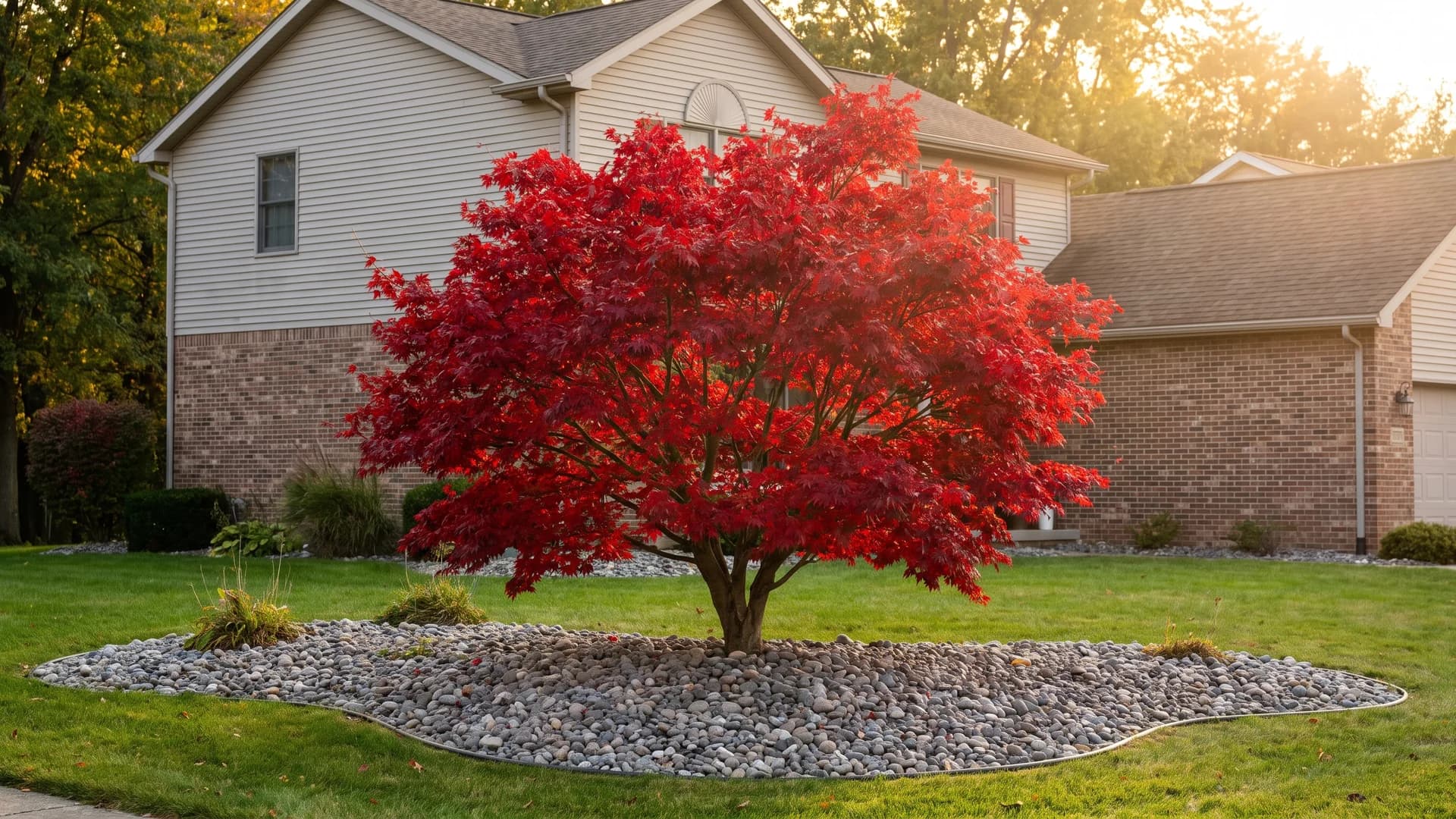
One good tree carries a front yard year-round with almost no care after establishment. A Japanese maple stays under 25 feet, needs no pruning to look composed, and turns scarlet in October; serviceberry adds spring bloom and June berries for birds. Expect $100 to $300 for a decent nursery specimen. Skip fast-growing messy species like silver maple; cleanup is maintenance too.
14. Drift ornamental grasses where borders get long
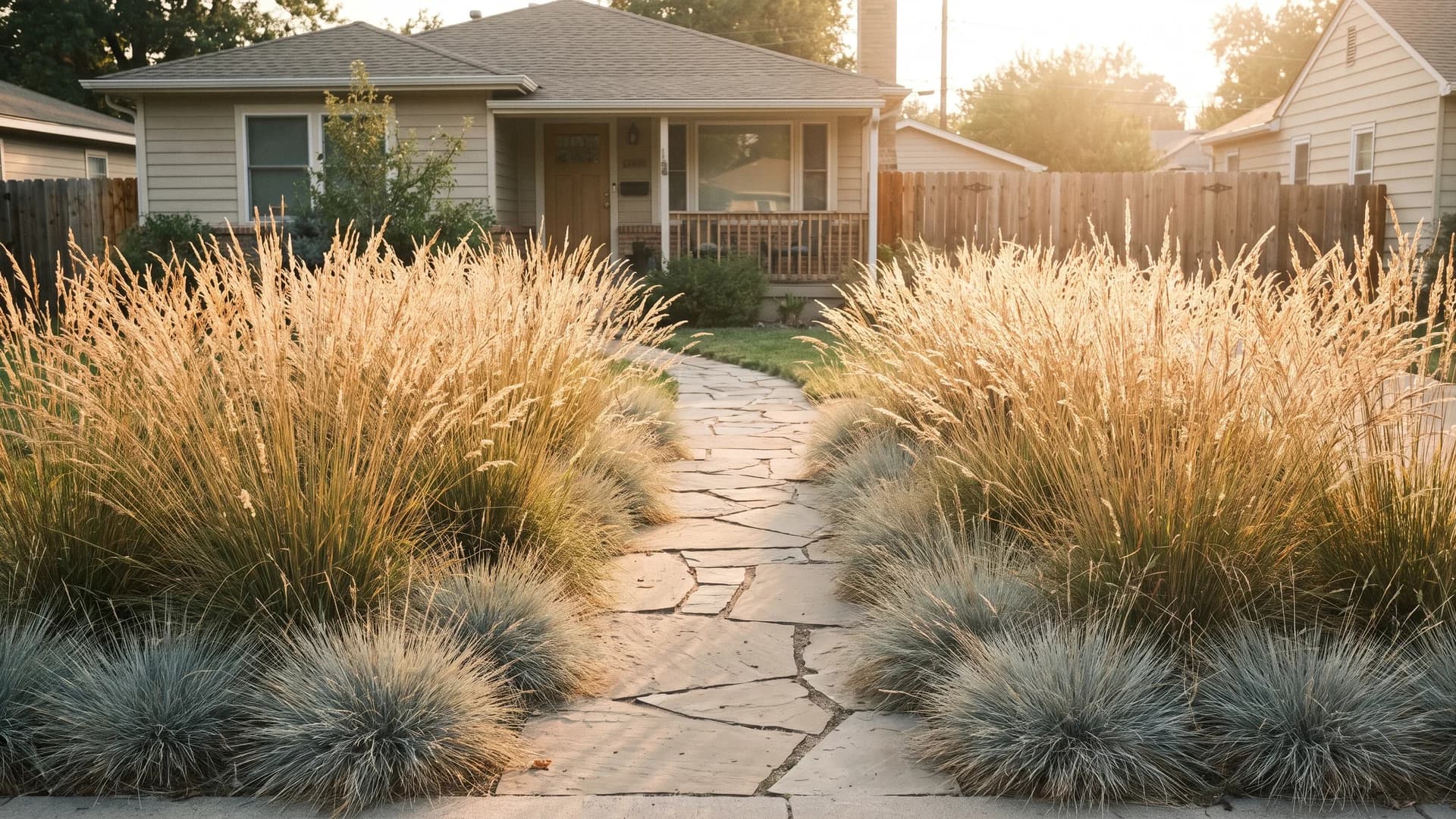
Grasses give a long border movement and four-season structure for one cutback a year in March. 'Northwind' switchgrass stands 5 feet and vertical, zones 5 to 9; blue fescue mounds silver at a foot, zones 4 to 8. Both run $10 to $18 a pot. Plant in odd-numbered drifts rather than singles, and let the winter seed heads stand; that's the season they earn their spot.
15. Use shrub roses that skip the rose care
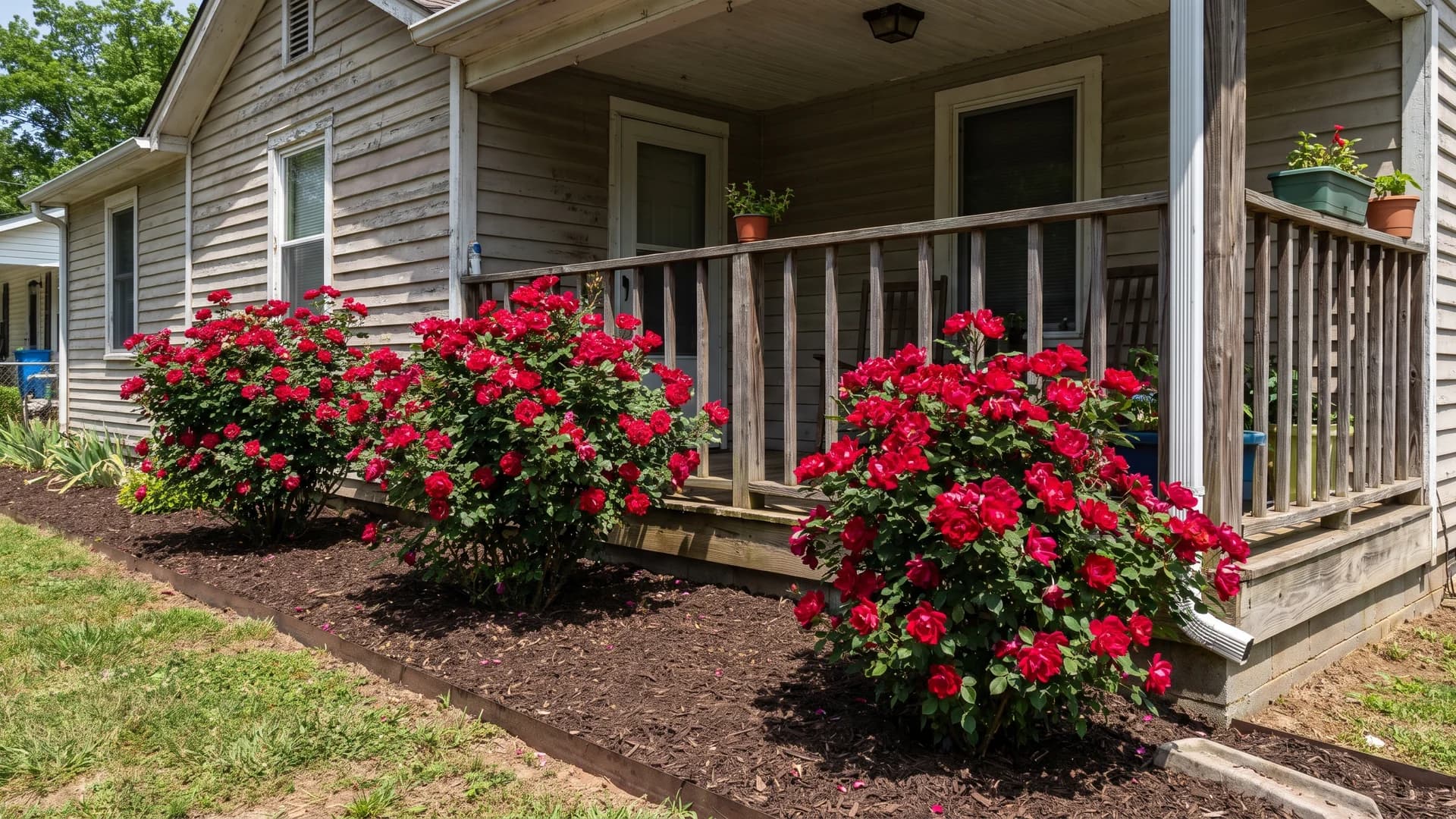
Knock Out and Oso Easy roses bloom from May to frost with no deadheading, no spraying, and no winter wrapping, which is a different sport from the roses your grandmother pruned weekly. Hardy in zones 4 or 5 through 9 depending on cultivar, $25 to $40 a plant. One spring cutback to knee height is the entire annual program. Three in a row read as a hedge with flowers.
16. Cover slopes with plants, not mowing risk
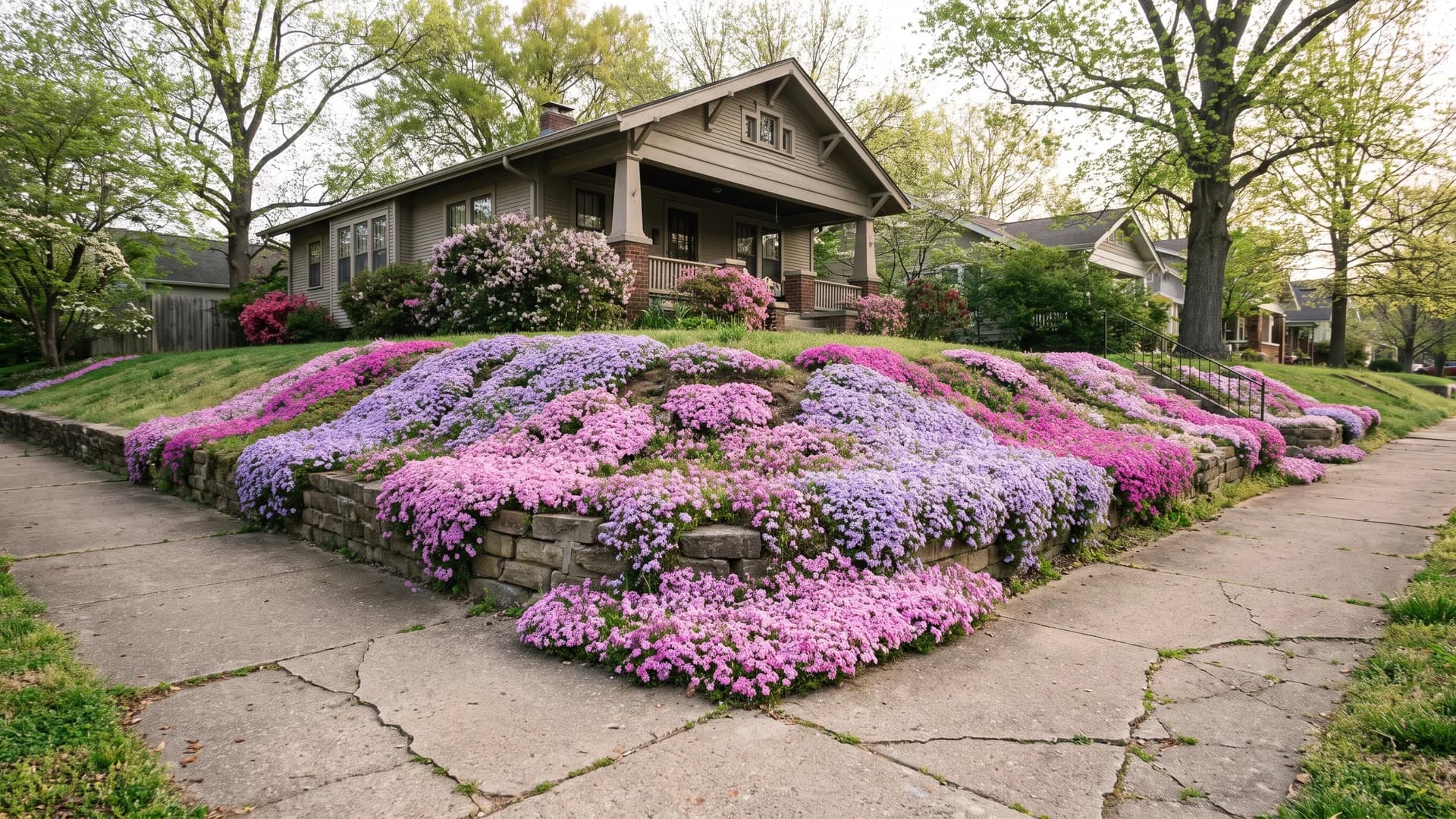
Mowing a slope is dangerous and edging it is endless. Plant it once with spreaders instead: creeping phlox for a spring wall of color, creeping juniper for evergreen cover, vinca minor for dry shade. All three are drought-tolerant plants once rooted, at $8 to $15 a plant on 18-inch spacing. Two seasons in, the slope is closed to weeds and off your chore list.
Structure that earns its keep
17. Replace the worn path with crushed gravel or flagstone
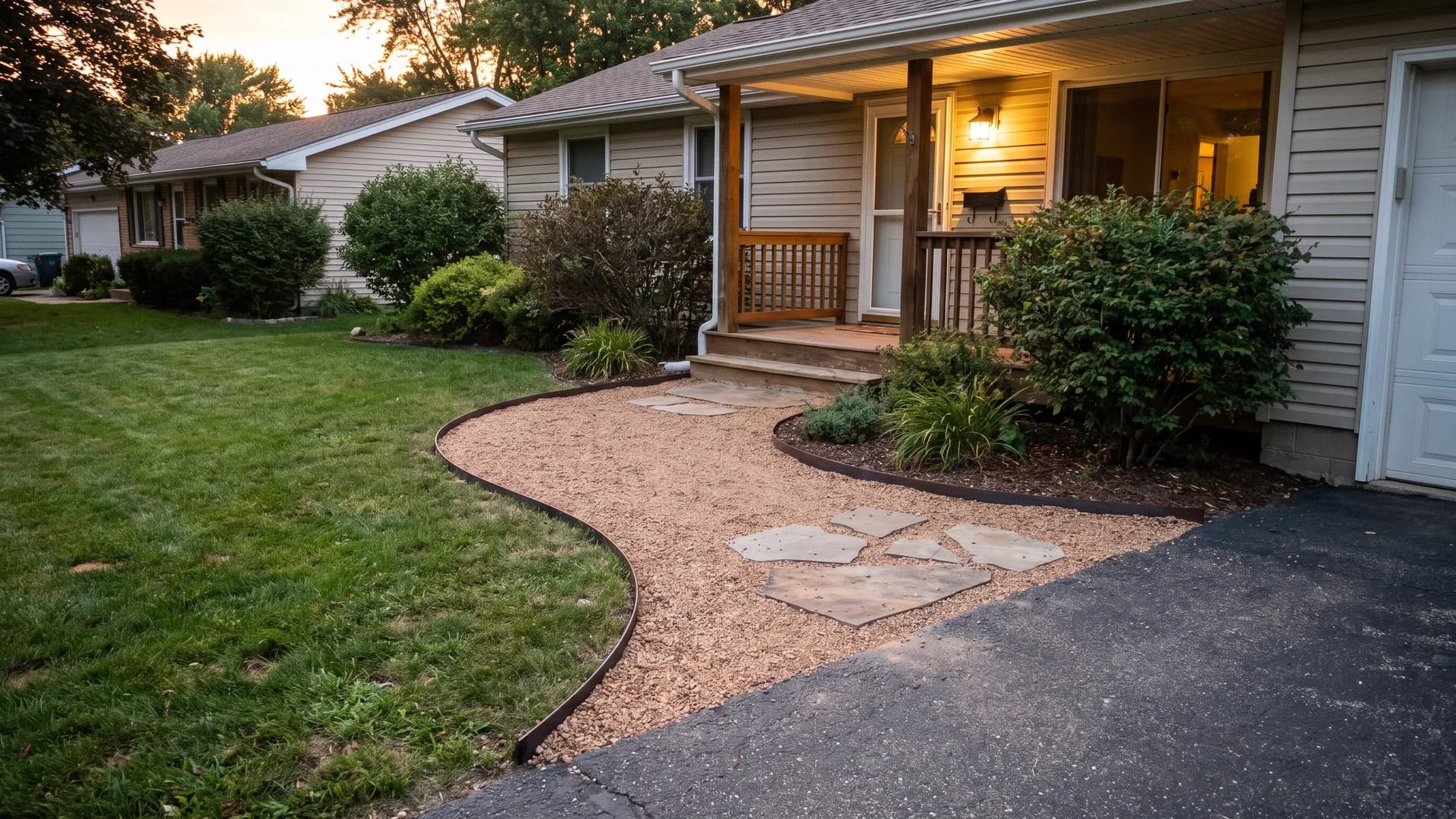
A dirt-worn route to the door is maintenance you do with your shoes. Crushed gravel, not pea gravel, compacts firm underfoot and costs about $60 a ton; flagstone steppers set in it upgrade the look for $15 to $30 a stone. Edge both sides so the path holds its width. The gravel calculator converts path length to tonnage before you order.
18. Give the driveway an island bed
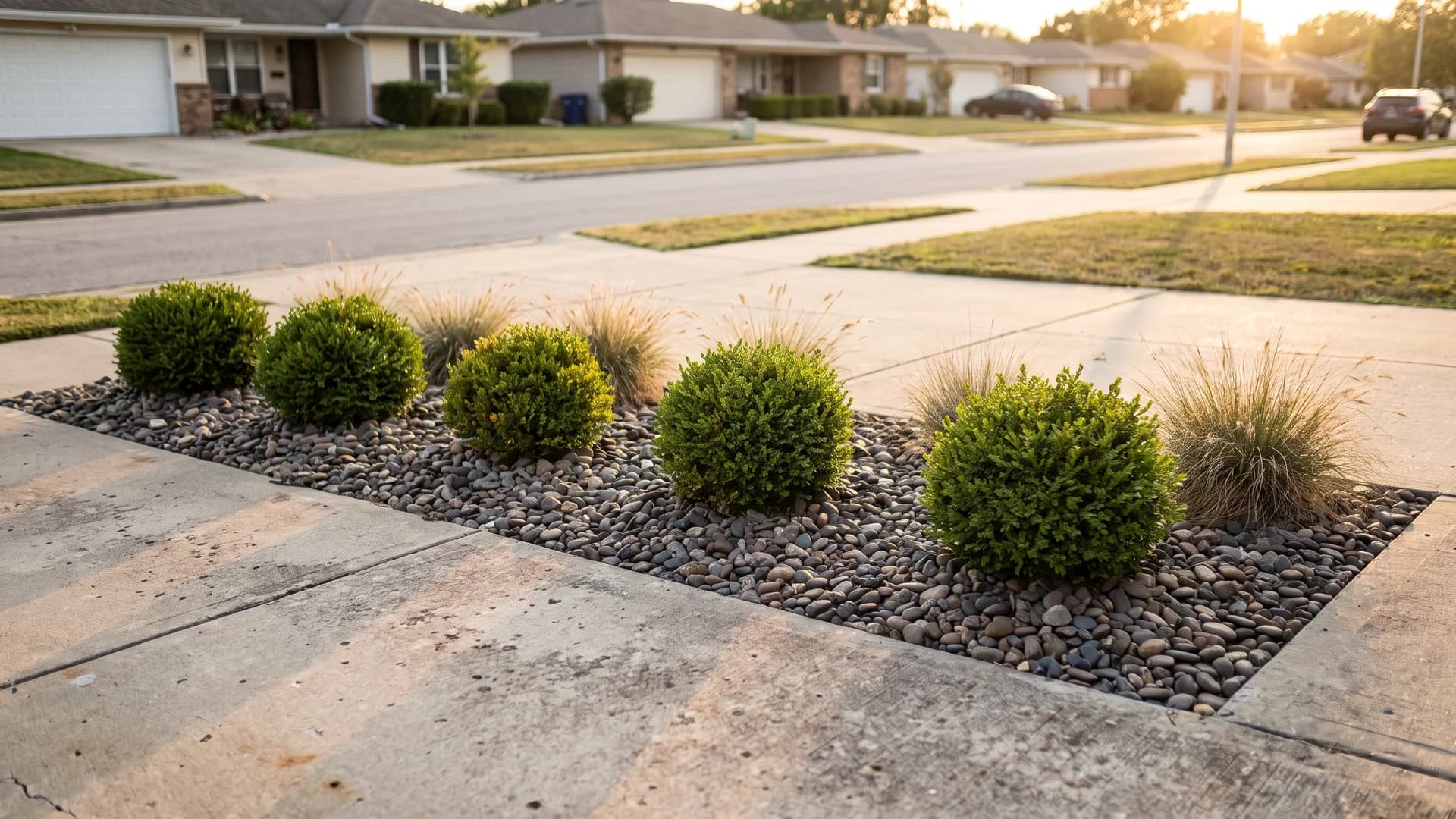
The narrow strip along the driveway grows nothing well and gets trampled anyway. A rock-mulched island with three or five low shrubs, dwarf fountain grass or 'Gro-Low' sumac both work, replaces struggling turf with something that ignores car doors, road salt, and August. Materials for a 4-by-12 strip run under $300. Keep everything below 2 feet near the street end for sightlines. If the whole drive needs the same treatment, our driveway planting and edging ideas cover the borders, entrance, and lighting for a full run.
19. Raise the bed at the porch
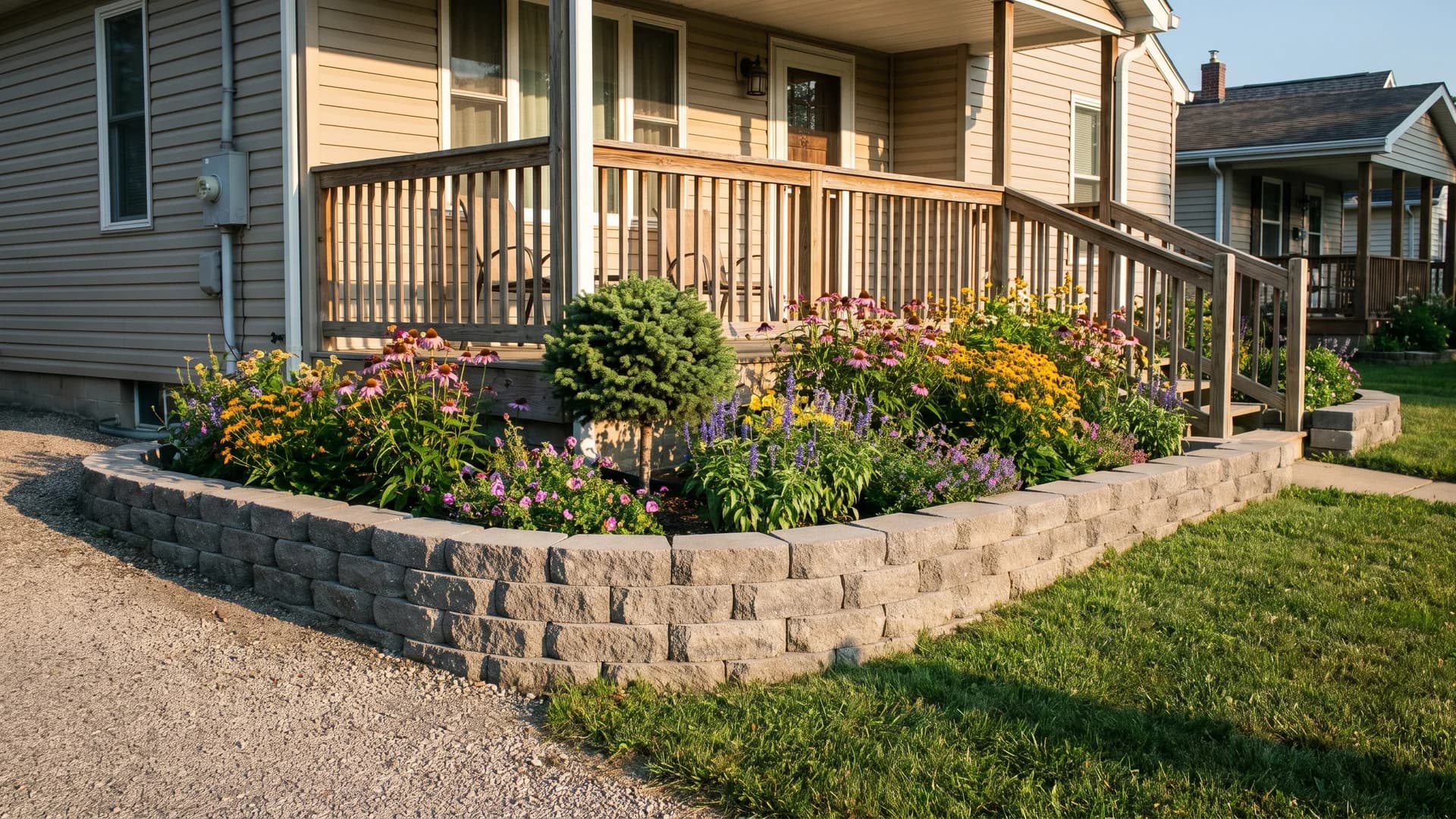
A knee-high stone or block bed at the entry lifts plants to where you see them and defines the porch without a railing project. Wall block runs $3 to $8 a unit; a 10-foot curved bed takes about 40 units. Fill it with one massed perennial plus a dwarf evergreen and the planting design is done. Raised soil also drains better against the foundation than a grade-level bed.
Finishing touches
20. Light the path with solar stakes
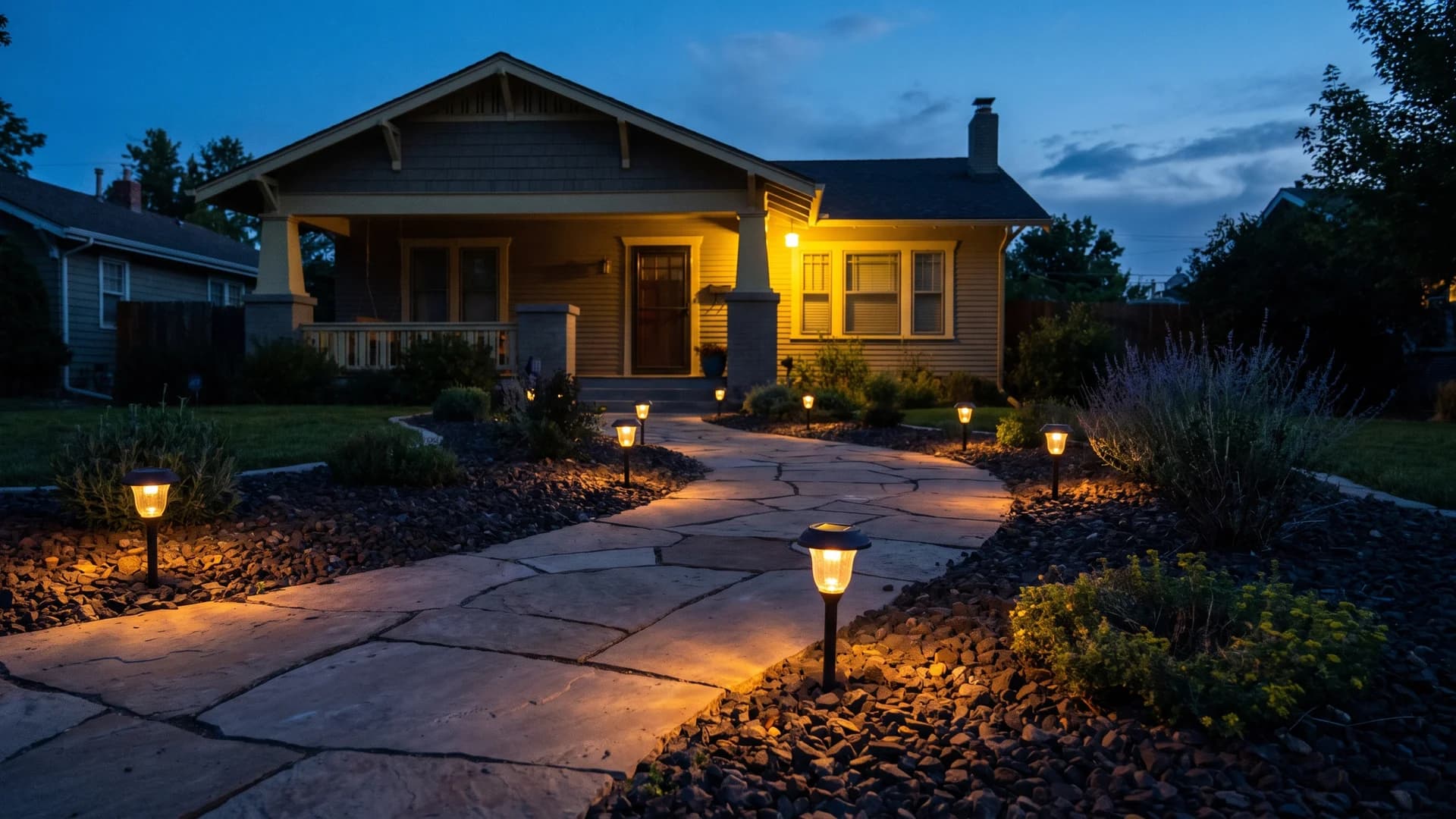
Wired landscape lighting is a trench, a transformer, and a future troubleshooting session. Solar stakes are twenty minutes with no tools: an 8-pack costs $30 to $60 and marks the walkway, the bed corners, and the house numbers. Modern panels hold a charge well past midnight. When a unit dies in a few years, you replace one stake, not a circuit.
21. Keep the color in two big pots on a drip line
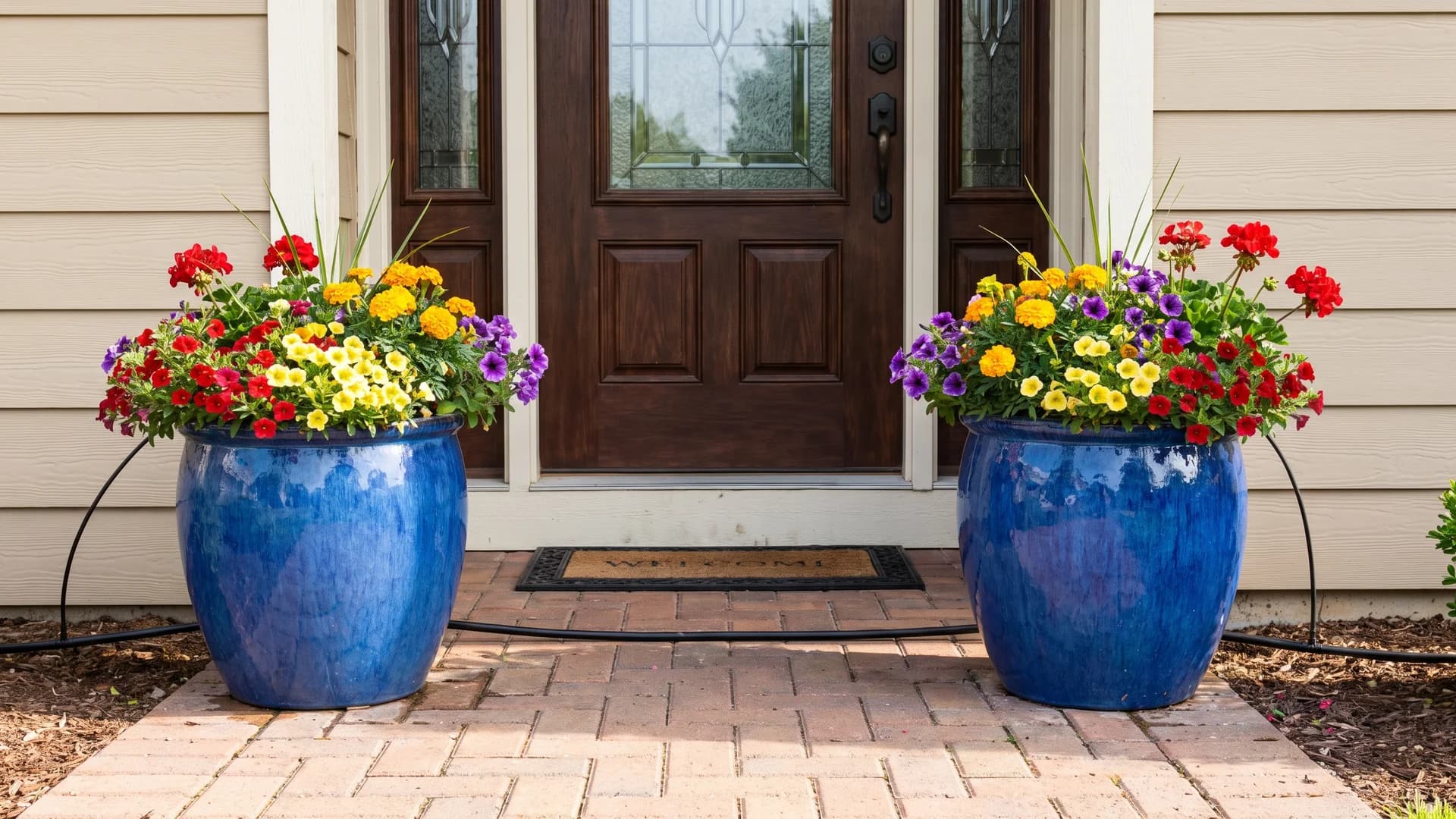
Annual color in beds means weeding and daily August watering. Two oversized pots flanking the door deliver the same welcome in a controlled space: $40 to $80 per planted pot, refreshed twice a year. Run a $30 drip irrigation line with a timer from the nearest spigot and even the watering is off your list. Under-planting in a 20-inch-plus pot is the only rule; small pots dry out by noon.
Where to start with yours
Different front yards, different first moves:
- Mowing is the pain: start with 1, 2, and 9. Shrinking the lawn and locking the edges cut the weekly loop most.
- Beds full of weeds: 10, 6, and 7. The fabric layer is the fix; the mulch is just its finish.
- Yard looks flat and unfinished: 13, 12, and 19 add structure you maintain once a year, and curb appeal is mostly structure.
- Dry-climate yard: 5, 14, and 16 are built for it.
- Renting or on a tight budget: 2, 20, and 21 all land under $100 and leave with you.
- Want a rehearsal project first: the mailbox bed uses every technique here at one-weekend scale, and if stone is doing most of your yard's work, the rock-forward version of this plan goes deeper on boulders, gravel, and no-grass layouts.
If you want to see several of these on your actual house before buying anything, our low maintenance guide for pool surrounds shows how the same render-first approach works in the backyard.
FAQ
What is the lowest maintenance front yard landscaping?
Rock mulch beds over commercial landscape fabric, dwarf evergreen shrubs, one ornamental tree, and steel edging, with the lawn either shrunk to one small shape or replaced with clover or groundcover. That combination needs a yearly mulch top-up, one shrub shear, and one grass cutback, and almost nothing else.
How do I make my front yard low maintenance on a budget?
Do the invisible work first: fabric under the beds, steel edging on the lines, and a smaller lawn shape. All three are under $100 per project in materials and they eliminate the recurring chores. Add plants slowly afterward, one massed perennial bed a season, so cost and effort spread out.
What are the best low maintenance plants for the front of a house?
Dwarf boxwood or dwarf yaupon holly for structure, catmint or daylilies for months of color, ornamental grasses for height, and creeping phlox or juniper on slopes. All of them get by on one intervention a year in most of zones 4 to 9. Match each plant to your hardiness zone before buying; the tag beats the trend.
Does front yard landscaping increase home value?
A maintained front yard sells the first photo in the listing, and buyers walk in expecting the inside to match. Tidy beds, defined edges, and one healthy tree signal a cared-for house. The low maintenance versions of those features carry an extra pitch: the next owner inherits the look without the labor.
Is rock or mulch better for low maintenance?
Rock wins on longevity: it never decomposes, so you buy once. Mulch wins near plants: it feeds soil, holds moisture, and stays cooler around roots. Most low-upkeep front yards use both, rock in open beds and paths, natural mulch in planted beds, with steel edging keeping each in its lane.