15 Mailbox Landscaping Ideas That Fix the Worst Spot in the Yard
The mailbox sits in the harshest spot on your property: road salt, foot traffic, and full sun. These 15 ideas make it the best-looking corner of the curb anyway, with costs and clearance rules included.
The mailbox occupies the harshest ten square feet on your property. Road salt in winter, radiated asphalt heat in summer, the mail carrier's footpath, the snowplow's spray, and a post that was probably installed in an afternoon twenty years ago. Mailbox landscaping ideas work when they respect that reality: tough plants, protected soil, and clearances that keep the mail arriving.
Every idea below lists its cost and climate range, and most take a single weekend. The photos are AI-generated design concepts built from typical curbside scenes, the same kind of render you can make from a photo of your own front yard with AI front yard design.
Two rules before the shovel: USPS wants the box mouth 41 to 45 inches above the road and set 6 to 8 inches back from the curb, and anything you plant must never block the carrier's reach or a driver's sightline. And call 811 before digging near the street; utility lines love the curb strip.
1. Build a small raised bed around the post
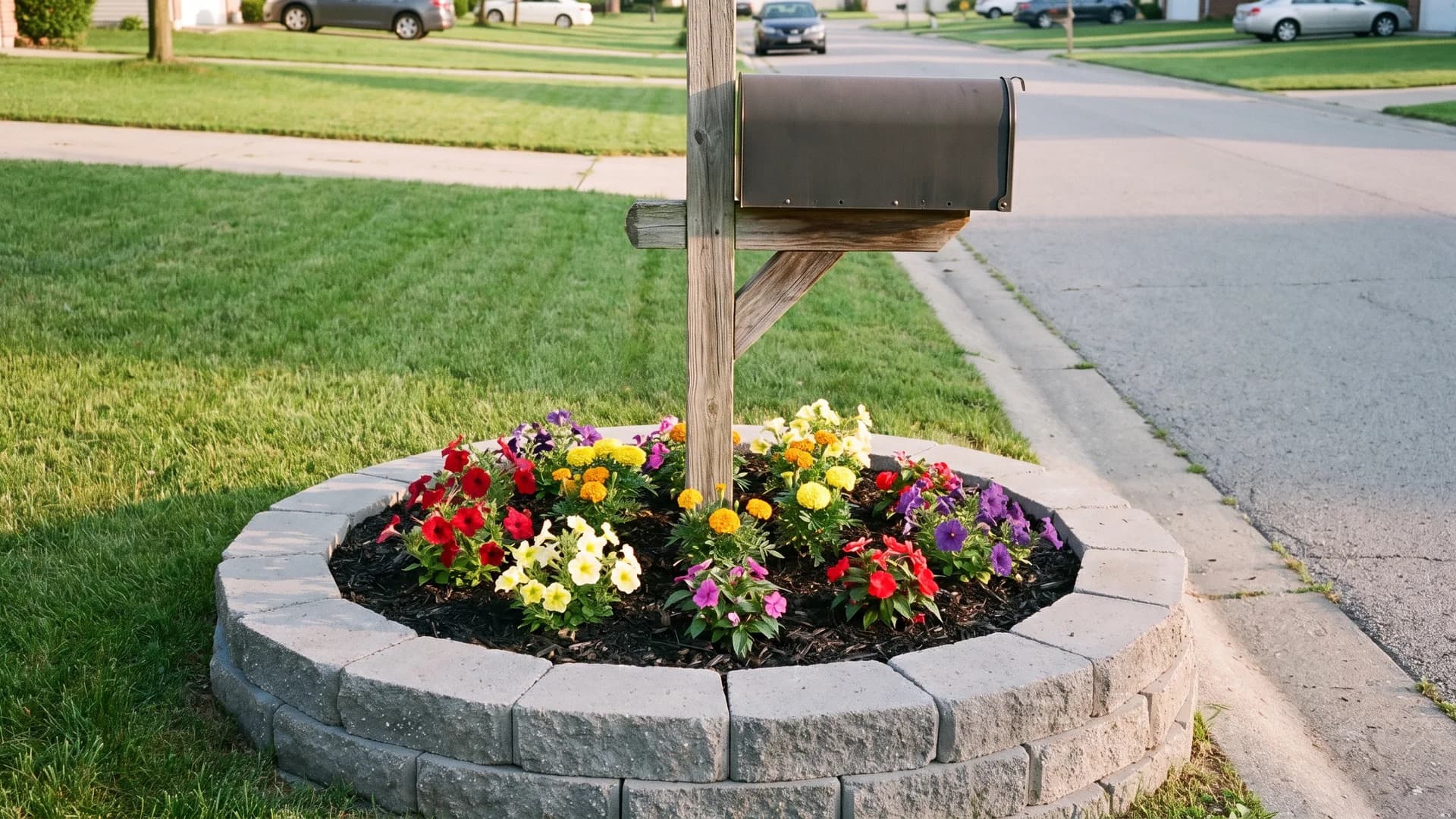
Curbside soil is where road salt goes to live, which is why plants keep dying there. A 10-to-14-inch raised ring of wall block or brick lifts roots above the contamination and drains fast. Forty dollars of block plus a bag of compost builds a 3-foot circle. Fill it fresh, mulch the top, and the bed starts clean instead of inheriting twenty winters of brine.
2. Layer it like a tiny border
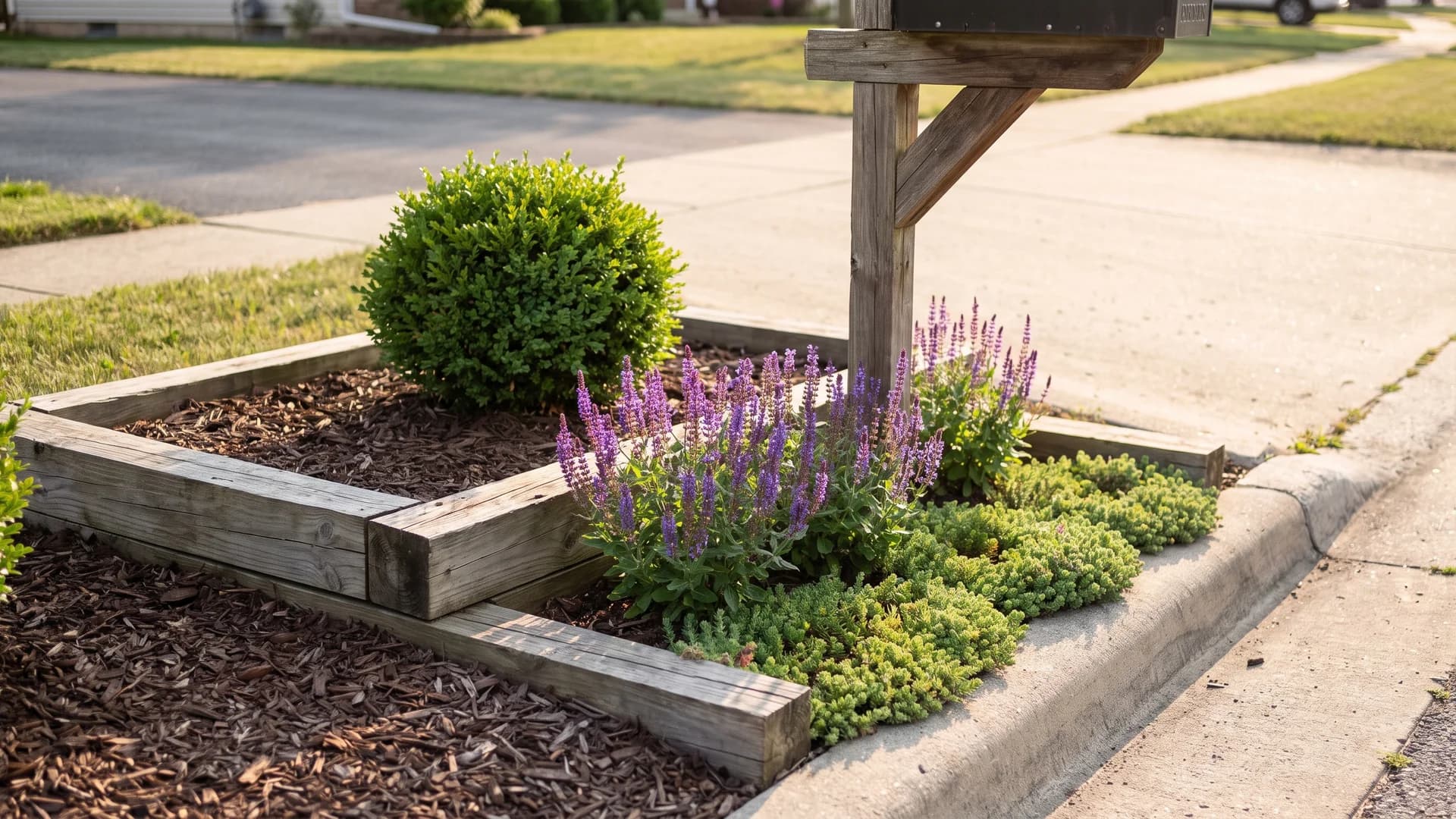
The beds that look designed follow one formula at any size: something evergreen at the back, something blooming in the middle, something low at the edge. At mailbox scale that's one dwarf boxwood, three salvia or coneflower, and a front line of 'Autumn Joy' sedum, about $80 planted. The evergreen carries winter; the layers carry the rest of the year.
3. Send a clematis up the post
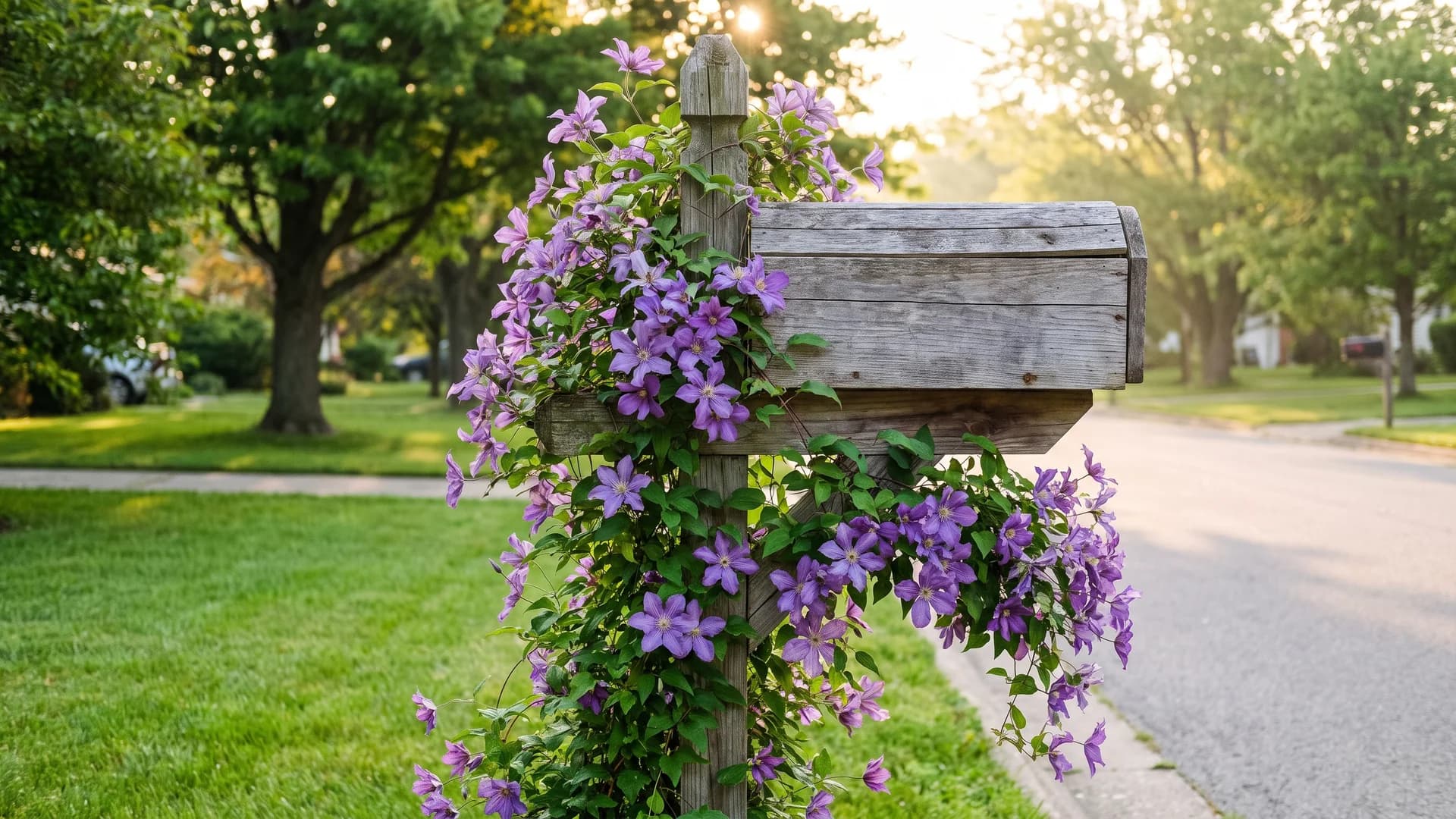
A flowering vine turns the post itself into the feature. Clematis 'Jackmanii' is the classic for a reason: purple bloom for weeks, zones 4 to 8, and it climbs a simple wire wrap without damaging wood. One $20 plant covers the post by its second summer. Train it below the box mouth and keep the door swing clear; the carrier wins every argument with a vine.
4. Plant the drought crew and stop watering
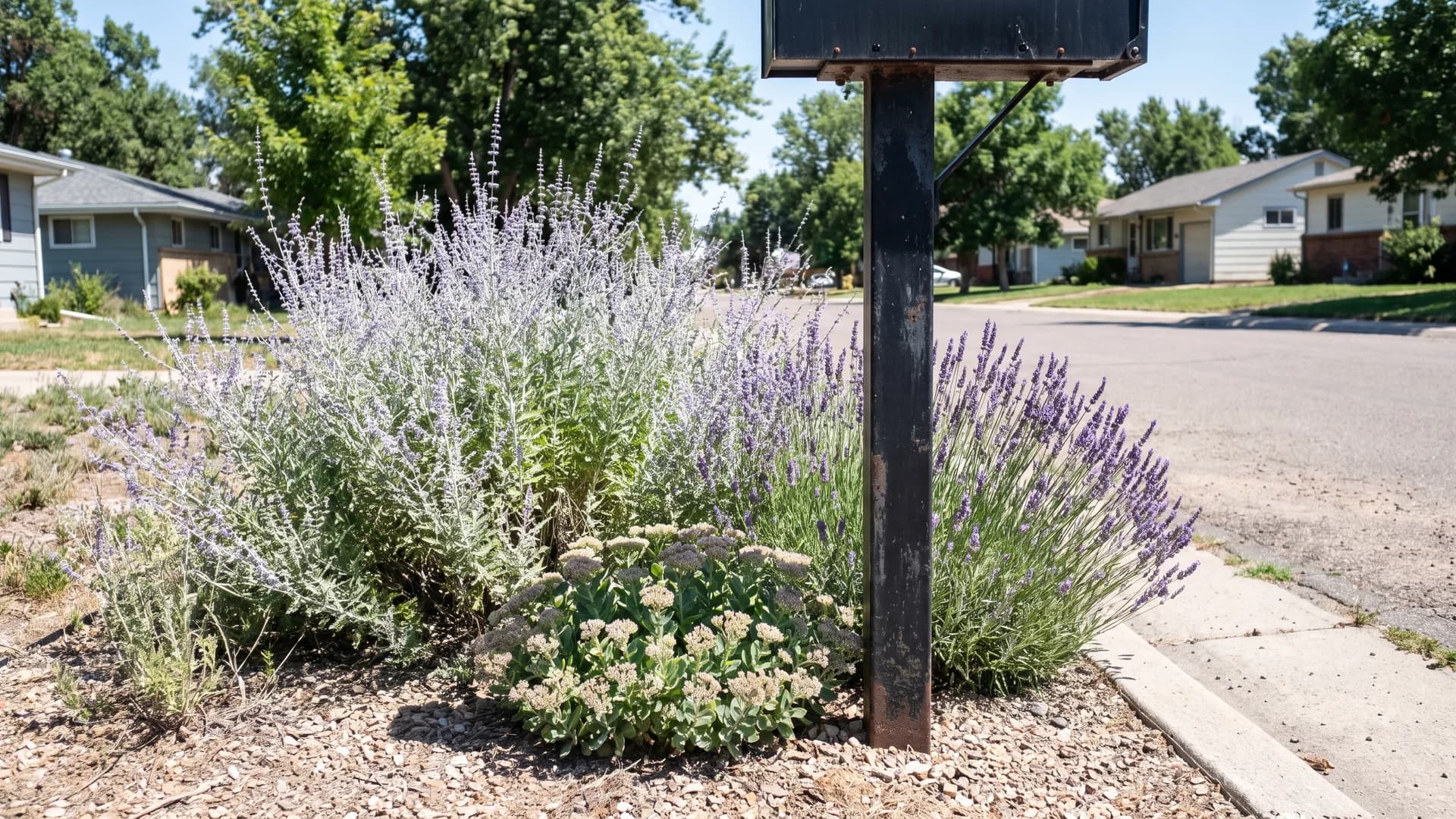
Nobody drags a hose to the curb in August, so plant for that. Russian sage (zones 5 to 9), 'Autumn Joy' sedum (3 to 9), and lavender (5 to 9) are drought-tolerant plants that bloom through the exact months the strip is hottest, at $10 to $15 each. Water them their first season, then let the rain handle it. They look better neglected than most plants look pampered.
5. Go all-perennial and never replant
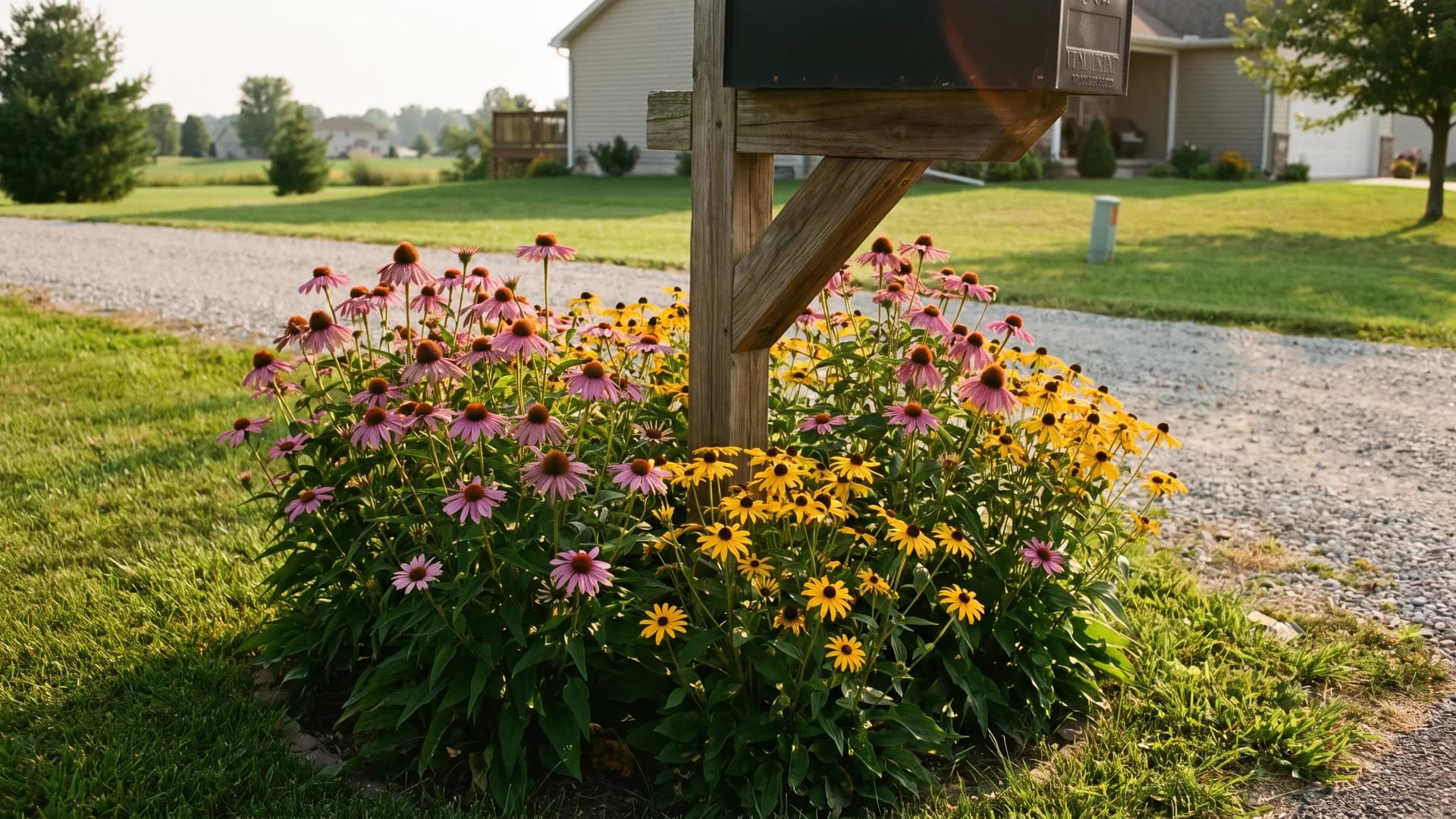
Annuals at the mailbox mean two plantings a year at the least convenient spot in the yard. A perennial ring of coneflower and black-eyed Susan comes back bigger each June, blooms until frost, and divides for free every third year. Both handle zones 3 to 8 at about $12 a plant. Cut everything down once in late winter; that's the entire maintenance calendar.
6. Rotate two seasons of annual color in one gap
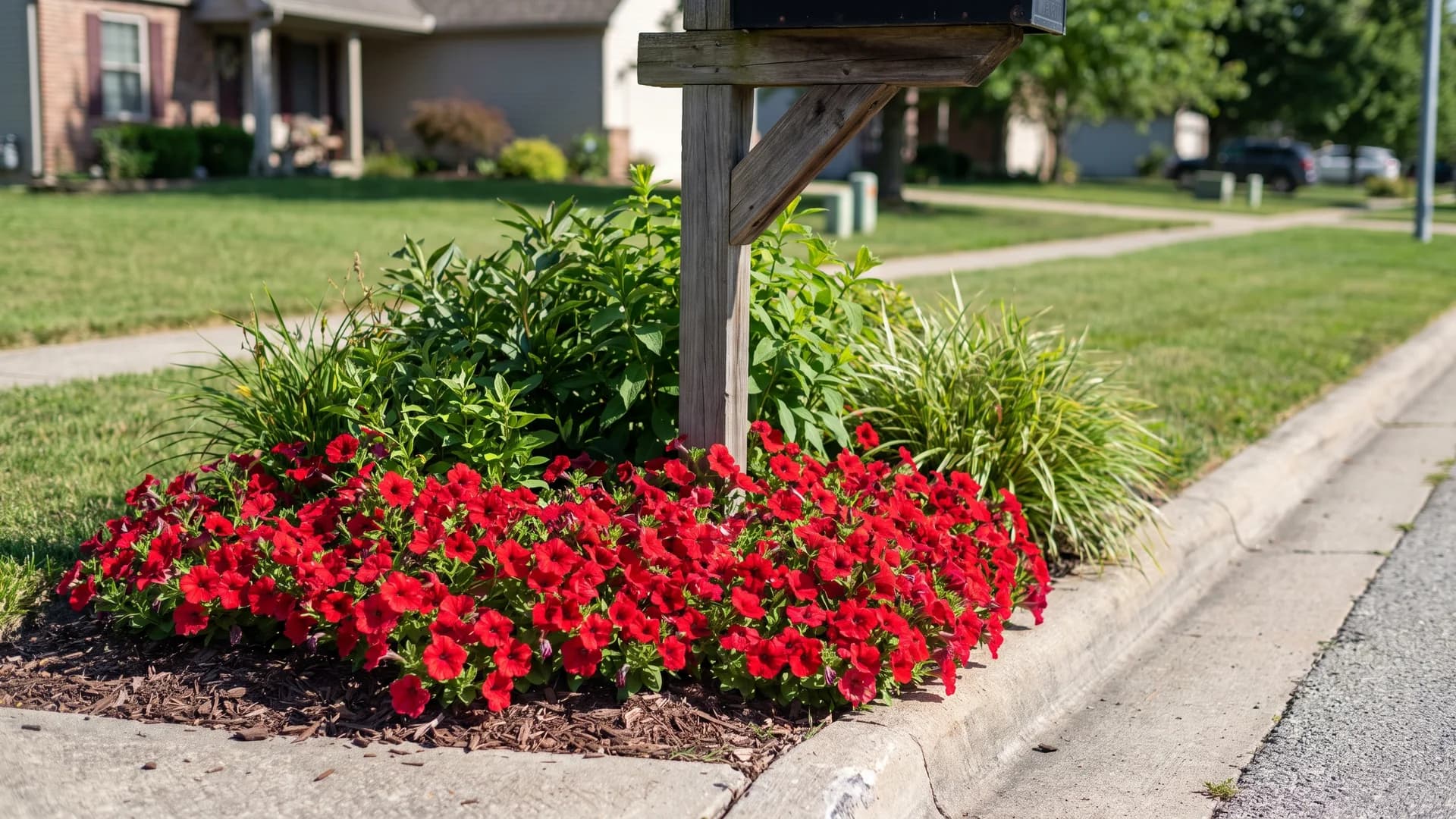
If you want the knockout color only annuals deliver, contain the commitment: one front gap in the bed, replanted twice a year. Wave-type petunias carpet a two-foot gap from May to October for about $20; a cold-hardy mum takes the same slot through fall. The perennials around the gap do the structural work while the annuals do the showing off.
7. Keep it evergreen with one shrub and a gravel ring
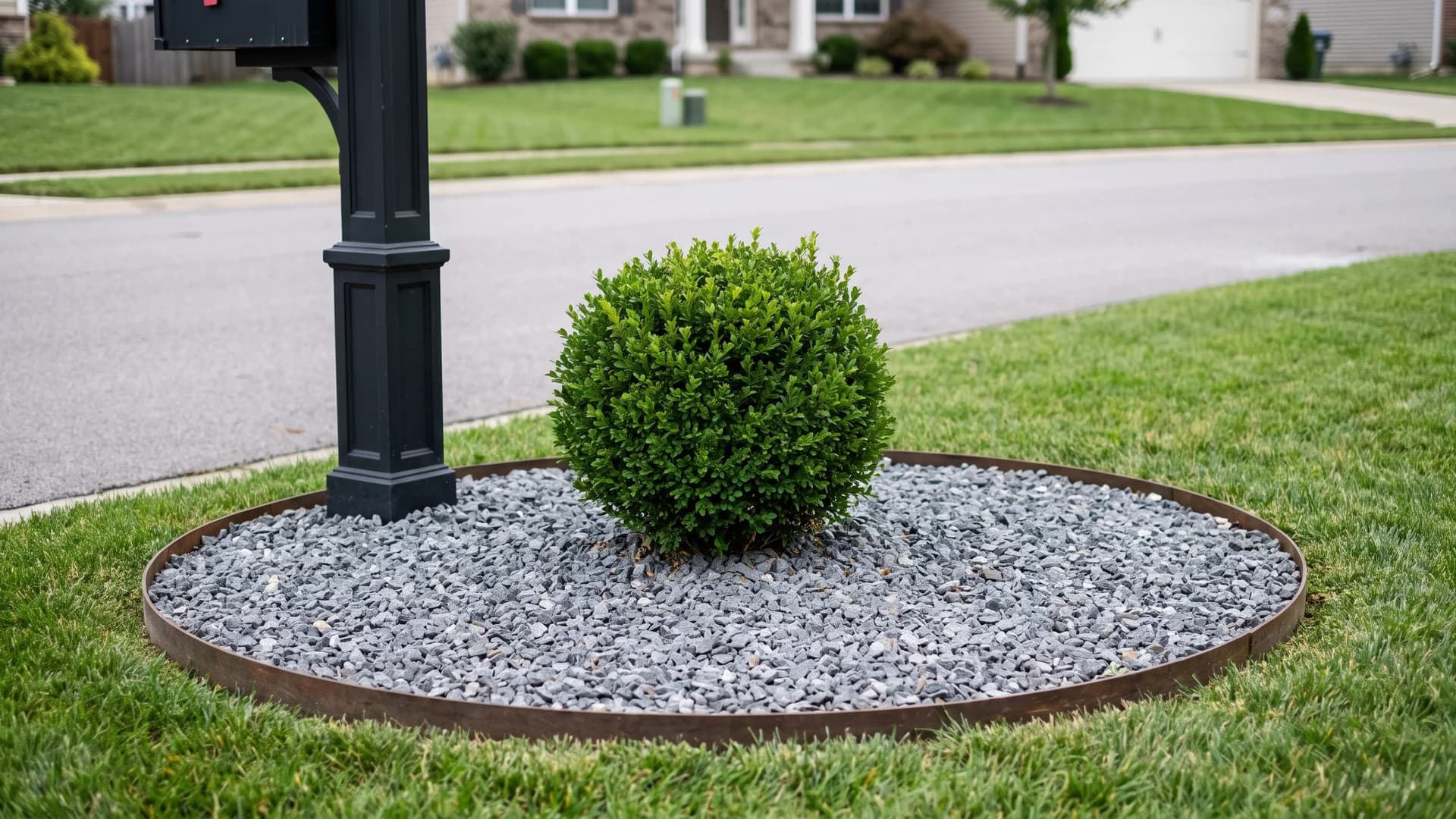
The lowest-effort version that still looks intentional: one dwarf boxwood or dwarf yaupon beside the post, a 3-foot circle of gravel over fabric, and a steel edge. Roughly $70 all in, green in January, and the string trimmer never comes near the post again. This is the pick for rental properties and anyone who wants the chore gone, not redesigned.
8. Edge a circle in brick or stone
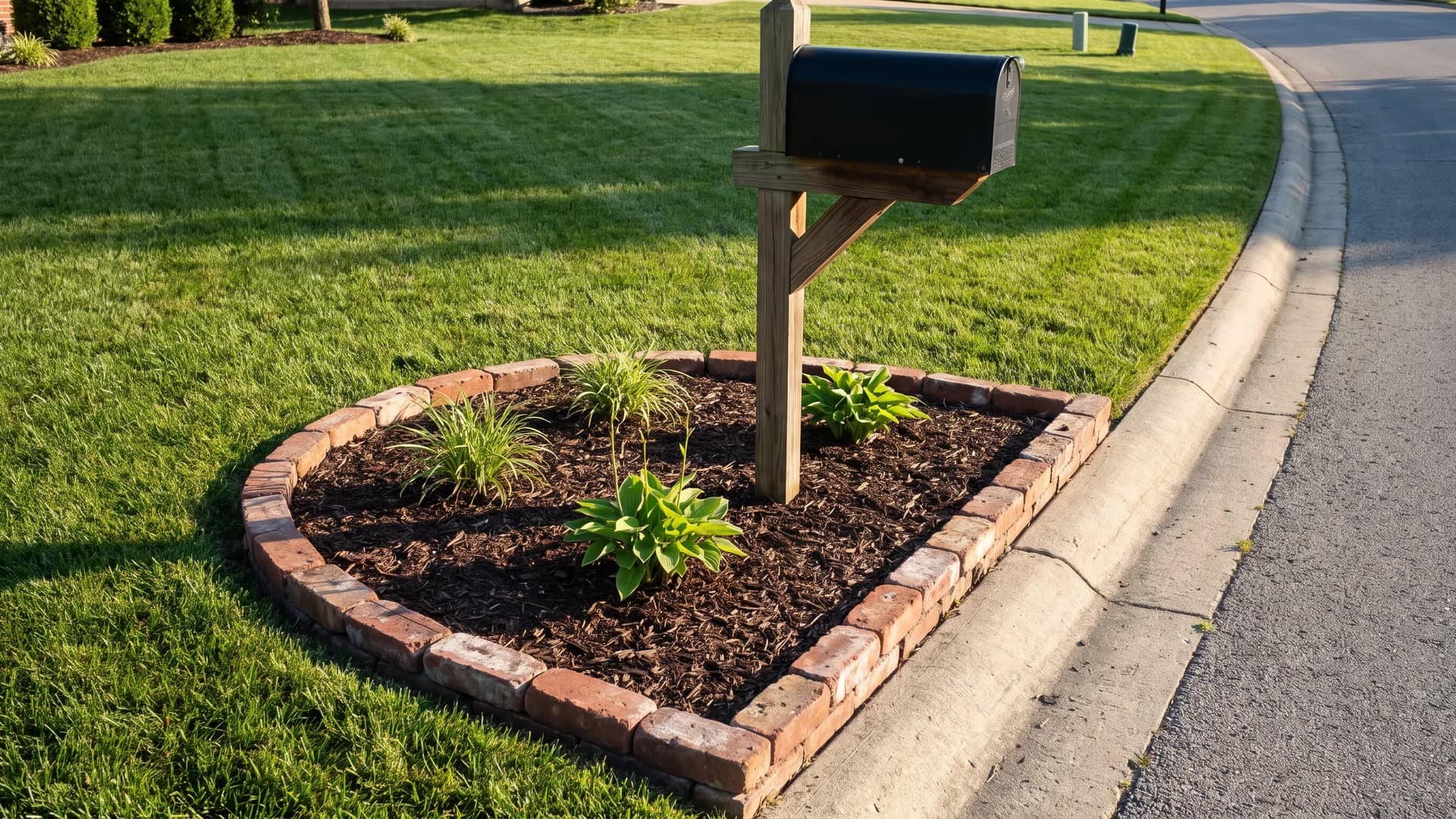
A defined edge is most of the difference between a bed and a patch. Reclaimed brick at $1 to $2 each, or tumbled wall stone at $3 to $8, rings a 3-foot circle for under $50. Set the edging an inch proud of the lawn so the mower wheel rides it clean. Whatever grows inside, the crisp landscape edging line is what registers from a car.
9. Replace the trimming with groundcover
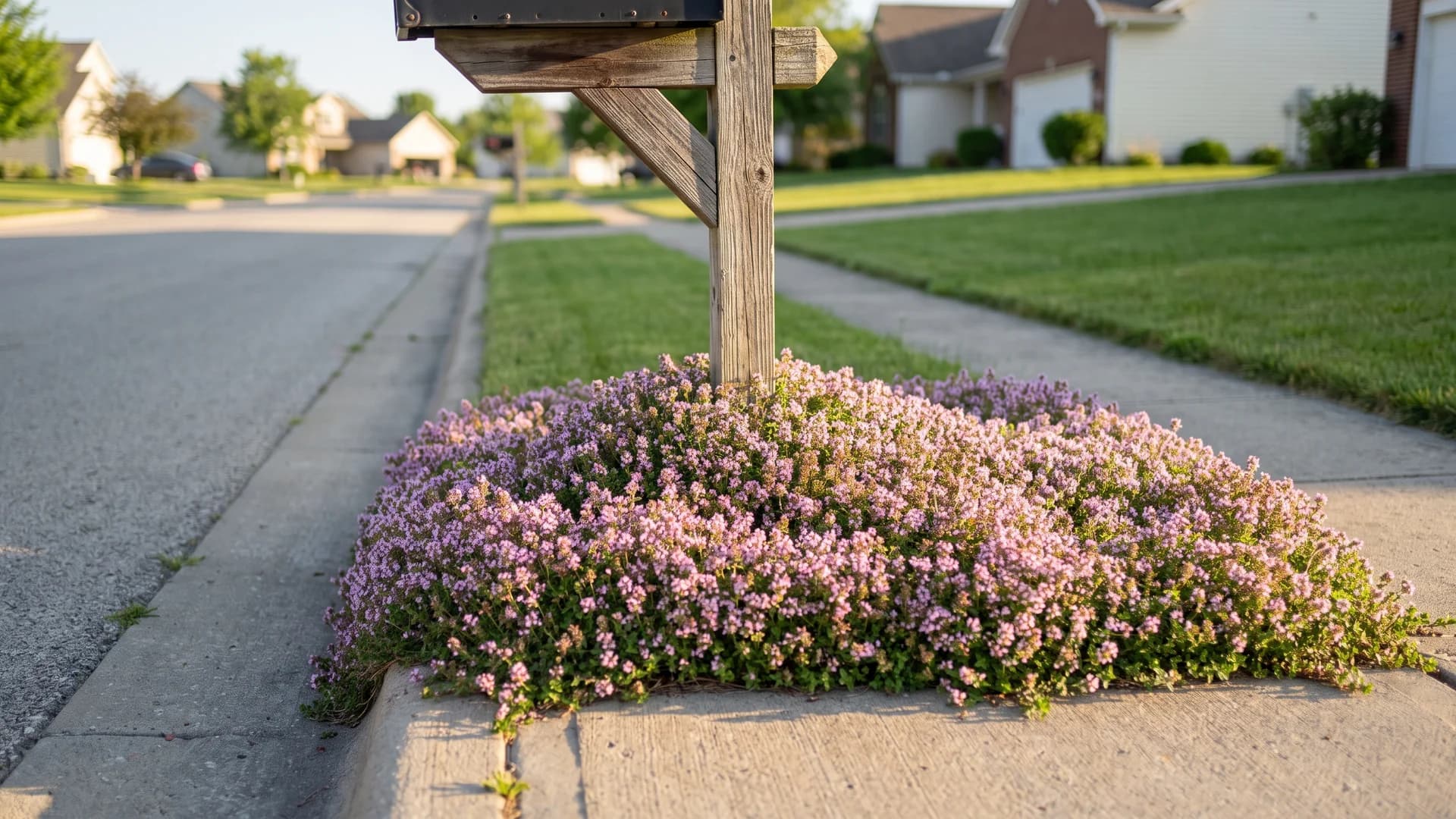
The grass immediately around a post can't be mowed, only trimmed, forever. Creeping thyme or creeping phlox replaces that collar with a flowering mat a few inches tall that never needs cutting. Six plants at $8 to $12 each close the circle in two seasons, zones 4 to 9. They also take the occasional stomp from a delivery in stride, which turf never forgives.
10. Build a mini rock garden for a hot curb
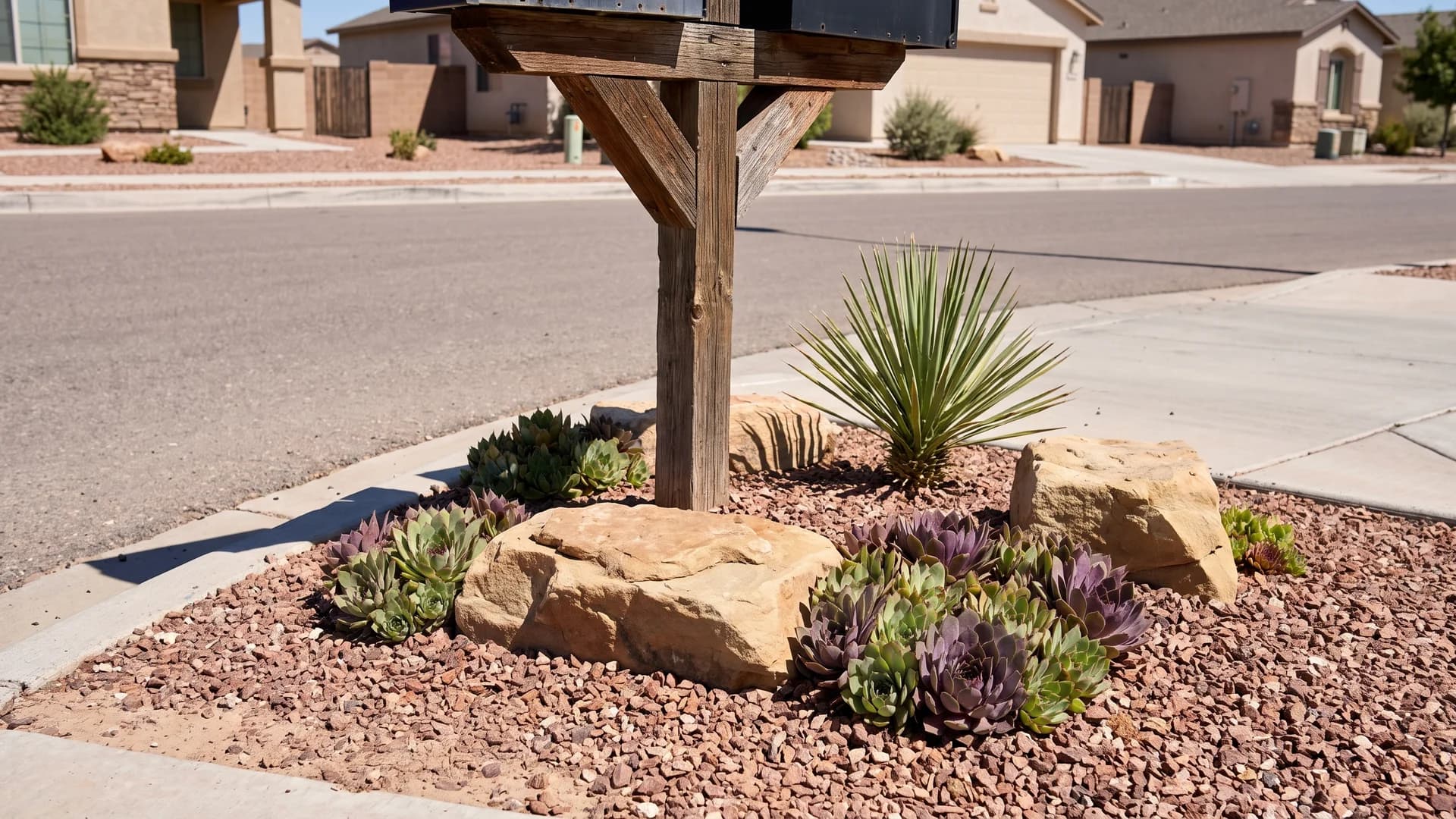
Where the curb strip bakes, lean into it. A few half-buried stones, gravel mulch, and heat-lovers like hens-and-chicks, sedum, and a small yucca make a composition that peaks in the weather that kills everything else. Materials run $60 to $120. In zones 8 to 11 swap in aloe and agave. Nothing here needs water after the first month, and nothing drops leaves on the street.
11. Choose plants that survive salt and stomping
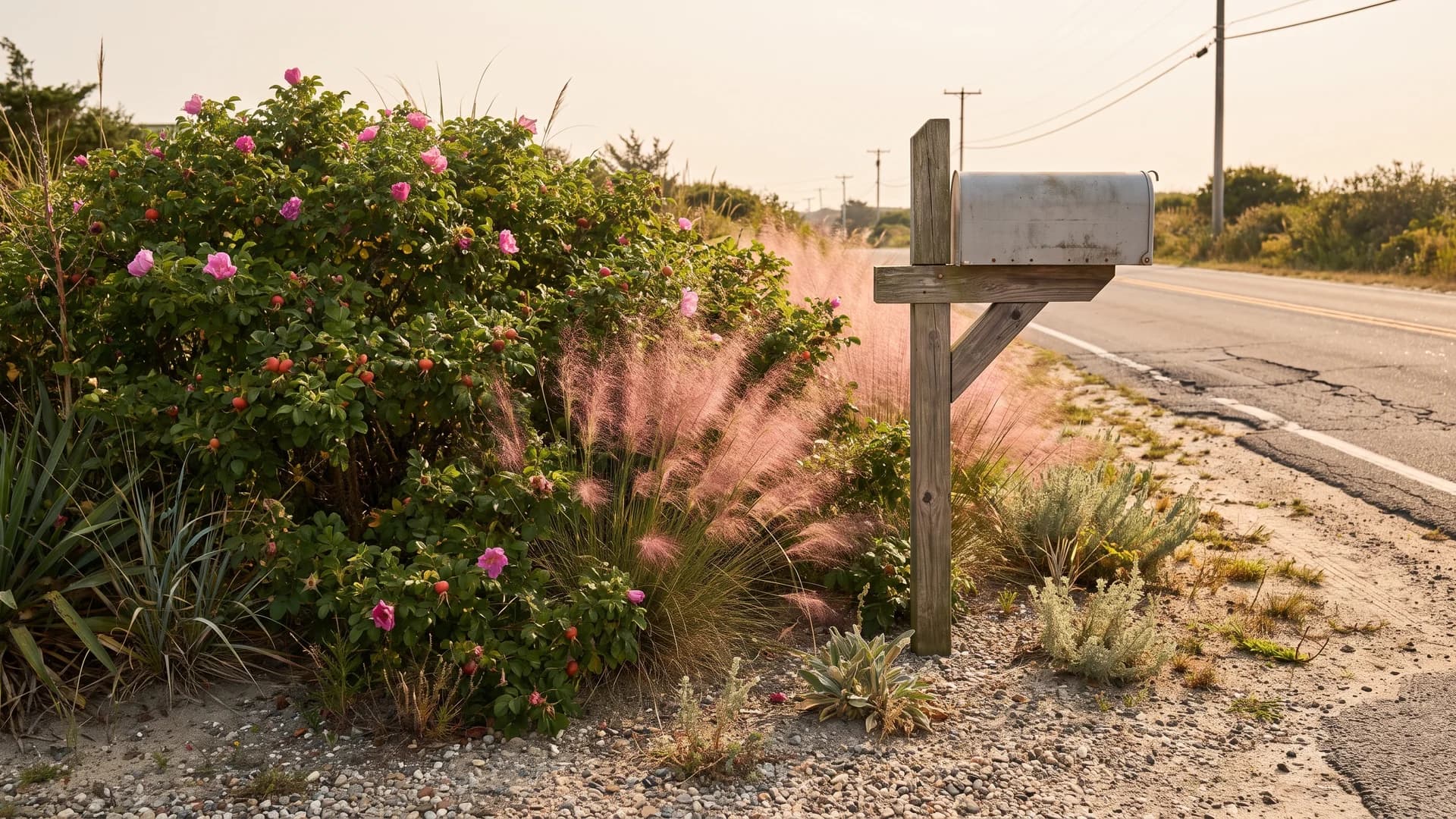
The curb is a plant torture test, and some species simply pass it. Rugosa rose blooms through salt spray in zones 2 to 7. Pink muhly grass shrugs off heat and a misstep, zones 5 to 9. Daylilies survive nearly anything a snowplow throws. Build the bed from this shortlist, $10 to $25 a plant, and skip the delicate favorites; the roadside always finds them.
12. Add a solar light and real house numbers
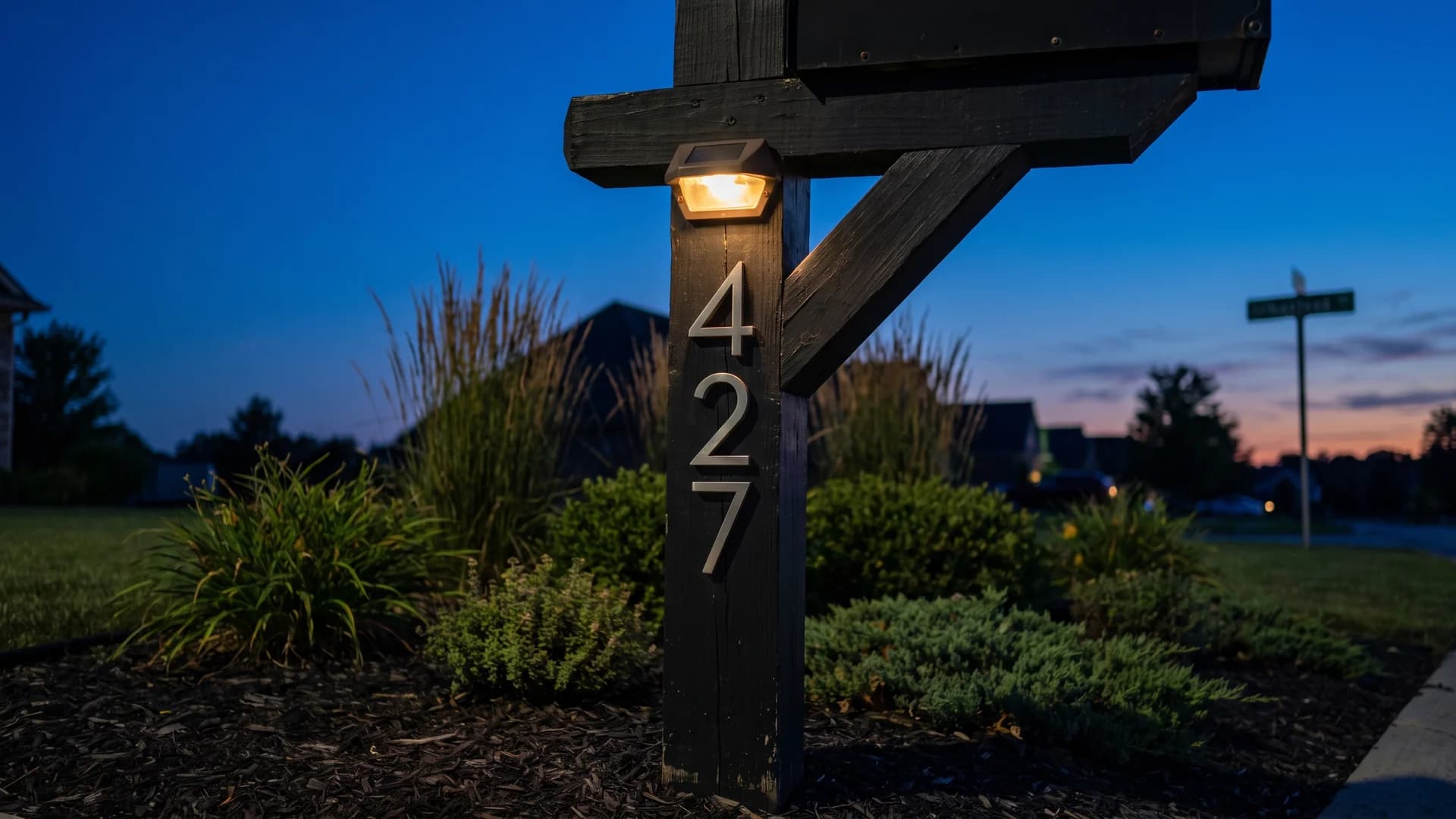
Half of mailbox curb appeal is legibility. A solar cap or stake light ($15 to $30) makes the box findable at night, and 4-inch floating house numbers on the post ($20 to $40) finish the job delivery drivers will thank you for. Modern landscape lighting at this scale needs no wiring at all, so the whole upgrade is one screwdriver and ten minutes.
13. Fix the post before you plant anything
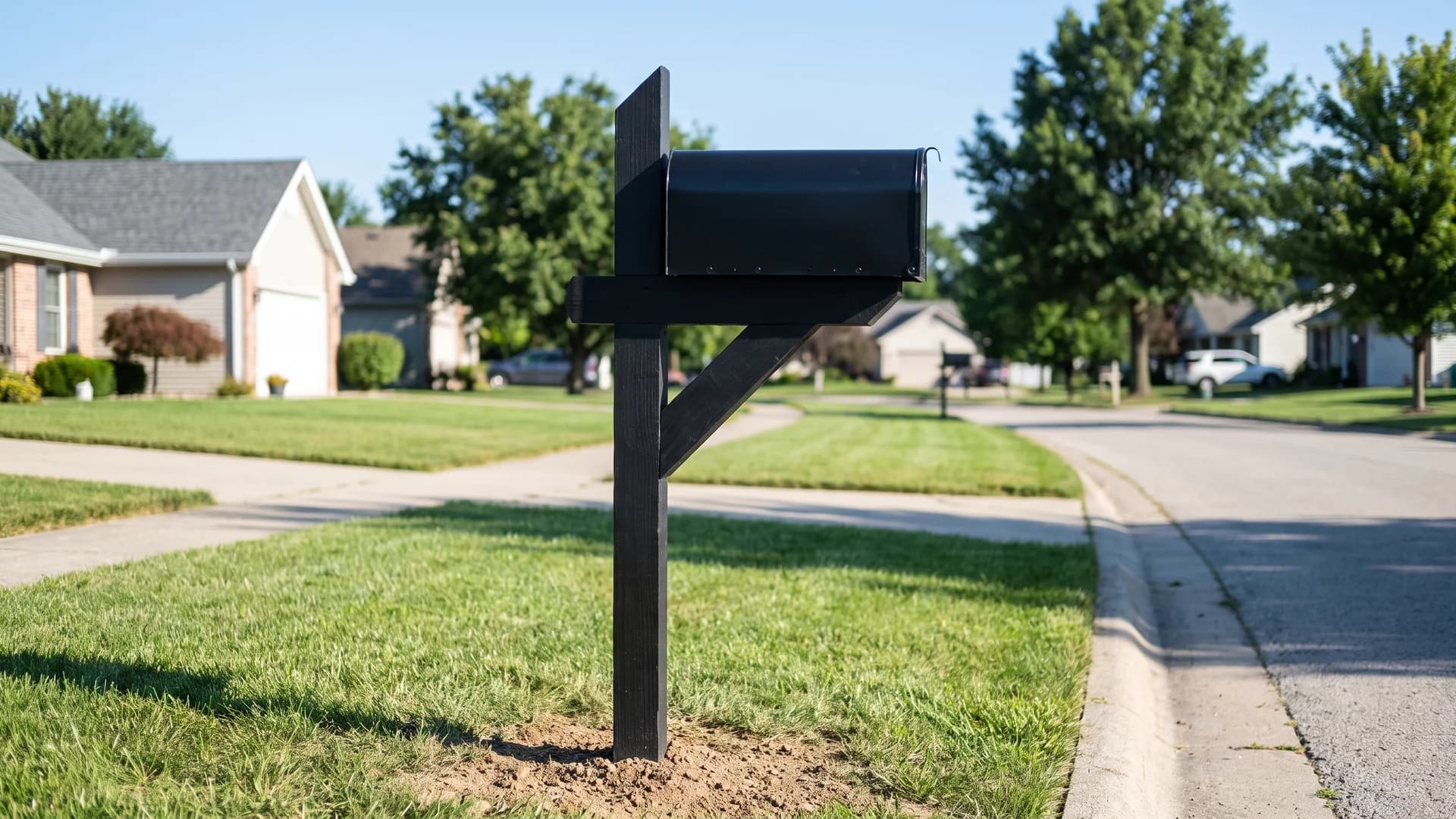
Flowers around a leaning, peeling post decorate a problem. Reset the post plumb, sand it, and give it two coats of exterior black or a stain that matches the front door: $20 in materials, one afternoon. A new box is $30 to $80 if the old one is past saving. Check the 41-to-45-inch height while it's out of the ground; replanting a post later means digging up the garden you're about to build.
14. Set a native pollinator patch a step back
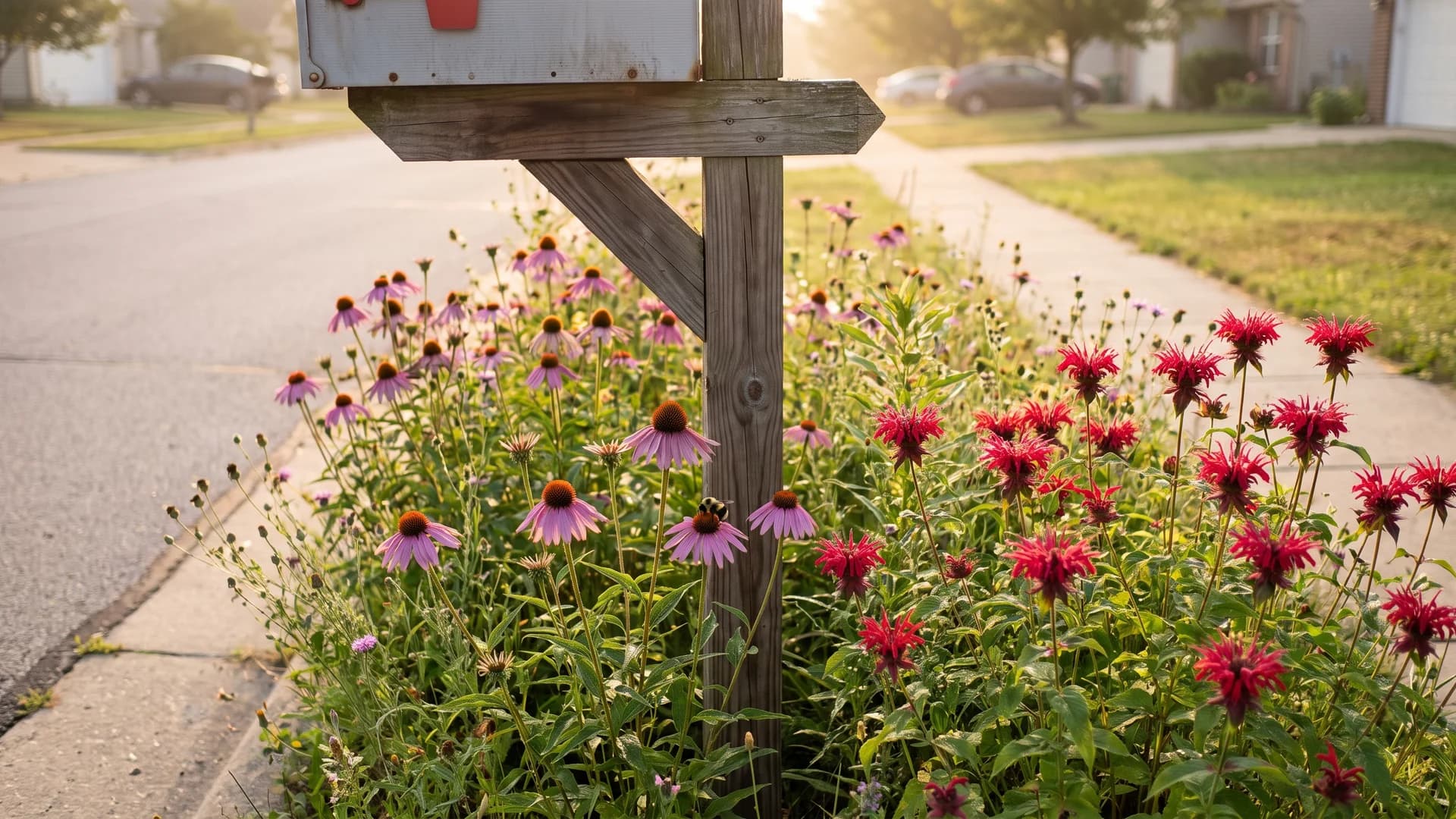
A curbside pollinator garden of native plants like coneflower, bee balm, and butterfly weed feeds the neighborhood's bees with zero fuss, zones 3 to 9, around $12 a plant. One courtesy: plant the bee magnets behind and beside the post, not at the door handle, so the carrier reaches a quiet spot. Natives also mean the bed thrives on rainfall alone once rooted.
15. Match the mailbox bed to the rest of the front yard
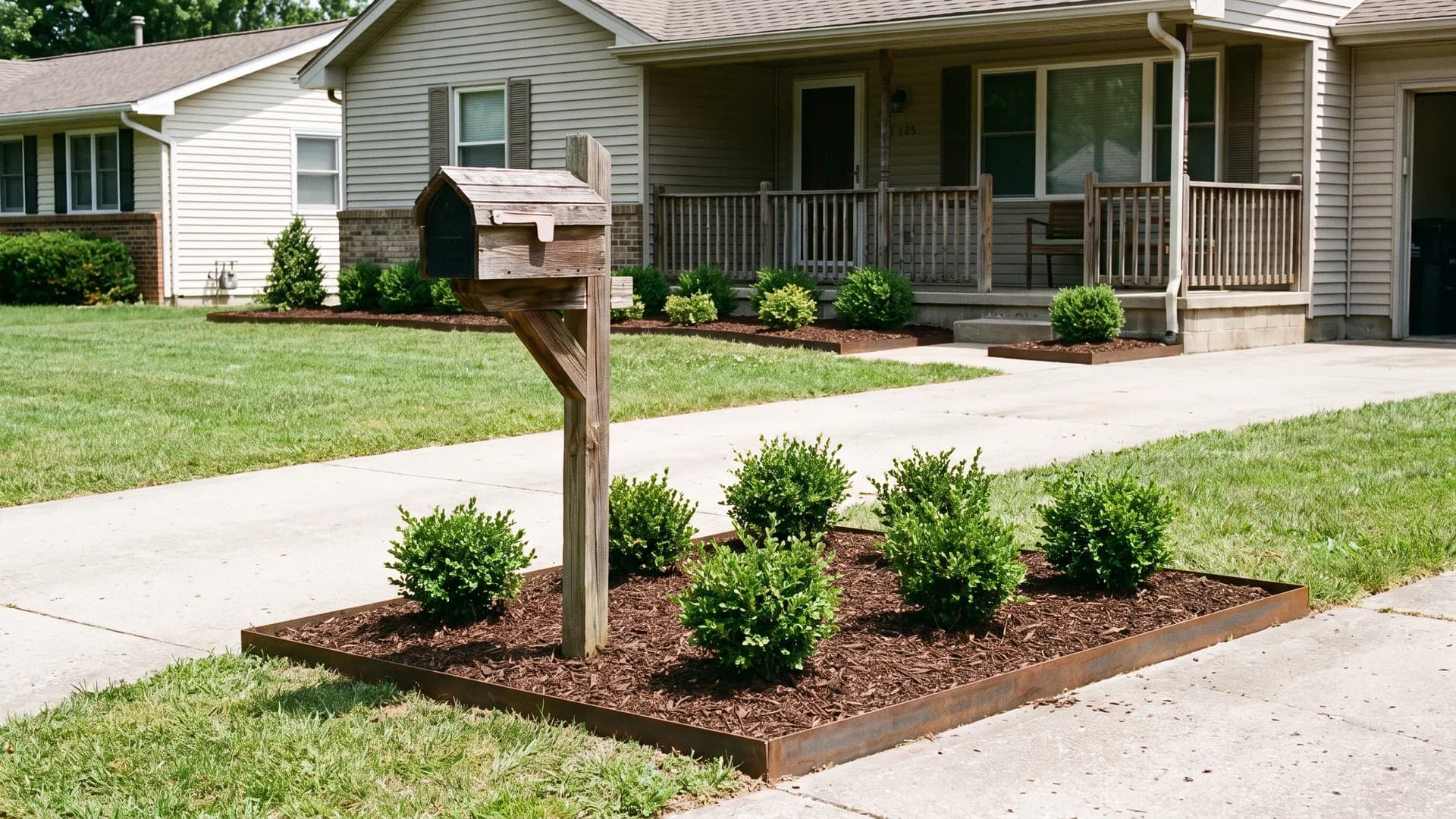
A mailbox garden that repeats the yard's existing materials, the same mulch, the same edging, one plant pulled from the foundation beds, reads as design instead of decoration. It's also cheaper: you're extending purchases, not starting new ones. If the front beds need work first, start with our low maintenance front yard landscaping guide and let the mailbox be the final touch that ties it together. Where the box sits at the end of a drive, carrying the same stone and plants along the driveway border keeps the whole approach reading as one design.
Picking your version
- Plants keep dying there: 1 and 11 fix the actual cause (salt), then plant anything from 4.
- Zero-maintenance mandate: 7, 9, and 12.
- Maximum color: 3, 5, and 6 together cover May to frost.
- Hot, dry curb: 10 and 4.
- One weekend, under $100: 13 plus 8 transforms the corner before a single plant goes in.
- Doing the whole frontage in stone: start with the front yard rock landscaping guide and let the mailbox bed match its materials.
FAQ
What is best to plant around a mailbox?
Tough, drought-tolerant perennials that handle road conditions: coneflower, black-eyed Susan, sedum, Russian sage, daylilies, and ornamental grasses like pink muhly. Add one dwarf evergreen for winter structure. All of them survive salt spray, reflected heat, and the occasional footstep better than delicate border favorites.
How do I make a mailbox garden low maintenance?
Raise the bed so salt-free soil drains well, plant perennials instead of annuals, cover bare soil with mulch or gravel over fabric, and hold the shape with solid edging. That setup needs one cutback a year and water only in the first season. A gravel ring with a single evergreen is the lowest-effort version that still looks kept.
What should you not plant around a mailbox?
Thorny plants near the door handle, tall growers that hide the box or block a driver's view, aggressive vines like wisteria that damage posts, and heavy bee attractors right at the carrier's reach. Skip anything that needs daily water; the curb is the last place hoses visit.
Are there rules about landscaping around a mailbox?
USPS wants the box mouth 41 to 45 inches above road level and 6 to 8 inches back from the curb, with a clear approach for the carrier. Keep plantings from blocking sightlines at driveways, leave room for snow removal, and call 811 before digging near the street; shallow utility lines commonly run along the curb strip.
What is the rule of 3 in landscaping?
Planting in odd-numbered groups, threes and fives, because they read as natural drifts while even numbers read as rows. At mailbox scale it means one anchor shrub plus a group of three perennials beats six different single plants. Repeating one plant from elsewhere in the yard applies the same principle across the whole front.